



Peter Labuza
-
Posts
233 -
Joined
-
Last visited
Content Type
Profiles
News
Minnesota Twins Videos
2026 Minnesota Twins Top Prospects Ranking
2022 Minnesota Twins Draft Picks
Minnesota Twins Free Agent & Trade Rumors, Notes, & Tidbits
Guides & Resources
2023 Minnesota Twins Draft Picks
The Minnesota Twins Players Project
2024 Minnesota Twins Draft Picks
2025 Minnesota Twins Draft Pick Tracker
2026 Minnesota Twins Draft Tracker: Picks & Bonuses
Forums
Blogs
Events
Store
Downloads
Gallery
Everything posted by Peter Labuza
-
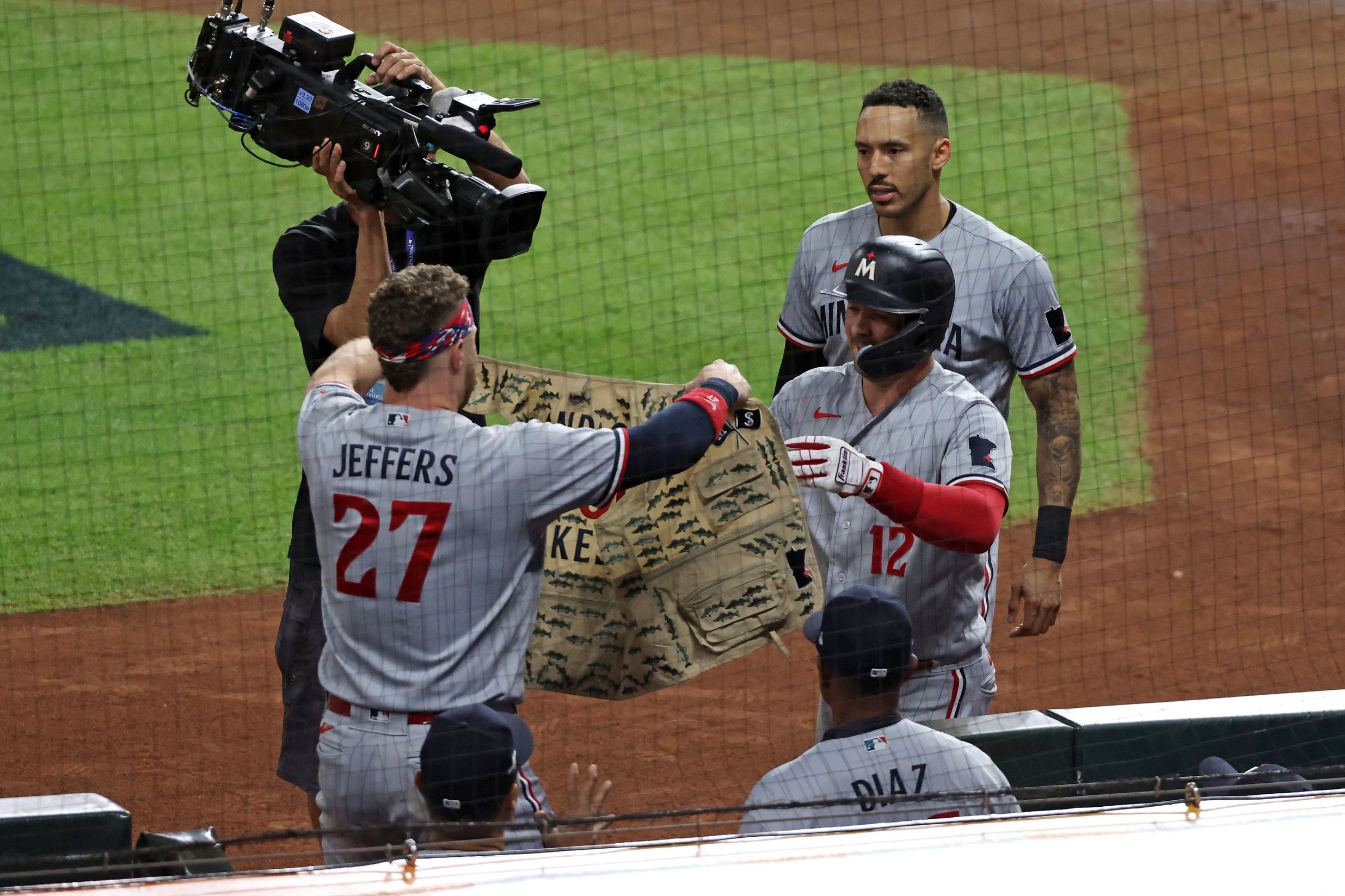 With the season now at a bittersweet end, Twins fans should consider what matters most: our favorite moments when hitters smashed a ball out of the park. Although this list is entirely subjective, I did my best to collect a diverse set of well-timed dingers from the season. Let's review. 13. Joey Gallo Breaks Statcast vs. Hayden Wesneski (Cubs), May 13. Exit Velocity: 110.6 mph, Distance: 422 feet Most Twins fans would probably be happy to forget Joey Gallo’s frustrating Twins tenure. But the former Ranger had a monster start to the season, including a 1.066 OPS in the first month. In particular, how could anyone forget Gallo’s monster three-run shot against Cleveland that broke Statcast, the analytics tracker. Speculation about the distance of the ball took over Twins Twitter—did Gallo break 500 feet?—before the reported distance came in at a surprisingly minuscule 422 feet (the culprit turned out to be the poor launch angle; in fact, Alex Kirilloff hit one the same distance that day). But for those watching, the eye test made it seem like Gallo smacked it to another dimension. 12. Max Kepler Comes in the Clutch vs. Paul Sewald (Diamondbacks), August 6. Exit Velocity: 110.4 mph, Distance: 438 feet Max Kepler was the consensus favorite among Twins Daily writers for Most Improved Player of the Year. Continually cited as a DFA candidate throughout the early months, Kepler's sudden power surge came at opportune times, including several late innings smacks that often turned the scoreboard back in Minnesota’s favor. Just a week after the trade deadlines, Kepler faced down Mariners-turned-Diamondbacks closer Paul Sewald. Down a run going into the bottom of the ninth, Kepler wasted no time and launched the pitch to tie the game. It was one of several moments that the right fielder made count in the second half. 11. Matt Wallner Goes Very, Very Far vs. Paul Blackburn (Athletics), September 26, Exit Velocity: 114.5 mph, Distance: 463 feet There was a lot of hope for Matt Wallner coming into the season after his late-season debut in 2022. Even during a slump late in the season, Wallner continued to get on base and prove his worth. During a final week game against the Athletics, Wallner smoked one from starter Paul Blackburn with the bases loaded a massive 463 feet, one of the longest home runs of the season that had fans in the upper deck scrambling for a ball they never expected to land anywhere near them. Expect a lot more like that next season. 10. Carlos Correa Declares His Time vs. Devin Williams (Brewers), June 13, Exit Velocity: 108.6 mph, Distance: 408 feet It became a running joke in my household that I would declare Carlos Correa finally “back,” only to watch another week of struggles due to his injuries. Correa’s lack of clutch hitting this season may have frustrated Twins fans, though most writers on this site would argue his playoff performance wiped away the slate. Even within that struggle, Correa found quite a few moments to awe fans and teammates alike. None felt like a personal victory, as much as a bottom of the 9th smack against the Brewers. Closer Devin Williams had already given away the lead on a Michael A. Taylor home run. Fans were already joking that Correa was due for a double play with a runner on first. Instead, the shortstop took a 1-1 pitch deep to left field to walk it off. He immediately pointed at his wrist in one of his classic moves: “It’s my time.” 9. Ryan Jeffers Lasers the Ball vs. Bryan Abreu (Astros), May 29, Exit Velocity: 117.4 mph, Distance: 374 feet There were several highlights as Ryan Jeffers rose from backup catcher to Joe Mauer’s apparent heir, as both the team and fans saw a swing that seemed full of dynamite. What has always made Jeffers’s dingers fun is how incredibly unique they are. Rather than get the right launch angle, the dingers look like cruise missiles. How else can you categorize this critical extra inning hit against the Astros in May? Coming off the bat at 117 mph, look at how quickly the ball gets out to the Crawford Boxes. It’s a shame Jeffers could not match it during the ALDS, but the potential remains. 7-8. Byron Buxton Obliterates It…Twice vs. Brandon Walter (Red Sox), June 22, Exit Velocity: 112.2 mph, Distance: 466 feet vs. Justin Garza (Red Sox), June 22, Exit Velocity: 111.9 mph, Distance: 465 feet Fans will debate the contours of Byron Buxton’s disappointing season, not only due to the injuries that once again plagued his availability but also the poor performance as a Designated Hitter. Although the All-Star had transformed himself from a hit-and-run guy into a power hitter, the DH position seemed to change his mental stance and balloon his strikeout rate. But when that power came, it sure did. His June 22nd game against the Red Sox showed the Buxton that we all desperately desired, pulverizing not just one but two dingers. The first was 466 feet, and the second nearly matched it at 465 feet. No hitter since the Statcast Era began had ever hit multiple home runs over 460 feet. Buxton’s response? “They all count the same, so if they go over, they all feel good.” Let’s see it again next year, Buck. 3-4-5-6. Royce Lewis, Holy S**T! vs. Xzavion Curry (Guardians), August 27, Exit Velocity: 98.2 mph, Distance: 393 feet vs. Chris Stratton (Rangers), August 28, Exit Velocity: 111.7 mph, Distance: 423 feet vs. Lucas Giolito (Guardians), September 4, Exit Velocity: 107.6 mph, Distance: 401 feet vs. Jesse Scholtens (White Sox), September 15, Exit Velocity: 99.9 mph, Distance: 397 feet How can you even begin to explain it? Royce Lewis, He is Him. Lewis hit four grand slams throughout the season, a ridiculous record that already put him on the top of numerous Twins record lists. They all came after he spent over a month recovering from an oblique strain, almost like he was never injured in the first place. Luck is always a factor in whether a player will even have an opportunity, but Lewis relished it. None of these dingers were particularly unique, but the fact it kept happening, repeatedly felt like a new page of baseball had arrived in Minnesota. If I had to choose only one, I would choose the third against Cleveland. The smash against Lucas Giolito made the game a 6-0 ball game, and, more importantly, signaled to the still barely in-the-running Guardians that their season was over. The Era of Lewis has arrived. 1-2. Royce Lewis Breaks the Curse vs. Kevin Gausman (Blue Jays), October 3, Exit Velocity: 105.5 mph, Distance: 386 feet vs. Kevin Gausman (Blue Jays), October 3, Exit Velocity: 104.2 mph, Distance: 397 feet I initially began drafting this list before the playoffs. Only minutes into Minnesota’s first playoff game did it become apparent I needed a different home run to top this list. The game that ended Minnesota's 0-18 playoff curse perhaps surprised some as boppers from both sides of the plate went quiet - except one. Minnesota beat the Blue Jays 3-1. The entire difference was, once again, Royce Lewis. Lewis put himself and the entire Twins team on the map through his dingers to left and then to center, both off Cy Young candidate Kevin Gausman. Only to add insult to injury, these were his first two plate appearances in over a week after a hamstring pulled him out of the regular season. The man could barely run to first base, and here he was, creating a Minnesota Miracle. By the end of the team’s run, Lewis popped four home runs over the six playoff games. The cruelest part of the end of the Twins season? Having to wait a whole year for Lewis to cement his name as a new "Mr. October." Did you have any favorite home runs from the season? (Perhaps from the Yankees series?) Include them in the comments below.
- 8 comments
-
- 3
-

-
- royce lewis
- carlos correa
- (and 3 more)
-
 We all dig the long ball! If you're like us, you really liked these 2023 Twins home runs. Image courtesy of Thomas Shea-USA TODAY Sports We all dig the long ball! If you're like us, you really liked these 2023 Twins home runs. With the season now at a bittersweet end, Twins fans should consider what matters most: our favorite moments when hitters smashed a ball out of the park. Although this list is entirely subjective, I did my best to collect a diverse set of well-timed dingers from the season. Let's review. 13. Joey Gallo Breaks Statcast vs. Hayden Wesneski (Cubs), May 13. Exit Velocity: 110.6 mph, Distance: 422 feet Most Twins fans would probably be happy to forget Joey Gallo’s frustrating Twins tenure. But the former Ranger had a monster start to the season, including a 1.066 OPS in the first month. In particular, how could anyone forget Gallo’s monster three-run shot against Cleveland that broke Statcast, the analytics tracker. Speculation about the distance of the ball took over Twins Twitter—did Gallo break 500 feet?—before the reported distance came in at a surprisingly minuscule 422 feet (the culprit turned out to be the poor launch angle; in fact, Alex Kirilloff hit one the same distance that day). But for those watching, the eye test made it seem like Gallo smacked it to another dimension. 12. Max Kepler Comes in the Clutch vs. Paul Sewald (Diamondbacks), August 6. Exit Velocity: 110.4 mph, Distance: 438 feet Max Kepler was the consensus favorite among Twins Daily writers for Most Improved Player of the Year. Continually cited as a DFA candidate throughout the early months, Kepler's sudden power surge came at opportune times, including several late innings smacks that often turned the scoreboard back in Minnesota’s favor. Just a week after the trade deadlines, Kepler faced down Mariners-turned-Diamondbacks closer Paul Sewald. Down a run going into the bottom of the ninth, Kepler wasted no time and launched the pitch to tie the game. It was one of several moments that the right fielder made count in the second half. 11. Matt Wallner Goes Very, Very Far vs. Paul Blackburn (Athletics), September 26, Exit Velocity: 114.5 mph, Distance: 463 feet There was a lot of hope for Matt Wallner coming into the season after his late-season debut in 2022. Even during a slump late in the season, Wallner continued to get on base and prove his worth. During a final week game against the Athletics, Wallner smoked one from starter Paul Blackburn with the bases loaded a massive 463 feet, one of the longest home runs of the season that had fans in the upper deck scrambling for a ball they never expected to land anywhere near them. Expect a lot more like that next season. 10. Carlos Correa Declares His Time vs. Devin Williams (Brewers), June 13, Exit Velocity: 108.6 mph, Distance: 408 feet It became a running joke in my household that I would declare Carlos Correa finally “back,” only to watch another week of struggles due to his injuries. Correa’s lack of clutch hitting this season may have frustrated Twins fans, though most writers on this site would argue his playoff performance wiped away the slate. Even within that struggle, Correa found quite a few moments to awe fans and teammates alike. None felt like a personal victory, as much as a bottom of the 9th smack against the Brewers. Closer Devin Williams had already given away the lead on a Michael A. Taylor home run. Fans were already joking that Correa was due for a double play with a runner on first. Instead, the shortstop took a 1-1 pitch deep to left field to walk it off. He immediately pointed at his wrist in one of his classic moves: “It’s my time.” 9. Ryan Jeffers Lasers the Ball vs. Bryan Abreu (Astros), May 29, Exit Velocity: 117.4 mph, Distance: 374 feet There were several highlights as Ryan Jeffers rose from backup catcher to Joe Mauer’s apparent heir, as both the team and fans saw a swing that seemed full of dynamite. What has always made Jeffers’s dingers fun is how incredibly unique they are. Rather than get the right launch angle, the dingers look like cruise missiles. How else can you categorize this critical extra inning hit against the Astros in May? Coming off the bat at 117 mph, look at how quickly the ball gets out to the Crawford Boxes. It’s a shame Jeffers could not match it during the ALDS, but the potential remains. 7-8. Byron Buxton Obliterates It…Twice vs. Brandon Walter (Red Sox), June 22, Exit Velocity: 112.2 mph, Distance: 466 feet vs. Justin Garza (Red Sox), June 22, Exit Velocity: 111.9 mph, Distance: 465 feet Fans will debate the contours of Byron Buxton’s disappointing season, not only due to the injuries that once again plagued his availability but also the poor performance as a Designated Hitter. Although the All-Star had transformed himself from a hit-and-run guy into a power hitter, the DH position seemed to change his mental stance and balloon his strikeout rate. But when that power came, it sure did. His June 22nd game against the Red Sox showed the Buxton that we all desperately desired, pulverizing not just one but two dingers. The first was 466 feet, and the second nearly matched it at 465 feet. No hitter since the Statcast Era began had ever hit multiple home runs over 460 feet. Buxton’s response? “They all count the same, so if they go over, they all feel good.” Let’s see it again next year, Buck. 3-4-5-6. Royce Lewis, Holy S**T! vs. Xzavion Curry (Guardians), August 27, Exit Velocity: 98.2 mph, Distance: 393 feet vs. Chris Stratton (Rangers), August 28, Exit Velocity: 111.7 mph, Distance: 423 feet vs. Lucas Giolito (Guardians), September 4, Exit Velocity: 107.6 mph, Distance: 401 feet vs. Jesse Scholtens (White Sox), September 15, Exit Velocity: 99.9 mph, Distance: 397 feet How can you even begin to explain it? Royce Lewis, He is Him. Lewis hit four grand slams throughout the season, a ridiculous record that already put him on the top of numerous Twins record lists. They all came after he spent over a month recovering from an oblique strain, almost like he was never injured in the first place. Luck is always a factor in whether a player will even have an opportunity, but Lewis relished it. None of these dingers were particularly unique, but the fact it kept happening, repeatedly felt like a new page of baseball had arrived in Minnesota. If I had to choose only one, I would choose the third against Cleveland. The smash against Lucas Giolito made the game a 6-0 ball game, and, more importantly, signaled to the still barely in-the-running Guardians that their season was over. The Era of Lewis has arrived. 1-2. Royce Lewis Breaks the Curse vs. Kevin Gausman (Blue Jays), October 3, Exit Velocity: 105.5 mph, Distance: 386 feet vs. Kevin Gausman (Blue Jays), October 3, Exit Velocity: 104.2 mph, Distance: 397 feet I initially began drafting this list before the playoffs. Only minutes into Minnesota’s first playoff game did it become apparent I needed a different home run to top this list. The game that ended Minnesota's 0-18 playoff curse perhaps surprised some as boppers from both sides of the plate went quiet - except one. Minnesota beat the Blue Jays 3-1. The entire difference was, once again, Royce Lewis. Lewis put himself and the entire Twins team on the map through his dingers to left and then to center, both off Cy Young candidate Kevin Gausman. Only to add insult to injury, these were his first two plate appearances in over a week after a hamstring pulled him out of the regular season. The man could barely run to first base, and here he was, creating a Minnesota Miracle. By the end of the team’s run, Lewis popped four home runs over the six playoff games. The cruelest part of the end of the Twins season? Having to wait a whole year for Lewis to cement his name as a new "Mr. October." Did you have any favorite home runs from the season? (Perhaps from the Yankees series?) Include them in the comments below. View full article
- 8 replies
-
- 1
-
-
- royce lewis
- carlos correa
- (and 3 more)
-
Pete Maki Defied Expectations and Built a Pitching Powerhouse
Peter Labuza posted an article in Twins
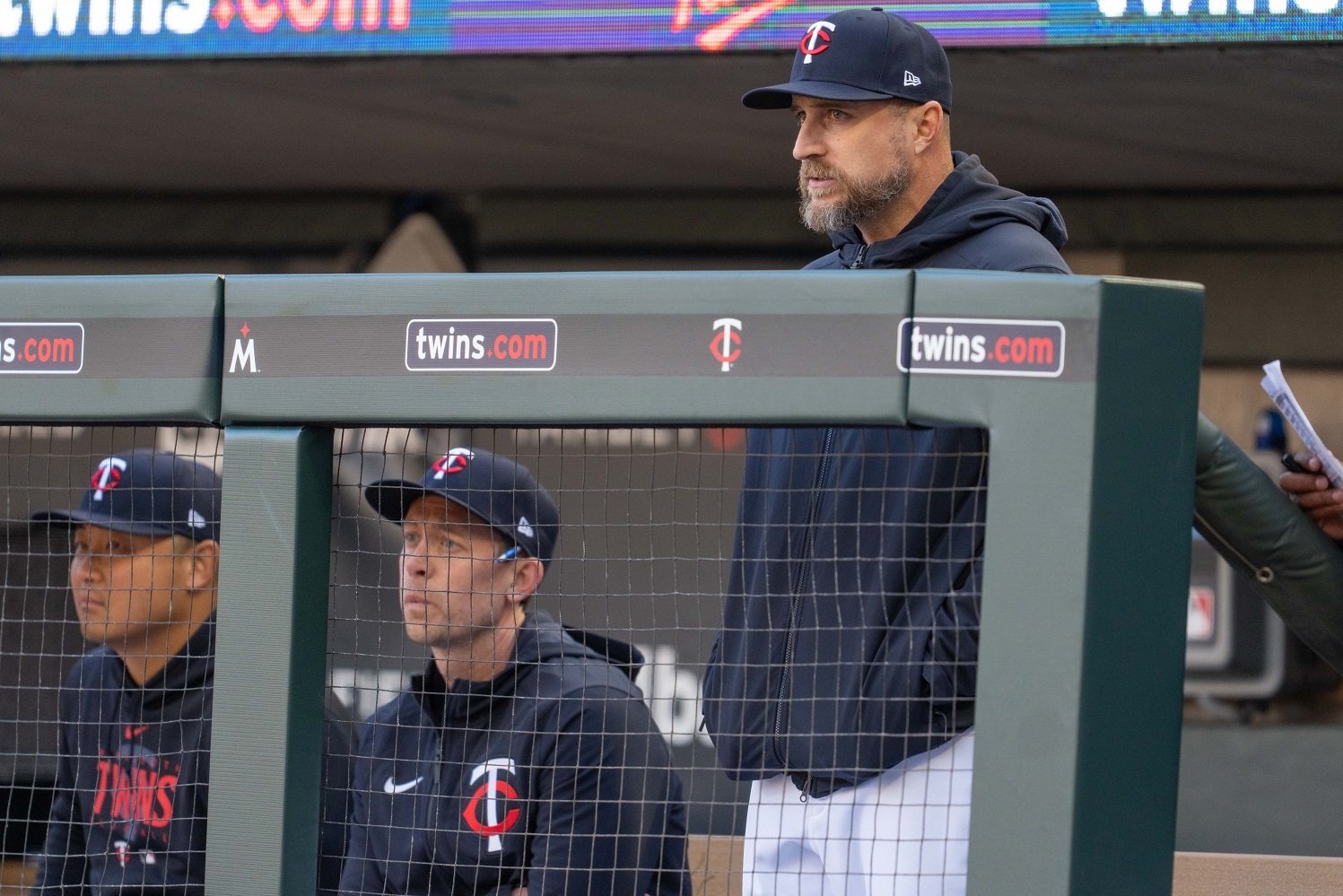 During the already-legendary Game 2 of the ALDS against the Houston Astros, Pablo Lopez found himself in a bit of trouble. He had runners on the corner with Chas McCormick at the plate. Pitching coach Pete Maki made his first and only visit to Lopez during the game. After telling him to hit the gas, Maki repeated a phrase he told several pitchers throughout the season. “I’ll see you in the dugout in 30 seconds.” As the season now comes to a close, even with the ups and downs of the playoffs, much of the success has to go to the pitching and the decision to retain Pete Maki after he stepped into the role during the 2022 season. The Twins finished first in ERA among their starters with only six innings behind the innings leaders. They led the league in strikeouts. While the bullpen struggled during some of the more injury prone months, they still placed fourth in Win Probability Added for the second half. And finally, Lopez threw one of the greatest pitching performances in Twins playoff history. This all happened under Maki, who took over after what seemed like at least a decade of questionable seasons. Coaching is hard to evaluate, but when you can see improvement in practically every pitcher on the roster, you have to begin to look for a commonality. The front office set Maki up for success, but he took full advantage during his first full year as the lead pitching coach. In what feels like a millennium in baseball years, it is easy to forget that Maki fell into the job. In July last year, college guru Wes Johnson shocked the organization by departing for Louisiana State University (where he assisted in building overall #1 draft pick Paul Skenes). At the time, Maki worked as the bullpen coach after spending time in the organization’s minor league system. Maki joined the Twins organization from Duke as the Minor League Pitching Coordinator the same year that Johnson was named the Twins pitching coach. Johnson and Maki’s temperament could not feel more different. Johnson was a laughable and dominating presence, always ready to break things down and talk a big game. Maki was more of the silent type, with a slim figure and a stone face reminiscent of Buster Keaton. He has a scholarly knowledge of music and can break down chords as well as he does discussing the mechanics of a curveball. It came as a bit of a surprise after 2022’s disappointing season that the Twins announced that Maki would remain in the top job only days into the offseason. Fans perhaps wanted an overhaul on staffing—nothing personal to Maki, but the bitter disappointment of the season suggested new directions. But players were strongly in favor of keeping the new man. Maki proved every doubter wrong. The evidence of Maki’s new program came apparent in spring training when it seemed every pitcher had added a couple of miles of velocity on their fastball. Only Jhoan Duran had previously hit 100mph for the team; now it seemed most of the bullpen could at least threaten it. Duran meanwhile threatened an ungodly 105mph. Then came the sweepers, a pitch that has in many ways taken over baseball. Maki sat down with Lopez as he entered the org and asked him basically whether or not he would be interested in the data room. Lopez took the bait, and came out as one of the most dominant pitchers in the American League this year. Sonny Gray came into spring training with pounds of muscle on his legs. That came from discussions with Maki that began as soon as the offseason began in order to find extra velocity on the aging pitcher. Joe Ryan dropped a slider that had become ineffective. Emilio Pagan, ironically named Cleveland’s MVP in 2022, at times looked like the best option out of the pen. Maki’s background is not that of usual coaches. His college assignments were not the D1 powerhouses, but instead in the Ivy League at Columbia and then Duke. And like Johnson before him, the Twins targeted him a bit unconventionally rather than examine other minor league teams where success is more likely to transfer over. And yet, he remained a data scientist-like presence for the pitchers throughout the season. Maki made ninety minute meetings into thirty. While not every playoff game was as they expected, the Twins pitching was core to their postseason success. For once, the team’s bullpen was not a disaster waiting in the wings, but instead often a total game shutdown. While down 3-1 during Game 4, there was a period where the bullpen delivered on fifteen consecutive outs. After trouble with Yordan Alvarez through the entire series, the slugger went one for four at the plate with just a single to his name. You can be sure as hell that was a Maki adjustment for each of those pitchers. If there is one person worth getting a big raise to keep him around for years, Pete Maki earned it this season.
 -
Pete Maki became the Twins pitching coach in July of 2022 under some very unusual circumstances. He took over an injury-plagued pitching staff which really struggled down the stretch. However, the organization and the pitchers believed in him, and he rewarded the organization by leading one of baseball's best pitching staffs in 2023. Image courtesy of Matt Blewett-USA TODAY Sports Pete Maki became the Twins pitching coach in July of 2022 under some very unusual circumstances. He took over an injury-plagued pitching staff which really struggled down the stretch. However, the organization and the pitchers believed in him, and he rewarded the organization by leading one of baseball's best pitching staffs in 2023. During the already-legendary Game 2 of the ALDS against the Houston Astros, Pablo Lopez found himself in a bit of trouble. He had runners on the corner with Chas McCormick at the plate. Pitching coach Pete Maki made his first and only visit to Lopez during the game. After telling him to hit the gas, Maki repeated a phrase he told several pitchers throughout the season. “I’ll see you in the dugout in 30 seconds.” As the season now comes to a close, even with the ups and downs of the playoffs, much of the success has to go to the pitching and the decision to retain Pete Maki after he stepped into the role during the 2022 season. The Twins finished first in ERA among their starters with only six innings behind the innings leaders. They led the league in strikeouts. While the bullpen struggled during some of the more injury prone months, they still placed fourth in Win Probability Added for the second half. And finally, Lopez threw one of the greatest pitching performances in Twins playoff history. This all happened under Maki, who took over after what seemed like at least a decade of questionable seasons. Coaching is hard to evaluate, but when you can see improvement in practically every pitcher on the roster, you have to begin to look for a commonality. The front office set Maki up for success, but he took full advantage during his first full year as the lead pitching coach. In what feels like a millennium in baseball years, it is easy to forget that Maki fell into the job. In July last year, college guru Wes Johnson shocked the organization by departing for Louisiana State University (where he assisted in building overall #1 draft pick Paul Skenes). At the time, Maki worked as the bullpen coach after spending time in the organization’s minor league system. Maki joined the Twins organization from Duke as the Minor League Pitching Coordinator the same year that Johnson was named the Twins pitching coach. Johnson and Maki’s temperament could not feel more different. Johnson was a laughable and dominating presence, always ready to break things down and talk a big game. Maki was more of the silent type, with a slim figure and a stone face reminiscent of Buster Keaton. He has a scholarly knowledge of music and can break down chords as well as he does discussing the mechanics of a curveball. It came as a bit of a surprise after 2022’s disappointing season that the Twins announced that Maki would remain in the top job only days into the offseason. Fans perhaps wanted an overhaul on staffing—nothing personal to Maki, but the bitter disappointment of the season suggested new directions. But players were strongly in favor of keeping the new man. Maki proved every doubter wrong. The evidence of Maki’s new program came apparent in spring training when it seemed every pitcher had added a couple of miles of velocity on their fastball. Only Jhoan Duran had previously hit 100mph for the team; now it seemed most of the bullpen could at least threaten it. Duran meanwhile threatened an ungodly 105mph. Then came the sweepers, a pitch that has in many ways taken over baseball. Maki sat down with Lopez as he entered the org and asked him basically whether or not he would be interested in the data room. Lopez took the bait, and came out as one of the most dominant pitchers in the American League this year. Sonny Gray came into spring training with pounds of muscle on his legs. That came from discussions with Maki that began as soon as the offseason began in order to find extra velocity on the aging pitcher. Joe Ryan dropped a slider that had become ineffective. Emilio Pagan, ironically named Cleveland’s MVP in 2022, at times looked like the best option out of the pen. Maki’s background is not that of usual coaches. His college assignments were not the D1 powerhouses, but instead in the Ivy League at Columbia and then Duke. And like Johnson before him, the Twins targeted him a bit unconventionally rather than examine other minor league teams where success is more likely to transfer over. And yet, he remained a data scientist-like presence for the pitchers throughout the season. Maki made ninety minute meetings into thirty. While not every playoff game was as they expected, the Twins pitching was core to their postseason success. For once, the team’s bullpen was not a disaster waiting in the wings, but instead often a total game shutdown. While down 3-1 during Game 4, there was a period where the bullpen delivered on fifteen consecutive outs. After trouble with Yordan Alvarez through the entire series, the slugger went one for four at the plate with just a single to his name. You can be sure as hell that was a Maki adjustment for each of those pitchers. If there is one person worth getting a big raise to keep him around for years, Pete Maki earned it this season. View full article
-
The Twins turned into a home run powerhouse through the last months of the season. The quirks of the Astros’ home territory could give them an advantage. Image courtesy of Troy Taormina-USA TODAY Sports The Twins turned into a home run powerhouse through the last months of the season. The quirks of the Astros’ home territory could give them an advantage. Among the many challenges that face the Minnesota Twins as they take on the defending Houston Astros, playing on the road in a playoff series will present a whole new set of challenges. It is one that only a handful of players on the roster have ever done before. But the Minute Maid Park presents a home run opportunity. Meet the Crawford Boxes, Houston’s home run-friendly left field dinger paradise. The left corner only requires a player to casually fly a ball 315 feet in the air to earn a trot around the bases. For comparison, Target Field’s short left corner is 339 feet. To add only the smallest bit of difficulty, the boxes are similarly designed like Fenway’s Green Monster and require more altitude than the usual swing. But the Boston wall is almost double the size of the Minute Maid Park, giving the latter still a huge advantage. The other corner of the Minute Maid Park is almost equally easy. While both Minnesota and Houston’s fields are around the same length in the corner (328 feet vs 326 feet), Target Field is a home run porch that requires altitude to reach it. Add the enclosed Gulf air providing a decent humidity effect compared to the cool October winds of Target Field, and that’s a stew to become a pitcher’s worst nightmare. According to one study done by Park Factors, the Minute Maid Park produces 112 home runs compared to a league average 100 home runs at other parks. Arguably, the Crawford Boxes were likely at least part of what pushed the front office and Baldelli to name Bailey Ober as the Game 1 starter. When the Twins visited Houston in May, they were still in a stretch of games where they were still trying to find their offensive grove. But that did not stop Royce Lewis—on his season debut—from putting one in the right corner, nor did it stop Ryan Jeffers from launching a missile to take a two-run lead in extras. Since that series, the Twins have transformed into an offensive powerhouse. In the second half of the season, Minnesota led the American League in home runs with 118 (the Astros were only a step behind with 114). In fact, looking at the spray charts of various Twins players, a number of them might find an advantage in Minute Maid, including Edouard Julien, Carlos Correa, and Alex Kirilloff. All of them have shown power for swings at the left fences. We don't know yet if he'll be on the ALDS roster, Byron Buxton has the power to make it happen as well. Beat writers covering the warm-ups have already reported the former All-Star is landing them in the left field porch. Whether the Twins can make the balls fly will be an unknown. Their Game Two opponent, Framber Valdez, has become a legend for his impressive ground ball rate. And Justin Verlander will no doubt be attempting to do the same. The bullpen could be the "X" factor; they allowed 41 homers at home compared to only 30 on the road. And of course, the same must all be said for Twins pitching, especially when going against power hitters like José Altuve and especially Yordan Álvarez. Every pitcher can make a mistake. And the Crawford Boxes are an opportunity to punish those mistakes, ensuring Minnesota a deep October run. View full article
-
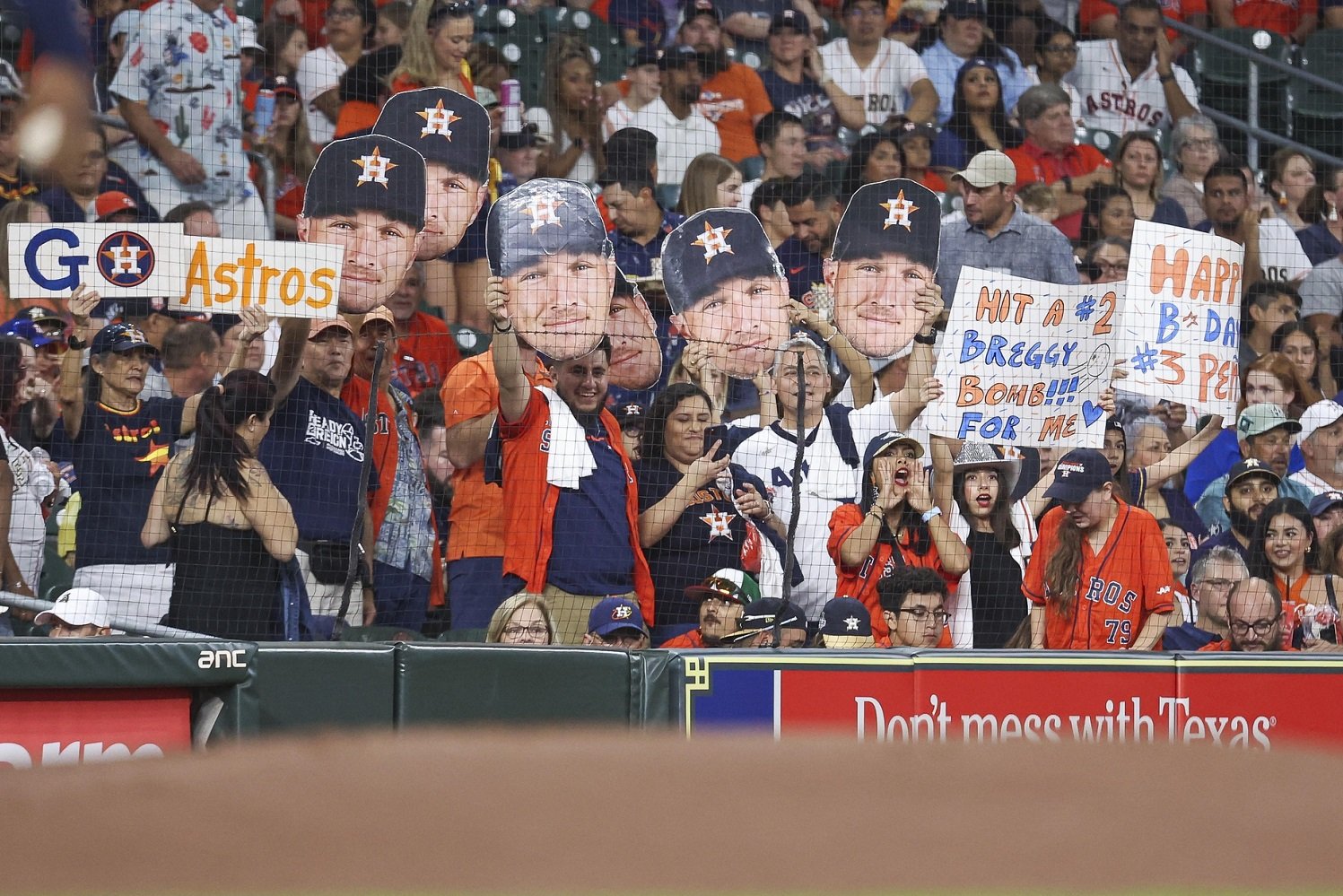 Among the many challenges that face the Minnesota Twins as they take on the defending Houston Astros, playing on the road in a playoff series will present a whole new set of challenges. It is one that only a handful of players on the roster have ever done before. But the Minute Maid Park presents a home run opportunity. Meet the Crawford Boxes, Houston’s home run-friendly left field dinger paradise. The left corner only requires a player to casually fly a ball 315 feet in the air to earn a trot around the bases. For comparison, Target Field’s short left corner is 339 feet. To add only the smallest bit of difficulty, the boxes are similarly designed like Fenway’s Green Monster and require more altitude than the usual swing. But the Boston wall is almost double the size of the Minute Maid Park, giving the latter still a huge advantage. The other corner of the Minute Maid Park is almost equally easy. While both Minnesota and Houston’s fields are around the same length in the corner (328 feet vs 326 feet), Target Field is a home run porch that requires altitude to reach it. Add the enclosed Gulf air providing a decent humidity effect compared to the cool October winds of Target Field, and that’s a stew to become a pitcher’s worst nightmare. According to one study done by Park Factors, the Minute Maid Park produces 112 home runs compared to a league average 100 home runs at other parks. Arguably, the Crawford Boxes were likely at least part of what pushed the front office and Baldelli to name Bailey Ober as the Game 1 starter. When the Twins visited Houston in May, they were still in a stretch of games where they were still trying to find their offensive grove. But that did not stop Royce Lewis—on his season debut—from putting one in the right corner, nor did it stop Ryan Jeffers from launching a missile to take a two-run lead in extras. Since that series, the Twins have transformed into an offensive powerhouse. In the second half of the season, Minnesota led the American League in home runs with 118 (the Astros were only a step behind with 114). In fact, looking at the spray charts of various Twins players, a number of them might find an advantage in Minute Maid, including Edouard Julien, Carlos Correa, and Alex Kirilloff. All of them have shown power for swings at the left fences. We don't know yet if he'll be on the ALDS roster, Byron Buxton has the power to make it happen as well. Beat writers covering the warm-ups have already reported the former All-Star is landing them in the left field porch. Whether the Twins can make the balls fly will be an unknown. Their Game Two opponent, Framber Valdez, has become a legend for his impressive ground ball rate. And Justin Verlander will no doubt be attempting to do the same. The bullpen could be the "X" factor; they allowed 41 homers at home compared to only 30 on the road. And of course, the same must all be said for Twins pitching, especially when going against power hitters like José Altuve and especially Yordan Álvarez. Every pitcher can make a mistake. And the Crawford Boxes are an opportunity to punish those mistakes, ensuring Minnesota a deep October run.
 -
In Game 2 of the Wild Card series, Minnesota Twins fans saw the "quick hook" of pulling a pitcher too early that many have been criticized Rocco Baldelli for throughout the 2021 and 2022 post-Covid and post-lockout seasons. The only problem? It wasn’t Baldelli doing it. Image courtesy of Jesse Johnson-USA TODAY Sports In Game 2 of the Wild Card series, Minnesota Twins fans saw the "quick hook" of pulling a pitcher too early that many have been criticized Rocco Baldelli for throughout the 2021 and 2022 post-Covid and post-lockout seasons. The only problem? It wasn’t Baldelli doing it. In what will be an infamous decision, Toronto Blue Jays manager John Schneider pulled his starter, former Twins right-hander José Berrios at only 47 pitches in the top of the fourth inning after walking Twins Legend Royce Lewis to lead off the inning. Berrios had been, in the words of many, dealing. He had allowed three hits, but also recorded five strikeouts. The decision would prove fatal. Lefty Yusei Kikuchi came into the game and induced ground ball after ground ball, but Max Kepler, Donovan Solano, and Carlos Correa put enough pepper on each to get on base and eventually put across two runs. Those runs would be the only runs scored during the whole ball game. Meanwhile, both Twins starters found themselves in trouble in the fifth Inning. Pablo López had a runner on second with only one out, while Sonny Gray had runners on second and third with two outs. Baldelli stuck with his starters, and both got out of their jams. Only after genuinely losing his stuff in the sixth did Baldelli finally pull López when it was clear he was reaching the end, with Louie Varland (and a major assist from Michael A. Taylor) to finish the inning. Gray was clearly gassed after five, and happily took the win he promised to his kids. In fact, there was only a single quick hook in the whole series. Varland came into the sixth in Game 2 and Baldelli pulled him when it was clear he could not find the strike zone and the go ahead run at the plate. Fireman Caleb Thielbar worked it out by inducing a transformative double play. Whether Schneider made the right decision with Berrios will be a point of major contention for baseball pundits and the entire country of Canada all offseason. Schneider's own players were even quick to criticize the decision, blaming the boogey man of “analytics.” But “analytics” are also what led Baldelli to keep his pitchers in. And however anyone wants to read why Baldelli makes the decisions he does and how much the front office is managing those decisions, one thing was clear: there were no quick hooks this series. The truth is Baldelli keeps his pitchers in as long as their stuff looks good and they can get productive outs. For some pitchers, that means a shorter leash. (see Archer, Chris, or Bundy, Dylan in 2022) Five innings and 5 2/3 innings could be considered a pretty short leash. But the playoffs are different. And only one team is now advancing to the Division Series. (Well two teams are advancing to the ALDS, but just one of the two teams that played at Target Field.) If the playoff curse can end, so can the myth of Baldelli’s quick hook. View full article
-
The Wild Card Series Should End the "Quick Hook" Baldelli Myth
Peter Labuza posted an article in Twins
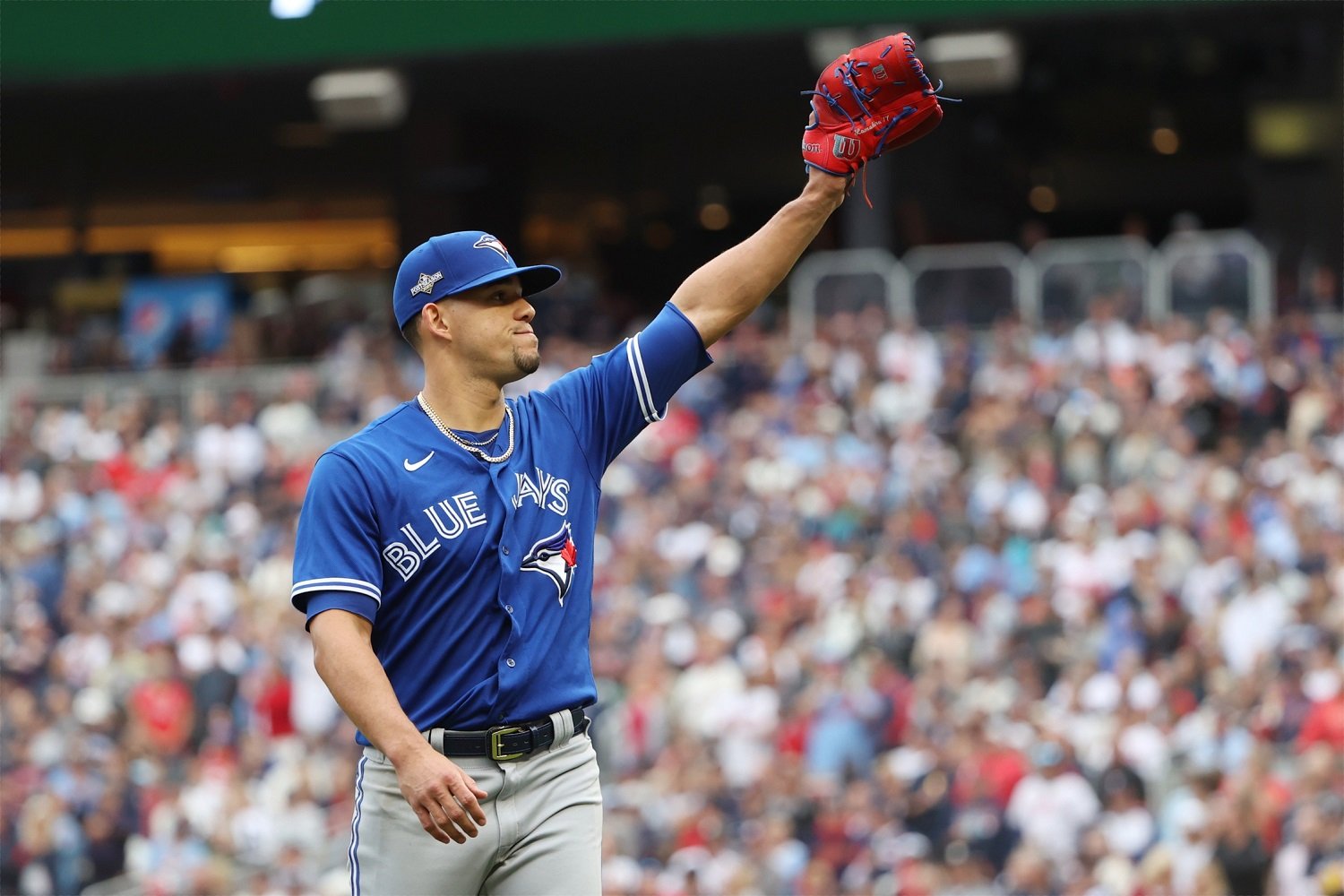 In what will be an infamous decision, Toronto Blue Jays manager John Schneider pulled his starter, former Twins right-hander José Berrios at only 47 pitches in the top of the fourth inning after walking Twins Legend Royce Lewis to lead off the inning. Berrios had been, in the words of many, dealing. He had allowed three hits, but also recorded five strikeouts. The decision would prove fatal. Lefty Yusei Kikuchi came into the game and induced ground ball after ground ball, but Max Kepler, Donovan Solano, and Carlos Correa put enough pepper on each to get on base and eventually put across two runs. Those runs would be the only runs scored during the whole ball game. Meanwhile, both Twins starters found themselves in trouble in the fifth Inning. Pablo López had a runner on second with only one out, while Sonny Gray had runners on second and third with two outs. Baldelli stuck with his starters, and both got out of their jams. Only after genuinely losing his stuff in the sixth did Baldelli finally pull López when it was clear he was reaching the end, with Louie Varland (and a major assist from Michael A. Taylor) to finish the inning. Gray was clearly gassed after five, and happily took the win he promised to his kids. In fact, there was only a single quick hook in the whole series. Varland came into the sixth in Game 2 and Baldelli pulled him when it was clear he could not find the strike zone and the go ahead run at the plate. Fireman Caleb Thielbar worked it out by inducing a transformative double play. Whether Schneider made the right decision with Berrios will be a point of major contention for baseball pundits and the entire country of Canada all offseason. Schneider's own players were even quick to criticize the decision, blaming the boogey man of “analytics.” But “analytics” are also what led Baldelli to keep his pitchers in. And however anyone wants to read why Baldelli makes the decisions he does and how much the front office is managing those decisions, one thing was clear: there were no quick hooks this series. The truth is Baldelli keeps his pitchers in as long as their stuff looks good and they can get productive outs. For some pitchers, that means a shorter leash. (see Archer, Chris, or Bundy, Dylan in 2022) Five innings and 5 2/3 innings could be considered a pretty short leash. But the playoffs are different. And only one team is now advancing to the Division Series. (Well two teams are advancing to the ALDS, but just one of the two teams that played at Target Field.) If the playoff curse can end, so can the myth of Baldelli’s quick hook.
- 34 comments
-
- 7
-
-

-
- rocco baldelli
- sonny gray
- (and 2 more)
-
Twins Daily 2023 Awards: Top Rookie
Peter Labuza replied to Cody Schoenmann's topic in Twins Daily Front Page News
Apologies to Louie who probably deserved my vote over Kody — I totally forgot he was still a rookie.- 6 replies
-
- 2
-

-
-
- kody funderburk
- louis varland
- (and 3 more)
-
When Twins return to the playoffs, fans can all but guarantee seeing Pablo López or Sonny Gray—both Cy Young contending pitchers—take the mound for the first two games of the Wild Card series. However, a complicated dog fight elsewhere might mean their opponent will likely be unable to match the duo. Image courtesy of Matt Blewett-USA TODAY Sports When Twins return to the playoffs, fans can all but guarantee seeing Pablo López or Sonny Gray—both Cy Young contending pitchers—take the mound for the first two games of the Wild Card series. However, a complicated dog fight elsewhere might mean their opponent will likely be unable to match the duo. As it remains, the Astros, Mariners, Blue Jays, and Rangers continue to battle over three potential positions in the American League playoff race. One team is guaranteed to sit at home throughout October. A total of three games separates them, which means every win in this last week will have to be fought to the bone. To win those games, none of these teams can compromise and rest a starter for a playoff game they might not even make. Meanwhile, Sonny Gray and Pablo López are set to each have over a week of rest after their final regular season appearances over this week. With pitching probables almost set for the rest of the season, we can now see who might line up for these games. While the Twins might want clarity on who they might face, this race to the final game could ensure that the team might not be ready to put their "ace" on the mound in Game 1. With the season-ending Sunday, October 1st, and the Wild Card beginning two days later, those teams will likely have to use their preferred Game 1 pitcher on the last day of the season and, if things go very south, perhaps quickly get a Game 2 pitcher out there to try and salvage a last minute win. Even with one day off, the bullpens of those teams might be similarly overtaxed going into this last week of work. With the Twins, it all comes down to breaking the curse. Some of these potential matchups thus allow them to sneak at least one game by their opponents. Here's how the four teams line up this week and how it might play out for the Twins: Astros Justin Verlander and Hunter Brown are currently projected for Houston's final games of the season in Arizona, which would likely only mean one would show up for Game 3 of a Wild Card race. That means the Dusty Baker-managed team will probably have their ground ball producer Framber Valdez to start a Wild Card series before turning to Cristian Javier for Game 2. The lefty Valdez will be trouble for Minnesota, but Javier presents an excellent opportunity. With an xFIP at 5.18, the Twins could make mincemeat of the struggling pitcher. Blue Jays The Blue Jays seemed likely to have a formidable rotation that has run into road bumps all season. However, their Cy Young candidate, Kevin Gausman, will face off against Tampa Bay on Sunday. Eliminating him from the series would likely put Chris Bassitt or José Berríos against the Twins in Game 1. Both are still quite formidable— Bassitt has a 3.17 ERA since the All Star Break, while Berríos has recovered from a disastrous start to his time in Toronto. But the Twins have previously exposed both their weaknesses and could do again. Mariners Luis Castillo recorded twenty strikeouts against the Twins in his two appearances against the team in July. Fortunately, Castillo is scheduled for Saturday for the Mariners in their fight with Texas, making him likely only available in a Game 3 situation. If the Twins were worried about George Kirby, the young ace would also be exhausted for Sunday's game. That will push rookie Bryce Miller or Logan Gilbert to the front lines. Neither are walks in the park, but the Twins put up six runs against Miller in July and have not seen Gilbert since 2022. Rangers The Twins punished the Rangers in their September series. They would likely be happy to face the current AL West leaders in the playoffs, especially after future Hall of Famer Max Scherzer exited for the season. However, the current pitching schedule for the Rangers will give them some compelling options even if they play to the final game. Jon Gray will likely play the last game of the season for the Rangers, pushing Nathan Eovaldi or Jordan Montgomery into a Game 1 situation. While the Twins put up crooked numbers against Montgomery at the beginning of the month, the pitcher has gone seven innings in his last three starts while only allowing a single run. The former Red Sox could be trouble for Minnesota. During his injury stint, the Twins missed the pitcher, and he has yet to return to his top form. However, Eovaldi has more postseason experience than the rest of the lineup; if he shows up in that form, expect a lot of swings and misses. View full article
-
 As it remains, the Astros, Mariners, Blue Jays, and Rangers continue to battle over three potential positions in the American League playoff race. One team is guaranteed to sit at home throughout October. A total of three games separates them, which means every win in this last week will have to be fought to the bone. To win those games, none of these teams can compromise and rest a starter for a playoff game they might not even make. Meanwhile, Sonny Gray and Pablo López are set to each have over a week of rest after their final regular season appearances over this week. With pitching probables almost set for the rest of the season, we can now see who might line up for these games. While the Twins might want clarity on who they might face, this race to the final game could ensure that the team might not be ready to put their "ace" on the mound in Game 1. With the season-ending Sunday, October 1st, and the Wild Card beginning two days later, those teams will likely have to use their preferred Game 1 pitcher on the last day of the season and, if things go very south, perhaps quickly get a Game 2 pitcher out there to try and salvage a last minute win. Even with one day off, the bullpens of those teams might be similarly overtaxed going into this last week of work. With the Twins, it all comes down to breaking the curse. Some of these potential matchups thus allow them to sneak at least one game by their opponents. Here's how the four teams line up this week and how it might play out for the Twins: Astros Justin Verlander and Hunter Brown are currently projected for Houston's final games of the season in Arizona, which would likely only mean one would show up for Game 3 of a Wild Card race. That means the Dusty Baker-managed team will probably have their ground ball producer Framber Valdez to start a Wild Card series before turning to Cristian Javier for Game 2. The lefty Valdez will be trouble for Minnesota, but Javier presents an excellent opportunity. With an xFIP at 5.18, the Twins could make mincemeat of the struggling pitcher. Blue Jays The Blue Jays seemed likely to have a formidable rotation that has run into road bumps all season. However, their Cy Young candidate, Kevin Gausman, will face off against Tampa Bay on Sunday. Eliminating him from the series would likely put Chris Bassitt or José Berríos against the Twins in Game 1. Both are still quite formidable— Bassitt has a 3.17 ERA since the All Star Break, while Berríos has recovered from a disastrous start to his time in Toronto. But the Twins have previously exposed both their weaknesses and could do again. Mariners Luis Castillo recorded twenty strikeouts against the Twins in his two appearances against the team in July. Fortunately, Castillo is scheduled for Saturday for the Mariners in their fight with Texas, making him likely only available in a Game 3 situation. If the Twins were worried about George Kirby, the young ace would also be exhausted for Sunday's game. That will push rookie Bryce Miller or Logan Gilbert to the front lines. Neither are walks in the park, but the Twins put up six runs against Miller in July and have not seen Gilbert since 2022. Rangers The Twins punished the Rangers in their September series. They would likely be happy to face the current AL West leaders in the playoffs, especially after future Hall of Famer Max Scherzer exited for the season. However, the current pitching schedule for the Rangers will give them some compelling options even if they play to the final game. Jon Gray will likely play the last game of the season for the Rangers, pushing Nathan Eovaldi or Jordan Montgomery into a Game 1 situation. While the Twins put up crooked numbers against Montgomery at the beginning of the month, the pitcher has gone seven innings in his last three starts while only allowing a single run. The former Red Sox could be trouble for Minnesota. During his injury stint, the Twins missed the pitcher, and he has yet to return to his top form. However, Eovaldi has more postseason experience than the rest of the lineup; if he shows up in that form, expect a lot of swings and misses.
 -
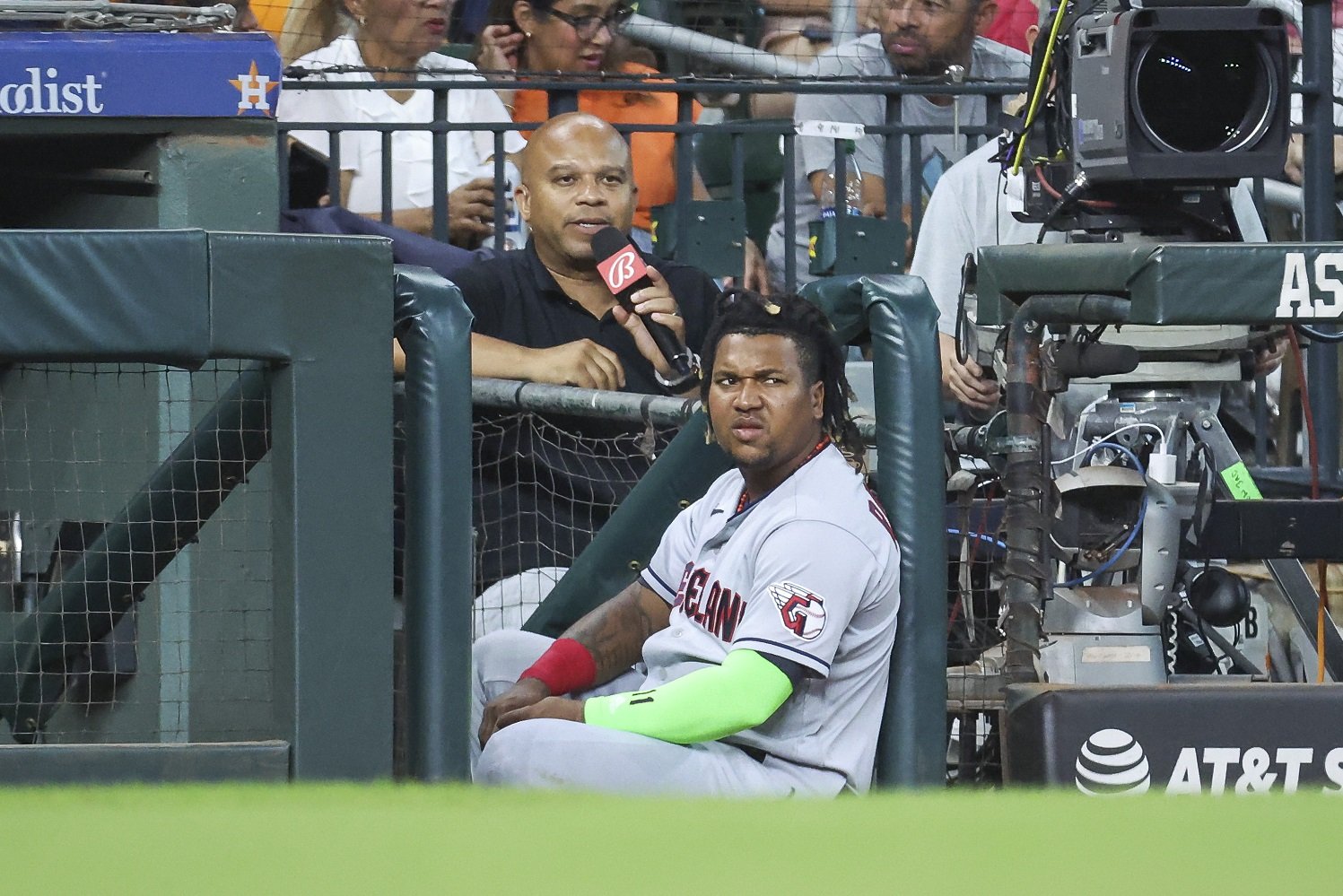 In a neck and neck race for the division, the Guardians could have easily improved their line up given the under performing Twins. Instead, they traded top pitcher Aaron Civale with two more years of team control to the Tampa Bay Rays for a first basemen prospect. What is Cleveland doing? They had a chance to strike big and run away with the division. Once again, they seem desperate to let the Twins—who also opted for a very quiet deadline—stay in the race. Their biggest addition was dealing away their poorly performing starting shortstop Amed Rosario to the Los Angeles Dodgers for an even more risky choice: former All Star starting pitcher Noah Syndergaard. Syndergaard took a one year deal with the Dodgers during the off season in the hopes their development team might turn him into a high quality rebound like Tyler Anderson or Andrew Heaney . But Syndergaard seemed more focused on bringing back his velocity than his pitch design, ending up on the Injured List as a way to stash him rather than let him throw. Cleveland’s plan seems to be to try their own development, and his Guardians debut against the Astros looks good until he took a ball to the knee (though xWOBA tells a very different story), but it's hard to say whether real changes in approach are coming. Another trade? Giving up recent acquisition Josh Bell for the Marlins' Jean Segura, who has a 55 WRC+ this season and the Guardians plan on immediately releasing, alongside shortstop prospect Kahlil Watson. So once again, Cleveland acted more as a seller than a buyer. It has worked out in the past—just ask a 2022 team that almost slipped by the Yankees in the Division series. But why can’t the Guardians build on this weak division and become perennial contenders rather than slipping in thanks to injuries? The truth is always been what it is: The Dolan Family, father Larry and son Paul, are the biggest culprit in keeping the Guardians from real competition. The ownership family has continually run a payroll less than half of the White Sox and Twins. They have one of the most underrated players in baseball accept a ridiculously team friendly extension worth less than Carlos Correa’s foot-hampered price tag. They get $19 million a year from city and state officials to pay for their stadium while bringing in over $250 million. The Dolan family is worth over $5 billion; what is a couple of all stars to mix in with their standout graduates from the farm? Why own a team if you don't want them to win? Attendance is up by 44% this season for this young and exciting team, and the front officer would rather create disappointment more than excitement. Cleveland has at least some good reasons to stay wary about a long October run this year. The run support of last year’s single-mashing team has put them in a worse place than the Twins’ shaky offense (they ran 23rd compared to Minnesota at 15th). Three of their top starters are sidelined with iffy return dates, while their rookies are reaching their innings limits. But that should be all reasons to add, especially with a farm still ranked #2 despite major promotions in the last two years. The only reason teams like the White Sox and the Twins have been able to steal so many division titles over the years is Dolans' refusal to put any chips in. Instead, they will roll the dice and hope Minnesota falters. Not an impossible hope, but one that benefits less competition rather than more.
 -
Once again, the Twins find themselves in a tight race with the Guardians going the American League Central Division. And lucky for Twins fans, the only thing keeping the team alive in that race is the Cleveland front office going in as sellers at the deadline. Image courtesy of Troy Taormina-USA TODAY Sports Once again, the Twins find themselves in a tight race with the Guardians going the American League Central Division. And lucky for Twins fans, the only thing keeping the team alive in that race is the Cleveland front office going in as sellers at the deadline. In a neck and neck race for the division, the Guardians could have easily improved their line up given the under performing Twins. Instead, they traded top pitcher Aaron Civale with two more years of team control to the Tampa Bay Rays for a first basemen prospect. What is Cleveland doing? They had a chance to strike big and run away with the division. Once again, they seem desperate to let the Twins—who also opted for a very quiet deadline—stay in the race. Their biggest addition was dealing away their poorly performing starting shortstop Amed Rosario to the Los Angeles Dodgers for an even more risky choice: former All Star starting pitcher Noah Syndergaard. Syndergaard took a one year deal with the Dodgers during the off season in the hopes their development team might turn him into a high quality rebound like Tyler Anderson or Andrew Heaney . But Syndergaard seemed more focused on bringing back his velocity than his pitch design, ending up on the Injured List as a way to stash him rather than let him throw. Cleveland’s plan seems to be to try their own development, and his Guardians debut against the Astros looks good until he took a ball to the knee (though xWOBA tells a very different story), but it's hard to say whether real changes in approach are coming. Another trade? Giving up recent acquisition Josh Bell for the Marlins' Jean Segura, who has a 55 WRC+ this season and the Guardians plan on immediately releasing, alongside shortstop prospect Kahlil Watson. So once again, Cleveland acted more as a seller than a buyer. It has worked out in the past—just ask a 2022 team that almost slipped by the Yankees in the Division series. But why can’t the Guardians build on this weak division and become perennial contenders rather than slipping in thanks to injuries? The truth is always been what it is: The Dolan Family, father Larry and son Paul, are the biggest culprit in keeping the Guardians from real competition. The ownership family has continually run a payroll less than half of the White Sox and Twins. They have one of the most underrated players in baseball accept a ridiculously team friendly extension worth less than Carlos Correa’s foot-hampered price tag. They get $19 million a year from city and state officials to pay for their stadium while bringing in over $250 million. The Dolan family is worth over $5 billion; what is a couple of all stars to mix in with their standout graduates from the farm? Why own a team if you don't want them to win? Attendance is up by 44% this season for this young and exciting team, and the front officer would rather create disappointment more than excitement. Cleveland has at least some good reasons to stay wary about a long October run this year. The run support of last year’s single-mashing team has put them in a worse place than the Twins’ shaky offense (they ran 23rd compared to Minnesota at 15th). Three of their top starters are sidelined with iffy return dates, while their rookies are reaching their innings limits. But that should be all reasons to add, especially with a farm still ranked #2 despite major promotions in the last two years. The only reason teams like the White Sox and the Twins have been able to steal so many division titles over the years is Dolans' refusal to put any chips in. Instead, they will roll the dice and hope Minnesota falters. Not an impossible hope, but one that benefits less competition rather than more. View full article
-
I wrote the draft on Saturday and then it only got published after...things happen!
-
A Month Later, The Twins’ Players-Only Meeting Created A Reset
Peter Labuza posted an article in Twins
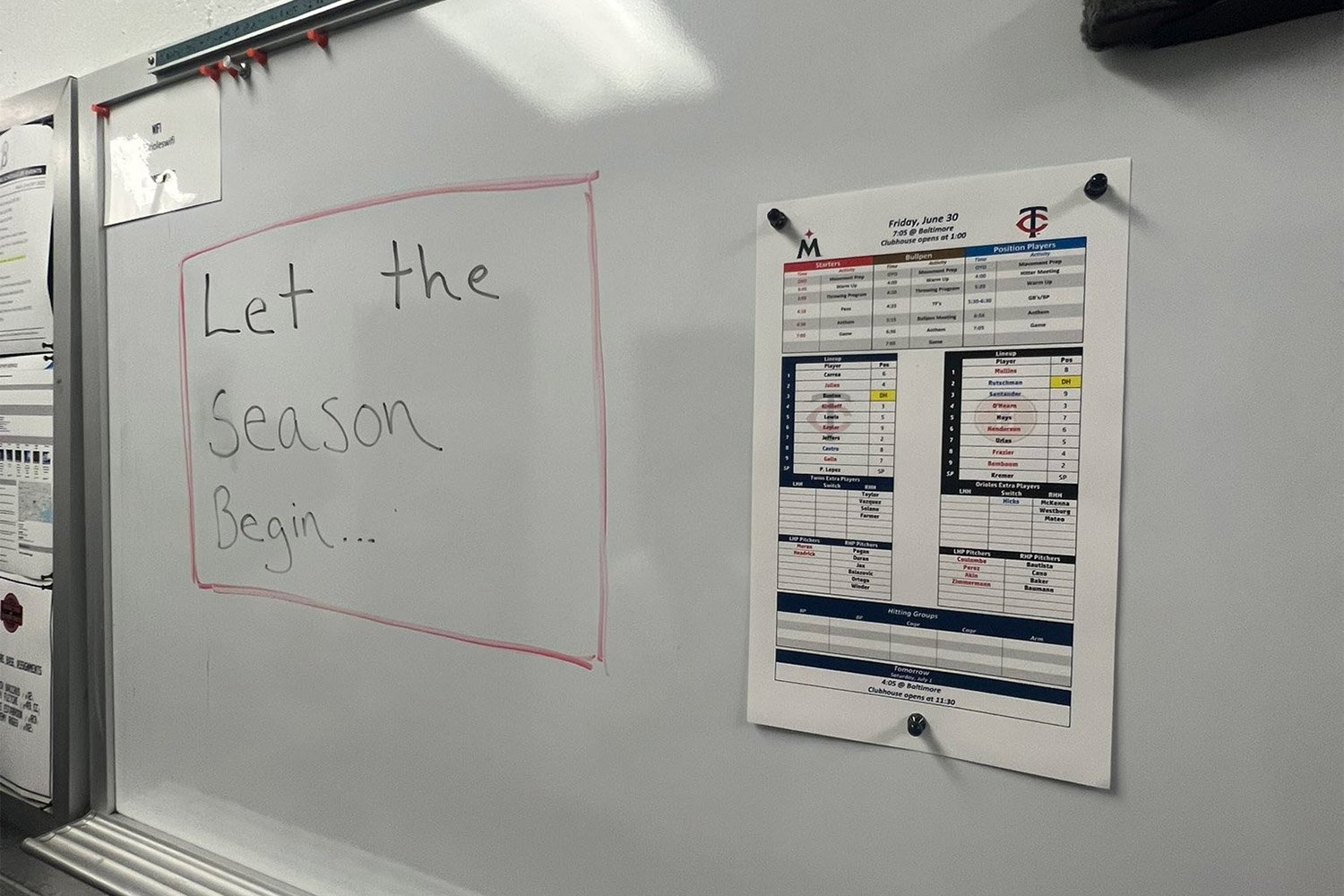 Teams love a reset, and after the Twins’ terrible showing against the Braves at the end of June, it seemed essential to find a new course. Although not every series or game has worked out in Minnesota’s favor, it cannot be denied that the hitters have finally figured something out. Since the All Star Game, the Twins have led the American League in hitting WAR, tied with the Angels for most runs scored. Even if strikeouts are still up, so are walks. More importantly, the runs scored have exploded. Before the break, the Twins managed to score either two runs or less in 37 of 91 games. They’ve only had a single game—a tough shut out against Seattle’s George Kirby—where they didn’t score at least three runs. They’ve fought off deficits in late innings for stunning comebacks. Even with the particularly tough performances by Byron Buxton and Joey Gallo, the Twins are suddenly a hitting machine. So who exactly changed? And how did these players go from zeros to heroes? Note: I skipped rookies Edouard Julien and Royce Lewis. Lewis was injured only days after the players’ meeting. Julien was present for the meeting, but he was clearly adjusting to the majors still —though it didn’t take long to figure it out. Also notable: Donovan Solano is a bit down on the month after his stellar mid-season work, mostly due to a few less hits this month alongside reduced playing time. Carlos Correa: 90 Pre-Meeting WRC+, 113 Post-Meeting WRC+ During an Apple+ broadcast earlier this season, Dontrelle Willis asked Correa if he thought he could strike out the former pitcher. “In May, you get me, in July, I’ll get you.” Correa’s slow start is part of his usual M.O, but this season seemed particularly disastrous with the All Star batting a season low.212 through the end of June. Rocco Baldelli responded with something aggressive for the hitter, by turning him into a lead off player. The results have been quite notable; Correa is hitting .278 since the meeting and dropped his strikeout rate from 24.1% to 18.4%. He’s done so by sacrificing power for a series of singles and doubles—his isolated power is down around 33% but his BABIP is up over 100 points. Correa may prefer to slug a few more home runs, but he’s clearly adjusted to a very different role by playing like another former Twin. Max Kepler: 84 Pre-Meeting WRC+, 124 Post-Meeting WRC+ Most fans continued to be baffled by Max Kepler’s presence in a line up with players like Matt Wallner and Trevor Larnach wasting away in the minors. He responded by becoming one of the most reliable bats on the team. Kepler went from hitting under the Mendoza Line to batting .287/.330/.483 since the meeting. His power is about the same, but Kepler has increased his BABIP from a paltry .195 to a strong .333. In a recent interview, Kepler puts the success on his teammates; when they’re on base, he’s been aiming to hit them home. Alex Kirilloff: 120 Pre-Meeting WRC+, 150 Post-Meeting WRC+ There were so many questions regarding Alex Kirilloff going into the season, especially after starting on the IL in order to slowly improve his wrist issues. Any thought of the wrist has essentially vanished. Since the meeting, Kirilloff has notably become more patient at the plate, doubling his walk-to-strikeout ratio, jumping his slugging from .401 to .532, and doubling his Isolated Power from below average to elite. Perhaps if you spend some time studying Aaron Judge, you can become an elite player too. Ryan Jeffers: 130 Pre-Meeting WRC+, 150 Post-Meeting WRC+ Ryan Jeffers was not exactly struggling in the early parts of the season as much as fighting to justify more playing time. Since the meeting, Jeffers and Christian Vasquez have evenly split their time behind the plate, but the younger man has taken the advantage to increase his BABIP from .389 to .429 as he mashes against Right Handed pitching. His .408 On Base Percentage is currently only second to Edouard Julien and he's posting a .981 OPS for July. If Vasquez's utility has become almost entirely behind the plate, Jeffers is making up for it. Michael A. Taylor: 80 Pre-Meeting WRC+, 117 Post-Meeting WRC+ Willi Castro: 97 Pre-Meeting WRC+, 95 Post-Meeting WRC+ I’m pairing these players together because Castro’s most useful aspect in the last month of the season hasn’t been his bat as much as his improved role in the field. Though Taylor remains an elite player, acting as a platoon player rather than full time in Center Field has allowed Baldelli to put him with the right match ups. Rather than hit a miniscule .213, he’s improved it to a respectable .256. Castro has slipped a bit after his strong run in June, though he has significantly tripled his walk-to-strikeout ratio. By giving Taylor the needed breaks to match against better hitters, Castro hasn’t dropped that much (while actually almost leading the team in Win Probability Added for his critical steals). The same approach has made Kyle Farmer a weapon for the team as well, where less playing time means better plate appearances. Getting swept in Atlanta is one thing... Getting swept in Kansas City is another. Do the Twins need another players-only meeting?
- 13 comments
-
- 5
-
-
- carlos correa
- alex kirilloff
- (and 3 more)
-
Following a disastrous series on Atlanta, the Twins held a players-only meeting and vowed to restart. Now a month since that discussion, it’s easy to see real effects. Image courtesy of Audra Martin Following a disastrous series on Atlanta, the Twins held a players-only meeting and vowed to restart. Now a month since that discussion, it’s easy to see real effects. Teams love a reset, and after the Twins’ terrible showing against the Braves at the end of June, it seemed essential to find a new course. Although not every series or game has worked out in Minnesota’s favor, it cannot be denied that the hitters have finally figured something out. Since the All Star Game, the Twins have led the American League in hitting WAR, tied with the Angels for most runs scored. Even if strikeouts are still up, so are walks. More importantly, the runs scored have exploded. Before the break, the Twins managed to score either two runs or less in 37 of 91 games. They’ve only had a single game—a tough shut out against Seattle’s George Kirby—where they didn’t score at least three runs. They’ve fought off deficits in late innings for stunning comebacks. Even with the particularly tough performances by Byron Buxton and Joey Gallo, the Twins are suddenly a hitting machine. So who exactly changed? And how did these players go from zeros to heroes? Note: I skipped rookies Edouard Julien and Royce Lewis. Lewis was injured only days after the players’ meeting. Julien was present for the meeting, but he was clearly adjusting to the majors still —though it didn’t take long to figure it out. Also notable: Donovan Solano is a bit down on the month after his stellar mid-season work, mostly due to a few less hits this month alongside reduced playing time. Carlos Correa: 90 Pre-Meeting WRC+, 113 Post-Meeting WRC+ During an Apple+ broadcast earlier this season, Dontrelle Willis asked Correa if he thought he could strike out the former pitcher. “In May, you get me, in July, I’ll get you.” Correa’s slow start is part of his usual M.O, but this season seemed particularly disastrous with the All Star batting a season low.212 through the end of June. Rocco Baldelli responded with something aggressive for the hitter, by turning him into a lead off player. The results have been quite notable; Correa is hitting .278 since the meeting and dropped his strikeout rate from 24.1% to 18.4%. He’s done so by sacrificing power for a series of singles and doubles—his isolated power is down around 33% but his BABIP is up over 100 points. Correa may prefer to slug a few more home runs, but he’s clearly adjusted to a very different role by playing like another former Twin. Max Kepler: 84 Pre-Meeting WRC+, 124 Post-Meeting WRC+ Most fans continued to be baffled by Max Kepler’s presence in a line up with players like Matt Wallner and Trevor Larnach wasting away in the minors. He responded by becoming one of the most reliable bats on the team. Kepler went from hitting under the Mendoza Line to batting .287/.330/.483 since the meeting. His power is about the same, but Kepler has increased his BABIP from a paltry .195 to a strong .333. In a recent interview, Kepler puts the success on his teammates; when they’re on base, he’s been aiming to hit them home. Alex Kirilloff: 120 Pre-Meeting WRC+, 150 Post-Meeting WRC+ There were so many questions regarding Alex Kirilloff going into the season, especially after starting on the IL in order to slowly improve his wrist issues. Any thought of the wrist has essentially vanished. Since the meeting, Kirilloff has notably become more patient at the plate, doubling his walk-to-strikeout ratio, jumping his slugging from .401 to .532, and doubling his Isolated Power from below average to elite. Perhaps if you spend some time studying Aaron Judge, you can become an elite player too. Ryan Jeffers: 130 Pre-Meeting WRC+, 150 Post-Meeting WRC+ Ryan Jeffers was not exactly struggling in the early parts of the season as much as fighting to justify more playing time. Since the meeting, Jeffers and Christian Vasquez have evenly split their time behind the plate, but the younger man has taken the advantage to increase his BABIP from .389 to .429 as he mashes against Right Handed pitching. His .408 On Base Percentage is currently only second to Edouard Julien and he's posting a .981 OPS for July. If Vasquez's utility has become almost entirely behind the plate, Jeffers is making up for it. Michael A. Taylor: 80 Pre-Meeting WRC+, 117 Post-Meeting WRC+ Willi Castro: 97 Pre-Meeting WRC+, 95 Post-Meeting WRC+ I’m pairing these players together because Castro’s most useful aspect in the last month of the season hasn’t been his bat as much as his improved role in the field. Though Taylor remains an elite player, acting as a platoon player rather than full time in Center Field has allowed Baldelli to put him with the right match ups. Rather than hit a miniscule .213, he’s improved it to a respectable .256. Castro has slipped a bit after his strong run in June, though he has significantly tripled his walk-to-strikeout ratio. By giving Taylor the needed breaks to match against better hitters, Castro hasn’t dropped that much (while actually almost leading the team in Win Probability Added for his critical steals). The same approach has made Kyle Farmer a weapon for the team as well, where less playing time means better plate appearances. Getting swept in Atlanta is one thing... Getting swept in Kansas City is another. Do the Twins need another players-only meeting? View full article
-
 As reported by Phil Miller in the Star Tribune, Diamond Sports Group and the Twins were able to make a deal and pay the $54.8 million due on final year of the Twins’ contract with the Regional Sports Network (RSN). Twins games will continue to air on the network throughout the regular season. As a judge ordered in a filing at the beginning of June, Diamond had until July 1st to make payments to both the Minnesota Twins and Cleveland Guardians. According to Miller, Diamond has paid the Twins as well as the Rangers and are currently negotiating a deal with the Arizona Diamondbacks. Nothing has been reported in the last few days on where the Guardians stand, though the team's games this week are still on the Bally Sports Great Lakes Network schedule. The trouble for MLB began earlier this year when Diamond Sports Group filed for Chapter 11 bankruptcy and began skipping payments. The company, a subsidiary of Sinclair and its dozens of local broadcasting networks, was formed out of the merger between 20th Century Fox and Disney. Because Disney already operated ESPN, a judge concerned about consolidation ordered the company to sell the assets, which Sinclair did for $10 billion in 2019. Even before the pandemic, the price was mostly unsustainable for the returns on RSNs given the changing landscape of cable. Since the announcement of the bankruptcy, MLB has been in court hoping to regain the rights from the company and begin the process of building access for fans without partnering with cable. The Twins were in the most precarious spot given they were on the final year of a 12-year contract that began with Fox Broadcasting. Although MLB Commissioner Rob Manfred announced the league would cover up to 80% of these contracts, the guaranteed payments from Bally’s are a welcome surprise. The thought by many was that the Twins would likely go the way of the Padres, which now appear on an MLB produced sports network after skipped payments allowed the team to take complete control. The channel has mostly remained the same for viewers with MLB retaining the broadcast talent and employing most of the same freelance team of camera operators and editors. The main difference for fans was a different channel and a different (and frankly, less annoying) score bug. This is a good win for the Twins ownership. It ensures the necessary revenue for the team given its current financial state alongside a more aggressive spending appetite this year. The team still hopes to break the two million fan mark this season, which current numbers reflect that as a serious possibility. More so, the Bally’s team has worked hard to make a more meaningful broadcast experience, with more discussion of lesser known stats and the welcome addition of Glen Perkins as a more regular contributor. On the other hand, Bally’s remains very inaccessible to local fans. The network was never added to streaming cable packages like Hulu, and stopped appearing on Dish Network and YouTube TV years ago. While MLB has offered local Padres fans in San Diego a local streaming option for $20 a month, Twins games remained blacked out for those without the right cable subscription. What the team will do next year to change this status quo is unknown. Ownership has mentioned that the team has discussed multiple new bidders to take over the contract, but the changing sports landscape has presented new opportunities beyond another RSN available to few. NBA teams like the Utah Jazz and Phoenix Suns have decided to partner with local “over the top” broadcasters (such as KMSP and KARE) in order to distribute games for free in the local area and expand the fan base. MLB Commissioner Rob Manfred has mentioned the problem of reach engineered by the RSNs, though he has spoke more of an expanded streaming network with less blackouts. With the Twins’ anxieties solved for this year, let’s hope the team takes an expansive view of what they can send to fans next year.
 -
In a somewhat surprising turn after months of financial and legal drama, the Minnesota Twins will remain on Bally Sports North throughout the 2023 season. Image courtesy of Kirby Lee-USA TODAY Sports In a somewhat surprising turn after months of financial and legal drama, the Minnesota Twins will remain on Bally Sports North throughout the 2023 season. As reported by Phil Miller in the Star Tribune, Diamond Sports Group and the Twins were able to make a deal and pay the $54.8 million due on final year of the Twins’ contract with the Regional Sports Network (RSN). Twins games will continue to air on the network throughout the regular season. As a judge ordered in a filing at the beginning of June, Diamond had until July 1st to make payments to both the Minnesota Twins and Cleveland Guardians. According to Miller, Diamond has paid the Twins as well as the Rangers and are currently negotiating a deal with the Arizona Diamondbacks. Nothing has been reported in the last few days on where the Guardians stand, though the team's games this week are still on the Bally Sports Great Lakes Network schedule. The trouble for MLB began earlier this year when Diamond Sports Group filed for Chapter 11 bankruptcy and began skipping payments. The company, a subsidiary of Sinclair and its dozens of local broadcasting networks, was formed out of the merger between 20th Century Fox and Disney. Because Disney already operated ESPN, a judge concerned about consolidation ordered the company to sell the assets, which Sinclair did for $10 billion in 2019. Even before the pandemic, the price was mostly unsustainable for the returns on RSNs given the changing landscape of cable. Since the announcement of the bankruptcy, MLB has been in court hoping to regain the rights from the company and begin the process of building access for fans without partnering with cable. The Twins were in the most precarious spot given they were on the final year of a 12-year contract that began with Fox Broadcasting. Although MLB Commissioner Rob Manfred announced the league would cover up to 80% of these contracts, the guaranteed payments from Bally’s are a welcome surprise. The thought by many was that the Twins would likely go the way of the Padres, which now appear on an MLB produced sports network after skipped payments allowed the team to take complete control. The channel has mostly remained the same for viewers with MLB retaining the broadcast talent and employing most of the same freelance team of camera operators and editors. The main difference for fans was a different channel and a different (and frankly, less annoying) score bug. This is a good win for the Twins ownership. It ensures the necessary revenue for the team given its current financial state alongside a more aggressive spending appetite this year. The team still hopes to break the two million fan mark this season, which current numbers reflect that as a serious possibility. More so, the Bally’s team has worked hard to make a more meaningful broadcast experience, with more discussion of lesser known stats and the welcome addition of Glen Perkins as a more regular contributor. On the other hand, Bally’s remains very inaccessible to local fans. The network was never added to streaming cable packages like Hulu, and stopped appearing on Dish Network and YouTube TV years ago. While MLB has offered local Padres fans in San Diego a local streaming option for $20 a month, Twins games remained blacked out for those without the right cable subscription. What the team will do next year to change this status quo is unknown. Ownership has mentioned that the team has discussed multiple new bidders to take over the contract, but the changing sports landscape has presented new opportunities beyond another RSN available to few. NBA teams like the Utah Jazz and Phoenix Suns have decided to partner with local “over the top” broadcasters (such as KMSP and KARE) in order to distribute games for free in the local area and expand the fan base. MLB Commissioner Rob Manfred has mentioned the problem of reach engineered by the RSNs, though he has spoke more of an expanded streaming network with less blackouts. With the Twins’ anxieties solved for this year, let’s hope the team takes an expansive view of what they can send to fans next year. View full article
-
Carlos Correa is the Twins' Biggest Problem
Peter Labuza replied to Cody Pirkl's topic in Twins Daily Front Page News
Just to add, if you look at ZIPS Projections vs WAR doubled (aka what would their WAR total be if accounting for the whole season), Correa is down by 4.5 points. No other player is coming close. -
A partnership with Audacy is slowly destroying the radio experience across baseball everywhere. When first introduced in 2002, MLB TV became a revolutionary way for baseball fans to follow teams outside of their home market. Fans across the United States could tune into almost any game broadcast—sans blackouts—and enjoy the teams that mattered to us most. For some, the TV part is what matters. For others, MLB TV also comes with rights to every game on radio. The radio is an essential piece of the deal—whether it’s for listening at work, on the road, or in spaces where you might not be able to carry an AM radio. (Additionally, those of us who might want to avoid John Smoltz’s playoff commentary can switch over to local broadcasters). But now a second year into operating for all 162 games + playoffs with the audio streaming company Audacy, MLB is allowing the company to destroy the product. Extremely delayed live broadcasts, overly loud betting ads, and more are taking away an essential form of baseball consumption. And as MLB contemplates a different form of television consumption, it is time they seriously invest in radio. Both Audacy and MLB did not respond for request to comment on this story. In a story on GeekWire, MLB responded by noting, “Due to technological limitations in the digital space, latency of the feeds is unavoidable. We have had success working with our partner to reduce the latency times and we will continue to work on further improvements.” Audacy’s “disruption” into MLB radio is to replace the game’s local ads. So rather than get Sheboygan Sausage ads with Byron Buxton, I will get ads for local Honda dealers in Southern California. However, these ads often start before the inning is over and last long into the next inning. I will often get updates on my phone about the new score of the game minutes before the radio broadcast returns. (Additionally, these ads come over streaming — meaning they do not apply to the CALM Act that limits the volume of ads). I’ll just start with one example from earlier this week: I was watching the Mariners play the Cubs on MLB TV. I needed to start dinner, so I did what I usually do: put the TV on mute, and turn on the radio broadcast in my kitchen. It’s a perfect compromise: the radio calls the game with more description, so I can listen carefully, and if there’s a critical play, I can step over to the TV to watch the replay. I then proceeded to hear over seven minutes of ads. Much longer than they should by a mile; I walked over to the TV and noticed that the game already had two outs. By the time the Mariners had retired the side on the TV broadcast, Audacy was still feeding me ads. When it finally returned, the broadcast cut into the game already with two outs and the batter had a 1-1 count. 10 seconds later, the batter was retired. Audacy had essentially skipped the bottom of the ninth. Since the delays began in 2022, I have contacted Audacy multiple times. According to Audacy’s Support Representatives, this is essentially a function of the delay of broadcast and “expected behavior.” An understandable delay of 5-15 seconds, which is what most streams of sports usually provide compared to OTA and Cable broadcasts, is nowhere near what Audacy is providing. Instead, the game is often six to seven pitches behind. More so, MLB TV offers an option to sync the radio broadcast with the TV broadcast, which brings the game more or less in real time. It is possible to get an on time broadcast, but Audacy’s pursuit of ads is literally slowing down the game. If you’re an old school fan who loves listening to the radio at the ballpark, you’re best bet is to bring an actual radio than rely on this scam of a product. For those of us on Twitter or in Discord channels watching the game with others, it can ruin the surprise of a home run. As much as I miss Buxton singing about sausage, I won’t argue against Audacy trying to make money via advertising. So far this year, Audacy has cut down on what felt like at least 50% ads for gambling, a true scourge on the sport. But this is the second year of this partnership and the technical issues have only become worse. And given that MLB can at least do a stream either faster or at least in real time without Audacy, perhaps it is time to return to what worked before. What will actually get Audacy to fix the problem? Probably nothing, which is why I recommend those who love MLB on the radio to deliberately work against it and boycott Audacy's programs. Those with an MLB TV subscription can listen to non-Audacy broadcasts via KODI. Or, fans can use the MLB radio broadcast option via MLB TV—this has the problem of requiring the iPhone screen to stay on, not the best for those of us driving, but it at least works. MLB has taken some small but at least notable steps this season toward expanding baseball by listening to fans, though not without ignoring the cries of some others. It’s time Rob Manfred take this step too and make Audacy deliver a workable product. View full article
-
 When first introduced in 2002, MLB TV became a revolutionary way for baseball fans to follow teams outside of their home market. Fans across the United States could tune into almost any game broadcast—sans blackouts—and enjoy the teams that mattered to us most. For some, the TV part is what matters. For others, MLB TV also comes with rights to every game on radio. The radio is an essential piece of the deal—whether it’s for listening at work, on the road, or in spaces where you might not be able to carry an AM radio. (Additionally, those of us who might want to avoid John Smoltz’s playoff commentary can switch over to local broadcasters). But now a second year into operating for all 162 games + playoffs with the audio streaming company Audacy, MLB is allowing the company to destroy the product. Extremely delayed live broadcasts, overly loud betting ads, and more are taking away an essential form of baseball consumption. And as MLB contemplates a different form of television consumption, it is time they seriously invest in radio. Both Audacy and MLB did not respond for request to comment on this story. In a story on GeekWire, MLB responded by noting, “Due to technological limitations in the digital space, latency of the feeds is unavoidable. We have had success working with our partner to reduce the latency times and we will continue to work on further improvements.” Audacy’s “disruption” into MLB radio is to replace the game’s local ads. So rather than get Sheboygan Sausage ads with Byron Buxton, I will get ads for local Honda dealers in Southern California. However, these ads often start before the inning is over and last long into the next inning. I will often get updates on my phone about the new score of the game minutes before the radio broadcast returns. (Additionally, these ads come over streaming — meaning they do not apply to the CALM Act that limits the volume of ads). I’ll just start with one example from earlier this week: I was watching the Mariners play the Cubs on MLB TV. I needed to start dinner, so I did what I usually do: put the TV on mute, and turn on the radio broadcast in my kitchen. It’s a perfect compromise: the radio calls the game with more description, so I can listen carefully, and if there’s a critical play, I can step over to the TV to watch the replay. I then proceeded to hear over seven minutes of ads. Much longer than they should by a mile; I walked over to the TV and noticed that the game already had two outs. By the time the Mariners had retired the side on the TV broadcast, Audacy was still feeding me ads. When it finally returned, the broadcast cut into the game already with two outs and the batter had a 1-1 count. 10 seconds later, the batter was retired. Audacy had essentially skipped the bottom of the ninth. Since the delays began in 2022, I have contacted Audacy multiple times. According to Audacy’s Support Representatives, this is essentially a function of the delay of broadcast and “expected behavior.” An understandable delay of 5-15 seconds, which is what most streams of sports usually provide compared to OTA and Cable broadcasts, is nowhere near what Audacy is providing. Instead, the game is often six to seven pitches behind. More so, MLB TV offers an option to sync the radio broadcast with the TV broadcast, which brings the game more or less in real time. It is possible to get an on time broadcast, but Audacy’s pursuit of ads is literally slowing down the game. If you’re an old school fan who loves listening to the radio at the ballpark, you’re best bet is to bring an actual radio than rely on this scam of a product. For those of us on Twitter or in Discord channels watching the game with others, it can ruin the surprise of a home run. As much as I miss Buxton singing about sausage, I won’t argue against Audacy trying to make money via advertising. So far this year, Audacy has cut down on what felt like at least 50% ads for gambling, a true scourge on the sport. But this is the second year of this partnership and the technical issues have only become worse. And given that MLB can at least do a stream either faster or at least in real time without Audacy, perhaps it is time to return to what worked before. What will actually get Audacy to fix the problem? Probably nothing, which is why I recommend those who love MLB on the radio to deliberately work against it and boycott Audacy's programs. Those with an MLB TV subscription can listen to non-Audacy broadcasts via KODI. Or, fans can use the MLB radio broadcast option via MLB TV—this has the problem of requiring the iPhone screen to stay on, not the best for those of us driving, but it at least works. MLB has taken some small but at least notable steps this season toward expanding baseball by listening to fans, though not without ignoring the cries of some others. It’s time Rob Manfred take this step too and make Audacy deliver a workable product.
- 14 comments
-
- 23
-
-

-
-

-
Although still an early season, fans might be curious to see how and where some recent Twins are finding themselves for this new season. Here’s some of the stories worth tracking. Image courtesy of Jim Rassol-USA TODAY Sports Although still an early season, fans might be curious to see how and where some recent Twins are finding themselves for this new season. Here’s some of the stories worth tracking. Luis Arraez Crushing in Miami Obviously Twins fans seeing a lack of hits so far this season might feel frustrated to have loss Luis Arraez, even if Pablo Lopez has more than out performed his potential so far. And yet, few should be surprised to see Arraez back again at the top of the batting leaderboard. He is once again defying three true outcomes with a dominant slash line of .438/.493/.578. And despite being player rarely known for power, he has smashed a slew of extra base hits to make him in the Top 3 in OPS for qualified batters. Many of those came earlier this week when he hit the first ever cycle in Marlins history against the Philadelphia Phillies. So far, Arraez is actually increasing his plate discipline, swinging at 8% less pitches outside the zone. Not to mention, the drip has certainly improved. Archer and Pineda On the Cusp of Security While not every player will see their career develop as they should, the recent fights for minor league unionization is a reminder that every player deserve security when the day comes to hang up the glove and stow away the bat. Two former Twins pitchers are stuck on the cusp of that security: Chris Archer and Michael Pineda. Both remain unsigned after disappointing years (Pineda played with the Tigers with a 5.79 ERA), but only need a handful of days to ensure their ten year service. The difference of making it is huge—particularly guaranteed pension and retirement. Even for players who have invested their earnings intelligently, the ten year mark is also one of respect. Obviously this early in the season, most teams may be looking to win than make room on a roster, but hopefully some mid-season teams with some injuries may take a flyer on these guys and get them to their deserved career milestones. Sánchez A Likely Giant This Year Gary Sánchez remained something of an enigma in his one year with the Twins: though his defensive statistics notably improved during his year, full-time catching duties did little to suit him. More so, it became notable how effuse pitchers were in their praise for trade deadline replacement Sandy Leon, suggesting some animosity toward Sánchez's ability to call the game. The former Yankee-turned-Twin went unsigned all offseason where he played in the World Baseball Classic for the Dominican Republic. However, earlier this month he signed a minor league deal with the San Francisco Giants. Sánchez is still considered in ramp up mode to ensure he's in good shape, but it is more than likely he'll soon make an appearance. The Giants called up Austin Wynns as a back up after a the season-ending injury of Roberto Pérez while Joey Bart was on the IL. Bart is back now, but Wynns has taken a major league deal with the Dodgers, making Sanchez officially the #3 man after Bart and Blake Sabol. Talking to Susan Slusser for the San Francisco Chronicle, Sánchez explained his hopes for a bounce back. “I think what happens is that a lot of people tend to just remember what I’ve done in the past, and I do agree that I had issues defensively. “However, they don’t look at what I’ve done in the last couple of years.” Cave Adds to the Vibes Jake Cave accepted a minor-league deal last year with the Twins before becoming a key reinforcement for a sinking ship in the final months of the season. Cave still remained an underperformer, but became a particularly clutch hitter in the stretch. The center fielder remains one of the most essential defenders in the league, however, and quickly found a place on the World Series runner up Phillies. As has been well reported, the Phillies perhaps leaned too much into building their 2022 team through players best suited to the DH, and Cave (along with trade deadline pickup and designated Wet Guy Brandon Marsh) has fit snuggly into a platoon position. Cave's hitting has not exactly picked up—save for a surprising dinger off Cy Young winner Sandy Alcantara—but Cave will likely continue to fit into a team built entirely on vibes. Sanó Still an Unknown Though his 2022 season did not go as planned, I doubt that even Twins fans expected that no team would take a look at signing former first baseman Miguel Sanó. The Twins made their parting when they opted for Sanó’s equivalent in Joey Gallo, but surely other teams could have used a strong bat with the kind of power he can deliver. Sanó has had an odd off season. He held a workout in February for teams though to little fanfare. More so, Sanó’s father was murdered in the Dominican Republic that same month, though the two were not close. Some have circulated that Sano might find a place on the Phillies given they are down both Rhys Hoskins and Derrick Hall. View full article
-
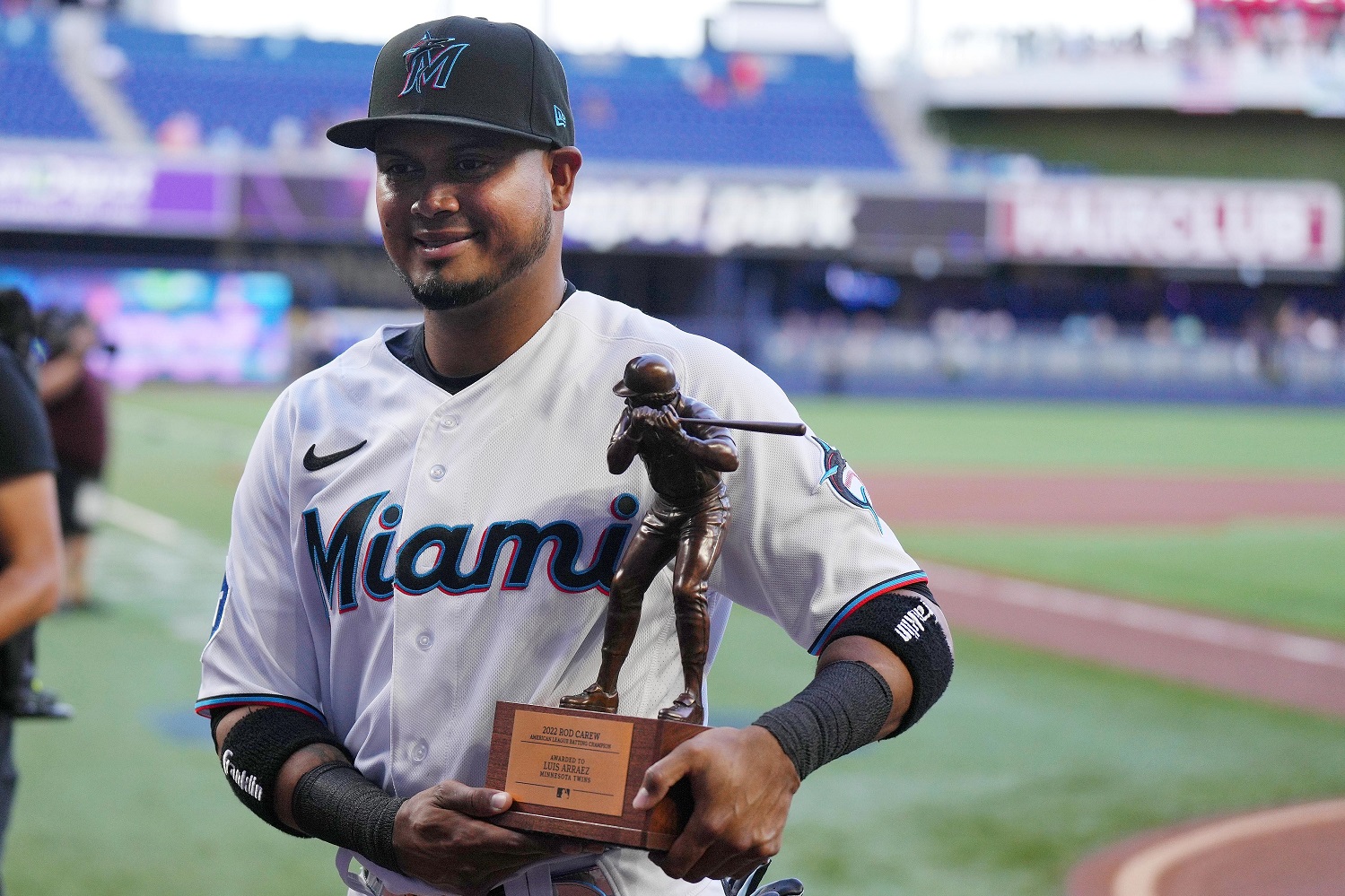 Luis Arraez Crushing in Miami Obviously Twins fans seeing a lack of hits so far this season might feel frustrated to have loss Luis Arraez, even if Pablo Lopez has more than out performed his potential so far. And yet, few should be surprised to see Arraez back again at the top of the batting leaderboard. He is once again defying three true outcomes with a dominant slash line of .438/.493/.578. And despite being player rarely known for power, he has smashed a slew of extra base hits to make him in the Top 3 in OPS for qualified batters. Many of those came earlier this week when he hit the first ever cycle in Marlins history against the Philadelphia Phillies. So far, Arraez is actually increasing his plate discipline, swinging at 8% less pitches outside the zone. Not to mention, the drip has certainly improved. Archer and Pineda On the Cusp of Security While not every player will see their career develop as they should, the recent fights for minor league unionization is a reminder that every player deserve security when the day comes to hang up the glove and stow away the bat. Two former Twins pitchers are stuck on the cusp of that security: Chris Archer and Michael Pineda. Both remain unsigned after disappointing years (Pineda played with the Tigers with a 5.79 ERA), but only need a handful of days to ensure their ten year service. The difference of making it is huge—particularly guaranteed pension and retirement. Even for players who have invested their earnings intelligently, the ten year mark is also one of respect. Obviously this early in the season, most teams may be looking to win than make room on a roster, but hopefully some mid-season teams with some injuries may take a flyer on these guys and get them to their deserved career milestones. Sánchez A Likely Giant This Year Gary Sánchez remained something of an enigma in his one year with the Twins: though his defensive statistics notably improved during his year, full-time catching duties did little to suit him. More so, it became notable how effuse pitchers were in their praise for trade deadline replacement Sandy Leon, suggesting some animosity toward Sánchez's ability to call the game. The former Yankee-turned-Twin went unsigned all offseason where he played in the World Baseball Classic for the Dominican Republic. However, earlier this month he signed a minor league deal with the San Francisco Giants. Sánchez is still considered in ramp up mode to ensure he's in good shape, but it is more than likely he'll soon make an appearance. The Giants called up Austin Wynns as a back up after a the season-ending injury of Roberto Pérez while Joey Bart was on the IL. Bart is back now, but Wynns has taken a major league deal with the Dodgers, making Sanchez officially the #3 man after Bart and Blake Sabol. Talking to Susan Slusser for the San Francisco Chronicle, Sánchez explained his hopes for a bounce back. “I think what happens is that a lot of people tend to just remember what I’ve done in the past, and I do agree that I had issues defensively. “However, they don’t look at what I’ve done in the last couple of years.” Cave Adds to the Vibes Jake Cave accepted a minor-league deal last year with the Twins before becoming a key reinforcement for a sinking ship in the final months of the season. Cave still remained an underperformer, but became a particularly clutch hitter in the stretch. The center fielder remains one of the most essential defenders in the league, however, and quickly found a place on the World Series runner up Phillies. As has been well reported, the Phillies perhaps leaned too much into building their 2022 team through players best suited to the DH, and Cave (along with trade deadline pickup and designated Wet Guy Brandon Marsh) has fit snuggly into a platoon position. Cave's hitting has not exactly picked up—save for a surprising dinger off Cy Young winner Sandy Alcantara—but Cave will likely continue to fit into a team built entirely on vibes. Sanó Still an Unknown Though his 2022 season did not go as planned, I doubt that even Twins fans expected that no team would take a look at signing former first baseman Miguel Sanó. The Twins made their parting when they opted for Sanó’s equivalent in Joey Gallo, but surely other teams could have used a strong bat with the kind of power he can deliver. Sanó has had an odd off season. He held a workout in February for teams though to little fanfare. More so, Sanó’s father was murdered in the Dominican Republic that same month, though the two were not close. Some have circulated that Sano might find a place on the Phillies given they are down both Rhys Hoskins and Derrick Hall.
- 12 comments
-
- 6
-
-
- luis arraez
- miguel sano
- (and 1 more)
-
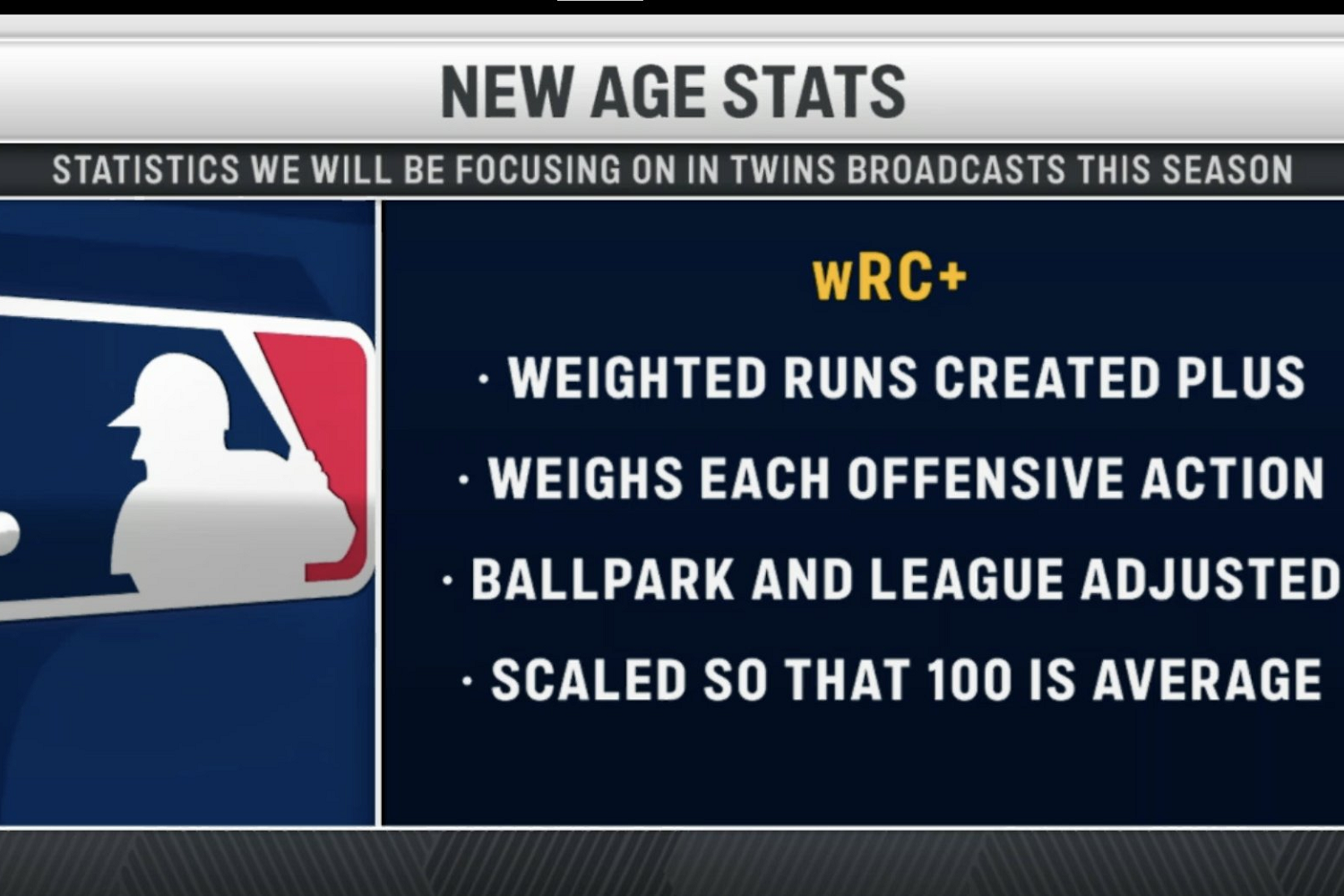 During the second game of the season against Kansas City, the broadcast returned from a commercial break to a graphic featuring statistic that had probably never been uttered in the history of Twins broadcast: WRC+. Glen Perkins’s explained that the goal was for fans to understand the kinds of numbers they might use in the broadcast this year and what Derek Falvey and crew “use to evaluate the players that they have or they maybe want to acquire.” As Dick Bremer explained in the first game against the Marlins, the broadcast would be exploring some of the “new nomenclature being used.” Over the years, most baseball fans have become familiar with a number of new terms to evaluate players. At least since the publication of Moneyball, fans have learned that for better or worse, there are better ways to approach building a roster than just strong and good players. But as statistics have become more complicated and nuanced thanks to the work of researchers at Baseball Prospectus and Fangraphs, those terms are usually avoided in broadcasts. In fact, fans have been more likely to tune into John Smoltz on Fox complaining about “analytics” as ruining the game despite watching the best players in the history of the sport. But the Twins are moving in a different direction. Why not trust fans to understand some of these newer terms? As Perkins’ explanation of WRC+ demonstrated, it just takes a few quick examples. He noted that the definition of weighed simply meant that runs made in Coors Field as opposed to the Oakland Coliseum were quite different, and then the + meant 100 would be an average player. Dick then added, “It’s important to note the baseline so fans know what the standard is” before a second graphic showed the list of top players last year for the stat, led by an obvious candidate in Aaron Judge. Other terms have popped up so far in this short season: Run Value, wOBA, and ISO. I’ve watched quite a few other games across the league—Bally’s affiliated and beyond—and have yet to see others taking the same approach (though some commentators like Joe Davis for the Dodgers and Jason Benetti for the White Sox have been experts at this for years). But the Twins broadcast are treating it as educational. If they have the smartest fans in the game, they can have the smartest broadcast. What is perhaps best about it is the interaction between the hosts: Bremer seems genuinely curious to learn, acting as an audience surrogate. Perkins and Justin Morneau remain entirely affable as they do, and try and relate it to specific situations fans will know. Want to know why Joey Gallo hit all those homers the day before? Here’s Morneau to explain Barrels. All this makes sense when the analytic revolution isn’t just a front office thing anymore. As has been oft-reported, Carlos Correa will cite these stats as much as anywhere else. Using simple stats made more sense last year when the best stat to follow was batting average with Luis Arraez, but as long as Falvey is building a very different kind of team, a different kind of appreciation is needed. Of course, fans might discover Max Kepler's ISO and have a new reason to scream at their TV instead. But all for the analytic revolution, and fans should be excited to watch the team build a smarter, more nuanced conversation during the game.
 -
Although Twins fans will likely have to live in limbo over the season over the future of where they may actually watch the season given the troubles at Diamond Sports Group, the crew at Bally Sports North has added some new school analytics lessons into this year’s television product. Although Twins fans will likely have to live in limbo over the season over the future of where they may actually watch the season given the troubles at Diamond Sports Group, the crew at Bally Sports North has added some new school analytics lessons into this year’s television product. During the second game of the season against Kansas City, the broadcast returned from a commercial break to a graphic featuring statistic that had probably never been uttered in the history of Twins broadcast: WRC+. Glen Perkins’s explained that the goal was for fans to understand the kinds of numbers they might use in the broadcast this year and what Derek Falvey and crew “use to evaluate the players that they have or they maybe want to acquire.” As Dick Bremer explained in the first game against the Marlins, the broadcast would be exploring some of the “new nomenclature being used.” Over the years, most baseball fans have become familiar with a number of new terms to evaluate players. At least since the publication of Moneyball, fans have learned that for better or worse, there are better ways to approach building a roster than just strong and good players. But as statistics have become more complicated and nuanced thanks to the work of researchers at Baseball Prospectus and Fangraphs, those terms are usually avoided in broadcasts. In fact, fans have been more likely to tune into John Smoltz on Fox complaining about “analytics” as ruining the game despite watching the best players in the history of the sport. But the Twins are moving in a different direction. Why not trust fans to understand some of these newer terms? As Perkins’ explanation of WRC+ demonstrated, it just takes a few quick examples. He noted that the definition of weighed simply meant that runs made in Coors Field as opposed to the Oakland Coliseum were quite different, and then the + meant 100 would be an average player. Dick then added, “It’s important to note the baseline so fans know what the standard is” before a second graphic showed the list of top players last year for the stat, led by an obvious candidate in Aaron Judge. Other terms have popped up so far in this short season: Run Value, wOBA, and ISO. I’ve watched quite a few other games across the league—Bally’s affiliated and beyond—and have yet to see others taking the same approach (though some commentators like Joe Davis for the Dodgers and Jason Benetti for the White Sox have been experts at this for years). But the Twins broadcast are treating it as educational. If they have the smartest fans in the game, they can have the smartest broadcast. What is perhaps best about it is the interaction between the hosts: Bremer seems genuinely curious to learn, acting as an audience surrogate. Perkins and Justin Morneau remain entirely affable as they do, and try and relate it to specific situations fans will know. Want to know why Joey Gallo hit all those homers the day before? Here’s Morneau to explain Barrels. All this makes sense when the analytic revolution isn’t just a front office thing anymore. As has been oft-reported, Carlos Correa will cite these stats as much as anywhere else. Using simple stats made more sense last year when the best stat to follow was batting average with Luis Arraez, but as long as Falvey is building a very different kind of team, a different kind of appreciation is needed. Of course, fans might discover Max Kepler's ISO and have a new reason to scream at their TV instead. But all for the analytic revolution, and fans should be excited to watch the team build a smarter, more nuanced conversation during the game. View full article

