


Twins Video
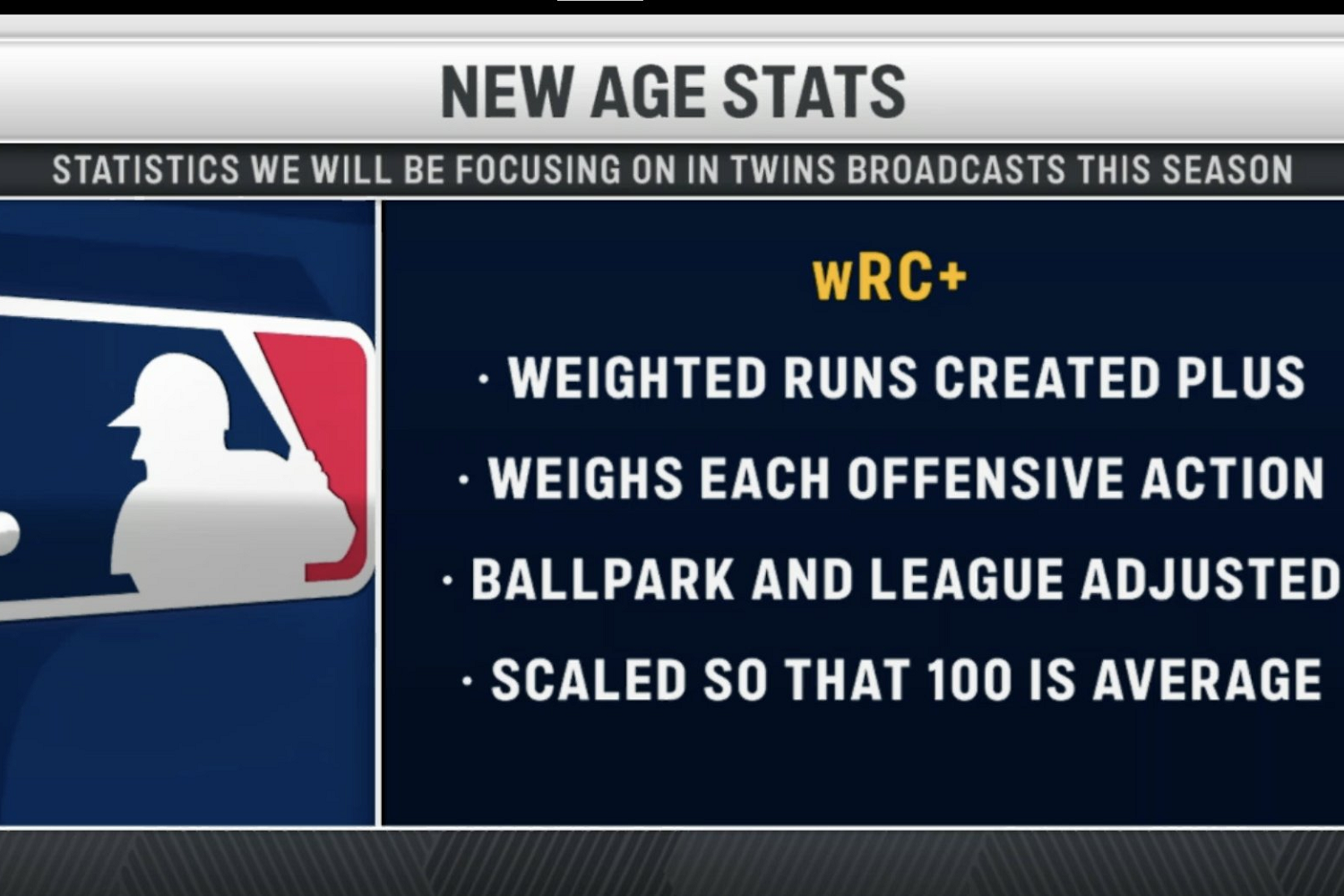
During the second game of the season against Kansas City, the broadcast returned from a commercial break to a graphic featuring statistic that had probably never been uttered in the history of Twins broadcast: WRC+. Glen Perkins’s explained that the goal was for fans to understand the kinds of numbers they might use in the broadcast this year and what Derek Falvey and crew “use to evaluate the players that they have or they maybe want to acquire.”
As Dick Bremer explained in the first game against the Marlins, the broadcast would be exploring some of the “new nomenclature being used.”
Over the years, most baseball fans have become familiar with a number of new terms to evaluate players. At least since the publication of Moneyball, fans have learned that for better or worse, there are better ways to approach building a roster than just strong and good players. But as statistics have become more complicated and nuanced thanks to the work of researchers at Baseball Prospectus and Fangraphs, those terms are usually avoided in broadcasts. In fact, fans have been more likely to tune into John Smoltz on Fox complaining about “analytics” as ruining the game despite watching the best players in the history of the sport.
But the Twins are moving in a different direction. Why not trust fans to understand some of these newer terms? As Perkins’ explanation of WRC+ demonstrated, it just takes a few quick examples. He noted that the definition of weighed simply meant that runs made in Coors Field as opposed to the Oakland Coliseum were quite different, and then the + meant 100 would be an average player. Dick then added, “It’s important to note the baseline so fans know what the standard is” before a second graphic showed the list of top players last year for the stat, led by an obvious candidate in Aaron Judge.
Other terms have popped up so far in this short season: Run Value, wOBA, and ISO.
I’ve watched quite a few other games across the league—Bally’s affiliated and beyond—and have yet to see others taking the same approach (though some commentators like Joe Davis for the Dodgers and Jason Benetti for the White Sox have been experts at this for years). But the Twins broadcast are treating it as educational. If they have the smartest fans in the game, they can have the smartest broadcast.
What is perhaps best about it is the interaction between the hosts: Bremer seems genuinely curious to learn, acting as an audience surrogate. Perkins and Justin Morneau remain entirely affable as they do, and try and relate it to specific situations fans will know. Want to know why Joey Gallo hit all those homers the day before? Here’s Morneau to explain Barrels.
All this makes sense when the analytic revolution isn’t just a front office thing anymore. As has been oft-reported, Carlos Correa will cite these stats as much as anywhere else. Using simple stats made more sense last year when the best stat to follow was batting average with Luis Arraez, but as long as Falvey is building a very different kind of team, a different kind of appreciation is needed.
Of course, fans might discover Max Kepler's ISO and have a new reason to scream at their TV instead. But all for the analytic revolution, and fans should be excited to watch the team build a smarter, more nuanced conversation during the game.
Do you approve of Twins ownership?

Follow Twins Daily For Minnesota Twins News & Analysis



- Minny505, Richie the Rally Goat and JDubs
-
 2
2
-
 1
1


Recommended Comments
Create an account or sign in to comment
You need to be a member in order to leave a comment
Create an account
Sign up for a new account in our community. It's easy!
Register a new accountSign in
Already have an account? Sign in here.
Sign In Now