Peter Labuza
-
Posts
233 -
Joined
-
Last visited
Content Type
Profiles
News
Minnesota Twins Videos
2026 Minnesota Twins Top Prospects Ranking
2022 Minnesota Twins Draft Picks
Minnesota Twins Free Agent & Trade Rumors, Notes, & Tidbits
Guides & Resources
2023 Minnesota Twins Draft Picks
The Minnesota Twins Players Project
2024 Minnesota Twins Draft Picks
2025 Minnesota Twins Draft Pick Tracker
2026 Minnesota Twins Draft Tracker: Picks & Bonuses
Forums
Blogs
Events
Store
Downloads
Gallery
Everything posted by Peter Labuza
-
 In the final part of our look at the Pohlad's financial history, we look at how the modern real estate boom kept the family's finances alive, and how changes in the market are likely forcing a sale. Image courtesy of © Kirby Lee-Imagn Images In the final part of our look at the Pohlad's financial history, we look at how the modern real estate boom kept the family's finances alive, and how changes in the market are likely forcing a sale. "I'm so sick of defending myself, my credibility, my family, I should just sell the {expletive} team. There's a limit." —Carl Pohlad In 2021, the RBC Gateway became the new gem of the Minneapolis skyline. Years in the making, and developed with all private capital—no special tax district needed—it brought a Four Seasons to downtown. This particularly excited Mayor Jacob Frey, who was sick of seeing artists play venues like First Avenue and immediately hop on a plane back to Chicago. But just above the hotel was office space that needed to be filled. Several businesses moved in there: United Properties, a real estate building company owned by the Pohlads; Northmarq, a real estate finance company owned by the Pohlads; Carousel Motor Group, an automotive group owned by the Pohlads; and even the Pohlad Family Foundation, which, you get the drill. Practically every business owned by the Pohlads relocated from the suburbs into this new place downtown, which, if you hadn’t guessed, was built by United Properties. Of course, 2021 was an interesting time considering how most businesses were in a panic about their downtown real estate, assuming workers might never return to the office. For more on the history of the Pohlad family and their business interests, please see Part 1, Part 2, Part 3, and Part 4, of this series. In our final piece, I wanted to explore why the Pohlads are selling. When editor Matt Trueblood proposed this series, our goal (in part) was to try and understand how other business ventures of the Pohlads might explain why they operated the Twins as they did. Now that a sale is at least in the works, this final piece looks at the origin of the sale. As much as they would insist otherwise, the Twins have made the Pohlads rich beyond what Carl could have ever dreamed when he forked over $38 million. But even if the streaming and cable network bubble chaos has made the business less lucrative than it could be, the reasons for selling seem to go far beyond that. Instead, the real estate world has taken an unwelcome turn, and the Pohlads are desperate, to use their own language, “right-size our business.” As the Pohlads moved out of banking and bottling, real estate became the prime business. They acquired United Properties in 1998, mostly focused on suburban office parks. It was “poised” to build commercial real estate following the 2008 crash as a set of new jobs in major suburban spaces came to replace older companies. From 2016-18, no company developed more real estate in Minnesota than the Pohlads'. Like many similar companies, United has relied on moving toward “mixed-use” building, meaning properties might include high-rise condos as part of its broader commercial use. Like many real estate builders, United has often relied on tax credits and incentives to build. This includes the Loose-Wiles Biscuit Company Building ($1.8 million). A better example is Kenwood Village in Duluth. In order to ensure United Properties would build the complex, the city council handed United Properties $2.8 million in tax relief on United’s $21 million investment, despite research from the County suggesting it should take no more than $10 million. When United sold the enterprise to a New York firm for $21 million, St. Louis County valued the cost of the property at $8.34 million. When it opened, Kenwood Village had the highest prices for studio apartments in the entire Duluth area. Another vision of United’s public-private “partnerships” comes in the continuing drama of the Upper Harbor Area, which was sold by the city to develop parks, affordable housing, and an outdoor venue run by First Avenue in 2017. Lawsuits have ensued, and financing has been slow to get going. The property has remained controversial, with the city spending over $350 million in 2021 despite United and others technically owning the underlying real estate. The city recently learned that it may be able to retain the venue in full control. And despite all the promises of affordable housing, United’s main developer has recently suggested it may not succeed. But the real problem for United has been its bet on the downtown area. In 2021, United was able to sell both Gateway and Gaviidae Common on Nicollet Mall. However, reports suggest these deals came at prices below their true value. With interest rates soaring due to Jerome Powell’s attempts to hurt worker power and unionization drives during 2021 and 2022, real estate transactions became harder. Office vacancies remained particularly high into 2023, though a series of punishing return-to-work policies from various companies have attempted to level the playing field for developers. In a profile covering the Pohlads from 2022, United’s CEO Bill Katter suggested, “The city is going to find its way to a new set of priorities and a new norm. How do we make places people want to return to? The Pohlads want to help create that future.” Four days after Katter made these comments, he left the organization. The next venture for United is to transition to senior living, one of the most lucrative and exploitative industries at the moment. United is currently building a $40-million senior living center, which will give 147 individuals amenities like “a pet wash station, a bike repair station, yoga studio and saunas, art studio, hobby shop, library and clubhouse.” This would triple the amount of assets it has or is building in the sector. According to one report, “Senior housing accounted for just 9% of the value of United's long-term holdings three years ago, with the rest being a mix of industrial, office and retail properties. [Newly appointed CEO] Matt Van Slooten expects that figure to increase to about 40%.” To back up these moves in new directions, the Pohlads have always relied on Northmarq, a firm that does financing and brokerage for real estate investments. In 2024, they were the sixth-largest intermediary for real estate deals in the nation. In 2023, the company made deals and sales worth around $22 billion. In 2024, S&P Global raised its rankings as a commercial private loan company. To give just a flavor, it has sold a 97-unit property in Baltimore ($54 million), 17 acres near Phoenix ($14.5 million), and three manufacturing properties in the Pacific Northwest ($14.3 million). That said, more and more deals by Northmarq appear to be those where they are mere brokers, rather than something they themselves acquire. They’re passing money between hands, but not gaining it themselves. The business is changing though. Northmarq recently acquired Morrison Street Capital, which specializes in investment management to fund real estate deals. Whether that means just investing in Fortune 500 companies or, say, cryptocurrency, is for the future to decide. Notably, perhaps, United and Northmarq haven't been plagued by the dramatic conflicts with regulators or competitors that marked so many of the Pohlads' earlier ventures. They've been involved in a few lawsuits, but there's nothing as salacious or as shady as several of the things that happened under Carl Pohlad in his various ventures in other sectors. United has come under scrutiny for foregoing unionized workforces, despite the owners' Progressive bona fides. Centro de Trabajadores Unidos en la Lucha (CTUL) is trying to stop such working abuse. But this is ultimately small potatoes compared to the stories we could tell about Carl. The last two decades have been good for real estate developers, and thus good for the Pohlads. But like the end of the RSN payday, that bubble is popping. Most of the talk in the real estate world is about being more targeted. You can learn on the Northmarq website how to target success. As Van Slooten pointed out, United has survived because they “are able to develop properties with our own equity” as well as “selectively start several projects with our capital,” which is to say, when you have billionaires, you sometimes can get a head up in the real estate game by having access to capital when others do not. And with federal interest rates still high, a quick cash infusion—say around $1.5 to $2 billion—might be able to do the job. But sometimes you might have a little pain. In November of this year, Bob Pohlad quietly put his RBC Gateway Condo inside the Four Seasons up for sale. Bought for $4.3 million, it might sell for only $4.5 million. If you asked a casual Minnesota sports fan about the Pohlads, you would probably get an answer about how often they've felt nickeled and dimed. It always felt so silly—when you have access to billions, why not waste a little to break a silly curse and create a generation of new fans? But the truth is, the Pohlads aren’t being cheap on their teams to spend it on other businesses. Being cheap is the way the Pohlads have always done business. There’s no guarantee of a new owner changing the system or infusing cash, and there’s even more to worry about if the new owners have little to no connection to the state where the team plays. But that’s the truth about private ownership in sports: They get to run it, and you don’t. And unless you fight for a different system—one where we can all invest into a team—the only thing you can scream is “Sell the Team.” View full article
 -
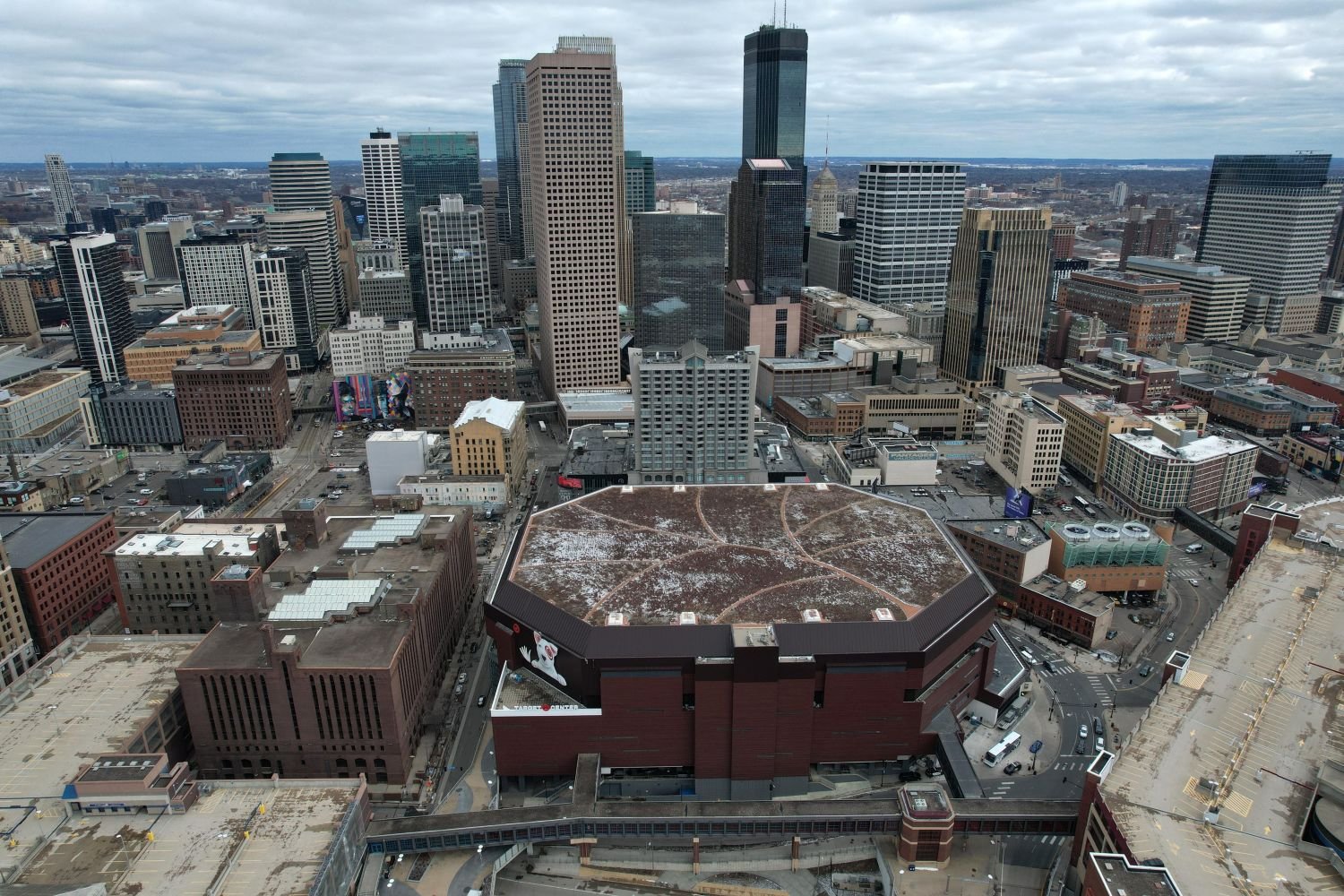 "I'm so sick of defending myself, my credibility, my family, I should just sell the {expletive} team. There's a limit." —Carl Pohlad In 2021, the RBC Gateway became the new gem of the Minneapolis skyline. Years in the making, and developed with all private capital—no special tax district needed—it brought a Four Seasons to downtown. This particularly excited Mayor Jacob Frey, who was sick of seeing artists play venues like First Avenue and immediately hop on a plane back to Chicago. But just above the hotel was office space that needed to be filled. Several businesses moved in there: United Properties, a real estate building company owned by the Pohlads; Northmarq, a real estate finance company owned by the Pohlads; Carousel Motor Group, an automotive group owned by the Pohlads; and even the Pohlad Family Foundation, which, you get the drill. Practically every business owned by the Pohlads relocated from the suburbs into this new place downtown, which, if you hadn’t guessed, was built by United Properties. Of course, 2021 was an interesting time considering how most businesses were in a panic about their downtown real estate, assuming workers might never return to the office. For more on the history of the Pohlad family and their business interests, please see Part 1, Part 2, Part 3, and Part 4, of this series. In our final piece, I wanted to explore why the Pohlads are selling. When editor Matt Trueblood proposed this series, our goal (in part) was to try and understand how other business ventures of the Pohlads might explain why they operated the Twins as they did. Now that a sale is at least in the works, this final piece looks at the origin of the sale. As much as they would insist otherwise, the Twins have made the Pohlads rich beyond what Carl could have ever dreamed when he forked over $38 million. But even if the streaming and cable network bubble chaos has made the business less lucrative than it could be, the reasons for selling seem to go far beyond that. Instead, the real estate world has taken an unwelcome turn, and the Pohlads are desperate, to use their own language, “right-size our business.” As the Pohlads moved out of banking and bottling, real estate became the prime business. They acquired United Properties in 1998, mostly focused on suburban office parks. It was “poised” to build commercial real estate following the 2008 crash as a set of new jobs in major suburban spaces came to replace older companies. From 2016-18, no company developed more real estate in Minnesota than the Pohlads'. Like many similar companies, United has relied on moving toward “mixed-use” building, meaning properties might include high-rise condos as part of its broader commercial use. Like many real estate builders, United has often relied on tax credits and incentives to build. This includes the Loose-Wiles Biscuit Company Building ($1.8 million). A better example is Kenwood Village in Duluth. In order to ensure United Properties would build the complex, the city council handed United Properties $2.8 million in tax relief on United’s $21 million investment, despite research from the County suggesting it should take no more than $10 million. When United sold the enterprise to a New York firm for $21 million, St. Louis County valued the cost of the property at $8.34 million. When it opened, Kenwood Village had the highest prices for studio apartments in the entire Duluth area. Another vision of United’s public-private “partnerships” comes in the continuing drama of the Upper Harbor Area, which was sold by the city to develop parks, affordable housing, and an outdoor venue run by First Avenue in 2017. Lawsuits have ensued, and financing has been slow to get going. The property has remained controversial, with the city spending over $350 million in 2021 despite United and others technically owning the underlying real estate. The city recently learned that it may be able to retain the venue in full control. And despite all the promises of affordable housing, United’s main developer has recently suggested it may not succeed. But the real problem for United has been its bet on the downtown area. In 2021, United was able to sell both Gateway and Gaviidae Common on Nicollet Mall. However, reports suggest these deals came at prices below their true value. With interest rates soaring due to Jerome Powell’s attempts to hurt worker power and unionization drives during 2021 and 2022, real estate transactions became harder. Office vacancies remained particularly high into 2023, though a series of punishing return-to-work policies from various companies have attempted to level the playing field for developers. In a profile covering the Pohlads from 2022, United’s CEO Bill Katter suggested, “The city is going to find its way to a new set of priorities and a new norm. How do we make places people want to return to? The Pohlads want to help create that future.” Four days after Katter made these comments, he left the organization. The next venture for United is to transition to senior living, one of the most lucrative and exploitative industries at the moment. United is currently building a $40-million senior living center, which will give 147 individuals amenities like “a pet wash station, a bike repair station, yoga studio and saunas, art studio, hobby shop, library and clubhouse.” This would triple the amount of assets it has or is building in the sector. According to one report, “Senior housing accounted for just 9% of the value of United's long-term holdings three years ago, with the rest being a mix of industrial, office and retail properties. [Newly appointed CEO] Matt Van Slooten expects that figure to increase to about 40%.” To back up these moves in new directions, the Pohlads have always relied on Northmarq, a firm that does financing and brokerage for real estate investments. In 2024, they were the sixth-largest intermediary for real estate deals in the nation. In 2023, the company made deals and sales worth around $22 billion. In 2024, S&P Global raised its rankings as a commercial private loan company. To give just a flavor, it has sold a 97-unit property in Baltimore ($54 million), 17 acres near Phoenix ($14.5 million), and three manufacturing properties in the Pacific Northwest ($14.3 million). That said, more and more deals by Northmarq appear to be those where they are mere brokers, rather than something they themselves acquire. They’re passing money between hands, but not gaining it themselves. The business is changing though. Northmarq recently acquired Morrison Street Capital, which specializes in investment management to fund real estate deals. Whether that means just investing in Fortune 500 companies or, say, cryptocurrency, is for the future to decide. Notably, perhaps, United and Northmarq haven't been plagued by the dramatic conflicts with regulators or competitors that marked so many of the Pohlads' earlier ventures. They've been involved in a few lawsuits, but there's nothing as salacious or as shady as several of the things that happened under Carl Pohlad in his various ventures in other sectors. United has come under scrutiny for foregoing unionized workforces, despite the owners' Progressive bona fides. Centro de Trabajadores Unidos en la Lucha (CTUL) is trying to stop such working abuse. But this is ultimately small potatoes compared to the stories we could tell about Carl. The last two decades have been good for real estate developers, and thus good for the Pohlads. But like the end of the RSN payday, that bubble is popping. Most of the talk in the real estate world is about being more targeted. You can learn on the Northmarq website how to target success. As Van Slooten pointed out, United has survived because they “are able to develop properties with our own equity” as well as “selectively start several projects with our capital,” which is to say, when you have billionaires, you sometimes can get a head up in the real estate game by having access to capital when others do not. And with federal interest rates still high, a quick cash infusion—say around $1.5 to $2 billion—might be able to do the job. But sometimes you might have a little pain. In November of this year, Bob Pohlad quietly put his RBC Gateway Condo inside the Four Seasons up for sale. Bought for $4.3 million, it might sell for only $4.5 million. If you asked a casual Minnesota sports fan about the Pohlads, you would probably get an answer about how often they've felt nickeled and dimed. It always felt so silly—when you have access to billions, why not waste a little to break a silly curse and create a generation of new fans? But the truth is, the Pohlads aren’t being cheap on their teams to spend it on other businesses. Being cheap is the way the Pohlads have always done business. There’s no guarantee of a new owner changing the system or infusing cash, and there’s even more to worry about if the new owners have little to no connection to the state where the team plays. But that’s the truth about private ownership in sports: They get to run it, and you don’t. And unless you fight for a different system—one where we can all invest into a team—the only thing you can scream is “Sell the Team.”
 -
The Pohlad Empire (Part Four): Art for Art's Sake
Peter Labuza replied to Peter Labuza's topic in Twins Daily Front Page News
No and you know that I was trying to respond to what the whole point of this article was, not address every issue while genuinely trying to respond to you. If you want to be a jerk though, please continue to be. But everyone in these comments can see you're just trying to be a jerk at this point. -
The Pohlad Empire (Part Four): Art for Art's Sake
Peter Labuza replied to Peter Labuza's topic in Twins Daily Front Page News
They set a rule at some point to limit "producer creep" — that is, how many individuals would be specifically credited with an Oscar, in 1999. That said, he still provided a good deal of financing and while American Slavery projects might seem quite common, Steve McQueen's background as a museum-based experimental artist with a couple of highly experimental films to his name, did not necessarily suggest that he could direct something that would connect with audiences. -
The Pohlad Empire (Part Four): Art for Art's Sake
Peter Labuza replied to Peter Labuza's topic in Twins Daily Front Page News
I think if you actually read the piece, my point wasn't that he made movies. It was that he let the artists make movies in the ways they wanted to. Harvey Weinstein, as a producer, was known as "Harvey Scissorhands" for famously ruining the artistic vision of many directors. That's the point with Bill Pohlad, is he made sure there was enough money so the front office—sorry, the directors and key producers—could complete the vision. And he actually often got returns for doing so. -
In Part Four of our financial history of the Pohlads, Bill Pohlad becomes a patron of Hollywood filmmaking, demonstrating a style of spending that gives artists a chance to make something beyond money. Image courtesy of © Jasen Vinlove-Imagn Images In Part Four of our financial history of the Pohlads, Bill Pohlad becomes a patron of Hollywood filmmaking, demonstrating a style of spending that gives artists a chance to make something beyond money. “Listen man, you're the artist. Right? You want God. You should have God.” —Love & Mercy (Bill Pohlad, 2014) We've spent the last three pieces in this series documenting how one man made his money and shaped his world. We know more about Carl Pohlad now, and we already know something (and we'll soon learn more) about Jim and Joe Pohlad, too. Today, though, let's talk about how one other Pohlad made (and lost) his money. By the time we're done, I'm betting you'll wish Bill Pohlad's passion had been baseball. The nice thing about being a billionaire is having, for lack of a better term, “f*** you” money. Steve Cohen, the hedge fund guy (not to mention finance crimes guy) and New York Mets owner, basically suggested as much when he scored Carlos Correa under the San Francisco Giants’ feet. “No one likes to spend money. But this is the price,” he told Jon Heyman in the New York Post. After all, when you buy a formaldehyde shark, maybe at some point you decide you don’t really care about a return. For more on the history of the Pohlad family and their business interests, please see Part 1, Part 2, Part 3, and Part 5 of this series. If you read an interview with Bill Pohlad, one of the three sons of Carl, you might get a sense that he’s careful with his money. “I was always very conscious of people who go to Hollywood for two years and get taken to the cleaners," Pohlad once said. "I didn’t want to just run through money to entertain my passion.” But when you look at what he’s producing, maybe you get the sense that sometimes it’s “f*** you” money, after all. A gay romance about cowboys made before Obergefell. An experimental coming-of-age film by a known recluse. An NC-17 sensual historical spy romance in Mandarin. Even if you move past the notion of superhero and CGI spectacles, these aren’t necessarily the kind of projects that even bring in arthouse audiences. To turn personal for a second: When I left college, I wanted to become a film critic and wrote for various outlets in the early 2010s. I eventually became way more interested in industry finance, and those who balanced the money questions of making art. As a Minnesotan, Pohlad seemed like an interesting figure. He was out there making the kind of films that I wanted to see. He wasn’t the creative force behind them, just the money man. But in an era in which finding anyone with money to support your art is engaging in a hostile battle of the wits, Pohlad was on the artists’ side. Bill’s story also tells us something about risk and reward in an industry where you have to depend on individuals, with chaotic results. As we saw, Carl made his money by siphoning off profits from one business to put into another, stripping away something good. In a very different industry, Bill used his money differently. He invested in talent, no matter the cost. Of his three brothers, Bill was always the artistic one, and took the chance in 1990 to form River Road Entertainment and direct his first movie. But Old Explorers was a disaster, both financially and artistically. Pohlad decided to work in media instead, making industrials and commercials for Northwest Airlines (of course owned by Carl at the time), among other projects. Bill would wait another 15 years to dip his toes into Hollywood again, setting a deal with Focus Features, a specialty subsidiary of Universal run by James Schamus (full disclosure: a former mentor of mine). When the script for Brokeback Mountain came across his desk, he wanted to take a chance, and a big one. While Universal could have put up some of the money, Bill covered the whole thing. According to CAA agent Rick Hess, who became his on-the-ground man in the industry, he provided all $10 million to make the risky film. “I credit him with being tasteful and shrewd. He’s gone to places other people wouldn’t go,” Hess said. Brought to fruition via the vision of director Ang Lee, Brokeback quickly became a cultural phenomenon. While Pohlad initially did raise his eyebrow at the sex scenes, something that for many audiences would be their first experience of seeing two men on screen in coitus, he later remarked “you don’t try to second-guess the filmmaker.” The film would earn $178 million across the globe (much more in secondary markets), not to mention critical acclaim and numerous Oscars. Bill’s $10 million bet paid off impressively. The next set of films would include a number of ambitious ideas: Robert Altman’s Minnesota-based swan song A Prairie Home Companion, Sean Penn’s meditative Into the Wild, and Lee’s brazen follow-up Lust, Caution. Bill grew up a fan of Hollywood movies, but decided that he was in the business to focus on being an alternative to them. “I always wanted the company to have a personality and not just be the result of a committee or a corporate decision,” he said. Bill started to see the complications in the industry, though. While he could finance films, he still relied on major studios to release them. So Bill took $30 million and formed his own distribution company with New York producer Bob Berney, called Apparition. Apparition was short-lived, but it was not without creative energy. Bill helped bring Jane Campion’s Bright Star, the cult classic Black Dynamite, and Joan Jett biopic The Runaways to US audiences. Ultimately, the failure had as much to do with a clash of two differently-motivated businessmen. As Berney put it: “I like Bill; it wasn't personal. But he's a producer and a producer/filmmaker at heart. Distribution is a different business: You have to find movies and love them as much as your own. That's hard for producers.” As Apparition closed down, Bill sold the distribution rights to a unique film he had been helping finance for years. This film would be the rarest opportunity of his lifetime: working with director Terrence Malick on The Tree of Life. Malick was considered one of the most enigmatic directors of the 1970s, only making two films—Badlands and Days of Heaven—before essentially leaving the industry for two decades. His poetic style was as anti-Hollywood as you could get. In his WWII epic The Thin Red Line, the camera spends more time observing how wind moves through the trees and the wings of a butterfly than George Clooney. The Tree of Life was Malick’s most ambitious project—it was not only a family drama set in Texas in the 1950s, but also the story of the universe. There were special effects showing the birth of galaxies and CGI dinosaurs. Malick’s style doesn’t work well for financing. There are no shot plans for the day, with Malick and cinematographer Emmanuel Lubezki shooting footage constantly around them. Takes were not necessarily variations of the same actor performing the same lines, but could be entirely different in tone or camera movement. The editing was even more ambitious in both style and scope. According to the one of the editors, “We had folders for Earth, Sky, Water, Animals, Miscellaneous, and then within those, bins that were more specific.” The idea was something almost based on association and feeling, rather than narrative needs. So why did Bill take a chance? As Bill told the Los Angeles Times, “I would love it if we came out on the positive side [financially], but it’s not the only criterion in this case, because it’s such a special film.” Bill knew he was working with an important artist, and he was willing to let the artist take the risks. While he did provide notes and ideas, he knew his job was also to let the artist do his thing. At one point, Pohlad and Malick were rushing the film to prepare for the 2010 Cannes Film Festival. But rather than put out a bad product, Pohlad decided to let Malick wait and spend an entire additional year editing the film. “After all this time, having so much anticipation, simply in our own minds, we just didn’t want it to go out half-baked,” he said at the time. Just to repeat that, Pohlad was out millions of dollars, and rather than rush for profit, decided to let any returns wait an entire year. In 2014, Bill finally lived out his dream of directing once again, in the Brian Wilson biopic Love & Mercy, which covered the production of the now-classic album Pet Sounds. When asked how he balanced his financial side and his artistic side, Bill responded, “That disappeared once we started working; the collaborative process had its own momentum, and when you get rolling you can’t doubt yourself because that’ll kill it.” Recent times have been more difficult for Bill. The independent film scene that was once his bread and butter has dried up due to consolidation and financialization that has made it much harder to fund films and see a return. Maybe you can just make a deal with Netflix or Amazon, but then you can’t control the product. From every interview I read, Bill wants artists to be artists. He was able to recently direct one more film, once again about music, entitled Dreamin' Wild. Bill Pohlad described his father, Carl, as a shrewd businessman. He knew Hollywood types, and many moguls wanted his investments. But he saw it as too unprofitable, too much steeped in risk. As Bill described it, “He never had an opportunity to mess around with how he was feeling, ‘Do I want to do this,’ or, ‘Is this going to be fulfilling.’ So it’s a little harder for a son to come along and want to be in the film business.” And yet, it’s hard to say who made the better investments that will last beyond one’s lifetime. At some point, the Minnesota Twins might not exist, whether for reasons specific to the team or specific to baseball.. I do believe, however, that films like The Tree of Life, Love & Mercy, and 12 Years a Slave will certainly exist in some form. And anytime someone watches them, the name “Pohlad” will be there. In Part Five, we’ll finally turn to the current state of the Pohlad Empire and why the sale announcement finally came. View full article
-
 “Listen man, you're the artist. Right? You want God. You should have God.” —Love & Mercy (Bill Pohlad, 2014) We've spent the last three pieces in this series documenting how one man made his money and shaped his world. We know more about Carl Pohlad now, and we already know something (and we'll soon learn more) about Jim and Joe Pohlad, too. Today, though, let's talk about how one other Pohlad made (and lost) his money. By the time we're done, I'm betting you'll wish Bill Pohlad's passion had been baseball. The nice thing about being a billionaire is having, for lack of a better term, “f*** you” money. Steve Cohen, the hedge fund guy (not to mention finance crimes guy) and New York Mets owner, basically suggested as much when he scored Carlos Correa under the San Francisco Giants’ feet. “No one likes to spend money. But this is the price,” he told Jon Heyman in the New York Post. After all, when you buy a formaldehyde shark, maybe at some point you decide you don’t really care about a return. For more on the history of the Pohlad family and their business interests, please see Part 1, Part 2, Part 3, and Part 5 of this series. If you read an interview with Bill Pohlad, one of the three sons of Carl, you might get a sense that he’s careful with his money. “I was always very conscious of people who go to Hollywood for two years and get taken to the cleaners," Pohlad once said. "I didn’t want to just run through money to entertain my passion.” But when you look at what he’s producing, maybe you get the sense that sometimes it’s “f*** you” money, after all. A gay romance about cowboys made before Obergefell. An experimental coming-of-age film by a known recluse. An NC-17 sensual historical spy romance in Mandarin. Even if you move past the notion of superhero and CGI spectacles, these aren’t necessarily the kind of projects that even bring in arthouse audiences. To turn personal for a second: When I left college, I wanted to become a film critic and wrote for various outlets in the early 2010s. I eventually became way more interested in industry finance, and those who balanced the money questions of making art. As a Minnesotan, Pohlad seemed like an interesting figure. He was out there making the kind of films that I wanted to see. He wasn’t the creative force behind them, just the money man. But in an era in which finding anyone with money to support your art is engaging in a hostile battle of the wits, Pohlad was on the artists’ side. Bill’s story also tells us something about risk and reward in an industry where you have to depend on individuals, with chaotic results. As we saw, Carl made his money by siphoning off profits from one business to put into another, stripping away something good. In a very different industry, Bill used his money differently. He invested in talent, no matter the cost. Of his three brothers, Bill was always the artistic one, and took the chance in 1990 to form River Road Entertainment and direct his first movie. But Old Explorers was a disaster, both financially and artistically. Pohlad decided to work in media instead, making industrials and commercials for Northwest Airlines (of course owned by Carl at the time), among other projects. Bill would wait another 15 years to dip his toes into Hollywood again, setting a deal with Focus Features, a specialty subsidiary of Universal run by James Schamus (full disclosure: a former mentor of mine). When the script for Brokeback Mountain came across his desk, he wanted to take a chance, and a big one. While Universal could have put up some of the money, Bill covered the whole thing. According to CAA agent Rick Hess, who became his on-the-ground man in the industry, he provided all $10 million to make the risky film. “I credit him with being tasteful and shrewd. He’s gone to places other people wouldn’t go,” Hess said. Brought to fruition via the vision of director Ang Lee, Brokeback quickly became a cultural phenomenon. While Pohlad initially did raise his eyebrow at the sex scenes, something that for many audiences would be their first experience of seeing two men on screen in coitus, he later remarked “you don’t try to second-guess the filmmaker.” The film would earn $178 million across the globe (much more in secondary markets), not to mention critical acclaim and numerous Oscars. Bill’s $10 million bet paid off impressively. The next set of films would include a number of ambitious ideas: Robert Altman’s Minnesota-based swan song A Prairie Home Companion, Sean Penn’s meditative Into the Wild, and Lee’s brazen follow-up Lust, Caution. Bill grew up a fan of Hollywood movies, but decided that he was in the business to focus on being an alternative to them. “I always wanted the company to have a personality and not just be the result of a committee or a corporate decision,” he said. Bill started to see the complications in the industry, though. While he could finance films, he still relied on major studios to release them. So Bill took $30 million and formed his own distribution company with New York producer Bob Berney, called Apparition. Apparition was short-lived, but it was not without creative energy. Bill helped bring Jane Campion’s Bright Star, the cult classic Black Dynamite, and Joan Jett biopic The Runaways to US audiences. Ultimately, the failure had as much to do with a clash of two differently-motivated businessmen. As Berney put it: “I like Bill; it wasn't personal. But he's a producer and a producer/filmmaker at heart. Distribution is a different business: You have to find movies and love them as much as your own. That's hard for producers.” As Apparition closed down, Bill sold the distribution rights to a unique film he had been helping finance for years. This film would be the rarest opportunity of his lifetime: working with director Terrence Malick on The Tree of Life. Malick was considered one of the most enigmatic directors of the 1970s, only making two films—Badlands and Days of Heaven—before essentially leaving the industry for two decades. His poetic style was as anti-Hollywood as you could get. In his WWII epic The Thin Red Line, the camera spends more time observing how wind moves through the trees and the wings of a butterfly than George Clooney. The Tree of Life was Malick’s most ambitious project—it was not only a family drama set in Texas in the 1950s, but also the story of the universe. There were special effects showing the birth of galaxies and CGI dinosaurs. Malick’s style doesn’t work well for financing. There are no shot plans for the day, with Malick and cinematographer Emmanuel Lubezki shooting footage constantly around them. Takes were not necessarily variations of the same actor performing the same lines, but could be entirely different in tone or camera movement. The editing was even more ambitious in both style and scope. According to the one of the editors, “We had folders for Earth, Sky, Water, Animals, Miscellaneous, and then within those, bins that were more specific.” The idea was something almost based on association and feeling, rather than narrative needs. So why did Bill take a chance? As Bill told the Los Angeles Times, “I would love it if we came out on the positive side [financially], but it’s not the only criterion in this case, because it’s such a special film.” Bill knew he was working with an important artist, and he was willing to let the artist take the risks. While he did provide notes and ideas, he knew his job was also to let the artist do his thing. At one point, Pohlad and Malick were rushing the film to prepare for the 2010 Cannes Film Festival. But rather than put out a bad product, Pohlad decided to let Malick wait and spend an entire additional year editing the film. “After all this time, having so much anticipation, simply in our own minds, we just didn’t want it to go out half-baked,” he said at the time. Just to repeat that, Pohlad was out millions of dollars, and rather than rush for profit, decided to let any returns wait an entire year. In 2014, Bill finally lived out his dream of directing once again, in the Brian Wilson biopic Love & Mercy, which covered the production of the now-classic album Pet Sounds. When asked how he balanced his financial side and his artistic side, Bill responded, “That disappeared once we started working; the collaborative process had its own momentum, and when you get rolling you can’t doubt yourself because that’ll kill it.” Recent times have been more difficult for Bill. The independent film scene that was once his bread and butter has dried up due to consolidation and financialization that has made it much harder to fund films and see a return. Maybe you can just make a deal with Netflix or Amazon, but then you can’t control the product. From every interview I read, Bill wants artists to be artists. He was able to recently direct one more film, once again about music, entitled Dreamin' Wild. Bill Pohlad described his father, Carl, as a shrewd businessman. He knew Hollywood types, and many moguls wanted his investments. But he saw it as too unprofitable, too much steeped in risk. As Bill described it, “He never had an opportunity to mess around with how he was feeling, ‘Do I want to do this,’ or, ‘Is this going to be fulfilling.’ So it’s a little harder for a son to come along and want to be in the film business.” And yet, it’s hard to say who made the better investments that will last beyond one’s lifetime. At some point, the Minnesota Twins might not exist, whether for reasons specific to the team or specific to baseball.. I do believe, however, that films like The Tree of Life, Love & Mercy, and 12 Years a Slave will certainly exist in some form. And anytime someone watches them, the name “Pohlad” will be there. In Part Five, we’ll finally turn to the current state of the Pohlad Empire and why the sale announcement finally came.
 -
The Pohlad Empire (Part Three): Modern Airfare
Peter Labuza replied to Peter Labuza's topic in Twins Daily Front Page News
Actually there was a better deal on the table: real estate mogul Donald J. Trump offered $50 million. -
The Pohlad Empire (Part Three): Modern Airfare
Peter Labuza replied to Peter Labuza's topic in Twins Daily Front Page News
For those who think that I think wealth can only be bad, please read tomorrow's piece. -
The Pohlad Empire (Part Three): Modern Airfare
Peter Labuza replied to Peter Labuza's topic in Twins Daily Front Page News
I will say: when I started investigating the Pohlads for this history, I didn't know much about their specific businesses. Mostly real estate and banks. The fact that I found all these other stories I think speaks volumes. The contention I would suggest is I don't think the Pohlads are unique in their practices, however. But the particulars here are not just revealing about how they run their businesses, but how they've run the Twins. -
In Part Three of a series, Carl Pohlad recruits an innovator to reform air travel. The reforms? Union-busting, cost-cutting, and destroying businesses for profit. Image courtesy of © Tyler Orsburn/News Herald / USA TODAY NETWORK In Part Three of a series, Carl Pohlad recruits an innovator to reform air travel. The reforms? Union-busting, cost-cutting, and destroying businesses for profit. Content Warning: this article includes a brief description of self-harm. "Frank [Lorenzo] has provided an entrepreneurial spirit and dynamic leadership to this company for many years. Our board appreciates his vision and tireless efforts, which have benefited not only Continental and its people, but the entire traveling public.” —Carl Pohlad Being an owner means hiring the right people. After all, you might own something, but these people make the choices that actually create value, shape consumer and public sentiment, and make it worth owning the damn thing. But you have to take responsibility. After all, owning the power of the purse means you can change course at any moment if you feel it isn’t working. So if the person you put in charge of your business takes responsibility for transforming an entire industry, you might as well claim to be the genius behind it all. For Carl Pohlad, that has meant cheap GMs like Terry Ryan, who would pride themselves on not even spending the paltry budget given. For more on the history of the Pohlad family and their business interests, please see Part 1, Part 2, Part 4, and Part 5 of this series. In Part Three, I want to explain how Pohlad is in many ways not just financially responsible, but actually responsible for modern air travel. I'm guessing you have thoughts on modern air travel, and not the good kind. While experience discourages us from ever telling the story of a whole industry through the story of one man, many of the lessons the industry would copy originate with someone to whom Pohlad gave a green light to almost every point in his career. This did not just create a form of airlines; Pohlad and his ilk created the structures that now define modern private equity. Pohald invested in Texas International Airlines (TIA), a dingy operation that only got its “international” name thanks to a single, money-losing route to Vera Cruz. The airline became famous for hitting a pair of trees while landing in Harlingen, Texas, due to lazy engineering in the altitude reading meters. A later plane crash in Arkansas in 1973 remains infamous for the fact that TIA never bothered to clean up the mess, which means you can hike out to it today. Under Pohlad, the airline lost over $21 million between 1967 and 1971. The obvious idea would be to declare it a bad investment and sell it off, but Pohlad believed that the growth of the Texas oil industry along the Gulf Coast meant that this business would succeed one way or another. So they found a company and paid them $15,000 a month to study their business. And that would bring Frank Lorenzo to Carl Pohlad. The son of Spanish immigrants, Lorenzo had briefly worked as an analyst for TWA before forming a “consulting” business in 1966. By 1969, he and a colleague formed Jet Capital, which was brought into Texas to help avoid bankruptcy with an infusion of cash from Chase Manhattan Bank and remake the airlines. Lorenzo acted as president and CEO, while Pohlad remained on the board. Lorenzo had a plan that businesspeople loved: Be ruthless to customers and be ruthless to labor. He cut every cost involved, no matter whom it pissed off. Routes that lost money were canceled. The airlines introduced the first “Peanut Fares,” meant to attract new customers who would never otherwise experience the luxury of the Jet Age. In 1974, Lorenzo attempted to cut wages across both pilots and ground crew, resulting in a four-month strike. The only way Texas lived was a Mutual Aid Pact at the time that forced other airlines to pay for the strike. Lorenzo siphoned off over $10 million, angering other airlines in the process. With ruthless cost-cutting, Lorenzo and Pohlad made TIA a “success,” though it was still mostly limited to its local area. Lorenzo was convinced they needed to expand, but not by growing their business. Airlines require more than just flying to new lines—you need crew and all the infrastructure. Lorenzo’s first push under the Reagan administration was to found New York Air, the first-ever non-union airline in the United States, promising low fares throughout the Eastern Corridor. But it could not compete with better-known airlines and a clientele who preferred the quality experiences of competitors. Luckily, the 1978 Airline Deregulation Act would give him an opening, allowing Lorenzo to attempt to simply buy other airlines. Most businesses did not want to work with TIA and had no interest in combining them, so Lorenzo formulated a different plan: Use the profits from TIA to buy stock in other airlines, and use leverage to control them. The target? Continental Airlines. At the time, Continental was probably the best-liked airline. It had reasonable costs; it usually ran on time. Its employees genuinely respected CEO Alvin Feldman, who was a union booster. It was going through a period of low profits, as many airlines were, but there was no reason it could not recover. It was also quite large—way outside Lorenzo’s means. That brought Pohlad and other major financiers on board on a different plan to go after Continental. Pohlad and other bankers forced down the stock price of Continental so much that it was worth less than the value of its planes. By 1981, Lorenzo had gained 48.5% of the shares. In an attempt to stop it, Feldman attempted something daring: he wanted to give control of the company to the employees. The idea was to issue new shares and simply hand them to Continental’s 12,000 workers. But the banks suddenly pulled out, and there was nothing Feldman could do. In August 1981, Feldman went to his office at LAX, put a revolver to his head, and ended his life. According to his family, after losing his wife the previous year, he had poured his heart and soul into improving Continental, which was now being torn from him. Without him, any chance that the company could be run by the employees was over. President Reagan later blessed the deal that gave Pohlad and Lorenzo control of Continental. As far as my research could ascertain, Pohlad was never asked about the circumstances of Feldman’s death. Lorenzo had control of a major airline. Now, he just needed a chance to run it his way, which meant destroying the unions. Rather than bargain with the union employees, Lorenzo purposefully defaulted and sent the airline into Chapter 11 Bankruptcy. This was despite holding $288 Million in the bank in cash. Doing so allowed the airline to entirely escape its union contracts, something the increasingly conservative and labor-hostile Supreme Court affirmed in NLRB v. Bildisco & Bildisco (1981). The whole process would cost Continental $60 million. But Lorenzo got his way: he slashed the 12,000-employee work force to fewer than 5,000, offering the workforce the right to come back at less than half pay. Pilots went from $89,000 a year to $43,000 and were considered scabs throughout the industry (often spat on for a decade onward). Meanwhile, Lorenzo poured his energy into training for the New York Marathon. Even Congress was so appalled at Lorenzo’s behavior it changed the law in 1984 to prevent something similar at another business. As the president of ALPA explained, Lorenzo didn’t actually specialize in tough negotiations, “but rather in breaking his commitments to his employees and others and devising schemes to circumvent the time-honored collective bargaining process.” Of course, Wall Street loved it. Michael Milken, creator of the infamous junk bonds that almost destroyed the entire financial system at the end of the 1980s, raised $1 billion for Lorenzo to do whatever he wanted. That meant going after Eastern Airlines, one of the crown jewels of the industry. With so much cash in hand, it was an easy takeover. Pohlad and Lorenzo now owned America’s largest airline, carrying one-sixth of the passengers across the United States. It would implode within two years. Once he took hold of Eastern, Lorenzo began quickly stripping it for parts. First, Eastern had modernized airlines by creating a travel agent registration system that allowed them to quickly find and book fares. That setup was worth almost half a billion dollars, but Lorenzo had Eastern “sell” the system to a holding company he owned at a bargain price of $100 million. He then charged Eastern $10 million a month to continue using the system. He created another holding company within Texas Air to charge $1 million a month for providing the service of supplying Eastern with fuel—not even the actual charge of fuel. Lorenzo sent $22 million from Eastern to Continental to operate as a “strike fund” so they could run all of Eastern’s lines. And of course, all the best jets and lines quickly became Continental lines. During all this, Lorenzo played hardball with the unions, forcing them to take bigger and bigger cuts to help keep the business “afloat.” Lorenzo also sold his stock at the top during this. Overall, in the process of dismantling the airline, he repurposed or made off with $750 million in cash and assets. Soon enough, Eastern was drowning in debt—almost $4 billion. This was one of the most successful airlines in the country not long before Lorenzo, but suddenly, it was on the brink of implosion. Pohlad, Milken, and others soon realized they needed to get Lorenzo out of there, but Lorenzo had just as much influence over Pohlad as Pohlad had over him. Pohlad had arranged a deal in 1989 to sell the airline to baseball commissioner Peter V. Ueberroth for $464 million, but Lorenzo pushed back and killed the deal. During all this, the unions knew they needed another tactic against Lorenzo. Striking could destroy the business, so they kept negotiating and negotiating. But by March 1989, the pilots, machinists, and flight attendants had become sick of Lorenzo’s stalling and gimmicks, and finally went on strike. That would eventually force the sell-off. Lorenzo turned to businessman Donald Trump to buy the airline at a discount. The real estate mogul took 17 planes covering Boston—New York—Washington D.C. in an attempt to make a luxury line, but it never became profitable. The rest would be so bad that a judge would have to force the company into bankruptcy, ousting Lorenzo from his position and hiring a trustee. The business, by that point, was useless, and all that could be done was to sell the rest of the scraps. In bankruptcy court, all fingers pointed to Lorenzo—except Carl Pohlad, who called him “the most dedicated and decisive” businessman he knew. Meanwhile, the beneficiary of Eastern’s downfall, the still Pohlad-owned Continental, was now known for being “unreliable, unpredictable, often late, and frequently lost luggage.” In 1991, the New York Times allowed Lorenzo to publish an op-ed lamenting the death of Eastern Airlines. He blamed the high cost of labor for baggage handlers who made a stunning $48,000 a year and called for Congress to abolish the National Mediation Board, which he called “unaccountable and completely beholden to the interests of organized labor.” Pohlad stayed in airlines through Continental, eventually investing in Mesaba Aviation, a key partner for Northwest Airlines. During a strike in 2005, Northwest declared bankruptcy, and despite the law passed in 1984, snuck out of its union contracts and pulled the plug on a pension plan with over $4 billion in obligations. As one article noted, “None of the profits that Pohlad had accumulated over the years from Mesaba's relationship with NWA were to be considered in the bankruptcy process.” On the long list of people who lost money when Northwest passed through bankruptcy, you won't find Pohlad. At the time, most airline executives initially found what Pohlad and Lorenzo did distasteful. But because they had so decisively altered the market, even their detractors had no choice but to follow. Almost every major airline killed their union pension in the mid-2000s, just as profits in the industry began to skyrocket. Flying has restored some of the luxury of the jet age era, if you are willing to pay thousands for a seat. Otherwise, that bottle of water will be $3. Some of those frustrations, large and small, trace back to Pohlad and a vulture he empowered for decades. In Part Four, we'll turn to one of Pohlad's sons and begin asking: is there a different way to do business? View full article
-
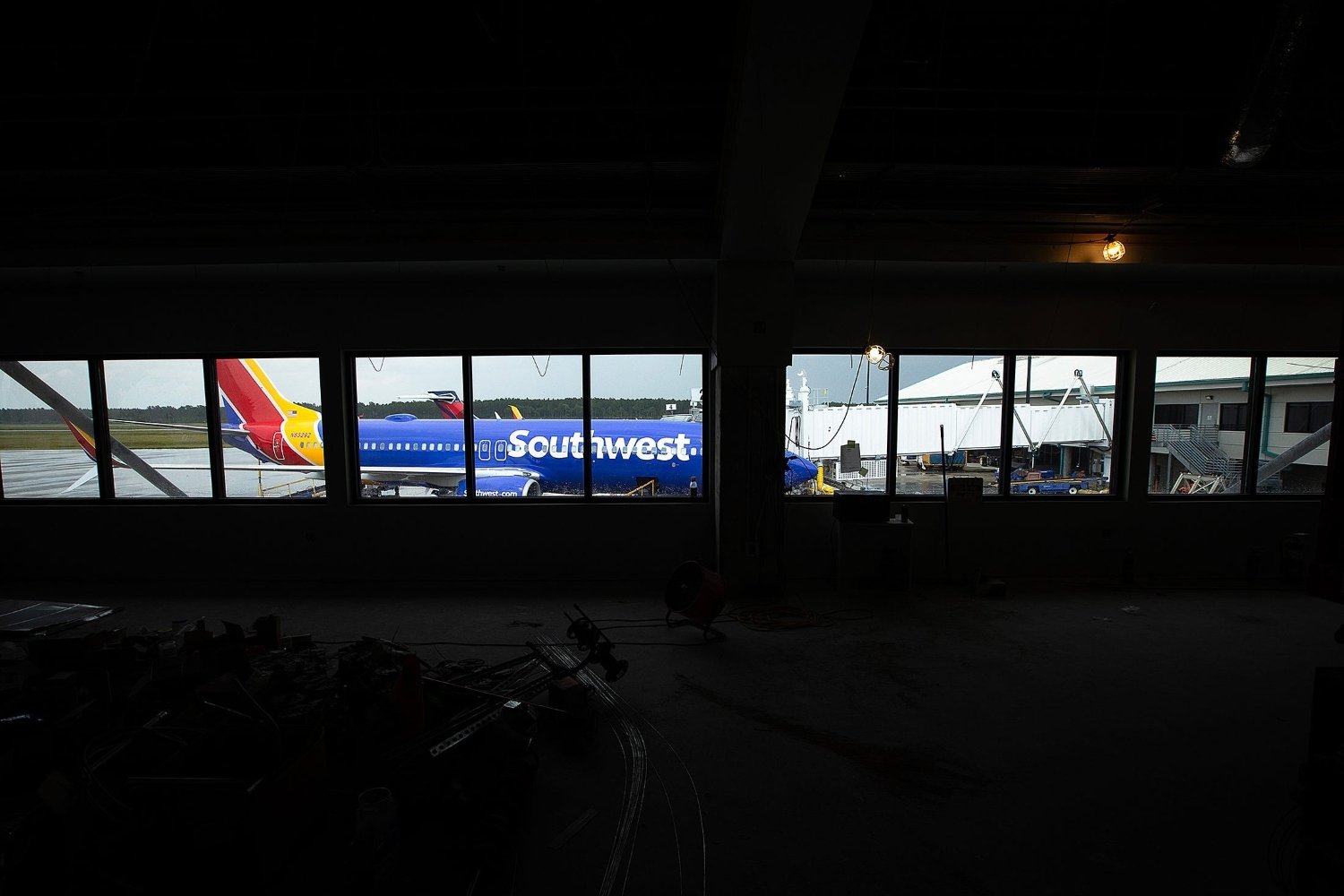 Content Warning: this article includes a brief description of self-harm. "Frank [Lorenzo] has provided an entrepreneurial spirit and dynamic leadership to this company for many years. Our board appreciates his vision and tireless efforts, which have benefited not only Continental and its people, but the entire traveling public.” —Carl Pohlad Being an owner means hiring the right people. After all, you might own something, but these people make the choices that actually create value, shape consumer and public sentiment, and make it worth owning the damn thing. But you have to take responsibility. After all, owning the power of the purse means you can change course at any moment if you feel it isn’t working. So if the person you put in charge of your business takes responsibility for transforming an entire industry, you might as well claim to be the genius behind it all. For Carl Pohlad, that has meant cheap GMs like Terry Ryan, who would pride themselves on not even spending the paltry budget given. For more on the history of the Pohlad family and their business interests, please see Part 1, Part 2, Part 4, and Part 5 of this series. In Part Three, I want to explain how Pohlad is in many ways not just financially responsible, but actually responsible for modern air travel. I'm guessing you have thoughts on modern air travel, and not the good kind. While experience discourages us from ever telling the story of a whole industry through the story of one man, many of the lessons the industry would copy originate with someone to whom Pohlad gave a green light to almost every point in his career. This did not just create a form of airlines; Pohlad and his ilk created the structures that now define modern private equity. Pohald invested in Texas International Airlines (TIA), a dingy operation that only got its “international” name thanks to a single, money-losing route to Vera Cruz. The airline became famous for hitting a pair of trees while landing in Harlingen, Texas, due to lazy engineering in the altitude reading meters. A later plane crash in Arkansas in 1973 remains infamous for the fact that TIA never bothered to clean up the mess, which means you can hike out to it today. Under Pohlad, the airline lost over $21 million between 1967 and 1971. The obvious idea would be to declare it a bad investment and sell it off, but Pohlad believed that the growth of the Texas oil industry along the Gulf Coast meant that this business would succeed one way or another. So they found a company and paid them $15,000 a month to study their business. And that would bring Frank Lorenzo to Carl Pohlad. The son of Spanish immigrants, Lorenzo had briefly worked as an analyst for TWA before forming a “consulting” business in 1966. By 1969, he and a colleague formed Jet Capital, which was brought into Texas to help avoid bankruptcy with an infusion of cash from Chase Manhattan Bank and remake the airlines. Lorenzo acted as president and CEO, while Pohlad remained on the board. Lorenzo had a plan that businesspeople loved: Be ruthless to customers and be ruthless to labor. He cut every cost involved, no matter whom it pissed off. Routes that lost money were canceled. The airlines introduced the first “Peanut Fares,” meant to attract new customers who would never otherwise experience the luxury of the Jet Age. In 1974, Lorenzo attempted to cut wages across both pilots and ground crew, resulting in a four-month strike. The only way Texas lived was a Mutual Aid Pact at the time that forced other airlines to pay for the strike. Lorenzo siphoned off over $10 million, angering other airlines in the process. With ruthless cost-cutting, Lorenzo and Pohlad made TIA a “success,” though it was still mostly limited to its local area. Lorenzo was convinced they needed to expand, but not by growing their business. Airlines require more than just flying to new lines—you need crew and all the infrastructure. Lorenzo’s first push under the Reagan administration was to found New York Air, the first-ever non-union airline in the United States, promising low fares throughout the Eastern Corridor. But it could not compete with better-known airlines and a clientele who preferred the quality experiences of competitors. Luckily, the 1978 Airline Deregulation Act would give him an opening, allowing Lorenzo to attempt to simply buy other airlines. Most businesses did not want to work with TIA and had no interest in combining them, so Lorenzo formulated a different plan: Use the profits from TIA to buy stock in other airlines, and use leverage to control them. The target? Continental Airlines. At the time, Continental was probably the best-liked airline. It had reasonable costs; it usually ran on time. Its employees genuinely respected CEO Alvin Feldman, who was a union booster. It was going through a period of low profits, as many airlines were, but there was no reason it could not recover. It was also quite large—way outside Lorenzo’s means. That brought Pohlad and other major financiers on board on a different plan to go after Continental. Pohlad and other bankers forced down the stock price of Continental so much that it was worth less than the value of its planes. By 1981, Lorenzo had gained 48.5% of the shares. In an attempt to stop it, Feldman attempted something daring: he wanted to give control of the company to the employees. The idea was to issue new shares and simply hand them to Continental’s 12,000 workers. But the banks suddenly pulled out, and there was nothing Feldman could do. In August 1981, Feldman went to his office at LAX, put a revolver to his head, and ended his life. According to his family, after losing his wife the previous year, he had poured his heart and soul into improving Continental, which was now being torn from him. Without him, any chance that the company could be run by the employees was over. President Reagan later blessed the deal that gave Pohlad and Lorenzo control of Continental. As far as my research could ascertain, Pohlad was never asked about the circumstances of Feldman’s death. Lorenzo had control of a major airline. Now, he just needed a chance to run it his way, which meant destroying the unions. Rather than bargain with the union employees, Lorenzo purposefully defaulted and sent the airline into Chapter 11 Bankruptcy. This was despite holding $288 Million in the bank in cash. Doing so allowed the airline to entirely escape its union contracts, something the increasingly conservative and labor-hostile Supreme Court affirmed in NLRB v. Bildisco & Bildisco (1981). The whole process would cost Continental $60 million. But Lorenzo got his way: he slashed the 12,000-employee work force to fewer than 5,000, offering the workforce the right to come back at less than half pay. Pilots went from $89,000 a year to $43,000 and were considered scabs throughout the industry (often spat on for a decade onward). Meanwhile, Lorenzo poured his energy into training for the New York Marathon. Even Congress was so appalled at Lorenzo’s behavior it changed the law in 1984 to prevent something similar at another business. As the president of ALPA explained, Lorenzo didn’t actually specialize in tough negotiations, “but rather in breaking his commitments to his employees and others and devising schemes to circumvent the time-honored collective bargaining process.” Of course, Wall Street loved it. Michael Milken, creator of the infamous junk bonds that almost destroyed the entire financial system at the end of the 1980s, raised $1 billion for Lorenzo to do whatever he wanted. That meant going after Eastern Airlines, one of the crown jewels of the industry. With so much cash in hand, it was an easy takeover. Pohlad and Lorenzo now owned America’s largest airline, carrying one-sixth of the passengers across the United States. It would implode within two years. Once he took hold of Eastern, Lorenzo began quickly stripping it for parts. First, Eastern had modernized airlines by creating a travel agent registration system that allowed them to quickly find and book fares. That setup was worth almost half a billion dollars, but Lorenzo had Eastern “sell” the system to a holding company he owned at a bargain price of $100 million. He then charged Eastern $10 million a month to continue using the system. He created another holding company within Texas Air to charge $1 million a month for providing the service of supplying Eastern with fuel—not even the actual charge of fuel. Lorenzo sent $22 million from Eastern to Continental to operate as a “strike fund” so they could run all of Eastern’s lines. And of course, all the best jets and lines quickly became Continental lines. During all this, Lorenzo played hardball with the unions, forcing them to take bigger and bigger cuts to help keep the business “afloat.” Lorenzo also sold his stock at the top during this. Overall, in the process of dismantling the airline, he repurposed or made off with $750 million in cash and assets. Soon enough, Eastern was drowning in debt—almost $4 billion. This was one of the most successful airlines in the country not long before Lorenzo, but suddenly, it was on the brink of implosion. Pohlad, Milken, and others soon realized they needed to get Lorenzo out of there, but Lorenzo had just as much influence over Pohlad as Pohlad had over him. Pohlad had arranged a deal in 1989 to sell the airline to baseball commissioner Peter V. Ueberroth for $464 million, but Lorenzo pushed back and killed the deal. During all this, the unions knew they needed another tactic against Lorenzo. Striking could destroy the business, so they kept negotiating and negotiating. But by March 1989, the pilots, machinists, and flight attendants had become sick of Lorenzo’s stalling and gimmicks, and finally went on strike. That would eventually force the sell-off. Lorenzo turned to businessman Donald Trump to buy the airline at a discount. The real estate mogul took 17 planes covering Boston—New York—Washington D.C. in an attempt to make a luxury line, but it never became profitable. The rest would be so bad that a judge would have to force the company into bankruptcy, ousting Lorenzo from his position and hiring a trustee. The business, by that point, was useless, and all that could be done was to sell the rest of the scraps. In bankruptcy court, all fingers pointed to Lorenzo—except Carl Pohlad, who called him “the most dedicated and decisive” businessman he knew. Meanwhile, the beneficiary of Eastern’s downfall, the still Pohlad-owned Continental, was now known for being “unreliable, unpredictable, often late, and frequently lost luggage.” In 1991, the New York Times allowed Lorenzo to publish an op-ed lamenting the death of Eastern Airlines. He blamed the high cost of labor for baggage handlers who made a stunning $48,000 a year and called for Congress to abolish the National Mediation Board, which he called “unaccountable and completely beholden to the interests of organized labor.” Pohlad stayed in airlines through Continental, eventually investing in Mesaba Aviation, a key partner for Northwest Airlines. During a strike in 2005, Northwest declared bankruptcy, and despite the law passed in 1984, snuck out of its union contracts and pulled the plug on a pension plan with over $4 billion in obligations. As one article noted, “None of the profits that Pohlad had accumulated over the years from Mesaba's relationship with NWA were to be considered in the bankruptcy process.” On the long list of people who lost money when Northwest passed through bankruptcy, you won't find Pohlad. At the time, most airline executives initially found what Pohlad and Lorenzo did distasteful. But because they had so decisively altered the market, even their detractors had no choice but to follow. Almost every major airline killed their union pension in the mid-2000s, just as profits in the industry began to skyrocket. Flying has restored some of the luxury of the jet age era, if you are willing to pay thousands for a seat. Otherwise, that bottle of water will be $3. Some of those frustrations, large and small, trace back to Pohlad and a vulture he empowered for decades. In Part Four, we'll turn to one of Pohlad's sons and begin asking: is there a different way to do business?
 -
In Part Two of our financial history of the Pohlads, Carl takes over public transportation for the Minneapolis-St. Paul area. The profits are sent elsewhere, and the system must be saved by the state. Image courtesy of © Kirby Lee-Imagn Images In Part Two of our financial history of the Pohlads, Carl takes over public transportation for the Minneapolis-St. Paul area. The profits are sent elsewhere, and the system must be saved by the state. “Never have I heard the expression ‘I.’ You understand how important it is to work as a team.” —Carl Pohlad to Ronald Reagan, Twins World Series Visit to White House, 1988 Public transportation has never been much of a priority in the Minneapolis-St. Paul metro area. It’s a land of suburbs, and its explosive growth in the second half of the 20th century made it very car-friendly. When Target Field opened in 2010, its downtown area presented a problem for many: parking. If you were my dad, you drove about 10 blocks away and spent $10 to secure a spot. It was too crowded after the game to walk through the city, so we’d stop for a whiskey and a beer (soda for this teenager) before making our way back to the car. But Target Field had a public transportation option beyond buses: the light rail Hiawatha Line, which dropped you mere steps away. When it debuted in 2004, it was the first such line in 50 years. The problem was that it connected so little of the metro area: Mall of America, the Airport, and downtown Minneapolis were really it. But why couldn’t there be something before 2004? For more on the history of the Pohlad family and their business interests, please see Part 1, Part 3, Part 4, and Part 5 of this series. In Part One, we covered how Carl Pohlad became something of an innovator in banking, or at least in backdoor bank consolidation—finding ways around regulatory efforts that allowed him to use a banking monopoly to amass fortune. But a bank is only as good as its investments. A lot of Pohlad's investments were in bottling companies for Pepsi. PepsiCo bought out Pohlad in 1986 for $590 Million, but he almost immediately turned back around and bought the Mid-South Bottling Company for $180 million. There was nothing special about how he ran these companies—soda was a very good business from the 1980s to about 2010. Of course, Pohlad got out of the business in 2019, selling the last of his bottling empire to Pepsi for $8.7 billion. Private investment is one thing; public investment is a very different story. That brings us to today’s subject: the (semi-accidental) creation of Metro Transit. Pohlad was meant to be the pioneer of modernizing transit for the Metro area. Instead, he left richer, while leaving the city with almost nothing to work with. When Pohlad bought the Transit Rail Company, the numerous streetcars had already gone the way of the dodo, exiting the area in 1954. The demise of the trolleys was not inevitable, and was much accelerated by various organized crime syndicates who stripped the trolleys for precious metals while doubling prices over less than a decade. That still left a burgeoning bus system that could easily be expanded. It’s unclear why Pohlad wanted to invest in the transit system. According to some reports, it was Governor Orville Freeman who asked Pohlad to buy it out from under the mafia. But he also kept himself in the distance, even after forming MEI Enterprises to run the company, listing himself as a Vice President. However, many have suggested he was consulted on every issue. At the time, buses were critical to the metro area’s infrastructure. There was no reason a series of extensive bus investments couldn't at least make up a portion of what trolleys' disappearances left unserved. They required little infrastructure (which meant very little political capital). While I-94 and I-35 were built under the 1956 Interstate Highway Act, these were still small roads compared to the added lanes that you see today. That meant that something like owning a bus line could be lucrative. Transit ridership had declined with the end of the trolleys, but still stood at 60 million for the bus line in 1964, where it handled about 97% of the metro area. Under Pohlad, the lines made a profit each year. In 1963, the company earned over $645,000. By the next year, it went over a million. The company took over $1 million in dividends a year. This set up a prime opportunity. Expand the bus lines, create decent-paying jobs, serve the community, and increase your profits. After all, if you also run many of the banks in the state, ensuring people have a reason to spend in the state and work in the metro area is a great idea. But this was not Carl’s plan. As the operator of the buses' parent company, MEI Enterprises, Carl was free to siphon any profits from the company elsewhere. The first stop was the Tropicana in Las Vegas, an aging hotel that had been run almost exclusively by the mafia since 1957. Pohlad claims to know nothing of the various dealings and thought “The Trop was the most legitimate” game in town. Within less than a decade, the casino went bankrupt. Pohlad sold to Del Gustafason, who allowed the mob to run wild. Gustafson would later serve 40 months in prison. The second was Trans-Texas Airways, which was a joke within the industry known as "Tinker Toy Airlines” for the lack of quality compared to larger players in the market. However, enough capital would soon allow Pohlad to transform the airlines, a story we’ll catch up with in Part Three. Overall, MEI would spend $16 million on acquisitions that had nothing to do with its original intention. Soon enough, the citizens who relied on the bus lines were fed up. A 1965 study found “Travel time is too slow,” and “suburban service is too infrequent,” but the bus lines refused to make the recommended changes. The state soon realized the error in judgment of handing the keys to a critical city infrastructure to someone who had no interest in improvements, rather than profits. Since the 1964 Urban Transportation Act (passed at the federal level) gave various municipalities essentially a two-thirds down payment if they wanted to buy out privatized transportation companies, Minnesota began looking at how to bring more public oversight into MEI. In 1967, the legislature created the Metropolitan Transit Commission, a nine-member board meant to oversee various transit companies and provide a voice for the public. However, it might have been too late. MEI pushed for a five-cent fare increase in 1968, which amounted to a 20% increase for every ride. Meanwhile, 86 buses had been banned by the MTC for being too dangerous to operate on streets. A report came out listing MEI’s “record of long-term neglect” and advocating to end all private ownership. Then came the strike. On Oct. 31, 1969, the MTC finally approved MEI’s request for a fare raise, with various conditions that it use profits to improve the fleet and other services. It just happened to be the final day of a contract for Transit Union Local 1005, where drivers and mechanics were looking for a 51-cent-per-hour raise. MEI’s last, best, and final offer was around 8.5 cents, with only a six-month term. On Nov. 18, the 1,000-member union went on strike. It was clear that MEI was not interested in trying to end the strike. Many believed that Pohlad had even orchestrated the creation of the MTC, so he could get out of the business while making a profit. After a month, Governor Harold LeVander called the parties to mediate not just the end of the strike, but the end of MEI. The drivers agreed to an immediate 11-cent raise, and an additional 29-cent raise with retroactive pay once the deal had been done. Members voted in favor at 447 to 150. MTC quickly “condemned” the bus lines, in order to purchase them. At the time, “the bus garages were shot, and three-quarters of the fleet was worn out.” MEI argued it was worth $15 million. A separate commission came up with $6.51 million. A continued court case would linger all the way to 1975, when Pohlad would eventually get $7.5 million. By the time Pohlad got his check for the bus lines, he was knee-deep in developing other industries. The transit system—a core service for thousands of Minnesotans in their everyday experience—was simply an afterthought. As MTC took over, they used federal funds to buy new buses and upgrade the lines. A new logo was chosen—the now iconic white T in a red circle. While the MTC also worked at the time to design and create new rail lines, pushback from other officials made sure those funds went to highway expansion instead. Offices went back and forth on the building of a light rail, until passage by the state in 1998 and the first opening in 2004. By 1986, MEI Inc. had personally netted Pohlad over $160 million. When MTC worked to expand the Light Rail across Target Field, the Pohlad-owned United Properties demanded a stake in the area, promising that public-private partnership was the best was forward for business and the public alike. The city gave the company $3.75 million. In Part Three, we’ll see how Pohlad aimed to "reinvent" transportation across America, no matter the cost to anyone in his way—and despite proving to be awfully bad at managing that very sector of society on a local level, already. View full article
-
 “Never have I heard the expression ‘I.’ You understand how important it is to work as a team.” —Carl Pohlad to Ronald Reagan, Twins World Series Visit to White House, 1988 Public transportation has never been much of a priority in the Minneapolis-St. Paul metro area. It’s a land of suburbs, and its explosive growth in the second half of the 20th century made it very car-friendly. When Target Field opened in 2010, its downtown area presented a problem for many: parking. If you were my dad, you drove about 10 blocks away and spent $10 to secure a spot. It was too crowded after the game to walk through the city, so we’d stop for a whiskey and a beer (soda for this teenager) before making our way back to the car. But Target Field had a public transportation option beyond buses: the light rail Hiawatha Line, which dropped you mere steps away. When it debuted in 2004, it was the first such line in 50 years. The problem was that it connected so little of the metro area: Mall of America, the Airport, and downtown Minneapolis were really it. But why couldn’t there be something before 2004? For more on the history of the Pohlad family and their business interests, please see Part 1, Part 3, Part 4, and Part 5 of this series. In Part One, we covered how Carl Pohlad became something of an innovator in banking, or at least in backdoor bank consolidation—finding ways around regulatory efforts that allowed him to use a banking monopoly to amass fortune. But a bank is only as good as its investments. A lot of Pohlad's investments were in bottling companies for Pepsi. PepsiCo bought out Pohlad in 1986 for $590 Million, but he almost immediately turned back around and bought the Mid-South Bottling Company for $180 million. There was nothing special about how he ran these companies—soda was a very good business from the 1980s to about 2010. Of course, Pohlad got out of the business in 2019, selling the last of his bottling empire to Pepsi for $8.7 billion. Private investment is one thing; public investment is a very different story. That brings us to today’s subject: the (semi-accidental) creation of Metro Transit. Pohlad was meant to be the pioneer of modernizing transit for the Metro area. Instead, he left richer, while leaving the city with almost nothing to work with. When Pohlad bought the Transit Rail Company, the numerous streetcars had already gone the way of the dodo, exiting the area in 1954. The demise of the trolleys was not inevitable, and was much accelerated by various organized crime syndicates who stripped the trolleys for precious metals while doubling prices over less than a decade. That still left a burgeoning bus system that could easily be expanded. It’s unclear why Pohlad wanted to invest in the transit system. According to some reports, it was Governor Orville Freeman who asked Pohlad to buy it out from under the mafia. But he also kept himself in the distance, even after forming MEI Enterprises to run the company, listing himself as a Vice President. However, many have suggested he was consulted on every issue. At the time, buses were critical to the metro area’s infrastructure. There was no reason a series of extensive bus investments couldn't at least make up a portion of what trolleys' disappearances left unserved. They required little infrastructure (which meant very little political capital). While I-94 and I-35 were built under the 1956 Interstate Highway Act, these were still small roads compared to the added lanes that you see today. That meant that something like owning a bus line could be lucrative. Transit ridership had declined with the end of the trolleys, but still stood at 60 million for the bus line in 1964, where it handled about 97% of the metro area. Under Pohlad, the lines made a profit each year. In 1963, the company earned over $645,000. By the next year, it went over a million. The company took over $1 million in dividends a year. This set up a prime opportunity. Expand the bus lines, create decent-paying jobs, serve the community, and increase your profits. After all, if you also run many of the banks in the state, ensuring people have a reason to spend in the state and work in the metro area is a great idea. But this was not Carl’s plan. As the operator of the buses' parent company, MEI Enterprises, Carl was free to siphon any profits from the company elsewhere. The first stop was the Tropicana in Las Vegas, an aging hotel that had been run almost exclusively by the mafia since 1957. Pohlad claims to know nothing of the various dealings and thought “The Trop was the most legitimate” game in town. Within less than a decade, the casino went bankrupt. Pohlad sold to Del Gustafason, who allowed the mob to run wild. Gustafson would later serve 40 months in prison. The second was Trans-Texas Airways, which was a joke within the industry known as "Tinker Toy Airlines” for the lack of quality compared to larger players in the market. However, enough capital would soon allow Pohlad to transform the airlines, a story we’ll catch up with in Part Three. Overall, MEI would spend $16 million on acquisitions that had nothing to do with its original intention. Soon enough, the citizens who relied on the bus lines were fed up. A 1965 study found “Travel time is too slow,” and “suburban service is too infrequent,” but the bus lines refused to make the recommended changes. The state soon realized the error in judgment of handing the keys to a critical city infrastructure to someone who had no interest in improvements, rather than profits. Since the 1964 Urban Transportation Act (passed at the federal level) gave various municipalities essentially a two-thirds down payment if they wanted to buy out privatized transportation companies, Minnesota began looking at how to bring more public oversight into MEI. In 1967, the legislature created the Metropolitan Transit Commission, a nine-member board meant to oversee various transit companies and provide a voice for the public. However, it might have been too late. MEI pushed for a five-cent fare increase in 1968, which amounted to a 20% increase for every ride. Meanwhile, 86 buses had been banned by the MTC for being too dangerous to operate on streets. A report came out listing MEI’s “record of long-term neglect” and advocating to end all private ownership. Then came the strike. On Oct. 31, 1969, the MTC finally approved MEI’s request for a fare raise, with various conditions that it use profits to improve the fleet and other services. It just happened to be the final day of a contract for Transit Union Local 1005, where drivers and mechanics were looking for a 51-cent-per-hour raise. MEI’s last, best, and final offer was around 8.5 cents, with only a six-month term. On Nov. 18, the 1,000-member union went on strike. It was clear that MEI was not interested in trying to end the strike. Many believed that Pohlad had even orchestrated the creation of the MTC, so he could get out of the business while making a profit. After a month, Governor Harold LeVander called the parties to mediate not just the end of the strike, but the end of MEI. The drivers agreed to an immediate 11-cent raise, and an additional 29-cent raise with retroactive pay once the deal had been done. Members voted in favor at 447 to 150. MTC quickly “condemned” the bus lines, in order to purchase them. At the time, “the bus garages were shot, and three-quarters of the fleet was worn out.” MEI argued it was worth $15 million. A separate commission came up with $6.51 million. A continued court case would linger all the way to 1975, when Pohlad would eventually get $7.5 million. By the time Pohlad got his check for the bus lines, he was knee-deep in developing other industries. The transit system—a core service for thousands of Minnesotans in their everyday experience—was simply an afterthought. As MTC took over, they used federal funds to buy new buses and upgrade the lines. A new logo was chosen—the now iconic white T in a red circle. While the MTC also worked at the time to design and create new rail lines, pushback from other officials made sure those funds went to highway expansion instead. Offices went back and forth on the building of a light rail, until passage by the state in 1998 and the first opening in 2004. By 1986, MEI Inc. had personally netted Pohlad over $160 million. When MTC worked to expand the Light Rail across Target Field, the Pohlad-owned United Properties demanded a stake in the area, promising that public-private partnership was the best was forward for business and the public alike. The city gave the company $3.75 million. In Part Three, we’ll see how Pohlad aimed to "reinvent" transportation across America, no matter the cost to anyone in his way—and despite proving to be awfully bad at managing that very sector of society on a local level, already.
 -
I skipped the Trump stuff because these pieces aren't really focused on the team (he does come up elsewhere). My sense is Trump tried to buy something like a dozen different teams in the 1980s but could never get a deal done, even when his offered were way higher. The Wolfenson group would have been interesting....
-
I think what you'll see as the stories continue this week is there are honestly much more egregious stories to tell than a half-truth.
-
This week at Twins Daily, we're running a five-part series detailing the history of the business ventures of the Pohlad family. Even as they prepare to sell the Twins after a 40-year ownership, it's an important subject, given the way they've left their stamp deep in the heart of the franchise. Image courtesy of JHansen23 - Wikimedia Commons - Cropped to Size This week at Twins Daily, we're running a five-part series detailing the history of the business ventures of the Pohlad family. Even as they prepare to sell the Twins after a 40-year ownership, it's an important subject, given the way they've left their stamp deep in the heart of the franchise. "I've always bought and sold things. It's what I've done all my life. " —Carl Pohlad, 1989 Carl Pohlad could have bought any number of teams. He looked into buying the San Francisco Giants in the 1970s. He put down a bid to buy the Philadelphia Eagles in 1983. He later tried to buy Churchill Downs, the home of the Kentucky Derby. Instead, he ended up with a baseball team for the bargain price of $32 million. But why the Minnesota Twins? After all, Carl admitted he had “no particular interest in baseball.” Instead, like many things in his portfolio, it was seen as a savvy investment. As he told the press, “I think there is a good baseball market here and we can turn it around. In fact, I think we may already have.'' Cut to 40 years later, and baseball in Minnesota is in trouble. While almost every team in the league saw a notable increase in attendance in 2024, the Minnesota Twins saw their numbers dip. The causes are manifold, but the buck stops at the Pohlad Family, who have owned their baseball team longer than almost every other team in the league. That will likely come to an end this year, but before that, we need to understand how and why the Pohlads made the decisions they made. Baseball, the way it has been played at the major-league level for decades, is a business. And if it’s just one business among many for the owners of the local nine, we need to understand the other cogs in the machine. For more on the history of the Pohlad family and their business interests, please see Part 2, Part 3, Part 4, and Part 5 of this series. This week on Twins Daily, we’re diving into the financial history of the Pohlads. If they are indeed on their way out—whether in favor of the Ishbia brothers, or elsewhere—we need to understand the origins of these frustrations. Baseball owners do not simply walk into the job (unless they are handed it on a silver plate). And the way they make their decisions needs to be understood in the context of their financial dealings. Over five parts, I’ll be tackling different aspects of the Pohlad empire: the successes, the failures, the swindles, the alternative paths. In many ways, the stories that pepper Pohlad’s non-baseball past are no different than those you might find in any owner’s past. But the lessons along the way here include this one: the Pohlads have never necessarily run any business in a typical manner. Seeing their actions in other businesses often reveals why the Twins have been run the way they were. Let’s get one story out of the way. It has become almost common lore that Carl Pohlad began his foray into business by, as many sources say, foreclosing on homes during the Great Depression. As much as naysaying Twins fans would love to believe such a story, there’s no evidence for that, beyond the slow accretion of repeated hearsay. Carl was born in 1915, making him only 14 when the stock market crashed in 1929. He was from a small town in Iowa and grew up poor; his father worked the railroad and attempted to support eight children. Young Pohlad did work for a bank, first on his farm, milking cows. By the mid-1930s, as ESPN’s Jim Caple reported, “He went on to deliver collection and foreclosure notices.” If Pohlad played the role of “muscle” for that banker, it's buried deeper than anyone has been able to reach for real proof; that idea has taken root purely through grapevine gossip. But even if it only included delivering notices, it certainly meant having people leave the same kind of farms his own family lived on. That said, there were very few honest dollars to go around. It was a hard time to live in a community (or thrive in a business) dependent upon agriculture. But Pohlad escaped, thanks to his body. He moved to Los Angeles where he played football at a junior college, while selling repossessed cars and boxing in his spare time. After being spotted by Bing Crosby, we went on to play for Gonzaga. Before he could go any further in any career, however, he was drafted in 1943. He fought in the European theater of World War II, and was eventually decorated with three Purple Hearts and two Bronze Stars. When he got home, Pohlad needed to get his money somewhere, so he did what all the best and brightest Americans do: he married into it, in 1947. His new brother-in-law Russell Stotesbury operated a business in Iowa that essentially taught banks how to manage their money better. Understandably, that was a hot consulting business, with the Great Depression only a few years in the rearview and a postwar boom changing the landscape rapidly. By 1949, the Pohlads relocated to Edina. Stotesbury passed away in 1955; Pohlad took full control of several banks, including Marquette Bank. Only a year later, Pohlad began participating in meetings across athletic clubs, yacht clubs, country clubs, all with the other bankers of the state. These meetings had a goal: to set standards across all banks to create a uniform way of doing things. That’s the official, sanitized way to say it. A better way to say it is: the banks were engaging in illegal price fixing. They were able to set interest rates without the pressure of competition, ensuring high savings for the banks and low returns to customers. Farmers were particularly hard-hit by high rates. Checking accounts were burdened by onerous service fees. And because both small and large banks across the state participated, no one had anywhere else to turn to get a better rate. Luckily, this was a time of aggressive antitrust action, and Robert F. Kennedy’s Department of Justice investigated the action in 1961. By that time, the 20 banks involved had grown to $392 million in assets (around $4.2 billion in 2024 dollars). In 1964, Pohlad and the other banks pleaded “no contest” to the case, resulting in fines of $253,000. Although Pohlad did not speak, another spokesman essentially admitted that banking was a special business, and the only way to actually make a profit and stay in business was to commit fraud. Pohlad himself later said, in a 1984 interview with Managing magazine, that “banks should be deregulated completely.” Due in some part to the banks’ collusion, between 1954 and 1964, Minnesota lost over 20,000 farms, most gobbled up by larger corporations receiving more preferential loans. The average farm grew 18% in size over the same years. In Filmore County, the almost 200 family farms in 1958 all but disappeared, purchased by speculators. This is, directly though not solely, a part of the Pohlad family's legacy in the state. There were many more possible indictments that loomed over the case, particularly on issues of discrimination. However, Congress had barred the Federal Trade Commission from pursuing further action when it came to this kind of discrimination. And if there were other skeletons, the creeping political conservative takeover of the 1970s would ensure they stayed in the closet. By the start of the 1980s, deregulation was in, and antitrust was out. Big Business was good. Through all of this, Pohlad found a way to continue to grow. You can’t commit illegal collusion with other bank owners if you own all the banks yourself. Pohald soon became known as the “dean of chain banking” (or, as one article described him, the “Mickey Mantle of Chain Banking”). Rather than combining all the banks into one parent company (ie. Wells Fargo, Citibank), Pohlad simply owned several separate banks, which Minnesota law allowed. While holding banks were regulated by the Bank Holding Company Act of 1956, chain banks were not. As a 1977 study demonstrated, chain banking “results in poorer market performance – i.e., higher prices and a lesser quality of bank services.” Michael Pint, the Minnesota banking commissioner from 1978 to 1982, put it plainly: “If the legislators decide there’s a reason to control the multibank holding companies, there’s a reason to control the chains.” There’s no evidence that Pohlad’s banks continued to participate in interest fixing as he swallowed banks whole. But he profited tremendously from a period of mass deregulation in the financial industry, in which adopting policies on both sides of the line between illegal and merely unseemly became the predominant way of doing business. By 1988, the 40 banks Pohlad owned accounted for around $4 billion in assets. When Pohlad sold Marquette Bank in 1992, it held over $2.4 billion in assets. Though many others held shares in the bank, somehow, most of the profits went to Pohlad. The minority owners sued for a greater share, and a settlement for $5 million was eventually reached. Pohlad’s last assets in banking were sold in 2001. The consolidation was considered so concentrated that the Bush administration required Wells Fargo to sell six branches across Minnesota and South Dakota so people could have access to competing banks. When Pohald arrived at Marquette Bank, rules prevented banks from merging, thus promoting small businesses and combating consolidation. But as Pohlad worked with other banks, he saw opportunities for growth and increased profitability. Some of those opportunities involved loopholes; others involved fraud. Most involved enrichment for a few at the cost of many. But that’s where Part One ends and Part Two will begin: What can we learn from Pohlad the businessman, rather than the banker? We’ll turn to how Pohlad has worked with the government to build something for the public. Spoiler Alert: It doesn't end well. View full article
-
 "I've always bought and sold things. It's what I've done all my life. " —Carl Pohlad, 1989 Carl Pohlad could have bought any number of teams. He looked into buying the San Francisco Giants in the 1970s. He put down a bid to buy the Philadelphia Eagles in 1983. He later tried to buy Churchill Downs, the home of the Kentucky Derby. Instead, he ended up with a baseball team for the bargain price of $32 million. But why the Minnesota Twins? After all, Carl admitted he had “no particular interest in baseball.” Instead, like many things in his portfolio, it was seen as a savvy investment. As he told the press, “I think there is a good baseball market here and we can turn it around. In fact, I think we may already have.'' Cut to 40 years later, and baseball in Minnesota is in trouble. While almost every team in the league saw a notable increase in attendance in 2024, the Minnesota Twins saw their numbers dip. The causes are manifold, but the buck stops at the Pohlad Family, who have owned their baseball team longer than almost every other team in the league. That will likely come to an end this year, but before that, we need to understand how and why the Pohlads made the decisions they made. Baseball, the way it has been played at the major-league level for decades, is a business. And if it’s just one business among many for the owners of the local nine, we need to understand the other cogs in the machine. For more on the history of the Pohlad family and their business interests, please see Part 2, Part 3, Part 4, and Part 5 of this series. This week on Twins Daily, we’re diving into the financial history of the Pohlads. If they are indeed on their way out—whether in favor of the Ishbia brothers, or elsewhere—we need to understand the origins of these frustrations. Baseball owners do not simply walk into the job (unless they are handed it on a silver plate). And the way they make their decisions needs to be understood in the context of their financial dealings. Over five parts, I’ll be tackling different aspects of the Pohlad empire: the successes, the failures, the swindles, the alternative paths. In many ways, the stories that pepper Pohlad’s non-baseball past are no different than those you might find in any owner’s past. But the lessons along the way here include this one: the Pohlads have never necessarily run any business in a typical manner. Seeing their actions in other businesses often reveals why the Twins have been run the way they were. Let’s get one story out of the way. It has become almost common lore that Carl Pohlad began his foray into business by, as many sources say, foreclosing on homes during the Great Depression. As much as naysaying Twins fans would love to believe such a story, there’s no evidence for that, beyond the slow accretion of repeated hearsay. Carl was born in 1915, making him only 14 when the stock market crashed in 1929. He was from a small town in Iowa and grew up poor; his father worked the railroad and attempted to support eight children. Young Pohlad did work for a bank, first on his farm, milking cows. By the mid-1930s, as ESPN’s Jim Caple reported, “He went on to deliver collection and foreclosure notices.” If Pohlad played the role of “muscle” for that banker, it's buried deeper than anyone has been able to reach for real proof; that idea has taken root purely through grapevine gossip. But even if it only included delivering notices, it certainly meant having people leave the same kind of farms his own family lived on. That said, there were very few honest dollars to go around. It was a hard time to live in a community (or thrive in a business) dependent upon agriculture. But Pohlad escaped, thanks to his body. He moved to Los Angeles where he played football at a junior college, while selling repossessed cars and boxing in his spare time. After being spotted by Bing Crosby, we went on to play for Gonzaga. Before he could go any further in any career, however, he was drafted in 1943. He fought in the European theater of World War II, and was eventually decorated with three Purple Hearts and two Bronze Stars. When he got home, Pohlad needed to get his money somewhere, so he did what all the best and brightest Americans do: he married into it, in 1947. His new brother-in-law Russell Stotesbury operated a business in Iowa that essentially taught banks how to manage their money better. Understandably, that was a hot consulting business, with the Great Depression only a few years in the rearview and a postwar boom changing the landscape rapidly. By 1949, the Pohlads relocated to Edina. Stotesbury passed away in 1955; Pohlad took full control of several banks, including Marquette Bank. Only a year later, Pohlad began participating in meetings across athletic clubs, yacht clubs, country clubs, all with the other bankers of the state. These meetings had a goal: to set standards across all banks to create a uniform way of doing things. That’s the official, sanitized way to say it. A better way to say it is: the banks were engaging in illegal price fixing. They were able to set interest rates without the pressure of competition, ensuring high savings for the banks and low returns to customers. Farmers were particularly hard-hit by high rates. Checking accounts were burdened by onerous service fees. And because both small and large banks across the state participated, no one had anywhere else to turn to get a better rate. Luckily, this was a time of aggressive antitrust action, and Robert F. Kennedy’s Department of Justice investigated the action in 1961. By that time, the 20 banks involved had grown to $392 million in assets (around $4.2 billion in 2024 dollars). In 1964, Pohlad and the other banks pleaded “no contest” to the case, resulting in fines of $253,000. Although Pohlad did not speak, another spokesman essentially admitted that banking was a special business, and the only way to actually make a profit and stay in business was to commit fraud. Pohlad himself later said, in a 1984 interview with Managing magazine, that “banks should be deregulated completely.” Due in some part to the banks’ collusion, between 1954 and 1964, Minnesota lost over 20,000 farms, most gobbled up by larger corporations receiving more preferential loans. The average farm grew 18% in size over the same years. In Filmore County, the almost 200 family farms in 1958 all but disappeared, purchased by speculators. This is, directly though not solely, a part of the Pohlad family's legacy in the state. There were many more possible indictments that loomed over the case, particularly on issues of discrimination. However, Congress had barred the Federal Trade Commission from pursuing further action when it came to this kind of discrimination. And if there were other skeletons, the creeping political conservative takeover of the 1970s would ensure they stayed in the closet. By the start of the 1980s, deregulation was in, and antitrust was out. Big Business was good. Through all of this, Pohlad found a way to continue to grow. You can’t commit illegal collusion with other bank owners if you own all the banks yourself. Pohald soon became known as the “dean of chain banking” (or, as one article described him, the “Mickey Mantle of Chain Banking”). Rather than combining all the banks into one parent company (ie. Wells Fargo, Citibank), Pohlad simply owned several separate banks, which Minnesota law allowed. While holding banks were regulated by the Bank Holding Company Act of 1956, chain banks were not. As a 1977 study demonstrated, chain banking “results in poorer market performance – i.e., higher prices and a lesser quality of bank services.” Michael Pint, the Minnesota banking commissioner from 1978 to 1982, put it plainly: “If the legislators decide there’s a reason to control the multibank holding companies, there’s a reason to control the chains.” There’s no evidence that Pohlad’s banks continued to participate in interest fixing as he swallowed banks whole. But he profited tremendously from a period of mass deregulation in the financial industry, in which adopting policies on both sides of the line between illegal and merely unseemly became the predominant way of doing business. By 1988, the 40 banks Pohlad owned accounted for around $4 billion in assets. When Pohlad sold Marquette Bank in 1992, it held over $2.4 billion in assets. Though many others held shares in the bank, somehow, most of the profits went to Pohlad. The minority owners sued for a greater share, and a settlement for $5 million was eventually reached. Pohlad’s last assets in banking were sold in 2001. The consolidation was considered so concentrated that the Bush administration required Wells Fargo to sell six branches across Minnesota and South Dakota so people could have access to competing banks. When Pohald arrived at Marquette Bank, rules prevented banks from merging, thus promoting small businesses and combating consolidation. But as Pohlad worked with other banks, he saw opportunities for growth and increased profitability. Some of those opportunities involved loopholes; others involved fraud. Most involved enrichment for a few at the cost of many. But that’s where Part One ends and Part Two will begin: What can we learn from Pohlad the businessman, rather than the banker? We’ll turn to how Pohlad has worked with the government to build something for the public. Spoiler Alert: It doesn't end well.
- 22 comments
-
- 12
-

-

-
The Twins will partner with MLB to produce and broadcast games in 2025, expanding their reach across Twins Territory and giving cable cutters a streaming option. But will people pay in? Image courtesy of © Matt Blewett-Imagn Images The Twins will partner with MLB to produce and broadcast games in 2025, expanding their reach across Twins Territory and giving cable cutters a streaming option. But will people pay in? It's the announcement that feels finally a decade in the making: Minnesotans can finally stream Twins games. As the Bally Sports bankruptcy court threw a wrench in recent weeks, three teams—the Twins, Guardians, and Brewers—have officially partnered with MLB for broadcasts in 2025. This follows the same track that the Diamondbacks, Rockies, and Padres followed last year. As Dave St. Peter told the media, "This will eliminate all blackouts as we've come to know and hate them." The Twins have thus announced Twins.TV, an MLB-run streaming service for the games. The spine of this will be a direct-to-consumer subscription, which will likely follow the same pricing structure as teams sold them for last year—$20 for a month or $100 for the season. For those who already subscribe to MLB.tv and want the full in- and out-of-market experience, the price tag will be higher, but the difference from what you were already paying might be minimal. Beyond that, the team will likely partner with most major cable services—including Xfinity—for those who remain cable subscribers. As noted in the press release, the Twins should now be available to 4.4 million fans within their projected area, compared to less than a quarter of that in 2024. But that newfound reach comes with a price. A million people paid for access to Twins games as part of their monthly cable bill, whether they wanted it or not. Companies like Xfinity and DirecTV paid the network carriage fees, then passed the costs to their subscribers. Now, the Twins will face a darker question: Just how popular are they, when fans need to opt in rather than out--and when the price they're paying is suddenly much more visible to them? The Twins reportedly received around 80% of their 2023 intake of $54 million to remain with Bally Sports North for 2024, implying a take around $40 million. That will be hard to match, at least in the short term. Even St. Peter acknowledged that in his remarks Tuesday. The Padres scored around 40,000 subscribers on their direct-to-consumer service last year, which would generate revenues around $5 million. The Minnesota area is certainly bigger than San Diego, though it's also a space where the Twins have to compete against quite a few more sports for attention. Many are already cutting streaming services left and right; is $20 a month for a single team enticing enough? That's not all the money, of course, with various deals being made with the cable providers. San Diego had perhaps five different ones, though details on how much they yielded were scarce. That slice of the pie figures to be tiny. We're talking, now, about the league going to the carriers with hat in hand, needing to get their channel aired. They don't have a package of sports that can deliver year-round content, or even 24-hour supplemental content around the games, to offer. It's unlikely the carriage fees associated with this model will be even 10 percent of what Bally could command, though we're obviously doing an apples and oranges thing there. Nonetheless, there will be some money beyond the raw DTC revenues. Furthermore, MLB and the Players Association recently struck a deal to send more money to teams in this situation, though the specifics again are unclear. The Rockies might give us a better sense of what might happen to the Twins, given they are currently valued similarly by Forbes. According to research, Colorado's switch over from their broadcast deal with AT&T to MLB cost the team about $55 million in annual value. If you thus figure the Twins to lose $30-40 million in value tied in with their broadcast rights, you might also have a very good idea where they may have already balanced those books. St. Peter isn't expecting the lost cashflow to further reduce payroll, because the team reduced its payroll to match the new reality a year early. The president informed reporters he expects less money than what Ballys provided in 2024, and Joe Pohlad's recent comments had already planned for this announcement. In effect, last year's slash was about this very eventuality. The big question is whether this is too late. The Twins had this same opportunity last year. Now, they lost fans to that lower payroll, as well as an Xfinity blackout that kept them off TV for three months and a disastrous September collapse. Twins fans might have made their peace with the drop in payroll, in exchange for being able to stream games the way the team initially promised. Instead, they got the stick without the carrot for a full year, and it turned a lot of people off. The team is now in a pretty different position than are the Brewers, Diamondbacks, Guardians, or Padres, mostly because of those clubs' better on-field performances. The best way to get fans to subscribe may simply be to win games and a lot of them. On the broader side, Manfred continues to bring teams into his fold, with six teams secured and more likely to follow. The Texas Rangers also announced the end of their partnership with Bally, but have decided to explore production and distribution options that might present themselves locally, rather than lump in with the league. The Tigers and Royals, like the Guardians, are still playing postseason games, and unlike the Guardians, they have a contract with Diamond Sports Group to stay on their local flavors of Bally Sports through next year. However, it wouldn't be surprising at all if that deal were vacated, given Diamond's recent indications in court, and at that point, both Detroit and Kansas City could come inside the tent, too. Ultimately, the league would like to be able to bundle and sell streaming packages featuring all of its teams directly, but they need way more clubs to be dependent on them before that can happen. Nor does it make much sense to plunge forward with that project sans many of the biggest draws in the sports. Huge contracts paying hundreds of millions to big-market behemoths still stand in the way of that happening. In other words, until top teams like the Dodgers or Yankees run out of ways to make orders of magnitude more than the teams leaning on the league will get, the package deal is a non-starter, and solutions are likely to remain piecemeal. All of MLB will be facing a war for eyeballs, and now the Twins are going to be front and center of that battle. Those eyeballs all mean money, so winning those battles and skirmishes will be essential. The Twins' medium-term spending power depends on it. View full article
-
Will Twins.TV Save the Twins? A Look at the Financial Future
Peter Labuza posted an article in Twins
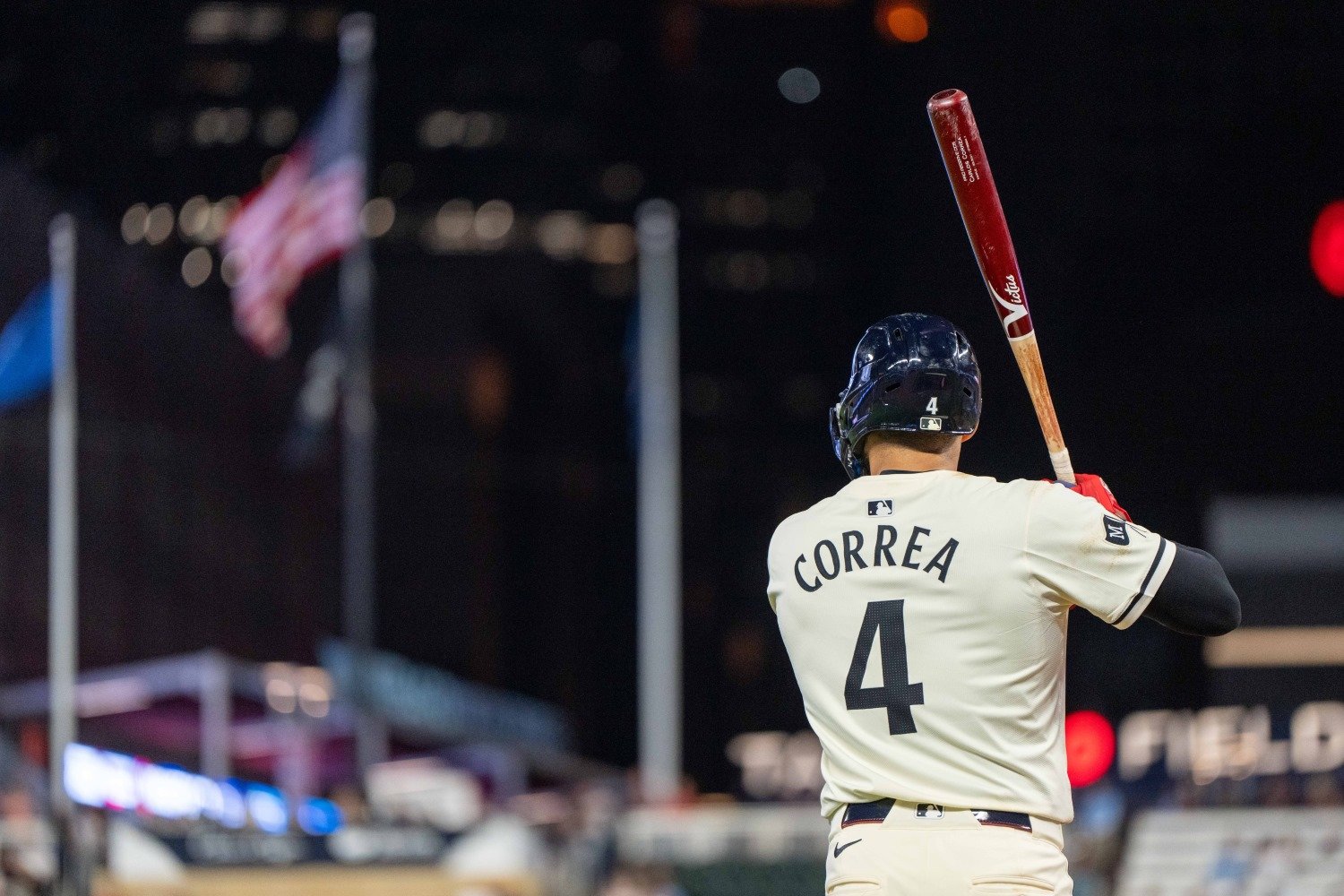 It's the announcement that feels finally a decade in the making: Minnesotans can finally stream Twins games. As the Bally Sports bankruptcy court threw a wrench in recent weeks, three teams—the Twins, Guardians, and Brewers—have officially partnered with MLB for broadcasts in 2025. This follows the same track that the Diamondbacks, Rockies, and Padres followed last year. As Dave St. Peter told the media, "This will eliminate all blackouts as we've come to know and hate them." The Twins have thus announced Twins.TV, an MLB-run streaming service for the games. The spine of this will be a direct-to-consumer subscription, which will likely follow the same pricing structure as teams sold them for last year—$20 for a month or $100 for the season. For those who already subscribe to MLB.tv and want the full in- and out-of-market experience, the price tag will be higher, but the difference from what you were already paying might be minimal. Beyond that, the team will likely partner with most major cable services—including Xfinity—for those who remain cable subscribers. As noted in the press release, the Twins should now be available to 4.4 million fans within their projected area, compared to less than a quarter of that in 2024. But that newfound reach comes with a price. A million people paid for access to Twins games as part of their monthly cable bill, whether they wanted it or not. Companies like Xfinity and DirecTV paid the network carriage fees, then passed the costs to their subscribers. Now, the Twins will face a darker question: Just how popular are they, when fans need to opt in rather than out--and when the price they're paying is suddenly much more visible to them? The Twins reportedly received around 80% of their 2023 intake of $54 million to remain with Bally Sports North for 2024, implying a take around $40 million. That will be hard to match, at least in the short term. Even St. Peter acknowledged that in his remarks Tuesday. The Padres scored around 40,000 subscribers on their direct-to-consumer service last year, which would generate revenues around $5 million. The Minnesota area is certainly bigger than San Diego, though it's also a space where the Twins have to compete against quite a few more sports for attention. Many are already cutting streaming services left and right; is $20 a month for a single team enticing enough? That's not all the money, of course, with various deals being made with the cable providers. San Diego had perhaps five different ones, though details on how much they yielded were scarce. That slice of the pie figures to be tiny. We're talking, now, about the league going to the carriers with hat in hand, needing to get their channel aired. They don't have a package of sports that can deliver year-round content, or even 24-hour supplemental content around the games, to offer. It's unlikely the carriage fees associated with this model will be even 10 percent of what Bally could command, though we're obviously doing an apples and oranges thing there. Nonetheless, there will be some money beyond the raw DTC revenues. Furthermore, MLB and the Players Association recently struck a deal to send more money to teams in this situation, though the specifics again are unclear. The Rockies might give us a better sense of what might happen to the Twins, given they are currently valued similarly by Forbes. According to research, Colorado's switch over from their broadcast deal with AT&T to MLB cost the team about $55 million in annual value. If you thus figure the Twins to lose $30-40 million in value tied in with their broadcast rights, you might also have a very good idea where they may have already balanced those books. St. Peter isn't expecting the lost cashflow to further reduce payroll, because the team reduced its payroll to match the new reality a year early. The president informed reporters he expects less money than what Ballys provided in 2024, and Joe Pohlad's recent comments had already planned for this announcement. In effect, last year's slash was about this very eventuality. The big question is whether this is too late. The Twins had this same opportunity last year. Now, they lost fans to that lower payroll, as well as an Xfinity blackout that kept them off TV for three months and a disastrous September collapse. Twins fans might have made their peace with the drop in payroll, in exchange for being able to stream games the way the team initially promised. Instead, they got the stick without the carrot for a full year, and it turned a lot of people off. The team is now in a pretty different position than are the Brewers, Diamondbacks, Guardians, or Padres, mostly because of those clubs' better on-field performances. The best way to get fans to subscribe may simply be to win games and a lot of them. On the broader side, Manfred continues to bring teams into his fold, with six teams secured and more likely to follow. The Texas Rangers also announced the end of their partnership with Bally, but have decided to explore production and distribution options that might present themselves locally, rather than lump in with the league. The Tigers and Royals, like the Guardians, are still playing postseason games, and unlike the Guardians, they have a contract with Diamond Sports Group to stay on their local flavors of Bally Sports through next year. However, it wouldn't be surprising at all if that deal were vacated, given Diamond's recent indications in court, and at that point, both Detroit and Kansas City could come inside the tent, too. Ultimately, the league would like to be able to bundle and sell streaming packages featuring all of its teams directly, but they need way more clubs to be dependent on them before that can happen. Nor does it make much sense to plunge forward with that project sans many of the biggest draws in the sports. Huge contracts paying hundreds of millions to big-market behemoths still stand in the way of that happening. In other words, until top teams like the Dodgers or Yankees run out of ways to make orders of magnitude more than the teams leaning on the league will get, the package deal is a non-starter, and solutions are likely to remain piecemeal. All of MLB will be facing a war for eyeballs, and now the Twins are going to be front and center of that battle. Those eyeballs all mean money, so winning those battles and skirmishes will be essential. The Twins' medium-term spending power depends on it.
 -
 During the final broadcast of the season, former MVP and current Twins TV color commentator Justin Morneau spoke about studying other teams, and seeing what they did well. It’s obvious to point to a team like the Royals and show how they added $100 million in payroll to turn it around this season. However, if the Twins are going to spend less, the question is how to spend it better. Case in point: The San Diego Padres. After losing owner Peter Seidler to cancer and finding themselves victims of the Bally Sports fiasco, baseball operations head A.J. Preller was given a mandate to aggressively cut payroll. He did so, dropping San Diego from 5th in the league in spending to 12th from last year to this one. That meant losing not just All-Star, but era-defining players: Juan Soto, Josh Hader, and Blake Snell departed, among others. They also suffered from a bizarre 2023 season in which a huge 10-game difference between their expected record based on run differential and their actual record led to their missing the postseason. Meanwhile, they watched the rival Dodgers pour over a billion dollars into their winter additions. The result for 2024? The Padres finished only five games behind the Dodgers, and easily secured the top Wild Card spot in the National League. According to FanGraphs projections, they’re actually better built for the postseason than their LA rivals, whose pitching ran thin late in the campaign. This was a team that cut $90 million in payroll to begin the season and cruised to victory all season long. So how did they do it? Overpay For Talent, and Lots of It The Padres have not been afraid to offer big contracts, even ones so ridiculous that the league office has nixed them. The Padres have three position players (Fernando Tatis Jr., Manny Machado, and Xander Bogaerts) and two pitchers (Joe Musgrove and Yu Darvish) all making more than Byron Buxton will in any of his contracted years, and all those contracts last through at least the 2027 season. And guess what? They combined for 8.7 hitting fWAR and 2.5 pitching fWAR. That’s $95 million in WAR for $90 million in salary. Part of this was prepping for injuries. Tatis and Boegarts both lost time to injuries, while the two pitchers were each limited to less than 100 innings. It didn’t matter, because that Padres still had other players like Ha-Seong Kim, Jake Cronenworth, and Wandy Peralta to fill the gaps. And if you remove Jackson Merrill (more on that later), the team only gave 1.6% of its plate appearances to rookies. Turns out, having enough players with big money means you don’t need to rely on every single one of them to deliver. Trade Early, Trade Often Preller is an executive who would move a dozen players back and forth to gain 0.2 WAR and a few years of team control, and while it might drive some crazy, it often works. Forced to move Juan Soto (who ended up earning $30 million in arbitration with the Yankees) as well as dumping Matt Carpenter, Preller somehow still found ways to make a number of other trades. Just as the season began, he convinced the White Sox to give up Dylan Cease, who threw a no-hitter for the Padres this summer. In dealing Soto, he got a fully formed starting pitcher in Michael King, as well as starting catcher Kyle Higashioka and prospects--one of whom, Drew Thorpe, then became a centerpiece of the Cease deal. Frustrated with an early offensive slump, he made a surprising May trade to get three-time batting champion Luis Arraez. And at the deadline, Preller beefed up the bullpen by dealing for two top arms, in Tanner Scott and Jason Adam. For good measure, he picked up Martín Pérez just to eat some innings down the stretch. Reports suggested they almost scored Jarren Duran from the Red Sox, too. In all, Preller dealt 12 of his team’s top 21 top prospects. That might seem like a team destined for pain down the road, but the team has had a seemingly endless supply of prospects in the past and knows that winning fixes everything. Small Deals, Big Payoffs Despite a team with three major stars, the Padres’ All-Star this year was none other than Jurickson Profar (4.3 fWAR), a former No. 1 prospect who finally paid off with a true star-caliber season after a decade-long career--while making just barely over the league minimum. Other signings overachieved, too, including former Twin Donovan Solano (0.9 fWAR), David Peralta (0.5 fWAR), knuckleball savant Matt Waldron (1.9 fWAR), and waiver pickup Jeremiah Estrada (1.6 fWAR). These were all acquisitions that cost $1 million or less. Compare that to the cheap pickups Derek Falvey tried this year, which all backfired. Whatever magic Preller has in picking lottery tickets, Falvey desperately needs his own bag of tricks. Score Big With Your Rookie Phenom There was a possibility, early in the season, that Brooks Lee (or Royce Lewis, for that matter) might have put up numbers like the following: .292/.324/.500, with 24 home runs, including three walk-off shots. Alas, that wasn’t the season for Lee or Lewis, but for Jackson Merrill. Dubbed “The Kid” by broadcaster Don Orsillo, Merrill led the team in WAR, playing 155 games all while the shortstop prospect learned to play center field on the fly. Perhaps call it luck, but Twins rookies and sophomores mostly disappointed on the season, and having that kind of power could have turned the season around. Though Merrill was one of the game's top handful of prospects even coming into the season, this item ties in with the last one, about finding diamonds in the rough. Both elements of success come down to doing great player development even at the big-league level, including coaching. This is one reason why the Twins fired four coaches this week; they haven't been getting the most out of talent the way the Padres have been. Be a Big Spender, Anyway, Especially When You’re the Only Game in Town San Diego is ranked 26th among baseball media markets. But ever since the Chargers left, they’ve leaned into being the only game in town, drawing in 3.3 million fans (4th in the league) despite the payroll cuts. The Padres still spent $169 million this year, which put them in the top half of the league, despite being a smaller market than the Twin Cities. You might look at some of these numbers and balk that they put too much in single players, but it turns out it does not matter when you have enough to go around. When Seidler died, there were details about how the man ran the team with no inhibition. According to another owner, "People [in the sport] were upset with him because he spent his own money, but he wanted to win the World Series and he wasn't worried about the cost. He did it the right way -- he paid into revenue-sharing, rather than being a recipient." And even when feeling cheaper than last year, the Padres still spend big. They might get October gold as their reward. The Twins can learn from them on many fronts, especially that one.
 -
The Padres and Twins had similar offseasons, wherein ownership and broadcast issues led to huge salary reductions. So why were the Padres successful? Image courtesy of © Denis Poroy-Imagn Images The Padres and Twins had similar offseasons, wherein ownership and broadcast issues led to huge salary reductions. So why were the Padres successful? During the final broadcast of the season, former MVP and current Twins TV color commentator Justin Morneau spoke about studying other teams, and seeing what they did well. It’s obvious to point to a team like the Royals and show how they added $100 million in payroll to turn it around this season. However, if the Twins are going to spend less, the question is how to spend it better. Case in point: The San Diego Padres. After losing owner Peter Seidler to cancer and finding themselves victims of the Bally Sports fiasco, baseball operations head A.J. Preller was given a mandate to aggressively cut payroll. He did so, dropping San Diego from 5th in the league in spending to 12th from last year to this one. That meant losing not just All-Star, but era-defining players: Juan Soto, Josh Hader, and Blake Snell departed, among others. They also suffered from a bizarre 2023 season in which a huge 10-game difference between their expected record based on run differential and their actual record led to their missing the postseason. Meanwhile, they watched the rival Dodgers pour over a billion dollars into their winter additions. The result for 2024? The Padres finished only five games behind the Dodgers, and easily secured the top Wild Card spot in the National League. According to FanGraphs projections, they’re actually better built for the postseason than their LA rivals, whose pitching ran thin late in the campaign. This was a team that cut $90 million in payroll to begin the season and cruised to victory all season long. So how did they do it? Overpay For Talent, and Lots of It The Padres have not been afraid to offer big contracts, even ones so ridiculous that the league office has nixed them. The Padres have three position players (Fernando Tatis Jr., Manny Machado, and Xander Bogaerts) and two pitchers (Joe Musgrove and Yu Darvish) all making more than Byron Buxton will in any of his contracted years, and all those contracts last through at least the 2027 season. And guess what? They combined for 8.7 hitting fWAR and 2.5 pitching fWAR. That’s $95 million in WAR for $90 million in salary. Part of this was prepping for injuries. Tatis and Boegarts both lost time to injuries, while the two pitchers were each limited to less than 100 innings. It didn’t matter, because that Padres still had other players like Ha-Seong Kim, Jake Cronenworth, and Wandy Peralta to fill the gaps. And if you remove Jackson Merrill (more on that later), the team only gave 1.6% of its plate appearances to rookies. Turns out, having enough players with big money means you don’t need to rely on every single one of them to deliver. Trade Early, Trade Often Preller is an executive who would move a dozen players back and forth to gain 0.2 WAR and a few years of team control, and while it might drive some crazy, it often works. Forced to move Juan Soto (who ended up earning $30 million in arbitration with the Yankees) as well as dumping Matt Carpenter, Preller somehow still found ways to make a number of other trades. Just as the season began, he convinced the White Sox to give up Dylan Cease, who threw a no-hitter for the Padres this summer. In dealing Soto, he got a fully formed starting pitcher in Michael King, as well as starting catcher Kyle Higashioka and prospects--one of whom, Drew Thorpe, then became a centerpiece of the Cease deal. Frustrated with an early offensive slump, he made a surprising May trade to get three-time batting champion Luis Arraez. And at the deadline, Preller beefed up the bullpen by dealing for two top arms, in Tanner Scott and Jason Adam. For good measure, he picked up Martín Pérez just to eat some innings down the stretch. Reports suggested they almost scored Jarren Duran from the Red Sox, too. In all, Preller dealt 12 of his team’s top 21 top prospects. That might seem like a team destined for pain down the road, but the team has had a seemingly endless supply of prospects in the past and knows that winning fixes everything. Small Deals, Big Payoffs Despite a team with three major stars, the Padres’ All-Star this year was none other than Jurickson Profar (4.3 fWAR), a former No. 1 prospect who finally paid off with a true star-caliber season after a decade-long career--while making just barely over the league minimum. Other signings overachieved, too, including former Twin Donovan Solano (0.9 fWAR), David Peralta (0.5 fWAR), knuckleball savant Matt Waldron (1.9 fWAR), and waiver pickup Jeremiah Estrada (1.6 fWAR). These were all acquisitions that cost $1 million or less. Compare that to the cheap pickups Derek Falvey tried this year, which all backfired. Whatever magic Preller has in picking lottery tickets, Falvey desperately needs his own bag of tricks. Score Big With Your Rookie Phenom There was a possibility, early in the season, that Brooks Lee (or Royce Lewis, for that matter) might have put up numbers like the following: .292/.324/.500, with 24 home runs, including three walk-off shots. Alas, that wasn’t the season for Lee or Lewis, but for Jackson Merrill. Dubbed “The Kid” by broadcaster Don Orsillo, Merrill led the team in WAR, playing 155 games all while the shortstop prospect learned to play center field on the fly. Perhaps call it luck, but Twins rookies and sophomores mostly disappointed on the season, and having that kind of power could have turned the season around. Though Merrill was one of the game's top handful of prospects even coming into the season, this item ties in with the last one, about finding diamonds in the rough. Both elements of success come down to doing great player development even at the big-league level, including coaching. This is one reason why the Twins fired four coaches this week; they haven't been getting the most out of talent the way the Padres have been. Be a Big Spender, Anyway, Especially When You’re the Only Game in Town San Diego is ranked 26th among baseball media markets. But ever since the Chargers left, they’ve leaned into being the only game in town, drawing in 3.3 million fans (4th in the league) despite the payroll cuts. The Padres still spent $169 million this year, which put them in the top half of the league, despite being a smaller market than the Twin Cities. You might look at some of these numbers and balk that they put too much in single players, but it turns out it does not matter when you have enough to go around. When Seidler died, there were details about how the man ran the team with no inhibition. According to another owner, "People [in the sport] were upset with him because he spent his own money, but he wanted to win the World Series and he wasn't worried about the cost. He did it the right way -- he paid into revenue-sharing, rather than being a recipient." And even when feeling cheaper than last year, the Padres still spend big. They might get October gold as their reward. The Twins can learn from them on many fronts, especially that one. View full article
-
The Twins may stay with the radio broadcast partner they have had for most of their franchise history, even though some feel a new deal might be necessary to help the team's reach grow. Image courtesy of © Matt Blewett-Imagn Images The Twins may stay with the radio broadcast partner they have had for most of their franchise history, even though some feel a new deal might be necessary to help the team's reach grow. As reported by Dan Hayes on Friday night, the Twins are looking to secure a radio contract with WCCO that would likely take them into the next decade. The deal comes at a nervous, even perilous time for broadcast rights, in which the Twins will once again face a fight to secure a future for the team’s television and streaming rights. Moreover, while last season put the wind in their sails, now they face a tougher battle (including flat in-person attendance, after projections suggested a major increase) in terms of securing an audience. Radio might seem quaint in the age of in-your-pocket high-definition streaming video, but it remains surprisingly vital for sports audiences. About 80% of Americans still listen to radio each week. Plus, given the recent kerfuffle with Comcast over the summer, radio became one of the few ways Twins fans who managed to care could listen during what was a banner season--at least for those summer months. The radio deal comes at a time in which the Twins had numerous options, as Aaron Gleeman of The Athletic reported early this season. The team looked at bids from not just their partner for most of the team’s 64-year existence, but also from KFAN and SKOR North (aka ESPN 1500). Breaking with WCCO would not be unprecedented—the Twins formerly joined SKOR North from 2007 to 2012, before the Pohlad family used their own broadcast media empire to create a dedicated station under KTWN. Eventually, the Twins returned to WCCO in 2017. Nor would any change necessarily result in a change to the in-game announcer team of Kris Atteberry and Dan Gladden, as the two are employed by the team. Continuity is an option, in all aspects, but Twins leadership is also looking to grow the fanbase, and changing lanes might be the best (or only) way to do so. Joining KFAN would have given the Twins a space for dedicated sports listening, which has been pulling around double the amount of listeners WCCO gets. Given the non-Twins content on each station, a change also would have meant taking on a younger set of listeners--the kind that comes with the FM territory and the sports-centered programming, as opposed to news. However, KFAN also has deals with almost every other team in the market, including the Vikings, Wolves, Lynx, Wild, and Gophers. The station just announced a long-term extension with the Vikings, while the two basketball teams came over just last season. All that shared real estate would probably mean only a fraction of the games in a given season airing on KFAN itself, while others would be forced onto secondary stations like KFAN+ (96.7) and possibly even further down the line. That kind of back and forth (“switch to this station for this day and that station for the next”) might not be preferable for most fans and is never preferable for the team trying to help them find the product, even if there are many listeners using digital apps. (To solve for this, KFAN’s parent company iHeart Radio made a dedicated streaming platform just for Wolves and Lynx games with much more content, and they would likely do the same for the Twins.) Furthermore, KFAN’s coverage has been much more critical of the Twins on their main talk shows than has the sports coverage on WCCO. Moving to a new home, then, might mean not just playing stepchild while joining a bigger family, but being picked on and poked by a new family of choice. Within the organization, parties differ on the relative value of getting positive, safe coverage and a warm (if dim) spotlight--the package on offer from their familiar partners at WCCO--and of widening that spotlight and reaching for more fans, even if it comes with second-class citizenship. SKOR North would be the most experimental option; the station has a minimal market share, but has pushed hard toward streaming and YouTube. That pursuit of new consumers in fledgling spaces (at least for this type of content) might allow the Hubbard-owned station to stand out in their own way. It would also likely mean more productions outside of Twins coverage. On the business side, iHeart has been stronger in recent years than WCCO corporate owners Audacy, which has spent years trying to recover from bankruptcy. While iHeart has also seen profits drop as it grows its podcast business, it is recovering alongside the ad market. If reports are correct, the Twins will stay with the familiar and safe side and stick with WCCO. Whether or not it's the best choice will be for fans' ears to decide. Would you prefer to see a new radio partner for the Twins or to remain with WCCO? Sound off in the comments. View full article
-
 As reported by Dan Hayes on Friday night, the Twins are looking to secure a radio contract with WCCO that would likely take them into the next decade. The deal comes at a nervous, even perilous time for broadcast rights, in which the Twins will once again face a fight to secure a future for the team’s television and streaming rights. Moreover, while last season put the wind in their sails, now they face a tougher battle (including flat in-person attendance, after projections suggested a major increase) in terms of securing an audience. Radio might seem quaint in the age of in-your-pocket high-definition streaming video, but it remains surprisingly vital for sports audiences. About 80% of Americans still listen to radio each week. Plus, given the recent kerfuffle with Comcast over the summer, radio became one of the few ways Twins fans who managed to care could listen during what was a banner season--at least for those summer months. The radio deal comes at a time in which the Twins had numerous options, as Aaron Gleeman of The Athletic reported early this season. The team looked at bids from not just their partner for most of the team’s 64-year existence, but also from KFAN and SKOR North (aka ESPN 1500). Breaking with WCCO would not be unprecedented—the Twins formerly joined SKOR North from 2007 to 2012, before the Pohlad family used their own broadcast media empire to create a dedicated station under KTWN. Eventually, the Twins returned to WCCO in 2017. Nor would any change necessarily result in a change to the in-game announcer team of Kris Atteberry and Dan Gladden, as the two are employed by the team. Continuity is an option, in all aspects, but Twins leadership is also looking to grow the fanbase, and changing lanes might be the best (or only) way to do so. Joining KFAN would have given the Twins a space for dedicated sports listening, which has been pulling around double the amount of listeners WCCO gets. Given the non-Twins content on each station, a change also would have meant taking on a younger set of listeners--the kind that comes with the FM territory and the sports-centered programming, as opposed to news. However, KFAN also has deals with almost every other team in the market, including the Vikings, Wolves, Lynx, Wild, and Gophers. The station just announced a long-term extension with the Vikings, while the two basketball teams came over just last season. All that shared real estate would probably mean only a fraction of the games in a given season airing on KFAN itself, while others would be forced onto secondary stations like KFAN+ (96.7) and possibly even further down the line. That kind of back and forth (“switch to this station for this day and that station for the next”) might not be preferable for most fans and is never preferable for the team trying to help them find the product, even if there are many listeners using digital apps. (To solve for this, KFAN’s parent company iHeart Radio made a dedicated streaming platform just for Wolves and Lynx games with much more content, and they would likely do the same for the Twins.) Furthermore, KFAN’s coverage has been much more critical of the Twins on their main talk shows than has the sports coverage on WCCO. Moving to a new home, then, might mean not just playing stepchild while joining a bigger family, but being picked on and poked by a new family of choice. Within the organization, parties differ on the relative value of getting positive, safe coverage and a warm (if dim) spotlight--the package on offer from their familiar partners at WCCO--and of widening that spotlight and reaching for more fans, even if it comes with second-class citizenship. SKOR North would be the most experimental option; the station has a minimal market share, but has pushed hard toward streaming and YouTube. That pursuit of new consumers in fledgling spaces (at least for this type of content) might allow the Hubbard-owned station to stand out in their own way. It would also likely mean more productions outside of Twins coverage. On the business side, iHeart has been stronger in recent years than WCCO corporate owners Audacy, which has spent years trying to recover from bankruptcy. While iHeart has also seen profits drop as it grows its podcast business, it is recovering alongside the ad market. If reports are correct, the Twins will stay with the familiar and safe side and stick with WCCO. Whether or not it's the best choice will be for fans' ears to decide. Would you prefer to see a new radio partner for the Twins or to remain with WCCO? Sound off in the comments.
 -
After a win Wednesday night, the Twins are still stuck in the doldrums, far from playoff glory and needing friendly winds to get there. But two brewing storms (one real, one spiritual) might raise their spirits. Image courtesy of © Brett Davis-Imagn Images After a win Wednesday night, the Twins are still stuck in the doldrums, far from playoff glory and needing friendly winds to get there. But two brewing storms (one real, one spiritual) might raise their spirits. We all know the situation is dire. The Twins’ chances to make the playoffs are down to a sliver. They started today at 22.9%, and that's already come down substantially. Yet, despite the Tigers and Royals finishing off sweeps of the Rays and Nationals, respectively, things are not over yet. A lot must go right for the Twins, though as colleague Matthew Taylor wrote this week, a Baltimore team with nothing to play for will provide a nice little boost. But the Twins need to take a mile when given an inch, and two more little advantages might swing it all in their favor. Here’s the Story of a Hurricane While three AL Central teams battle out for Wild Card spots, the NL Wild Card race has remained extremely tight as well, between the Diamondbacks, Mets, and Braves. The big showcase series of the week was a showdown between the two NL East powerhouses. But after Atlanta took the first game, the impending floods of Hurricane Helene shut down yesterday’s and today’s matchups. Despite desires by MLB to simply move the games to a neutral site, the vanity of owners—who of course moved their stadium outside of the downtown area and made it entirely inaccessible by public transportation for “reasons”—could not imagine lost ticket sales for a pair of games. (Tuesday’s matchup drew over 40,000 people.) To make it up, MLB has created what can only be called a makeshift “Game 163” day, with the Mets and Braves playing a doubleheader on Monday to decide a trip to the postseason. And if the rains persist on Friday, the Braves might have to do a doubleheader with the Royals on Saturday, as well. That means the Braves now begin their series with Kansas City Friday, seeing a chance to play first against a weaker team that has looked shaky in recent weeks, rather than a team whose vibes are the stuff memes are made of. The Diamondbacks and Mets will spend their weekend against two tough opponents, in the Padres and Brewers, respectively. Both those teams clinched their seeding earlier this week, but are still unlikely to show much mercy. That gives a Braves team that looks quite different from the powerhouse that began the season a chance to prove their worth. It also means that the two starters lined up for the Mets series, Cy Young leader Chris Sale and the very good Max Fried, are in play for this weekend, rather than some of Atlanta’s younger and more inexperienced arms. Braves manager Brian Snitker has said his plan is to watch the status of the other games games and make decisions as needed, with Fried getting the start Friday and waiting on what to do with Sale. But being able to toss them against the Royals (not to mention potentially using reliever-turned-starter Reynaldo López as he returns from a brief IL stint) might give the Royals more trouble than they want. “I'm not dead!...I’m actually getting better!” The Chicago White Sox have been one of the funniest, saddest and most revealing franchises of modern baseball (you likely only need one guess who is responsible for this one), now tied for the record with the 1962 Mets for the most games lost. And yet, the team is slightly surging in this most dire hour. Chicago’s South Side experiment in lousiness has perhaps decided to show a little life, going 5-5 in their last 10, including their first ever come-from-behind win against the Angels and an extra-innings bloop from Andrew Benintendi to win last night’s affair. Then they jumped out to a 7-0 lead on Anaheim again Thursday. Now the White Sox line up against Detroit with their best starter, in Garrett Crochet, as well as rookie Sean Burke. Burke will be making his fourth start, and over three previous ones (against Cleveland, Oakland, and San Diego, all of which have some impressive offensive power) has only allowed 3 runs over 14 innings. As others have noted, the White Sox can avoid not just the mantle of most losses, but just one win will give them the chance to avoid the worst winning percentage of all time (that belonging to Connie Mack’s 1916 Philadelphia Athletics). Will the White Sox show up in Detroit with something to prove? If they do, they might give the Twins the shoulder they need. Who is to say if the Twins can pull this out? These slight advantages, though, give us all a reason to watch and hope, rather than lament. View full article