Peter Labuza
-
Posts
233 -
Joined
-
Last visited
Content Type
Profiles
News
Minnesota Twins Videos
2026 Minnesota Twins Top Prospects Ranking
2022 Minnesota Twins Draft Picks
Minnesota Twins Free Agent & Trade Rumors, Notes, & Tidbits
Guides & Resources
2023 Minnesota Twins Draft Picks
The Minnesota Twins Players Project
2024 Minnesota Twins Draft Picks
2025 Minnesota Twins Draft Pick Tracker
2026 Minnesota Twins Draft Tracker: Picks & Bonuses
Forums
Blogs
Events
Store
Downloads
Gallery
Everything posted by Peter Labuza
-
 Image courtesy of © Gary A. Vasquez-Imagn Images While the Dodgers have decided “No Hay Banda” for their bullpen, the Twins declared, “Silencio!” Why the Dodgers dropped Anthony Banda is only somewhat clear. While there were concerns over the underlying stats, it is more likely that the team thought the $1.625 million settled number for his first year of Arb would be enough to keep other teams from claiming him through waivers—and if not, get something decent in return. After all, the Dodgers cycled through over 40 pitchers last year, and Banda pitched more innings than some of their top starting arms, often in high leverage situations. But for the Twins, this is a no brainer pick up. On the first day of Spring Training, Derek Shelton reminded the media scrum of his familiarity with Banda from his Pittsburgh days and declared him “a bulldog [who is] not afraid of taking the ball.” Drafted in the 10th Round in 2012 by the Milwaukee Brewers, Banda bounced around over ten different minor league systems and a brief major league stint with the Nationals before somehow landing with the Dodgers in a mid-season trade with the Guardians for cash considerations. However, he made an immediate impact thanks to a few adjustments. First, the Dodgers lowered his general arm angle 34 degrees as opposed to 43 in 2023, according to Sam Scherer of Dodgers Digest. But the big difference came on the slider, which runs about 10mph slower than the mid-90s fastball. According to Fabian Ardaya of The Athletic, Dodgers pitching coach Connor McGuiness decided to change his unorthodox slider grip. Banda’s slider, which took almost 40 inches of vertical drop over the last two seasons, ranked only below a few elite arms like Josh Hader, and made him a devastating lefty tool for the eventual World Series winners. During the 2024 postseason run, Banda played critical role after the team's other left handed option, Alex Vesia, got sidelined in the NLCS. Over his ten appearances, Banda allowed only a single run. In 2025, Banda posted a 3.18 ERA over 64.2 IP last year, appearing in a 70 different games. While he held a 3.34 FIP against lefties, Righties managed a brutal 5.54 FIP. Banda posted one of the worst walk rates in baseball last year, which will need to be fixed. But even when Banda struggled, he was still one of the most central players for a team whose bullpen looked cooked. As high profile arms like Blake Trienen and Tanner Scott struggled, David Roberts trusted Banda to make almost daily appearances; he received the call three straight days in a row, multiple times throughout the season. Half his appearances came in either high or medium leverage, and others were often because no other trusted arms were available to throw. His numerous appearances netted a 1.2 WPA, only second behind Vesia for the bullpen. Banda’s 2025 postseason did not go as expected—his match-up against Addison Barger in Game 1 of the World Series led to the first even pinch-hit grand slam, which cooked any stats you might see—but the stuff is still there. If anything, the Dodgers may have overused his slider in 2025. Getting the fastball and sinker back into place could make him a critical piece. And in a team that needs elite arms, Banda has proved his stuff is there. Banda carried the Dodgers bullpen at times over their two first runs. Now they think he won’t prove useful in the threepeat. At 32, he comes in with more experience than most of the arms and can prove his worth. Under Pete Maki, it would not be unexpected to see the Twins either turn him into a fireman for jams in the mid-innings, or even as an eighth inning man. Either way, Banda feels like the first real piece to cement the next steps of the bullpen. View full article
 -
Image courtesy of © Matt Krohn-Imagn Images In Part 1 of this mini-series on the finances of the Twins and their small shift in ownership, we studied the two new investment groups heavily betting on the team. The other question worthy of our attention is how much of the Pohlads' debt is truly gone, thanks to this deal. It is certainly true that the debt for the team got out of hand at $500 million, though even that was not the highest in baseball. There are plenty of reasons for teams to hold debt. If you look at the Atlanta Braves—the only team traded on a public market, which requires financial disclosures and quarterly earnings—you can see that they have $759 million in debt spread across its investments, though $483 million of that is related to the development of The Battery, their ballpark-adjacent real estate boondoggle. The reason many teams like to hold debt is that MLB-backed debt is unique. While sports owners can often get lucrative deals on debt from banks, the leagues as a whole can secure even bigger ones. Currently, the Braves have $67.5 million in debt with the league at competitive rates: $30 million at a 3.65% interest rate and another $37.4 million at 5.4% and 5.71%. These payments to the league are at much better rates than the rest of their debt. Fitch Ratings assigned the debt an “A” rating, saying the Braves have a “stable revenue profile due to national media and shared league-level revenue streams, and they are insulated from the local media market.” The problem, for the Twins, was that the amount of debt—even with a mix of debt at favorable interest rates—likely meant one of two things. First, that meant almost certainly eating profits. If the Braves earned $66 million in their baseball team over the last year (with a notably good TV deal from Diamond Sports Holdings, as well as the All-Star Game), the Twins almost certainly earned less. And if $27.5 million is going just to cover interest, that makes things complicated. Besides, the Internal Revenue Service has noted that it will do more investigations of teams with “significant tax losses, and review whether the income and deductions causing the losses are reported in accordance with the tax rules.” Given the administration's penchant for investigating personal enemies and the Pohlads’ political donation history, giving the administration an excuse could be a bad idea. Secondly, MLB does have rules about debt. Under the CBA with the MLBPA, “Teams are not allowed to hold debt more than eight times operating income, or twelve times for teams with new stadiums.” However, the league has always had a number of teams in violation of this term, and the Players Association has done little to combat it. The only time the league has used the rule was to force Frank McCourt to sell the Dodgers, which had more to do with their dislike of McCourt. This was a less vital and urgent consideration, then, but it did demand the team's attention. Did the Twins get rid of all their debt? Probably not, but that's fine. Debt at low interest rates is good, when you can make money elsewhere by spending what you've borrowed. When the Pohlads imagined their future in 2019, it was likely using profits from real estate to cover any extra debt from the team. That just never materialized. But as long as the team can cover its interest payments and give itself some wiggle room to head toward profit, there is no reason to eliminate all the debt at once. That might mean that part of the investment is the reason why the Twins have spent more on payroll this winter than many predicted. The question is: what does the team making a profit really mean, short-term and long-term? The Dodgers make a profit, and so do the Pirates. Only one of those teams relies on winning. As long as revenue-sharing agreements benefit teams that spend very little, the Twins may find themselves in the black by remaining in the $110 million range, rather than the $130 million or $160 million range. Fans would find that unhelpful, and distasteful—and rightfully so. All of this leads me toward two speculative predictions: The various partners think there are benefits to getting the Twins back in shape, both financially and (to an extent) on the standings page. That might not be done by immediate spending on payroll at levels commensurate with the media market, but by the same kind of moderate spending that produced winning teams in 2019 and 2020, rather than 2023. The Victor Caratini deal is a good example. If Ryan Jeffers posts around the same WAR as last year, he will certainly be making anywhere from $10 million to $20 million a year when he hits free agency. The Twins already know what they owe for their primary catcher in 2027: $7 million. More importantly, I do not think these minority owners expect to be in it for the long term. The Pohlads will almost certainly jump back into the market following the new collective bargaining agreement—whether or not there is a salary cap—and the signing of new media rights deals after 2028. With the collapse of Bally Sports Networks FanDuel Networks Diamond Sports Holdings Main Street Sports, the league is almost guaranteed to have a majority of team rights by that time; Manfred believes he can gain all of them. That will likely mean the league can sign a long-term agreement, cementing profits that are well-distributed throughout the league. If the team valuation inflates even further, the Pohlads will have a chance to get the truly bonkers number they sought but couldn't find this time. If anything, Tom Pohlad's goodwill tour is about raising the profile of the team, so as not to leave a cultural hole in the ground for the next set of owners, because people pay more for teams whose fans like them. Like many, I found the announcement of the Pohlads ending their potential sale to be more dismaying than the fire sale of the trade deadline. Yet, I think there is perhaps a rainbow at the end of this dark tunnel. Sports fandom is built on pain. What's a few more years of it? View full article
-
Money Matters, Part 2: Have the Pohlads Solved Their Debt Problems?
Peter Labuza posted an article in Twins
 In Part 1 of this mini-series on the finances of the Twins and their small shift in ownership, we studied the two new investment groups heavily betting on the team. The other question worthy of our attention is how much of the Pohlads' debt is truly gone, thanks to this deal. It is certainly true that the debt for the team got out of hand at $500 million, though even that was not the highest in baseball. There are plenty of reasons for teams to hold debt. If you look at the Atlanta Braves—the only team traded on a public market, which requires financial disclosures and quarterly earnings—you can see that they have $759 million in debt spread across its investments, though $483 million of that is related to the development of The Battery, their ballpark-adjacent real estate boondoggle. The reason many teams like to hold debt is that MLB-backed debt is unique. While sports owners can often get lucrative deals on debt from banks, the leagues as a whole can secure even bigger ones. Currently, the Braves have $67.5 million in debt with the league at competitive rates: $30 million at a 3.65% interest rate and another $37.4 million at 5.4% and 5.71%. These payments to the league are at much better rates than the rest of their debt. Fitch Ratings assigned the debt an “A” rating, saying the Braves have a “stable revenue profile due to national media and shared league-level revenue streams, and they are insulated from the local media market.” The problem, for the Twins, was that the amount of debt—even with a mix of debt at favorable interest rates—likely meant one of two things. First, that meant almost certainly eating profits. If the Braves earned $66 million in their baseball team over the last year (with a notably good TV deal from Diamond Sports Holdings, as well as the All-Star Game), the Twins almost certainly earned less. And if $27.5 million is going just to cover interest, that makes things complicated. Besides, the Internal Revenue Service has noted that it will do more investigations of teams with “significant tax losses, and review whether the income and deductions causing the losses are reported in accordance with the tax rules.” Given the administration's penchant for investigating personal enemies and the Pohlads’ political donation history, giving the administration an excuse could be a bad idea. Secondly, MLB does have rules about debt. Under the CBA with the MLBPA, “Teams are not allowed to hold debt more than eight times operating income, or twelve times for teams with new stadiums.” However, the league has always had a number of teams in violation of this term, and the Players Association has done little to combat it. The only time the league has used the rule was to force Frank McCourt to sell the Dodgers, which had more to do with their dislike of McCourt. This was a less vital and urgent consideration, then, but it did demand the team's attention. Did the Twins get rid of all their debt? Probably not, but that's fine. Debt at low interest rates is good, when you can make money elsewhere by spending what you've borrowed. When the Pohlads imagined their future in 2019, it was likely using profits from real estate to cover any extra debt from the team. That just never materialized. But as long as the team can cover its interest payments and give itself some wiggle room to head toward profit, there is no reason to eliminate all the debt at once. That might mean that part of the investment is the reason why the Twins have spent more on payroll this winter than many predicted. The question is: what does the team making a profit really mean, short-term and long-term? The Dodgers make a profit, and so do the Pirates. Only one of those teams relies on winning. As long as revenue-sharing agreements benefit teams that spend very little, the Twins may find themselves in the black by remaining in the $110 million range, rather than the $130 million or $160 million range. Fans would find that unhelpful, and distasteful—and rightfully so. All of this leads me toward two speculative predictions: The various partners think there are benefits to getting the Twins back in shape, both financially and (to an extent) on the standings page. That might not be done by immediate spending on payroll at levels commensurate with the media market, but by the same kind of moderate spending that produced winning teams in 2019 and 2020, rather than 2023. The Victor Caratini deal is a good example. If Ryan Jeffers posts around the same WAR as last year, he will certainly be making anywhere from $10 million to $20 million a year when he hits free agency. The Twins already know what they owe for their primary catcher in 2027: $7 million. More importantly, I do not think these minority owners expect to be in it for the long term. The Pohlads will almost certainly jump back into the market following the new collective bargaining agreement—whether or not there is a salary cap—and the signing of new media rights deals after 2028. With the collapse of Bally Sports Networks FanDuel Networks Diamond Sports Holdings Main Street Sports, the league is almost guaranteed to have a majority of team rights by that time; Manfred believes he can gain all of them. That will likely mean the league can sign a long-term agreement, cementing profits that are well-distributed throughout the league. If the team valuation inflates even further, the Pohlads will have a chance to get the truly bonkers number they sought but couldn't find this time. If anything, Tom Pohlad's goodwill tour is about raising the profile of the team, so as not to leave a cultural hole in the ground for the next set of owners, because people pay more for teams whose fans like them. Like many, I found the announcement of the Pohlads ending their potential sale to be more dismaying than the fire sale of the trade deadline. Yet, I think there is perhaps a rainbow at the end of this dark tunnel. Sports fandom is built on pain. What's a few more years of it?
 -
Image courtesy of © Bruce Kluckhohn-Imagn Images In his opening back-and-forth with the collected beat writers, Tom Pohlad defended his family against fans' decades-long complaints about their lack of investment. “People like to say we’re not committed to investing in this team," he said, but "$500 million of debt would tell you exactly the opposite.” But what about the new minority owners? What, exactly, are they investing in? While we don’t know the exact financial influx, we do know that it likely eliminated a large portion of the debt on the team's books, with roughly a 20% share of the club changing hands at a $1.75-billion valuation for the whole thing—notably above what many expected from the team sale based on (often inaccurate) Forbes evaluations. The money came from three parties: a local Minnesota group headed by George Hicks, a second investment from the New York-based Glick Family Investments, and a smaller amount from Minnesota Wild owner Craig Leipold. While we can talk about civic duty and the like, the reason to own a sports team—either in part or in full—is because the returns are good. More so, a minority investment in a sports team is a rare opportunity for those whose fortunes consist of nine figures, rather than ten or eleven. Unlike the Pohlads’ own complicated history, Hicks and Glick are fairly boring entrepreneurs. (As noted by Pohlad himself, the investment by Leipold is more advisory and less substantial than the others.) We can certainly ask questions about the private equity firms they used to accumulate their wealth, but there’s nothing scandalous there, outside of buying and selling properties. Still, we can learn a lot—about the Pohlads, the Twins, and the future of MLB—by probing their interest. There's No Place like NoLo George Hicks, the team’s press release would have us believe, is a “lifelong Twins” fan. Scouring the internet won’t exactly produce evidence of that fact, but there is one important detail that helps position his interest: he can watch the team from his office. Hicks founded Värde Partners, a bread-and-butter hedge fund, in 1993, and remains Co-Executive Chair and a board member. Hicks’s net worth was priced by some evaluators at a little over $500 million (though nothing there should be trusted), while the firm itself is worth more than $75 billion. It should be noted that he also did not simply put in his own money, but is meant to be the head of a consortium of "local" investors. Among the few announced individuals therein are Fort Myers Mighty Mussels owners John and Allen Martin. Notably, Värde and Hicks are betting on something that will require the Twins: a downtown revival of Minneapolis, and particularly the North Loop. Värde signed an agreement to move into North Loop Green, a new high-rise overlooking Target Field, in 2023, and moved there in early 2025. The space includes apartments (including that of current Twin Austin Martin), a hotel, and a green space for outdoor music events. It is just one of many spaces in the North Loop that are slowly expanding. As one of the other North Loop’s commercial residents explained their own relocation from Nicolet Mall, “There is just a level of energy and vibrancy that currently exists in the northwest area of downtown.” Urban planners have replaced the rail yards and warehouses with the city’s most trendy restaurants, upscale retailers and loft apartments, all alongside creative spaces and public transit that turn it into a pedestrian utopia—for those who can afford it. Värde has one building for sale in the area, the former Lumber Exchange, which it believes can be expanded and transformed into high-quality residential condos. This might be what Hicks sees: a chance to build a ballpark village west of Target Field, akin to Wrigleyville or Cobb County’s The Battery. When Hicks ran Värde, his company bet against the common knowledge of the pandemic’s long-term effects, investing in travel and hospitality and eventually making millions. It would only make sense to bet on downtown Minneapolis. Of course, Minneapolis has had its setbacks, though the reasons have been distorted by bad-faith actors. You might not know, for example, that the downtown area’s crime rate has plummeted, compared to those in the suburbs. While businesses have been slow to return, residential growth has continued—now surpassing 60,000 residents. Slowly but surely, downtown offices are growing. Target enforced their Return-to-Work policies in September of last year, alongside other businesses. (The productivity claims of return-to-work remain specious, but the companies calling their workers back have real estate costs to justify and politicians to appease.) This is all speculation, but I can see how Hicks could view Minneapolis as the next great revival—one that requires its downtown jewel to succeed. The Pohlads made their own bet on downtown that flopped due to the pandemic, but the city believes it can turn it around—almost certainly by shifting the center of downtown to the hip "NoLo," as some denizens call it. The Twins have relatively low beer and hot dog prices—probably better than some of the craft breweries across the street. I’d also note that Target Field is one of the better standing environments in the game, with plenty of spots to watch where you won’t be asked to move. If you don't have a disability and are willing to stand for a few hours, all you need is a cheap ticket, and maybe if you can ease a downtown flaneur into what sounds like a rocking ballpark, that’s going to be a winning argument. The Wolves, Vikings, and Lynx are all putting up record attendance numbers downtown, so why not Target Field? If the Twins begin to succeed, so will the neighborhood. At the moment, there are (literally) external forces dampening the environment of the vibrant city, but their staying power looks shaky. By the time the ice melts, the city should be ready for a great spring and summer. Anyone and everyone will benefit from a downtown revival. The bet is to make sure the Twins are part of that, rather than the exception to it. Square Burgers, Safe Investments Whereas it's easy to understand Hicks's personal involvement, the story of the Glick Family Investments buying in is more of a head-scratcher. Pohlad already joked that they would have to throw out their Yankees gear, and it’s not clear the equity firm has any investments—real estate or otherwise—that would put them in Minnesota. Their motivation for putting money in here appears to be getting money out, via the on-field product. Glick Family Investments is your standard investment firm. As has been well reported, their wealth began in diamonds in the 1930s and 1940s, but now has a varied portfolio. Run by Simon Glick, the firm invests in real estate, technology companies, corporate debt and the like (the one buzzy note: Sharon Stone’s engagement ring came from Glick). Simon is reportedly press-shy, so don’t expect him or anyone else in the family to open up about their interest anytime soon. Within that group, there are numerous subsidiaries, most notably the Glick Property Group, which focuses on real estate from New York City all the way to Houston. They've made other, seemingly easy bets: they were partners along with BlackRock and JPMorgan on a company that provides trading software and record-keeping for financial firms. Within their properties, they also act as managers for some 3,000 units (you can find stories of potential mishaps, but so is the case with any landlord group). One of their biggest sales occurred in 2018—Alvin, the patriarch, had gathered several properties on Third Avenue in New York between 77th and 76th street. He sold them together for a clear $232 million, which was redeveloped into a hospital. There are two ways to break down their investment in the Twins. One is to think about what value you get compared to other investments, and the other is to think about why sports, specifically, made sense. As Rob Mains has argued, one cannot simply compare the valuation of a team to something like a stock price, due to the lack of risk of the assets. “A safe investment that yields a return comparable to that of a risky investment has higher risk-adjusted returns. If the stock market rises by 8% per year and a baseball team’s value rises by 7%, the baseball team has superior risk-adjusted returns,” Mains wrote at Baseball Prospectus. Partially thanks to their long-standing antitrust exemption and the fact that MLB will always bail out an owner in need, MLB owners can make both returns and know their investment is safer than any company on the S&P 500. Think about the options for any investment firm right now. Businesses are struggling to deal with tariffs; the commercial real estate market faces high interest rates and guarded buyers; private markets are essentially bets on the teetering artificial intelligence industry; and cryptocurrency is run entirely on scams and memes. Most notably, investors have recently had trouble beating the markets, driving more and more people toward standard mutual funds. So what is a “safe” bet in 2026? A sports team, for sure. Assuming the Twins were sold in 2028, what if the valuation went up to $2 billion? That’s a 14.3% return over four years. That’s before any potential profits the team might make in any of those years. The worst-case scenario is probably something more like a 7% return—which, as Mains observed, would still be a strong one for such a low-risk asset in almost any other market. Sports ownership also provides a massive tax loophole. In 2021, ProPublica revealed that Vikings owner Leonard Wilf had “taken $66 million in losses from his minority stake in the team” over his time owning the team. This is because of a Bush-era tax write-off that allows owners to include intangible assets, such as player contracts and media rights. Though President Trump initially sought to reduce this write-off in the One Big Beautiful Bill (in response to his failure to secure a football team in the 1980s), it was eventually dropped by the Senate due to bribes pressure from NFL owners. This would not be the first time the Glick Family looked for a unique investment to create a tax shelter; they did so with a Wendy’s franchise in Connecticut. As Jason Glick told a local reporter, the purchase near Yale University was to specifically “fulfill an investment requirement necessary to avoid having to pay capital gains tax on $232 million worth of mostly vacant buildings on the Upper East Side that the investors sold in August 2018 to make way for a new medical complex.” Behold the beauty of tax savings: This might give reason for the Glick Family Investment to park cash somewhere safe. The Glicks don’t even need to look at the team's record; they can just collect whatever checks they are due. If and when the team does get sold in full, the Glick group will be able to fully cash in. That's what each of the main groups joining the Twins' ownership cabal has to gain therefrom. Next time, let's tackle another question: How much benefit are the Pohlads themselves getting from it? And in what form? View full article
- 8 replies
-
- 2
-

-
- george hicks
- glick family investment
- (and 2 more)
-
Money Matters, Part 1: What’s at Stake for the Twins' Minority Owners?
Peter Labuza posted an article in Twins
 In his opening back-and-forth with the collected beat writers, Tom Pohlad defended his family against fans' decades-long complaints about their lack of investment. “People like to say we’re not committed to investing in this team," he said, but "$500 million of debt would tell you exactly the opposite.” But what about the new minority owners? What, exactly, are they investing in? While we don’t know the exact financial influx, we do know that it likely eliminated a large portion of the debt on the team's books, with roughly a 20% share of the club changing hands at a $1.75-billion valuation for the whole thing—notably above what many expected from the team sale based on (often inaccurate) Forbes evaluations. The money came from three parties: a local Minnesota group headed by George Hicks, a second investment from the New York-based Glick Family Investments, and a smaller amount from Minnesota Wild owner Craig Leipold. While we can talk about civic duty and the like, the reason to own a sports team—either in part or in full—is because the returns are good. More so, a minority investment in a sports team is a rare opportunity for those whose fortunes consist of nine figures, rather than ten or eleven. Unlike the Pohlads’ own complicated history, Hicks and Glick are fairly boring entrepreneurs. (As noted by Pohlad himself, the investment by Leipold is more advisory and less substantial than the others.) We can certainly ask questions about the private equity firms they used to accumulate their wealth, but there’s nothing scandalous there, outside of buying and selling properties. Still, we can learn a lot—about the Pohlads, the Twins, and the future of MLB—by probing their interest. There's No Place like NoLo George Hicks, the team’s press release would have us believe, is a “lifelong Twins” fan. Scouring the internet won’t exactly produce evidence of that fact, but there is one important detail that helps position his interest: he can watch the team from his office. Hicks founded Värde Partners, a bread-and-butter hedge fund, in 1993, and remains Co-Executive Chair and a board member. Hicks’s net worth was priced by some evaluators at a little over $500 million (though nothing there should be trusted), while the firm itself is worth more than $75 billion. It should be noted that he also did not simply put in his own money, but is meant to be the head of a consortium of "local" investors. Among the few announced individuals therein are Fort Myers Mighty Mussels owners John and Allen Martin. Notably, Värde and Hicks are betting on something that will require the Twins: a downtown revival of Minneapolis, and particularly the North Loop. Värde signed an agreement to move into North Loop Green, a new high-rise overlooking Target Field, in 2023, and moved there in early 2025. The space includes apartments (including that of current Twin Austin Martin), a hotel, and a green space for outdoor music events. It is just one of many spaces in the North Loop that are slowly expanding. As one of the other North Loop’s commercial residents explained their own relocation from Nicolet Mall, “There is just a level of energy and vibrancy that currently exists in the northwest area of downtown.” Urban planners have replaced the rail yards and warehouses with the city’s most trendy restaurants, upscale retailers and loft apartments, all alongside creative spaces and public transit that turn it into a pedestrian utopia—for those who can afford it. Värde has one building for sale in the area, the former Lumber Exchange, which it believes can be expanded and transformed into high-quality residential condos. This might be what Hicks sees: a chance to build a ballpark village west of Target Field, akin to Wrigleyville or Cobb County’s The Battery. When Hicks ran Värde, his company bet against the common knowledge of the pandemic’s long-term effects, investing in travel and hospitality and eventually making millions. It would only make sense to bet on downtown Minneapolis. Of course, Minneapolis has had its setbacks, though the reasons have been distorted by bad-faith actors. You might not know, for example, that the downtown area’s crime rate has plummeted, compared to those in the suburbs. While businesses have been slow to return, residential growth has continued—now surpassing 60,000 residents. Slowly but surely, downtown offices are growing. Target enforced their Return-to-Work policies in September of last year, alongside other businesses. (The productivity claims of return-to-work remain specious, but the companies calling their workers back have real estate costs to justify and politicians to appease.) This is all speculation, but I can see how Hicks could view Minneapolis as the next great revival—one that requires its downtown jewel to succeed. The Pohlads made their own bet on downtown that flopped due to the pandemic, but the city believes it can turn it around—almost certainly by shifting the center of downtown to the hip "NoLo," as some denizens call it. The Twins have relatively low beer and hot dog prices—probably better than some of the craft breweries across the street. I’d also note that Target Field is one of the better standing environments in the game, with plenty of spots to watch where you won’t be asked to move. If you don't have a disability and are willing to stand for a few hours, all you need is a cheap ticket, and maybe if you can ease a downtown flaneur into what sounds like a rocking ballpark, that’s going to be a winning argument. The Wolves, Vikings, and Lynx are all putting up record attendance numbers downtown, so why not Target Field? If the Twins begin to succeed, so will the neighborhood. At the moment, there are (literally) external forces dampening the environment of the vibrant city, but their staying power looks shaky. By the time the ice melts, the city should be ready for a great spring and summer. Anyone and everyone will benefit from a downtown revival. The bet is to make sure the Twins are part of that, rather than the exception to it. Square Burgers, Safe Investments Whereas it's easy to understand Hicks's personal involvement, the story of the Glick Family Investments buying in is more of a head-scratcher. Pohlad already joked that they would have to throw out their Yankees gear, and it’s not clear the equity firm has any investments—real estate or otherwise—that would put them in Minnesota. Their motivation for putting money in here appears to be getting money out, via the on-field product. Glick Family Investments is your standard investment firm. As has been well reported, their wealth began in diamonds in the 1930s and 1940s, but now has a varied portfolio. Run by Simon Glick, the firm invests in real estate, technology companies, corporate debt and the like (the one buzzy note: Sharon Stone’s engagement ring came from Glick). Simon is reportedly press-shy, so don’t expect him or anyone else in the family to open up about their interest anytime soon. Within that group, there are numerous subsidiaries, most notably the Glick Property Group, which focuses on real estate from New York City all the way to Houston. They've made other, seemingly easy bets: they were partners along with BlackRock and JPMorgan on a company that provides trading software and record-keeping for financial firms. Within their properties, they also act as managers for some 3,000 units (you can find stories of potential mishaps, but so is the case with any landlord group). One of their biggest sales occurred in 2018—Alvin, the patriarch, had gathered several properties on Third Avenue in New York between 77th and 76th street. He sold them together for a clear $232 million, which was redeveloped into a hospital. There are two ways to break down their investment in the Twins. One is to think about what value you get compared to other investments, and the other is to think about why sports, specifically, made sense. As Rob Mains has argued, one cannot simply compare the valuation of a team to something like a stock price, due to the lack of risk of the assets. “A safe investment that yields a return comparable to that of a risky investment has higher risk-adjusted returns. If the stock market rises by 8% per year and a baseball team’s value rises by 7%, the baseball team has superior risk-adjusted returns,” Mains wrote at Baseball Prospectus. Partially thanks to their long-standing antitrust exemption and the fact that MLB will always bail out an owner in need, MLB owners can make both returns and know their investment is safer than any company on the S&P 500. Think about the options for any investment firm right now. Businesses are struggling to deal with tariffs; the commercial real estate market faces high interest rates and guarded buyers; private markets are essentially bets on the teetering artificial intelligence industry; and cryptocurrency is run entirely on scams and memes. Most notably, investors have recently had trouble beating the markets, driving more and more people toward standard mutual funds. So what is a “safe” bet in 2026? A sports team, for sure. Assuming the Twins were sold in 2028, what if the valuation went up to $2 billion? That’s a 14.3% return over four years. That’s before any potential profits the team might make in any of those years. The worst-case scenario is probably something more like a 7% return—which, as Mains observed, would still be a strong one for such a low-risk asset in almost any other market. Sports ownership also provides a massive tax loophole. In 2021, ProPublica revealed that Vikings owner Leonard Wilf had “taken $66 million in losses from his minority stake in the team” over his time owning the team. This is because of a Bush-era tax write-off that allows owners to include intangible assets, such as player contracts and media rights. Though President Trump initially sought to reduce this write-off in the One Big Beautiful Bill (in response to his failure to secure a football team in the 1980s), it was eventually dropped by the Senate due to bribes pressure from NFL owners. This would not be the first time the Glick Family looked for a unique investment to create a tax shelter; they did so with a Wendy’s franchise in Connecticut. As Jason Glick told a local reporter, the purchase near Yale University was to specifically “fulfill an investment requirement necessary to avoid having to pay capital gains tax on $232 million worth of mostly vacant buildings on the Upper East Side that the investors sold in August 2018 to make way for a new medical complex.” Behold the beauty of tax savings: This might give reason for the Glick Family Investment to park cash somewhere safe. The Glicks don’t even need to look at the team's record; they can just collect whatever checks they are due. If and when the team does get sold in full, the Glick group will be able to fully cash in. That's what each of the main groups joining the Twins' ownership cabal has to gain therefrom. Next time, let's tackle another question: How much benefit are the Pohlads themselves getting from it? And in what form?
- 8 comments
-
- 4
-
-
- george hicks
- glick family investment
- (and 2 more)
-
Image courtesy of © Bruce Kluckhohn-Imagn Images During his opening press conference, Tom Pohlad explained over and over that he understood that part of his job was to be pummeled: by the media, by fans, and by curious onlookers to baseball. “The Twins community has lost trust in us as owners,” the new boss admitted. So begins the transition, then, with older brother Tom taking over from younger brother Joe. Tom will be the fourth Pohlad to run the Minnesota Twins, but it seems worthwhile to take stock of what happened with Joe, whose tenure was cut short after just over three years. While the team's recent stumbles will color any memory, when he first got started, the younger brother was an emblem of hope. Joe Pohlad clearly wanted to change the ownership style of the team. But something happened along the way that put a quick end to those hopes and set the franchise on a pathway to disaster. Joe Pohlad leaves the position, perhaps, even more hated than Carl was. How? Compared to some owners, Joe provided a somewhat fresh look for the Twins in November 2022, taking over control and operation of the team at the age of 40. While his father discussed his plan for the team as remaining outside the spotlight, Joe seemed to initially relish it. He wore nice suits and had a million-dollar smile. He was the first Pohlad to take an office in Target Field, where he said his plan was to collaborate more than enforce. But Pohlad didn’t waste time in trying to make a statement about how he expected the team to operate. He immediately authorized a pursuit of Carlos Correa, and eventually, the front office converted the one-year pit stop into a monster contract. The Twins’ initial pursuit of Correa fell short, but their final offer at $285 million over 10 years far eclipsed the $92-million signing of Josh Donaldson and the extensions for Joe Mauer and Byron Buxton. You can say the Twins still underbid for the highest-priced item on the market, but it suggested they wanted to shop at the Dior Store. So when luck and bad medicals put Correa back on the menu, Pohlad still pulled the trigger to bring him into a long-term relationship. Pohlad beamed during the press conference as Correa put on his new uniform (which had debuted a few months prior), declaring “Fashion Show 2.0.” It was one of many offseason investments in the team blessed by Pohlad. The Luis Arráez-Pablo López trade was certainly controversial, but few would take it back now—and the team eventually offered a substantial extension to make López a franchise face. The rest of the offseason included notable (if unglamorous) free agents, including Joey Gallo, Christian Vázquez, Donovan Solano. They traded for Michael A. Taylor. In total, the payroll jumped over $40 million from the 2021 season. Rocco Baldelli also received an extension through the 2025 season. Pohlad pushed the product to bring it up to the rising big-league standards. That included changes at Target Field that totaled around $30 million, including the new scoreboard and the diamond ball. Pohlad also expanded the “Family Value” section, where the price of a hot dog remained $3.99. In fact, going into 2023, Twins Daily’s Theodore Tollefson took an optimistic view of ownership. “In an era of Major League Baseball where the reputations of team owners usually bring negative connotations to their franchises, Joe Pohlad may be the outlier,” Tollefson wrote. At that moment, that didn't seem crazy. All of that change paid off. The gate receipts for Target Field jumped to (an estimated) $92 million, the highest since 2011, alongside $19 million in profit and a $70-million jump in valuation, at least according to Forbes. The curse was broken, leaving fans hungry for more. There were high expectations that Pohlad set for 2024. Though the sudden removal of Dick Bremer may have shocked some fans, the promotion of Cory Provus felt like the right move. More importantly, Pohlad and Dave St. Peter gave Provus the green light to announce that blackouts would end in 2024 and that a streaming product was on its way. But by the Winter Meetings, a new narrative emerged. Payrolls had gotten too high, and required cutting. For most of the offseason, Joe remained quiet on exactly what was going on. Then, an unfortunate WCCO interview officially ended the honeymoon. Business was the key word. Those $30-million players were luxuries they could not afford. There was a reasonable case for why the Twins felt no need to replace Sonny Gray, but Pohlad failed to articulate it. The team also backtracked on those blackouts, taking a one-year deal with Bally Sports. One could have expected that the reunion might mean more money to put toward payroll, but that never did come. The decision backfired when Bally’s parent company began a three-month dispute with Comcast and kept the Twins off most televisions for almost half the season. Twins.TV would debut in 2025, but too little, too late. Even when it was clear the Twins needed to add at the deadline, it became apparent from reporting from Jeff Passan that "if the opportunity to acquire a higher-salary player presents itself, they would need to offload salary from their major-league roster in that deal or another to cancel out the expense." Never mind that at most, this would cost a low seven-figure sum to play out the rest of the season. It will be up to history whether the implosion that followed was a result, but fans knew exactly how to draw the line. Pohlad finally stepped up to the mic once more at the end of the season. Defending his decision, he explained himself. “We were headed down a great direction and I had to make a very difficult business decision, but that’s just the reality of my work," he said. "I have a business to run, and it comes with tough decisions, and that’s what I had to do. I wouldn’t make any other decision.” No one wanted to hear it. Only a few weeks later, the family announced the sale. It will never be clear if Joe was fighting a battle with one arm tied behind his back. He probably expected a longer tenure than under two years before he announced the intention to sell. There are seven other Pohlads in his generation (who likely saw things differently all along), though, and he couldn't hold onto control. Even the sale effort, which was Tom's job, didn’t work. The only major buyer eventually locked up a shinier object. No other full-scale suitor emerged. At a time when the team was at its worst, Joe had to announce a new plan to bring on limited partners instead. As Tom suggested, only in the last month was it clear that he would take the reins. As Dan Hayes reported, the sale may just be pushed down the road, as owners hope for a salary cap in order to increase their valuations. Whatever conversation that ends up being, Joe will remain on the advisory board, rather than in the driver seat. In the meeting Wednesday, Tom described an employee town hall wherein Joe announced the end of his tenure through tears, clearly a bittersweet moment for someone who expected any other outcome than this. The younger brother skipped the press conference. His story—as far as the Twins are concerned—ends here. View full article
-
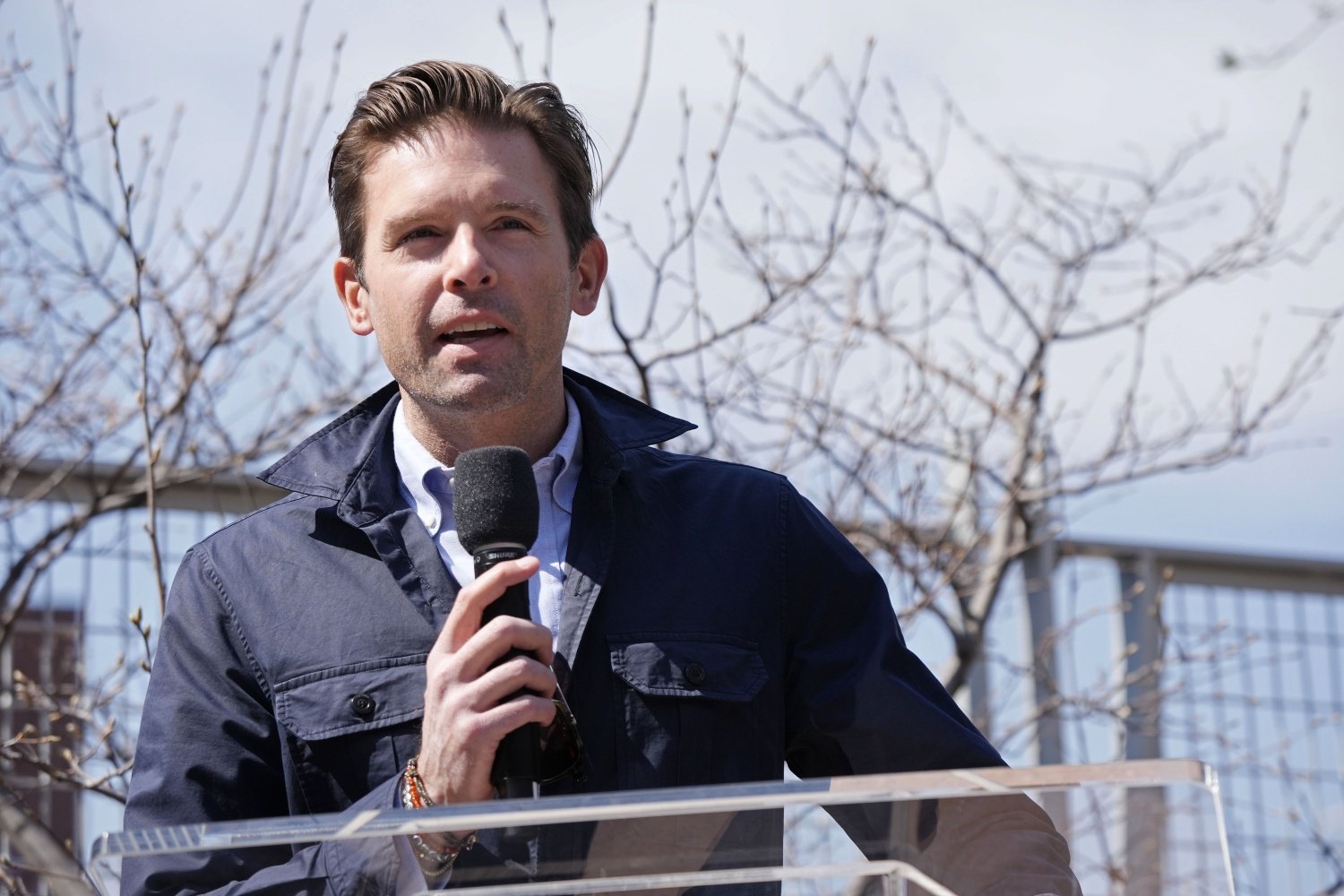 During his opening press conference, Tom Pohlad explained over and over that he understood that part of his job was to be pummeled: by the media, by fans, and by curious onlookers to baseball. “The Twins community has lost trust in us as owners,” the new boss admitted. So begins the transition, then, with older brother Tom taking over from younger brother Joe. Tom will be the fourth Pohlad to run the Minnesota Twins, but it seems worthwhile to take stock of what happened with Joe, whose tenure was cut short after just over three years. While the team's recent stumbles will color any memory, when he first got started, the younger brother was an emblem of hope. Joe Pohlad clearly wanted to change the ownership style of the team. But something happened along the way that put a quick end to those hopes and set the franchise on a pathway to disaster. Joe Pohlad leaves the position, perhaps, even more hated than Carl was. How? Compared to some owners, Joe provided a somewhat fresh look for the Twins in November 2022, taking over control and operation of the team at the age of 40. While his father discussed his plan for the team as remaining outside the spotlight, Joe seemed to initially relish it. He wore nice suits and had a million-dollar smile. He was the first Pohlad to take an office in Target Field, where he said his plan was to collaborate more than enforce. But Pohlad didn’t waste time in trying to make a statement about how he expected the team to operate. He immediately authorized a pursuit of Carlos Correa, and eventually, the front office converted the one-year pit stop into a monster contract. The Twins’ initial pursuit of Correa fell short, but their final offer at $285 million over 10 years far eclipsed the $92-million signing of Josh Donaldson and the extensions for Joe Mauer and Byron Buxton. You can say the Twins still underbid for the highest-priced item on the market, but it suggested they wanted to shop at the Dior Store. So when luck and bad medicals put Correa back on the menu, Pohlad still pulled the trigger to bring him into a long-term relationship. Pohlad beamed during the press conference as Correa put on his new uniform (which had debuted a few months prior), declaring “Fashion Show 2.0.” It was one of many offseason investments in the team blessed by Pohlad. The Luis Arráez-Pablo López trade was certainly controversial, but few would take it back now—and the team eventually offered a substantial extension to make López a franchise face. The rest of the offseason included notable (if unglamorous) free agents, including Joey Gallo, Christian Vázquez, Donovan Solano. They traded for Michael A. Taylor. In total, the payroll jumped over $40 million from the 2021 season. Rocco Baldelli also received an extension through the 2025 season. Pohlad pushed the product to bring it up to the rising big-league standards. That included changes at Target Field that totaled around $30 million, including the new scoreboard and the diamond ball. Pohlad also expanded the “Family Value” section, where the price of a hot dog remained $3.99. In fact, going into 2023, Twins Daily’s Theodore Tollefson took an optimistic view of ownership. “In an era of Major League Baseball where the reputations of team owners usually bring negative connotations to their franchises, Joe Pohlad may be the outlier,” Tollefson wrote. At that moment, that didn't seem crazy. All of that change paid off. The gate receipts for Target Field jumped to (an estimated) $92 million, the highest since 2011, alongside $19 million in profit and a $70-million jump in valuation, at least according to Forbes. The curse was broken, leaving fans hungry for more. There were high expectations that Pohlad set for 2024. Though the sudden removal of Dick Bremer may have shocked some fans, the promotion of Cory Provus felt like the right move. More importantly, Pohlad and Dave St. Peter gave Provus the green light to announce that blackouts would end in 2024 and that a streaming product was on its way. But by the Winter Meetings, a new narrative emerged. Payrolls had gotten too high, and required cutting. For most of the offseason, Joe remained quiet on exactly what was going on. Then, an unfortunate WCCO interview officially ended the honeymoon. Business was the key word. Those $30-million players were luxuries they could not afford. There was a reasonable case for why the Twins felt no need to replace Sonny Gray, but Pohlad failed to articulate it. The team also backtracked on those blackouts, taking a one-year deal with Bally Sports. One could have expected that the reunion might mean more money to put toward payroll, but that never did come. The decision backfired when Bally’s parent company began a three-month dispute with Comcast and kept the Twins off most televisions for almost half the season. Twins.TV would debut in 2025, but too little, too late. Even when it was clear the Twins needed to add at the deadline, it became apparent from reporting from Jeff Passan that "if the opportunity to acquire a higher-salary player presents itself, they would need to offload salary from their major-league roster in that deal or another to cancel out the expense." Never mind that at most, this would cost a low seven-figure sum to play out the rest of the season. It will be up to history whether the implosion that followed was a result, but fans knew exactly how to draw the line. Pohlad finally stepped up to the mic once more at the end of the season. Defending his decision, he explained himself. “We were headed down a great direction and I had to make a very difficult business decision, but that’s just the reality of my work," he said. "I have a business to run, and it comes with tough decisions, and that’s what I had to do. I wouldn’t make any other decision.” No one wanted to hear it. Only a few weeks later, the family announced the sale. It will never be clear if Joe was fighting a battle with one arm tied behind his back. He probably expected a longer tenure than under two years before he announced the intention to sell. There are seven other Pohlads in his generation (who likely saw things differently all along), though, and he couldn't hold onto control. Even the sale effort, which was Tom's job, didn’t work. The only major buyer eventually locked up a shinier object. No other full-scale suitor emerged. At a time when the team was at its worst, Joe had to announce a new plan to bring on limited partners instead. As Tom suggested, only in the last month was it clear that he would take the reins. As Dan Hayes reported, the sale may just be pushed down the road, as owners hope for a salary cap in order to increase their valuations. Whatever conversation that ends up being, Joe will remain on the advisory board, rather than in the driver seat. In the meeting Wednesday, Tom described an employee town hall wherein Joe announced the end of his tenure through tears, clearly a bittersweet moment for someone who expected any other outcome than this. The younger brother skipped the press conference. His story—as far as the Twins are concerned—ends here.
 -
Image courtesy of © Daniel Kucin Jr.-Imagn Images In what is sure to be the blockbuster move of the winter season (just kidding… maybe?), the Twins and Tampa Bay Rays made a trade Tuesday, swapping major league-ready hurler Eric Orze for minor-leaguer Jacob Kisting. The 6-foot-4 Orze made his debut with the Mets during the 2024 season, before the team dealt him to the Rays for Jose Siri. He ranked 51st on Tampa’s seemingly endless prospect chart. Orze did not make the Opening Day roster, but he appeared only two weeks into the season, and eventually posted a 3.02 ERA over 41 2/3 innings. The underlying stuff offers cause for some concern, including a 4.65 xFIP and a 10.7% walk rate. Tampa optioned Orze back to Triple A in July, but the decision allowed some tinkering that pushed his game forward. Though trading with the Rays can be a dangerous game, the team often ends up with a roster crunch that pushes good players through their cracks; ask Joe Ryan. Orze transferred from Northwest Florida State College to the University of New Orleans, before he discovered that he had testicular cancer in 2018. When he was ready to return to the mound, the pandemic pushed him back to the sidelines. Despite the short track record, the Mets drafted him in the fifth round, as the 150th overall pick. He relies on a splitter with lots of depth, which plays off a four-seamer and a slider. The splitter shows signs of wildness, hovering around 84mph and often dropping out of the zone to induce swings and misses—but without much luck getting strikes if hitters don't chase. In that case, he pushes a fastball that comes in around 94 mph, from a true three-quarter arm lot. His slider has a fine spin rate, but hitters demolished for a .404 AVG and an .844 SLG last year. Prospect analyst Eric Lonenhiggen suggested last year that Orze could comp to Trevor Richards, if he could manage more strikes. (But, like the good Trevor Richards. Not the Twins version.) Sent off in the trade is Jacob Kisting, drafted out of Bradley University in the 14th round in 2024. Kisting pitched mostly in relief for the Low- and High-A Twins affiliates in 2025, leaning on a high strikeout rate for an overall 3.79 ERA over 73 2/3 innings, and getting at least a couple votes from the Twins Daily staff for minor-league reliever of the year. Like most prospects at this level, it’s hard to know exactly how he might develop, though never discount the Rays when it comes to developing monsters from anonymous relief arms. Expect Orze on the Opening Day roster. If the stuff is there, he could manage his way up the relatively open pecking order into a 7th- or 8th-inning role. The Rays generally left him as a one-inning guy, but called upon him a few times to go a second. If his stuff is less than stellar, he might do the same for the Twins. View full article
-
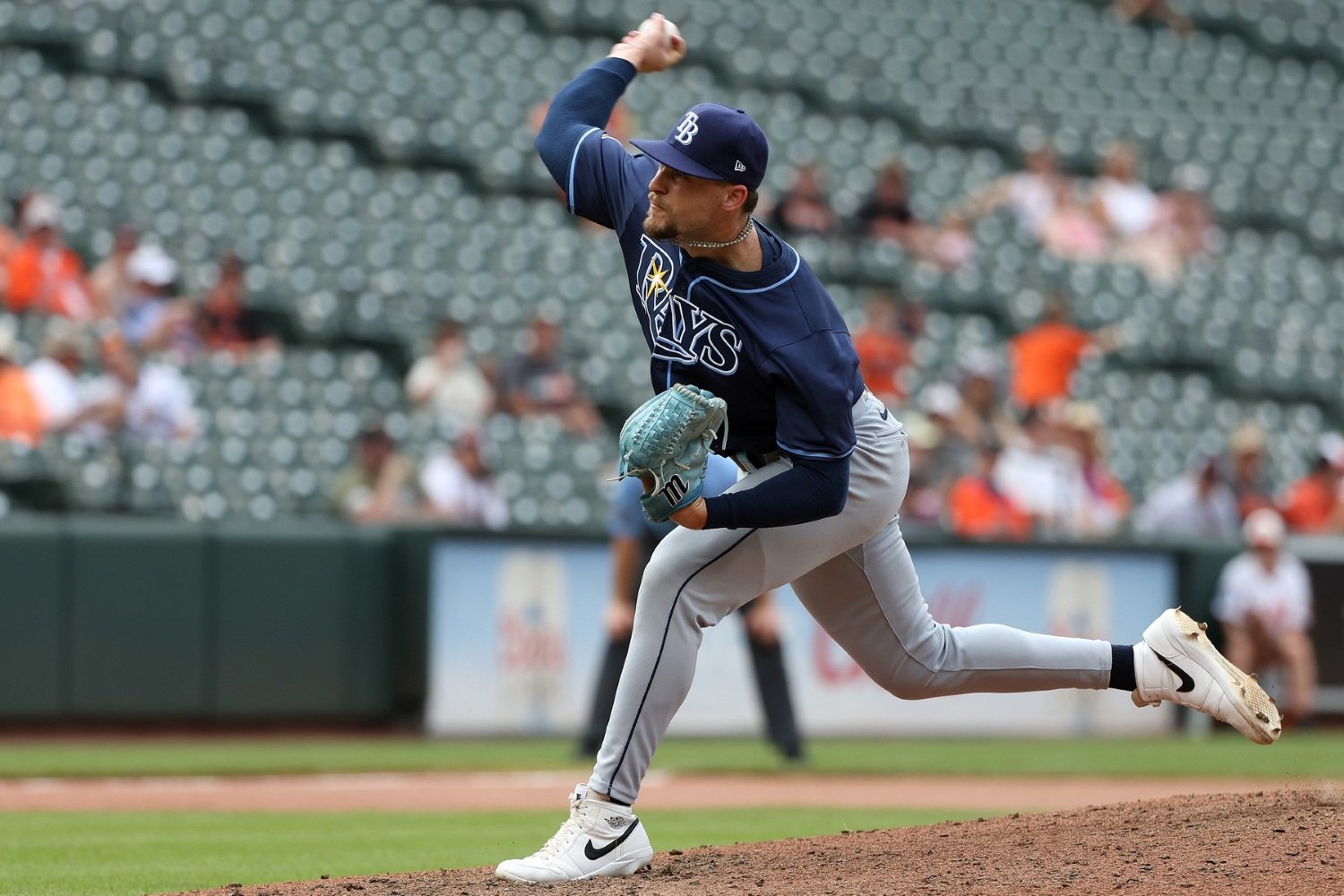 In what is sure to be the blockbuster move of the winter season (just kidding… maybe?), the Twins and Tampa Bay Rays made a trade Tuesday, swapping major league-ready hurler Eric Orze for minor-leaguer Jacob Kisting. The 6-foot-4 Orze made his debut with the Mets during the 2024 season, before the team dealt him to the Rays for Jose Siri. He ranked 51st on Tampa’s seemingly endless prospect chart. Orze did not make the Opening Day roster, but he appeared only two weeks into the season, and eventually posted a 3.02 ERA over 41 2/3 innings. The underlying stuff offers cause for some concern, including a 4.65 xFIP and a 10.7% walk rate. Tampa optioned Orze back to Triple A in July, but the decision allowed some tinkering that pushed his game forward. Though trading with the Rays can be a dangerous game, the team often ends up with a roster crunch that pushes good players through their cracks; ask Joe Ryan. Orze transferred from Northwest Florida State College to the University of New Orleans, before he discovered that he had testicular cancer in 2018. When he was ready to return to the mound, the pandemic pushed him back to the sidelines. Despite the short track record, the Mets drafted him in the fifth round, as the 150th overall pick. He relies on a splitter with lots of depth, which plays off a four-seamer and a slider. The splitter shows signs of wildness, hovering around 84mph and often dropping out of the zone to induce swings and misses—but without much luck getting strikes if hitters don't chase. In that case, he pushes a fastball that comes in around 94 mph, from a true three-quarter arm lot. His slider has a fine spin rate, but hitters demolished for a .404 AVG and an .844 SLG last year. Prospect analyst Eric Lonenhiggen suggested last year that Orze could comp to Trevor Richards, if he could manage more strikes. (But, like the good Trevor Richards. Not the Twins version.) Sent off in the trade is Jacob Kisting, drafted out of Bradley University in the 14th round in 2024. Kisting pitched mostly in relief for the Low- and High-A Twins affiliates in 2025, leaning on a high strikeout rate for an overall 3.79 ERA over 73 2/3 innings, and getting at least a couple votes from the Twins Daily staff for minor-league reliever of the year. Like most prospects at this level, it’s hard to know exactly how he might develop, though never discount the Rays when it comes to developing monsters from anonymous relief arms. Expect Orze on the Opening Day roster. If the stuff is there, he could manage his way up the relatively open pecking order into a 7th- or 8th-inning role. The Rays generally left him as a one-inning guy, but called upon him a few times to go a second. If his stuff is less than stellar, he might do the same for the Twins.
 -
Royce Lewis' Quotes Are Half-Right about Baseball’s Contract Structure
Peter Labuza posted an article in Twins
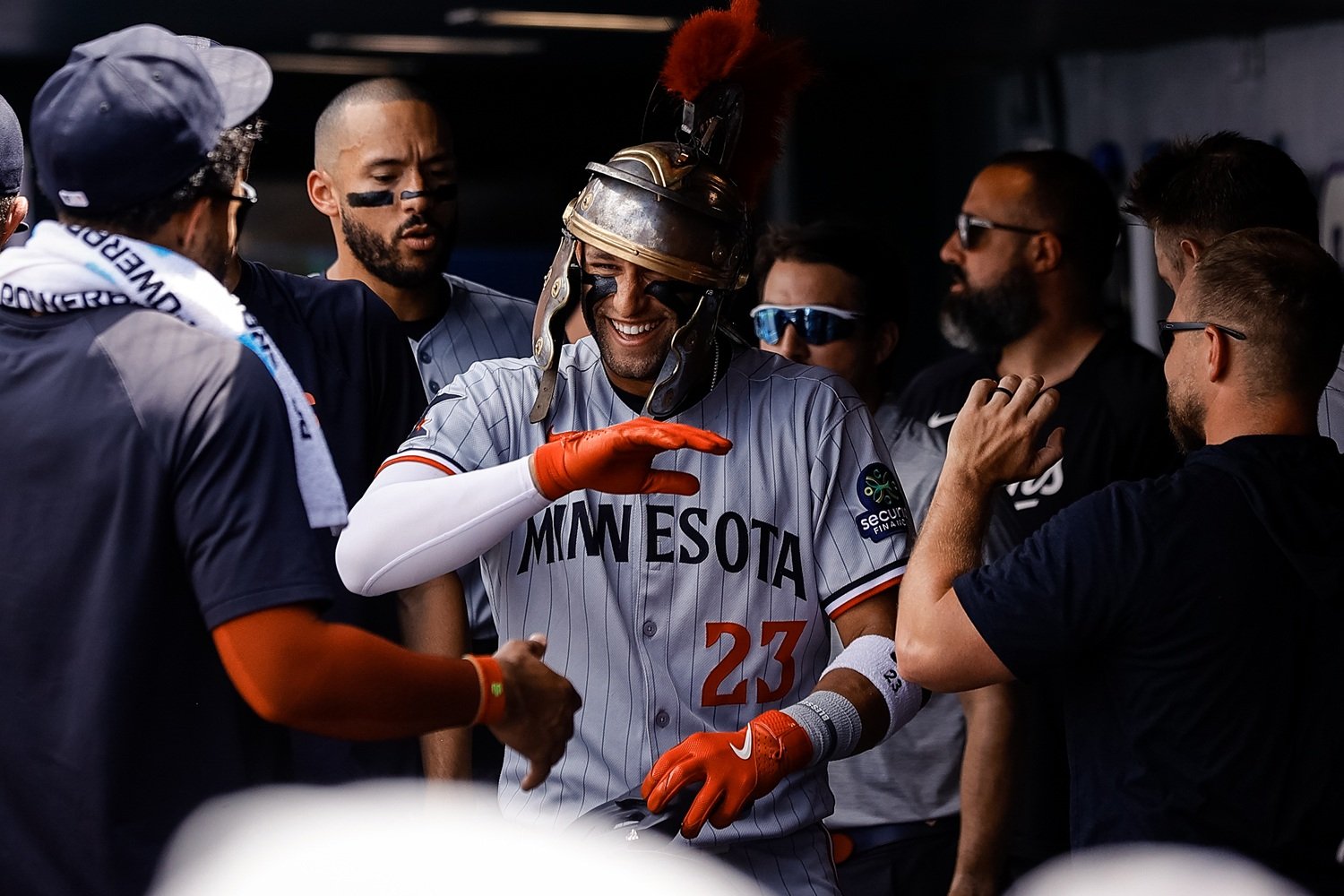 Of all the next generation of potential Minnesota Twins stars, none has created a flurry of debate more than Royce Lewis . Like many recent Twins, part of his story has been one of perpetual injury, limiting his play. But when he finally arrived, few could deny the sheer talent he quickly demonstrated. An overall #1 draft pick, Lewis’s initial numbers succeeded beyond any other recent prospect promotions in the club. He also cemented a legendary status with his two home runs in the first Minnesota Twins playoff win in 18 years. More so, Lewis has acted like a star. He has an effervescent smile and charisma that lifts the team up. Before the 2024 season, Jake Mintz of Cespedes Family BBQ declared him the most likely MLB player to appear on The Bachelor. (Royce is happily married; don’t expect to see him there.) But as Lewis’s struggles became less a product of unfortunate injuries and more prolonged as an issue of technique, he has also made comments that have raised eyebrows. Rather than simply dismiss the comments as those of someone who perhaps could use more media training, they deserve nuance to understand the context in which a player like Lewis has come to see the system in which all he can control is his swing. First, the comments. September 2024: As the team collapses and plays its way out of a playoff berth, Carlos Correa suggests that several players failed to step up. Lewis retorts to the media, “It falls on the players, but I didn't think it fell on just us” further qualifying, “especially the young guys - the cheap guys is the best way to put it." During these final two months, Lewis slashed an abysmal .207/.265 /.337 . February 2025: During the offseason, Lewis appears on Inside Twins. A harmless fan question asks about whether Lewis would make “day in the life” TikToks as Bryce Harper has done (though many of us have concerns due to Harper’s interest in Raw Milk). “If I was lucky enough to sign a contract like Bryce, I’d love to do stuff like that…maybe for me I’ll join him one day, but for right now I’ll focus on baseball.” The implication is that, as a rookie with concerns over arbitration, Lewis must focus on developing his earning potential, while stars on contracts like Harper can do whatever they want. August 2025: After a trade deadline that sent away 38% of the active roster, Lewis was suddenly hoisted into a leadership role despite his young age. His struggles are continuing through all 2025 with starts and stops of promise. Although his defense had significantly improved, cameras caught Lewis bashing his helmet after another flyout to the left field fence against the Athletics. Lewis hit a grand slam and make a highlight reel worthy throw to the home to tag out a runner the next night, but his mind earlier in the day was on changes to his swing. As he tells the media scrum, anxiety over arbitration and how the Twins might use it against him are concerns: To break down these incidents, I want to consider this from two angles. Is Royce right about what matters to Royce? But more so, is Royce right about what matters to all baseball players and the league? On the personal performance, it’s strange to think Royce would feel worried about trying to adjust his swing. He spent the entire offseason improving his defense, enough to cement that as his position for some years, especially after the team tried to push him into learning second base on the fly. And given that so little of his swing has worked this season, what’s a week going to do in arbitration? Obviously, due to his previous injuries this year, a week of plate appearances does represent a significant amount of work. But as Aaron Gleeman noted, “It doesn't even make logical sense to avoid adjustments and help.” But the bigger question in all of this is how Lewis seems to believe his entire career is in peril without an extension. Michael Harris II was looking like an all-time dud earlier this season before turning it around—and notably did it by adjusting his swing. But for Lewis, it’s a secured contract that would enable such a choice. This is where Lewis remains generally right about baseball: new rookies emerge every year and often outplay the rest of the league. Until the recent bonus pool was added in the 2022 Collective Bargaining Agreement, the most they could earn over three years was approximately the minimum salary. While arbitration years finally see increases, the process remains notoriously contentious. Attorneys on both sides argue before someone who might never watch baseball, much less understand advanced statistics. Josh Hader famously discussed how the Milwaukee Brewers used the “Blown Save” stat to lowball his salary despite an otherwise stellar record. At the same time, numerous teams have shifted their strategy toward early extensions: rookies such as Jackson Merrill, Jackson Chourio , and other players not named Jackson have seen extensions even before seeing a single pitch. These players essentially trade away the worries that Lewis continually has called out—having to feel the weight of responsibility to perform while knowing each swing could determine your earnings—in exchange for losing likely millions by forgoing the free agency payout. (Notably, Lewis’s agent is Scott Boras, who has consistently pushed his players to go to free agency rather than sign an extension.) And yet, the Minnesota Twins have not engaged in this trend with pre-arbitration players since Jorge Polanco and Max Kepler. Instead, they now trade players before they can each the second year of arbitration. Free agency remains a quandary for baseball; players on monster contracts rarely play better than their arb years. On average, Harper had better seasons in Washington than he has in Philadelphia. Beyond the fact that contracts like Harper’s are meant to cover half the years with the back half as a prayer for average play, the real issue is that teams should be paying much more during those arbitration years that set up their contracts in free agency. And unless players fight for the best numbers possible, it can limit other future free agents. Pair this with an impending CBA fight after the 2026 season where the owners seem dead set on limiting free agency through the use of a salary cap, and it only adds to the complication. Baseball’s experts have often discussed ways to fix this system, whether getting to free agency earlier or—as Travis Sawcheck noted—revisit an old idea proposed during the 1994 strike to essentially turn arbitration offers into an open market. Dave Cameron once proposed a safety net for players as a way to avoid the whims of arbitration. And there does seem to be a growing divide in player sentiment between the union’s focus on the top 1% and those players belonging to a shrinking middle class, playing season to season on one-year deals. But the question is how to fix the issue. The obvious answer would be for Royce to go back to doing what he did in 2023: smash a record number of grand slams again. More importantly, none of us should be out there criticizing Lewis for speaking out on the issues that concern him. For every media-trained player who only sees it as their job to say the most boring comments of all time, Lewis is speaking to what—intentionally or not—many of us worry about: player treatment in the league, especially on a team that has more often than not valued cheapness rather than the quality of their play. And for Lewis, every play can be another highlight to be played during a trial that his own trusted confidants, who are the ones trying to “fix” his swing, might use against him. However, if Royce wants to find a solution, there is a way: it involves thinking beyond himself. His Pittsburgh Pirates colleague Paul Skenes , who is currently on minimum salary on an equally ownership kneecapped team, ran for and won a spot the MLB Players Association negotiation committee for the upcoming CBA. (Pablo Lopez currently serves as the Twins' player representative.) Players like Skenes realize that Lewis’s problems are not just those of his own unfortunate circumstances; they represent those of all players—not to mention more and more workers among all trades—who live in a state of precarity. If Lewis wants to secure a more stable future, perhaps the answer lies beyond his swing.
 -
Image courtesy of © Isaiah J. Downing-Imagn Images Of all the next generation of potential Minnesota Twins stars, none has created a flurry of debate more than Royce Lewis . Like many recent Twins, part of his story has been one of perpetual injury, limiting his play. But when he finally arrived, few could deny the sheer talent he quickly demonstrated. An overall #1 draft pick, Lewis’s initial numbers succeeded beyond any other recent prospect promotions in the club. He also cemented a legendary status with his two home runs in the first Minnesota Twins playoff win in 18 years. More so, Lewis has acted like a star. He has an effervescent smile and charisma that lifts the team up. Before the 2024 season, Jake Mintz of Cespedes Family BBQ declared him the most likely MLB player to appear on The Bachelor. (Royce is happily married; don’t expect to see him there.) But as Lewis’s struggles became less a product of unfortunate injuries and more prolonged as an issue of technique, he has also made comments that have raised eyebrows. Rather than simply dismiss the comments as those of someone who perhaps could use more media training, they deserve nuance to understand the context in which a player like Lewis has come to see the system in which all he can control is his swing. First, the comments. September 2024: As the team collapses and plays its way out of a playoff berth, Carlos Correa suggests that several players failed to step up. Lewis retorts to the media, “It falls on the players, but I didn't think it fell on just us” further qualifying, “especially the young guys - the cheap guys is the best way to put it." During these final two months, Lewis slashed an abysmal .207/.265 /.337 . February 2025: During the offseason, Lewis appears on Inside Twins. A harmless fan question asks about whether Lewis would make “day in the life” TikToks as Bryce Harper has done (though many of us have concerns due to Harper’s interest in Raw Milk). “If I was lucky enough to sign a contract like Bryce, I’d love to do stuff like that…maybe for me I’ll join him one day, but for right now I’ll focus on baseball.” The implication is that, as a rookie with concerns over arbitration, Lewis must focus on developing his earning potential, while stars on contracts like Harper can do whatever they want. August 2025: After a trade deadline that sent away 38% of the active roster, Lewis was suddenly hoisted into a leadership role despite his young age. His struggles are continuing through all 2025 with starts and stops of promise. Although his defense had significantly improved, cameras caught Lewis bashing his helmet after another flyout to the left field fence against the Athletics. Lewis hit a grand slam and make a highlight reel worthy throw to the home to tag out a runner the next night, but his mind earlier in the day was on changes to his swing. As he tells the media scrum, anxiety over arbitration and how the Twins might use it against him are concerns: To break down these incidents, I want to consider this from two angles. Is Royce right about what matters to Royce? But more so, is Royce right about what matters to all baseball players and the league? On the personal performance, it’s strange to think Royce would feel worried about trying to adjust his swing. He spent the entire offseason improving his defense, enough to cement that as his position for some years, especially after the team tried to push him into learning second base on the fly. And given that so little of his swing has worked this season, what’s a week going to do in arbitration? Obviously, due to his previous injuries this year, a week of plate appearances does represent a significant amount of work. But as Aaron Gleeman noted, “It doesn't even make logical sense to avoid adjustments and help.” But the bigger question in all of this is how Lewis seems to believe his entire career is in peril without an extension. Michael Harris II was looking like an all-time dud earlier this season before turning it around—and notably did it by adjusting his swing. But for Lewis, it’s a secured contract that would enable such a choice. This is where Lewis remains generally right about baseball: new rookies emerge every year and often outplay the rest of the league. Until the recent bonus pool was added in the 2022 Collective Bargaining Agreement, the most they could earn over three years was approximately the minimum salary. While arbitration years finally see increases, the process remains notoriously contentious. Attorneys on both sides argue before someone who might never watch baseball, much less understand advanced statistics. Josh Hader famously discussed how the Milwaukee Brewers used the “Blown Save” stat to lowball his salary despite an otherwise stellar record. At the same time, numerous teams have shifted their strategy toward early extensions: rookies such as Jackson Merrill, Jackson Chourio , and other players not named Jackson have seen extensions even before seeing a single pitch. These players essentially trade away the worries that Lewis continually has called out—having to feel the weight of responsibility to perform while knowing each swing could determine your earnings—in exchange for losing likely millions by forgoing the free agency payout. (Notably, Lewis’s agent is Scott Boras, who has consistently pushed his players to go to free agency rather than sign an extension.) And yet, the Minnesota Twins have not engaged in this trend with pre-arbitration players since Jorge Polanco and Max Kepler. Instead, they now trade players before they can each the second year of arbitration. Free agency remains a quandary for baseball; players on monster contracts rarely play better than their arb years. On average, Harper had better seasons in Washington than he has in Philadelphia. Beyond the fact that contracts like Harper’s are meant to cover half the years with the back half as a prayer for average play, the real issue is that teams should be paying much more during those arbitration years that set up their contracts in free agency. And unless players fight for the best numbers possible, it can limit other future free agents. Pair this with an impending CBA fight after the 2026 season where the owners seem dead set on limiting free agency through the use of a salary cap, and it only adds to the complication. Baseball’s experts have often discussed ways to fix this system, whether getting to free agency earlier or—as Travis Sawcheck noted—revisit an old idea proposed during the 1994 strike to essentially turn arbitration offers into an open market. Dave Cameron once proposed a safety net for players as a way to avoid the whims of arbitration. And there does seem to be a growing divide in player sentiment between the union’s focus on the top 1% and those players belonging to a shrinking middle class, playing season to season on one-year deals. But the question is how to fix the issue. The obvious answer would be for Royce to go back to doing what he did in 2023: smash a record number of grand slams again. More importantly, none of us should be out there criticizing Lewis for speaking out on the issues that concern him. For every media-trained player who only sees it as their job to say the most boring comments of all time, Lewis is speaking to what—intentionally or not—many of us worry about: player treatment in the league, especially on a team that has more often than not valued cheapness rather than the quality of their play. And for Lewis, every play can be another highlight to be played during a trial that his own trusted confidants, who are the ones trying to “fix” his swing, might use against him. However, if Royce wants to find a solution, there is a way: it involves thinking beyond himself. His Pittsburgh Pirates colleague Paul Skenes , who is currently on minimum salary on an equally ownership kneecapped team, ran for and won a spot the MLB Players Association negotiation committee for the upcoming CBA. (Pablo Lopez currently serves as the Twins' player representative.) Players like Skenes realize that Lewis’s problems are not just those of his own unfortunate circumstances; they represent those of all players—not to mention more and more workers among all trades—who live in a state of precarity. If Lewis wants to secure a more stable future, perhaps the answer lies beyond his swing. View full article
-
Image courtesy of © Matt Blewett-Imagn Images Twins fans have been thrown around the gutter over the last few years, with the team trying to figure out both broadcast and streaming options in a market that looks a lot like a burst bubble. Now, it looks like fans will likely see another change in the nature of local coverage next season—potentially with added costs. First reported by Kendall Baker of Yahoo Sports and confirmed by Andrew Marchand of The Athletic, MLB is in talks to lease MLB.TV to ESPN for a three-year deal. This will include the service through which out-of-market fans watch their favorite teams, as well as the five teams whose broadcasts are now run by MLB itself—including the Twins. The Wall Street Journal confirmed the deal will be three years at $550 Million. This is part of a broader change in the distribution plan for the entire league over coming years. Apple could completely drop baseball, while NBC will pick up Saturday and Sunday night games (many of which will be broadcast only on Peacock, their streaming platform). ESPN looks likely to have a weekly national game, but on a different night while also keeping its playoff games. Netflix will take the Home Run Derby, continuing their specific interest in mega events. But the biggest one would be selling MLB.TV. The league-owned streaming product has been a huge success since its introduction almost 20 years ago, and a moneymaker on multiple levels. It's been a key way to deliver out-of-market viewing, as fans have unplugged from cable companies that had created highly expensive premium packages to do the same thing. The league sold the underlying technology to ESPN’s parent company, Disney, over recent years, for an enormous sum. The key question, of course, is how this will change fans' access to that product via subscription, in terms of either logistics or cost. The answer to that is nowhere near clear yet. The reports do indicate that both in- and out-of-market fans can still access the Twins via streaming, but Marchand reports that they will need to purchase “an ESPN direct-to-consumer subscription to go along with MLB.TV.” The same is true for those only interested in Twins.TV, requiring “an added price” alongside ESPN. While reporting suggests they are hoping to keep costs essentially the same, prices at the major streamers (including Netflix and Peacock, very recently) have soared as new content has been bundled under various umbrellas. That seems likely to continue. It is also unclear what that will mean for Twins.TV as a service. Will it mean new branding? New commentators? Those details might not emerge until far after the deal—which is likely to close in September—is finalized. Right now, despite many reporters who cover sports media scrambling to seize upon them, details on all of this feel a bit slippery. For Twins fans who are dedicated enough to buy this product no matter where it's sold, though, the more pertinent question is what effect it will have on payroll. We know that the Twins are currently making much less than they were a few years ago, both from gate receipts and from TV rights. This transaction has a chance to change that. Will it make a material difference? When the Pohlads cut payroll in the winter of 2023, many considered it to be in connection with the loss of Twins’ broadcasting revenue, which (thanks to the bankruptcy hearings through which Bally Sports had to pass) was a matter of public record: $54.3 million for that season. The fear was that that figure might drop by more than half for 2024. But when the Twins ended up rejoining Bally’s Sports Network at a lower but still substantial price, payroll never moved an inch. While the sale of MLB.tv to ESPN could take various structures (and it's impossible to know what the Twins' cut would be), Marchand calls the deal “substantial.” That means the Twins should see a sizable increase in what they’re receiving from their broadcasting deals. However, the Twins' share of the broader national deals might be smaller. ESPN had a $550-million deal for Sunday Night Baseball, the Home Run Derby, and the playoffs. The Wall Street Journal is reporting that MLB is finalizing the Sunday Night deal for $200 million with Peacock and the Home Run Derby for $35 million with Netflix. While MLB has essentially had to lease more content out to other providers, it has increased its short term revenues from $550 million to $785 million. If the Pohlads want to claim poverty, they certainly can (and almost certainly will). With their debt retired and new minority partners on board, though, they should be in position to substantially increase revenue over the next few years. If the Twins keep payroll the same, there’s little evidence that ownership has learned any lessons over the last few years. If they decide to run a payroll closer to $100 million next season, consider it part of the needlessly miserly style that has been this family's signature for decades. Which way that breaks might depend on what form this deal takes, so every detail that emerges from here will be important. View full article
-
Image courtesy of © Matt Blewett-Imagn Images Twins fans have been thrown around the gutter over the last few years, with the team trying to figure out both broadcast and streaming options in a market that looks a lot like a burst bubble. Now, it looks like fans will likely see another change in the nature of local coverage next season—potentially with added costs. First reported by Kendall Baker of Yahoo Sports and confirmed by Andrew Marchand of The Athletic, MLB is in talks to lease MLB.TV to ESPN for a three-year deal. This will include the service through which out-of-market fans watch their favorite teams, as well as the five teams whose broadcasts are now run by MLB itself—including the Twins. This is part of a broader change in the distribution plan for the entire league over coming years. Apple could completely drop baseball, while NBC will pick up Saturday and Sunday night games (many of which will be broadcast only on Peacock, their streaming platform). ESPN looks likely to have a weekly national game, but on a different night. Netflix has interest in the Home Run Derby, continuing their specific interest in mega events. But the biggest one would be selling MLB.TV. The league-owned streaming product has been a huge success since its introduction almost 20 years ago, and a moneymaker on multiple levels. It's been a key way to deliver out-of-market viewing, as fans have unplugged from cable companies that had created highly expensive premium packages to do the same thing. The league sold the underlying technology to ESPN’s parent company, Disney, over recent years, for an enormous sum. The key question, of course, is how this will change fans' access to that product via subscription, in terms of either logistics or cost. The answer to that is nowhere near clear yet. The reports do indicate that both in- and out-of-market fans can still access the Twins via streaming, but Marchand reports that they will need to purchase “an ESPN direct-to-consumer subscription to go along with MLB.TV.” The same is true for those only interested in Twins.TV, requiring “an added price” alongside ESPN. While reporting suggests they are hoping to keep costs essentially the same, prices at the major streamers (including Netflix and Peacock, very recently) have soared as new content has been bundled under various umbrellas. That seems likely to continue. It is also unclear what that will mean for Twins.TV as a service. Will it mean new branding? New commentators? Those details might not emerge until far after the deal—which is likely to close in September—is finalized. Right now, despite many reporters who cover sports media scrambling to seize upon them, details on all of this feel a bit slippery. For Twins fans who are dedicated enough to buy this product no matter where it's sold, though, the more pertinent question is what effect it will have on payroll. We know that the Twins are currently making much less than they were a few years ago, both from gate receipts and from TV rights. This transaction has a chance to change that. Will it make a material difference? When the Pohlads cut payroll in the winter of 2023, many considered it to be in connection with the loss of Twins’ broadcasting revenue, which (thanks to the bankruptcy hearings through which Bally Sports had to pass) was a matter of public record: $54.3 million for that season. The fear was that that figure might drop by more than half for 2024. But when the Twins ended up rejoining Bally’s Sports Network at a lower but still substantial price, payroll never moved an inch. While the sale of MLB.tv to ESPN could take various structures (and it's impossible to know what the Twins' cut would be), Marchand calls the deal “substantial.” That means the Twins should see a sizable increase in what they’re receiving from their broadcasting deals. However, the Twins' share of the broader national deals might be smaller. ESPN had a $550-million deal for Sunday Night Baseball, the Home Run Derby, and the playoffs. The Wall Street Journal is reporting that MLB is finalizing the Sunday Night deal for $200 million with Peacock and the Home Run Derby for $35 million with Netflix. It's not clear what will happen to the stock of the playoff games ESPN carried, but that would require the league to make up almost $300 million in lost money per year. The playoffs are disproportionately valuable, but that's a lot to hope for. If the Pohlads want to claim poverty, they certainly can (and almost certainly will). With their debt retired and new minority partners on board, though, they should be in position to substantially increase revenue over the next few years. If the Twins keep payroll the same, there’s little evidence that ownership has learned any lessons over the last few years. If they decide to run a payroll closer to $100 million next season, consider it part of the needlessly miserly style that has been this family's signature for decades. Which way that breaks might depend on what form this deal takes, so every detail that emerges from here will be important. View full article
-
 Twins fans have been thrown around the gutter over the last few years, with the team trying to figure out both broadcast and streaming options in a market that looks a lot like a burst bubble. Now, it looks like fans will likely see another change in the nature of local coverage next season—potentially with added costs. First reported by Kendall Baker of Yahoo Sports and confirmed by Andrew Marchand of The Athletic, MLB is in talks to lease MLB.TV to ESPN for a three-year deal. This will include the service through which out-of-market fans watch their favorite teams, as well as the five teams whose broadcasts are now run by MLB itself—including the Twins. The Wall Street Journal confirmed the deal will be three years at $550 Million. This is part of a broader change in the distribution plan for the entire league over coming years. Apple could completely drop baseball, while NBC will pick up Saturday and Sunday night games (many of which will be broadcast only on Peacock, their streaming platform). ESPN looks likely to have a weekly national game, but on a different night while also keeping its playoff games. Netflix will take the Home Run Derby, continuing their specific interest in mega events. But the biggest one would be selling MLB.TV. The league-owned streaming product has been a huge success since its introduction almost 20 years ago, and a moneymaker on multiple levels. It's been a key way to deliver out-of-market viewing, as fans have unplugged from cable companies that had created highly expensive premium packages to do the same thing. The league sold the underlying technology to ESPN’s parent company, Disney, over recent years, for an enormous sum. The key question, of course, is how this will change fans' access to that product via subscription, in terms of either logistics or cost. The answer to that is nowhere near clear yet. The reports do indicate that both in- and out-of-market fans can still access the Twins via streaming, but Marchand reports that they will need to purchase “an ESPN direct-to-consumer subscription to go along with MLB.TV.” The same is true for those only interested in Twins.TV, requiring “an added price” alongside ESPN. While reporting suggests they are hoping to keep costs essentially the same, prices at the major streamers (including Netflix and Peacock, very recently) have soared as new content has been bundled under various umbrellas. That seems likely to continue. It is also unclear what that will mean for Twins.TV as a service. Will it mean new branding? New commentators? Those details might not emerge until far after the deal—which is likely to close in September—is finalized. Right now, despite many reporters who cover sports media scrambling to seize upon them, details on all of this feel a bit slippery. For Twins fans who are dedicated enough to buy this product no matter where it's sold, though, the more pertinent question is what effect it will have on payroll. We know that the Twins are currently making much less than they were a few years ago, both from gate receipts and from TV rights. This transaction has a chance to change that. Will it make a material difference? When the Pohlads cut payroll in the winter of 2023, many considered it to be in connection with the loss of Twins’ broadcasting revenue, which (thanks to the bankruptcy hearings through which Bally Sports had to pass) was a matter of public record: $54.3 million for that season. The fear was that that figure might drop by more than half for 2024. But when the Twins ended up rejoining Bally’s Sports Network at a lower but still substantial price, payroll never moved an inch. While the sale of MLB.tv to ESPN could take various structures (and it's impossible to know what the Twins' cut would be), Marchand calls the deal “substantial.” That means the Twins should see a sizable increase in what they’re receiving from their broadcasting deals. However, the Twins' share of the broader national deals might be smaller. ESPN had a $550-million deal for Sunday Night Baseball, the Home Run Derby, and the playoffs. The Wall Street Journal is reporting that MLB is finalizing the Sunday Night deal for $200 million with Peacock and the Home Run Derby for $35 million with Netflix. While MLB has essentially had to lease more content out to other providers, it has increased its short term revenues from $550 million to $785 million. If the Pohlads want to claim poverty, they certainly can (and almost certainly will). With their debt retired and new minority partners on board, though, they should be in position to substantially increase revenue over the next few years. If the Twins keep payroll the same, there’s little evidence that ownership has learned any lessons over the last few years. If they decide to run a payroll closer to $100 million next season, consider it part of the needlessly miserly style that has been this family's signature for decades. Which way that breaks might depend on what form this deal takes, so every detail that emerges from here will be important.
 -
 In September 2023, 46,889 fans gathered at their favorite ballpark to watch their team. The team won in an otherwise lost season, though some of the younger stars shined, while their elite closer finished the game. Nobody left right after the final pitch, however, because the moment marked a somber occasion: the last Major League Baseball game in Oakland (for a while, anyway) after 50 years, all because owner John Fisher sought investment opportunities in the form of free government money elsewhere. Since then, the team has played in West Sacramento, in a minor-league ballpark—which the players hate—while failing to secure any money outside the state to begin building in their new “home” of Las Vegas. As of today, it's still not clear the Athletics will ever play in the state of Nevada. With Wednesday’s announcement that the Pohlads will continue to own the Twins (albeit with a cash infusion to draw down the unnecessary debt they assigned to the team), the question has to be raised: is it becoming (at least incrementally) more likely that the team eventually moves out of Minnesota? Here are the crucial facts. When the Pohlads signed an agreement with Hennepin County, it secured a runway of 30 years for Target Field through a tax. That tax was actually wildly successful; it's already essentially paid off (with interest!) any of the debt that the state incurred. As Twins fans know from the 2001 decision from Judge Harry Crump, the Twins are legally required to play in the ballpark until the end of the lease. You can find plenty of legal scholars who feel Crump ruled incorrectly, and taking one's chances with the court system is taking one's chances, indeed, these days, but it seems safe to say that that initial lease agreement will be honored, no matter what. In January of this year, the Minnesota Ballpark Authority (the public entity in charge of the venue) began crafting language that would extend the Twins’ future at Target Field, with 20 years more guaranteed and options for another 20 years. While approved by Hennepin County, the deal required the State legislature to continue the sales tax. That state budget was passed in June of this year without the tax. Lawmakers suggested punting on the tax till 2026. Instead, they focused on a bipartisan bill to increase hospital funding, given recent Medicaid cuts by the Big, Beautiful Bill that will likely lead to cuts and closures throughout Minnesota. There's reason to wonder whether the Twins will be able to lobby their way to the passage of that tax extension, at this point. But more importantly, if and when the Pohlads try again to sell the team, maybe they'll be more interested in potential buyers who would take the team elsewhere. Target Field is an architectural jewel and an aesthetic delight for fans, but it's not a state-of-the-art facility from a team operations standpoint, and the area is not viewed as ripe for the kind of development that maximizes profitability. But there are plenty of cities clamoring for a team, including Nashville, Portland, and Montreal. If the Pohlads remain unhappy owners of a product they do not care about, those other buyers are going to be increasingly attractive over the next decade. In fairness to Joe Pohlad, he insists that that's simply not how the family (or at least a portion of the family) feels, and in fairness to the Twin Cities and Target Field, this is a much better-established and less complicated baseball market than any of the places hankering for expansion or relocation opportunities. However, unless the Twins can find a way to reignite the fanbase, the legislatures may look at the team and feel little pressure to invest taxpayer dollars in the future of the team and its home park. As I studied, the Pohlads have almost always chosen cash over community, again and again. As Joe Pohlad told employees Wednesday morning, “There is alignment on how we see the Twins moving forward, and also in our belief in the future of baseball in Minnesota.” But what is that shared belief? A destination for decades to come? Or only the next decade? Maybe the story of the A's will be a cautionary tale, and the Twins will have the good sense to stay home. But if Rickey Henderson and "Smoke" (Dave Stewart) weren't enough to anchor that team in its baseball-loving long-time home, neither Joe Mauer nor "Señor Smoke" (Juan Berenguer) can guarantee the future of the Twins in Minnesota.
 -
Image courtesy of © Ed Szczepanski-Imagn Images In September 2023, 46,889 fans gathered at their favorite ballpark to watch their team. The team won in an otherwise lost season, though some of the younger stars shined, while their elite closer finished the game. Nobody left right after the final pitch, however, because the moment marked a somber occasion: the last Major League Baseball game in Oakland (for a while, anyway) after 50 years, all because owner John Fisher sought investment opportunities in the form of free government money elsewhere. Since then, the team has played in West Sacramento, in a minor-league ballpark—which the players hate—while failing to secure any money outside the state to begin building in their new “home” of Las Vegas. As of today, it's still not clear the Athletics will ever play in the state of Nevada. With Wednesday’s announcement that the Pohlads will continue to own the Twins (albeit with a cash infusion to draw down the unnecessary debt they assigned to the team), the question has to be raised: is it becoming (at least incrementally) more likely that the team eventually moves out of Minnesota? Here are the crucial facts. When the Pohlads signed an agreement with Hennepin County, it secured a runway of 30 years for Target Field through a tax. That tax was actually wildly successful; it's already essentially paid off (with interest!) any of the debt that the state incurred. As Twins fans know from the 2001 decision from Judge Harry Crump, the Twins are legally required to play in the ballpark until the end of the lease. You can find plenty of legal scholars who feel Crump ruled incorrectly, and taking one's chances with the court system is taking one's chances, indeed, these days, but it seems safe to say that that initial lease agreement will be honored, no matter what. In January of this year, the Minnesota Ballpark Authority (the public entity in charge of the venue) began crafting language that would extend the Twins’ future at Target Field, with 20 years more guaranteed and options for another 20 years. While approved by Hennepin County, the deal required the State legislature to continue the sales tax. That state budget was passed in June of this year without the tax. Lawmakers suggested punting on the tax till 2026. Instead, they focused on a bipartisan bill to increase hospital funding, given recent Medicaid cuts by the Big, Beautiful Bill that will likely lead to cuts and closures throughout Minnesota. There's reason to wonder whether the Twins will be able to lobby their way to the passage of that tax extension, at this point. But more importantly, if and when the Pohlads try again to sell the team, maybe they'll be more interested in potential buyers who would take the team elsewhere. Target Field is an architectural jewel and an aesthetic delight for fans, but it's not a state-of-the-art facility from a team operations standpoint, and the area is not viewed as ripe for the kind of development that maximizes profitability. But there are plenty of cities clamoring for a team, including Nashville, Portland, and Montreal. If the Pohlads remain unhappy owners of a product they do not care about, those other buyers are going to be increasingly attractive over the next decade. In fairness to Joe Pohlad, he insists that that's simply not how the family (or at least a portion of the family) feels, and in fairness to the Twin Cities and Target Field, this is a much better-established and less complicated baseball market than any of the places hankering for expansion or relocation opportunities. However, unless the Twins can find a way to reignite the fanbase, the legislatures may look at the team and feel little pressure to invest taxpayer dollars in the future of the team and its home park. As I studied, the Pohlads have almost always chosen cash over community, again and again. As Joe Pohlad told employees Wednesday morning, “There is alignment on how we see the Twins moving forward, and also in our belief in the future of baseball in Minnesota.” But what is that shared belief? A destination for decades to come? Or only the next decade? Maybe the story of the A's will be a cautionary tale, and the Twins will have the good sense to stay home. But if Rickey Henderson and "Smoke" (Dave Stewart) weren't enough to anchor that team in its baseball-loving long-time home, neither Joe Mauer nor "Señor Smoke" (Juan Berenguer) can guarantee the future of the Twins in Minnesota. View full article
-
Taking Charge: How Royce Lewis Unlocked His Defensive Potential
Peter Labuza posted an article in Twins
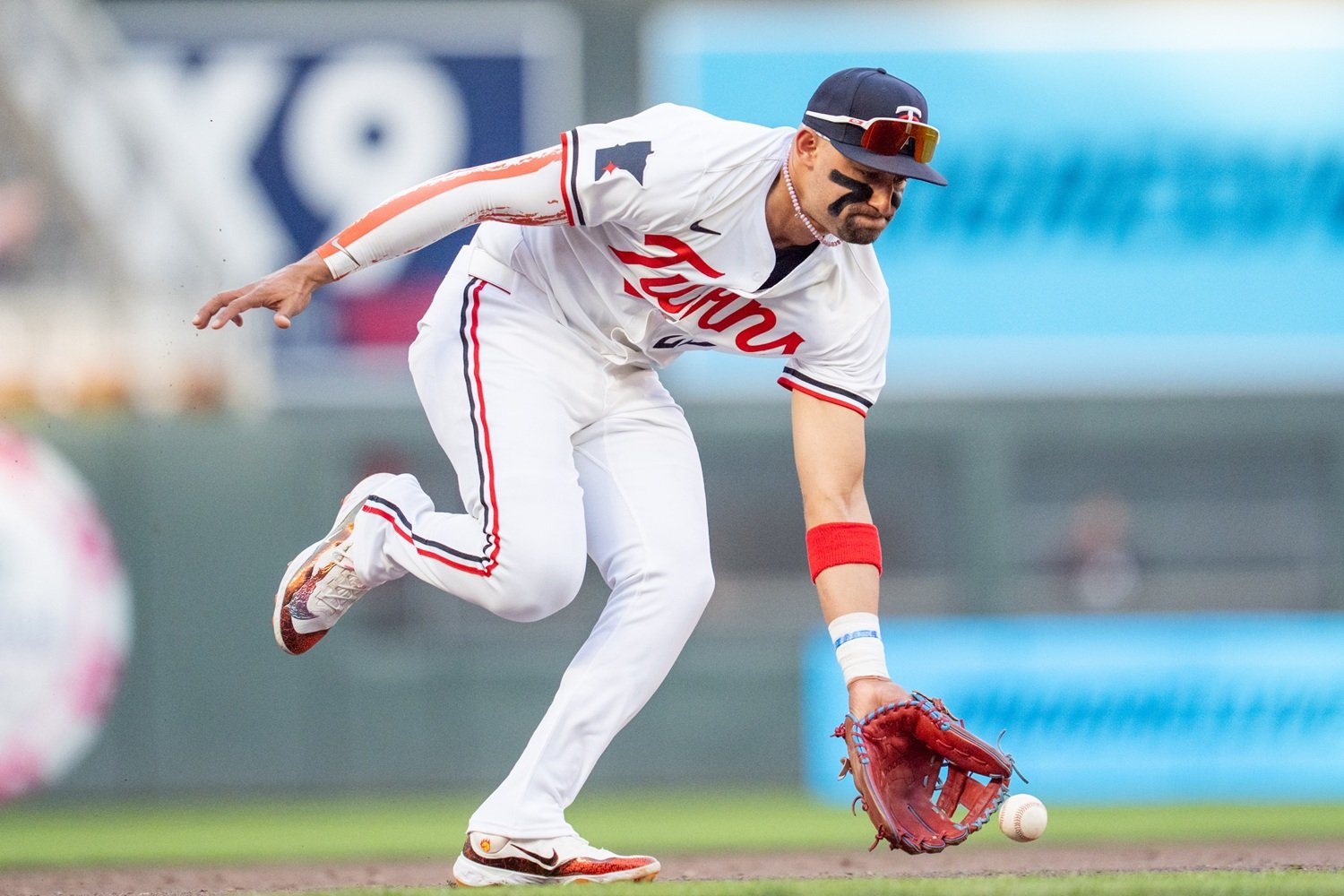 It’s another slow grounder. Brady House topped the ball only four feet and it’s bouncing with a little charge to third. The Washington Nationals rookie dashes toward first, and his speed ensures he’ll be safe on the sloppy hit. But Royce Lewis charges into the ball. His run to the ball from playing more toward third looks like he’s drifting in Mario Kart. He gets to the ball just as it's reaching third base, and lashes his arm out to peg it across the infield to Ty France. At first, House is called safe. But Joey Casey's eagle eyes see something different, and it’s overturned. 250726.mp4 As the Twins debated their offseason choices in 2024, many threw out the idea that Lewis was likely destined to be moved off his position. His first two seasons, even with smaller than desired sample sizes, suggested he was a capable but certainly not stellar infielder; he was worth 0 Defensive Runs Saved across the two seasons. Rumors swirled near the end of last season that he could be switched to second, and even played a game there when things got desperate. But at least to the naked eye, Lewis has looked different this year. More athletic, more quick to the ball. The throws look way more in line. The analytics support him. His DRS went from negative to positive, and he now ranks 10th in Outs Above Average. In a recent press conference, Rocco Baldelli praised the recent changes in Lewis’s footwork and timing, rather than his arm. Lewis Defense.mp4 How can we understand how Lewis is making different plays? As we all know, advanced stats seem to capture the overall picture, but rarely the details of what might be creating a defensive titan in the making. What types of plays is Lewis doing differently? According to Statcast data, Lewis is playing a few feet deeper this season, on average, while moving just slightly closer to the third-base line. That's set him up for a kind of play he used to flounder at: the charge. We're talking slow rollers and ugly bouncers to third, the kind that are more accidental than intended by the batters. These balls require everything: infield hustle, a good one-handed grab, and an accurate throw to beat a fast runner, And as other Twins players have seen a dip in their defense, Lewis has transformed himself into one of the best in the game. To try and quantify this, I wanted to take every infield ball hit toward Lewis. But not every ball is the same. A 101-mph screamer requires a big leap, rather than a charge. While Statcast has data for fielding, it can't perfectly describe the trajectory of the ball, or where the fielder started. To isolate charges, I needed to create some constraints. First, any lineouts or popouts were eliminated, leaving only ground balls. Secondly, the ball needed to be hit in a way that required the third baseman to charge it down. That required combining two sets of batted balls. The first was any ground ball under 70 mph off the bat. This accounted for bunts, as well as softly hit balls where the third baseman often needed to come toward the ball, rather than stay put. The second took any ball over 70 mph, but at a launch angle of -30° or lower. This accounted for accidental bouncers, the kind smashed directly into the ground. Not all of them are fair to chargers like Lewis—or any other third-base defender—but a majority of them are. (One of the hits charged as a single against Lewis this year was a ball grounded right in front of the plate, only to pop up 25 feet in the air; the only thing Lewis could do was wait for it to come back to Earth.) What makes a successful charge? Any groundout was obviously a success. I also decided any sacrifice bunt—a play where the batter was out at first (even if they advanced the runner)—was a successful charge. Any other out or the start of a double play counted, too. If the defender had to go for the ball and ensured an out in doing so, they were doing something right. Only errors or hits were considered unsuccessful. To get a sense of what makes a good charger, here are the 2024 statistics, focusing on third basemen with at least 30 plays—good or bad—in a year. I eliminated everyone in the 70% range to highlight the top and bottom of the list, and to give us a sense of the range of success rates we're talking about. Player Charge Attempts Charge Success Rate Jared Triolo 47 87.2% Ke'Bryan Hayes 73 84.9% Jordan Westburg 41 82.9% Matt Chapman 140 82.9% Brett Baty 33 81.8% Gio Urshela 74 81.1% Enrique Hernandez 52 80.8% Oswaldo Cabrera 62 80.6% Abraham Toro 36 80.6% Ernie Clement 61 80.3% Lenyn Sosa 36 69.4% Mark Vientos 79 68.4% Ramon Urias 50 68.0% Ryan McMahon 112 67.0% Royce Lewis 39 66.7% Jake Burger 53 66.0% Jose Miranda 46 65.2% Christopher Morel 51 64.7% Jeimer Candelario 36 61.1% As we can see, the best overall defenders tend to rate near the top, including Ke'Bryan Hayes and old friend Gio Urshela. Notably, two names appear near the bottom: Lewis and Jose Miranda. Of course, Miranda eventually found himself at first base, and his suboptimal offense has essentially played himself out of the majors. Lewis had struggled at charging in his previous two seasons, posting an equally dismal 65% in 2023. Here's a representative play: 230623.mp4 This was ruled a single rather than an error. But as we see here, properly fielding the ball did not necessarily yield in a better result: 230916.mp4 It’s worth noting that Lewis learned third base as a fallback plan, and in a bit of a hurry. Lewis played over 2,600 innings in the minor leagues as a shortstop. He played a total of 79 innings at third before that became his cemented position in the majors. Moreover, Lewis himself noted that he was often limited in his practice. “All my injuries have been lower body, so I can’t go out there and take ground balls,” he said at one point during his struggles last year. Lewis often wanted to rely on his arm to do the work, rather than the body. During the offseason, Lewis studied tape of players like Matt Chapman and Nolan Arenado. As Bobby Nightengale reported, Lewis noticed how often they used their bodies rather than relying on “maximum-effort throws despite their cannon arms.” He worked with Michael Cuddyer and finally found the style that worked for him. As he told the media in the spring, “I feel like a true shortstop playing third base.” Lewis now sits at the top of the leaderboard in Charge Success Rate this season for those with at least 30 attempts: Player Charge Attempts Charge Success Rate Royce Lewis 38 86.8% Ernie Clement 30 86.7% Joshua Jung 47 85.1% Yoan Moncada 33 84.8% Alex Bregman 59 84.7% Austin Riley 72 83.3% Ke'Bryan Hayes 92 81.5% Luis Rengifo 45 80.0% Ramon Urias 44 79.5% Brett Baty 39 79.5% Nolan Arenado 73 79.5% Alec Bohm 61 78.7% Maikel Garcia 70 78.6% Matt Shaw 51 78.4% Eugenio Suarez 77 77.9% Matt Chapman 95 77.9% Now, 38 attempts is minimal, compared to the number of defensive plays that Chapman and Hayes put up in an average season. But still, as this montage shows, it's been an impressive step up: Lewis NEW2.mp4 For Lewis, it begins with the routes. His throws still show off his arm, but the throwing errors have gone from six to zero (one of three players at third with over 400 innings to remain errorless on throws). But what works is that the flow looks right. Watch the following play: the camera can’t even tell us where Lewis is running from, but he makes a perfect route, with such momentum that the throw itself becomes an afterthought: 250528.mp4 In fact, if we look at the Twins over the last few years, we can see how much he has cemented himself as one of the team's top third basemen, especially as others have seen their defense slip. Twins Player 2021 2022 2023 2024 2025 Josh Donaldson 78.8% Willians Astudillo 55.6% Luis Arráez 79.2% 75.0% Gio Urshela 72.9% Jose Miranda 66.7% 80.6% 65.2% 44.4% Donovan Solano 66.7% Kyle Farmer 95.0% 80.0% Jorge Polanco 60.0% Willi Castro 65.2% 80.0% Brooks Lee 90.9% 56.5% Royce Lewis 65.6% 66.7% 86.8% Jonah Bride 88.9% Lewis’s future with the Twins feels uncertain, as with much of the team. He’s been forced into a quasi-leadership role despite how little he’s played in the majors. But the fact that he’s become a master of charging shows something special about him. Lewis has spent his entire career adapting to challenges, many of them unforeseen. There are many ways to play third base, but it's not always easy to find the one that works. Lewis has now done so. And as he charges toward the ball, he can now charge the team forward.
 -
Image courtesy of © Matt Blewett-Imagn Images It’s another slow grounder. Brady House topped the ball only four feet and it’s bouncing with a little charge to third. The Washington Nationals rookie dashes toward first, and his speed ensures he’ll be safe on the sloppy hit. But Royce Lewis charges into the ball. His run to the ball from playing more toward third looks like he’s drifting in Mario Kart from the speed on his circular angle. He gets to the ball just as its reaching third base and lashes his arm out to dart it across the infield to Ty France. At first, House is called safe. But Joey Casey's eagle eyes see something different, and it’s overturned. 250726.mp4 As the Twins debated their offseason choices in 2024, many threw out the idea that Lewis was likely destined out of his position. His first two seasons, even with smaller than desired sample sizes, suggested him as a capable but certainly not stellar infielder, positing positive Outs Above Average but nowhere near the likes of Matt Chapman and Ryan McMahon, to name some of the best graded defensive players. Rumors swirled near the end of next season that he could be switched to second, and even played a game there when things got desperate. But at least to the naked eye, Lewis has looked different this year. More athletic, more quick to the ball. The throws look way more in line. The analytics support him. After posting either negative or neutral defensive fWAR, he now has 3.0 — more than his now former shortstop counterpart Carlos Correa. His DRS went from negative to positive and now ranks 10th in Outs Above Average. Even in a recent press conference, Rocco Baldelli praised the recent changes in Lewis’s footwork and timing rather than his arm. Lewis Defense.mp4 But beyond a plethora of great plays, how can we really understand how Lewis is making different plays? As we all know, advanced stats when it come to defense seem to capture the overall picture but rarely the details of what might be creating a defensive titan in the making. What types of plays is Lewis doing differently? According to Statcast data, Lewis on average moved back this season by a few feet while moving just slightly closer to the third base line. That's set him up for a kind of play he used to flounder at: the charge. We're talking slow rollers and ugly bouncers to third, the kind that are more accidental in nature than intended by the batters. These balls require everything: infield hustle, a good one handed grab, and an accurate throw to beat a fast first basemen, And as other Twins players have seen a dip in their defense, Lewis has transformed himself to one of the best in the game. To try and quantify this, I wanted to take every infield ball hit toward Lewis. But not every ball is the same. A 101mph screamer requires a big leap rather than a charge. While Statcast has data for fielding, it can't tell us much about the trajectory of the ball, or where the fielder even started. To understand charges, I looked at every ball hit to third base but needed to create limitations. First, any line outs or pop outs were eliminated, leaving only ground balls. Secondly, the ball needed to be hit in a way to require the third baseman to charge it down. That required combining two data sets. The first was any ground ball under 70mph off the bat. This accounted for bunts as well as softly hit balls where the third basemen often needed to come toward the ball rather than stay put. The second took any ball over 70mph, but at a launch angle of -30 degree. This accounted for accidental bouncers, the kind smashed into the ground. Not all of them are fair to chargers like Lewis—or any other third basemen defender—but a majority of them are. (One of the hits charged as a single to Lewis this year was a ball grounded into the air only to pop up 25 feet in the air; the only thing Lewis could do was wait for it to come back to Earth). What makes a successful charge? Any ground out to get the batter at first was obviously a success. I also decided any sacrifice bunt—a play where the batter was out at first (even if they advanced the runner)—was a successful charge. Any other out or the start of a double play counted too; if the basemen had to go for the ball and ensured an out in doing so, they were doing something right. Only errors or hits were considered unsuccessful. To get a sense what makes a good charger, here are the 2024 statistics, focusing on third basemen with at least 30 plays—good or bad—in a year. I eliminated everyone in the 70% range to highlight the top and bottom of the list to give the sense of the range. Player Charge Attempts Charge Rate Jared Triolo 47 87.2% Ke'Bryan Hayes 73 84.9% Jordan Westburg 41 82.9% Matt Chapman 140 82.9% Brett Baty 33 81.8% Gio Urshela 74 81.1% Enrique Hernandez 52 80.8% Oswaldo Cabrera 62 80.6% Abraham Toro 36 80.6% Ernie Clement 61 80.3% Lenyn Sosa 36 69.4% Mark Vientos 79 68.4% Ramon Urias 50 68.0% Ryan Mcmahon 112 67.0% Royce Lewis 39 66.7% Jake Burger 53 66.0% Jose Miranda 46 65.2% Christopher Morel 51 64.7% Jeimer Candelario 36 61.1% As we can see, some of the more familiar names in defensive accrue near the top, including Ky’brian Hayes and old friend Gio Urshela. Notably, two names appear near the bottom, Lewis and Jose Miranda. Of course, Miranda eventually found himself at third base, and his suboptimal offense has essentially played himself out of the majors. Lewis had struggled at charging in his previous two seasons, posting an equally dismal 65% in 2023. Here's a representative play: 230623.mp4 This was ruled a single rather than an error. But as we see here, properly fielding the ball does not necessarily result in a better result: 230916.mp4 It’s worth noting Lewis learned third base entirely on the fly. Lewis played over 2,600 innings in the minor leagues as a shortstop. He played a total of 79 innings at third before becoming his cemented position in the majors. More so, Lewis himself noted that he was often limited in his practice. “All my injuries have been lower body, so I can’t go out there and take ground balls.” Lewis often wanted to rely on his arm to do the work rather than the body. During the offseason, Lewis studied tape of players like Chapman and Nolan Arenado. As Bobby Nightengale reported, Lewis noticed how often they used their bodies rather than relying on “maximum-effort throws despite their cannon arms.” He worked with Michael Cuddyer and finally found the style that worked for him. As he told the media in the spring, “I feel like a true shortstop playing third base.” Lewis now sits at the top of the leaderboard in Charge Rate this season for those with at least 30 attempts: Player Charge Attempts Charge Rate Royce Lewis 38 86.8% Ernie Clement 30 86.7% Joshua Jung 47 85.1% Yoan Moncada 33 84.8% Alex Bregman 59 84.7% Austin Riley 72 83.3% Ke'Bryan Hayes 92 81.5% Luis Rengifo 45 80.0% Ramon Urias 44 79.5% Brett Baty 39 79.5% Nolan Arenado 73 79.5% Alec Bohm 61 78.7% Maikel Garcia 70 78.6% Matt Shaw 51 78.4% Eugenio Suarez 77 77.9% Matt Chapman 95 77.9% Now, 38 attempts is minimal compared to the number of defensive plays that Chapman and Hayes put up in an average season. But still, as this montage shows, it's been an impressive step up: Lewis NEW2.mp4 For Lewis, it begins with the routes. His throws still show off his arm, but the throwing errors have gone from six to zero (one of three players at third with over 400 IP to remain errorless on throws). But what works is that the flow looks right. Watch the following play: the camera can’t even tell us where Lewis is running from, but he makes a perfect route with the momentum that the throw itself becomes an afterthought: 250528.mp4 In fact, if we look at the Twins over the last few years, we can see how much he has cemented himself as one of the team's top third basemen, especially as others have seen their defense slip. Twins Player 2021 2022 2023 2024 2025 Josh Donaldson 78.8% Willians Astudillo 55.6% Luis Arráez 79.2% 75.0% Gio Urshela 72.9% Jose Miranda 66.7% 80.6% 65.2% 44.4% Donovan Solano 66.7% Kyle Farmer 95.0% 80.0% Jorge Polanco 60.0% Willi Castro 65.2% 80.0% Brooks Lee 90.9% 56.5% Royce Lewis 65.6% 66.7% 86.8% Jonah Bride 88.9% Lewis’s future with the Twins feels uncertain as much with the team. He’s been forced into a quasi-leadership role despite how little he’s played in the majors. But the fact that he’s become a master of charging shows something special about him. Lewis has spent his entire career adapting to challenges, both see and unforeseen. And as he charges toward the ball, he can now charge the team forward. View full article
-
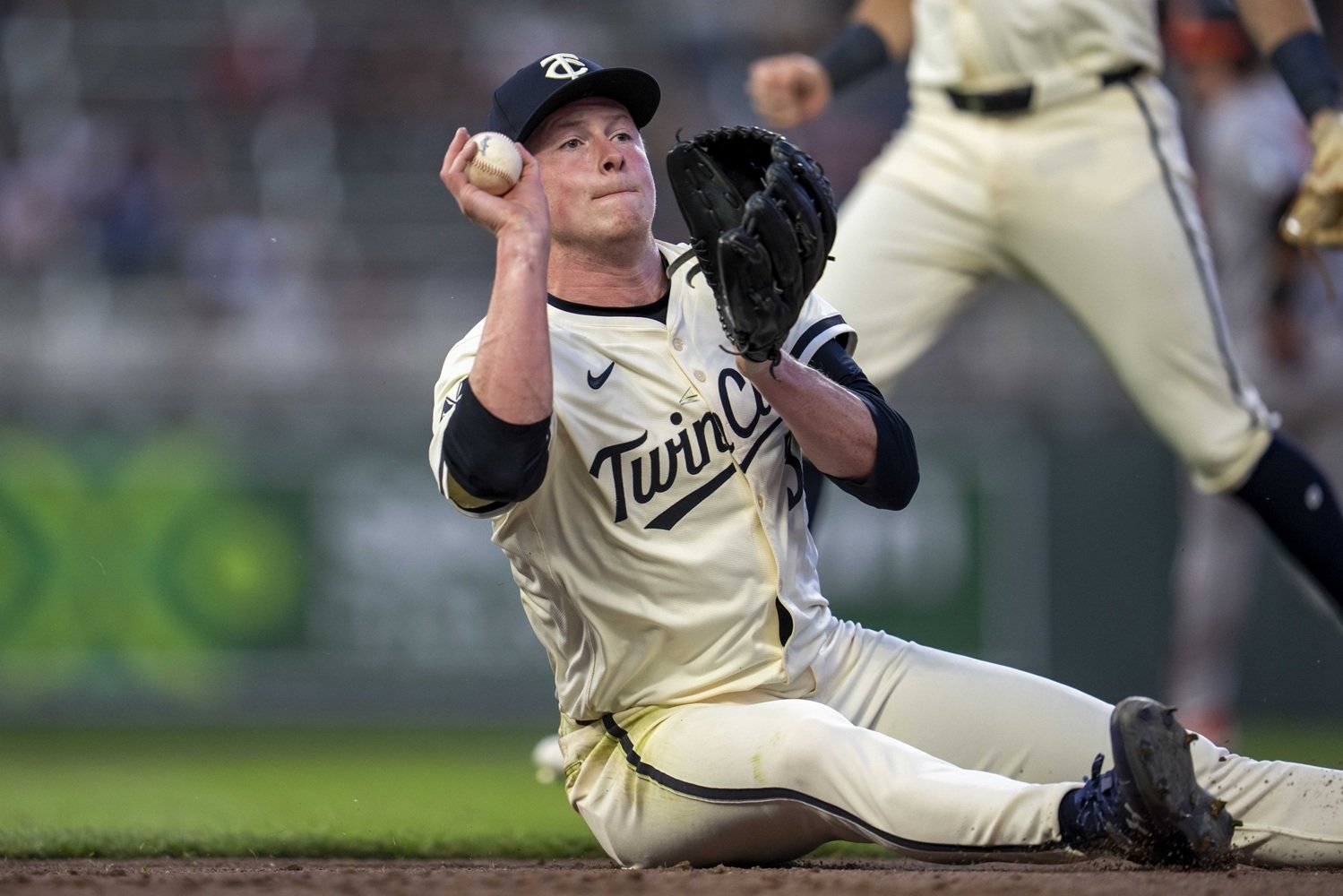 If the Twins are considering anything at the deadline, trading Jhoan Duran or Griffin Jax has become the obvious route for the team. Joe Ryan would require a package that would rival the haul the Nationals got for Juan Soto. Rental pieces like Harrison Bader or Willi Castro might bring a couple interesting picks but nothing to cement the team’s future. But two ace relievers with multiple years of team control? That haul could change the team's future. As most fans known, relief pitchers are fickle beings. It was only a few years ago that Cole Sands existed primary to mop up blow ups. Derek Falvey grabbed Brock Stewart as a minor league pick up in the middle of rehabbing from Tommy John. And on the negative side for the Twins, somehow the Red Sox have found the Jorge Alcala magic. The idea that Duran or Jax will remain commanding relievers (not to mention pricey for a team whose budget next year remains a black box) has already been tested this year to an extent. But what do you do when you lose the top of your bullpen? Trading these two would require multiple new arms to take their place. But if it comes to it, there is no reason Louis Varland cannot elevate himself to the closer role. Twins fans (not to mention the front office) have valiantly attempted to peg Varland into several different roles in his years with the team. Many of them on trying to unlock a starter’s potential. Even this offseason, Varland spent his time in limbo as the team decided how to build its rotation. When I met him briefly in December, he said he was working on a “depthier” slider. That pitch has turned out to be one of his weakest and rarely used (it has a 30% whiff rate but lands too much in the zone). But if Varland has the time now to know he’s the head of the bullpen, that will finally give him the runway to develop a closer’s arsenal. For some pitchers, it doesn’t take much to be a closer; Emmanuel Clasé does it throwing a single, unhittable pitch. Varland still has a starter’s arsenal, but only his knuckle curveball has developed into a workhorse alongside his fastball. But there’s a case to be made that Varland has been the team’s most valuable reliever. He might carry a lower strikeout rate than Jax and Duran, but he also walks fewer batters than them. That's while being a multifaceted choice for the team, whether as fireman, set up man, and sometimes double inning relief. Varland has thrown more innings than any other relief pitcher and holds the highest WPA for the core. Before this week against the Dodgers, Varland hadn’t allowed an inherited runner to score since May. He’s also cemented himself as the most…acrobatic pitcher among the relief corps. The case for closing becomes evident when you start to put Varland among other closers in the game. I pulled a number of the game’s current top closers alongside the Twins core and looked at various +Stats (where 100 is league average), and color coded them based on their general rank against each other—all of them have elite stuff, but red is marked where they are closer (or in some cases, below) league average. At the end, I took averages of all these markers, treating them relatively equally, to produce a sense of how Varland stacks up against elite pitching in the game (GAME-, where lower is better): Pitcher Team ERA- FIP- xFIP- K/9+ BB/9+ GAME- Louis Varland Twins 51 69 70 104 71 71.4 Griffin Jax Twins 101 49 41 164 76 65.6 Jhoan Duran Twins 48 58 67 117 96 70.9 Josh Hader Astros 58 82 71 155 77 70.5 Edwin Diaz Mets 39 56 61 163 96 62.7 Aroldis Chapman Red Sox 29 43 52 158 69 51.3 Jeff Hoffman Blue Jays 118 99 64 147 71 84 Mason Miller Athletics 95 68 67 168 131 84.1 Robert Suarez Padres 87 56 85 115 80 79 Emmanuel Clase Guardians 69 54 81 109 60 71.1 Andrés Muño Mariners 38 58 61 140 124 70.5 Dennis Santana Pirates 35 57 89 87 46 68.4 Trevor Megill Brewers 56 66 82 131 117 79.5 Devin Williams Yankees 117 61 79 141 109 87.4 If there’s one story that stands out, it’s that Louis Varland needs more strikeouts to enter that elite echelon. In fact, the most league average FIP- and xFIP- are essentially that story; a few more strikeouts would easily put him in the green. Some of that is where Varland comes in the game, where Baldelli has called upon him for 11 appearances with runners already on base. For Varland, that has meant treading with caution: fewer pitches in the zone, inducing more walks, and striking out less (ironically, runners on base dramatically increases his whiff rates, but he cannot seem to put them away). Varland needs to get aggressive to become a serious contender. But what happens this offseason as Varland focuses on that command and building out those off-speed pitches? What does his ceiling look like as he builds a clear role for the future? Varland probably needs one more pitch to enter that next echelon. But the velocity is already there—hitting close to 101. But given he doesn’t he begin his arbitration until 2027, there is no doubt that Varland could be a cornerstone closer until the next decade begins. We all know that Varland has got that dog in him. Maybe it’s time to see if he’s got a closer mentality too.
 -
Image courtesy of © Jesse Johnson-Imagn Images If the Twins are considering anything at the deadline, trading Jhoan Duran or Griffin Jax has become the obvious route for the team. Joe Ryan would require a package that would rival the haul the Nationals got for Juan Soto. Rental pieces like Harrison Bader or Willi Castro might bring a couple interesting picks but nothing to cement the team’s future. But two ace relievers with multiple years of team control? That haul could change the team's future. As most fans known, relief pitchers are fickle beings. It was only a few years ago that Cole Sands existed primary to mop up blow ups. Derek Falvey grabbed Brock Stewart as a minor league pick up in the middle of rehabbing from Tommy John. And on the negative side for the Twins, somehow the Red Sox have found the Jorge Alcala magic. The idea that Duran or Jax will remain commanding relievers (not to mention pricey for a team whose budget next year remains a black box) has already been tested this year to an extent. But what do you do when you lose the top of your bullpen? Trading these two would require multiple new arms to take their place. But if it comes to it, there is no reason Louis Varland cannot elevate himself to the closer role. Twins fans (not to mention the front office) have valiantly attempted to peg Varland into several different roles in his years with the team. Many of them on trying to unlock a starter’s potential. Even this offseason, Varland spent his time in limbo as the team decided how to build its rotation. When I met him briefly in December, he said he was working on a “depthier” slider. That pitch has turned out to be one of his weakest and rarely used (it has a 30% whiff rate but lands too much in the zone). But if Varland has the time now to know he’s the head of the bullpen, that will finally give him the runway to develop a closer’s arsenal. For some pitchers, it doesn’t take much to be a closer; Emmanuel Clasé does it throwing a single, unhittable pitch. Varland still has a starter’s arsenal, but only his knuckle curveball has developed into a workhorse alongside his fastball. But there’s a case to be made that Varland has been the team’s most valuable reliever. He might carry a lower strikeout rate than Jax and Duran, but he also walks fewer batters than them. That's while being a multifaceted choice for the team, whether as fireman, set up man, and sometimes double inning relief. Varland has thrown more innings than any other relief pitcher and holds the highest WPA for the core. Before this week against the Dodgers, Varland hadn’t allowed an inherited runner to score since May. He’s also cemented himself as the most…acrobatic pitcher among the relief corps. The case for closing becomes evident when you start to put Varland among other closers in the game. I pulled a number of the game’s current top closers alongside the Twins core and looked at various +Stats (where 100 is league average), and color coded them based on their general rank against each other—all of them have elite stuff, but red is marked where they are closer (or in some cases, below) league average. At the end, I took averages of all these markers, treating them relatively equally, to produce a sense of how Varland stacks up against elite pitching in the game (GAME-, where lower is better): Pitcher Team ERA- FIP- xFIP- K/9+ BB/9+ GAME- Louis Varland Twins 51 69 70 104 71 71.4 Griffin Jax Twins 101 49 41 164 76 65.6 Jhoan Duran Twins 48 58 67 117 96 70.9 Josh Hader Astros 58 82 71 155 77 70.5 Edwin Diaz Mets 39 56 61 163 96 62.7 Aroldis Chapman Red Sox 29 43 52 158 69 51.3 Jeff Hoffman Blue Jays 118 99 64 147 71 84 Mason Miller Athletics 95 68 67 168 131 84.1 Robert Suarez Padres 87 56 85 115 80 79 Emmanuel Clase Guardians 69 54 81 109 60 71.1 Andrés Muño Mariners 38 58 61 140 124 70.5 Dennis Santana Pirates 35 57 89 87 46 68.4 Trevor Megill Brewers 56 66 82 131 117 79.5 Devin Williams Yankees 117 61 79 141 109 87.4 If there’s one story that stands out, it’s that Louis Varland needs more strikeouts to enter that elite echelon. In fact, the most league average FIP- and xFIP- are essentially that story; a few more strikeouts would easily put him in the green. Some of that is where Varland comes in the game, where Baldelli has called upon him for 11 appearances with runners already on base. For Varland, that has meant treading with caution: fewer pitches in the zone, inducing more walks, and striking out less (ironically, runners on base dramatically increases his whiff rates, but he cannot seem to put them away). Varland needs to get aggressive to become a serious contender. But what happens this offseason as Varland focuses on that command and building out those off-speed pitches? What does his ceiling look like as he builds a clear role for the future? Varland probably needs one more pitch to enter that next echelon. But the velocity is already there—hitting close to 101. But given he doesn’t he begin his arbitration until 2027, there is no doubt that Varland could be a cornerstone closer until the next decade begins. We all know that Varland has got that dog in him. Maybe it’s time to see if he’s got a closer mentality too. View full article
-
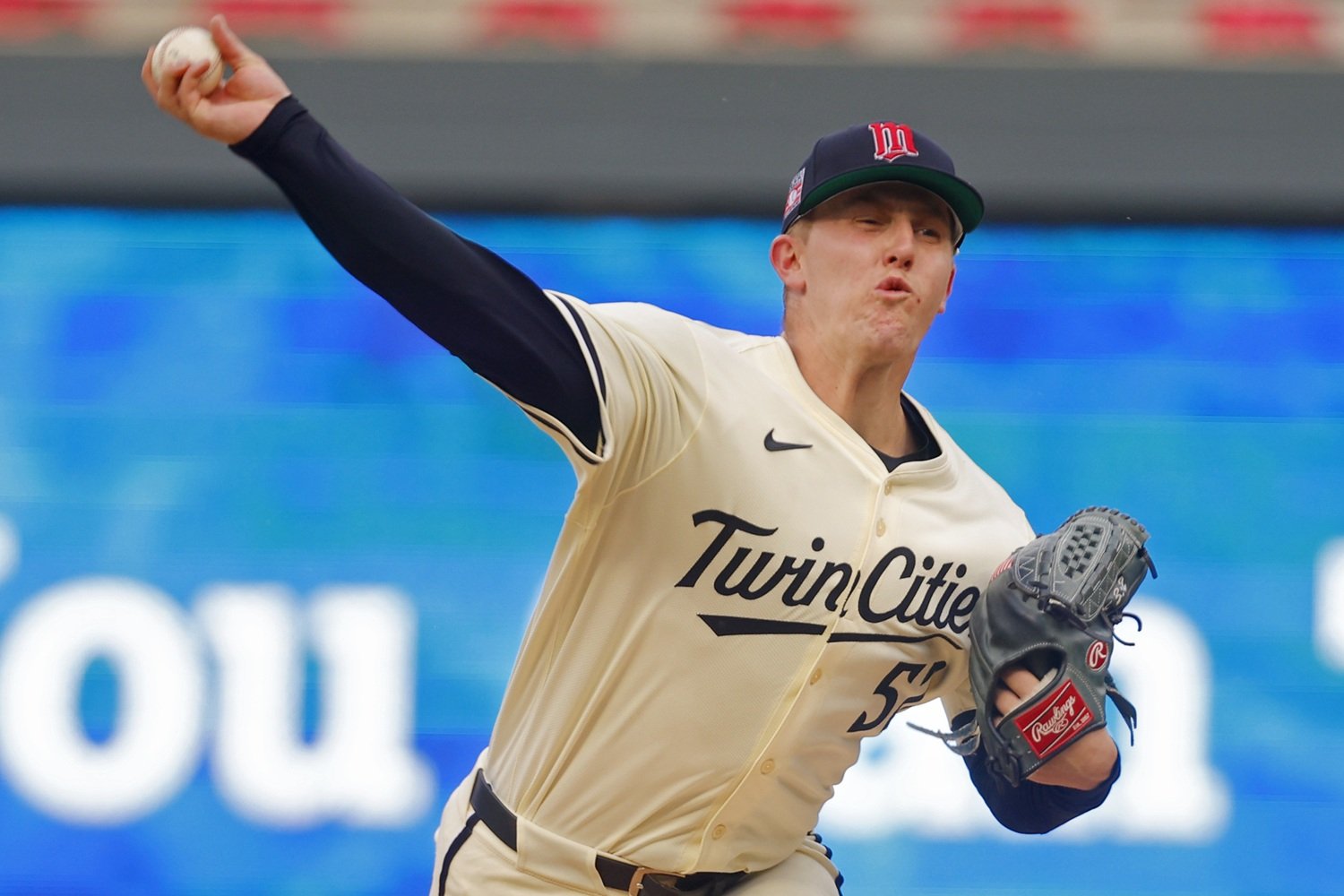 Box Score SP: Zebby Matthews: 6 P, 2 H, 0 R, 0 ER, 0 BB, 7 K, 81 pitches, 54 strikes (66.7%) Home Runs: None Top 3 WPA: Zebby Matthews, (.358), Jhoan Duran (.160), Griffin Jax (.120) Win Probability Chart (via FanGraphs): Wheeling and Dealing Zebby Matthews began the game dispensing his fastballs with a tick of extra velocity, starting the game with two strikeouts and a weak groundout. His second inning includes a nice little throw to first on a tricky roller out of the box, beating Jeffers to the ball and getting the out just in time. Opposite Matthews was the All-Star Mackenzie Gore, just one of many pieces the Nationals acquired in the Juan Soto trade. The lengthy southpaw came out shaky as he had in many of his recent starts, putting Ryan Jeffers and Carlos Correa on before getting the red-hot Royce Lewis to scrape under a ball for a soft fly out and escape the inning. The second looked just as promising for the Twins with walks to Harrison Bader and Ty France, but a Matt Wallner fly out and double play off a Brooks Lee ground out ended the worry. Both pitchers continue to cruise through the next few innings without much traffic. Matthews finally let a two out double to Luis Garcia Jr. break up a potential new hitter in the fourth, but Harrison Bader snagged a foul ball from Josh Bell on the very next pitch. Gore’s pitch count had reached 77 with two outs but a poor run from Harrison Bader resulted in his fourth time caught on a stolen base attempt this season. Escaping a Gore-y Blow Out Gore continued to look shaky into the fifth, allowing Wallner (the sole lefty in the line up) walk on four pitches. His command went haywire with two wild pitches to put Wallner on third and Lee at first. Buxton got on top of one on a 3-1 count, but the 112 MPH whack was only enough to get Wallner home on a sacrifice fly. Gore escaped as Jeffers watched a ball float by for a strikeout, having only thrown only 54% of his pitches for strike. The Nationals turned to the bullpen to begin the sixth and the Twins went to work with Correa lobbing a single to right and Lewis slapping a hard double to left. A Ty France hit-by-pitch loaded the bases before interim skipper Miguel Cairo went to another lefty against Wallner. The pinch-hit trigger-happy Rocco Baldelli had his hands tied with Christian Vázquez as the only righty on the bench. The plan worked with Wallner landing one easily in Daylen Lile’s glove in right field. Easy Closing Matthews finished the night with his first Quality Start of his career, sporting seven strikeouts and only two men on base all night on 81 pitches. It was deserving for a pitcher whose underlying numbers have suggested a top line starter. With the Nationals sporting a lefty heavy line up and the Twins carrying a one run lead, Danny Coulombe took over with three easy fly outs. Jax looked to recover from his Dodger Stadium blunder but once again saw traffic on the bases. Lile punched one over France’s glove for a double in the corner while Jax walked #9 hitter Jacob Young. Thankfully, the final hit off Jax this time amounted to a harmless CJ Abrams fly out to Willi Castro. The offense remained relatively quiet with both Luis García and Jose Ferrer keeping the bases clean. Jhoan Duran proved his worth to the scouts scattered around the park with a strikeout at 102 and two weak grounders to end the ball game. It was the first 1-0 win for the squad since June 2nd, 2023. News & Notes —For retro weekend in celebration of the Hall of Fame, the Twins wore the classic M hats, while the Nationals wore the original “DC” hats from their inaugural season in 2005. Should have gone with an Expos hat, in my opinion. —Kody Funderburk joined the bullpen as Anthony Misiewicz, last seen leaving an eighth inning mess in Dodger Stadium on Tuesday, went to the 15-day IL with a left shoulder impingement —Denard Span is on the broadcast this weekend, his first ever at Target Field. —Target Field decided to join in the fun with the Meme of the Week: What’s Next? The Twins continue the series with the Nationals as All Star Joe Ryan (10-4, 2.63 ERA) takes on another southpaw in Mitchell Parker (6-10, 5.00 ERA). Postgame Interview Bullpen Usage Spreadsheet SUN MON TUE WED THU TOT Jax 8 0 20 20 25 73 Durán 16 0 24 0 6 46 Varland 0 7 16 15 0 38 Sands 0 28 0 0 0 28 Coulombe 0 0 10 16 11 37 Stewart 0 0 12 0 0 12 Funderburk 0 0 0 0 0 0 Topa 0 0 0 0 0 0
- 41 comments
-
- 6
-
-
- zebby matthews
- danny coulombe
- (and 3 more)
-
Image courtesy of © Bruce Kluckhohn-Imagn Images Box Score SP: Zebby Matthews: 6 P, 2 H, 0 R, 0 ER, 0 BB, 7 K, 81 pitches, 54 strikes (66.7%) Home Runs: None Top 3 WPA: Zebby Matthews, (.358), Jhoan Duran (.160), Griffin Jax (.120) Win Probability Chart (via FanGraphs): Wheeling and Dealing Zebby Matthews began the game dispensing his fastballs with a tick of extra velocity, starting the game with two strikeouts and a weak groundout. His second inning includes a nice little throw to first on a tricky roller out of the box, beating Jeffers to the ball and getting the out just in time. Opposite Matthews was the All-Star Mackenzie Gore, just one of many pieces the Nationals acquired in the Juan Soto trade. The lengthy southpaw came out shaky as he had in many of his recent starts, putting Ryan Jeffers and Carlos Correa on before getting the red-hot Royce Lewis to scrape under a ball for a soft fly out and escape the inning. The second looked just as promising for the Twins with walks to Harrison Bader and Ty France, but a Matt Wallner fly out and double play off a Brooks Lee ground out ended the worry. Both pitchers continue to cruise through the next few innings without much traffic. Matthews finally let a two out double to Luis Garcia Jr. break up a potential new hitter in the fourth, but Harrison Bader snagged a foul ball from Josh Bell on the very next pitch. Gore’s pitch count had reached 77 with two outs but a poor run from Harrison Bader resulted in his fourth time caught on a stolen base attempt this season. Escaping a Gore-y Blow Out Gore continued to look shaky into the fifth, allowing Wallner (the sole lefty in the line up) walk on four pitches. His command went haywire with two wild pitches to put Wallner on third and Lee at first. Buxton got on top of one on a 3-1 count, but the 112 MPH whack was only enough to get Wallner home on a sacrifice fly. Gore escaped as Jeffers watched a ball float by for a strikeout, having only thrown only 54% of his pitches for strike. The Nationals turned to the bullpen to begin the sixth and the Twins went to work with Correa lobbing a single to right and Lewis slapping a hard double to left. A Ty France hit-by-pitch loaded the bases before interim skipper Miguel Cairo went to another lefty against Wallner. The pinch-hit trigger-happy Rocco Baldelli had his hands tied with Christian Vázquez as the only righty on the bench. The plan worked with Wallner landing one easily in Daylen Lile’s glove in right field. Easy Closing Matthews finished the night with his first Quality Start of his career, sporting seven strikeouts and only two men on base all night on 81 pitches. It was deserving for a pitcher whose underlying numbers have suggested a top line starter. With the Nationals sporting a lefty heavy line up and the Twins carrying a one run lead, Danny Coulombe took over with three easy fly outs. Jax looked to recover from his Dodger Stadium blunder but once again saw traffic on the bases. Lile punched one over France’s glove for a double in the corner while Jax walked #9 hitter Jacob Young. Thankfully, the final hit off Jax this time amounted to a harmless CJ Abrams fly out to Willi Castro. The offense remained relatively quiet with both Luis García and Jose Ferrer keeping the bases clean. Jhoan Duran proved his worth to the scouts scattered around the park with a strikeout at 102 and two weak grounders to end the ball game. It was the first 1-0 win for the squad since June 2nd, 2023. News & Notes —For retro weekend in celebration of the Hall of Fame, the Twins wore the classic M hats, while the Nationals wore the original “DC” hats from their inaugural season in 2005. Should have gone with an Expos hat, in my opinion. —Kody Funderburk joined the bullpen as Anthony Misiewicz, last seen leaving an eighth inning mess in Dodger Stadium on Tuesday, went to the 15-day IL with a left shoulder impingement —Denard Span is on the broadcast this weekend, his first ever at Target Field. —Target Field decided to join in the fun with the Meme of the Week: What’s Next? The Twins continue the series with the Nationals as All Star Joe Ryan (10-4, 2.63 ERA) takes on another southpaw in Mitchell Parker (6-10, 5.00 ERA). Postgame Interview Bullpen Usage Spreadsheet SUN MON TUE WED THU TOT Jax 8 0 20 20 25 73 Durán 16 0 24 0 6 46 Varland 0 7 16 15 0 38 Sands 0 28 0 0 0 28 Coulombe 0 0 10 16 11 37 Stewart 0 0 12 0 0 12 Funderburk 0 0 0 0 0 0 Topa 0 0 0 0 0 0 View full article
-
Image courtesy of © Matt Blewett-Imagn Images Questions surrounding the wobbly seat of Rocco Baldelli have been answered: The Twins have already exercised his option for 2026. As Dan Hayes reported in The Athletic, "Multiple sources confirmed the club picked up its team option for 2026 on Baldelli, who’s currently in his seventh season as manager." It was not clear when the team made the call, but the report comes at an unfortunate time in the season. The Twins have gone 6-15 since June began, mostly thanks to their once-mighty starting rotation turning into the league's worst, with a collective 6.59 ERA. Hayes noted that Derek Falvey expressed his confidence in Baldelli on Monday and ruled out any mid-season manager switch. And with potential sale talks going cool again, any new management removing Baldelli feels equally distant. Whether Baldelli is responsible for the collapse is less clear. The injuries to Pablo López or Zebby Matthews are entirely out of his control, and have had a staggering effect. But other managerial decisions have been questioned. Matthew Taylor rightly took him to task more recently for an odd Christian Vázquez play in extra innings. Cody Christie suggested that his choice to use openers has been somewhat strained. But one might easily praise his decision in Seattle for pulling Bailey Ober after four innings with bases loaded, turning to Danny Columbe to eliminate the threat (it ended up a loss, but not on Ober). And the Twins have continued to have one of the strongest bullpens in the league, which often makes up Baldelli's most critical decisions. As many will of course note, many of his decisions are really those of the front office. And yet, the Phish-loving manager is now set to return, even at a time in which the future of the season—and the franchise—remains uncertain. One thing is for sure: fans will certainly have opinions. View full article
-
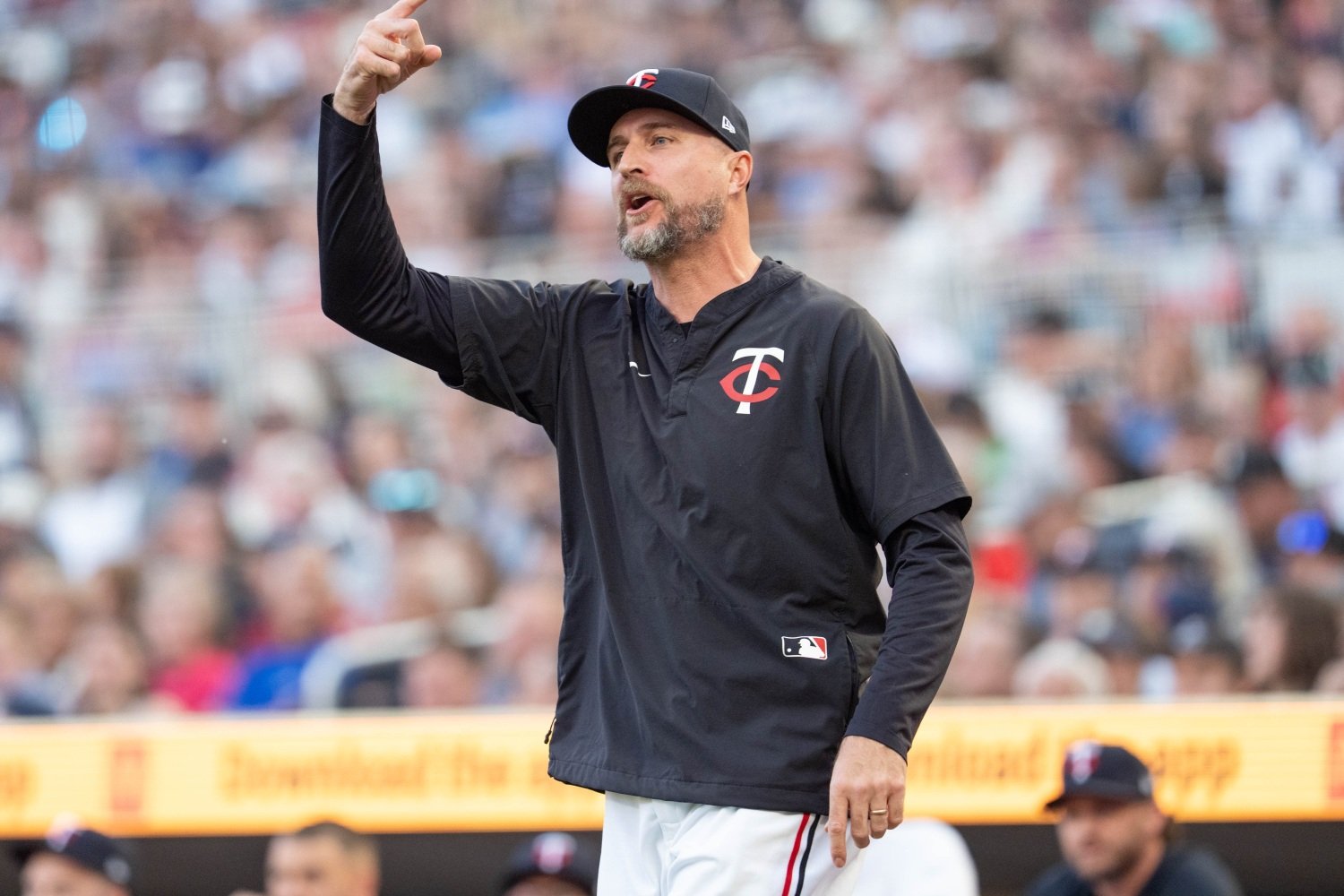 Questions surrounding the wobbly seat of Rocco Baldelli have been answered: The Twins have already exercised his option for 2026. As Dan Hayes reported in The Athletic, "Multiple sources confirmed the club picked up its team option for 2026 on Baldelli, who’s currently in his seventh season as manager." It was not clear when the team made the call, but the report comes at an unfortunate time in the season. The Twins have gone 6-15 since June began, mostly thanks to their once-mighty starting rotation turning into the league's worst, with a collective 6.59 ERA. Hayes noted that Derek Falvey expressed his confidence in Baldelli on Monday and ruled out any mid-season manager switch. And with potential sale talks going cool again, any new management removing Baldelli feels equally distant. Whether Baldelli is responsible for the collapse is less clear. The injuries to Pablo López or Zebby Matthews are entirely out of his control, and have had a staggering effect. But other managerial decisions have been questioned. Matthew Taylor rightly took him to task more recently for an odd Christian Vázquez play in extra innings. Cody Christie suggested that his choice to use openers has been somewhat strained. But one might easily praise his decision in Seattle for pulling Bailey Ober after four innings with bases loaded, turning to Danny Columbe to eliminate the threat (it ended up a loss, but not on Ober). And the Twins have continued to have one of the strongest bullpens in the league, which often makes up Baldelli's most critical decisions. As many will of course note, many of his decisions are really those of the front office. And yet, the Phish-loving manager is now set to return, even at a time in which the future of the season—and the franchise—remains uncertain. One thing is for sure: fans will certainly have opinions.
 -
Image courtesy of © Sam Greene/The Enquirer / USA TODAY NETWORK via Imagn Images Whether Byron Buxton should be an All-Star should not be up for debate. He leads American League center fielders in home runs, RBIs, OPS, wRC+, fWAR, and slugging average. He would lead most of those stats for all AL outfielders, if not for Aaron Judge. He’s had numerous defensive plays that have awed us, only to (improbably) match that awesomeness with his bat. After years of remaining careful on the bases, he’s become a flawless stolen base machine, leading the Twins. It feels cliché, but we’re seeing a star reaching his top potential. Buxton held a 2.6 fWAR when he was sent to Los Angeles for the All-Star Game in 2022. He currently sits at 2.9 fWAR. That Buxton is flailing in the voting—only 13th among outfielders—is a case of unfortunate circumstance: coastal bias, a somewhat disengaged fanbase not interested in voting, and other shiny objects who get more national coverage. Voting can, of course, change, but it feels cruel when someone as deserving as Buxton can’t find his way into fans’ hearts given his numerous show-stopping moments. But this All-Star Game can be extra special for Buxton, a Georgia native with a chance to play in Atlanta suburban Cobb Country. And that means that Buxton, who sits at 15 dingers on the year, should be given more than a chance for a couple plate appearances. Put Byron Buxton in the Home Run Derby. It’s no secret that the Home Run Derby has become the event of All-Star Week. The game itself has had its moments, but most players are doing their best to not hurt themselves. The best moment, if I can recall any in recent years, was Nestor Cortes Jr. and Jose Trevino chatting on the broadcast while discussing their pitch selection (and that game included a Buxton home run off Dodgers pitcher Tony Gonsolin). And while sickos enjoy the Futures Game, most are barely aware of their existence. Meanwhile, the Derby has been where stars are made. It introduced Julio Rodriguez outside the Pacific Northwest. It helped put Vladimir Guerrero Jr. on the cover of MLB: The Show. Teoscar Hernández scored a bobblehead out of it. Buxton has been around for years in the league, but it could redefine how fans across MLB see him. Buxton’s reputation remains defined by the injury issues that plagued his early years. If they had any sense that Buxton played over 100 games—in Center Field!—last year, or even putting up those numbers this year, they would be excited. Given the voting, they clearly are ignoring what's happening out in Target Field. That said, Buxton’s home runs have been amazing, and not just because of the quantity of them. He’s hit the second-farthest home run of the year, only behind Mike Trout, besting Aaron Judge and Shohei Ohtani. He has genuinely fearsome power. Compare Tuesday’s home run that came in almost the exact same position that he stole one back from Will Benson. Benson hit the ball over 5 MPH harder than Buxton, but Buxton’s bat speed tracked over 80 MPH and he hit his lower, which allowed it to track just over another six feet and over everyone, onto the green space of the batter's eye. Of course, the chatter class and commenters will scream that the team needs to keep Buxton healthy at all costs. It’s not entirely without cause—Luis Robert. Jr suffered an injury at the derby in 2023. But that being said, this is what it’s all about. Seeing Buxton in Georgia, every light and camera on him, doing a skill that it wasn’t even clear he would ever do in his career. That's what baseball is all about. Do you really want to play injury noticer, or do you wanna see him sock a few dingers? No Twin has even participated in the Derby in almost a decade. It only makes sense that Buxton, the heart and soul of this team who has carried the torch since those two, make that return. View full article