


Twins Video
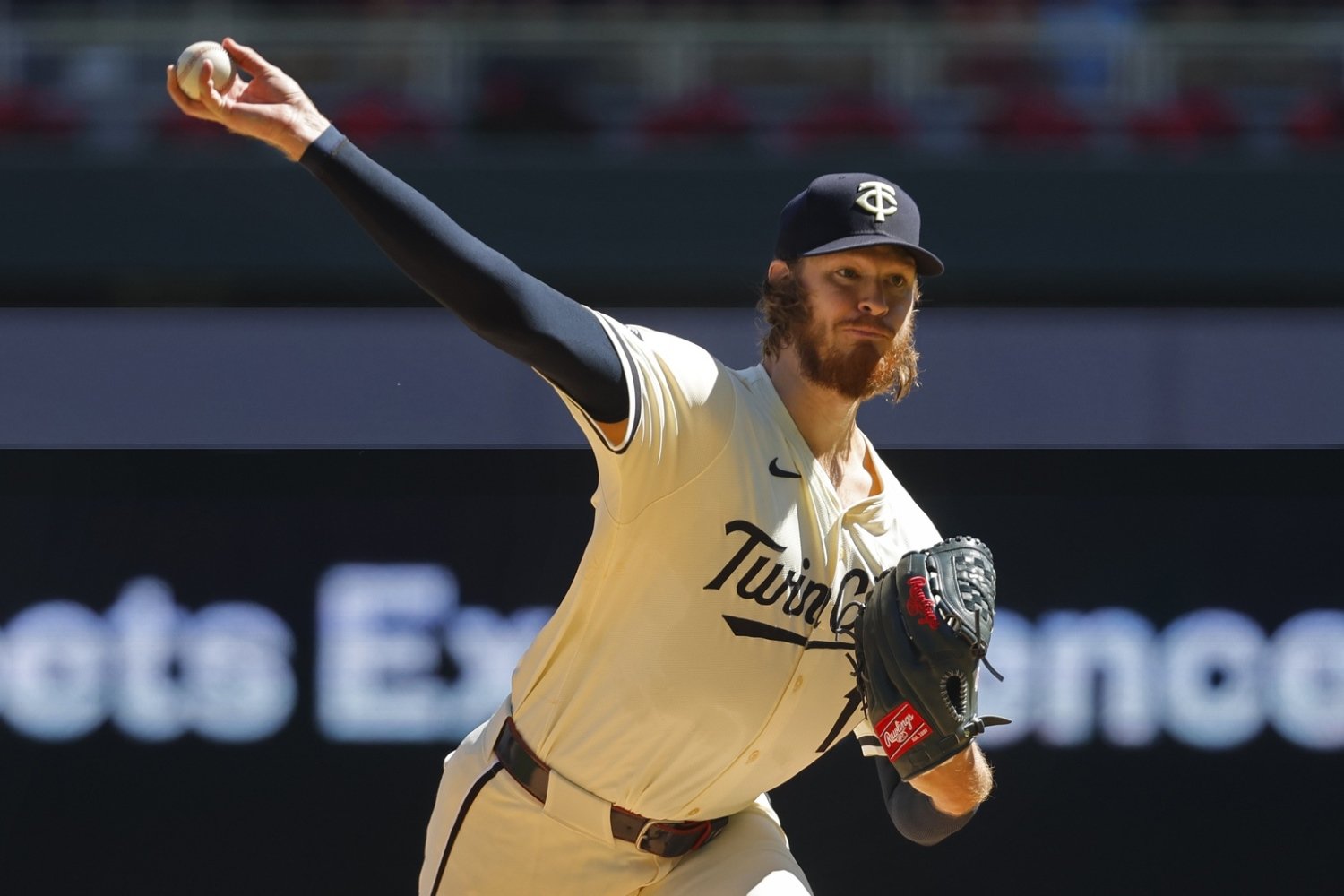
Bailey Ober turned in another stellar start on Sunday afternoon against the Toronto Blue Jays. Bouncing back from a rough outing against the Atlanta Braves, Ober struck out eight over six innings. The afternoon became Ober’s 11th quality start (six innings with three earned runs or fewer) in twelve outings, putting him in a very good place to lead the Twins through the rest of the season with a lock on the second playoff spot.
Ober also once again demonstrated his Achilles heel, allowing a home run to Ernie Clement in the first. The 6-foot-9 righty has one of the more unique problems in baseball: flopping in first innings. Ober spots a 7.27 ERA in the first inning. While a lot of that has to do with his disastrous Kansas City start to begin the season and his recent Atlanta Braves mishap, removing those games still leaves him a 5.09 ERA, with a shockingly high 5.48 FIP. That includes 10 extra-base hits (including six dingers) and eight walks, even removing the catastrophic outings. Comparatively, the 2nd through 5th innings are gems for Ober: a 2.48 ERA and a 2.83 FIP. The strikeout-to-walk ratio is even more telling: Ober sports a 2.3 K/BB ratio to begin the game, but then it doubles to 5.2 from the 2nd inning onward.
Of all MLB starters, Ober ranks sixth-worst when comparing his xWOBA in the 1st inning against what he puts up during 2nd through 5th inning. (Ironically, Cy Young candidate Chris Sale ranks worse than Ober, but only because he has been so dominant otherwise). It is a notable difference among the Twins’ four main starters this season:
| Player | 1st Inning BA | 2nd-5th Inning BA | 1st Inning xWOBA | 2nd-5th Inning xWOBA |
| Bailey Ober | .281 | .212 | .364 | .279 |
| Pablo López | .240 | .257 | .291 | .301 |
| Simeon Woods Richardson | .169 | .249 | .269 | .325 |
| Joe Ryan | .247 | .208 | .255 | .274 |
So why does Ober perform so poorly to start the game, only to bounce back seemingly every time?
Smart baseball people will tell you that innings are irrelevant: what matters is how many times through the order, with most pitchers fairing quite poorly the third time through. And while Ober’s stats certainly improve the second time through, they are nowhere near as distinctive as those first-inning stats: his xWOBA drops from .281 to .235, while opponents' batting average increases from .192 to .200.
So what does Ober do differently when it comes to his first inning? He's not the first pitcher to suffer from the problem. Some pitchers have had an even worse case. But in the aggregate, bad first innings often lead to bad outings. Not so for Ober.
My first theory was his pitch type; Ober throws too much of his fastball, or cutter, or what-have-you. But as Ober has suffered bad first innings, he has switched up his approach multiple times, only to see the plans go awry. Ober uses his three main pitches—the fastball, cutter, and changeup—about the same amount in the first three innings, with slight variations, though hardly enough to make any meaningful argument.
The next argument would be about the zone. Does Ober change up where he is landing pitches? We can see his pitches staying relatively in the same place when it comes to righties on the outside:

But you see more and more movement when it comes to lefties and the inside part of the plate:

This chart finally put me onto what might be happening. If you look at xWOBA, left-handed hitters have been lighting up Ober on inside pitches, for a difference of .258 for righties but .391 for lefties. And the lefties in the first inning absolutely have his spot:

In the 2nd through 5th innings, righties marginally improve to .298, but lefties drop precipitously, to .225. Ober seemingly cannot figure out lefties until after the first inning.
Nine of the 12 extra-base hits by Ober opponents have come from lefties (who have a first-inning SLG of .659, vs. .256 for righties). And notably, all of them are in pitcher-friendly counts: six with two strikes, and two on the first pitch (the only one on 3-2 count was also the only one on a misplaced changeup, to José Ramírez). These are some of the best players in the game—Shohei Ohtani, Corey Seager, Bryce Harper—but Ober clearly has struggled all season with this situation.
Teams have been very aware of Ober’s early lefty problem, which explains why the problem manifests in the first inning rather than the entire first time through the order. He’s faced 57 lefties in the first inning, but only 44 lefties in the second, and often that means the top players in baseball. Meanwhile, he’s faced 55 righties in the first, compared to 51 in the second inning.
So can Ober figure it out? Ironically, his start against the Blue Jays might have showed a path forward. Clement got the home run, but the other three hitters that inning were lefties. None of them would see a pitch on the inside portion of the plate. In fact, the only pitch anywhere near the inside was this harmless pop out by Nathan Lukes:
Moreover, Matt Olson’s home run was Ober’s first hit allowed in the first against a lefty since Jul. 22. Perhaps this is all relatively unimportant, since Ober remains not just this team’s co-ace, but one of the league’s best pitchers. If Sale can win a Cy Young with the same problem, why not Ober?
In part, it's the potential. It's taken Sale almost a decade for him to put together a season like the one he is having now. And if Ober wants to enter that echelon early (or more importantly, not give every Twins fan a nervous breakdown in October), solving this problem now is necessary. If Ober can manage to end his first-inning woes, he might legitimately reach the ace level we hope for.








Recommended Comments
Create an account or sign in to comment
You need to be a member in order to leave a comment
Create an account
Sign up for a new account in our community. It's easy!
Register a new accountSign in
Already have an account? Sign in here.
Sign In Now