



Nick Nelson
-
Posts
8,327 -
Joined
-
Last visited
-
Days Won
56
Content Type
Profiles
News
Minnesota Twins Videos
2026 Minnesota Twins Top Prospects Ranking
2022 Minnesota Twins Draft Picks
Minnesota Twins Free Agent & Trade Rumors, Notes, & Tidbits
Guides & Resources
2023 Minnesota Twins Draft Picks
The Minnesota Twins Players Project
2024 Minnesota Twins Draft Picks
2025 Minnesota Twins Draft Pick Tracker
2026 Minnesota Twins Draft Tracker: Picks & Bonuses
Forums
Blogs
Events
Store
Downloads
Gallery
Everything posted by Nick Nelson
-
 I was joined via live-stream by Tom Froemming and Matt Braun Thursday night at 8:00 PM as we looked over the free agent landscape for relief pitching. We each brought a few names to the table that we view as good fits, and those targets were discussed and debated. You can tune into future live broadcasts via Twins Daily's Twitter, Facebook, or YouTube page (or just watch it above). It'll be an interactive show where viewers help steer the conversation via comments and questions. You'll also be able to watch the replay tomorrow here on the site, or via audio by subscribing to our podcast. Who are the names to watch in free agency this year? Find out tonight. In the meantime, check out previous episodes of Offseason Live and see what's upcoming: Ep 1: (Thurs, 10/8) Ep 2: (Tues, 10/13) Ep 3: (Thurs, 10/15) Ep 4: (Tues, 10/20) Ep 5: (Thurs, 10/22) Ep 6: (Tues, 10/27) Ep 7: (Thurs, 10/29) Ep 8: (Thurs, 11/5) Ep 9: Twins Trade Targets (Thurs, 11/12) Ep 10: Offseason Blueprints (Tues, 11/17)
 -
 The World Series is over, and free agency is about to open up for business. With that, one of the most unusual and unpredictable offseasons in the history of Major League Baseball will get underway. No one knows exactly what's coming. But we can make a few educated guesses.It's been widely anticipated that MLB teams would uniformly cut spending this offseason – perhaps significantly – in the face of severe economic setbacks. The league reports losing more than $3 billion during the abbreviated 2020 season, and while 2021 may bring us closer to a sense of normalcy ... no one's confident it'll be THAT close. As things stand now, the expectation is for partial-capacity stadiums, lingering pandemic-related complications, and more reduced revenues. That outlook could well change over the coming four months, but with the offseason officially underway, teams must operate based on what they know. In the days immediately following the conclusion of the World Series, suspicions of a chilly offseason market were reaffirmed, with a stunning array of team-friendly options declined. Brad Hand, Charlie Morton, and Darren O'Day are among the most head-scratching. Under normal circumstances, each of these guys would be a no-brainer to keep. But as we're seeing, these are no normal circumstances. The wildest thing to me is that, in the case of Hand, he went through outright waivers. That means any other team could've simply taken on a one-year, $10 million contract for an elite closer, no strings attached. Nobody bit. This isn't just Cleveland's cheapness – although, it is that too. Baseball owners are taking an understandably cautious approach with an ambiguous financial landscape ahead. I don't necessarily blame them. In a refreshingly candid and open series of quotes shared with La Velle E. Neal III of the Star Tribune, Jim Pohlad laid out the ownership viewpoint well: “Yes, I believe there will be fans in the ballpark, but I can’t tell you when or at what level, I just don’t know. I don’t think the fact that we lost money in 2020 — which we did, and we are right in the middle of that pack — I don’t think that’s the driver for what we are going to do in 2021 ... There is uncertainty, and we are going to have to figure out an ‘uncertainty discount,’ and we will.” How might this "uncertainty discount" play out in practical terms, and how might the Twins specifically be affected? Here are three key threads I see playing out. 1: Many players will end up accepting deals for well below market value, with an eye on guaranteed money. If it hasn't already, it'll quickly become apparent to the current free agent class (and more importantly their agents) that spending is at a premium this winter, especially when it comes to hard-and-fast commitments. I foresee a lot of guys ultimately forced to accept non-guaranteed or incentive-based deals, for whom that'd normally who never be the case. In this tough environment, there could be opportunity for front offices. Think about it: If you're the Twins and you offer, say, Jake Odorrizi a multi-year deal that would seem perfectly reasonable under normal market circumstances (three years, $36 million?), does he just jump on it? Normally he might take a passive approach and see what else the market has to offer. But this year, when he knows that there are many other starting pitchers vying for the same limited funds? And when he knows that only a select few true contenders will be actively spending to win? If the Twins move on and sign a Marcus Stroman, they're out of the running for him. And that's one club checked off the list. Scales have been tipped. Supply will outweigh demand in this strange offseason. 2: The first couple of months will be very slow, followed by a late flurry in February and March. Because of the lopsided supply/demand ratio, buyers will hold all the control. Front offices will feel little urgency to address needs in what I expect to be a slow-developing offseason. Especially for this reason: financial parameters figure to grow clearer as the winter progresses. We have no idea right now whether 25% league-wide stadium capacity in 2021 is a feasible possibility, let alone 50% or more. In February, we'll have a better idea – albeit maybe not a definitive answer. This means patience is not only a luxury, but to some extent a mandate for front offices held to account. If this eventuality is obvious to us, then it's surely evident to parties on both sides ... which brings me back to the point above. I think there will be serious opportunity to strike fair yet team-friendly deals in the early stretch of the offseason, when adaptive free agents make the most of their situations and avoid the painful saturation to come in January and February. 3: Tensions between the league and union will be further inflamed, and that's bad news for everyone. Things turned ugly during the league's negotiations to start up a reconfigured COVID season in the early part of the summer. This only underscores a well-known truth: The two sides are very much at odds with the collective bargaining agreement set to expire after next season. Overdue to be addressed are many inequities. Suffice to say that the cost-slashing we're about to see will not help matters. Free agent big-leaguers who already felt undervalued, and hindered in their earning power, will face devastating market prospects. In his interview with La Velle, Pohlad said the following, which I think fairly reflects the position of his peers at large: "In a sense there has been, in my view — and I’m not speaking for the players or the union — there has to be some degree of risk sharing here ... Basically the owners bore the entire brunt of the short season. The players got their prorated salary for the games they played in. In terms of lost revenue, they bore no risk to it. But they were cooperative in getting the games started, and that’s a big deal. Going forward, it just comes about as a result of a depressed market that is, in effect, players bearing their share of the risk also.” This is a reasonable statement on its face, from a strictly operational standpoint. But let's be honest: It's a sentiment that will hit sourly for players who undertook great burden and risk to make this season work. And that disconnect will only serve to foment the tensions brewing as a huge juncture for MLB approaches. Unlike the first two predictions, there's not some potential Twins-related silver lining here. Even if they wanted to, the well-meaning Pohlads and Falvine Machine could do nothing to prevent a contentious impasse at the highest level, which would existentially threaten the game we love. I feel like we danced close to this line in May and June. In fact, there's no real takeaway on this one. I'm just nervous. Nervous about this, and a lot of other more important things at the moment. Throw it all into the pot. Hey, 2020! MORE FROM TWINS DAILY — Latest Twins coverage from our writers — Recent Twins discussion in our forums — Follow Twins Daily via Twitter, Facebook or email Click here to view the article
 -
Uncertainty and Opportunity: 3 Predictions for the 2020-21 Offseason
Nick Nelson posted an article in Twins
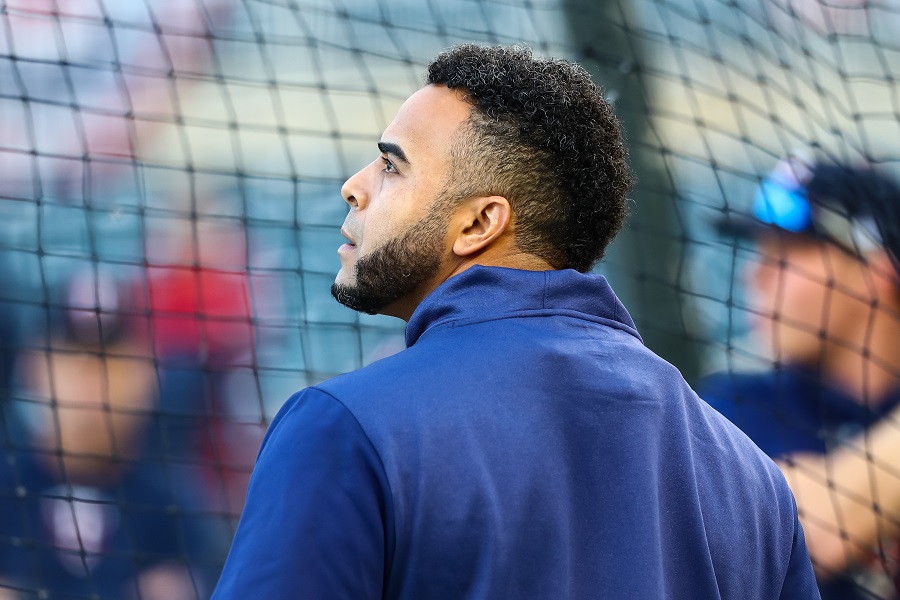 It's been widely anticipated that MLB teams would uniformly cut spending this offseason – perhaps significantly – in the face of severe economic setbacks. The league reports losing more than $3 billion during the abbreviated 2020 season, and while 2021 may bring us closer to a sense of normalcy ... no one's confident it'll be THAT close. As things stand now, the expectation is for partial-capacity stadiums, lingering pandemic-related complications, and more reduced revenues. That outlook could well change over the coming four months, but with the offseason officially underway, teams must operate based on what they know. In the days immediately following the conclusion of the World Series, suspicions of a chilly offseason market were reaffirmed, with a stunning array of team-friendly options declined. Brad Hand, Charlie Morton, and Darren O'Day are among the most head-scratching. Under normal circumstances, each of these guys would be a no-brainer to keep. But as we're seeing, these are no normal circumstances. The wildest thing to me is that, in the case of Hand, he went through outright waivers. That means any other team could've simply taken on a one-year, $10 million contract for an elite closer, no strings attached. Nobody bit. This isn't just Cleveland's cheapness – although, it is that too. Baseball owners are taking an understandably cautious approach with an ambiguous financial landscape ahead. I don't necessarily blame them. In a refreshingly candid and open series of quotes shared with La Velle E. Neal III of the Star Tribune, Jim Pohlad laid out the ownership viewpoint well: “Yes, I believe there will be fans in the ballpark, but I can’t tell you when or at what level, I just don’t know. I don’t think the fact that we lost money in 2020 — which we did, and we are right in the middle of that pack — I don’t think that’s the driver for what we are going to do in 2021 ... There is uncertainty, and we are going to have to figure out an ‘uncertainty discount,’ and we will.”How might this "uncertainty discount" play out in practical terms, and how might the Twins specifically be affected? Here are three key threads I see playing out. 1: Many players will end up accepting deals for well below market value, with an eye on guaranteed money. If it hasn't already, it'll quickly become apparent to the current free agent class (and more importantly their agents) that spending is at a premium this winter, especially when it comes to hard-and-fast commitments. I foresee a lot of guys ultimately forced to accept non-guaranteed or incentive-based deals, for whom that'd normally who never be the case. In this tough environment, there could be opportunity for front offices. Think about it: If you're the Twins and you offer, say, Jake Odorrizi a multi-year deal that would seem perfectly reasonable under normal market circumstances (three years, $36 million?), does he just jump on it? Normally he might take a passive approach and see what else the market has to offer. But this year, when he knows that there are many other starting pitchers vying for the same limited funds? And when he knows that only a select few true contenders will be actively spending to win? If the Twins move on and sign a Marcus Stroman, they're out of the running for him. And that's one club checked off the list. Scales have been tipped. Supply will outweigh demand in this strange offseason. 2: The first couple of months will be very slow, followed by a late flurry in February and March. Because of the lopsided supply/demand ratio, buyers will hold all the control. Front offices will feel little urgency to address needs in what I expect to be a slow-developing offseason. Especially for this reason: financial parameters figure to grow clearer as the winter progresses. We have no idea right now whether 25% league-wide stadium capacity in 2021 is a feasible possibility, let alone 50% or more. In February, we'll have a better idea – albeit maybe not a definitive answer. This means patience is not only a luxury, but to some extent a mandate for front offices held to account. If this eventuality is obvious to us, then it's surely evident to parties on both sides ... which brings me back to the point above. I think there will be serious opportunity to strike fair yet team-friendly deals in the early stretch of the offseason, when adaptive free agents make the most of their situations and avoid the painful saturation to come in January and February. 3: Tensions between the league and union will be further inflamed, and that's bad news for everyone. Things turned ugly during the league's negotiations to start up a reconfigured COVID season in the early part of the summer. This only underscores a well-known truth: The two sides are very much at odds with the collective bargaining agreement set to expire after next season. Overdue to be addressed are many inequities. Suffice to say that the cost-slashing we're about to see will not help matters. Free agent big-leaguers who already felt undervalued, and hindered in their earning power, will face devastating market prospects. In his interview with La Velle, Pohlad said the following, which I think fairly reflects the position of his peers at large: "In a sense there has been, in my view — and I’m not speaking for the players or the union — there has to be some degree of risk sharing here ... Basically the owners bore the entire brunt of the short season. The players got their prorated salary for the games they played in. In terms of lost revenue, they bore no risk to it. But they were cooperative in getting the games started, and that’s a big deal. Going forward, it just comes about as a result of a depressed market that is, in effect, players bearing their share of the risk also.” This is a reasonable statement on its face, from a strictly operational standpoint. But let's be honest: It's a sentiment that will hit sourly for players who undertook great burden and risk to make this season work. And that disconnect will only serve to foment the tensions brewing as a huge juncture for MLB approaches. Unlike the first two predictions, there's not some potential Twins-related silver lining here. Even if they wanted to, the well-meaning Pohlads and Falvine Machine could do nothing to prevent a contentious impasse at the highest level, which would existentially threaten the game we love. I feel like we danced close to this line in May and June. In fact, there's no real takeaway on this one. I'm just nervous. Nervous about this, and a lot of other more important things at the moment. Throw it all into the pot. Hey, 2020! MORE FROM TWINS DAILY — Latest Twins coverage from our writers — Recent Twins discussion in our forums — Follow Twins Daily via Twitter, Facebook or email
 -
Over the past two seasons, Eddie Rosario and Nelson Cruz rank first and second among Twins hitters in RBIs, with 151 and 141. No one else is close. There's a very good chance one or both depart this offseason. How will Minnesota replace all that run production? Free agency may offer some sensible answers.On Tuesday night's episode of Offseason Live I was joined by Twins Daily writers Lucas Seehafer and David Youngs. Each of us submitted our own preferred targets at these positions, and those choices were discussed and debated. You can watch it all play out below, or keep reading for a breakdown of what's available, and which targets stand out as our favorite fits for the Twins. Free Agent Designated Hitters at a Glance The Need: With Cruz hitting free agency and likely generating significant demand, coming off back-to-back monster seasons, the Twins will need to address a position that's been arguably their greatest competitive advantage. The Market (This list is not comprehensive): Nelson CruzMarcell OzunaMichael BrantleyShin Soo ChooJay BruceYasiel PuigRobbie GrossmanYoenis CespedesNick MarkakisLogan MorrisonMatt Kemp Our Targets: Jay Bruce Age: 33 Former Team: Philadelphia 2020 Stats: .198/.252/.469, 6 HR, 14 RBI Why He's a Fit: He's a very accomplished lefty hitter, with 314 home runs and a .783 career OPS in 13 major-league seasons. But his somewhat diminished performance over the past three seasons (.217/.282/.448) should keep his pricetag in check. He can still play some first base and corner outfield, so Bruce won't be restricted to DH. Estimated 2021 Salary: $3 million Shin-Soo Choo Age: 38 Former Team: Texas 2020 Stats: .236/.323/.400, 5 HR, 15 RBI Why He's a Fit: Choo brings many of the same qualities as Bruce, but to a greater extent. He's also older and will probably be a bit more expensive. The 38-year-old left-handed hitter owns a .275/.377/.447 career slash line, and has consistently been around that in Texas, reliably scoring 85-95 runs, hitting 20-25 homers and 20-30 doubles. If you're looking for stable, rock-solid veteran production to replace Cruz at around half the price, Choo is a fine choice. Estimated 2021 Salary: $7 million Matt Kemp Age: 36 Former Team: Colorado 2020 Stats: .239/.326/.419, 6 HR, 21 RBI Why He's a Fit: Kemp figures to be very affordable. Last year he had to settle for a minor-league deal before a bouncing back a bit in Colorado. What I like about Kemp (aside from the low cost) is that he has a track record of mashing lefties – he hit .300/.375/.480 against this year and .313/.373/.536 in his career. This addresses a critical weakness from the 2020 Twins team, and – much like the two targets above – he brings a wealth of experience to help replace what you're losing with Cruz. Estimated 2021 Salary: $2 million Free Agent Outfielders at a Glance The Need: If the Twins keep Rosario, there really is no need. But as we discussed in the , that seems uncertain if not unlikely. Minnesota faces stark financial realities, with Rosario likely to command $10-13 million in his last year of arbitration. Can the Twins save money in left field, or use it more wisely? Let's take a look. The Market (This list is not comprehensive): George SpringerMarcell OzunaMichael BrantleyJackie Bradley Jr.Josh ReddickJoc PedersonRobbie GrossmanKevin PillarMatt JoyceYasiel PuigNick MarkakisCameron MaybinJarrod DysonBilly Hamilton Our Targets: Jackie Bradley Jr. Age: 30 Former Team: Boston 2020 Stats: .283/.364/.450, 7 HR, 22 RBI Why He's a Fit: Bradley will probably require a multi-year deal at an annual rate in the same range as Rosario is lined up for in 2021. So there's no real opportunity to save money here. But what you are doing with this move is making a long-term investment in someone who could become a core player. Bradley is an elite defender and can play all three outfield positions. He's a lefty hitter with patience and power. Estimated 2021 Salary: $11 million Joc Pederson Age: 28 Former Team: LA Dodgers 2020 Stats: .190/.285/.397, 7 HR, 16 RBI Why He's a Fit: He's a left-handed power stick to replace Eddie at a lower cost. Pretty simple. Pederson struggled a bit in the 60-game season but still hit seven homers, and in 2019 he launched a career-high 36. Much like Bradley Jr., Pederson has plenty of experience playing on the big stage in October, which is where the Twins are focused on getting over the hump. Estimated 2021 Salary: $6 million Yasiel Puig Age: 29 Former Team: Cleveland 2019 Stats: .267/.327/.458, 24 HR, 84 RBI Why He's a Fit: Looking for a Rosario replacement? Puig sure seems to fit the bill. He brings some fire and brashness with his personality, and while he didn't play in 2020, his fairly typical production in 2019 (see above) was almost exactly what you'd expect in a given year from Eddie. He will, however, cost substantially less, and his right-handed bat helps balance out Minnesota's current LH-heavy corner outfield depth. Estimated 2021 Salary: $2 million Michael Brantley Age: 33 Former Team: Houston 2020 Stats: .300/.364/.476, 5 HR, 22 RBI Why He's a Fit: Similar to Bradley Jr., Brantley offers the opportunity to swing for the fences, replacing Rosario with a new building-block type who brings more to the table. Brantley is a four-time All-Star with a .297/.354/.440 career slash line, and unlike most others on this list he was on top of his game in 2020. He's the real deal and one of the best players on the free agent market. Estimated 2021 Salary: $11 million Kevin Pillar Age: 31 Former Team: Colorado 2020 Stats: .288/.336.462, 6 HR, 26 RBI Why He's a Fit: Pillar represents a different approach to addressing the outfield. While many of the other players are of similar molds to Rosario, Pillar is more Buxton-like. He's a terrific center fielder and an aggressive right-handed hitter with some power and speed. Sound familiar? Pillar gives you a credible replacement in the event that Buxton goes down, and if the Twins are fortunate enough to keep the latter healthy, Pillar is a great piece to rotate around the outfield spots. Estimated 2021 Salary: $6 million Robbie Grossman Age: 31 Former Team: Oakland 2020 Stats: .241/.344/.482, 8 HR, 23 RBI Why He's a Fit: Unthinkably, Grossman has reinvented himself as an outstanding offensive outfielder since leaving Minnesota. By various defensive metrics, he's become an asset in either corner spot, and he's also a patient, OBP-centric switch-hitter who could fill in regularly at DH. He's just a very functional asset. Estimated 2021 Salary: $5 million Let us know in the comments who you like at these positions, or if you'd rather stick with Rosario and Cruz. In the meantime, check out previous episodes of Offseason Live and see what's upcoming: Ep 1: (Thurs, 10/8)Ep 2: (Tues, 10/13)Ep 3: (Thurs, 10/15)Ep 4: (Tues, 10/20)Ep 5: (Thurs, 10/22)Ep 6: (Tues, 10/27)Ep 7: Free Agency – Starting Pitchers (Thurs, 10/29)Ep 8: Free Agency – Relief Pitchers (Thurs, 11/5)Ep 9: Twins Trade Targets (Tues, 11/10)Ep 10: Offseason Blueprints (Thurs, 11/12)MORE FROM TWINS DAILY — Latest Twins coverage from our writers — Recent Twins discussion in our forums — Follow Twins Daily via Twitter, Facebook or email Click here to view the article
-
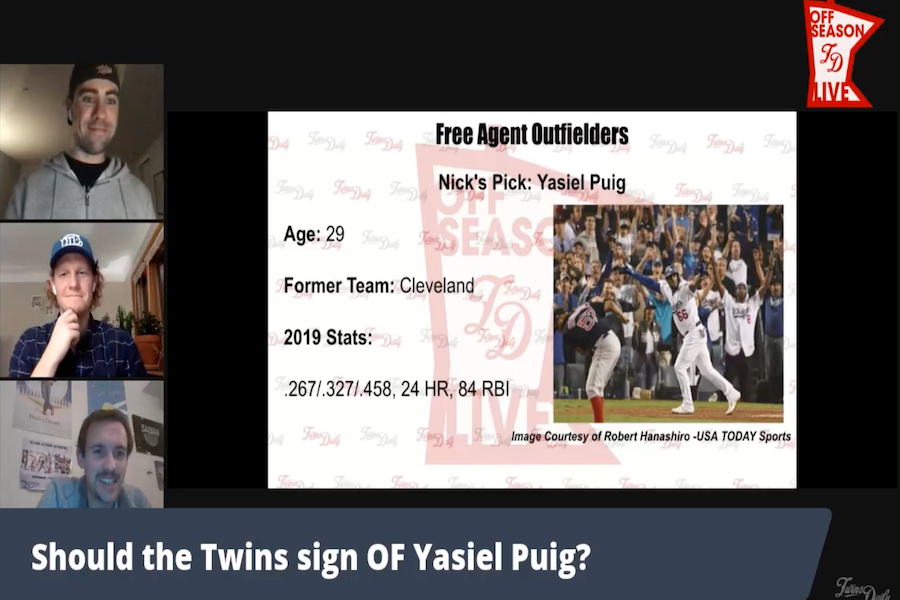 On Tuesday night's episode of Offseason Live I was joined by Twins Daily writers Lucas Seehafer and David Youngs. Each of us submitted our own preferred targets at these positions, and those choices were discussed and debated. You can watch it all play out below, or keep reading for a breakdown of what's available, and which targets stand out as our favorite fits for the Twins. Free Agent Designated Hitters at a Glance The Need: With Cruz hitting free agency and likely generating significant demand, coming off back-to-back monster seasons, the Twins will need to address a position that's been arguably their greatest competitive advantage. The Market (This list is not comprehensive): Nelson Cruz Marcell Ozuna Michael Brantley Shin Soo Choo Jay Bruce Yasiel Puig Robbie Grossman Yoenis Cespedes Nick Markakis Logan Morrison Matt Kemp Our Targets: Jay Bruce Age: 33 Former Team: Philadelphia 2020 Stats: .198/.252/.469, 6 HR, 14 RBI Why He's a Fit: He's a very accomplished lefty hitter, with 314 home runs and a .783 career OPS in 13 major-league seasons. But his somewhat diminished performance over the past three seasons (.217/.282/.448) should keep his pricetag in check. He can still play some first base and corner outfield, so Bruce won't be restricted to DH. Estimated 2021 Salary: $3 million Shin-Soo Choo Age: 38 Former Team: Texas 2020 Stats: .236/.323/.400, 5 HR, 15 RBI Why He's a Fit: Choo brings many of the same qualities as Bruce, but to a greater extent. He's also older and will probably be a bit more expensive. The 38-year-old left-handed hitter owns a .275/.377/.447 career slash line, and has consistently been around that in Texas, reliably scoring 85-95 runs, hitting 20-25 homers and 20-30 doubles. If you're looking for stable, rock-solid veteran production to replace Cruz at around half the price, Choo is a fine choice. Estimated 2021 Salary: $7 million Matt Kemp Age: 36 Former Team: Colorado 2020 Stats: .239/.326/.419, 6 HR, 21 RBI Why He's a Fit: Kemp figures to be very affordable. Last year he had to settle for a minor-league deal before a bouncing back a bit in Colorado. What I like about Kemp (aside from the low cost) is that he has a track record of mashing lefties – he hit .300/.375/.480 against this year and .313/.373/.536 in his career. This addresses a critical weakness from the 2020 Twins team, and – much like the two targets above – he brings a wealth of experience to help replace what you're losing with Cruz. Estimated 2021 Salary: $2 million Free Agent Outfielders at a Glance The Need: If the Twins keep Rosario, there really is no need. But as we discussed in the , that seems uncertain if not unlikely. Minnesota faces stark financial realities, with Rosario likely to command $10-13 million in his last year of arbitration. Can the Twins save money in left field, or use it more wisely? Let's take a look.The Market (This list is not comprehensive): George Springer Marcell Ozuna Michael Brantley Jackie Bradley Jr. Josh Reddick Joc Pederson Robbie Grossman Kevin Pillar Matt Joyce Yasiel Puig Nick Markakis Cameron Maybin Jarrod Dyson Billy Hamilton Our Targets: Jackie Bradley Jr. Age: 30 Former Team: Boston 2020 Stats: .283/.364/.450, 7 HR, 22 RBI Why He's a Fit: Bradley will probably require a multi-year deal at an annual rate in the same range as Rosario is lined up for in 2021. So there's no real opportunity to save money here. But what you are doing with this move is making a long-term investment in someone who could become a core player. Bradley is an elite defender and can play all three outfield positions. He's a lefty hitter with patience and power. Estimated 2021 Salary: $11 million Joc Pederson Age: 28 Former Team: LA Dodgers 2020 Stats: .190/.285/.397, 7 HR, 16 RBI Why He's a Fit: He's a left-handed power stick to replace Eddie at a lower cost. Pretty simple. Pederson struggled a bit in the 60-game season but still hit seven homers, and in 2019 he launched a career-high 36. Much like Bradley Jr., Pederson has plenty of experience playing on the big stage in October, which is where the Twins are focused on getting over the hump. Estimated 2021 Salary: $6 million Yasiel Puig Age: 29 Former Team: Cleveland 2019 Stats: .267/.327/.458, 24 HR, 84 RBI Why He's a Fit: Looking for a Rosario replacement? Puig sure seems to fit the bill. He brings some fire and brashness with his personality, and while he didn't play in 2020, his fairly typical production in 2019 (see above) was almost exactly what you'd expect in a given year from Eddie. He will, however, cost substantially less, and his right-handed bat helps balance out Minnesota's current LH-heavy corner outfield depth. Estimated 2021 Salary: $2 million Michael Brantley Age: 33 Former Team: Houston 2020 Stats: .300/.364/.476, 5 HR, 22 RBI Why He's a Fit: Similar to Bradley Jr., Brantley offers the opportunity to swing for the fences, replacing Rosario with a new building-block type who brings more to the table. Brantley is a four-time All-Star with a .297/.354/.440 career slash line, and unlike most others on this list he was on top of his game in 2020. He's the real deal and one of the best players on the free agent market. Estimated 2021 Salary: $11 million Kevin Pillar Age: 31 Former Team: Colorado 2020 Stats: .288/.336.462, 6 HR, 26 RBI Why He's a Fit: Pillar represents a different approach to addressing the outfield. While many of the other players are of similar molds to Rosario, Pillar is more Buxton-like. He's a terrific center fielder and an aggressive right-handed hitter with some power and speed. Sound familiar? Pillar gives you a credible replacement in the event that Buxton goes down, and if the Twins are fortunate enough to keep the latter healthy, Pillar is a great piece to rotate around the outfield spots. Estimated 2021 Salary: $6 million Robbie Grossman Age: 31 Former Team: Oakland 2020 Stats: .241/.344/.482, 8 HR, 23 RBI Why He's a Fit: Unthinkably, Grossman has reinvented himself as an outstanding offensive outfielder since leaving Minnesota. By various defensive metrics, he's become an asset in either corner spot, and he's also a patient, OBP-centric switch-hitter who could fill in regularly at DH. He's just a very functional asset. Estimated 2021 Salary: $5 million Let us know in the comments who you like at these positions, or if you'd rather stick with Rosario and Cruz. In the meantime, check out previous episodes of Offseason Live and see what's upcoming: Ep 1: (Thurs, 10/8) Ep 2: (Tues, 10/13) Ep 3: (Thurs, 10/15) Ep 4: (Tues, 10/20) Ep 5: (Thurs, 10/22) Ep 6: (Tues, 10/27) Ep 7: Free Agency – Starting Pitchers (Thurs, 10/29) Ep 8: Free Agency – Relief Pitchers (Thurs, 11/5) Ep 9: Twins Trade Targets (Tues, 11/10) Ep 10: Offseason Blueprints (Thurs, 11/12) MORE FROM TWINS DAILY — Latest Twins coverage from our writers — Recent Twins discussion in our forums — Follow Twins Daily via Twitter, Facebook or email
 -
If the Twins lose Eddie Rosario and/or Nelson Cruz this offseason (very possible), how will they fill the resulting chasmic voids in proven offensive production? On Tuesday night we explored the free agent market.I was be joined via live-stream by David Youngs and Lucas Seehafer Tuesday night at 8:00 PM to look over the free agent landscape at outfield and designated hitter. We each brought a few names to the table that we view as good fits, and those targets were discussed and debated. You can tune into future live broadcasts via Twins Daily's Twitter, Facebook, or YouTube page. It'll be an interactive show where viewers help steer the conversation via comments and questions. You'll also be able to watch the replay tomorrow here on the site, or via audio by subscribing to our podcast. Who are the names to watch in free agency this year? Watch and find out. In the meantime, check out previous episodes of Offseason Live and see what's upcoming: Ep 1: (Thurs, 10/8)Ep 2: (Tues, 10/13)Ep 3: (Thurs, 10/15)Ep 4: (Tues, 10/20)Ep 5: (Thurs, 10/22)Ep 6: (Tues, 10/27)Ep 7: Free Agency – Starting Pitchers (Thurs, 10/29)Ep 8: Free Agency – Relief Pitchers (Thurs, 11/5)Ep 9: Twins Trade Targets (Tues, 11/10)Ep 10: Offseason Blueprints (Thurs, 11/12) Click here to view the article
-
 I was be joined via live-stream by David Youngs and Lucas Seehafer Tuesday night at 8:00 PM to look over the free agent landscape at outfield and designated hitter. We each brought a few names to the table that we view as good fits, and those targets were discussed and debated. You can tune into future live broadcasts via Twins Daily's Twitter, Facebook, or YouTube page. It'll be an interactive show where viewers help steer the conversation via comments and questions. You'll also be able to watch the replay tomorrow here on the site, or via audio by subscribing to our podcast. Who are the names to watch in free agency this year? Watch and find out. In the meantime, check out previous episodes of Offseason Live and see what's upcoming: Ep 1: (Thurs, 10/8) Ep 2: (Tues, 10/13) Ep 3: (Thurs, 10/15) Ep 4: (Tues, 10/20) Ep 5: (Thurs, 10/22) Ep 6: (Tues, 10/27) Ep 7: Free Agency – Starting Pitchers (Thurs, 10/29) Ep 8: Free Agency – Relief Pitchers (Thurs, 11/5) Ep 9: Twins Trade Targets (Tues, 11/10) Ep 10: Offseason Blueprints (Thurs, 11/12)
 -
Yeah, it's interesting to think about. And if it was solely about cutting losses for 2020, I think they might consider it. It's the uncertainty about next year that makes it hard for me to believe they won't cut. Maybe MLB lost $3 billion this year, maybe not, but with no assurances around fan attendance for next season I've got to imagine MLB owners as a whole are gonna take a conservative approach. FWIW, I bet the Twins reduce spending by less than the vast majority of teams. Which theoretically puts them in an advantageous position.
-
It's basically guesswork. We took the amounts we would normally expect these players to make in a typical free agent market and trimmed them down a bit. Far from scientific, and open to scrutinizing for sure. But I don't think they're too far off for the most part.
-
In running the first several episodes of Offseason Live, and tinkering with our Twins payroll tool, it's become evident to me that the Twins will face some real challenges and difficult decisions this offseason. Here's what I've learned.If you could simply take the same team from this year and run it back, in a full season without the disruption and abbreviation of 2020, would you do it? I know I would. I felt great about this group coming in. Despite all the setbacks and shortcomings, and despite the disappointing finish, they played .581 ball over 62 games (94-win full-season pace) and won the division. But here's the thing: returning that same group intact just isn't an option. Which brings us to... Hard Truth #1: The Twins are going to lose some key pieces First of all, , here and across baseball. Everyone took major revenue hits this year, and those impacts figure to carry forward, at least to some extent. So frugality will undoubtedly be a guiding principle, near and far. Beyond that aspect, with so many Twins players hitting free agency or escalating their salaries via arbitration, simply retaining everyone would raise payroll above $150 million, by our estimates. Even in the most optimistic of scenarios, there's just no way the Twins are raising payroll by 10% from this year. Download attachment: payroll1.png Okay, so let's remove all of the guys we identified as tough calls, or expendable assets, in the and episodes: Nelson Cruz ($14 million free agent projection)Jake Odorizzi ($12 million free agent projection)Eddie Rosario ($10-12 million arbitration projection)Taylor Rogers ($6-7 million arbitration projection)Trevor May ($6 million free agent projection)Rich Hill ($5 million free agent projection)Sergio Romo ($5 million team option with $250K buyout)Marwin González ($3 million free agent projection)Tyler Clippard ($3 million free agent projection)Alex Avila ($3 million free agent projection)That's 10 players, each of whom (with the exception of Odorizzi) played a significant role for the team in 2020. Losing all those players would be a far cry from keeping the team intact, but the good news is that the Twins don't need to lose all of them. Here's where the front office begins to find itself hamstrung in setting and evaluating priorities. Hard Truth #2: If the Twins retain their big-name properties, they'll have minimal flexibility to do anything else Where will payroll land in 2021? No one knows right now, but we're setting the bar at a reduction of 10% from this year, which would put the Twins around $125 million. Subtracting all the pieces mentioned above, our baseline spending commitment for next year is about $85 million, meaning we've got something like $40 million to spend on LF, DH, UTIL, C, two SP spots and 4 bullpen spots. Let's say we want to bring back two of the lineup's most reliable producers in Rosario and Cruz. That's about $25 million shelled out on two players, soaking up more than half of our available funds. Wanna bring back Rogers too? Add another $6 million or so. Now we've got less than $10 million to address multiple rotation spots, a critical backup infielder role, and the remaining half of the bullpen. Download attachment: payroll2.png Not really gonna work. This year proved out once again the vital importance of quality depth. The Twins would be negligent not to account for that by building up the back of their rotation, the end of their bullpen, and the contingencies behind their uncertainty-plagued infield. (Especially at the hot corner.) Hard Truth #3: Josh Donaldson's presence makes it very hard to justify keeping Nelson Cruz When they handed Donaldson an historic free agent deal, the Twins knew they were signing up for four years of lopsided and restrictive payroll commitment. Just one year in, we are already feeling the impact. As the front office tries to trim down spending, and work around Donaldson's team-leading $21 million figure, they also need to invest in a capable backup option behind him. It's not Donaldson's salary alone that weighs on the Twins, but also his status as an undependable commodity. In fantasy football terms, he needs a "handcuff." There are lingering question marks all around the Twins infield – from Luis Arráez's knee to Jorge Polanco's angle to Miguel Sanó's neck – but no member is more valuable or vulnerable than Donaldson, who turns 35 in December and has had a good chunk of his post-30 career wiped out by calf issues. Having an untested rookie like Travis Blankenhorn or a no-hit utilityman like Ehire Adrianza as his top backup is simply not palatable. Standout free agent options to fill this role, like Kiké Hernández and Jurickson Profar, figure to land in the $7-9 million annual range, not unlike González when he first hit the market out of Houston. Signing a player like that in addition to Cruz would leave the Twins with minimal flexibility to address their rotation and bullpen. Download attachment: payroll3.png What you've really got to ask yourself: Can the Twins afford to pay Donaldson and Cruz – two aging right-handed sluggers with inherent durability concerns and fairly similar functions – around $35 million in combined money next year? That's more than a quarter of the total projected payroll. Having both these guys in the lineup was a luxury, and one the team probably can't necessarily justify preserving. In my opinion, they likely knew this when they signed Donaldson. He was always going to be Cruz's replacement, even if not an immediate one. Especially when you consider that keeping Donaldson healthy and on the field will likely require mixing him in semi-regularly at DH, to ease the burden on his legs. That's not compatible in the short term with a scenario where Cruz is re-signed. Hard Truth #4: Maintaining the pitching staff's strength means relying on the offense to get right without its most established run producers The Twins won at a .600 clip during the 2020 regular season mainly due to their pitching staff. Their arms proved a decisive advantage in the division, holding strong while Chicago's faltered down the stretch. Cleveland built its recent AL Central dynasty on pitching, which is partially why the Twins plucked Derek Falvey away from them. It behooves this organization to invest in building upon their world-class pitching staff this offseason. With Odorizzi, Hill, May, Romo and Clippard all hitting the market, there are several key roles needing to be backfilled. And while internal options exist – Randy Dobnak, Devin Smeltzer, Lewis Thorpe, Edwar Colina, etc. – it's probably best not to view any of them as Option A for important duties. In the example below, I've got the Twins re-signing Odorizzi as fourth starter for $12 million (feel free to swap in someone at a similar level, like Marcus Stroman, James Paxton, or Jose Quintana) and Drew Smyly for $4 million as the Homer Bailey-esque fifth starter gamble (as needed, substitute Mike Fiers, Tijuana Walker, Michael Wacha, etc.). I also tried to keep the bullpen somewhat intact by bringing back Romo and Clippard, although we lose May. As you can see, these moves – in combination with signing Hernandez (or Profar, or Jonathan Villar, or Tommy La Stella) as the backup infielder and Donaldson insurance – gobble up all of our available payroll. Download attachment: payroll4.png We're right up to that $125 million threshold, even with minimum-salary rookies replacing Rosario and Cruz. And I get why it seems horrifying to people who see the 300 runs those two have driven in over the past couple years, and wonder how to possibly replace that offensive production. I would submit it's not as hard as one might think. Donaldson will hopefully play more, and more effectively. Ditto Garver. Sanó can be more consistent and Brent Rooker can factor in more heavily. Plus there are intriguing right-handed options on the free agent market at OF an DH that will be much cheaper and a Cruz or Rosario. We'll cover several of them Tuesday night on Offseason Live. The question it comes down to is whether you want to spend available funds on creating functional depth, in the lineup and pitching staff, or you want to funnel it into retaining a 40-year-old designated hitter who's been the heart and soul of your club. It's not an easy decision. There aren't many ahead of the Twins this offseason. MORE FROM TWINS DAILY — Latest Twins coverage from our writers — Recent Twins discussion in our forums — Follow Twins Daily via Twitter, Facebook or email Click here to view the article
-
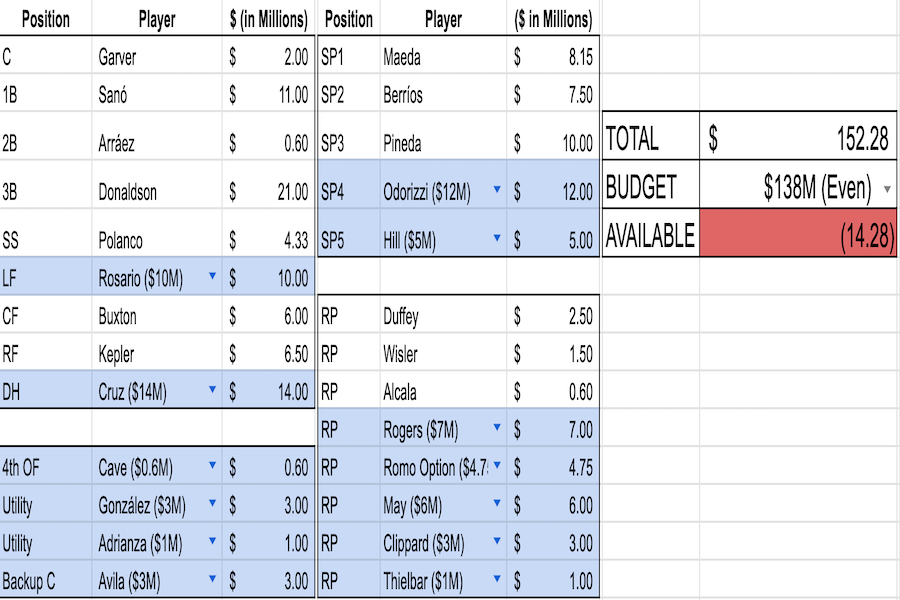 If you could simply take the same team from this year and run it back, in a full season without the disruption and abbreviation of 2020, would you do it? I know I would. I felt great about this group coming in. Despite all the setbacks and shortcomings, and despite the disappointing finish, they played .581 ball over 62 games (94-win full-season pace) and won the division. But here's the thing: returning that same group intact just isn't an option. Which brings us to... Hard Truth #1: The Twins are going to lose some key pieces First of all, , here and across baseball. Everyone took major revenue hits this year, and those impacts figure to carry forward, at least to some extent. So frugality will undoubtedly be a guiding principle, near and far. Beyond that aspect, with so many Twins players hitting free agency or escalating their salaries via arbitration, simply retaining everyone would raise payroll above $150 million, by our estimates. Even in the most optimistic of scenarios, there's just no way the Twins are raising payroll by 10% from this year. Okay, so let's remove all of the guys we identified as tough calls, or expendable assets, in the and episodes: Nelson Cruz ($14 million free agent projection) Jake Odorizzi ($12 million free agent projection) Eddie Rosario ($10-12 million arbitration projection) Taylor Rogers ($6-7 million arbitration projection) Trevor May ($6 million free agent projection) Rich Hill ($5 million free agent projection) Sergio Romo ($5 million team option with $250K buyout) Marwin González ($3 million free agent projection) Tyler Clippard ($3 million free agent projection) Alex Avila ($3 million free agent projection) That's 10 players, each of whom (with the exception of Odorizzi) played a significant role for the team in 2020. Losing all those players would be a far cry from keeping the team intact, but the good news is that the Twins don't need to lose all of them. Here's where the front office begins to find itself hamstrung in setting and evaluating priorities. Hard Truth #2: If the Twins retain their big-name properties, they'll have minimal flexibility to do anything else Where will payroll land in 2021? No one knows right now, but we're setting the bar at a reduction of 10% from this year, which would put the Twins around $125 million. Subtracting all the pieces mentioned above, our baseline spending commitment for next year is about $85 million, meaning we've got something like $40 million to spend on LF, DH, UTIL, C, two SP spots and 4 bullpen spots. Let's say we want to bring back two of the lineup's most reliable producers in Rosario and Cruz. That's about $25 million shelled out on two players, soaking up more than half of our available funds. Wanna bring back Rogers too? Add another $6 million or so. Now we've got less than $10 million to address multiple rotation spots, a critical backup infielder role, and the remaining half of the bullpen. Not really gonna work. This year proved out once again the vital importance of quality depth. The Twins would be negligent not to account for that by building up the back of their rotation, the end of their bullpen, and the contingencies behind their uncertainty-plagued infield. (Especially at the hot corner.) Hard Truth #3: Josh Donaldson's presence makes it very hard to justify keeping Nelson Cruz When they handed Donaldson an historic free agent deal, the Twins knew they were signing up for four years of lopsided and restrictive payroll commitment. Just one year in, we are already feeling the impact. As the front office tries to trim down spending, and work around Donaldson's team-leading $21 million figure, they also need to invest in a capable backup option behind him. It's not Donaldson's salary alone that weighs on the Twins, but also his status as an undependable commodity. In fantasy football terms, he needs a "handcuff." There are lingering question marks all around the Twins infield – from Luis Arráez's knee to Jorge Polanco's angle to Miguel Sanó's neck – but no member is more valuable or vulnerable than Donaldson, who turns 35 in December and has had a good chunk of his post-30 career wiped out by calf issues. Having an untested rookie like Travis Blankenhorn or a no-hit utilityman like Ehire Adrianza as his top backup is simply not palatable. Standout free agent options to fill this role, like Kiké Hernández and Jurickson Profar, figure to land in the $7-9 million annual range, not unlike González when he first hit the market out of Houston. Signing a player like that in addition to Cruz would leave the Twins with minimal flexibility to address their rotation and bullpen. What you've really got to ask yourself: Can the Twins afford to pay Donaldson and Cruz – two aging right-handed sluggers with inherent durability concerns and fairly similar functions – around $35 million in combined money next year? That's more than a quarter of the total projected payroll. Having both these guys in the lineup was a luxury, and one the team probably can't necessarily justify preserving. In my opinion, they likely knew this when they signed Donaldson. He was always going to be Cruz's replacement, even if not an immediate one. Especially when you consider that keeping Donaldson healthy and on the field will likely require mixing him in semi-regularly at DH, to ease the burden on his legs. That's not compatible in the short term with a scenario where Cruz is re-signed. Hard Truth #4: Maintaining the pitching staff's strength means relying on the offense to get right without its most established run producers The Twins won at a .600 clip during the 2020 regular season mainly due to their pitching staff. Their arms proved a decisive advantage in the division, holding strong while Chicago's faltered down the stretch. Cleveland built its recent AL Central dynasty on pitching, which is partially why the Twins plucked Derek Falvey away from them. It behooves this organization to invest in building upon their world-class pitching staff this offseason. With Odorizzi, Hill, May, Romo and Clippard all hitting the market, there are several key roles needing to be backfilled. And while internal options exist – Randy Dobnak, Devin Smeltzer, Lewis Thorpe, Edwar Colina, etc. – it's probably best not to view any of them as Option A for important duties. In the example below, I've got the Twins re-signing Odorizzi as fourth starter for $12 million (feel free to swap in someone at a similar level, like Marcus Stroman, James Paxton, or Jose Quintana) and Drew Smyly for $4 million as the Homer Bailey-esque fifth starter gamble (as needed, substitute Mike Fiers, Tijuana Walker, Michael Wacha, etc.). I also tried to keep the bullpen somewhat intact by bringing back Romo and Clippard, although we lose May. As you can see, these moves – in combination with signing Hernandez (or Profar, or Jonathan Villar, or Tommy La Stella) as the backup infielder and Donaldson insurance – gobble up all of our available payroll. We're right up to that $125 million threshold, even with minimum-salary rookies replacing Rosario and Cruz. And I get why it seems horrifying to people who see the 300 runs those two have driven in over the past couple years, and wonder how to possibly replace that offensive production. I would submit it's not as hard as one might think. Donaldson will hopefully play more, and more effectively. Ditto Garver. Sanó can be more consistent and Brent Rooker can factor in more heavily. Plus there are intriguing right-handed options on the free agent market at OF an DH that will be much cheaper and a Cruz or Rosario. We'll cover several of them Tuesday night on Offseason Live. The question it comes down to is whether you want to spend available funds on creating functional depth, in the lineup and pitching staff, or you want to funnel it into retaining a 40-year-old designated hitter who's been the heart and soul of your club. It's not an easy decision. There aren't many ahead of the Twins this offseason. MORE FROM TWINS DAILY — Latest Twins coverage from our writers — Recent Twins discussion in our forums — Follow Twins Daily via Twitter, Facebook or email
 -
While their flexibility on the open market will be largely dictated by their decisions with payroll, internal free agents, and arbitration, the Minnesota Twins will surely be active in addressing needs via free agency this winter. Today we examine key targets at catcher and infield.On Thursday night's episode of Offseason Live I was joined by Andrew Gebo and David Youngs. Each of us submitted our own preferred targets at these positions, and those choices were discussed and debated. You can watch it all play out below, or keep reading for a breakdown of what's available, and which targets stand out as our favorite fits for the Twins. Free Agent Catchers at a Glance The Need: Ryan Jeffers essentially locked himself into Minnesota's 2021 plans with a stellar rookie performance. Mitch Garver will be back to accompany Jeffers in a timeshare, barring the unlikely event of a Garver trade at a time where his value is down. Most likely, the Twins will be seeking a veteran backup to provide some security and experience here, with Garver in a state of uncertainty and Jeffers having only 62 MLB plate appearances. The Market (This list is not comprehensive): James McCannJ.T. RealmutoYadier MolinaAlex AvilaJason CastroRobinson ChirinosTyler FlowersAustin RomineStephen VogtKurt SuzukiMatt WietersJeff Mathis Our Targets: Stephen Vogt Age: 35 Former Team: Arizona 2020 Stats: .167/.247/.278, 1 HR, 7 RBI Why He's a Fit: Vogt has a $3 million club option with the D-backs, but because of his poor season they're unlikely to activate it, and for that same reason he should be available cheaply. He's a lefty bat to complement the two righties, and has tons of MLB experience with a generally good track record for hitting with a career .250/.308/.421 slash line in 2,169 plate appearances with five different clubs. Estimated 2021 Salary: $2 million Robinson Chirinos Age: 36 Former Team: NY Mets 2020 Stats: .219/.242/.375, 1 HR, 7 RBI Why He's a Fit: Another veteran with loads of experience, including in the postseason (he was part of Houston's 2019 World Series run). Chirinos is reputed as a very strong defender and receiver, and would likely have plenty of advice and guidance for Garver and Jeffers. He does swing righty, however, and is likely to be on the pricier side of this pool. Estimated 2021 Salary: $4 million Jason Castro Age: 33 Former Team: San Diego 2020 Stats: .188/.293/.375, 2 HR, 9 RBI Why He's a Fit: Castro is of course familiar to the Twins, having played here from 2017 through 2019, and he grew into a very nice complementary fit with Garver by the time he left. There's no reason to think he can't offer the same value in a lesser role with Jeffers also in the mix. Like Vogt, Castro swings lefty to bring platoon appeal, and should be affordable coming off a rough year at the plate. Estimated 2021 Salary: $3 million Free Agent Infielders at a Glance The Need: With both Marwin González and Ehire Adrianza hitting free agency, the Twins are losing all of their crucial infield depth. Those two utilitymen combined for 300 plate appearances – or 14% of the team's total – in 2020, as the infield was besieged by injuries. And while the starters are locked for next year, Josh Donaldson, Luis Arráez and Jorge Polanco all carry their own red flags, creating a need for multiple high-quality backups. The Market (This list is not comprehensive): DJ LeMahieuAndrelton SimmonsDidi GregoriusJustin TurnerA. HechavarriaJurickson ProfarTommy La StellaKiké HernándezJonathan VillarJonathan SchoopAsdrúbal CabreraMarwin GonzálezEduardo NuñezFreddy GalvisEhire AdrianzaBrad MillerJosh HarrisonZack CozartBrock Holt Our Targets: Kiké Hernández Age: 29 Former Team: LA Dodgers 2020 Stats: .230/.270/.410, 5 HR, 20 RBI Why He's a Fit: This year he served in a handy utility role for the best team in baseball, and has starred for Los Angeles in the playoffs, so naturally he's garnering a lot of buzz among Twins fans. Hernández made starts at five different positions for the Dodgers this year (2B/SS and all three OF spots), and is a righty hitter with a .263/.345/.474 career slash line vs. LHP. Estimated 2021 Salary: $7 million Asdrúbal Cabrera Age: 34 Former Team: Washington 2020 Stats: .242/.305/.447, 8 HR, 31 RBI Why He's a Fit: Like Hernández, Cabrera has recent experience on the big stage, having helped the Nationals to a World Series title in 2019. He's a switch hitter who can play every infield position other than short, and has been extremely consistent at the plate. He has a career OPS+ of 106, and has finished within 15 points of that number every year for a decade. Estimated 2021 Salary: $4 million Jurickson Profar Age: 27 Former Team: San Diego 2020 Stats: .278/.343/.428, 7 HR, 25 RBI Why He's a Fit: He is arguably the best infielder on the free-agent market, beyond the "clear-cut everyday starter" tier. Once unanimously considered the No. 1 prospect in baseball, Profar is still fairly young and seems to have untapped upside. But the current version is pretty dang solid (and versatile): His 1.3 fWAR in 56 games this year would've ranked second among Twins position players. While second base is his best position, the switch-hitter can play first, third, and all three outfield spots. Estimated 2021 Salary: $9 million Ehire Adrianza Age: 31 Former Team: Minnesota 2020 Stats: .191/.287/.270, 0 HR, 3 RBI Why He's a Fit: The Twins likely need multiple utility infield types, and they're probably not going to end up with super high-caliber players in both roles. Adrianza is deservingly going to be signed as a backup, and paid like it coming off a career-worst season at the plate, but he's a useful piece – especially because he can play shortstop viably (unlike perhaps anyone listed above), and questions swirl around Polanco. Estimated 2021 Salary: $1 million Tommy La Stella Age: 31 Former Team: Oakland 2020 Stats: .281/.370/.449, 5 HR, 25 RBI Why He's a Fit: Because he's a very good player. La Stella has posted an OPS of .819 or above in three of the past four seasons, and was an All-Star in 2019. He's a disciplined contact hitter with great on-base skills and solid pop. The lefty swinger isn't plagued by harsh platoon splits, with a respectable .261/.337/.365 against southpaws. He can play every infield position capably other than short. Estimated 2021 Salary: $7.5 million Freddy Galvis Age: 30 Former Team: Cincinnati 2020 Stats: .220/.308/.404, 7 HR, 16 RBI Why He's a Fit: Primarily because he plays shortstop. Except unlike Adrianza, Galvis could potentially be Minnesota's 1A backup option in the infield. He's been a full-time starter for the past six seasons, and that might deter his willingness to sign with the Twins, but there should be no shortage of playing time for him here. Galvis has been an outstanding defensive shortstop in the past, and has also put in plenty of time at second. He brings an undisciplined but powerful approach at the plate. Estimated 2021 Salary: $5 million Which of these options do you like best? Are there other names higher on your priority list? Sound off in the comments. In the meantime, check out previous episodes of Offseason Live and see what's upcoming: Ep 1: (Thurs, 10/8)Ep 2: (Tues, 10/13)Ep 3: (Thurs, 10/15)Ep 4: (Tues, 10/20)Ep 5: (Thurs, 10/22)Ep 6: Free Agency – Outfield & DH (Tues, 10/27)Ep 7: Free Agency – Starting Pitchers (Thurs, 10/29)Ep 8: Free Agency – Relief Pitchers (Thurs, 11/5)Ep 9: Twins Trade Targets (Tues, 11/10)Ep 10: Offseason Blueprints (Thurs, 11/12)MORE FROM TWINS DAILY — Latest Twins coverage from our writers — Recent Twins discussion in our forums — Follow Twins Daily via Twitter, Facebook or email Click here to view the article
-
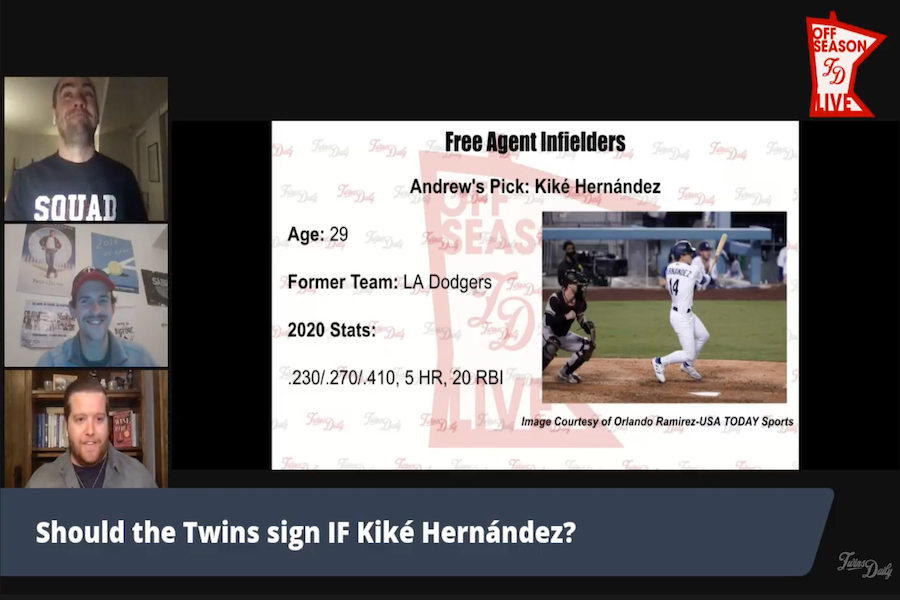 On Thursday night's episode of Offseason Live I was joined by Andrew Gebo and David Youngs. Each of us submitted our own preferred targets at these positions, and those choices were discussed and debated. You can watch it all play out below, or keep reading for a breakdown of what's available, and which targets stand out as our favorite fits for the Twins. Free Agent Catchers at a Glance The Need: Ryan Jeffers essentially locked himself into Minnesota's 2021 plans with a stellar rookie performance. Mitch Garver will be back to accompany Jeffers in a timeshare, barring the unlikely event of a Garver trade at a time where his value is down. Most likely, the Twins will be seeking a veteran backup to provide some security and experience here, with Garver in a state of uncertainty and Jeffers having only 62 MLB plate appearances. The Market (This list is not comprehensive): James McCann J.T. Realmuto Yadier Molina Alex Avila Jason Castro Robinson Chirinos Tyler Flowers Austin Romine Stephen Vogt Kurt Suzuki Matt Wieters Jeff Mathis Our Targets: Stephen Vogt Age: 35 Former Team: Arizona 2020 Stats: .167/.247/.278, 1 HR, 7 RBI Why He's a Fit: Vogt has a $3 million club option with the D-backs, but because of his poor season they're unlikely to activate it, and for that same reason he should be available cheaply. He's a lefty bat to complement the two righties, and has tons of MLB experience with a generally good track record for hitting with a career .250/.308/.421 slash line in 2,169 plate appearances with five different clubs. Estimated 2021 Salary: $2 million Robinson Chirinos Age: 36 Former Team: NY Mets 2020 Stats: .219/.242/.375, 1 HR, 7 RBI Why He's a Fit: Another veteran with loads of experience, including in the postseason (he was part of Houston's 2019 World Series run). Chirinos is reputed as a very strong defender and receiver, and would likely have plenty of advice and guidance for Garver and Jeffers. He does swing righty, however, and is likely to be on the pricier side of this pool. Estimated 2021 Salary: $4 million Jason Castro Age: 33 Former Team: San Diego 2020 Stats: .188/.293/.375, 2 HR, 9 RBI Why He's a Fit: Castro is of course familiar to the Twins, having played here from 2017 through 2019, and he grew into a very nice complementary fit with Garver by the time he left. There's no reason to think he can't offer the same value in a lesser role with Jeffers also in the mix. Like Vogt, Castro swings lefty to bring platoon appeal, and should be affordable coming off a rough year at the plate. Estimated 2021 Salary: $3 million Free Agent Infielders at a Glance The Need: With both Marwin González and Ehire Adrianza hitting free agency, the Twins are losing all of their crucial infield depth. Those two utilitymen combined for 300 plate appearances – or 14% of the team's total – in 2020, as the infield was besieged by injuries. And while the starters are locked for next year, Josh Donaldson, Luis Arráez and Jorge Polanco all carry their own red flags, creating a need for multiple high-quality backups. The Market (This list is not comprehensive): DJ LeMahieu Andrelton Simmons Didi Gregorius Justin Turner A. Hechavarria Jurickson Profar Tommy La Stella Kiké Hernández Jonathan Villar Jonathan Schoop Asdrúbal Cabrera Marwin González Eduardo Nuñez Freddy Galvis Ehire Adrianza Brad Miller Josh Harrison Zack Cozart Brock Holt Our Targets: Kiké Hernández Age: 29 Former Team: LA Dodgers 2020 Stats: .230/.270/.410, 5 HR, 20 RBI Why He's a Fit: This year he served in a handy utility role for the best team in baseball, and has starred for Los Angeles in the playoffs, so naturally he's garnering a lot of buzz among Twins fans. Hernández made starts at five different positions for the Dodgers this year (2B/SS and all three OF spots), and is a righty hitter with a .263/.345/.474 career slash line vs. LHP. Estimated 2021 Salary: $7 million Asdrúbal Cabrera Age: 34 Former Team: Washington 2020 Stats: .242/.305/.447, 8 HR, 31 RBI Why He's a Fit: Like Hernández, Cabrera has recent experience on the big stage, having helped the Nationals to a World Series title in 2019. He's a switch hitter who can play every infield position other than short, and has been extremely consistent at the plate. He has a career OPS+ of 106, and has finished within 15 points of that number every year for a decade. Estimated 2021 Salary: $4 million Jurickson Profar Age: 27 Former Team: San Diego 2020 Stats: .278/.343/.428, 7 HR, 25 RBI Why He's a Fit: He is arguably the best infielder on the free-agent market, beyond the "clear-cut everyday starter" tier. Once unanimously considered the No. 1 prospect in baseball, Profar is still fairly young and seems to have untapped upside. But the current version is pretty dang solid (and versatile): His 1.3 fWAR in 56 games this year would've ranked second among Twins position players. While second base is his best position, the switch-hitter can play first, third, and all three outfield spots. Estimated 2021 Salary: $9 million Ehire Adrianza Age: 31 Former Team: Minnesota 2020 Stats: .191/.287/.270, 0 HR, 3 RBI Why He's a Fit: The Twins likely need multiple utility infield types, and they're probably not going to end up with super high-caliber players in both roles. Adrianza is deservingly going to be signed as a backup, and paid like it coming off a career-worst season at the plate, but he's a useful piece – especially because he can play shortstop viably (unlike perhaps anyone listed above), and questions swirl around Polanco. Estimated 2021 Salary: $1 million Tommy La Stella Age: 31 Former Team: Oakland 2020 Stats: .281/.370/.449, 5 HR, 25 RBI Why He's a Fit: Because he's a very good player. La Stella has posted an OPS of .819 or above in three of the past four seasons, and was an All-Star in 2019. He's a disciplined contact hitter with great on-base skills and solid pop. The lefty swinger isn't plagued by harsh platoon splits, with a respectable .261/.337/.365 against southpaws. He can play every infield position capably other than short. Estimated 2021 Salary: $7.5 million Freddy Galvis Age: 30 Former Team: Cincinnati 2020 Stats: .220/.308/.404, 7 HR, 16 RBI Why He's a Fit: Primarily because he plays shortstop. Except unlike Adrianza, Galvis could potentially be Minnesota's 1A backup option in the infield. He's been a full-time starter for the past six seasons, and that might deter his willingness to sign with the Twins, but there should be no shortage of playing time for him here. Galvis has been an outstanding defensive shortstop in the past, and has also put in plenty of time at second. He brings an undisciplined but powerful approach at the plate. Estimated 2021 Salary: $5 million Which of these options do you like best? Are there other names higher on your priority list? Sound off in the comments. In the meantime, check out previous episodes of Offseason Live and see what's upcoming: Ep 1: (Thurs, 10/8) Ep 2: (Tues, 10/13) Ep 3: (Thurs, 10/15) Ep 4: (Tues, 10/20) Ep 5: (Thurs, 10/22) Ep 6: Free Agency – Outfield & DH (Tues, 10/27) Ep 7: Free Agency – Starting Pitchers (Thurs, 10/29) Ep 8: Free Agency – Relief Pitchers (Thurs, 11/5) Ep 9: Twins Trade Targets (Tues, 11/10) Ep 10: Offseason Blueprints (Thurs, 11/12) MORE FROM TWINS DAILY — Latest Twins coverage from our writers — Recent Twins discussion in our forums — Follow Twins Daily via Twitter, Facebook or email
 -
Alex Avila, Marwin Gonzalez and Ehire Adrianza all played fairly significant roles on the 2020 Twins (for better or worse), and all three are set to hit free agency this offseason. How will the front office fill these important roles? Thursday night, we took a look at what the open market has to offer.I was joined via live-stream by Andrew Gebo and David Youngs as we looked over the free agent landscape at catcher and infield. We each hrought a few names to the table that we view as good fits, and those targets were discussed and debated. You can tune into future live broadcasts via Twins Daily's Twitter, Facebook, or YouTube page. It's be an interactive show where viewers help steer the conversation via comments and questions. You can catch what you missed via audio by subscribing to our podcast. Who are the names to watch in free agency this year? Find out with us. In the meantime, check out previous episodes of Offseason Live and see what's upcoming: Ep 1: (Thurs, 10/8)Ep 2: (Tues, 10/13)Ep 3: (Thurs, 10/15)Ep 4: (Tues, 10/20)Ep 5: (Thurs, 10/22)Ep 6: Free Agency – Outfield & DH (Tues, 10/27)Ep 7: Free Agency – Starting Pitchers (Thurs, 10/29)Ep 8: Free Agency – Relief Pitchers (Thurs, 11/5)Ep 9: Twins Trade Targets (Tues, 11/10)Ep 10: Offseason Blueprints (Thurs, 11/12) Click here to view the article
-
 I was joined via live-stream by Andrew Gebo and David Youngs as we looked over the free agent landscape at catcher and infield. We each hrought a few names to the table that we view as good fits, and those targets were discussed and debated. You can tune into future live broadcasts via Twins Daily's Twitter, Facebook, or YouTube page. It's be an interactive show where viewers help steer the conversation via comments and questions. You can catch what you missed via audio by subscribing to our podcast. Who are the names to watch in free agency this year? Find out with us. In the meantime, check out previous episodes of Offseason Live and see what's upcoming: Ep 1: (Thurs, 10/8) Ep 2: (Tues, 10/13) Ep 3: (Thurs, 10/15) Ep 4: (Tues, 10/20) Ep 5: (Thurs, 10/22) Ep 6: Free Agency – Outfield & DH (Tues, 10/27) Ep 7: Free Agency – Starting Pitchers (Thurs, 10/29) Ep 8: Free Agency – Relief Pitchers (Thurs, 11/5) Ep 9: Twins Trade Targets (Tues, 11/10) Ep 10: Offseason Blueprints (Thurs, 11/12)
 -
The Minnesota Twins have seven (or maybe eight) players eligible for arbitration this offseason. Beyond the usual uncertainty around how much each player will earn next year, given the ability to submit their own salary figures, there are at least two pivotal decisions to be made on longtime fixtures in the lineup and bullpen.On Tuesday night's episode of Offseason Live, I talked through each of the Twins' arbitration-eligible players with Matt Braun and Matthew Trueblood. You can watch it below, or keep scrolling for a written breakdown. We know for sure that these seven players are eligible for arbitration: Mitch Garver, C (1st year of of 3)Tyler Duffey (2 of 3)Matt Wisler (2 of 3)Jose Berrios (2 of 3)Taylor Rogers (3 of 4)Byron Buxton (3 of 4)Eddie Rosario (3 of 3)We're not sure about Caleb Thielbar. His service time puts him right on the border of Super 2 status, but that's a murky line as is, made only cloudier by this shortened season. If he is arbitration-eligible for the first time, he is in line for about $1 million, and a no-brainer to bring back. Here's a look at the respective situations of the other seven players (2020 salaries based on full season, 2021 salary estimates via Twins Daily's guesses and those posted at MLB Trade Rumors): Mitch Garver, C 1st year of 3 in Arbitration 2020 Salary: $600K Key Stat: Career .275/.371/.522 hitter versus left-handed pitchers. Arbitration Salary Estimates: Twins Daily: $2M | MLBTR: $1.9M The Lowdown: As he enters arbitration for the first time, Garver's price will be kept in check coming off a lost season. Despite his discouraging campaign, keeping the 2019 Silver Slugger around next year is clearly a no-brainer at this price point, barring a trade. His ability to hit southpaws (which endured through his struggles in 2020, as he stilled slashed .304/.385/.435 vs. LHP) is particularly valuable. At this point it seems likely he'll head into next season slated for a 50/50 timeshare with Ryan Jeffers at catcher. Tyler Duffey, RP 2nd Year of 3 in Arbitration 2020 Salary: $1.2M Key Stat: Ranks 4th among MLB relievers in fWAR since 2019 All-Star break. Arbitration Salary Estimates: TD: $2.5M | MLBTR: $2.6M The Lowdown: Duffey was the Twins' best reliever and one of the best relievers in the American League, so he should at least double his 2020 salary in arbitration. Still, at somewhere in the range of $2.5 to $3 million, he'll be a tremendous bargain. With free agency only two years away, this might be an opportune time for the Twins to pitch his agent on an extension. Matt Wisler, RP 2nd Year of 3 in Arbitration 2020 Salary: $725K Key Stat: 1.07 ERA and 12.4 K/9 in first year with Twins (25.1 IP) Arbitration Salary Estimates: TD: $1.5M | MLBTR: $1.8M The Lowdown: The Twins claimed Wisler off waivers last offseason, seeing promise in his slider, and were rewarded to the fullest. He threw that pitch a career-high 83% of the time in his first season as a Twin, and completely dominated with it, holding opponents to a .143/.141/.221 slash line. It was the nastiest pitch on the Twins and one of the nastiest in baseball. Due to his lack of a track record prior to 2020, Wisler will still be quite cheap – likely under $2 million. Obviously he's back, though it's worth wondering how highly the Twins are prepared to slot him in the bullpen hierarchy. José Berríos, SP Year 2 of 3 in Arbitration 2020 Salary: $4.025M Key Stat: Since his debut on April 27th, 2016, only 11 MLB pitchers have logged more innings than Berríos. Arbitration Salary Estimates: TD: $7.5M | MLBTR: $7.5M The Lowdown: Durability has been Berríos' calling card as an MLB starter, and it shined through again in 2020 as he made a team-leading 12 starts. He took a bit of a step backward performance-wise (4.00 ERA and 1.32 WHIP were both the highest since his rookie year in 2016), but not enough to prevent him from getting a hefty raise. With free agency approaching at the end of 2022, the Twins are running out of leverage in extension talks, but they've had a hard time finding traction in those discussions during the past couple winters. Byron Buxton, CF Year 3 of 4 in Arbitration 2020 Salary: $3.075M Key Stat: Since start of 2018, Twins are 102-52 (.662) with Buxton, and 113-117 (.491) without. Arbitration Salary Estimates: TD: $6M | MLBTR: $5.9M The Lowdown: Durability has ... not been Buxton's calling card. He's been one of the biggest difference-makers in the game when on the field over the past three years, but has missed about 60% of the team's games during that span. The 2020 season, like most others, ended with Buxton injured and unable to play. This both diminishes his earning power in arbitration, and complicates the long-term picture. Can the Twins afford to go all-in on him when he has so consistently proven unable to stay healthy? Will his injury history make him more open to the security of a contract extension? Taylor Rogers, RP Year 3 of 4 in Arbitration 2020 Salary: $4.45M Key Stat: In 2018 & 2019, ranked 4th among MLB relievers in fWAR and 6th in WPA. In 2020, ranked 33rd and 169th (out of 173). Arbitration Salary Estimates: TD: $7M | MLBTR: $6.9M The Lowdown: For several years, Rogers was as good as it gets. He was a shutdown bullpen reliever, and essentially match-up proof, consistently coming through in the clutch to rank as one of the game's best high-leverage performers. In late 2019, that started to change, and this year the negative trend continued. His 2020 numbers weren't all that bad, on the surface – 4.05 ERA, 2.84 FIP, 6.00 K/BB ratio, just two home runs allowed – but Rogers was not a dependable back-end arm. And while there's a good chance he bounces back, the pricetag of around $7 million is quite high, especially with the Twins (probably) scaling back payroll and looking for cost savings. Eddie Rosario, LF Year 3 of 3 in Arbitration 2020 Salary: $7.75M Key Stat: Ranks 98th out of 128 qualified MLB players in fWAR since start of 2019. Arbitration Salary Estimates: TD: $10M | MLBTR: $12.9M The Lowdown: We were a little more conservative on Rosario's salary estimate than MLBTR, who foresees him making nearly $13 million in his final year of arbitration. At either number, it's going to be tough to justify keeping Rosario around. While he's been a reliable source of home runs and RBIs, he rates as a roughly average player overall, with poor defense and declining speed offsetting much of the (checkered) value he offers at the plate. Given the presence of multiple cheap replacement options – including Alex Kirilloff, who successfully debuted in the playoffs – it's tough to imagine the Twins keeping Rosario around ... unless they can non-tender him and reach agreement on a lower number. Would you keep Rosario and/or Rogers around at the heightened price tags? Where do you stand with the other arbitration-eligible players and contract extension candidates? Weigh in below. ~~~ You can tune into the next Offseason Live broadcast via Twins Daily's Twitter, Facebook, or YouTube page. It'll be an interactive show where viewers help steer the conversation via comments and questions. You'll also be able to watch the replay tomorrow here on the site, or via audio by subscribing to our podcast. In the meantime, check out previous episodes of Offseason Live and see what's upcoming: Ep 1: (Thurs, 10/8)Ep 2: (Tues, 10/13)Ep 3: (Thurs, 10/15)Ep 4: (Tues, 10/20)Ep 5: Free Agency – Catchers & Infield (Thurs, 10/22)Ep 6: Free Agency – Outfield & DH (Tues, 10/27)Ep 7: Free Agency – Starting Pitchers (Thurs, 10/29)Ep 8: Free Agency – Relief Pitchers (Thurs, 11/5)Ep 9: Twins Trade Targets (Tues, 11/10)Ep 10: Offseason Blueprints (Thurs, 11/12)MORE FROM TWINS DAILY — Latest Twins coverage from our writers — Recent Twins discussion in our forums — Follow Twins Daily via Twitter, Facebook or email Click here to view the article
-
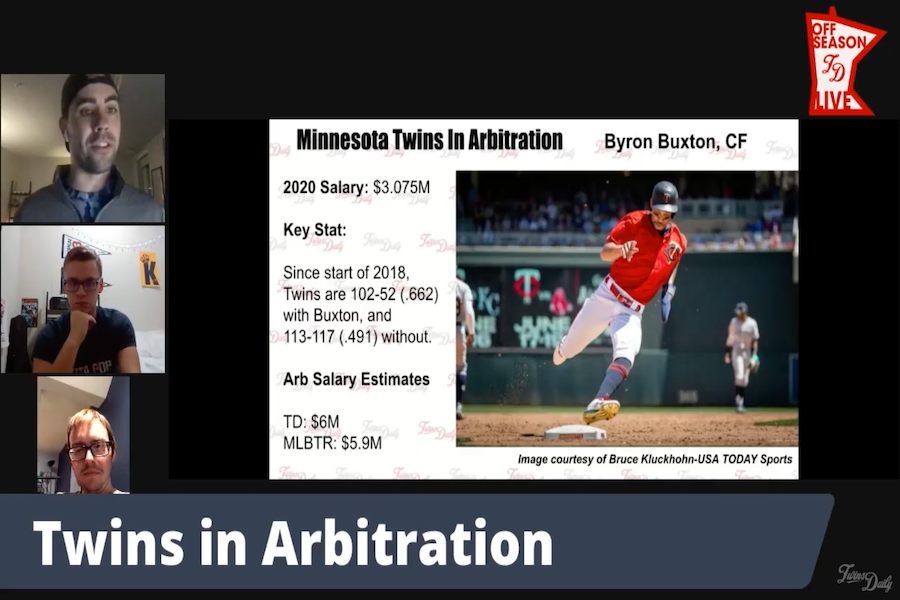 On Tuesday night's episode of Offseason Live, I talked through each of the Twins' arbitration-eligible players with Matt Braun and Matthew Trueblood. You can watch it below, or keep scrolling for a written breakdown. We know for sure that these seven players are eligible for arbitration: Mitch Garver, C (1st year of of 3) Tyler Duffey (2 of 3) Matt Wisler (2 of 3) Jose Berrios (2 of 3) Taylor Rogers (3 of 4) Byron Buxton (3 of 4) Eddie Rosario (3 of 3) We're not sure about Caleb Thielbar. His service time puts him right on the border of Super 2 status, but that's a murky line as is, made only cloudier by this shortened season. If he is arbitration-eligible for the first time, he is in line for about $1 million, and a no-brainer to bring back. Here's a look at the respective situations of the other seven players (2020 salaries based on full season, 2021 salary estimates via Twins Daily's guesses and those posted at MLB Trade Rumors): Mitch Garver, C 1st year of 3 in Arbitration 2020 Salary: $600K Key Stat: Career .275/.371/.522 hitter versus left-handed pitchers. Arbitration Salary Estimates: Twins Daily: $2M | MLBTR: $1.9M The Lowdown: As he enters arbitration for the first time, Garver's price will be kept in check coming off a lost season. Despite his discouraging campaign, keeping the 2019 Silver Slugger around next year is clearly a no-brainer at this price point, barring a trade. His ability to hit southpaws (which endured through his struggles in 2020, as he stilled slashed .304/.385/.435 vs. LHP) is particularly valuable. At this point it seems likely he'll head into next season slated for a 50/50 timeshare with Ryan Jeffers at catcher. Tyler Duffey, RP 2nd Year of 3 in Arbitration 2020 Salary: $1.2M Key Stat: Ranks 4th among MLB relievers in fWAR since 2019 All-Star break. Arbitration Salary Estimates: TD: $2.5M | MLBTR: $2.6M The Lowdown: Duffey was the Twins' best reliever and one of the best relievers in the American League, so he should at least double his 2020 salary in arbitration. Still, at somewhere in the range of $2.5 to $3 million, he'll be a tremendous bargain. With free agency only two years away, this might be an opportune time for the Twins to pitch his agent on an extension. Matt Wisler, RP 2nd Year of 3 in Arbitration 2020 Salary: $725K Key Stat: 1.07 ERA and 12.4 K/9 in first year with Twins (25.1 IP) Arbitration Salary Estimates: TD: $1.5M | MLBTR: $1.8M The Lowdown: The Twins claimed Wisler off waivers last offseason, seeing promise in his slider, and were rewarded to the fullest. He threw that pitch a career-high 83% of the time in his first season as a Twin, and completely dominated with it, holding opponents to a .143/.141/.221 slash line. It was the nastiest pitch on the Twins and one of the nastiest in baseball. Due to his lack of a track record prior to 2020, Wisler will still be quite cheap – likely under $2 million. Obviously he's back, though it's worth wondering how highly the Twins are prepared to slot him in the bullpen hierarchy. José Berríos, SP Year 2 of 3 in Arbitration 2020 Salary: $4.025M Key Stat: Since his debut on April 27th, 2016, only 11 MLB pitchers have logged more innings than Berríos. Arbitration Salary Estimates: TD: $7.5M | MLBTR: $7.5M The Lowdown: Durability has been Berríos' calling card as an MLB starter, and it shined through again in 2020 as he made a team-leading 12 starts. He took a bit of a step backward performance-wise (4.00 ERA and 1.32 WHIP were both the highest since his rookie year in 2016), but not enough to prevent him from getting a hefty raise. With free agency approaching at the end of 2022, the Twins are running out of leverage in extension talks, but they've had a hard time finding traction in those discussions during the past couple winters. Byron Buxton, CF Year 3 of 4 in Arbitration 2020 Salary: $3.075M Key Stat: Since start of 2018, Twins are 102-52 (.662) with Buxton, and 113-117 (.491) without. Arbitration Salary Estimates: TD: $6M | MLBTR: $5.9M The Lowdown: Durability has ... not been Buxton's calling card. He's been one of the biggest difference-makers in the game when on the field over the past three years, but has missed about 60% of the team's games during that span. The 2020 season, like most others, ended with Buxton injured and unable to play. This both diminishes his earning power in arbitration, and complicates the long-term picture. Can the Twins afford to go all-in on him when he has so consistently proven unable to stay healthy? Will his injury history make him more open to the security of a contract extension? Taylor Rogers, RP Year 3 of 4 in Arbitration 2020 Salary: $4.45M Key Stat: In 2018 & 2019, ranked 4th among MLB relievers in fWAR and 6th in WPA. In 2020, ranked 33rd and 169th (out of 173). Arbitration Salary Estimates: TD: $7M | MLBTR: $6.9M The Lowdown: For several years, Rogers was as good as it gets. He was a shutdown bullpen reliever, and essentially match-up proof, consistently coming through in the clutch to rank as one of the game's best high-leverage performers. In late 2019, that started to change, and this year the negative trend continued. His 2020 numbers weren't all that bad, on the surface – 4.05 ERA, 2.84 FIP, 6.00 K/BB ratio, just two home runs allowed – but Rogers was not a dependable back-end arm. And while there's a good chance he bounces back, the pricetag of around $7 million is quite high, especially with the Twins (probably) scaling back payroll and looking for cost savings. Eddie Rosario, LF Year 3 of 3 in Arbitration 2020 Salary: $7.75M Key Stat: Ranks 98th out of 128 qualified MLB players in fWAR since start of 2019. Arbitration Salary Estimates: TD: $10M | MLBTR: $12.9M The Lowdown: We were a little more conservative on Rosario's salary estimate than MLBTR, who foresees him making nearly $13 million in his final year of arbitration. At either number, it's going to be tough to justify keeping Rosario around. While he's been a reliable source of home runs and RBIs, he rates as a roughly average player overall, with poor defense and declining speed offsetting much of the (checkered) value he offers at the plate. Given the presence of multiple cheap replacement options – including Alex Kirilloff, who successfully debuted in the playoffs – it's tough to imagine the Twins keeping Rosario around ... unless they can non-tender him and reach agreement on a lower number. Would you keep Rosario and/or Rogers around at the heightened price tags? Where do you stand with the other arbitration-eligible players and contract extension candidates? Weigh in below. ~~~ You can tune into the next Offseason Live broadcast via Twins Daily's Twitter, Facebook, or YouTube page. It'll be an interactive show where viewers help steer the conversation via comments and questions. You'll also be able to watch the replay tomorrow here on the site, or via audio by subscribing to our podcast. In the meantime, check out previous episodes of Offseason Live and see what's upcoming: Ep 1: (Thurs, 10/8) Ep 2: (Tues, 10/13) Ep 3: (Thurs, 10/15) Ep 4: (Tues, 10/20) Ep 5: Free Agency – Catchers & Infield (Thurs, 10/22) Ep 6: Free Agency – Outfield & DH (Tues, 10/27) Ep 7: Free Agency – Starting Pitchers (Thurs, 10/29) Ep 8: Free Agency – Relief Pitchers (Thurs, 11/5) Ep 9: Twins Trade Targets (Tues, 11/10) Ep 10: Offseason Blueprints (Thurs, 11/12) MORE FROM TWINS DAILY — Latest Twins coverage from our writers — Recent Twins discussion in our forums — Follow Twins Daily via Twitter, Facebook or email
 -
Under normal circumstances, salary arbitration is procedural and predictable in nature. This year will be anything but. Facing (and broader market uncertainty), the Twins will face at least two extremely difficult decisions concerning two of their longest-tenured and most accomplished players. Tuesday night on Offseason Live, we dove in.I was joined via live-stream by Matt Braun and Matthew Trueblood on Tuesday at 8:00 PM as we broke down the situations for each of Minnesota's eight (or nine) arbitration-eligible players, including their longtime left fielder and closer. Watch it below: You can tune into future live broadcasts via Twins Daily's Twitter, Facebook, or YouTube page. It's an interactive show where viewers help steer the conversation via comments and questions. You can also catch any episodes you miss via audio by subscribing to our podcast. Check out previous episodes of Offseason Live and see what's upcoming: Ep 1: (Thurs, 10/8)Ep 2: (Tues, 10/13)Ep 3: (Thurs, 10/15)Ep 4: (Tues, 10/20)Ep 5: Free Agency – Catchers & Infield (Thurs, 10/22)Ep 6: Free Agency – Outfield & DH (Tues, 10/27)Ep 7: Free Agency – Starting Pitchers (Thurs, 10/29)Ep 8: Free Agency – Relief Pitchers (Thurs, 11/5)Ep 9: Twins Trade Targets (Tues, 11/10)Ep 10: Offseason Blueprints (Thurs, 11/12) Click here to view the article
-
 I was joined via live-stream by Matt Braun and Matthew Trueblood on Tuesday at 8:00 PM as we broke down the situations for each of Minnesota's eight (or nine) arbitration-eligible players, including their longtime left fielder and closer. Watch it below: You can tune into future live broadcasts via Twins Daily's Twitter, Facebook, or YouTube page. It's an interactive show where viewers help steer the conversation via comments and questions. You can also catch any episodes you miss via audio by subscribing to our podcast. Check out previous episodes of Offseason Live and see what's upcoming: Ep 1: (Thurs, 10/8) Ep 2: (Tues, 10/13) Ep 3: (Thurs, 10/15) Ep 4: (Tues, 10/20) Ep 5: Free Agency – Catchers & Infield (Thurs, 10/22) Ep 6: Free Agency – Outfield & DH (Tues, 10/27) Ep 7: Free Agency – Starting Pitchers (Thurs, 10/29) Ep 8: Free Agency – Relief Pitchers (Thurs, 11/5) Ep 9: Twins Trade Targets (Tues, 11/10) Ep 10: Offseason Blueprints (Thurs, 11/12)
 -
Play with the Twins' Payroll at TwinsPayroll.com
Nick Nelson replied to John Bonnes's topic in Twins Daily Front Page News
How'd it work out with the last two? -
Should These Twins Free Agents Stay or Go?
Nick Nelson posted a topic in Twins Daily Front Page News
The Minnesota Twins may be looking ahead to major turnover this offseason, with nearly a third of their 2020 roster hitting the open market. Which pending free agents should the team make efforts to bring back? Which ones should be on their way? Offseason Live breaks it down.On Thursday night's episode of Offseason Live, I chatted with fellow Twins Daily writers Matthew Taylor and David Youngs about the players hitting free agency this winter. The Twins are facing the prospect of losing eight players to the market, or possibly nine, depending on what they decide to do with Sergio Romo's team option. You can watch the episode below, or scroll down for a quick overview of the nine players in question, their situations, and a key stat to keep in mind for each. Feel free to share your opinions on who should stay or go in the comments. Sergio Romo, RP 2020 Stats: 20 IP, 4.05 ERA, 4.34 FIP, 1.15 WHIP, 10.4 K/9, 3.2 BB/9 The Situation: The Twins traded for Romo at the 2019 deadline as a pending free agent, and then brought him back last winter on a one-year deal with a $5 million option for 2021. Activating that option seemed like a no-brainer midway through the season, as he was dominating with his slider and siphoning save opportunities from Taylor Rogers, but Romo faltered down the stretch and in the playoffs. He turns 38 in March, and $5 million is a pretty penny for a relief pitcher if you don't think he'll be a major asset. Declining Romo's option would give the Twins more flexibility to try and retain the following players. Key Stat: 1.03 WHIP and 10.4 K/9 in 51 appearances with Twins Alex Avila, C 2020 Stats: 62 PA, .184/.355/.286, 1 HR, 2 RBI, 0.2 fWAR The Situation: The Twins tabbed Avila as Mitch Garver's backup last offseason, signing him to a one-year deal worth $4.75 million. The veteran ended up playing a fairly minor role for the Twins, accruing only 30% of PAs among catchers, and he didn't hit a lick. That said, he was reliable defensively and his .355 OBP tied for fourth-best on the team (50+ PA). If the Twins want to carry three catchers in 2021, they could do a lot worse than bringing Avila back on a cheap one-year deal. Key Stat: Started 19 of 63 games (including playoffs) for Twins and batted .184 Ehire Adrianza, UTIL 2020 Stats: 101 PA, .191/.287/.270, 0 HR, 3 RBI, -0.1 fWAR The Situation: Adrianza heads into free agency for the first time with a thud. He seemed to be shaking his rep as a no-hit utilityman over three seasons in Minnesota, posting a respectable .260/.321/.391 slash line from 2017 through 2019 and enjoying a career year in the latter (.765 OPS). But Adrianza fell apart at the plate in a 2020 season where he appeared in 44 of the team's 60 games. The 31-year-old may struggle to find a major-league league deal, though his ability to play a quality shortstop is a differentiating strength. Key Stat: Career-low .557 OPS in 2020 Marwin Gonzalez, UTIL 2020 Stats: 199 PA, .211/.286/.320, 5 HR, 22 RBI, 0.2 fWAR The Situation: Playing out the last year of his two-year, $21 million contract with the Twins, Gonzalez was an all-out disaster in 2020. Injuries forced the team to lean on him heavily – he started 51 of 60 games, and ranked fifth on the team in PAs – but he let them down in a big way, grading as one of the worst regulars in all of baseball. He turns 32 in March, has seen his OPS+ drop in three consecutive seasons, and his athleticism is rapidly declining (his sprint speed has fallen from the 39th to 27th to 20th percentile). Add in the taint of involvement with the cheating Astros, and it seems very unlikely Gonzalez will have a remotely welcoming offseason market. Key Stat: Ranked 137th out of 142 qualified MLB players in OPS in 2020 Tyler Clippard, RP 2020 Stats: 26 IP, 2.77 ERA, 2.65 FIP, 0.89 WHIP, 9.0 K/9, 1.4 BB/9 The Situation: Signed to a $2.75 million deal last offseason, Clippard was an unheralded hero of the Twins bullpen. He led all relievers in innings, started two games as opener, finished another, and was altogether an incredibly versatile and reliable arm. Minnesota signed him to be a weapon against lefties, and he was, but he also shut down right-handed hitters. Given the valuable role he played on this year's club, Clippard would seemingly be very appealing to the Twins (and other teams) on a similar contract. Key Stat: Held LH batters to .213 average (.479 OPS) in 2020. Held RH batters to .191 average (.607 OPS). Trevor May, RP 2020 Stats: 23.1 IP, 3.86 ERA, 3.62 FIP, 1.16 WHIP, 14.7 K/9, 2.7 BB/9 The Situation: In his career as a reliever, May has averaged 12.0 K/9 with a 3.49 ERA over 188 ⅓ innings. He's one of the best strikeout pitchers in the league, and in 2019 he set new personal records for strikeout rate, whiff rate, and fastball velocity. His proneness to home runs (five allowed in 23 ⅓ frames) was the lone blemish on a remarkably dominant season out of the bullpen. A top-tier power arm hitting his stride just as he hits free agency at 31, May is likely to be in high demand. Can the Twins afford to keep him around? ... Can they afford not to? Key Stat: His career 10.5 K/9 rate is 2nd-highest in Twins history (min. 300 IP), behind Joe Nathan Rich Hill, SP 2020 Stats: 38.2 IP, 3.03 ERA, 1.16 WHIP, 7.2 K/9, 4.0 BB/9 The Situation: At times, it looked like Hill might not have it anymore. The Twins knew they were gambling on the left-hander, who signed an incentive-laden one-year contract coming off elbow surgery at age 40. He had his rough patches. His control worsened, his strikeout and whiff rates plummeted, and at one point his shoulder acted up. But by the time September rolled around, Hill had rounded into form, looking every bit like the gritty difference-maker of repute. Whether he can do it again, at age 41 in what figures to be a more full-length season, is very much an open question. Key Stat: In 4 September starts, posted 2.38 ERA and .190 BAA Jake Odorizzi, SP 2020 Stats: 13.2 IP, 6.59 ERA, 6.12 FIP, 7.9 K/9, 2.0 BB/9 The Situation: Returning to the Twins after accepting a qualifying offer for $17.8 million a year ago, the 2020 season was a complete wash for Odorizzi. He opened on the Injured List, and saw two attempted comebacks stymied by misfortune: first, a line drive to the ribs, and then a bloody blister opened on his finger. His ability and talent have been plain to see when healthy, but it's going to be hard for Odorizzi to command what he probably deserves coming off a lost season. If the Twins can find a sensible way to bring him back, he'd be a hell of a fourth starter. Key Stat: Holds lowest overall FIP (3.88) of any Twins SP since 2011 Nelson Cruz, DH 2020 Stats: 214 PA, .303/.397/.595, 16 HR, 33 RBI, 2.0 fWAR The Situation: He's been the Twins' best hitter for two years running, and one of the most feared hitters in the major leagues. He's also a clubhouse leader and beloved teammate, credited for helping players around him develop and mature. The thought of losing Cruz is tough, but he'll turn 41 next summer and historically, performance drop-offs have hit rapidly and without warning for players at this age. He also figures to have a fairly favorable offseason market, with the universal DH doubling his potential suitors. If the Twins have ~$30 million to spend this offseason (as our ballparked) can they afford to spend half of it on Cruz with other needs to address? Key Stat: 57 HR and 141 RBIs in 173 games with Twins Offseason Live Schedule Ep 1: (Thurs, 10/8)Ep 2: (Tues, 10/13)Ep 3: (Thurs, 10/15)Ep 4: Twins Arbitration Decisions (Tues, 10/20)Ep 5: Free Agency – Catchers & Infield (Thurs, 10/22)Ep 6: Free Agency – Outfield & DH (Tues, 10/27)Ep 7: Free Agency – Starting Pitchers (Thurs, 10/29)Ep 8: Free Agency – Relief Pitchers (Thurs, 11/5)Ep 9: Twins Trade Targets (Tues, 11/10)Ep 10: Offseason Blueprints (Thurs, 11/12)Follow us on social media to catch the live shows (they're broadcast via Twitter, Facebook, and YouTube) and subscribe to our podcast to receive the audio versions of any episodes you miss. We'll also be featuring the content and embedding the videos in articles here on the site. MORE FROM TWINS DAILY — Latest Twins coverage from our writers — Recent Twins discussion in our forums — Follow Twins Daily via Twitter, Facebook or email Click here to view the article -
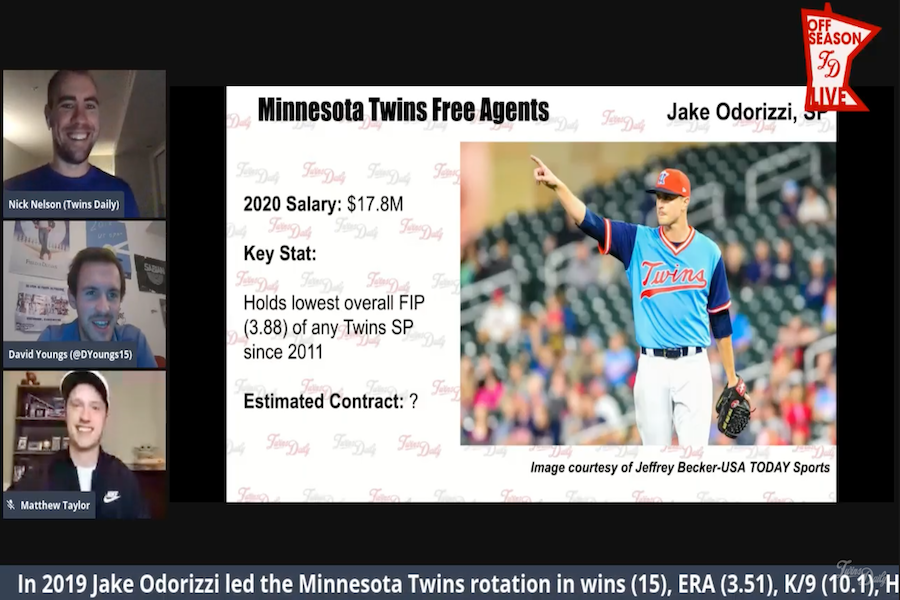 On Thursday night's episode of Offseason Live, I chatted with fellow Twins Daily writers Matthew Taylor and David Youngs about the players hitting free agency this winter. The Twins are facing the prospect of losing eight players to the market, or possibly nine, depending on what they decide to do with Sergio Romo's team option. You can watch the episode below, or scroll down for a quick overview of the nine players in question, their situations, and a key stat to keep in mind for each. Feel free to share your opinions on who should stay or go in the comments. Sergio Romo, RP 2020 Stats: 20 IP, 4.05 ERA, 4.34 FIP, 1.15 WHIP, 10.4 K/9, 3.2 BB/9 The Situation: The Twins traded for Romo at the 2019 deadline as a pending free agent, and then brought him back last winter on a one-year deal with a $5 million option for 2021. Activating that option seemed like a no-brainer midway through the season, as he was dominating with his slider and siphoning save opportunities from Taylor Rogers, but Romo faltered down the stretch and in the playoffs. He turns 38 in March, and $5 million is a pretty penny for a relief pitcher if you don't think he'll be a major asset. Declining Romo's option would give the Twins more flexibility to try and retain the following players. Key Stat: 1.03 WHIP and 10.4 K/9 in 51 appearances with Twins Alex Avila, C 2020 Stats: 62 PA, .184/.355/.286, 1 HR, 2 RBI, 0.2 fWAR The Situation: The Twins tabbed Avila as Mitch Garver's backup last offseason, signing him to a one-year deal worth $4.75 million. The veteran ended up playing a fairly minor role for the Twins, accruing only 30% of PAs among catchers, and he didn't hit a lick. That said, he was reliable defensively and his .355 OBP tied for fourth-best on the team (50+ PA). If the Twins want to carry three catchers in 2021, they could do a lot worse than bringing Avila back on a cheap one-year deal. Key Stat: Started 19 of 63 games (including playoffs) for Twins and batted .184 Ehire Adrianza, UTIL 2020 Stats: 101 PA, .191/.287/.270, 0 HR, 3 RBI, -0.1 fWAR The Situation: Adrianza heads into free agency for the first time with a thud. He seemed to be shaking his rep as a no-hit utilityman over three seasons in Minnesota, posting a respectable .260/.321/.391 slash line from 2017 through 2019 and enjoying a career year in the latter (.765 OPS). But Adrianza fell apart at the plate in a 2020 season where he appeared in 44 of the team's 60 games. The 31-year-old may struggle to find a major-league league deal, though his ability to play a quality shortstop is a differentiating strength. Key Stat: Career-low .557 OPS in 2020 Marwin Gonzalez, UTIL 2020 Stats: 199 PA, .211/.286/.320, 5 HR, 22 RBI, 0.2 fWAR The Situation: Playing out the last year of his two-year, $21 million contract with the Twins, Gonzalez was an all-out disaster in 2020. Injuries forced the team to lean on him heavily – he started 51 of 60 games, and ranked fifth on the team in PAs – but he let them down in a big way, grading as one of the worst regulars in all of baseball. He turns 32 in March, has seen his OPS+ drop in three consecutive seasons, and his athleticism is rapidly declining (his sprint speed has fallen from the 39th to 27th to 20th percentile). Add in the taint of involvement with the cheating Astros, and it seems very unlikely Gonzalez will have a remotely welcoming offseason market. Key Stat: Ranked 137th out of 142 qualified MLB players in OPS in 2020 Tyler Clippard, RP 2020 Stats: 26 IP, 2.77 ERA, 2.65 FIP, 0.89 WHIP, 9.0 K/9, 1.4 BB/9 The Situation: Signed to a $2.75 million deal last offseason, Clippard was an unheralded hero of the Twins bullpen. He led all relievers in innings, started two games as opener, finished another, and was altogether an incredibly versatile and reliable arm. Minnesota signed him to be a weapon against lefties, and he was, but he also shut down right-handed hitters. Given the valuable role he played on this year's club, Clippard would seemingly be very appealing to the Twins (and other teams) on a similar contract. Key Stat: Held LH batters to .213 average (.479 OPS) in 2020. Held RH batters to .191 average (.607 OPS). Trevor May, RP 2020 Stats: 23.1 IP, 3.86 ERA, 3.62 FIP, 1.16 WHIP, 14.7 K/9, 2.7 BB/9 The Situation: In his career as a reliever, May has averaged 12.0 K/9 with a 3.49 ERA over 188 ⅓ innings. He's one of the best strikeout pitchers in the league, and in 2019 he set new personal records for strikeout rate, whiff rate, and fastball velocity. His proneness to home runs (five allowed in 23 ⅓ frames) was the lone blemish on a remarkably dominant season out of the bullpen. A top-tier power arm hitting his stride just as he hits free agency at 31, May is likely to be in high demand. Can the Twins afford to keep him around? ... Can they afford not to? Key Stat: His career 10.5 K/9 rate is 2nd-highest in Twins history (min. 300 IP), behind Joe Nathan Rich Hill, SP 2020 Stats: 38.2 IP, 3.03 ERA, 1.16 WHIP, 7.2 K/9, 4.0 BB/9 The Situation: At times, it looked like Hill might not have it anymore. The Twins knew they were gambling on the left-hander, who signed an incentive-laden one-year contract coming off elbow surgery at age 40. He had his rough patches. His control worsened, his strikeout and whiff rates plummeted, and at one point his shoulder acted up. But by the time September rolled around, Hill had rounded into form, looking every bit like the gritty difference-maker of repute. Whether he can do it again, at age 41 in what figures to be a more full-length season, is very much an open question. Key Stat: In 4 September starts, posted 2.38 ERA and .190 BAA Jake Odorizzi, SP 2020 Stats: 13.2 IP, 6.59 ERA, 6.12 FIP, 7.9 K/9, 2.0 BB/9 The Situation: Returning to the Twins after accepting a qualifying offer for $17.8 million a year ago, the 2020 season was a complete wash for Odorizzi. He opened on the Injured List, and saw two attempted comebacks stymied by misfortune: first, a line drive to the ribs, and then a bloody blister opened on his finger. His ability and talent have been plain to see when healthy, but it's going to be hard for Odorizzi to command what he probably deserves coming off a lost season. If the Twins can find a sensible way to bring him back, he'd be a hell of a fourth starter. Key Stat: Holds lowest overall FIP (3.88) of any Twins SP since 2011 Nelson Cruz, DH 2020 Stats: 214 PA, .303/.397/.595, 16 HR, 33 RBI, 2.0 fWAR The Situation: He's been the Twins' best hitter for two years running, and one of the most feared hitters in the major leagues. He's also a clubhouse leader and beloved teammate, credited for helping players around him develop and mature. The thought of losing Cruz is tough, but he'll turn 41 next summer and historically, performance drop-offs have hit rapidly and without warning for players at this age. He also figures to have a fairly favorable offseason market, with the universal DH doubling his potential suitors. If the Twins have ~$30 million to spend this offseason (as our ballparked) can they afford to spend half of it on Cruz with other needs to address? Key Stat: 57 HR and 141 RBIs in 173 games with Twins Offseason Live Schedule Ep 1: (Thurs, 10/8) Ep 2: (Tues, 10/13) Ep 3: (Thurs, 10/15) Ep 4: Twins Arbitration Decisions (Tues, 10/20) Ep 5: Free Agency – Catchers & Infield (Thurs, 10/22) Ep 6: Free Agency – Outfield & DH (Tues, 10/27) Ep 7: Free Agency – Starting Pitchers (Thurs, 10/29) Ep 8: Free Agency – Relief Pitchers (Thurs, 11/5) Ep 9: Twins Trade Targets (Tues, 11/10) Ep 10: Offseason Blueprints (Thurs, 11/12) Follow us on social media to catch the live shows (they're broadcast via Twitter, Facebook, and YouTube) and subscribe to our podcast to receive the audio versions of any episodes you miss. We'll also be featuring the content and embedding the videos in articles here on the site. MORE FROM TWINS DAILY — Latest Twins coverage from our writers — Recent Twins discussion in our forums — Follow Twins Daily via Twitter, Facebook or email
 -
Twins Daily 2020 Awards: Most Valuable Player
Nick Nelson replied to Nick Nelson's topic in Twins Daily Front Page News
I will let Mr. Bonnes field that one but I bet it simply comes down to: "Win Probability Added." He loves that stat. -
Should a pitcher be considered for the MVP award? It's an oft-debated subject, and – given that only one pitcher (Justin Verlander) has received the honor over the past 27 years – it's clear which way the BWAA electorate generally leans. Perhaps our Twins Daily panel of 23 leans the same way. I can't be sure. Nevertheless, Kenta Maeda's case in 2020 proved undeniable.Nelson Cruz looked like the runaway winner of this award for much of the season. In fact, at times he looked like a serious contender for AL MVP. Ultimately, he came up just short of Maeda, earning 95 points to Kenta's 99 in our balloting. Across 23 panelists, Cruz earned eight first-place votes compared to 13 for Maeda. It was close, but the choice was clear. Maeda was not only the team's best pitcher (and, according to Twitter, also the pick for most improved). He was their best player. Let's break down the numbers: According to FanGraphs' version of the Wins Above Replacement metric (fWAR), Maeda led all Twins players at 2.1, though Cruz narrowly trailed him at 2.0. Maeda's career-high for fWAR came as a rookie, when he put up a 2.9 mark over 32 starts. If you project this year's 2.1 over that many starts, you get 6.2, which would put full-season Maeda in the category of 2014 Phil Hughes and 2006 Johan Santana.According to Win Probability Added, Maeda was the greatest quantifiable single contributor in Minnesota's division-winning season. His WPA of 1.96 towers over all teammates (Max Kepler finished a distant second at 1.17). Only six MLB starting pitchers posted a higher WPA than Maeda.Baseball Reference's WAR measurement (bWAR) actually has Maeda tied with Cruz for second on the team at 1.6 – both behind the leader Byron Buxton (1.9). Buxton did finish third in our balloting with 77 points, and he received a couple of first-place votes.Maeda only played every fifth game, which would be the knock against him in a Most Valuable Player context, but he rose to the occasion every single time out, making an outsized impact. He never allowed more than three runs or six baserunners in a start, and the Twins went 8-3 in his 11 turns. He set a new franchise record for consecutive strikeouts in a game, flirted with a no-hitter, and paced all of baseball in WHIP. He led all Twins pitchers in innings but issued only 10 walks, and never hit a batter or uncorked a wild pitch. He delivered bigtime in Game 1 of the playoffs with five shutout innings – the finest effort from a Twins pitcher in the postseason since Johan's departure. If the argument against Maeda as team MVP is that his contribution was incomplete, compared to an "everyday player," then that same argument must be applied to his competition for the award. Cruz was a designated hitter who offered zero defensive value. Buxton missed more than a third of the team's games. While the bullpen was a crux of Minnesota's success, no reliever threw more than 26 innings. The bottom line is that Maeda was everything the Twins needed: a bona fide ace, a successful Game 1 postseason starter, and a premium arm brandishing elite swing-and-miss stuff atop the rotation. OTHER CANDIDATES Cruz had a tremendous year and that cannot be downplayed. He was a very close second in our balloting after slashing .303/.397/.595 with 16 home runs in 53 games as Twins DH. Buxton checks in third – he was pretty clearly the biggest individual difference-maker on the team, pound for pound, but his season was once again defined by health impediments. Max Kepler, Eddie Rosario and Tyler Duffey were the others to receive double-digit points in the voting. THE BALLOTS Here’s a look at the ballots from our 23 voters. Seth Stohs: 1) Byron Buxton, 2) Nelson Cruz, 3) Kenta Maeda Nick Nelson: 1) Kenta Maeda, 2) Nelson Cruz, 3) Byron Buxton John Bonnes: 1) Kenta Maeda, 2) Max Kepler, 3) Nelson Cruz Tom Froemming: 1) Kenta Maeda, 2) Byron Buxton 3) Nelson Cruz Andrew Gebo: 1) Nelson Cruz, 2) Byron Buxton 3) Kenta Maeda AJ Condon: 1) Kenta Maeda, 2) Byron Buxton, 3) Nelson Cruz Cody Christie: 1) Nelson Cruz, 2) Byron Buxton 3) Kenta Maeda Cody Pirkl: 1) Nelson Cruz, 2) Byron Buxton 3) Kenta Maeda Cooper Carlson: 1) Nelson Cruz, 2) Kenta Maeda, 3) Byron Buxton Jeremy Nygaard: 1) Nelson Cruz, 2) Byron Buxton 3) Kenta Maeda Lucas Seehafer: 1) Kenta Maeda, 2) Byron Buxton, 3) Nelson Cruz Matt Braun: 1) Kenta Maeda, 2) Nelson Cruz, 3) Byron Buxton Matt Lenz: 1) Kenta Maeda, 2) Byron Buxton 3) Nelson Cruz Matthew Taylor: 1) Kenta Maeda, 2) Nelson Cruz, 3) Byron Buxton Matthew Trueblood: 1) Kenta Maeda, 2) Nelson Cruz, 3) Tyler Duffey Nash Walker: 1) Kenta Maeda, 2) Nelson Cruz, 3) Byron Buxton Nate Palmer: 1) Nelson Cruz, 2) Kenta Maeda, 3) Byron Buxton Patrick Wozniak: 1) Nelson Cruz, 2) Kenta Maeda, 3) Byron Buxton Derek Wetmore: 1) Kenta Maeda, 2) Nelson Cruz, 3) Byron Buxton Steve Lein: 1) Kenta Maeda, 2) Byron Buxton, 3) Nelson Cruz Renabanena: 1) Kenta Maeda, 2) Nelson Cruz, 3) Matt Wisler Ted Schwerzler: 1) Nelson Cruz, 2) Kenta Maeda, 3) Byron Buxton Thiéres Rabelo: 1) Byron Buxton, 2) Nelson Cruz, 3) Kenta Maeda POINTS Kenta Maeda: 99 Nelson Cruz: 95 Byron Buxton: 77 Eddie Rosario: 24 Max Kepler: 16 Tyler Duffey: 14 Josh Donaldson: 5 José Berríos: 5 Matt Wisler: 4 Michael Pineda: 3 Ryan Jeffers: 2 Tyler Clippard: 1 Randy Dobnak: 1 Previous Twins Daily MVP Winners 2015: Brian Dozier 2016: Brian Dozier 2017: Brian Dozier 2018: Eddie Rosario 2019: Max Kepler MORE FROM TWINS DAILY — Latest Twins coverage from our writers — Recent Twins discussion in our forums — Follow Twins Daily via Twitter, Facebook or email Click here to view the article
-
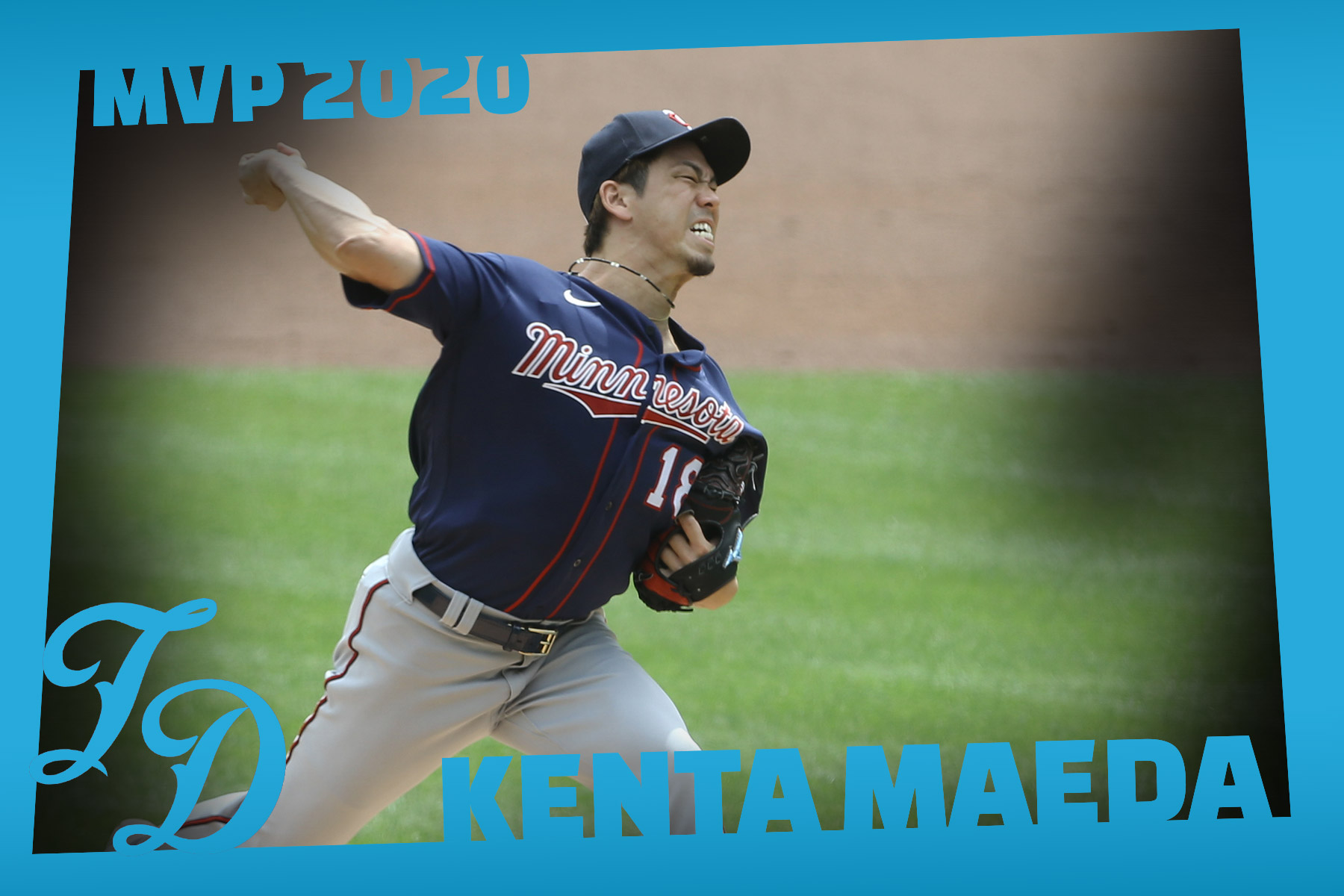 Nelson Cruz looked like the runaway winner of this award for much of the season. In fact, at times he looked like a serious contender for AL MVP. Ultimately, he came up just short of Maeda, earning 95 points to Kenta's 99 in our balloting. Across 23 panelists, Cruz earned eight first-place votes compared to 13 for Maeda. It was close, but the choice was clear. Maeda was not only the team's best pitcher (and, according to Twitter, also the pick for most improved). He was their best player. Let's break down the numbers: According to FanGraphs' version of the Wins Above Replacement metric (fWAR), Maeda led all Twins players at 2.1, though Cruz narrowly trailed him at 2.0. Maeda's career-high for fWAR came as a rookie, when he put up a 2.9 mark over 32 starts. If you project this year's 2.1 over that many starts, you get 6.2, which would put full-season Maeda in the category of 2014 Phil Hughes and 2006 Johan Santana. According to Win Probability Added, Maeda was the greatest quantifiable single contributor in Minnesota's division-winning season. His WPA of 1.96 towers over all teammates (Max Kepler finished a distant second at 1.17). Only six MLB starting pitchers posted a higher WPA than Maeda. Baseball Reference's WAR measurement (bWAR) actually has Maeda tied with Cruz for second on the team at 1.6 – both behind the leader Byron Buxton (1.9). Buxton did finish third in our balloting with 77 points, and he received a couple of first-place votes. Maeda only played every fifth game, which would be the knock against him in a Most Valuable Player context, but he rose to the occasion every single time out, making an outsized impact. He never allowed more than three runs or six baserunners in a start, and the Twins went 8-3 in his 11 turns. He set a new franchise record for consecutive strikeouts in a game, flirted with a no-hitter, and paced all of baseball in WHIP. He led all Twins pitchers in innings but issued only 10 walks, and never hit a batter or uncorked a wild pitch. He delivered bigtime in Game 1 of the playoffs with five shutout innings – the finest effort from a Twins pitcher in the postseason since Johan's departure. If the argument against Maeda as team MVP is that his contribution was incomplete, compared to an "everyday player," then that same argument must be applied to his competition for the award. Cruz was a designated hitter who offered zero defensive value. Buxton missed more than a third of the team's games. While the bullpen was a crux of Minnesota's success, no reliever threw more than 26 innings. The bottom line is that Maeda was everything the Twins needed: a bona fide ace, a successful Game 1 postseason starter, and a premium arm brandishing elite swing-and-miss stuff atop the rotation. OTHER CANDIDATES Cruz had a tremendous year and that cannot be downplayed. He was a very close second in our balloting after slashing .303/.397/.595 with 16 home runs in 53 games as Twins DH. Buxton checks in third – he was pretty clearly the biggest individual difference-maker on the team, pound for pound, but his season was once again defined by health impediments. Max Kepler, Eddie Rosario and Tyler Duffey were the others to receive double-digit points in the voting. THE BALLOTS Here’s a look at the ballots from our 23 voters. Seth Stohs: 1) Byron Buxton, 2) Nelson Cruz, 3) Kenta Maeda Nick Nelson: 1) Kenta Maeda, 2) Nelson Cruz, 3) Byron Buxton John Bonnes: 1) Kenta Maeda, 2) Max Kepler, 3) Nelson Cruz Tom Froemming: 1) Kenta Maeda, 2) Byron Buxton 3) Nelson Cruz Andrew Gebo: 1) Nelson Cruz, 2) Byron Buxton 3) Kenta Maeda AJ Condon: 1) Kenta Maeda, 2) Byron Buxton, 3) Nelson Cruz Cody Christie: 1) Nelson Cruz, 2) Byron Buxton 3) Kenta Maeda Cody Pirkl: 1) Nelson Cruz, 2) Byron Buxton 3) Kenta Maeda Cooper Carlson: 1) Nelson Cruz, 2) Kenta Maeda, 3) Byron Buxton Jeremy Nygaard: 1) Nelson Cruz, 2) Byron Buxton 3) Kenta Maeda Lucas Seehafer: 1) Kenta Maeda, 2) Byron Buxton, 3) Nelson Cruz Matt Braun: 1) Kenta Maeda, 2) Nelson Cruz, 3) Byron Buxton Matt Lenz: 1) Kenta Maeda, 2) Byron Buxton 3) Nelson Cruz Matthew Taylor: 1) Kenta Maeda, 2) Nelson Cruz, 3) Byron Buxton Matthew Trueblood: 1) Kenta Maeda, 2) Nelson Cruz, 3) Tyler Duffey Nash Walker: 1) Kenta Maeda, 2) Nelson Cruz, 3) Byron Buxton Nate Palmer: 1) Nelson Cruz, 2) Kenta Maeda, 3) Byron Buxton Patrick Wozniak: 1) Nelson Cruz, 2) Kenta Maeda, 3) Byron Buxton Derek Wetmore: 1) Kenta Maeda, 2) Nelson Cruz, 3) Byron Buxton Steve Lein: 1) Kenta Maeda, 2) Byron Buxton, 3) Nelson Cruz Renabanena: 1) Kenta Maeda, 2) Nelson Cruz, 3) Matt Wisler Ted Schwerzler: 1) Nelson Cruz, 2) Kenta Maeda, 3) Byron Buxton Thiéres Rabelo: 1) Byron Buxton, 2) Nelson Cruz, 3) Kenta Maeda POINTS Kenta Maeda: 99 Nelson Cruz: 95 Byron Buxton: 77 Eddie Rosario: 24 Max Kepler: 16 Tyler Duffey: 14 Josh Donaldson: 5 José Berríos: 5 Matt Wisler: 4 Michael Pineda: 3 Ryan Jeffers: 2 Tyler Clippard: 1 Randy Dobnak: 1 Previous Twins Daily MVP Winners 2015: Brian Dozier 2016: Brian Dozier 2017: Brian Dozier 2018: Eddie Rosario 2019: Max Kepler MORE FROM TWINS DAILY — Latest Twins coverage from our writers — Recent Twins discussion in our forums — Follow Twins Daily via Twitter, Facebook or email

