



Nick Nelson
-
Posts
8,325 -
Joined
-
Last visited
-
Days Won
56
Content Type
Profiles
News
Minnesota Twins Videos
2026 Minnesota Twins Top Prospects Ranking
2022 Minnesota Twins Draft Picks
Minnesota Twins Free Agent & Trade Rumors, Notes, & Tidbits
Guides & Resources
2023 Minnesota Twins Draft Picks
The Minnesota Twins Players Project
2024 Minnesota Twins Draft Picks
2025 Minnesota Twins Draft Pick Tracker
2026 Minnesota Twins Draft Tracker: Picks & Bonuses
Forums
Blogs
Events
Store
Downloads
Gallery
Everything posted by Nick Nelson
-
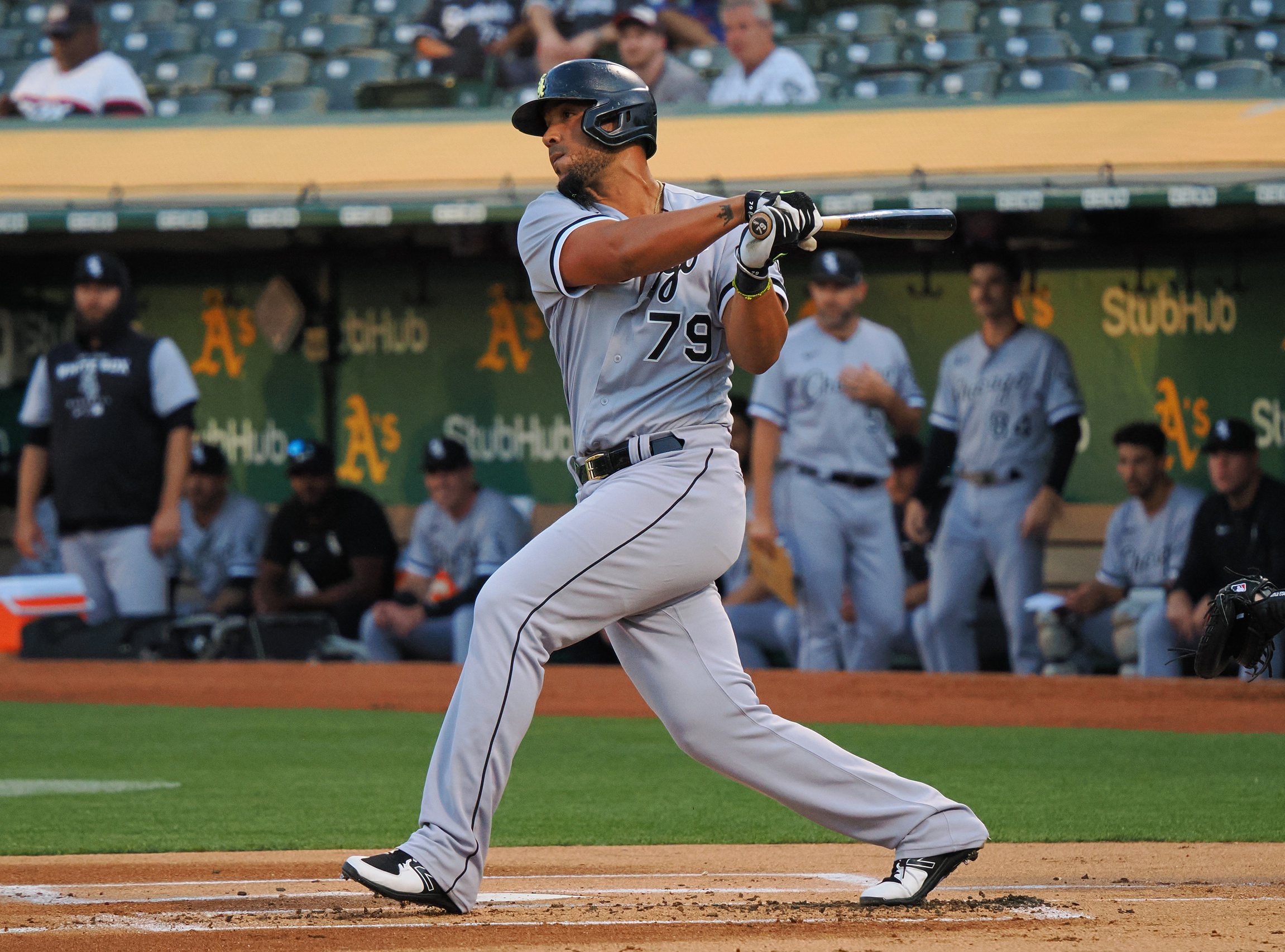 When you think back to this past year's team, and where it came up short, what comes to mind first? Some might point to late-inning bullpen lapses. Others will call out starters who couldn't stay healthy or pitch deep into games. These are valid answers, but for me, it's an offense that woefully underproduced because of a perpetual inability to cash in on scoring opportunities and keep key fixtures in the lineup. Despite generally a fielding a good group of hitters – at least up until the position corps became completely depleted late in the year – the Twins were shut out with stunning frequency, and they often gave their pitching staff no margin for error, which bit them time and time again. Enter: Jose Abreu. He's spent the past nine years terrorizing the Twins and other teams around the league from the heart of Chicago's lineup. Now he's a free agent, likely to be available on a shorter-term, high-AAV deal. When you look at the qualities that were amiss from Minnesota's lineup in 2022, you basically find them all present in Abreu's profile. The 35-year-old has been ridiculously durable, playing in 528 of a possible 546 games (97%) since 2019, with 145+ games played in all but one full season since he debuted in 2014. He obliterates left-handed pitching, with a career .925 OPS against southpaws. And above all, the man produces runs like an absolute machine. Last year he slashed .268/.366/.471 with RISP and in his career he's at .311/.389/.554. This, along with his reliable everyday presence in the lineup, helped him generate some of the gaudiest RBI totals in baseball over the course of his career. Since 2014 he ranks second among all MLB players with 863. Abreu has driven in 100-plus runs six times and led the league twice, including his MVP season in the truncated 2020. Of course, RBI is not a metric that's going to get a lot of resonance from the analytically inclined crowd. Including me! It tends to be a very overrated stat, reflecting opportunity and circumstance much more than individual excellence. In Abreu's case though, it does help tell the real story. He has been one of the most dependable, consistent run producers in all of baseball for nearly a decade. He is the prototype for an effective cleanup hitter. There's a reason the guy has received MVP votes in seven of his nine seasons. The analytical case against Abreu doesn't end with RBIs inflating his value. There's also the matter of his one-sided impact. As a defensively limited first baseman, Abreu doesn't add much in the field, helping explain why metrics like WAR view him in a relatively negative light despite his durability and production. Consider this: according to fWAR, Abreu has been a less valuable player on whole than Byron Buxton (12.3 to 11.1) since 2019, despite playing in literally almost twice as many games (528 to 279) and winning an MVP during that span. There's validity to this arithmetic. Baseball is a two-way sport, and you certainly can't build a whole team of Abreus. But there's evidence you kinda need at least ONE of those guys. One might look at Abreu's numbers at surface level and perceive a hitter in decline. In 2022 he hit a career-low 15 home runs, his total of 75 RBIs was his second-lowest for a full season, and his .824 OPS was down 36 points from his career mark. However, these figures need to be colored by the context of a depressed offensive environment and an underperforming lineup around him. Abreu's 133 OPS+ was his highest in a full season since 2017. His 40 doubles ranked sixth in the AL. A quick glance at his Statcast sliders does not give the impression of a guy who is wearing down in his mid-30s, with elite measures for exit velo and hard-hit rate. In the past season, Abreu produced an fWAR of 3.9. It was the second-highest since his rookie campaign back in 2014. Not exactly the most reassuring for a player who figures to command somewhere in the $20 million range annually. But consider this: Abreu's fWAR in 2022 was higher than Justin Morneau's (3.8) when he won the AL MVP in 2006. It was higher than Jim Thome's (3.1) in 108 games when he helped lead the Twins to a division title. It was in the same range as Nelson Cruz's (4.3) when he powered the Bomba Squad to 101 wins. These were the three best Twins teams of the past two decades, and all were supported in essential ways by cornerstone sluggers whose contributions are somewhat downplayed by advanced metrics. You can argue Morneau didn't deserve the MVP award in '06. You can argue Cruz's one-sided contribution prevented him from being the team's MVP in '19 (we named Max Kepler for that reason). But can anyone, from the oldest-school to newest-age mentality, plausibly claim these players were not integral to their team's resounding success? At its core, analytics is about analyzing what has happened to form insights for the future. We've watched Cruz – who had the same value-oriented quibbles back in 2019, as an aging slugger with no defensive value – become the most impactful free agent signing in franchise history. Incidentally, Cruz ranks right behind Abreu at third among MLB hitters in RBIs since 2014. No, runs batted in are not predictive indicators of value. But they are indicators of something: the demonstrated ability to stay on the field and consistently generate offense. Minnesota has been lacking for these traits since Cruz left – in 2022, they had only three players reach 500 plate appearances, and no one drove in even 70 runs. (Jose Miranda's 66 RBIs were the lowest total to lead a Twins team in a full season since John Castino's 64 in 1980.) Abreu is the elixir this lineup needs to reach the next level, and the Twins are well equipped to handle his defensive limitations, since they have no full-time DH and all of their current options at first base – Miranda, Alex Kirilloff, Luis Arraez – are capable of playing elsewhere. The fit here is very obvious once you zoom out past a myopic lens of what constitutes value. Abreu is in the same mold as the most celebrated and difference-making free agent signings in Twins history, and he's precisely what their lineup was missing in 2022. You can read more about Abreu, plus many more options available at positions of need for the Twins, by download the complete Offseason Handbook, now available to Caretakers!
 -
 For Twins fans who buy into analytics, as the front office does, Jose Abreu presents a paradox. He's an aging slugger with no defensive value – major red flags for a free agency pursuit. At the same time, there's plenty of (statistical!) evidence to suggest Abreu can provide exactly what Minnesota was missing in 2022. Image courtesy of Kelley L Cox-USA TODAY Sports When you think back to this past year's team, and where it came up short, what comes to mind first? Some might point to late-inning bullpen lapses. Others will call out starters who couldn't stay healthy or pitch deep into games. These are valid answers, but for me, it's an offense that woefully underproduced because of a perpetual inability to cash in on scoring opportunities and keep key fixtures in the lineup. Despite generally a fielding a good group of hitters – at least up until the position corps became completely depleted late in the year – the Twins were shut out with stunning frequency, and they often gave their pitching staff no margin for error, which bit them time and time again. Enter: Jose Abreu. He's spent the past nine years terrorizing the Twins and other teams around the league from the heart of Chicago's lineup. Now he's a free agent, likely to be available on a shorter-term, high-AAV deal. When you look at the qualities that were amiss from Minnesota's lineup in 2022, you basically find them all present in Abreu's profile. The 35-year-old has been ridiculously durable, playing in 528 of a possible 546 games (97%) since 2019, with 145+ games played in all but one full season since he debuted in 2014. He obliterates left-handed pitching, with a career .925 OPS against southpaws. And above all, the man produces runs like an absolute machine. Last year he slashed .268/.366/.471 with RISP and in his career he's at .311/.389/.554. This, along with his reliable everyday presence in the lineup, helped him generate some of the gaudiest RBI totals in baseball over the course of his career. Since 2014 he ranks second among all MLB players with 863. Abreu has driven in 100-plus runs six times and led the league twice, including his MVP season in the truncated 2020. Of course, RBI is not a metric that's going to get a lot of resonance from the analytically inclined crowd. Including me! It tends to be a very overrated stat, reflecting opportunity and circumstance much more than individual excellence. In Abreu's case though, it does help tell the real story. He has been one of the most dependable, consistent run producers in all of baseball for nearly a decade. He is the prototype for an effective cleanup hitter. There's a reason the guy has received MVP votes in seven of his nine seasons. The analytical case against Abreu doesn't end with RBIs inflating his value. There's also the matter of his one-sided impact. As a defensively limited first baseman, Abreu doesn't add much in the field, helping explain why metrics like WAR view him in a relatively negative light despite his durability and production. Consider this: according to fWAR, Abreu has been a less valuable player on whole than Byron Buxton (12.3 to 11.1) since 2019, despite playing in literally almost twice as many games (528 to 279) and winning an MVP during that span. There's validity to this arithmetic. Baseball is a two-way sport, and you certainly can't build a whole team of Abreus. But there's evidence you kinda need at least ONE of those guys. One might look at Abreu's numbers at surface level and perceive a hitter in decline. In 2022 he hit a career-low 15 home runs, his total of 75 RBIs was his second-lowest for a full season, and his .824 OPS was down 36 points from his career mark. However, these figures need to be colored by the context of a depressed offensive environment and an underperforming lineup around him. Abreu's 133 OPS+ was his highest in a full season since 2017. His 40 doubles ranked sixth in the AL. A quick glance at his Statcast sliders does not give the impression of a guy who is wearing down in his mid-30s, with elite measures for exit velo and hard-hit rate. In the past season, Abreu produced an fWAR of 3.9. It was the second-highest since his rookie campaign back in 2014. Not exactly the most reassuring for a player who figures to command somewhere in the $20 million range annually. But consider this: Abreu's fWAR in 2022 was higher than Justin Morneau's (3.8) when he won the AL MVP in 2006. It was higher than Jim Thome's (3.1) in 108 games when he helped lead the Twins to a division title. It was in the same range as Nelson Cruz's (4.3) when he powered the Bomba Squad to 101 wins. These were the three best Twins teams of the past two decades, and all were supported in essential ways by cornerstone sluggers whose contributions are somewhat downplayed by advanced metrics. You can argue Morneau didn't deserve the MVP award in '06. You can argue Cruz's one-sided contribution prevented him from being the team's MVP in '19 (we named Max Kepler for that reason). But can anyone, from the oldest-school to newest-age mentality, plausibly claim these players were not integral to their team's resounding success? At its core, analytics is about analyzing what has happened to form insights for the future. We've watched Cruz – who had the same value-oriented quibbles back in 2019, as an aging slugger with no defensive value – become the most impactful free agent signing in franchise history. Incidentally, Cruz ranks right behind Abreu at third among MLB hitters in RBIs since 2014. No, runs batted in are not predictive indicators of value. But they are indicators of something: the demonstrated ability to stay on the field and consistently generate offense. Minnesota has been lacking for these traits since Cruz left – in 2022, they had only three players reach 500 plate appearances, and no one drove in even 70 runs. (Jose Miranda's 66 RBIs were the lowest total to lead a Twins team in a full season since John Castino's 64 in 1980.) Abreu is the elixir this lineup needs to reach the next level, and the Twins are well equipped to handle his defensive limitations, since they have no full-time DH and all of their current options at first base – Miranda, Alex Kirilloff, Luis Arraez – are capable of playing elsewhere. The fit here is very obvious once you zoom out past a myopic lens of what constitutes value. Abreu is in the same mold as the most celebrated and difference-making free agent signings in Twins history, and he's precisely what their lineup was missing in 2022. You can read more about Abreu, plus many more options available at positions of need for the Twins, by download the complete Offseason Handbook, now available to Caretakers! View full article
 -
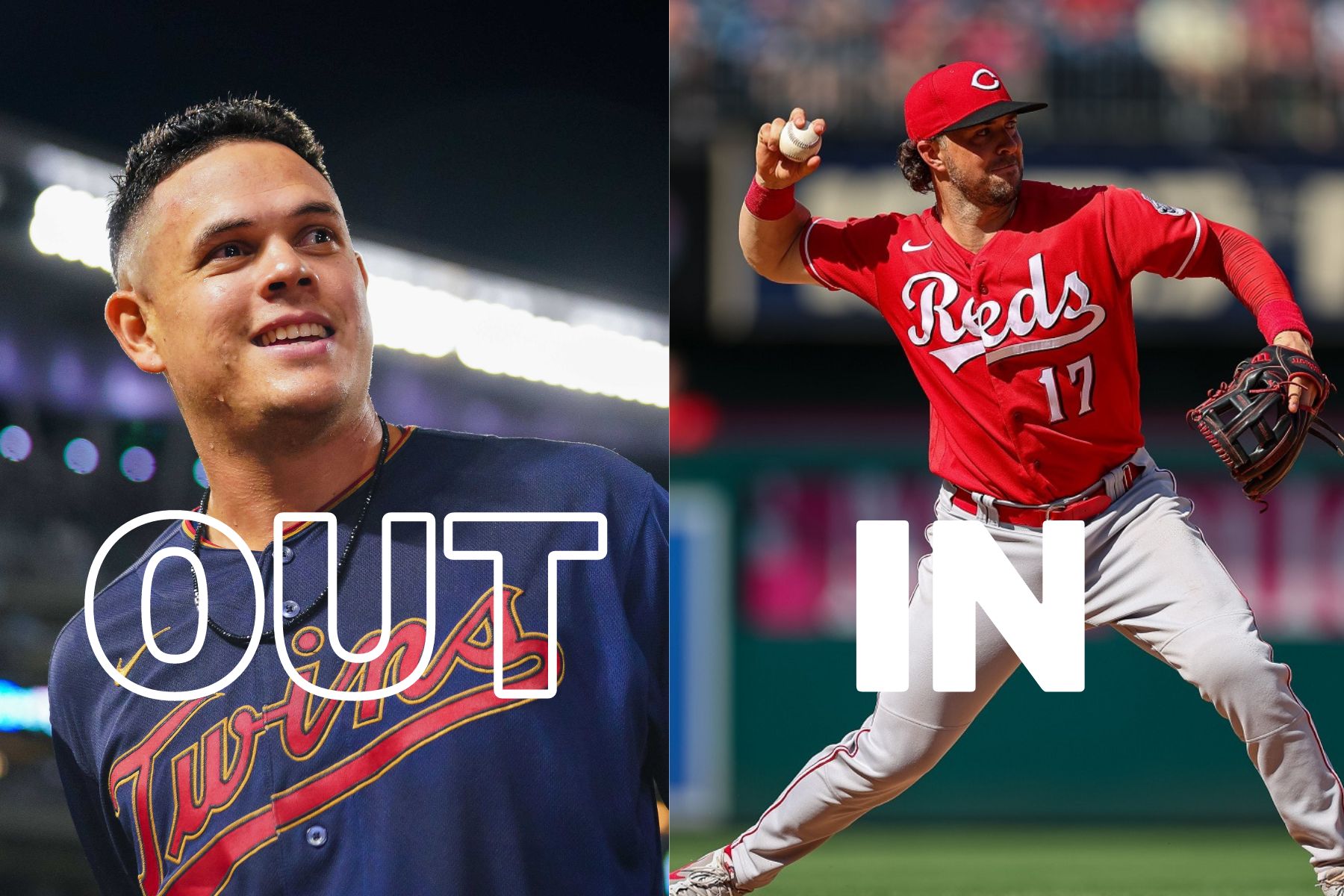 Since we last checked in, the Twins have made news with a number of noteworthy moves: trading third baseman Gio Urshela, acquiring shortstop Kyle Farmer, tendering reliever Emilio Pagan. Let's take a quick look at the details behind each of these decisions, and where they leave the state of the roster as the Winter Meetings fast approach on December 4th. Twins Trade Urshela to Angels Just ahead of the arbitration contract tender deadline on November 18th, the Twins shipped one of their eligible players – the most difficult decision among them – to the Angels in exchange for minor-league pitcher Alejandro Hidalgo. A 19-year-old right-hander who hasn't yet advanced past Low-A ball, Hidalgo is a modestly intriguing young arm, but the return for Urshela was expectedly small. He's a valuable player, but at his projected arbitration cost in the $9 million range, a bit less appealing – especially for a Twins team that hopes to usher Jose Miranda in as regular third baseman next year. For the Angels, Urshela is an odd fit. Like the Twins, they seem to view him as strictly a corner infielder ... but they already have Anthony Rendon and Jared Walsh entrenched at third and first, with Shohei Ohtani typically occupying DH. It is very difficult to understand LA's motivation in making this move from the current view. Hidalgo's your usual big-stuff/bad-control lotto ticket. Certainly a preferable outcome to non-tendering Urshela for nothing in return. Pagan Is Coming Back for Another Year With Urshela shipped out, the Twins tendered contracts to all of their remaining arbitration-eligible players – including, controversially, the embattled Pagan. He'll earn a projected $3.7 million in his final year of team control, coming off a season where he earned the ire of fans with numerous lapses in crucial moments. He was the poster child for a bullpen that helped derail a promising Twins season. Now we'll see if he can become the figurehead for its triumphant turnaround. Amidst all the backlash this decision understandably provoked, I tried to explore the team's reasoning, noting that Pagan saw improved results down the stretch with a pitch mix change under pitching coaches Pete Maki and Colby Suggs. It's hard to give up on stuff of that caliber, and the upside it entails. While many fans struggle to make sense of it, Pagan does seem to be viewed much more highly in baseball circles than from the outside. Dan Hayes of The Athletic reported that the reliever "drew much more interest" than Urshela ahead of the non-tender deadline. Farmer Enters the Fold Not long after parting with some veteran depth in Urshela, the Twins quickly backfilled with the addition of Farmer, acquired from the Reds in exchange for minor-league righty Casey Legumina. This deal was, in many ways, the reverse of the Urshela trade: Farmer is a valuable enough player, but wasn't that valuable to Cincinnati at his arbitration price point, so they sent him to a team that could use the depth in exchange for a pitching flier. In this case, it's much easier to see the fit for Farmer, who could fill a number of different roles depending on what the Twins do elsewhere. For now, he's slotted in as their starting shortstop, and an adequate interim fill-in for Royce Lewis if that is the front office's leaning. In addition to his defensive flexibility, one aspect of Farmer's profile that surely attracted the Twins is his excellence against left-handed pitching. This looks like an effort to offset one of the offense's key weaknesses in 2021, when they slashed .240/.310/.391 against southpaws. Twins Showing Interest in Rodon Hayes wrote in a roster projection column over the weekend that the team has "definite interest" in Carlos Rodon, which comes as no surprise. However, Hayes adds, "his contract is likely to soar to areas it might not feel comfortable paying, perhaps as high as $160 million over five years." In a column unpacking the troubling realities of buying high on free agent pitching, I examined this very conundrum: Rodon is exactly the kind of proven ace that the Twins should be looking to land this offseason. He's a dominant force coming off an excellent season, and his addition would energize the fanbase while fortifying the rotation. But, he's also entering the market at peak value, have pressed a career-high workload upon a shoulder that has endlessly tormented him. With Rodon, you're going to be paying purely for the upside we just saw, and hoping it sustains. And the price tag will be quite high, with the free-spending Dodgers already in the mix as suitors. One Current Opening on the 40-Man Roster As a sum result of all this moving and shaking, along with the additions of prospects Edouard Julien, Brent Headrick, and Matt Canterino to protect them from the Rule 5 draft, Minnesota's 40-man roster currently stands at 39: Should the Twins need to be make room for more additions, the most vulnerable 40-man spots likely belong to Mark Contreras, Cole Sands, and Trevor Megill. Roster and Payroll Projection: v2 In looking at the projected 2023 roster in its current form, you can see how the Twins are setting a floor. They've basically got all they need to field a competent ballclub next year: a rotation with five proven big-league starters, a fairly deep bullpen with back-end power, and a credible – albeit somewhat underwhelming on whole – stable of position players. The only openings are a backup catcher and utility infielder for the bench, easily filled. That is not to say going forward with this group would be acceptable in anyone's eyes. But the point is that the Twins aren't backed into any corners, needing to allocate their funds in any specific way – just how they like it. With nearly $50 million in spending room just to get back to the 2022 payroll baseline, we'll see how opportunistic this front office can be, free from any kind of restraint. If you want to read up on all of the team's many options available at positions across the board, the Offseason Handbook is now available in full to download, with 39 pages covering the Hot Stove landscape from every angle. It's free to all Caretakers! Grab a copy and build your own 2023 blueprint.
- 12 comments
-
- 10
-

-
- gio urshela
- kyle farmer
- (and 2 more)
-
The Twins have been relatively busy early in the offseason, with a couple of trades reshaping their infield outlook and an embattled reliever receiving a controversial contract tender. Read on to catch up on what the front office has done so far and where the roster currently stands. Image courtesy of Brad Rempel and Scott Taetsch-USA TODAY Sports Since we last checked in, the Twins have made news with a number of noteworthy moves: trading third baseman Gio Urshela, acquiring shortstop Kyle Farmer, tendering reliever Emilio Pagan. Let's take a quick look at the details behind each of these decisions, and where they leave the state of the roster as the Winter Meetings fast approach on December 4th. Twins Trade Urshela to Angels Just ahead of the arbitration contract tender deadline on November 18th, the Twins shipped one of their eligible players – the most difficult decision among them – to the Angels in exchange for minor-league pitcher Alejandro Hidalgo. A 19-year-old right-hander who hasn't yet advanced past Low-A ball, Hidalgo is a modestly intriguing young arm, but the return for Urshela was expectedly small. He's a valuable player, but at his projected arbitration cost in the $9 million range, a bit less appealing – especially for a Twins team that hopes to usher Jose Miranda in as regular third baseman next year. For the Angels, Urshela is an odd fit. Like the Twins, they seem to view him as strictly a corner infielder ... but they already have Anthony Rendon and Jared Walsh entrenched at third and first, with Shohei Ohtani typically occupying DH. It is very difficult to understand LA's motivation in making this move from the current view. Hidalgo's your usual big-stuff/bad-control lotto ticket. Certainly a preferable outcome to non-tendering Urshela for nothing in return. Pagan Is Coming Back for Another Year With Urshela shipped out, the Twins tendered contracts to all of their remaining arbitration-eligible players – including, controversially, the embattled Pagan. He'll earn a projected $3.7 million in his final year of team control, coming off a season where he earned the ire of fans with numerous lapses in crucial moments. He was the poster child for a bullpen that helped derail a promising Twins season. Now we'll see if he can become the figurehead for its triumphant turnaround. Amidst all the backlash this decision understandably provoked, I tried to explore the team's reasoning, noting that Pagan saw improved results down the stretch with a pitch mix change under pitching coaches Pete Maki and Colby Suggs. It's hard to give up on stuff of that caliber, and the upside it entails. While many fans struggle to make sense of it, Pagan does seem to be viewed much more highly in baseball circles than from the outside. Dan Hayes of The Athletic reported that the reliever "drew much more interest" than Urshela ahead of the non-tender deadline. Farmer Enters the Fold Not long after parting with some veteran depth in Urshela, the Twins quickly backfilled with the addition of Farmer, acquired from the Reds in exchange for minor-league righty Casey Legumina. This deal was, in many ways, the reverse of the Urshela trade: Farmer is a valuable enough player, but wasn't that valuable to Cincinnati at his arbitration price point, so they sent him to a team that could use the depth in exchange for a pitching flier. In this case, it's much easier to see the fit for Farmer, who could fill a number of different roles depending on what the Twins do elsewhere. For now, he's slotted in as their starting shortstop, and an adequate interim fill-in for Royce Lewis if that is the front office's leaning. In addition to his defensive flexibility, one aspect of Farmer's profile that surely attracted the Twins is his excellence against left-handed pitching. This looks like an effort to offset one of the offense's key weaknesses in 2021, when they slashed .240/.310/.391 against southpaws. Twins Showing Interest in Rodon Hayes wrote in a roster projection column over the weekend that the team has "definite interest" in Carlos Rodon, which comes as no surprise. However, Hayes adds, "his contract is likely to soar to areas it might not feel comfortable paying, perhaps as high as $160 million over five years." In a column unpacking the troubling realities of buying high on free agent pitching, I examined this very conundrum: Rodon is exactly the kind of proven ace that the Twins should be looking to land this offseason. He's a dominant force coming off an excellent season, and his addition would energize the fanbase while fortifying the rotation. But, he's also entering the market at peak value, have pressed a career-high workload upon a shoulder that has endlessly tormented him. With Rodon, you're going to be paying purely for the upside we just saw, and hoping it sustains. And the price tag will be quite high, with the free-spending Dodgers already in the mix as suitors. One Current Opening on the 40-Man Roster As a sum result of all this moving and shaking, along with the additions of prospects Edouard Julien, Brent Headrick, and Matt Canterino to protect them from the Rule 5 draft, Minnesota's 40-man roster currently stands at 39: Should the Twins need to be make room for more additions, the most vulnerable 40-man spots likely belong to Mark Contreras, Cole Sands, and Trevor Megill. Roster and Payroll Projection: v2 In looking at the projected 2023 roster in its current form, you can see how the Twins are setting a floor. They've basically got all they need to field a competent ballclub next year: a rotation with five proven big-league starters, a fairly deep bullpen with back-end power, and a credible – albeit somewhat underwhelming on whole – stable of position players. The only openings are a backup catcher and utility infielder for the bench, easily filled. That is not to say going forward with this group would be acceptable in anyone's eyes. But the point is that the Twins aren't backed into any corners, needing to allocate their funds in any specific way – just how they like it. With nearly $50 million in spending room just to get back to the 2022 payroll baseline, we'll see how opportunistic this front office can be, free from any kind of restraint. If you want to read up on all of the team's many options available at positions across the board, the Offseason Handbook is now available in full to download, with 39 pages covering the Hot Stove landscape from every angle. It's free to all Caretakers! Grab a copy and build your own 2023 blueprint. View full article
-
Sign Eovaldi. Or some other pitcher you like whose value is not inflated to an extreme degree. Or, find a way to get it done with someone you can truly count on like Verlander or deGrom. I absolutely do not think standing pat is an option. (And, to be clear, I'd love it if the Twins signed Rodon. I'm not arguing against that path, more trying to articulate what I see as the argument against that path via the lens this front office tends to use.)
-
How'd Rodon do in those seasons? How about Robbie Ray in his pre-2021 career? This is the point in play here: all but the most elite pitchers are so volatile from year to year. Does it really make sense to pay for them at their absolute peak value, when it means a long-term contract you'll be feeling the effects of for many years?
-
He wasn't in 2022. He very much was in 2021. Same can be said for Robbie Ray. People would've been thrilled if the Twins signed Ray last year, not so much this year. But he's the same pitcher. You see what I'm getting at? If your criteria for "front of the rotation starter" is entirely defined by what the guy did in the previous season, you are all but assured to overpay on every occasion. If you're a bit more open-minded, that's how you land guys like Kenta Maeda, Charlie Morton, Tyler Anderson, etc. I just think it's a more realistic and practical path for a team like the Twins.
-
Spending big on free agent pitchers is a high-wire act by nature, as it involves making exorbitant commitments to aging arms that are often amid temporary peaks in value. It is, needless to say, a pursuit the Minnesota Twins have largely opted to avoid – much to the lament of many fans. This offseason, they may have little choice but to set their scruples aside and overspend on the boom-or-bust frontline starter they need. Exciting, but precarious. Image courtesy of Image courtesy of Stan Szeto, USA Today When you look at data around aging curves for major-league pitchers, it matches up to what you'd expect: as a group, they are most effective between the ages of roughly 24 to 28 before inevitably experiencing decline at varying scales. This makes sense, of course. As pitchers get older, their innings mount, their bodies wear down, and the league gets wise to all of their tricks. We see the cycle play out time and time again. Sure, there are some pitchers who manage to evade the ravages of age, but they are rare and beyond prized. For every Jacob deGrom, who keeps chugging along into his mid-30s, or even every Justin Verlander, who's on top of his game at age 40, there are many examples of fleeting greatness. Sometimes the drop-off is quite sudden. Madison Bumgarner was one of the game's greats throughout his 20s as a Giant but completely unraveled at age 30 after signing with Arizona. Hyun-Jin Ryu had a brief run of pure excellence for the Dodgers but has wilted in his mid-30s in Toronto. The Twins have been thankful to avoid free agent landmines like these – pitchers who entered the market with relatively high stocks and cashed in, only to fall victim to the curve, leaving their new clubs in a tough spot with lingering implications. (The D-backs owe Bumgarner $23 million next year coming off a 4.88 ERA; the Blue Jays owe Ryu $20 million after he posted a 5.67 ERA in 27 innings.) Slam-dunk pitchers like deGrom and Verlander do pop up in free agency, but because of their rarity they have their pick of big-market titans who can outflex the field. These guys are simply out of range for the Twins, and most other teams. The more common and accessible free agents are those like Bumgarner and Ryu types: pitchers in the early stage of the aging curve's declining trendline, looking to get paid off what they did in their prime. Robbie Ray is a perfectly good example from one year ago. He was the definition of a buy-high candidate, coming off a breakout age-29 season where he won the Cy Young while leading the league in ERA and strikeouts. The Mariners bought high with a $115 million contract that was eclipsed only Max Scherzer's $130 million deal with the Mets. During his first year in Seattle, Ray was ... meh. Certainly not a disaster, but a shining example of the dangers in overpaying for assets that are likely to depreciate quickly. Ray posted a 3.71 ERA, 4.16 FIP, and 1.8 fWAR in 189 innings. He was an average-ish mid-rotation starter making $21 million, and slated to make $44 million over the next two years. What's more, Ray's player-friendly contract includes an opt-out after 2024, meaning that if his performance continues to trend this way, Seattle will owe him another $50 million for his age 33 and 34 seasons. But if he returns to form, he can re-enter the market after two more years. Seattle's already been robbed of much of this deal's upside due to Ray's mediocre first season. The fact that Ray procured such a favorable contract coming off his only great season speaks to the leverage higher-end free agent pitchers enjoy during Hot Stove negotiations. Which brings our attention to the focus of today's discussion: Carlos Rodón. The parallels between Ray's situation last year and Rodón's this year are unmissable. Both are left-handers entering the market at age 30, coming off career seasons. Both had extremely suspect track records prior to their star turns, which came during short-term deals for that reason. The uncertainties shrouding these two players weren't of the same exact ilk – Ray's more performance-based, Rodón's more health-related – but both players carried obvious and notable risk. Last offseason, Ray wasn't the best free agent starter. Not in a class that featured future Hall of Famers like Scherzer, Verlander, and Clayton Kershaw. But he was the arguably the best starter who felt realistically available to mid-market teams like Seattle or Minnesota. And this year Rodón is in a similar position, albeit with sparser competition at the top tier. (Chris Bassitt is a far cry from Kevin Gausman.) Rodón has been one of the best starting pitchers in baseball over the past two seasons, a true ace in every sense of the word. He's been mostly healthy, with the exception of a shoulder scare in late 2021. There's much to like. But the magnitude of risk in handing out a mega-deal to Rodón weighs very heavily on a team with spending constraints (self-imposed as they might be). The shoulder woes have surfaced time and again, wiping out most of his ostensible prime years. He's coming off a career-high workload and heading into his 30s. As Twins fans know all too well, shoulder injuries are pernicious. The downside with Rodón isn't that he'll follow Ray's route and revert to middling performance levels, but that he won't be able to pitch at all. Or he'll become entangled in lengthy cycles of starts, stops, and setbacks, all while accounting for about one-fifth of the payroll year after year. That's undeniably a scary specter, and knowing what we know about the Twins front office and their particular aversion to these kinds of flexibility-inhibiting scenarios, it's easy to see why they've tended to stay away. But this offseason is different. If the Twins miss out on Carlos Correa, it almost feels like they HAVE to find a way to sign Rodón in order for the winter to be considered a resounding success, and to build widespread excitement for the 2023 product. Most other big-splash type moves that are within their range would be somewhat underwhelming as marquee headliner, at a time where they just lost a premier superstar, and had unprecedented spending power as a result. This is not just a matter of optics and PR. It's hard to imagine any singular move, outside of signing one of the top four shortstops, capable of making such a massive impact on the team's quality and upside. Adding Rodón atop the rotation would transform the outlook for that unit and the pitching staff as a whole. Coming off back-to-back Cy Young-caliber seasons, Rodón would be a worthy centerpiece of the offseason from any vantage. So how much would this gamble cost? If we suppose that Rodón is open-minded and simply looking for the best deal, it becomes a straightforward bidding war – albeit one with high stakes and some imposing competition. The left-hander is reportedly receiving early interest from the Dodgers, Mets, and Rangers, among others. The Rangers are said to be one of his most serious suitors, and they exemplify the type of uphill battle Minnesota's front office faces in this pursuit. Texas spent more than half a billion in free agency last offseason alone. With such a free-wheeling mindset, made possible by operating in a top-five market, they can more easily sink big money into shaky investments – like, say, signing Corey Seager for $32 million annually through age 37 – and worry about the repercussions later. For the Twins, it's a different ballgame. The stakes are graver, the downside greater. And depending on Rodón's personal preferences, it might take a significant outbid to woo him from more attractive destinations. It's hard to know exactly where the southpaw's contract figure might land, when you factor in all the risk and all the reward. One article in The Athletic projected five years and $160 million, which is higher than I've seen elsewhere but certainly within reason. For the Twins to make it happen, they might need to get creative with a contract framework that leans strongly in the player's favor – a Scott Boras specialty. Again, you can make a good case to say "screw it, just make the deal happen, whatever it takes." But then, I come back to this front office and what we know about them. As much as they might like Rodón and the fit, it would be very uncharacteristic to outslug a bunch of heavy-hitters in an all-out auction for a peaking asset. What seems much more likely is that they'll turn to other pitchers near the top of the remaining free agent starter pool in search of real upside without the extreme "buy-high" dynamic. One name that really stands out in this group is Nathan Eovaldi. He's got the credentials, the big stage experience, the power fastball. In 2021 he finished fourth in the Cy Young voting with 5.7 fWAR, placing him at the premier class of MLB starters. In 2022 he took a step back, with production that was more or less Robbie Ray-esque. Unlike Rodón and Ray, Eovaldi is not a buy-high target. Unfortunately for him, the right-hander's date with free agency came a year too late for that. He'll still get paid handsomely but the proposition should be much less daunting for a team like the Twins. How much less realistic upside does Eovaldi bring to the table compared to Rodón and Ray, relative to the chasmic difference in cost? If you look at 2022 in isolation, far less, but results aren't that dependably consistent from year to year. To prove that, look no further than all of the dudes we're talking about here. Signing Rodón feels, in some ways, like a move the Twins need to make, should they miss out on Correa. But turning away from the feeding frenzy and focusing on an arm like Eovaldi would be much more on-brand, while still showing a touch of boldness. He would very likely be the most expensive free agent pitcher signing in franchise history, and a plausible upgrade from Sonny Gray in the #1 rotation spot. This course would also allow the Twins to save some coin and spread more of it to other needs, while still addressing the rotation in a meaningful, emphatic way. View full article
-
The Troubling Realities of Buying High on Free Agent Pitching
Nick Nelson posted an article in Twins
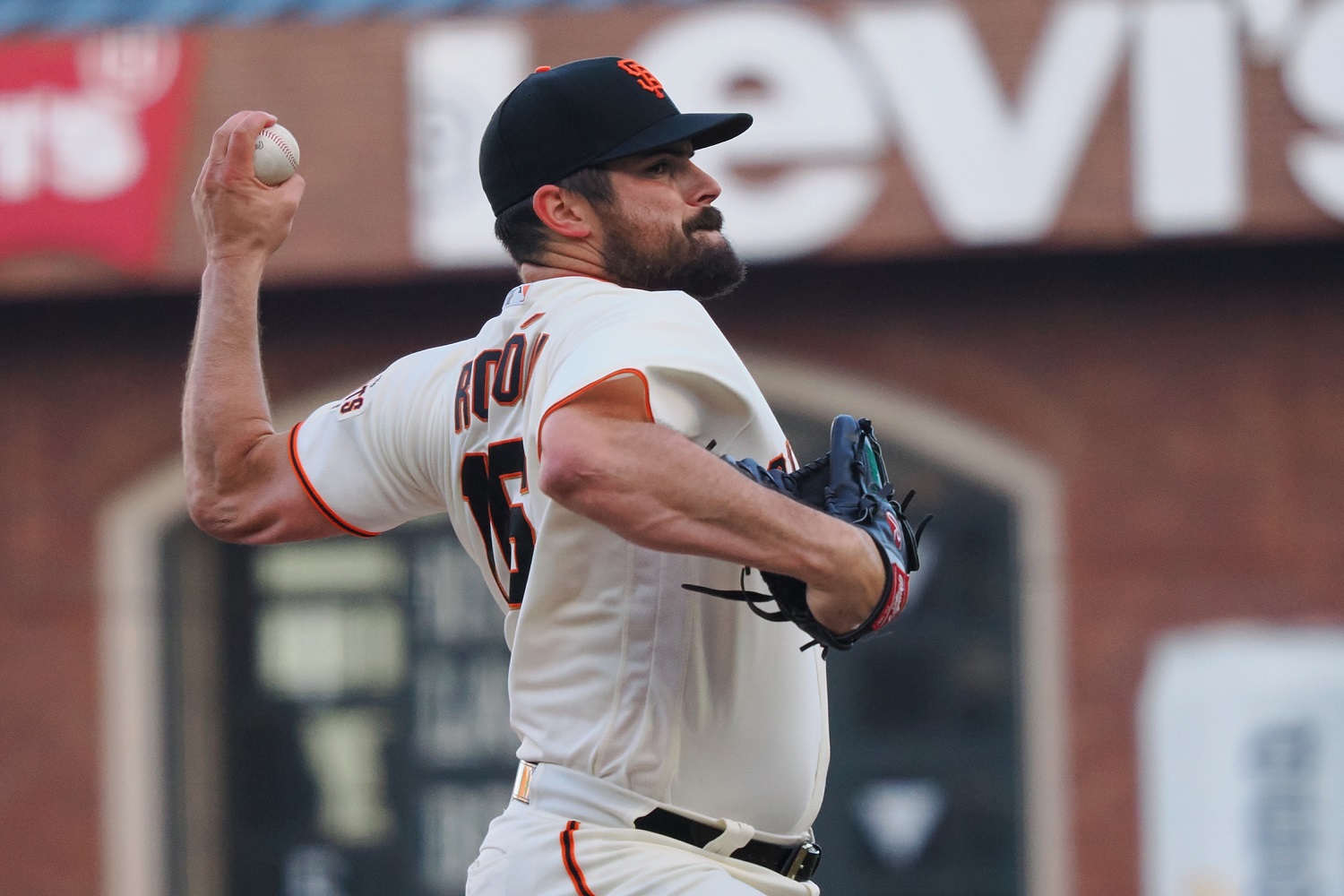 When you look at data around aging curves for major-league pitchers, it matches up to what you'd expect: as a group, they are most effective between the ages of roughly 24 to 28 before inevitably experiencing decline at varying scales. This makes sense, of course. As pitchers get older, their innings mount, their bodies wear down, and the league gets wise to all of their tricks. We see the cycle play out time and time again. Sure, there are some pitchers who manage to evade the ravages of age, but they are rare and beyond prized. For every Jacob deGrom, who keeps chugging along into his mid-30s, or even every Justin Verlander, who's on top of his game at age 40, there are many examples of fleeting greatness. Sometimes the drop-off is quite sudden. Madison Bumgarner was one of the game's greats throughout his 20s as a Giant but completely unraveled at age 30 after signing with Arizona. Hyun-Jin Ryu had a brief run of pure excellence for the Dodgers but has wilted in his mid-30s in Toronto. The Twins have been thankful to avoid free agent landmines like these – pitchers who entered the market with relatively high stocks and cashed in, only to fall victim to the curve, leaving their new clubs in a tough spot with lingering implications. (The D-backs owe Bumgarner $23 million next year coming off a 4.88 ERA; the Blue Jays owe Ryu $20 million after he posted a 5.67 ERA in 27 innings.) Slam-dunk pitchers like deGrom and Verlander do pop up in free agency, but because of their rarity they have their pick of big-market titans who can outflex the field. These guys are simply out of range for the Twins, and most other teams. The more common and accessible free agents are those like Bumgarner and Ryu types: pitchers in the early stage of the aging curve's declining trendline, looking to get paid off what they did in their prime. Robbie Ray is a perfectly good example from one year ago. He was the definition of a buy-high candidate, coming off a breakout age-29 season where he won the Cy Young while leading the league in ERA and strikeouts. The Mariners bought high with a $115 million contract that was eclipsed only Max Scherzer's $130 million deal with the Mets. During his first year in Seattle, Ray was ... meh. Certainly not a disaster, but a shining example of the dangers in overpaying for assets that are likely to depreciate quickly. Ray posted a 3.71 ERA, 4.16 FIP, and 1.8 fWAR in 189 innings. He was an average-ish mid-rotation starter making $21 million, and slated to make $44 million over the next two years. What's more, Ray's player-friendly contract includes an opt-out after 2024, meaning that if his performance continues to trend this way, Seattle will owe him another $50 million for his age 33 and 34 seasons. But if he returns to form, he can re-enter the market after two more years. Seattle's already been robbed of much of this deal's upside due to Ray's mediocre first season. The fact that Ray procured such a favorable contract coming off his only great season speaks to the leverage higher-end free agent pitchers enjoy during Hot Stove negotiations. Which brings our attention to the focus of today's discussion: Carlos Rodón. The parallels between Ray's situation last year and Rodón's this year are unmissable. Both are left-handers entering the market at age 30, coming off career seasons. Both had extremely suspect track records prior to their star turns, which came during short-term deals for that reason. The uncertainties shrouding these two players weren't of the same exact ilk – Ray's more performance-based, Rodón's more health-related – but both players carried obvious and notable risk. Last offseason, Ray wasn't the best free agent starter. Not in a class that featured future Hall of Famers like Scherzer, Verlander, and Clayton Kershaw. But he was the arguably the best starter who felt realistically available to mid-market teams like Seattle or Minnesota. And this year Rodón is in a similar position, albeit with sparser competition at the top tier. (Chris Bassitt is a far cry from Kevin Gausman.) Rodón has been one of the best starting pitchers in baseball over the past two seasons, a true ace in every sense of the word. He's been mostly healthy, with the exception of a shoulder scare in late 2021. There's much to like. But the magnitude of risk in handing out a mega-deal to Rodón weighs very heavily on a team with spending constraints (self-imposed as they might be). The shoulder woes have surfaced time and again, wiping out most of his ostensible prime years. He's coming off a career-high workload and heading into his 30s. As Twins fans know all too well, shoulder injuries are pernicious. The downside with Rodón isn't that he'll follow Ray's route and revert to middling performance levels, but that he won't be able to pitch at all. Or he'll become entangled in lengthy cycles of starts, stops, and setbacks, all while accounting for about one-fifth of the payroll year after year. That's undeniably a scary specter, and knowing what we know about the Twins front office and their particular aversion to these kinds of flexibility-inhibiting scenarios, it's easy to see why they've tended to stay away. But this offseason is different. If the Twins miss out on Carlos Correa, it almost feels like they HAVE to find a way to sign Rodón in order for the winter to be considered a resounding success, and to build widespread excitement for the 2023 product. Most other big-splash type moves that are within their range would be somewhat underwhelming as marquee headliner, at a time where they just lost a premier superstar, and had unprecedented spending power as a result. This is not just a matter of optics and PR. It's hard to imagine any singular move, outside of signing one of the top four shortstops, capable of making such a massive impact on the team's quality and upside. Adding Rodón atop the rotation would transform the outlook for that unit and the pitching staff as a whole. Coming off back-to-back Cy Young-caliber seasons, Rodón would be a worthy centerpiece of the offseason from any vantage. So how much would this gamble cost? If we suppose that Rodón is open-minded and simply looking for the best deal, it becomes a straightforward bidding war – albeit one with high stakes and some imposing competition. The left-hander is reportedly receiving early interest from the Dodgers, Mets, and Rangers, among others. The Rangers are said to be one of his most serious suitors, and they exemplify the type of uphill battle Minnesota's front office faces in this pursuit. Texas spent more than half a billion in free agency last offseason alone. With such a free-wheeling mindset, made possible by operating in a top-five market, they can more easily sink big money into shaky investments – like, say, signing Corey Seager for $32 million annually through age 37 – and worry about the repercussions later. For the Twins, it's a different ballgame. The stakes are graver, the downside greater. And depending on Rodón's personal preferences, it might take a significant outbid to woo him from more attractive destinations. It's hard to know exactly where the southpaw's contract figure might land, when you factor in all the risk and all the reward. One article in The Athletic projected five years and $160 million, which is higher than I've seen elsewhere but certainly within reason. For the Twins to make it happen, they might need to get creative with a contract framework that leans strongly in the player's favor – a Scott Boras specialty. Again, you can make a good case to say "screw it, just make the deal happen, whatever it takes." But then, I come back to this front office and what we know about them. As much as they might like Rodón and the fit, it would be very uncharacteristic to outslug a bunch of heavy-hitters in an all-out auction for a peaking asset. What seems much more likely is that they'll turn to other pitchers near the top of the remaining free agent starter pool in search of real upside without the extreme "buy-high" dynamic. One name that really stands out in this group is Nathan Eovaldi. He's got the credentials, the big stage experience, the power fastball. In 2021 he finished fourth in the Cy Young voting with 5.7 fWAR, placing him at the premier class of MLB starters. In 2022 he took a step back, with production that was more or less Robbie Ray-esque. Unlike Rodón and Ray, Eovaldi is not a buy-high target. Unfortunately for him, the right-hander's date with free agency came a year too late for that. He'll still get paid handsomely but the proposition should be much less daunting for a team like the Twins. How much less realistic upside does Eovaldi bring to the table compared to Rodón and Ray, relative to the chasmic difference in cost? If you look at 2022 in isolation, far less, but results aren't that dependably consistent from year to year. To prove that, look no further than all of the dudes we're talking about here. Signing Rodón feels, in some ways, like a move the Twins need to make, should they miss out on Correa. But turning away from the feeding frenzy and focusing on an arm like Eovaldi would be much more on-brand, while still showing a touch of boldness. He would very likely be the most expensive free agent pitcher signing in franchise history, and a plausible upgrade from Sonny Gray in the #1 rotation spot. This course would also allow the Twins to save some coin and spread more of it to other needs, while still addressing the rotation in a meaningful, emphatic way.
 -
The reason it's worth talking about now is because they need to make plans. If they're firmly committed to Maeda as an SP out of the gates then they need to plan to bump someone else from their current starting five if they want to sign someone. Who is more deserving?
-
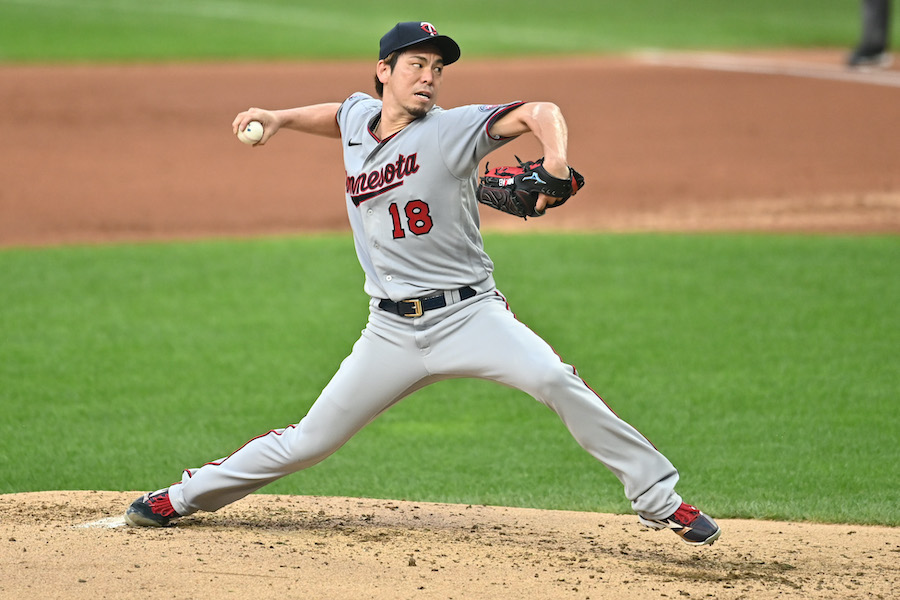 First, a quick catch-up on Kenta Maeda's history for the unfamiliar. Signed in 2016 out of Japan by the Dodgers, his contract was laden with incentives due to questions about the health of his elbow. Over the course of his time in Los Angeles, Maeda was often shuffled between rotation and bullpen – in part to manage that elbow, and in part because the Dodgers were usually overflowing with starting talent. This limited the ability of Maeda to trigger his contract incentives, which frustrated him and ultimately contributed to his being traded. In Minnesota, where "overflowing with rotation talent" is a problem that's never existed, Maeda immediately locked down a full-time rotation spot. And boy, did he deliver, with a phenomenal effort in the truncated 2020 season that earned him a runner-up AL Cy Young finish. The following campaign was a struggle, however – right up until he went down in August with an elbow injury that led to Tommy John surgery. We saw the best of Maeda, then the worst of Maeda, and now 18 months of no Maeda. He'll be coming back next spring and nobody really knows what to expect. How do you plan around the unexpected? The Twins would be negligent to write Maeda's name in ink as a member of their rotation. Consider that: Maeda is coming back from reconstructive elbow surgery at age 35. He has thrown 173 innings total since 2019. His velocity had been trending down before the injury, with a fastball dipping into the 80s. I'm not saying Maeda can't come back and be an effective starter with a relatively normal workload. But can you count on that? Coming off a season where Sonny Gray was limited to 119 innings, and with Tyler Mahle having his question marks ... I don't think you can. And I don't think the Twins will. With ample spending flexibility this offseason, they need to replace Maeda with a more dependable frontline starter. He is an ideal candidate to open the season in a long reliever or swingman role, largely because he's got so much experience doing it. In the two seasons prior to Maeda's trade to Minnesota, 30 of his 76 appearances (40%) came out of the bullpen. And he's shown he can be effective in that role, with a 3.19 lifetime ERA as a reliever. Now, there is the matter of Maeda's stance on all of this. He's a well-liked veteran player and he has a voice in his usage. Maeda would surely prefer to start, both to maximize his 2023 earnings and to set himself up for the future. He said before undergoing surgery he planned to "pitch for maybe five years" and that was partially his motivation to get it taken care of. At the same time, Maeda's a professional and has to know that the team's needs come first. His performance in 2020 isn't forgotten, but can't be leaned on as an expectation based on all that's happened since. This plan doesn't preclude Maeda from starting more games, it just means he has to earn his way back into that role. He's been playing for the Twins long enough to know that opportunities will come along in this rotation over the course of the year, and probably very early, if he's doing his part and showing he can still get outs. This might actually form an ideal scenario where he's able to limit his innings early on and keep him fresh later into the season (and playoffs?) in light of his minimal workload baseline. Using their considerable funds to fill Maeda's rotation spot with a verified stud (calling Carlos Rodon!) would be the kind of step this front office needs to take to build confidence in this starting unit and hedge against all the risk attached to their top veteran arms. What do you think? What's the proper way to proceed with Maeda as he enters his last year of team control?
 -
When it comes to Minnesota's offseason rotation outlook, there's an elephant in the room. Kenta Maeda likely expects to return to a starting job. But the Twins would be wise to make other plans. Where does that leave him, and their relationship? Image courtesy of Ken Blaze, USA Today First, a quick catch-up on Kenta Maeda's history for the unfamiliar. Signed in 2016 out of Japan by the Dodgers, his contract was laden with incentives due to questions about the health of his elbow. Over the course of his time in Los Angeles, Maeda was often shuffled between rotation and bullpen – in part to manage that elbow, and in part because the Dodgers were usually overflowing with starting talent. This limited the ability of Maeda to trigger his contract incentives, which frustrated him and ultimately contributed to his being traded. In Minnesota, where "overflowing with rotation talent" is a problem that's never existed, Maeda immediately locked down a full-time rotation spot. And boy, did he deliver, with a phenomenal effort in the truncated 2020 season that earned him a runner-up AL Cy Young finish. The following campaign was a struggle, however – right up until he went down in August with an elbow injury that led to Tommy John surgery. We saw the best of Maeda, then the worst of Maeda, and now 18 months of no Maeda. He'll be coming back next spring and nobody really knows what to expect. How do you plan around the unexpected? The Twins would be negligent to write Maeda's name in ink as a member of their rotation. Consider that: Maeda is coming back from reconstructive elbow surgery at age 35. He has thrown 173 innings total since 2019. His velocity had been trending down before the injury, with a fastball dipping into the 80s. I'm not saying Maeda can't come back and be an effective starter with a relatively normal workload. But can you count on that? Coming off a season where Sonny Gray was limited to 119 innings, and with Tyler Mahle having his question marks ... I don't think you can. And I don't think the Twins will. With ample spending flexibility this offseason, they need to replace Maeda with a more dependable frontline starter. He is an ideal candidate to open the season in a long reliever or swingman role, largely because he's got so much experience doing it. In the two seasons prior to Maeda's trade to Minnesota, 30 of his 76 appearances (40%) came out of the bullpen. And he's shown he can be effective in that role, with a 3.19 lifetime ERA as a reliever. Now, there is the matter of Maeda's stance on all of this. He's a well-liked veteran player and he has a voice in his usage. Maeda would surely prefer to start, both to maximize his 2023 earnings and to set himself up for the future. He said before undergoing surgery he planned to "pitch for maybe five years" and that was partially his motivation to get it taken care of. At the same time, Maeda's a professional and has to know that the team's needs come first. His performance in 2020 isn't forgotten, but can't be leaned on as an expectation based on all that's happened since. This plan doesn't preclude Maeda from starting more games, it just means he has to earn his way back into that role. He's been playing for the Twins long enough to know that opportunities will come along in this rotation over the course of the year, and probably very early, if he's doing his part and showing he can still get outs. This might actually form an ideal scenario where he's able to limit his innings early on and keep him fresh later into the season (and playoffs?) in light of his minimal workload baseline. Using their considerable funds to fill Maeda's rotation spot with a verified stud (calling Carlos Rodon!) would be the kind of step this front office needs to take to build confidence in this starting unit and hedge against all the risk attached to their top veteran arms. What do you think? What's the proper way to proceed with Maeda as he enters his last year of team control? View full article
-
How Will Kyle Farmer Fit in for the Twins?
Nick Nelson replied to Nick Nelson's topic in Twins Daily Front Page News
Sounds like you didn't read to the end of the article then ? -
How Will Kyle Farmer Fit in for the Twins?
Nick Nelson replied to Nick Nelson's topic in Twins Daily Front Page News
Personally I think you're gonna end up being angry, because if they don't sign one of the top 4 SS options (which I expect they won't), this is probably what's going to happen. I get the frustration but to me it just depends on what they do elsewhere. -
How Will Kyle Farmer Fit in for the Twins?
Nick Nelson posted a topic in Twins Daily Front Page News
It is an overreaction to assume that Minnesota's acquisition of Kyle Farmer from the Reds on Friday means they are canceling their pursuit of Carlos Correa or another top-tier shortstop. With this understanding, however, Farmer does seem like a bit of an odd fit. Why pay almost $6 million for a potentially superfluous piece? I can see three different possible valuable usages for Farmer in 2023, depending on which directions the team takes elsewhere. Image courtesy of David Banks-USA TODAY Sports Acquired in exchange for minor-league pitcher Casey Legumina last week, Kyle Farmer has followed an interesting career path in terms of defensive development. Formerly a star high school baseball star and quarterback (he made a cameo in The Blind Side!), he played shortstop at the University of Georgia before being drafted as a catcher by Los Angeles in the 13th round in 2013. Farmer had never played catcher, but the Dodgers and other teams liked him at the position because of his big frame and strong arm. He split time between there and at third while working his way up to the majors, where it took him four years to get his long-coveted chance at a return to shortstop. "Farmer didn’t receive an opportunity to play shortstop regularly until he met with Reds manager David Bell in spring training before the 2020 season and told him that he could do it," wrote Bobby Nightingale for the Cincinnati Enquirer. Farmer has since made 234 starts over three seasons at the position, after totaling NINE – majors and minors – through his first seven years as a pro. Farmer has made 81% of his 289 starts since 2020 at shortstop, impressing enough with the glove to keep getting nods there from Bell and Co. in Cincy, and now to be targeted by the Twins largely for his SS ability. But there are other skills in Farmer's defensive toolkit that make the versatile infielder a player who fits under several different scenarios. Which is exactly what the front office liked about him. Scenario A: Farmer is the interim starting shortstop until Royce Lewis or Brooks Lee is ready. If the Twins believe that Lewis is on track to fully recover and take over as long-term starting shortstop midway through the season, then this will be the course of action. In fact, to be honest, this will very likely be the course of action unless they can sign one of the top four (highly coveted) shortstops on the market, which means it's probably just going to happen. It's not the worst thing in the world! Depending on your view of Lewis. Farmer is far from a top-tier starter at shortstop but he's perfectly adequate, with a solid glove and a bit of pop at the plate. He's really rough against right-handed pitching, which limits his appeal as a regular at any position, but the Twins could theoretically rotate in Jorge Polanco or Nick Gordon occasionally. If Lewis can return in May or June and pick up where he left off, then Farmer shifts into the role outlined in Scenario B at that point. Meanwhile, the Twins have conserved tens of millions of dollars to spend elsewhere while maintaining flexibility to usher in Lewis or Lee as the shortstop of the future. Scenario B: Farmer is a semi-regular at third base who fills in around the infield. What if the Twins manage to land Carlos Correa, or another top shortstop via free agency or trade? In this case, Farmer can still fill a valuable role, albeit it with a less intensive workload. In this scenario, he fills a lesser version of the role Gio Urshela after Miranda came up in 2022, starting a couple times a week at third while Miranda rests, or slides to first base or DH. Farmer is the steadier and more reliable glove at third base, and frankly the book is still out on Miranda's defense. There's great value in dependable veteran depth. Farmer can make himself useful on days where Miranda is at third by stepping in at short, second or first. He's even a viable DH option against southpaws thanks to his .837 career OPS vs. LHP. Scenario C: Farmer is a super-utility backup who plugs in all around the field. Let's say the Twins are more committed to Miranda at third than I think they are, or should be. And let's also say they find another superior player to start at shortstop. In this case, Farmer probably becomes more of a true utilityman, making starts all over the field to spell starters and backfill injuries. "When the Reds acquired him from the Los Angeles Dodgers," notes Nightingale, "he was viewed as a utility guy with extra value as a third catcher." This could be the role Minnesota envisions for him, with his bat platooning around the field against lefties. In addition to shortstop, catcher, and third, Farmer has experience at second, first, and left field. His viability at shortstop can make him the top backup at that position (they currently have none, with Jermaine Palacios gone), and he can also serve as third-string catcher, which figures to be a need since they're currently without even Caleb Hamilton-caliber secondary depth. As mentioned, the ultimate role for Farmer in 2023 will be dictated by what the Twins do elsewhere. But unless they turn around and trade him a la Isiah Kiner-Falefa (who, incidentally, was a trade target to fill almost the exact same role), he'll almost certainly end up being used in one of these three capacities. View full article -
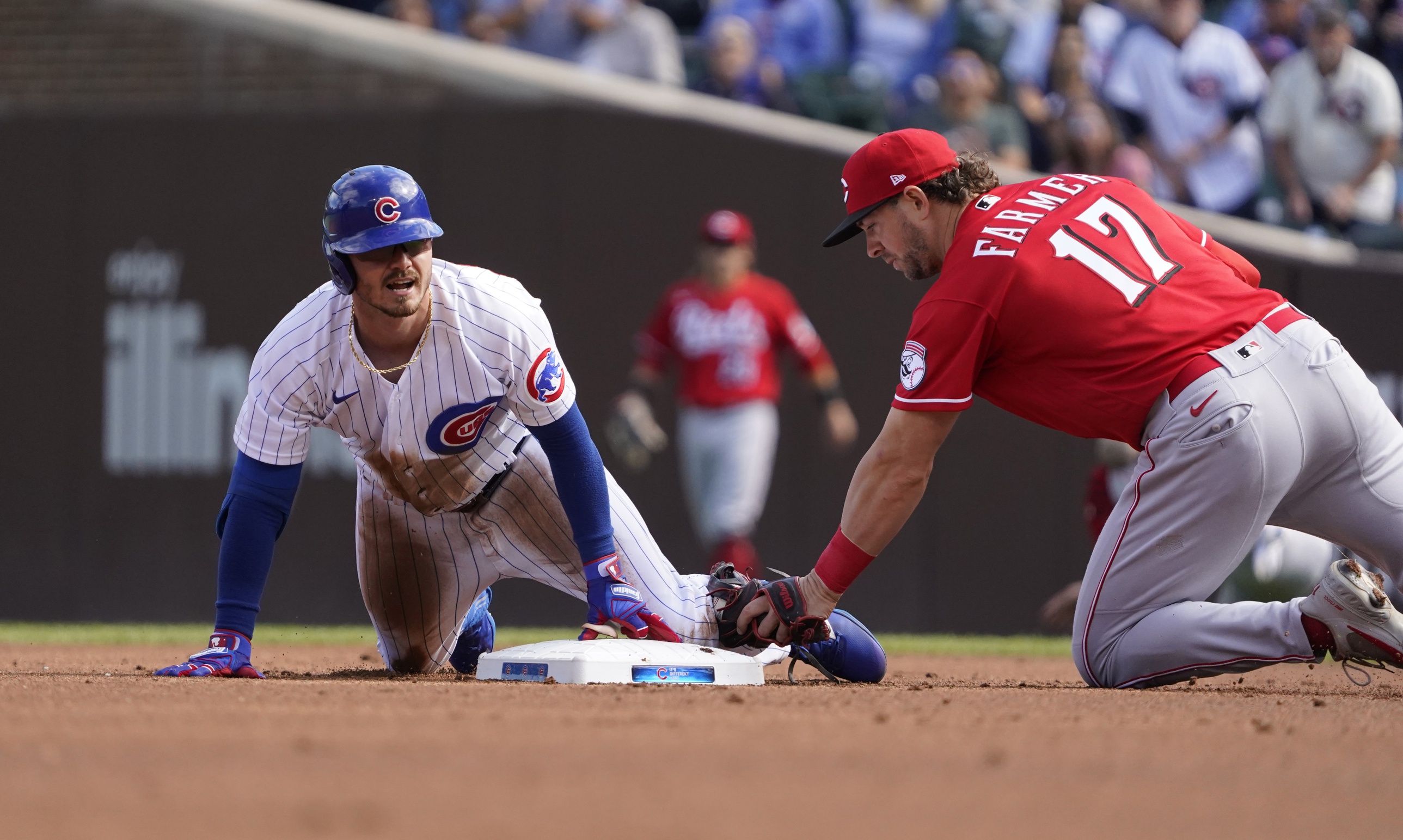 Acquired in exchange for minor-league pitcher Casey Legumina last week, Kyle Farmer has followed an interesting career path in terms of defensive development. Formerly a star high school baseball star and quarterback (he made a cameo in The Blind Side!), he played shortstop at the University of Georgia before being drafted as a catcher by Los Angeles in the 13th round in 2013. Farmer had never played catcher, but the Dodgers and other teams liked him at the position because of his big frame and strong arm. He split time between there and at third while working his way up to the majors, where it took him four years to get his long-coveted chance at a return to shortstop. "Farmer didn’t receive an opportunity to play shortstop regularly until he met with Reds manager David Bell in spring training before the 2020 season and told him that he could do it," wrote Bobby Nightingale for the Cincinnati Enquirer. Farmer has since made 234 starts over three seasons at the position, after totaling NINE – majors and minors – through his first seven years as a pro. Farmer has made 81% of his 289 starts since 2020 at shortstop, impressing enough with the glove to keep getting nods there from Bell and Co. in Cincy, and now to be targeted by the Twins largely for his SS ability. But there are other skills in Farmer's defensive toolkit that make the versatile infielder a player who fits under several different scenarios. Which is exactly what the front office liked about him. Scenario A: Farmer is the interim starting shortstop until Royce Lewis or Brooks Lee is ready. If the Twins believe that Lewis is on track to fully recover and take over as long-term starting shortstop midway through the season, then this will be the course of action. In fact, to be honest, this will very likely be the course of action unless they can sign one of the top four (highly coveted) shortstops on the market, which means it's probably just going to happen. It's not the worst thing in the world! Depending on your view of Lewis. Farmer is far from a top-tier starter at shortstop but he's perfectly adequate, with a solid glove and a bit of pop at the plate. He's really rough against right-handed pitching, which limits his appeal as a regular at any position, but the Twins could theoretically rotate in Jorge Polanco or Nick Gordon occasionally. If Lewis can return in May or June and pick up where he left off, then Farmer shifts into the role outlined in Scenario B at that point. Meanwhile, the Twins have conserved tens of millions of dollars to spend elsewhere while maintaining flexibility to usher in Lewis or Lee as the shortstop of the future. Scenario B: Farmer is a semi-regular at third base who fills in around the infield. What if the Twins manage to land Carlos Correa, or another top shortstop via free agency or trade? In this case, Farmer can still fill a valuable role, albeit it with a less intensive workload. In this scenario, he fills a lesser version of the role Gio Urshela after Miranda came up in 2022, starting a couple times a week at third while Miranda rests, or slides to first base or DH. Farmer is the steadier and more reliable glove at third base, and frankly the book is still out on Miranda's defense. There's great value in dependable veteran depth. Farmer can make himself useful on days where Miranda is at third by stepping in at short, second or first. He's even a viable DH option against southpaws thanks to his .837 career OPS vs. LHP. Scenario C: Farmer is a super-utility backup who plugs in all around the field. Let's say the Twins are more committed to Miranda at third than I think they are, or should be. And let's also say they find another superior player to start at shortstop. In this case, Farmer probably becomes more of a true utilityman, making starts all over the field to spell starters and backfill injuries. "When the Reds acquired him from the Los Angeles Dodgers," notes Nightingale, "he was viewed as a utility guy with extra value as a third catcher." This could be the role Minnesota envisions for him, with his bat platooning around the field against lefties. In addition to shortstop, catcher, and third, Farmer has experience at second, first, and left field. His viability at shortstop can make him the top backup at that position (they currently have none, with Jermaine Palacios gone), and he can also serve as third-string catcher, which figures to be a need since they're currently without even Caleb Hamilton-caliber secondary depth. As mentioned, the ultimate role for Farmer in 2023 will be dictated by what the Twins do elsewhere. But unless they turn around and trade him a la Isiah Kiner-Falefa (who, incidentally, was a trade target to fill almost the exact same role), he'll almost certainly end up being used in one of these three capacities.
 -
By tendering him a contract ahead of this past Friday's arbitration deadline, the Twins confirmed that reliever Emilio Pagán is in their 2023 plans ... for now. Many fans are understandably upset, and baffled. Let's examine the underpinnings of this decision and what it means. Image courtesy of Joe Nicholson-USA TODAY Sports Before getting started, it's important to point that Emilio Pagán's 2022 struggles are exaggerated by the popular narrative. They just are. He did not single-handedly tank the season. He was not without redeeming qualities. In fact, at no point during the season was he even the worst reliever in the bullpen. But ... they're not THAT exaggerated. There's a large gap between "not the worst" and "good" in a bullpen constantly churning minor-league arms. Pagán's utmost low points came clustered in such a way – within a two-week span, against a top division foe, in repeatedly back-breaking fashion – as to maximize their impact and the associated mental anguish. Our friend the Twins Geek summarized the lament that a lot of fans are probably feeling now: The bottom line here: Pagán has stacked three straight bad seasons, betraying his "quality stuff," and has now reached a price point where you can pretty easily find similar-caliber pitchers with a lot less baggage. Alas, the decision has been made. Unless the Twins can find a trade partner willing to look past these shortcomings – and if they could, why not trade him ahead of the deadline, like Gio Urshela? – Pagán figures to be part of the 2023 bullpen plan. So let's try to make sense of it. I actually wrote about this possible scenario midway through last season, in a column titled Emilio Pagán Doesn't Need to Be the Next Alexander Colomé. The premise was this: Colomé had a similarly painful low point with the Twins in 2021, but that clouded the big picture. Once you detach yourself from the emotional connection to those blow-up moments – always magnified for late-inning relievers – it becomes easier to see that, for the most part, they're going to balance out in the long run. It happened for Colomé, who posted a 3.51 ERA after April in 2021. And it happened for Pagán, who posted a 3.67 ERA in 34 innings after I wrote the above column on July 6th, right in the wake of his AL Central bloodbath. Of course, there's a big difference between these two pitchers. Colomé, even at his best, relies on jamming hitters and inducing weak contact, whereas Pagán possesses legitimately dominant bat-missing stuff. He's a pitching analytics darling without question, rating extremely well in metrics like Stuff+ that evaluate pitches based on physical properties, with a focus on variance between velocity and movement. This definitely played out in Pagán's outcomes: despite poor results overall, he was a strikeout machine with a 32.7% K-rate (90th percentile MLB) and 14% swinging strikes (84th%). Unfortunately, consistent execution was the problem, and his lapses seemed to come with the worst timing possible. One could generously make the case that Pagán and the Twins started to figure things out down the stretch. His final meltdown appearance of the season came on August 21st against Texas (2 IP, 6 H, 3 ER), but after that he posted a 2.16 ERA in 16 ⅔ innings, holding opponents to a .170/.279/.288 with – most notably – only one home run allowed. That's really what it all comes down to: the long ball. Pagán's historically unmatched susceptibility to home runs is what makes it hard for even the most analytically-inclined fans (i.e. Twins Geek) to see much upside. It's just literally impossible to be successful in a relief role of any leverage when you're that prone to homers. Pagán and the Twins finally showed signs of progressively reining that in during the second half. Notably, that coincides with a coaching staff shakeup that moved Pete Maki into the pitching coach role and also elevated Colby Suggs as bullpen coach. There are signs that real changes were implemented to spur the reliever's late success. As Parker Hageman noted in mid-September, Pagán appeared to be working in a new breaking ball, possibly as a replacement for his cutter: The right-hander's cutter was once one of his most formidable weapons, which helps explain why he's had a hard time quitting it. But that pitch was without question one of his primary weaknesses in 2022, with opponents slugging .698 against it and punishing Pagán for repeatedly turning to it at key points. Merely removing the cutter from his repertoire would've made a massive difference in his 2022 results, and as the graph below shows, Pagán had almost completely phased the pitch out by September. So if we're looking for some logic in holding onto Pagán, there you have it: his pure stuff is undeniably great, and the Twins' new pitching braintrust feels like they have the right plan to fully unlock his potential, which has been untouched for several years. In the grand scheme, it's a relatively small risk, especially if they add at least one more reliever in the offseason who slots ahead of him in a bullpen that already has at least five superior arms. The big takeaway that's been sticking with me since I wrote a piece earlier his month reflecting on the Ryan Pressly trade and its fallout is this: bet on stuff. Bet on relief pitchers who show the ability to truly dominate and blow away opposing hitters while staying in the zone. Pagán, for all his pitfalls and perilous moments, can do that. There's a part of me that feels like this is simply the responsible application of a lesson learned. View full article
-
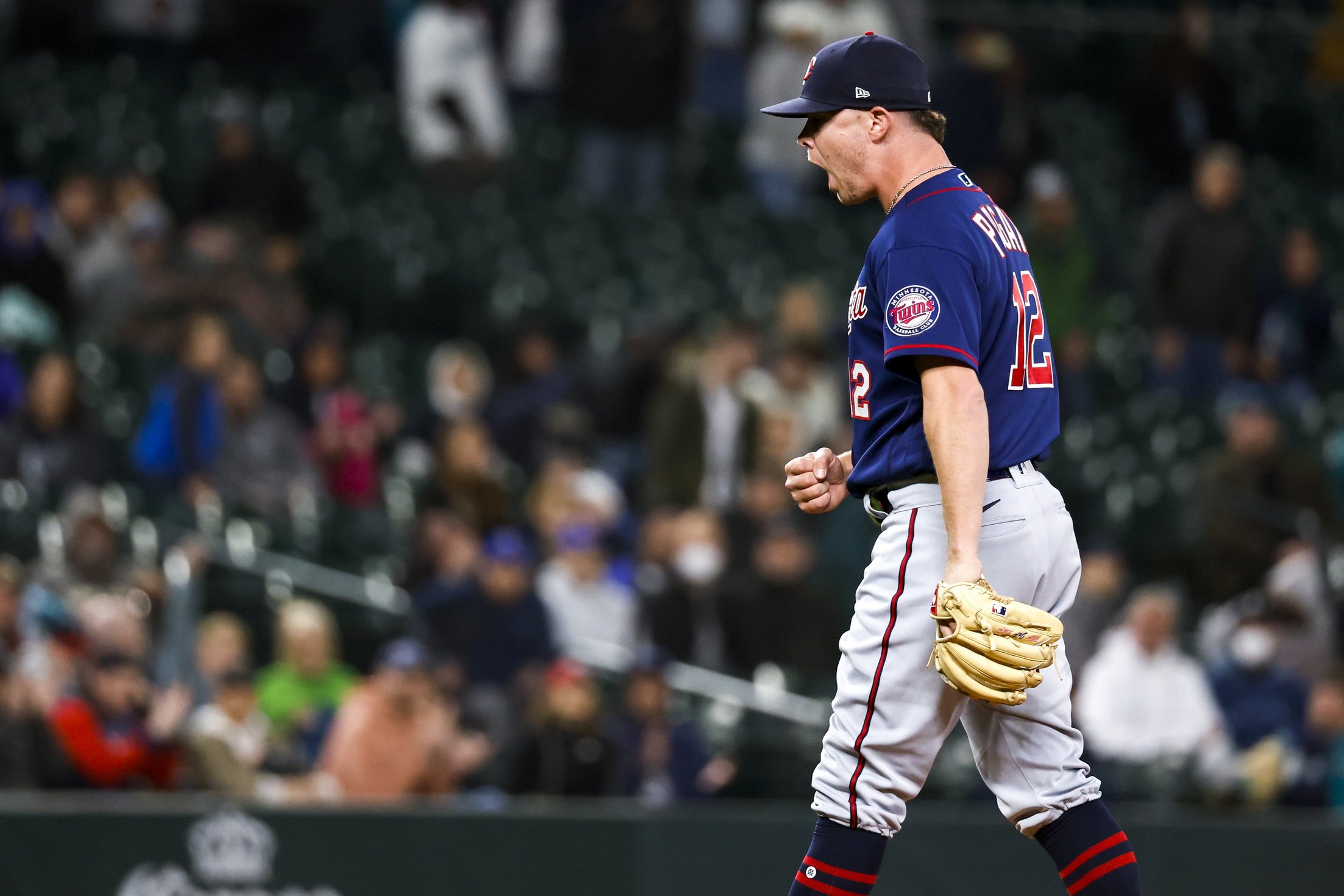 Before getting started, it's important to point that Emilio Pagán's 2022 struggles are exaggerated by the popular narrative. They just are. He did not single-handedly tank the season. He was not without redeeming qualities. In fact, at no point during the season was he even the worst reliever in the bullpen. But ... they're not THAT exaggerated. There's a large gap between "not the worst" and "good" in a bullpen constantly churning minor-league arms. Pagán's utmost low points came clustered in such a way – within a two-week span, against a top division foe, in repeatedly back-breaking fashion – as to maximize their impact and the associated mental anguish. Our friend the Twins Geek summarized the lament that a lot of fans are probably feeling now: The bottom line here: Pagán has stacked three straight bad seasons, betraying his "quality stuff," and has now reached a price point where you can pretty easily find similar-caliber pitchers with a lot less baggage. Alas, the decision has been made. Unless the Twins can find a trade partner willing to look past these shortcomings – and if they could, why not trade him ahead of the deadline, like Gio Urshela? – Pagán figures to be part of the 2023 bullpen plan. So let's try to make sense of it. I actually wrote about this possible scenario midway through last season, in a column titled Emilio Pagán Doesn't Need to Be the Next Alexander Colomé. The premise was this: Colomé had a similarly painful low point with the Twins in 2021, but that clouded the big picture. Once you detach yourself from the emotional connection to those blow-up moments – always magnified for late-inning relievers – it becomes easier to see that, for the most part, they're going to balance out in the long run. It happened for Colomé, who posted a 3.51 ERA after April in 2021. And it happened for Pagán, who posted a 3.67 ERA in 34 innings after I wrote the above column on July 6th, right in the wake of his AL Central bloodbath. Of course, there's a big difference between these two pitchers. Colomé, even at his best, relies on jamming hitters and inducing weak contact, whereas Pagán possesses legitimately dominant bat-missing stuff. He's a pitching analytics darling without question, rating extremely well in metrics like Stuff+ that evaluate pitches based on physical properties, with a focus on variance between velocity and movement. This definitely played out in Pagán's outcomes: despite poor results overall, he was a strikeout machine with a 32.7% K-rate (90th percentile MLB) and 14% swinging strikes (84th%). Unfortunately, consistent execution was the problem, and his lapses seemed to come with the worst timing possible. One could generously make the case that Pagán and the Twins started to figure things out down the stretch. His final meltdown appearance of the season came on August 21st against Texas (2 IP, 6 H, 3 ER), but after that he posted a 2.16 ERA in 16 ⅔ innings, holding opponents to a .170/.279/.288 with – most notably – only one home run allowed. That's really what it all comes down to: the long ball. Pagán's historically unmatched susceptibility to home runs is what makes it hard for even the most analytically-inclined fans (i.e. Twins Geek) to see much upside. It's just literally impossible to be successful in a relief role of any leverage when you're that prone to homers. Pagán and the Twins finally showed signs of progressively reining that in during the second half. Notably, that coincides with a coaching staff shakeup that moved Pete Maki into the pitching coach role and also elevated Colby Suggs as bullpen coach. There are signs that real changes were implemented to spur the reliever's late success. As Parker Hageman noted in mid-September, Pagán appeared to be working in a new breaking ball, possibly as a replacement for his cutter: The right-hander's cutter was once one of his most formidable weapons, which helps explain why he's had a hard time quitting it. But that pitch was without question one of his primary weaknesses in 2022, with opponents slugging .698 against it and punishing Pagán for repeatedly turning to it at key points. Merely removing the cutter from his repertoire would've made a massive difference in his 2022 results, and as the graph below shows, Pagán had almost completely phased the pitch out by September. So if we're looking for some logic in holding onto Pagán, there you have it: his pure stuff is undeniably great, and the Twins' new pitching braintrust feels like they have the right plan to fully unlock his potential, which has been untouched for several years. In the grand scheme, it's a relatively small risk, especially if they add at least one more reliever in the offseason who slots ahead of him in a bullpen that already has at least five superior arms. The big takeaway that's been sticking with me since I wrote a piece earlier his month reflecting on the Ryan Pressly trade and its fallout is this: bet on stuff. Bet on relief pitchers who show the ability to truly dominate and blow away opposing hitters while staying in the zone. Pagán, for all his pitfalls and perilous moments, can do that. There's a part of me that feels like this is simply the responsible application of a lesson learned.
 -
Friday marks the deadline for MLB teams to tender contracts to arbitration-eligible players. The Minnesota Twins have a number of decisions to make, ranging from no-brainer to head-scratcher. Let's review each arbitration tender candidate case by case, in order from easiest to most difficult stay-or-go calls. Image courtesy of Nick Wosika-USA TODAY Sports Minnesota's front office got a few of these decisions out of the way early by waiving Jake Cave (claimed by Baltimore), Danny Coulombe, and Cody Stashak. All would have been eligible for arbitration, albeit with fairly modest projected salaries. They also took care of business already with Kyle Garlick, agreeing on a one-year, $750,000 contract. It's barely above the league minimum, but the move to strike an early deal does signal at least some level of intent for the Twins to stick with Garlick as a right-handed complement to their LH-heavy corner outfield mix. Eight players remain who are in the designated service-time range – between three and six years – where they can start to negotiate their own salary. On Friday the Twins will need to commit to tendering a contract and keeping them for 2023 (barring a trade) or letting them go. Here's a case-by-case breakdown, starting with the easiest of easy decisions. (Salary projections courtesy of MLB Trade Rumors.) 8. Luis Arraez, 1B Year 2 of 4 in arbitration Projected 2023 Salary: $5 million The reigning All-Star and batting champ is a lovely bargain in the $5 million range. He still has three years of team control remaining so the Twins do have some leverage for extension talks, but there's not a ton of incentive to pursue one for a 25-year-old with bad knees. 7. Jorge Alcalá, RHP Year 1 of 3 in arbitration Projected 2023 Salary: $800K The right-hander technically accrued a year of service in 2022 while making only two appearances due to an elbow issue that never got right. He didn't need surgery and is expected back at full strength next spring, so there's no reason to think twice about bringing back Alcalá, owner of a career 3.39 ERA and 1.06 WHIP through 87 ⅔ MLB innings, at essentially the league minimum. 6. Caleb Thielbar, LHP Year 2 of 3 in arbitration Projected 2023 Salary: $2.4 million You don't see many guys entering their second year of arbitration at the age of 35. But then, you don't see many stories like Caleb Thielbar. His mildly escalating cost is the only reason you'd have slight pause in extending a contract, but $2.4 million is a paltry sum for the kind of performance Thielbar provided last year. He'll be a cost-efficient centerpiece of bullpen planning. 5. Jorge López, RHP Year 2 of 3 in arbitration Projected 2023 Salary: $3.7 million Here's where the decisions start to get a little thornier. I'm not going to say keeping López is a tough call, because they'll do it without hesitation, but nearly $4 million could be viewed as a hefty price tag based on what he did for the Twins (4.37 ERA) and in his career prior to 2022 (6.04 ERA). Alas, his first spectacular four months in Baltimore compelled the Twins to part with three prospects for him at the deadline, and will compel them to tender a contract – especially since he has another year of team control in 2024. 4. Tyler Mahle, RHP Year 3 of 3 in arbitration Projected 2023 Salary: $7.2 million It's hard to imagine how Mahle's post-trade time with the Twins could've gone worse in 2022. If he merely performed badly, you'd chalk it up as a rough second half or adjustment to new scenery, and hope for a rebound to previous form. If he tore a labrum in his shoulder or elbow ligament, you'd non-tender without a second thought. Instead, his mysterious recurring shoulder fatigue kept him from being able to pitch at all, leaving the front office with no choice but to gamble $7 million on this issue disappearing in the offseason. They'll do it, especially because of what they gave up to get him, but it's really hard to plan confidently around him at this point. 3. Emilio Pagán, RHP Year 3 of 3 in arbitration Projected 2023 Salary: $3.7 million I'm not saying this decision should be remotely difficult. But ... there's a reason the Twins kept Pagán around all year despite having ample reason to jettison him. The guy has legitimately excellent stuff. He averaged 12 K/9 with a 14% swinging strike rate. But he also got crushed, for a third straight season, because he has shown no ability to consistently execute. With such a long-running sample of failure, the choice to move on at almost $4 million should be obvious. But I don't get the sense it's viewed that way. 2. Chris Paddack, RHP Year 2 of 3 in arbitration Projected 2023 Salary: $2.4 million The righty's past standing as one of the game's better young pitchers, and his three remaining seasons of team control, were key reasons the Twins pulled the trigger on a deal that brought him over alongside Pagan in exchange for Taylor Rogers just ahead of Opening Day. Paddack only lasted five starts before his partially torn UCL gave way, requiring a second Tommy John surgery that will knock him out for almost all of next year. Essentially, the Twins would be paying about $2.5 million for the opportunity to try and get one more season out of Paddack, in 2024 when he'll be in his final year of arbitration. That's probably worth it, but hardly a lock, especially when you consider the opportunity cost of needing to dedicate a 40-man roster spot all winter before you can move him to the 60-day IL next spring. While the upside was once easy to see, you now really have to squint: he's got a 97 career ERA+ and in 2024 he'll be a 28-year-old coming off his second TJ surgery. The track record for pitchers who've undergone it twice is not promising. 1. Gio Urshela, 3B Year 3 of 3 in arbitration Projected 2023 Salary: $9.2 million A funny story: In mid-September I tweeted a 2023 roster projection that didn't include Urshela, and Athletic beat writer Dan Hayes challenged me by saying the veteran third baseman should be considered a lock for at least a tender. Dan tends to be pretty plugged into what's going on and instinctually sound, so I started to adjust my thinking. I even came around on the idea as Urshela finished strong with a .333/.404/.425 slash line in the final month while Jose Miranda failed to impress much at third base. Then, after the season ended, Dan informed me he'd softened his stance and was no longer so sure Urshela would be tendered. (He expressed this view on a recent Gleeman and the Geek appearance.) It seems the consensus on Urshela is that while he's a good and desirable player, that price tag is a tad more than you'd like to pay when you've already got some options. For the Twins, this decision hinges on a few factors. Are they confident enough in Miranda and his defense (or the depth behind him) to commit as a full-time third baseman? Do they have other offseason plans, like signing Brandon Drury or Jose Abreu, that would negate any need for Urshela on the roster? Does the front office believe they could tender and trade him, to keep their options open? I lean toward the last one, so I do think he'll be tendered. But it's far from a lock. View full article
- 29 replies
-
- 1
-
-
- emilio pagan
- chris paddack
- (and 1 more)
-
 Minnesota's front office got a few of these decisions out of the way early by waiving Jake Cave (claimed by Baltimore), Danny Coulombe, and Cody Stashak. All would have been eligible for arbitration, albeit with fairly modest projected salaries. They also took care of business already with Kyle Garlick, agreeing on a one-year, $750,000 contract. It's barely above the league minimum, but the move to strike an early deal does signal at least some level of intent for the Twins to stick with Garlick as a right-handed complement to their LH-heavy corner outfield mix. Eight players remain who are in the designated service-time range – between three and six years – where they can start to negotiate their own salary. On Friday the Twins will need to commit to tendering a contract and keeping them for 2023 (barring a trade) or letting them go. Here's a case-by-case breakdown, starting with the easiest of easy decisions. (Salary projections courtesy of MLB Trade Rumors.) 8. Luis Arraez, 1B Year 2 of 4 in arbitration Projected 2023 Salary: $5 million The reigning All-Star and batting champ is a lovely bargain in the $5 million range. He still has three years of team control remaining so the Twins do have some leverage for extension talks, but there's not a ton of incentive to pursue one for a 25-year-old with bad knees. 7. Jorge Alcalá, RHP Year 1 of 3 in arbitration Projected 2023 Salary: $800K The right-hander technically accrued a year of service in 2022 while making only two appearances due to an elbow issue that never got right. He didn't need surgery and is expected back at full strength next spring, so there's no reason to think twice about bringing back Alcalá, owner of a career 3.39 ERA and 1.06 WHIP through 87 ⅔ MLB innings, at essentially the league minimum. 6. Caleb Thielbar, LHP Year 2 of 3 in arbitration Projected 2023 Salary: $2.4 million You don't see many guys entering their second year of arbitration at the age of 35. But then, you don't see many stories like Caleb Thielbar. His mildly escalating cost is the only reason you'd have slight pause in extending a contract, but $2.4 million is a paltry sum for the kind of performance Thielbar provided last year. He'll be a cost-efficient centerpiece of bullpen planning. 5. Jorge López, RHP Year 2 of 3 in arbitration Projected 2023 Salary: $3.7 million Here's where the decisions start to get a little thornier. I'm not going to say keeping López is a tough call, because they'll do it without hesitation, but nearly $4 million could be viewed as a hefty price tag based on what he did for the Twins (4.37 ERA) and in his career prior to 2022 (6.04 ERA). Alas, his first spectacular four months in Baltimore compelled the Twins to part with three prospects for him at the deadline, and will compel them to tender a contract – especially since he has another year of team control in 2024. 4. Tyler Mahle, RHP Year 3 of 3 in arbitration Projected 2023 Salary: $7.2 million It's hard to imagine how Mahle's post-trade time with the Twins could've gone worse in 2022. If he merely performed badly, you'd chalk it up as a rough second half or adjustment to new scenery, and hope for a rebound to previous form. If he tore a labrum in his shoulder or elbow ligament, you'd non-tender without a second thought. Instead, his mysterious recurring shoulder fatigue kept him from being able to pitch at all, leaving the front office with no choice but to gamble $7 million on this issue disappearing in the offseason. They'll do it, especially because of what they gave up to get him, but it's really hard to plan confidently around him at this point. 3. Emilio Pagán, RHP Year 3 of 3 in arbitration Projected 2023 Salary: $3.7 million I'm not saying this decision should be remotely difficult. But ... there's a reason the Twins kept Pagán around all year despite having ample reason to jettison him. The guy has legitimately excellent stuff. He averaged 12 K/9 with a 14% swinging strike rate. But he also got crushed, for a third straight season, because he has shown no ability to consistently execute. With such a long-running sample of failure, the choice to move on at almost $4 million should be obvious. But I don't get the sense it's viewed that way. 2. Chris Paddack, RHP Year 2 of 3 in arbitration Projected 2023 Salary: $2.4 million The righty's past standing as one of the game's better young pitchers, and his three remaining seasons of team control, were key reasons the Twins pulled the trigger on a deal that brought him over alongside Pagan in exchange for Taylor Rogers just ahead of Opening Day. Paddack only lasted five starts before his partially torn UCL gave way, requiring a second Tommy John surgery that will knock him out for almost all of next year. Essentially, the Twins would be paying about $2.5 million for the opportunity to try and get one more season out of Paddack, in 2024 when he'll be in his final year of arbitration. That's probably worth it, but hardly a lock, especially when you consider the opportunity cost of needing to dedicate a 40-man roster spot all winter before you can move him to the 60-day IL next spring. While the upside was once easy to see, you now really have to squint: he's got a 97 career ERA+ and in 2024 he'll be a 28-year-old coming off his second TJ surgery. The track record for pitchers who've undergone it twice is not promising. 1. Gio Urshela, 3B Year 3 of 3 in arbitration Projected 2023 Salary: $9.2 million A funny story: In mid-September I tweeted a 2023 roster projection that didn't include Urshela, and Athletic beat writer Dan Hayes challenged me by saying the veteran third baseman should be considered a lock for at least a tender. Dan tends to be pretty plugged into what's going on and instinctually sound, so I started to adjust my thinking. I even came around on the idea as Urshela finished strong with a .333/.404/.425 slash line in the final month while Jose Miranda failed to impress much at third base. Then, after the season ended, Dan informed me he'd softened his stance and was no longer so sure Urshela would be tendered. (He expressed this view on a recent Gleeman and the Geek appearance.) It seems the consensus on Urshela is that while he's a good and desirable player, that price tag is a tad more than you'd like to pay when you've already got some options. For the Twins, this decision hinges on a few factors. Are they confident enough in Miranda and his defense (or the depth behind him) to commit as a full-time third baseman? Do they have other offseason plans, like signing Brandon Drury or Jose Abreu, that would negate any need for Urshela on the roster? Does the front office believe they could tender and trade him, to keep their options open? I lean toward the last one, so I do think he'll be tendered. But it's far from a lock.
- 29 comments
-
- 6
-
-
- emilio pagan
- chris paddack
- (and 1 more)
-
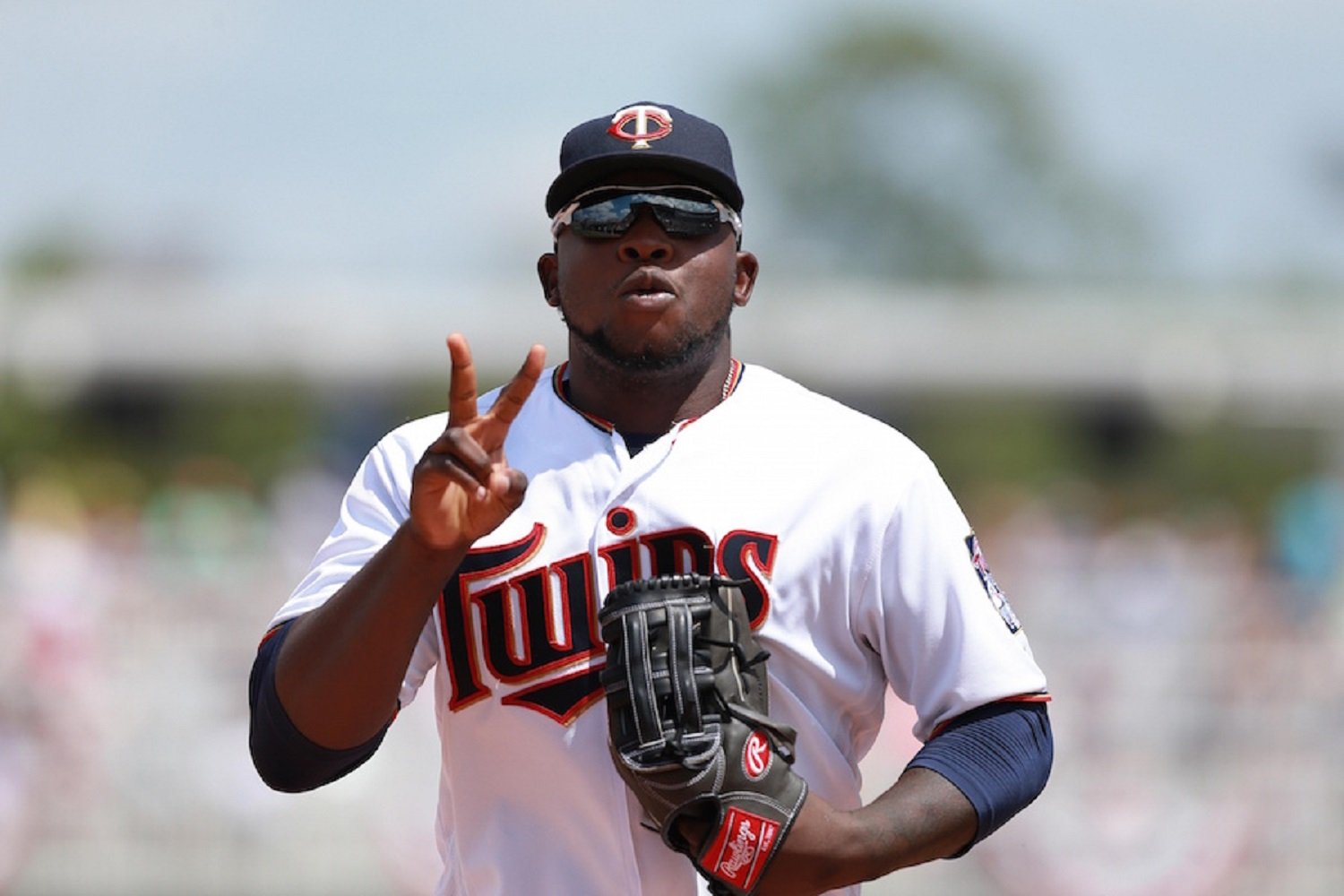 Miguel Sanó is one of the biggest young stars to ever come through the Minnesota Twins franchise – figuratively and literally. Both these qualities would ultimately come to play against him, in terms of expectation and perception. A Rising Prodigy His emergence as a youth in the Dominican Republic drew the attention of filmmakers, who produced a documentary detailing Sanó's courtship from major-league teams. Amid controversy swirling around his actual age, Minnesota was able to swoop in and sign him for a franchise-record $3.15 million bonus. From there, Sanó began a rapid pro ascent. The third baseman flashed his immense slugging prowess in the low minors and quickly established himself as a premier prospect, ranking #4 overall on MLB.com's rankings after 2013. Then, in spring of 2014, he tore the UCL in his right elbow, requiring Tommy John surgery and wiping out his age-21 season. It was sadly the beginning of a nonstop cycle of physical setbacks that would keep Sanó from ever settling into any sustained healthy groove in his career. He came back in 2015 and quickly reached the majors. He was as advertised, slashing .269/.385/.531 as a 22-year-old against major-league pitching. Sanó consistently worked counts and capitalized, looking every bit the part of a premier cleanup man for years to come. He finished third in AL Rookie of the Year voting behind Carlos Correa and Francisco Lindor. From Odd Fit to All-Star The following year, Terry Ryan's effort to shoehorn both Sanó and Trevor Plouffe onto the roster led to the ill-advised experiment of shifting Sanó to right field. As a fast-growing hulk who seemed clearly destined to move down the defensive spectrum rather than up it, this assignment did not suit Sanó. He struggled in 2016, at the plate and in the field, contributing to an all-around total system failure that prompted Ryan's dismissal. In 2017, the Twins rebounded, and Sanó was a driving force. Posting a .902 OPS with 21 homers and 62 RBIs in the first half, he made the All-Star team and finished runner-up to Aaron Judge in the Home Run Derby. At age 24, Sanó was without question one of the true rising stars in Major League Baseball, his presence registering on the national scale. In all the talk of what a disappointment and bust he's been, people seem to forget this. For a while, it really was all coming together for him. And then... The Leg Injury About a month after his All-Star experience, Sanó suffered an injury that would permanently alter the course of his meteoric career. On August 18th, he fouled a ball hard into his left shin that did serious damage. Diagnosed as a stress reaction, it never really healed, and Sanó had a titanium rod inserted during the offseason, which prevented him from being able to condition and prepare as normal for the following year. This cascading series of events contributed to a completely disastrous 2018 campaign, during which Minnesota took the drastic step of demoting a broken Sanó from the majors to Single-A, merely so he could go to the team's facility in Fort Myers and try to physically get right. He finished the season with a .199 average and .679 OPS in 71 MLB games. Bomba Squad Revival In 2019, we got one last burst of brilliance from Sanó, but it was a worthy final glimpse, offering everything we hoped he could be. Following a late start due to an offseason incident, he stepped in as a spiritual leader of the Bomba Squad, launching 34 homers in 105 games en route to a .934 OPS. Reigniting his dominant offensive game, Sanó provided many of the season's most memorable highlights, including the grand slam in Cleveland that effectively sealed a division title. By this point, Sanó was a 26-year-old with 118 career home runs and a 122 OPS+, coming off a monster campaign and seemingly ready to enter into a prodigious slugging prime. The sky was the limit, and Minnesota's front office attempted to capitalize with a three-year extension. But from there, the sky started falling and it didn't stop. Miguel's Mighty Collapse It's easy to forget, but for most of the shortened 2020 season, Sanó actually looked the part. Through 42 games he was slashing .236/.321/.549 with 11 homers and 22 RBIs. Then he cratered in the final two weeks, going 4-for-42 with 22 strikeouts, and carried it over to the playoffs where he was 1-for-8. Sanó's offensive production was solid but unspectacular in 2021, where he slashed .223/.312/.466 with poor defensive ratings at first base to produce a modest 0.9 fWAR. Nearly his entire 2022 season was wiped out by a knee injury, and now, here we are. A Mixed, But Largely Misunderstood, Legacy No one can deny that by the end of his tenure in Minnesota, Sanó was of little use. Framing his legacy within that narrow scope, however, tells a very incomplete and misleading story. Yet many people are oddly obsessed with doing so and always have been. All the way back in 2017 I wrote about the implicit negativity bias that threatened to forever tarnish Sanó's perception in the eyes of fans. For whatever reason, there's always been a compulsion to myopically focus on the negatives of his game, even in the face of overwhelming positives and legitimately exhilarating moments on the field. Ax-grinding columnists and pandering media snobs have been relentless in hurling lopsided critiques at the slugger even during his best moments, playing off the most base tropes: that because he's big and strikes out a lot, he must therefore be lazy and bad. During his All-Star 2017, Jim Souhan penned a column for the Star Tribune titled "Pounds sneak up on injured Miguel Sano as Twins get back in race," directing blame for the stress reaction in his leg to his ... diet? At the beginning of Sanó's amazing 2019 season, a local outlet blasted out headlines about how Sanó was not "good at baseball," amidst an endless volley of derision, because – you guessed it – he was big and struck out a lot. As I wrote in 2017, "Sano's historic power is enabled by his size and strength, his ferocious cuts – the very same things criticized by anyone who's looking for a grievance to air." Would it have been nice if he remained a bit more svelte and made more contact? Sure, but Sanó is who he is and was always destined to be: a massive human being who swings obscenely hard and generates ridiculous power. By singling out the negative aspects of his size and swing, you miss out on the historically rare things they enabled him to do. Sanó ranks fifth among all Twins, ever, in slugging percentage. He has hit 162 career home runs before the age of 30. Over the course of his career, he has consistently hit the ball harder than almost anyone in the world. Just look at all the red in those max/average exit velocity columns, indicating he was at or near the top percentile of all MLB hitters: His tremendous raw power produced some of the most memorable moonshots of the Target Field era. He hit the longest measured home run in the ballpark's history, a 496-foot tank off the White Sox in September of 2019. He nearly matched that distance at Fenway in 2021, where his 495-foot nuke off Nick Pivetta became the longest home run hit by anyone all season. The man put forth some of the most dazzling power-hitting highlights Major League Baseball has ever seen, which makes the pervasive compulsion to diminish him especially weird to me. To be clear, Sanó also had some notable off-the-field issues, and was subject of multiple investigations. I don't begrudge anyone for disliking him based on these factors. In fact I can't say I care much for the person, based on all I know. But from a purely baseball vantage, the general conversation on Sanó has been extremely skewed, as any honest look at the facts and statistics will show. Was he a disappointment? Certainly fair to say, especially in light of the expectations set by his own talent and his excellent early MLB output. But to say he was a bust, or bad at baseball, or "never lived up to expectations," is out of touch with reality. Sanó was well on his way to fulfilling his promise, but in a twist uniquely on-brand for Minnesota sports, his ascent was halted and forever reversed just as he was rising to his peak. It's something to be lamented, not celebrated. Especially if the ending of this story follows script and he goes elsewhere to recapture his peak slugging form.
 -
In 2015, Miguel Sanó arrived to great fanfare – the top prospect and heralded young slugging star who would help carry the Twins franchise into a new era. In 2022, he exited to no fanfare, with Minnesota procedurally declining his 2023 option and paying millions to move on, as onlookers barely paid notice. Sanó's fall from mighty heights will go down as a sad, but significant, note in franchise history. Image courtesy of Kim Klement, USA Today Sports Miguel Sanó is one of the biggest young stars to ever come through the Minnesota Twins franchise – figuratively and literally. Both these qualities would ultimately come to play against him, in terms of expectation and perception. A Rising Prodigy His emergence as a youth in the Dominican Republic drew the attention of filmmakers, who produced a documentary detailing Sanó's courtship from major-league teams. Amid controversy swirling around his actual age, Minnesota was able to swoop in and sign him for a franchise-record $3.15 million bonus. From there, Sanó began a rapid pro ascent. The third baseman flashed his immense slugging prowess in the low minors and quickly established himself as a premier prospect, ranking #4 overall on MLB.com's rankings after 2013. Then, in spring of 2014, he tore the UCL in his right elbow, requiring Tommy John surgery and wiping out his age-21 season. It was sadly the beginning of a nonstop cycle of physical setbacks that would keep Sanó from ever settling into any sustained healthy groove in his career. He came back in 2015 and quickly reached the majors. He was as advertised, slashing .269/.385/.531 as a 22-year-old against major-league pitching. Sanó consistently worked counts and capitalized, looking every bit the part of a premier cleanup man for years to come. He finished third in AL Rookie of the Year voting behind Carlos Correa and Francisco Lindor. From Odd Fit to All-Star The following year, Terry Ryan's effort to shoehorn both Sanó and Trevor Plouffe onto the roster led to the ill-advised experiment of shifting Sanó to right field. As a fast-growing hulk who seemed clearly destined to move down the defensive spectrum rather than up it, this assignment did not suit Sanó. He struggled in 2016, at the plate and in the field, contributing to an all-around total system failure that prompted Ryan's dismissal. In 2017, the Twins rebounded, and Sanó was a driving force. Posting a .902 OPS with 21 homers and 62 RBIs in the first half, he made the All-Star team and finished runner-up to Aaron Judge in the Home Run Derby. At age 24, Sanó was without question one of the true rising stars in Major League Baseball, his presence registering on the national scale. In all the talk of what a disappointment and bust he's been, people seem to forget this. For a while, it really was all coming together for him. And then... The Leg Injury About a month after his All-Star experience, Sanó suffered an injury that would permanently alter the course of his meteoric career. On August 18th, he fouled a ball hard into his left shin that did serious damage. Diagnosed as a stress reaction, it never really healed, and Sanó had a titanium rod inserted during the offseason, which prevented him from being able to condition and prepare as normal for the following year. This cascading series of events contributed to a completely disastrous 2018 campaign, during which Minnesota took the drastic step of demoting a broken Sanó from the majors to Single-A, merely so he could go to the team's facility in Fort Myers and try to physically get right. He finished the season with a .199 average and .679 OPS in 71 MLB games. Bomba Squad Revival In 2019, we got one last burst of brilliance from Sanó, but it was a worthy final glimpse, offering everything we hoped he could be. Following a late start due to an offseason incident, he stepped in as a spiritual leader of the Bomba Squad, launching 34 homers in 105 games en route to a .934 OPS. Reigniting his dominant offensive game, Sanó provided many of the season's most memorable highlights, including the grand slam in Cleveland that effectively sealed a division title. By this point, Sanó was a 26-year-old with 118 career home runs and a 122 OPS+, coming off a monster campaign and seemingly ready to enter into a prodigious slugging prime. The sky was the limit, and Minnesota's front office attempted to capitalize with a three-year extension. But from there, the sky started falling and it didn't stop. Miguel's Mighty Collapse It's easy to forget, but for most of the shortened 2020 season, Sanó actually looked the part. Through 42 games he was slashing .236/.321/.549 with 11 homers and 22 RBIs. Then he cratered in the final two weeks, going 4-for-42 with 22 strikeouts, and carried it over to the playoffs where he was 1-for-8. Sanó's offensive production was solid but unspectacular in 2021, where he slashed .223/.312/.466 with poor defensive ratings at first base to produce a modest 0.9 fWAR. Nearly his entire 2022 season was wiped out by a knee injury, and now, here we are. A Mixed, But Largely Misunderstood, Legacy No one can deny that by the end of his tenure in Minnesota, Sanó was of little use. Framing his legacy within that narrow scope, however, tells a very incomplete and misleading story. Yet many people are oddly obsessed with doing so and always have been. All the way back in 2017 I wrote about the implicit negativity bias that threatened to forever tarnish Sanó's perception in the eyes of fans. For whatever reason, there's always been a compulsion to myopically focus on the negatives of his game, even in the face of overwhelming positives and legitimately exhilarating moments on the field. Ax-grinding columnists and pandering media snobs have been relentless in hurling lopsided critiques at the slugger even during his best moments, playing off the most base tropes: that because he's big and strikes out a lot, he must therefore be lazy and bad. During his All-Star 2017, Jim Souhan penned a column for the Star Tribune titled "Pounds sneak up on injured Miguel Sano as Twins get back in race," directing blame for the stress reaction in his leg to his ... diet? At the beginning of Sanó's amazing 2019 season, a local outlet blasted out headlines about how Sanó was not "good at baseball," amidst an endless volley of derision, because – you guessed it – he was big and struck out a lot. As I wrote in 2017, "Sano's historic power is enabled by his size and strength, his ferocious cuts – the very same things criticized by anyone who's looking for a grievance to air." Would it have been nice if he remained a bit more svelte and made more contact? Sure, but Sanó is who he is and was always destined to be: a massive human being who swings obscenely hard and generates ridiculous power. By singling out the negative aspects of his size and swing, you miss out on the historically rare things they enabled him to do. Sanó ranks fifth among all Twins, ever, in slugging percentage. He has hit 162 career home runs before the age of 30. Over the course of his career, he has consistently hit the ball harder than almost anyone in the world. Just look at all the red in those max/average exit velocity columns, indicating he was at or near the top percentile of all MLB hitters: His tremendous raw power produced some of the most memorable moonshots of the Target Field era. He hit the longest measured home run in the ballpark's history, a 496-foot tank off the White Sox in September of 2019. He nearly matched that distance at Fenway in 2021, where his 495-foot nuke off Nick Pivetta became the longest home run hit by anyone all season. The man put forth some of the most dazzling power-hitting highlights Major League Baseball has ever seen, which makes the pervasive compulsion to diminish him especially weird to me. To be clear, Sanó also had some notable off-the-field issues, and was subject of multiple investigations. I don't begrudge anyone for disliking him based on these factors. In fact I can't say I care much for the person, based on all I know. But from a purely baseball vantage, the general conversation on Sanó has been extremely skewed, as any honest look at the facts and statistics will show. Was he a disappointment? Certainly fair to say, especially in light of the expectations set by his own talent and his excellent early MLB output. But to say he was a bust, or bad at baseball, or "never lived up to expectations," is out of touch with reality. Sanó was well on his way to fulfilling his promise, but in a twist uniquely on-brand for Minnesota sports, his ascent was halted and forever reversed just as he was rising to his peak. It's something to be lamented, not celebrated. Especially if the ending of this story follows script and he goes elsewhere to recapture his peak slugging form. View full article
-
Martinez has made 4 straight All-Star teams and has hit 90 doubles the past two seasons. Haniger had 40 HR and 100 RBI in 2021. Drury just had a career year. ?♂️
-
They got Donaldson late in the offseason. They waited out Cruz's limited market. I don't think it's quite accurate to say this hasn't been an effective strategy for a team trying to make the most of its resources. The alternative is to pay a huge premium up front and win them over. I'm down for that if it's like Correa or Rodon but guys like that in Minnesota's realistic scope are in short supply.
-
Young players don't really exist in free agency, by virtue of needing 6 seasons of service to get there.

