



Nick Nelson
-
Posts
8,326 -
Joined
-
Last visited
-
Days Won
56
Content Type
Profiles
News
Minnesota Twins Videos
2026 Minnesota Twins Top Prospects Ranking
2022 Minnesota Twins Draft Picks
Minnesota Twins Free Agent & Trade Rumors, Notes, & Tidbits
Guides & Resources
2023 Minnesota Twins Draft Picks
The Minnesota Twins Players Project
2024 Minnesota Twins Draft Picks
2025 Minnesota Twins Draft Pick Tracker
2026 Minnesota Twins Draft Tracker: Picks & Bonuses
Forums
Blogs
Events
Store
Downloads
Gallery
Everything posted by Nick Nelson
-
 Any such agreement came off the table when he missed an entire season with Tommy John, IMO. (And earned $3M to not pitch, fwiw.) If it's true that he can be "fantastic in the bullpen" then the Twins should use him in the way that helps them most. I like Kenta but I don't think think he has much of a leg to stand on after being bad in 2021 and throwing zero innings in 2022.
 -
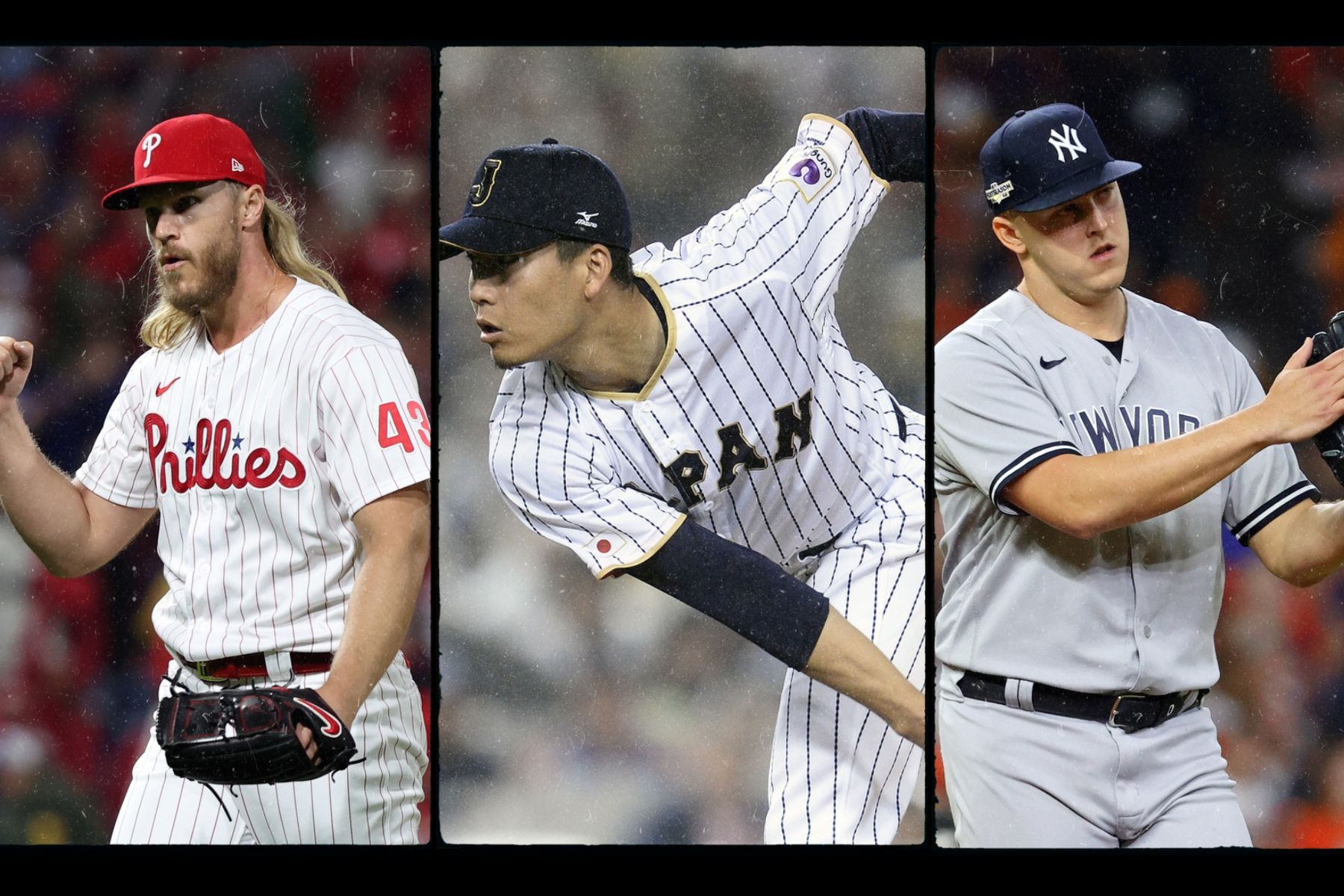 Earlier this week, we set the bar for where the Twins front office needs to aim in reinforcing the rotation: the Sonny Gray Threshold. In the Offseason Handbook, we highlighted eight free agents who arguably fall above that threshold – No. 1 caliber starters who would slot above Gray. The Twins certainly have the financial flexibility to pursue one of those arms if Carlos Correa isn't re-signed, but still, we have to acknowledge that they've never waded into that deepest end of the SP pool before. Based on their track record, it's much more likely this front office shops at the next tier, which isn't the worst news because there is some quality to be found and maybe even some decent values. These are the most likely free agent targets for the Twins. None would be particularly exciting as a primary addition for the rotation, but they are all potential playoff starters, and failing to acquire someone AT LEAST at this level would be downright unacceptable. 1. José Quintana, LHP Former Team: Cardinals Age: 34 The cutoff for my "Sonny Gray Threshold" was in between Martín Peréz, the last player profiled in my Handbook story, and Quintana, the first player profiled here. Admittedly, it's a very thin line, because these are both previously underwhelming veteran left-handers coming off breakthrough seasons where they pitched like legitimate No. 1 starters, despite unimpressive K-rates. I'm less high on Quintana – who posted a fantastic 2.93 ERA and 2.99 FIP in 32 starts for the Pirates and Cardinals – because he's a few years older (turning 34 in January) and threw 30 fewer innings. You'd be buying high on either southpaw, but in both cases, there's no knocking the 2022 performance. Estimated Contract: 3 years, $45 million 2. Noah Syndergaard, RHP Former Team: Phillies Age: 30 I'll be fascinated to see how Syndergaard's market takes shape. He's got the big name, the mighty aura, the flashy track record. He also pitched two total innings between 2020 and '21, and in his return to action last year he was ... Thor Lite. The fastball velo was way down, along with the strikeouts. He posted a 3.94 ERA and 3.83 FIP in 134.2 IP between the Angels and Phillies. Even in this lesser form, Syndergaard was still solid, but if you're signing him it's probably based on the belief that his velocity and dominance will return. At this point that's a leap of faith. Estimated Contract: 3 years, $51 million 3. Taijuan Walker, RHP Former Team: Mets Age: 30 There were rumblings that the Twins were close to signing Walker ahead of the 2020 season, banking on a return to form for the former top prospect who missed nearly all of 2018-19. No deal ended up materializing, but their instinct was right: Walker has stayed mostly healthy in three seasons since, posting a 3.80 ERA and 1.19 WHIP. He has a player option but is sure to opt out in search of a multi-year deal coming off a strong season. He's one of the youngest players on this list. Estimated Contract: 4 years, $52 million 4. Kodai Senga, RHP Former Team: Fukuoka Softbank Hawks (Japan) Age: 30 One of the biggest pitching stars in Japan is reportedly set to opt out of his contract and pursue a deal in the majors. Senga has been excellent in NPB, where he posted a pristine 1.89 ERA last year with 159 strikeouts and seven home runs allowed in 148 innings. There is obviously uncertainty about how his game will translate to MLB. With a mid-90s fastball accompanied by unremarkable secondary stuff, he's definitely not on the Masahiro Tanaka or Yu Darvish tier, but Senga could be a quality #2 type. A big risk but a potentially intriguing one. Estimated Contract: 4 years, $50 million 5. Sean Manaea, LHP Former Team: Padres Age: 31 He was the apple of many a Twins fan's eye last offseason, when the Athletics were known to be dangling him. Manaea ended up going to the San Diego, and didn't have a very good season: 158 IP, 4.96 ERA, 4.53 FIP, 29 HR allowed. His stock is down, but there's a reason he was in demand to begin with: Manaea has consistently been a quality performer while at times flashing top-of-rotation upside. Even in his disappointing 2022 he still averaged about a strike out per inning. Estimated Contract: 3 years, $48 million 6. Michael Wacha, RHP Former Team: Red Sox Age: 31 Once a promising young 17-game winner for the Cardinals, Wacha's career was derailed in his late 20s to the point where he had to take a one-year make-good deal with the Red Sox last offseason. He made good indeed, going 11-2 with a 3.32 ERA in 127.1 IP, but the underlying metrics weren't that impressive and Wacha's prior recent track record was brutal (5.11 ERA in 2019-21). There's a lot of risk in gambling on him, and I'm not sure how much reward. Estimated Contract: 3 years, $45 million 7. Jameson Taillon, RHP Former Team: Yankees Age: 31 When they acquired Taillon from the Pirates, the Yankees hoped to emulate what Houston did with Gerrit Cole: extract an underperforming former top draft pick from Pittsburgh's rotation and unlock his true potential. That didn't happen. Taillon was much more good than great during two seasons in the Bronx, posting a 4.08 ERA in 322 innings – translating to a 100 ERA+ that rates him as exactly average. That said, he's been pretty durable and his 4.72 K/BB ratio in 2022 is appealing. Contract Estimate: 3 years, $36 million 8. Zach Eflin, RHP Former Team: Phillies Age: 28 Advanced metrics have always viewed Eflin more favorably than his core results, which amount to a 4.49 ERA in about 650 career innings. He has very good control but isn't dominant, with middling fastball speeds and strikeout rates that belie his big 6-foot-6 frame. I'd describe him as the very definition of a mid-rotation starter, but a fairly reliable one at that. His biggest selling point perhaps is his age – still only 28 as of next Opening Day. Estimated Contract: 3 years, $36 million 9. Andrew Heaney, LHP Former Team: Dodgers Age: 31 Much like with Tyler Anderson, the Dodgers gambled on Heaney with a one-year deal, believing that the left-hander had much more ability in him than the sub-par numbers showed. Much like with Anderson, that gamble paid off in a big way, as Heaney dominated to the tune of a 3.10 ERA and 13.6 K/9 rate. The only reason he's not alongside Anderson on this list is that he simply didn't have the volume – only 73 innings thrown in 14 appearances (12 starts) due to injuries. His preceding track record is also much uglier than Anderson's. Still, Heaney finally realized his frontline stuff this year and offers tantalizing upside. Estimated Contract: 2 years, $28 million 10. Drew Smyly, LHP Former Team: Cubs Age: 33 The veteran lefty lost his entire 2017-18 seasons to injury, and has since bounced around a whole bunch: from Texas to Philly to San Francisco to Atlanta to Chicago, all within a span of four years. So many teams have seen promise in his undeniably intriguing stuff from the left side but no one's been able to fully unlock his top performance over an extended period. The Cubs came as close as anyone this past season, where he had a 3.47 ERA over 106.1 IP, but he posted a career-low K-rate and home runs continued to haunt him (he's allowed 77 in 373.1 IP since 2019). He does have a mutual option with Chicago although those rarely seem to get activated. Estimated Contract: 2 years, $18 million 11. Ross Stripling, RHP Former Team: Blue Jays Age: 33 Stripling is, in many ways, a prototype pitcher for this front office: a hybrid pitcher who's consistently phased between starting and relieving, while remaining mostly successful in both roles: he has a 3.86 career ERA as a starter, 3.51 as a reliever. The right-hander is coming off a season where he won 10 games and posted a 3.01 ERA in 134.1 IP for Toronto, so he'll probably be looked at as more of a starter with swingman qualities. Estimated Contract: 2 years, $18 million 12. Jake Odorizzi, RHP Former Team: Braves Age: 33 Odorizzi once again heads into free agency on a sour note. Following a strong first half in Houston, he was traded to Atlanta, where he posted a 5.24 ERA in 46.1 IP and dealt with arm fatigue, then struggled in one postseason appearance. Despite the flat finish, he'll still probably turn down his $6.5 million player option in search of a somewhat larger payday. But much like after his 2020 season, which was ravaged to the core by injuries, Odo won't be in a position to command a ton. He projects are more of back-of-rotation starter at this point but Twins fans have seen him at his best; maybe it's still in there somewhere. Estimated Contract: 2 years, $14 million 13. Corey Kluber, RHP Former Team: Rays Age: 36 We probably need to divorce ourselves from the idea that the two-time Cy Young winner will ever regain his previous form. But that doesn't mean he can't be, or hasn't been, effective in this reduced state. He posted a 4.34 ERA and 3.57 FIP in 164 innings for Tampa in 2022. While he no longer has the stuff to blow people away, with a fastball that's dropped to the high 80s, he still gets people to chase his slider. And one strength that HAS returned is his elite control – he led the league in BB/9 this year, as he did in 2017 and 2018. Estimated Contract: 1 year, $12 million 14. Kyle Gibson. RHP Former Team: Phillies Age: 35 Another former Twin and former All-Star whose stock is down. Gibson had a career year in 2021, posting a 3.75 ERA and 3.0 fWAR in 182 innings, but the past season was more of a struggle: 5.05 ERA, 1.8 fWAR in 167.2 IP. He just turned 35 and it's hard to see much upside left, but Gibson has been durable (29-plus starts in every non-pandemic year since 2017) and steadily solid. He falls well short of the Sonny Gray Threshold but can't be ignored as an option given the familiarity and likelihood of a short-term deal. Estimated Contract: 1 year, $8 million 15. Wade Miley, LHP Former Team: Cubs Age: 36 The well-traveled veteran was limited to just 37 innings in 2022 due to elbow inflammation and a shoulder strain. After missing most of the season, he came back and pitched pretty well in September, as if to make a statement about his readiness to rebound next year. Miley has consistently pitched well when on the mound, and he'll probably be available for an incentive-laden one-year deal, which is up Minnesota's alley. But his age combined with two scary arm issues this past season pose a lot of risk for a team that's trying to steer toward dependability. Estimated Contract: 1 year, $5 million
 -
Ideally the Twins will aim toward the top end of starting pitching free agency this offseason. History tells us they won't. Luckily, this year's market features strong depth in terms of mid-rotation starters with upside to be more. Today we'll look at 15 free agent options in that range. Image courtesy of Bill Streicher, Gary A. Vasquez, Troy Taormina-USA TODAY Sports Earlier this week, we set the bar for where the Twins front office needs to aim in reinforcing the rotation: the Sonny Gray Threshold. In the Offseason Handbook, we highlighted eight free agents who arguably fall above that threshold – No. 1 caliber starters who would slot above Gray. The Twins certainly have the financial flexibility to pursue one of those arms if Carlos Correa isn't re-signed, but still, we have to acknowledge that they've never waded into that deepest end of the SP pool before. Based on their track record, it's much more likely this front office shops at the next tier, which isn't the worst news because there is some quality to be found and maybe even some decent values. These are the most likely free agent targets for the Twins. None would be particularly exciting as a primary addition for the rotation, but they are all potential playoff starters, and failing to acquire someone AT LEAST at this level would be downright unacceptable. 1. José Quintana, LHP Former Team: Cardinals Age: 34 The cutoff for my "Sonny Gray Threshold" was in between Martín Peréz, the last player profiled in my Handbook story, and Quintana, the first player profiled here. Admittedly, it's a very thin line, because these are both previously underwhelming veteran left-handers coming off breakthrough seasons where they pitched like legitimate No. 1 starters, despite unimpressive K-rates. I'm less high on Quintana – who posted a fantastic 2.93 ERA and 2.99 FIP in 32 starts for the Pirates and Cardinals – because he's a few years older (turning 34 in January) and threw 30 fewer innings. You'd be buying high on either southpaw, but in both cases, there's no knocking the 2022 performance. Estimated Contract: 3 years, $45 million 2. Noah Syndergaard, RHP Former Team: Phillies Age: 30 I'll be fascinated to see how Syndergaard's market takes shape. He's got the big name, the mighty aura, the flashy track record. He also pitched two total innings between 2020 and '21, and in his return to action last year he was ... Thor Lite. The fastball velo was way down, along with the strikeouts. He posted a 3.94 ERA and 3.83 FIP in 134.2 IP between the Angels and Phillies. Even in this lesser form, Syndergaard was still solid, but if you're signing him it's probably based on the belief that his velocity and dominance will return. At this point that's a leap of faith. Estimated Contract: 3 years, $51 million 3. Taijuan Walker, RHP Former Team: Mets Age: 30 There were rumblings that the Twins were close to signing Walker ahead of the 2020 season, banking on a return to form for the former top prospect who missed nearly all of 2018-19. No deal ended up materializing, but their instinct was right: Walker has stayed mostly healthy in three seasons since, posting a 3.80 ERA and 1.19 WHIP. He has a player option but is sure to opt out in search of a multi-year deal coming off a strong season. He's one of the youngest players on this list. Estimated Contract: 4 years, $52 million 4. Kodai Senga, RHP Former Team: Fukuoka Softbank Hawks (Japan) Age: 30 One of the biggest pitching stars in Japan is reportedly set to opt out of his contract and pursue a deal in the majors. Senga has been excellent in NPB, where he posted a pristine 1.89 ERA last year with 159 strikeouts and seven home runs allowed in 148 innings. There is obviously uncertainty about how his game will translate to MLB. With a mid-90s fastball accompanied by unremarkable secondary stuff, he's definitely not on the Masahiro Tanaka or Yu Darvish tier, but Senga could be a quality #2 type. A big risk but a potentially intriguing one. Estimated Contract: 4 years, $50 million 5. Sean Manaea, LHP Former Team: Padres Age: 31 He was the apple of many a Twins fan's eye last offseason, when the Athletics were known to be dangling him. Manaea ended up going to the San Diego, and didn't have a very good season: 158 IP, 4.96 ERA, 4.53 FIP, 29 HR allowed. His stock is down, but there's a reason he was in demand to begin with: Manaea has consistently been a quality performer while at times flashing top-of-rotation upside. Even in his disappointing 2022 he still averaged about a strike out per inning. Estimated Contract: 3 years, $48 million 6. Michael Wacha, RHP Former Team: Red Sox Age: 31 Once a promising young 17-game winner for the Cardinals, Wacha's career was derailed in his late 20s to the point where he had to take a one-year make-good deal with the Red Sox last offseason. He made good indeed, going 11-2 with a 3.32 ERA in 127.1 IP, but the underlying metrics weren't that impressive and Wacha's prior recent track record was brutal (5.11 ERA in 2019-21). There's a lot of risk in gambling on him, and I'm not sure how much reward. Estimated Contract: 3 years, $45 million 7. Jameson Taillon, RHP Former Team: Yankees Age: 31 When they acquired Taillon from the Pirates, the Yankees hoped to emulate what Houston did with Gerrit Cole: extract an underperforming former top draft pick from Pittsburgh's rotation and unlock his true potential. That didn't happen. Taillon was much more good than great during two seasons in the Bronx, posting a 4.08 ERA in 322 innings – translating to a 100 ERA+ that rates him as exactly average. That said, he's been pretty durable and his 4.72 K/BB ratio in 2022 is appealing. Contract Estimate: 3 years, $36 million 8. Zach Eflin, RHP Former Team: Phillies Age: 28 Advanced metrics have always viewed Eflin more favorably than his core results, which amount to a 4.49 ERA in about 650 career innings. He has very good control but isn't dominant, with middling fastball speeds and strikeout rates that belie his big 6-foot-6 frame. I'd describe him as the very definition of a mid-rotation starter, but a fairly reliable one at that. His biggest selling point perhaps is his age – still only 28 as of next Opening Day. Estimated Contract: 3 years, $36 million 9. Andrew Heaney, LHP Former Team: Dodgers Age: 31 Much like with Tyler Anderson, the Dodgers gambled on Heaney with a one-year deal, believing that the left-hander had much more ability in him than the sub-par numbers showed. Much like with Anderson, that gamble paid off in a big way, as Heaney dominated to the tune of a 3.10 ERA and 13.6 K/9 rate. The only reason he's not alongside Anderson on this list is that he simply didn't have the volume – only 73 innings thrown in 14 appearances (12 starts) due to injuries. His preceding track record is also much uglier than Anderson's. Still, Heaney finally realized his frontline stuff this year and offers tantalizing upside. Estimated Contract: 2 years, $28 million 10. Drew Smyly, LHP Former Team: Cubs Age: 33 The veteran lefty lost his entire 2017-18 seasons to injury, and has since bounced around a whole bunch: from Texas to Philly to San Francisco to Atlanta to Chicago, all within a span of four years. So many teams have seen promise in his undeniably intriguing stuff from the left side but no one's been able to fully unlock his top performance over an extended period. The Cubs came as close as anyone this past season, where he had a 3.47 ERA over 106.1 IP, but he posted a career-low K-rate and home runs continued to haunt him (he's allowed 77 in 373.1 IP since 2019). He does have a mutual option with Chicago although those rarely seem to get activated. Estimated Contract: 2 years, $18 million 11. Ross Stripling, RHP Former Team: Blue Jays Age: 33 Stripling is, in many ways, a prototype pitcher for this front office: a hybrid pitcher who's consistently phased between starting and relieving, while remaining mostly successful in both roles: he has a 3.86 career ERA as a starter, 3.51 as a reliever. The right-hander is coming off a season where he won 10 games and posted a 3.01 ERA in 134.1 IP for Toronto, so he'll probably be looked at as more of a starter with swingman qualities. Estimated Contract: 2 years, $18 million 12. Jake Odorizzi, RHP Former Team: Braves Age: 33 Odorizzi once again heads into free agency on a sour note. Following a strong first half in Houston, he was traded to Atlanta, where he posted a 5.24 ERA in 46.1 IP and dealt with arm fatigue, then struggled in one postseason appearance. Despite the flat finish, he'll still probably turn down his $6.5 million player option in search of a somewhat larger payday. But much like after his 2020 season, which was ravaged to the core by injuries, Odo won't be in a position to command a ton. He projects are more of back-of-rotation starter at this point but Twins fans have seen him at his best; maybe it's still in there somewhere. Estimated Contract: 2 years, $14 million 13. Corey Kluber, RHP Former Team: Rays Age: 36 We probably need to divorce ourselves from the idea that the two-time Cy Young winner will ever regain his previous form. But that doesn't mean he can't be, or hasn't been, effective in this reduced state. He posted a 4.34 ERA and 3.57 FIP in 164 innings for Tampa in 2022. While he no longer has the stuff to blow people away, with a fastball that's dropped to the high 80s, he still gets people to chase his slider. And one strength that HAS returned is his elite control – he led the league in BB/9 this year, as he did in 2017 and 2018. Estimated Contract: 1 year, $12 million 14. Kyle Gibson. RHP Former Team: Phillies Age: 35 Another former Twin and former All-Star whose stock is down. Gibson had a career year in 2021, posting a 3.75 ERA and 3.0 fWAR in 182 innings, but the past season was more of a struggle: 5.05 ERA, 1.8 fWAR in 167.2 IP. He just turned 35 and it's hard to see much upside left, but Gibson has been durable (29-plus starts in every non-pandemic year since 2017) and steadily solid. He falls well short of the Sonny Gray Threshold but can't be ignored as an option given the familiarity and likelihood of a short-term deal. Estimated Contract: 1 year, $8 million 15. Wade Miley, LHP Former Team: Cubs Age: 36 The well-traveled veteran was limited to just 37 innings in 2022 due to elbow inflammation and a shoulder strain. After missing most of the season, he came back and pitched pretty well in September, as if to make a statement about his readiness to rebound next year. Miley has consistently pitched well when on the mound, and he'll probably be available for an incentive-laden one-year deal, which is up Minnesota's alley. But his age combined with two scary arm issues this past season pose a lot of risk for a team that's trying to steer toward dependability. Estimated Contract: 1 year, $5 million View full article
-
The Twins already have rotation depth going into 2023, at least in terms of pure quantity. They don't need more bottom-of-rotation starters like Dylan Bundy or Chris Archer. What they need to do is acquire someone at or above what I call the 'Sonny Gray Threshold.' It'll be our guiding barometer as we assess the team's rotation strategy this offseason. Image courtesy of Lindsey Wasson-USA TODAY Sports I am of the opinion that it's a failure if the Twins go into 2023 with Sonny Gray as their standalone No. 1 starter. This might've been the underlying rationale behind adding Tyler Mahle at the deadline, but unfortunately, Mahle should be viewed as no more than a question mark and hopeful contributor for next year. You simply can't plan around a guy who threw 16 innings after being acquired, and finished on the injured list with an unresolved shoulder issue. Kenta Maeda, much like Mahle, is a pitcher who's shown top-of-rotation ability but can't be firmly depended upon for a whole lot. At age 35, with only 173 total innings under his belt over the past three seasons, the Twins may be best off placing him in a long relief or swingman role, as he often filled in Los Angeles. Meanwhile, Gray himself was limited to just 120 innings in 2022, with multiple hamstring injuries disrupting a full season even by his modest standards for what one looks like. With all this instability near the top of the rotation, the Twins really need to add a proven, durable, high-caliber starter who would be a credible option to start a postseason game. They need near, or ideally above, the level of Gray. In the newest chapter of the Offseason Handbook, Reinforcing the Rotation, I took a look eight high-end free agents and 10 potential trade targets who arguably land at or above the Sonny Gray Threshold. I also broke down the internal pitching pipeline with a look at which prospects might be able to help, and when. It's all now available to download for Caretakers, who can also access our previously released Handbook installments covering the payroll and the future of shortstop. If you're not a Caretaker already, you can sign up here for as little as $6/month and get plenty of other perks including free entry to the Winter Meltdown (details coming soon!). Of course, there will also be plenty of free content available to everyone on the site this week a we take a collective deep dive into the Twins' starting pitching needs and options. Stay tuned and let's see if we can surpass the Sonny Gray Threshold. View full article
-
The Sonny Gray Threshold: Searching for a Real Rotation Upgrade
Nick Nelson posted an article in Twins
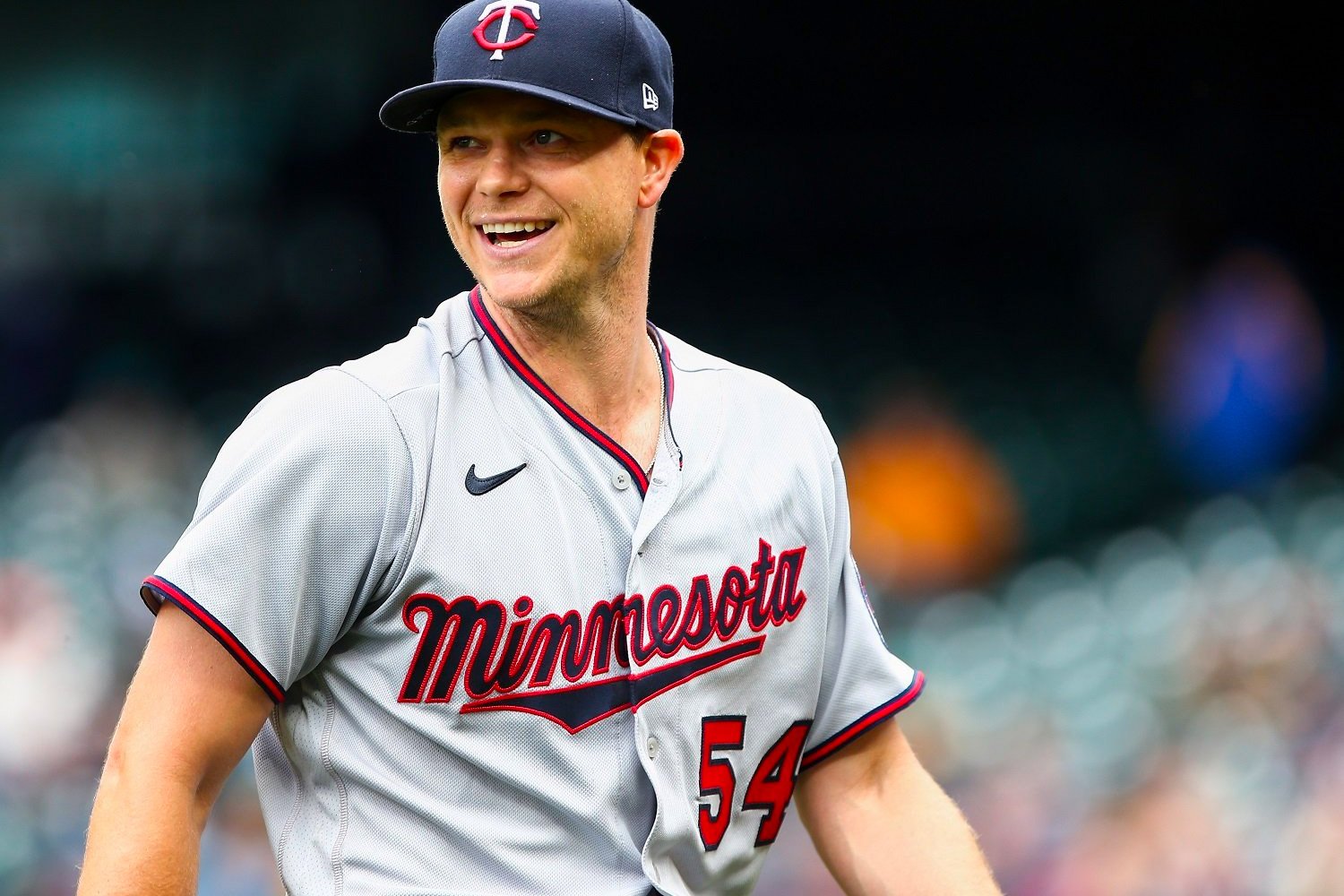 I am of the opinion that it's a failure if the Twins go into 2023 with Sonny Gray as their standalone No. 1 starter. This might've been the underlying rationale behind adding Tyler Mahle at the deadline, but unfortunately, Mahle should be viewed as no more than a question mark and hopeful contributor for next year. You simply can't plan around a guy who threw 16 innings after being acquired, and finished on the injured list with an unresolved shoulder issue. Kenta Maeda, much like Mahle, is a pitcher who's shown top-of-rotation ability but can't be firmly depended upon for a whole lot. At age 35, with only 173 total innings under his belt over the past three seasons, the Twins may be best off placing him in a long relief or swingman role, as he often filled in Los Angeles. Meanwhile, Gray himself was limited to just 120 innings in 2022, with multiple hamstring injuries disrupting a full season even by his modest standards for what one looks like. With all this instability near the top of the rotation, the Twins really need to add a proven, durable, high-caliber starter who would be a credible option to start a postseason game. They need near, or ideally above, the level of Gray. In the newest chapter of the Offseason Handbook, Reinforcing the Rotation, I took a look eight high-end free agents and 10 potential trade targets who arguably land at or above the Sonny Gray Threshold. I also broke down the internal pitching pipeline with a look at which prospects might be able to help, and when. It's all now available to download for Caretakers, who can also access our previously released Handbook installments covering the payroll and the future of shortstop. If you're not a Caretaker already, you can sign up here for as little as $6/month and get plenty of other perks including free entry to the Winter Meltdown (details coming soon!). Of course, there will also be plenty of free content available to everyone on the site this week a we take a collective deep dive into the Twins' starting pitching needs and options. Stay tuned and let's see if we can surpass the Sonny Gray Threshold.
- 51 comments
-
- 3
-

-
- sonny gray
- kenta maeda
- (and 1 more)
-
Let's be clear, the Twins didn't really win a bidding war for Correa. They took advantage of very unique circumstances in a unique offseason. It's not like they were throwing out $250M offers like they'd need to do in order to re-sign Correa, or get into the convo for Turner/Bogaerts. Also, there are other ways to spend that extra money if they don't use it on a SS. I think suggesting that all light-hitting, glove-first defenders at SS are the same is misguided. Someone like Nick Ahmed, at his peak, is a huge difference-maker because of what he does in the field. That 670 OPS hasn't prevented him from putting up basically the same career WAR as Jorge Polanco.
-
It's subjective, and you make a good case for the validity of Iglesias. To me, it comes down to this: Andrus has shown he can be a legitimately valuable player over the past two seasons (5.1 fWAR). Iglesias, less so (2.7 fWAR). I'm not convinced Iglesias is much of a defender at SS anymore. Statcast agrees. You can live with Iglesias as a plug-in but Andrus has actually flashed modest upside of late. That's the difference maker for me.
-
Iglesias had a .709 OPS and it equated to a 90 OPS+. Tells you all you need to know. Contextually his offense was on par with Gary Sanchez. He interests me not at all. The only FA outside of the big four I find viable is Andrus.
-
Would be exciting. I can almost guarantee they're not going to win any of those bidding wars so it's necessary to consider other options. Signing one of those free agents is not entirely in their control, even if they are willing to reach the necessary threshold (which they probably aren't).
-
Fair question. My take: The Twins don't view Urshela as an SS at all. They had ample opportunities to give him even a few sparse looks there this year and he never started a game, even as Nick Gordon got a handful of nods there. Actually, part of the reason I view IKF as a fit is that he negates the need to bring back Urshela for like 50% more money. If/when Lewis or Lee is ready to step in at short, Kiner-Falefa becomes a nice asset as a backup/utility IF. Agreed that his metrics at SS are underwhelming, but he has rated excellent at 3B, better than Gio. IKF also brings some speed to the roster which Urshela most definitely does not.
-
If the Twins could get one of the top 3 guys on the same total commitment as Correa (100M) they'd do it in a heartbeat. That's not going to happen though. Freeing up the cash for 2023 alone is not really the issue here. We're talking about 6-7+ year contracts for those top 3.
-
Okay, who do you want? I would bet that Correa, Turner, Bogaerts, and Swanson all sign with big-market teams for huge contracts, with the first 3 being out of the Twins' realistic spending range and Swanson being too expensive to be a wise investment (I'm not a huge believer in him). I'm not trying to get the "answer I want" I'm trying to get a realistic and specific answer beyond "I wanna spend big money on an awesome two-way shortstop!" It's not that simple.
-
Which above-average hitting shortstop are you interested in acquiring who is actually a realistic target, assuming they aren't looking for a long-term solution that'll cost $100+ million?
-
The current Twins front office has consistently been very active on the trade market. If they decide this is their best avenue for addressing the glaring need at shortstop, there are three names that stand out as likely targets. Image courtesy of Vincent Carchietta, Jayne Kamin-Oncea, Orlando Ramirez-USA TODAY Sports As detailed in our "Future of Shortstop" chapter of the Offseason Handbook (now available for Caretakers to download!), there are four big names on the shortstop free agency market this offseason, and it's likely the Twins won't land any of them. In fact, if the front office believes their shortstop of the future is already in the organization, they might not even seriously pursue any of them. Carlos Correa, Trea Turner, Xander Bogaerts and Dansby Swanson are all going to get long-term deals worth more than $100 million. The free agent pool drops off severely after those four players, to the point that it might make more sense to trade for a short-term plug in search of a little more impact. Yesterday, Matt Braun highlighted three under-the-radar trade targets. While I could definitely see the Twins getting creative and going after any one of those names, the following trio of shortstops strike me as more straightforward and likely options – each distinctly appealing to the Twins for different, yet similar, reasons. These are the more "on the radar" shortstop trade targets. Isiah Kiner-Falefa, New York Yankees As we all remember (who could forget?!), Kiner-Falefa was a Twin for about a day or so, between the time he was acquired from Texas and then traded to the Yankees. The Twins were adamant at the time they didn't deal for IKF with the intention of immediately flipping him. They liked him. If they liked him then, there's not much reason to think they don't like him now. He had a customary season in New York, rating well defensively while not hitting much. Kiner-Falefa experienced the brunt of Yankee fan vitriol and was benched in key late-season situations. It's safe to say both parties are ready to move on. With one season of arbitration remaining and a mediocre showing in his most recent campaign, Kiner-Falefa will surely cost less to acquire than a year ago, when the Twins gave up two seasons of Mitch Garver. If the Twins are planning to usher Royce Lewis back in as shortstop midway through the season, IKF would make a lot of sense as an interim plug, capable of moving off shortstop and handling other positions like third, where he's got a Gold Glove under his belt. Nick Ahmed, Arizona Diamondbacks If the Twins want to shoot a bit higher than Kiner-Falefa, who'd be a logical albeit uninspiring fit, they could turn their attention to Ahmed. He's not without his own risk and downside, though. Ahmed is akin to Kiner-Falefa in that he specializes with the glove and doesn't offer much with the bat. His defensive strength, however, has been much stronger. Ahmed won Gold Gloves at shortstop in 2018 and 2019, and was a three-win player both years based entirely on defensive value. He had an especially brutal offensive season in 2021, and then missed almost all of 2022 due to shoulder surgery, so his stock is definitely down. Ahmed is expected to be a full go next spring, with one year and $10.4 million remaining on his contract. By trading for him, you'd be banking on him regaining his elite defensive impact at age 33, coming off major surgery on his throwing shoulder, but it's not a bad bet. Brandon Crawford, San Francisco Giants Next season, Crawford will be 36 and earning $16 million in the last year of his contract. The age, combined with a very unproductive 2022 campaign at the plate (.231/.308/.344, 9 HR in 118 games), detracts from his appeal. However, just one year ago, in 2021, Crawford as an All-Star and MVP contender. He posted 6.3 fWAR, launching 24 home runs with an .895 OPS while winning a Gold Glove. He was, basically, the best version of Carlos Correa. That upside, however faint, makes Crawford interesting, especially when coupled with his floor as an experienced vet with a good glove and expiring contract. I recognize that none of these players are very exciting based on what they did in 2022. But they all have common traits that make them great fits for the Twins -- assuming the team is intent on keeping for the door open for one of their prospects to take over at shortstop. All three are veterans with reliably good gloves, varying levels of legitimate upside, and one-year contract commitments. They're also all in relative buy-low situations, which Minnesota's value-minded front office is sure to favor. Trading for one of these players would enable the Twins to confidently address their 2023 shortstop opening while reserving resources to make bigger splashes in other areas. View full article
-
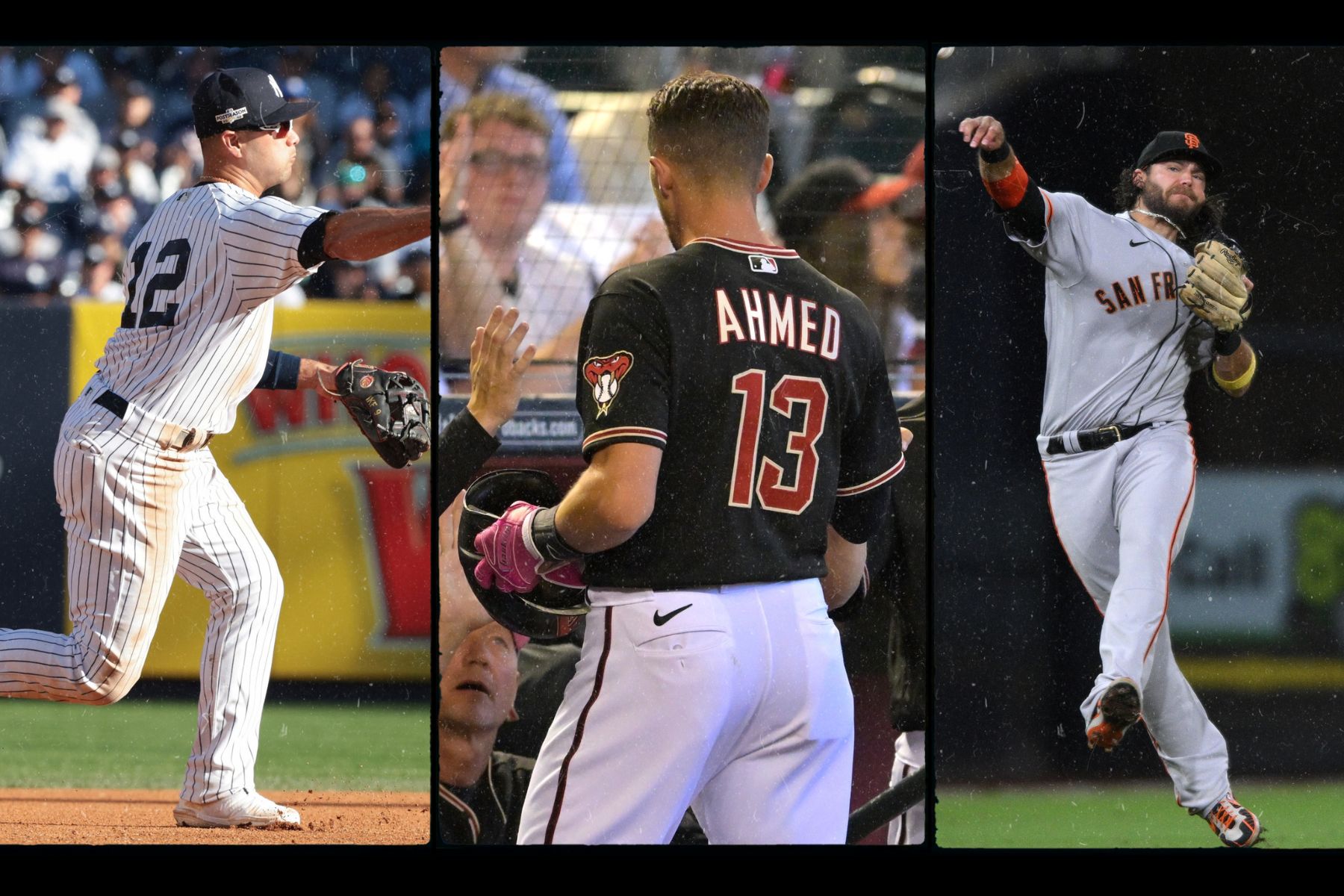 As detailed in our "Future of Shortstop" chapter of the Offseason Handbook (now available for Caretakers to download!), there are four big names on the shortstop free agency market this offseason, and it's likely the Twins won't land any of them. In fact, if the front office believes their shortstop of the future is already in the organization, they might not even seriously pursue any of them. Carlos Correa, Trea Turner, Xander Bogaerts and Dansby Swanson are all going to get long-term deals worth more than $100 million. The free agent pool drops off severely after those four players, to the point that it might make more sense to trade for a short-term plug in search of a little more impact. Yesterday, Matt Braun highlighted three under-the-radar trade targets. While I could definitely see the Twins getting creative and going after any one of those names, the following trio of shortstops strike me as more straightforward and likely options – each distinctly appealing to the Twins for different, yet similar, reasons. These are the more "on the radar" shortstop trade targets. Isiah Kiner-Falefa, New York Yankees As we all remember (who could forget?!), Kiner-Falefa was a Twin for about a day or so, between the time he was acquired from Texas and then traded to the Yankees. The Twins were adamant at the time they didn't deal for IKF with the intention of immediately flipping him. They liked him. If they liked him then, there's not much reason to think they don't like him now. He had a customary season in New York, rating well defensively while not hitting much. Kiner-Falefa experienced the brunt of Yankee fan vitriol and was benched in key late-season situations. It's safe to say both parties are ready to move on. With one season of arbitration remaining and a mediocre showing in his most recent campaign, Kiner-Falefa will surely cost less to acquire than a year ago, when the Twins gave up two seasons of Mitch Garver. If the Twins are planning to usher Royce Lewis back in as shortstop midway through the season, IKF would make a lot of sense as an interim plug, capable of moving off shortstop and handling other positions like third, where he's got a Gold Glove under his belt. Nick Ahmed, Arizona Diamondbacks If the Twins want to shoot a bit higher than Kiner-Falefa, who'd be a logical albeit uninspiring fit, they could turn their attention to Ahmed. He's not without his own risk and downside, though. Ahmed is akin to Kiner-Falefa in that he specializes with the glove and doesn't offer much with the bat. His defensive strength, however, has been much stronger. Ahmed won Gold Gloves at shortstop in 2018 and 2019, and was a three-win player both years based entirely on defensive value. He had an especially brutal offensive season in 2021, and then missed almost all of 2022 due to shoulder surgery, so his stock is definitely down. Ahmed is expected to be a full go next spring, with one year and $10.4 million remaining on his contract. By trading for him, you'd be banking on him regaining his elite defensive impact at age 33, coming off major surgery on his throwing shoulder, but it's not a bad bet. Brandon Crawford, San Francisco Giants Next season, Crawford will be 36 and earning $16 million in the last year of his contract. The age, combined with a very unproductive 2022 campaign at the plate (.231/.308/.344, 9 HR in 118 games), detracts from his appeal. However, just one year ago, in 2021, Crawford as an All-Star and MVP contender. He posted 6.3 fWAR, launching 24 home runs with an .895 OPS while winning a Gold Glove. He was, basically, the best version of Carlos Correa. That upside, however faint, makes Crawford interesting, especially when coupled with his floor as an experienced vet with a good glove and expiring contract. I recognize that none of these players are very exciting based on what they did in 2022. But they all have common traits that make them great fits for the Twins -- assuming the team is intent on keeping for the door open for one of their prospects to take over at shortstop. All three are veterans with reliably good gloves, varying levels of legitimate upside, and one-year contract commitments. They're also all in relative buy-low situations, which Minnesota's value-minded front office is sure to favor. Trading for one of these players would enable the Twins to confidently address their 2023 shortstop opening while reserving resources to make bigger splashes in other areas.
 -
It was never a secret, and now it's more or less official: Carlos Correa is going to opt out of his contract and re-enter free agency in search of a career-making new deal. This leaves the Twins once again needing to address a vacancy at shortstop. So where do we go from here? Image courtesy of Raj Mehta-USA TODAY Sports Carlos Correa confirmed to a Puerto Rican newspaper last week his intent to exercise the opt-out clause in his contract and become a free agent. It comes as no surprise to the Twins' decision makers, who knew back in February they were essentially inking the star shortstop to a one-year deal. Enlisting Correa was an exciting, and ultimately worthwhile, gambit for the front office – even if it wasn't enough to make the difference for a team doomed by injuries. Alas, this gambit amounted to kicking the can down the road when it comes to charting out the franchise's future at shortstop. That open position now looms as a crucial linchpin in this coming offseason, and one we explore deeply in the next chapter of the Offseason Handbook. This three-part series of PDFs will be available exclusively to Twins Daily Caretakers when it drops on Tuesday. Stay dialed into your email inbox for these stories: Courting Carlos Correa (Again): A thorough examination of the Twins as a suitor for Correa in the open market. Analyzing the Free Agent Shortstop Market: The 10 non-Correa options in free agency, ranked and profiled. Organizational Depth Chart: Breaking down the system's depth at shortstop, level by level. Essentially, these pieces will equip you to answer three pivotal questions in determining the path forward at shortstop: Is re-signing Correa realistic (or wise)? If not, who else might they sign to replace him? And, perhaps most importantly, do you believe the long-term answer is already in the system? Sign up as a Caretaker at any tier to get access to these new chapters, as well as John's back-of-the-napkin payroll analysis from last week and all future premium content to come. You can use all of the information in these chapters to build your own roster at TwinsPayroll.com. The offseason ahead is full of weighty, complex decisions. Let's navigate them together, starting with priority number one. View full article
-
Offseason Handbook Preview: What Will the Minnesota Twins Do at Shortstop?
Nick Nelson posted an article in Twins
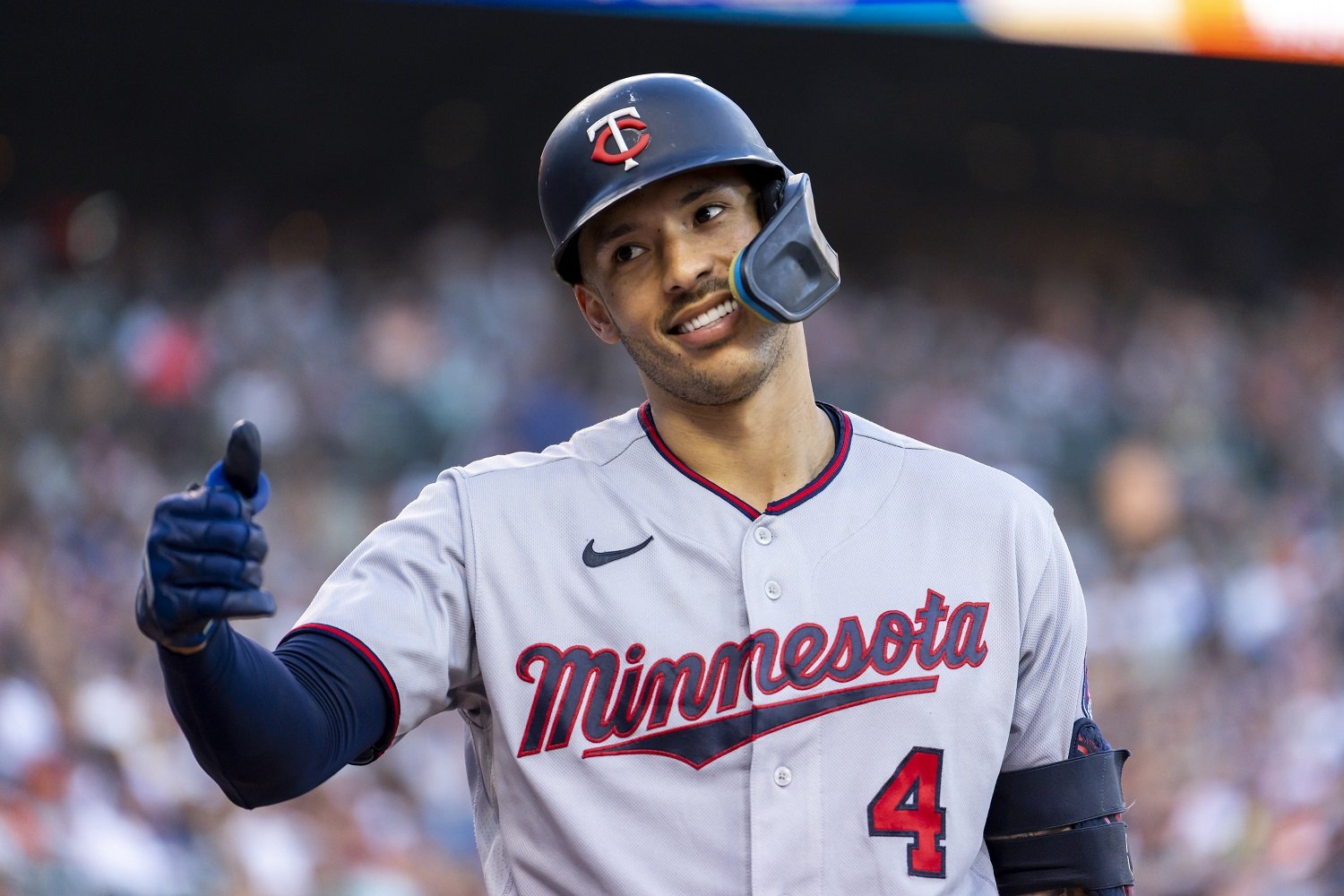 Carlos Correa confirmed to a Puerto Rican newspaper last week his intent to exercise the opt-out clause in his contract and become a free agent. It comes as no surprise to the Twins' decision makers, who knew back in February they were essentially inking the star shortstop to a one-year deal. Enlisting Correa was an exciting, and ultimately worthwhile, gambit for the front office – even if it wasn't enough to make the difference for a team doomed by injuries. Alas, this gambit amounted to kicking the can down the road when it comes to charting out the franchise's future at shortstop. That open position now looms as a crucial linchpin in this coming offseason, and one we explore deeply in the next chapter of the Offseason Handbook. This three-part series of PDFs will be available exclusively to Twins Daily Caretakers when it drops on Tuesday. Stay dialed into your email inbox for these stories: Courting Carlos Correa (Again): A thorough examination of the Twins as a suitor for Correa in the open market. Analyzing the Free Agent Shortstop Market: The 10 non-Correa options in free agency, ranked and profiled. Organizational Depth Chart: Breaking down the system's depth at shortstop, level by level. Essentially, these pieces will equip you to answer three pivotal questions in determining the path forward at shortstop: Is re-signing Correa realistic (or wise)? If not, who else might they sign to replace him? And, perhaps most importantly, do you believe the long-term answer is already in the system? Sign up as a Caretaker at any tier to get access to these new chapters, as well as John's back-of-the-napkin payroll analysis from last week and all future premium content to come. You can use all of the information in these chapters to build your own roster at TwinsPayroll.com. The offseason ahead is full of weighty, complex decisions. Let's navigate them together, starting with priority number one.
 -
Twins Daily 2022 Awards: Most Valuable Player
Nick Nelson replied to Nick Nelson's topic in Twins Daily Front Page News
Analytics are just stats. Why wouldn't we use stats to determine who had the best season? I'm sure Seth could sure the breakdown of voting results. This was my ballot, FYI: 1. Correa 2. Duran 3. Buxton 4. Arraez 5. Gray- 33 replies
-
- 2
-
-
- luis arraez
- carlos correa
- (and 1 more)
-
Five years ago, Luis Arraez was a little-known prospect at A-ball, lacking in traditional athletic traits but garnering attention as a novelty for his rarified ability to put the bat on the ball. This past July, he became a first-time All-Star. Last week, he became a first-time American League batting champ. And today, we name him a first-time pick for Twins Daily MVP. Image courtesy of Thiéres Rabelo, Twins Daily Luis Arraez is, in so many ways, not the guy you'd expect to finish atop a team's MVP vote – or alongside the absolute legends in Twins history who've preceded him as AL batting champs. You compare him to the other players on that exclusive list – Rod Carew, Joe Mauer, Tony Oliva, Kirby Puckett – and you're talking about thoroughbred Hall of Famers who looked the part. Many would count those four players among the five best in franchise history. Even comparing Arraez to the players who finished second and third behind him in Twins Daily's MVP balloting – Carlos Correa and Byron Buxton, respectively – is an amusing exercise. We're talking about preternatural teen talents who went 1-2 in the draft a decade ago – big-bucks superstars who smash the ball, and derive much of their value from premier defense at premium positions. Then, you have Luis Arraez. The Venezuelan was not a highly regarded property when signed by the Twins as an international free agent in 2013 for a measly $40,000 bonus. Just looking at him, you can see why. He is small and stubby – generously listed at 5-foot-10 and 175 lbs – with neither the speed, nor power, nor defensive skill to impress any onlooker. But Arraez brings one truly preternatural tool of his own, and it has become his signature. As Jake Mauer, his manager at Cedar Rapids back in 2016 – and a guy who has his own familial knowledge on the subject – said of a then-unknown Arraez back then: "He's got a knack for finding the barrel." Oh yes. And it's carried him from anonymity to All-Star status. It doesn't matter where he's at. It doesn't matter who's pitching to him. It doesn't matter the count. Arraez just hits. He's irrepressible, with contact rates that top the charts. Virtually no one swings and misses less or strikes out less. Yet despite his ability to put the bat on everything, he is disciplined enough to pass on most out-of-zone offerings, and walked more (50) than he struck out (43) this season. In a lineup that was prone to slumps, and often far too over-reliant on power at the expense of consistent quality ABs and rally-building, Arraez was a breath of fresh air. He was never an easy out, reflexively tapping outside pitches the other way for singles and then inviting pitchers to the inner half, where he could turn on the ball and unlock new levels of power. Arraez's .421 slugging percentage was nothing to write home about but he launched a respectable 40 extra-base hits, and doubled his previous career high for home runs with eight. Now, before I go any further, a disclosure: I didn't have Arraez at the top of my team MVP ballot. In fact, I didn't have him among my top three. Because, analytically, it's hard to make that case. Yes, he led the league in average. But that's merely one piece of the value equation. Arraez ranked third on the team in fWAR behind Correa and Buxton, with a 3.2 mark that is one of the lowest for a Twins Daily MVP since we started awarding it. Baseball Reference's WAR formula viewed Arraez more favorably (4.0) but he was still second to Correa. Even the seemingly more narrative-based Win Probability Added metric placed Arraez sixth on the team, behind Jhoan Duran, Jorge Polanco, Buxton, Joe Ryan, and Correa. But even WPA doesn't seem to capture the full narrative behind Arraez, and the positive impact that lifted him to the top of our collective balloting. It's true that Correa was difference-maker down the stretch – he had the sixth-highest WPA in the AL after July – and technically that portion of the schedule mattered a lot. It's also true that Arraez's bat went relatively quiet in those final months, as he battled a hamstring strain that limited him mostly to DH duty in September. But by then, it felt like the decimated Twins were engaged in an inevitably losing fight. When the team emerged early on and grasped first place, Arraez was the beating heart of the lineup. In the month of May, where the Twins went 18-12 to reach their greatest heights of the season, Arraez batted .377 with a .480 on-base percentage and 19 runs scored. He then flashed his emergent power in June, notching four doubles, three homers and a triple while driving in 15 runs. Compared to the likes of Correa and Buxton, Arraez loses a lot of value from metrics like WAR because of his reduced defensive value. And that's fair: no one would argue that Arraez impacts games with his glove like Buck in center or C4 at short. But the Twins didn't ask him to, or need it. What they needed him to do, after Miguel Sanó and Alex Kirilloff went down, was take over at first base, a position he had essentially never played before. Arraez is not exactly physically suited for the position either. But sure enough, he adapted quickly and proved to be a perfectly solid defender at first. Ultimately, I think that's what it came down to, and why the vote swung to Arraez. He simply showed up. He answered the call, time and time again. While the roster succumbed to injuries around him, he kept playing all year long, leading the team in plate appearances and games played (despite – as it's now easy to forget – being a healthy scratch on Opening Day!). By season's end, Arraez was the only worthwhile attraction for Twins fans, who could tune in to watch him battle Aaron Judge down to the wire, for a superficial honor, amidst a Triple-A lineup in a lost year. Arraez kept on showing up through the very last day, barely able to run and clearly limping, because he wanted "to win the batting title fighting." He did just that, and it's the fight he demonstrated down to the bitter end that likely helped elevate Arraez as the unlikely Twins Daily 2022 team MVP. FINAL BALLOTING POINTS TALLY Arraez: 55 Correa: 46 Buxton: 33 Durán: 27 Gray: 13 Miranda: 11 View full article
-
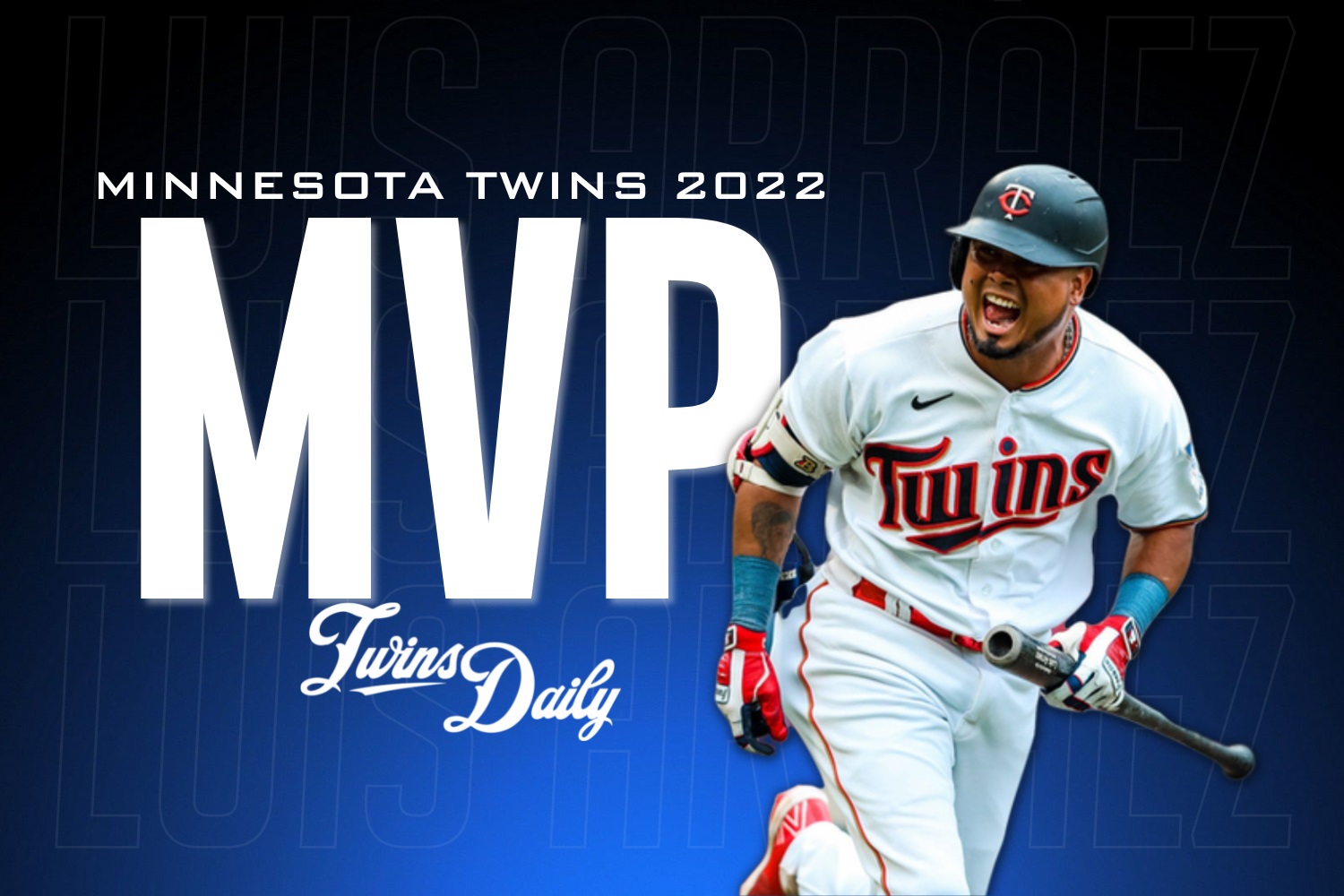 Luis Arraez is, in so many ways, not the guy you'd expect to finish atop a team's MVP vote – or alongside the absolute legends in Twins history who've preceded him as AL batting champs. You compare him to the other players on that exclusive list – Rod Carew, Joe Mauer, Tony Oliva, Kirby Puckett – and you're talking about thoroughbred Hall of Famers who looked the part. Many would count those four players among the five best in franchise history. Even comparing Arraez to the players who finished second and third behind him in Twins Daily's MVP balloting – Carlos Correa and Byron Buxton, respectively – is an amusing exercise. We're talking about preternatural teen talents who went 1-2 in the draft a decade ago – big-bucks superstars who smash the ball, and derive much of their value from premier defense at premium positions. Then, you have Luis Arraez. The Venezuelan was not a highly regarded property when signed by the Twins as an international free agent in 2013 for a measly $40,000 bonus. Just looking at him, you can see why. He is small and stubby – generously listed at 5-foot-10 and 175 lbs – with neither the speed, nor power, nor defensive skill to impress any onlooker. But Arraez brings one truly preternatural tool of his own, and it has become his signature. As Jake Mauer, his manager at Cedar Rapids back in 2016 – and a guy who has his own familial knowledge on the subject – said of a then-unknown Arraez back then: "He's got a knack for finding the barrel." Oh yes. And it's carried him from anonymity to All-Star status. It doesn't matter where he's at. It doesn't matter who's pitching to him. It doesn't matter the count. Arraez just hits. He's irrepressible, with contact rates that top the charts. Virtually no one swings and misses less or strikes out less. Yet despite his ability to put the bat on everything, he is disciplined enough to pass on most out-of-zone offerings, and walked more (50) than he struck out (43) this season. In a lineup that was prone to slumps, and often far too over-reliant on power at the expense of consistent quality ABs and rally-building, Arraez was a breath of fresh air. He was never an easy out, reflexively tapping outside pitches the other way for singles and then inviting pitchers to the inner half, where he could turn on the ball and unlock new levels of power. Arraez's .421 slugging percentage was nothing to write home about but he launched a respectable 40 extra-base hits, and doubled his previous career high for home runs with eight. Now, before I go any further, a disclosure: I didn't have Arraez at the top of my team MVP ballot. In fact, I didn't have him among my top three. Because, analytically, it's hard to make that case. Yes, he led the league in average. But that's merely one piece of the value equation. Arraez ranked third on the team in fWAR behind Correa and Buxton, with a 3.2 mark that is one of the lowest for a Twins Daily MVP since we started awarding it. Baseball Reference's WAR formula viewed Arraez more favorably (4.0) but he was still second to Correa. Even the seemingly more narrative-based Win Probability Added metric placed Arraez sixth on the team, behind Jhoan Duran, Jorge Polanco, Buxton, Joe Ryan, and Correa. But even WPA doesn't seem to capture the full narrative behind Arraez, and the positive impact that lifted him to the top of our collective balloting. It's true that Correa was difference-maker down the stretch – he had the sixth-highest WPA in the AL after July – and technically that portion of the schedule mattered a lot. It's also true that Arraez's bat went relatively quiet in those final months, as he battled a hamstring strain that limited him mostly to DH duty in September. But by then, it felt like the decimated Twins were engaged in an inevitably losing fight. When the team emerged early on and grasped first place, Arraez was the beating heart of the lineup. In the month of May, where the Twins went 18-12 to reach their greatest heights of the season, Arraez batted .377 with a .480 on-base percentage and 19 runs scored. He then flashed his emergent power in June, notching four doubles, three homers and a triple while driving in 15 runs. Compared to the likes of Correa and Buxton, Arraez loses a lot of value from metrics like WAR because of his reduced defensive value. And that's fair: no one would argue that Arraez impacts games with his glove like Buck in center or C4 at short. But the Twins didn't ask him to, or need it. What they needed him to do, after Miguel Sanó and Alex Kirilloff went down, was take over at first base, a position he had essentially never played before. Arraez is not exactly physically suited for the position either. But sure enough, he adapted quickly and proved to be a perfectly solid defender at first. Ultimately, I think that's what it came down to, and why the vote swung to Arraez. He simply showed up. He answered the call, time and time again. While the roster succumbed to injuries around him, he kept playing all year long, leading the team in plate appearances and games played (despite – as it's now easy to forget – being a healthy scratch on Opening Day!). By season's end, Arraez was the only worthwhile attraction for Twins fans, who could tune in to watch him battle Aaron Judge down to the wire, for a superficial honor, amidst a Triple-A lineup in a lost year. Arraez kept on showing up through the very last day, barely able to run and clearly limping, because he wanted "to win the batting title fighting." He did just that, and it's the fight he demonstrated down to the bitter end that likely helped elevate Arraez as the unlikely Twins Daily 2022 team MVP. FINAL BALLOTING POINTS TALLY Arraez: 55 Correa: 46 Buxton: 33 Durán: 27 Gray: 13 Miranda: 11
- 33 comments
-
- 3
-
-
- luis arraez
- carlos correa
- (and 1 more)
-
In a crummy season like this one, it's nice to have legitimate silver linings to fall back on. The 2022 Twins provided those, by receiving so many impact performances from major-league rookies with bright (cost-controlled) futures ahead of them that it was very difficult for our panel to settle on this award. Ultimately, the winner is flame-throwing phenom Jhoan Durán. Image courtesy of Thiéres Rabelo, Twins Daily Twins Daily panelists had three excellent choices in front of them when trying to select the best rookie on this year's Twins team. Joe Ryan delivered one of the best rookie campaigns by a starting pitcher in team history, posting a 13-8 record and 3.55 ERA in 27 starts. He led the team in innings. José Miranda shook off a slow start after debuting in May with a torrid summer on the way to a 116 OPS+, 15 home runs, and a team-leading 66 RBIs. Both Ryan and Miranda were essential to keeping their respective units afloat. Ryan, outside of a bout with COVID, stayed healthy all year in an injury-plagued rotation, and was consistently effective for the most part. Miranda was at times the only credible threat in a slump-prone lineup, the antidote for an offense allergic to hitting with RISP. But I don't think anyone can argue against the fact that Jhoan Durán's importance to this year's bullpen is unparalleled. He was not only their most reliable reliever, but oftentimes their only reliable reliever. He did marvelous, magical things on the mound that Minnesota Twins fans (and major-league baseball fans) have never seen before. Durán was barely the choice for Twins Daily Rookie of the Year, beating out Miranda by an extremely slim margin, but he was absolutely the right choice. These five numbers explain why. Jhoan Duran's Spectacular Rookie Season, by the Numbers 103.8 MPH The radar reading on Durán's hardest fastball of the season, thrown on September 27th, setting a new Twins franchise record for fastest recorded pitch. Naturally, he broke his own record, set at 103.3 MPH back in May, which itself broke his own record set earlier that month. Durán's laser beam against Elvis Andrus of the White Sox was rounded up on the TV broadcast, flashing an absurd 104 MPH. 100.8 MPH The velocity of a "splinker" thrown by Durán on August 29th against Boston, becoming the first offspeed pitch in major-league history to clock at 100-plus MPH. It was one of the nastiest and most untouchable pitches ever witnessed, sending a hopeless Alex Verdugo to the bench on strike three. The presence of Durán's splitter-sinker combo alongside his red-hot heater is crucial to his success, giving batters the almost impossible task of deciphering which one's coming within a sliver of a second. While the right-hander's fastball velo is rare – only a select few pitchers like Ryan Helsley and Jordan Hicks operate in that realm – his "offspeed" juice is what truly sets him apart. No one else is coming close to this velocity on a splitter. He's a unicorn. Of course, all of this eye-popping velocity wouldn't mean much if he couldn't command it and throw it in the zone. But he did. 69.31% Percentage of pitches thrown for strikes by Durán, the 11th-best mark for any MLB reliever. He allowed only 16 walks in 67 ⅔ innings (2.1 BB/9), and issued multiple free passes in an appearance once all year. The dread felt by opposing hitters stepping in against the imposing 6-foot-5 specimen was only made worse by the fact that trying to coax a walk was unlikely to be fruitful. As Aaron Gleeman marveled at The Athletic not long ago: "He relentlessly pounds the strike zone with arguably the best raw stuff in the world, changing speeds and eye levels in a way that almost seems unfair. Duran is destined to be one of the greatest relievers in Twins history if they can keep him healthy. He’s unreal." 1.86 Durán's final ERA in 2022, the 7th-best mark for any reliever in Twins history. His combination of elite stuff and precision command have led to complete and total dominance for Durán, who held opponents to a .207 average and struck out more than a third of the batters he faced (33.5%). His 1.86 ERA trails only these six seasons from Twins relievers, half of which belong to the great Joe Nathan: Dennys Reyes, 2006 (0.89) Joe Nathan, 2008 (1.33) Al Worthington, 1964 (1.37) Joe Nathan, 2006 (1.58) Joe Nathan, 2004 (1.62) Caleb Thielbar, 2013 (1.76) Durán was at his best during the second half, posting a 1.05 ERA with only one home run allowed in 24 appearances. 4.59 Durán's final Win Probability Added, which led all American League pitchers and ranked second among MLB relievers. Only Daniel Bard of the Rockies made a bigger impact on his team's outcomes. To me, this measurement gets to the core of what made Durán so remarkable and indispensable. Not only was he putting absolutely ridiculous numbers against big-league hitters ... he was doing it against the BEST big-league hitters in the BIGGEST spots. Once Rocco Baldelli became aware of what he had in Durán, the reliever was permanently pushed into a "fireman" role. Nearly every appearance was under duress, with the game hanging in the balance, and the heart of the opposing order due up. To pitch so well, in such consistently difficult circumstances, as a rookie with 16 previous innings of experiences above Double-A ... it's incomprehensible. Among all MLB rookie relievers since 1990, only Jonathan Papelbon has posted a higher WPA than Durán did in 2022. That was in 2006, the first of four straight All-Star seasons for Papelbon. Amidst all of these amazing numbers, the most important one for Durán might be 57. That's the number of appearances he made for the Twins, staying healthy and strong all year long as a go-to linchpin in the bullpen after totaling five appearances last year, when a forearm strain derailed his season. For all the worst-case scenarios that played out with the Twins this year from a health standpoint, Durán completely shaking off last year's elbow issues was a direly needed exception to the rule. If he can continue to keep that golden arm rocking, he'll be a vital asset in whatever this team is trying to build. Durán's rookie season was one for the ages. FINAL VOTING POINTS TALLY: Durán: 42 Miranda: 40 Ryan: 31 Moran: 6 Winder: 3 Celestino: 3 Varland: 1 View full article
- 19 replies
-
- 2
-
-
- jhoan duran
- jose miranda
- (and 1 more)
-
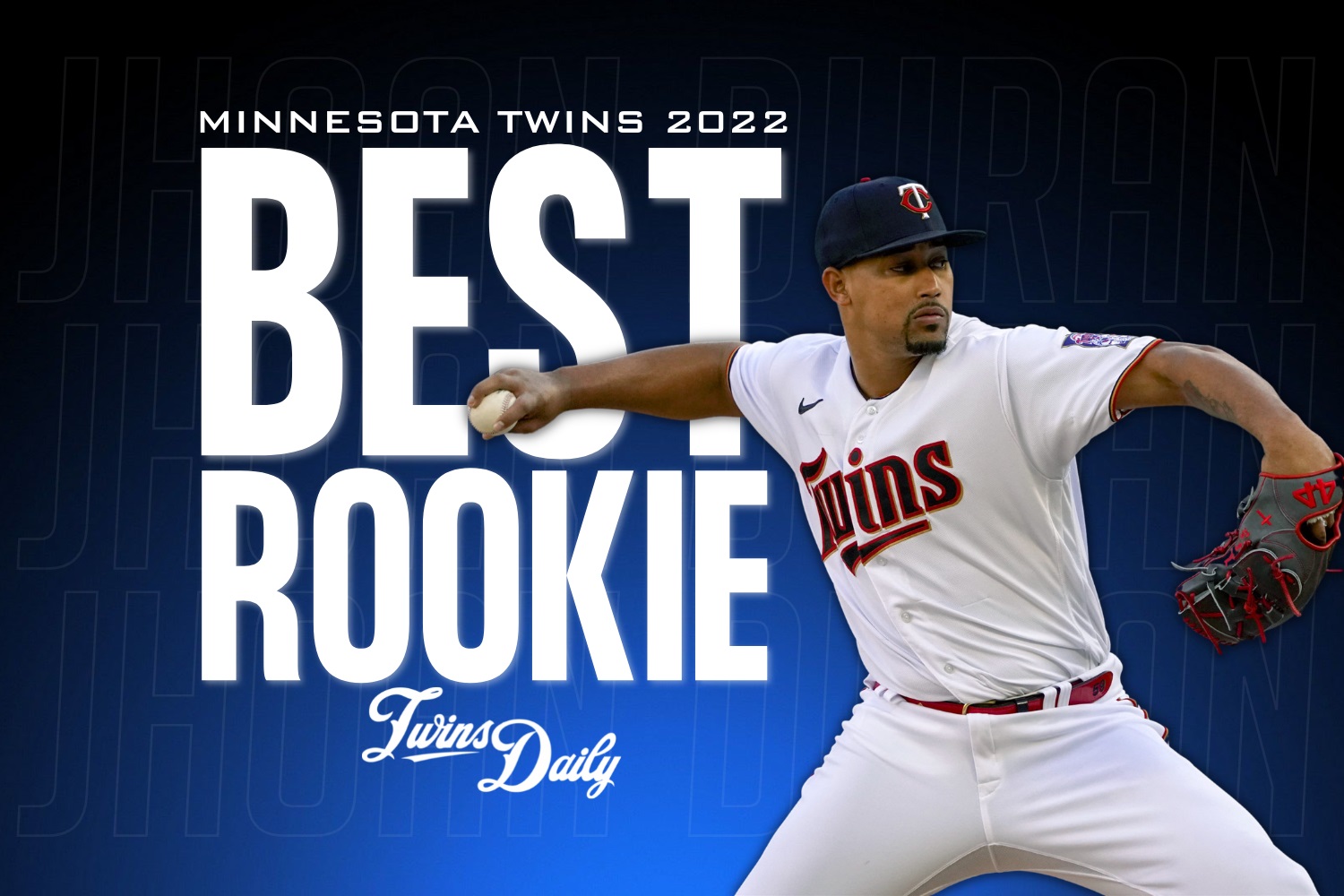 Twins Daily panelists had three excellent choices in front of them when trying to select the best rookie on this year's Twins team. Joe Ryan delivered one of the best rookie campaigns by a starting pitcher in team history, posting a 13-8 record and 3.55 ERA in 27 starts. He led the team in innings. José Miranda shook off a slow start after debuting in May with a torrid summer on the way to a 116 OPS+, 15 home runs, and a team-leading 66 RBIs. Both Ryan and Miranda were essential to keeping their respective units afloat. Ryan, outside of a bout with COVID, stayed healthy all year in an injury-plagued rotation, and was consistently effective for the most part. Miranda was at times the only credible threat in a slump-prone lineup, the antidote for an offense allergic to hitting with RISP. But I don't think anyone can argue against the fact that Jhoan Durán's importance to this year's bullpen is unparalleled. He was not only their most reliable reliever, but oftentimes their only reliable reliever. He did marvelous, magical things on the mound that Minnesota Twins fans (and major-league baseball fans) have never seen before. Durán was barely the choice for Twins Daily Rookie of the Year, beating out Miranda by an extremely slim margin, but he was absolutely the right choice. These five numbers explain why. Jhoan Duran's Spectacular Rookie Season, by the Numbers 103.8 MPH The radar reading on Durán's hardest fastball of the season, thrown on September 27th, setting a new Twins franchise record for fastest recorded pitch. Naturally, he broke his own record, set at 103.3 MPH back in May, which itself broke his own record set earlier that month. Durán's laser beam against Elvis Andrus of the White Sox was rounded up on the TV broadcast, flashing an absurd 104 MPH. 100.8 MPH The velocity of a "splinker" thrown by Durán on August 29th against Boston, becoming the first offspeed pitch in major-league history to clock at 100-plus MPH. It was one of the nastiest and most untouchable pitches ever witnessed, sending a hopeless Alex Verdugo to the bench on strike three. The presence of Durán's splitter-sinker combo alongside his red-hot heater is crucial to his success, giving batters the almost impossible task of deciphering which one's coming within a sliver of a second. While the right-hander's fastball velo is rare – only a select few pitchers like Ryan Helsley and Jordan Hicks operate in that realm – his "offspeed" juice is what truly sets him apart. No one else is coming close to this velocity on a splitter. He's a unicorn. Of course, all of this eye-popping velocity wouldn't mean much if he couldn't command it and throw it in the zone. But he did. 69.31% Percentage of pitches thrown for strikes by Durán, the 11th-best mark for any MLB reliever. He allowed only 16 walks in 67 ⅔ innings (2.1 BB/9), and issued multiple free passes in an appearance once all year. The dread felt by opposing hitters stepping in against the imposing 6-foot-5 specimen was only made worse by the fact that trying to coax a walk was unlikely to be fruitful. As Aaron Gleeman marveled at The Athletic not long ago: "He relentlessly pounds the strike zone with arguably the best raw stuff in the world, changing speeds and eye levels in a way that almost seems unfair. Duran is destined to be one of the greatest relievers in Twins history if they can keep him healthy. He’s unreal." 1.86 Durán's final ERA in 2022, the 7th-best mark for any reliever in Twins history. His combination of elite stuff and precision command have led to complete and total dominance for Durán, who held opponents to a .207 average and struck out more than a third of the batters he faced (33.5%). His 1.86 ERA trails only these six seasons from Twins relievers, half of which belong to the great Joe Nathan: Dennys Reyes, 2006 (0.89) Joe Nathan, 2008 (1.33) Al Worthington, 1964 (1.37) Joe Nathan, 2006 (1.58) Joe Nathan, 2004 (1.62) Caleb Thielbar, 2013 (1.76) Durán was at his best during the second half, posting a 1.05 ERA with only one home run allowed in 24 appearances. 4.59 Durán's final Win Probability Added, which led all American League pitchers and ranked second among MLB relievers. Only Daniel Bard of the Rockies made a bigger impact on his team's outcomes. To me, this measurement gets to the core of what made Durán so remarkable and indispensable. Not only was he putting absolutely ridiculous numbers against big-league hitters ... he was doing it against the BEST big-league hitters in the BIGGEST spots. Once Rocco Baldelli became aware of what he had in Durán, the reliever was permanently pushed into a "fireman" role. Nearly every appearance was under duress, with the game hanging in the balance, and the heart of the opposing order due up. To pitch so well, in such consistently difficult circumstances, as a rookie with 16 previous innings of experiences above Double-A ... it's incomprehensible. Among all MLB rookie relievers since 1990, only Jonathan Papelbon has posted a higher WPA than Durán did in 2022. That was in 2006, the first of four straight All-Star seasons for Papelbon. Amidst all of these amazing numbers, the most important one for Durán might be 57. That's the number of appearances he made for the Twins, staying healthy and strong all year long as a go-to linchpin in the bullpen after totaling five appearances last year, when a forearm strain derailed his season. For all the worst-case scenarios that played out with the Twins this year from a health standpoint, Durán completely shaking off last year's elbow issues was a direly needed exception to the rule. If he can continue to keep that golden arm rocking, he'll be a vital asset in whatever this team is trying to build. Durán's rookie season was one for the ages. FINAL VOTING POINTS TALLY: Durán: 42 Miranda: 40 Ryan: 31 Moran: 6 Winder: 3 Celestino: 3 Varland: 1
- 19 comments
-
- 8
-
-
- jhoan duran
- jose miranda
- (and 1 more)
-
The Twins closed out their disappointing 2022 season last week with a series loss in Chicago. The results by this point were meaningless, but there are a few meaningful things we can take away from the team's last hurrah. Image courtesy of Kamil Krzaczynski-USA TODAY Sports Weekly Snapshot: Mon, 10/3 through Weds, 10/5 *** Record Last Week: 1-2 (Overall: 78-84) Run Differential Last Week: +3 (Overall: +12) Standing: 3rd Place in AL Central (14.0 GB) Last Week's Game Results: Game 160 | CWS 3, MIN 2: Ober, Urshela Not Enough Game 161 | CWS 8, MIN 3: Sox Lineup Proves Overpowering Game 162 | MIN 10, CWS 1: Twins Finish on a High Note NEWS & NOTES The MLB season doesn't typically conclude in the middle of the week, but as a byproduct of last offseason's lockout and delayed spring training, this three-game series between the Twins and White Sox – originally scheduled to open the season – was tacked onto the end of the schedule. Back when the change was first made, fans were sizing up the possibility of a decisive final showdown in the AL Central. As it turns out, Cleveland ran away with the division, rendering this add-on series in Chicago as little more than a begrudging formality. Many key Twins players did not make it back in time to close out the season. Byron Buxton, Jorge Polanco, Trevor Larnach, Tyler Mahle and Max Kepler were all among the sidelined players once expected to return who never did. Sonny Gray joined them on the injured list in mid-September with a hamstring strain and Trevor Megill went down with an oblique strain after unleashing a wild pitch in warmups – which nearly hurt one the only injured player who DID make it back, Ryan Jeffers. Even José Miranda, a relative iron man in this group rounding out a very impressive rookie season, got bitten by the bug on Tuesday as a pitch – amazingly – ricocheted off his wrist and directly into his face for one of the most painful-looking HBPs of the year. While not deemed serious, he came out of the game and didn't play in the season finale on Wednesday. Fittingly, the injuries just kept on coming right up until the bitter end for these Minnesota Twins. HIGHLIGHTS Hilariously, the Twins fielded a lineup with no Miranda, no Carlos Correa, and none of the injured players mentioned above in Wednesday's season finale ... and managed to put up double-digit runs for the first time in six weeks. Minnesota did have one remaining cornerstone in their lineup: Luis Arraez, batting leadoff at DH while fighting through an obviously nagging hamstring, all in the name of actively locking down his first batting title. He did just that, finishing 1-for-1 with two walks to secure the honor. It helped his cause that Aaron Judge, with whom Arraez was competing for the batting crown, slowed down in the final weeks as he pressed (successfully) for the AL home run record and then rested. Judge batted .216 from September 22nd onward, while Arraez batted .364 over the same span, giving himself a solid margin of victory with a final .316 mark. (It was still the lowest average to earn an AL batting title in more than 50 years, which says a lot about where the game is at.) A few other positives to extract from the final series in Chicago, which – reflective of the Twins season as a whole – ended with a positive run differential and losing record: Gio Urshela finished the season strong and ended it with an exclamation point. The veteran infielder slashed .333/.404/.425 after the start of September, including .463/.500/.585 in his last 11 games with a 4-for-10 effort and 2 RBIs in the final series. Dick Bremer opined during one of last week's broadcasts that Urshela would be his choice for team MVP, and while I personally wouldn't go that far, he's undoubtedly been one of the team's steadiest players, and has earned an arbitration tender for that reason. Bailey Ober didn't quite dominate the White Sox to the same degree he did a week prior at Target Field, but he closed out his truncated season in style on Monday with five innings of two-run ball. Ober struck out four and walked one while allowing just two hits to finalize these 2022 numbers: 11 GS, 56 IP, 3.21 ERA, 2.92 FIP, 1.05 WHIP, 8.2 K/9, 1.8 BB/9. Perhaps most notably, he allowed only four home runs (0.6 HR/9), correcting the biggest flaw in his game as a rookie when he allowed 1.9 HR/9. A tremendous sophomore campaign in almost every regard, with the glaring exception of two-thirds being wiped out by his groin injury. Ober has entrenched himself as a homegrown mainstay in the future rotation plans, and Louie Varland is looking to do the same. He too closed out strong, starting the season finale and tossing five shutout innings with five strikeouts and no walks. Varland, who was named Twins minor league pitcher of the year for a second straight season, made five starts during his September audition in the big leagues, and looked eminently capable. In 26 innings he posted a 3.81 ERA and 21-to-6 K/BB ratio, completing at least five frames each time out. LOWLIGHTS While Ober and Varland finished on high notes, the same cannot be said for Josh Winder, who unfortunately has probably removed himself from a firm place in the team's rotation planning with a tumultuous season, and a final start that was emblematic. Winder was wildly ineffective against a watered-down White Sox lineup on Tuesday, lasting only 2 ⅓ innings before being lifted. He was charged with four earned runs on five hits and a walk, raising his ERA to 4.70. It was a familiar story for Winder: the velocity was there, but his fastball was nonetheless quite hittable (hitters batted .351 and slugged .713 against it this year), and the secondary stuff inconsistent. His control was amiss, with only 38 of 69 pitches finding the strike zone. Turning 26 in a couple of days, Winder has plenty of time to get back on track, but there's a long way to go in regaining the confidence he'd earned by the start of this 2022 season, when the Twins surprisingly snuck him onto their Opening Day roster. Also failing to gain confidence in this final stretch was Minnesota's makeshift outfield. It's tough to be without your full complement of starters – Buxton, Kepler, Alex Kirilloff – and even a bunch of key depth pieces in Larnach, Kyle Garlick, and Royce Lewis. Still, that doesn't fully excuse how woefully inadequate the replacement crew was. Gilberto Celestino, Jake Cave and Mark Contreras combined to go 2-for-29 in Chicago, contributing to an offense that could get nothing going in the first two games. The 27-year-old Contreras struggled overall in his major-league debut, slashing just .121/.148/.293 with a ghastly 21-to-1 K/BB ratio in 28 games, but he popped a few homers and showed some defensible chops. The presence of Contreras will probably (hopefully) be enough to push Cave – suddenly about to be 30 and arbitration-eligible – out of the picture going forward. Celestino, on the other hand, projects as more of an important part of the team's planning. His first full MLB season was a major improvement on a brutal 2021 debut, but the outfielder still rated out as merely replacement level. His offensive game was uninspiring and often punchless. His glove and legs showed promise, but Celestino managed to offset many of his positives with mental gaffes and baffling miscues. It's unfortunate that Celestino's development was so disturbed by the necessities of an injury-raved big-league club over the past two years. He needed more time to refine his hitting in the high minors, and the Twins could not afford to give it to him. It bears noting that Celly is still only 23, the same age as Lewis and Austin Martin. It's understandable that Celestino is lagging behind a bit, given his circumstances. But next year he's gonna need to show that he's catching up. TRENDING STORYLINE The offseason lies ahead. It'll be a very intriguing one for the Twins, who have some pivotal decisions in front of them. In some senses, this team is raring to go for a comeback in 2023. They'll return most of their core players – hopefully with much better health – and the aforementioned season-ending highlights offer reason for excitement: the reigning batting champ, Ober's continued emergence, and a minor-league pitcher/hitter of the year who debuted in September and look primed for immediate impact Then again, the Twins will head into the offseason plagued by lingering health concerns around key assets. They face the likelihood of losing one of their most valuable players in Correa, who's set to opt out shortly after the World Series. While they'd have money to spend in that event, the options available to replace him – and to bring much-needed stability to the top of the rotation and bullpen – are quite limited. Like I said, plenty of intrigue and no shortage of question marks. We'll be covering it all as it happens here at Twins Daily, where the baseball season never ends. If you haven't yet, make sure to sign up as a Caretaker at any tier so you get automatic access to our premium Offseason Handbook content, which kicks off on Monday when we launch our payroll analysis and roster builder tool. View full article
-
 Weekly Snapshot: Mon, 10/3 through Weds, 10/5 *** Record Last Week: 1-2 (Overall: 78-84) Run Differential Last Week: +3 (Overall: +12) Standing: 3rd Place in AL Central (14.0 GB) Last Week's Game Results: Game 160 | CWS 3, MIN 2: Ober, Urshela Not Enough Game 161 | CWS 8, MIN 3: Sox Lineup Proves Overpowering Game 162 | MIN 10, CWS 1: Twins Finish on a High Note NEWS & NOTES The MLB season doesn't typically conclude in the middle of the week, but as a byproduct of last offseason's lockout and delayed spring training, this three-game series between the Twins and White Sox – originally scheduled to open the season – was tacked onto the end of the schedule. Back when the change was first made, fans were sizing up the possibility of a decisive final showdown in the AL Central. As it turns out, Cleveland ran away with the division, rendering this add-on series in Chicago as little more than a begrudging formality. Many key Twins players did not make it back in time to close out the season. Byron Buxton, Jorge Polanco, Trevor Larnach, Tyler Mahle and Max Kepler were all among the sidelined players once expected to return who never did. Sonny Gray joined them on the injured list in mid-September with a hamstring strain and Trevor Megill went down with an oblique strain after unleashing a wild pitch in warmups – which nearly hurt one the only injured player who DID make it back, Ryan Jeffers. Even José Miranda, a relative iron man in this group rounding out a very impressive rookie season, got bitten by the bug on Tuesday as a pitch – amazingly – ricocheted off his wrist and directly into his face for one of the most painful-looking HBPs of the year. While not deemed serious, he came out of the game and didn't play in the season finale on Wednesday. Fittingly, the injuries just kept on coming right up until the bitter end for these Minnesota Twins. HIGHLIGHTS Hilariously, the Twins fielded a lineup with no Miranda, no Carlos Correa, and none of the injured players mentioned above in Wednesday's season finale ... and managed to put up double-digit runs for the first time in six weeks. Minnesota did have one remaining cornerstone in their lineup: Luis Arraez, batting leadoff at DH while fighting through an obviously nagging hamstring, all in the name of actively locking down his first batting title. He did just that, finishing 1-for-1 with two walks to secure the honor. It helped his cause that Aaron Judge, with whom Arraez was competing for the batting crown, slowed down in the final weeks as he pressed (successfully) for the AL home run record and then rested. Judge batted .216 from September 22nd onward, while Arraez batted .364 over the same span, giving himself a solid margin of victory with a final .316 mark. (It was still the lowest average to earn an AL batting title in more than 50 years, which says a lot about where the game is at.) A few other positives to extract from the final series in Chicago, which – reflective of the Twins season as a whole – ended with a positive run differential and losing record: Gio Urshela finished the season strong and ended it with an exclamation point. The veteran infielder slashed .333/.404/.425 after the start of September, including .463/.500/.585 in his last 11 games with a 4-for-10 effort and 2 RBIs in the final series. Dick Bremer opined during one of last week's broadcasts that Urshela would be his choice for team MVP, and while I personally wouldn't go that far, he's undoubtedly been one of the team's steadiest players, and has earned an arbitration tender for that reason. Bailey Ober didn't quite dominate the White Sox to the same degree he did a week prior at Target Field, but he closed out his truncated season in style on Monday with five innings of two-run ball. Ober struck out four and walked one while allowing just two hits to finalize these 2022 numbers: 11 GS, 56 IP, 3.21 ERA, 2.92 FIP, 1.05 WHIP, 8.2 K/9, 1.8 BB/9. Perhaps most notably, he allowed only four home runs (0.6 HR/9), correcting the biggest flaw in his game as a rookie when he allowed 1.9 HR/9. A tremendous sophomore campaign in almost every regard, with the glaring exception of two-thirds being wiped out by his groin injury. Ober has entrenched himself as a homegrown mainstay in the future rotation plans, and Louie Varland is looking to do the same. He too closed out strong, starting the season finale and tossing five shutout innings with five strikeouts and no walks. Varland, who was named Twins minor league pitcher of the year for a second straight season, made five starts during his September audition in the big leagues, and looked eminently capable. In 26 innings he posted a 3.81 ERA and 21-to-6 K/BB ratio, completing at least five frames each time out. LOWLIGHTS While Ober and Varland finished on high notes, the same cannot be said for Josh Winder, who unfortunately has probably removed himself from a firm place in the team's rotation planning with a tumultuous season, and a final start that was emblematic. Winder was wildly ineffective against a watered-down White Sox lineup on Tuesday, lasting only 2 ⅓ innings before being lifted. He was charged with four earned runs on five hits and a walk, raising his ERA to 4.70. It was a familiar story for Winder: the velocity was there, but his fastball was nonetheless quite hittable (hitters batted .351 and slugged .713 against it this year), and the secondary stuff inconsistent. His control was amiss, with only 38 of 69 pitches finding the strike zone. Turning 26 in a couple of days, Winder has plenty of time to get back on track, but there's a long way to go in regaining the confidence he'd earned by the start of this 2022 season, when the Twins surprisingly snuck him onto their Opening Day roster. Also failing to gain confidence in this final stretch was Minnesota's makeshift outfield. It's tough to be without your full complement of starters – Buxton, Kepler, Alex Kirilloff – and even a bunch of key depth pieces in Larnach, Kyle Garlick, and Royce Lewis. Still, that doesn't fully excuse how woefully inadequate the replacement crew was. Gilberto Celestino, Jake Cave and Mark Contreras combined to go 2-for-29 in Chicago, contributing to an offense that could get nothing going in the first two games. The 27-year-old Contreras struggled overall in his major-league debut, slashing just .121/.148/.293 with a ghastly 21-to-1 K/BB ratio in 28 games, but he popped a few homers and showed some defensible chops. The presence of Contreras will probably (hopefully) be enough to push Cave – suddenly about to be 30 and arbitration-eligible – out of the picture going forward. Celestino, on the other hand, projects as more of an important part of the team's planning. His first full MLB season was a major improvement on a brutal 2021 debut, but the outfielder still rated out as merely replacement level. His offensive game was uninspiring and often punchless. His glove and legs showed promise, but Celestino managed to offset many of his positives with mental gaffes and baffling miscues. It's unfortunate that Celestino's development was so disturbed by the necessities of an injury-raved big-league club over the past two years. He needed more time to refine his hitting in the high minors, and the Twins could not afford to give it to him. It bears noting that Celly is still only 23, the same age as Lewis and Austin Martin. It's understandable that Celestino is lagging behind a bit, given his circumstances. But next year he's gonna need to show that he's catching up. TRENDING STORYLINE The offseason lies ahead. It'll be a very intriguing one for the Twins, who have some pivotal decisions in front of them. In some senses, this team is raring to go for a comeback in 2023. They'll return most of their core players – hopefully with much better health – and the aforementioned season-ending highlights offer reason for excitement: the reigning batting champ, Ober's continued emergence, and a minor-league pitcher/hitter of the year who debuted in September and look primed for immediate impact Then again, the Twins will head into the offseason plagued by lingering health concerns around key assets. They face the likelihood of losing one of their most valuable players in Correa, who's set to opt out shortly after the World Series. While they'd have money to spend in that event, the options available to replace him – and to bring much-needed stability to the top of the rotation and bullpen – are quite limited. Like I said, plenty of intrigue and no shortage of question marks. We'll be covering it all as it happens here at Twins Daily, where the baseball season never ends. If you haven't yet, make sure to sign up as a Caretaker at any tier so you get automatic access to our premium Offseason Handbook content, which kicks off on Monday when we launch our payroll analysis and roster builder tool.
- 10 comments
-
- 4
-
-
- luis arraez
- louis varland
- (and 2 more)
-
This is actually an interesting comparison. As many will recall, Kubel was somewhat of a Kirilloff-esque hitting prospect (lefty slugger with rare combo of contact and power) before suffering that horrible knee injury in the 2006 AFL. He never ended up fulfilling his initial upside but he did carve out a very solid MLB career, playing more than 1,000 games with a 108 OPS+. Hopefully with this surgery Kirilloff can find a way.
- 29 replies
-
- 2
-
-
- byron buxton
- tyler mahle
- (and 2 more)
