



Nick Nelson
-
Posts
8,325 -
Joined
-
Last visited
-
Days Won
56
Content Type
Profiles
News
Minnesota Twins Videos
2026 Minnesota Twins Top Prospects Ranking
2022 Minnesota Twins Draft Picks
Minnesota Twins Free Agent & Trade Rumors, Notes, & Tidbits
Guides & Resources
2023 Minnesota Twins Draft Picks
The Minnesota Twins Players Project
2024 Minnesota Twins Draft Picks
2025 Minnesota Twins Draft Pick Tracker
2026 Minnesota Twins Draft Tracker: Picks & Bonuses
Forums
Blogs
Events
Store
Downloads
Gallery
Everything posted by Nick Nelson
-
 The Royals are ushering in their top prospect Bobby Witt and he's looked good, which is one of the few highlights of another dismal season in KC. They've got a ways to go if they want to reach the level of the top dogs in the Central, and even Detroit looks more well stocked in its rebuild. Kansas City needs to acquire impact prospect capital wherever they can find it ... maybe even from within the division. The organization's top prospects list shows a shortage of young arms that are anywhere near ready. This looks like a classic opportunity to swap projectable minor-league pitchers for established vets. Top Target Josh Staumont, RH Reliever Staumont is having a bit of a down year, at least in comparison to his tremendous career-opening run (2.93 ERA from 2019 through 2021) but he's still blowing people away with a huge fastball that routinely sits in the high-90s. The 28-year-old has been a consistent force since arriving in the majors, and the Twins are plenty familiar. Walks have been Staumont's biggest issue this season (18 BB in 28 IP through the break) but he's still been excellent when finding the zone, with only one homer allowed. He's under control for three more seasons, so acquiring him would take a haul, but his slight decline along with the general hopelessness of Kansas City's situation could lead to an openness on this front. Other Targets of Interest Scott Barlow, RH Reliever Enjoying a career year as Royals closer, with a 2.06 ERA and 16-for-18 conversion rate on saves in the first half. He's 29 and controllable for two more years – probably a bit more gettable than Staumont, but won't be cheap. Brad Keller, RH Starter He'd be a solid inning-eating mid-rotation guy, but little more. Not the most exciting addition but something the Twins could use, and his team control in 2023 would offer some back-end rotation stability going forward. You're reading an excerpt of the 2022's Twins Daily Trade Deadline Primer about potential trade targets that we are providing free to Twins Daily's Caretakers. If you sign up now to be a Caretaker, you can download all six Divisional Dossiers as they're released, including the full version of this one, which we sent out to Caretakers earlier today. Plus, you'll get a free Offseason Handbook this fall and other perks. More importantly, you're helping support the writers and workers that make Twins Daily possible and keeping it viable for future generations of Twins fans. Thanks! Amir Garrett, RH Reliever He was a standout reliever with big stuff in the Reds bullpen for several years but has struggled in the past couple, with command continually eluding him. A reclamation project at age 30, but one with upside, and he'd cost very little. Sleeper Target Michael A. Taylor, OF Gilberto Celestino and Nick Gordon have been fine for the Twins, but I wouldn't blame the club for seeking a more reliable and experienced option to fill the role of Buxton's backup and speedster off the bench. Taylor could occupy that very nicely – he's very fast, plays a decent center field, has a respectable bat, and took part in Washington's World Series run in 2019. View full article
 -
Week in Review: Back in Business
Nick Nelson replied to Nick Nelson's topic in Twins Daily Front Page News
Personally I'd give him the full month of August with semi-regular playing time to prove himself. If he hasn't shown you convincingly by the start of September he can play a valuable role, DFA him and move on with your postseason group.- 20 replies
-
- 2
-

-
- byron buxton
- luis arraez
- (and 3 more)
-
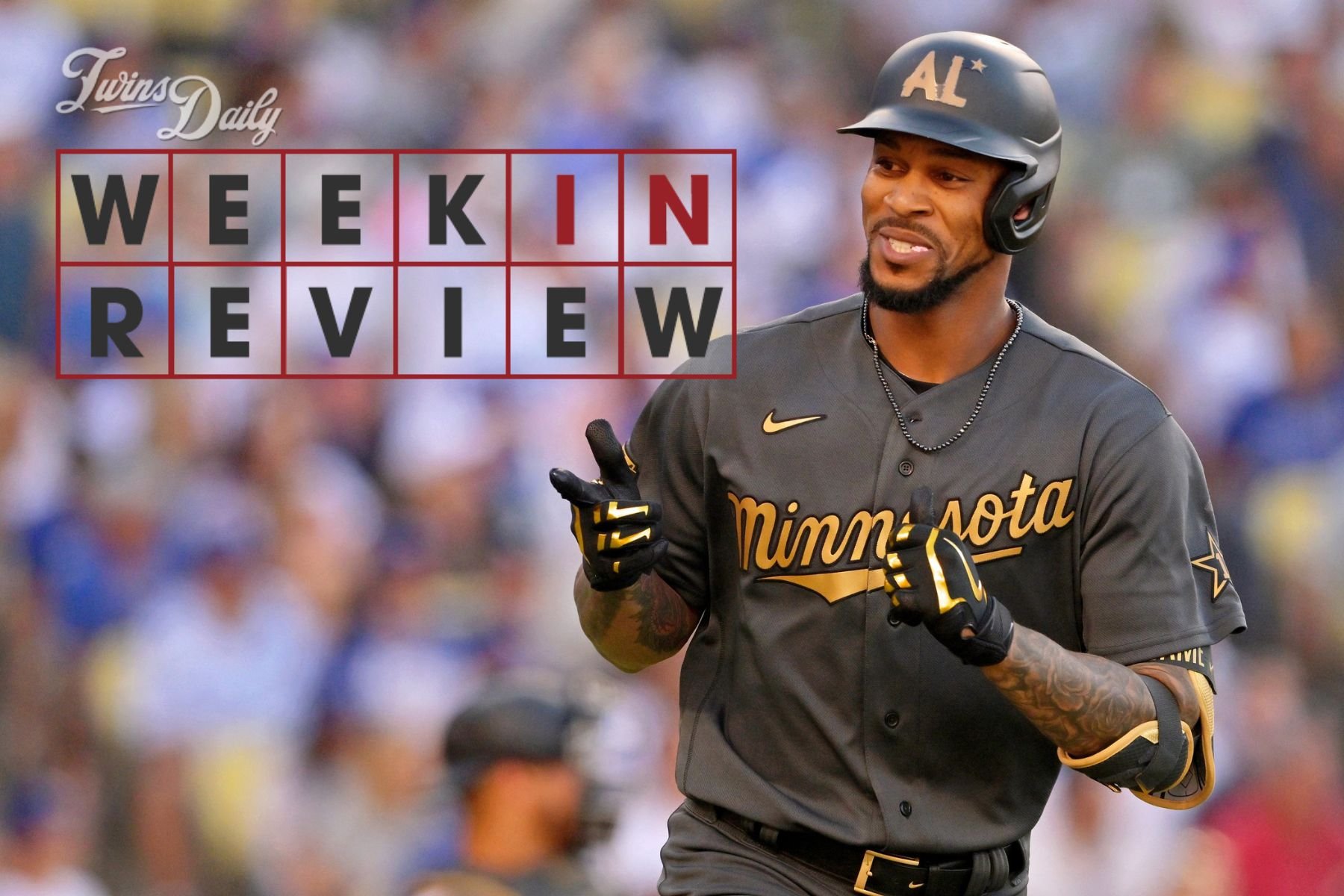 Weekly Snapshot: Mon, 7/18 through Sun, 7/24 *** Record Last Week: 2-0 (Overall: 52-44) Run Differential Last Week: +12 (Overall: +40) Standing: 1st Place in AL Central (3.0 GA) Last Week's Game Results: Game 95 | MIN 8, DET 4: Twins Come Out of Break with Convincing Win Game 96 | MIN 9, DET 1: Bats Break Out Late to Complete Short Sweep NEWS & NOTES Miguel Sanó's rehab stint concluded with a bang in St. Paul on Saturday, when the slugger went 3-for-3 with a walk and home run to round out a 12-game stretch between rookie ball and Triple-A in which he slashed .333/.422/.795 with five home runs. He's ready for another shot. Are the Twins inclined to give it to him? For all their pitching troubles, the Twins have been pretty well set offensively and don't have an obvious opening in the lineup (or even on the roster) for Sanó. If they want to accommodate his return, they can probably use him semi-regularly at first base or DH while dropping Gilberto Celestino from the bench. An IL move for Max Kepler, who came out of Sunday's game, would also create room. I suspect one of those things will happen when the deadline for a decision arrives on Tuesday, because the long-stagnating Twins need a spark that he's uniquely equipped to provide. Still, it's no guarantee we'll see Sanó in a Twins uniform again. There's a very realistic chance they DFA him or trade him for peanuts and move on. Ahead of their game in Detroit on Saturday, the Twins placed Caleb Thielbar on the injured list with a hamstring strain and recalled right-hander Yennier Canó. It sounds like Thielbar got hurt in the last game before the break, and the team hoped he'd have enough time off to be ready for action, but that wasn't the case. He's a sneaky big loss in this bullpen because Thielbar has vastly out-pitched his underwhelming ERA. We also learned on Saturday that Byron Buxton would miss the entire Detroit series after receiving a platelet-rich plasma (PRP) injection in his right knee on Wednesday to aid healing. The timing is interesting, as it suggests Buxton and the Twins decided to delay this planned procedure until after his All-Star Game appearance. That decision exposed his knee to further risk in an exhibition, while potentially costing him one or more meaningful games for the Twins, who are guarding a pretty narrow lead in the AL Central. But it also meant giving Buck an opportunity to go to Los Angeles and showcase himself as a star – boy did he. HIGHLIGHTS If you had to succinctly explain why Buxton and Luis Arraez were in the All-Star Game on Tuesday, it would be this: Buxton has been the king of game-changing home runs, and Arraez has been the king of finding his way on base. They both brought these qualities out on the national stage. Buxton earned MVP consideration by hitting the go-ahead homer following a game-tying two-run blast from the actual MVP, Giancarlo Stanton. It was a classic showing of Buxton's incredible quick-twitch ability, as he turned on a fastball at his eyes from Tony Gonsolin and launched it for a no-doubter. Arraez's big moment in the All-Star Game was not as flashy as Buxton's, but no less indicative of his strengths as a player. After very uncharacteristically striking out on three pitches in his first plate appearance, Arraez came up against fireballing Cardinals reliever Ryan Helsley, who had a 0.69 ERA and held opponents to a .109 average in the first half. Helsley had struck out 57 batters in 39 innings. Arraez fell behind 0-2 in the count. He then flicked away two fastballs, clocked at 103 and 101 MPH. On the next pitch, Helsley came with a curveball – a pitch he'd thrown 52 times this year without giving up a hit. Arraez stroked it into right field for a single. You can't make it up. Staying on brand, Arraez opened his second half with a three-hit game in Detroit – his 10th of the season – and he added another hit and walk on Sunday. He's slashing .341/.413/.445. Arraez opened the scoring in Saturday's eight-run outburst from the offense, which served as a nice palette cleanser after the Twins were shut out by Chicago to close out the first half. Carlos Correa joined the festivities by hitting a home run and nearly adding another (Akil Badoo made a nice play at the wall.) The runs kept pouring in on Sunday, with the bats breaking out late in a 9-1 laugher. José Miranda collected three hits to lead the way as Minnesota took advantage of poor pitching and defense from the last-place Tigers. Having started the opener in the first half, it was only fitting for Joe Ryan to start the first game of the second half. He looked as good Saturday as he did on Opening Day, holding the Tigers to one run over 5 ⅔ innings with seven strikeouts. The righty improved to 7-3 with a 2.89 ERA – the Twins have gone 10-5 in his starts. Equally encouraging, if not more so, was Sonny Gray's effort the following day. The veteran's slump heading into the break was a major concern, but Gray was in frontline form on Sunday – albeit against a very bad team. He struck out seven and allowed two hits over six frames. I am of the opinion that the Twins need to add one more starter at or above the level of Ryan and Gray in order to be a viable threat in the postseason. But at the very least, they'll need those two pitching like they're capable of. This series in Detroit was a very good sign on that front. We'll see if they can keep it going with tougher competition ahead. LOWLIGHTS The Twins might have come out of the break with a couple of convincing wins, but that wasn't gonna stop the bullpen from rearing its ugly head. Minnesota's massive lead on Saturday was mildly threatened in the eighth as Detroit mounted a three-run rally against Jovani Moran and Trevor Megill, who were both extremely wild. For as good as Moran – and to a lesser extent Megill – has looked at times, their frequent lapses into the no-control zone make them impossible to trust as high-leverage relievers down the stretch, or especially into the playoffs. Even on Sunday, when the bullpen seemingly had a very good showing with one hit allowed over three scoreless innings, the process was hardly impressive. Griffin Jax, Jharel Cotton and Joe Smith combined to strike out zero of 10 batters faced while inducing just two swings and misses (both from Jax) on 39 pitches. That's not a good formula for getting results, especially against better teams. The glaring inadequacy of this bullpen is too stark to ignore, even on good days like the past couple. TRENDING STORYLINE The big focus from now until August 2nd will be the trade market. I wrote last week about the deceivingly complicated decision facing the Twins as the deadline approaches – a first-place team that needs to make additions, but may not be in the best position for an aggressive push given the extent of those needs. We'll likely begin to see some trade activity fire up in the coming week, although the majority of big moves will shake out in the 48 hours or so leading up the deadline next Tuesday. Will the Twins front office strike early? LOOKING AHEAD Minnesota's midsummer respite extends into a light first week following the All-Star break, with two off days bookending a two-game series in Milwaukee. Good news for Buxton as he works back from the PRP injection. From there it's off to San Diego for three games against Taylor Rogers and the Padres. This next week will be a good test for the well-rested Twins, with five games against very strong NL opponents. I'll be in San Diego to catch a couple of the weekend games at Petco Park, and am very excited to cross that stadium off my list! TUESDAY, 7/26: TWINS @ BREWERS – RHP Dylan Bundy v. TBD WEDNESDAY, 7/27: TWINS @ BREWERS – RHP Chris Archer v. RHP Corbin Burnes FRIDAY, 7/29: TWINS @ PADRES – RHP Joe Ryan v. LHP Blake Snell SATURDAY, 7/30: TWINS @ PADRES – RHP Sonny Gray v. RHP Joe Musgrove SUNDAY, 7/31: TWINS @ PADRES – RHP Dylan Bundy v. LHP Sean Manaea
- 20 comments
-
- 7
-
-
- byron buxton
- luis arraez
- (and 3 more)
-
Byron Buxton and Luis Arraez did their thing at the All-Star Game, while the rest of the Twins got a full five days off in the middle of the season before returning – with gusto! – in Detroit. The lack of meaningful action didn't mean a lack of injury news (including a Buxton-related development), nor did it silence the buzz and speculation as a crucial trade deadline looms. Weekly Snapshot: Mon, 7/18 through Sun, 7/24 *** Record Last Week: 2-0 (Overall: 52-44) Run Differential Last Week: +12 (Overall: +40) Standing: 1st Place in AL Central (3.0 GA) Last Week's Game Results: Game 95 | MIN 8, DET 4: Twins Come Out of Break with Convincing Win Game 96 | MIN 9, DET 1: Bats Break Out Late to Complete Short Sweep NEWS & NOTES Miguel Sanó's rehab stint concluded with a bang in St. Paul on Saturday, when the slugger went 3-for-3 with a walk and home run to round out a 12-game stretch between rookie ball and Triple-A in which he slashed .333/.422/.795 with five home runs. He's ready for another shot. Are the Twins inclined to give it to him? For all their pitching troubles, the Twins have been pretty well set offensively and don't have an obvious opening in the lineup (or even on the roster) for Sanó. If they want to accommodate his return, they can probably use him semi-regularly at first base or DH while dropping Gilberto Celestino from the bench. An IL move for Max Kepler, who came out of Sunday's game, would also create room. I suspect one of those things will happen when the deadline for a decision arrives on Tuesday, because the long-stagnating Twins need a spark that he's uniquely equipped to provide. Still, it's no guarantee we'll see Sanó in a Twins uniform again. There's a very realistic chance they DFA him or trade him for peanuts and move on. Ahead of their game in Detroit on Saturday, the Twins placed Caleb Thielbar on the injured list with a hamstring strain and recalled right-hander Yennier Canó. It sounds like Thielbar got hurt in the last game before the break, and the team hoped he'd have enough time off to be ready for action, but that wasn't the case. He's a sneaky big loss in this bullpen because Thielbar has vastly out-pitched his underwhelming ERA. We also learned on Saturday that Byron Buxton would miss the entire Detroit series after receiving a platelet-rich plasma (PRP) injection in his right knee on Wednesday to aid healing. The timing is interesting, as it suggests Buxton and the Twins decided to delay this planned procedure until after his All-Star Game appearance. That decision exposed his knee to further risk in an exhibition, while potentially costing him one or more meaningful games for the Twins, who are guarding a pretty narrow lead in the AL Central. But it also meant giving Buck an opportunity to go to Los Angeles and showcase himself as a star – boy did he. HIGHLIGHTS If you had to succinctly explain why Buxton and Luis Arraez were in the All-Star Game on Tuesday, it would be this: Buxton has been the king of game-changing home runs, and Arraez has been the king of finding his way on base. They both brought these qualities out on the national stage. Buxton earned MVP consideration by hitting the go-ahead homer following a game-tying two-run blast from the actual MVP, Giancarlo Stanton. It was a classic showing of Buxton's incredible quick-twitch ability, as he turned on a fastball at his eyes from Tony Gonsolin and launched it for a no-doubter. Arraez's big moment in the All-Star Game was not as flashy as Buxton's, but no less indicative of his strengths as a player. After very uncharacteristically striking out on three pitches in his first plate appearance, Arraez came up against fireballing Cardinals reliever Ryan Helsley, who had a 0.69 ERA and held opponents to a .109 average in the first half. Helsley had struck out 57 batters in 39 innings. Arraez fell behind 0-2 in the count. He then flicked away two fastballs, clocked at 103 and 101 MPH. On the next pitch, Helsley came with a curveball – a pitch he'd thrown 52 times this year without giving up a hit. Arraez stroked it into right field for a single. You can't make it up. Staying on brand, Arraez opened his second half with a three-hit game in Detroit – his 10th of the season – and he added another hit and walk on Sunday. He's slashing .341/.413/.445. Arraez opened the scoring in Saturday's eight-run outburst from the offense, which served as a nice palette cleanser after the Twins were shut out by Chicago to close out the first half. Carlos Correa joined the festivities by hitting a home run and nearly adding another (Akil Badoo made a nice play at the wall.) The runs kept pouring in on Sunday, with the bats breaking out late in a 9-1 laugher. José Miranda collected three hits to lead the way as Minnesota took advantage of poor pitching and defense from the last-place Tigers. Having started the opener in the first half, it was only fitting for Joe Ryan to start the first game of the second half. He looked as good Saturday as he did on Opening Day, holding the Tigers to one run over 5 ⅔ innings with seven strikeouts. The righty improved to 7-3 with a 2.89 ERA – the Twins have gone 10-5 in his starts. Equally encouraging, if not more so, was Sonny Gray's effort the following day. The veteran's slump heading into the break was a major concern, but Gray was in frontline form on Sunday – albeit against a very bad team. He struck out seven and allowed two hits over six frames. I am of the opinion that the Twins need to add one more starter at or above the level of Ryan and Gray in order to be a viable threat in the postseason. But at the very least, they'll need those two pitching like they're capable of. This series in Detroit was a very good sign on that front. We'll see if they can keep it going with tougher competition ahead. LOWLIGHTS The Twins might have come out of the break with a couple of convincing wins, but that wasn't gonna stop the bullpen from rearing its ugly head. Minnesota's massive lead on Saturday was mildly threatened in the eighth as Detroit mounted a three-run rally against Jovani Moran and Trevor Megill, who were both extremely wild. For as good as Moran – and to a lesser extent Megill – has looked at times, their frequent lapses into the no-control zone make them impossible to trust as high-leverage relievers down the stretch, or especially into the playoffs. Even on Sunday, when the bullpen seemingly had a very good showing with one hit allowed over three scoreless innings, the process was hardly impressive. Griffin Jax, Jharel Cotton and Joe Smith combined to strike out zero of 10 batters faced while inducing just two swings and misses (both from Jax) on 39 pitches. That's not a good formula for getting results, especially against better teams. The glaring inadequacy of this bullpen is too stark to ignore, even on good days like the past couple. TRENDING STORYLINE The big focus from now until August 2nd will be the trade market. I wrote last week about the deceivingly complicated decision facing the Twins as the deadline approaches – a first-place team that needs to make additions, but may not be in the best position for an aggressive push given the extent of those needs. We'll likely begin to see some trade activity fire up in the coming week, although the majority of big moves will shake out in the 48 hours or so leading up the deadline next Tuesday. Will the Twins front office strike early? LOOKING AHEAD Minnesota's midsummer respite extends into a light first week following the All-Star break, with two off days bookending a two-game series in Milwaukee. Good news for Buxton as he works back from the PRP injection. From there it's off to San Diego for three games against Taylor Rogers and the Padres. This next week will be a good test for the well-rested Twins, with five games against very strong NL opponents. I'll be in San Diego to catch a couple of the weekend games at Petco Park, and am very excited to cross that stadium off my list! TUESDAY, 7/26: TWINS @ BREWERS – RHP Dylan Bundy v. TBD WEDNESDAY, 7/27: TWINS @ BREWERS – RHP Chris Archer v. RHP Corbin Burnes FRIDAY, 7/29: TWINS @ PADRES – RHP Joe Ryan v. LHP Blake Snell SATURDAY, 7/30: TWINS @ PADRES – RHP Sonny Gray v. RHP Joe Musgrove SUNDAY, 7/31: TWINS @ PADRES – RHP Dylan Bundy v. LHP Sean Manaea View full article
- 20 replies
-
- 1
-
-
- byron buxton
- luis arraez
- (and 3 more)
-
 As always, young pitching tops Colorado's list of needs. That's something the Twins can offer. Top Target Daniel Bard, RH Reliever The veteran reliever (and older brother of former Twins draft pick Luke Bard) has experienced a resurgence in his late-30s. He's racking up tons of strikeouts with a fastball that touches triple digits, and is excelling in basically every metric other than control – which thus far, hasn't bit him too much. As of the All-Star break, he had a 2.02 ERA and was 20-for-22 on save attempts. His age (37), lack of a sustained track record, and free agency following this season will keep his asking price relatively in check, but Bard figures to be a hot commodity for contenders seeking late-inning help. Other Targets of Interest Kyle Freeland, LH Starter He has frontline ability, but is battling through a down year and eligible for free agency after 2023. Possible buy-low opportunity for a good starter. Lucas Gilbreth, LH Reliever Golden Gopher alum is having a good sophomore season out of the Colorado bullpen, with lots of strikeouts but lots of walks. You're reading an excerpt of the 2022's Twins Daily Trade Deadline Primer about potential trade targets that we are providing free to Twins Daily's Caretakers. If you sign up now to be a Caretaker, you can download all six Divisional Dossiers as they're released, including the full version of this one, which we sent out to Caretakers earlier today. Plus, you'll get a free Offseason Handbook this fall and other perks. More importantly, you're helping support the writers and workers that make Twins Daily possible and keeping it viable for future generations of Twins fans. Thanks! Alex Colome, RH Reliever Hey, stop laughing. I said stop laughing! Colome is actually having a very solid bounceback year with the Rockies, but a reunion seems ... unlikely. Sleeper Target Chad Kuhl, RH Starter Don't be fooled by the unspectacular 4.11 ERA – he's been above-average through the lens of Coors Field (114 ERA+). Due for free agency at year's end, Kuhl could be a value pickup as a swingman.
 -
We start with the most obvious seller in the division – the team that's spent most of the season in last place. Colorado is customarily going nowhere and while their pitching staff has customarily been one of the worst in the National League, there are a few intriguing pieces here. As always, young pitching tops Colorado's list of needs. That's something the Twins can offer. Top Target Daniel Bard, RH Reliever The veteran reliever (and older brother of former Twins draft pick Luke Bard) has experienced a resurgence in his late-30s. He's racking up tons of strikeouts with a fastball that touches triple digits, and is excelling in basically every metric other than control – which thus far, hasn't bit him too much. As of the All-Star break, he had a 2.02 ERA and was 20-for-22 on save attempts. His age (37), lack of a sustained track record, and free agency following this season will keep his asking price relatively in check, but Bard figures to be a hot commodity for contenders seeking late-inning help. Other Targets of Interest Kyle Freeland, LH Starter He has frontline ability, but is battling through a down year and eligible for free agency after 2023. Possible buy-low opportunity for a good starter. Lucas Gilbreth, LH Reliever Golden Gopher alum is having a good sophomore season out of the Colorado bullpen, with lots of strikeouts but lots of walks. You're reading an excerpt of the 2022's Twins Daily Trade Deadline Primer about potential trade targets that we are providing free to Twins Daily's Caretakers. If you sign up now to be a Caretaker, you can download all six Divisional Dossiers as they're released, including the full version of this one, which we sent out to Caretakers earlier today. Plus, you'll get a free Offseason Handbook this fall and other perks. More importantly, you're helping support the writers and workers that make Twins Daily possible and keeping it viable for future generations of Twins fans. Thanks! Alex Colome, RH Reliever Hey, stop laughing. I said stop laughing! Colome is actually having a very solid bounceback year with the Rockies, but a reunion seems ... unlikely. Sleeper Target Chad Kuhl, RH Starter Don't be fooled by the unspectacular 4.11 ERA – he's been above-average through the lens of Coors Field (114 ERA+). Due for free agency at year's end, Kuhl could be a value pickup as a swingman. View full article
-
 If they sell at all, the Marlins will be looking to reload with near-ready (or already established) talent. This creates some interesting possible scenarios. Are the Twins open to moving any presently-valuable players who are somewhat redundant? Like maybe a Max Kepler? Top Target Max Meyer, RH Starter If a report from the Miami Herald is to be believed, the Marlins were prepared to deal Meyer to the Angels at last year's deadline in exchange for a young bat. It's hard to see why they'd be willing to part with a premium pitching prospect, drafted third overall out of the University of Minnesota in 2020, but supposedly they were then so maybe they are now. The connection here is obvious, given his local ties and the Twins' need for a long-term rotation centerpiece. It'd need to be a blockbuster, involving names like Jose Miranda and Austin Martin. Other Targets of Interest Tanner Scott, LH Reliever Acquired from Baltimore at the start of the season, the 27-year-old has big stuff, but I'm not sure his wildness and inconsistency are the cure for what ails an unstable Twins bullpen. Anthony Bass, RH Reliever The veteran reliever is having an excellent season, with a 1.40 ERA and only one HR allowed through his first 39 appearances. You'd be buying high, but there's no sign his success hasn't been legitimate. He's got a $3M team option for 2023. You're reading an excerpt of the 2022's Twins Daily Trade Deadline Primer about potential trade targets that we are providing free to Twins Daily's Caretakers. If you sign up now to be a Caretaker, you can download all six Divisional Dossiers as they're released, including the full version of this one, which we sent out to Caretakers earlier today. Plus, you'll get a free Offseason Handbook this fall and other perks. More importantly, you're helping support the writers and workers that make Twins Daily possible and keeping it viable for future generations of Twins fans. Thanks! Steven Okert, LH Reliever Brings strikeout stuff from the left side (11.2 K/9) and is having a second straight strong season, but – stop me if you've heard it before – he struggles with walks and homers. Sleeper Target Trevor Rogers, LH Starter Unrelated to Taylor and Tyler, Rogers was an All-Star and Rookie of the Year runner-up last year at age 23. He's had a much rougher go of it here in his sophomore campaign, which might make the Marlins more open to trading him for hitting help. It would basically be a slightly lower-scale version of the proposed Meyer blockbuster above.
 -
Miami's youth movement is coming to fruition, led by star second baseman Jazz Chisholm and ace starter Sandy Alcantara. They won't win the division this year and have an uphill battle for a wild-card spot, so it's plausible they'll be open to dealing short-term assets. But this is definitely a team on the rise. If they sell at all, the Marlins will be looking to reload with near-ready (or already established) talent. This creates some interesting possible scenarios. Are the Twins open to moving any presently-valuable players who are somewhat redundant? Like maybe a Max Kepler? Top Target Max Meyer, RH Starter If a report from the Miami Herald is to be believed, the Marlins were prepared to deal Meyer to the Angels at last year's deadline in exchange for a young bat. It's hard to see why they'd be willing to part with a premium pitching prospect, drafted third overall out of the University of Minnesota in 2020, but supposedly they were then so maybe they are now. The connection here is obvious, given his local ties and the Twins' need for a long-term rotation centerpiece. It'd need to be a blockbuster, involving names like Jose Miranda and Austin Martin. Other Targets of Interest Tanner Scott, LH Reliever Acquired from Baltimore at the start of the season, the 27-year-old has big stuff, but I'm not sure his wildness and inconsistency are the cure for what ails an unstable Twins bullpen. Anthony Bass, RH Reliever The veteran reliever is having an excellent season, with a 1.40 ERA and only one HR allowed through his first 39 appearances. You'd be buying high, but there's no sign his success hasn't been legitimate. He's got a $3M team option for 2023. You're reading an excerpt of the 2022's Twins Daily Trade Deadline Primer about potential trade targets that we are providing free to Twins Daily's Caretakers. If you sign up now to be a Caretaker, you can download all six Divisional Dossiers as they're released, including the full version of this one, which we sent out to Caretakers earlier today. Plus, you'll get a free Offseason Handbook this fall and other perks. More importantly, you're helping support the writers and workers that make Twins Daily possible and keeping it viable for future generations of Twins fans. Thanks! Steven Okert, LH Reliever Brings strikeout stuff from the left side (11.2 K/9) and is having a second straight strong season, but – stop me if you've heard it before – he struggles with walks and homers. Sleeper Target Trevor Rogers, LH Starter Unrelated to Taylor and Tyler, Rogers was an All-Star and Rookie of the Year runner-up last year at age 23. He's had a much rougher go of it here in his sophomore campaign, which might make the Marlins more open to trading him for hitting help. It would basically be a slightly lower-scale version of the proposed Meyer blockbuster above. View full article
-
I could buy this as a (rare) example but the Astros also had a winning postseason record in games not started by Verlander. There were also ... other factors than Verlander contributing to their success in that postseason. But he did pitch very well, as a first-ballot Hall of Famer will do. Of course, he didn't cost them a Byron Buxton. Ironically I happen to think Syndergaard is a really interesting target THIS deadline for the Twins. He's having an underwhelming season with the Angels, kinda like Verlander was for Detroit in '17, but there's another level in him.
- 122 replies
-
- 1
-
-
- derek falvey
- thad levine
- (and 1 more)
-
What an utterly bizarre interpretation of what I said. The original point was that it would be devastating to lose 9 years of Byron Buxton for a handful of starts from Syndergaard based on the completely implausible notion that he would've been the difference between getting swept or winning the World Series in 2019. Steering this conversation back to the real world, what is the last example of a team trading for an "ace" at the deadline and winning the World Series largely because of it?
- 122 replies
-
- 1
-
-
- derek falvey
- thad levine
- (and 1 more)
-
A new article from C. Trent Rosecrans in The Athletic offers 9 different trade scenarios for frontline starter Luis Castillo, as provided by writers from the respective teams, vetted by Keith Law for realisticness. Here's the hypothetical Twins deal: "The trade: Twins send Spencer Steer, Josh Winder and Simeon Woods Richardson to the Reds for Luis Castillo." Law didn't view this package as nearly as implausible as some others. What do you think? Would you do it? View full trade rumor
-
A new article from C. Trent Rosecrans in The Athletic offers 9 different trade scenarios for frontline starter Luis Castillo, as provided by writers from the respective teams, vetted by Keith Law for realisticness. Here's the hypothetical Twins deal: "The trade: Twins send Spencer Steer, Josh Winder and Simeon Woods Richardson to the Reds for Luis Castillo." Law didn't view this package as nearly as implausible as some others. What do you think? Would you do it?
-
The Twins clearly need to trade for relief help before the upcoming August 2nd deadline arrives. And they're going to How much will it make a difference for the better? The past paints a checkered picture. For the sake of keeping things succinct and semi-relevant, we're going to limit this retrospective analysis to the Target Field years. Which of course means we begin with one of the most infamous deadline deals in franchise history. 2010 July 29: Twins Trade C Wilson Ramos to Nationals for RHP Matt Capps In a classic Minnesota Sports Twist of Fate™, legendary Twins closer Joe Nathan tore his UCL in spring training of 2010 – a season where the Twins would go on to field arguably the best team of their entire run under Ron Gardenhire. As the deadline approached, the team had one glaring need, at least in the eyes of a front office led by general manager Bill Smith: a proven veteran closer to offset the loss of Nathan. Sure, Jon Rauch – acquired in a post-deadline deal the previous season – had been doing a perfectly adequate job, but he didn't have all those precious saves on his résumé. In a display of the backwards thinking that would soon lead the franchise into a complete and sustained collapse, Smith's front office made the outrageous decision to trade away a highly touted, MLB-ready, slugging catcher in 22-year-old Wilson Ramos, to acquire Matt Capps from Washington. Capps was a pretty ordinary reliever who entranced the Twins with his good first half and experience as a closer (even though he'd been terrible the previous year). In fairness, he proved to be a successful acquisition for the 2010 season, posting a 2.00 ERA and converting 16 of 18 saves the rest of the way. But he was inconsequential in the playoffs, as the Twins never had a late lead against New York. Capps was bad the next season, hurt in 2012, and then done as a major-leaguer before turning 30. Ramos went on to finish fourth in Rookie of the Year voting in 2011, and make two All-Star games in an impressive MLB career that isn't necessarily over yet. He's currently rehabbing from ACL surgery at age 34. His loss became especially painful when Joe Mauer had to move off catcher a year later and the Twins were left with an empty cupboard at catcher. One of the worst trades in Minnesota Twins history, bar none – in large part because it was so obviously a horrendous decision at the moment it was made. 2015 July 31: Twins Trade Pitching Prospects Chih-Wei Hu and Alexis Tapia to Rays for RHP Kevin Jepsen This move, like the previous one, was driven by the Twins realizing a need in the late innings due to injuries impacting their star closer. Glen Perkins did not experience a season-ending injury in 2015 -- in fact, he made his third straight All-Star Game -- but as the trade deadline approached, it became clear something was amiss. He blew two saves in the second half of July as his strikeouts evaporated and hitters began to tee off. Finding themselves on the fringe of postseason contention for the first time in five years, Terry Ryan and the Twins knew they needed to shore up the bullpen. They struck a deal on deadline day to acquire Kevin Jepsen from the Rays in exchange for a pair of lower-tier pitching prospects. The Twins actually deserve a lot of credit for this move, even if it didn't pay real dividends as they missed the playoffs by a longshot. Jepsen pitched very well -- much better than he had up to that point in Tampa, or really at any point in his eight-year career, spent mostly with the Angels. In 29 appearances for the Twins, Jepsen posted a 1.61 ERA and 0.89 WHIP over 28 innings, converting 10-of-11 saves. Much like with Capps, it was all downhill from there. Jepsen absolutely bombed for the 2016 Twins, posting a 6.16 ERA in 33 appearances before they cut him loose in July. From there, he was pretty much done as a big-leaguer, posting a 5.80 ERA in 35 ⅔ innings for the Rays and Rangers. Capps was 27 when the Twins acquired him; Jepsen had just turned 31. Both were performing well and at least somewhat highly regarded. And yet both were essentially out of baseball after short, doomed stints with the team. Really something. In any case, the return on this deal never hurt the Twins. Chih-Wei Hu appeared briefly in the majors but fizzled out after 23 innings. He's now pitching in China. Alexis Tapia never got past Single-A. 2019 July 27: Twins Trade 1B Lewin Diaz to Marlins for RHP Sergio Romo Of all trades in this category from the past couple of decades, this is probably the prototype for getting it right. The Twins gave up a decent but hardly indispensable prospect in Lewin Diaz, and got back a veteran rental reliever who was (almost) everything they wanted him to be. A 12-year MLB veteran and three-time World Series champ, Sergio Romo was flat-out excellent down the stretch, posting a 3.18 ERA and 27-to-4 K/BB ratio in 22 ⅔ innings to help stabilize the bullpen and lock up a division crown. They liked him enough that they re-signed him as a free agent in the offseason, although that proved to be perhaps not a great choice. Diaz still has a chance to haunt the Twins, I guess. He's only 25 and has hit well enough at Triple-A to get some chances with James Rowson's Marlins. But even if not for this trade, Minnesota would've likely moved on a while long ago. It should be noted that while this has to be viewed as one of the franchise's most successful trades for a reliever at the deadline, they still didn't really get what they wanted out of it. Part of Romo's appeal was in his postseason track record, but that paid no dividends for the Twins. He gave up two runs in two innings in the 2019 ALDS and then had a meltdown in his lone appearance against Houston in 2020. July 31: Twins Trade 3 Prospects to Giants for RHP Sam Dyson And we conclude with the prototype for getting it wrong. So very, very wrong. The ill-fated trade with the Giants for Sam Dyson went sour almost immediately, with the Twins front office seemingly taking an unfair share of criticism in a situation where they themselves were bamboozled. The announcement of a move for Dyson trickled in just as the 3:00 PM deadline elapsed on the 31st, with the Twins sending a package of three semi-interesting prospects (outfielder Jaylin Davis, pitchers Kai-Wei Tang and Prelander Berroa) to San Francisco in the deal. Dyson was enjoying a very good season, with a 2.47 ERA and 0.90 WHIP in 51 innings. Upon arriving in Minnesota, he fell apart right away, coughing up six earned runs while recording two outs in his first two appearances. Demoted instantly to a middle-innings role, the right-hander sputtered through 10 more unimpressive appearances before being shut down and revealing that he'd been dealing with shoulder pain since well before the trade. The Twins, miffed by the transaction of damaged goods, launched an investigation into the Giants, who claimed to unaware of Dyson's non-disclosed injury. It didn't go anywhere, that I know of. To top it all off, Dyson was subsequently outed as an even worse person than pitcher. Allegations by his ex-girlfriend Alexis Blackburn that November led to the reliever receiving the longest-ever suspension under MLB's domestic violence policy. More recently, this past December, Blackburn filed in court for accusations of rape, battery, and infliction of emotional distress against Dyson. He's all but certainly done as a big-leaguer, joining Capps and Jepsen as relatively young and effective relievers (he was 31 when acquired) who came to the Twins and saw their careers end very quickly -- albeit under very different circumstances here. The Twins certainly couldn't have known anything about Dyson's off-field issues, and they also didn't know about his pre-existing injury. That's the nature of last-minute deadline deals ... you don't really have an opportunity to complete in-depth medical evaluations. But maybe that's the lesson that can be taken away from this unfortunate example: when you wait until literally the last moment before the deadline, you leave yourself in a situation where your options become limited and your decisions can become rushed. Maybe it's no surprise that the reliever they acquired four days earlier worked out much better. In other words, it would be good to see the Twins act a bit more quickly on their needs this time around. The trade deadline is 12 days away. View full article
-
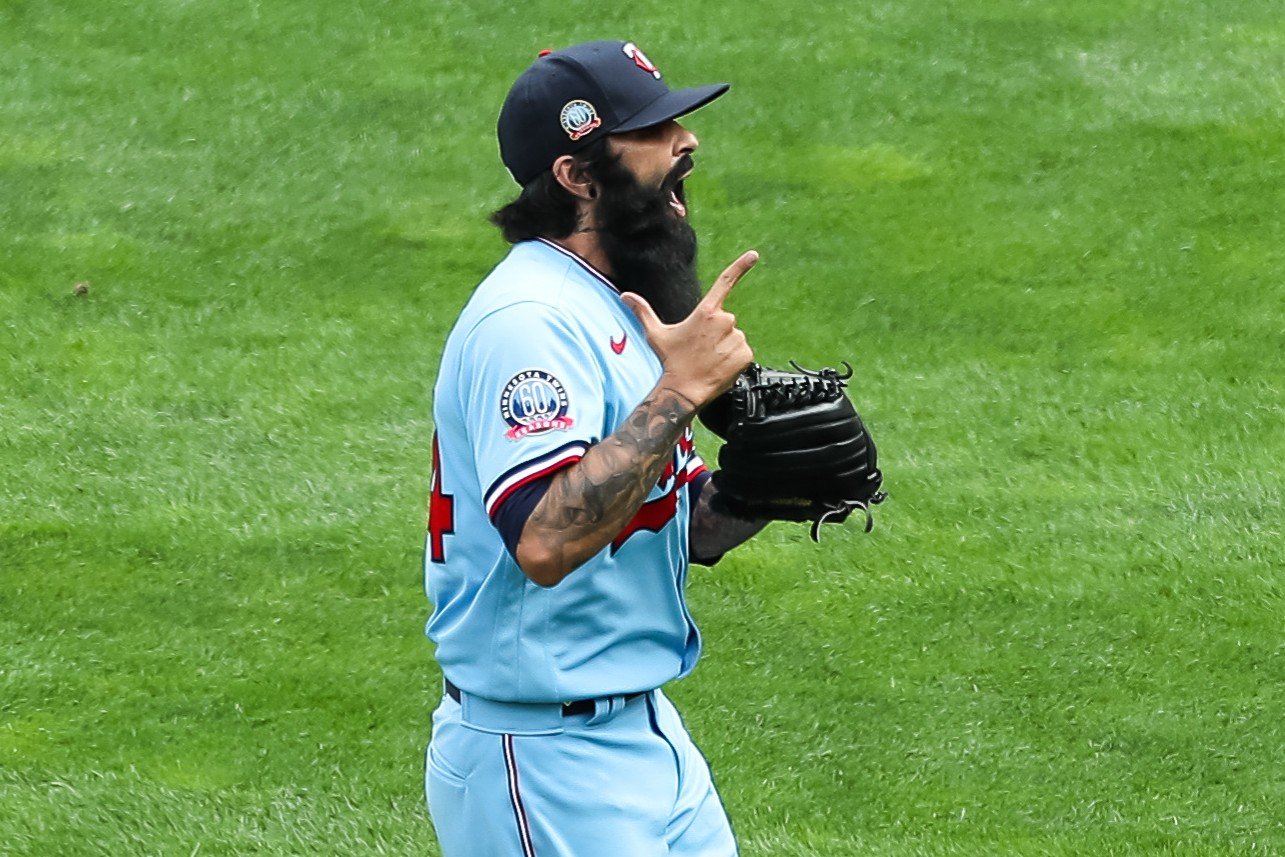 For the sake of keeping things succinct and semi-relevant, we're going to limit this retrospective analysis to the Target Field years. Which of course means we begin with one of the most infamous deadline deals in franchise history. 2010 July 29: Twins Trade C Wilson Ramos to Nationals for RHP Matt Capps In a classic Minnesota Sports Twist of Fate™, legendary Twins closer Joe Nathan tore his UCL in spring training of 2010 – a season where the Twins would go on to field arguably the best team of their entire run under Ron Gardenhire. As the deadline approached, the team had one glaring need, at least in the eyes of a front office led by general manager Bill Smith: a proven veteran closer to offset the loss of Nathan. Sure, Jon Rauch – acquired in a post-deadline deal the previous season – had been doing a perfectly adequate job, but he didn't have all those precious saves on his résumé. In a display of the backwards thinking that would soon lead the franchise into a complete and sustained collapse, Smith's front office made the outrageous decision to trade away a highly touted, MLB-ready, slugging catcher in 22-year-old Wilson Ramos, to acquire Matt Capps from Washington. Capps was a pretty ordinary reliever who entranced the Twins with his good first half and experience as a closer (even though he'd been terrible the previous year). In fairness, he proved to be a successful acquisition for the 2010 season, posting a 2.00 ERA and converting 16 of 18 saves the rest of the way. But he was inconsequential in the playoffs, as the Twins never had a late lead against New York. Capps was bad the next season, hurt in 2012, and then done as a major-leaguer before turning 30. Ramos went on to finish fourth in Rookie of the Year voting in 2011, and make two All-Star games in an impressive MLB career that isn't necessarily over yet. He's currently rehabbing from ACL surgery at age 34. His loss became especially painful when Joe Mauer had to move off catcher a year later and the Twins were left with an empty cupboard at catcher. One of the worst trades in Minnesota Twins history, bar none – in large part because it was so obviously a horrendous decision at the moment it was made. 2015 July 31: Twins Trade Pitching Prospects Chih-Wei Hu and Alexis Tapia to Rays for RHP Kevin Jepsen This move, like the previous one, was driven by the Twins realizing a need in the late innings due to injuries impacting their star closer. Glen Perkins did not experience a season-ending injury in 2015 -- in fact, he made his third straight All-Star Game -- but as the trade deadline approached, it became clear something was amiss. He blew two saves in the second half of July as his strikeouts evaporated and hitters began to tee off. Finding themselves on the fringe of postseason contention for the first time in five years, Terry Ryan and the Twins knew they needed to shore up the bullpen. They struck a deal on deadline day to acquire Kevin Jepsen from the Rays in exchange for a pair of lower-tier pitching prospects. The Twins actually deserve a lot of credit for this move, even if it didn't pay real dividends as they missed the playoffs by a longshot. Jepsen pitched very well -- much better than he had up to that point in Tampa, or really at any point in his eight-year career, spent mostly with the Angels. In 29 appearances for the Twins, Jepsen posted a 1.61 ERA and 0.89 WHIP over 28 innings, converting 10-of-11 saves. Much like with Capps, it was all downhill from there. Jepsen absolutely bombed for the 2016 Twins, posting a 6.16 ERA in 33 appearances before they cut him loose in July. From there, he was pretty much done as a big-leaguer, posting a 5.80 ERA in 35 ⅔ innings for the Rays and Rangers. Capps was 27 when the Twins acquired him; Jepsen had just turned 31. Both were performing well and at least somewhat highly regarded. And yet both were essentially out of baseball after short, doomed stints with the team. Really something. In any case, the return on this deal never hurt the Twins. Chih-Wei Hu appeared briefly in the majors but fizzled out after 23 innings. He's now pitching in China. Alexis Tapia never got past Single-A. 2019 July 27: Twins Trade 1B Lewin Diaz to Marlins for RHP Sergio Romo Of all trades in this category from the past couple of decades, this is probably the prototype for getting it right. The Twins gave up a decent but hardly indispensable prospect in Lewin Diaz, and got back a veteran rental reliever who was (almost) everything they wanted him to be. A 12-year MLB veteran and three-time World Series champ, Sergio Romo was flat-out excellent down the stretch, posting a 3.18 ERA and 27-to-4 K/BB ratio in 22 ⅔ innings to help stabilize the bullpen and lock up a division crown. They liked him enough that they re-signed him as a free agent in the offseason, although that proved to be perhaps not a great choice. Diaz still has a chance to haunt the Twins, I guess. He's only 25 and has hit well enough at Triple-A to get some chances with James Rowson's Marlins. But even if not for this trade, Minnesota would've likely moved on a while long ago. It should be noted that while this has to be viewed as one of the franchise's most successful trades for a reliever at the deadline, they still didn't really get what they wanted out of it. Part of Romo's appeal was in his postseason track record, but that paid no dividends for the Twins. He gave up two runs in two innings in the 2019 ALDS and then had a meltdown in his lone appearance against Houston in 2020. July 31: Twins Trade 3 Prospects to Giants for RHP Sam Dyson And we conclude with the prototype for getting it wrong. So very, very wrong. The ill-fated trade with the Giants for Sam Dyson went sour almost immediately, with the Twins front office seemingly taking an unfair share of criticism in a situation where they themselves were bamboozled. The announcement of a move for Dyson trickled in just as the 3:00 PM deadline elapsed on the 31st, with the Twins sending a package of three semi-interesting prospects (outfielder Jaylin Davis, pitchers Kai-Wei Tang and Prelander Berroa) to San Francisco in the deal. Dyson was enjoying a very good season, with a 2.47 ERA and 0.90 WHIP in 51 innings. Upon arriving in Minnesota, he fell apart right away, coughing up six earned runs while recording two outs in his first two appearances. Demoted instantly to a middle-innings role, the right-hander sputtered through 10 more unimpressive appearances before being shut down and revealing that he'd been dealing with shoulder pain since well before the trade. The Twins, miffed by the transaction of damaged goods, launched an investigation into the Giants, who claimed to unaware of Dyson's non-disclosed injury. It didn't go anywhere, that I know of. To top it all off, Dyson was subsequently outed as an even worse person than pitcher. Allegations by his ex-girlfriend Alexis Blackburn that November led to the reliever receiving the longest-ever suspension under MLB's domestic violence policy. More recently, this past December, Blackburn filed in court for accusations of rape, battery, and infliction of emotional distress against Dyson. He's all but certainly done as a big-leaguer, joining Capps and Jepsen as relatively young and effective relievers (he was 31 when acquired) who came to the Twins and saw their careers end very quickly -- albeit under very different circumstances here. The Twins certainly couldn't have known anything about Dyson's off-field issues, and they also didn't know about his pre-existing injury. That's the nature of last-minute deadline deals ... you don't really have an opportunity to complete in-depth medical evaluations. But maybe that's the lesson that can be taken away from this unfortunate example: when you wait until literally the last moment before the deadline, you leave yourself in a situation where your options become limited and your decisions can become rushed. Maybe it's no surprise that the reliever they acquired four days earlier worked out much better. In other words, it would be good to see the Twins act a bit more quickly on their needs this time around. The trade deadline is 12 days away.
- 4 comments
-
- 1
-
-
- sergio romo
- sam dyson
- (and 1 more)
-
Here's the part where I obligatorily remind people that the Twins played three playoff series with Johan Santana as their #1 starter and won zero of them.
- 122 replies
-
- 3
-
-
- derek falvey
- thad levine
- (and 1 more)
-
The Twins scored 2 runs in the second game and 1 run in the third. No amount of pitching was going to carry them through that series against a great Yankees lineup. Ditto the next year against Houston. It's a fanciful scenario you've concocted though, I'll give you that! Having a true ace makes a difference in the playoffs. It's just not everything. Frankly a star two-way player like Buxton is quite a bit more important -- thus the irony of your OP. And Syndergaard wasn't pitching like a "true ace" at that point anyway.
- 122 replies
-
- 3
-
-
- derek falvey
- thad levine
- (and 1 more)
-
Well that wouldn't have happened because: 1: Syndergaard was terrible down the stretch (6.69 ERA in his last 7 starts) likely because his elbow wasn't quite right (had TJ surgery at the beginning of 2020). 2: One pitcher wasn't going to be the difference between getting decisively swept in the ALDS and winning the World Series. Like, we don't have to hypothesize here, we have actual evidence. If the Twins had made that trade they'd now be without Buxton and without Syndergaard, and with nothing of substance to show for it. Maybe they win a single game in the first round of the playoffs. You'd take that? This is my struggle with these "go all-in at the deadline" conversations. There's such a tendency to fantasize about some grand exaggerated impact, while completely downplaying the repeatedly proven risks and downsides.
- 122 replies
-
- 4
-
-
- derek falvey
- thad levine
- (and 1 more)
-
Again: no one is denying that they should (and will) get pitching help. The complicated question being addressed is how aggressive they should be and how much they should be willing to sacrifice to improve their chances this year. As for Jeffers, he ranks second to Polanco in OPS at the past month at 868. Meanwhile Gary Sanchez is at 578 during that span and Caleb Hamilton has never played in the majors. Not to mention the extreme defensive drop-off. You are underrating the severity of this loss.
- 122 replies
-
- 7
-
-

-
- derek falvey
- thad levine
- (and 1 more)
-
This front office has an interesting history with the trade deadline – starting with their controversial first go at it in 2017 when they flip-flopped from buyers to sellers in about a week's time, stirring up some angst in the home clubhouse. The 2022 trade deadline has a chance to be this regime's most pivotal and pressure-packed yet. How much are the Twins willing to push – and sacrifice – in order to supplement a flawed, fading first-place team? Not so long ago, it appeared as though the Twins might be able to get by with a couple of bullpen pickups at the trade deadline. Not that doing so was going to make them World Series favorites or anything, but when the offense was clicking and supported by a consistently solid rotation? The front office might have believed – or at least publicly advanced – that a few relief upgrades would sufficiently help them secure the division and present a credible postseason threat. Much has changed in a few weeks' time. With the rotation nosediving into the break, and their lineup now missing a key piece in Ryan Jeffers, the Twins have seen their list of needs grow as the deadline approaches. At this point, to position themselves as true contenders, it feels like they need to add a frontline starter for sure, and they could really use a catcher. Meanwhile those pesky bullpen needs have not gone away. Far from it. That makes for a hefty shopping list. To fulfill all of these needs at high-demand positions in a seller's market will be very costly. Facing this harsh reality, the front office is going to have to ask itself: Is it worth it? Acquiring the kind of impact talent needed to put this team in a strong position will mean making painful sacrifices. If they really want to push, the Twins will need to part with a quantity of high-caliber prospect talent and maybe even established young players like José Miranda, Trevor Larnach, or Alex Kirilloff. There's also a strong case to be made that big, splashy deadline moves aren't as impactful as many perceive – not to mention the frequency of costly backfires. (Imagine if the Twins traded Byron Buxton for Noah Syndergaard at the 2019 deadline.) Atlanta's 2021 exemplifies how a more conservative, low-wattage approach to addressing various needs can work. Of course, such thinking won't do much to satiate fans who are hungry for decisive and definitive action. And maybe that's the right attitude. Even if Derek Falvey and Thad Levine always seemed to be setting their gaze more on 2023 and beyond with the latest offseason strategy, they can't take for granted where they're at right now. They can't take for granted they'll have Buxton and Luis Arraez both healthy and playing at an All-Star level next year. They can't take for granted they'll have anything approximating the force that is Carlos Correa on their roster. They can't take for granted they'll be in first place at the break, with a chance to act as a buyer and aspiring champ, because we saw just last year how the best laid plans can go awry. Logical as they are, this front office understands that once you get to the playoffs, anything can happen. (Yes, even for the Twins.) They know that these opportunities don't present themselves every year. And they didn't throw $35 million at Correa for no reason. All of which leads me to believe the Twins will assuredly be active at the trade deadline. They are going to make multiple moves. As to how bold and audacious those additions will be? That's the big question, and we'll find out soon enough. With the deadline now less than two weeks away, we'll be covering every rumor worth sharing here at Twins Daily. And starting today, we're rolling out special trade deadline preview content for those who contribute to the caretaker fund at any tier. Each of the next six weekdays we'll be sending out "Division Dossiers" with breakdowns of buyers and sellers, as well as trade targets who might appeal to the Twins from each team. This is the top-secret intel you need to be ready for anything during Deadline SZN. Check out a preview snippet below, and if you haven't already, sign up as a caretaker now to get the full dossier plus five more in the week ahead. View full article
-
The Twins Face a Deceivingly Complicated Decision at the Trade Deadline
Nick Nelson posted an article in Twins
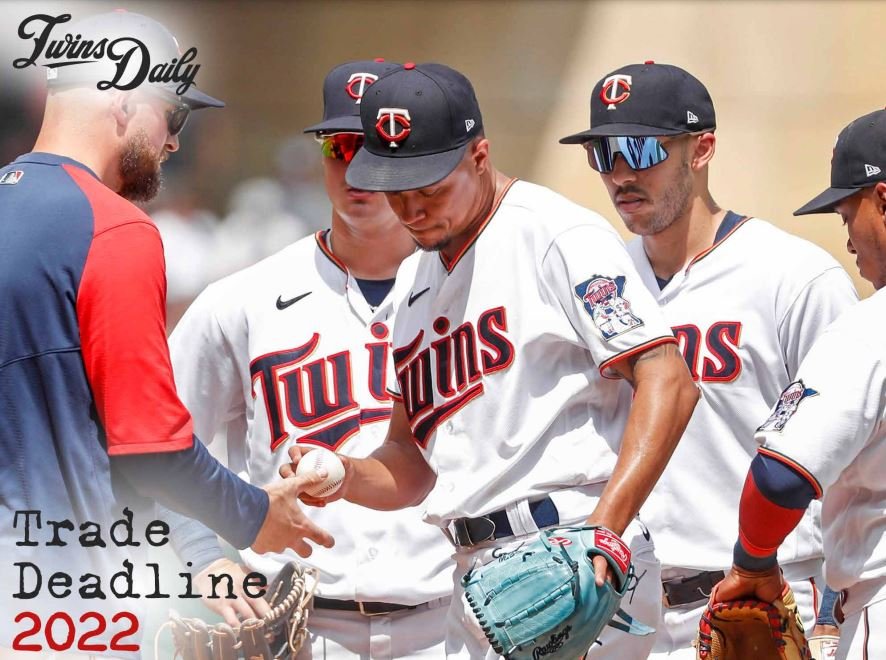 Not so long ago, it appeared as though the Twins might be able to get by with a couple of bullpen pickups at the trade deadline. Not that doing so was going to make them World Series favorites or anything, but when the offense was clicking and supported by a consistently solid rotation? The front office might have believed – or at least publicly advanced – that a few relief upgrades would sufficiently help them secure the division and present a credible postseason threat. Much has changed in a few weeks' time. With the rotation nosediving into the break, and their lineup now missing a key piece in Ryan Jeffers, the Twins have seen their list of needs grow as the deadline approaches. At this point, to position themselves as true contenders, it feels like they need to add a frontline starter for sure, and they could really use a catcher. Meanwhile those pesky bullpen needs have not gone away. Far from it. That makes for a hefty shopping list. To fulfill all of these needs at high-demand positions in a seller's market will be very costly. Facing this harsh reality, the front office is going to have to ask itself: Is it worth it? Acquiring the kind of impact talent needed to put this team in a strong position will mean making painful sacrifices. If they really want to push, the Twins will need to part with a quantity of high-caliber prospect talent and maybe even established young players like José Miranda, Trevor Larnach, or Alex Kirilloff. There's also a strong case to be made that big, splashy deadline moves aren't as impactful as many perceive – not to mention the frequency of costly backfires. (Imagine if the Twins traded Byron Buxton for Noah Syndergaard at the 2019 deadline.) Atlanta's 2021 exemplifies how a more conservative, low-wattage approach to addressing various needs can work. Of course, such thinking won't do much to satiate fans who are hungry for decisive and definitive action. And maybe that's the right attitude. Even if Derek Falvey and Thad Levine always seemed to be setting their gaze more on 2023 and beyond with the latest offseason strategy, they can't take for granted where they're at right now. They can't take for granted they'll have Buxton and Luis Arraez both healthy and playing at an All-Star level next year. They can't take for granted they'll have anything approximating the force that is Carlos Correa on their roster. They can't take for granted they'll be in first place at the break, with a chance to act as a buyer and aspiring champ, because we saw just last year how the best laid plans can go awry. Logical as they are, this front office understands that once you get to the playoffs, anything can happen. (Yes, even for the Twins.) They know that these opportunities don't present themselves every year. And they didn't throw $35 million at Correa for no reason. All of which leads me to believe the Twins will assuredly be active at the trade deadline. They are going to make multiple moves. As to how bold and audacious those additions will be? That's the big question, and we'll find out soon enough. With the deadline now less than two weeks away, we'll be covering every rumor worth sharing here at Twins Daily. And starting today, we're rolling out special trade deadline preview content for those who contribute to the caretaker fund at any tier. Each of the next six weekdays we'll be sending out "Division Dossiers" with breakdowns of buyers and sellers, as well as trade targets who might appeal to the Twins from each team. This is the top-secret intel you need to be ready for anything during Deadline SZN. Check out a preview snippet below, and if you haven't already, sign up as a caretaker now to get the full dossier plus five more in the week ahead.
- 122 comments
-
- 5
-
-
- derek falvey
- thad levine
- (and 1 more)
-
The All-Star break has arrived, and the Minnesota Twins are breaking down. A tough injury to a key player topped off a deflating finish to the first half. Can they use the coming time off as an opportunity to turn around their lengthy run of underwhelming performance? Weekly Snapshot: Mon, 7/11 through Sun, 7/17 *** Record Last Week: 2-4 (Overall: 50-44) Run Differential Last Week: -22 (Overall: +28) Standing: 1st Place in AL Central (2.0 GA) Last Week's Game Results: Game 89 | MIL 6, MIN 3: Winder Struggles in Rainy, Delay-Filled Loss Game 90 | MIN 4, MIL 1: Miranda Delivers with 9th-Inning Walk-Off Game 91 | CWS 12, MIN 2: Gray Knocked Around as Sox Rout Twins Game 92 | CWS 6, MIN 2: Twins Outplayed by White Sox Again Game 93 | MIN 6, CWS 3: Arraez, Correa Homer as Lineup Awakens Game 94 | CWS 11, MIN 0: Blowout Concludes First Half NEWS & NOTES On May 24th, the Twins won their sixth consecutive game to move 11 games over .500, at 27-16. They were five and a half games up in the division. Since then, they've gone 23-28, failing to extend that division lead because they've failed to settle into a sustained groove at any point. While Rocco Baldelli and the Twins deserve credit for their resiliency – they haven't lost more than three games in a row all season – they also have earned criticism for their inability to get on a roll, winning more than two consecutive games only once in the past eight weeks (they won three straight June 25-27). A consistently leaky bullpen has been a big culprit, but so too is a feast-or-famine offense that goes into maddening slumps – an issue that re-emerged in a disappointing final week of the first half. And the lineup has now unfortunately lost a critical piece. Ryan Jeffers had been coming around in a big way, with an .847 OPS in his past 20 games, before lingering thumb pain forced him to the injured list on Friday. Further scans revealed a small fracture requiring surgery, so Jeffers will be out 6-to-8 weeks – most of the remaining regular season. Replacing him is Caleb Hamilton, a six-year minor-league veteran who has earned his chance by playing really well in St. Paul, where he was slashing .252/.387/.491 in 49 games, splitting time between catcher, third, and DH. He'll serve as backup catcher with Gary Sánchez elevating into a primary starter role. Josh Winder was optioned back to Triple-A after an uninspiring effort against the Brewers on Tuesday, with Joe Smith returning from IL to the bullpen. Smith had an unconscionably bad outing in Sunday's loss, and is immediately in DFA territory. Devin Smeltzer, experiencing some hardcore regression in his own right, followed Winder to Triple-A on Sunday to make room for Chris Archer, who was also bad on Sunday. While Winder and Smeltzer try to battle their way back to the majors, Miguel Sanó's campaign is already well underway. He launched two home runs for the Saints on Saturday night. There's been talk of the Twins moving on without Sanó, who has about a week left on his rehab designation, but I'm not sure how they could pass up the chance to at least try and unlock his difference-making potential, if it's still in there. They need a spark. HIGHLIGHTS When the Twins lineup has gotten a spark lately, it's generally been coming from the young sluggers, which is a good sign. José Miranda came through with his biggest hit as a major-leaguer on Wednesday, launching a walk-off three-run homer in the ninth against Milwaukee. His celebratory stare into the dugout was epic – another of those signature "I belong" moments. Miranda pairs with Alex Kirilloff to paint an exciting future for the middle of the Twins lineup from both sides of the plate. Kirilloff went 6-for-20 in a week that included a key two-run double with two outs. He's taken on the much-needed role of a run producer, with 20 RBIs in 28 games since returning from Triple-A. Carlos Correa enjoyed a good week with six hits including a big home run in Saturday's win. Jorge Polanco chipped in two more homers as his mid-summer power surge rages on. While the bullpen as a unit has not been a highlight for the Twins through the break, Jhoan Duran is a huge exception (literally) and one of the team's most important players. The 6-foot-5 fireballer closed out his first half in style on Saturday with a two-inning save that included two strikeouts. He previously picked up the win on Wednesday, escaping a tight spot in the ninth to set up Miranda's magic. LOWLIGHTS Byron Buxton feels like a perfect embodiment of the Twins offense as a whole, which I suppose is fitting since he's become the face of the franchise. Both he and the lineup are extremely talented and powerful, capable of more or less carrying the team at times. But they're also prone to major slumps where they are providing basically nothing. It's been one of those latter periods for Buxton lately – and by no coincidence the Twins are going through one of their worst stretches of the season. Buck's all-or-nothing approach is producing the latter result all often, making him more of a liability than asset while frequently playing at DH and always near the top of the order. The past week saw him go 5-for-22 with 11 strikeouts and one walk. He scored twice and drove in one. Dating back to the explosion in early June when he hit four home runs in two days against New York and Tampa, Buxton is batting .185 with a .254 OBP. It's a really strange time for Buxton fans such as myself. He was named an All-Star Game starter on Sunday, replacing Mike Trout. It's great to see him getting his due. At the same time, he's going through one of the worst prolonged stretches of his post-breakout career. Buxton's supposed to be leading this offense as its elite centerpiece, but instead he's throttling it by making out after out. Can some mental and physical rest in the week ahead help him straighten out his spiraling game? The top of the Twins rotation is looking shaky with Sonny Gray stumbling his way into the break. He backed up a disappointing letdown in Texas with an even worse performance against the White Sox at Target Field. Gray had nothing working on Thursday night, surrendering six earned runs on nine hits, including a back-breaking grand slam by Luis Robert. He couldn't get through four innings. That's been a trend for the starters. Smeltzer failed to complete four innings on Friday and Archer couldn't get through five in his return from IL on Sunday. Winder surrendered five innings on Tuesday, and now has a 9-to-10 K/BB ratio in 23 innings his past five appearances after starting out 20-to-4 in his first 22 ⅓. At one point, Winder and Smeltzer were looking like impact reinforcements for a rotation led by the high-performing veteran in Gray and aided by a sneaky free agent pickup in Archer. Now all of these things are in question, or worse, and it's got the looks of a house of cards ready to collapse. If it hasn't already. The Twins bullpen has barely equipped to supplement a good rotation. It has no hope of making up for a bad one. TRENDING STORYLINE This team needs serious help. A few weeks ago, one could've argued that a frontline starter was a nice-to-have more so than an essential addition. I don't think you can make that case anymore. If the Twins have any aspirations of a postseason run, they need to bring in a starter who is as good or better than Gray. That's pretty cut and dry. They also, obviously, need at least one impact reliever and probably two. AND they may now find themselves in the market for a catcher, in light of the Jeffers news. The coming trade deadline – coming up in just over two weeks, on August 2nd – figures to be one of the most intriguing and consequential for the Twins in many years. We'll have plenty of coverage here at Twins Daily, including special premium content for caretakers: division-by-division breakdowns of buyers, sellers, and targets of interest for the Twins – delivered to your inbox. If you haven't yet, make sure to sign up at any tier to ensure you don't miss out. LOOKING AHEAD Lots of time off. Then a two-game series in Detroit to kick off the second half. SATURDAY, 7/23: TWINS @ TIGERS SUNDAY, 7/24: TWINS @ TIGERS View full article
-
 Weekly Snapshot: Mon, 7/11 through Sun, 7/17 *** Record Last Week: 2-4 (Overall: 50-44) Run Differential Last Week: -22 (Overall: +28) Standing: 1st Place in AL Central (2.0 GA) Last Week's Game Results: Game 89 | MIL 6, MIN 3: Winder Struggles in Rainy, Delay-Filled Loss Game 90 | MIN 4, MIL 1: Miranda Delivers with 9th-Inning Walk-Off Game 91 | CWS 12, MIN 2: Gray Knocked Around as Sox Rout Twins Game 92 | CWS 6, MIN 2: Twins Outplayed by White Sox Again Game 93 | MIN 6, CWS 3: Arraez, Correa Homer as Lineup Awakens Game 94 | CWS 11, MIN 0: Blowout Concludes First Half NEWS & NOTES On May 24th, the Twins won their sixth consecutive game to move 11 games over .500, at 27-16. They were five and a half games up in the division. Since then, they've gone 23-28, failing to extend that division lead because they've failed to settle into a sustained groove at any point. While Rocco Baldelli and the Twins deserve credit for their resiliency – they haven't lost more than three games in a row all season – they also have earned criticism for their inability to get on a roll, winning more than two consecutive games only once in the past eight weeks (they won three straight June 25-27). A consistently leaky bullpen has been a big culprit, but so too is a feast-or-famine offense that goes into maddening slumps – an issue that re-emerged in a disappointing final week of the first half. And the lineup has now unfortunately lost a critical piece. Ryan Jeffers had been coming around in a big way, with an .847 OPS in his past 20 games, before lingering thumb pain forced him to the injured list on Friday. Further scans revealed a small fracture requiring surgery, so Jeffers will be out 6-to-8 weeks – most of the remaining regular season. Replacing him is Caleb Hamilton, a six-year minor-league veteran who has earned his chance by playing really well in St. Paul, where he was slashing .252/.387/.491 in 49 games, splitting time between catcher, third, and DH. He'll serve as backup catcher with Gary Sánchez elevating into a primary starter role. Josh Winder was optioned back to Triple-A after an uninspiring effort against the Brewers on Tuesday, with Joe Smith returning from IL to the bullpen. Smith had an unconscionably bad outing in Sunday's loss, and is immediately in DFA territory. Devin Smeltzer, experiencing some hardcore regression in his own right, followed Winder to Triple-A on Sunday to make room for Chris Archer, who was also bad on Sunday. While Winder and Smeltzer try to battle their way back to the majors, Miguel Sanó's campaign is already well underway. He launched two home runs for the Saints on Saturday night. There's been talk of the Twins moving on without Sanó, who has about a week left on his rehab designation, but I'm not sure how they could pass up the chance to at least try and unlock his difference-making potential, if it's still in there. They need a spark. HIGHLIGHTS When the Twins lineup has gotten a spark lately, it's generally been coming from the young sluggers, which is a good sign. José Miranda came through with his biggest hit as a major-leaguer on Wednesday, launching a walk-off three-run homer in the ninth against Milwaukee. His celebratory stare into the dugout was epic – another of those signature "I belong" moments. Miranda pairs with Alex Kirilloff to paint an exciting future for the middle of the Twins lineup from both sides of the plate. Kirilloff went 6-for-20 in a week that included a key two-run double with two outs. He's taken on the much-needed role of a run producer, with 20 RBIs in 28 games since returning from Triple-A. Carlos Correa enjoyed a good week with six hits including a big home run in Saturday's win. Jorge Polanco chipped in two more homers as his mid-summer power surge rages on. While the bullpen as a unit has not been a highlight for the Twins through the break, Jhoan Duran is a huge exception (literally) and one of the team's most important players. The 6-foot-5 fireballer closed out his first half in style on Saturday with a two-inning save that included two strikeouts. He previously picked up the win on Wednesday, escaping a tight spot in the ninth to set up Miranda's magic. LOWLIGHTS Byron Buxton feels like a perfect embodiment of the Twins offense as a whole, which I suppose is fitting since he's become the face of the franchise. Both he and the lineup are extremely talented and powerful, capable of more or less carrying the team at times. But they're also prone to major slumps where they are providing basically nothing. It's been one of those latter periods for Buxton lately – and by no coincidence the Twins are going through one of their worst stretches of the season. Buck's all-or-nothing approach is producing the latter result all often, making him more of a liability than asset while frequently playing at DH and always near the top of the order. The past week saw him go 5-for-22 with 11 strikeouts and one walk. He scored twice and drove in one. Dating back to the explosion in early June when he hit four home runs in two days against New York and Tampa, Buxton is batting .185 with a .254 OBP. It's a really strange time for Buxton fans such as myself. He was named an All-Star Game starter on Sunday, replacing Mike Trout. It's great to see him getting his due. At the same time, he's going through one of the worst prolonged stretches of his post-breakout career. Buxton's supposed to be leading this offense as its elite centerpiece, but instead he's throttling it by making out after out. Can some mental and physical rest in the week ahead help him straighten out his spiraling game? The top of the Twins rotation is looking shaky with Sonny Gray stumbling his way into the break. He backed up a disappointing letdown in Texas with an even worse performance against the White Sox at Target Field. Gray had nothing working on Thursday night, surrendering six earned runs on nine hits, including a back-breaking grand slam by Luis Robert. He couldn't get through four innings. That's been a trend for the starters. Smeltzer failed to complete four innings on Friday and Archer couldn't get through five in his return from IL on Sunday. Winder surrendered five innings on Tuesday, and now has a 9-to-10 K/BB ratio in 23 innings his past five appearances after starting out 20-to-4 in his first 22 ⅓. At one point, Winder and Smeltzer were looking like impact reinforcements for a rotation led by the high-performing veteran in Gray and aided by a sneaky free agent pickup in Archer. Now all of these things are in question, or worse, and it's got the looks of a house of cards ready to collapse. If it hasn't already. The Twins bullpen has barely equipped to supplement a good rotation. It has no hope of making up for a bad one. TRENDING STORYLINE This team needs serious help. A few weeks ago, one could've argued that a frontline starter was a nice-to-have more so than an essential addition. I don't think you can make that case anymore. If the Twins have any aspirations of a postseason run, they need to bring in a starter who is as good or better than Gray. That's pretty cut and dry. They also, obviously, need at least one impact reliever and probably two. AND they may now find themselves in the market for a catcher, in light of the Jeffers news. The coming trade deadline – coming up in just over two weeks, on August 2nd – figures to be one of the most intriguing and consequential for the Twins in many years. We'll have plenty of coverage here at Twins Daily, including special premium content for caretakers: division-by-division breakdowns of buyers, sellers, and targets of interest for the Twins – delivered to your inbox. If you haven't yet, make sure to sign up at any tier to ensure you don't miss out. LOOKING AHEAD Lots of time off. Then a two-game series in Detroit to kick off the second half. SATURDAY, 7/23: TWINS @ TIGERS SUNDAY, 7/24: TWINS @ TIGERS
- 18 comments
-
- 7
-
-
- sonny gray
- byron buxton
- (and 1 more)
-
In the first full week following the abrupt departure of their pitching coach, the Minnesota Twins saw their pitching results spiral in a nearly staff-wide implosion, with leads repeatedly evaporating. The result was another unfulfilling .500 week that felt like it should have been much more. Weekly Snapshot: Mon, 7/4 through Sun, 7/10 *** Record Last Week: 3-3 (Overall: 48-40) Run Differential Last Week: +6 (Overall: +50) Standing: 1st Place in AL Central (4.5 GA) Last Week's Game Results: Game 83 | MIN 6, CWS 3: Buxton, Arraez Key 10th-Inning Win Game 84 | MIN 8, CWS 2: Offense Bashes 5 Homers in Blowout Game 85 | CWS 9, MIN 8: Twins Walked Off in Wild Series Finale Game 86 | TEX 6, MIN 5: 6-Run 5th Inning Sinks Twins in Texas Game 87 | TEX 9, MIN 7: Arms Can't Back Up Offensive Flurry Game 88 | MIN 6, TEX 5: Twins Finally Squeak Out a Close One NEWS & NOTES It seemed noteworthy when the Twins decided to bring Josh Winder on their latest road trip as a member of the taxi squad, bypassing his scheduled start for the Saints. Sure enough, Winder stepped in to start against the White Sox on Tuesday with Chris Archer going on the injured list. Archer's ailment was described as "left hip tightness" but it sounds like mostly a maintenance break for the oft-injured starter. He figures to return just after the All-Star break. Elsewhere on the pitching staff, Trevor Megill was activated from IL and swapped in for Juan Minaya, who cleared waivers and was outrighted to St. Paul. Minaya follows Tyler Thornburg, who did the same to make room for Minaya just days earlier. The bullpen continues to be a revolving door as fans impatiently await a more impactful deadline addition. Last Monday, Miguel Sanó officially kicked off a rehab stint in Florida as he progresses toward a return from knee surgery. Sanó launched a pair of home runs on Saturday night for the FCL Twins – a promising sign even if against rookie-league competition. He's probably a couple of weeks away from returning to the Twins, and it'll be interesting to see how they work him back into the mix with a suddenly crowded (and highly productive) offensive group. HIGHLIGHTS The offense was clicking all week, scoring five or more runs in all six games thanks to a power-hitting onslaught that included 15 home runs and 12 doubles among 63 total hits. Plenty of contributors got in on the action, with these standout performances leading the way: Jorge Polanco launched three home runs and drove in six. He's slugging .600 with five bombs in 11 games since coming off the injured list. Safe to say his back his feeling better. Polanco is also showing a keen eye at the plate, with seven walks drawn in 28 plate appearances over the past week. Luis Arraez kept on plugging away, finishing 10-for-25 (.400) even with an 0-fer in Sunday's series finale against the Rangers. His batting average continues to hover around the .350 mark, leading all of baseball. He was named an All-Star reserve on Monday alongside Byron Buxton. Max Kepler, now routinely appearing in the cleanup spot against right-handed pitchers, went 8-for-25 with a home run. Batting .244, Kepler is characteristically being suppressed by a low BABIP (albeit not as bad as in many years past), but he's offsetting it somewhat with much improved patience – his 13.2% BB rate is a career-high and at the high end of all MLB hitters – fueling a .350 on-base percentage. José Miranda continues to prove he belongs in the majors, and now looks more locked in than ever. He went 6-for-18 with two homers and seven RBIs, delivering multiple big hits in key spots. He struck out only once all week and has a 5-to-4 K/BB ratio in his past 20 contests, reflecting the improved discipline that's helped him turn around his offensive game. The Twins continue to solidify their elite standing as an offensive unit, with a team OPS+ ranking second in baseball behind only the Yankees. It's fitting, then, that their two All-Stars are the primary catalysts in the lineup – Buxton with his spectacular clutch power and Arraez with his unrivaled on-base skills and consistency. Seeing them receive this honor for the first time made for a special moment, especially because both players are so incredibly likable. LOWLIGHTS With all those runs coming across the plate, the offense certainly deserved better than a 3-3 week. Unfortunately, a rapidly unraveling pitching staff simply was not up to the task. The bullpen was a mess, coughing up leads repeatedly. That's nothing new, although Jhoan Duran being part of those woes rather than the exception was an unwelcome twist. He took the loss on Saturday night, yielding two runs on three hits and a walk in the eighth inning. He then put Sunday's win at risk, surrendering a (Gilberto Celestino-aided) home run to cut Minnesota's lead to one. Perhaps even more concerning than the bullpen's continued failures, which the Twins have managed to overcome in maintaining a sizable division lead, is the downturn of the rotation. Previously a source of stability, starters are beginning to see their fortunes shift for the worse. In some cases, this was more or less expected. Devin Smeltzer was clearly over-performing in his first several turns, and now his luck is catching up with a major HR regression. On Saturday he was taken deep three times for a second consecutive start. Joe Ryan, too, has had the long balls catch up to him in recent weeks. The fly ball pitcher gave up only three home runs in his first eight starts, but has allowed five in his past five starts, including a game-tying two-run blast by Eloy Jimenez in a Wednesday loss that saw Ryan and the relief corps cough up FIVE leads. But the leading concern in the rotation has to be Sonny Gray, who simply hasn't looked right since returning from a groin injury in mid-June. In five starts since coming back, he has pitched into the sixth inning only once, while barely resembling the dominating force that powered through the first two months. In 25 ⅔ innings since the latest IL stint, Gray has notched only 15 strikeouts – including zero on Friday night against the Rangers. This inability to limit contact is leading to longer at-bats, more hits, and a proneness to blow-up innings like the fifth on Friday, where he combined with Caleb Thielbar to turn a 3-0 lead into a 6-3 deficit. The Twins gave up one of their best young arms in Chase Petty (who's looking quite good in A-ball, as it happens) on the premise that Gray would bring a veteran edge to this rotation and serve as a relative workhorse among a bunch of young or embattled starters who – for various reasons – can't often be expected to go more than five or six innings. Gray looked like he was on his way to fulfilling that promise early on, but the recent results have been troubling and the outing at Arlington ranks as perhaps his worst of the season. They need him to step up. If indeed the groin is still playing some role in his diminished output, perhaps the All-Star break comes at a good time for him. TRENDING STORYLINE With one week to go until said break, the Twins have a chance to put the pedal to the metal a bit. They close out the first half with a six-game homestand against a pair of reasonably formidable opponents: the first-place Brewers and the ever-lurking White Sox. A strong week would send them into the midsummer hiatus with positive vibes and maybe a little more comfort. If so inclined, the Twins have an opportunity right now to take a step back from their typical "workload management" leanings. With the day off on Monday, followed by a five-day All-Star break next week, and then two days off the following week, Minnesota will have nearly as day off (eight) as on (10) in the next 18. It's a chance to push a little harder with guys like Buxton, and some of starters and relievers they've been trying to taking it easy on. And that comes at an opportune time as the Twins look to separate themselves a bit more in the division while the trade deadline looms. LOOKING AHEAD Six games, six right-handed pitchers on the docket – including one of the best in the biz in Corbin Burnes. To keep the offense rolling, the Twins will likely need left-handed bats like Arraez, Kepler, and Alex Kirilloff to play big roles. TUESDAY, 7/12: BREWERS @ TWINS – RHP Jason Alexander v. RHP Josh Winder WEDNESDAY, 7/13: BREWERS @ TWINS – RHP Corbin Burnes v. RHP Joe Ryan THURSDAY, 7/14: WHITE SOX @ TWINS – RHP Johnny Cueto v. RHP Sonny Gray FRIDAY, 7/15: WHITE SOX @ TWINS – RHP Michael Kopech v. LHP Devin Smeltzer SATURDAY, 7/16: WHITE SOX @ TWINS – RHP Lance Lynn v. RHP Dylan Bundy SUNDAY, 7/17: WHITE SOX @ TWINS – RHP Dylan Cease v. RHP Josh Winder View full article
-
 Weekly Snapshot: Mon, 7/4 through Sun, 7/10 *** Record Last Week: 3-3 (Overall: 48-40) Run Differential Last Week: +6 (Overall: +50) Standing: 1st Place in AL Central (4.5 GA) Last Week's Game Results: Game 83 | MIN 6, CWS 3: Buxton, Arraez Key 10th-Inning Win Game 84 | MIN 8, CWS 2: Offense Bashes 5 Homers in Blowout Game 85 | CWS 9, MIN 8: Twins Walked Off in Wild Series Finale Game 86 | TEX 6, MIN 5: 6-Run 5th Inning Sinks Twins in Texas Game 87 | TEX 9, MIN 7: Arms Can't Back Up Offensive Flurry Game 88 | MIN 6, TEX 5: Twins Finally Squeak Out a Close One NEWS & NOTES It seemed noteworthy when the Twins decided to bring Josh Winder on their latest road trip as a member of the taxi squad, bypassing his scheduled start for the Saints. Sure enough, Winder stepped in to start against the White Sox on Tuesday with Chris Archer going on the injured list. Archer's ailment was described as "left hip tightness" but it sounds like mostly a maintenance break for the oft-injured starter. He figures to return just after the All-Star break. Elsewhere on the pitching staff, Trevor Megill was activated from IL and swapped in for Juan Minaya, who cleared waivers and was outrighted to St. Paul. Minaya follows Tyler Thornburg, who did the same to make room for Minaya just days earlier. The bullpen continues to be a revolving door as fans impatiently await a more impactful deadline addition. Last Monday, Miguel Sanó officially kicked off a rehab stint in Florida as he progresses toward a return from knee surgery. Sanó launched a pair of home runs on Saturday night for the FCL Twins – a promising sign even if against rookie-league competition. He's probably a couple of weeks away from returning to the Twins, and it'll be interesting to see how they work him back into the mix with a suddenly crowded (and highly productive) offensive group. HIGHLIGHTS The offense was clicking all week, scoring five or more runs in all six games thanks to a power-hitting onslaught that included 15 home runs and 12 doubles among 63 total hits. Plenty of contributors got in on the action, with these standout performances leading the way: Jorge Polanco launched three home runs and drove in six. He's slugging .600 with five bombs in 11 games since coming off the injured list. Safe to say his back his feeling better. Polanco is also showing a keen eye at the plate, with seven walks drawn in 28 plate appearances over the past week. Luis Arraez kept on plugging away, finishing 10-for-25 (.400) even with an 0-fer in Sunday's series finale against the Rangers. His batting average continues to hover around the .350 mark, leading all of baseball. He was named an All-Star reserve on Monday alongside Byron Buxton. Max Kepler, now routinely appearing in the cleanup spot against right-handed pitchers, went 8-for-25 with a home run. Batting .244, Kepler is characteristically being suppressed by a low BABIP (albeit not as bad as in many years past), but he's offsetting it somewhat with much improved patience – his 13.2% BB rate is a career-high and at the high end of all MLB hitters – fueling a .350 on-base percentage. José Miranda continues to prove he belongs in the majors, and now looks more locked in than ever. He went 6-for-18 with two homers and seven RBIs, delivering multiple big hits in key spots. He struck out only once all week and has a 5-to-4 K/BB ratio in his past 20 contests, reflecting the improved discipline that's helped him turn around his offensive game. The Twins continue to solidify their elite standing as an offensive unit, with a team OPS+ ranking second in baseball behind only the Yankees. It's fitting, then, that their two All-Stars are the primary catalysts in the lineup – Buxton with his spectacular clutch power and Arraez with his unrivaled on-base skills and consistency. Seeing them receive this honor for the first time made for a special moment, especially because both players are so incredibly likable. LOWLIGHTS With all those runs coming across the plate, the offense certainly deserved better than a 3-3 week. Unfortunately, a rapidly unraveling pitching staff simply was not up to the task. The bullpen was a mess, coughing up leads repeatedly. That's nothing new, although Jhoan Duran being part of those woes rather than the exception was an unwelcome twist. He took the loss on Saturday night, yielding two runs on three hits and a walk in the eighth inning. He then put Sunday's win at risk, surrendering a (Gilberto Celestino-aided) home run to cut Minnesota's lead to one. Perhaps even more concerning than the bullpen's continued failures, which the Twins have managed to overcome in maintaining a sizable division lead, is the downturn of the rotation. Previously a source of stability, starters are beginning to see their fortunes shift for the worse. In some cases, this was more or less expected. Devin Smeltzer was clearly over-performing in his first several turns, and now his luck is catching up with a major HR regression. On Saturday he was taken deep three times for a second consecutive start. Joe Ryan, too, has had the long balls catch up to him in recent weeks. The fly ball pitcher gave up only three home runs in his first eight starts, but has allowed five in his past five starts, including a game-tying two-run blast by Eloy Jimenez in a Wednesday loss that saw Ryan and the relief corps cough up FIVE leads. But the leading concern in the rotation has to be Sonny Gray, who simply hasn't looked right since returning from a groin injury in mid-June. In five starts since coming back, he has pitched into the sixth inning only once, while barely resembling the dominating force that powered through the first two months. In 25 ⅔ innings since the latest IL stint, Gray has notched only 15 strikeouts – including zero on Friday night against the Rangers. This inability to limit contact is leading to longer at-bats, more hits, and a proneness to blow-up innings like the fifth on Friday, where he combined with Caleb Thielbar to turn a 3-0 lead into a 6-3 deficit. The Twins gave up one of their best young arms in Chase Petty (who's looking quite good in A-ball, as it happens) on the premise that Gray would bring a veteran edge to this rotation and serve as a relative workhorse among a bunch of young or embattled starters who – for various reasons – can't often be expected to go more than five or six innings. Gray looked like he was on his way to fulfilling that promise early on, but the recent results have been troubling and the outing at Arlington ranks as perhaps his worst of the season. They need him to step up. If indeed the groin is still playing some role in his diminished output, perhaps the All-Star break comes at a good time for him. TRENDING STORYLINE With one week to go until said break, the Twins have a chance to put the pedal to the metal a bit. They close out the first half with a six-game homestand against a pair of reasonably formidable opponents: the first-place Brewers and the ever-lurking White Sox. A strong week would send them into the midsummer hiatus with positive vibes and maybe a little more comfort. If so inclined, the Twins have an opportunity right now to take a step back from their typical "workload management" leanings. With the day off on Monday, followed by a five-day All-Star break next week, and then two days off the following week, Minnesota will have nearly as day off (eight) as on (10) in the next 18. It's a chance to push a little harder with guys like Buxton, and some of starters and relievers they've been trying to taking it easy on. And that comes at an opportune time as the Twins look to separate themselves a bit more in the division while the trade deadline looms. LOOKING AHEAD Six games, six right-handed pitchers on the docket – including one of the best in the biz in Corbin Burnes. To keep the offense rolling, the Twins will likely need left-handed bats like Arraez, Kepler, and Alex Kirilloff to play big roles. TUESDAY, 7/12: BREWERS @ TWINS – RHP Jason Alexander v. RHP Josh Winder WEDNESDAY, 7/13: BREWERS @ TWINS – RHP Corbin Burnes v. RHP Joe Ryan THURSDAY, 7/14: WHITE SOX @ TWINS – RHP Johnny Cueto v. RHP Sonny Gray FRIDAY, 7/15: WHITE SOX @ TWINS – RHP Michael Kopech v. LHP Devin Smeltzer SATURDAY, 7/16: WHITE SOX @ TWINS – RHP Lance Lynn v. RHP Dylan Bundy SUNDAY, 7/17: WHITE SOX @ TWINS – RHP Dylan Cease v. RHP Josh Winder
 -
I can still vividly remember the most formative weekend of my baseball fandom. In some ways, it led to everything I am today as a baseball writer and Twins Daily cofounder. It's why I'm so excited to be heading to Milwaukee with fellow TD partners this weekend to celebrate a new venture. If you're interested in learning more, come take a trip down memory lane. The year is 2006. I'm 20 years old, home from college for the summer, and my family is embarking on a road trip to see the Twins and Brewers in Milwaukee. This was planned partially because my parents enjoy baseball and love a good family vacation, but – in retrospect – maybe more due to their noticing my increasingly rabid interest in the Minnesota Twins. (About one year earlier, I'd started blogging about the team every other day.) Little could they have known how much this trip would fan the flames. We grab tickets for the Friday night game. It's my first trip to Miller Park. May 19th. On this date, a rookie named Francisco Liriano is making his first start of the '06 season. Given my now-ardent following of the team, I'm well aware of Liriano. He emerged as a top prospect after being scooped from San Francisco in the A.J. Pierzynski deal, and he's been dealing as a reliever for the first five weeks of the season. Much like the staff's current ace Johan Santana once did, Liriano is forcing the issue with his dominant performance in the bullpen. On this Friday evening in Milwaukee, the Twins finally let him loose as a starter. I'm sitting along the first base line with excellent seats (thanks Mom and Dad!) to take in the show. Not only does Liriano toss five innings of one-run ball, but he also hits a double at the plate – because, you know, those old National League rules. Liriano's win over the Brewers would set off an absolutely incredible run: he went 11-2 with a 1.65 ERA over his next 14 starts. His blazing fastball and wipeout slider blew everyone away. And the lefty's breakthrough coincided with one of the most spectacular stretches in Minnesota Twins history – a surge from 12 games out of first place in mid-July to 96 wins and a division title. Of course, Liriano's rookie season ended in heartbreak, as did the 2006 team's postseason flop. But I'll never forget being on hand for the game that sparked legendary runs for both. And that game isn't even my fondest Twins memory of that weekend. On Saturday, my family spends the afternoon in Milwaukee, and later that evening we're hanging out in the hotel. The news is playing on the TV, and my ears are perked by the mention of a Minnesota sports story. State legislature has approved a bill authorizing construction of a new Twins ballpark on the old Rapid Park site in Minneapolis' warehouse district. After years and years of starts, stops, and setbacks, it's finally gonna really happen. We're getting an actual ballpark. One week later, Governor Pawlenty would sign the official legislation before a big crowd at the Metrodome, ahead of a Twins game. (They won that game, by the way. Liriano threw five shutout innings in his second start.) Four years later, we were taking in baseball at Target Field, one of the finest baseball stadiums in the nation and a triumph in structural engineering. In the 12 years since, that yard has developed into one of my favorite places on Earth. During this time I've also had the privilege of taking part in the launch and growth of Twins Daily, a website dreamed up around the passion of fans and writers who also revel in the kinds of experiences I'm discussing here. Which brings us to the present occasion. On Saturday afternoon, in Milwaukee, I am beyond excited to hang and celebrate with a few of the folks who built TD alongside me as we celebrate the building of something new: a neighboring fan-driven community at Brewer Fanatic, following the same model and spirit as Twins Daily. We'll be tailgating and partying with folks from this community outside of Miller Pa––er, American Family Field and then catching a Brewers/Pirates game the best way: together with other hardcore baseball diehards. Sites like Twins Geek, Seth Speaks, Over the Baggy, and BYTO – which all essentially merged to become Twins Daily as we currently know it – were as instrumental in growing my fandom as that unforgettable 2006 season. I sincerely hope that Brewer Fanatic can serve a similar purpose for many Wisconsin baseball fans, even though I may dislike Wisconsin as a general concept. If they like ball, they're okay with me. Maybe my tune will change next week. Because, fittingly, as soon as the Brewers finish up with the Pirates this weekend they'll be heading to Target Field for a two-game series between two first-place teams. I'll likely be in attendance on Tuesday night. And while I might not be getting to witness the arrival party for the rookie sensation known as Francisco Liriano ... Josh Winder ain't a bad substitute. Especially when it's at the best stadium in the Midwest. (Sorry Brewer fanatics. No contest.) View full article
