



Nick Nelson
-
Posts
8,325 -
Joined
-
Last visited
-
Days Won
56
Content Type
Profiles
News
Minnesota Twins Videos
2026 Minnesota Twins Top Prospects Ranking
2022 Minnesota Twins Draft Picks
Minnesota Twins Free Agent & Trade Rumors, Notes, & Tidbits
Guides & Resources
2023 Minnesota Twins Draft Picks
The Minnesota Twins Players Project
2024 Minnesota Twins Draft Picks
2025 Minnesota Twins Draft Pick Tracker
2026 Minnesota Twins Draft Tracker: Picks & Bonuses
Forums
Blogs
Events
Store
Downloads
Gallery
Everything posted by Nick Nelson
-
Coming into last week, the Minnesota Twins still had a glimmer of remaining hope to turn things around and mount a run in the AL Central. They kept the spark alive with a sweep of the Royals at home. But by losing the first three games in Cleveland over the weekend, blatantly overmatched in their short-handed state, the Twins snuffed out any long-shot scenarios and sealed their fate. The division they led for so much of the season has slipped away. Image courtesy of David Richard-USA TODAY Sports Weekly Snapshot: Mon, 9/12 through Sun, 9/18 *** Record Last Week: 4-3 (Overall: 73-73) Run Differential Last Week: +6 (Overall: +18) Standing: 3rd Place in AL Central (6.0 GB) Last Week's Game Results: Game 140 | MIN 6, KC 3: Twins Lose No-No in Ninth, Win Easily Game 141 | MIN 4, KC 0: Gray Leads Shutout with Seven Scoreless Game 142 | MIN 3, KC 2: Bullpen Locks Down Slim Lead for Sweep Game 143 | CLE 4, MIN 3: Twins Can't Hold Onto 3-Run Lead Game 144 | CLE 5, MIN 1: Wallner Homers in Debut, Twins Lose Game 145 | CLE 6, MIN 5: 15-Inning Marathon Yields Same Result Game 146 | MIN 3, CLE 0: Twins Salvage Win Behind Ryan's Brilliance NEWS & NOTES As this lost season winds down, the Twins continue to fittingly be besieged by a never-ending onslaught of injuries. Max Kepler became the latest to join the infirmary pack this past week, with his wrist issue forcing him onto an injured list that already includes fellow planned lineup staples Byron Buxton, Jorge Polanco, Alex Kirilloff, Ryan Jeffers and Trevor Larnach. Polanco, who's been sidelined for weeks by a knee injury, tried to give it a go in a rehab start at St. Paul on Friday night but couldn't make it all the way through, exiting after five innings. He's probably done for the season. Jeffers and Larnach had more encouraging starts to their rehab assignments, and both have a chance to make it back for the final slate of games, for whatever that's worth. As a silver lining to Kepler going down, the IL move did create an opportunity for Matt Wallner, who homered in his major-league debut on Saturday. In this total wreck of a season, it's nice at least to see local boys like Wallner and Louie Varland get these chances – well earned with monster years in the minors. Another young player set to get his first chance: Ronny Henriquez, who was promoted on Sunday despite posting a 5.66 ERA at St. Paul. Not quite as well earned, but they just need bodies on the staff at this point, basically. HIGHLIGHTS The Twins have this going for them: they can still flat-out dominate the Royals. They ran up their winning streak against Kansas City to seven with another sweep at home, suppressing any hint of offensive threat from the woeful Royals lineup. On Monday, Joe Ryan pitched seven innings of no-hit ball before being lifted at 106 pitches. Reliever Jovani Moran nearly completed the feat, but the Royals were finally able to get on the board in the ninth. Sonny Gray looked somehow even more dominant the following night, tossing seven shutout innings of his own. Thursday saw the bullpen step up with a huge string of clutch performances, as five different relievers contributed one shutout inning apiece to maintain a slim one-run lead. Relievers weren't able to hold up quite as well on Friday, following an excellent return to action from Bailey Ober (5 IP, 0 R), but we'll get to that later. After flirting with a no-no in his first start of the week, Ryan turned in one of the finest performances of his career in the second, hurling 7 ⅔ shutout innings against Cleveland. He allowed just three hits and two walks in the highly efficient outing, lowering his ERA to 3.61 in the process. While Ryan has shown his warts this year (namely, a problematic proneness to home runs), he's undoubtedly been one of the team's most successful starters, and is on his way to finishing strong. LOWLIGHTS Plenty of frustration has been aired far and wide about the Twins and their management of the pitching staff. Personally, I don't have a problem with the general philosophy, given their personnel. But it's the complete rigidity of Minnesota's strict adherence to the playbook that gets to me. There's no room for reacting to circumstances, or pushing the boundaries when it's absolutely necessary. Take Friday night for example. The Twins had every reason to set aside their cautionary nature and push Ober a bit in his return to action. He looked great. He was at only 70 pitches through five innings. Most importantly, the bullpen had been run ragged in protecting a tight lead for five innings the previous day, and a double-header was on deck the next. Didn't matter. Ober came out after five innings, as is custom. Rocco Baldelli ran through arguably his four best relievers, all pitching on back-to-backs, and lost anyway. It left essentially no relief ammo for the rest of the weekend, culminating with Dereck Rodriguez pitching four frames in extra innings as the team's season hung by a thread and gave way. Alas, while it's easy to get caught up in the early hooks and shortcomings on the mound, there's no doubt where the blame primarily lies for this team's downfall: an offense woefully unequipped to compete. This team was always built around the strength of its lineup, which has turned into a debilitating weakness here in the late stages of the season. Since the start of August the bullpen has largely been stabilized and the pitching has been fine overall (6th among AL teams in pitching WAR, 8th in ERA). Meanwhile, the offense has fizzled out during this span, ranking 11th in wOBA and 10th in runs scored. The last time the Twins notched double-digit runs in a contest was August 30th against Boston; since then they have averaged 3.4 runs per game, scoring more than four times in just four of 18. With production like that, a 6-12 record is about what you expect. No amount of savvy pitching management or bullpen string-pulling can overcome such a dearth of run scoring. Saturday night epitomized the team's inability to muster anything with the bats. In a grinding 15-inning affair, the Twins could not will themselves to victory despite receiving opportunity after opportunity. They managed only seven hits in 15 innings and went 3-for-21 with runners in scoring position before finally succumbing to their eighth consecutive loss against Cleveland. Astonishing ineptitude. Then again, it's pretty easy to see how we've gotten to this point. You look at their lineup on any given day and it's now filled with minor-leaguers, third-stringers, retreads. Jake Cave batting fifth. Jermaine Palacios drawing daily starts. Billy Hamilton receiving major league at-bats, in an ostensible pennant race. Even (especially?) with all the attrition, it'd be nice to see anyone stepping up other Carlos Correa, whose September surge continued with another excellent week (10-for-28, two homers, two doubles). The most conspicuous under-performer in the lineup at this point might be Luis Arraez, himself battling through a hamstring issue. He went 3-for-14 against Cleveland and is slashing .284/.316/.397 since appearing in the All-Star Game in July. Since the break, Arraez has been worth 0.4 fWAR (tying him with Cave) and he has the worst Win Probability of all position players other than Kyle Garlick, Kepler, and Palacios. Given that I ranked Arraez a month ago as the single most important player to the team's chances in the stretch run, his drop-off – while several others near the top of that list have gone down with injuries – tells the story of this team's downfall in a nutshell. TRENDING STORYLINE Following their flop in Cleveland, the Twins find themselves with about a 1% chance of making the postseason – and that's based merely on historical odds, not accounting for the fact that almost their entire team is injured while their rivals (especially the Guardians) are enjoying much better health. It's over. So what now? What are the focuses for these final three weeks? Aside from playing out the string, the Twins' motivation has been reduced to: Trying to finish with a record above .500. Play spoiler against the White Sox, who now trail Cleveland by 3 ½ games. Have a few injured players get back on the field and finish the season on relatively positive notes. Get a look at some young players to set them up for bigger impacts in 2023. Personally, only the latter two are all that meaningful to me. And in the case of injured players, I think they're probably better off just shutting down the likes of Buxton, Polanco, and Larnach with hopes of getting them as healthy as possible for next spring. With that said, I hope we'll get to see Wallner, Varland, Henriquez, and maybe even Simeon Woods Richardson take the spotlight here in this final stretch. For me, it'll be the only real draw. LOOKING AHEAD Good news for the Twins in their quest to finish above .500, I guess: they've got three more games ahead against Kansas City, who they've defeated in 12 of 16 matchups. Then they'll host the Angels, with a Shohei Ohtani start on the slate for Friday night to kick off the final homestand of the season. MONDAY, 9/19: TWINS @ GUARDIANS – RHP Sonny Gray v. RHP Cal Quantrill TUESDAY, 9/20: TWINS @ ROYALS – RHP Dylan Bundy v. RHP Zack Greinke WEDNESDAY, 9/21: TWINS @ ROYALS – TBD v. LHP Daniel Lynch THURSDAY, 9/22: TWINS @ ROYALS – RHP Josh Winder v. RHP Jonathan Heasley FRIDAY, 9/23: ANGELS @ TWINS – RHP Shohei Ohtani v. RHP Joe Ryan SATURDAY, 9/24: ANGELS @ TWINS – LHP Reid Detmers v. RHP Sonny Gray SUNDAY, 9/25: ANGELS @ TWINS – LHP Jose Suarez v. RHP Dylan Bundy View full article
-
In the End, the 2022 Twins Never Stood a Chance
Nick Nelson replied to Nick Nelson's topic in Twins Daily Front Page News
To be clear, I meant "devastating" as a combination of how impactful and unforeseeable they were. Losing Paddack or Buxton or Mahle certainly cost the team more in terms of projected WAR, but they were injuries we could have reasonably seen coming. For Kirilloff's season-ending wrist surgery a year ago to basically do nothing, due apparently to some rare biological anomaly? For Buxton to suffer a freak knee injury in a wall collision? These are calamitous events to first-round picks who became top prospects and (rightfully) primary building blocks for the franchise's future. Lewis is a born leader and amazing talent. The only reason you're calling him a bust is because he missed last year with another freak injury and the previous year due to a global pandemic. Which makes this latest setback all the more devastating. -
In the End, the 2022 Twins Never Stood a Chance
Nick Nelson replied to Nick Nelson's topic in Twins Daily Front Page News
But to suggest his bad moves are responsible for where the team is at, would be to suggest that they're dramatically underperforming their talent level. And my whole premise with this post is that they are not. They are playing about up to what anyone should reasonably expect given the sheer number of injuries that have ravaged their roster. He didn't trade Taylor Rogers for Emilio Pagan. He didn't set up the rotation with a bunch of SPs incapable of going 6+ IP, he's just working with what he's got. I'm not saying he's been perfect by any means but I just don't see him as high on the list of problems. The front office is far more culpable for what they provided him (including the pitching plan he's been executing on) but I still don't see this as the time to fire the top dogs. Shake some things up? Sure.- 94 replies
-
- 2
-

-
- byron buxton
- tyler mahle
- (and 3 more)
-
In the End, the 2022 Twins Never Stood a Chance
Nick Nelson replied to Nick Nelson's topic in Twins Daily Front Page News
Pretty sure that would show up on a scan, Dr. Jimbo- 94 replies
-
- 3
-
-
- byron buxton
- tyler mahle
- (and 3 more)
-
In the End, the 2022 Twins Never Stood a Chance
Nick Nelson replied to Nick Nelson's topic in Twins Daily Front Page News
What exactly did you expect coming off a year where they finished last place in said division? Seems like you're not being very realistic or practical. They should be fired for not building a World Series champion in these circumstances? We can all recognize that 2021 was a mess and was largely on their shoulders. That doesn't mean we can't extend some grace as they try to work back on track, which they mostly did this year outside of the catastrophic injuries.- 94 replies
-
- 1
-
-
- byron buxton
- tyler mahle
- (and 3 more)
-
In the End, the 2022 Twins Never Stood a Chance
Nick Nelson replied to Nick Nelson's topic in Twins Daily Front Page News
As I watched the team play over the past week, it was the only thing going through my head. You can't expect to beat decent teams with Max Kepler hitting 4th out of sheer necessity and 3rd-string options making up half your lineup. Or with Ryan and Bundy as essentially your only healthy starters. The slide was basically inevitable. Maybe you could argue they could've scraped together more wins early on and been in a better position right now but even if they managed to win the garbo division they'd stand zero chance in the playoffs with this decimated roster. The injuries have given them no chance to realize their (considerable) potential.- 94 replies
-
- 3
-
-

-
- byron buxton
- tyler mahle
- (and 3 more)
-
In the End, the 2022 Twins Never Stood a Chance
Nick Nelson replied to Nick Nelson's topic in Twins Daily Front Page News
I think then problem with this analysis is that it doesn't account for good management decisions and smart calls that led to victories. It's very one-sided hindsight analysis. Everyone wants to talk about how going to Pagan against Cleveland lost them games. No one wants to talk about how many games the Twins won because Rocco removed a starter before he imploded, or pulled the right bullpen strings. No one wants to talk about how many games they've won because of Jhoan Duran, one of the best rookie relievers in franchise history that this FO targeted, acquired, developed, and unleashed. There were a lot of things done right to generate meaningful improvement this year. With truly incompetent oversight it could've been a lot worse. IMO.- 94 replies
-
- 3
-
-
-
- byron buxton
- tyler mahle
- (and 3 more)
-
In the End, the 2022 Twins Never Stood a Chance
Nick Nelson replied to Nick Nelson's topic in Twins Daily Front Page News
It was explicitly stated that nothing was expected from Maeda or Dobnak this year and that's why they were throw-ins at the bottom of the list. Why use them as your examples?- 94 replies
-
- 2
-
-
- byron buxton
- tyler mahle
- (and 3 more)
-
In the End, the 2022 Twins Never Stood a Chance
Nick Nelson replied to Nick Nelson's topic in Twins Daily Front Page News
1) Typically when a guy undergoes serious season-ending surgery to address a long-standing issue, it resolves it, rather than doing nothing and requiring a more invasive surgery a year later. You're telling me they should have seen this coming? How do you plan around this turn of events with the best young hitter in your organization? You can't just go find another Alex Kirilloff to replace him. 2) Maybe some people considered Lewis a "bust" or "not expected to have much impact." Others knew better and weren't shy about saying so. He's a franchise player. I'm not sure how you could've watched what he did in Triple-A and briefly in the majors this year and not recognize the massive difference-making role he would've played.- 94 replies
-
- 3
-
-
- byron buxton
- tyler mahle
- (and 3 more)
-
In the End, the 2022 Twins Never Stood a Chance
Nick Nelson replied to Nick Nelson's topic in Twins Daily Front Page News
You must have missed this part of the post, which was in the second paragraph, so I'll type it out in all caps again for ya: "THIS DOESN'T ABSOLVE THE COACHING STAFF OR FRONT OFFICE OF ANY CULPABILITY." There will be plenty of time for you to rant about everything that went wrong and how you saw it all coming. This post is intended to center on the injuries, which are undeniably a massive part of this being a sub-.500 team for the last 4 months. I would say the most significant part, you might disagree. But undeniably a massive part. The front office built a team capable of winning the division, coming off a last-place finish. It was on its way. Even with all the bad decisions and missteps you cited, is there really any doubt they'd still be in front of Cleveland if even half of the players currently on the injured list were available? I personally don't think so.- 94 replies
-
- 4
-
-
-
- byron buxton
- tyler mahle
- (and 3 more)
-
In the End, the 2022 Twins Never Stood a Chance
Nick Nelson replied to Nick Nelson's topic in Twins Daily Front Page News
Well it's a fact, whether you want to buy it or not. Compared to almost every other team in baseball the Twins have lost more players/days to the injured list and also more projected WAR. They have factually been decimated by injuries. I don't know how you can look at the side-by-side comparison of their IL compared to Cleveland and say the Twins haven't suffered more from injuries, it defies logic.- 94 replies
-
- 2
-
-
- byron buxton
- tyler mahle
- (and 3 more)
-
As we pick up the pieces on this 2022 Twins season, which looked so promising for so long, there will be plenty of hindsight analysis, parsing of blame. But it's all overshadowed by the ugly elephant in the room: a catastrophic, unrelenting onslaught of injuries. The reality is that, while this doesn't absolve the coaching staff or front office of any culpability, there was no preparing for this. No team could have survived the almost incomprehensible level of soul-crushing attrition the Twins faced this year. Image courtesy of Jeffrey Becker, USA Today Sports The purpose of this article is try and lay out, in no uncertain terms, the insurmountable magnitude of injuries and medical odysseys to which this year's Twins roster has been subjected. There are worthwhile conversations to be had about the way this team is managing players physically, evaluating new acquisitions, and handling rehab plans. But let's take a step back. When you acknowledge that, to a large degree, injury rates and recoveries are driven by luck and uncontrollable forces, I don't see much of a case for holding the manager or even the front office primarily accountable for what's gone down this season. There's no planning for, or adapting, to the way injuries have impacted this roster. There's no managing a bunch of backups and fourth-string options to sustained contention. I recognize this is very unsatisfying for those who demand accountability and want to see heads roll in the wake of such a disappointing turn of events. But when you remove emotion and try to see the situation objectively, I'm not sure how much more you could expect from the execs and decision makers dealt an unwinnable hand. Could they have done certain things better? Of course. Was it going to turn the unstoppable tide that has plunged this ship asunder? No. This side-by-side comparison of the injured lists for Cleveland and Minnesota, here in the heart of the stretch run, kind of says it all. Sixteen Twins players on IL, including several vital cornerstones, compared to three Guardians. How do you realistically overcome that? Let's review all these injuries that have torpedoed a promising season, and the context behind them. I've tried to order them from most devastating to least. Royce Lewis and Alex Kirilloff. When people talk about the 2022 season and what's gone wrong, I feel like this calamity gets glossed over way too much. To me, it is the '1A' headline for all the team's unmet potential. This horrible twist of fate is what I would categorize as unthinkably disastrous. Lewis and Kirilloff are two of the most important assets for this franchise. (I ranked them #3 and #4 during the offseason, behind Byron Buxton and Jorge Polanco – also both currently on IL.) They are at the ages and junctures of development where you'd expect them to start making a real impact the major-league level, and both showed that ability in brief flashes this year. However, both of their seasons were ended in premature fashion. And in BOTH cases, major surgery was required to address the SAME injury that knocked them out for the previous season. (Did I mention this is essentially the third straight lost season for both?) Kirilloff's wrist surgery from last year didn't take, so now he's undergone a more invasive, last-ditch operation to try and alleviate the debilitating issue. Lewis, during his first game back in what appeared to be a permanent call-up, tore the very same ACL he had reconstructive surgery on last year. You can't make this stuff up. And what's most crushing about it all is that both of these absolutely critical players will inevitably be shrouded in doubt going forward. Can Lewis rebound from a second straight surgery on the same knee, especially when his game is founded on agility and foot speed? Will this somewhat experimental surgery for Kirilloff correct a problem that's been plaguing him for years now, sapping his most elite skill? Realistically, it's hard to feel much assurance on either front, and for that reason it's hard to feel optimistic about the Twins' immediate future. It really can't be overstated how disruptive these unforeseeable developments are for a front office trying to build a championship. Tyler Mahle and Chris Paddack. We all understand that Mahle and Paddack came with known injury risk to varying degrees. At the same time, so do a lot of trades. You've got to believe a club carefully reviews medicals and gains a level of comfort before pulling the trigger on significant deals like these ones. Yeah, it's easy to scream "incompetence" in hindsight. Too easy. There are a lot of top-of-field experts involved in these decisions. Maybe, taking each player on his own, it shouldn't be all that surprising that Mahle or Paddack succumbed to (likely) season-ending arm injuries. But for both to do so? And not only that, but for it happen SO quickly in both cases? Paddack made it to his fifth start before his partially torn UCL gave way, requiring elbow surgery. Mahle lasted only three before his velocity nosedived and a mysterious shoulder injury threatened to end his campaign. A combination of worst-case injury scenarios. Of course. And it really hurts, because the talent evaluation in both cases was sound. I genuinely believe that if healthy these would be the Twins' two best starters. Alas, much like Lewis and Kirilloff, their uncertain futures complicate the front office's planning going forward. Paddack will be coming back from a second Tommy John surgery. Who knows what's going on with Mahle but it seems impossible we'll go into the offseason feeling confident about his shoulder, with one year of team control left. Byron Buxton. Look, we know injuries for Buxton have to be expected and accounted for. They're baked into his legacy, and his new contract. Still, this year the gravity of his durability issues came into sharper focus than ever, primarily because it constitutes a "healthy" season for Buxton. He's already made the second-most plate appearances of his career. He avoided the injured list until August. He still might get to 100 games! And yet, that old injury phantom has conspicuously followed Buxton all year, ever since he came up slamming his hand into the dirt at Fenway one week in. Despite his mightiest efforts, he couldn't outrun his eternal tormentor, and now this season is wrapping up like so many before it: Buxton on the sidelines, watching his team fall short. I guess the point of this blurb is not so much about the micro misfortune of injuries sabotaging another year for Buxton, but more an observation about his appropriateness as face of the franchise: The Twins to lost their way into drafting one of the most talented, electric, special players in modern baseball history who also happens to be the (?) single-most injury prone at that level. Ryan Jeffers and Trevor Larnach. I group these two together because while neither injury was totally unforeseeable – catchers get hurt a lot by nature, and Larnach was also sidelined for much of last year – they definitely qualify as bad luck, and both absences led to huge drop-offs in terms of backup plans. Jeffers was having a reasonably solid season before suffering a thumb fracture in mid-July, which may cost him his entire second half. Larnach developed a sports hernia requiring surgery in mid-June, and still hasn't made it back yet. In both cases, the path to returning has arduously dragged well beyond original estimates, and continues to do so – another unfortunate commonality. With Jeffers sidelined, the Twins were left at catcher with the husk of Gary Sánchez and trade acquisition Sandy León, who'd been toiling in the minors for Cleveland. It's been ugly, much like the outfield in the absence of Larnach, Kirilloff and Buxton. Bailey Ober and Josh Winder. Winder is no longer on the injured list, but I view him much as the same as Ober: a homegrown talent, 25 years old and coming off a great season, clearly a core part of the Twins pitching plans. Granted, they both had their own warning labels coming into this season, but no clear red flags. As it turns out, both will end up maxing out around 50 innings pitched in the majors – big setback seasons for developing pitchers who will now be challenged to rebuild their workloads once again. In each case, the injury seems not well understood. Ober went down with a groin injury first framed as minor that never seemed to heal. Winder's had recurring bouts with an impinged, but structurally sound, shoulder dating back to last year. On their own, these are losses you could withstand, which is why they're relatively low on this list. But combined with all of the above? Getting almost nothing from Ober, or Winder, or Paddack, or their marquee deadline acquisition Mahle? How do you cobble together a decent rotation through all of that? The only Twins starting pitchers that have truly managed to stay healthy are the guys they signed cheaply to fill the fourth and fifth spots in the rotation. Jorgé Alcala and Matt Canterino. These two are lumped as high-upside relievers who could have had transformative impacts on the Twins bullpen, but instead fell victim to essentially worst-case scenarios with their elbows. Alcala missed all of this season; Canterino never made it to the majors and will likely miss all of the next one. Maybe these blows would've been easier to sustain if some of the relief contingency plans held up. However... Danny Coulombe, Cody Stashak, and Jhon Romero. None of these three were projected to be pivotal late-inning weapons, but they were all viewed as important parts of the depth mix. Coulombe and Romero were on the Opening Day roster, and Stashak a late cut. All suffered season-ending injuries early on. Kenta Maeda and Randy Dobnak. I have these two at the bottom because, unlike everyone above, no one realistically expected much out of them this year. But it would have been nice to get something, *anything* from either. Both have been derailed so much for both that it's easy to forget that, coming out of the 2020 season, we were envisioning each as key long-term pieces for the pitching staff. You can look back now and say, "Well the front office shouldn't have been planning around these guys." Or they shouldn't have traded for Paddack or Mahle and the associated risk. Or they shouldn't have committed to Buxton as a centerpiece, or they should have better medical personnel and training philosophies, and so on. There may be truth to these things. But you bet on players you like, and you accept a certain amount of risk. Otherwise, you end up where the previous front office was for so long, treading water in a pointless middle ground. At the end of the day, injuries happen. They're never as predictable or controllable or correctable as people want to believe. Sadly, this scourge has been especially prevalent for the Twins and, more sadly, a lot of these health woes are going to carry forward in terms of their implications. I firmly believe the front office built a team capable of winning the division this year, and Rocco Baldelli was the guy to lead that group. For a while, it was all coming together as planned. Unfortunately, the current team barely resembles what was built. View full article
- 94 replies
-
- 3
-
-
-
- byron buxton
- tyler mahle
- (and 3 more)
-
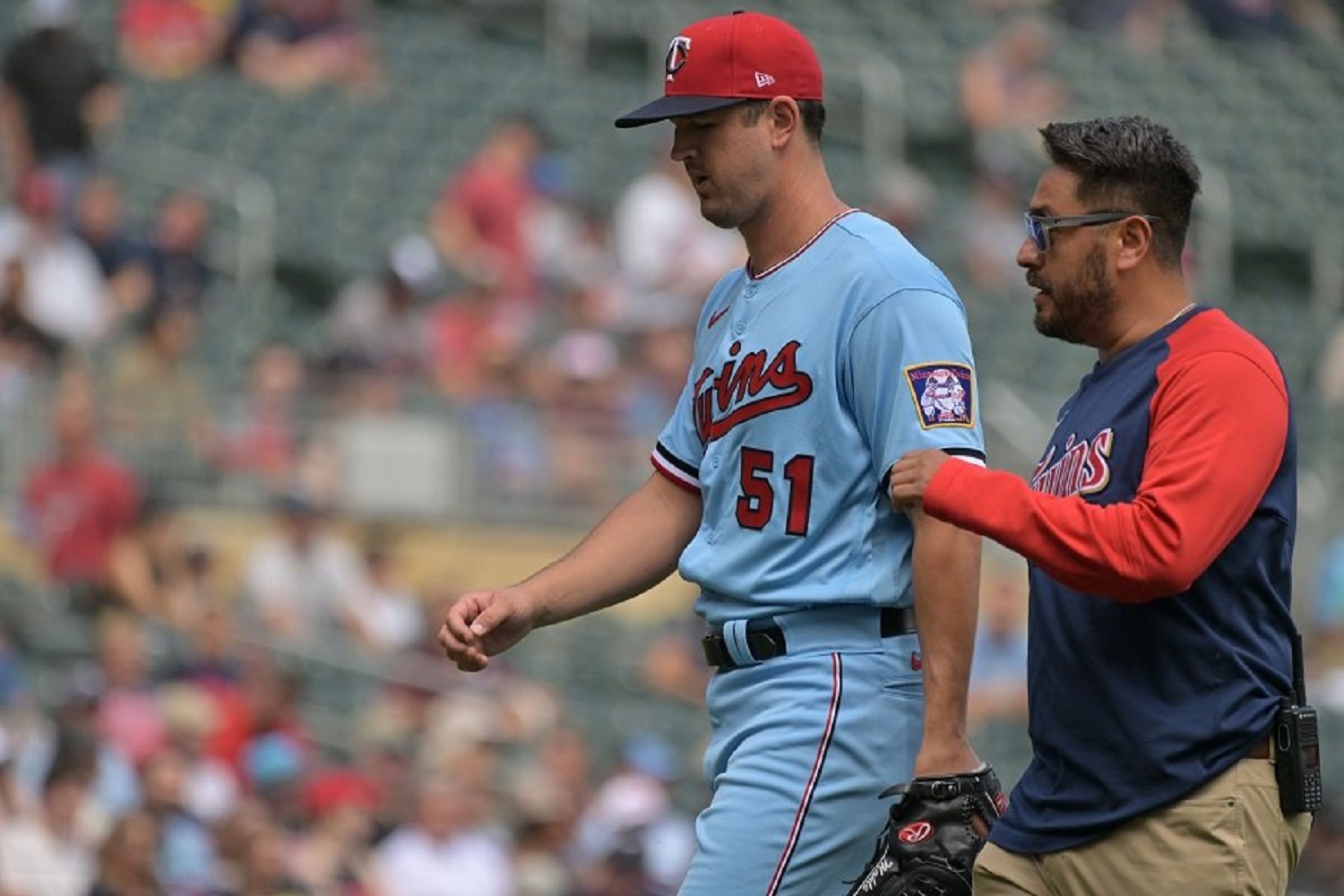 The purpose of this article is try and lay out, in no uncertain terms, the insurmountable magnitude of injuries and medical odysseys to which this year's Twins roster has been subjected. There are worthwhile conversations to be had about the way this team is managing players physically, evaluating new acquisitions, and handling rehab plans. But let's take a step back. When you acknowledge that, to a large degree, injury rates and recoveries are driven by luck and uncontrollable forces, I don't see much of a case for holding the manager or even the front office primarily accountable for what's gone down this season. There's no planning for, or adapting, to the way injuries have impacted this roster. There's no managing a bunch of backups and fourth-string options to sustained contention. I recognize this is very unsatisfying for those who demand accountability and want to see heads roll in the wake of such a disappointing turn of events. But when you remove emotion and try to see the situation objectively, I'm not sure how much more you could expect from the execs and decision makers dealt an unwinnable hand. Could they have done certain things better? Of course. Was it going to turn the unstoppable tide that has plunged this ship asunder? No. This side-by-side comparison of the injured lists for Cleveland and Minnesota, here in the heart of the stretch run, kind of says it all. Sixteen Twins players on IL, including several vital cornerstones, compared to three Guardians. How do you realistically overcome that? Let's review all these injuries that have torpedoed a promising season, and the context behind them. I've tried to order them from most devastating to least. Royce Lewis and Alex Kirilloff. When people talk about the 2022 season and what's gone wrong, I feel like this calamity gets glossed over way too much. To me, it is the '1A' headline for all the team's unmet potential. This horrible twist of fate is what I would categorize as unthinkably disastrous. Lewis and Kirilloff are two of the most important assets for this franchise. (I ranked them #3 and #4 during the offseason, behind Byron Buxton and Jorge Polanco – also both currently on IL.) They are at the ages and junctures of development where you'd expect them to start making a real impact the major-league level, and both showed that ability in brief flashes this year. However, both of their seasons were ended in premature fashion. And in BOTH cases, major surgery was required to address the SAME injury that knocked them out for the previous season. (Did I mention this is essentially the third straight lost season for both?) Kirilloff's wrist surgery from last year didn't take, so now he's undergone a more invasive, last-ditch operation to try and alleviate the debilitating issue. Lewis, during his first game back in what appeared to be a permanent call-up, tore the very same ACL he had reconstructive surgery on last year. You can't make this stuff up. And what's most crushing about it all is that both of these absolutely critical players will inevitably be shrouded in doubt going forward. Can Lewis rebound from a second straight surgery on the same knee, especially when his game is founded on agility and foot speed? Will this somewhat experimental surgery for Kirilloff correct a problem that's been plaguing him for years now, sapping his most elite skill? Realistically, it's hard to feel much assurance on either front, and for that reason it's hard to feel optimistic about the Twins' immediate future. It really can't be overstated how disruptive these unforeseeable developments are for a front office trying to build a championship. Tyler Mahle and Chris Paddack. We all understand that Mahle and Paddack came with known injury risk to varying degrees. At the same time, so do a lot of trades. You've got to believe a club carefully reviews medicals and gains a level of comfort before pulling the trigger on significant deals like these ones. Yeah, it's easy to scream "incompetence" in hindsight. Too easy. There are a lot of top-of-field experts involved in these decisions. Maybe, taking each player on his own, it shouldn't be all that surprising that Mahle or Paddack succumbed to (likely) season-ending arm injuries. But for both to do so? And not only that, but for it happen SO quickly in both cases? Paddack made it to his fifth start before his partially torn UCL gave way, requiring elbow surgery. Mahle lasted only three before his velocity nosedived and a mysterious shoulder injury threatened to end his campaign. A combination of worst-case injury scenarios. Of course. And it really hurts, because the talent evaluation in both cases was sound. I genuinely believe that if healthy these would be the Twins' two best starters. Alas, much like Lewis and Kirilloff, their uncertain futures complicate the front office's planning going forward. Paddack will be coming back from a second Tommy John surgery. Who knows what's going on with Mahle but it seems impossible we'll go into the offseason feeling confident about his shoulder, with one year of team control left. Byron Buxton. Look, we know injuries for Buxton have to be expected and accounted for. They're baked into his legacy, and his new contract. Still, this year the gravity of his durability issues came into sharper focus than ever, primarily because it constitutes a "healthy" season for Buxton. He's already made the second-most plate appearances of his career. He avoided the injured list until August. He still might get to 100 games! And yet, that old injury phantom has conspicuously followed Buxton all year, ever since he came up slamming his hand into the dirt at Fenway one week in. Despite his mightiest efforts, he couldn't outrun his eternal tormentor, and now this season is wrapping up like so many before it: Buxton on the sidelines, watching his team fall short. I guess the point of this blurb is not so much about the micro misfortune of injuries sabotaging another year for Buxton, but more an observation about his appropriateness as face of the franchise: The Twins to lost their way into drafting one of the most talented, electric, special players in modern baseball history who also happens to be the (?) single-most injury prone at that level. Ryan Jeffers and Trevor Larnach. I group these two together because while neither injury was totally unforeseeable – catchers get hurt a lot by nature, and Larnach was also sidelined for much of last year – they definitely qualify as bad luck, and both absences led to huge drop-offs in terms of backup plans. Jeffers was having a reasonably solid season before suffering a thumb fracture in mid-July, which may cost him his entire second half. Larnach developed a sports hernia requiring surgery in mid-June, and still hasn't made it back yet. In both cases, the path to returning has arduously dragged well beyond original estimates, and continues to do so – another unfortunate commonality. With Jeffers sidelined, the Twins were left at catcher with the husk of Gary Sánchez and trade acquisition Sandy León, who'd been toiling in the minors for Cleveland. It's been ugly, much like the outfield in the absence of Larnach, Kirilloff and Buxton. Bailey Ober and Josh Winder. Winder is no longer on the injured list, but I view him much as the same as Ober: a homegrown talent, 25 years old and coming off a great season, clearly a core part of the Twins pitching plans. Granted, they both had their own warning labels coming into this season, but no clear red flags. As it turns out, both will end up maxing out around 50 innings pitched in the majors – big setback seasons for developing pitchers who will now be challenged to rebuild their workloads once again. In each case, the injury seems not well understood. Ober went down with a groin injury first framed as minor that never seemed to heal. Winder's had recurring bouts with an impinged, but structurally sound, shoulder dating back to last year. On their own, these are losses you could withstand, which is why they're relatively low on this list. But combined with all of the above? Getting almost nothing from Ober, or Winder, or Paddack, or their marquee deadline acquisition Mahle? How do you cobble together a decent rotation through all of that? The only Twins starting pitchers that have truly managed to stay healthy are the guys they signed cheaply to fill the fourth and fifth spots in the rotation. Jorgé Alcala and Matt Canterino. These two are lumped as high-upside relievers who could have had transformative impacts on the Twins bullpen, but instead fell victim to essentially worst-case scenarios with their elbows. Alcala missed all of this season; Canterino never made it to the majors and will likely miss all of the next one. Maybe these blows would've been easier to sustain if some of the relief contingency plans held up. However... Danny Coulombe, Cody Stashak, and Jhon Romero. None of these three were projected to be pivotal late-inning weapons, but they were all viewed as important parts of the depth mix. Coulombe and Romero were on the Opening Day roster, and Stashak a late cut. All suffered season-ending injuries early on. Kenta Maeda and Randy Dobnak. I have these two at the bottom because, unlike everyone above, no one realistically expected much out of them this year. But it would have been nice to get something, *anything* from either. Both have been derailed so much for both that it's easy to forget that, coming out of the 2020 season, we were envisioning each as key long-term pieces for the pitching staff. You can look back now and say, "Well the front office shouldn't have been planning around these guys." Or they shouldn't have traded for Paddack or Mahle and the associated risk. Or they shouldn't have committed to Buxton as a centerpiece, or they should have better medical personnel and training philosophies, and so on. There may be truth to these things. But you bet on players you like, and you accept a certain amount of risk. Otherwise, you end up where the previous front office was for so long, treading water in a pointless middle ground. At the end of the day, injuries happen. They're never as predictable or controllable or correctable as people want to believe. Sadly, this scourge has been especially prevalent for the Twins and, more sadly, a lot of these health woes are going to carry forward in terms of their implications. I firmly believe the front office built a team capable of winning the division this year, and Rocco Baldelli was the guy to lead that group. For a while, it was all coming together as planned. Unfortunately, the current team barely resembles what was built.
- 94 comments
-
- 10
-
-

-
-
- byron buxton
- tyler mahle
- (and 3 more)
-
Week in Review: Death Spiral
Nick Nelson replied to Nick Nelson's topic in Twins Daily Front Page News
I said he looked "solid" and "decent" -- hardly glowing praise lol. But I'll take a 4-to-1 K/BB ratio in 4 IP after he put up 9 K and 10 BB in 23 IP over his previous 5 Twins appearances. Step in the right direction. -
Week in Review: Death Spiral
Nick Nelson replied to Nick Nelson's topic in Twins Daily Front Page News
Almost all the talent is on the injured list.- 59 replies
-
- 11
-
-
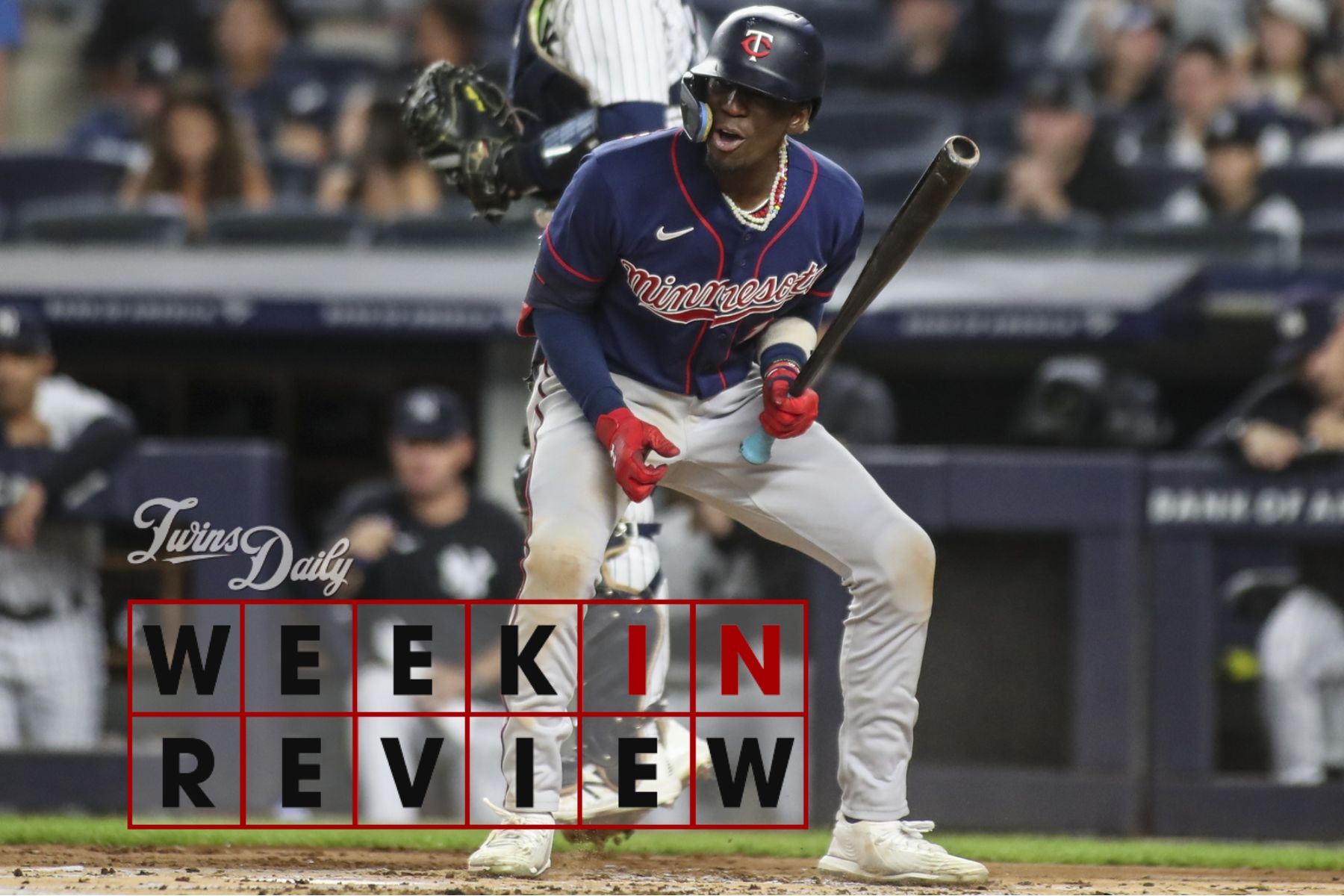 Weekly Snapshot: Mon, 9/5 through Sun, 9/11 *** Record Last Week: 1-6 (Overall: 69-70) Run Differential Last Week: -15 (Overall: +13) Standing: 3rd Place in AL Central (4.5 GB) Last Week's Game Results: Game 133 | NYY 5, MIN 2: Homers from Marwin, Judge Sink Twins Game 134 | NYY 5, MIN 4: Offense Stymied by Yankees Bullpen Game 135 | NYY 7, MIN 1: Nothing Left in the Tank for the Nightcap Game 136 | MIN 4, NYY 3: Twins Finally Scrape Out a Win in NYC Game 137 | CLE 7, MIN 6: Late Rally Can't Overcome Bad Bundy Game 138 | CLE 6, MIN 4: Another Early Hole Proves Too Deep Game 139 | CLE 4, MIN 1: Overmatched Twins Go Quietly in Sweep NEWS & NOTES A week ago the Twins found themselves precariously perched atop the division. "While they're still tied for first out of sheer circumstance" I wrote in the lede, "this team is not in a good place." Boy, that was putting it mildly. Seven long days later, the Twins are now below .500 and buried in third place. Their chances of making the postseason, according to FiveThirtyEight, have sunk to 8 percent. Sigh. The past week saw a lot of roster movement on the pitching staff, with the usual drumbeat of churn and burn remaining steady here as the end draws near. A quick rundown: Cole Sands was activated from his injured list stint on Thursday, supplanting Austin Davis from the roster. In fact, Davis was designated for assignment, one day after giving up three runs on four walks in one inning against the Yankees. Another brilliant waiver pickup by this front office. Speaking of waiver pickups, right-hander Jake Jewell – claimed from Cleveland in mid-August – was outrighted from the 40-man roster. He never got a chance with the Twins. STILL speaking of waiver pickups, Jharel Cotton will likely get another chance with the Twins, having been re-added to the 40-man and active rosters. Minnesota needed the additional pitching depth with Chris Archer landing on the IL due to pectoral tightness that forced him out of Saturday's game. In slightly positive news, the Twins did get Josh Winder back following his time spent on the IL, rehabbing, and then at Triple-A. He gave up a couple of solo homers but mostly looked solid in his return to action. Sands was optioned to make room for Winder. HIGHLIGHTS Louie Varland, take a bow. The reigning Twins minor league pitcher of the year was called upon for his big-league debut in the toughest of circumstances on Wednesday: at Yankee Stadium, against an eternal franchise tormentor, in the midst of a tight pennant race. Despite the immense pressure, Varland came through in flying colors, allowing just one run through five innings before being pulled midway through the sixth. The runner he left behind scored on a home run off Griffin Jax, so Varland finished with this nevertheless brilliant line: 5.1 IP, 2 ER, 3 H, 1 BB, 7 K. He returned to the minors later that day, having been called up as a 29th man for the doubleheader, but we'll presumably see the right-hander again soon. Varland's arrival will go down as a signature moment in this season, but likely one that came too little and too late from a team contention perspective. The same can be said about Carlos Correa emerging at last with the game-changing clutch hits we've all been waiting for. The shortstop was instrumental in securing a single victory at Yankee Stadium, with his two-out, two-run homer in the eighth inning on Thursday proving to make the difference in a 4-3 win. The following night, Correa went 4-for-5 with four RBIs in trying (futilely) to will the team past Cleveland. Sadly, because Correa's teammates have done so little to support the cause, his September heroics will likely end up doing more to stoke his impending free agent market than thrust the Twins back into contention. LOWLIGHTS If the previous weekend's 13-0 dismantling in Chicago was the lowlight of the entire season – and I'd argue it was – Tuesday's tragic mess in New York has to be a close runner-up. Despite getting a brilliant start from Varland in his debut, and taking a 3-0 early lead, and throwing all of their best relievers, and having endless opportunities to break the game open ... the Twins fell in 12 innings. Their absolute lack of fortitude was as glaring as it has been all year. It really felt like the Yankees didn't even care much to win the game, trotting out a backup-filled lineup and lower-caliber arms, while the Twins were furiously throwing everything they had – their six best relievers, pinch-runners, pinch-hitters – and still they couldn't find a way to squeak it out. Max Kepler, who struck out looking as a pinch-hitter with two outs and two on in the eighth that night, has been completely ineffective for several months, and it snowballed last week as he battled through a hip injury that ultimately shut him down on Sunday. Kepler struck out in two of his three pinch-hit appearances and popped out behind the plate in another. On Saturday he hit cleanup and went 0-for-5. With their season rapidly slipping away and so many key fixtures sidelined, the Twins have been desperate for Kepler to step up – left with no choice but to write him into the middle of their decimated lineup against right-handed pitchers. Kepler has done the opposite of answering the call, with the worst WPA on the team since August 1st. It's not lost on me that he's been playing through things physically, but those excuses feel empty for a player whose unwavering, deeply flawed approach keeps him endlessly bound to mediocrity, while those around him grow and progress. Maybe the new rules limiting defensive shifts in 2023 will prove to be a salve for Kepler's long-stagnating game. To be honest I'm not super interested in finding out. Kepler contributed to a roundly horrible performance from the Twins' beleaguered outfield in another sparse offensive week that saw the club score more than four runs just once in seven games: Kyle Garlick, also playing through pain while being forced into more action against righties than anyone would like, went 3-for-24 with 11 strikeouts. Zero walks, zero extra-base hits, zero RBIs. Like Kepler, he probably shouldn't even be on the field. Jake Cave's moment as catalyst and hype man proved short-lived. He managed a double and two singles in 23 at-bats. Gilbert Celestino produced four singles in 19 at-bats. His OPS has cratered to a season-low .623 as he's ceased to present any kind of meaningful threat at the plate. In an ideal world he'd be learning how to hit in Triple-A. With the exception of Varland, pitching was really no better over the past week, surrendering 37 runs and 13 homers in seven games. You of course had the expected lapses from Dylan Bundy (4.2 IP, 7 ER vs. CLE) and Archer (2 ER allowed in 2 IP before exiting Saturday's game). Other struggles were more concerning – like those of Jorge López, continuing to exhibit shaky confidence and command ever since being acquired, as well as the rookie starter they hoped to entrench as a rotation cornerstone. Almost every time he faces a lineup with power, we're reminded why the prospect of Joe Ryan starting a playoff game is so foreboding. That's becoming less of an immediate concern, but still, the Twins will be positioned to depend heavily on Ryan again in 2023, with Tyler Mahle in total limbo, Chris Paddack rehabbing into the season, and Kenta Maeda returning from a lost season at age 35. Wednesday night's game typified the new norm for Ryan, who nibbled around the zone and issued four walks before (former Twin!) Isiah Kiner-Falefa – owner of a .328 slugging percentage coming into the game – delivered a back-breaking grand slam in the fourth inning on a first pitch that must've looked like a beach ball. After looking so cool, collected, and in control early on, Ryan now seems to be on the defensive more often than not, trying keep hitters off his low-90s fastball with secondary stuff that just hasn't been very effective. In the first two months Ryan posted a 2.28 ERA with three home runs allowed in eight starts (0.6 HR/9). Since the start of June, he has a 5.01 ERA with 17 home runs allowed in 15 starts (1.9 HR/9). That's a trend that has reflected the team at large: strong front-runners early on, progressively running out of steam to the point where they now barely look competitive against quality opponents. There's technically time left to turn it around, but why would anyone believe? TRENDING STORYLINE Trailing by 4 ½ games in the AL Central with 23 left to play, the Twins are mathematically still alive, and they actually have a path to making up rapid ground with 11 games in those remaining 23 against the two teams ahead of them. Given the current state of the team, it feels nigh impossible to envision such a turn of fate, but stranger things have happened. For what it's worth, there is still a possibility of the roster getting a bit stronger during these last few weeks. Winder looked decent in his return on Sunday. Bailey Ober rejoining the rotation is imminent after a 66-pitch rehab tune-up at St. Paul on Sunday. Jorge Polanco should be back this week. Trevor Larnach, Ryan Jeffers and Byron Buxton are all still ostensibly expected to return before year's end, although time is running out for them to make any kind of meaningful impact. LOOKING AHEAD As poorly as they've played, and as fatal as the past week might've felt to any lingering hopes for the Twins, there's a pretty feasible scenario that gets them back within striking distance in the next eight days: Twins sweep the Royals at home. Cleveland drops two of three at home against the Angels while the White Sox split a home two-game series against Colorado. White Sox beat Guardians in a makeup game on Thursday. Twins take four of five from Guardians in Cleveland, while White Sox lose two of three in Detroit. It's a series of events that would leave the division looking like this with a little over two weeks to go: 1st: CWS: 75-71 1st: MIN: 75-71 3rd: CLE: 75-72 (0.5 GB) This would put the Twins in front of Cleveland and tied with Chicago, still holding six head-to-head matchups against the latter. Of course, you might tell me it's not especially feasible for Minnesota to pull this off, given how they've looked, and I'd agree. But the fact remains that the opportunity is still there. Even if you picture a slightly less rosy scenario, it's not unthinkable the Twins are somehow in the thick of it a week from now. Which is incredible to think about. TUESDAY, 9/13: ROYALS @ TWINS – LHP Kris Bubic v. RHP Joe Ryan WEDNESDAY, 9/14: ROYALS @ TWINS – RHP Zack Greinke v. RHP Sonny Gray THURSDAY, 9/15: ROYALS @ TWINS – LHP Daniel Lynch v. RHP Dylan Bundy FRIDAY, 9/16: TWINS @ GUARDIANS – TBD v. RHP Shane Bieber SATURDAY, 9/17 (G1): TWINS @ GUARDIANS – TBD v. LHP Konnor Pilkington SATURDAY, 9/17 (G2): TWINS @ GUARDIANS – TBD v. TBD SUNDAY, 9/18: TWINS @ GUARDIANS – RHP Joe Ryan v. RHP Cody Morris
 -
Undermanned and clearly unequipped for the season-defining challenge ahead of them last week, the Minnesota Twins shrunk in the moment, watching their postseason hopes wilt nearly into nothingness. There will be plenty of time ahead for broader postmortem analysis of a team fading into irrelevance just in time for fans to turn their attention to football. For the purposes of this column, we'll stay centered on the past seven days and what to take away. Image courtesy of Wendell Cruz-USA TODAY Sports Weekly Snapshot: Mon, 9/5 through Sun, 9/11 *** Record Last Week: 1-6 (Overall: 69-70) Run Differential Last Week: -15 (Overall: +13) Standing: 3rd Place in AL Central (4.5 GB) Last Week's Game Results: Game 133 | NYY 5, MIN 2: Homers from Marwin, Judge Sink Twins Game 134 | NYY 5, MIN 4: Offense Stymied by Yankees Bullpen Game 135 | NYY 7, MIN 1: Nothing Left in the Tank for the Nightcap Game 136 | MIN 4, NYY 3: Twins Finally Scrape Out a Win in NYC Game 137 | CLE 7, MIN 6: Late Rally Can't Overcome Bad Bundy Game 138 | CLE 6, MIN 4: Another Early Hole Proves Too Deep Game 139 | CLE 4, MIN 1: Overmatched Twins Go Quietly in Sweep NEWS & NOTES A week ago the Twins found themselves precariously perched atop the division. "While they're still tied for first out of sheer circumstance" I wrote in the lede, "this team is not in a good place." Boy, that was putting it mildly. Seven long days later, the Twins are now below .500 and buried in third place. Their chances of making the postseason, according to FiveThirtyEight, have sunk to 8 percent. Sigh. The past week saw a lot of roster movement on the pitching staff, with the usual drumbeat of churn and burn remaining steady here as the end draws near. A quick rundown: Cole Sands was activated from his injured list stint on Thursday, supplanting Austin Davis from the roster. In fact, Davis was designated for assignment, one day after giving up three runs on four walks in one inning against the Yankees. Another brilliant waiver pickup by this front office. Speaking of waiver pickups, right-hander Jake Jewell – claimed from Cleveland in mid-August – was outrighted from the 40-man roster. He never got a chance with the Twins. STILL speaking of waiver pickups, Jharel Cotton will likely get another chance with the Twins, having been re-added to the 40-man and active rosters. Minnesota needed the additional pitching depth with Chris Archer landing on the IL due to pectoral tightness that forced him out of Saturday's game. In slightly positive news, the Twins did get Josh Winder back following his time spent on the IL, rehabbing, and then at Triple-A. He gave up a couple of solo homers but mostly looked solid in his return to action. Sands was optioned to make room for Winder. HIGHLIGHTS Louie Varland, take a bow. The reigning Twins minor league pitcher of the year was called upon for his big-league debut in the toughest of circumstances on Wednesday: at Yankee Stadium, against an eternal franchise tormentor, in the midst of a tight pennant race. Despite the immense pressure, Varland came through in flying colors, allowing just one run through five innings before being pulled midway through the sixth. The runner he left behind scored on a home run off Griffin Jax, so Varland finished with this nevertheless brilliant line: 5.1 IP, 2 ER, 3 H, 1 BB, 7 K. He returned to the minors later that day, having been called up as a 29th man for the doubleheader, but we'll presumably see the right-hander again soon. Varland's arrival will go down as a signature moment in this season, but likely one that came too little and too late from a team contention perspective. The same can be said about Carlos Correa emerging at last with the game-changing clutch hits we've all been waiting for. The shortstop was instrumental in securing a single victory at Yankee Stadium, with his two-out, two-run homer in the eighth inning on Thursday proving to make the difference in a 4-3 win. The following night, Correa went 4-for-5 with four RBIs in trying (futilely) to will the team past Cleveland. Sadly, because Correa's teammates have done so little to support the cause, his September heroics will likely end up doing more to stoke his impending free agent market than thrust the Twins back into contention. LOWLIGHTS If the previous weekend's 13-0 dismantling in Chicago was the lowlight of the entire season – and I'd argue it was – Tuesday's tragic mess in New York has to be a close runner-up. Despite getting a brilliant start from Varland in his debut, and taking a 3-0 early lead, and throwing all of their best relievers, and having endless opportunities to break the game open ... the Twins fell in 12 innings. Their absolute lack of fortitude was as glaring as it has been all year. It really felt like the Yankees didn't even care much to win the game, trotting out a backup-filled lineup and lower-caliber arms, while the Twins were furiously throwing everything they had – their six best relievers, pinch-runners, pinch-hitters – and still they couldn't find a way to squeak it out. Max Kepler, who struck out looking as a pinch-hitter with two outs and two on in the eighth that night, has been completely ineffective for several months, and it snowballed last week as he battled through a hip injury that ultimately shut him down on Sunday. Kepler struck out in two of his three pinch-hit appearances and popped out behind the plate in another. On Saturday he hit cleanup and went 0-for-5. With their season rapidly slipping away and so many key fixtures sidelined, the Twins have been desperate for Kepler to step up – left with no choice but to write him into the middle of their decimated lineup against right-handed pitchers. Kepler has done the opposite of answering the call, with the worst WPA on the team since August 1st. It's not lost on me that he's been playing through things physically, but those excuses feel empty for a player whose unwavering, deeply flawed approach keeps him endlessly bound to mediocrity, while those around him grow and progress. Maybe the new rules limiting defensive shifts in 2023 will prove to be a salve for Kepler's long-stagnating game. To be honest I'm not super interested in finding out. Kepler contributed to a roundly horrible performance from the Twins' beleaguered outfield in another sparse offensive week that saw the club score more than four runs just once in seven games: Kyle Garlick, also playing through pain while being forced into more action against righties than anyone would like, went 3-for-24 with 11 strikeouts. Zero walks, zero extra-base hits, zero RBIs. Like Kepler, he probably shouldn't even be on the field. Jake Cave's moment as catalyst and hype man proved short-lived. He managed a double and two singles in 23 at-bats. Gilbert Celestino produced four singles in 19 at-bats. His OPS has cratered to a season-low .623 as he's ceased to present any kind of meaningful threat at the plate. In an ideal world he'd be learning how to hit in Triple-A. With the exception of Varland, pitching was really no better over the past week, surrendering 37 runs and 13 homers in seven games. You of course had the expected lapses from Dylan Bundy (4.2 IP, 7 ER vs. CLE) and Archer (2 ER allowed in 2 IP before exiting Saturday's game). Other struggles were more concerning – like those of Jorge López, continuing to exhibit shaky confidence and command ever since being acquired, as well as the rookie starter they hoped to entrench as a rotation cornerstone. Almost every time he faces a lineup with power, we're reminded why the prospect of Joe Ryan starting a playoff game is so foreboding. That's becoming less of an immediate concern, but still, the Twins will be positioned to depend heavily on Ryan again in 2023, with Tyler Mahle in total limbo, Chris Paddack rehabbing into the season, and Kenta Maeda returning from a lost season at age 35. Wednesday night's game typified the new norm for Ryan, who nibbled around the zone and issued four walks before (former Twin!) Isiah Kiner-Falefa – owner of a .328 slugging percentage coming into the game – delivered a back-breaking grand slam in the fourth inning on a first pitch that must've looked like a beach ball. After looking so cool, collected, and in control early on, Ryan now seems to be on the defensive more often than not, trying keep hitters off his low-90s fastball with secondary stuff that just hasn't been very effective. In the first two months Ryan posted a 2.28 ERA with three home runs allowed in eight starts (0.6 HR/9). Since the start of June, he has a 5.01 ERA with 17 home runs allowed in 15 starts (1.9 HR/9). That's a trend that has reflected the team at large: strong front-runners early on, progressively running out of steam to the point where they now barely look competitive against quality opponents. There's technically time left to turn it around, but why would anyone believe? TRENDING STORYLINE Trailing by 4 ½ games in the AL Central with 23 left to play, the Twins are mathematically still alive, and they actually have a path to making up rapid ground with 11 games in those remaining 23 against the two teams ahead of them. Given the current state of the team, it feels nigh impossible to envision such a turn of fate, but stranger things have happened. For what it's worth, there is still a possibility of the roster getting a bit stronger during these last few weeks. Winder looked decent in his return on Sunday. Bailey Ober rejoining the rotation is imminent after a 66-pitch rehab tune-up at St. Paul on Sunday. Jorge Polanco should be back this week. Trevor Larnach, Ryan Jeffers and Byron Buxton are all still ostensibly expected to return before year's end, although time is running out for them to make any kind of meaningful impact. LOOKING AHEAD As poorly as they've played, and as fatal as the past week might've felt to any lingering hopes for the Twins, there's a pretty feasible scenario that gets them back within striking distance in the next eight days: Twins sweep the Royals at home. Cleveland drops two of three at home against the Angels while the White Sox split a home two-game series against Colorado. White Sox beat Guardians in a makeup game on Thursday. Twins take four of five from Guardians in Cleveland, while White Sox lose two of three in Detroit. It's a series of events that would leave the division looking like this with a little over two weeks to go: 1st: CWS: 75-71 1st: MIN: 75-71 3rd: CLE: 75-72 (0.5 GB) This would put the Twins in front of Cleveland and tied with Chicago, still holding six head-to-head matchups against the latter. Of course, you might tell me it's not especially feasible for Minnesota to pull this off, given how they've looked, and I'd agree. But the fact remains that the opportunity is still there. Even if you picture a slightly less rosy scenario, it's not unthinkable the Twins are somehow in the thick of it a week from now. Which is incredible to think about. TUESDAY, 9/13: ROYALS @ TWINS – LHP Kris Bubic v. RHP Joe Ryan WEDNESDAY, 9/14: ROYALS @ TWINS – RHP Zack Greinke v. RHP Sonny Gray THURSDAY, 9/15: ROYALS @ TWINS – LHP Daniel Lynch v. RHP Dylan Bundy FRIDAY, 9/16: TWINS @ GUARDIANS – TBD v. RHP Shane Bieber SATURDAY, 9/17 (G1): TWINS @ GUARDIANS – TBD v. LHP Konnor Pilkington SATURDAY, 9/17 (G2): TWINS @ GUARDIANS – TBD v. TBD SUNDAY, 9/18: TWINS @ GUARDIANS – RHP Joe Ryan v. RHP Cody Morris View full article
-
Like I said in the post -- nice success stories for the players, not yet success stories for the organization. Taking out the "buts," "ifs," and "considerings," you cannot objectively call either of these guys successful MLB players yet when they are both 27 years old and have each thrown 125 total innings with below-average ERAs. "Moral victories are for minor-league coaches." - Jay Z
-
When 24-year-old St. Paul native Louie Varland takes the mound in New York on Wednesday (whether pending), he'll already be an awesome success story in his own right — a D2 college player and 15th-round draft pick turned major-leaguer for his hometown team. But the front office needs more than a sentimental story with local ties. They need Varland to become the first of several drafted-and-developed prospects to establish himself as a legitimate asset in the major-league rotation. Image courtesy of Rob Thompson, St. Paul Saints When Twins ownership decided on Derek Falvey as the pick to lead their rebuilt front office, the underlying premise was fairly straightforward: As a mid-market team that can't afford to spend with the big-market heavy hitters, the key to sustainable contention lies in drafting and developing high-quality pitching. Falvey had a track record for helping spearhead this model in Cleveland, a franchise that — along with Tampa Bay, another of the new regime's clear aspirational influences — became a standard-bearer for getting it right. Specifically, the Twins hoped a Falvey-led front office would find a competitive advantage by uncovering hidden talent in the draft, as well as in other organizations via trade. They've had some success in the latter department, with Joe Ryan and Jhoan Duran emerging as two of the top arms for this year's staff. The Twins' record for drafting and developing homegrown talent is, however, noticeably lacking. They've had a few near-misses — or, I should say, not-yets. Bailey Ober, who was taken in the 12th round of Falvey's first draft in 2017, showed great promise last year in 20 starts as a 25-year-old rookie. But his sophomore season being wiped out by a groin injury sorta puts the brakes on his "success story" narrative. Josh Winder, an eighth-rounder in 2018, has also flashed much to like as both a glow-up prospect and — more crucially — a capable big-league rookie. But he too now finds himself spinning in circles due to injury issues. Neither of these guys feels like someone you can really trust as a starter going into 2023. But that is precisely what the Twins need this front office to provide, especially with so many of their more highly-drafted pitching prospects (first-rounder, Chase Petty, second-rounder Steve Hajjar, third-rounder Cade Povich) being dealt away in trades for veterans. Louie Varland has the makings of a signature success story under Falvey. Few had eyes on him has a little-known starter at Concordia University in St. Paul. The Twins worked closely with him to improve his mechanics for better durability and increased velocity. He came back after the lost pandemic season with a bang, mowing through two levels of A-ball with a 2.10 ERA and 12.4 K/9 rate to earn Twins minor league player of the year honors. Moving up to the high minors this year, while still subject to some outside skepticism (no major prospect ranking had him in their top 100), Varland backed up his performance at Double-A to earn an early-August promotion to Triple-A, where he was was more filthy than ever: 21.IP, 1.69 ERA, .192 BAA, 27 K, 3 BB, 1 HR. Right now, Varland's got everything you could want: outstanding performance at every level, legitimate high-octane stuff, and -- perhaps most critically, where the Twins are concerned -- a seemingly strong bill of health and durability. In his 24 starts between Wichita and St. Paul this year, Varland has thrown 126.1 IP, which would lead all Twins pitchers. Of course, those things were also true of Ober and Winder, and any number of other promising ascendant arms in this organization ... until they weren't. Varland unfortunately carries the burden of so many past disappointments as he steps in and tries to give this unraveling rotation a jolt. I'm not sure how many more near-misses, or even not-yets, this front office can withstand. People can quibble over the wisdom of splashy free agent and trade acquisitions like Carlos Correa, Sonny Gray and Tyler Mahle, but at the end of the day, if this regime can't start yielding some impact from its own pitching development engine, what are they here for? How can fans feel confident in the future? Petty is gone. Matt Canterino's out of the picture until 2024. Winder's health is an ongoing question mark. Jordan Balazovic has seen his stock plunge amidst a nightmare season. The standout pitching depth, which seemed to be such a shining strength of the system coming into this season, has been decimated. Varland is one of the few that remains, and there's a lot riding on his shoulders — from both a macro and micro perspective — as he prepares to make his debut in Yankee Stadium (a park where the Twins have won two of their past 22 games), against Aaron Judge and the Bronx Bombers, their season hanging in the balance. Like I said ... no pressure, kid. View full article
-
Will Louie Varland Be Falvey's First Pitching Development Success Story?
Nick Nelson posted an article in Twins
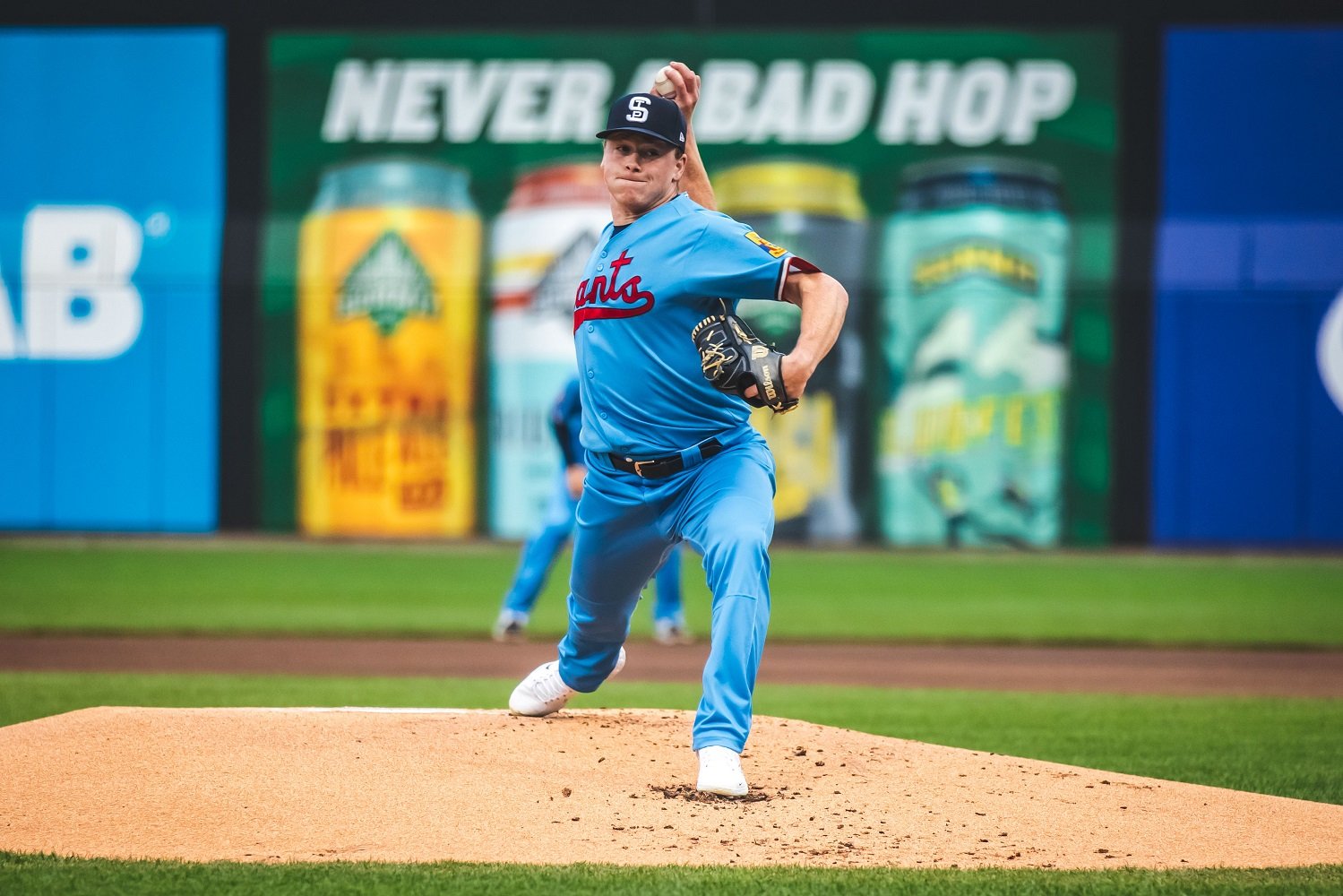 When Twins ownership decided on Derek Falvey as the pick to lead their rebuilt front office, the underlying premise was fairly straightforward: As a mid-market team that can't afford to spend with the big-market heavy hitters, the key to sustainable contention lies in drafting and developing high-quality pitching. Falvey had a track record for helping spearhead this model in Cleveland, a franchise that — along with Tampa Bay, another of the new regime's clear aspirational influences — became a standard-bearer for getting it right. Specifically, the Twins hoped a Falvey-led front office would find a competitive advantage by uncovering hidden talent in the draft, as well as in other organizations via trade. They've had some success in the latter department, with Joe Ryan and Jhoan Duran emerging as two of the top arms for this year's staff. The Twins' record for drafting and developing homegrown talent is, however, noticeably lacking. They've had a few near-misses — or, I should say, not-yets. Bailey Ober, who was taken in the 12th round of Falvey's first draft in 2017, showed great promise last year in 20 starts as a 25-year-old rookie. But his sophomore season being wiped out by a groin injury sorta puts the brakes on his "success story" narrative. Josh Winder, an eighth-rounder in 2018, has also flashed much to like as both a glow-up prospect and — more crucially — a capable big-league rookie. But he too now finds himself spinning in circles due to injury issues. Neither of these guys feels like someone you can really trust as a starter going into 2023. But that is precisely what the Twins need this front office to provide, especially with so many of their more highly-drafted pitching prospects (first-rounder, Chase Petty, second-rounder Steve Hajjar, third-rounder Cade Povich) being dealt away in trades for veterans. Louie Varland has the makings of a signature success story under Falvey. Few had eyes on him has a little-known starter at Concordia University in St. Paul. The Twins worked closely with him to improve his mechanics for better durability and increased velocity. He came back after the lost pandemic season with a bang, mowing through two levels of A-ball with a 2.10 ERA and 12.4 K/9 rate to earn Twins minor league player of the year honors. Moving up to the high minors this year, while still subject to some outside skepticism (no major prospect ranking had him in their top 100), Varland backed up his performance at Double-A to earn an early-August promotion to Triple-A, where he was was more filthy than ever: 21.IP, 1.69 ERA, .192 BAA, 27 K, 3 BB, 1 HR. Right now, Varland's got everything you could want: outstanding performance at every level, legitimate high-octane stuff, and -- perhaps most critically, where the Twins are concerned -- a seemingly strong bill of health and durability. In his 24 starts between Wichita and St. Paul this year, Varland has thrown 126.1 IP, which would lead all Twins pitchers. Of course, those things were also true of Ober and Winder, and any number of other promising ascendant arms in this organization ... until they weren't. Varland unfortunately carries the burden of so many past disappointments as he steps in and tries to give this unraveling rotation a jolt. I'm not sure how many more near-misses, or even not-yets, this front office can withstand. People can quibble over the wisdom of splashy free agent and trade acquisitions like Carlos Correa, Sonny Gray and Tyler Mahle, but at the end of the day, if this regime can't start yielding some impact from its own pitching development engine, what are they here for? How can fans feel confident in the future? Petty is gone. Matt Canterino's out of the picture until 2024. Winder's health is an ongoing question mark. Jordan Balazovic has seen his stock plunge amidst a nightmare season. The standout pitching depth, which seemed to be such a shining strength of the system coming into this season, has been decimated. Varland is one of the few that remains, and there's a lot riding on his shoulders — from both a macro and micro perspective — as he prepares to make his debut in Yankee Stadium (a park where the Twins have won two of their past 22 games), against Aaron Judge and the Bronx Bombers, their season hanging in the balance. Like I said ... no pressure, kid.
 -
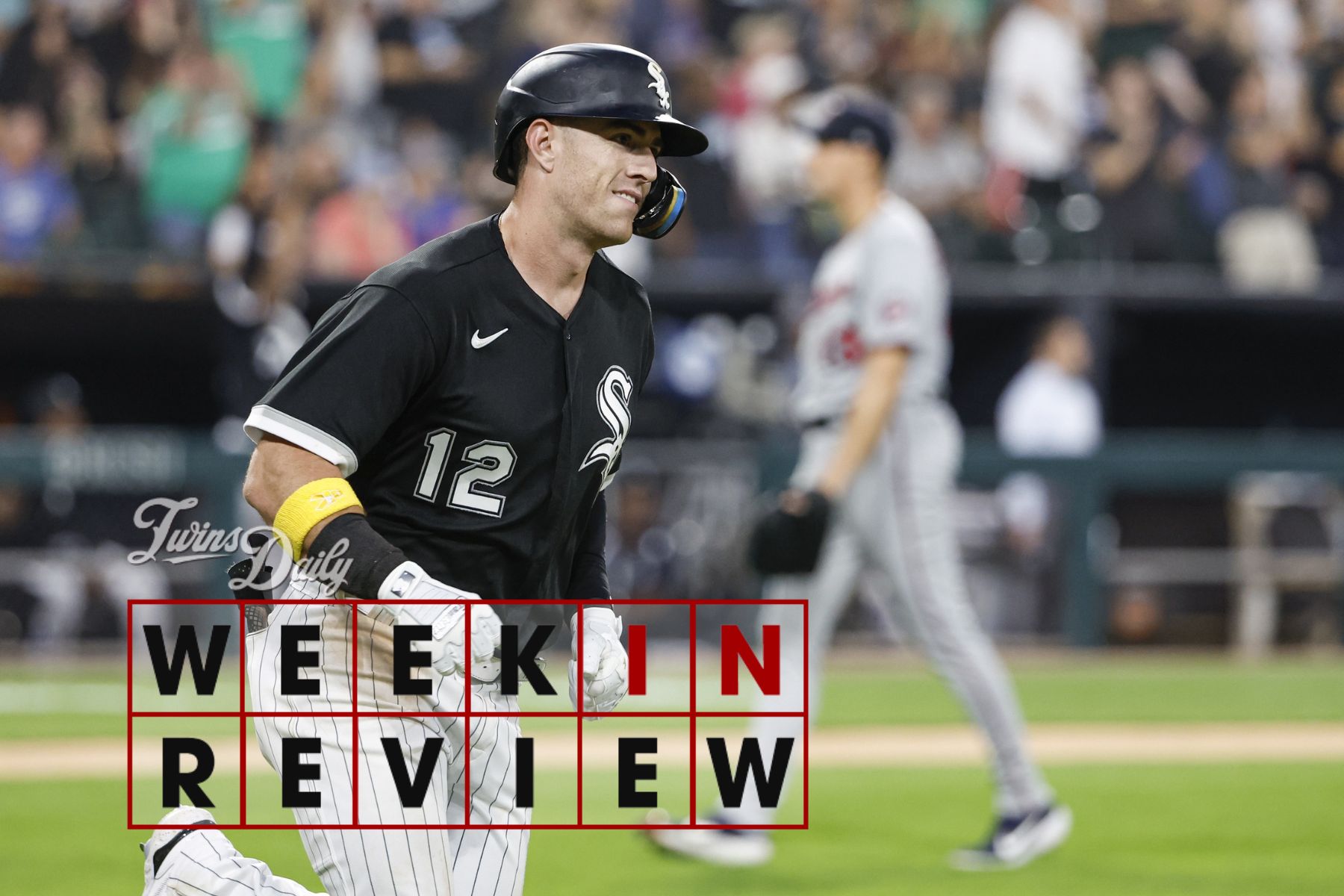 Weekly Snapshot: Mon, 8/29 through Sun, 9/4 *** Record Last Week: 3-3 (Overall: 68-64) Run Differential Last Week: -4 (Overall: +28) Standing: T-1st Place in AL Central Last Week's Game Results: Game 127 | MIN 4, BOS 2: Urshela Delivers, Bullpen Locks It Down Game 128 | MIN 10, BOS 5: Gordon Leads the Way in Big Win Game 129 | BOS 6, MIN 5: Ryan Falters, Late Rally Falls Short Game 130 | CWS 4, MIN 3: Twins Cough Up Multiple Leads Game 131 | CWS 13, MIN 0: Cease Nearly No-Hits Twins Game 132 | MIN 5, CWS 1: Sweep Averted Behind Bundy NEWS & NOTES Last week, in looking ahead to the roster expansion on September 1st, I wrote that "it'll be interesting to see how those spots are used initially, because the club isn't exactly hard-pressed for roster room right now." The Twins lacked appealing internal options to promote, since basically everyone was already up or still rehabbing from injury. Sure enough, both of the players who were called up to fill the additional two September roster spots are players who weren't in the organization 10 days ago: Billy Hamilton, the one-dimensional speedy veteran outfielder signed the previous week, and Austin Davis, a left-handed reliever claimed off waivers from Boston just a day earlier. A few other roster moves before we fully dive into the week that was: Jorge Polanco landed on the injured list as his knee inflammation proved too much to fight through. Jermaine Palacios replaced him on the roster. Jovani Moran was called up in place of Devin Smeltzer, then went back down to make room for Tyler Mahle, who was activated to start on Saturday night. Mahle lasted two innings before exiting the game. He went back on IL with the same shoulder issue, and Moran was recalled to take his place. Bailey Ober started a rehab stint in Fort Myers, throwing three innings of one-run ball. Meanwhile, we learned that Kenta Maeda will not return this season, and will instead focus on getting to full strength for spring of 2023. HIGHLIGHTS The big highlight of the past week, distant as it may now seem, was Jhoan Duran breaking new ground with his spectacularly powerful arm. During his appearance against the Red Sox on Monday, Duran unleashed a triple-digit splinker (his hybrid of a splitter and sinker), and became the first pitcher in MLB history to throw an off-speed pitch 100+ MPH. The historic radar reading came amidst another dominant outing for Duran, who struck out two in a perfect inning against Boston. He later delivered a 1-2-3 inning against Chicago on Friday night, and then retired five in a row on Sunday. Not only has Duran allowed zero runs in his past eight appearances, but he's faced the minimum in seven of them. He's unreal. Another special moment came on Tuesday night, when Nick Gordon had the game of his life, driving in six runs on two hits including a game-breaking grand slam. In a cool showing of reverence, his teammates let Gordon take the field alone the following inning, allowing him to soak in the applause and tip his cap. As much as the Twins offense has stalled out since the end of July, Gordon has been an exception. He's slashing .307/.344/.511 since August 1st, and during that span he leads the team in wOBA and fWAR, ranking second in WPA. LOWLIGHTS Rocco Baldelli is certainly not exempt from criticism when it comes to this team's failings, but one reason I find much of it hollow is this: The Twins are being dragged down by veteran players who just aren't getting it done. Carlos Correa came up in a huge spot on Wednesday, with one out and the winning run on first. He hit into a game-ending double play. It was yet another in a long-running string of letdowns at crucial moments for the legendary clutch performer. Sonny Gray, who has made it clear that he wants to go deeper into games, is pitching his way out of that proposition. Almost every single start, it seems like he's cruising up until the middle innings, when the wheels start to come off. That happened again on Friday in Chicago, where Gray was staked an early 2-0 lead and then hit the wall in a laborious 26-pitch fourth, which saw Minnesota's lead disappear and led to a burdensome night for the bullpen. Friday marked the 10th time in 14 starts since Gray came off the injured list in mid-June that he has failed to even pitch into the sixth inning. People can argue that he should be allowed to pitch his way out of these self-made struggles, but for all the "robotic manager" takes thrown at Baldelli, falling back on that default is what would really be robotic. Gray isn't just running into bad luck when these outings turn south. He's visibly struggling on the mound. He's losing his command, and batters are starting to ambush him. What is a manager for, if not to act in these moments and turn the tides of a game getting away? (Gray later revealed he was pitching through a "little tightness.") Baldelli's decision mostly paid off, up until Caleb Thielbar left one hanging in the eighth and set the stage for another poor showing from Jorge López. Like Correa and Gray, López is a veteran player the front office invested in tremendously, and placed in a key role. He has the worst Win Probability Added of any pitcher on the team since his acquisition. The following night, it was Minnesota's other marquee deadline pickup snuffing the life out of the Twins' season. Insisting he feels fine, Mahle took the mound and looked far from it. His velocity was still way down, his pitches were trash, and the White Sox absolutely clobbered him. It would be a surprise if Mahle pitched again this season. Gray can't give the Twins any length. Mahle is down. Joe Ryan continues to show debilitating vulnerability to the long ball. There's just not enough at the top of this rotation to inspire any faith in the team's ability to rattle off wins, especially when supported by a barely functional lineup. At least they've got a break in the schedule coming up. Oh, wait. TRENDING STORYLINE Amazingly, the Twins are tied for first place. We'll see how long that holds up, with Cleveland heading to Kansas City for three games while the Twins travel to face their eternal tormentors in New York, but that's where we are at. LOOKING AHEAD Here we go. Into the gauntlet. Four games at Yankee Stadium followed by three at home against the top AL Central contender. This feels like a pivotal week, but knowing the Twins, they'll probably go like 3-4 and end up in the same place they started., more or less MONDAY, 9/5: TWINS @ YANKEES – RHP Chris Archer v. RHP Jameson Taillon TUESDAY, 9/6: TWINS @ YANKEES – RHP Joe Ryan v. RHP Gerrit Cole WEDNESDAY, 9/7: TWINS @ YANKEES – RHP Sonny Gray v. RHP Domingo German THURSDAY, 9/8: TWINS @ YANKEES – TBD v. TBD FRIDAY, 9/9: GUARDIANS @ TWINS – TBD v. RHP Dylan Bundy SATURDAY, 9/10: GUARDIANS @ TWINS – RHP Cal Quantrill v. RHP Chris Archer SUNDAY, 9/11: GUARDIANS @ TWINS – RHP Triston McKenzie v. RHP Joe Ryan
 -
The past week of Twins baseball offered the same script we've seen over and over again this season: a modest burst of momentum, then a screeching halt. The Twins followed up a 5-1 homestand by falling flat on their faces in the south side of Chicago. While they're still tied for first out of sheer circumstance, this team is not in a good place. Image courtesy of Kamil Krzaczynski-USA TODAY Sports Weekly Snapshot: Mon, 8/29 through Sun, 9/4 *** Record Last Week: 3-3 (Overall: 68-64) Run Differential Last Week: -4 (Overall: +28) Standing: T-1st Place in AL Central Last Week's Game Results: Game 127 | MIN 4, BOS 2: Urshela Delivers, Bullpen Locks It Down Game 128 | MIN 10, BOS 5: Gordon Leads the Way in Big Win Game 129 | BOS 6, MIN 5: Ryan Falters, Late Rally Falls Short Game 130 | CWS 4, MIN 3: Twins Cough Up Multiple Leads Game 131 | CWS 13, MIN 0: Cease Nearly No-Hits Twins Game 132 | MIN 5, CWS 1: Sweep Averted Behind Bundy NEWS & NOTES Last week, in looking ahead to the roster expansion on September 1st, I wrote that "it'll be interesting to see how those spots are used initially, because the club isn't exactly hard-pressed for roster room right now." The Twins lacked appealing internal options to promote, since basically everyone was already up or still rehabbing from injury. Sure enough, both of the players who were called up to fill the additional two September roster spots are players who weren't in the organization 10 days ago: Billy Hamilton, the one-dimensional speedy veteran outfielder signed the previous week, and Austin Davis, a left-handed reliever claimed off waivers from Boston just a day earlier. A few other roster moves before we fully dive into the week that was: Jorge Polanco landed on the injured list as his knee inflammation proved too much to fight through. Jermaine Palacios replaced him on the roster. Jovani Moran was called up in place of Devin Smeltzer, then went back down to make room for Tyler Mahle, who was activated to start on Saturday night. Mahle lasted two innings before exiting the game. He went back on IL with the same shoulder issue, and Moran was recalled to take his place. Bailey Ober started a rehab stint in Fort Myers, throwing three innings of one-run ball. Meanwhile, we learned that Kenta Maeda will not return this season, and will instead focus on getting to full strength for spring of 2023. HIGHLIGHTS The big highlight of the past week, distant as it may now seem, was Jhoan Duran breaking new ground with his spectacularly powerful arm. During his appearance against the Red Sox on Monday, Duran unleashed a triple-digit splinker (his hybrid of a splitter and sinker), and became the first pitcher in MLB history to throw an off-speed pitch 100+ MPH. The historic radar reading came amidst another dominant outing for Duran, who struck out two in a perfect inning against Boston. He later delivered a 1-2-3 inning against Chicago on Friday night, and then retired five in a row on Sunday. Not only has Duran allowed zero runs in his past eight appearances, but he's faced the minimum in seven of them. He's unreal. Another special moment came on Tuesday night, when Nick Gordon had the game of his life, driving in six runs on two hits including a game-breaking grand slam. In a cool showing of reverence, his teammates let Gordon take the field alone the following inning, allowing him to soak in the applause and tip his cap. As much as the Twins offense has stalled out since the end of July, Gordon has been an exception. He's slashing .307/.344/.511 since August 1st, and during that span he leads the team in wOBA and fWAR, ranking second in WPA. LOWLIGHTS Rocco Baldelli is certainly not exempt from criticism when it comes to this team's failings, but one reason I find much of it hollow is this: The Twins are being dragged down by veteran players who just aren't getting it done. Carlos Correa came up in a huge spot on Wednesday, with one out and the winning run on first. He hit into a game-ending double play. It was yet another in a long-running string of letdowns at crucial moments for the legendary clutch performer. Sonny Gray, who has made it clear that he wants to go deeper into games, is pitching his way out of that proposition. Almost every single start, it seems like he's cruising up until the middle innings, when the wheels start to come off. That happened again on Friday in Chicago, where Gray was staked an early 2-0 lead and then hit the wall in a laborious 26-pitch fourth, which saw Minnesota's lead disappear and led to a burdensome night for the bullpen. Friday marked the 10th time in 14 starts since Gray came off the injured list in mid-June that he has failed to even pitch into the sixth inning. People can argue that he should be allowed to pitch his way out of these self-made struggles, but for all the "robotic manager" takes thrown at Baldelli, falling back on that default is what would really be robotic. Gray isn't just running into bad luck when these outings turn south. He's visibly struggling on the mound. He's losing his command, and batters are starting to ambush him. What is a manager for, if not to act in these moments and turn the tides of a game getting away? (Gray later revealed he was pitching through a "little tightness.") Baldelli's decision mostly paid off, up until Caleb Thielbar left one hanging in the eighth and set the stage for another poor showing from Jorge López. Like Correa and Gray, López is a veteran player the front office invested in tremendously, and placed in a key role. He has the worst Win Probability Added of any pitcher on the team since his acquisition. The following night, it was Minnesota's other marquee deadline pickup snuffing the life out of the Twins' season. Insisting he feels fine, Mahle took the mound and looked far from it. His velocity was still way down, his pitches were trash, and the White Sox absolutely clobbered him. It would be a surprise if Mahle pitched again this season. Gray can't give the Twins any length. Mahle is down. Joe Ryan continues to show debilitating vulnerability to the long ball. There's just not enough at the top of this rotation to inspire any faith in the team's ability to rattle off wins, especially when supported by a barely functional lineup. At least they've got a break in the schedule coming up. Oh, wait. TRENDING STORYLINE Amazingly, the Twins are tied for first place. We'll see how long that holds up, with Cleveland heading to Kansas City for three games while the Twins travel to face their eternal tormentors in New York, but that's where we are at. LOOKING AHEAD Here we go. Into the gauntlet. Four games at Yankee Stadium followed by three at home against the top AL Central contender. This feels like a pivotal week, but knowing the Twins, they'll probably go like 3-4 and end up in the same place they started., more or less MONDAY, 9/5: TWINS @ YANKEES – RHP Chris Archer v. RHP Jameson Taillon TUESDAY, 9/6: TWINS @ YANKEES – RHP Joe Ryan v. RHP Gerrit Cole WEDNESDAY, 9/7: TWINS @ YANKEES – RHP Sonny Gray v. RHP Domingo German THURSDAY, 9/8: TWINS @ YANKEES – TBD v. TBD FRIDAY, 9/9: GUARDIANS @ TWINS – TBD v. RHP Dylan Bundy SATURDAY, 9/10: GUARDIANS @ TWINS – RHP Cal Quantrill v. RHP Chris Archer SUNDAY, 9/11: GUARDIANS @ TWINS – RHP Triston McKenzie v. RHP Joe Ryan View full article
-
On Thursday, the Twins promoted outfielder Billy Hamilton to the active roster as a September call-up. He is expected to play a very limited role, so there's no need to blow his arrival out of proportion. Still, Hamilton is a pretty fascinating player. Here are a few reasons why. Once upon a time, Billy Hamilton was viewed as one of the best young players in baseball, thanks to his transcendent and potentially game-changing speed. A second-round draft pick by the Reds in 2009, he appeared in back-to-back Futures Games in 2012 and 2013. He reached as high as #11 overall on MLB.com's top prospect rankings. He was Rookie of the Year runner-up in 2014, and went on to amass more than 3,000 major-league plate appearances before his 30th birthday – despite, well, not hitting at all. Hamilton's offensive game never developed remotely. He has a career .239/.293/.326 slash line and at this point, as a 31-year-old, he's barely even usable at the plate. There is a reason he was freely available to the Twins in August, after being cut loose by both the Mariners and Marlins this summer. Still, he's an intriguing piece to have on hand for late-game situations as the Twins face the prospect of playoff-intensity baseball throughout September. 1. Hamilton is a highly specialized weapon, suited for high-stakes games. In assessing the veteran speedster's utility, it's easy to think back to players like Kansas City's Jarrod Dyson, who was a dynamic weapon in the playoffs despite similar offensive ineptitude. Compared to his athletic prime, Hamilton may have lost a step, but he's still REALLY fast and really effective on the basepaths. His sprint speed in 2021 ranked in the top 3% of all big-leaguers, and he's stolen his last 19 consecutive bases successfully, dating back to 2020. 2. Hamilton set the minor-league record for most stolen bases in a season. To say he's always had a knack for swiping bags would be a major understatement. While coming up through the minors, Hamilton was an unstoppable force once he got aboard, terrorizing helpless batteries. In his first full minor-league season in 2011, he stole 103 bases in 135 games. The next year he would set the all-time minor-league record for steals in a season, when he stole his 146th base on August 12th to surpass Vince Coleman's record from 1983. Hamilton set the (still standing) new record as a member of the Pensacola Blue Wahoos, who would briefly become the Twins' Double-A affiliate several years later. Hamilton finished the 2012 season with a mind-blowing 155 steals on 192 attempts (81%) in 132 games. 3. In an alternative dimension, Hamilton might've been catching footballs from Dak Prescott. Before he decided on baseball and got taken by Cincinnati in the 2009 MLB Draft, Hamilton had signed a letter of intent to play wide receiver at the Mississippi State University. In 2012, which would've been Hamilton's senior year, a quarterback by the name of Dak Prescott started working his way into the Bulldogs' quarterback rotation, although he didn't become the full-time starter until 2013. 4. He's not the first guy named Billy Hamilton with a legendary rep for stealing bases. This isn't so much a fact about the current player of focus, but it's a quirky little nugget that I find quite amusing. If you look up the name "Billy Hamilton" on Baseball Reference you'll find two results: the guy who debuted for the Cincinnati Reds in 2013, and the guy who debuted for the Kansas City Cowboys back in 1888. The "old" Billy Hamilton, who played 14 seasons before retiring in 1901, was inducted in the Baseball Hall of Fame in 1961 primarily because he – guess what – was an incredible base-stealer. Hamilton swiped 100+ bags in four different seasons and led the league five times. He ranks third all-time in stolen bases (914) behind only Rickey Henderson and Lou Brock. I'll venture to guess the "new" Billy Hamilton, with 321 career steals, won't be catching his namesake. But he might be able to inch a little bit closer during his time with the Twins. It'll also be fun to see Hamilton on the same team as Byron Buxton. As of five years ago, they ranked #1 and #2 for fastest men in the game. View full article
-
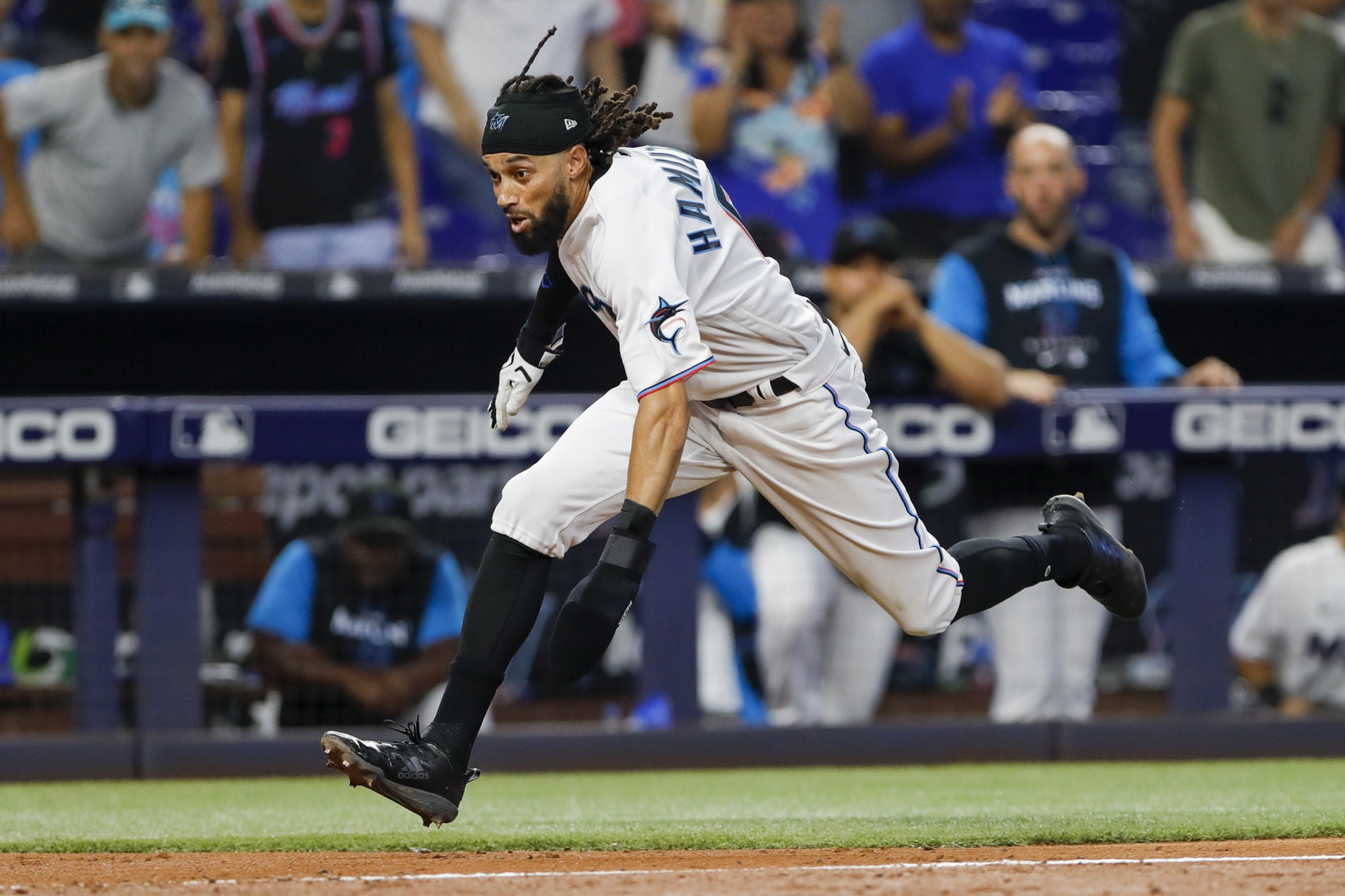 Once upon a time, Billy Hamilton was viewed as one of the best young players in baseball, thanks to his transcendent and potentially game-changing speed. A second-round draft pick by the Reds in 2009, he appeared in back-to-back Futures Games in 2012 and 2013. He reached as high as #11 overall on MLB.com's top prospect rankings. He was Rookie of the Year runner-up in 2014, and went on to amass more than 3,000 major-league plate appearances before his 30th birthday – despite, well, not hitting at all. Hamilton's offensive game never developed remotely. He has a career .239/.293/.326 slash line and at this point, as a 31-year-old, he's barely even usable at the plate. There is a reason he was freely available to the Twins in August, after being cut loose by both the Mariners and Marlins this summer. Still, he's an intriguing piece to have on hand for late-game situations as the Twins face the prospect of playoff-intensity baseball throughout September. 1. Hamilton is a highly specialized weapon, suited for high-stakes games. In assessing the veteran speedster's utility, it's easy to think back to players like Kansas City's Jarrod Dyson, who was a dynamic weapon in the playoffs despite similar offensive ineptitude. Compared to his athletic prime, Hamilton may have lost a step, but he's still REALLY fast and really effective on the basepaths. His sprint speed in 2021 ranked in the top 3% of all big-leaguers, and he's stolen his last 19 consecutive bases successfully, dating back to 2020. 2. Hamilton set the minor-league record for most stolen bases in a season. To say he's always had a knack for swiping bags would be a major understatement. While coming up through the minors, Hamilton was an unstoppable force once he got aboard, terrorizing helpless batteries. In his first full minor-league season in 2011, he stole 103 bases in 135 games. The next year he would set the all-time minor-league record for steals in a season, when he stole his 146th base on August 12th to surpass Vince Coleman's record from 1983. Hamilton set the (still standing) new record as a member of the Pensacola Blue Wahoos, who would briefly become the Twins' Double-A affiliate several years later. Hamilton finished the 2012 season with a mind-blowing 155 steals on 192 attempts (81%) in 132 games. 3. In an alternative dimension, Hamilton might've been catching footballs from Dak Prescott. Before he decided on baseball and got taken by Cincinnati in the 2009 MLB Draft, Hamilton had signed a letter of intent to play wide receiver at the Mississippi State University. In 2012, which would've been Hamilton's senior year, a quarterback by the name of Dak Prescott started working his way into the Bulldogs' quarterback rotation, although he didn't become the full-time starter until 2013. 4. He's not the first guy named Billy Hamilton with a legendary rep for stealing bases. This isn't so much a fact about the current player of focus, but it's a quirky little nugget that I find quite amusing. If you look up the name "Billy Hamilton" on Baseball Reference you'll find two results: the guy who debuted for the Cincinnati Reds in 2013, and the guy who debuted for the Kansas City Cowboys back in 1888. The "old" Billy Hamilton, who played 14 seasons before retiring in 1901, was inducted in the Baseball Hall of Fame in 1961 primarily because he – guess what – was an incredible base-stealer. Hamilton swiped 100+ bags in four different seasons and led the league five times. He ranks third all-time in stolen bases (914) behind only Rickey Henderson and Lou Brock. I'll venture to guess the "new" Billy Hamilton, with 321 career steals, won't be catching his namesake. But he might be able to inch a little bit closer during his time with the Twins. It'll also be fun to see Hamilton on the same team as Byron Buxton. As of five years ago, they ranked #1 and #2 for fastest men in the game.
 -
The Minnesota Twins found their 2022 season on life support as they limped out of Houston on Thursday, losers of six straight, but they managed to avert disaster with a much-needed weekend sweep of the Giants back at home. As a result, the Twins are still in the fight, albeit facing a tremendous uphill battle after spiraling into an embarrassing slump while losing their best player to the injured list. Weekly Snapshot: Mon, 8/22 through Sun, 8/28 *** Record Last Week: 3-4 (Overall: 65-61) Run Differential Last Week: +8 (Overall: +32) Standing: 2nd Place in AL Central (2.0 GB) Last Week's Game Results: Game 120 | TEX 2, MIN 1: Bats Disappear, Buxton Goes Down Game 121 | HOU 4, MIN 2: Slumping Offense Hopeless Against Verlander Game 122 | HOU 5, MIN 3: Fulmer Falters in Another Lineup No-Show Game 123 | HOU 6, MIN 3: Twins Drop Sixth Straight in Familiar Fashion Game 124 | MIN 9, SF 0: Offense Awakens as Losing Streak Snaps Game 125 | MIN 3, SF 2: Bases-Loaded BB Produces True Walk-Off Game 126 | MIN 8, SF 3: Twins Pull Away to Secure Needed Sweep NEWS & NOTES Byron Buxton did everything he could to avoid this point. It's not exactly a secret he's been fighting through significant physical ailments all season. That's been apparent in his expressions, his movements, his frequent unavailability, and of course his diminished – albeit still solid – performance. But he's managed to stay active through all of it. On Monday, his body finally said 'no more.' Buxton showed clear discomfort on a big swing in the series finale against Texas, then battled through an eventful inning in the field before exiting the game. Turns out it was a lesser-discussed ongoing hip issue that finally overcame Buxton, pushing him to the injured list for the first time all year. This pause isn't expected to clear up the hip problems, nor the center fielder's chronic knee pain, but giving Buxton a break feels like the team's best bet to have him available in any capacity for a late push. That is, if the season is still salvageable whenever he returns. With Tyler Mahle sidelined, Aaron Sanchez was recalled to start on Tuesday against the Astros. He held his own in the imposing matchup, allowing two runs over four innings. He also pitched on Sunday against the Giants, yielding two earned runs over 3 ⅔ while struggling to keep his pitch count in check. Kyle Garlick was activated from the IL on Friday and wasted no time making his impact felt, batting leadoff against left-hander Alex Wood and going 3-for-4 with a walk. Unfortunately, Wood was the last lefty starter the Twins are lined up to face in quite a while, after running through a ridiculous barrage of southpaws during Garlick's absence. Par for the course this year. Tim Beckham was designated for assignment to make room on the roster for Garlick. Speedster Billy Hamilton, signed to a minor-league deal on Saturday, could soon take over Beckham's previous role as last man on the bench. More on that later. HIGHLIGHTS It's hard to say the front office's big moves at the trade deadline have paid off much to this point – Mahle is on the IL, Michael Fulmer coughed up three runs in Houston on Wednesday, and Jorge López has blown two of five save attempts. All the same, Minnesota's once-wobbly staff has been significantly stabilized since then. In the month of August, Twins pitchers have collectively posted a 3.24 ERA. They've surrendered only 20 home runs in 25 games after coughing up 38 in 22 July contests, leading to a 5.30 ERA that month and a state of deadline desperation. The arms have been asked to pick up a lot of slack lately, thanks to the sluggishness of the offense, and for the most part, they've been answering the call. The Twins completely shut down Texas and San Francisco this past week, allowing only six total runs in four games against them, keyed by a pair of strong starts from Sonny Gray and a shutdown performance from Joe Ryan on Friday. Even the Houston series was relatively impressive from a pitching standpoint. Throwing their bottom three starters at one of the league's best lineups in a very hitter-friendly park, the Twins allowed 15 runs, holding Houston to four, five, and six on successive nights. This couldn't be considered GOOD pitching per se – we're still talking about a 5.63 ERA in the series – but it's the best one could realistically expect given the circumstances. Any kind of life from the Twins offense would've made these competitive and winnable games. Alas, that wasn't in the cards. LOWLIGHTS The depths of this offense's despair, as the team's once-bright hopes in the Central faded fast amidst a crushing six-game losing streak, were truly hard to comprehend. Even with so many key hitters on IL – a list Buxton joined early in the week – it was just stunning to see a collection of professional hitters look this flat and fruitless, night in and night out. On both August 16th against Kansas City and August 26th against San Francisco, the Twins won 9-0 in games that featured run-scoring explosions rendered unnecessary by the pitching staff's excellence. In eight games between those blowouts, when the team really could've used some of that excess scoring, the offense slashed .182/.246/.289 and averaged just 2.25 runs per game. Clearly the brief awakening against the Royals generated no momentum. The same felt true this time around, as the Twins followed Friday's nine-run outburst by getting shut out through eight innings on Saturday. They managed to turn that around, thankfully, but it's still tough to feel confidence in this lineup. Max Kepler has been anchoring the team's downward plunge. He went 4-for-22 with one double and one RBI during the six-game losing streak. His last home run came on July 5th and since then he's slugging .279 in 31 games, as an everyday right fielder. Kepler's inability to pose any real threat at the plate made it all the more puzzling that San Francisco chose to intentionally walk him as part of Saturday's game-winning rally, but, I guess that's why the Giants are where they are. Carlos Correa's stat line during the six-game swoon was nearly identical to Kepler's – 4-for-22, one double, one RBI – and it continued a lengthy stretch of underwhelming performance from the shortstop, who by then was slashing .212/.315/.340 with a negative WPA since the end of June. Correa broke out of his slump during the weekend, producing six hits and three RBIs against the Giants. Kepler did too, reaching base five times and scoring the winning run on Saturday night before chipping in a couple of hits on Sunday. It goes to show how much of a difference these guys can make when they're contributing, not to mention some of the role players who've been elevated into bigger roles like Jake Cave and Gilberto Celestino. The Twins badly need all of these guys to keep it up, especially with a couple other reliable offensive fixtures beginning to fade. After managing to hang in the .330-.340 range for much of the season, Luis Arraez has seen his batting average drop precipitously of late as the hits have dried up. He went just 2-for-22 over the past week and is hitting .261 in August. I recently opined that Arraez is the single most important factor in the lineup's – and thus the team's – success down the stretch. The numbers corroborate this belief, as Arraez's drop-off has closely coincided with the team's slide. This split is always pretty stark, but in his case it really jumps out: in Twins victories, Arraez is slashing .387/.456/.495; in losses, .251/.313/.360. He's the straw that stirs the drink. Another crucial offensive contributor gone missing is José Miranda, who produced just four singles in 28 at-bats over the past week. He's seen his OPS drop by about 50 points since the start of the Texas series. Part of this is just natural regression, because luck was eventually going to stop favoring the rookie so generously (he had a .436 BABIP in the first month following the All-Star break) but there do appear to be some league adjustments in play. Specifically, pitchers are capitalizing on Miranda's ultra-aggressive approach, with the whiffs beginning to mount. Last week he struck out 12 times with zero walks in 29 plate appearances. His out-of-zone swing rate has been way up lately. Miranda has shown a knack for hitting the ball where it's pitched and making quality contact in a variety of different zone locations, but some pitches simply should not be swung at, and he needs to start showing better judgment to get back on track. Perhaps this undisciplined slump stems from the desire of a talented young player to try and do too much while the team languishes and fizzles around him. Or maybe it's just a standard example of major-league scouting reports catching up to a rookie hitter. Either way, it underscores the vital need for veteran cornerstones like Kepler, Correa, and Jorge Polanco – 3-for-16 with one RBI last week, and battling a knee issue – to take the lead and relieve some pressure in the final month-plus. TRENDING STORYLINE When the calendar flips to September this coming Thursday, MLB rosters will expand by two, to 28 players. This gives the Twins an opportunity to add two more players to their existing mix. It'll be interesting to see how those spots are used initially, because the club isn't exactly hard-pressed for roster room right now. In fact they're already rostering at least one bench player (Caleb Hamilton) who they have no real use for. There are a number of players on the comeback trail from injury, hoping to return in the final month – Kenta Maeda, Trevor Larnach, Josh Winder, Randy Dobnak, and Ryan Jeffers among them – but it seems unlikely any will be ready for a call-up quite that soon. This leaves relievers like Jovani Moran and Jake Jewell as candidates to join the bullpen. On the position player side? Assuming he checks out in his workouts at the Twins' Ft. Myers complex, Hamilton (Billy, not Caleb) seems like a good bet to come aboard as a pinch-runner and defensive replacement. LOOKING AHEAD It's "take care of business" time for the Twins. They need to handle a pretty decent Red Sox team at home – no small order – and then try to create some distance from the White Sox in Chicago. Of note: Mahle will be eligible to return from the injured list for Saturday night's 'TBD' slot. That appears to be the tentative plan, so long as things keep trending right for the right-hander physically. Given the magnitude of that series, the Cy Young-caliber quality of the opposing starter, and the immense drop-off from Mahle to Sanchez ... we'll need to strongly hope that proves to be the case. MONDAY, 8/29: RED SOX @ TWINS – RHP Brayan Bello v. RHP Dylan Bundy TUESDAY, 8/30: RED SOX @ TWINS – RHP Kutter Crawford v. RHP Chris Archer WEDNESDAY, 8/31: RED SOX @ TWINS – RHP Michael Wacha v. RHP Joe Ryan FRIDAY, 9/2: TWINS @ WHITE SOX – RHP Sonny Gray v. RHP Davis Martin SATURDAY, 9/3: TWINS @ WHITE SOX – TBD v. RHP Dylan Cease SUNDAY, 9/4: TWINS @ WHITE SOX – RHP Dylan Bundy v. RHP Lucas Giolito View full article
