Nick Nelson
-
Posts
8,323 -
Joined
-
Last visited
-
Days Won
56
Content Type
Profiles
News
Minnesota Twins Videos
2026 Minnesota Twins Top Prospects Ranking
2022 Minnesota Twins Draft Picks
Minnesota Twins Free Agent & Trade Rumors, Notes, & Tidbits
Guides & Resources
2023 Minnesota Twins Draft Picks
The Minnesota Twins Players Project
2024 Minnesota Twins Draft Picks
2025 Minnesota Twins Draft Pick Tracker
2026 Minnesota Twins Draft Tracker: Picks & Bonuses
Forums
Blogs
Events
Store
Downloads
Gallery
Everything posted by Nick Nelson
-
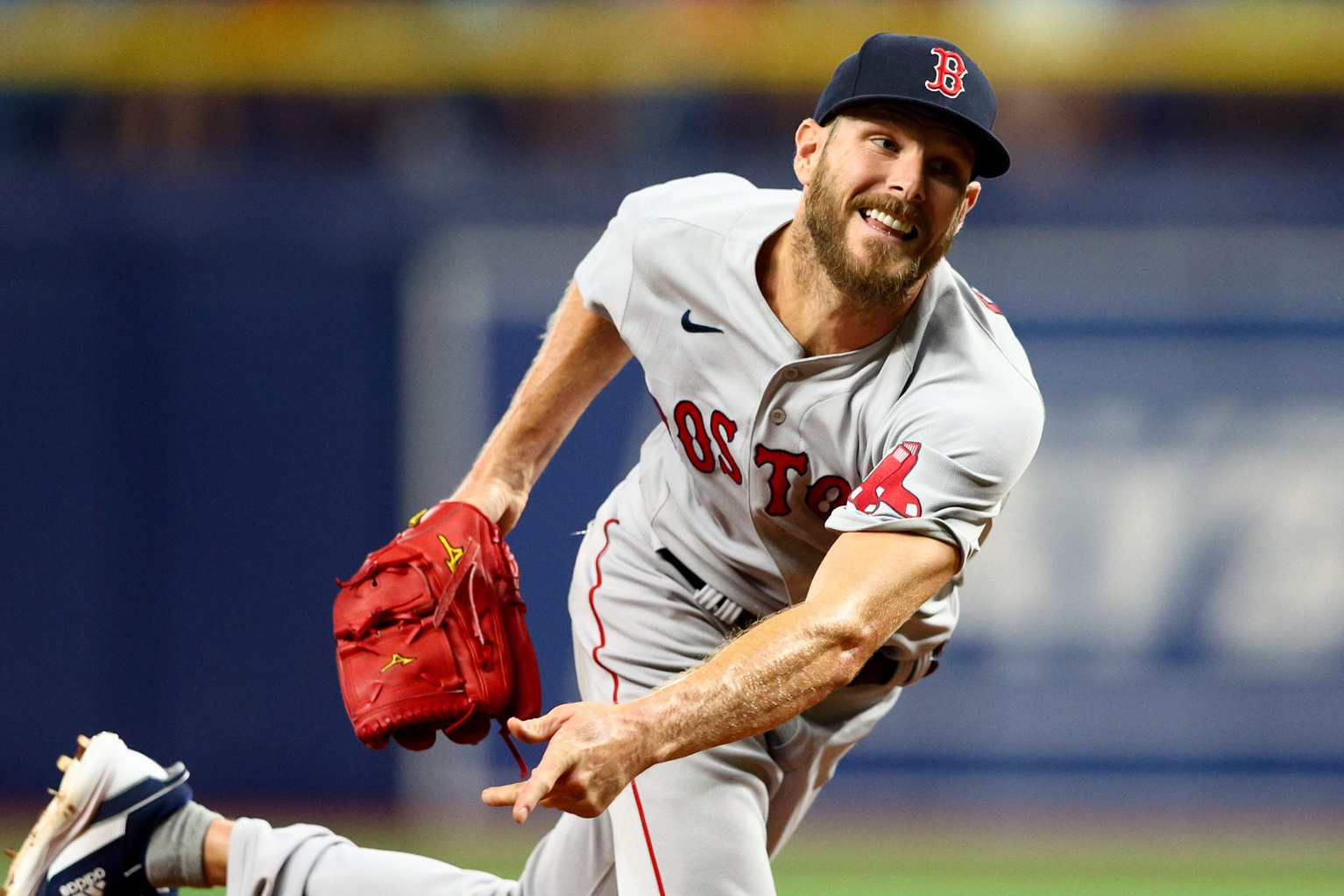 When we put together our Offseason Handbook at the end of last season, we explored a number of trade candidates for the rotation, noting that this has been the front office's preferred avenue for acquiring frontline starters. Several options were mentioned, with varying levels of feasibility. Among them was Pablo Lopez, whom the Twins reportedly engaged the Marlins about earlier this offseason. Another was Chris Sale, who hasn't been connected to Minnesota officially – to my knowledge – but lurks as a potentially pivotal remaining piece in this offseason's landscape. As noted in our Handbook writeup on Sale, his Hall of Fame career has taken a sharp detour since turning 30, with his tenure in Boston largely hampered by injuries and frustration. Last year things reached a painful crescendo, when Sale broke his wrist while biking to get lunch as he was recovering from another surgery. The premise here is that the Red Sox might be motivated to move on, with Sale still owed another $55 million over the next two seasons and Boston's short-term contention hopes in doubt. A report in the New York Post in late December indicated that there could be an opening. "Chris Sale is a pitcher [teams] could look at," wrote Jon Heyman. "The Red Sox told teams early they had no intention to trade Sale, but they’re open to listening on starters now." The "but" there seems to indicate Sale could be among the trade chips they've softened on. Sale is of course familiar with the Twins, and vice versa. The southpaw has tended to be oddly vulnerable against Minnesota's lineup, with a 3.91 career ERA that far exceeds his 3.03 overall mark. But that shouldn't distract anyone from the fact that Sale was among the top 3-to-5 MLB starters in the 2010s, with one of the most dominant track records in history. From 2013 through 2018 he was a top five Cy Young finisher every single year. He holds the all-time MLB record for best strikeout rate (11.1 K/9), and K-BB ratio (5.33). The tall, lanky, hard-throwing left-hander is a force the likes of which baseball has rarely seen. Given their current financial situation, the Twins could reasonably take on the remaining two years of Sale's contract at $27.5 million apiece. If they move Max Kepler's salary, they can do it without even raising total payroll for 2023. It's the kind of short-term, high-AAV, big-upside deal the front office loves. Meanwhile, Sale's price tag along with his age and recent health issues should keep the trade cost in check. There are two key sticking points when it comes to sizing up Sale as a trade target. The first is those health issues. Sale has thrown a total of 48 ⅓ innings since the 2019 season. He underwent Tommy John surgery in 2020 which cost him most of 2021. Last year brought a barrage of unfortunate (yet unrelated) health woes: a stress fracture in his rib during spring training, a finger fracture suffered on a line drive in July, a wrist fracture suffered on a bike ride in August. I'm not saying this pattern of injuries isn't concerning, but it might be less concerning, than – say – recurring forearm or shoulder soreness. And when he's made it to the mound over the last couple seasons, Sale HAS been very effective: 48.1 IP, 3.17 ERA, 10.6 K/9. A possible silver lining to all the missed time these past three years is that Sale's arm, which accrued 1,600 major-league innings through age 30, has gotten a bit of a respite from all the wear. Maybe that will help him thrive in his mid-30s. Or maybe all of these various injuries are signs of a body breaking down. That's one thing the Twins would have to contend with in going after Sale. The bigger hurdle is his no-trade clause. We all know the general attitudes among established frontline starting pitchers with regards to Minnesota. They don't want to come here. Is there any reason to think Sale would feel differently? I guess it feels possible to me. He's familiar with the Midwest and AL Central from his glory days with the White Sox. He could reasonably view the Twins as having a better path to contention right now than the Red Sox. He might also welcome the chance to pitch in a more pitcher-friendly park, under less media scrutiny, as he trends toward free agency at age 35. How realistic is that? Maybe not very. But I'm running out of realistic scenarios that would involve the Twins spending their available funds and meaningfully improving the team's upside. Acquiring Sale would be an audacious gambit, but one that could result in landing the true veteran ace they so desperately need. It might be the only remaining path.
 -
 As Minnesota Twins fandom and baseball at large keeps a close eye on the unending Carlos Correa saga, the front office made a fairly minor but still noteworthy move on Friday, claiming right-handed pitcher Oliver Ortega off waivers from the Angels. Blayne Enlow has been designated for assignment. Image courtesy of Jim Cowsert, USA Today In a move to add bullpen depth, the Minnesota Twins have claimed Oliver Ortega, a 26-year-old right-handed relief pitcher, off waivers from the Los Angeles Angels. Dan Hayes of The Athletic was first to report that move. Ortega, who was waived by LA on December 22nd to make room for free agent signing Brandon Drury, has thrown 43 ⅓ innings as a member of the Angels bullpen, posting a 3.95 ERA to go along with an uninspiring 4.74 FIP, 1.2 HR/9 rate and 4.2 BB/9 rate. The numbers haven't been too impressive up to this point, but the Twins obviously see something they like. It might relate to a a big strikeout rate in the minors (10.1 K/9) and a big fastball that features 84th percentile velocity (averaging about 96 MPH) and 64th percentile spin, according to Statcast. He uses the heater as his primary pitch and mixes in a curveball, which is said to be a quality pitch when he can throw it in the zone – a big caveat. To make room for Ortega on the 40-man roster, the Twins designated Blayne Enlow for assignment. The right-hander was acquired out of high school in the first draft under the current Twins front office, but Tommy John surgery derailed his development. He turns 24 in March and still lacks a clear path to the majors. We'll update this article with more information as we get it. For now, feel free to share your thoughts on the acquisition of Ortega and loss of Enlow. View full article
 -
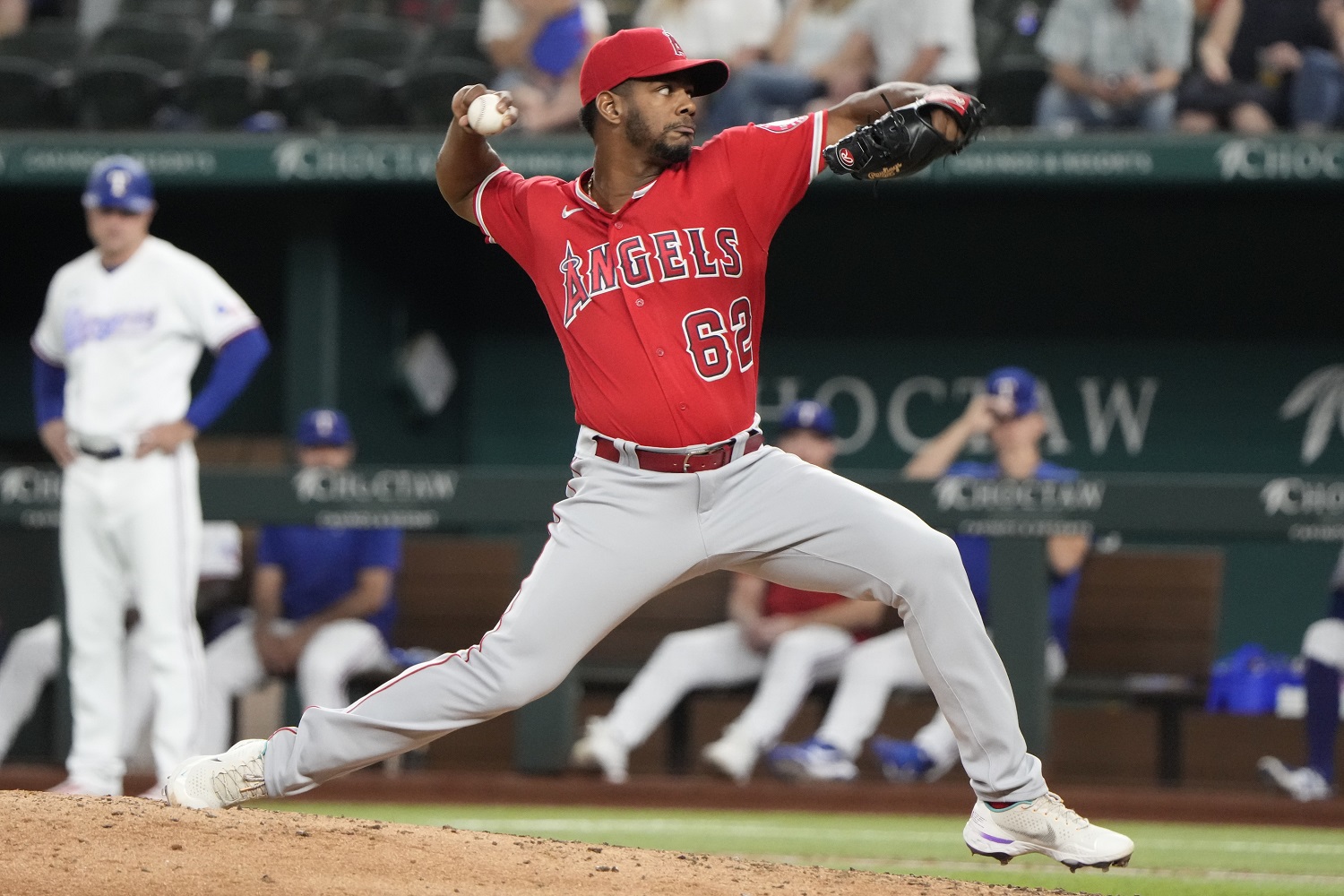 In a move to add bullpen depth, the Minnesota Twins have claimed Oliver Ortega, a 26-year-old right-handed relief pitcher, off waivers from the Los Angeles Angels. Dan Hayes of The Athletic was first to report that move. Ortega, who was waived by LA on December 22nd to make room for free agent signing Brandon Drury, has thrown 43 ⅓ innings as a member of the Angels bullpen, posting a 3.95 ERA to go along with an uninspiring 4.74 FIP, 1.2 HR/9 rate and 4.2 BB/9 rate. The numbers haven't been too impressive up to this point, but the Twins obviously see something they like. It might relate to a a big strikeout rate in the minors (10.1 K/9) and a big fastball that features 84th percentile velocity (averaging about 96 MPH) and 64th percentile spin, according to Statcast. He uses the heater as his primary pitch and mixes in a curveball, which is said to be a quality pitch when he can throw it in the zone – a big caveat. To make room for Ortega on the 40-man roster, the Twins designated Blayne Enlow for assignment. The right-hander was acquired out of high school in the first draft under the current Twins front office, but Tommy John surgery derailed his development. He turns 24 in March and still lacks a clear path to the majors. We'll update this article with more information as we get it. For now, feel free to share your thoughts on the acquisition of Ortega and loss of Enlow.
 -
The calendar has flipped to 2023 and still the Twins have done nothing to meaningfully improve their roster while free agency has run dry. They now turn their attention to the trade market in an effort to salvage this wayward offseason and ignite any semblance of enthusiasm within their fanbase. Image courtesy of Rick Osentoski-USA TODAY Sports The lingering storyline and elephant in the room – for Minnesota and MLB at large – is Carlos Correa's situation with the Mets. The shortstop agreed to terms with Steve Cohen and New York more than two weeks ago, but still no contract has been signed as the Mets – like the Giants before them – ran into concerns in Correa's physical. It's a bizarre situation that grows weirder with each passing day. There's been almost no public information shared about the progression of Correa's negotiations with the Mets, other than they were "expected to pick up again soon" as of Monday. At least, up until Jon Heyman reported on Thursday evening that the two sides were "gaining momentum" toward a deal. "The latest word," Heyman writes, "is that while the main terms – $315M over 12 years – may be unlikely to change much, if at all, the Mets have made clear they are intent on diminishing their risk via important language additions and/or alterations." While the odds of Correa's original $315 million fully guaranteed deal coming to fruition now seem small, there remains a general sense that he and New York will ultimately settle, and perhaps soon. (Heyman suggested that it could happen by the end of the week.) Even if the market opens up, it seems unlikely the Twins will now take the long-term plunge on a player whose risk level has publicly skyrocketed. Given how many weighty injury concerns already control their fate going forward, it's debatable whether they should. With that covered, let's catch up on where things stand for the Twins as we turn our attention to the home stretch of the offseason, with pitchers and catchers reporting in just six weeks. Catching Up on Twins Offseason Moves To say the front office's work so far this winter has been underwhelming would be an understatement. Coming off a third-place season, there's been nothing resembling a shakeup or significant improvement thus far. Here's a quick recap of notable moves up to this point: Acquired INF Kyle Farmer in trade for RHP Casey Legumina Traded 3B Gio Urshela to Angels for RHP Alejandro Hidalgo Signed free agent C Christian Vazquez for 3 years and $30M Signed free agent OF Joey Gallo for 1 year and $11M Aaand, that's it! The Twins addressed one clear need – signing Vazquez to fill their gaping catcher vacancy – and have otherwise just sort of shifted things around on the fringes, building necessary depth in some cases (Farmer and Vazquez) and oddly unnecessary depth in others (Gallo). What comes next? Well, speaking of oddly unnecessary depth... Twins Reportedly Showing Interest in Free Agent Starter Wacha As usual, the Twins whiffed on the upper echelon of pitching free agency, leaving them to peruse what's left here in January and February. According to The Athletic, the club has shown interest in one of the best remaining starting pitcher options available: right-hander Michael Wacha, who played for the Red Sox in 2022. On the surface, he seems like a worthy target to upgrade the rotation. Last year in Boston, he went 11-2 with a 3.32 ERA and 1.11 WHIP – Sonny Gray numbers, if not better! The problem, and the reason Wacha remains on the market, is that every underlying metric points to significantly underperforming those numbers and embodying the same mediocre starter he's long been. Wacha has a career 4.05 ERA and 4.07 FIP. Last year his FIP checked in at 4.14, nearly a full run higher than his ERA. His K/9 rate plummeted to match a career low at 7.4. He fits the Twins mold as a strike-throwing righty with a low-90s fastball and great changeup, but Wacha is a thoroughly average pitcher with minimal upside at this stage of his career. I'm not saying he's useless. And I'm not saying the Twins couldn't use rotation depth. But it's unclear what he really adds other than redundancy, and it'll come at an inflated cost. For the front office to sign him would very much carry a "well, what else are we gonna spend it on at this point" vibe. At this rate it's getting harder to disagree with Matthew Taylor's assertion from mid-December: the Twins front office played themselves by watching every impact free agent come off the board during their futile pursuit of Correa, and are now left with an extreme uphill battle to put together even a satisfactory offseason. The only way to reverse their fortunes and rejuvenate fan confidence, it seems, would be with at least one high-profile trade. Trade Season Is Upon Us With free agency cleared out, front offices like Minnesota's must now turn to the trade market in search of upgrades. We tend to see talent swaps pick up quite a bit during this stage of the offseason. Earlier this winter, the Twins were reportedly discussing a Jorge Lopez trade with the Marlins. It's possible those two teams will revisit talks. Of course, Max Kepler is also known to be on the block – especially with Gallo now in tow – but there's been surprisingly little chatter regarding his market. One possibility we sadly must consider is that the Twins will pivot into a short rebuild or "step back," seeking to flip some of their short-term assets for future talent as they stare ahead to steep uncertainty in 2023. Dan Hayes posits that with free agent pitching picked over, "Gray could be a perfect sell-high trade piece to a team looking to add a good starting pitcher," suggesting essentially that Wacha could be his replacement. It's one path, I guess. An incredibly uninspiring path that would leave me and plenty of other Twins fans rightfully disgruntled. Roster and Payroll Projection: v4 Little has changed since the last update in mid-December, except that I've added the versatile Willi Castro – signed to a minor-league contract just before the New Year – as a utilityman to round out the bench. The 25-year-old has 300 games of major-league experience in Detroit, including 112 last year, where he played every position except first base and catcher. With his addition, the Twins could basically field an Opening Day roster as comprised below, and it wouldn't be embarrassing. But, it also wouldn't be exciting or energizing for an embattled fan base, nor would it fit the MO of a front office that likes to (eventually) rattle the cage. I suspect we'll see this mix shaken up in a major way before long. View full article
-
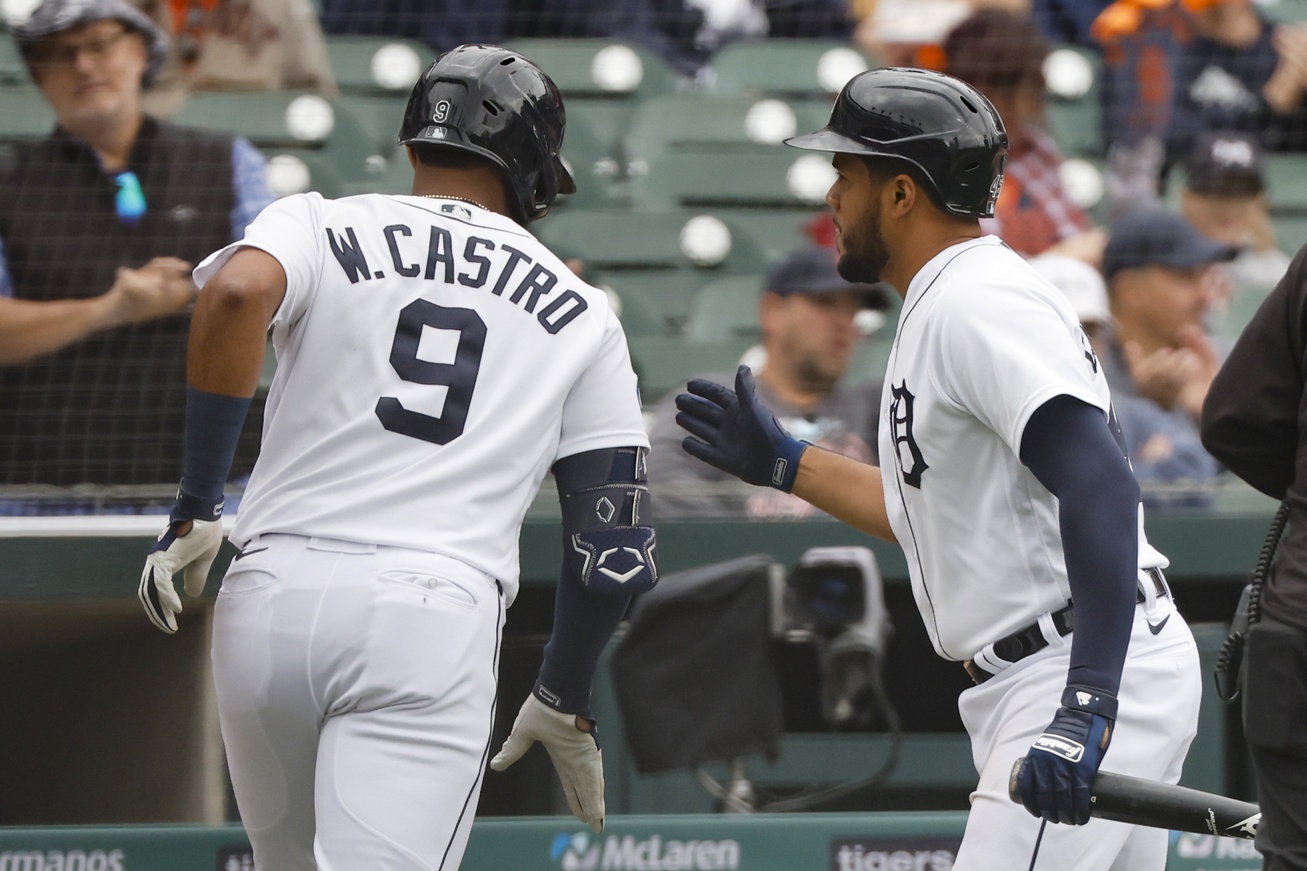 The lingering storyline and elephant in the room – for Minnesota and MLB at large – is Carlos Correa's situation with the Mets. The shortstop agreed to terms with Steve Cohen and New York more than two weeks ago, but still no contract has been signed as the Mets – like the Giants before them – ran into concerns in Correa's physical. It's a bizarre situation that grows weirder with each passing day. There's been almost no public information shared about the progression of Correa's negotiations with the Mets, other than they were "expected to pick up again soon" as of Monday. At least, up until Jon Heyman reported on Thursday evening that the two sides were "gaining momentum" toward a deal. "The latest word," Heyman writes, "is that while the main terms – $315M over 12 years – may be unlikely to change much, if at all, the Mets have made clear they are intent on diminishing their risk via important language additions and/or alterations." While the odds of Correa's original $315 million fully guaranteed deal coming to fruition now seem small, there remains a general sense that he and New York will ultimately settle, and perhaps soon. (Heyman suggested that it could happen by the end of the week.) Even if the market opens up, it seems unlikely the Twins will now take the long-term plunge on a player whose risk level has publicly skyrocketed. Given how many weighty injury concerns already control their fate going forward, it's debatable whether they should. With that covered, let's catch up on where things stand for the Twins as we turn our attention to the home stretch of the offseason, with pitchers and catchers reporting in just six weeks. Catching Up on Twins Offseason Moves To say the front office's work so far this winter has been underwhelming would be an understatement. Coming off a third-place season, there's been nothing resembling a shakeup or significant improvement thus far. Here's a quick recap of notable moves up to this point: Acquired INF Kyle Farmer in trade for RHP Casey Legumina Traded 3B Gio Urshela to Angels for RHP Alejandro Hidalgo Signed free agent C Christian Vazquez for 3 years and $30M Signed free agent OF Joey Gallo for 1 year and $11M Aaand, that's it! The Twins addressed one clear need – signing Vazquez to fill their gaping catcher vacancy – and have otherwise just sort of shifted things around on the fringes, building necessary depth in some cases (Farmer and Vazquez) and oddly unnecessary depth in others (Gallo). What comes next? Well, speaking of oddly unnecessary depth... Twins Reportedly Showing Interest in Free Agent Starter Wacha As usual, the Twins whiffed on the upper echelon of pitching free agency, leaving them to peruse what's left here in January and February. According to The Athletic, the club has shown interest in one of the best remaining starting pitcher options available: right-hander Michael Wacha, who played for the Red Sox in 2022. On the surface, he seems like a worthy target to upgrade the rotation. Last year in Boston, he went 11-2 with a 3.32 ERA and 1.11 WHIP – Sonny Gray numbers, if not better! The problem, and the reason Wacha remains on the market, is that every underlying metric points to significantly underperforming those numbers and embodying the same mediocre starter he's long been. Wacha has a career 4.05 ERA and 4.07 FIP. Last year his FIP checked in at 4.14, nearly a full run higher than his ERA. His K/9 rate plummeted to match a career low at 7.4. He fits the Twins mold as a strike-throwing righty with a low-90s fastball and great changeup, but Wacha is a thoroughly average pitcher with minimal upside at this stage of his career. I'm not saying he's useless. And I'm not saying the Twins couldn't use rotation depth. But it's unclear what he really adds other than redundancy, and it'll come at an inflated cost. For the front office to sign him would very much carry a "well, what else are we gonna spend it on at this point" vibe. At this rate it's getting harder to disagree with Matthew Taylor's assertion from mid-December: the Twins front office played themselves by watching every impact free agent come off the board during their futile pursuit of Correa, and are now left with an extreme uphill battle to put together even a satisfactory offseason. The only way to reverse their fortunes and rejuvenate fan confidence, it seems, would be with at least one high-profile trade. Trade Season Is Upon Us With free agency cleared out, front offices like Minnesota's must now turn to the trade market in search of upgrades. We tend to see talent swaps pick up quite a bit during this stage of the offseason. Earlier this winter, the Twins were reportedly discussing a Jorge Lopez trade with the Marlins. It's possible those two teams will revisit talks. Of course, Max Kepler is also known to be on the block – especially with Gallo now in tow – but there's been surprisingly little chatter regarding his market. One possibility we sadly must consider is that the Twins will pivot into a short rebuild or "step back," seeking to flip some of their short-term assets for future talent as they stare ahead to steep uncertainty in 2023. Dan Hayes posits that with free agent pitching picked over, "Gray could be a perfect sell-high trade piece to a team looking to add a good starting pitcher," suggesting essentially that Wacha could be his replacement. It's one path, I guess. An incredibly uninspiring path that would leave me and plenty of other Twins fans rightfully disgruntled. Roster and Payroll Projection: v4 Little has changed since the last update in mid-December, except that I've added the versatile Willi Castro – signed to a minor-league contract just before the New Year – as a utilityman to round out the bench. The 25-year-old has 300 games of major-league experience in Detroit, including 112 last year, where he played every position except first base and catcher. With his addition, the Twins could basically field an Opening Day roster as comprised below, and it wouldn't be embarrassing. But, it also wouldn't be exciting or energizing for an embattled fan base, nor would it fit the MO of a front office that likes to (eventually) rattle the cage. I suspect we'll see this mix shaken up in a major way before long.
- 14 comments
-
- 1
-

-
- carlos correa
- willi castro
- (and 1 more)
-
No? Because strikeouts weren't what prevented Sano from being good. He had roughly the same K-rates during his All-Star hay-day as during the past three years.
- 25 replies
-
- 3
-

-
- royce lewis
- jorge polanco
- (and 3 more)
-
Ah, but that's the point of the exercise! From Part 1: "We account for age, contract, controllability, upside, etc. It's not strictly a ranking of trade value, because that would be more team-agnostic, where this list aims to capture a very Twins-specific POV. As such, players at areas of scarcity (i.e. pitching) get elevated while those at areas of abundance (i.e. lefty-swinging corner guys) get downgraded a bit."
- 25 replies
-
- 2
-
-
- royce lewis
- jorge polanco
- (and 3 more)
-
Based on my understanding, the general knock on him is that he's too big to play SS long-term, which is valid. But then again he's about the same size as Royce Lewis. Lee has excellent hands and a strong (albeit not amazing) arm. I don't think he'll be an everyday SS in the majors or anything but I think he's more likely to make some appearances there than, say, Austin Martin.
- 25 replies
-
- 2
-
-
- royce lewis
- jorge polanco
- (and 3 more)
-
With the arrival of a new year, it's time to update my annual rankings of the top 20 most valuable player assets in the Minnesota Twins organization. Read on for the final installment, to see where I landed on the top five and find a full recap of the list. Image courtesy of David Berding-USA TODAY Sports If you like, you can quickly catch up on the ground rules for this exercise in the first installment. The short version is this that we're attempting to rank Twins players and prospects through a big-picture lens in asking: Which current players in the organization are most indispensable to fulfilling the vision of building a champion? Here in this fourth installment, breaking down my picks for #1 through #5: the cornerstones upon which the Twins will aim to orchestrate their success in the coming years. First, a recap of the list as it stands, as covered in Part 1, Part 2, and Part 3: 20. Matt Wallner, OF 19. Louie Varland, RHP 18. Sonny Gray, RHP 17. Jorge Lopez, RHP 16. Alex Kirilloff, OF/1B 15. Ryan Jeffers, C 14. Trevor Larnach, OF 13. Austin Martin, SS/OF 12. Connor Prielipp, LHP 11. Simeon Woods Richardson, RHP 10. Luis Arraez, 1B 9. Jose Miranda, 3B/1B 8. Emmanuel Rodriguez, OF 7. Jhoan Duran, RHP 6. Bailey Ober, RHP Top 20 Twins Assets of 2023: 1 through 5 5. Royce Lewis, SS 2022 Ranking: 4 In some ways, Lewis' 2022 season was obviously a huge setback. To come out on the other end of a long, grueling recovery from reconstructive knee surgery, only to reinjure the same ligament and recommence the very same process ... it's an almost unthinkable level of bad fortune. But that's not to say his season was a loss. Far from it. In 46 games between Triple-A and the majors, he showed plenty to solidify his status as a top-five asset in the organization. In 194 total plate appearances he batted .310 with 16 doubles, seven homers, and 12 steals. That includes a debut stint in the majors, filling in for COVID-stricken Carlos Correa, that was so impressive the Twins flipped Lewis' role – from shortstop to utilityman – on the fly in order to rush him back. As we all know, calamity struck soon as soon as he returned. And two straight serious injuries to the same knee, with the latest expected to keep him out until midseason, certainly diminishes his stock. But the talent, the electricity, the youth (still only 23), and especially his future importance cement him as a central asset of this franchise. It's really hard to doubt the kid at this point. 4. Jorge Polanco, 2B 2022 Ranking: 2 Polanco's value mainly derives from his steadiness: he's been a reliable, durable, clutch, consistent fixture near the top of the Twins lineup for years, and likely will be for several more. The 29-year-old is entering his final guaranteed year under contract, at a very reasonable $7.5 million price tag, but Minnesota has team options for 2024 ($10.5M) and 2025 ($12M). This is more favorable to the Twins than a straight three-year deal because they have the ability to pull out and save millions should Polanco collapse. One could argue there are some concerning signs on that front. He posted a career-high K-rate in 2022, causing his batting average to plummet to .235, well below his career .270 mark. He also ended the season on the injured list, with a knee issue adding to his medley of historical ankle injuries. But at the same time, Polanco showed signs of adapting his game to stay productive. His spike in K-rate came attached to a huge increase in walk rate, with an elite 14.4% mark more than doubling his 7.0% rate from 2021. As a result, Polanco posted the second-highest OBP of his career (.346). And while the stat sheet shows a drop-off in power, his batted-ball data was very strong, helping the second baseman produce a stellar .358 xwOB, which suggests his offensive approach is exactly where it needs to be. Polanco's getting older and a little more expensive, but remains an excellent star-caliber player and cornerstone for this franchise. 3. Joe Ryan, RHP 2022 Ranking: 7 In large part, these rankings are about upside and ceiling – as you'll see reflected in the top two choices. Players with a real chance to be cost-controlled superstars and top-tier performers at their position are the primest of assets, generally speaking. But you also need to weigh the probabilities and assign proper value to those who can reliably provide essential services to the team. Thus, Ryan finds himself in the top three. Is he an ace-caliber arm with the tantalizing potential of a Connor Prielipp? No. But what's great about Ryan is that he has no more rungs to climb, no more hurdles to jump, nothing left to prove. He's a bona fide major-league starter with a tremendous track record of durability and consistency on the mound across all levels. For an organization that has no other young pitchers who can rightly say the same, and no veteran starters under control beyond the 2023 season, these qualities make Ryan – who won't be eligible for free agency until after 2027 – an indispensable building block for the rotation going forward. 2. Brooks Lee, SS 2022 Ranking: NR To say the Twins think highly of Lee would be a mighty understatement. They were thrilled to get him with the eighth overall pick in last year's draft, and were so eager to move him through the organization that he concluded his half-season pro debut at Double-A. The baseball world at large is also taking notice. His stellar performance as a 21-year-old pro fresh out of college – .303/.389/.451 with a 20-to-16 K/BB ratio in 139 PA between three levels – quickly earned him distinction as the organization's top prospect in the eyes of many. Not only is the Cal Poly product flashing advanced hitting skills that could push him to the majors quickly, but he's also showing the defensive ability of a guy destined to play at least some shortstop once he gets there. No matter where he ends up on the diamond, Lee figures to be a central contributor on the Twins for many years. 1. Byron Buxton, CF 2022 Ranking: 1 The 2022 season was, in many ways, more of the same for Buxton. Many people would say that in a derisive way – immediately pointing to the injuries that sidelined him for much of the second half – but I mean it in a positive way. When on the field, the center fielder continued to solidify his status as a premier MLB player, earning his first All-Star nod and turning in the third 4+ fWAR season of his career (and second in a row). He set a career high in home runs with 28 while posting a 135 OPS+ and continuing to grade as one of the league's best defensive outfielders. Since 2019, Buxton ranks 36th among all MLB position players in fWAR, which is remarkable when you consider that he's played in literally half of his team's games during that span. (51%, to be exact.) He's one of the highest-impact players in baseball, without question. I am mindful of the factors detracting from Buxton's value as an asset, of course. Namely the injuries, which came roaring back in full force last year, as well as the steps being taken to mitigate those injuries (more days off and DH duty), which take away a bit of what he offers. But, as the aforementioned stats illustrate, he's still offering plenty. And as I wrote last year, his highly favorable contract accounts for all that risk. Even as his annual base salary escalates to an ongoing rate of $15 million annually this year, that's still a huge bargain for what he already provides, let alone the massive upside he brings to the table. I mean, we just saw the White Sox sign Andrew Benintendi to a five-year deal with the same annual rate. Benintendi has once in his career (2018) posted a 4.0 fWAR or better, which Buxton produced in 92 games last year. If the knee issue that tormented Buxton throughout 2022 proves chronic and recurring, that will impact his ability to remain atop this list going forward. For now, I'm keeping that possibility on the back-burner. If he can finally find a way to shake off the injuries and stay somewhat healthy, Buxton will rise to become one of the most valuable player assets in all of baseball. View full article
-
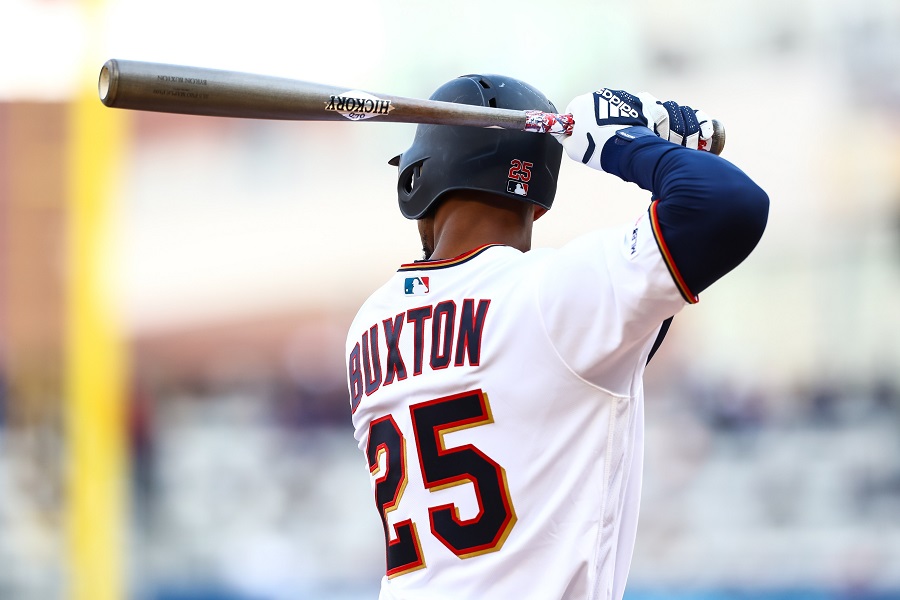 If you like, you can quickly catch up on the ground rules for this exercise in the first installment. The short version is this that we're attempting to rank Twins players and prospects through a big-picture lens in asking: Which current players in the organization are most indispensable to fulfilling the vision of building a champion? Here in this fourth installment, breaking down my picks for #1 through #5: the cornerstones upon which the Twins will aim to orchestrate their success in the coming years. First, a recap of the list as it stands, as covered in Part 1, Part 2, and Part 3: 20. Matt Wallner, OF 19. Louie Varland, RHP 18. Sonny Gray, RHP 17. Jorge Lopez, RHP 16. Alex Kirilloff, OF/1B 15. Ryan Jeffers, C 14. Trevor Larnach, OF 13. Austin Martin, SS/OF 12. Connor Prielipp, LHP 11. Simeon Woods Richardson, RHP 10. Luis Arraez, 1B 9. Jose Miranda, 3B/1B 8. Emmanuel Rodriguez, OF 7. Jhoan Duran, RHP 6. Bailey Ober, RHP Top 20 Twins Assets of 2023: 1 through 5 5. Royce Lewis, SS 2022 Ranking: 4 In some ways, Lewis' 2022 season was obviously a huge setback. To come out on the other end of a long, grueling recovery from reconstructive knee surgery, only to reinjure the same ligament and recommence the very same process ... it's an almost unthinkable level of bad fortune. But that's not to say his season was a loss. Far from it. In 46 games between Triple-A and the majors, he showed plenty to solidify his status as a top-five asset in the organization. In 194 total plate appearances he batted .310 with 16 doubles, seven homers, and 12 steals. That includes a debut stint in the majors, filling in for COVID-stricken Carlos Correa, that was so impressive the Twins flipped Lewis' role – from shortstop to utilityman – on the fly in order to rush him back. As we all know, calamity struck soon as soon as he returned. And two straight serious injuries to the same knee, with the latest expected to keep him out until midseason, certainly diminishes his stock. But the talent, the electricity, the youth (still only 23), and especially his future importance cement him as a central asset of this franchise. It's really hard to doubt the kid at this point. 4. Jorge Polanco, 2B 2022 Ranking: 2 Polanco's value mainly derives from his steadiness: he's been a reliable, durable, clutch, consistent fixture near the top of the Twins lineup for years, and likely will be for several more. The 29-year-old is entering his final guaranteed year under contract, at a very reasonable $7.5 million price tag, but Minnesota has team options for 2024 ($10.5M) and 2025 ($12M). This is more favorable to the Twins than a straight three-year deal because they have the ability to pull out and save millions should Polanco collapse. One could argue there are some concerning signs on that front. He posted a career-high K-rate in 2022, causing his batting average to plummet to .235, well below his career .270 mark. He also ended the season on the injured list, with a knee issue adding to his medley of historical ankle injuries. But at the same time, Polanco showed signs of adapting his game to stay productive. His spike in K-rate came attached to a huge increase in walk rate, with an elite 14.4% mark more than doubling his 7.0% rate from 2021. As a result, Polanco posted the second-highest OBP of his career (.346). And while the stat sheet shows a drop-off in power, his batted-ball data was very strong, helping the second baseman produce a stellar .358 xwOB, which suggests his offensive approach is exactly where it needs to be. Polanco's getting older and a little more expensive, but remains an excellent star-caliber player and cornerstone for this franchise. 3. Joe Ryan, RHP 2022 Ranking: 7 In large part, these rankings are about upside and ceiling – as you'll see reflected in the top two choices. Players with a real chance to be cost-controlled superstars and top-tier performers at their position are the primest of assets, generally speaking. But you also need to weigh the probabilities and assign proper value to those who can reliably provide essential services to the team. Thus, Ryan finds himself in the top three. Is he an ace-caliber arm with the tantalizing potential of a Connor Prielipp? No. But what's great about Ryan is that he has no more rungs to climb, no more hurdles to jump, nothing left to prove. He's a bona fide major-league starter with a tremendous track record of durability and consistency on the mound across all levels. For an organization that has no other young pitchers who can rightly say the same, and no veteran starters under control beyond the 2023 season, these qualities make Ryan – who won't be eligible for free agency until after 2027 – an indispensable building block for the rotation going forward. 2. Brooks Lee, SS 2022 Ranking: NR To say the Twins think highly of Lee would be a mighty understatement. They were thrilled to get him with the eighth overall pick in last year's draft, and were so eager to move him through the organization that he concluded his half-season pro debut at Double-A. The baseball world at large is also taking notice. His stellar performance as a 21-year-old pro fresh out of college – .303/.389/.451 with a 20-to-16 K/BB ratio in 139 PA between three levels – quickly earned him distinction as the organization's top prospect in the eyes of many. Not only is the Cal Poly product flashing advanced hitting skills that could push him to the majors quickly, but he's also showing the defensive ability of a guy destined to play at least some shortstop once he gets there. No matter where he ends up on the diamond, Lee figures to be a central contributor on the Twins for many years. 1. Byron Buxton, CF 2022 Ranking: 1 The 2022 season was, in many ways, more of the same for Buxton. Many people would say that in a derisive way – immediately pointing to the injuries that sidelined him for much of the second half – but I mean it in a positive way. When on the field, the center fielder continued to solidify his status as a premier MLB player, earning his first All-Star nod and turning in the third 4+ fWAR season of his career (and second in a row). He set a career high in home runs with 28 while posting a 135 OPS+ and continuing to grade as one of the league's best defensive outfielders. Since 2019, Buxton ranks 36th among all MLB position players in fWAR, which is remarkable when you consider that he's played in literally half of his team's games during that span. (51%, to be exact.) He's one of the highest-impact players in baseball, without question. I am mindful of the factors detracting from Buxton's value as an asset, of course. Namely the injuries, which came roaring back in full force last year, as well as the steps being taken to mitigate those injuries (more days off and DH duty), which take away a bit of what he offers. But, as the aforementioned stats illustrate, he's still offering plenty. And as I wrote last year, his highly favorable contract accounts for all that risk. Even as his annual base salary escalates to an ongoing rate of $15 million annually this year, that's still a huge bargain for what he already provides, let alone the massive upside he brings to the table. I mean, we just saw the White Sox sign Andrew Benintendi to a five-year deal with the same annual rate. Benintendi has once in his career (2018) posted a 4.0 fWAR or better, which Buxton produced in 92 games last year. If the knee issue that tormented Buxton throughout 2022 proves chronic and recurring, that will impact his ability to remain atop this list going forward. For now, I'm keeping that possibility on the back-burner. If he can finally find a way to shake off the injuries and stay somewhat healthy, Buxton will rise to become one of the most valuable player assets in all of baseball.
- 25 comments
-
- 7
-
-
- royce lewis
- jorge polanco
- (and 3 more)
-
The way I look at it is this: Arraez is still the same player as he was a year ago. In 2022 we saw him at the absolute max of his skill set, and in 2021 we saw him at the lower end. To be honest the past season didn't change my opinion of him much. His entire production is so dependent on batting well above ,300 and that's just a hard line to walk.
-
The notion that Duran will be able to throw the way he did last year and hold up physically over 150+ innings in a fantasy. The Twins know that. In his heart, he probably knows that too. It's never gonna happen.
- 43 replies
-
- 2
-
-
- luis arraez
- jose miranda
- (and 3 more)
-
Why do we care about the batting average of a guy who got on base literally half the time?? As for Arraez, I can say with some confidence that at least one other team has been lukewarm on him as an asset in trade talks this offseason for some of the same reasons I mentioned...
- 43 replies
-
- 4
-
-
- luis arraez
- jose miranda
- (and 3 more)
-
With the arrival of a new year, it's time to update my annual rankings of the top 20 most valuable player assets in the Minnesota Twins organization. Read on to see where I landed on #6 through #10 for the list. Image courtesy of Nick Wosika-USA TODAY Sports If you like, you can quickly catch up on the ground rules for this exercise in the first installment. The short version is this that we're attempting to rank Twins players and prospects through a big-picture lens in asking: Which current players in the organization are most indispensable to fulfilling the vision of building a champion? Here in this third installment, breaking down my picks for #6 through #10, we find a couple of great hitters with defensive fit question marks, two top prospects with sky-high potential, and an elite reliever who made his mark as a rookie in 2022. First, a recap of the list as it stands, from Part 1 and Part 2 of the series: 20. Matt Wallner, OF 19. Louie Varland, RHP 18. Sonny Gray, RHP 17. Jorge Lopez, RHP 16. Alex Kirilloff, OF/1B 15. Ryan Jeffers, C 14. Trevor Larnach, OF 13. Austin Martin, SS/OF 12. Connor Prielipp, LHP 11. Simeon Woods Richardson, RHP Top 20 Twins Assets of 2023: 6 through 10 10. Luis Arraez, 1B 2022 Ranking: 11 Part of the challenge in these rankings is removing emotion and personal bias from the equation. The idea is to attempt an objective evaluation of players as assets, and that means taking factors like popularity and likability – which of course work strongly in Arraez's favor – largely off the table. What are we left with? A great hitter, to be sure. Arraez had a career year in 2022, earning an All-Star nod, batting title, and Silver Slugger award. He's a premium bat and a rare breed in today's MLB. But it also seems telling that such a core fixture wasn't even in Minnesota's Opening Day lineup. Arraez is an odd fit. The team never seemed comfortable with his defense at second or third – certainly not the outfield – and now he's basically become a 1B/DH type with no power. His offense still stands out at those positions, just not to the same degree. Descending so far on the defensive spectrum, and already experiencing recurring leg issues, by the age of 25 portends a tough aging curve for Arraez, who has three years of team control remaining. The impact of his bat and elite OBP skills cannot be downplayed, and his presence on the team is electric, but the lack of power, speed or defensive impact limit has value as an asset. 9. Jose Miranda, 1B/3B 2022 Ranking: 15 In terms of player profile, Miranda is not too dissimilar from Arraez: a bat-first corner infielder in his mid-20s, probably better suited for first than third. The difference is that he's younger, cheaper, and could offer more impact both offensively and defensively. Coming off a breakthrough campaign in the minors, Miranda verified his hitting excellence with an impressive major-league debut. In 125 games he slashed .268/.325/.426 for a 116 OPS+ as a rookie. With outstanding strike zone coverage and ability to drive to all fields, the 24-year-old was never an easy assignment for even the most experienced big-league pitchers. He's not quite the overall hitter Arraez is yet, but thanks to his budding power, Miranda has the potential to be a better one, and a much more prototypical corner slugger. He also has three extra years of team control. 8. Emmanuel Rodriguez, OF 2022 Ranking: NR This ranking might be considered a leap of faith: a 19-year-old who hasn't played above A-ball, coming off a major knee injury, ranked ahead of an All-Star in Arraez and stud rookie in Miranda? Maybe it is, but I'm that much of a believer in Rodriguez, the system's breakout star of 2022. Prior to suffering a meniscus tear in July that ended his season, the center fielder was spectacular in Fort Myers, slashing .272/.493/.552 in 47 games. Signed out of the Dominican Republic in 2019 for $2.5 million, Rodriguez showed in his first turn at full-season ball that he's the full package: great defense, power, discipline, speed. Among players to make at least 100 plate appearances in the Florida State League, Rodriguez's 1.024 OPS ranked second only to Jacob Gonzalez, a 24-year-old 1B/DH. Nobody else was within 80 points of the transcendent E-Rod, who generated huge buzz inside and outside the organization and will surely appear prominently on preseason global top prospect lists when they start to roll out soon. He's got a ways to go, and the knee injury slowed his ascent, but Rodriguez is one of the crown jewels in this system and undoubtedly one of their most coveted, valuable trade chips. 7. Jhoan Duran, RHP 2022 Ranking: 14 We knew at this time last year that Duran had an amazing arm. The big question marks suppressing his perceived value: could we count on that arm to stay healthy, and did he have any chance of sticking as a starter? It turns out, no, he wasn't going to stay in a starting role. Instead he transitioned to the back of the big-league bullpen and immediately put forth one of the most dominant, impressive, impactful seasons ever for a Twins reliever. Duran lit up the radar gun, blew away opposing hitters, thrived in the highest of leverage, and set new franchise and major-league records with his jaw-dropping velocity. Perhaps most importantly, Duran remained healthy and strong all year long, with nigh a peep heard regarding elbow or forearm soreness. This inspires hope he can hold up physically in the new role, and so long as he does, it's hard to envision him being anything other than one of the most overpowering late-inning forces in baseball. 6. Bailey Ober, RHP 2022 Ranking: 6 It's no secret that controllable, established major-league pitching is in short supply for the Twins, and also desperately needed in order to fulfill their vision of sustaining contention while completely eschewing the free agent starter market. That's essentially why Ober ranked so highly on the list last year, and why he remains in the same spot this year. True, he struggled with a vexing groin injury that limited him to 11 starts and 56 innings, pitching very little while accruing a full year of major-league service. But on the flip side, he took a real step forward performance-wise, building on his strengths (pinpoint control, efficiency, consistent bat-missing ability) while improving on his weaknesses (allowing hits and home runs) to produce legitimate frontline numbers in the small sample: 3.21 ERA, 2.95 FIP, 1.05 WHIP, 4.64 K/BB ratio. Working in the mid-to-low 90s with his fastball and lacking standout secondary stuff, Ober is no ace, but he's got a sustainable recipe for mid-rotation success with his extension, command, and unique release point. Under control for five seasons, and very cheaply for the next several, the 6-foot-9 righty is a critical and underrated asset for the Twins. View full article
-
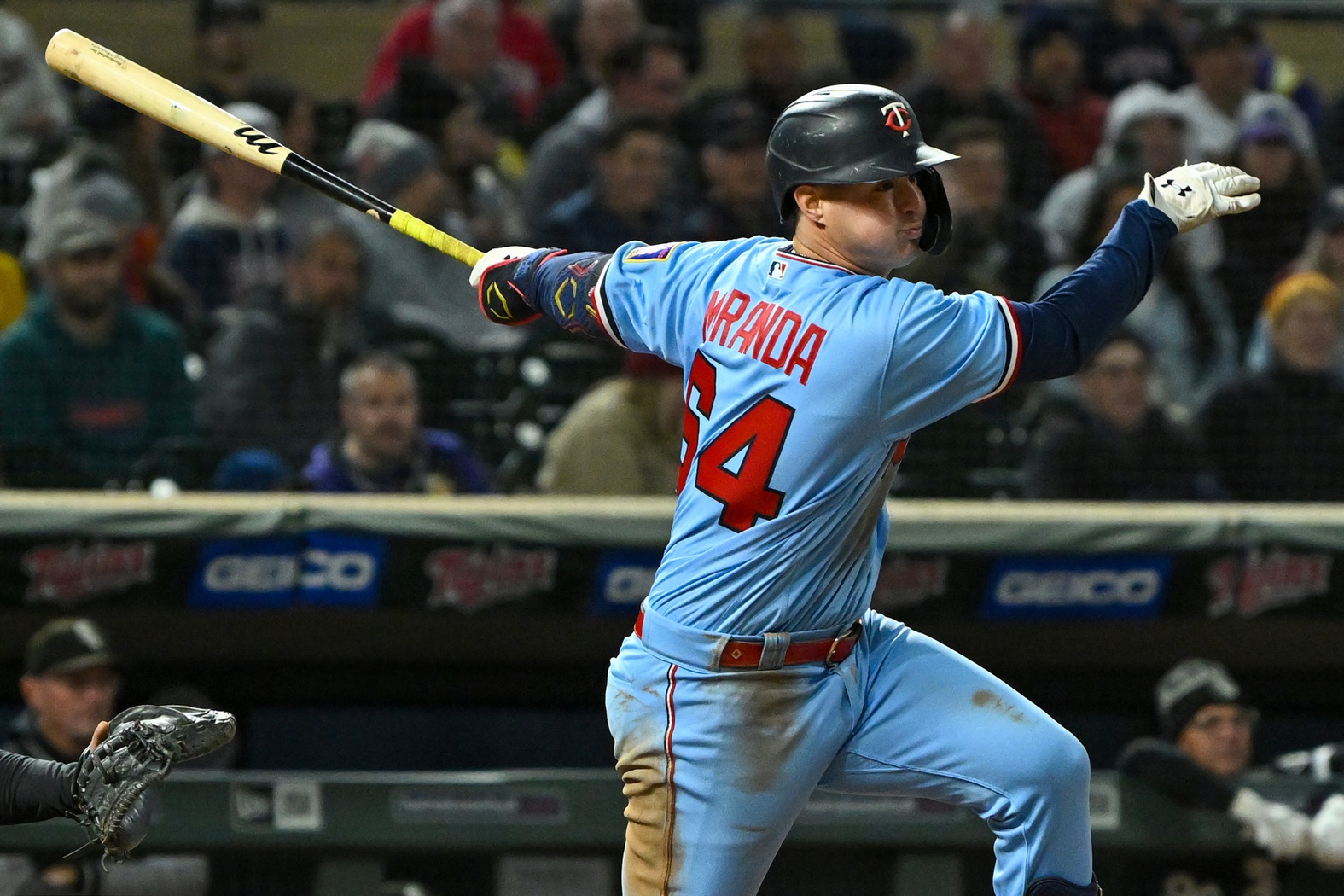 If you like, you can quickly catch up on the ground rules for this exercise in the first installment. The short version is this that we're attempting to rank Twins players and prospects through a big-picture lens in asking: Which current players in the organization are most indispensable to fulfilling the vision of building a champion? Here in this third installment, breaking down my picks for #6 through #10, we find a couple of great hitters with defensive fit question marks, two top prospects with sky-high potential, and an elite reliever who made his mark as a rookie in 2022. First, a recap of the list as it stands, from Part 1 and Part 2 of the series: 20. Matt Wallner, OF 19. Louie Varland, RHP 18. Sonny Gray, RHP 17. Jorge Lopez, RHP 16. Alex Kirilloff, OF/1B 15. Ryan Jeffers, C 14. Trevor Larnach, OF 13. Austin Martin, SS/OF 12. Connor Prielipp, LHP 11. Simeon Woods Richardson, RHP Top 20 Twins Assets of 2023: 6 through 10 10. Luis Arraez, 1B 2022 Ranking: 11 Part of the challenge in these rankings is removing emotion and personal bias from the equation. The idea is to attempt an objective evaluation of players as assets, and that means taking factors like popularity and likability – which of course work strongly in Arraez's favor – largely off the table. What are we left with? A great hitter, to be sure. Arraez had a career year in 2022, earning an All-Star nod, batting title, and Silver Slugger award. He's a premium bat and a rare breed in today's MLB. But it also seems telling that such a core fixture wasn't even in Minnesota's Opening Day lineup. Arraez is an odd fit. The team never seemed comfortable with his defense at second or third – certainly not the outfield – and now he's basically become a 1B/DH type with no power. His offense still stands out at those positions, just not to the same degree. Descending so far on the defensive spectrum, and already experiencing recurring leg issues, by the age of 25 portends a tough aging curve for Arraez, who has three years of team control remaining. The impact of his bat and elite OBP skills cannot be downplayed, and his presence on the team is electric, but the lack of power, speed or defensive impact limit has value as an asset. 9. Jose Miranda, 1B/3B 2022 Ranking: 15 In terms of player profile, Miranda is not too dissimilar from Arraez: a bat-first corner infielder in his mid-20s, probably better suited for first than third. The difference is that he's younger, cheaper, and could offer more impact both offensively and defensively. Coming off a breakthrough campaign in the minors, Miranda verified his hitting excellence with an impressive major-league debut. In 125 games he slashed .268/.325/.426 for a 116 OPS+ as a rookie. With outstanding strike zone coverage and ability to drive to all fields, the 24-year-old was never an easy assignment for even the most experienced big-league pitchers. He's not quite the overall hitter Arraez is yet, but thanks to his budding power, Miranda has the potential to be a better one, and a much more prototypical corner slugger. He also has three extra years of team control. 8. Emmanuel Rodriguez, OF 2022 Ranking: NR This ranking might be considered a leap of faith: a 19-year-old who hasn't played above A-ball, coming off a major knee injury, ranked ahead of an All-Star in Arraez and stud rookie in Miranda? Maybe it is, but I'm that much of a believer in Rodriguez, the system's breakout star of 2022. Prior to suffering a meniscus tear in July that ended his season, the center fielder was spectacular in Fort Myers, slashing .272/.493/.552 in 47 games. Signed out of the Dominican Republic in 2019 for $2.5 million, Rodriguez showed in his first turn at full-season ball that he's the full package: great defense, power, discipline, speed. Among players to make at least 100 plate appearances in the Florida State League, Rodriguez's 1.024 OPS ranked second only to Jacob Gonzalez, a 24-year-old 1B/DH. Nobody else was within 80 points of the transcendent E-Rod, who generated huge buzz inside and outside the organization and will surely appear prominently on preseason global top prospect lists when they start to roll out soon. He's got a ways to go, and the knee injury slowed his ascent, but Rodriguez is one of the crown jewels in this system and undoubtedly one of their most coveted, valuable trade chips. 7. Jhoan Duran, RHP 2022 Ranking: 14 We knew at this time last year that Duran had an amazing arm. The big question marks suppressing his perceived value: could we count on that arm to stay healthy, and did he have any chance of sticking as a starter? It turns out, no, he wasn't going to stay in a starting role. Instead he transitioned to the back of the big-league bullpen and immediately put forth one of the most dominant, impressive, impactful seasons ever for a Twins reliever. Duran lit up the radar gun, blew away opposing hitters, thrived in the highest of leverage, and set new franchise and major-league records with his jaw-dropping velocity. Perhaps most importantly, Duran remained healthy and strong all year long, with nigh a peep heard regarding elbow or forearm soreness. This inspires hope he can hold up physically in the new role, and so long as he does, it's hard to envision him being anything other than one of the most overpowering late-inning forces in baseball. 6. Bailey Ober, RHP 2022 Ranking: 6 It's no secret that controllable, established major-league pitching is in short supply for the Twins, and also desperately needed in order to fulfill their vision of sustaining contention while completely eschewing the free agent starter market. That's essentially why Ober ranked so highly on the list last year, and why he remains in the same spot this year. True, he struggled with a vexing groin injury that limited him to 11 starts and 56 innings, pitching very little while accruing a full year of major-league service. But on the flip side, he took a real step forward performance-wise, building on his strengths (pinpoint control, efficiency, consistent bat-missing ability) while improving on his weaknesses (allowing hits and home runs) to produce legitimate frontline numbers in the small sample: 3.21 ERA, 2.95 FIP, 1.05 WHIP, 4.64 K/BB ratio. Working in the mid-to-low 90s with his fastball and lacking standout secondary stuff, Ober is no ace, but he's got a sustainable recipe for mid-rotation success with his extension, command, and unique release point. Under control for five seasons, and very cheaply for the next several, the 6-foot-9 righty is a critical and underrated asset for the Twins.
- 43 comments
-
- 5
-
-
- luis arraez
- jose miranda
- (and 3 more)
-
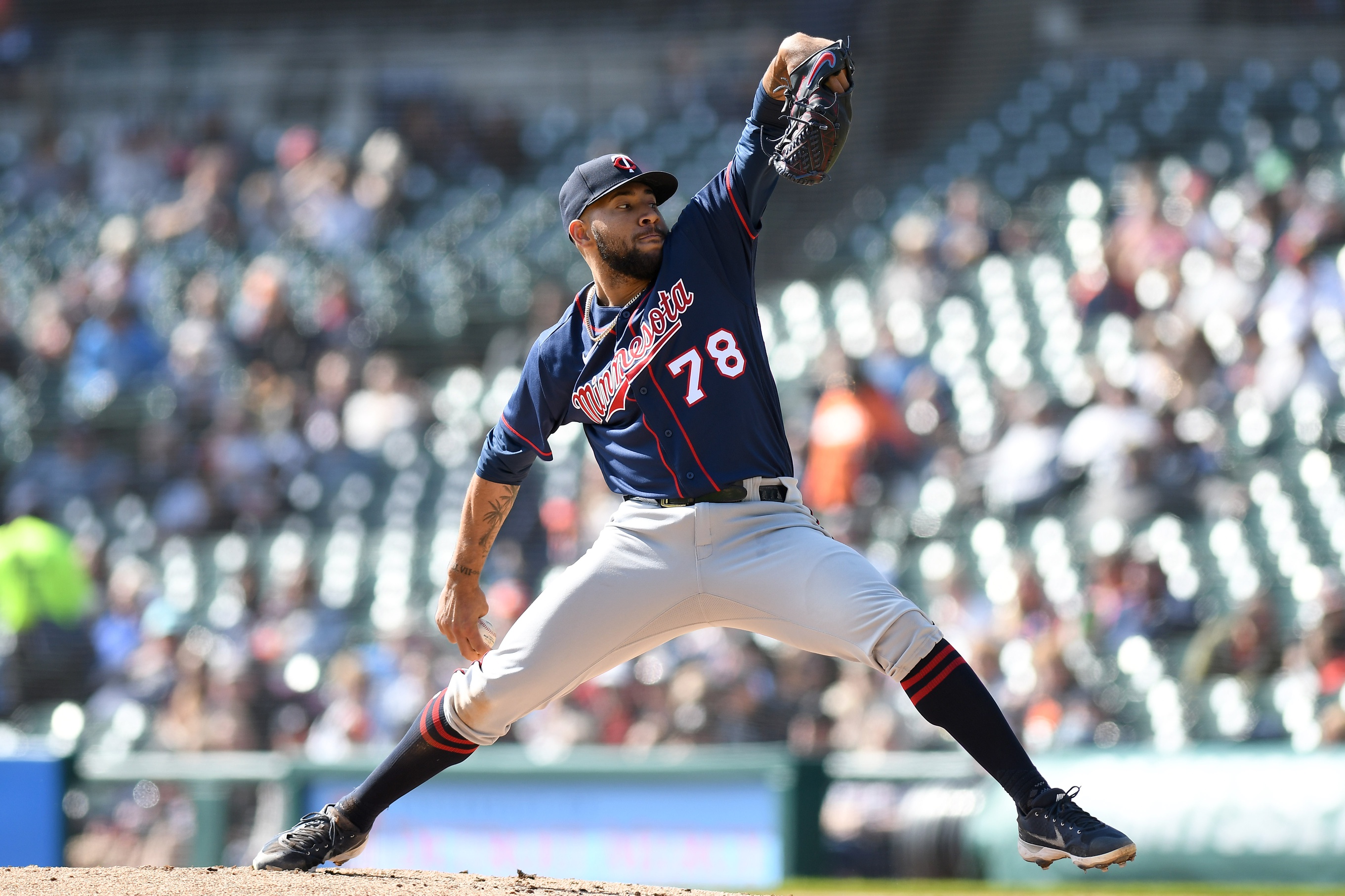 If you like, you can quickly catch up on the ground rules for this exercise in the first installment. The short version is this that we're attempting to rank Twins players and prospects through a big-picture lens in asking: Which current players in the organization are most indispensable to fulfilling the vision of building a champion? Here in this second installment, breaking down my picks for #11 through #15, we find an interesting cross-section of rising and falling stocks. It feels like there's a lot at stake here; a couple of true breakthroughs at this level would profoundly impact the franchise's future fortunes. First, a recap of the list as it stands, from Part 1: 20. Matt Wallner, OF 19. Louie Varland, RHP 18. Sonny Gray, RHP 17. Jorge Lopez, RHP 16. Alex Kirilloff, OF/1B Top 20 Twins Assets of 2023: 11 through 15 15. Ryan Jeffers, C 2022 Ranking: 10 Good major-league catchers are really hard to find. The offseason market is typically sparse; this year the Twins were happy to land a reliably average veteran in Christian Vazquez on a three-year deal that – while reasonable – could hardly be described as team-favorable. Even with Vazquez's addition, catching depth is sparse in the Twins system, which is why Jeffers remains a fairly vital if unexciting asset for the organization. Two straight sub-par offensive seasons have tempered expectations, but the defensively-acclaimed Jeffers remains heir apparent behind the plate, with the Twins surely hoping he'll have emerged as primary starter by the tail end of Vazquez's contract. 14. Trevor Larnach, OF 2022 Ranking: 12 Around this time last year, we were wondering if Larnach's fade during a promising rookie season in 2021 meant he was hitting a wall or merely enduring a speed-bump in his development. The good news is that he fueled the "speed-bump" narrative in 2022 ... at least for a while. Larnach emerged as one of the best hitters in the lineup, earning his way into the heart of the order by June, but a worsening groin/core injury tanked his performance leading up to surgery that ended his season halfway through. There's no reason to believe that particular issue will be a factor going forward, and Larnach in general stands out as a player who figures to benefit from a fresh leadership voice on the training staff. Last year's performance, when healthy, left little doubt as to his viability as a starting outfielder in the big leagues – but at the same time, he hasn't firmly established himself as such and turns 26 in February. 13. Austin Martin, SS/OF 2022 Ranking: 5 Martin's huge regression at Double-A was one of the top headlines for the Twins system in 2022. He'd emerged as arguably their top prospect – centerpiece of the Jose Berrios trade and OBP wizard extraordinaire – but his bat went silent in a follow-up at the same level where he'd spent the entire previous year. While remaining true to his trademark calling card – namely, a knack for getting on base via the BB or HBP and then wreaking havoc as an aggressive runner – Martin batted just .241 with a .316 slugging percentage in his encore at Wichita. He managed two home runs in 90 games. Meanwhile, we gained no real clarity on his defensive future, as he continued to make nearly all of his starts at shortstop, where no one expects him to play in the majors. With all that being said, Martin is still the same player he was a year ago, when he ranked #5 on this list, as well as #1 on our top prospects list and consensus top-50 status on global lists. It feels rash to drop him more than eight spots here in response to one tough season at age 23. In the wake of said tough season, Martin did put together a very encouraging showing in the Arizona Fall League, slashing .374/.454/.482 with six doubles and a homer in 21 games. Something to build upon heading into a crucial 2023 campaign. 12. Connor Prielipp, LHP 2022 Ranking: NR The Twins need to hit big on a premium arm in the draft. It's been a persistent sore spot for this front office. Yes, they've managed to develop some late-round picks like Bailey Ober, Louie Varland and Josh Winder into capable big-league starters, but in seven years, they haven't jumped on a high-end pitcher at the top of the draft and developed him into a frontline stud – and that's really what it feels like this franchise most desperately needs. Prielipp has a real chance to finally break through as that guy. Easily enough said for a player who's yet to throw a professional inning, I realize. But in naming him Minnesota's most intriguing pick in last year's draft, The Athletic notes that before blowing out his elbow in the spring of 2021, "Prielipp was a consensus top-10 draft prospect with a chance to pitch himself into the No. 1 pick conversation." He was fully rehabbed from Tommy John surgery by the time Minnesota selected him 48th overall, but didn't see any official action last year. Baseball America already rates his slider as the best in the Twins system, even though he's yet to technically throw one as part of it. Obviously there's a fair amount of risk attached to Prielipp, and that's why the University of Alabama product lasted into the second round of the draft, but you won't find much more pure upside in a collegiate pitcher draft pick. The Twins really need this one to click. 11. Simeon Woods Richardson, RHP 2022 Ranking: 18 Earlier I mentioned that Martin's step backward was one of the top headlines in the Twins system last year. The flip side is that Woods Richardson's emergence was another of the top headlines, and – given he came over in the same trade package – it helps take some of the sting out of Martin's drop-off. Whereas Martin stumbled at Double-A after thriving there the previous year, Woods Richardson had the opposite experience. He found his footing in a second turn at Wichita, posting a 3.06 ERA over 70 innings, then pitched brilliantly after a promotion to Triple-A where he went 2-0 with a 2.21 ERA in seven starts. It all culminated with a late-season MLB debut, making him the youngest pitcher to appear in the big leagues in 2022. He's very polished and it showed at every stop, but at the same time, Woods Richardson's stuff and approach don't quite scream "frontline starter." Not yet. He just turned 22 in September though, so there's plenty of room for growth. With his big 6-foot-3 frame and excellent demeanor for pitching, he's got much to work with.
- 12 comments
-
- 4
-
-
- ryan jeffers
- trevor larnach
- (and 3 more)
-
With the arrival of a new year, it's time to update my annual rankings of the top 20 most valuable player assets in the Minnesota Twins organization. Read on to see where I landed on #11 through #15 for the list. Image courtesy of Lon Horwedel-USA TODAY Sports If you like, you can quickly catch up on the ground rules for this exercise in the first installment. The short version is this that we're attempting to rank Twins players and prospects through a big-picture lens in asking: Which current players in the organization are most indispensable to fulfilling the vision of building a champion? Here in this second installment, breaking down my picks for #11 through #15, we find an interesting cross-section of rising and falling stocks. It feels like there's a lot at stake here; a couple of true breakthroughs at this level would profoundly impact the franchise's future fortunes. First, a recap of the list as it stands, from Part 1: 20. Matt Wallner, OF 19. Louie Varland, RHP 18. Sonny Gray, RHP 17. Jorge Lopez, RHP 16. Alex Kirilloff, OF/1B Top 20 Twins Assets of 2023: 11 through 15 15. Ryan Jeffers, C 2022 Ranking: 10 Good major-league catchers are really hard to find. The offseason market is typically sparse; this year the Twins were happy to land a reliably average veteran in Christian Vazquez on a three-year deal that – while reasonable – could hardly be described as team-favorable. Even with Vazquez's addition, catching depth is sparse in the Twins system, which is why Jeffers remains a fairly vital if unexciting asset for the organization. Two straight sub-par offensive seasons have tempered expectations, but the defensively-acclaimed Jeffers remains heir apparent behind the plate, with the Twins surely hoping he'll have emerged as primary starter by the tail end of Vazquez's contract. 14. Trevor Larnach, OF 2022 Ranking: 12 Around this time last year, we were wondering if Larnach's fade during a promising rookie season in 2021 meant he was hitting a wall or merely enduring a speed-bump in his development. The good news is that he fueled the "speed-bump" narrative in 2022 ... at least for a while. Larnach emerged as one of the best hitters in the lineup, earning his way into the heart of the order by June, but a worsening groin/core injury tanked his performance leading up to surgery that ended his season halfway through. There's no reason to believe that particular issue will be a factor going forward, and Larnach in general stands out as a player who figures to benefit from a fresh leadership voice on the training staff. Last year's performance, when healthy, left little doubt as to his viability as a starting outfielder in the big leagues – but at the same time, he hasn't firmly established himself as such and turns 26 in February. 13. Austin Martin, SS/OF 2022 Ranking: 5 Martin's huge regression at Double-A was one of the top headlines for the Twins system in 2022. He'd emerged as arguably their top prospect – centerpiece of the Jose Berrios trade and OBP wizard extraordinaire – but his bat went silent in a follow-up at the same level where he'd spent the entire previous year. While remaining true to his trademark calling card – namely, a knack for getting on base via the BB or HBP and then wreaking havoc as an aggressive runner – Martin batted just .241 with a .316 slugging percentage in his encore at Wichita. He managed two home runs in 90 games. Meanwhile, we gained no real clarity on his defensive future, as he continued to make nearly all of his starts at shortstop, where no one expects him to play in the majors. With all that being said, Martin is still the same player he was a year ago, when he ranked #5 on this list, as well as #1 on our top prospects list and consensus top-50 status on global lists. It feels rash to drop him more than eight spots here in response to one tough season at age 23. In the wake of said tough season, Martin did put together a very encouraging showing in the Arizona Fall League, slashing .374/.454/.482 with six doubles and a homer in 21 games. Something to build upon heading into a crucial 2023 campaign. 12. Connor Prielipp, LHP 2022 Ranking: NR The Twins need to hit big on a premium arm in the draft. It's been a persistent sore spot for this front office. Yes, they've managed to develop some late-round picks like Bailey Ober, Louie Varland and Josh Winder into capable big-league starters, but in seven years, they haven't jumped on a high-end pitcher at the top of the draft and developed him into a frontline stud – and that's really what it feels like this franchise most desperately needs. Prielipp has a real chance to finally break through as that guy. Easily enough said for a player who's yet to throw a professional inning, I realize. But in naming him Minnesota's most intriguing pick in last year's draft, The Athletic notes that before blowing out his elbow in the spring of 2021, "Prielipp was a consensus top-10 draft prospect with a chance to pitch himself into the No. 1 pick conversation." He was fully rehabbed from Tommy John surgery by the time Minnesota selected him 48th overall, but didn't see any official action last year. Baseball America already rates his slider as the best in the Twins system, even though he's yet to technically throw one as part of it. Obviously there's a fair amount of risk attached to Prielipp, and that's why the University of Alabama product lasted into the second round of the draft, but you won't find much more pure upside in a collegiate pitcher draft pick. The Twins really need this one to click. 11. Simeon Woods Richardson, RHP 2022 Ranking: 18 Earlier I mentioned that Martin's step backward was one of the top headlines in the Twins system last year. The flip side is that Woods Richardson's emergence was another of the top headlines, and – given he came over in the same trade package – it helps take some of the sting out of Martin's drop-off. Whereas Martin stumbled at Double-A after thriving there the previous year, Woods Richardson had the opposite experience. He found his footing in a second turn at Wichita, posting a 3.06 ERA over 70 innings, then pitched brilliantly after a promotion to Triple-A where he went 2-0 with a 2.21 ERA in seven starts. It all culminated with a late-season MLB debut, making him the youngest pitcher to appear in the big leagues in 2022. He's very polished and it showed at every stop, but at the same time, Woods Richardson's stuff and approach don't quite scream "frontline starter." Not yet. He just turned 22 in September though, so there's plenty of room for growth. With his big 6-foot-3 frame and excellent demeanor for pitching, he's got much to work with. View full article
-
Interesting idea! I've thought about something along the lines of a "Twins Big Draft" that would involve this kind of scope in selections. We'll think on it! (The Athletic did something along these lines last year, I think a Twins-specific version could be very fun.)
-
With the arrival of a new year, it's time to update my annual rankings of the top 20 player assets in the Minnesota Twins organization. This is my sixth year going through this exercise, and I think I can safely say it's never been harder. Read on to see where I landed on #16 through #20 for the list. Image courtesy of Rob Thompson, St. Paul Saints These rankings are intended to provide a relative view of Twins players and prospects by appraising their big-picture value to the organization. The goal is to answer this question: Which current players in the organization are most indispensable to fulfilling the vision of building a champion? We account for age, contract, controllability, upside, etc. It's not strictly a ranking of trade value, because that would be more team-agnostic, where this list aims to capture a very Twins-specific POV. As such, players at areas of scarcity (i.e. pitching) get elevated while those at areas of abundance (i.e. lefty-swinging corner guys) get downgraded a bit. I always find compiling this list to be an interesting offseason exercise – one that surfaces unique conversations about Twins players, how we value them, and where the system's strengths and weaknesses truly lie. What made it so challenging this year is that, by design, these rankings are a snapshot in time – published at the start of January for no other reason than a new year feels like a good time to reset and reassess – and right now, it's very tough to get a read on the state of this organization and its talent. For one thing, it feels like we're in the midst of a slow-developing offseason journey with big twists still ahead. I have a strong feeling there will be noticeable changes to this list by March 30th. But even more, there is SO MUCH UNCERTAINTY with the players they already have. A snapshot at this midpoint of the offseason lacks clarity around key health-related details with massive implications. I struggled with many decisions, and they begin to crop up in this first installment. For example: If healthy, Tyler Mahle at $7.2 million is tremendously valuable, even with only one remaining year of team control. Can we safely operate under the assumption he'll be healthy and at full strength in 2023? (Spoiler alert: I decided no, and he just missed the cut.) Another example: If his latest surgery works and Alex Kirilloff returns to being roughly the player he was before his wrist affliction, he's a centerpiece in the lineup controlled for several years. Can you assume such a rare and complex surgery will take? (Spoiler alert: My cautious optimism got him on the list, but as you'll soon learn, not very high.) With that setup, let's kick off the countdown with my picks for the 16th through 20th most valuable assets in the Twins organization. First, you can check out my rankings from the past five years to see how the franchise's talent landscape has evolved: Top 20 Twins Assets: 2018 Top 20 Twins Assets: 2019 Top 20 Twins Assets: 2020 Top 20 Twins Assets: 2021 Top 20 Twins Assets: 2022 Top 20 Twins Assets of 2023: 16 through 20 20. Matt Wallner, OF 2022 Ranking: NR On a list like this, Wallner has a few key things working against him. First, his player type – strikeout-prone LH corner bat with big power – is fairly abundant in baseball, as evidenced by the Twins signing the poster child in Joey Gallo for $11 million. Second, that player type happens to be especially abundant in the Twins organization. So long as Max Kepler remains camped in right field, Wallner lacks a direct path to the majors, even though his skill set looks ready. The reason he still makes the list, just barely, is because his abilities within that skill set are SO exceptional. Baseball America rates Wallner as the best power hitter and best outfield arm in the Twins system – tools that were on display during a September debut in the majors. Wallner didn't put up terribly impressive numbers in 18 games with the Twins but had some big moments, and if he's shown one thing during his ascent through the minors it's that he can quickly put a slow start at a new level behind him and start dominating once he gets comfortable. The Twins will hope that's exactly what happens to the 25-year-old, who can make a big impact on the team's (near) future as either a slugger in the middle of the order or highly marketable trade chip. 19. Louie Varland, RHP 2022 Ranking: NR Around this time last year, there was still a degree of widespread skepticism around Varland. Sure, he'd earned Twins Minor League Pitcher of the Year honors in 2021 with some truly dazzling numbers, but was this former 15th-round draft pick out of a D2 college the real deal, or a flash in the pan? He backed up his breakout with a 2022 campaign that saw him: Named Twins Minor League Pitcher of the Year for a second consecutive year, posting a 3.06 ERA in 126 innings between Double-A and Triple-A. Debut in the major leagues, where he showed the poise and ability of a seasoned vet. In five starts, Varland posted a 3.81 ERA over 26 innings, completing at least five frames in each turn. Skepticism remains regarding Varland's true ceiling, which is why he doesn't rank higher on this list, but he has solidified his standing as a turnkey mid-rotation starter with six years of team control. His durability and consistency stand out from the field of pitchers in the Twins organization. 18. Sonny Gray, RHP 2022 Ranking: NR As things currently stand, Gray is the only pitcher in the organization who can credibly be looked at as a dependable frontline starter for 2023. That, in a nutshell, is why I had to include him in these rankings, albeit near the back end because the status of his contract (one year remaining at $12.5 million) and checkered bill of health this past season. Gray has been around the block. He's made All-Star teams. He's started playoff games. He's been a featured rotation piece for several teams in a decade of big-league action, and he filled that role pretty well for the Twins last year. It was a bummer that recurring hamstring issues limited Gray to just 24 starts and 120 innings, but he doesn't have the same kind of looming health-related questions as fellow veteran starters Mahle and Kenta Maeda. When on the mound, his performance was pretty much everything you'd want: a bulldog who throws strikes, keeping runners off the bases and batted balls in the park. To whatever extent the Twins are successful in the coming season, it seems very likely that Gray will play a pivotal role. 17. Jorge Lopez, RHP 2022 Ranking: NR As the 2022 season played out, the Twins recognized that in order to take the next step forward, they needed to buttress Jhoan Duran at the back of the bullpen with another dominating force. This revelation pushed the front office to do something they rarely do: invest big in a buy-high relief pitcher. The Twins gave up four prospects at the deadline to acquire Baltimore's All-Star closer, who was experiencing an instant breakthrough in his transition to full-time reliever. Lopez shook off his previous struggles as a starter and transformed into a convincing lights-out bullpen ace for the O's. His performance in Minnesota after the trade was far less inspiring, but unlike Mahle, there's no reason to believe anything is physically amiss for Lopez. His profile – heavy doses of whiffs and grounders with sinking upper-90s heat – is a pretty reliable formula for success. So long as he can get back to commanding his arsenal Lopez figures to be a key piece during his two remaining seasons of team control. 16. Alex Kirilloff, 1B/OF 2022 Ranking: 3 I'm an affirmed believe in Kirilloff. In five past iterations of these rankings, I've had him in the top five twice, including #2 in 2021 and #3 last year. I view his pedigree, IQ and ability as a hitter to be in a rarefied class. He's flashed it in brief glimpses on the field, and last year AK hammered home his hitting prowess during a hilariously productive month at Triple-A (.385/.477/.725 in 28 games). But on the big-league field, Kirilloff's success has always been fleeting, with each setback tied to a clear culprit. The wrist injury that sabotaged his elite swing, and has now required two surgeries, will define Kirilloff's career. He'll overcome it with help from this latest intervention, or join the long list of rising stars fell victim to the brutal physical toll of pro sports – forced to make do rather than make hay. I'm bullish on Kirilloff overcoming it. If for no other reason than that the Twins as a franchise, and especially Alex Kirilloff as person, are overdue for a good break. The guy also lost a full year of development to Tommy John surgery, and despite it all, finds himself firmly planted in the majors at age 25. His talent is not in question. A healthy and raking Kirilloff would be a radical difference-maker in the outlook for the 2023 Twins and beyond. Ranking him 16th on this list is an attempt to balance that simmering potential with the cold realities of the human body and its limits. View full article
- 15 replies
-
- 1
-
-
- matt wallner
- louis varland
- (and 3 more)
-
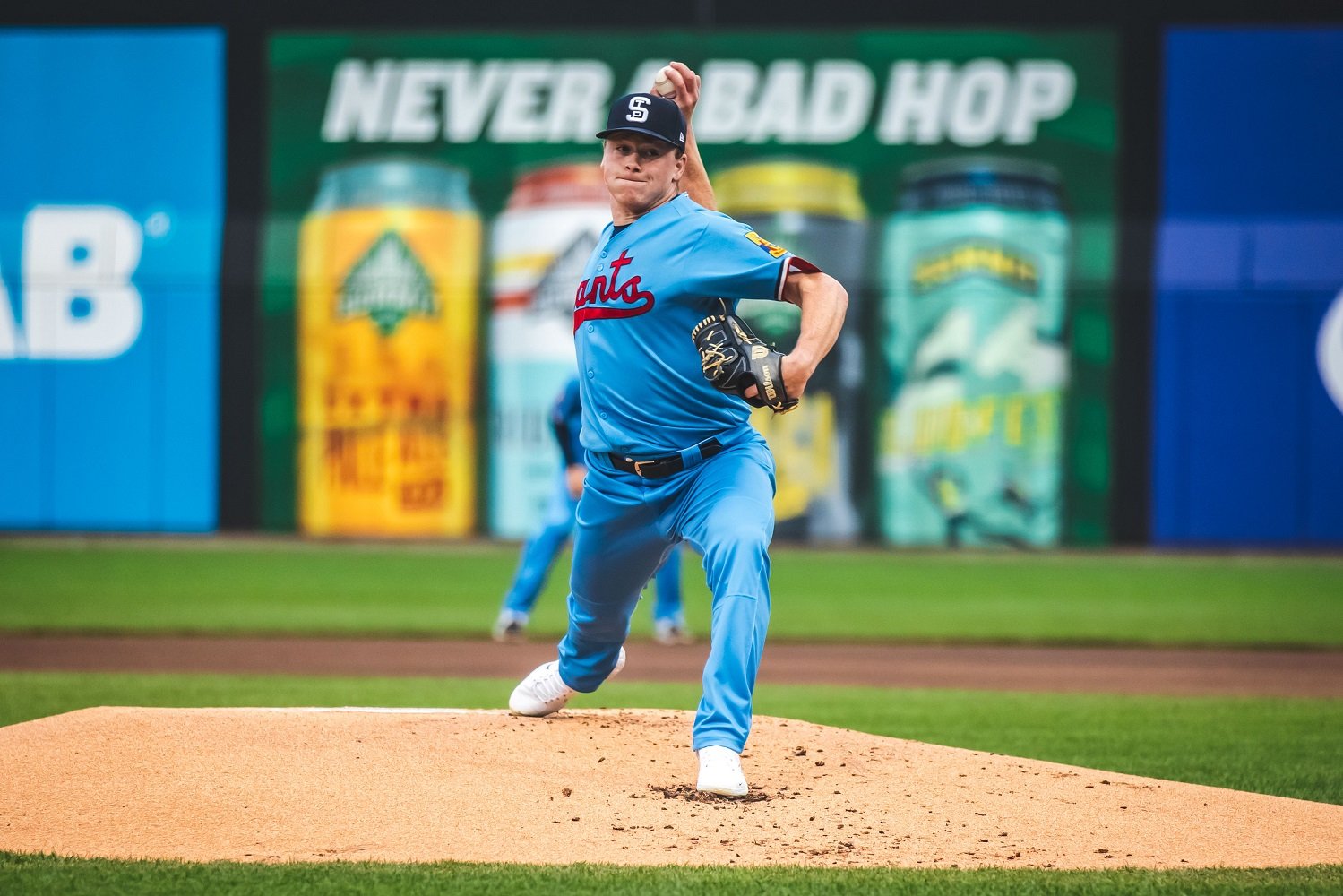 These rankings are intended to provide a relative view of Twins players and prospects by appraising their big-picture value to the organization. The goal is to answer this question: Which current players in the organization are most indispensable to fulfilling the vision of building a champion? We account for age, contract, controllability, upside, etc. It's not strictly a ranking of trade value, because that would be more team-agnostic, where this list aims to capture a very Twins-specific POV. As such, players at areas of scarcity (i.e. pitching) get elevated while those at areas of abundance (i.e. lefty-swinging corner guys) get downgraded a bit. I always find compiling this list to be an interesting offseason exercise – one that surfaces unique conversations about Twins players, how we value them, and where the system's strengths and weaknesses truly lie. What made it so challenging this year is that, by design, these rankings are a snapshot in time – published at the start of January for no other reason than a new year feels like a good time to reset and reassess – and right now, it's very tough to get a read on the state of this organization and its talent. For one thing, it feels like we're in the midst of a slow-developing offseason journey with big twists still ahead. I have a strong feeling there will be noticeable changes to this list by March 30th. But even more, there is SO MUCH UNCERTAINTY with the players they already have. A snapshot at this midpoint of the offseason lacks clarity around key health-related details with massive implications. I struggled with many decisions, and they begin to crop up in this first installment. For example: If healthy, Tyler Mahle at $7.2 million is tremendously valuable, even with only one remaining year of team control. Can we safely operate under the assumption he'll be healthy and at full strength in 2023? (Spoiler alert: I decided no, and he just missed the cut.) Another example: If his latest surgery works and Alex Kirilloff returns to being roughly the player he was before his wrist affliction, he's a centerpiece in the lineup controlled for several years. Can you assume such a rare and complex surgery will take? (Spoiler alert: My cautious optimism got him on the list, but as you'll soon learn, not very high.) With that setup, let's kick off the countdown with my picks for the 16th through 20th most valuable assets in the Twins organization. First, you can check out my rankings from the past five years to see how the franchise's talent landscape has evolved: Top 20 Twins Assets: 2018 Top 20 Twins Assets: 2019 Top 20 Twins Assets: 2020 Top 20 Twins Assets: 2021 Top 20 Twins Assets: 2022 Top 20 Twins Assets of 2023: 16 through 20 20. Matt Wallner, OF 2022 Ranking: NR On a list like this, Wallner has a few key things working against him. First, his player type – strikeout-prone LH corner bat with big power – is fairly abundant in baseball, as evidenced by the Twins signing the poster child in Joey Gallo for $11 million. Second, that player type happens to be especially abundant in the Twins organization. So long as Max Kepler remains camped in right field, Wallner lacks a direct path to the majors, even though his skill set looks ready. The reason he still makes the list, just barely, is because his abilities within that skill set are SO exceptional. Baseball America rates Wallner as the best power hitter and best outfield arm in the Twins system – tools that were on display during a September debut in the majors. Wallner didn't put up terribly impressive numbers in 18 games with the Twins but had some big moments, and if he's shown one thing during his ascent through the minors it's that he can quickly put a slow start at a new level behind him and start dominating once he gets comfortable. The Twins will hope that's exactly what happens to the 25-year-old, who can make a big impact on the team's (near) future as either a slugger in the middle of the order or highly marketable trade chip. 19. Louie Varland, RHP 2022 Ranking: NR Around this time last year, there was still a degree of widespread skepticism around Varland. Sure, he'd earned Twins Minor League Pitcher of the Year honors in 2021 with some truly dazzling numbers, but was this former 15th-round draft pick out of a D2 college the real deal, or a flash in the pan? He backed up his breakout with a 2022 campaign that saw him: Named Twins Minor League Pitcher of the Year for a second consecutive year, posting a 3.06 ERA in 126 innings between Double-A and Triple-A. Debut in the major leagues, where he showed the poise and ability of a seasoned vet. In five starts, Varland posted a 3.81 ERA over 26 innings, completing at least five frames in each turn. Skepticism remains regarding Varland's true ceiling, which is why he doesn't rank higher on this list, but he has solidified his standing as a turnkey mid-rotation starter with six years of team control. His durability and consistency stand out from the field of pitchers in the Twins organization. 18. Sonny Gray, RHP 2022 Ranking: NR As things currently stand, Gray is the only pitcher in the organization who can credibly be looked at as a dependable frontline starter for 2023. That, in a nutshell, is why I had to include him in these rankings, albeit near the back end because the status of his contract (one year remaining at $12.5 million) and checkered bill of health this past season. Gray has been around the block. He's made All-Star teams. He's started playoff games. He's been a featured rotation piece for several teams in a decade of big-league action, and he filled that role pretty well for the Twins last year. It was a bummer that recurring hamstring issues limited Gray to just 24 starts and 120 innings, but he doesn't have the same kind of looming health-related questions as fellow veteran starters Mahle and Kenta Maeda. When on the mound, his performance was pretty much everything you'd want: a bulldog who throws strikes, keeping runners off the bases and batted balls in the park. To whatever extent the Twins are successful in the coming season, it seems very likely that Gray will play a pivotal role. 17. Jorge Lopez, RHP 2022 Ranking: NR As the 2022 season played out, the Twins recognized that in order to take the next step forward, they needed to buttress Jhoan Duran at the back of the bullpen with another dominating force. This revelation pushed the front office to do something they rarely do: invest big in a buy-high relief pitcher. The Twins gave up four prospects at the deadline to acquire Baltimore's All-Star closer, who was experiencing an instant breakthrough in his transition to full-time reliever. Lopez shook off his previous struggles as a starter and transformed into a convincing lights-out bullpen ace for the O's. His performance in Minnesota after the trade was far less inspiring, but unlike Mahle, there's no reason to believe anything is physically amiss for Lopez. His profile – heavy doses of whiffs and grounders with sinking upper-90s heat – is a pretty reliable formula for success. So long as he can get back to commanding his arsenal Lopez figures to be a key piece during his two remaining seasons of team control. 16. Alex Kirilloff, 1B/OF 2022 Ranking: 3 I'm an affirmed believe in Kirilloff. In five past iterations of these rankings, I've had him in the top five twice, including #2 in 2021 and #3 last year. I view his pedigree, IQ and ability as a hitter to be in a rarefied class. He's flashed it in brief glimpses on the field, and last year AK hammered home his hitting prowess during a hilariously productive month at Triple-A (.385/.477/.725 in 28 games). But on the big-league field, Kirilloff's success has always been fleeting, with each setback tied to a clear culprit. The wrist injury that sabotaged his elite swing, and has now required two surgeries, will define Kirilloff's career. He'll overcome it with help from this latest intervention, or join the long list of rising stars fell victim to the brutal physical toll of pro sports – forced to make do rather than make hay. I'm bullish on Kirilloff overcoming it. If for no other reason than that the Twins as a franchise, and especially Alex Kirilloff as person, are overdue for a good break. The guy also lost a full year of development to Tommy John surgery, and despite it all, finds himself firmly planted in the majors at age 25. His talent is not in question. A healthy and raking Kirilloff would be a radical difference-maker in the outlook for the 2023 Twins and beyond. Ranking him 16th on this list is an attempt to balance that simmering potential with the cold realities of the human body and its limits.
- 15 comments
-
- 9
-
-
- matt wallner
- louis varland
- (and 3 more)
-
In one sense, nothing has happened with Carlos Correa yet. A full two weeks after first agreeing to a historic deal with the Giants, he still hasn't put pen to paper and officially signed a contract. In another sense, SO MUCH HAS HAPPENED. The twists and turns in this unprecedented high-stakes free agency quagmire are almost incomprehensible. Let's get up to speed on where Correa's market stands, and how the Twins might still fit in. Image courtesy of Mark J. Rebilas-USA TODAY Sports First, a quick recap of the events leading up to this point. On December 13th, Carlos Correa reached agreement with the San Francisco Giants on a 13-year, $350 million contract. It would've ranked as the second-largest for any free agent in MLB history. Alas, it was not to be. Just before it was scheduled to take place, the Giants postponed a press conference to make the deal official, citing concerns raised in Correa's physical. Scott Boras balked at the request and quickly returned to the market, rushing into an overnight agreement with Steve Cohen and the New York Mets for 12 years and $315 million. Soon after, we learned that Correa's agreement with Mets was ALSO in question, because their medical staff ran into similar concerns as San Francisco when going through a physical. The point of contention allegedly relates to an old ankle injury from 2014 -- controversial in that it hasn't affected him on the field in nine years since, but is evidently raising red flags for long-term risk. Reports of the Mets' concerns generally came with the caveat that New York and Correa were expected to work through the issue and ultimately agree on a deal. Alas, three days later -- albeit with a holiday break mixed in -- the two sides have yet to settle on agreeable terms. Meanwhile, it sounds as if confidence is waning, at least somewhat. A column from Mike Puma in the New York Post on Monday indicates that while there is "optimism a deal can still be completed," that optimism could hardly be described as emphatic, with "one source on Monday placing the likelihood at 55 percent that the two sides find common ground." Correa "isn’t open to restructuring the length or financial terms of the contract," according to Puma. The question now bouncing around every Twins fan's mind is: what does the other 45 percent side of this scenario look like? If Correa's deal with New York fizzles, where do he and Boras go? Back to the Giants? Re-engage the Twins? Connect with an outside suitor, as they did originally with the Mets? Puma reports that "at least three teams have been in contact with Correa’s camp in recent days," and the Twins are presumably among them. The team's stance, at last check, was that they remained open to sticking with their original offer of 10 years and $285 million, but only under the condition they could review his medical situation and feel comfortable with what they saw. Theoretically that conversation could fire back up as Correa and Boras push to complete a deal and put an end this two-year free agent odyssey once and for all. The thing I can't quite get past is this: If two of the most impulsive and free-spending owners/franchises in baseball are unwilling to go 13 or 12 years with Correa based on what they've seen with a deeper look, what are the chances that one of the shrewdest and least impulsive will go 10 or more? Can we really conceive that the Twins -- mired in a litany of pivotal health questions as they already are -- will emerge the winners in what's quickly becoming one of the most prominently publicized high-risk ventures in the history of free agency? Do we even honestly believe they should? At the same time, I can't stop circling back to another burning question: If ever there was a series of events that was going to play out and give the Twins a serious chance to "get creative" and sign a deal that is legitimately within their targeted range ... this would seem to be it, right? View full article
-
 First, a quick recap of the events leading up to this point. On December 13th, Carlos Correa reached agreement with the San Francisco Giants on a 13-year, $350 million contract. It would've ranked as the second-largest for any free agent in MLB history. Alas, it was not to be. Just before it was scheduled to take place, the Giants postponed a press conference to make the deal official, citing concerns raised in Correa's physical. Scott Boras balked at the request and quickly returned to the market, rushing into an overnight agreement with Steve Cohen and the New York Mets for 12 years and $315 million. Soon after, we learned that Correa's agreement with Mets was ALSO in question, because their medical staff ran into similar concerns as San Francisco when going through a physical. The point of contention allegedly relates to an old ankle injury from 2014 -- controversial in that it hasn't affected him on the field in nine years since, but is evidently raising red flags for long-term risk. Reports of the Mets' concerns generally came with the caveat that New York and Correa were expected to work through the issue and ultimately agree on a deal. Alas, three days later -- albeit with a holiday break mixed in -- the two sides have yet to settle on agreeable terms. Meanwhile, it sounds as if confidence is waning, at least somewhat. A column from Mike Puma in the New York Post on Monday indicates that while there is "optimism a deal can still be completed," that optimism could hardly be described as emphatic, with "one source on Monday placing the likelihood at 55 percent that the two sides find common ground." Correa "isn’t open to restructuring the length or financial terms of the contract," according to Puma. The question now bouncing around every Twins fan's mind is: what does the other 45 percent side of this scenario look like? If Correa's deal with New York fizzles, where do he and Boras go? Back to the Giants? Re-engage the Twins? Connect with an outside suitor, as they did originally with the Mets? Puma reports that "at least three teams have been in contact with Correa’s camp in recent days," and the Twins are presumably among them. The team's stance, at last check, was that they remained open to sticking with their original offer of 10 years and $285 million, but only under the condition they could review his medical situation and feel comfortable with what they saw. Theoretically that conversation could fire back up as Correa and Boras push to complete a deal and put an end this two-year free agent odyssey once and for all. The thing I can't quite get past is this: If two of the most impulsive and free-spending owners/franchises in baseball are unwilling to go 13 or 12 years with Correa based on what they've seen with a deeper look, what are the chances that one of the shrewdest and least impulsive will go 10 or more? Can we really conceive that the Twins -- mired in a litany of pivotal health questions as they already are -- will emerge the winners in what's quickly becoming one of the most prominently publicized high-risk ventures in the history of free agency? Do we even honestly believe they should? At the same time, I can't stop circling back to another burning question: If ever there was a series of events that was going to play out and give the Twins a serious chance to "get creative" and sign a deal that is legitimately within their targeted range ... this would seem to be it, right?
 -
The unforgettable Ricky Nolasco!
-
Good piece Ted! While obviously the first reaction upon signing Gallo was "they're gonna trade Kepler" (and that remains likely) there was also a small part of me that wondered if it could push Larnach, or Wallner, to the trading block.
-
Actually I mis-phrased that. Third-largest under this front office; fifth-largest in franchise history. Just fixed.