



Nick Nelson
-
Posts
8,322 -
Joined
-
Last visited
-
Days Won
56
Content Type
Profiles
News
Minnesota Twins Videos
2026 Minnesota Twins Top Prospects Ranking
2022 Minnesota Twins Draft Picks
Minnesota Twins Free Agent & Trade Rumors, Notes, & Tidbits
Guides & Resources
2023 Minnesota Twins Draft Picks
The Minnesota Twins Players Project
2024 Minnesota Twins Draft Picks
2025 Minnesota Twins Draft Pick Tracker
2026 Minnesota Twins Draft Tracker: Picks & Bonuses
Forums
Blogs
Events
Store
Downloads
Gallery
Everything posted by Nick Nelson
-

What Will the Twins Front Office's Trade Deadline Strategy Look Like?
Nick Nelson posted an article in Twins
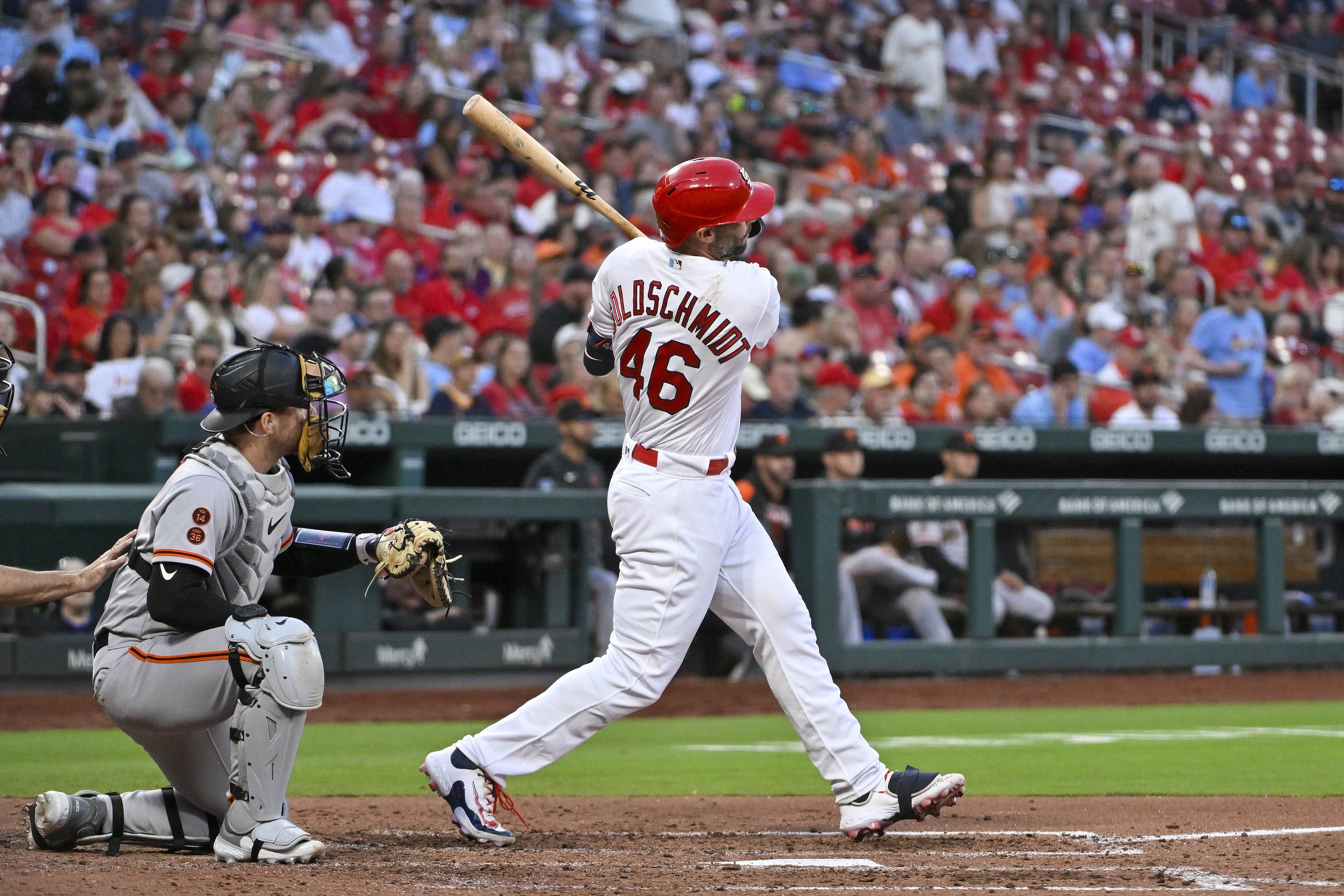 The August 1st trade deadline is a little over seven weeks away, which is a long time but not THAT long. Already, the front office is surely beginning to strategize, keeping one eye forward while they try to maintain a slim division lead in the present. For Twins brass, the prevailing hope is – has to be – that significant improvement will be driven internally, with lagging hitters and injured players and wayward youngsters finding their rhythms in the summer months. Few outside additions could be as impactful as Carlos Correa finding his MVP form and turning it on for three months, or Jose Miranda rediscovering his swing and returning to the majors with a vengeance. But even with some much-needed twists of fortune, it's already growing clear that this team will need additional help to compete at the level of, say, the Tampa Bay Rays, who soundly swept them in Florida last week. The bullpen is its own issue, and luckily relief pitchers tend to be plentiful at the deadline. I'm more interested in how the Twins might look to address the offense, because that is no easy nut to crack. They're already having a hard enough time finding room for some of their best hitting prospects from the minors, so realistically, where would the Twins be aiming to make impact additions? And what might be available? As we'll learn through taking a position-by-position survey of the roster, any upgrade scenario would require a little shaking and shuffling. CATCHER Christian Vázquez has been a big contributor to the team's offensive woes, turning into a total void at the plate after the first week, but he's not going anywhere – both because his defense is considered so valuable, and because he's on a freshly signed $30 million contract. Ryan Jeffers has been very good. Barring injuries, catcher is not a place to target additions. (Not that any impact hitters are available here anyway.) FIRST BASE It seems safe to say Alex Kirilloff is firmly implanted. He's been essentially the only hitter on the team to live up to his promise. He's a long-term cornerstone piece. Kirilloff definitely seems most comfortable and effective at first base defensively. That said, he can play the outfield corners just fine, so if a big 1B bat were to come into play, moving AK off the position would be an option. (It would, however, require the Twins to sort out their existing corner-OF depth, which we'll cover shortly.) Name to Watch: Paul Goldschmidt, Cardinals – The 35-year-old reigning NL MVP is under contract through next year with the last-place Cards, who probably wouldn't mind dumping his salary for prospects. Goldy has a no-trade clause, but that's not always a deal-breaker for brokering a deal... SECOND BASE Jorge Polanco's health can be counted on roughly as much as Edouard Julien's defense – but the presence of both quality bats makes it hard to justify adding another player here. Especially when Royce Lewis, Brooks Lee, and Austin Martin could all factor in at second as well. SHORTSTOP Something tells me the Twins won't be trading for anyone to replace their $200 million free agent in the first year of his deal. THIRD BASE Between Lewis, Lee, and Miranda (not to mention Kyle Farmer) it feels like the Twins have too many guys in the third-base mix for adding another piece to make sense. MAYBE if a difference-maker became available, it would be possible to shift things around, but as I scan the deadline trade candidate landscape I don't see any prominent third basemen in the likely mix. Thanks to some intrepid reporting, I believe we can safely say the Twins won't be dealing for Josh Donaldson. LEFT FIELD So, the Twins have Trevor Larnach, they've got Joey Gallo, they've got Willi Castro. Nick Gordon will be back at some point. None of those four are above setting aside for a high-profile acquisition, if the right deal presented itself. I'd name left field as the most likely destination for a deadline bat addition, mainly because the Twins are least entrenched at this position and it's an easy place to make a variety of good hitters work. Name to Watch: Juan Soto, Padres – Under control through next year, he's the only member of San Diego's star-studded core who hasn't been locked down long-term. Soto would require a ransom and will cost around $30 million in his coming final turn at arbitration. Do the Twins have an appetite for 2023/24 superstar upside at that pricetag? CENTER FIELD It's probably wishful thinking to believe Byron Buxton will occupy this position in any full-time capacity this year, but Michael A. Taylor has been a quality fixture and Gordon will be back at some point. Tough to envision a major add in center field. RIGHT FIELD It's a similar situation to left field, except here you've got the longtime incumbent Max Kepler atop the depth chart, and top prospect Matt Wallner pressing him from Triple-A. I would bet against Kepler still being on the roster on August 1st, but even if Wallner flops or gets hurt, the presence of guys like Larnach, Gallo, and Kirilloff provide a lot of theoretically capable offensive depth. If the right opportunity came along, the Twins could probably make it work. But I consider left field to be easily the most likely spot for an addition in the outfield. DESIGNATED HITTER If Buxton's knee flares up, or something else happens to knock him out for the season, the Twins would presumably turn to Julien at DH, where he's best suited. But let's say Polanco can't get his legs healthy, and Julien needs to stick at second. That's the type of situation that would open the door for acquiring a pure designated hitter at the deadline. Maybe even one who could ... also slot in as your ace starter in a ridiculously loaded playoff rotation? Just spitballing here. Name to Watch: Shohei Ohtani, Angels – For now, the Angels are in contention. But if that changes, as it usually does, they'll surely be shopping the impending free agent Ohtani. Minnesota would be in no position to re-sign him, so it comes down to how much they're willing to sacrifice for the most impactful and expensive deadline rental in MLB history. Alright, so, what has this exercise taught us? For me, it's that the trade deadline is probably not going to offer solutions for the Twins lineup, unless they are willing to venture into the pipe-dream territory teased above with names like Goldschmidt, Soto and Ohtani. If you move your scope much lower than the superstar tier, then you're probably not getting a whole lot more upside and assurance in a 2-3 month sample than you would with internal options already on hand. And the last thing this front office needs is to get wiped out on another bad deadline deal. For better or worse, I think that's where the path to resurrection lies for this offense. As tired as the "It's like making a trade!" tropes are, nothing can realistically remedy this offense as much as coalescing a remotely healthy and effective mix of Buxton, Polanco, Correa, Miranda, Gallo, Larnach, and beyond. Then again, the deadline is still a pretty long ways away.
- 115 comments
-
- 13
-

-
The Twins went all-in on this 2023 season, signing Carlos Correa and pushing payroll to a record high. Now, they find themselves floundering in first place, with clear shortcomings needing to be addressed as the trade deadline emerges on the horizon. Upgrading this faulty offensive unit will not be a simple or straightforward undertaking. Image courtesy of Jeff Curry-USA TODAY Sports The August 1st trade deadline is a little over seven weeks away, which is a long time but not THAT long. Already, the front office is surely beginning to strategize, keeping one eye forward while they try to maintain a slim division lead in the present. For Twins brass, the prevailing hope is – has to be – that significant improvement will be driven internally, with lagging hitters and injured players and wayward youngsters finding their rhythms in the summer months. Few outside additions could be as impactful as Carlos Correa finding his MVP form and turning it on for three months, or Jose Miranda rediscovering his swing and returning to the majors with a vengeance. But even with some much-needed twists of fortune, it's already growing clear that this team will need additional help to compete at the level of, say, the Tampa Bay Rays, who soundly swept them in Florida last week. The bullpen is its own issue, and luckily relief pitchers tend to be plentiful at the deadline. I'm more interested in how the Twins might look to address the offense, because that is no easy nut to crack. They're already having a hard enough time finding room for some of their best hitting prospects from the minors, so realistically, where would the Twins be aiming to make impact additions? And what might be available? As we'll learn through taking a position-by-position survey of the roster, any upgrade scenario would require a little shaking and shuffling. CATCHER Christian Vázquez has been a big contributor to the team's offensive woes, turning into a total void at the plate after the first week, but he's not going anywhere – both because his defense is considered so valuable, and because he's on a freshly signed $30 million contract. Ryan Jeffers has been very good. Barring injuries, catcher is not a place to target additions. (Not that any impact hitters are available here anyway.) FIRST BASE It seems safe to say Alex Kirilloff is firmly implanted. He's been essentially the only hitter on the team to live up to his promise. He's a long-term cornerstone piece. Kirilloff definitely seems most comfortable and effective at first base defensively. That said, he can play the outfield corners just fine, so if a big 1B bat were to come into play, moving AK off the position would be an option. (It would, however, require the Twins to sort out their existing corner-OF depth, which we'll cover shortly.) Name to Watch: Paul Goldschmidt, Cardinals – The 35-year-old reigning NL MVP is under contract through next year with the last-place Cards, who probably wouldn't mind dumping his salary for prospects. Goldy has a no-trade clause, but that's not always a deal-breaker for brokering a deal... SECOND BASE Jorge Polanco's health can be counted on roughly as much as Edouard Julien's defense – but the presence of both quality bats makes it hard to justify adding another player here. Especially when Royce Lewis, Brooks Lee, and Austin Martin could all factor in at second as well. SHORTSTOP Something tells me the Twins won't be trading for anyone to replace their $200 million free agent in the first year of his deal. THIRD BASE Between Lewis, Lee, and Miranda (not to mention Kyle Farmer) it feels like the Twins have too many guys in the third-base mix for adding another piece to make sense. MAYBE if a difference-maker became available, it would be possible to shift things around, but as I scan the deadline trade candidate landscape I don't see any prominent third basemen in the likely mix. Thanks to some intrepid reporting, I believe we can safely say the Twins won't be dealing for Josh Donaldson. LEFT FIELD So, the Twins have Trevor Larnach, they've got Joey Gallo, they've got Willi Castro. Nick Gordon will be back at some point. None of those four are above setting aside for a high-profile acquisition, if the right deal presented itself. I'd name left field as the most likely destination for a deadline bat addition, mainly because the Twins are least entrenched at this position and it's an easy place to make a variety of good hitters work. Name to Watch: Juan Soto, Padres – Under control through next year, he's the only member of San Diego's star-studded core who hasn't been locked down long-term. Soto would require a ransom and will cost around $30 million in his coming final turn at arbitration. Do the Twins have an appetite for 2023/24 superstar upside at that pricetag? CENTER FIELD It's probably wishful thinking to believe Byron Buxton will occupy this position in any full-time capacity this year, but Michael A. Taylor has been a quality fixture and Gordon will be back at some point. Tough to envision a major add in center field. RIGHT FIELD It's a similar situation to left field, except here you've got the longtime incumbent Max Kepler atop the depth chart, and top prospect Matt Wallner pressing him from Triple-A. I would bet against Kepler still being on the roster on August 1st, but even if Wallner flops or gets hurt, the presence of guys like Larnach, Gallo, and Kirilloff provide a lot of theoretically capable offensive depth. If the right opportunity came along, the Twins could probably make it work. But I consider left field to be easily the most likely spot for an addition in the outfield. DESIGNATED HITTER If Buxton's knee flares up, or something else happens to knock him out for the season, the Twins would presumably turn to Julien at DH, where he's best suited. But let's say Polanco can't get his legs healthy, and Julien needs to stick at second. That's the type of situation that would open the door for acquiring a pure designated hitter at the deadline. Maybe even one who could ... also slot in as your ace starter in a ridiculously loaded playoff rotation? Just spitballing here. Name to Watch: Shohei Ohtani, Angels – For now, the Angels are in contention. But if that changes, as it usually does, they'll surely be shopping the impending free agent Ohtani. Minnesota would be in no position to re-sign him, so it comes down to how much they're willing to sacrifice for the most impactful and expensive deadline rental in MLB history. Alright, so, what has this exercise taught us? For me, it's that the trade deadline is probably not going to offer solutions for the Twins lineup, unless they are willing to venture into the pipe-dream territory teased above with names like Goldschmidt, Soto and Ohtani. If you move your scope much lower than the superstar tier, then you're probably not getting a whole lot more upside and assurance in a 2-3 month sample than you would with internal options already on hand. And the last thing this front office needs is to get wiped out on another bad deadline deal. For better or worse, I think that's where the path to resurrection lies for this offense. As tired as the "It's like making a trade!" tropes are, nothing can realistically remedy this offense as much as coalescing a remotely healthy and effective mix of Buxton, Polanco, Correa, Miranda, Gallo, Larnach, and beyond. Then again, the deadline is still a pretty long ways away. View full article
-
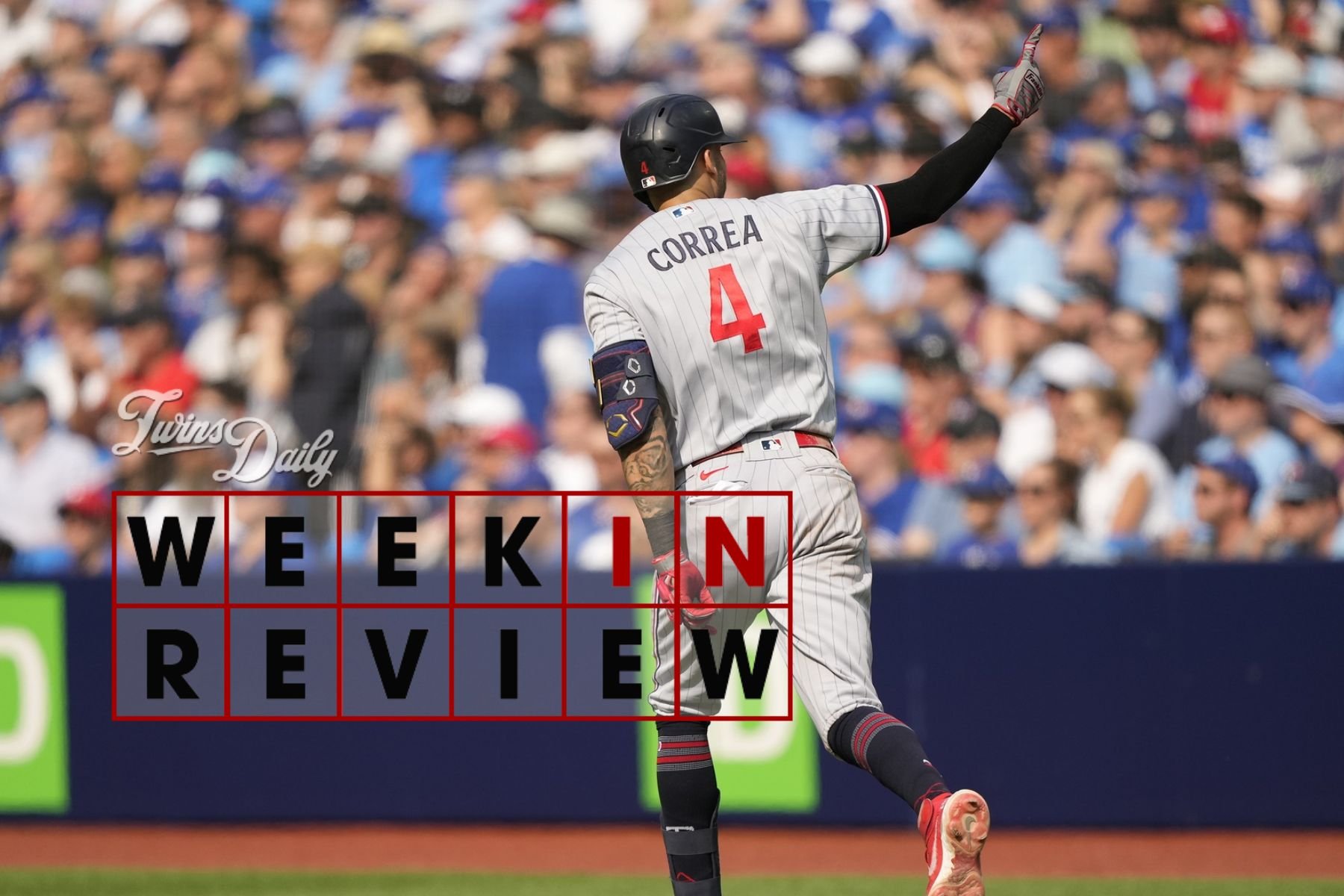 Weekly Snapshot: Mon, 6/5 through Sun, 6/11 *** Record Last Week: 2-4 (Overall: 33-33) Run Differential Last Week: -5 (Overall: +40) Standing: 1st Place in AL Central (1.5 GA) Last Week's Game Results: Game 61 | TB 7, MIN 0: Mighty Rays Exert Dominance Over Twins Game 62 | TB 2, MIN 1: Lineup Wastes Pablo's Brilliant Outing Game 63 | TB 4, MIN 2: Offense Sleepwalks to Fifth Straight Loss Game 64 | MIN 3, TOR 2: Bats Muster Just Enough to End Skid Game 65 | MIN 9, TOR 4: Correa's Grand Slam Keys Comeback Game 66 | TOR 7, MIN 6: Twins Kill Momentum by Blowing Early Lead NEWS & NOTES Stop me if you've heard it before: Twins players simply cannot shake off their injuries. The past weekend saw both Caleb Thielbar (oblique) and Jorge Polanco (hamstring) return to the injured list with the very same issues that had previously landed them there. Meanwhile, Byron Buxton's first annual trip to the IL owes to a new ailment – a chest contusion suffered on an HBP. Joining the roster in place of these three key players: Edouard Julien and Josh Winder, recalled from Triple-A, and Trevor Larnach who was activated from the IL. Joey Gallo is rehabbing in St. Paul, where he launched homers on Saturday and Sunday. He seems likely to the rejoin the Twins at Target Field this week. HIGHLIGHTS The eighth inning of Saturday night's game in Toronto felt, in many ways, like the massive breakthrough we've all been awaiting with growing impatience. Several toxic trends were suddenly reversed in a dramatic explosion of offense that secured the Twins their second consecutive victory in the wake of a five-game losing streak. During said streak, Minnesota had scored six total runs, having eked out a 1-0 victory in the game prior. This offense was in absolute shambles before busting out for seven runs in a single frame, and the two hitters who authored this outburst were none other than the two biggest targets for (justified) criticism in the lineup. Carlos Correa has clearly been the most conspicuous culprit in the team's shortcomings over the first half, with his poor overall production made worse by brutal clutch hitting statistics. All of Correa's first seven home runs were solo shots, and the Twins as a team had a .337 (!) OPS with the bases loaded as C4 stepped in against Adam Cimber on Saturday. Three on and one out, down by two: the moment had all the makings of another predictable letdown. Instead, Correa delivered arguably the biggest hit of the entire season: a game-breaking grand slam that flipped a 3-1 deficit into a 5-3 lead, a loss into a win. With one swing, Correa turned the tides on a tsunami of cascading offensive despair for which he was figurehead. It had to feel amazing. Later in the same inning, Max Kepler followed with a clinching three-run blast that must've felt equally relieving. Having batted .118 with zero extra-base hits in his first 11 games back, openly drawing the ire of his manager with his lackadaisical play on the base paths, Kepler found himself in the crosshairs. At long last, he got a hold of one, clobbering a 95 MPH fastball over the fence in right. Neither development should have been THAT surprising really, right? Baseball is a game of ebbs and flows, which tend to even out over time. At some point, these inexplicably extreme trends – the bases-loaded woes, Correa's lack of clutchness, Kepler's lack of anything – were going to turn. Maybe in a big way, if history is any guide. The Twins channeled their Saturday surge into the beginning of Sunday's game, where they put up four runs in the first inning against Kevin Gausman. Correa came up big again in this contest, with two doubles and a walk. The weekend served as a hopeful sign that finally some of these team-hindering laggards are finally ready to put the immense run of collective struggles behind them. If so, the Twins have a strong base to get on a sustained run and pull away in the division. There are solid pieces mixed into this uneven offensive mix. Julien looks like a real spark-plug at the plate (albeit a massive liability in the field), and he figures to get an extended look in Polanco's absence. Michael A. Taylor is proving to be a dynamic asset with his speed and power. Royce Lewis shook out of a slump to notch hits in seven straight plate appearances over the weekend, raising his average from .182 to .317 in a span of two days. Alex Kirilloff continues to look like That Dude, slashing .293/.417/.455 on the season after another strong week. Meanwhile, the pitching staff remains excellent, with the past week's notable highlights including a stellar performance from Pablo López against Tampa Bay (7 IP, 1 ER), more brilliance from Brock Stewart out of the bullpen (3 IP, 5 K, 0 BB, 1 H), and a run of six consecutive strikeouts against the Rays by an electric Bailey Ober. LOWLIGHTS The lineup's mini-breakout served to slightly quell mounting frustration around this offense, but a couple days of improvement were not going to erase memory of all the putrid performances we'd just witnessed from this offense. Minnesota's lineup had already earned plenty of ire before sinking to its lowest point of the season: a five-game losing streak in which they scored six total runs, slashed .166/.229/.280, and struck out 52 times. As usual, the ineffectiveness in their latest mega-slump came together as a team effort, with plenty of supposed mainstays failing to carry weight: Christian Vázquez keeps sinking further and further into the depths of ineptitude. He's never been a great hitter, but at age 32 appears to have lost all ability at the plate. Last week he went 0-for-13, dropping his OPS to .561. Willi Castro cooled off in a big way, going 2-for-19 with a pair of singles on the week. It's always going to be a "live by the sword and die by it" kind of vibe with Castro, whose free-swinging approach will yield the occasional outburst among a sea of outs created. He's proven himself a high-caliber depth piece, but you don't want to find yourself leaning too hard on a guy like Castro, which makes it so alarming that Rocco Baldelli wrote Castro into the leadoff spot on Wednesday. The supposed lefty-mashing specialists that this front office assembled has been remarkably underwhelming. Kyle Farmer, who went 0-for-6 last week, has just one homer and eight singles in 35 plate appearances against LHP this year. Meh. Kyle Garlick, who's getting spoon-fed hand-picked spots against southpaws, is 3-for-21 against them on the season with 10 strikeouts and a walk. I think the Garlick experiment has just about run its course, and he's not the only veteran Twin whose future with the team is in peril. TRENDING STORYLINE Even with the home run on Saturday, there's no denying the fact that Kepler's production this season has been paltry, continuing a steady downward trend with no improvement resulting from the introduction of shift limitations or whatever adjustments he's attempted to make (if any). Kepler's former strengths no longer carry much luster – for all his speed and athleticism, he doesn't steal bases (or even run them aggressively), and he refuses to play center field where he'd be most useful. Kepler batting .210 against right-handed pitchers. What is there to like here? It's getting harder and harder to stay patient when considering the broader factors at play – Kepler is in his last season of team control, and clearly outside of the team's long-term plans, while Matt Wallner is mashing in Triple-A to the tune of a .954 OPS. That's not even accounting for the impending return of Gallo, who will cut into the playing share time for either Trevor Larnach, Kirilloff, or Kepler. Something's gotta give, and as we wade further into June, we're reaching a point where decisiveness is required. How much longer will the Twins kick the can down the road to their own detriment with a player whose goodwill has seemingly run dry both internally and externally? LOOKING AHEAD The Twins are headed back to Target Field, and based on recent trends, you couldn't ask for much of a better slate to greet at home. These teams are down bad. The Brewers, while solid enough overall, have dropped four straight and just got swept at home by the lowly Athletics. The Tigers are in far more dire straights – they are 0-9 in the month of June, spiraling in the Central division after momentarily attempting to pose a modest threat. It's a get-right schedule if I've ever seen one. But of course, this Twins team hasn't exactly had a penchant for capitalizing on prime opportunities. TUESDAY, 6/13: BREWERS @ TWINS – RHP Corbin Burnes v. RHP Pablo Lopez WEDNESDAY, 6/14: BREWERS @ TWINS – RHP Colin Rea v. RHP Bailey Ober THURSDAY, 6/15: TIGERS @ TWINS – LHP Matthew Boyd v. RHP Sonny Gray FRIDAY, 6/16: TIGERS @ TWINS – LHP Joey Wentz v. RHP Joe Ryan SATURDAY, 6/17: TIGERS @ TWINS – TBD v. RHP Louie Varland SUNDAY, 6/18: TIGERS @ TWINS – RHP Reese Olson v. RHP Pablo Lopez
 -
The Twins offense went from zero to 100 real quick, emerging from its worst run-scoring slump of the season and a Tampa no-show with a series win against the Blue Jays. Naturally, Minnesota stopped short of a fully reaffirming sweep in Toronto, thanks to a late letdown full of familiar ingredients. Image courtesy of John E. Sokolowski-USA TODAY Sports Weekly Snapshot: Mon, 6/5 through Sun, 6/11 *** Record Last Week: 2-4 (Overall: 33-33) Run Differential Last Week: -5 (Overall: +40) Standing: 1st Place in AL Central (1.5 GA) Last Week's Game Results: Game 61 | TB 7, MIN 0: Mighty Rays Exert Dominance Over Twins Game 62 | TB 2, MIN 1: Lineup Wastes Pablo's Brilliant Outing Game 63 | TB 4, MIN 2: Offense Sleepwalks to Fifth Straight Loss Game 64 | MIN 3, TOR 2: Bats Muster Just Enough to End Skid Game 65 | MIN 9, TOR 4: Correa's Grand Slam Keys Comeback Game 66 | TOR 7, MIN 6: Twins Kill Momentum by Blowing Early Lead NEWS & NOTES Stop me if you've heard it before: Twins players simply cannot shake off their injuries. The past weekend saw both Caleb Thielbar (oblique) and Jorge Polanco (hamstring) return to the injured list with the very same issues that had previously landed them there. Meanwhile, Byron Buxton's first annual trip to the IL owes to a new ailment – a chest contusion suffered on an HBP. Joining the roster in place of these three key players: Edouard Julien and Josh Winder, recalled from Triple-A, and Trevor Larnach who was activated from the IL. Joey Gallo is rehabbing in St. Paul, where he launched homers on Saturday and Sunday. He seems likely to the rejoin the Twins at Target Field this week. HIGHLIGHTS The eighth inning of Saturday night's game in Toronto felt, in many ways, like the massive breakthrough we've all been awaiting with growing impatience. Several toxic trends were suddenly reversed in a dramatic explosion of offense that secured the Twins their second consecutive victory in the wake of a five-game losing streak. During said streak, Minnesota had scored six total runs, having eked out a 1-0 victory in the game prior. This offense was in absolute shambles before busting out for seven runs in a single frame, and the two hitters who authored this outburst were none other than the two biggest targets for (justified) criticism in the lineup. Carlos Correa has clearly been the most conspicuous culprit in the team's shortcomings over the first half, with his poor overall production made worse by brutal clutch hitting statistics. All of Correa's first seven home runs were solo shots, and the Twins as a team had a .337 (!) OPS with the bases loaded as C4 stepped in against Adam Cimber on Saturday. Three on and one out, down by two: the moment had all the makings of another predictable letdown. Instead, Correa delivered arguably the biggest hit of the entire season: a game-breaking grand slam that flipped a 3-1 deficit into a 5-3 lead, a loss into a win. With one swing, Correa turned the tides on a tsunami of cascading offensive despair for which he was figurehead. It had to feel amazing. Later in the same inning, Max Kepler followed with a clinching three-run blast that must've felt equally relieving. Having batted .118 with zero extra-base hits in his first 11 games back, openly drawing the ire of his manager with his lackadaisical play on the base paths, Kepler found himself in the crosshairs. At long last, he got a hold of one, clobbering a 95 MPH fastball over the fence in right. Neither development should have been THAT surprising really, right? Baseball is a game of ebbs and flows, which tend to even out over time. At some point, these inexplicably extreme trends – the bases-loaded woes, Correa's lack of clutchness, Kepler's lack of anything – were going to turn. Maybe in a big way, if history is any guide. The Twins channeled their Saturday surge into the beginning of Sunday's game, where they put up four runs in the first inning against Kevin Gausman. Correa came up big again in this contest, with two doubles and a walk. The weekend served as a hopeful sign that finally some of these team-hindering laggards are finally ready to put the immense run of collective struggles behind them. If so, the Twins have a strong base to get on a sustained run and pull away in the division. There are solid pieces mixed into this uneven offensive mix. Julien looks like a real spark-plug at the plate (albeit a massive liability in the field), and he figures to get an extended look in Polanco's absence. Michael A. Taylor is proving to be a dynamic asset with his speed and power. Royce Lewis shook out of a slump to notch hits in seven straight plate appearances over the weekend, raising his average from .182 to .317 in a span of two days. Alex Kirilloff continues to look like That Dude, slashing .293/.417/.455 on the season after another strong week. Meanwhile, the pitching staff remains excellent, with the past week's notable highlights including a stellar performance from Pablo López against Tampa Bay (7 IP, 1 ER), more brilliance from Brock Stewart out of the bullpen (3 IP, 5 K, 0 BB, 1 H), and a run of six consecutive strikeouts against the Rays by an electric Bailey Ober. LOWLIGHTS The lineup's mini-breakout served to slightly quell mounting frustration around this offense, but a couple days of improvement were not going to erase memory of all the putrid performances we'd just witnessed from this offense. Minnesota's lineup had already earned plenty of ire before sinking to its lowest point of the season: a five-game losing streak in which they scored six total runs, slashed .166/.229/.280, and struck out 52 times. As usual, the ineffectiveness in their latest mega-slump came together as a team effort, with plenty of supposed mainstays failing to carry weight: Christian Vázquez keeps sinking further and further into the depths of ineptitude. He's never been a great hitter, but at age 32 appears to have lost all ability at the plate. Last week he went 0-for-13, dropping his OPS to .561. Willi Castro cooled off in a big way, going 2-for-19 with a pair of singles on the week. It's always going to be a "live by the sword and die by it" kind of vibe with Castro, whose free-swinging approach will yield the occasional outburst among a sea of outs created. He's proven himself a high-caliber depth piece, but you don't want to find yourself leaning too hard on a guy like Castro, which makes it so alarming that Rocco Baldelli wrote Castro into the leadoff spot on Wednesday. The supposed lefty-mashing specialists that this front office assembled has been remarkably underwhelming. Kyle Farmer, who went 0-for-6 last week, has just one homer and eight singles in 35 plate appearances against LHP this year. Meh. Kyle Garlick, who's getting spoon-fed hand-picked spots against southpaws, is 3-for-21 against them on the season with 10 strikeouts and a walk. I think the Garlick experiment has just about run its course, and he's not the only veteran Twin whose future with the team is in peril. TRENDING STORYLINE Even with the home run on Saturday, there's no denying the fact that Kepler's production this season has been paltry, continuing a steady downward trend with no improvement resulting from the introduction of shift limitations or whatever adjustments he's attempted to make (if any). Kepler's former strengths no longer carry much luster – for all his speed and athleticism, he doesn't steal bases (or even run them aggressively), and he refuses to play center field where he'd be most useful. Kepler batting .210 against right-handed pitchers. What is there to like here? It's getting harder and harder to stay patient when considering the broader factors at play – Kepler is in his last season of team control, and clearly outside of the team's long-term plans, while Matt Wallner is mashing in Triple-A to the tune of a .954 OPS. That's not even accounting for the impending return of Gallo, who will cut into the playing share time for either Trevor Larnach, Kirilloff, or Kepler. Something's gotta give, and as we wade further into June, we're reaching a point where decisiveness is required. How much longer will the Twins kick the can down the road to their own detriment with a player whose goodwill has seemingly run dry both internally and externally? LOOKING AHEAD The Twins are headed back to Target Field, and based on recent trends, you couldn't ask for much of a better slate to greet at home. These teams are down bad. The Brewers, while solid enough overall, have dropped four straight and just got swept at home by the lowly Athletics. The Tigers are in far more dire straights – they are 0-9 in the month of June, spiraling in the Central division after momentarily attempting to pose a modest threat. It's a get-right schedule if I've ever seen one. But of course, this Twins team hasn't exactly had a penchant for capitalizing on prime opportunities. TUESDAY, 6/13: BREWERS @ TWINS – RHP Corbin Burnes v. RHP Pablo Lopez WEDNESDAY, 6/14: BREWERS @ TWINS – RHP Colin Rea v. RHP Bailey Ober THURSDAY, 6/15: TIGERS @ TWINS – LHP Matthew Boyd v. RHP Sonny Gray FRIDAY, 6/16: TIGERS @ TWINS – LHP Joey Wentz v. RHP Joe Ryan SATURDAY, 6/17: TIGERS @ TWINS – TBD v. RHP Louie Varland SUNDAY, 6/18: TIGERS @ TWINS – RHP Reese Olson v. RHP Pablo Lopez View full article
-
The Minnesota Twins Are Whiffing Away at a Momentous Opportunity
Nick Nelson posted an article in Twins
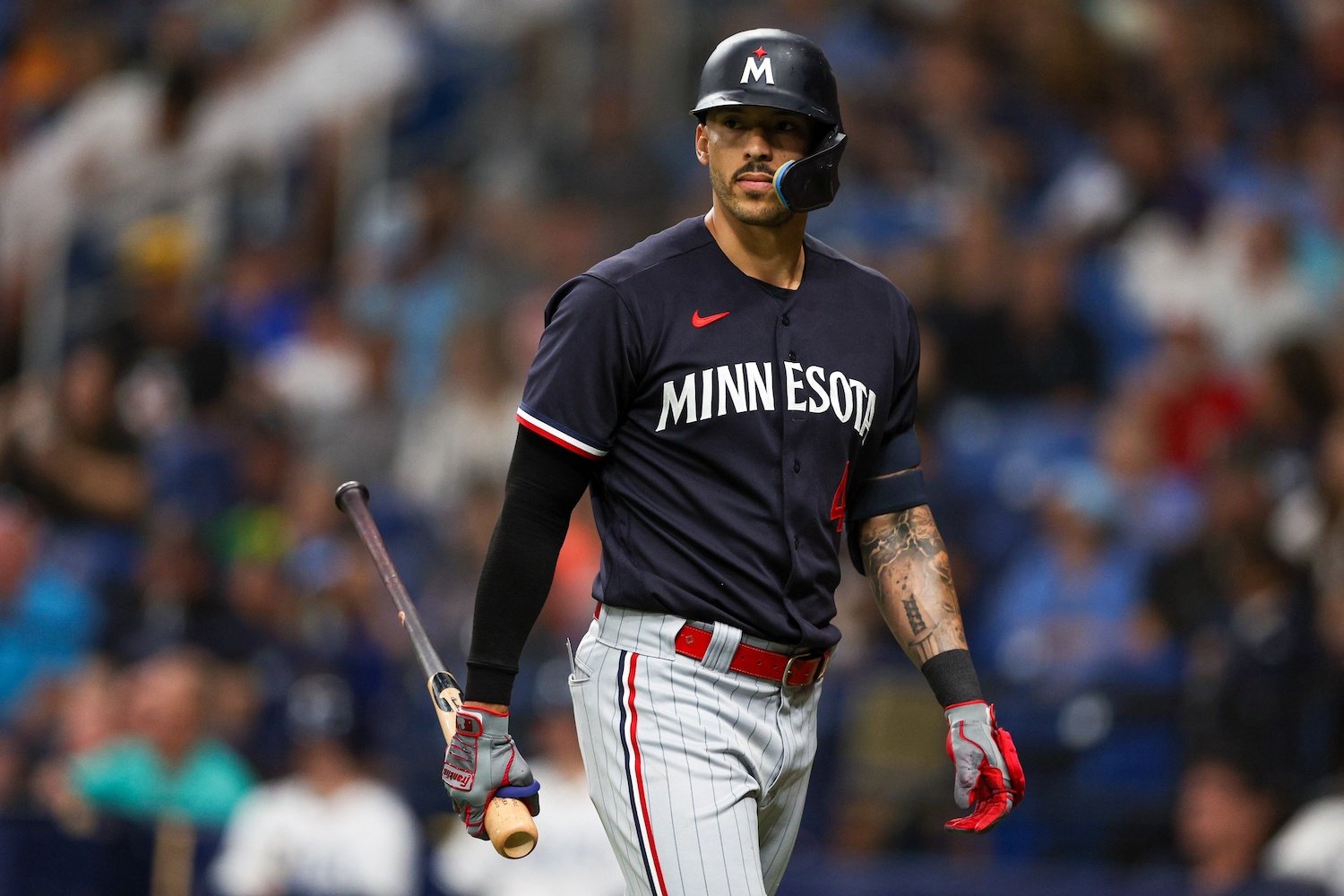 In so many ways, it feels like the stars are aligned for the Minnesota Twins here in 2023. They've managed to assemble one of the best pitching staffs in the league, with a rotation that piles up strikeouts and regularly goes deep. The Twins miraculously landed Carlos Correa during the offseason in one of the most stunning twists seen in the history of MLB free agency, or this franchise. A wave of incoming top prospects was set to imminently join the cause, blending with an established veteran core supported by remarkable depth to provide a seemingly sturdy offensive floor. Most importantly, as we're learning, the American League Central division has turned out to be an absolute atrocity that can seemingly be won with ease. A quality team could essentially lock the thing up by the deadline and start plotting for the postseason. All of which makes it so much more frustrating and deflating that this group of hitters seems hell-bent on derailing the team's quest. As the bats continually whiff away at the plate, they are threatening to swing and miss at an opportunity the likes of which we may not see again. An offense plagued by strikeouts Looking at their overall OPS+ and runs total doesn't quite paint an accurate picture for the Twins offense, which ranks merely as a little below-average in both categories. The timing of their production and distribution of their scoring have drastically minimized the unit's effectiveness in a practical sense. Minnesota's lineup has popped off for a few big games, but between those sporadic instances, it's been a sprawling desert of lackluster performance, providing the team with no real shot at winning games. The Twins have scored two or fewer runs in 25 of their 63 games (40%) and they've unsurprisingly gone 4-21 in those games, which singularly explains their sub-.500 record and lack of separation in this dreadful division. Several factors can be traced to this pitiful production, but none more so than the lineup's profound penchant for strikeouts. They are on their way to obliterating the all-time K record, and without corresponding immense power to offset the lack of contact, it's a trend that – at its current extreme – eliminates any chance of success. Veterans driving the downfall The youthful lumber infusion hasn't sparked the lineup as many hoped. Jose Miranda is in Triple-A and struggling there. Trevor Larnach is again struggling to stay on the field and produce consistently. Royce Lewis went ice-cold after a loud arrival. Nick Gordon fell completely flat before breaking his shin last month. However, the team wasn't depending on unproven youngsters to carry the load. These guys were supposed to be supplemental to the veteran core that the Twins assembled – one that looked clearly capable coming into the season, so long as it could avoid another catastrophic bout with injuries. This year's team certainly hasn't avoided injuries in the position-player corps, but that can hardly be pegged as the primary source of blame this time around. These players plain and simply aren't doing their jobs. Players like Christian Vazquez and Max Kepler are hitting vastly below their career benchmarks, sinking to baffling new lows. Byron Buxton has arguably been a liability overall, requiring full-time DH duty that limits the lineup while providing decent production that – mimicking the offense in general – comes in short spurts separated by long, costly slumps. Taking center stage in this scourge of ineptitude is, of course, Correa. He has been a replacement-level player as we approach the halfway mark, fresh off signing a $200 million contract that locked him in as the franchise's foundational building block for years to come. Flailing away at hittable pitches in the zone and churning out brutal, overmatched plate appearances, Correa has shown minimal signs of improvement. It's tough to get excited about Thursday's game, where he launched a long homer to snap an extended power drought, as a slump-breaker, given how Correa went directly back in the tank after his last flurry of life at the plate in mid-May. No easy answers The most vexing part of this offense's persisting poor performance: there aren't really any fixes available. Nearly all of their hopeful impact reinforcements have already arrived. The trade deadline isn't too far off, but acquiring one or two good hitters isn't going to resolve the lineup's pervasive issues, and – as we're all too aware – nothing is guaranteed in deadline pickups. Making a change at hitting coach is on the table, and I'd argue we might be getting close to that point. As I wrote a month ago, David Popkins doesn't have much of a leg to stand on as a 33-year-old plucked out of Single-A before last year. Correa's effusive praise for Popkins doesn't do much to help validate his efficacy, all things considered. Nor does the inability of numerous young hitters to make adjustments and emerge. Beyond that, there's this bizarre trend of veteran hitters across the roster striking out at levels that don't jibe with their track records. It was conspicuous, to me at least, that Dan Hayes' latest column in The Athletic included this tidbit: "One of those solutions could be adjusting how they approach their game plan. Under hitting coach David Popkins, the Twins are said to feature a technology-heavy approach, one championed by shortstop Carlos Correa. Last offseason, Correa described Popkins as the best hitting coach he’s ever had. But within the clubhouse, there’s some concern that not everyone is capable of handling the approach and the team may need to adjust how they prepare their hitters." That doesn't NOT sound like setting the stage for making a change. And really, a new voice couldn't hurt. But people need to be realistic about what is available at this juncture in terms of replacements, and how much an impact any hitting coach can actually have. A new instructor isn't a magical elixir. They can't go out there and swing the bat. Players like Correa and Buxton and Vazquez and Kepler aren't developing talents who need to be taught how to handle major-league pitchers. They're longtime veterans who earn millions based on their lengthy track records, which earned them the faith of a front office that bet big on them. Alas, those track records betray the continuing failures to launch we've seen from them and so many others. Some help might be on the way, but none of it will matter if a few of these cornerstone pieces, around whom the entire 2023 team was constructed, don't step up and start bearing the load. If they can't, they'll have to bear the weight of blowing one of the most prime opportunities you could ever be handed, while obliterating the morale of an embattled fan base trapped in some sadistic groundhog's day. For now, with 100 games remaining on the schedule, I choose to believe that the tides will turn, and the veterans on this team will awaken to some degree, enabling the Twins to pull away and avert all-out disaster. I choose that because the alternative is too depressing to contemplate.
- 89 comments
-
- 17
-
-
- carlos correa
- byron buxton
- (and 2 more)
-
And most frustratingly, entrenched veteran players are at the heart of the team's shortcomings. Image courtesy of Nathan Ray Seebeck-USA TODAY Sports In so many ways, it feels like the stars are aligned for the Minnesota Twins here in 2023. They've managed to assemble one of the best pitching staffs in the league, with a rotation that piles up strikeouts and regularly goes deep. The Twins miraculously landed Carlos Correa during the offseason in one of the most stunning twists seen in the history of MLB free agency, or this franchise. A wave of incoming top prospects was set to imminently join the cause, blending with an established veteran core supported by remarkable depth to provide a seemingly sturdy offensive floor. Most importantly, as we're learning, the American League Central division has turned out to be an absolute atrocity that can seemingly be won with ease. A quality team could essentially lock the thing up by the deadline and start plotting for the postseason. All of which makes it so much more frustrating and deflating that this group of hitters seems hell-bent on derailing the team's quest. As the bats continually whiff away at the plate, they are threatening to swing and miss at an opportunity the likes of which we may not see again. An offense plagued by strikeouts Looking at their overall OPS+ and runs total doesn't quite paint an accurate picture for the Twins offense, which ranks merely as a little below-average in both categories. The timing of their production and distribution of their scoring have drastically minimized the unit's effectiveness in a practical sense. Minnesota's lineup has popped off for a few big games, but between those sporadic instances, it's been a sprawling desert of lackluster performance, providing the team with no real shot at winning games. The Twins have scored two or fewer runs in 25 of their 63 games (40%) and they've unsurprisingly gone 4-21 in those games, which singularly explains their sub-.500 record and lack of separation in this dreadful division. Several factors can be traced to this pitiful production, but none more so than the lineup's profound penchant for strikeouts. They are on their way to obliterating the all-time K record, and without corresponding immense power to offset the lack of contact, it's a trend that – at its current extreme – eliminates any chance of success. Veterans driving the downfall The youthful lumber infusion hasn't sparked the lineup as many hoped. Jose Miranda is in Triple-A and struggling there. Trevor Larnach is again struggling to stay on the field and produce consistently. Royce Lewis went ice-cold after a loud arrival. Nick Gordon fell completely flat before breaking his shin last month. However, the team wasn't depending on unproven youngsters to carry the load. These guys were supposed to be supplemental to the veteran core that the Twins assembled – one that looked clearly capable coming into the season, so long as it could avoid another catastrophic bout with injuries. This year's team certainly hasn't avoided injuries in the position-player corps, but that can hardly be pegged as the primary source of blame this time around. These players plain and simply aren't doing their jobs. Players like Christian Vazquez and Max Kepler are hitting vastly below their career benchmarks, sinking to baffling new lows. Byron Buxton has arguably been a liability overall, requiring full-time DH duty that limits the lineup while providing decent production that – mimicking the offense in general – comes in short spurts separated by long, costly slumps. Taking center stage in this scourge of ineptitude is, of course, Correa. He has been a replacement-level player as we approach the halfway mark, fresh off signing a $200 million contract that locked him in as the franchise's foundational building block for years to come. Flailing away at hittable pitches in the zone and churning out brutal, overmatched plate appearances, Correa has shown minimal signs of improvement. It's tough to get excited about Thursday's game, where he launched a long homer to snap an extended power drought, as a slump-breaker, given how Correa went directly back in the tank after his last flurry of life at the plate in mid-May. No easy answers The most vexing part of this offense's persisting poor performance: there aren't really any fixes available. Nearly all of their hopeful impact reinforcements have already arrived. The trade deadline isn't too far off, but acquiring one or two good hitters isn't going to resolve the lineup's pervasive issues, and – as we're all too aware – nothing is guaranteed in deadline pickups. Making a change at hitting coach is on the table, and I'd argue we might be getting close to that point. As I wrote a month ago, David Popkins doesn't have much of a leg to stand on as a 33-year-old plucked out of Single-A before last year. Correa's effusive praise for Popkins doesn't do much to help validate his efficacy, all things considered. Nor does the inability of numerous young hitters to make adjustments and emerge. Beyond that, there's this bizarre trend of veteran hitters across the roster striking out at levels that don't jibe with their track records. It was conspicuous, to me at least, that Dan Hayes' latest column in The Athletic included this tidbit: "One of those solutions could be adjusting how they approach their game plan. Under hitting coach David Popkins, the Twins are said to feature a technology-heavy approach, one championed by shortstop Carlos Correa. Last offseason, Correa described Popkins as the best hitting coach he’s ever had. But within the clubhouse, there’s some concern that not everyone is capable of handling the approach and the team may need to adjust how they prepare their hitters." That doesn't NOT sound like setting the stage for making a change. And really, a new voice couldn't hurt. But people need to be realistic about what is available at this juncture in terms of replacements, and how much an impact any hitting coach can actually have. A new instructor isn't a magical elixir. They can't go out there and swing the bat. Players like Correa and Buxton and Vazquez and Kepler aren't developing talents who need to be taught how to handle major-league pitchers. They're longtime veterans who earn millions based on their lengthy track records, which earned them the faith of a front office that bet big on them. Alas, those track records betray the continuing failures to launch we've seen from them and so many others. Some help might be on the way, but none of it will matter if a few of these cornerstone pieces, around whom the entire 2023 team was constructed, don't step up and start bearing the load. If they can't, they'll have to bear the weight of blowing one of the most prime opportunities you could ever be handed, while obliterating the morale of an embattled fan base trapped in some sadistic groundhog's day. For now, with 100 games remaining on the schedule, I choose to believe that the tides will turn, and the veterans on this team will awaken to some degree, enabling the Twins to pull away and avert all-out disaster. I choose that because the alternative is too depressing to contemplate. View full article
-
The Twins brought home the California sunshine from their West Coast road trip, playing in gorgeous conditions under sunny skies all week at Target Field. Unfortunately, they also brought home their on-field trend of lethargic and lackluster play, which led to another losing week and growing rancor in the fanbase. Image courtesy of Matt Krohn-USA TODAY Sports Weekly Snapshot: Mon, 5/22 through Sun, 5/28 *** Record Last Week: 2-4 (Overall: 27-26) Run Differential Last Week: -1 (Overall: +42) Standing: 1st Place in AL Central (1.0 GA) Last Week's Game Results: Game 48 | SF 4, MIN 1: Ober Faceplants, Bats Can't Pick Him Up Game 49 | SF 4, MIN 3: Offense and Bullpen Combine for Brutal Loss Game 50 | MIN 7, SF 1: Twins Avoid Sweep in Error-filled Blowout Game 51 | TOR 3, MIN 1: Lineup Flounders Again as Slump Persists Game 52 | MIN 9, TOR 7: Twins Ride Rookies, Willi Castro to Big Win Game 53 | TOR 3, MIN 0: Another Embarrassing No-Show from Offense NEWS & NOTES The Twins are playing really badly right now, and it's getting worse not better. While one might've made an argument in the previous week that bad umpire calls and unfortunate breaks were key factors in letting several winnable games slip away, this past week was marked by undeniably poor play from front to back. Even Minnesota's two victories weren't all that impressive, with both sleepy teams kicking the ball around on Wednesday and the Twins nearly blowing a huge lead on Saturday. They need to start picking it up and they need to stop wasting time, as the sub-.500 Tigers are suddenly nipping at their heels, one game behind in the Central. It would be nice if the good news would begin to eclipse the bad news on the health front, but we're not there yet. The stalling start to Trevor Larnach's career sadly continues; the outfielder has now landed on the injured list due to a severe bout with pneumonia. The former first-round draft pick has seen his past two seasons majorly diminished by injuries, and is trying to finally establish himself at the big-league level. He's struggled to produce in sustained fashion for the Twins this year and now he's going to be down for awhile, which is especially unfavorable for Larnach given how well his replacement fared in a brief window. HIGHLIGHTS Let's start there: Matt Wallner delivered a definitive jolt for this lineup. He provided one of the best individual offensive performances from a Twin all season on Saturday when he went 4-for-4 with a homer and three RBIs, also gunning down a runner at second on a laser-beam throw. Wallner followed by going 2-for-2 with two walks on Sunday, reaching base in all eight plate appearances between the two games. The organization's reigning Minor League Player of the Year finally flashed his upside in a big way on the MLB stage, and it came at a crucial time, although he ironically was optioned after Sunday's game due to logistical factors. The stumbling Twins have been begging for someone to step up, and it's been the rookies and role player answering the call. Wallner wasn't alone over the weekend. Edouard Julien joined the fun on Saturday with three hits, including two doubles and a home run. Earlier in the week he went deep against San Francisco, and he sprinkled in four walks over his six starts. Amid some rookie lapses in the field and on the basepaths, Julien's biggest strengths were on display – namely, a disciplined plate approach and huge raw power to the opposite side and to left-center specifically. Also contributing to Saturday's night-run outburst (nearly all of which ended up being needed) was Willi Castro, who is himself making a strong case on the fringe of the roster with an impact that makes him "disturbingly valuable," as one might say. While the limitations of his game will prevent anyone from confusing him for a star, Castro's defensive versatility and ability to put together an occasion power-fueled hot stretch at the plate – as we've seen of late – makes him a solid asset, and puts him in good position to survive some tough upcoming roster decisions. Much like in the lineup, a few key fixtures are keeping the bullpen afloat while others lapse and languish. The rising star of the unit is Brock Stewart, whose out-of-nowhere emergence as essentially the team's most trusted setup man has been life-saving for a spiraling relief corps. Stewart still has yet to be charged with a run through 14 appearances, and he pulled off his biggest high-stakes acrobatic act yet on Saturday, averting disaster by recording three outs to fend off an inherited late threat against Toronto. The outing left him with the best WPA in the Twins bullpen (0.86), despite his arriving nearly a month into the season. Yes, Stewart's WPA bests even Jhoan Duran, but there's no doubting who is the king of this unit. While less unexpected, Duran's ongoing dominance is the steady foundation keeping the Twins bullpen from collapse. He notched four strikeouts over 1 ⅔ clean innings this past week, adding to his illustrious imprint in the record books. He set a new franchise record by reaching 104.6 MPH with his fastball on Wednesday, and also unleashed several triple-digit splitters in the same outing. Given how routine it has become, I almost have to remind myself from time to time: this is not normal. This is special. Duran is an incredibly rare breed and while there is a great deal of improvement needed around him in the bullpen, you can't ask for a better centerpiece. LOWLIGHTS As this lineup keeps displaying a consistent sense of explosiveness and potency, it's increasingly difficult to look past the player who's supposed to be its beating heart. Byron Buxton shook off some renewed knee soreness to start all six games last week, and he did hit a home run on Tuesday, but overall he was a net negative, finishing 4-for-25 with the following production outside of his homer: three singles, no runs scored, no RBIs, no walks, 10 strikeouts. We all know that Buxton is an inherently streaky player, and to some extent, analyzing him in the midst of a downswing like this is bound to underplay his value. But that sort of hints at the core point here, which is that Buxton's hot streaks aren't outweighing his slumps to the extent this team needs them to. Yes, he leads the team's position players in Win Probability Added – a faint accomplishment on this squad – thanks to some huge moments, but too often those moments feel like oases in a desert of surrounding emptiness. Last week was a perfect example. Buxton came through with the homer but otherwise yielded a flurry of outs, stranded runners, and low-quality at-bats. He looks like he's flat-out guessing on almost every pitch, with no plan or protocol in the box. Making Buxton's latest swoon even tougher to stomach is the growing inconvenience of his situation and its collateral implications. As the offense continues to repeatedly short-circuit and the defensive miscues mount, it gets harder and harder to ignore the elephant the room: accommodating Buxton's needs means the Twins are putting one of their best defensive players at DH everyday while in turn being forced to run out sub-par hitters (i.e. Michael A. Taylor, who went 2-for-19 with 12 strikeouts last week) and make tough defensive concessions like playing Castro in center field or Julien at second base. Alas, the situation shows no signs of changing. By all accounts, the Twins feel that this arrangement is the only way to keep Buxton on the field, and that's difficult to argue against in the wake of another knee scare. Minnesota needs Buxton in the lineup, however they can get him there, so long as he's healthy. They just need him to be better, and to find a way to mitigate these hideous slumps, even if that means taking a physical break. Of course the same goes without saying for Carlos Correa, who himself apparently dodged an injury scare last week but continues to not click at the plate while looking totally out of wack. Following a 1-for-4 on Sunday, his slash line sits at .216/.308/.392 and he's on pace to finish the season with 1.2 fWAR, which would be lower than Gary Sánchez posted in 2022. On the pitching side, Jorge López has officially established himself as a big problem. His brilliant April, in which he allowed zero earned runs, has given way to a horrific May in which the right-hander has an 8.10 ERA and 1.042 OPS allowed. His struggles snowballed this past week, with López taking the loss on Tuesday when he gave up a go-ahead two-run homer, and then threatening to turn a lopsided win on its head Saturday, giving up three earned runs while recording no outs in the ninth. Sadly, López looks every bit the discombobulated mess that he did in the second half for the Twins last year. His confidence has unraveled and his body language on the mound has been alarming. If there's a positive it's that his velocity and stuff look okay, suggesting the issues could be resolvable, but I'm not sure how anyone who's watched him much as a Twin can have any faith in his mental fortitude. Given the integral role López plays in the way this bullpen was designed, his implosion would have dire consequences if it continues this way. Durán cannot carry the entire load by himself (again). TRENDING STORYLINE Reinforcements are on the way. The team announced after Sunday's game that Max Kepler and Royce Lewis will rejoin the team in Houston this week, with Garlick and Wallner going down to make room. Polanco also appears to be getting close after working out on the field alongside Kepler on Sunday. Swapping in Kepler for Wallner isn't the most exciting move, given how well Wallner was going and how mediocre Kepler's been for the past 20 years or so, but there was a little choice. What IS exciting is the highly anticipated return of Lewis, who proclaimed himself to be at 120 percent, after posting an absurd .333/.371/.727 slash line with four homers and 10 RBIs in eight games at Triple-A. The Twins badly need a spark. It's hard to imagine many individuals more equipped to provide it, on multiple levels, although you don't want to put too much pressure on the kid. LOOKING AHEAD If the Twins don't start playing better baseball in a hurry, this is going to get ugly. They're off to Houston for a three-game series versus the dynastic (albeit underperforming Astros) and then it's back home for four against the Guardians, who still may pose the greatest long-term threat in the division. MONDAY, 5/29: TWINS @ ASTROS – RHP J.P. France v. RHP Sonny Gray TUESDAY, 5/30: TWINS @ ASTROS – RHP Brandon Bielak v. RHP Joe Ryan WEDNESDAY, 5/31: TWINS @ ASTROS – RHP Hunter Brown v. RHP Louie Varland THURSDAY, 6/1: GUARDIANS @ TWINS – RHP Tanner Bibee v. RHP Pablo Lopez FRIDAY, 6/2: GUARDIANS @ TWINS – RHP Hunter Gaddis v. RHP Bailey Ober SATURDAY, 6/3: GUARDIANS @ TWINS – LHP Logan Allen v. RHP Sonny Gray SUNDAY, 6/4: GUARDIANS @ TWINS – RHP Cal Quantrill v. RHP Joe Ryan View full article
-
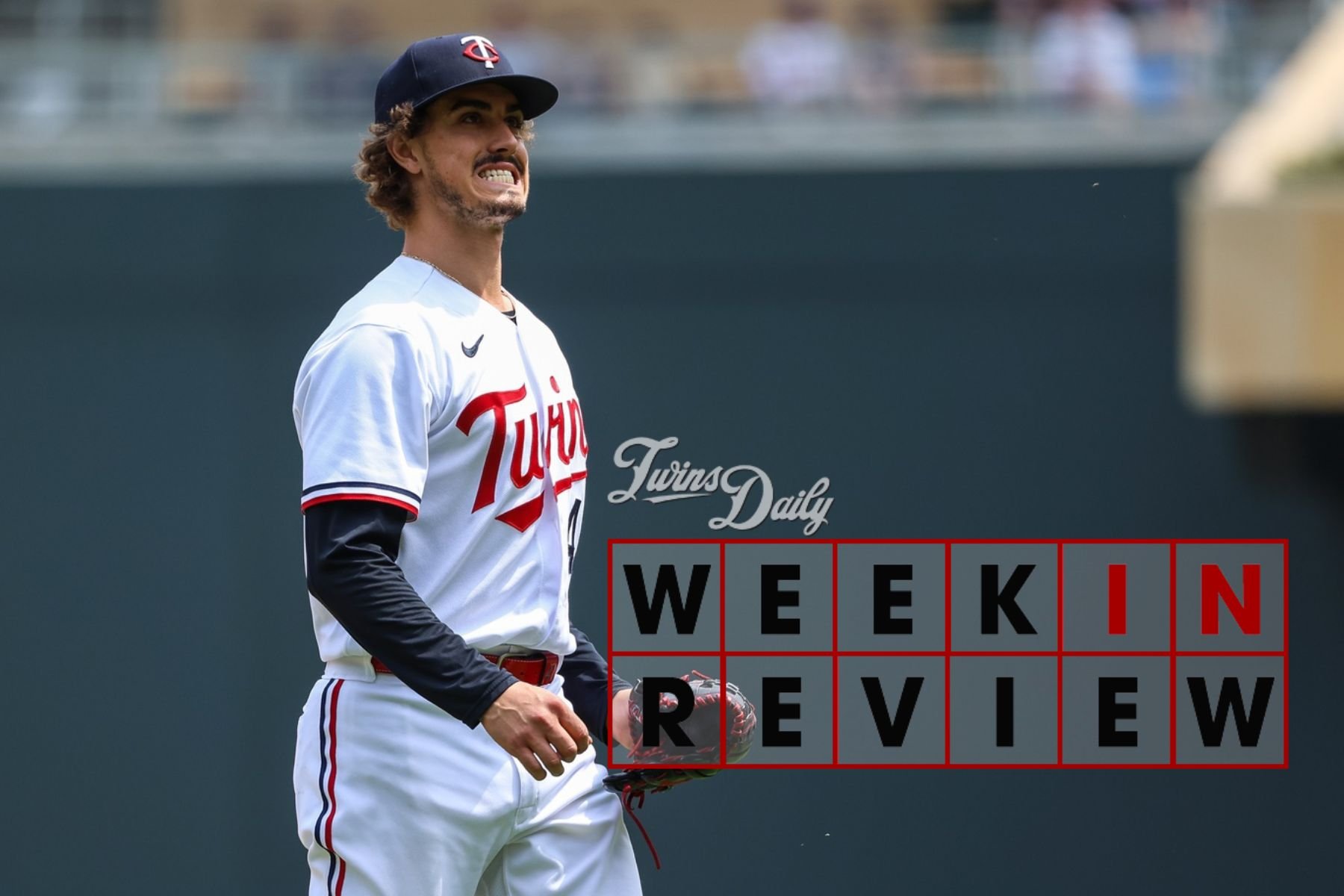 Weekly Snapshot: Mon, 5/22 through Sun, 5/28 *** Record Last Week: 2-4 (Overall: 27-26) Run Differential Last Week: -1 (Overall: +42) Standing: 1st Place in AL Central (1.0 GA) Last Week's Game Results: Game 48 | SF 4, MIN 1: Ober Faceplants, Bats Can't Pick Him Up Game 49 | SF 4, MIN 3: Offense and Bullpen Combine for Brutal Loss Game 50 | MIN 7, SF 1: Twins Avoid Sweep in Error-filled Blowout Game 51 | TOR 3, MIN 1: Lineup Flounders Again as Slump Persists Game 52 | MIN 9, TOR 7: Twins Ride Rookies, Willi Castro to Big Win Game 53 | TOR 3, MIN 0: Another Embarrassing No-Show from Offense NEWS & NOTES The Twins are playing really badly right now, and it's getting worse not better. While one might've made an argument in the previous week that bad umpire calls and unfortunate breaks were key factors in letting several winnable games slip away, this past week was marked by undeniably poor play from front to back. Even Minnesota's two victories weren't all that impressive, with both sleepy teams kicking the ball around on Wednesday and the Twins nearly blowing a huge lead on Saturday. They need to start picking it up and they need to stop wasting time, as the sub-.500 Tigers are suddenly nipping at their heels, one game behind in the Central. It would be nice if the good news would begin to eclipse the bad news on the health front, but we're not there yet. The stalling start to Trevor Larnach's career sadly continues; the outfielder has now landed on the injured list due to a severe bout with pneumonia. The former first-round draft pick has seen his past two seasons majorly diminished by injuries, and is trying to finally establish himself at the big-league level. He's struggled to produce in sustained fashion for the Twins this year and now he's going to be down for awhile, which is especially unfavorable for Larnach given how well his replacement fared in a brief window. HIGHLIGHTS Let's start there: Matt Wallner delivered a definitive jolt for this lineup. He provided one of the best individual offensive performances from a Twin all season on Saturday when he went 4-for-4 with a homer and three RBIs, also gunning down a runner at second on a laser-beam throw. Wallner followed by going 2-for-2 with two walks on Sunday, reaching base in all eight plate appearances between the two games. The organization's reigning Minor League Player of the Year finally flashed his upside in a big way on the MLB stage, and it came at a crucial time, although he ironically was optioned after Sunday's game due to logistical factors. The stumbling Twins have been begging for someone to step up, and it's been the rookies and role player answering the call. Wallner wasn't alone over the weekend. Edouard Julien joined the fun on Saturday with three hits, including two doubles and a home run. Earlier in the week he went deep against San Francisco, and he sprinkled in four walks over his six starts. Amid some rookie lapses in the field and on the basepaths, Julien's biggest strengths were on display – namely, a disciplined plate approach and huge raw power to the opposite side and to left-center specifically. Also contributing to Saturday's night-run outburst (nearly all of which ended up being needed) was Willi Castro, who is himself making a strong case on the fringe of the roster with an impact that makes him "disturbingly valuable," as one might say. While the limitations of his game will prevent anyone from confusing him for a star, Castro's defensive versatility and ability to put together an occasion power-fueled hot stretch at the plate – as we've seen of late – makes him a solid asset, and puts him in good position to survive some tough upcoming roster decisions. Much like in the lineup, a few key fixtures are keeping the bullpen afloat while others lapse and languish. The rising star of the unit is Brock Stewart, whose out-of-nowhere emergence as essentially the team's most trusted setup man has been life-saving for a spiraling relief corps. Stewart still has yet to be charged with a run through 14 appearances, and he pulled off his biggest high-stakes acrobatic act yet on Saturday, averting disaster by recording three outs to fend off an inherited late threat against Toronto. The outing left him with the best WPA in the Twins bullpen (0.86), despite his arriving nearly a month into the season. Yes, Stewart's WPA bests even Jhoan Duran, but there's no doubting who is the king of this unit. While less unexpected, Duran's ongoing dominance is the steady foundation keeping the Twins bullpen from collapse. He notched four strikeouts over 1 ⅔ clean innings this past week, adding to his illustrious imprint in the record books. He set a new franchise record by reaching 104.6 MPH with his fastball on Wednesday, and also unleashed several triple-digit splitters in the same outing. Given how routine it has become, I almost have to remind myself from time to time: this is not normal. This is special. Duran is an incredibly rare breed and while there is a great deal of improvement needed around him in the bullpen, you can't ask for a better centerpiece. LOWLIGHTS As this lineup keeps displaying a consistent sense of explosiveness and potency, it's increasingly difficult to look past the player who's supposed to be its beating heart. Byron Buxton shook off some renewed knee soreness to start all six games last week, and he did hit a home run on Tuesday, but overall he was a net negative, finishing 4-for-25 with the following production outside of his homer: three singles, no runs scored, no RBIs, no walks, 10 strikeouts. We all know that Buxton is an inherently streaky player, and to some extent, analyzing him in the midst of a downswing like this is bound to underplay his value. But that sort of hints at the core point here, which is that Buxton's hot streaks aren't outweighing his slumps to the extent this team needs them to. Yes, he leads the team's position players in Win Probability Added – a faint accomplishment on this squad – thanks to some huge moments, but too often those moments feel like oases in a desert of surrounding emptiness. Last week was a perfect example. Buxton came through with the homer but otherwise yielded a flurry of outs, stranded runners, and low-quality at-bats. He looks like he's flat-out guessing on almost every pitch, with no plan or protocol in the box. Making Buxton's latest swoon even tougher to stomach is the growing inconvenience of his situation and its collateral implications. As the offense continues to repeatedly short-circuit and the defensive miscues mount, it gets harder and harder to ignore the elephant the room: accommodating Buxton's needs means the Twins are putting one of their best defensive players at DH everyday while in turn being forced to run out sub-par hitters (i.e. Michael A. Taylor, who went 2-for-19 with 12 strikeouts last week) and make tough defensive concessions like playing Castro in center field or Julien at second base. Alas, the situation shows no signs of changing. By all accounts, the Twins feel that this arrangement is the only way to keep Buxton on the field, and that's difficult to argue against in the wake of another knee scare. Minnesota needs Buxton in the lineup, however they can get him there, so long as he's healthy. They just need him to be better, and to find a way to mitigate these hideous slumps, even if that means taking a physical break. Of course the same goes without saying for Carlos Correa, who himself apparently dodged an injury scare last week but continues to not click at the plate while looking totally out of wack. Following a 1-for-4 on Sunday, his slash line sits at .216/.308/.392 and he's on pace to finish the season with 1.2 fWAR, which would be lower than Gary Sánchez posted in 2022. On the pitching side, Jorge López has officially established himself as a big problem. His brilliant April, in which he allowed zero earned runs, has given way to a horrific May in which the right-hander has an 8.10 ERA and 1.042 OPS allowed. His struggles snowballed this past week, with López taking the loss on Tuesday when he gave up a go-ahead two-run homer, and then threatening to turn a lopsided win on its head Saturday, giving up three earned runs while recording no outs in the ninth. Sadly, López looks every bit the discombobulated mess that he did in the second half for the Twins last year. His confidence has unraveled and his body language on the mound has been alarming. If there's a positive it's that his velocity and stuff look okay, suggesting the issues could be resolvable, but I'm not sure how anyone who's watched him much as a Twin can have any faith in his mental fortitude. Given the integral role López plays in the way this bullpen was designed, his implosion would have dire consequences if it continues this way. Durán cannot carry the entire load by himself (again). TRENDING STORYLINE Reinforcements are on the way. The team announced after Sunday's game that Max Kepler and Royce Lewis will rejoin the team in Houston this week, with Garlick and Wallner going down to make room. Polanco also appears to be getting close after working out on the field alongside Kepler on Sunday. Swapping in Kepler for Wallner isn't the most exciting move, given how well Wallner was going and how mediocre Kepler's been for the past 20 years or so, but there was a little choice. What IS exciting is the highly anticipated return of Lewis, who proclaimed himself to be at 120 percent, after posting an absurd .333/.371/.727 slash line with four homers and 10 RBIs in eight games at Triple-A. The Twins badly need a spark. It's hard to imagine many individuals more equipped to provide it, on multiple levels, although you don't want to put too much pressure on the kid. LOOKING AHEAD If the Twins don't start playing better baseball in a hurry, this is going to get ugly. They're off to Houston for a three-game series versus the dynastic (albeit underperforming Astros) and then it's back home for four against the Guardians, who still may pose the greatest long-term threat in the division. MONDAY, 5/29: TWINS @ ASTROS – RHP J.P. France v. RHP Sonny Gray TUESDAY, 5/30: TWINS @ ASTROS – RHP Brandon Bielak v. RHP Joe Ryan WEDNESDAY, 5/31: TWINS @ ASTROS – RHP Hunter Brown v. RHP Louie Varland THURSDAY, 6/1: GUARDIANS @ TWINS – RHP Tanner Bibee v. RHP Pablo Lopez FRIDAY, 6/2: GUARDIANS @ TWINS – RHP Hunter Gaddis v. RHP Bailey Ober SATURDAY, 6/3: GUARDIANS @ TWINS – LHP Logan Allen v. RHP Sonny Gray SUNDAY, 6/4: GUARDIANS @ TWINS – RHP Cal Quantrill v. RHP Joe Ryan
- 29 comments
-
- 3
-
-

-
- byron buxton
- matt wallner
- (and 3 more)
-
Turning the Clock Back 20 Years for a Division-Winning Recipe
Nick Nelson posted an article in Twins
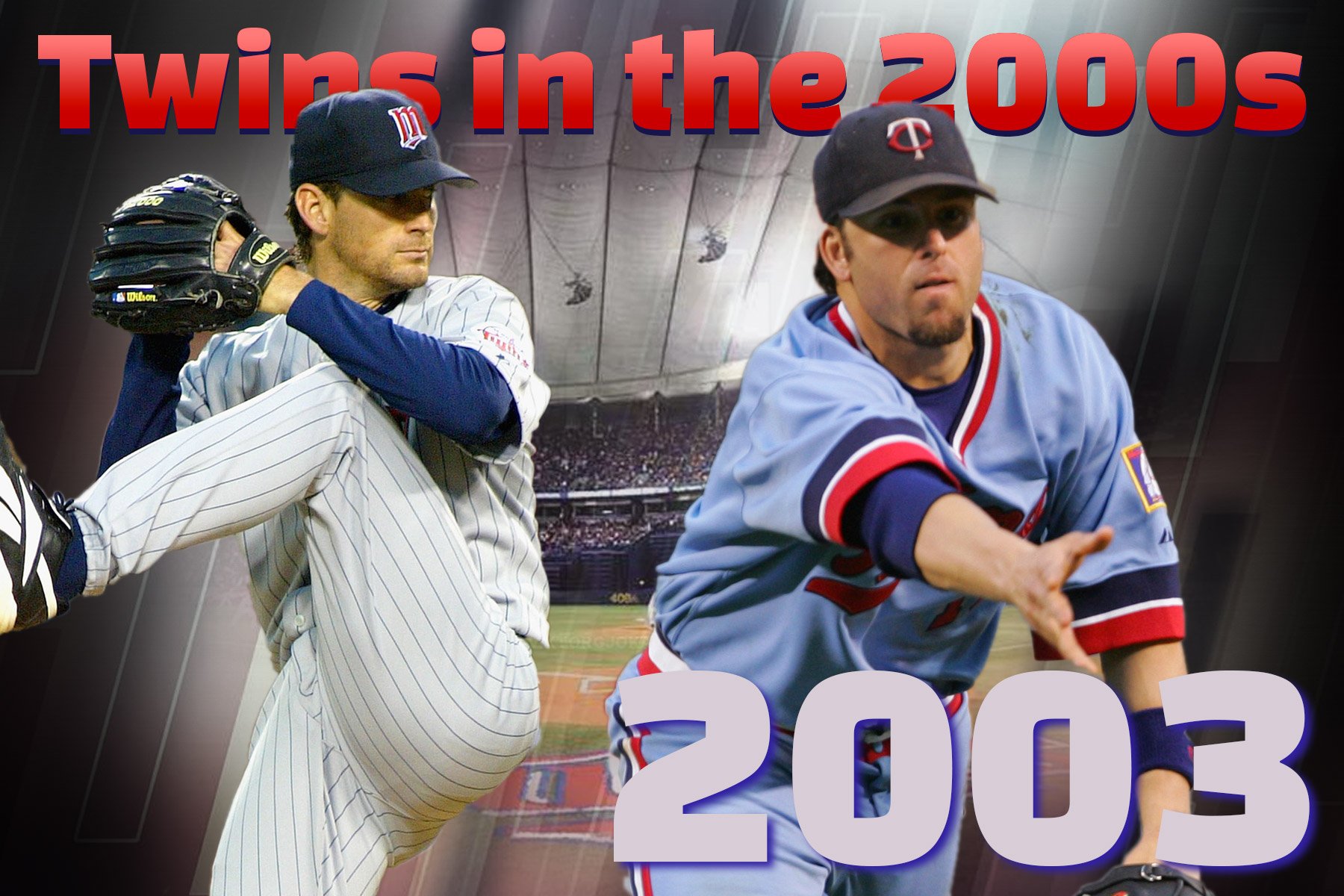 Let's set the stage as we transport back to a time in Twins history that is etched in my mind, but probably considered ancient by many reading this. The year is 2003. Ron Gardenhire is in his second year at the helm as Twins manager, fresh off the team's first playoff berth in a decade and an ALCS run. His team gets off to an uninspiring start and slumps into the All-Star break, trailing in the division by 7 ½ games in mid-July when Terry Ryan pulls the trigger on one of the most legendary deadline trades in franchise history. Looking back now at that fascinating journey of a 2003 season, there are a few characteristics that strike me in relation to this year's Twins team. Good pitching, bad hitting The 2003 Twins were also carried by their pitching staff, although the strengths were reversed. That team had more of an ordinary rotation, at least up until Johan Santana finally got unleashed as a starter in July, but the bullpen was absolute dynamite. Led by All-Star closer Eddie Guardado and rejuvenated setup man LaTroy Hawkins, Twins relievers ranked second in the AL in WPA for the season. The offense? Not so helpful. At the All-Star break, Twins hitters ranked 18th in the majors in runs scored and 21st in WPA. As the losses mounted in July – eight straight heading into the break – it was clear the team needed a spark. One conspicuous weakness in the lineup, at least in the eyes of Ryan and Gardenhire, was the lack of a prototypical guy at the top of the order. Lacking a traditional leadoff hitter Since the start of the previous season when Gardenhire took over, Jacque Jones had been serving as Minnesota's regular leadoff hitter. He was hardly of the typical mold: an extreme free-swinging power hitter with lowly walk rates and middling on-base percentages. The Twins seemed to like the fact that Jones presented an immediate threat, able to put the Twins up 1-0 right out of the gates (not unlike Max Kepler today), but even Gardy – who hardly embraced the value of OBP value atop the lineup – yearned for a more traditional catalyst who could work counts and control the strike zone. This year's Twins also find themselves without a traditional leadoff hitter, with odd fits like Kepler and Joey Gallo regularly rotating through. Similar to the 2003 team, there's also a noticeable lack of quality right-handed options, a perception that back then compelled Gardenhire to (painfully) bat Jones leadoff against lefties, against whom he horribly struggled. I'm hopeful that the 2023 Twins will receive a big jolt in this regard with the looming return of Royce Lewis, who has the makings of a righty-swinging spark-plug atop the order. But that's a lot of pressure for an untested rookie. The Twins might need to look outside for their lineup jolt, and the 2003 season offers one of the greatest precedents ever. Upgrading with a big trade at the deadline On July 16th, the Twins traded outfielder Bobby Kielty for Toronto's Shannon Stewart, a reputed leadoff-hitting maven who had batted .302 with a .369 OBP in his first seven seasons with the Blue Jays. Stewart played really, really well for the Twins. He slashed .322/.384/.470, ranking fifth overall among Minnesota's position players in both fWAR and bWAR despite spending only 65 games with the team. His 2.17 WPA in that sample led all Twins players for the season. He certainly didn't do it single-handedly, but Stewart helped lead a massive turnaround for the offense. After ranking 18th in runs scored and 21st in Win Probability Added leading up the trade, the Twins ranked fifth in runs and fourth in WPA with Stewart aboard. The timing of the team's revival lent itself to a narrative that gained widespread attention – to the point where Stewart ended up ranking FOURTH in the AL MVP voting. The three ahead of him? Álex Rodríguez, Carlos Delgado and Jorge Posada, all of whom had 5+ fWAR seasons compared to Stewart's relatively modest 3.0 mark. Does his high finish in the MVP balloting overstate his individual contribution? Definitely. But at the same time, this historical example serves as a great reminder of how one big offensive addition can make an outsized impact and energize the surrounding lineup. Again: not to put too much pressure on the kid, but I view Lewis as a talent capable of having such an effect. And I certainly think it's plausible that the Twins end up fishing in the deep waters at the upcoming trade deadline. I'm not buying into anonymous rumors of Shohei Ohtani interest, but for various reasons – redundant high-minors depth, urgency to boost fan interest, and developing clarity of needs – I believe the Twins front office is poised to make a big splash when the time comes. While fans have a tendency to exaggerate the practical impact of deadline acquisitions, the Stewart trade is a fun reminder of what these moves can look like at their absolute peak of short-term success. One other "foot note" Since we're on the subject of Stewart, I feel compelled to touch on one other note in light of recent news, and ... it's kind of a downer. Although the left fielder's Twins career started in brilliant fashion, earning him a contract extension the following offseason, its ending was far less glamorous. Stewart developed a foot condition called plantar fasciitis in 2004, which limited him to 92 games that year and continued to haunt him in the following two campaigns, suppressing his production and availability. If the ailment sounds freshly familiar, it's because Carlos Correa was also diagnosed just two days ago with plantar fasciitis, along with a muscle strain, after rounding first base awkwardly on a double earlier in the week. I'm not trying to be a doomsayer regarding Correa's prognosis or outlook. Stewart's case was a more severe one where the plantar fasciitis became chronic and affected both feet. There's no reason to think Correa's issue will even approach that level. At the same time, plantar fasciitis is no joke. At FanGraphs on Thursday, Jay Jaffe wrote about Correa's stalled recovery from a slow start, and cautioned against expecting the shortstop back in a couple of days, even in a mostly optimistic scenario. "The Baseball Prospectus Recovery Dashboard contains 13 instances of players going on the IL for plantar fasciitis since 2016 (though none for 2020). Those 13 stints averaged 35 days, with a low of 12 (John Lackey in 2016), a median of 30, and a high of 85 (Harrison Bader last year)" We'll see what happens with Correa, who himself has a chance (one might argue an obligation) to be the internal version of the lineup-reviving sparkplug we are discussing here. But as we look back at the encouraging aspects of the 2003 season and the iconic Stewart trade, we also can't ignore how the more discouraging parts hit close to home at the moment.
 -
The 2003 Minnesota Twins were struggling offensively and failing to separate in a weak division. Sound familiar? The Twins were lagging at the All-Star break before an unforgettable pre-deadline acquisition jolted the lineup to life and propelled Minnesota to a second straight division title. Maybe there's some inspiration to be drawn with respect to this year's squad. Let's set the stage as we transport back to a time in Twins history that is etched in my mind, but probably considered ancient by many reading this. The year is 2003. Ron Gardenhire is in his second year at the helm as Twins manager, fresh off the team's first playoff berth in a decade and an ALCS run. His team gets off to an uninspiring start and slumps into the All-Star break, trailing in the division by 7 ½ games in mid-July when Terry Ryan pulls the trigger on one of the most legendary deadline trades in franchise history. Looking back now at that fascinating journey of a 2003 season, there are a few characteristics that strike me in relation to this year's Twins team. Good pitching, bad hitting The 2003 Twins were also carried by their pitching staff, although the strengths were reversed. That team had more of an ordinary rotation, at least up until Johan Santana finally got unleashed as a starter in July, but the bullpen was absolute dynamite. Led by All-Star closer Eddie Guardado and rejuvenated setup man LaTroy Hawkins, Twins relievers ranked second in the AL in WPA for the season. The offense? Not so helpful. At the All-Star break, Twins hitters ranked 18th in the majors in runs scored and 21st in WPA. As the losses mounted in July – eight straight heading into the break – it was clear the team needed a spark. One conspicuous weakness in the lineup, at least in the eyes of Ryan and Gardenhire, was the lack of a prototypical guy at the top of the order. Lacking a traditional leadoff hitter Since the start of the previous season when Gardenhire took over, Jacque Jones had been serving as Minnesota's regular leadoff hitter. He was hardly of the typical mold: an extreme free-swinging power hitter with lowly walk rates and middling on-base percentages. The Twins seemed to like the fact that Jones presented an immediate threat, able to put the Twins up 1-0 right out of the gates (not unlike Max Kepler today), but even Gardy – who hardly embraced the value of OBP value atop the lineup – yearned for a more traditional catalyst who could work counts and control the strike zone. This year's Twins also find themselves without a traditional leadoff hitter, with odd fits like Kepler and Joey Gallo regularly rotating through. Similar to the 2003 team, there's also a noticeable lack of quality right-handed options, a perception that back then compelled Gardenhire to (painfully) bat Jones leadoff against lefties, against whom he horribly struggled. I'm hopeful that the 2023 Twins will receive a big jolt in this regard with the looming return of Royce Lewis, who has the makings of a righty-swinging spark-plug atop the order. But that's a lot of pressure for an untested rookie. The Twins might need to look outside for their lineup jolt, and the 2003 season offers one of the greatest precedents ever. Upgrading with a big trade at the deadline On July 16th, the Twins traded outfielder Bobby Kielty for Toronto's Shannon Stewart, a reputed leadoff-hitting maven who had batted .302 with a .369 OBP in his first seven seasons with the Blue Jays. Stewart played really, really well for the Twins. He slashed .322/.384/.470, ranking fifth overall among Minnesota's position players in both fWAR and bWAR despite spending only 65 games with the team. His 2.17 WPA in that sample led all Twins players for the season. He certainly didn't do it single-handedly, but Stewart helped lead a massive turnaround for the offense. After ranking 18th in runs scored and 21st in Win Probability Added leading up the trade, the Twins ranked fifth in runs and fourth in WPA with Stewart aboard. The timing of the team's revival lent itself to a narrative that gained widespread attention – to the point where Stewart ended up ranking FOURTH in the AL MVP voting. The three ahead of him? Álex Rodríguez, Carlos Delgado and Jorge Posada, all of whom had 5+ fWAR seasons compared to Stewart's relatively modest 3.0 mark. Does his high finish in the MVP balloting overstate his individual contribution? Definitely. But at the same time, this historical example serves as a great reminder of how one big offensive addition can make an outsized impact and energize the surrounding lineup. Again: not to put too much pressure on the kid, but I view Lewis as a talent capable of having such an effect. And I certainly think it's plausible that the Twins end up fishing in the deep waters at the upcoming trade deadline. I'm not buying into anonymous rumors of Shohei Ohtani interest, but for various reasons – redundant high-minors depth, urgency to boost fan interest, and developing clarity of needs – I believe the Twins front office is poised to make a big splash when the time comes. While fans have a tendency to exaggerate the practical impact of deadline acquisitions, the Stewart trade is a fun reminder of what these moves can look like at their absolute peak of short-term success. One other "foot note" Since we're on the subject of Stewart, I feel compelled to touch on one other note in light of recent news, and ... it's kind of a downer. Although the left fielder's Twins career started in brilliant fashion, earning him a contract extension the following offseason, its ending was far less glamorous. Stewart developed a foot condition called plantar fasciitis in 2004, which limited him to 92 games that year and continued to haunt him in the following two campaigns, suppressing his production and availability. If the ailment sounds freshly familiar, it's because Carlos Correa was also diagnosed just two days ago with plantar fasciitis, along with a muscle strain, after rounding first base awkwardly on a double earlier in the week. I'm not trying to be a doomsayer regarding Correa's prognosis or outlook. Stewart's case was a more severe one where the plantar fasciitis became chronic and affected both feet. There's no reason to think Correa's issue will even approach that level. At the same time, plantar fasciitis is no joke. At FanGraphs on Thursday, Jay Jaffe wrote about Correa's stalled recovery from a slow start, and cautioned against expecting the shortstop back in a couple of days, even in a mostly optimistic scenario. "The Baseball Prospectus Recovery Dashboard contains 13 instances of players going on the IL for plantar fasciitis since 2016 (though none for 2020). Those 13 stints averaged 35 days, with a low of 12 (John Lackey in 2016), a median of 30, and a high of 85 (Harrison Bader last year)" We'll see what happens with Correa, who himself has a chance (one might argue an obligation) to be the internal version of the lineup-reviving sparkplug we are discussing here. But as we look back at the encouraging aspects of the 2003 season and the iconic Stewart trade, we also can't ignore how the more discouraging parts hit close to home at the moment. View full article
-
Week in Review: Wasted Opportunities Out West
Nick Nelson replied to Nick Nelson's topic in Twins Daily Front Page News
Not sure this is helping you make your point. Dave Kingman was a 3x All-Star, and Adam Dunn 2x. We've gotta get past the idea that there's only one model for successful offensive production. -
Ranking the Twins' Internal Relief Options
Nick Nelson posted a topic in Twins Daily Front Page News
It's that time of year again: where we come to recognize a rapidly degrading bullpen, and start frantically searching outside for help. The trade deadline is still two months away, so let's review some of the more immediate options available to help steady a struggling relief corps. Image courtesy of Jesse Johnson-USA TODAY Sports The Twins have been letting a lot of winnable games slip away. In terms of what they can do to change that, "improved relief pitching" ranks decidedly second behind "hitting better." But the latter, for now, simply needs to work itself out. The lineup is what it is. The bullpen is more amorphous and fluid. Relief hierarchies are often shifting and – as we've seen – certain spots can be seen as interchangeable. The Twins have been churning through relievers at a high rate with two main goals: keeping fresh arms available to consume innings, and uncovering hidden gems to elevate into bigger roles. The latter focus is growing more urgent as attrition and tribulation strike Minnesota's late-inning stable. While Jhoan Duran and Jorge López have generally been rock solid, stability is elusive elsewhere. Griffin Jax is continually fumbling in the bag in big spots. Caleb Thielbar and Jorge Alcalá are on the injured list. Emilio Pagán is ... Emilio Pagán. The Twins are experiencing an early payoff with one of their sleeper gambles, as Brock Stewart blossoms into a high-leverage performer. They're hoping they've got something in José De León, too, but the jury's still very much out there. Having already spent those two bullets, what's left? Between the waiver claims, prospects, and wild cards, here are eight internal candidates to join the bullpen, in order of how appealing they are at this moment: 1. Oliver Ortega, RHP The Twins claimed Ortega off waivers from the Angels in January, then DFA'ed him four days later, outrighting him to Triple-A after he went unclaimed. A nifty bit of roster maneuvering, and the result is that Ortega stands ready in the minors as a 26-year-old with considerable big-league experience. In his first appearance for the Saints, on April 2nd, Ortega gave up two runs in one inning. Then, he spent a month on the injured list. Since being activated on May 3rd, he has allowed zero runs on three hits in 7 ⅓ innings. I'm not sure how much upside Ortega really offers – a Stewart-esque emergence is probably wishful thinking – but he throws hard and he's a solid piece of established depth. Last year with the Angels he posted a 3.71 ERA in 34 innings. The Twins would need to make room to re-add him to the 40-man roster. 2. Jordan Balazovic, RHP Balazovic's comeback campaign got off to a rocky start in spring training, but now – after a slight delay – it does seem to be coming together. The big righty has looked very good at Triple-A, registering a 3.18 ERA and 12.3 K/9 rate in 22 ⅔ innings. He has allowed 17 hits and only two home runs. His usage has been interesting. After building up at first with some short-burst outings, the Twins have basically stretched Balazovic out to the point where he's throwing 75 pitches and 3-to-4 innings each fifth or sixth day as a general cadence. They're clearly not grooming him for a traditional starting role, but Balazovic could easily enter the fold as a multi-inning power arm, which has immense value in today's game. Of course, that's putting the cart before the horse. We're talking about a month's worth of good performance from a pitcher who struggled mightily in Triple-A throughout last year. But before that, he was widely viewed as the Twins' best pitching prospect. At 24, he looks ready, and since he's already on the 40-man roster it's a simple logistical arrangement.. With his outstanding performance in St. Paul, Balazovic may be punching his ticket to the majors. (And yes, as always, the pun was intended.) 3. Brent Headrick, LHP By now Headrick is familiar – he's made a strong impression as an out-of-nowhere 40-man roster addition during the offseason who splashed onto the scene in April with some very strong long-relief outings. There's much to like about Headrick. He's handled everything that's been thrown at him with aplomb, rising from Single-A to the majors in a seamless flurry. He's got legitimate bat-missing stuff from the left side – especially valuable with Caleb Thielbar down and Jovani Moran failing to inspire confidence. The reason Headrick isn't higher on this list is simply because the Twins seem committed to keeping him stretched as a starter, which is understandable given the attrition their rotation has faced. He's a nice piece to have around as a long reliever, but as we've seen, that's a tough practical proposition on the roster. 4. Blayne Enlow, RHP Enlow was, ironically, the player who got designated for assignment when the Twins claimed Ortega back in January. It appeared the front office was giving up on its very first pitching development project – a high school star snagged with a big bonus in their inaugural draft (2017). It's been a winding road for Enlow, who was derailed by Tommy John surgery and the lost pandemic year. Maybe that's why he was able to pass through waivers and stay in the organization, much to the Twins' favor. Back at Double-A, he's been outstanding in a starting role, posting a 3.28 ERA and 47-to-10 K/BB ratio in 35 ⅔ innings. For now the Twins are keeping him in such a regimen – his last time out he threw 81 pitches, striking out 10 over 5 ⅓ innings of one-run ball. As we've established, starting depth is a good thing, but in Enlow's case, converting back to the bullpen offers the fastest and realest chance to make a short-term impact. The Twins could consider moving the 24-year-old up to Triple-A for a relief crash course ahead of a shot in the majors. 5. Simeon Woods Richardson, RHP SWR is in the same category as Enlow, in that he's currently being treated as a standard starter but could have a quicker and more beneficial path to the majors via the bullpen. In Woods Richardson's case, the Twins might be more hesitant to enact such a role change – he's only 22, and still developing – but his stuff isn't really playing as a starter, as evidenced by a 6.49 ERA. Woods Richardson is on the 40-man roster. That creates a bit more urgency in finding a way you can use him, as opposed to dedicating more pure development time in the minors. His stuff is verifiably good but he doesn't seem to be quite harnessing it in the current role. It would be easier to set that aside and stay patient if Woods Richardson didn't have the clear potential to help address the major-league team's needs in a different capacity. 6. Cody Laweryson, RHP The former 19th-round draft pick was mentioned by Cody Pirkl among his "deep dive" bullpen options during the weekend, and I'm inclined to list him here as well. As CP noted, Laweryson lacks the attributes of a prototypical high-caliber relief weapon – he doesn't throw that hard or wow you with his arsenal – but has consistently gotten results at every level thanks to a quirky delivery and pinpoint command. I dunno, maybe some sort of Pat Neshek magic going on here. Laweryson is 25 and has the ability to provide length, routinely tossing multiple innings. 7. Ronny Henriquez, RHP He bears mentioning because he's on the 40-man roster, but Henriquez – acquired alongside Isiah Kiner-Falefa in the Mitch Garver trade – has shown little to suggest he's ready to make a positive impact on the big-league club. Since getting a late start due to a spring elbow injury, Henriquez has scuffled at St. Paul, allowing eight earned runs in 9 ⅓ innings for a 7.36 ERA. Right now he looks more like a potential DFA candidate than impact reinforcement. 8. Josh Winder, RHP The same, sadly, can be said about Winder, who is also occupying a 40-man roster spot and spinning his wheels at Triple-A. He has a 9.69 ERA for the Saints and his control – such a key component of his previous success – has gone totally amiss. It's hard to believe Winder is fully healthy, because he doesn't resemble the pitcher we saw early last year, prior to the persistent shoulder issues. The Twins don't have the luxury of being very patient. Winder is 26 and showing no positive signs. Other players – relievers, specifically – are vying for spots on the 40-man roster. That includes Ortega, Enlow, and Laweryson, who we've mentioned here, as well as Austin Brice, who was recently signed to a minor-league deal and brings a ton of MLB experience. View full article -
 The Twins have been letting a lot of winnable games slip away. In terms of what they can do to change that, "improved relief pitching" ranks decidedly second behind "hitting better." But the latter, for now, simply needs to work itself out. The lineup is what it is. The bullpen is more amorphous and fluid. Relief hierarchies are often shifting and – as we've seen – certain spots can be seen as interchangeable. The Twins have been churning through relievers at a high rate with two main goals: keeping fresh arms available to consume innings, and uncovering hidden gems to elevate into bigger roles. The latter focus is growing more urgent as attrition and tribulation strike Minnesota's late-inning stable. While Jhoan Duran and Jorge López have generally been rock solid, stability is elusive elsewhere. Griffin Jax is continually fumbling in the bag in big spots. Caleb Thielbar and Jorge Alcalá are on the injured list. Emilio Pagán is ... Emilio Pagán. The Twins are experiencing an early payoff with one of their sleeper gambles, as Brock Stewart blossoms into a high-leverage performer. They're hoping they've got something in José De León, too, but the jury's still very much out there. Having already spent those two bullets, what's left? Between the waiver claims, prospects, and wild cards, here are eight internal candidates to join the bullpen, in order of how appealing they are at this moment: 1. Oliver Ortega, RHP The Twins claimed Ortega off waivers from the Angels in January, then DFA'ed him four days later, outrighting him to Triple-A after he went unclaimed. A nifty bit of roster maneuvering, and the result is that Ortega stands ready in the minors as a 26-year-old with considerable big-league experience. In his first appearance for the Saints, on April 2nd, Ortega gave up two runs in one inning. Then, he spent a month on the injured list. Since being activated on May 3rd, he has allowed zero runs on three hits in 7 ⅓ innings. I'm not sure how much upside Ortega really offers – a Stewart-esque emergence is probably wishful thinking – but he throws hard and he's a solid piece of established depth. Last year with the Angels he posted a 3.71 ERA in 34 innings. The Twins would need to make room to re-add him to the 40-man roster. 2. Jordan Balazovic, RHP Balazovic's comeback campaign got off to a rocky start in spring training, but now – after a slight delay – it does seem to be coming together. The big righty has looked very good at Triple-A, registering a 3.18 ERA and 12.3 K/9 rate in 22 ⅔ innings. He has allowed 17 hits and only two home runs. His usage has been interesting. After building up at first with some short-burst outings, the Twins have basically stretched Balazovic out to the point where he's throwing 75 pitches and 3-to-4 innings each fifth or sixth day as a general cadence. They're clearly not grooming him for a traditional starting role, but Balazovic could easily enter the fold as a multi-inning power arm, which has immense value in today's game. Of course, that's putting the cart before the horse. We're talking about a month's worth of good performance from a pitcher who struggled mightily in Triple-A throughout last year. But before that, he was widely viewed as the Twins' best pitching prospect. At 24, he looks ready, and since he's already on the 40-man roster it's a simple logistical arrangement.. With his outstanding performance in St. Paul, Balazovic may be punching his ticket to the majors. (And yes, as always, the pun was intended.) 3. Brent Headrick, LHP By now Headrick is familiar – he's made a strong impression as an out-of-nowhere 40-man roster addition during the offseason who splashed onto the scene in April with some very strong long-relief outings. There's much to like about Headrick. He's handled everything that's been thrown at him with aplomb, rising from Single-A to the majors in a seamless flurry. He's got legitimate bat-missing stuff from the left side – especially valuable with Caleb Thielbar down and Jovani Moran failing to inspire confidence. The reason Headrick isn't higher on this list is simply because the Twins seem committed to keeping him stretched as a starter, which is understandable given the attrition their rotation has faced. He's a nice piece to have around as a long reliever, but as we've seen, that's a tough practical proposition on the roster. 4. Blayne Enlow, RHP Enlow was, ironically, the player who got designated for assignment when the Twins claimed Ortega back in January. It appeared the front office was giving up on its very first pitching development project – a high school star snagged with a big bonus in their inaugural draft (2017). It's been a winding road for Enlow, who was derailed by Tommy John surgery and the lost pandemic year. Maybe that's why he was able to pass through waivers and stay in the organization, much to the Twins' favor. Back at Double-A, he's been outstanding in a starting role, posting a 3.28 ERA and 47-to-10 K/BB ratio in 35 ⅔ innings. For now the Twins are keeping him in such a regimen – his last time out he threw 81 pitches, striking out 10 over 5 ⅓ innings of one-run ball. As we've established, starting depth is a good thing, but in Enlow's case, converting back to the bullpen offers the fastest and realest chance to make a short-term impact. The Twins could consider moving the 24-year-old up to Triple-A for a relief crash course ahead of a shot in the majors. 5. Simeon Woods Richardson, RHP SWR is in the same category as Enlow, in that he's currently being treated as a standard starter but could have a quicker and more beneficial path to the majors via the bullpen. In Woods Richardson's case, the Twins might be more hesitant to enact such a role change – he's only 22, and still developing – but his stuff isn't really playing as a starter, as evidenced by a 6.49 ERA. Woods Richardson is on the 40-man roster. That creates a bit more urgency in finding a way you can use him, as opposed to dedicating more pure development time in the minors. His stuff is verifiably good but he doesn't seem to be quite harnessing it in the current role. It would be easier to set that aside and stay patient if Woods Richardson didn't have the clear potential to help address the major-league team's needs in a different capacity. 6. Cody Laweryson, RHP The former 19th-round draft pick was mentioned by Cody Pirkl among his "deep dive" bullpen options during the weekend, and I'm inclined to list him here as well. As CP noted, Laweryson lacks the attributes of a prototypical high-caliber relief weapon – he doesn't throw that hard or wow you with his arsenal – but has consistently gotten results at every level thanks to a quirky delivery and pinpoint command. I dunno, maybe some sort of Pat Neshek magic going on here. Laweryson is 25 and has the ability to provide length, routinely tossing multiple innings. 7. Ronny Henriquez, RHP He bears mentioning because he's on the 40-man roster, but Henriquez – acquired alongside Isiah Kiner-Falefa in the Mitch Garver trade – has shown little to suggest he's ready to make a positive impact on the big-league club. Since getting a late start due to a spring elbow injury, Henriquez has scuffled at St. Paul, allowing eight earned runs in 9 ⅓ innings for a 7.36 ERA. Right now he looks more like a potential DFA candidate than impact reinforcement. 8. Josh Winder, RHP The same, sadly, can be said about Winder, who is also occupying a 40-man roster spot and spinning his wheels at Triple-A. He has a 9.69 ERA for the Saints and his control – such a key component of his previous success – has gone totally amiss. It's hard to believe Winder is fully healthy, because he doesn't resemble the pitcher we saw early last year, prior to the persistent shoulder issues. The Twins don't have the luxury of being very patient. Winder is 26 and showing no positive signs. Other players – relievers, specifically – are vying for spots on the 40-man roster. That includes Ortega, Enlow, and Laweryson, who we've mentioned here, as well as Austin Brice, who was recently signed to a minor-league deal and brings a ton of MLB experience.
 -
Thanks to the rotation's unyielding excellence, the Twins continue to find themselves in a position to win almost every game. Unfortunately, too often they are failing to execute in those situations and thus letting winnable contests slip away, a trend that was epitomized last week in LA and Anaheim. Image courtesy of Gary A. Vasquez-USA TODAY Sports Weekly Snapshot: Mon, 5/15 through Sun, 5/21 *** Record Last Week: 2-4 (Overall: 25-22) Run Differential Last Week: +0 (Overall: +43) Standing: 1st Place in AL Central (3.5 GA) Last Week's Game Results: Game 42 | LAD 9, MIN 8: Cuzzi Strikes Again as Resilient Twins Fall in 12th Game 43 | MIN 5, LAD 1: Ober Leads Way in Rare Win at Dodger Stadium Game 44 | LAD 7, MIN 3: Pagán's Implosion Caps Late-Inning Meltdown Game 45 | LAA 5, MIN 4: Comeback Falls Short as Jax Falters Game 46 | MIN 6, LAA 2: Bullpen Bounces Back, Buxton Exits Game Game 47 | LAA 4, MIN 2: More Stranded Runners and Another Lost Series NEWS & NOTES Things have not gone Nick Gordon's way this season. Seeking to firmly establish himself as a bona fide big-leaguer, he was off to a dreadful start at the plate and seeing very sporadic playing time as a result. Recently, however, with Michael A. Taylor battling some back pain, Gordon had been seeing more time in center, and showing signs of life offensively with a .750 OPS in May. Then, on Wednesday at Dodger Stadium, Gordon fouled a ball very hard off his shin. He was able to finish the at-bat but came out of the game and was later diagnosed with a fractured shin. Brutal. The Twins haven't put forth a timeline yet, but we can expect Gordon to be sidelined for many weeks. Also landing on the injured list last week: Jorge Polanco (left hamstring strain) and Jorge Alcalá (right forearm flexor strain). Joining the roster to replace this trio of sidelined players were Kyle Garlick, José De León, and Edouard Julien (who, interestingly, started at DH on Sunday with Donovan Solano at second). It's obviously not great to see Polanco go down with a leg injury and Alcalá with an elbow injury after the way their 2022 campaigns went, but there is no sense at the moment that either issue is especially serious. HIGHLIGHTS For all the struggles we've seen from the Twins lineup thus far, the front office does deserve a lot of credit for some of the offseason moves they made to supplement the offense and its depth. Things could be worse. Two acquisitions that are paying off big-time at the moment are Joey Gallo and Kyle Farmer. The new de facto leadoff man Gallo launched two more homers last week, pushing his season total to 11. He leads the team in OPS by nearly 100 points, and could potentially gain consideration for a third career All-Star appearance if he keeps this up. The 29-year-old slugger has been streaky as advertised, but the slumps haven't been overly drastic and the power output has been invaluable – as has Gallo's ability to cycle defensively between first base and outfield corners with grace. Farmer has stepped into a new role as primary third baseman with José Miranda down in Triple-A (and, unfortunately, struggling there with a .143 average and no extra-base hits in nine games). Farmer had a monster week on the West Coast, going 9-for-24 with a homer and six RBIs against the Angels and Dodgers. Since returning from the IL he's batting .381 with nine RBIs in 11 games. While I certainly wouldn't expect him to keep up at this rate – Farmer's current .836 OPS is 125 points higher than his career benchmark – the hot streak has come at a very opportune time. Despite missing nearly a full month after taking an HBP to the face, Farmer has provided more fWAR to the Twins (0.7) than any position player not named Gallo or Byron Buxton. In the rotation, Joe Ryan continues to lead the way with one outstanding effort after another. He delivered his eighth quality start in nine tries on Friday, holding the Angels to two earned run in six innings. In typical fashion, he was an efficient strike-throwing machine, fanning nine and walking only one. Somehow he only looks better and better as the season progresses. Ryan was a little homer-prone early on, giving up one dinger in each of his first four starts and resurfacing one of the main flaws to his game from last year, but Joe Cool has now gone five straight turns without allowing one. His overall HR/9 rate (0.64) ranks 13th-lowest among qualified starters. I know I keep saying this pretty much every week but ... the guy really looks like an ace. Bailey Ober's numbers since joining the rotation are no less impressive. By holding the Dodgers to one run over six innings on Tuesday, the big right-hander lowered his ERA to 1.78. In three May starts, Ober has struck out 18 and walked two over 19 frames, leading the Twins to a 3-0 record. As a whole, the Twins rotation ranks second in the majors in fWAR, third in ERA, and first in Win Probability Added. This despite losing two-fifths of the Opening Day group. Just a powerhouse unit. Behind the consistently strong work from starting pitchers, the Twins are finding themselves in position to win nearly every game, but too often they're coming up short because the offense and bullpen aren't holding up their ends of the bargain. LOWLIGHTS Another week, another series of back-breaking lapses from Griffin Jax in key spots. The Twins have remained committed to their plan of using Jax as a primary high-leverage setup man, while watching it backfire repeatedly. The past road trip saw Jax: enter in the eighth inning of a tie game Monday versus LA and cough up the go-ahead run, then enter in the seventh with a one-run lead on Friday in Anaheim where he gave up two runs and took the loss. It was, incredibly, his sixth L through the first team's 45 games of the season. The meltdown at Angel Stadium (which I sadly witnessed live) was emblematic of Jax's season on whole: a combination of bad luck and self destruction that culminates in calamity. He retired the leadoff man, then gave up a cheap single to No. 9 hitter Zach Neto, and from there things unraveled: RBI triple, fielder's choice, walk, RBI single, removal from game. The "snakebit" narratives are tired at this point. As I wrote last week, great relievers make their own luck and Jax is doing too much to set himself back. Too much contact, too many walks, too little of the steady execution needed for a guy called upon when games are on the line. In the last calendar month Jax has the second-worst WPA among all MLB relievers, although it should be noted the only pitcher below him on that list is Cleveland's world-class closer Emmanuel Clase. Perhaps there's some comfort to be found there. I'm not saying Jax is at Clase's level in terms of ability, but it's a good reminder that even great relief arms have bad stretches and that's not necessarily cause to abandon ship. In other cases, there's a better argument for jumping overboard. Wednesday afternoon, the Twins dropped their series at Dodgers Stadium on another bullpen lapse. Emilio Pagán followed up a bases-loaded walk with a grand slam to turn a 3-2 lead into a 7-3 deficit. To his credit, Pagán had actually been pitching pretty well this year – and dating back to late last year – in large part because he'd managed to cut down the walks and homers dramatically. Both of those historical weaknesses came back to the forefront on Wednesday, and if that's a sign of things to come the Twins are going to be in trouble. Unfortunately, with Alcalá joining Caleb Thielbar on the injured list and Jax offering little reliability at the moment, the team is short on alternatives. Speaking of unfortunate re-emerging trends from the 2022 season: Buxton's balky knee is barking again. Early last week he was showing signs of perhaps turning a corner, flashing a level of aggressiveness on the bases that we haven't seen much this year. On Tuesday Buxton posted his first two-steal game since April of 2018. The optimistic among us might've even started to wonder ... Is the knee getting better? Is he starting to worry less about it? Perhaps a return to center field could be in the offing? Turns out, no. All of that increased activity for the knee apparently caused Buxton's chronic issue to "flare up," as Rocco Baldelli put it, leading to his being removed from Saturday night's game and sitting on Sunday. Baldelli downplayed the severity of this "tightness" in Buxton's right leg, and it sounds like the DH has a good shot at avoiding the IL. Still, it's a sobering reminder: the knee issue that plagued Buck throughout last season remains a factor and his availability can't be taken for granted at any time. The entire season is going to be a precarious dance. For now, the Twins could sure use him back quickly because he was cooking before the flare-up (6-for-18 with a homer and two doubles last week) and the other ostensible centerpiece of the lineup, Carlos Correa, just keeps on looking overmatched in almost every at-bat. The past week at least saw Correa draw a bunch of walks to salvage some production, but he just isn't hitting and it's moving to the point of being legitimately concerning. Correa just can't seem to catch up and isn't making much progress toward that end. Against fastballs, he is batting just .189 – last year he hit .333 against them. Pressure is building on the $200 million man to step up and start igniting this offense, which can't break the habit of flopping in big moments. Twins hitters astonishing went 0-for-9 with the bases loaded last week. The bats are playing a major role in setting Minnesota's bullpen up for failure. TRENDING STORYLINE Royce Lewis is coming in hot. His rehab stint moved up to Triple-A last week and Lewis got right to work, going deep three times in his first four games with the Saints. That includes a two-homer outburst on Saturday night at Columbus. To say the 23-year-old looks ready would be putting it mildly – as encouraging as the power showing has been, even more so is the fact he's attempted four steals in seven minor-league games. It's no-holds-barred for Lewis and that could be great news for a Twins lineup desperately needing a sustained jolt. All that's really standing in the way now is time. Lewis has another week and a half before his mandatory 60 days on the injured list are up, meaning we'll all have to wait and stare longingly across the river until he can be called up on June 1st. As far as how he'll fit in at that point, Lewis has been alternating between shortstop and third base in the minors so it seems like he's lining up for the hot corner, bypassing Miranda in the pecking order. But with Polanco, Buxton, Gordon, and Taylor all hobbled to various degrees, I wonder if we might see Lewis start getting any rehab reps at second base, or even ... center field? LOOKING AHEAD The Twins return home for a third straight series against a California-based opponent as the Giants come to town, followed by the Blue Jays. Get ready to see a couple of old friends: LaMonte Wade Jr. is San Francisco's leadoff hitter and José Berríos is slated to start next Sunday. MONDAY, 5/22: GIANTS @ TWINS – RHP Alex Cobb v. RHP Bailey Ober TUESDAY, 5/23: GIANTS @ TWINS – TBD v. RHP Sonny Gray WEDNESDAY, 5/24: GIANTS @ TWINS – RHP Anthony DeSclafani v. RHP Joe Ryan FRIDAY, 5/26: BLUE JAYS @ TWINS – RHP Kevin Gausman v. RHP Louie Varland SATURDAY, 5/27: BLUE JAYS @ TWINS – RHP Chris Bassitt v. RHP Pablo Lopez SUNDAY, 5/28: BLUE JAYS @ TWINS – RHP Jose Berrios v. RHP Bailey Ober View full article
- 22 replies
-
- 1
-
-
- griffin jax
- joey gallo
- (and 2 more)
-
 Weekly Snapshot: Mon, 5/15 through Sun, 5/21 *** Record Last Week: 2-4 (Overall: 25-22) Run Differential Last Week: +0 (Overall: +43) Standing: 1st Place in AL Central (3.5 GA) Last Week's Game Results: Game 42 | LAD 9, MIN 8: Cuzzi Strikes Again as Resilient Twins Fall in 12th Game 43 | MIN 5, LAD 1: Ober Leads Way in Rare Win at Dodger Stadium Game 44 | LAD 7, MIN 3: Pagán's Implosion Caps Late-Inning Meltdown Game 45 | LAA 5, MIN 4: Comeback Falls Short as Jax Falters Game 46 | MIN 6, LAA 2: Bullpen Bounces Back, Buxton Exits Game Game 47 | LAA 4, MIN 2: More Stranded Runners and Another Lost Series NEWS & NOTES Things have not gone Nick Gordon's way this season. Seeking to firmly establish himself as a bona fide big-leaguer, he was off to a dreadful start at the plate and seeing very sporadic playing time as a result. Recently, however, with Michael A. Taylor battling some back pain, Gordon had been seeing more time in center, and showing signs of life offensively with a .750 OPS in May. Then, on Wednesday at Dodger Stadium, Gordon fouled a ball very hard off his shin. He was able to finish the at-bat but came out of the game and was later diagnosed with a fractured shin. Brutal. The Twins haven't put forth a timeline yet, but we can expect Gordon to be sidelined for many weeks. Also landing on the injured list last week: Jorge Polanco (left hamstring strain) and Jorge Alcalá (right forearm flexor strain). Joining the roster to replace this trio of sidelined players were Kyle Garlick, José De León, and Edouard Julien (who, interestingly, started at DH on Sunday with Donovan Solano at second). It's obviously not great to see Polanco go down with a leg injury and Alcalá with an elbow injury after the way their 2022 campaigns went, but there is no sense at the moment that either issue is especially serious. HIGHLIGHTS For all the struggles we've seen from the Twins lineup thus far, the front office does deserve a lot of credit for some of the offseason moves they made to supplement the offense and its depth. Things could be worse. Two acquisitions that are paying off big-time at the moment are Joey Gallo and Kyle Farmer. The new de facto leadoff man Gallo launched two more homers last week, pushing his season total to 11. He leads the team in OPS by nearly 100 points, and could potentially gain consideration for a third career All-Star appearance if he keeps this up. The 29-year-old slugger has been streaky as advertised, but the slumps haven't been overly drastic and the power output has been invaluable – as has Gallo's ability to cycle defensively between first base and outfield corners with grace. Farmer has stepped into a new role as primary third baseman with José Miranda down in Triple-A (and, unfortunately, struggling there with a .143 average and no extra-base hits in nine games). Farmer had a monster week on the West Coast, going 9-for-24 with a homer and six RBIs against the Angels and Dodgers. Since returning from the IL he's batting .381 with nine RBIs in 11 games. While I certainly wouldn't expect him to keep up at this rate – Farmer's current .836 OPS is 125 points higher than his career benchmark – the hot streak has come at a very opportune time. Despite missing nearly a full month after taking an HBP to the face, Farmer has provided more fWAR to the Twins (0.7) than any position player not named Gallo or Byron Buxton. In the rotation, Joe Ryan continues to lead the way with one outstanding effort after another. He delivered his eighth quality start in nine tries on Friday, holding the Angels to two earned run in six innings. In typical fashion, he was an efficient strike-throwing machine, fanning nine and walking only one. Somehow he only looks better and better as the season progresses. Ryan was a little homer-prone early on, giving up one dinger in each of his first four starts and resurfacing one of the main flaws to his game from last year, but Joe Cool has now gone five straight turns without allowing one. His overall HR/9 rate (0.64) ranks 13th-lowest among qualified starters. I know I keep saying this pretty much every week but ... the guy really looks like an ace. Bailey Ober's numbers since joining the rotation are no less impressive. By holding the Dodgers to one run over six innings on Tuesday, the big right-hander lowered his ERA to 1.78. In three May starts, Ober has struck out 18 and walked two over 19 frames, leading the Twins to a 3-0 record. As a whole, the Twins rotation ranks second in the majors in fWAR, third in ERA, and first in Win Probability Added. This despite losing two-fifths of the Opening Day group. Just a powerhouse unit. Behind the consistently strong work from starting pitchers, the Twins are finding themselves in position to win nearly every game, but too often they're coming up short because the offense and bullpen aren't holding up their ends of the bargain. LOWLIGHTS Another week, another series of back-breaking lapses from Griffin Jax in key spots. The Twins have remained committed to their plan of using Jax as a primary high-leverage setup man, while watching it backfire repeatedly. The past road trip saw Jax: enter in the eighth inning of a tie game Monday versus LA and cough up the go-ahead run, then enter in the seventh with a one-run lead on Friday in Anaheim where he gave up two runs and took the loss. It was, incredibly, his sixth L through the first team's 45 games of the season. The meltdown at Angel Stadium (which I sadly witnessed live) was emblematic of Jax's season on whole: a combination of bad luck and self destruction that culminates in calamity. He retired the leadoff man, then gave up a cheap single to No. 9 hitter Zach Neto, and from there things unraveled: RBI triple, fielder's choice, walk, RBI single, removal from game. The "snakebit" narratives are tired at this point. As I wrote last week, great relievers make their own luck and Jax is doing too much to set himself back. Too much contact, too many walks, too little of the steady execution needed for a guy called upon when games are on the line. In the last calendar month Jax has the second-worst WPA among all MLB relievers, although it should be noted the only pitcher below him on that list is Cleveland's world-class closer Emmanuel Clase. Perhaps there's some comfort to be found there. I'm not saying Jax is at Clase's level in terms of ability, but it's a good reminder that even great relief arms have bad stretches and that's not necessarily cause to abandon ship. In other cases, there's a better argument for jumping overboard. Wednesday afternoon, the Twins dropped their series at Dodgers Stadium on another bullpen lapse. Emilio Pagán followed up a bases-loaded walk with a grand slam to turn a 3-2 lead into a 7-3 deficit. To his credit, Pagán had actually been pitching pretty well this year – and dating back to late last year – in large part because he'd managed to cut down the walks and homers dramatically. Both of those historical weaknesses came back to the forefront on Wednesday, and if that's a sign of things to come the Twins are going to be in trouble. Unfortunately, with Alcalá joining Caleb Thielbar on the injured list and Jax offering little reliability at the moment, the team is short on alternatives. Speaking of unfortunate re-emerging trends from the 2022 season: Buxton's balky knee is barking again. Early last week he was showing signs of perhaps turning a corner, flashing a level of aggressiveness on the bases that we haven't seen much this year. On Tuesday Buxton posted his first two-steal game since April of 2018. The optimistic among us might've even started to wonder ... Is the knee getting better? Is he starting to worry less about it? Perhaps a return to center field could be in the offing? Turns out, no. All of that increased activity for the knee apparently caused Buxton's chronic issue to "flare up," as Rocco Baldelli put it, leading to his being removed from Saturday night's game and sitting on Sunday. Baldelli downplayed the severity of this "tightness" in Buxton's right leg, and it sounds like the DH has a good shot at avoiding the IL. Still, it's a sobering reminder: the knee issue that plagued Buck throughout last season remains a factor and his availability can't be taken for granted at any time. The entire season is going to be a precarious dance. For now, the Twins could sure use him back quickly because he was cooking before the flare-up (6-for-18 with a homer and two doubles last week) and the other ostensible centerpiece of the lineup, Carlos Correa, just keeps on looking overmatched in almost every at-bat. The past week at least saw Correa draw a bunch of walks to salvage some production, but he just isn't hitting and it's moving to the point of being legitimately concerning. Correa just can't seem to catch up and isn't making much progress toward that end. Against fastballs, he is batting just .189 – last year he hit .333 against them. Pressure is building on the $200 million man to step up and start igniting this offense, which can't break the habit of flopping in big moments. Twins hitters astonishing went 0-for-9 with the bases loaded last week. The bats are playing a major role in setting Minnesota's bullpen up for failure. TRENDING STORYLINE Royce Lewis is coming in hot. His rehab stint moved up to Triple-A last week and Lewis got right to work, going deep three times in his first four games with the Saints. That includes a two-homer outburst on Saturday night at Columbus. To say the 23-year-old looks ready would be putting it mildly – as encouraging as the power showing has been, even more so is the fact he's attempted four steals in seven minor-league games. It's no-holds-barred for Lewis and that could be great news for a Twins lineup desperately needing a sustained jolt. All that's really standing in the way now is time. Lewis has another week and a half before his mandatory 60 days on the injured list are up, meaning we'll all have to wait and stare longingly across the river until he can be called up on June 1st. As far as how he'll fit in at that point, Lewis has been alternating between shortstop and third base in the minors so it seems like he's lining up for the hot corner, bypassing Miranda in the pecking order. But with Polanco, Buxton, Gordon, and Taylor all hobbled to various degrees, I wonder if we might see Lewis start getting any rehab reps at second base, or even ... center field? LOOKING AHEAD The Twins return home for a third straight series against a California-based opponent as the Giants come to town, followed by the Blue Jays. Get ready to see a couple of old friends: LaMonte Wade Jr. is San Francisco's leadoff hitter and José Berríos is slated to start next Sunday. MONDAY, 5/22: GIANTS @ TWINS – RHP Alex Cobb v. RHP Bailey Ober TUESDAY, 5/23: GIANTS @ TWINS – TBD v. RHP Sonny Gray WEDNESDAY, 5/24: GIANTS @ TWINS – RHP Anthony DeSclafani v. RHP Joe Ryan FRIDAY, 5/26: BLUE JAYS @ TWINS – RHP Kevin Gausman v. RHP Louie Varland SATURDAY, 5/27: BLUE JAYS @ TWINS – RHP Chris Bassitt v. RHP Pablo Lopez SUNDAY, 5/28: BLUE JAYS @ TWINS – RHP Jose Berrios v. RHP Bailey Ober
- 22 comments
-
- 6
-
-
- griffin jax
- joey gallo
- (and 2 more)
-
Really nice work on this recap Matt! Very well written.
-
 Weekly Snapshot: Mon, 5/8 through Sun, 5/14 *** Record Last Week: 4-2 (Overall: 23-18) Run Differential Last Week: +17 (Overall: +43) Standing: 1st Place in AL Central (3.5 GA) Last Week's Game Results: Game 36 | SD 6, MIN 1: Offense Goes Quietly, Bullpen Bows Out Game 37 | MIN 4, SD 3: Twins Grind Out Win with AK Walkoff in 11th Game 38 | MIN 5, SD 3: Correa's Clutch Double Secures Series Victory Game 39 | CHC 6, MIN 2: Jax Stumbles as Bats Slumber Once Again Game 40 | MIN 11, CHC 1: Five Homers Fuel Offensive Breakout Behind Ryan Game 41 | MIN 16, CHC 3: Lineup Explodes for Sixteen Runs in Laugher NEWS & NOTES Last week in this column we mentioned that Jose Miranda might be on the hot seat with Kyle Farmer ready to be activated – even at a time where many were still considering Willi Castro the most likely roster casualty. Sure enough, when Farmer was activated on Wednesday, it was Miranda shipped to St. Paul, where he joined fellow core-fixture-turned-demotee Trevor Larnach in Triple-A. Turns out they wouldn't be teammates there for too long. Larnach, who'd been sent down the previous week, predictably dominated minor-league pitching over four games (1.683 OPS) and he got another chance quickly when Max Kepler landed on the injured list Saturday with a left hamstring strain. It's Kepler's seventh trip to the IL since 2020, and a bummer for him, but a big break for Larnach, who – as we'll soon see – wasted no time in taking advantage of the renewed opportunity. In other roster news from the past week: Dereck Rodriguez was swapped out of the bullpen for Cole Sands, upgrading the team's long-relief strength a bit. Royce Lewis officially began his rehab assignment in Wichita, initiating a 20-day clock to return to the majors or be optioned. Meanwhile, right-hander Ronny Henriquez completed his own rehab assignment and was optioned to Triple-A. HIGHLIGHTS To call what we witnessed over the weekend an offensive breakout feels like a major understatement. The Twins lineup, which continued to look completely out of sorts in the early part of the week, went absolutely nuclear against the Cubs. Minnesota's 29 runs against Chicago set a new Target Field record for a three-game series, and that's WITH a paltry two runs scored on Friday. On Saturday and Sunday, the Twins managed to pile up 27 runs over 16 innings with help from 31 hits, eight home runs, 10 doubles and eight walks. Making this outburst all the more impressive is that it didn't come against some scrub pitching staff – far from it. The Cubs have been among the best in the league. Entering the series they had allowed the fewest runs in the National League and second-fewest in the majors behind Tampa Bay. For a Twins lineup that had been blatantly underperforming, with several accomplished hitters slumping simultaneously, it felt like an onslaught of regression (or progression) to the mean, happening all at once. Hopefully some of these guys are ready to sustain it. Among the players helping propel this long-awaited offensive outburst: The arrival of Alex Kirilloff has had every bit of the impact anyone could have imagined in their wildest dreams. His wrist looks healthy and he's doing it all at the plate. Kirilloff launched two home runs on Saturday and then added two more hits including a double from the two-hole on Sunday. On the week he was 8-for-19 with as many walks (4) as strikeouts. Through eight games he's slashing .409/.536/.773, joining the team in early May as a force of nature a la 2009 Joe Mauer. Farmer also made noise in his return to the lineup, notching seven hits in 18 at-bats after being activated on Wednesday. Farmer is entrenched as the everyday third baseman, and as long as he keeps providing some offense to complement his outstanding defense, he'll make it easy for the Twins to be patient with Miranda and Lewis. In fact, if he keeps this up, Farmer might make it tough for either youngster to claim his job. At last Carlos Correa is showing signs of truly shaking off his early-season struggles. After an 0-for-5 dud on Monday dropped his average to .185, Correa rallied back to go 7-for-21 in the next five games, mixing in a homer and five doubles. The shortstop is beginning to reassert himself as a run producer, with 13 RBIs in 12 May games. Right on cue, Larnach returned looking vastly more confident and capable following a brief demotion. He drove in four runs on Sunday, with his three-run homer in the third inning helping to open the floodgates. Joey Gallo's week was an odyssey of its own. The slugger had been mired in a brutal drought, with one hit in his previous 35 plate appearances before a solid 2-for-3 showing on Thursday. He took the day off against a lefty on Friday then started on Saturday against Cubs righty Hayden Wesneski, against whom he did this: Statcast was slow to produce a measurement for the moonshot, leading many fans to conclude that Gallo had broken MLB's tracking system. (Turns out, the home run measured at a relatively ordinary 422 feet, but don't let that detract from the mythos of this instant-classic blast.) Gallo followed with another long home run on Sunday; he's got his OPS back up to .909. The turnaround from the offense shouldn't cause us to overlook the continued excellence of the rotation, even if it's becoming almost routine at this point. Joe Ryan continued to look the part of an ace on Friday, improving to 6-1 while lowing his ERA to 2.16 on six innings of shutout ball with 10 strikeouts. He seems like a shoo-in for the All-Star Game already, barring a huge drop-off. Sonny Gray has been equally worthy of the "ace" descriptor, and he kept it rolling with one run allowed in 5 ⅓ on Friday. Gray's was the only start of the week that didn't qualify as a "quality start" even though most would deem it as such. Bailey Ober, Pablo López, and Louie Varland (x2) combined to allow eight runs in 24 ⅔ innings (2.92 ERA) with 27 strikeouts and five walks. LOWLIGHTS The big low point of the week, without question, was the revelation that Tyler Mahle will go under the knife for Tommy John surgery, meaning his season is officially over, and likely his Twins career too. If that's it for Mahle as a Twin, it's been a frustrating ride, marked by repeated arm issues that he downplayed at every turn up until the very end. Since it appears the Twins will end up receiving very little value in the Mahle trade, we now have to wait and see how much the prospects they lost end up hurting them. Spencer Steer is in the majors and serving as Cincinnati's No. 3 hitter. Christian Encarnacion-Strand has a 1.077 OPS for their Triple-A affiliate. We'll see how it unfolds but these have quickly become two of the best young bats in the Reds organization. To be clear, I'm not ripping the Twins for making the trade. Risk is part of the equation, when dealing with pitchers especially, and if you're too timid to play that game you don't end up with game-changing acquisitions like Gray, Ryan and López in your rotation. (Not to mention Jorgé López and Jhoan Duran in your bullpen.) Still, there's no denying that the downside hurts in these scenarios, and we're experiencing the brunt of it now with Mahle. It will be interesting to see if the club tries to preserve some value by negotiating a mutually beneficial contract that covers him for his rehab and offers some team upside on the other end, as they've done in the past with Chris Paddack and Michael Pineda. Even without Mahle, the Twins' rotation appears to be in very good shape, though it's not clear they can afford to suffer any more losses. The bullpen, meanwhile, is looking less infallible. Setting aside the consistently unimpressive work from Jorge Alcala and Jovani Moran in their lower-leverage roles, what's most worrisome is Griffin Jax and his repeated breakdowns in big spots. Jax was slated to be a crucial piece in the Twins bullpen – the top setup man preceding a two-headed monster in Duran and Jorgé López. He looked up to the task early, posting a 2.84 ERA in seven appearances over the first two weeks while ranking second among MLB relievers in Win Probability Added. Since then, Jax has a 5.23 ERA and his WPA ranks fifth-WORST out of 191 qualified relievers. Quite the turn of fortune. And "turn of fortune" really feels like an apt way to describe it. Jax has been completely snakebit. On Tuesday he entered in the seventh inning of a one-run game against the Padres, and let two unearned runs cross home plate on his watch, torpedoing the team's chances. On Friday against San Diego he entered with a 2-1 lead in the seventh and left trailing 3-2, having allowed two runs on four hits – albeit few of them well struck. It's convenient enough to explain away Jax's letdowns as the product of sheer random luck, and also not invalid – his 5.23 ERA over the past month comes attached to a 2.33 FIP, and most of his bad outings have reflected that kind of process/results disparity – but the great relief pitchers make their own luck. They minimize these kinds of happenstance flops by throwing strikes and missing bats. These are areas where Jax needs to improve if he wants to show he firmly belongs in the "great relief pitcher" category. Even though both runs in Tuesday's outing were unearned, Jax issued two walks and threw just eight of 18 pitches for strikes. And prior to getting five swings and misses in his inning against the Cubs on Friday, Jax had induced just three whiffs on 74 pitches in his past five appearances. TRENDING STORYLINE I'm curious to see how the Twins shape the back end of their bullpen going forward. Although Emilio Pagán has acquitted himself nicely so far, Alcala and Moran look quite suspect, even for the lower-totem roles they are currently assigned. Cole Sands looks fine in the long relief role, but with all these close and extra-inning games, the Twins need a bit more depth in terms of bullpen arms they can actually trust for meaningful situations. Unfortunately, Josh Winder appears to be removing himself from the conversation. He looked bad on his rehab stint, bad with the Twins, and now looks to be going completely off the rails. On Sunday he allowed seven earned runs in one inning for St. Paul, ballooning his Triple-A ERA to 12.00. Henriquez pitched earlier in that game and gave up three runs in 1 ⅓ innings, leaving him with a 10.80 ERA. Not the most promising signs from young arms that are supposed to be providing key depth on the 40-man roster. On the bright side, Jordan Balazovic – who started Sunday's game for the Sains – has been pitching pretty well after getting a late start like Winder and Henriquez. The 24-year-old has a 2.89 ERA with 26 strikeouts and just one homer allowed in 18 ⅔ innings, and I suspect he's moved ahead to the head of the line for a shot in this bullpen. That shot could come very soon. LOOKING AHEAD The Twins, much like me, are spending the week in California. I'll be catching a game in Anaheim next weekend, and I'm looking forward to checking another ballpark off the list. If you're back in MN, get ready for plenty of late-night action with the West Coast start times. Of note: The Twins are slated to face three lefty starters – if Donovan Solano doesn't pick it up he might be headed out – and they'll get Shohei Ohtani on Sunday. MONDAY, 5/15: TWINS @ DODGERS – RHP Pablo Lopez v. RHP Noah Syndergaard TUESDAY, 5/16: TWINS @ DODGERS – RHP Bailey Ober v. LHP Clayton Kershaw WEDNESDAY, 5/17: TWINS @ DODGERS – RHPSonny Gray v. RHP Dustin May FRIDAY, 5/19: TWINS @ ANGELS – RHP Joe Ryan v. LHP Reid Detmers SATURDAY, 5/20: TWINS @ ANGELS – RHP Louie Varland v. LHP Patrick Sandoval SUNDAY, 5/21: TWINS @ ANGELS – RHP Pablo Lopez v. RHP Shohei Ohtani
 -
The Twins' lingering offensive struggles followed them back to Target Field, but the bats broke loose in convincing fashion over the weekend as Minnesota closed out a winning homestand with a pair of massive blowout victories against a very solid team. It's the high point of the season so far. Will it be a turning point? Image courtesy of Matt Blewett-USA TODAY Sports Weekly Snapshot: Mon, 5/8 through Sun, 5/14 *** Record Last Week: 4-2 (Overall: 23-18) Run Differential Last Week: +17 (Overall: +43) Standing: 1st Place in AL Central (3.5 GA) Last Week's Game Results: Game 36 | SD 6, MIN 1: Offense Goes Quietly, Bullpen Bows Out Game 37 | MIN 4, SD 3: Twins Grind Out Win with AK Walkoff in 11th Game 38 | MIN 5, SD 3: Correa's Clutch Double Secures Series Victory Game 39 | CHC 6, MIN 2: Jax Stumbles as Bats Slumber Once Again Game 40 | MIN 11, CHC 1: Five Homers Fuel Offensive Breakout Behind Ryan Game 41 | MIN 16, CHC 3: Lineup Explodes for Sixteen Runs in Laugher NEWS & NOTES Last week in this column we mentioned that Jose Miranda might be on the hot seat with Kyle Farmer ready to be activated – even at a time where many were still considering Willi Castro the most likely roster casualty. Sure enough, when Farmer was activated on Wednesday, it was Miranda shipped to St. Paul, where he joined fellow core-fixture-turned-demotee Trevor Larnach in Triple-A. Turns out they wouldn't be teammates there for too long. Larnach, who'd been sent down the previous week, predictably dominated minor-league pitching over four games (1.683 OPS) and he got another chance quickly when Max Kepler landed on the injured list Saturday with a left hamstring strain. It's Kepler's seventh trip to the IL since 2020, and a bummer for him, but a big break for Larnach, who – as we'll soon see – wasted no time in taking advantage of the renewed opportunity. In other roster news from the past week: Dereck Rodriguez was swapped out of the bullpen for Cole Sands, upgrading the team's long-relief strength a bit. Royce Lewis officially began his rehab assignment in Wichita, initiating a 20-day clock to return to the majors or be optioned. Meanwhile, right-hander Ronny Henriquez completed his own rehab assignment and was optioned to Triple-A. HIGHLIGHTS To call what we witnessed over the weekend an offensive breakout feels like a major understatement. The Twins lineup, which continued to look completely out of sorts in the early part of the week, went absolutely nuclear against the Cubs. Minnesota's 29 runs against Chicago set a new Target Field record for a three-game series, and that's WITH a paltry two runs scored on Friday. On Saturday and Sunday, the Twins managed to pile up 27 runs over 16 innings with help from 31 hits, eight home runs, 10 doubles and eight walks. Making this outburst all the more impressive is that it didn't come against some scrub pitching staff – far from it. The Cubs have been among the best in the league. Entering the series they had allowed the fewest runs in the National League and second-fewest in the majors behind Tampa Bay. For a Twins lineup that had been blatantly underperforming, with several accomplished hitters slumping simultaneously, it felt like an onslaught of regression (or progression) to the mean, happening all at once. Hopefully some of these guys are ready to sustain it. Among the players helping propel this long-awaited offensive outburst: The arrival of Alex Kirilloff has had every bit of the impact anyone could have imagined in their wildest dreams. His wrist looks healthy and he's doing it all at the plate. Kirilloff launched two home runs on Saturday and then added two more hits including a double from the two-hole on Sunday. On the week he was 8-for-19 with as many walks (4) as strikeouts. Through eight games he's slashing .409/.536/.773, joining the team in early May as a force of nature a la 2009 Joe Mauer. Farmer also made noise in his return to the lineup, notching seven hits in 18 at-bats after being activated on Wednesday. Farmer is entrenched as the everyday third baseman, and as long as he keeps providing some offense to complement his outstanding defense, he'll make it easy for the Twins to be patient with Miranda and Lewis. In fact, if he keeps this up, Farmer might make it tough for either youngster to claim his job. At last Carlos Correa is showing signs of truly shaking off his early-season struggles. After an 0-for-5 dud on Monday dropped his average to .185, Correa rallied back to go 7-for-21 in the next five games, mixing in a homer and five doubles. The shortstop is beginning to reassert himself as a run producer, with 13 RBIs in 12 May games. Right on cue, Larnach returned looking vastly more confident and capable following a brief demotion. He drove in four runs on Sunday, with his three-run homer in the third inning helping to open the floodgates. Joey Gallo's week was an odyssey of its own. The slugger had been mired in a brutal drought, with one hit in his previous 35 plate appearances before a solid 2-for-3 showing on Thursday. He took the day off against a lefty on Friday then started on Saturday against Cubs righty Hayden Wesneski, against whom he did this: Statcast was slow to produce a measurement for the moonshot, leading many fans to conclude that Gallo had broken MLB's tracking system. (Turns out, the home run measured at a relatively ordinary 422 feet, but don't let that detract from the mythos of this instant-classic blast.) Gallo followed with another long home run on Sunday; he's got his OPS back up to .909. The turnaround from the offense shouldn't cause us to overlook the continued excellence of the rotation, even if it's becoming almost routine at this point. Joe Ryan continued to look the part of an ace on Friday, improving to 6-1 while lowing his ERA to 2.16 on six innings of shutout ball with 10 strikeouts. He seems like a shoo-in for the All-Star Game already, barring a huge drop-off. Sonny Gray has been equally worthy of the "ace" descriptor, and he kept it rolling with one run allowed in 5 ⅓ on Friday. Gray's was the only start of the week that didn't qualify as a "quality start" even though most would deem it as such. Bailey Ober, Pablo López, and Louie Varland (x2) combined to allow eight runs in 24 ⅔ innings (2.92 ERA) with 27 strikeouts and five walks. LOWLIGHTS The big low point of the week, without question, was the revelation that Tyler Mahle will go under the knife for Tommy John surgery, meaning his season is officially over, and likely his Twins career too. If that's it for Mahle as a Twin, it's been a frustrating ride, marked by repeated arm issues that he downplayed at every turn up until the very end. Since it appears the Twins will end up receiving very little value in the Mahle trade, we now have to wait and see how much the prospects they lost end up hurting them. Spencer Steer is in the majors and serving as Cincinnati's No. 3 hitter. Christian Encarnacion-Strand has a 1.077 OPS for their Triple-A affiliate. We'll see how it unfolds but these have quickly become two of the best young bats in the Reds organization. To be clear, I'm not ripping the Twins for making the trade. Risk is part of the equation, when dealing with pitchers especially, and if you're too timid to play that game you don't end up with game-changing acquisitions like Gray, Ryan and López in your rotation. (Not to mention Jorgé López and Jhoan Duran in your bullpen.) Still, there's no denying that the downside hurts in these scenarios, and we're experiencing the brunt of it now with Mahle. It will be interesting to see if the club tries to preserve some value by negotiating a mutually beneficial contract that covers him for his rehab and offers some team upside on the other end, as they've done in the past with Chris Paddack and Michael Pineda. Even without Mahle, the Twins' rotation appears to be in very good shape, though it's not clear they can afford to suffer any more losses. The bullpen, meanwhile, is looking less infallible. Setting aside the consistently unimpressive work from Jorge Alcala and Jovani Moran in their lower-leverage roles, what's most worrisome is Griffin Jax and his repeated breakdowns in big spots. Jax was slated to be a crucial piece in the Twins bullpen – the top setup man preceding a two-headed monster in Duran and Jorgé López. He looked up to the task early, posting a 2.84 ERA in seven appearances over the first two weeks while ranking second among MLB relievers in Win Probability Added. Since then, Jax has a 5.23 ERA and his WPA ranks fifth-WORST out of 191 qualified relievers. Quite the turn of fortune. And "turn of fortune" really feels like an apt way to describe it. Jax has been completely snakebit. On Tuesday he entered in the seventh inning of a one-run game against the Padres, and let two unearned runs cross home plate on his watch, torpedoing the team's chances. On Friday against San Diego he entered with a 2-1 lead in the seventh and left trailing 3-2, having allowed two runs on four hits – albeit few of them well struck. It's convenient enough to explain away Jax's letdowns as the product of sheer random luck, and also not invalid – his 5.23 ERA over the past month comes attached to a 2.33 FIP, and most of his bad outings have reflected that kind of process/results disparity – but the great relief pitchers make their own luck. They minimize these kinds of happenstance flops by throwing strikes and missing bats. These are areas where Jax needs to improve if he wants to show he firmly belongs in the "great relief pitcher" category. Even though both runs in Tuesday's outing were unearned, Jax issued two walks and threw just eight of 18 pitches for strikes. And prior to getting five swings and misses in his inning against the Cubs on Friday, Jax had induced just three whiffs on 74 pitches in his past five appearances. TRENDING STORYLINE I'm curious to see how the Twins shape the back end of their bullpen going forward. Although Emilio Pagán has acquitted himself nicely so far, Alcala and Moran look quite suspect, even for the lower-totem roles they are currently assigned. Cole Sands looks fine in the long relief role, but with all these close and extra-inning games, the Twins need a bit more depth in terms of bullpen arms they can actually trust for meaningful situations. Unfortunately, Josh Winder appears to be removing himself from the conversation. He looked bad on his rehab stint, bad with the Twins, and now looks to be going completely off the rails. On Sunday he allowed seven earned runs in one inning for St. Paul, ballooning his Triple-A ERA to 12.00. Henriquez pitched earlier in that game and gave up three runs in 1 ⅓ innings, leaving him with a 10.80 ERA. Not the most promising signs from young arms that are supposed to be providing key depth on the 40-man roster. On the bright side, Jordan Balazovic – who started Sunday's game for the Sains – has been pitching pretty well after getting a late start like Winder and Henriquez. The 24-year-old has a 2.89 ERA with 26 strikeouts and just one homer allowed in 18 ⅔ innings, and I suspect he's moved ahead to the head of the line for a shot in this bullpen. That shot could come very soon. LOOKING AHEAD The Twins, much like me, are spending the week in California. I'll be catching a game in Anaheim next weekend, and I'm looking forward to checking another ballpark off the list. If you're back in MN, get ready for plenty of late-night action with the West Coast start times. Of note: The Twins are slated to face three lefty starters – if Donovan Solano doesn't pick it up he might be headed out – and they'll get Shohei Ohtani on Sunday. MONDAY, 5/15: TWINS @ DODGERS – RHP Pablo Lopez v. RHP Noah Syndergaard TUESDAY, 5/16: TWINS @ DODGERS – RHP Bailey Ober v. LHP Clayton Kershaw WEDNESDAY, 5/17: TWINS @ DODGERS – RHPSonny Gray v. RHP Dustin May FRIDAY, 5/19: TWINS @ ANGELS – RHP Joe Ryan v. LHP Reid Detmers SATURDAY, 5/20: TWINS @ ANGELS – RHP Louie Varland v. LHP Patrick Sandoval SUNDAY, 5/21: TWINS @ ANGELS – RHP Pablo Lopez v. RHP Shohei Ohtani View full article
-
Would the Twins Make a Shakeup at Hitting Coach?
Nick Nelson replied to Nick Nelson's topic in Twins Daily Front Page News
Who would you like him to replace them with in the top of the lineup? I don't think moving Gallo or Vazquez or some other slumping hitter up in the batting order really jibes with "accountability." -
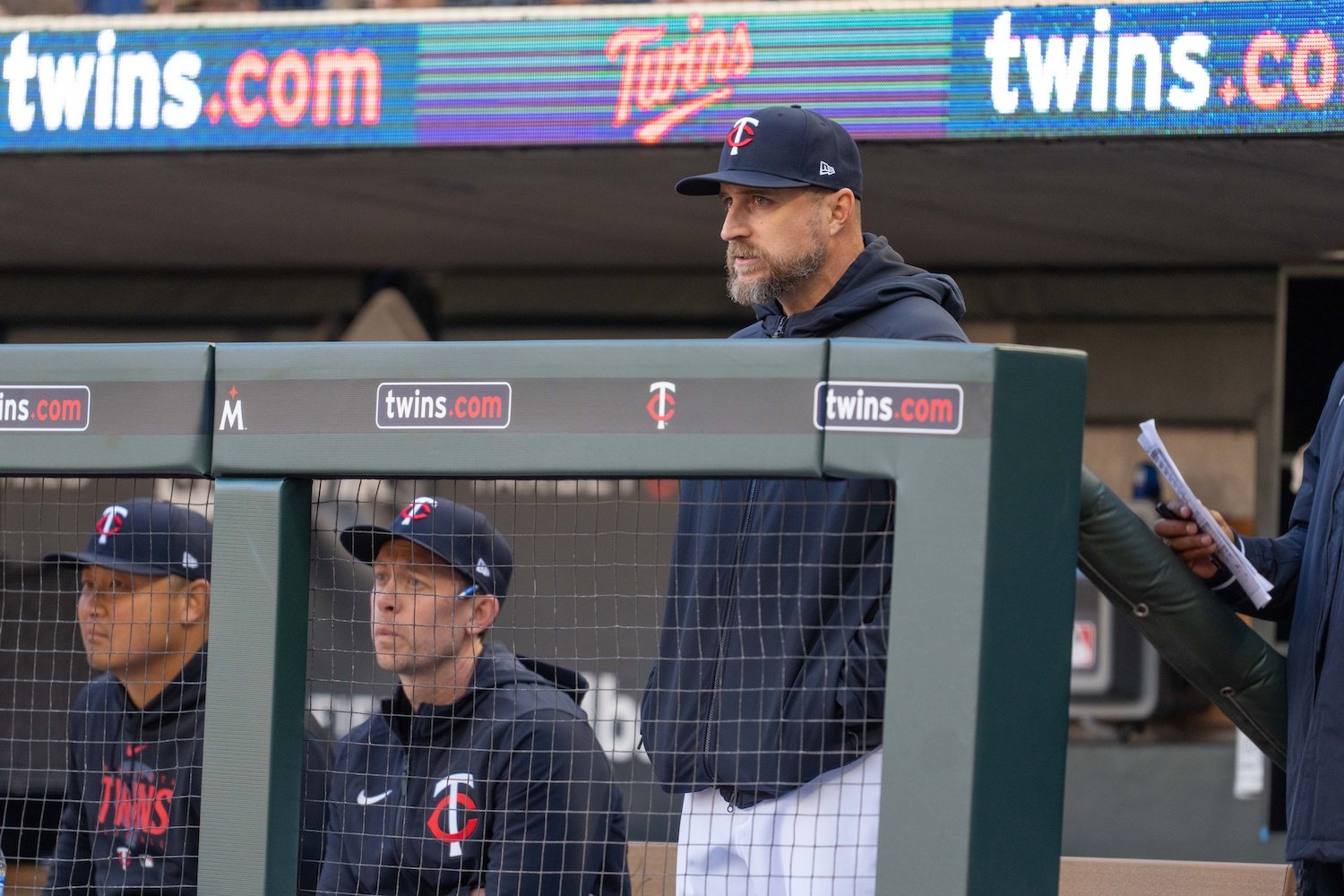 Normally, I would say it is way too soon to viably have this conversation, knowing the tendencies of this Twins front office and baseball operation. They tend to not make rash, reactive decisions. Firing the hitting coach, who was handpicked by this same regime only 18 months ago? That would certainly qualify. However, there are a few different factors in play here that, from my view, at least raise this possibility as a somewhat realistic one. For example: David Popkins doesn't have a much of a track record to fall back on. Much like they did with Wes Johnson when they plucked him out of college (or Pete Maki when they elevated from from an analyst role, for that matter), the Twins based their evaluation of Popkins more on projection and potential than concrete proven experience. When the Twins hired him after the 2021 season to replace Edgar Varela, Popkins had been the hitting coach for Los Angeles' Single-A team. That was his highest level of coaching experience. Popkins is only 33 years old and frankly there seems to be a reasonable chance he's in over his head, based on the evidence. The offense did not perform particularly well last year, in his first season on the job, but that was pretty easy to excuse amid the onslaught of injuries. There were some decent signs for Popkins, such as the improvements certain hitters made during the season, and the (related) positive reviews he was getting from players. This year, it's a very different story so far. There aren't many excuses for the ongoing struggles of the offense. No one could reasonably fault Popkins for failing to elevate an absolutely ravaged lineup in the second half of last season. The greatest hitting coach in baseball history isn't going to weaponize an outfield comprising Mark Contreras, Gilberto Celestino and Jake Cave. This year, however, the Twins have been quite healthy – at least in terms of keeping players on the field. When you've got a batting order filled with established quality hitters who are all getting lost in these ongoing funks, failing to find answers or step to the plate with confident plans, it doesn't reflect well on the guy charged with guiding them through it. This is especially striking in a few specific cases. Young talented hitters are getting completely overwhelmed. To be clear, I'm writing this article from the standpoint that Popkins could be on the hot seat, not that I necessarily think he should be. But this is probably the biggest factor that would compel me to consider it a valid course of action. Seeing Trevor Larnach, Jose Miranda, and Nick Gordon all just completely fall flat on their faces has been really tough to watch. Developing these kinds of emergent MLB-ready bats – helping them navigate challenges and combat adjustments that come along with the sport's harshest transition – strikes me as one of the most vital responsibilities of a hitting coach. Based on results, it's hard to see how Popkins could be faring worse in this regard. In many of these cases, there are seemingly clear flaws holding these hitters back, be it Larnach's susceptibility to offspeed pitching or Miranda's hitchy swing that beckons opponents to blow him away with high fastballs. I'm not saying these are easy things to fix, but ... they're not getting fixed. At all. None of the issues plaguing hitters throughout the lineup seem to be getting addressed in a meaningful way. And while it's still early in the season, it's not THAT early. We're coming up on the quarter-mark, and ... This team has high expectations and heavy pressure to perform. I perceived the past offseason as an emphatic statement from Twins ownership and executives: We're going to pump money into this franchise – ambitious rebranding, ballpark enhancements, Correa – now we better see some results that make a clear impact on the fanbase and revenue. So far the crowds have been fairly sparse at Target Field, owing partially to cool spring weather but also to a product that is failing to energize and erase lingering skepticism from last year. The Twins are leading a hideously bad AL Central and hanging above .500, sure, but the bar is higher than that. It needs to be. And right now this underperforming offense is the clear and undeniable culprit in keeping them short of it, as the pitching staff continues to go above and beyond. Now that Miranda's been sent out, there aren't really any remaining roster changes to be made at the moment. The Twins' lineup kind of is what it is for the time being. The question is whether they'll stick with the status quo or seek to shake things up and bring in a new voice. That would beg the question of "who," which of course is really the burning question here. Finding a new coach at this point of the season is not easy, though I suspect they have some candidates they like internally. Moving on from Popkins would not necessarily be an admission that the Twins were wrong to believe in him, but perhaps that they were a little early on him. There is risk attached to the upside of targeting up-and-comers and pushing them right into the big chair (e.g. Wes Johnson). Popkins is one of the youngest hitting coaches in baseball. He hasn't had a whole lot of time to establish himself and find his footing. In some ways it feels very unfair that this discussion is even taking place. But it feels like a pivotal time in the Twins' high-stakes season: ascend to the top tier or trudge toward mediocrity. Much is on the line and things are trending badly. Right now Popkins is a simple, semi-credible scapegoat, which puts him at risk. Such is life with the most volatile job in baseball.
 -
The Twins offense has been mostly miserable this year, and it's not showing signs of improvement as key young hitters get shipped out to work on their game in the minors. Not a great sign for the relatively inexperienced and unaccomplished individual currently serving in the hitting coach role. Is David Popkins on the hot seat? Image courtesy of Matt Blewett-USA TODAY Sports Normally, I would say it is way too soon to viably have this conversation, knowing the tendencies of this Twins front office and baseball operation. They tend to not make rash, reactive decisions. Firing the hitting coach, who was handpicked by this same regime only 18 months ago? That would certainly qualify. However, there are a few different factors in play here that, from my view, at least raise this possibility as a somewhat realistic one. For example: David Popkins doesn't have a much of a track record to fall back on. Much like they did with Wes Johnson when they plucked him out of college (or Pete Maki when they elevated from from an analyst role, for that matter), the Twins based their evaluation of Popkins more on projection and potential than concrete proven experience. When the Twins hired him after the 2021 season to replace Edgar Varela, Popkins had been the hitting coach for Los Angeles' Single-A team. That was his highest level of coaching experience. Popkins is only 33 years old and frankly there seems to be a reasonable chance he's in over his head, based on the evidence. The offense did not perform particularly well last year, in his first season on the job, but that was pretty easy to excuse amid the onslaught of injuries. There were some decent signs for Popkins, such as the improvements certain hitters made during the season, and the (related) positive reviews he was getting from players. This year, it's a very different story so far. There aren't many excuses for the ongoing struggles of the offense. No one could reasonably fault Popkins for failing to elevate an absolutely ravaged lineup in the second half of last season. The greatest hitting coach in baseball history isn't going to weaponize an outfield comprising Mark Contreras, Gilberto Celestino and Jake Cave. This year, however, the Twins have been quite healthy – at least in terms of keeping players on the field. When you've got a batting order filled with established quality hitters who are all getting lost in these ongoing funks, failing to find answers or step to the plate with confident plans, it doesn't reflect well on the guy charged with guiding them through it. This is especially striking in a few specific cases. Young talented hitters are getting completely overwhelmed. To be clear, I'm writing this article from the standpoint that Popkins could be on the hot seat, not that I necessarily think he should be. But this is probably the biggest factor that would compel me to consider it a valid course of action. Seeing Trevor Larnach, Jose Miranda, and Nick Gordon all just completely fall flat on their faces has been really tough to watch. Developing these kinds of emergent MLB-ready bats – helping them navigate challenges and combat adjustments that come along with the sport's harshest transition – strikes me as one of the most vital responsibilities of a hitting coach. Based on results, it's hard to see how Popkins could be faring worse in this regard. In many of these cases, there are seemingly clear flaws holding these hitters back, be it Larnach's susceptibility to offspeed pitching or Miranda's hitchy swing that beckons opponents to blow him away with high fastballs. I'm not saying these are easy things to fix, but ... they're not getting fixed. At all. None of the issues plaguing hitters throughout the lineup seem to be getting addressed in a meaningful way. And while it's still early in the season, it's not THAT early. We're coming up on the quarter-mark, and ... This team has high expectations and heavy pressure to perform. I perceived the past offseason as an emphatic statement from Twins ownership and executives: We're going to pump money into this franchise – ambitious rebranding, ballpark enhancements, Correa – now we better see some results that make a clear impact on the fanbase and revenue. So far the crowds have been fairly sparse at Target Field, owing partially to cool spring weather but also to a product that is failing to energize and erase lingering skepticism from last year. The Twins are leading a hideously bad AL Central and hanging above .500, sure, but the bar is higher than that. It needs to be. And right now this underperforming offense is the clear and undeniable culprit in keeping them short of it, as the pitching staff continues to go above and beyond. Now that Miranda's been sent out, there aren't really any remaining roster changes to be made at the moment. The Twins' lineup kind of is what it is for the time being. The question is whether they'll stick with the status quo or seek to shake things up and bring in a new voice. That would beg the question of "who," which of course is really the burning question here. Finding a new coach at this point of the season is not easy, though I suspect they have some candidates they like internally. Moving on from Popkins would not necessarily be an admission that the Twins were wrong to believe in him, but perhaps that they were a little early on him. There is risk attached to the upside of targeting up-and-comers and pushing them right into the big chair (e.g. Wes Johnson). Popkins is one of the youngest hitting coaches in baseball. He hasn't had a whole lot of time to establish himself and find his footing. In some ways it feels very unfair that this discussion is even taking place. But it feels like a pivotal time in the Twins' high-stakes season: ascend to the top tier or trudge toward mediocrity. Much is on the line and things are trending badly. Right now Popkins is a simple, semi-credible scapegoat, which puts him at risk. Such is life with the most volatile job in baseball. View full article
-
An uninspiring road trip saw the Twins drop two series against division foes, failing to expand their AL Central lead as the bats remained bottled up. Image courtesy of © David Richard-USA TODAY Sports Weekly Snapshot: Mon, 5/1 through Sun, 5/7 *** Record Last Week: 2-4 (Overall: 19-16) Run Differential Last Week: +0 (Overall: +26) Standing: 1st Place in AL Central (2.5 GA) Last Week's Game Results: Game 30 | CWS 3, MIN 2: Another Ryan Gem Wasted in Walk-Off Loss Game 31 | CWS 6, MIN 4: Missed Chances Lead to Late Swing of Fortunes Game 32 | MIN 7, CWS 3: Twins Grind Out Extra-Inning Win to Avoid Sweep Game 33 | MIN 2, CLE 0: Pitchers Dominate Hapless Cleveland Lineup Game 34 | CLE 4, MIN 3: Gray Loses Control, Bats Remain Cold Game 35 | CLE 2, MIN 0: Lineup Held to One Hit as Twins Drop Series NEWS & NOTES Things came to a head more quickly than expected with the Alex Kirilloff situation. Despite being pronounced physically ready, and affirming that billing with his play at Triple-A, the 25-year-old was seemingly stymied by a lack of opportunity on the big-league team. That is, until Trevor Larnach made the decision easier for the front office by slumping very badly at the exact wrong time. An 0-for-9 series in Chicago, including eight strikeouts, sealed Larnach's fate as he was shipped out prior to the Cleveland series, making room in the lineup for Kirilloff. The handling of the move was a little odd – Larnach had been announced as the No. 8 hitter on Friday night before being optioned ahead of the game. There was no apparent reason for urgency in promoting Kirilloff, who didn't start on Friday or Saturday anyway. Perhaps the Twins are angling to make Larnach available again as soon as possible, since a player must wait 10 days after being optioned to return. This dynamic actually might've played a role in the timing at play here. Given that 10 days hadn't passed since Kirilloff was optioned, an injury was needed to bring him back, so he was actually swapped for Caleb Thielbar. The lefty reliever went on the injured list with a right oblique strain. With that, it looks like we're back into full rotating-door mode at the back end of the bullpen. Long reliever Dereck Rodríguez was called up to temporarily fill Thielbar's spot, and then Josh Winder was swapped out for Jorge Alcala the following day. To make room for Rodríguez on the 40-man roster, Tyler Mahle was placed on the 60-day IL, meaning he won't return until at least the 4th of July, with the season half over. HIGHLIGHTS Starting pitching continues to be this team's calling card, and a fine one at that. The Twins are in basically every game; while the losses are frustrating, they almost never feel out of reach. The rotation is setting a really high floor and a strong basis for success with their routinely quality work. Bailey Ober has been sensational since getting his opportunity to step in, and kept the momentum rolling on Friday with seven shutout innings against the Guardians. Ober allowed just three hits while lowering his ERA to 0.98, and he has yet to allow a home run through three starts. A day earlier, Pablo López got back on track in a dignity-salvaging victory against the White Sox, hurling seven innings of two-run ball with eight strikeouts and one walk. Only three American League pitchers have tallied more strikeouts than López, who has pitched at least into the seventh in four of his seven starts. The righty has been everything the Twins could've hoped, which is great news as Luis Arraez continues to tear it up in Miami with a league-leading .420 average. Joe Ryan started twice and turned in a couple more quality starts, hurling six shutout innings against the White Sox and then limiting the Guardians to two runs in six frames on Sunday, although his charmed run support finally ran dry in the latter when he suffered his first loss of the season. Nonetheless, Ryan's numbers are stellar across the board: a 5-1 record, 2.45 ERA, 2.88 FIP, 0.84 WHIP and 47-to-6 K/BB ratio in 44 innings of work. He's completed six-plus innings every time out. While Thielbar's loss hurts for a bullpen that has been quite strong in the early going, the addition of Brock Stewart has proven to be a huge boost. The right-hander made three appearances last week and didn't allow a hit. He has now provided six scoreless innings since being called up, and leads all Twins relievers in Win Probability Added. LOWLIGHTS Wednesday's loss to the White Sox was symbolic of the larger trend that's held Minnesota back from a true breakthrough this season. The offense was having a decent game, knocking Dylan Cease out after five innings and erasing an early deficit. In the seventh inning, with the game tied 4-4, the Twins had a chance to open up a big lead against Chicago's bullpen when they loaded the bases with no outs for the 3-through-5 spots in their lineup. And then: Carlos Correa grounded out, Byron Buxton grounded out, and Larnach struck out swinging. Threat over. Chicago scratched across runs in each of the next two innings to take the series. Correa has been a prevalent contributor to the ongoing offensive misfires. His production continues to not materialize as he keeps appearing in the most critical lineup spots. The past week saw Correa go 4-for-25, dropping his season slash line to .193/.271/.378. You may recall Correa getting off to a slow start last year but it was nothing compared to this. Through 31 games in 2022, he was comparatively slashing .275/.346/.400, with his bat already awakening from an early swoon that was far less drastic. Correa might be the most high-profile culprit in this offense's woes but he's hardly the only one. With the exception of Buxton and Max Kepler, bats have pretty much gone ice-cold throughout the lineup – even those that had previously been productive: Joey Gallo went 0-for-15, and has seen his OPS plummet by nearly 200 points here in June. On the bright side, he's not striking out a crazy amount and is still drawing walks, but the hits and homers have gone amiss. Christian Vazquez, whose offensive output in the first couple of weeks was a pleasant surprise, has fallen into a deep slump. He went 1-for-13 in four starts last week and is slashing .200/.262/.250 in the past month. Donovan Solano went 0-for-10 in the series, dropping his OPS to .637. His usefulness to the team is waning with Kirilloff back in the mix, so it'll be interesting to see how much longer the Twins stick with the struggling veteran. The last time he played a full nine-inning game for Minnesota was April 18th, nearly three full weeks ago. Then of course there is Jose Miranda, who remains unable to snap out of his prolonged funk. His 2-for-21 week, which included six strikeouts and zero walks, dropped his line on the season to .219/.275/.313. What might seem like a mere five-week slump at the plate is actually considerably more substantial if you extend it back to last year, after his rookie hot streak faded. To make matters worse, Miranda also had some brutal defensive moments at third base, cementing his current status as a two-way liability. Something needs to change. It's likely about to. TRENDING STORYLINE Kyle Farmer has been rehabbing in Triple-A (I watched him hit a home run in St. Paul on Sunday) and it sounds like he'll be ready to be activated and rejoin the team at Target Field on Tuesday. So who goes to make room? While Willi Castro is a possibility, it's looking like the more likely candidate is Miranda, whose broken plate approach is pretty clearly meriting of a minor-league reset. The idea of both Larnach and Miranda in Triple-A, optionally, five weeks into the season is not something anyone would've envisioned as an ideal scenario. But it speaks to the strength and depth of the Twins roster that they not only have readily available quality alternatives in Kirilloff and Farmer, but that they'll soon have prospects potentially pushing those replacements in Matt Wallner, Edouard Julien, and Royce Lewis. LOOKING AHEAD Here comes the National League! Fans who are interested in catching a few visiting teams we've rarely had the opportunity to see are in luck, with the Padres and Cubs coming to Target Field as part of Major League Baseball's newly diversified schedule mix. Both clubs are off to solid starts and should present a challenge – especially the star-studded Padres who will be rolling in with Juan Soto, Fernando Tatis Jr., Manny Machado, Xander Bogaerts, and our old friend Nelson Cruz. TUESDAY, 5/9: PADRES @ TWINS – RHP Michael Wacha v. RHP Louie Varland WEDNESDAY, 5/10: PADRES @ TWINS – RHP Seth Lugo v. RHP Pablo Lopez THURSDAY, 5/11: PADRES @ TWINS – RHP Yu Darvish v. RHP Bailey Ober FRIDAY, 5/12: CUBS @ TWINS – LHP Drew Smyly v. RHP Sonny Gray SATURDAY, 5/13: CUBS @ TWINS – RHP Hayden Wesneski v. RHP Joe Ryan SUNDAY, 5/14: CUBS @ TWINS – RHP Marcus Stroman v. RHP Louie Varland View full article
-
 Weekly Snapshot: Mon, 5/1 through Sun, 5/7 *** Record Last Week: 2-4 (Overall: 19-16) Run Differential Last Week: +0 (Overall: +26) Standing: 1st Place in AL Central (2.5 GA) Last Week's Game Results: Game 30 | CWS 3, MIN 2: Another Ryan Gem Wasted in Walk-Off Loss Game 31 | CWS 6, MIN 4: Missed Chances Lead to Late Swing of Fortunes Game 32 | MIN 7, CWS 3: Twins Grind Out Extra-Inning Win to Avoid Sweep Game 33 | MIN 2, CLE 0: Pitchers Dominate Hapless Cleveland Lineup Game 34 | CLE 4, MIN 3: Gray Loses Control, Bats Remain Cold Game 35 | CLE 2, MIN 0: Lineup Held to One Hit as Twins Drop Series NEWS & NOTES Things came to a head more quickly than expected with the Alex Kirilloff situation. Despite being pronounced physically ready, and affirming that billing with his play at Triple-A, the 25-year-old was seemingly stymied by a lack of opportunity on the big-league team. That is, until Trevor Larnach made the decision easier for the front office by slumping very badly at the exact wrong time. An 0-for-9 series in Chicago, including eight strikeouts, sealed Larnach's fate as he was shipped out prior to the Cleveland series, making room in the lineup for Kirilloff. The handling of the move was a little odd – Larnach had been announced as the No. 8 hitter on Friday night before being optioned ahead of the game. There was no apparent reason for urgency in promoting Kirilloff, who didn't start on Friday or Saturday anyway. Perhaps the Twins are angling to make Larnach available again as soon as possible, since a player must wait 10 days after being optioned to return. This dynamic actually might've played a role in the timing at play here. Given that 10 days hadn't passed since Kirilloff was optioned, an injury was needed to bring him back, so he was actually swapped for Caleb Thielbar. The lefty reliever went on the injured list with a right oblique strain. With that, it looks like we're back into full rotating-door mode at the back end of the bullpen. Long reliever Dereck Rodríguez was called up to temporarily fill Thielbar's spot, and then Josh Winder was swapped out for Jorge Alcala the following day. To make room for Rodríguez on the 40-man roster, Tyler Mahle was placed on the 60-day IL, meaning he won't return until at least the 4th of July, with the season half over. HIGHLIGHTS Starting pitching continues to be this team's calling card, and a fine one at that. The Twins are in basically every game; while the losses are frustrating, they almost never feel out of reach. The rotation is setting a really high floor and a strong basis for success with their routinely quality work. Bailey Ober has been sensational since getting his opportunity to step in, and kept the momentum rolling on Friday with seven shutout innings against the Guardians. Ober allowed just three hits while lowering his ERA to 0.98, and he has yet to allow a home run through three starts. A day earlier, Pablo López got back on track in a dignity-salvaging victory against the White Sox, hurling seven innings of two-run ball with eight strikeouts and one walk. Only three American League pitchers have tallied more strikeouts than López, who has pitched at least into the seventh in four of his seven starts. The righty has been everything the Twins could've hoped, which is great news as Luis Arraez continues to tear it up in Miami with a league-leading .420 average. Joe Ryan started twice and turned in a couple more quality starts, hurling six shutout innings against the White Sox and then limiting the Guardians to two runs in six frames on Sunday, although his charmed run support finally ran dry in the latter when he suffered his first loss of the season. Nonetheless, Ryan's numbers are stellar across the board: a 5-1 record, 2.45 ERA, 2.88 FIP, 0.84 WHIP and 47-to-6 K/BB ratio in 44 innings of work. He's completed six-plus innings every time out. While Thielbar's loss hurts for a bullpen that has been quite strong in the early going, the addition of Brock Stewart has proven to be a huge boost. The right-hander made three appearances last week and didn't allow a hit. He has now provided six scoreless innings since being called up, and leads all Twins relievers in Win Probability Added. LOWLIGHTS Wednesday's loss to the White Sox was symbolic of the larger trend that's held Minnesota back from a true breakthrough this season. The offense was having a decent game, knocking Dylan Cease out after five innings and erasing an early deficit. In the seventh inning, with the game tied 4-4, the Twins had a chance to open up a big lead against Chicago's bullpen when they loaded the bases with no outs for the 3-through-5 spots in their lineup. And then: Carlos Correa grounded out, Byron Buxton grounded out, and Larnach struck out swinging. Threat over. Chicago scratched across runs in each of the next two innings to take the series. Correa has been a prevalent contributor to the ongoing offensive misfires. His production continues to not materialize as he keeps appearing in the most critical lineup spots. The past week saw Correa go 4-for-25, dropping his season slash line to .193/.271/.378. You may recall Correa getting off to a slow start last year but it was nothing compared to this. Through 31 games in 2022, he was comparatively slashing .275/.346/.400, with his bat already awakening from an early swoon that was far less drastic. Correa might be the most high-profile culprit in this offense's woes but he's hardly the only one. With the exception of Buxton and Max Kepler, bats have pretty much gone ice-cold throughout the lineup – even those that had previously been productive: Joey Gallo went 0-for-15, and has seen his OPS plummet by nearly 200 points here in June. On the bright side, he's not striking out a crazy amount and is still drawing walks, but the hits and homers have gone amiss. Christian Vazquez, whose offensive output in the first couple of weeks was a pleasant surprise, has fallen into a deep slump. He went 1-for-13 in four starts last week and is slashing .200/.262/.250 in the past month. Donovan Solano went 0-for-10 in the series, dropping his OPS to .637. His usefulness to the team is waning with Kirilloff back in the mix, so it'll be interesting to see how much longer the Twins stick with the struggling veteran. The last time he played a full nine-inning game for Minnesota was April 18th, nearly three full weeks ago. Then of course there is Jose Miranda, who remains unable to snap out of his prolonged funk. His 2-for-21 week, which included six strikeouts and zero walks, dropped his line on the season to .219/.275/.313. What might seem like a mere five-week slump at the plate is actually considerably more substantial if you extend it back to last year, after his rookie hot streak faded. To make matters worse, Miranda also had some brutal defensive moments at third base, cementing his current status as a two-way liability. Something needs to change. It's likely about to. TRENDING STORYLINE Kyle Farmer has been rehabbing in Triple-A (I watched him hit a home run in St. Paul on Sunday) and it sounds like he'll be ready to be activated and rejoin the team at Target Field on Tuesday. So who goes to make room? While Willi Castro is a possibility, it's looking like the more likely candidate is Miranda, whose broken plate approach is pretty clearly meriting of a minor-league reset. The idea of both Larnach and Miranda in Triple-A, optionally, five weeks into the season is not something anyone would've envisioned as an ideal scenario. But it speaks to the strength and depth of the Twins roster that they not only have readily available quality alternatives in Kirilloff and Farmer, but that they'll soon have prospects potentially pushing those replacements in Matt Wallner, Edouard Julien, and Royce Lewis. LOOKING AHEAD Here comes the National League! Fans who are interested in catching a few visiting teams we've rarely had the opportunity to see are in luck, with the Padres and Cubs coming to Target Field as part of Major League Baseball's newly diversified schedule mix. Both clubs are off to solid starts and should present a challenge – especially the star-studded Padres who will be rolling in with Juan Soto, Fernando Tatis Jr., Manny Machado, Xander Bogaerts, and our old friend Nelson Cruz. TUESDAY, 5/9: PADRES @ TWINS – RHP Michael Wacha v. RHP Louie Varland WEDNESDAY, 5/10: PADRES @ TWINS – RHP Seth Lugo v. RHP Pablo Lopez THURSDAY, 5/11: PADRES @ TWINS – RHP Yu Darvish v. RHP Bailey Ober FRIDAY, 5/12: CUBS @ TWINS – LHP Drew Smyly v. RHP Sonny Gray SATURDAY, 5/13: CUBS @ TWINS – RHP Hayden Wesneski v. RHP Joe Ryan SUNDAY, 5/14: CUBS @ TWINS – RHP Marcus Stroman v. RHP Louie Varland
- 28 comments
-
- 1
-
-
- joe ryan
- jose miranda
- (and 3 more)
-
Larnach demoted (after initially appearing in Friday night's lineup), Kirilloff called up. I'm pretty surprised by the quickness of this and wonder if something specific triggered it, given the way it went down. It's gonna be a real bummer for Larnach if he has to sit in Triple-A mashing for weeks and waiting for another chance based on a demotion of questionable merit. But as we always say, these things tend to work themselves out.
- 80 replies
-
- 1
-
-
- alex kirilloff
- trevor larnach
- (and 1 more)
