



Matthew Lenz
-
Posts
1,465 -
Joined
-
Last visited
-
Days Won
3
Content Type
Profiles
News
Minnesota Twins Videos
2026 Minnesota Twins Top Prospects Ranking
2022 Minnesota Twins Draft Picks
Minnesota Twins Free Agent & Trade Rumors, Notes, & Tidbits
Guides & Resources
2023 Minnesota Twins Draft Picks
The Minnesota Twins Players Project
2024 Minnesota Twins Draft Picks
2025 Minnesota Twins Draft Pick Tracker
2026 Minnesota Twins Draft Tracker: Picks & Bonuses
Forums
Blogs
Events
Store
Downloads
Gallery
Everything posted by Matthew Lenz
-
 The Minnesota Twins are 7-15 and one of the worst teams in baseball. The 52-win pace has tanked their playoff odds, pushing them all the way down to the third-worst in baseball. This week, they host the two teams who have worse odds. If there were ever “must-win” games in April, these would be the ones. Image courtesy of © Dale Zanine-Imagn Images The Minnesota Twins are 7-15 and one of the worst teams in baseball. The 52-win pace has tanked their playoff odds, pushing them all the way down to the third-worst in baseball. This week, they host the two teams who have worse odds. If there were ever “must-win” games in April, these would be the ones. To say the Twins have stumbled out of the gate wouldn't be right. It would indicate they were on their feet and walking in the first place. Instead, this team is still on their backs after the historic collapse last season, and the playoff odds at Baseball Reference are taking note of all the clubs running past them. Plummeting like a post-tariff stock market, the Twins's playoff odds are now better only than those of the Los Angeles Angels and Chicago White Sox, and they only lead their divisional foe by two games in the standings. While it may be a bit hyperbolic to call these games “must-win”, this is about as close as it gets this early in the season. If the Twins stay on their backs against two maligned teams, any optimism that even the most “glass-half-full” fan might have will be gone. The Twins have put themselves in a position where they must win five games before they travel to Progressive Field for a four-game series against the Cleveland Guardians. Chicago White Sox The Twins already played three against the lowly White Sox in Chicago, and took two of them. In the upcoming series, the Twins will roll with Bailey Ober, David Festa, and Pablo López, though that last is yet to be announced, as he returns from injury. They should make easy work out of a White Sox lineup that has the lowest OPS in baseball. Across the diamond, the White Sox are starting Davis Martin, Shane Smith, and have yet to announce Wednesday’s starter, after losing Martín Pérez to elbow inflammation. Smith, who made his major-league debut against the Twins three weeks ago, has been solid in his first four career starts. The Rule 5 selection from the Milwaukee Brewers has averaged just under six innings a start, with a 3.88 FIP and a 7.8% K-BB rate. Despite average strikeout and walk rates, the righty's pitching Run Value (RV) is currently in the 97th percentile of all qualified starters, due to the lack of production against his fastball, changeup, and slider. Many of the metrics on his Basebll Savant page indicate he’s due for regression, and the Twins must bring him back down to Earth. Martin, whose metrics also suggest some regression ahead, has been less effective, with a 5.27 FIP and a 7.1% K-BB rate. The Twins offense has been a passive, bat-to-ball team so far this year, and these two pitchers are as pitch-to-contact as it gets in 2025. Something has to give, and it has to be in the form of the Twins offense getting to one of the worst bullpens in baseball quickly. Los Angeles Angels How the Angels are 11-10 this season is anybody's guess. Their offense, rotation, and bullpen all rank in the bottom third in baseball, although they've hit the fourth-most home runs. While no starters have been announced, it's likely the Twins roll with Joe Ryan, Chris Paddack, and Simeon Woods Richardson over the weekend. For what it's worth, on the latest edition of Inside Twins, Rocco Baldelli said it's unlikely they utilize a six-man rotation at this point, indicating Woods Richardson or (more likely) Festa will be optioned out when López returns on Thursday. Regardless of who takes the ball, the Angels currently have a .694 OPS, with the third-highest strikeout rate and second-lowest walk rate in baseball. Twins starters will be tasked with limiting the long ball and taming a red-hot Kyren Paris, to give their bleak offense a chance. The Angels are likely to roll with Kyle Hendriks, Yusei Kikuchi, and José Soriano, who each have above-average strikeout rates, below-average walk rates, and FIPs that indicate they're due for some regression. Despite matchups that should theoretically favor the Twins, it's a recipe that could lead to some frustrating results if they continue to be passive at the plate. The Twins currently find themselves in DEFCON 2 (that's the second-highest; I Googled it), but even splitting these six games would graduate them to DEFCON 1 status. While a dominant week will do little to re-establish hope for this abysmal start to the season, not taking care of business will all but put the nail in their coffin. View full article
 -
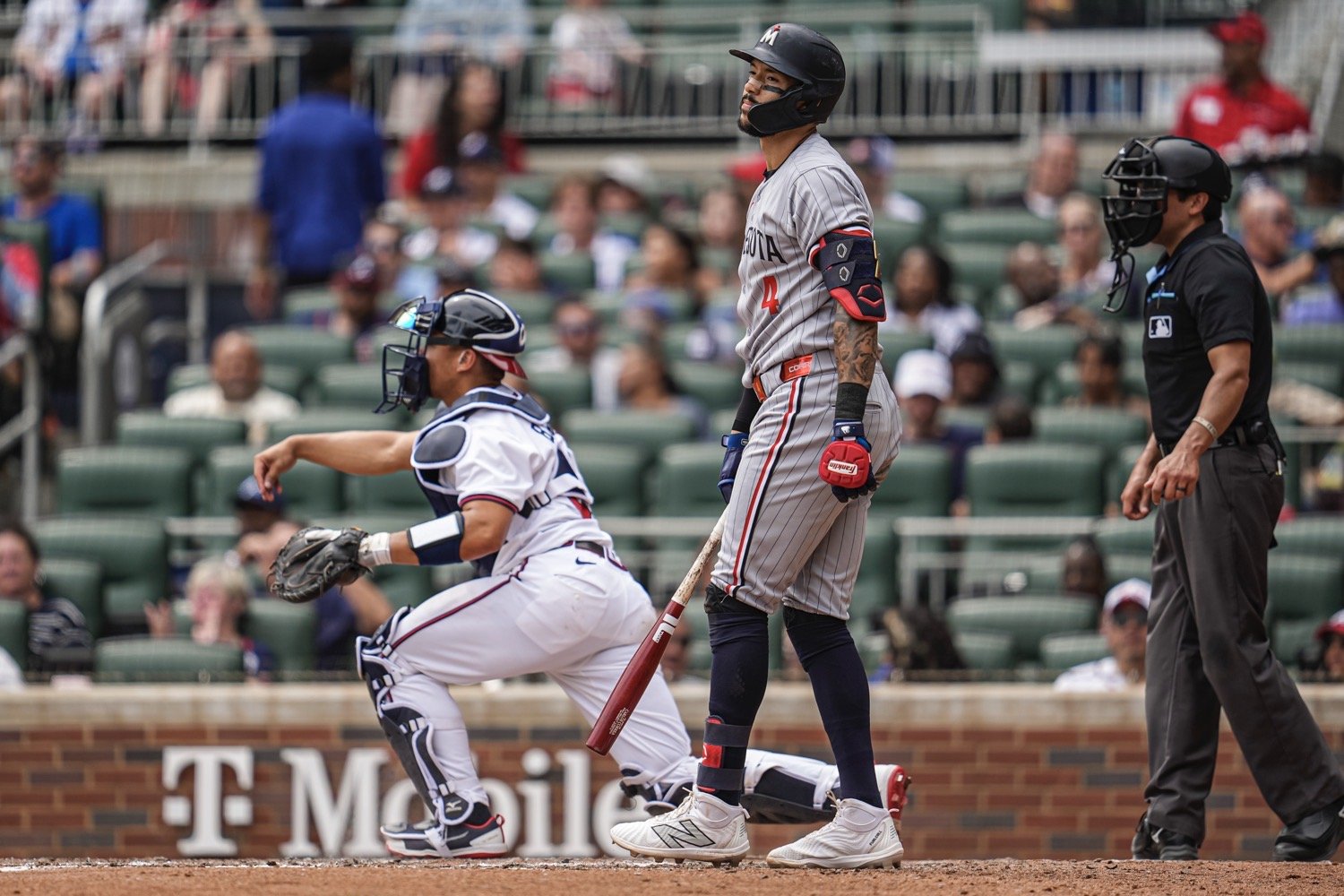 To say the Twins have stumbled out of the gate wouldn't be right. It would indicate they were on their feet and walking in the first place. Instead, this team is still on their backs after the historic collapse last season, and the playoff odds at Baseball Reference are taking note of all the clubs running past them. Plummeting like a post-tariff stock market, the Twins's playoff odds are now better only than those of the Los Angeles Angels and Chicago White Sox, and they only lead their divisional foe by two games in the standings. While it may be a bit hyperbolic to call these games “must-win”, this is about as close as it gets this early in the season. If the Twins stay on their backs against two maligned teams, any optimism that even the most “glass-half-full” fan might have will be gone. The Twins have put themselves in a position where they must win five games before they travel to Progressive Field for a four-game series against the Cleveland Guardians. Chicago White Sox The Twins already played three against the lowly White Sox in Chicago, and took two of them. In the upcoming series, the Twins will roll with Bailey Ober, David Festa, and Pablo López, though that last is yet to be announced, as he returns from injury. They should make easy work out of a White Sox lineup that has the lowest OPS in baseball. Across the diamond, the White Sox are starting Davis Martin, Shane Smith, and have yet to announce Wednesday’s starter, after losing Martín Pérez to elbow inflammation. Smith, who made his major-league debut against the Twins three weeks ago, has been solid in his first four career starts. The Rule 5 selection from the Milwaukee Brewers has averaged just under six innings a start, with a 3.88 FIP and a 7.8% K-BB rate. Despite average strikeout and walk rates, the righty's pitching Run Value (RV) is currently in the 97th percentile of all qualified starters, due to the lack of production against his fastball, changeup, and slider. Many of the metrics on his Basebll Savant page indicate he’s due for regression, and the Twins must bring him back down to Earth. Martin, whose metrics also suggest some regression ahead, has been less effective, with a 5.27 FIP and a 7.1% K-BB rate. The Twins offense has been a passive, bat-to-ball team so far this year, and these two pitchers are as pitch-to-contact as it gets in 2025. Something has to give, and it has to be in the form of the Twins offense getting to one of the worst bullpens in baseball quickly. Los Angeles Angels How the Angels are 11-10 this season is anybody's guess. Their offense, rotation, and bullpen all rank in the bottom third in baseball, although they've hit the fourth-most home runs. While no starters have been announced, it's likely the Twins roll with Joe Ryan, Chris Paddack, and Simeon Woods Richardson over the weekend. For what it's worth, on the latest edition of Inside Twins, Rocco Baldelli said it's unlikely they utilize a six-man rotation at this point, indicating Woods Richardson or (more likely) Festa will be optioned out when López returns on Thursday. Regardless of who takes the ball, the Angels currently have a .694 OPS, with the third-highest strikeout rate and second-lowest walk rate in baseball. Twins starters will be tasked with limiting the long ball and taming a red-hot Kyren Paris, to give their bleak offense a chance. The Angels are likely to roll with Kyle Hendriks, Yusei Kikuchi, and José Soriano, who each have above-average strikeout rates, below-average walk rates, and FIPs that indicate they're due for some regression. Despite matchups that should theoretically favor the Twins, it's a recipe that could lead to some frustrating results if they continue to be passive at the plate. The Twins currently find themselves in DEFCON 2 (that's the second-highest; I Googled it), but even splitting these six games would graduate them to DEFCON 1 status. While a dominant week will do little to re-establish hope for this abysmal start to the season, not taking care of business will all but put the nail in their coffin.
 -
You missed the point...Baldelli isn't the problem.
-
If He's Fired, Rocco Baldelli Will Only Be Minnesota Twins' “Fall Guy”
Matthew Lenz posted an article in Twins
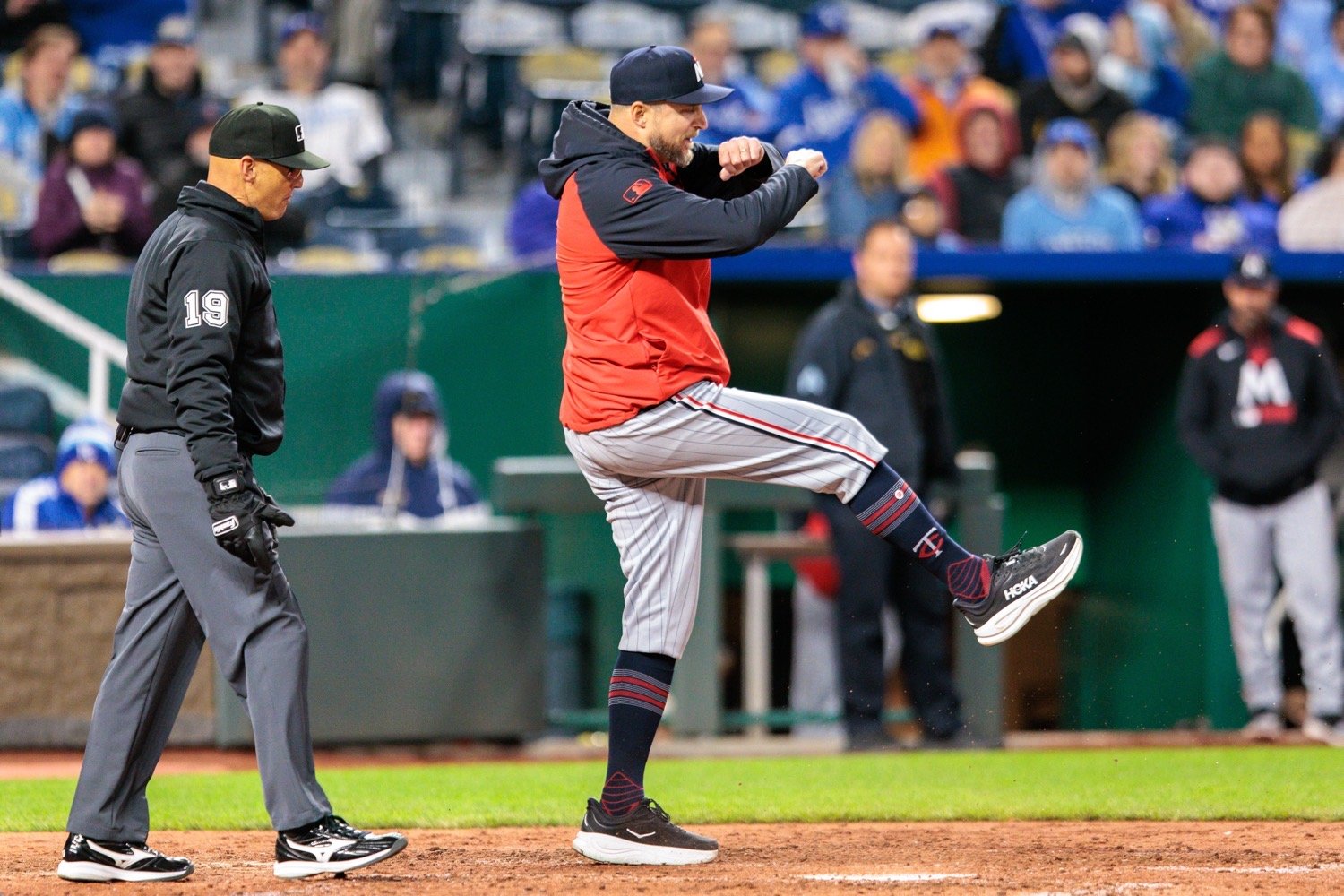 Before we begin Rocco Baldelli’s defense portion of this trial, let's play the side of the prosecution. Like all managers—nay, people—Baldelli is not perfect. Does he lean too much into matchups at times, in lieu of letting his best batters hit? Yep. Is he guilty of not giving his starting pitchers a longer leash? Sometimes. Has he been a player’s manager, almost to a fault? Has his message fallen on deaf ears within the clubhouse? You could make those arguments. A friend of mine said this a few years back, and I think it rings true, to a certain extent: Baldelli doesn't seem overly compelled to win any single game; he's always managing with the bigger picture in mind. Is that a problem? Not glaringly so, but maybe a little bit. However, will any of this change if he's relieved of his duties and someone else (whether it be internally or externally) takes over? I don't think so. The Twins' skipper (and the front office, to an extent) has been the victim of cheap ownership and a fan base that has misguided much of their anger in his direction. Baldelli took over as manager for an organization that had played in just one postseason game in eight seasons. You won't hear the people who want him fired give him credit for leading a record-breaking “Bomba Squad” or winning over 100 games in his first season. You won't hear those same people give him credit for managing through a COVID-shortened season that saw the Twins win their second consecutive American League Central title. After all, it's the players who make the plays and win the games, right? Why, then, are they so quick to point the finger toward the dugout when the players are the ones underachieving? In addition to being strapped for cash, Baldelli has had to manage through continuous injuries and underperformance from the highest-paid players on the team. Byron Buxton’s and Carlos Correa’s injuries and performance have been a hot topic each year. This year, the two have combined for a .639 OPS, with four home runs and a 36:6 strikeout-to-walk ratio across 152 plate appearances. While both players have experienced success under Baldelli, it only comes in spurts and has been overshadowed by injuries. Is that his fault? Even their highest-paid pitcher, Pablo López, left the team wanting more in an up-and-down 2024 season. Down his best players (or getting underwhelming production from them), Baldelli has often been forced to rely on unproven talent or veterans looking for another chance. Offensively, I've sorted a list of all players who have gotten more than 150 plate appearances in a season ascending by fWAR. The list includes guys like Jose Miranda (-0.7 fWAR in 2023), Jake Cave (-0.6 in 2021), Willians Astudillo (-0.5 in 2021), and seven others who played often, despite being worse than replacement-level. In many of those cases, Baldelli didn't have a choice but to rely on guys who weren't producing. Instead of prioritizing depth behind their oft-injured stars, the Twins have given Baldelli the likes of Gilberto Celestino (0.4 in 2022) and Austin Martin (-0.2 in 2024) to cover for Buxton, and a bevy of players who don't call shortstop home to cover for Correa. Celestino has not received a major-league at-bat since he left the Twins organization. That doesn't even cover failed signings like Andrelton Simmons (somehow accrued 0.9 fWAR in 2021) and Joey Gallo (again, somehow 0.8 fWAR in 2023), who both got limited opportunities following their departures and found themselves out of baseball just a season after getting significant playing time with the Twins. While the front office can point their fingers at the Pohlads, they haven't maximized their return on the limited funds they've been allotted. This is especially true when we shift to pitchers. Through Baldelli’s fourth season (2022), he was forced to start the group above 245 times (38% of games). Moreover, there are plenty of names who received multiple starts that would make for good answers on an Immaculate Grid board. While the idea that he never lets his starters go is somewhat specious (12th in SP innings since 2019), would you want to push those guys to give you more innings than they were already asked to? Fortunately for Baldelli, he's been the beneficiary of the Twins' phenomenal pitching development recently, which wasn't as highly thought of in the first half of his tenure with the team. Then we shift to the bullpen, and the many failed signings and trades throughout the Baldelli era. The worst names on that list include Sam Dyson, Hansel Robles, Alex Colomé, Joe Smith, Michael Fulmer, and Jorge López. Not a single one of those players have been consistently productive since joining other organizations, and more than one of them threw their last professional pitch with the Twins. We're going to blame Baldelli for that? Or more recently, is it on Baldelli that Griffin Jax has an 11.25 ERA right now? To be fair to the front office, they have hit on some moves, as well. Acquiring Joe Ryan, Sonny Gray, and López for the top of the rotation have been wins. Nelson Cruz, Gio Urshela, Carlos Correa, Michael A. Taylor and Carlos Santana (maybe a couple others) have yielded positive returns. That said, they've had far more whiffs and foul tips than hits while Baldelli has been at the helm. Generally speaking, I don't think a manager has a determinative impact on player performance, one way or another. I didn't give Baldelli credit for 2019, and I'm not going to blame him for the Twins' last 60 games. Don't get me wrong, Baldelli has his warts, and, as they say, “you can't fire the players”. However, if (seems more like "when") he gets fired, he’ll just be the “fall guy”. Until the Twins get new ownership, front office personnel will continue to be hamstrung—and the manager, whether it be Baldelli or someone else, will continue to be left with mediocre or worse teams. Simply put, Rocco Baldelli is not the reason for the Twins' total system failure. He's never been the total system.
 -
The seventh-year manager is assuredly on the hot seat amid a 7-15 start to the season. A loud sector of the fan base has wanted him gone for much of his tenure. While it seems more likely than not at this point, the skipper would only be the fall guy for a total system failure. Image courtesy of © William Purnell-Imagn Images The seventh-year manager is assuredly on the hot seat amid a 7-15 start to the season. A loud sector of the fan base has wanted him gone for much of his tenure. While it seems more likely than not at this point, the skipper would only be the fall guy for a total system failure. Before we begin Rocco Baldelli’s defense portion of this trial, let's play the side of the prosecution. Like all managers—nay, people—Baldelli is not perfect. Does he lean too much into matchups at times, in lieu of letting his best batters hit? Yep. Is he guilty of not giving his starting pitchers a longer leash? Sometimes. Has he been a player’s manager, almost to a fault? Has his message fallen on deaf ears within the clubhouse? You could make those arguments. A friend of mine said this a few years back, and I think it rings true, to a certain extent: Baldelli doesn't seem overly compelled to win any single game; he's always managing with the bigger picture in mind. Is that a problem? Not glaringly so, but maybe a little bit. However, will any of this change if he's relieved of his duties and someone else (whether it be internally or externally) takes over? I don't think so. The Twins' skipper (and the front office, to an extent) has been the victim of cheap ownership and a fan base that has misguided much of their anger in his direction. Baldelli took over as manager for an organization that had played in just one postseason game in eight seasons. You won't hear the people who want him fired give him credit for leading a record-breaking “Bomba Squad” or winning over 100 games in his first season. You won't hear those same people give him credit for managing through a COVID-shortened season that saw the Twins win their second consecutive American League Central title. After all, it's the players who make the plays and win the games, right? Why, then, are they so quick to point the finger toward the dugout when the players are the ones underachieving? In addition to being strapped for cash, Baldelli has had to manage through continuous injuries and underperformance from the highest-paid players on the team. Byron Buxton’s and Carlos Correa’s injuries and performance have been a hot topic each year. This year, the two have combined for a .639 OPS, with four home runs and a 36:6 strikeout-to-walk ratio across 152 plate appearances. While both players have experienced success under Baldelli, it only comes in spurts and has been overshadowed by injuries. Is that his fault? Even their highest-paid pitcher, Pablo López, left the team wanting more in an up-and-down 2024 season. Down his best players (or getting underwhelming production from them), Baldelli has often been forced to rely on unproven talent or veterans looking for another chance. Offensively, I've sorted a list of all players who have gotten more than 150 plate appearances in a season ascending by fWAR. The list includes guys like Jose Miranda (-0.7 fWAR in 2023), Jake Cave (-0.6 in 2021), Willians Astudillo (-0.5 in 2021), and seven others who played often, despite being worse than replacement-level. In many of those cases, Baldelli didn't have a choice but to rely on guys who weren't producing. Instead of prioritizing depth behind their oft-injured stars, the Twins have given Baldelli the likes of Gilberto Celestino (0.4 in 2022) and Austin Martin (-0.2 in 2024) to cover for Buxton, and a bevy of players who don't call shortstop home to cover for Correa. Celestino has not received a major-league at-bat since he left the Twins organization. That doesn't even cover failed signings like Andrelton Simmons (somehow accrued 0.9 fWAR in 2021) and Joey Gallo (again, somehow 0.8 fWAR in 2023), who both got limited opportunities following their departures and found themselves out of baseball just a season after getting significant playing time with the Twins. While the front office can point their fingers at the Pohlads, they haven't maximized their return on the limited funds they've been allotted. This is especially true when we shift to pitchers. Through Baldelli’s fourth season (2022), he was forced to start the group above 245 times (38% of games). Moreover, there are plenty of names who received multiple starts that would make for good answers on an Immaculate Grid board. While the idea that he never lets his starters go is somewhat specious (12th in SP innings since 2019), would you want to push those guys to give you more innings than they were already asked to? Fortunately for Baldelli, he's been the beneficiary of the Twins' phenomenal pitching development recently, which wasn't as highly thought of in the first half of his tenure with the team. Then we shift to the bullpen, and the many failed signings and trades throughout the Baldelli era. The worst names on that list include Sam Dyson, Hansel Robles, Alex Colomé, Joe Smith, Michael Fulmer, and Jorge López. Not a single one of those players have been consistently productive since joining other organizations, and more than one of them threw their last professional pitch with the Twins. We're going to blame Baldelli for that? Or more recently, is it on Baldelli that Griffin Jax has an 11.25 ERA right now? To be fair to the front office, they have hit on some moves, as well. Acquiring Joe Ryan, Sonny Gray, and López for the top of the rotation have been wins. Nelson Cruz, Gio Urshela, Carlos Correa, Michael A. Taylor and Carlos Santana (maybe a couple others) have yielded positive returns. That said, they've had far more whiffs and foul tips than hits while Baldelli has been at the helm. Generally speaking, I don't think a manager has a determinative impact on player performance, one way or another. I didn't give Baldelli credit for 2019, and I'm not going to blame him for the Twins' last 60 games. Don't get me wrong, Baldelli has his warts, and, as they say, “you can't fire the players”. However, if (seems more like "when") he gets fired, he’ll just be the “fall guy”. Until the Twins get new ownership, front office personnel will continue to be hamstrung—and the manager, whether it be Baldelli or someone else, will continue to be left with mediocre or worse teams. Simply put, Rocco Baldelli is not the reason for the Twins' total system failure. He's never been the total system. View full article
-
The Minnesota Twins offense has been a bottom-five offense to start the season. Bottom line: it's been brutal. However, if you were expecting anything different, you might have been kidding yourself. (Don't worry; I'm guilty, too.) Image courtesy of © Jordan Johnson-Imagn Images The Minnesota Twins offense has been a bottom-five offense to start the season. Bottom line: it's been brutal. However, if you were expecting anything different, you might have been kidding yourself. (Don't worry; I'm guilty, too.) Entering Sunday’s game, Twins batters were 27th in OPS, 28th in walk rate, and 25th in Win Probability Added (WPA) among the 30 MLB teams. Ironically, after years and years of gripes from a large portion of the fan base, their strikeout rate of 22.7% ranks a respectable 16th. Unfortunately, the same cannot be said when runners are in scoring position. In those situations, the Twins' strikeout rate jumps to 24.6% (fifth-highest in baseball) and their walk rate drops to 6.3% (second-lowest in baseball), although their OPS is actually 54 points higher. The greatest source of concern, though, is their quality of contact. While they have hit the ball hard and are an extreme pull-hitting team, they currently have the 10th-highest groundball rate in the league. Data shows that the most productive batted balls are hit in the air to the batter’s pull side. Since 2021, the difference between pulling the ball on the ground versus in the air is roughly a peak Barry Bonds worth of OPS (1.780 versus .401). Just putting the ball in play against a professional defense to “see what happens” rarely gets the job done. Looking back to last season, it was easy to write off the last month and a half to a team-wide, contagious slump. Surely, a team that was on a 92-win pace through 124 games just needed the offseason to reset after a historic collapse, right? Alas, that “slump” has carried over into the 2025 season and since the start of that collapse, the team is on a 50-win pace over 60 games. I'm here to tell you this isn't a slump; it's who they are. While they profiled differently last year by pulling the ball in the air more, they finished the season near the bottom third of teams in OPS and wRC+ with runners in scoring position. Removing that split from the equation, the team was in the top third of teams in the same categories. The difference can also be seen in their WPA. While they finished ninth in WPA in 2024, their Clutch rating of -1.27 indicates that they would have been even better—perhaps far better—had they hit as well when the chips were down as they did in lower-leverage situations. Not only has that carried over into 2025, but their ineptitude has been exacerbated by a diminished quality of contact regardless of the situation. That's all to say, the Twins failed to have productive at-bats when it mattered most. However, it's not an issue that is unique to having runners in scoring position. As is the case in most sports, the general goal is to be roughly .500 against the “good” teams and take care of business against the “bad” teams. The Twins were very good at the latter last season, but not so much the former. In fact, the Twins offense (once again) didn't show up when it mattered most in 2024. Against playoff teams, they not only performed below their season averages, but also performed worse than the league average in nearly all statistical categories. While their offense as a whole performed well, they failed to execute in the season’s biggest moments. While we focused tightly on the last 39 games of 2024, we’re seeing in 2025 that that might be misguided. The Twins offense isn't off to a slow start. This is who they have been. This is who they are. View full article
-
Unfortunately, This Minnesota Twins Offense Isn't Just Off to a Slow Start
Matthew Lenz posted an article in Twins
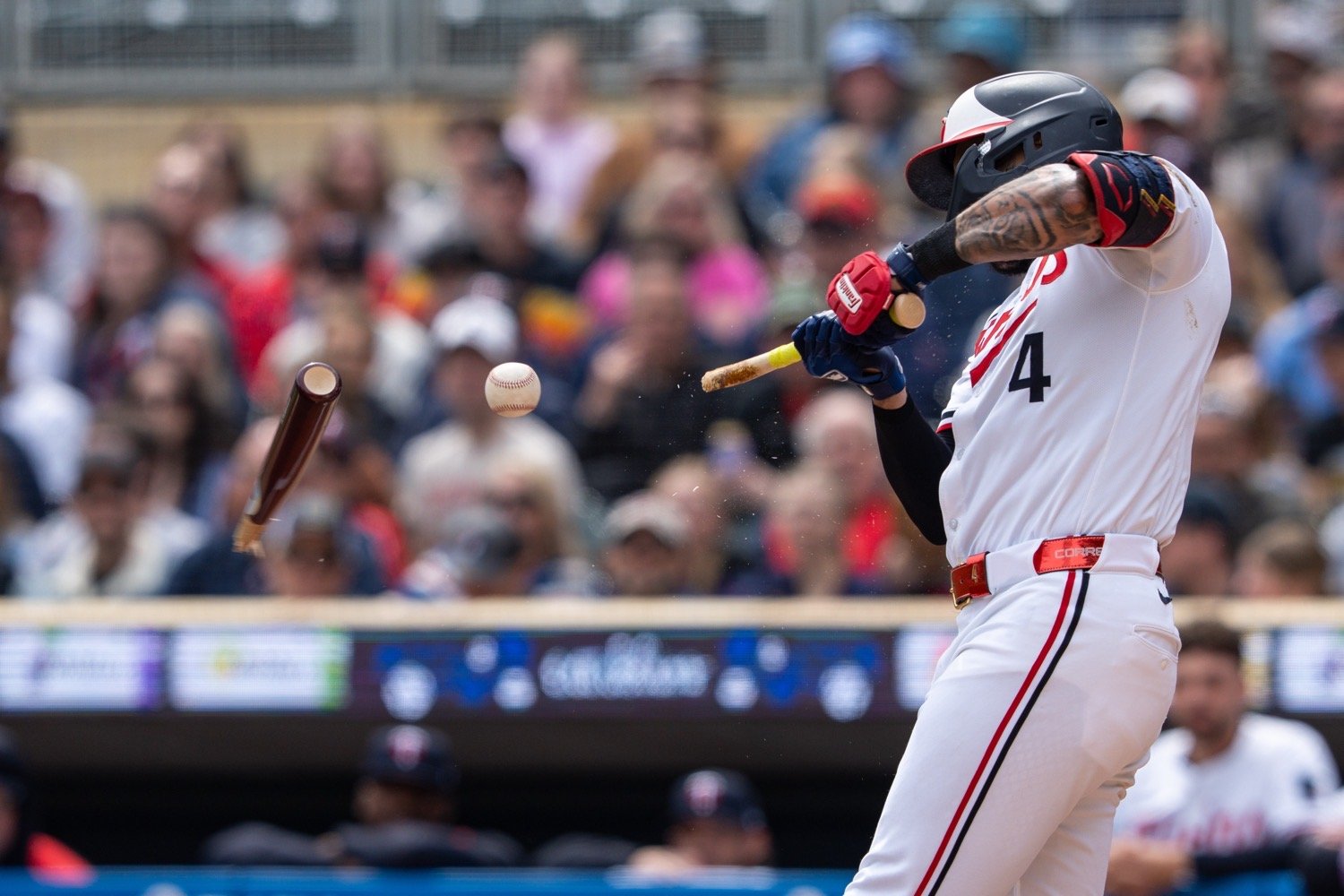 Entering Sunday’s game, Twins batters were 27th in OPS, 28th in walk rate, and 25th in Win Probability Added (WPA) among the 30 MLB teams. Ironically, after years and years of gripes from a large portion of the fan base, their strikeout rate of 22.7% ranks a respectable 16th. Unfortunately, the same cannot be said when runners are in scoring position. In those situations, the Twins' strikeout rate jumps to 24.6% (fifth-highest in baseball) and their walk rate drops to 6.3% (second-lowest in baseball), although their OPS is actually 54 points higher. The greatest source of concern, though, is their quality of contact. While they have hit the ball hard and are an extreme pull-hitting team, they currently have the 10th-highest groundball rate in the league. Data shows that the most productive batted balls are hit in the air to the batter’s pull side. Since 2021, the difference between pulling the ball on the ground versus in the air is roughly a peak Barry Bonds worth of OPS (1.780 versus .401). Just putting the ball in play against a professional defense to “see what happens” rarely gets the job done. Looking back to last season, it was easy to write off the last month and a half to a team-wide, contagious slump. Surely, a team that was on a 92-win pace through 124 games just needed the offseason to reset after a historic collapse, right? Alas, that “slump” has carried over into the 2025 season and since the start of that collapse, the team is on a 50-win pace over 60 games. I'm here to tell you this isn't a slump; it's who they are. While they profiled differently last year by pulling the ball in the air more, they finished the season near the bottom third of teams in OPS and wRC+ with runners in scoring position. Removing that split from the equation, the team was in the top third of teams in the same categories. The difference can also be seen in their WPA. While they finished ninth in WPA in 2024, their Clutch rating of -1.27 indicates that they would have been even better—perhaps far better—had they hit as well when the chips were down as they did in lower-leverage situations. Not only has that carried over into 2025, but their ineptitude has been exacerbated by a diminished quality of contact regardless of the situation. That's all to say, the Twins failed to have productive at-bats when it mattered most. However, it's not an issue that is unique to having runners in scoring position. As is the case in most sports, the general goal is to be roughly .500 against the “good” teams and take care of business against the “bad” teams. The Twins were very good at the latter last season, but not so much the former. In fact, the Twins offense (once again) didn't show up when it mattered most in 2024. Against playoff teams, they not only performed below their season averages, but also performed worse than the league average in nearly all statistical categories. While their offense as a whole performed well, they failed to execute in the season’s biggest moments. While we focused tightly on the last 39 games of 2024, we’re seeing in 2025 that that might be misguided. The Twins offense isn't off to a slow start. This is who they have been. This is who they are.
 -
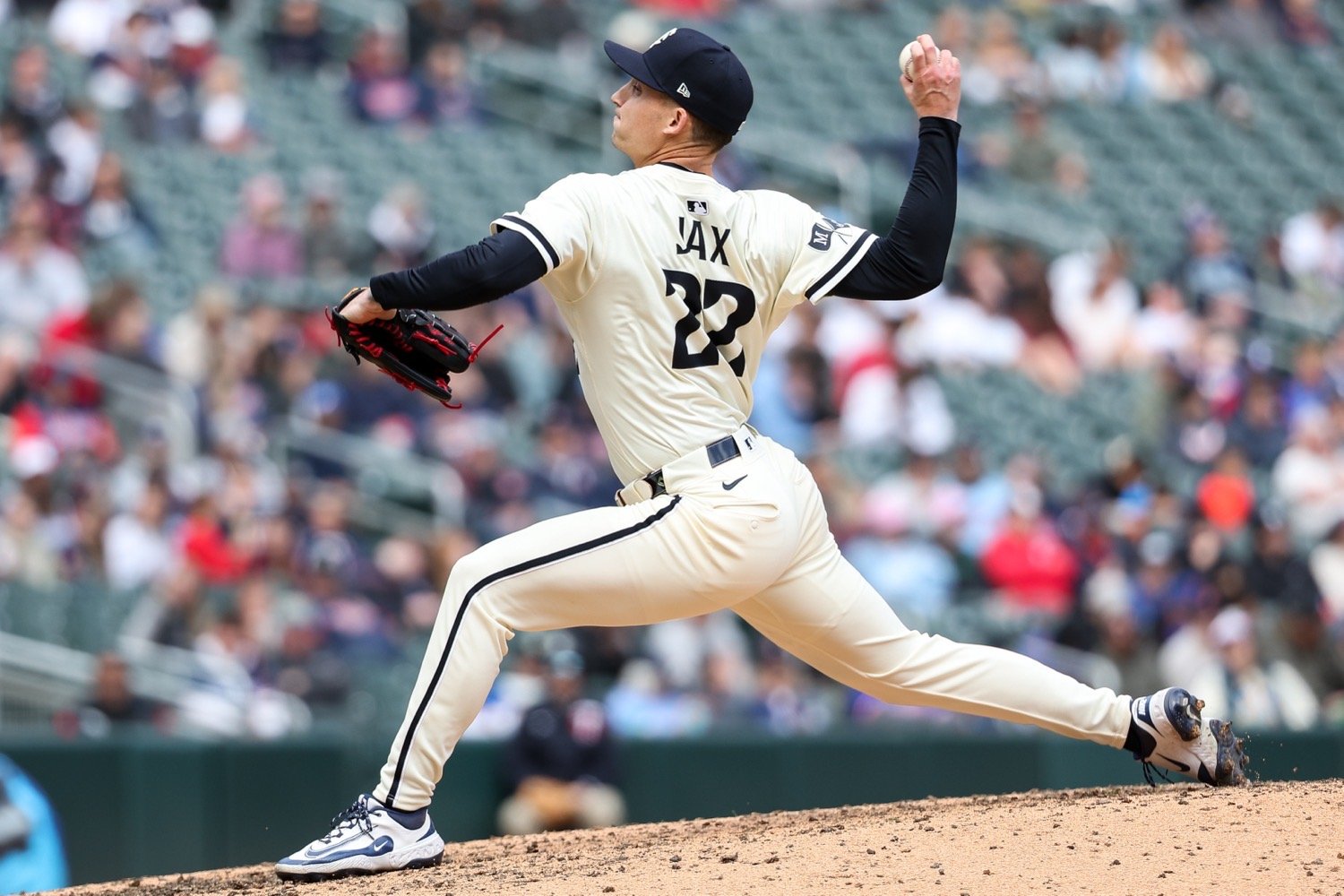 It's been three years since Griffin Jax converted into a reliever and quickly became one of the best high leverage arms in all of baseball. After getting past the speculation and idea that he might return to the rotation in 2025, it was the expectation that he would be a two-headed monster with Jhoan Durán at the back of the Twins bullpen. Heck, some might even say that Durán is the “closer” by name but that Jax really is the star of the relief group. Alas, three weeks into the season and Jax has already coughed up two homers on 12 hits in 7 ⅔ innings. He's getting rocked and trending toward a major departure from his past numbers. Surely, there has to be a change in his pitch profile that has led to him not only being more hittable but to being hit harder than ever before, right? Not so fast. Despite the lackluster start to the season, Jax is still striking out 29.7% of batters (about five points less than in 2024) and walking an impressive 2.7% of batters. The velocities of each pitch in his arsenal remain the same from 2024, although he's featuring his changeup more to lefties and relying less on his fastball which had a Run Value (RV) of nine in 2024. Having thrown just 135 pitches so far this season, it's probably too early to read too much into his pitch mix, especially when he’s seen nearly a 50/50 split of left handed batters and right-handed batters. If we look into his movement and spin rates, which may be equally as insignificant this early, we’ll see a slight change in his profile. It appears his sweeper, his most oft used pitch, has less sweep but his fastball has slightly more rise to it. The graphic below, broken down by month, shows that his spin rates tend to increase as the season goes on, indicating this is not out of the ordinary for him this early in the season. For reference, despite the lower spin rates, he still carries gaudy strikeout and walk rates with a 2.71 FIP in March and April. Again, it's too early to take anything meaningful away from the data presented so far but the contour profile of his pitches may be telling indicators explaining his early season struggles. Remember when I said his sweeper has less sweep? This has resulted in him leaving the pitch over the middle of the plate (dark red blob sitting middle-middle isn't good), whereas in 2024 the pitch typically was low, away, and out of the zone to right-handed batters. While it hasn't resulted in additional home runs we've seen a significant increase in opponent’s batting average and especially their slugging percentage in the early going. Moreover, Jax has also been missing with his fastball up in the zone. This has resulted in a .429 opponents batting average, a 1.289 slugging percentage, and two home runs against the offering. Last season, he allowed just two home runs off the pitch all year. So, are we concerned about Jax’s effectiveness? Not yet, but it's something to keep an eye on in the early going here. It's a good sign that we aren't signing diminished velocity or stuff from the 30-year-old, as relievers are the most volatile position group from year-to-year. Right now the problem seems to simply be execution. Especially with such a limited sample, it very well could be that Jax will find his groove and get back to hitting his spots as the year rolls on. What is your level of concern with Jax’s hittability in the first weeks of the season? Join the conversation in the comments!
 -
The Minnesota Twins entered the season expecting to have one of the best bullpens in all of baseball. While they've been good to start the season, they haven't been as effective as many expected them to be. In particular, one of their relief aces hasn't been as effective as he has in previous years. Let's dive in. Image courtesy of © Matt Krohn-Imagn Images The Minnesota Twins entered the season expecting to have one of the best bullpens in all of baseball. While they've been good to start the season, they haven't been as effective as many expected them to be. In particular, one of their relief aces hasn't been as effective as he has in previous years. Let's dive in. It's been three years since Griffin Jax converted into a reliever and quickly became one of the best high leverage arms in all of baseball. After getting past the speculation and idea that he might return to the rotation in 2025, it was the expectation that he would be a two-headed monster with Jhoan Durán at the back of the Twins bullpen. Heck, some might even say that Durán is the “closer” by name but that Jax really is the star of the relief group. Alas, three weeks into the season and Jax has already coughed up two homers on 12 hits in 7 ⅔ innings. He's getting rocked and trending toward a major departure from his past numbers. Surely, there has to be a change in his pitch profile that has led to him not only being more hittable but to being hit harder than ever before, right? Not so fast. Despite the lackluster start to the season, Jax is still striking out 29.7% of batters (about five points less than in 2024) and walking an impressive 2.7% of batters. The velocities of each pitch in his arsenal remain the same from 2024, although he's featuring his changeup more to lefties and relying less on his fastball which had a Run Value (RV) of nine in 2024. Having thrown just 135 pitches so far this season, it's probably too early to read too much into his pitch mix, especially when he’s seen nearly a 50/50 split of left handed batters and right-handed batters. If we look into his movement and spin rates, which may be equally as insignificant this early, we’ll see a slight change in his profile. It appears his sweeper, his most oft used pitch, has less sweep but his fastball has slightly more rise to it. The graphic below, broken down by month, shows that his spin rates tend to increase as the season goes on, indicating this is not out of the ordinary for him this early in the season. For reference, despite the lower spin rates, he still carries gaudy strikeout and walk rates with a 2.71 FIP in March and April. Again, it's too early to take anything meaningful away from the data presented so far but the contour profile of his pitches may be telling indicators explaining his early season struggles. Remember when I said his sweeper has less sweep? This has resulted in him leaving the pitch over the middle of the plate (dark red blob sitting middle-middle isn't good), whereas in 2024 the pitch typically was low, away, and out of the zone to right-handed batters. While it hasn't resulted in additional home runs we've seen a significant increase in opponent’s batting average and especially their slugging percentage in the early going. Moreover, Jax has also been missing with his fastball up in the zone. This has resulted in a .429 opponents batting average, a 1.289 slugging percentage, and two home runs against the offering. Last season, he allowed just two home runs off the pitch all year. So, are we concerned about Jax’s effectiveness? Not yet, but it's something to keep an eye on in the early going here. It's a good sign that we aren't signing diminished velocity or stuff from the 30-year-old, as relievers are the most volatile position group from year-to-year. Right now the problem seems to simply be execution. Especially with such a limited sample, it very well could be that Jax will find his groove and get back to hitting his spots as the year rolls on. What is your level of concern with Jax’s hittability in the first weeks of the season? Join the conversation in the comments! View full article
-
After the news of Pablo López hitting the injured list with a Grade 1 hamstring strain, David Festa was called up for his 2025 debut. Now, it appears he’ll face the New York Mets on Wednesday’s getaway game. Image courtesy of © Jesse Johnson-Imagn Images After the news of Pablo López hitting the injured list with a Grade 1 hamstring strain, David Festa was called up for his 2025 debut. Now, it appears he’ll face the New York Mets on Wednesday’s getaway game. David Festa had a productive season debut Friday, going 4 ⅔ innings, allowing one (unearned) run, and striking out four while walking one Detroit Tigers batters. He got through that on just 64 pitches. Perhaps most impressive was the 28% whiff rate, including a 57% whiff rate on his changeup. According to Statcast, Detroit had no Barrels against him. It was just the start you'd hope for after Festa’s rookie season, which saw him produce a 19.5 K-BB% and a 3.76 FIP, and it's exactly what the Twins needed to give him a second crack at the rotation. Some may have been surprised to see Festa get the call over Zebby Matthews, who has been the better of the two in a small sample so far in 2025, but the timing just worked out better for Festa. It was likely that Festa was making a start on Friday, whether it be for the St. Paul Saints or the Twins, whereas Matthews had just thrown 80 pitches across five innings on Tuesday. Regardless, even after Festa was named Friday’s starter at Target Field, some speculated that he would be demoted back to St. Paul. This would make way for a Matthews promotion to start Monday against the Mets. Even the Twins nodded and winked in that direction, behind the scenes. Instead, Joe Ryan drew the Monday start. Bailey Ober gets them on Tuesday, and Festa was named the starter of the series finale on Wednesday's matinee. It is possible that the initial plan did look different, as it wasn't announced until yesterday afternoon that Matthews would start for the Saints on Tuesday. Festa told our Matt Trueblood he was told mid-morning Saturday that he would get the nod again Wednesday. Regardless of when (or even why) the decision was made to roll with Festa for a second time, though, it's an outcome the righty earned—even on just four days' rest. Not only did he earn it, but procedurally, it might be the most logical move. Having thrown just 64 pitches on Friday allows him to start after four days' rest without any restrictions, saving the Twins from optioning Festa—which would mean he couldn't be promoted for 15 days (barring an injury). The same goes for Matthews. With López only expected to miss the minimum amount of time (hopefully), it wouldn't be ideal to lock up your two best “next men up” for two weeks in case injury strikes elsewhere. It also may make sense strategically, as the Twins are facing the Mets' top three arms this series. Instead of putting Matthews in a position where he's facing a potent lineup while battling rotation ace Clay Holmes, the Twins opted to have two of their top arms go head-to-head with the Mets’ top two on Monday and Tuesday. This opened the door to roll with Festa for a second time as the Mets will deploy Griffin Canning—a more favorable duel than Matthews v. Holmes. It could also be that Matthews's pitch mix isn't a favorable matchup against the Mets. The Mets have produced well against horizontal movement dating back to last season (before they had Juan Soto). While both pitchers have a plus slider, Matthews also throws a cutter that has typically graded out as just below average. Moreover, last season, the Mets were one of the best fastball-hitting teams in baseball and Festa’s four-seamer has a little less glove-side movement and a little more induced vertical break than his peers'. At this point, we’re just throwing ideas against the wall and seeing if they stick. In reality, we don't know the reasoning behind the decisions that have been made regarding Festa and Matthews. I do think that procedurally it made the most sense, especially considering the brevity and effectiveness of Festa’s first start. Regardless, it’s really only a matter of time before we see Matthews on a big-league mound. How would you have handled Festa and Matthews? Join the conversation in the comments! View full article
-
David Festa Set To Get Second Look in Minnesota Twins Rotation
Matthew Lenz posted an article in Twins
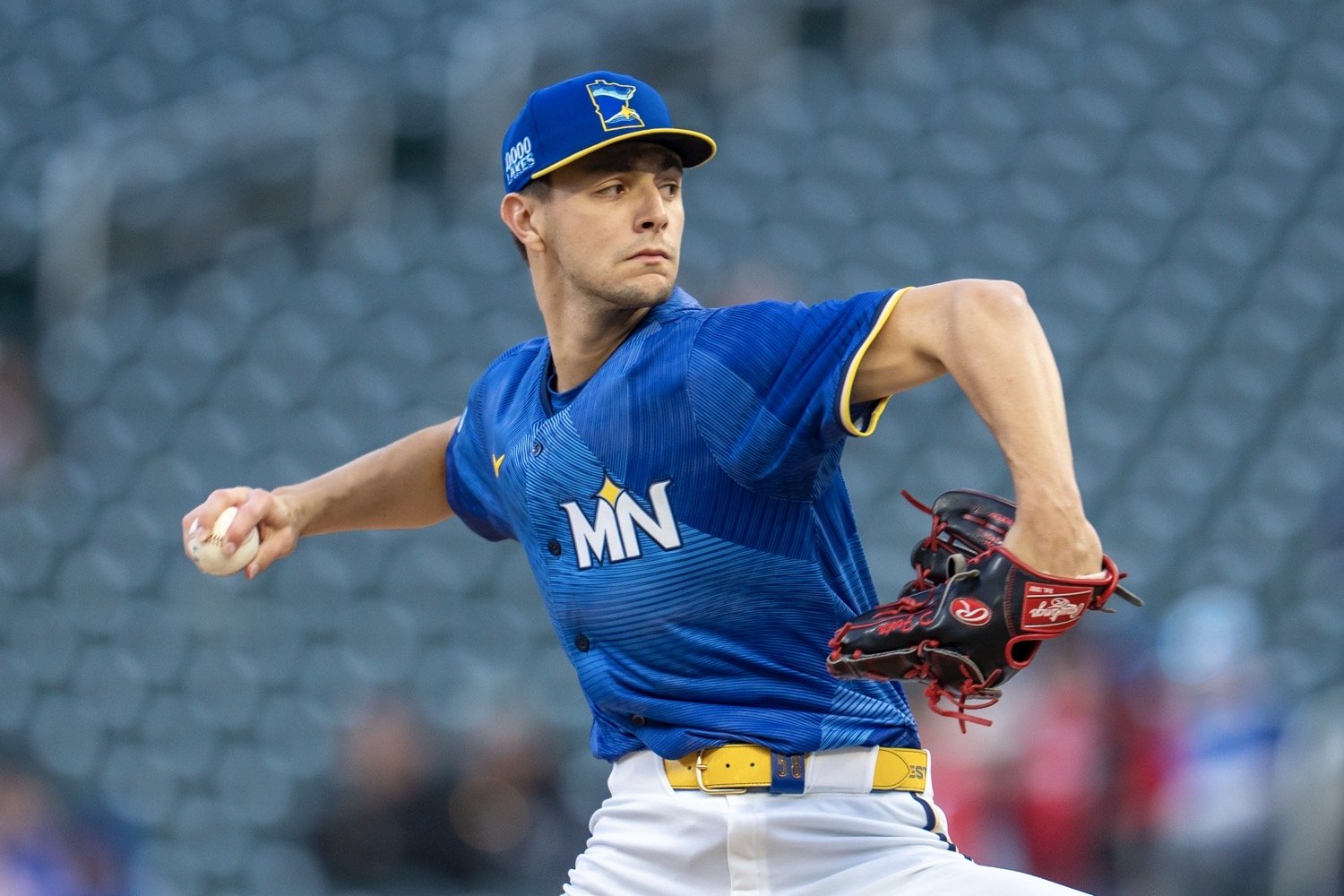 David Festa had a productive season debut Friday, going 4 ⅔ innings, allowing one (unearned) run, and striking out four while walking one Detroit Tigers batters. He got through that on just 64 pitches. Perhaps most impressive was the 28% whiff rate, including a 57% whiff rate on his changeup. According to Statcast, Detroit had no Barrels against him. It was just the start you'd hope for after Festa’s rookie season, which saw him produce a 19.5 K-BB% and a 3.76 FIP, and it's exactly what the Twins needed to give him a second crack at the rotation. Some may have been surprised to see Festa get the call over Zebby Matthews, who has been the better of the two in a small sample so far in 2025, but the timing just worked out better for Festa. It was likely that Festa was making a start on Friday, whether it be for the St. Paul Saints or the Twins, whereas Matthews had just thrown 80 pitches across five innings on Tuesday. Regardless, even after Festa was named Friday’s starter at Target Field, some speculated that he would be demoted back to St. Paul. This would make way for a Matthews promotion to start Monday against the Mets. Even the Twins nodded and winked in that direction, behind the scenes. Instead, Joe Ryan drew the Monday start. Bailey Ober gets them on Tuesday, and Festa was named the starter of the series finale on Wednesday's matinee. It is possible that the initial plan did look different, as it wasn't announced until yesterday afternoon that Matthews would start for the Saints on Tuesday. Festa told our Matt Trueblood he was told mid-morning Saturday that he would get the nod again Wednesday. Regardless of when (or even why) the decision was made to roll with Festa for a second time, though, it's an outcome the righty earned—even on just four days' rest. Not only did he earn it, but procedurally, it might be the most logical move. Having thrown just 64 pitches on Friday allows him to start after four days' rest without any restrictions, saving the Twins from optioning Festa—which would mean he couldn't be promoted for 15 days (barring an injury). The same goes for Matthews. With López only expected to miss the minimum amount of time (hopefully), it wouldn't be ideal to lock up your two best “next men up” for two weeks in case injury strikes elsewhere. It also may make sense strategically, as the Twins are facing the Mets' top three arms this series. Instead of putting Matthews in a position where he's facing a potent lineup while battling rotation ace Clay Holmes, the Twins opted to have two of their top arms go head-to-head with the Mets’ top two on Monday and Tuesday. This opened the door to roll with Festa for a second time as the Mets will deploy Griffin Canning—a more favorable duel than Matthews v. Holmes. It could also be that Matthews's pitch mix isn't a favorable matchup against the Mets. The Mets have produced well against horizontal movement dating back to last season (before they had Juan Soto). While both pitchers have a plus slider, Matthews also throws a cutter that has typically graded out as just below average. Moreover, last season, the Mets were one of the best fastball-hitting teams in baseball and Festa’s four-seamer has a little less glove-side movement and a little more induced vertical break than his peers'. At this point, we’re just throwing ideas against the wall and seeing if they stick. In reality, we don't know the reasoning behind the decisions that have been made regarding Festa and Matthews. I do think that procedurally it made the most sense, especially considering the brevity and effectiveness of Festa’s first start. Regardless, it’s really only a matter of time before we see Matthews on a big-league mound. How would you have handled Festa and Matthews? Join the conversation in the comments!
 -
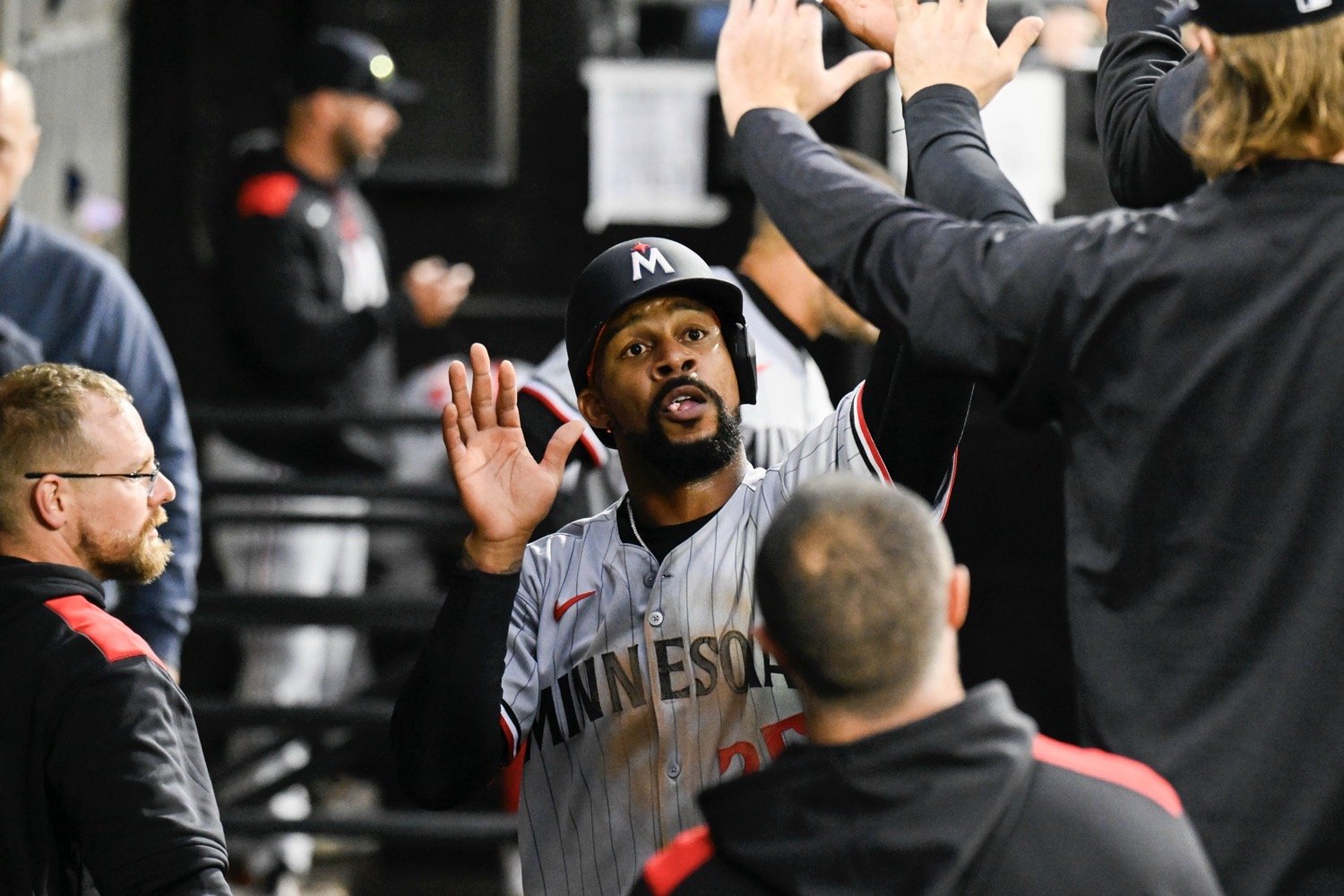 Had you noticed that Byron Buxton not only played but started in the first 11 games of the season? Either way, you've probably noticed he's been out of the lineup on back-to-back. After awkwardly crashing into the wall days prior, you may have been concerned that the Twins' centerfielder was dealing with an injury. Alas, that doesn't seem to be the case after an update from Dan Hayes on Buxton's absence yesterday and today. First and foremost, we hope that everything is okay with Buxton and his loved ones. We don't have any information on what the personal matter may be, and frankly it's none of our business. While Buxton was reportedly healthy as ever coming into the season, many were still cautiously optimistic that he could play 100+ games in back-to-back seasons for the first time in his career. Despite making ten consecutive starts for the first time since 2021, Buxton has struggled at the plate with a sub-.500 OPS, one home run, and a 16:1 K:BB ratio across 43 plate appearances. Especially when April is traditionally one of his better months, the Twins need more production out of their 31-year-old star. Before that, though, Buxton needs to tend to his personal matter. Our thoughts are with him and his family.
 -
Had you noticed that Byron Buxton not only played but started in the first 11 games of the season? Either way, you've probably noticed he's been out of the lineup on back-to-back. After awkwardly crashing into the wall days prior, you may have been concerned that the Twins' centerfielder was dealing with an injury. Alas, that doesn't seem to be the case after an update from Dan Hayes on Buxton's absence yesterday and today. First and foremost, we hope that everything is okay with Buxton and his loved ones. We don't have any information on what the personal matter may be, and frankly it's none of our business. While Buxton was reportedly healthy as ever coming into the season, many were still cautiously optimistic that he could play 100+ games in back-to-back seasons for the first time in his career. Despite making ten consecutive starts for the first time since 2021, Buxton has struggled at the plate with a sub-.500 OPS, one home run, and a 16:1 K:BB ratio across 43 plate appearances. Especially when April is traditionally one of his better months, the Twins need more production out of their 31-year-old star. Before that, though, Buxton needs to tend to his personal matter. Our thoughts are with him and his family. View full rumor
-
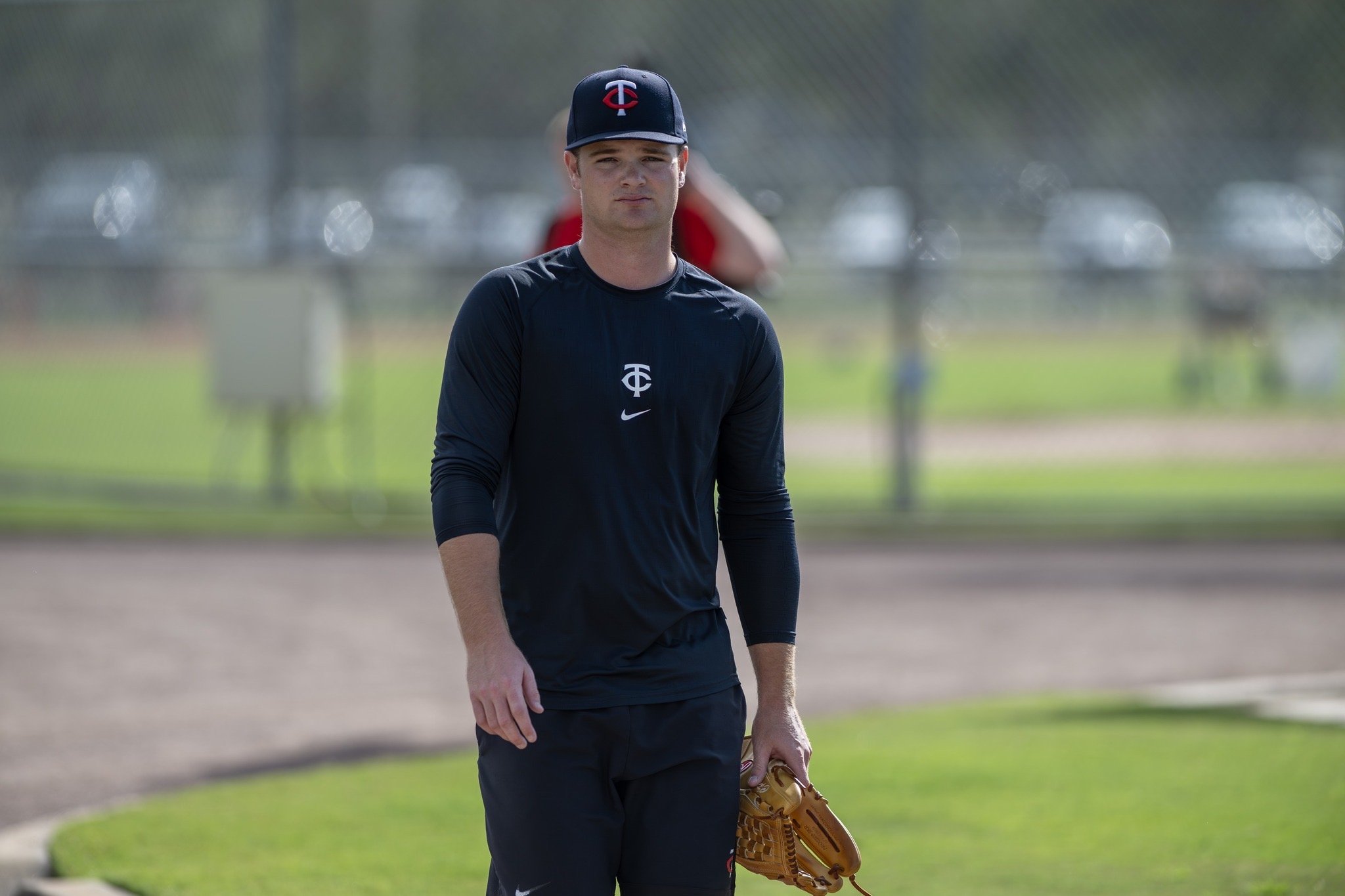 The 2022 second-round pick out of Alabama has been the subject of speculation here at Twins Daily for much of the offseason. Should the Twins develop him as a starter? Should they move him to the bullpen, putting him on the fast track to Target Field? Based on recent comments made by Twins general manager Jeremy Zoll, it seems as though we may have our answer. The first-year GM shared that the organization plans to have Prielipp follow a college-like schedule. “A once-a-week schedule keeps him really routine-oriented," Zoll said. "He’ll have some shorter outings in the early going, and we’ll build up some workload to get his feet under him…” Our own Jamie Cameron pointed out that isn't actually a unique approach to pitching in the minor leagues. Many teams utilize a six-man rotation, resulting (since the four full-season levels all operate on six-day schedules with Mondays off) in their starters pitching once a week. Yes, Prielipp was the Opening Day starter for the Double-A Wichita Wind Surge. In his lone outing, the southpaw got two quick outs before allowing the next four batters to reach, resulting in a 1-0 deficit. He'd put the side down in order in the second inning, before being lifted after hitting the leadoff hitter in the third. Prielipp’s final line was 2 innings, 2 hits, 2 earned runs, one walk, two hit batters, and three strikeouts. He's currently projected to make his second start Saturday against the Athletics' Double-A affiliate. To this point, everything that's been presented to us suggests that Prielipp is going to get a shot at building up as a starter. However, Twins president of baseball and business operations Derek Falvey suggested they're not pigeonholing themselves to that plan. “[Prielipp] may be the best lefthander we’ve ever drafted … his profile, internally, has evolved into more of a hard-throwing lefty reliever,” Falvey said. It's rare for the Twins front office to show their cards making Falvey’s statement especially noteworthy. Moreover, he specifically pointed out that their view on Prielipp has evolved “internally.” You don't have to read the tea leaves too much to understand that the Twins project Prielipp to impact the big-league bullpen someday. That day may be sooner, rather than later. While the Twins don't necessarily have a need in the bullpen right now (don't let the first 10 games of the season dissuade you from that), they’ll make room for one of the most electric arms in the minors. Right now, Prielipp basically has a three-pitch mix of plus pitches, but it’s his slider in particular that is considered one of the best pitches of any prospect in baseball. Aside from the globs of talent Prielipp has, the Twins' bullpen isn’t particularly deep from the left side. After Danny Coulombe, the only other southpaw reliever on the 40-man roster is Kody Funderburk. Both of them are fine mid-to-low leverage options, but adding Prielipp would give the Twins yet another high-leverage option, to go along with Jhoan Duran, Griffin Jax, and Cole Sands. All that said, we can't put the cart before the horse. With only 30 professional innings across two-plus seasons, the primary goal needs to be Prielipp getting into a familiar routine that allows him to stay healthy. If he can prove to handle 3-4 innings per outing in the early going, then comes the discussion of what's next. For now, keep an eye out for highlights of the lefty carving up Double-A hitters. Do you think Connor Prielipp can impact the big-league club in 2025? Join the conversation in the comments!
 -
Recently, the Minnesota Twins unveiled their early season plans for left-handed pitching prospect Connor Prielipp. What is the plan, and what does it tell us about the possibility of him impacting the big-league club sometime in 2025? Image courtesy of William Parmeter Recently, the Minnesota Twins unveiled their early season plans for left-handed pitching prospect Connor Prielipp. What is the plan, and what does it tell us about the possibility of him impacting the big-league club sometime in 2025? The 2022 second-round pick out of Alabama has been the subject of speculation here at Twins Daily for much of the offseason. Should the Twins develop him as a starter? Should they move him to the bullpen, putting him on the fast track to Target Field? Based on recent comments made by Twins general manager Jeremy Zoll, it seems as though we may have our answer. The first-year GM shared that the organization plans to have Prielipp follow a college-like schedule. “A once-a-week schedule keeps him really routine-oriented," Zoll said. "He’ll have some shorter outings in the early going, and we’ll build up some workload to get his feet under him…” Our own Jamie Cameron pointed out that isn't actually a unique approach to pitching in the minor leagues. Many teams utilize a six-man rotation, resulting (since the four full-season levels all operate on six-day schedules with Mondays off) in their starters pitching once a week. Yes, Prielipp was the Opening Day starter for the Double-A Wichita Wind Surge. In his lone outing, the southpaw got two quick outs before allowing the next four batters to reach, resulting in a 1-0 deficit. He'd put the side down in order in the second inning, before being lifted after hitting the leadoff hitter in the third. Prielipp’s final line was 2 innings, 2 hits, 2 earned runs, one walk, two hit batters, and three strikeouts. He's currently projected to make his second start Saturday against the Athletics' Double-A affiliate. To this point, everything that's been presented to us suggests that Prielipp is going to get a shot at building up as a starter. However, Twins president of baseball and business operations Derek Falvey suggested they're not pigeonholing themselves to that plan. “[Prielipp] may be the best lefthander we’ve ever drafted … his profile, internally, has evolved into more of a hard-throwing lefty reliever,” Falvey said. It's rare for the Twins front office to show their cards making Falvey’s statement especially noteworthy. Moreover, he specifically pointed out that their view on Prielipp has evolved “internally.” You don't have to read the tea leaves too much to understand that the Twins project Prielipp to impact the big-league bullpen someday. That day may be sooner, rather than later. While the Twins don't necessarily have a need in the bullpen right now (don't let the first 10 games of the season dissuade you from that), they’ll make room for one of the most electric arms in the minors. Right now, Prielipp basically has a three-pitch mix of plus pitches, but it’s his slider in particular that is considered one of the best pitches of any prospect in baseball. Aside from the globs of talent Prielipp has, the Twins' bullpen isn’t particularly deep from the left side. After Danny Coulombe, the only other southpaw reliever on the 40-man roster is Kody Funderburk. Both of them are fine mid-to-low leverage options, but adding Prielipp would give the Twins yet another high-leverage option, to go along with Jhoan Duran, Griffin Jax, and Cole Sands. All that said, we can't put the cart before the horse. With only 30 professional innings across two-plus seasons, the primary goal needs to be Prielipp getting into a familiar routine that allows him to stay healthy. If he can prove to handle 3-4 innings per outing in the early going, then comes the discussion of what's next. For now, keep an eye out for highlights of the lefty carving up Double-A hitters. Do you think Connor Prielipp can impact the big-league club in 2025? Join the conversation in the comments! View full article
-
Bombs Away: Torpedo Bats are Taking Over Major League Baseball
Matthew Lenz posted an article in Twins
 The torpedo bat blew up on social media this weekend, after the New York Yankees went on a power barrage, setting a franchise record for home runs in a game in just four innings. In three games against the Milwaukee Brewers, the Yankees bashed 15 home runs and scored 36 runs. Independent journalist Joe Pompliano was quick to point out that the bats are perfectly legal. Aaron Leanhardt, the field coordinator for the Miami Marlins, is the mastermind behind the torpedo bat. You can watch the full 8-minute interview recorded by Kevin Barral of our sister sister Fish on First. Otherwise, here are some takeaways: His background is in physics and electrical engineering, and he has a PhD from MIT. The idea took more than two years to get to this point. He credits the batters, not the bats. The bat was first utilized in 2023 (he wouldn't say by whom), at both the minor- and major-league levels. It was tested as early as 2022, but not in regular-season games. The industry was more aware of players trending toward using these bats than the media and general public were; this didn't sneak up on teams or players. Leanhardt points out that traditional bats are at their thickest at the end instead of at the barrel, which is where players are trying to make contact. Without getting into the weeds of the science behind it, Leanhardt (recently nicknamed El Torpedo) credits former Marlins infielder Jazz Chisholm Jr. with his rudimentary explanation of the bat's unique shape. In a tweet on Monday morning, the Yankees infielder stated in part “...you just move the wood from the parts you don’t use to the parts you do!” Put that way, it's such a simple concept one might wonder how nobody in baseball developed this long ago. To this point, just one Twins hitter has been spotted using the viral bat. In an interview with Dan Hayes of The Athletic ($$), Ryan Jeffers was asked if he thought the bats really made a difference. “I don’t think it’s going to be something that’s an end all, be all for everybody, that everybody’s going to start swinging these bats and become better hitters," Jeffers said. "I think this might work for some people and might not for others. For me, I’m giving it a little bit of a trial period, see how I like it.” It's unclear when this “trial period” started exactly, but he was using the torpedo bat in Tuesday’s game against the Chicago White Sox where he went 1-for-3 with an RBI single. For what it's worth (not much, over five games), his 2025 batted ball data wouldn't suggest the bat is helping the Twins backstop in the power department. He might also have been using it back in 2024, though. It remains to be seen whether other Twins will give the bat a trial run and, despite the hype, it's not a bandwagon that all players around the league are jumping on. In the same article, The Athletic included excerpts of interviews from various players and managers around the league. Aaron Judge, Juan Soto, and Spencer Torkelson are all players who are sticking with their traditional bats (at least for now), while Elly De La Cruz and Enrique Hernández have used or are planning on using the bat. In fact, in his first game using a torpedo bat, the Cincinnati Reds' electric shortstop went 4-for-5 with two home runs and a double. Chandler Bats, one of the companies who produces the bats (along with Victus and Marruci), reports that orders have come flying in after the Yankees’ weekend performance. Baseball is a game that has traditionally been slow to accept change. As Max Muncy pointed out in his interview with The Athletic, the baseball bat has changed very little over the 170-year history of the game. It's been nearly 30 years since players started using non-ash bats and almost 15 years since ax-handle bats gained popularity. Despite those subtle modifications, the shape of the barrel has always remained the same. Simply put, the torpedo bat might be the most revolutionary development for a piece of baseball equipment since Wilson introduced the “snap-action” heel to baseball gloves. Or, maybe it's not. Maybe it’s just a viral trend that will fall by the wayside over time. It's far too early to make any definitive claims regarding the torpedo bat. On the surface the idea makes a lot of sense, but we’re going to need at least a full season's worth of data before conjecturing whether the bat really makes a difference. As far as the Twins are concerned, we’ll likely be waiting a few weeks to see who else latches on to this trend. What are your thoughts on the torpedo bat? Join the conversation in the comments!
 -
Coming out of left field, torpedo bats are all the rage right now. The bowling pin-shaped bat is a shift from tradition, and is being credited with producing more power. Is the hype real? Who on the Minnesota Twins is using the bat? Image courtesy of © Brad Penner-Imagn Images Coming out of left field, torpedo bats are all the rage right now. The bowling pin-shaped bat is a shift from tradition, and is being credited with producing more power. Is the hype real? Who on the Minnesota Twins is using the bat? The torpedo bat blew up on social media this weekend, after the New York Yankees went on a power barrage, setting a franchise record for home runs in a game in just four innings. In three games against the Milwaukee Brewers, the Yankees bashed 15 home runs and scored 36 runs. Independent journalist Joe Pompliano was quick to point out that the bats are perfectly legal. Aaron Leanhardt, the field coordinator for the Miami Marlins, is the mastermind behind the torpedo bat. You can watch the full 8-minute interview recorded by Kevin Barral of our sister sister Fish on First. Otherwise, here are some takeaways: His background is in physics and electrical engineering, and he has a PhD from MIT. The idea took more than two years to get to this point. He credits the batters, not the bats. The bat was first utilized in 2023 (he wouldn't say by whom), at both the minor- and major-league levels. It was tested as early as 2022, but not in regular-season games. The industry was more aware of players trending toward using these bats than the media and general public were; this didn't sneak up on teams or players. Leanhardt points out that traditional bats are at their thickest at the end instead of at the barrel, which is where players are trying to make contact. Without getting into the weeds of the science behind it, Leanhardt (recently nicknamed El Torpedo) credits former Marlins infielder Jazz Chisholm Jr. with his rudimentary explanation of the bat's unique shape. In a tweet on Monday morning, the Yankees infielder stated in part “...you just move the wood from the parts you don’t use to the parts you do!” Put that way, it's such a simple concept one might wonder how nobody in baseball developed this long ago. To this point, just one Twins hitter has been spotted using the viral bat. In an interview with Dan Hayes of The Athletic ($$), Ryan Jeffers was asked if he thought the bats really made a difference. “I don’t think it’s going to be something that’s an end all, be all for everybody, that everybody’s going to start swinging these bats and become better hitters," Jeffers said. "I think this might work for some people and might not for others. For me, I’m giving it a little bit of a trial period, see how I like it.” It's unclear when this “trial period” started exactly, but he was using the torpedo bat in Tuesday’s game against the Chicago White Sox where he went 1-for-3 with an RBI single. For what it's worth (not much, over five games), his 2025 batted ball data wouldn't suggest the bat is helping the Twins backstop in the power department. He might also have been using it back in 2024, though. It remains to be seen whether other Twins will give the bat a trial run and, despite the hype, it's not a bandwagon that all players around the league are jumping on. In the same article, The Athletic included excerpts of interviews from various players and managers around the league. Aaron Judge, Juan Soto, and Spencer Torkelson are all players who are sticking with their traditional bats (at least for now), while Elly De La Cruz and Enrique Hernández have used or are planning on using the bat. In fact, in his first game using a torpedo bat, the Cincinnati Reds' electric shortstop went 4-for-5 with two home runs and a double. Chandler Bats, one of the companies who produces the bats (along with Victus and Marruci), reports that orders have come flying in after the Yankees’ weekend performance. Baseball is a game that has traditionally been slow to accept change. As Max Muncy pointed out in his interview with The Athletic, the baseball bat has changed very little over the 170-year history of the game. It's been nearly 30 years since players started using non-ash bats and almost 15 years since ax-handle bats gained popularity. Despite those subtle modifications, the shape of the barrel has always remained the same. Simply put, the torpedo bat might be the most revolutionary development for a piece of baseball equipment since Wilson introduced the “snap-action” heel to baseball gloves. Or, maybe it's not. Maybe it’s just a viral trend that will fall by the wayside over time. It's far too early to make any definitive claims regarding the torpedo bat. On the surface the idea makes a lot of sense, but we’re going to need at least a full season's worth of data before conjecturing whether the bat really makes a difference. As far as the Twins are concerned, we’ll likely be waiting a few weeks to see who else latches on to this trend. What are your thoughts on the torpedo bat? Join the conversation in the comments! View full article
-
 After the Minnesota Twins lost their first four games of the season, they hoped to get a mood boost from a quick scrimmage against their own Triple-A affiliate. Instead, they lost that, too. They were relegated to the International League and will play the remainder of the season at CHS Field. As a reward for beating the big-league club, the St. Paul Saints will play the remainder of the 2025 season at Target Field and take over the Twins' remaining schedule. Commissioner Rob Manfred organized the face-off after the Twins were blanked by Martín Pérez and the lowly Chicago White Sox. Sources suggest that Twins players were caught off-guard when their gear was loaded on the team bus and they were shuttled to the Fosco Park neighborhood instead of their motel off Michigan Avenue. The game was secretly played at the home field of the Kekambas, with minimal fanfare and no cameras. Fortunately, Jefferson Albert Tibbs still resides in the area and shared the game from his perspective. Tibbs reported that Simeon Woods Richardson and Zebby Matthews, two guys who just recently battled to anchor the rotation, went head-to-head in the matchup. After an immaculate inning from Matthews in the top of the first, Woods Richardson struggled to record outs. Austin Martin, on his revenge tour, led off with a bunt base hit and afterward looked into the Twins’ dugout screaming “ANYTHING IS POSSIBLE” like he just won an NBA championship. Top prospects Luke Keaschall and Emmanuel Rodríguez followed with back-to-back home runs, making it 3-0 Saints early. Woods Richardson mostly settled in thereafter, but Matthews remained dominant. Tibbs, who spent most of the game trying to guess what "Zebby" was short for, was impressed with the 25-year-old. “I don't know what that dude throws, but striking out 10 hitters and remaining perfect after five innings is hella impressive,” he said. "But I guess they must have had five dudes who are even better." It was at that moment things truly went awry for the Twins. Woods Richardson, who was approaching the 80-pitch mark at the end of five frames, didn't leave the dugout for the top of the sixth. “Yo Coach! Sup with Sim?” Tibbs recalled shouting to manager Rocco Baldelli. Before Baldelli could share his philosophy on pitch counts, though, Tibbs saw Jorge Alcalá headed to the mound in relief. For the second straight appearance, Alcalá failed to record an out—this time, against the seventh through ninth hitters in the Saints lineup. Cole Sands was called on to face the top of the lineup with the bases loaded, but the murderer's row of Martin-Keaschall-Rodriguez continued to make a case for the big-league club. Facing an 8-0 deficit, it was up to the Twins offense to mount a comeback in the final innings of the game. “If there’s one thing I remember from Coach O'Neil, it's that they need to choke up on the bat and swing down on the ball like your chopping wood”, said Tibbs. “These hacks are going up there swinging for the fences and it isn't working. Put the ball in play!” Wise or otherwise, these words fell on deaf ears, as Matthews continued to mow down hitters. After eight perfect innings and 84 pitches, Saints manager Toby Gardenhire shouted to the Twins’ dugout “Hey, Rocco! Check this out!” and sent Matthews back to the mound, all but guaranteeing he would throw more than 90 pitches in the game. Naturally, Baldelli countered with a trio of pinch-hitters. Naturally, those pinch-hitters went three up, three down, locking in Matthews’s perfect game and a victory for the Saints. It was barely more dominant than the White Sox's trampling of the hapless Twins earlier Monday, but it was enough to prompt a swap of one team with a long history in the majors with one who currently seems more deserving of being there. "They sure as hell aren't goin' to the ship," Tibbs put it, bluntly.
- 11 comments
-
- 10
-

-

-
For the first time ever, a Major League Baseball team has been relegated to the minors. After a convincing victory against the Minnesota Twins, the St. Paul Saints will now usurp their maligned parent club, replacing them in the American League Central. Image courtesy of © Matt Marton-Imagn Images For the first time ever, a Major League Baseball team has been relegated to the minors. After a convincing victory against the Minnesota Twins, the St. Paul Saints will now usurp their maligned parent club, replacing them in the American League Central. After the Minnesota Twins lost their first four games of the season, they hoped to get a mood boost from a quick scrimmage against their own Triple-A affiliate. Instead, they lost that, too. They were relegated to the International League and will play the remainder of the season at CHS Field. As a reward for beating the big-league club, the St. Paul Saints will play the remainder of the 2025 season at Target Field and take over the Twins' remaining schedule. Commissioner Rob Manfred organized the face-off after the Twins were blanked by Martín Pérez and the lowly Chicago White Sox. Sources suggest that Twins players were caught off-guard when their gear was loaded on the team bus and they were shuttled to the Fosco Park neighborhood instead of their motel off Michigan Avenue. The game was secretly played at the home field of the Kekambas, with minimal fanfare and no cameras. Fortunately, Jefferson Albert Tibbs still resides in the area and shared the game from his perspective. Tibbs reported that Simeon Woods Richardson and Zebby Matthews, two guys who just recently battled to anchor the rotation, went head-to-head in the matchup. After an immaculate inning from Matthews in the top of the first, Woods Richardson struggled to record outs. Austin Martin, on his revenge tour, led off with a bunt base hit and afterward looked into the Twins’ dugout screaming “ANYTHING IS POSSIBLE” like he just won an NBA championship. Top prospects Luke Keaschall and Emmanuel Rodríguez followed with back-to-back home runs, making it 3-0 Saints early. Woods Richardson mostly settled in thereafter, but Matthews remained dominant. Tibbs, who spent most of the game trying to guess what "Zebby" was short for, was impressed with the 25-year-old. “I don't know what that dude throws, but striking out 10 hitters and remaining perfect after five innings is hella impressive,” he said. "But I guess they must have had five dudes who are even better." It was at that moment things truly went awry for the Twins. Woods Richardson, who was approaching the 80-pitch mark at the end of five frames, didn't leave the dugout for the top of the sixth. “Yo Coach! Sup with Sim?” Tibbs recalled shouting to manager Rocco Baldelli. Before Baldelli could share his philosophy on pitch counts, though, Tibbs saw Jorge Alcalá headed to the mound in relief. For the second straight appearance, Alcalá failed to record an out—this time, against the seventh through ninth hitters in the Saints lineup. Cole Sands was called on to face the top of the lineup with the bases loaded, but the murderer's row of Martin-Keaschall-Rodriguez continued to make a case for the big-league club. Facing an 8-0 deficit, it was up to the Twins offense to mount a comeback in the final innings of the game. “If there’s one thing I remember from Coach O'Neil, it's that they need to choke up on the bat and swing down on the ball like your chopping wood”, said Tibbs. “These hacks are going up there swinging for the fences and it isn't working. Put the ball in play!” Wise or otherwise, these words fell on deaf ears, as Matthews continued to mow down hitters. After eight perfect innings and 84 pitches, Saints manager Toby Gardenhire shouted to the Twins’ dugout “Hey, Rocco! Check this out!” and sent Matthews back to the mound, all but guaranteeing he would throw more than 90 pitches in the game. Naturally, Baldelli countered with a trio of pinch-hitters. Naturally, those pinch-hitters went three up, three down, locking in Matthews’s perfect game and a victory for the Saints. It was barely more dominant than the White Sox's trampling of the hapless Twins earlier Monday, but it was enough to prompt a swap of one team with a long history in the majors with one who currently seems more deserving of being there. "They sure as hell aren't goin' to the ship," Tibbs put it, bluntly. View full article
-
Overreacting to the Minnesota Twins Getting Swept in Games 1-3 of 2025
Matthew Lenz posted an article in Twins
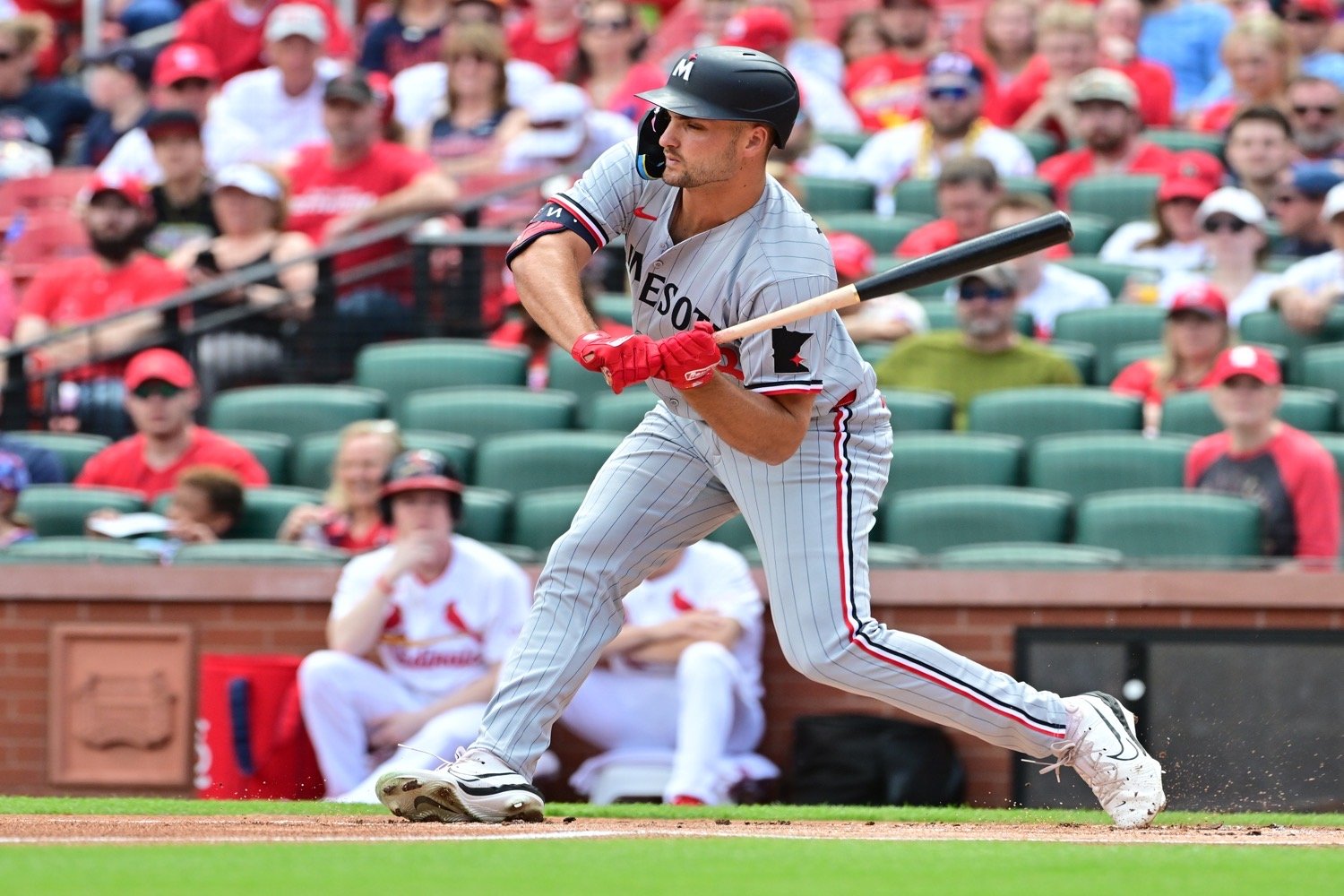 Tremendous Trio Falter The top of the Twins' rotation, arguably one of the best in the league, managed to go just 12 ⅔ total innings this weekend, forcing the bullpen to cover the remaining 11 ⅓ (more on those innings later). I wrote last week that the Twins need their top three starters to average six or more innings per start to be World Series contenders; they averaged less than five frames over the opening weekend. Pablo López looked very hittable, allowing eight baserunners and four runs in just five innings. Joe Ryan had a productive start, but it was cut short after just 81 pitches. Bailey Ober’s first start of the season was reminiscent of his first start of last season. For what it's worth, it was later shared that he was dealing with an illness. Regardless, the Twins cannot afford to have a string of starts like this from the top of their rotation very often this year. Not only is the bullpen already well used ahead of games on each of the next four days, but they weren't able to bail their starters out and get the team any wins. If you thought the Twins were capable of winning 85 games (52.5% win percentage), they're now looking at 83 wins, which probably won’t be enough to make the playoffs. They need to play at an 87-win pace for the remainder of the season to make up the difference. Offensive Woes Is it still 2024? The Twins scored six runs all series. They have the second-lowest batting average in baseball, the fourth-lowest walk rate, and the second-lowest WAR. They accrued -0.3 fWAR, edging out only the Colorado Rockies. They had only 12 at-bats with runners in scoring position, and mustered just two doubles (.167 BA), scoring two runs. Moreover, like the rotation, the top three names on the lineup card couldn't set the table for the rest of the lineup. The combination of Matt Wallner, Carlos Correa, and Byron Buxton went 2-for-34 (.058) this weekend, with 9 strikeouts, 3 walks, and a single run batted in. In one sense, it's not surprising to see more of the same from last season. Aside from Harrison Bader and Ty France, the Twins are bringing back the same frustrating group of hitters who slouched home at the end of 2024. Rather than players developing, we saw Eduaord Julien only get an at-bat in garbage time of Sunday’s game and Jose Miranda batting 8th, including two spots below Mickey Gasper in Saturday’s game. If that doesn't tell you how Twins manager Rocco Baldelli currently views those two, then I don't know what else would. This comes after Austin Martin, who had 233 at-bats last season, couldn't make the team out of spring training after being called a “[future] defensive star” in the outfield. The combination of the top of the lineup being less productive than the top of the rotation, a Royce Lewis injury, and players looking like their 2024 selves made for a familiar, maddening mess. The biggest concern from last season immediately reared its ugly head in 2025, making it hard to be optimistic moving forward. Bullpen Blow-Ups How many times did we hear the Twins have the best bullpen in baseball? That very group gave up six earned runs and walked more batters than they struck out. Like the rotation and lineup, the top end of the bullpen didn't come through for the Twins when they needed it. Jhoan Durán and Griffin Jax allowed five baserunners and two earned runs in their one combined inning. Meanwhile, Jorge Alcalá didn't register an out. He allowed three runners to reach base and three earned runs, after Louis Varland inherited those runners and allowed them to score. Naturally, the Twins designated Randy Dobnak for assignment on Sunday, after the long man pitched more innings and better than two of the three starters. This all leads to an unexpectedly discombobulated bullpen that now needs to cover four straight games. Even against the White Sox, it's hard to expect more than 10 total innings for Chis Paddack and Simeon Woods Richardson in the first two contests of this week, so that relief corps is facing an immediate test. Of everything that happened this weekend, this is probably the most disappointing. While the starters were far from meeting expectations, López’s and Ober’s starts weren't overly surprising. We know that the offense can be streaky, and that group had the most uncertainty coming into the season. It was the bullpen that was supposed to be lights-out, but they were far from that in this series. Most concerning is Durán, who's coming off a down 2024 season and looking to re-establish himself as one of the league's top relievers. Reliever production is naturally very volatile and can come crashing down at any point. More than anything else, the Twins cannot survive regression from this sector of the team. Baldelli’s Baffling Decisions Let me start by saying that I am in no way, shape, or form a Baldelli basher. He's not perfect, but I think he's done a very good job with the rosters he’s been given over the years. I think that him pulling pitchers too early is a figment of your imagination, basically, and I generally agree with the way he manages the game on both sides of the ball. That said, I don't love how he handled some things this weekend. Bader was the team’s best player on Opening Day, and he gets benched for game two—just so Mickey Gasper can get at-bats? Then, Gasper (who had yet to have a big-league hit) proceeded to bat sixth in the batting order, ahead of Willi Castro and Miranda. With a righty on the mound, Baldelli was worried about match-ups. Sometimes, however, I think talent has to outweigh the perceived match-up edge. There may be an argument that Miranda and Gasper are interchangeable, but Gasper over Castro seems egregious. In the same game, he then cut off a cruising Ryan after just 81 pitches and set to face the bottom third of the Cardinals lineup. I get that it was his first start. I get that he ended last season on the injured list. I still don't get why those things would not allow him to approach 90 pitches after five low-stress innings, especially considering the part of the lineup he was set to face. Lastly, Baldelli is known for maintenance plans and being cautious with players. Yet, he elected to put Ober on the mound, despite him being well under 100%? Make it make sense. Bluntly put, this weekend was a disaster. To me, that's not overreacting. That's a fact. However, it would be too much to project onto the next 159 games because the first three were atrocious. The season is a marathon, not a sprint. It can't be lost in the first half mile. Whatever you thought of this team ahead of Thursday’s opener should be the same today, give or take.
- 58 comments
-
- 1
-
-
- rocco baldelli
- pablo lopez
- (and 5 more)
-
The Minnesota Twins opened up the 2025 major-league season by losing their first three games to the St. Louis Cardinals. What storylines from the uninspiring start are worth overreacting to? (And don't say none of them.) Image courtesy of © Tim Vizer-Imagn Images The Minnesota Twins opened up the 2025 major-league season by losing their first three games to the St. Louis Cardinals. What storylines from the uninspiring start are worth overreacting to? (And don't say none of them.) Tremendous Trio Falter The top of the Twins' rotation, arguably one of the best in the league, managed to go just 12 ⅔ total innings this weekend, forcing the bullpen to cover the remaining 11 ⅓ (more on those innings later). I wrote last week that the Twins need their top three starters to average six or more innings per start to be World Series contenders; they averaged less than five frames over the opening weekend. Pablo López looked very hittable, allowing eight baserunners and four runs in just five innings. Joe Ryan had a productive start, but it was cut short after just 81 pitches. Bailey Ober’s first start of the season was reminiscent of his first start of last season. For what it's worth, it was later shared that he was dealing with an illness. Regardless, the Twins cannot afford to have a string of starts like this from the top of their rotation very often this year. Not only is the bullpen already well used ahead of games on each of the next four days, but they weren't able to bail their starters out and get the team any wins. If you thought the Twins were capable of winning 85 games (52.5% win percentage), they're now looking at 83 wins, which probably won’t be enough to make the playoffs. They need to play at an 87-win pace for the remainder of the season to make up the difference. Offensive Woes Is it still 2024? The Twins scored six runs all series. They have the second-lowest batting average in baseball, the fourth-lowest walk rate, and the second-lowest WAR. They accrued -0.3 fWAR, edging out only the Colorado Rockies. They had only 12 at-bats with runners in scoring position, and mustered just two doubles (.167 BA), scoring two runs. Moreover, like the rotation, the top three names on the lineup card couldn't set the table for the rest of the lineup. The combination of Matt Wallner, Carlos Correa, and Byron Buxton went 2-for-34 (.058) this weekend, with 9 strikeouts, 3 walks, and a single run batted in. In one sense, it's not surprising to see more of the same from last season. Aside from Harrison Bader and Ty France, the Twins are bringing back the same frustrating group of hitters who slouched home at the end of 2024. Rather than players developing, we saw Eduaord Julien only get an at-bat in garbage time of Sunday’s game and Jose Miranda batting 8th, including two spots below Mickey Gasper in Saturday’s game. If that doesn't tell you how Twins manager Rocco Baldelli currently views those two, then I don't know what else would. This comes after Austin Martin, who had 233 at-bats last season, couldn't make the team out of spring training after being called a “[future] defensive star” in the outfield. The combination of the top of the lineup being less productive than the top of the rotation, a Royce Lewis injury, and players looking like their 2024 selves made for a familiar, maddening mess. The biggest concern from last season immediately reared its ugly head in 2025, making it hard to be optimistic moving forward. Bullpen Blow-Ups How many times did we hear the Twins have the best bullpen in baseball? That very group gave up six earned runs and walked more batters than they struck out. Like the rotation and lineup, the top end of the bullpen didn't come through for the Twins when they needed it. Jhoan Durán and Griffin Jax allowed five baserunners and two earned runs in their one combined inning. Meanwhile, Jorge Alcalá didn't register an out. He allowed three runners to reach base and three earned runs, after Louis Varland inherited those runners and allowed them to score. Naturally, the Twins designated Randy Dobnak for assignment on Sunday, after the long man pitched more innings and better than two of the three starters. This all leads to an unexpectedly discombobulated bullpen that now needs to cover four straight games. Even against the White Sox, it's hard to expect more than 10 total innings for Chis Paddack and Simeon Woods Richardson in the first two contests of this week, so that relief corps is facing an immediate test. Of everything that happened this weekend, this is probably the most disappointing. While the starters were far from meeting expectations, López’s and Ober’s starts weren't overly surprising. We know that the offense can be streaky, and that group had the most uncertainty coming into the season. It was the bullpen that was supposed to be lights-out, but they were far from that in this series. Most concerning is Durán, who's coming off a down 2024 season and looking to re-establish himself as one of the league's top relievers. Reliever production is naturally very volatile and can come crashing down at any point. More than anything else, the Twins cannot survive regression from this sector of the team. Baldelli’s Baffling Decisions Let me start by saying that I am in no way, shape, or form a Baldelli basher. He's not perfect, but I think he's done a very good job with the rosters he’s been given over the years. I think that him pulling pitchers too early is a figment of your imagination, basically, and I generally agree with the way he manages the game on both sides of the ball. That said, I don't love how he handled some things this weekend. Bader was the team’s best player on Opening Day, and he gets benched for game two—just so Mickey Gasper can get at-bats? Then, Gasper (who had yet to have a big-league hit) proceeded to bat sixth in the batting order, ahead of Willi Castro and Miranda. With a righty on the mound, Baldelli was worried about match-ups. Sometimes, however, I think talent has to outweigh the perceived match-up edge. There may be an argument that Miranda and Gasper are interchangeable, but Gasper over Castro seems egregious. In the same game, he then cut off a cruising Ryan after just 81 pitches and set to face the bottom third of the Cardinals lineup. I get that it was his first start. I get that he ended last season on the injured list. I still don't get why those things would not allow him to approach 90 pitches after five low-stress innings, especially considering the part of the lineup he was set to face. Lastly, Baldelli is known for maintenance plans and being cautious with players. Yet, he elected to put Ober on the mound, despite him being well under 100%? Make it make sense. Bluntly put, this weekend was a disaster. To me, that's not overreacting. That's a fact. However, it would be too much to project onto the next 159 games because the first three were atrocious. The season is a marathon, not a sprint. It can't be lost in the first half mile. Whatever you thought of this team ahead of Thursday’s opener should be the same today, give or take. View full article
-
OOTP Simulation: The Minnesota Twins Can Win The 2025 World Series
Matthew Lenz posted an article in Twins
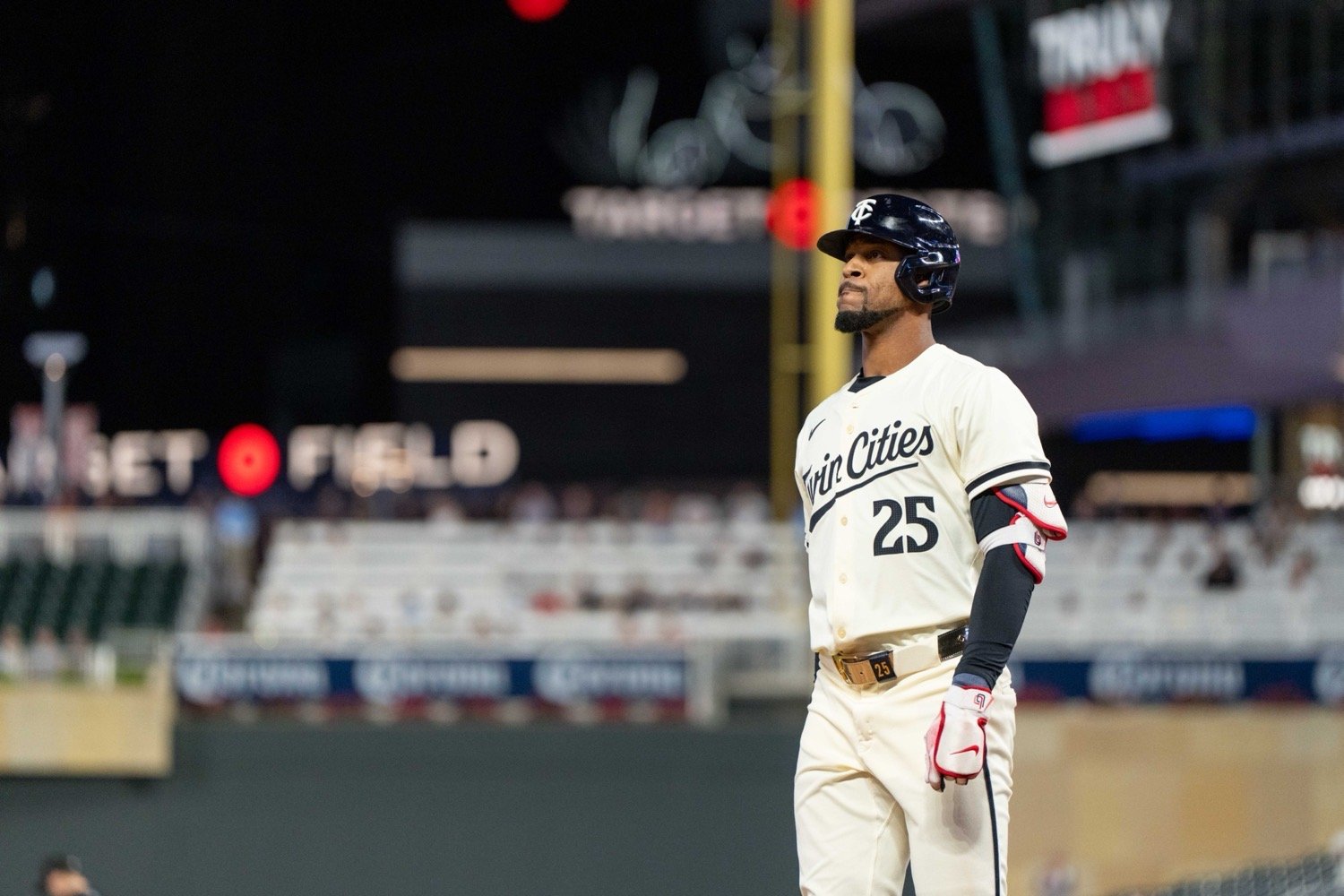 For those unfamiliar, Out Of The Park Baseball (OOTP) is an in-depth, highly realistic baseball simulation game. Players can put themselves in the shoes of their favorite team’s General Manager and Field Manager making everything from roster decisions, scouting, and overall team strategy all the while managing what's happening on the field. While you can't actually control the players on the field, you can manage the game one pitch at a time controlling your hitter’s plate approach and pitcher’s pitch sequencing. Schoenfield used the game to simulate the 2025 season 25 times and had two surprising results related to the Twins. Three World Series Championships You read that right. In three of the 25 simulated seasons, the Twins were crowned World Series champions. Oddly enough, they won the World Series in the first three simulations before coming up short in the remaining 22. The Twins currently have the 14th-best odds to win the World Series at 25-1, so it's surprising to see them win in 12% of simulated seasons. If anything, it speaks to the talent and depth that the Twins have on their roster and the ceiling this team can reach if everything goes right. Unfortunately (and unsurprisingly), things are already falling apart for the Twins as a myriad of projected contributors are expected to start the season on the injured list or in St. Paul. Most notably, Royce Lewis (hamstring) and Brooks Lee (back) are already on the IL, and Austin Martin was optioned to Triple-A - St. Paul after playing 93 games for the Twins last season. It's not the start of the season that we hoped for, but you don't win the marathon, which is the Major League Baseball season, in the first month of the season. The Twins have what it takes to prove OOTP right, but they must get and remain healthy to reach the pinnacle. A lot of that falls on the other “unexpected star” projected by the simulation activity. Byron Buxton Makes An MVP Case What would be more surprising: a Twins World Series or Byron Buxton playing 150 games? In the eyes of OOTP, both of these things could happen. It's unclear whether the stat line projected by OOTP is Buxton’s best output or an average of all 25 simulations (I assume the former), but across 150 games, he posted a .275 batting average and 34 home runs, accruing 8.0 WAR. We know that Buxton has the talent not just to reach those numbers but to exceed those numbers. Despite never playing more than 102 games in any season, Buxton has career highs of a .279 batting average set in 2024 and 28 home runs set in 2022. If we were to get a healthy season from Buxton, a .275 batting average and 34 home runs is a very real possibility. Add his centerfield defense (although he'd probably be splitting time between there and DH), and he’d absolutely be in the MVP conversation by the season’s end. OOTP gives Twins fans something to dream about, and the simulation comes at a time when we need it. OOTP confirms one thing: If the Twins can overcome the injuries they're already facing while keeping their other stars on the field, they have a shot at a magical season. If everything goes right, what do you see as the Twins' ceiling in 2025? If Buxton stays healthy, do you think we can put up a performance worthy of MVP votes? Join the conversation in the comments!
 -
David Schoenfield of ESPN recently ran 25 simulations of Out Of The Park Baseball to help predict some of the “unexpected stars” of the 2025 season. Not only did the Minnesota Twins have an unexpected star, but the team as a whole accomplished something it hasn't since 1991. Image courtesy of © Matt Blewett-Imagn Images David Schoenfield of ESPN recently ran 25 simulations of Out Of The Park Baseball to help predict some of the “unexpected stars” of the 2025 season. Not only did the Minnesota Twins have an unexpected star, but the team as a whole accomplished something it hasn't since 1991. For those unfamiliar, Out Of The Park Baseball (OOTP) is an in-depth, highly realistic baseball simulation game. Players can put themselves in the shoes of their favorite team’s General Manager and Field Manager making everything from roster decisions, scouting, and overall team strategy all the while managing what's happening on the field. While you can't actually control the players on the field, you can manage the game one pitch at a time controlling your hitter’s plate approach and pitcher’s pitch sequencing. Schoenfield used the game to simulate the 2025 season 25 times and had two surprising results related to the Twins. Three World Series Championships You read that right. In three of the 25 simulated seasons, the Twins were crowned World Series champions. Oddly enough, they won the World Series in the first three simulations before coming up short in the remaining 22. The Twins currently have the 14th-best odds to win the World Series at 25-1, so it's surprising to see them win in 12% of simulated seasons. If anything, it speaks to the talent and depth that the Twins have on their roster and the ceiling this team can reach if everything goes right. Unfortunately (and unsurprisingly), things are already falling apart for the Twins as a myriad of projected contributors are expected to start the season on the injured list or in St. Paul. Most notably, Royce Lewis (hamstring) and Brooks Lee (back) are already on the IL, and Austin Martin was optioned to Triple-A - St. Paul after playing 93 games for the Twins last season. It's not the start of the season that we hoped for, but you don't win the marathon, which is the Major League Baseball season, in the first month of the season. The Twins have what it takes to prove OOTP right, but they must get and remain healthy to reach the pinnacle. A lot of that falls on the other “unexpected star” projected by the simulation activity. Byron Buxton Makes An MVP Case What would be more surprising: a Twins World Series or Byron Buxton playing 150 games? In the eyes of OOTP, both of these things could happen. It's unclear whether the stat line projected by OOTP is Buxton’s best output or an average of all 25 simulations (I assume the former), but across 150 games, he posted a .275 batting average and 34 home runs, accruing 8.0 WAR. We know that Buxton has the talent not just to reach those numbers but to exceed those numbers. Despite never playing more than 102 games in any season, Buxton has career highs of a .279 batting average set in 2024 and 28 home runs set in 2022. If we were to get a healthy season from Buxton, a .275 batting average and 34 home runs is a very real possibility. Add his centerfield defense (although he'd probably be splitting time between there and DH), and he’d absolutely be in the MVP conversation by the season’s end. OOTP gives Twins fans something to dream about, and the simulation comes at a time when we need it. OOTP confirms one thing: If the Twins can overcome the injuries they're already facing while keeping their other stars on the field, they have a shot at a magical season. If everything goes right, what do you see as the Twins' ceiling in 2025? If Buxton stays healthy, do you think we can put up a performance worthy of MVP votes? Join the conversation in the comments! View full article
-
The Minnesota Twins are the favorite to win the American League Central. Despite that, they have just the 14th-best odds to win the World Series. Here are three unlikely things that need to happen for a real October run to materialize. Image courtesy of © Jonah Hinebaugh/Naples Daily News/USA Today Network-Florida / USA TODAY NETWORK via Imagn Images The Minnesota Twins are the favorite to win the American League Central. Despite that, they have just the 14th-best odds to win the World Series. Here are three unlikely things that need to happen for a real October run to materialize. For the fifth time in the last seven seasons, the Twins will be a competitive force in the American League. PECOTA currently projects them to win 87 games, roughly five games ahead of the Kansas City Royals for the division crown and seventh-most in baseball. Yet, I don’t know that anyone views them as even a dark-horse World Series contender. This isn’t particularly surprising (or even unwarranted), as it seems that for the better part of this century, the winner of the AL Central isn’t taken as seriously as other division winners. Many view the AL Central as the weakest division in baseball The talent is here for the team to be one of the elite teams in the majors, but that's not the prevailing view of most baseball observers, inside or beyond Twins Territory. With multiple players already on the injured list and Austin Martin (who some expected to be a contributor for the big-league club) relegated to Triple-A St. Paul, what needs to happen this season for the Twins to improve from “competitive” to true title contender? No. 1: 15+ fWAR from Byron Buxton, Carlos Correa, and Royce Lewis Bottom line: the Twins need Buxton, Correa, and Lewis to be productive and healthy to have any shot at a World Series in 2025. Not only are Buxton and Correa two of the team’s most experienced and expensive players, but they’re MVP candidates when at their best. For Lewis, he’s flashed the same potential but hasn’t been healthy or consistent enough to be in the same tier as the other two. Oh, and he’s already starting the year on the injured list with a hamstring strain. While we don’t put a ton of stock into spring training numbers, all reports suggest that Buxton is feeling better than ever. He enjoyed a great warmup to the regular season, with a .950 OPS, two home runs, and an excellent walk rate across 36 spring training at-bats. On the other hand, Correa is carrying a .337 OPS with zero extra-base hits and an extreme ground ball rate. It’s not what you want to see out of your $36-million shortstop but, like we (should) take Buxton’s spring training success with a grain of salt, I’m not going to really start worrying about Correa until the calendar hits June 1st. 550+ Innings Pitched from Pablo López, Joe Ryan, and Bailey Ober For multiple reasons, the Twins need the top of their rotation to be workhorses this season. First, if the three of them can combine for 550 innings, that likely means they’re staying healthy and pitching well enough to go deeper into games. If there is one thing you need in playoff baseball, it’s a formidable top three starters, and the Twins might have the best trio in all of baseball. Second, and maybe more importantly, this would save the bullpen for the back end of the rotation, who have significant question marks. Can Chris Paddack stay healthy (I’m sensing a theme here)? If he can stay healthy, how deep can he go into games, and how long into the season can he keep taking the ball? It’s been three full seasons since Paddack eclipsed 100 innings pitched, and in that season (2021), he averaged under five innings per start. Even if he can give the Twins 25 starts or more, they’ll be lucky if he hits the 150-inning mark in 2025. Similarly, Simeon Woods Richardson seemingly ran out of gas after about 100 (very good) innings last season. While I think Zebby Matthews and/or David Festa eventually take his spot, any candidate to anchor the starting rotation will reach a career high in innings once we hit September. In short, the bullpen will consistently need to cover the last four-plus innings of ball games started by whoever is taking the ball in the fourth and fifth spots of the rotation. A 3.5+ fWAR season from one pre-arbitration hitter (sans Lewis), plus Harrison Bader or Ty France The Twins are going to need one of their many promising pre-arbitration players (excluding Lewis) to step up. Pick one (or more, if you’re greedy): Matt Wallner, Trevor Larnach, Edouard Julien, Brooks Lee, Jose Miranda, DaShawn Keirsey Jr., Austin Martin, Emmanuel Rodriguez, or Luke Keaschall. Whoever you choose, the Twins need their player development to come through in the form of a very good year from one of these players. The two players with the clearest path to this threshold would be Wallner and Larnach, who are projected to be regulars, but Julien and Miranda should also get enough at-bats to become qualified hitters. Just how high of a bar is 3.5 fWAR? It would put this player somewhere around the top 50 in all of baseball. (I did ask which unlikely things need to happen for the Twins to become a contender, and I really think this is one of them.) They need another bat in the middle third of the order—someone who puts real stress on opposing pitchers. When it comes to Bader and France, the two veterans need to make their presences known. Even with a healthy season from Buxton, Bader likely sees a decent amount of time in center field, in addition to relieving Wallner and Larnach as needed. He could very well end the season with 500-plus plate appearances, despite not being a traditional starter, given Buxton’s maintenance plan and the need for a corner outfielder who can handle left-handed pitching. France, immediately anointed the primary first baseman, will look to bounce back after an abysmal 2024 campaign. For what it’s worth, he accrued 3.2 fWAR in 2021, so a 3.5 fWAR season isn’t completely out of the question, but it is certainly unlikely. While health was a recurring theme throughout this article, that alone won’t propel the Twins to “contender” status, if we define that term as "genuinely capable of winning it all". They also need players to be productive while healthy, which is far from a guarantee for all of the hitters mentioned above. That was the motivation in using fWAR as a barometer—rather than innings, as was the case with the top of the rotation. Pundits aren’t off-base when excluding the Twins from World Series discussions. It will take a considerable lift from multiple players to force the club into that conversation. Which of the three unlikely events are most likely? Least likely? Join the conversation in the comments! View full article
-
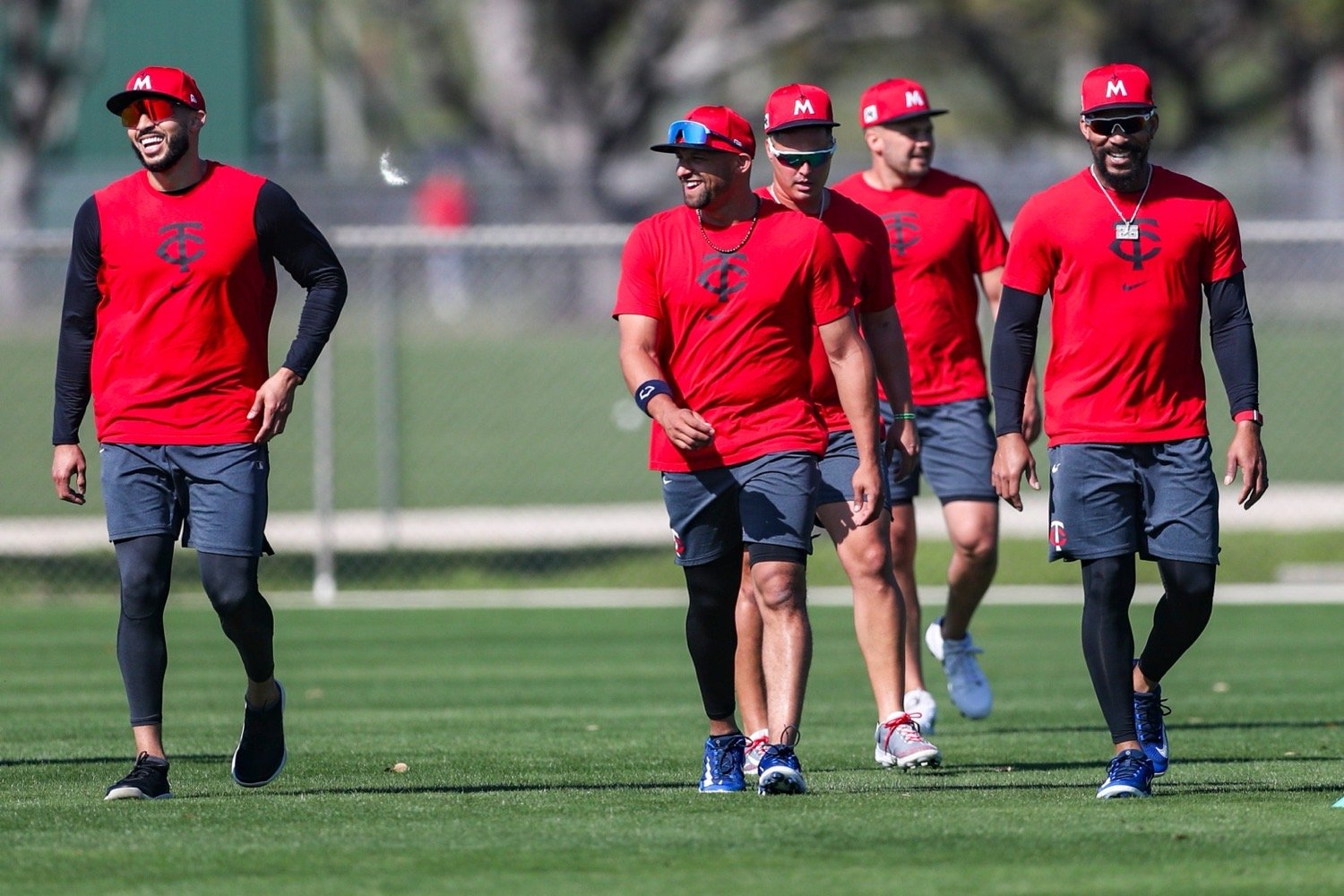 For the fifth time in the last seven seasons, the Twins will be a competitive force in the American League. PECOTA currently projects them to win 87 games, roughly five games ahead of the Kansas City Royals for the division crown and seventh-most in baseball. Yet, I don’t know that anyone views them as even a dark-horse World Series contender. This isn’t particularly surprising (or even unwarranted), as it seems that for the better part of this century, the winner of the AL Central isn’t taken as seriously as other division winners. Many view the AL Central as the weakest division in baseball The talent is here for the team to be one of the elite teams in the majors, but that's not the prevailing view of most baseball observers, inside or beyond Twins Territory. With multiple players already on the injured list and Austin Martin (who some expected to be a contributor for the big-league club) relegated to Triple-A St. Paul, what needs to happen this season for the Twins to improve from “competitive” to true title contender? No. 1: 15+ fWAR from Byron Buxton, Carlos Correa, and Royce Lewis Bottom line: the Twins need Buxton, Correa, and Lewis to be productive and healthy to have any shot at a World Series in 2025. Not only are Buxton and Correa two of the team’s most experienced and expensive players, but they’re MVP candidates when at their best. For Lewis, he’s flashed the same potential but hasn’t been healthy or consistent enough to be in the same tier as the other two. Oh, and he’s already starting the year on the injured list with a hamstring strain. While we don’t put a ton of stock into spring training numbers, all reports suggest that Buxton is feeling better than ever. He enjoyed a great warmup to the regular season, with a .950 OPS, two home runs, and an excellent walk rate across 36 spring training at-bats. On the other hand, Correa is carrying a .337 OPS with zero extra-base hits and an extreme ground ball rate. It’s not what you want to see out of your $36-million shortstop but, like we (should) take Buxton’s spring training success with a grain of salt, I’m not going to really start worrying about Correa until the calendar hits June 1st. 550+ Innings Pitched from Pablo López, Joe Ryan, and Bailey Ober For multiple reasons, the Twins need the top of their rotation to be workhorses this season. First, if the three of them can combine for 550 innings, that likely means they’re staying healthy and pitching well enough to go deeper into games. If there is one thing you need in playoff baseball, it’s a formidable top three starters, and the Twins might have the best trio in all of baseball. Second, and maybe more importantly, this would save the bullpen for the back end of the rotation, who have significant question marks. Can Chris Paddack stay healthy (I’m sensing a theme here)? If he can stay healthy, how deep can he go into games, and how long into the season can he keep taking the ball? It’s been three full seasons since Paddack eclipsed 100 innings pitched, and in that season (2021), he averaged under five innings per start. Even if he can give the Twins 25 starts or more, they’ll be lucky if he hits the 150-inning mark in 2025. Similarly, Simeon Woods Richardson seemingly ran out of gas after about 100 (very good) innings last season. While I think Zebby Matthews and/or David Festa eventually take his spot, any candidate to anchor the starting rotation will reach a career high in innings once we hit September. In short, the bullpen will consistently need to cover the last four-plus innings of ball games started by whoever is taking the ball in the fourth and fifth spots of the rotation. A 3.5+ fWAR season from one pre-arbitration hitter (sans Lewis), plus Harrison Bader or Ty France The Twins are going to need one of their many promising pre-arbitration players (excluding Lewis) to step up. Pick one (or more, if you’re greedy): Matt Wallner, Trevor Larnach, Edouard Julien, Brooks Lee, Jose Miranda, DaShawn Keirsey Jr., Austin Martin, Emmanuel Rodriguez, or Luke Keaschall. Whoever you choose, the Twins need their player development to come through in the form of a very good year from one of these players. The two players with the clearest path to this threshold would be Wallner and Larnach, who are projected to be regulars, but Julien and Miranda should also get enough at-bats to become qualified hitters. Just how high of a bar is 3.5 fWAR? It would put this player somewhere around the top 50 in all of baseball. (I did ask which unlikely things need to happen for the Twins to become a contender, and I really think this is one of them.) They need another bat in the middle third of the order—someone who puts real stress on opposing pitchers. When it comes to Bader and France, the two veterans need to make their presences known. Even with a healthy season from Buxton, Bader likely sees a decent amount of time in center field, in addition to relieving Wallner and Larnach as needed. He could very well end the season with 500-plus plate appearances, despite not being a traditional starter, given Buxton’s maintenance plan and the need for a corner outfielder who can handle left-handed pitching. France, immediately anointed the primary first baseman, will look to bounce back after an abysmal 2024 campaign. For what it’s worth, he accrued 3.2 fWAR in 2021, so a 3.5 fWAR season isn’t completely out of the question, but it is certainly unlikely. While health was a recurring theme throughout this article, that alone won’t propel the Twins to “contender” status, if we define that term as "genuinely capable of winning it all". They also need players to be productive while healthy, which is far from a guarantee for all of the hitters mentioned above. That was the motivation in using fWAR as a barometer—rather than innings, as was the case with the top of the rotation. Pundits aren’t off-base when excluding the Twins from World Series discussions. It will take a considerable lift from multiple players to force the club into that conversation. Which of the three unlikely events are most likely? Least likely? Join the conversation in the comments!
- 12 comments
-
- 1
-
-
- carlos correa
- byron buxton
- (and 5 more)



