



Matthew Lenz
-
Posts
1,465 -
Joined
-
Last visited
-
Days Won
3
Content Type
Profiles
News
Minnesota Twins Videos
2026 Minnesota Twins Top Prospects Ranking
2022 Minnesota Twins Draft Picks
Minnesota Twins Free Agent & Trade Rumors, Notes, & Tidbits
Guides & Resources
2023 Minnesota Twins Draft Picks
The Minnesota Twins Players Project
2024 Minnesota Twins Draft Picks
2025 Minnesota Twins Draft Pick Tracker
2026 Minnesota Twins Draft Tracker: Picks & Bonuses
Forums
Blogs
Events
Store
Downloads
Gallery
Everything posted by Matthew Lenz
-

A Healthy Jhoan Durán Allows For Flexibility In The Minnesota Twins Bullpen
Matthew Lenz posted an article in Twins
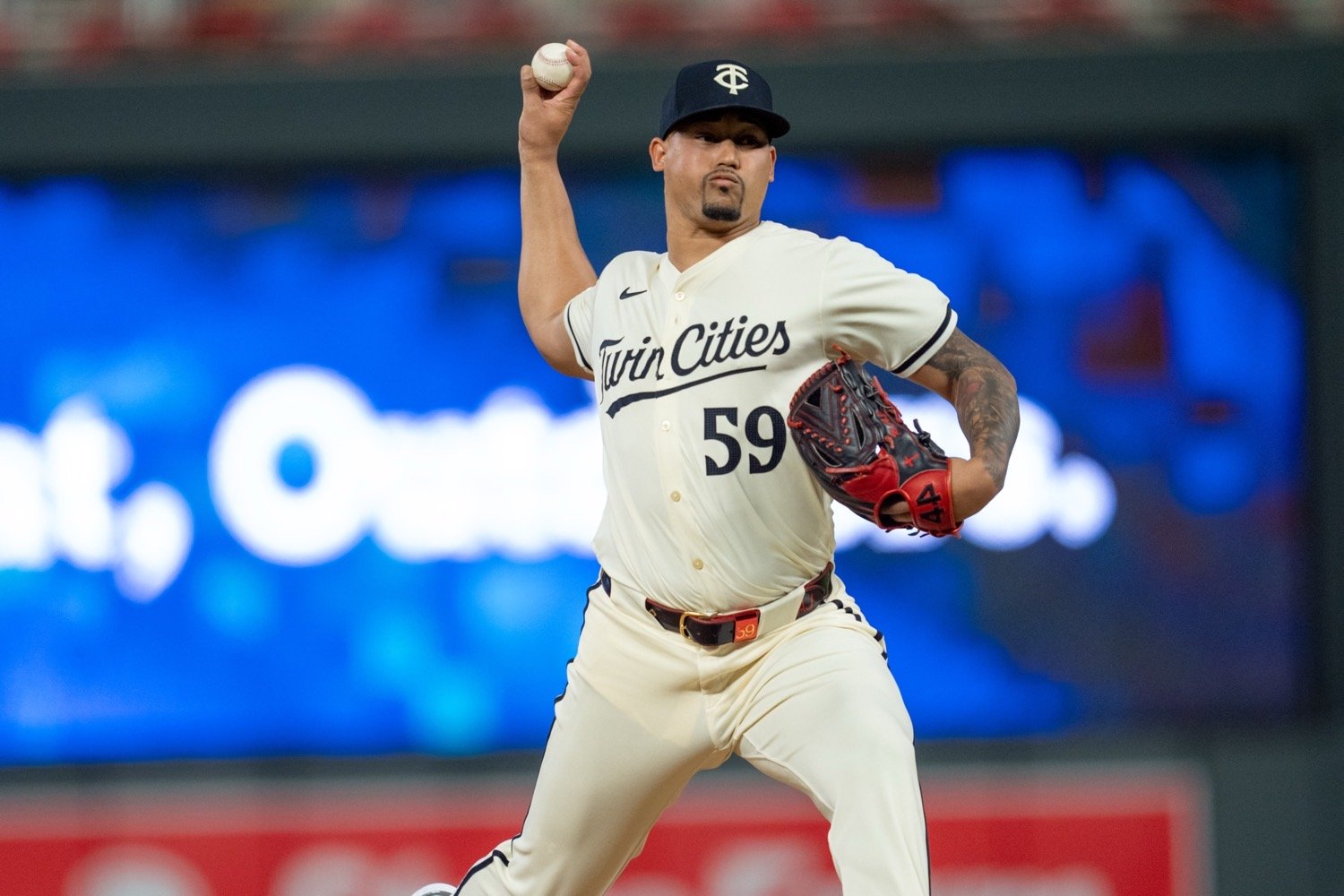 In 2024, Jhoan Durán and Griffin Jax combined for over half of the Twins' high-leverage innings, as defined by FanGraphs. This was despite Durán getting a late start to his 2024 campaign, due to an oblique strain. Yesterday, Rocco Baldelli acknowledged that the injury impacted his performance. “I don’t know how big of an effect it had, but I’d say it definitely was something that tempered his ability to get to where he needs to be,” Beldelli said. The Twins manager pointed to the second half of the season as the time when Durán was throwing the ball “exceptionally well”. The data surely supports this notion, as Durán sported a 1.97 FIP, a 27.3% strikeout minus walk rate, and a lowly .152 opponents' batting average from Jul. 1 on. As the Twins are getting set to begin spring training, Durán’s health continues to be a topic of conversation. “I think you could really look at [Durán] and see that he spent a lot of time and effort on coming in in excellent shape”, said Baldelli. So can we expect Durán to reprise his role as one of the league's most dominant closers? Come to think of it, has Baldelli ever named a “closer”? He hasn't. “[Durán’s] going to throw a lot of ninth innings for us," he said. "I’m sure [Jax] will throw some ninth innings for us.” Last season, Durán dominated ninth-inning appearances 41 to 15, but the two were nearly equal in high-leverage appearances, where Jax held a 44 to 38 advantage. So while Baldelli won't officially name a closer, Durán seemed to be the go-to guy in save situations, while Jax was used in high-leverage opportunities earlier in games. As much as we love to see one of the best closer entrances in baseball, maybe Baldelli is onto something by not naming a closer. Instead, what if Durán and Jax were just two high-leverage relievers who very rarely (ideally never) had to pitch on back-to-back nights? Given the Twins' depth in the bullpen (when healthy), is it feasible to alternate Durán and Jax and use them in whatever high-leverage situation might arise on days when it's their turn, regardless of inning? While Durán has done his best work when pitching on back-to-back nights, limiting those types of outings will undoubtedly keep him fresher and healthier over the grueling season. For Jax, he's found the most success when given a day or two between appearances, so this strategy would dually put him in the best position to be successful. Moreover, the workload would stay roughly the same but the added rest could bring the impact of both players to another level. While deploying this strategy may be better for the team, it would require a lot of flexibility and understanding from the two players. For better or worse (mostly worse), saves reign supreme when it comes to reliever compensation, especially arbitration awards. Telling two of the best relievers in the game they may not be used in those situations as often would likely have an impact on their bottom line. Additionally, Baldelli would be committing late-game, high-leverage opportunities to the likes of Cole Sands, Brock Stewart, or Jorge Alcalá. No disrespect to those guys, but they just aren't in the same tier as Jax or Durán. Regardless of how Baldelli decides to use his relief arms, the talent that sits in the bullpen gives him the flexibility to manage each moment nimbly. He can worry less about saving an arm for later in the game, given one of the best bullpens in baseball. If you could manage the Twins’ bullpen, what would your strategy be? A more traditional hierarchy (middle relief, set up, closers) or a more flexible approach? Share your thoughts in the comments!
 -
Rocco Baldelli sat down with writers covering the Minnesota Twins to kick off spring training on Thursday. One topic of conversation was Jhoan Durán’s robust health, and his usage (alongside Griffin Jax). Let’s read the tea leaves and talk about what the closer role might look like in 2025. Image courtesy of © Matt Blewett-Imagn Images Rocco Baldelli sat down with writers covering the Minnesota Twins to kick off spring training on Thursday. One topic of conversation was Jhoan Durán’s robust health, and his usage (alongside Griffin Jax). Let’s read the tea leaves and talk about what the closer role might look like in 2025. In 2024, Jhoan Durán and Griffin Jax combined for over half of the Twins' high-leverage innings, as defined by FanGraphs. This was despite Durán getting a late start to his 2024 campaign, due to an oblique strain. Yesterday, Rocco Baldelli acknowledged that the injury impacted his performance. “I don’t know how big of an effect it had, but I’d say it definitely was something that tempered his ability to get to where he needs to be,” Beldelli said. The Twins manager pointed to the second half of the season as the time when Durán was throwing the ball “exceptionally well”. The data surely supports this notion, as Durán sported a 1.97 FIP, a 27.3% strikeout minus walk rate, and a lowly .152 opponents' batting average from Jul. 1 on. As the Twins are getting set to begin spring training, Durán’s health continues to be a topic of conversation. “I think you could really look at [Durán] and see that he spent a lot of time and effort on coming in in excellent shape”, said Baldelli. So can we expect Durán to reprise his role as one of the league's most dominant closers? Come to think of it, has Baldelli ever named a “closer”? He hasn't. “[Durán’s] going to throw a lot of ninth innings for us," he said. "I’m sure [Jax] will throw some ninth innings for us.” Last season, Durán dominated ninth-inning appearances 41 to 15, but the two were nearly equal in high-leverage appearances, where Jax held a 44 to 38 advantage. So while Baldelli won't officially name a closer, Durán seemed to be the go-to guy in save situations, while Jax was used in high-leverage opportunities earlier in games. As much as we love to see one of the best closer entrances in baseball, maybe Baldelli is onto something by not naming a closer. Instead, what if Durán and Jax were just two high-leverage relievers who very rarely (ideally never) had to pitch on back-to-back nights? Given the Twins' depth in the bullpen (when healthy), is it feasible to alternate Durán and Jax and use them in whatever high-leverage situation might arise on days when it's their turn, regardless of inning? While Durán has done his best work when pitching on back-to-back nights, limiting those types of outings will undoubtedly keep him fresher and healthier over the grueling season. For Jax, he's found the most success when given a day or two between appearances, so this strategy would dually put him in the best position to be successful. Moreover, the workload would stay roughly the same but the added rest could bring the impact of both players to another level. While deploying this strategy may be better for the team, it would require a lot of flexibility and understanding from the two players. For better or worse (mostly worse), saves reign supreme when it comes to reliever compensation, especially arbitration awards. Telling two of the best relievers in the game they may not be used in those situations as often would likely have an impact on their bottom line. Additionally, Baldelli would be committing late-game, high-leverage opportunities to the likes of Cole Sands, Brock Stewart, or Jorge Alcalá. No disrespect to those guys, but they just aren't in the same tier as Jax or Durán. Regardless of how Baldelli decides to use his relief arms, the talent that sits in the bullpen gives him the flexibility to manage each moment nimbly. He can worry less about saving an arm for later in the game, given one of the best bullpens in baseball. If you could manage the Twins’ bullpen, what would your strategy be? A more traditional hierarchy (middle relief, set up, closers) or a more flexible approach? Share your thoughts in the comments! View full article
-
The Minnesota Twins begin spring training with three primary roster battles. Who could fill in at the back end of the rotation? Which relievers could win the low leverage roles? Who could play second base other than Willi Castro? Watch this preview to get those questions answered.
-
The Minnesota Twins begin spring training with three primary roster battles. Who could fill in at the back end of the rotation? Which relievers could win the low leverage roles? Who could play second base other than Willi Castro? Watch this preview to get those questions answered. View full video
-
The Minnesota Twins are set to start spring training and there will be 16 non-roster players vying to make one of the final spots on the Twins 26- and 40-man roster. Who are the big names and who, if anyone, has the best chance to make the cut?
-
The Minnesota Twins are set to start spring training and there will be 16 non-roster players vying to make one of the final spots on the Twins 26- and 40-man roster. Who are the big names and who, if anyone, has the best chance to make the cut? View full video
-
Just before pitchers and catchers report to spring training the Minnesota Twins made a couple of their positional battles a little bit less hotly contested. Nonetheless, there will be some playing time scrambles to follow in the coming weeks. Image courtesy of © Dave Nelson-Imagn Images Just before pitchers and catchers report to spring training the Minnesota Twins made a couple of their positional battles a little bit less hotly contested. Nonetheless, there will be some playing time scrambles to follow in the coming weeks. Derek Falvey and the Twins front office have been busy the last couple of weeks, locking down a lefty reliever (Danny Coulombe), a fourth outfielder (Harrison Bader), and a right-handed hitter with experience at first base (Ty France). With those players virtually guaranteed to make the team out of camp, we no longer have to wonder if Edouard Julien or Willi Castro will get more reps at first base. We no longer have to wonder whom Rocco Baldelli will deploy when the need for a left-handed reliever arises. We don't have to guess about what happens when Byron Buxton gets hurt, or when Matt Wallner or Trevor Larnach are set to face a southpaw in a high-leverage situation. Those questions have been answered by the flurry of signings. So what questions remain? Four Starters for Two Rotation Spots The four players in line to compete for the fourth and fifth spots in the rotation are: Chris Paddack, Simeon Woods Richardson, David Festa, and Zebby Matthews. Barring a Paddack trade, he’s a lock to make the Opening Day roster, since the Twins are paying him $7.25 million this year. That leaves three young guns for the fifth and final rotation spot, and you have to imagine that Woods Richardson is the heavy favorite of the group. Yes, he ran out of steam in his first big-league season (wherein he set a career high in innings pitched), but you can’t ignore that he carried a sub-4.00 ERA into the final month of the season with a solid 13.1% K-BB rate. Barring injury (or a trade), I would put a lot of money on Festa and Matthews headlining the Triple-A St. Paul Saints rotation to start the season. The silver lining here is that the Twins are well positioned if (more like when) injuries strike the major-league rotation, with some of the best young pitchers in baseball ready to play the role of “next man up.” A Cluster of Relievers for Two (ish?) Bullpen Spots It’s hard to know exactly how many bullpen spots are open, given the number of cheap, “flier”-type arms the Twins have at the bottom of their bullpen hierarchy. If we operate under the assumption that they will carry eight relievers and that six of those spots are spoken for (Jhoan Durán, Griffin Jax, Cole Sands, Brock Stewart, Michael Tonkin and Coulombe), then we have two spots for roughly five arms. Depending on Stewart’s recovery timeline from arthroscopic shoulder surgery last August, a third open spot could temporarily open up for the start of the season. Regardless of how many jobs are open, though, the five competitors are: Jorge Alcalá, Justin Topa, Louie Varland, Kody Funderburk, and Rule 5 Draft pick Eiberson Castellano. Of those names, Castellano has the most at stake. If he does not make the active roster, he will have to be offered back to the Phillies. Alcalá can be optioned at the start of the season, but once he accrues just eight more days of service time, he'll no longer be optionable, as he'll reach the threshold of five years' service. At that point, the rules protect players from being optioned, so teams can't artificially delay free agency at the end of their window of team control. That makes his fight for a spot fairly high-stakes, too. There aren’t any special circumstances following the remaining three pitchers on the list, as each have at least one option remaining and is relatively cheap. Topa is set to make the most money, at $1 million, and represents one of two chances (Gabriel Gonzalez being the other) the Twins have at getting anything from the Jorge Polanco trade. Funderburk is the only other lefty reliever on the Twins 26- or 40-man roster, after they lost southpaw swingman Brent Headrick on waivers Tuesday. Varland will be in a relatively new role, as he looks to be the Twins' latest failed starter who flourishes in a relief role. The Twins obviously saw something in Castellano to make him their first Rule 5 Draft pick since Tyler Kinley in 2017, so I think they’ll give him every opportunity to make the club out of camp. I feel the same way about Michael Tonkin, given that they likely lose him if he is waived. If Stewart isn’t ready for Opening Day (or if one of the other two don’t make it), then you’re likely looking at Topa or Funderburk as the “first two out”. I feel pretty strongly that Varland will (and should) start the year in Triple-A St. Paul to grow into his newfound role as a reliever. The Battle for the Keystone The battle for second base may not be resolved by the time spring training is over. Heck, it may never be truly “resolved” in 2025; there could be a merry-go-round, just like last season. Barring a trade, Willi Castro will be on the Twins' Opening Day roster. He played nearly 300 innings at the Keystone in 2024. It’s likely that at least one of Brooks Lee, Austin Martin, and Julien end up starting the year in Triple-A St. Paul. Whoever remains on the roster will likely be used in more of a utility role around the infield, making spot starts at second base when Castro is playing one of the other five positions he’s played in the past. If I absolutely had to make a guess now, I like Martin to make the club, given his versatility. After him, I really think it largely depends on spring training performance to see which of Julien and Lee make the cut. For what it’s worth, FanGraphs's Roster Resource currently projects Lee as the starting second baseman; Julien on the bench; and Martin with the Saints. The Twins have addressed several key questions with recent signings, but intriguing roster battles remain. Of the three, Rocco Baldelli’s biggest decision entering his seventh spring training as the Twins skipper will be how to fill those last two(ish) spots in the bullpen. Who do you think makes the cut? What storylines are you following in spring training? Join the conversation in the comments! View full article
-
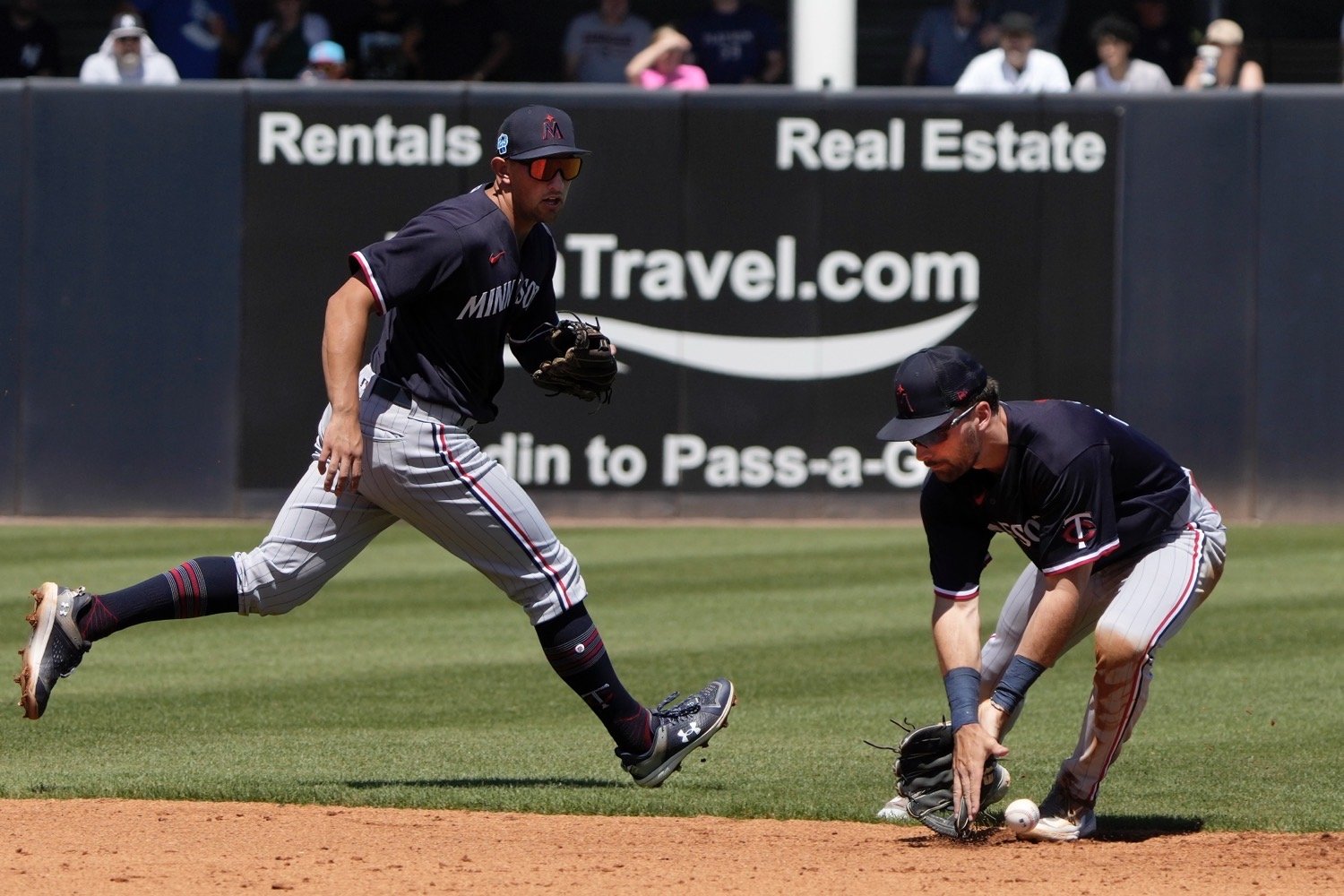 Derek Falvey and the Twins front office have been busy the last couple of weeks, locking down a lefty reliever (Danny Coulombe), a fourth outfielder (Harrison Bader), and a right-handed hitter with experience at first base (Ty France). With those players virtually guaranteed to make the team out of camp, we no longer have to wonder if Edouard Julien or Willi Castro will get more reps at first base. We no longer have to wonder whom Rocco Baldelli will deploy when the need for a left-handed reliever arises. We don't have to guess about what happens when Byron Buxton gets hurt, or when Matt Wallner or Trevor Larnach are set to face a southpaw in a high-leverage situation. Those questions have been answered by the flurry of signings. So what questions remain? Four Starters for Two Rotation Spots The four players in line to compete for the fourth and fifth spots in the rotation are: Chris Paddack, Simeon Woods Richardson, David Festa, and Zebby Matthews. Barring a Paddack trade, he’s a lock to make the Opening Day roster, since the Twins are paying him $7.25 million this year. That leaves three young guns for the fifth and final rotation spot, and you have to imagine that Woods Richardson is the heavy favorite of the group. Yes, he ran out of steam in his first big-league season (wherein he set a career high in innings pitched), but you can’t ignore that he carried a sub-4.00 ERA into the final month of the season with a solid 13.1% K-BB rate. Barring injury (or a trade), I would put a lot of money on Festa and Matthews headlining the Triple-A St. Paul Saints rotation to start the season. The silver lining here is that the Twins are well positioned if (more like when) injuries strike the major-league rotation, with some of the best young pitchers in baseball ready to play the role of “next man up.” A Cluster of Relievers for Two (ish?) Bullpen Spots It’s hard to know exactly how many bullpen spots are open, given the number of cheap, “flier”-type arms the Twins have at the bottom of their bullpen hierarchy. If we operate under the assumption that they will carry eight relievers and that six of those spots are spoken for (Jhoan Durán, Griffin Jax, Cole Sands, Brock Stewart, Michael Tonkin and Coulombe), then we have two spots for roughly five arms. Depending on Stewart’s recovery timeline from arthroscopic shoulder surgery last August, a third open spot could temporarily open up for the start of the season. Regardless of how many jobs are open, though, the five competitors are: Jorge Alcalá, Justin Topa, Louie Varland, Kody Funderburk, and Rule 5 Draft pick Eiberson Castellano. Of those names, Castellano has the most at stake. If he does not make the active roster, he will have to be offered back to the Phillies. Alcalá can be optioned at the start of the season, but once he accrues just eight more days of service time, he'll no longer be optionable, as he'll reach the threshold of five years' service. At that point, the rules protect players from being optioned, so teams can't artificially delay free agency at the end of their window of team control. That makes his fight for a spot fairly high-stakes, too. There aren’t any special circumstances following the remaining three pitchers on the list, as each have at least one option remaining and is relatively cheap. Topa is set to make the most money, at $1 million, and represents one of two chances (Gabriel Gonzalez being the other) the Twins have at getting anything from the Jorge Polanco trade. Funderburk is the only other lefty reliever on the Twins 26- or 40-man roster, after they lost southpaw swingman Brent Headrick on waivers Tuesday. Varland will be in a relatively new role, as he looks to be the Twins' latest failed starter who flourishes in a relief role. The Twins obviously saw something in Castellano to make him their first Rule 5 Draft pick since Tyler Kinley in 2017, so I think they’ll give him every opportunity to make the club out of camp. I feel the same way about Michael Tonkin, given that they likely lose him if he is waived. If Stewart isn’t ready for Opening Day (or if one of the other two don’t make it), then you’re likely looking at Topa or Funderburk as the “first two out”. I feel pretty strongly that Varland will (and should) start the year in Triple-A St. Paul to grow into his newfound role as a reliever. The Battle for the Keystone The battle for second base may not be resolved by the time spring training is over. Heck, it may never be truly “resolved” in 2025; there could be a merry-go-round, just like last season. Barring a trade, Willi Castro will be on the Twins' Opening Day roster. He played nearly 300 innings at the Keystone in 2024. It’s likely that at least one of Brooks Lee, Austin Martin, and Julien end up starting the year in Triple-A St. Paul. Whoever remains on the roster will likely be used in more of a utility role around the infield, making spot starts at second base when Castro is playing one of the other five positions he’s played in the past. If I absolutely had to make a guess now, I like Martin to make the club, given his versatility. After him, I really think it largely depends on spring training performance to see which of Julien and Lee make the cut. For what it’s worth, FanGraphs's Roster Resource currently projects Lee as the starting second baseman; Julien on the bench; and Martin with the Saints. The Twins have addressed several key questions with recent signings, but intriguing roster battles remain. Of the three, Rocco Baldelli’s biggest decision entering his seventh spring training as the Twins skipper will be how to fill those last two(ish) spots in the bullpen. Who do you think makes the cut? What storylines are you following in spring training? Join the conversation in the comments!
- 52 comments
-
- 6
-

-
- chris paddack
- simeon woods richardson
- (and 5 more)
-
It's even more wild to look at some of the rosters (and dwindling resources) Baldelli has been given and attribute the Twins missing the playoffs to him. He's not perfect but far from the reason they've missed in 3/4 seasons. Also, the AL Central had four times finish above .500, three make the playoffs, three make the divisional round, and one make the championship round. 🤷🏼♂️
-
"Sticking to the Plan": How The Minnesota Twins Quantify Game-Calling
Matthew Lenz posted an article in Twins
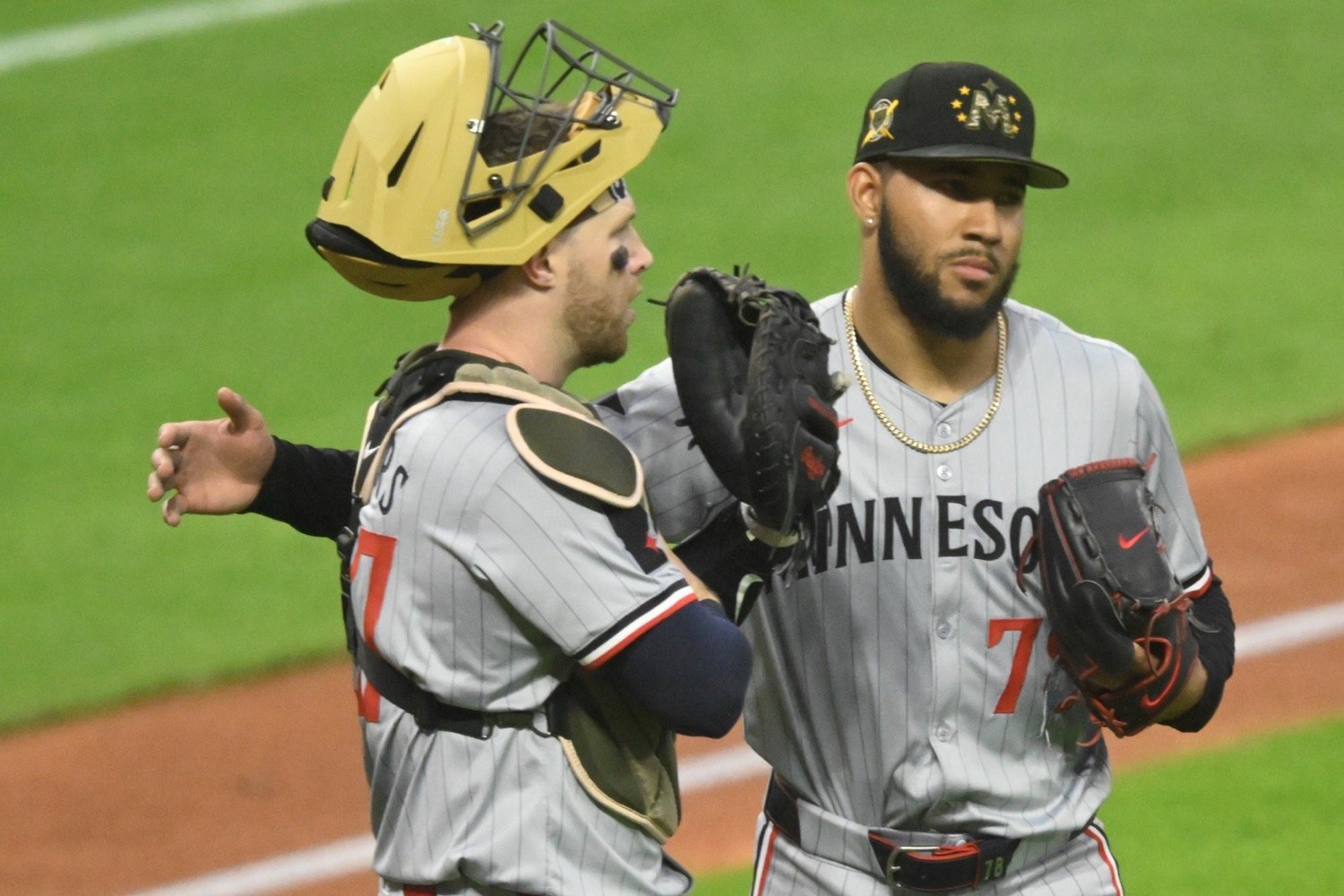 This very topic came up when Aaron Gleeman of The Athletic and our own John Bonnes were interviewing Ryan Jeffers at the Twins Daily Winter Meltdown. Gleeman was specifically asking Jeffers about learning new pitchers (i.e. when David Festa was promoted) and how the game plan is formed when each player is still getting to know the other. Jeffers pointed out that it's a collaborative effort between the players and coaching staff, but also revealed that the team uses a “sticking to the plan” stat. Jeffers revealed that an intern will track pitches and after the game will determine how well they stuck with the pre-game plan. While we don't know the details of how this is exactly calculated (and there's some indication that it's more of a tabulated but flexible feedback system than a true stat), it's a fascinating aspect of the game to discuss. It's one of the few things that aren't formally quantified, at least in the public sphere. Regardless, we can use some thoughtful conjecture to hypothesize what this stat may look like. When game planning, there are two sets of strengths and weaknesses to consider: your pitcher’s and the opposing hitter’s. Of course, you always prefer to lean into your pitcher's strengths, as that is where they are most comfortable, but that's not always the best plan. Not only do opposing hitters have the scouting report on that game’s pitcher, but their strengths may coincide with the pitcher’s. For example, Simeon Woods Richardson’s slider performed really well last year. At the same time, Kansas City's Salvador Perez had a solid .331 expected weighted on-base average (xwOBA) and hit six home runs on sliders from righties in 2024. When those two match up in 2025, should Woods Richardson avoid throwing his slider? That's where the next layer of the plan comes into play. Pitchers and hitters alike have tendencies and preferences that impact the game plan. Pitchers like to throw certain pitches in certain counts, and that may even vary depending on the handedness of the hitter. From Pablo López’s Brooks Baseball page, you can see his tendencies based on the count as well as hitter split. Generally speaking, left-handed hitters should look for more vertical movement, while their right-handed counterparts will look for more horizontal movement. (This is pretty typical: horizontal movement tends to deceive same-handed batters better than opposite-handed ones. Vertical movement is best leveraged when the hitter has the platoon advantage.) Specifically, in a two-strike count, right-handed hitters have four pitches to stay on, while left-handed hitters can more or less throw out the slider (that's his sweeper; Brooks Baseball just doesn't distinguish sliders from sweepers yet). On the other hand, hitters have their own swing tendencies that will be part of the game plan as well. Check out Byron Buxton’s swing tendencies and outcomes on two-strike counts. Where are you attacking him? If you said underneath the zone, I would absolutely agree. If you play around on his Brooks Baseball page, you’ll find that while he does relatively well against sinkers and sliders regardless of count, locating well with those offerings can confound him. While the numbers shared are for their careers, it’s also important to consider recent tendencies as well. Has the hitter struggled against a certain type of pitch over the last two weeks? Is the hitter dealing with a nagging injury that may impact their ability to get around on a ball or extend their hands to the outside part of the zone? While quantifiable trends are the most important thing to go into a game plan, it’s also important to have a feel for the game. “You have to constantly weigh that battle of what you see, what your eyes are telling you versus what the numbers are saying,” Jeffers said at the Meltdown. To supplement what the data is telling you, pitchers and catchers can leverage film to help identify weaknesses in a hitter’s swing. Moreover, in-game observations at the at-bat level can impact how you set hitters up later in the count or in future at-bats. That a player generally struggles with a certain pitch doesn’t necessarily mean it's wise to pummel the zone with that pitch; getting them out still requires a thoughtful approach on how you set that player up for that pitch type. While we don’t know how the Twins exactly quantify “sticking to the plan,” quantifying this internally is an important part of pitcher and catcher development and deepening the relationship there. Reflecting on the game plan can lead to invaluable discussions and learning opportunities, such as the thought process behind deviating from the plan; why a pitcher may have shaken off the catcher (something that is encouraged by Jeffers); or why the plan may or may not have worked on a particular day. Especially in the early stages of a pitcher-catcher relationship, these discussions can help the two better understand each other’s tendencies, as well as when or how the pitcher prefers to deviate from those tendencies.
 -
There is a quantifiable stat for nearly everything. At catcher, we have “pop time”, as well as pitch framing and blocking metrics that try to paint a picture of their defensive value. One key part of being a catcher is the art of calling pitches and, while a site like Baseball Savant doesn't quantify the impact of this, the Minnesota Twins measure it with their backstops. Image courtesy of © David Richard-Imagn Images There is a quantifiable stat for nearly everything. At catcher, we have “pop time”, as well as pitch framing and blocking metrics that try to paint a picture of their defensive value. One key part of being a catcher is the art of calling pitches and, while a site like Baseball Savant doesn't quantify the impact of this, the Minnesota Twins measure it with their backstops. This very topic came up when Aaron Gleeman of The Athletic and our own John Bonnes were interviewing Ryan Jeffers at the Twins Daily Winter Meltdown. Gleeman was specifically asking Jeffers about learning new pitchers (i.e. when David Festa was promoted) and how the game plan is formed when each player is still getting to know the other. Jeffers pointed out that it's a collaborative effort between the players and coaching staff, but also revealed that the team uses a “sticking to the plan” stat. Jeffers revealed that an intern will track pitches and after the game will determine how well they stuck with the pre-game plan. While we don't know the details of how this is exactly calculated (and there's some indication that it's more of a tabulated but flexible feedback system than a true stat), it's a fascinating aspect of the game to discuss. It's one of the few things that aren't formally quantified, at least in the public sphere. Regardless, we can use some thoughtful conjecture to hypothesize what this stat may look like. When game planning, there are two sets of strengths and weaknesses to consider: your pitcher’s and the opposing hitter’s. Of course, you always prefer to lean into your pitcher's strengths, as that is where they are most comfortable, but that's not always the best plan. Not only do opposing hitters have the scouting report on that game’s pitcher, but their strengths may coincide with the pitcher’s. For example, Simeon Woods Richardson’s slider performed really well last year. At the same time, Kansas City's Salvador Perez had a solid .331 expected weighted on-base average (xwOBA) and hit six home runs on sliders from righties in 2024. When those two match up in 2025, should Woods Richardson avoid throwing his slider? That's where the next layer of the plan comes into play. Pitchers and hitters alike have tendencies and preferences that impact the game plan. Pitchers like to throw certain pitches in certain counts, and that may even vary depending on the handedness of the hitter. From Pablo López’s Brooks Baseball page, you can see his tendencies based on the count as well as hitter split. Generally speaking, left-handed hitters should look for more vertical movement, while their right-handed counterparts will look for more horizontal movement. (This is pretty typical: horizontal movement tends to deceive same-handed batters better than opposite-handed ones. Vertical movement is best leveraged when the hitter has the platoon advantage.) Specifically, in a two-strike count, right-handed hitters have four pitches to stay on, while left-handed hitters can more or less throw out the slider (that's his sweeper; Brooks Baseball just doesn't distinguish sliders from sweepers yet). On the other hand, hitters have their own swing tendencies that will be part of the game plan as well. Check out Byron Buxton’s swing tendencies and outcomes on two-strike counts. Where are you attacking him? If you said underneath the zone, I would absolutely agree. If you play around on his Brooks Baseball page, you’ll find that while he does relatively well against sinkers and sliders regardless of count, locating well with those offerings can confound him. While the numbers shared are for their careers, it’s also important to consider recent tendencies as well. Has the hitter struggled against a certain type of pitch over the last two weeks? Is the hitter dealing with a nagging injury that may impact their ability to get around on a ball or extend their hands to the outside part of the zone? While quantifiable trends are the most important thing to go into a game plan, it’s also important to have a feel for the game. “You have to constantly weigh that battle of what you see, what your eyes are telling you versus what the numbers are saying,” Jeffers said at the Meltdown. To supplement what the data is telling you, pitchers and catchers can leverage film to help identify weaknesses in a hitter’s swing. Moreover, in-game observations at the at-bat level can impact how you set hitters up later in the count or in future at-bats. That a player generally struggles with a certain pitch doesn’t necessarily mean it's wise to pummel the zone with that pitch; getting them out still requires a thoughtful approach on how you set that player up for that pitch type. While we don’t know how the Twins exactly quantify “sticking to the plan,” quantifying this internally is an important part of pitcher and catcher development and deepening the relationship there. Reflecting on the game plan can lead to invaluable discussions and learning opportunities, such as the thought process behind deviating from the plan; why a pitcher may have shaken off the catcher (something that is encouraged by Jeffers); or why the plan may or may not have worked on a particular day. Especially in the early stages of a pitcher-catcher relationship, these discussions can help the two better understand each other’s tendencies, as well as when or how the pitcher prefers to deviate from those tendencies. View full article
-
The Minnesota Twins have yet to establish a solid back up plan behind Jose Miranda at first base. Edouard Julie and Willi Castro are internal candidates, but who are some external candidates who could (better) fill the void? View full video
-
The Minnesota Twins have yet to establish a solid back up plan behind Jose Miranda at first base. Edouard Julie and Willi Castro are internal candidates, but who are some external candidates who could (better) fill the void?
-
Dan Hayes is reporting that the Minnesota Twins are looking at veteran infielders Luis Urías and Paul DeJong has potential back ups to Carlos Correa. What does that mean for Brooks Lee and Willi Castro? Where is the money coming from? Should we expect more moves?
-
Dan Hayes is reporting that the Minnesota Twins are looking at veteran infielders Luis Urías and Paul DeJong has potential back ups to Carlos Correa. What does that mean for Brooks Lee and Willi Castro? Where is the money coming from? Should we expect more moves? View full video
-
If Nolan Arenado remains with the St. Louis Cardinals, it would result in a loss of at-bats for up and comer Alec Burleson. Should the Minnesota Twins swoop in for the bat first versatile defender who is controllable through 2028?
-
If Nolan Arenado remains with the St. Louis Cardinals, it would result in a loss of at-bats for up and comer Alec Burleson. Should the Minnesota Twins swoop in for the bat first versatile defender who is controllable through 2028? View full video
-
Fresh off the heels of the somewhat surprising news that the Twins are looking for a veteran back up shortstop, Dan Hayes drops this little nugget in response to a fan's question. Willi Castro the first basemen? Whaaaaaat? If you're wondering, Castro has seven positions throughout his career. He's never played catcher and he's never played first base in his professional career. As in he has 0.0 (or 0 0/3 if you prefer that format) innings at first. In the last few days, the Twins have addressed their two biggest needs. A left-handed reliever and a corner outfield who can handle left-handed pitching. Lower in the priority list has been a first basemen to back up Miranda, but I'm not sure anyone would have guessed that Castro would be a viable option. In fact, Castro grades out as a negative defender at nearly every position he plays aside from third base. I don't know about you but I'm not thrilled that the contingency plan behind Miranda looks to be Castro (or Julien) as of right now. Maybe the need for a back up first basemen is bigger than we initially thought. What do you make of this news? View full rumor
-
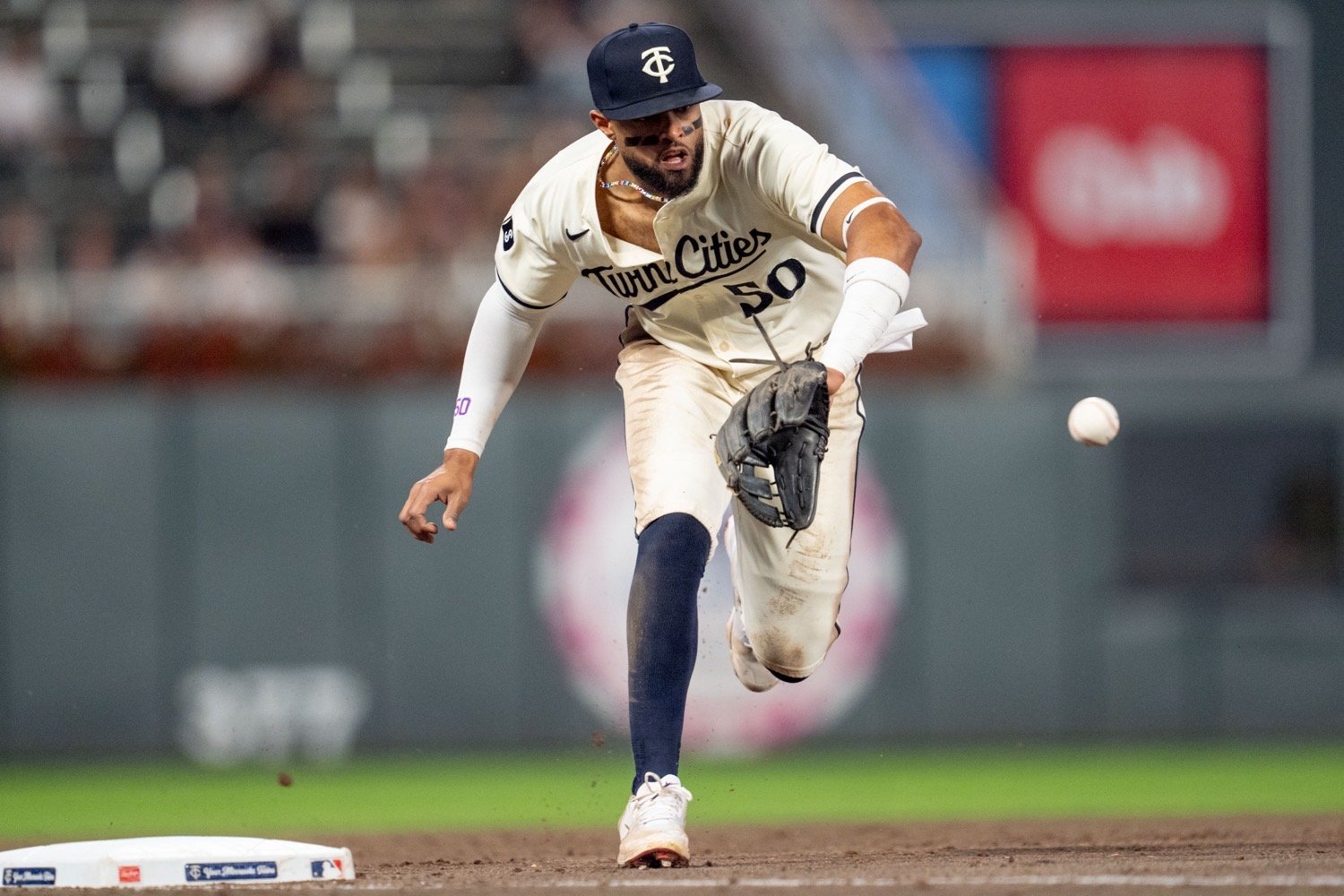 Fresh off the heels of the somewhat surprising news that the Twins are looking for a veteran back up shortstop, Dan Hayes drops this little nugget in response to a fan's question. Willi Castro the first basemen? Whaaaaaat? If you're wondering, Castro has seven positions throughout his career. He's never played catcher and he's never played first base in his professional career. As in he has 0.0 (or 0 0/3 if you prefer that format) innings at first. In the last few days, the Twins have addressed their two biggest needs. A left-handed reliever and a corner outfield who can handle left-handed pitching. Lower in the priority list has been a first basemen to back up Miranda, but I'm not sure anyone would have guessed that Castro would be a viable option. In fact, Castro grades out as a negative defender at nearly every position he plays aside from third base. I don't know about you but I'm not thrilled that the contingency plan behind Miranda looks to be Castro (or Julien) as of right now. Maybe the need for a back up first basemen is bigger than we initially thought. What do you make of this news?
 -
The Minnesota Twins might not be done yet. Dan Hayes of The Athletic is reporting that “multiple league sources confirmed the Twins have expressed interest in adding a veteran shortstop, recently inquiring about free agents Luis Urías and Paul DeJong.” Let’s get into it. Image courtesy of Urias (left): © Steven Bisig-Imagn Images; DeJong (right): © Jay Biggerstaff-Imagn Images The Minnesota Twins might not be done yet. Dan Hayes of The Athletic is reporting that “multiple league sources confirmed the Twins have expressed interest in adding a veteran shortstop, recently inquiring about free agents Luis Urías and Paul DeJong.” Let’s get into it. Let’s start by quickly getting to know Luis Urías and Paul DeJong. Urías played for the Seattle Mariners in 2024, but spent most of the season at Triple-A Tacoma Relatively speaking, he is a bat-first utility infielder, but in reality, he’s a below-average producer on both sides of the ball. In 41 games and 109 plate appearances, he carried a .697 OPS with four home runs, a high strikeout rate, and a low walk rate. If you’re not impressed by his hit tool (you shouldn’t be), you’ll be even less impressed with his glove. He's only nominally or vestigially a shortstop; he hasn’t played there since spending 200 innings as an injury replacement in Milwaukee during the 2022 season. Even then, it was ugly. While Hayes may have had this related to him as interest in a shortstop, Urías would be much more about giving the team another plausible option at second and third base. DeJong spent time with the Chicago White Sox and Kansas City Royals last year, and had a far more productive year at the plate—but he has similarly concerning strikeout and walk rates. In addition to being a better bat, he brings a better glove as well, and played both middle infield positions in 2024. I think most would agree DeJong moves the needle quite a bit more than Urías. DeJong might cost them as much as Harrison Bader did. Urías is likely to sign a minor-league deal. Regardless of whether they end up signing either player (or anyone akin to them), what can we make of this news? My first reaction to this news was to think of two guys on the roster who primarily backed up Carlos Correa in 2024: Willi Castro and Brooks Lee. Regarding Lee, this report tells me that the Twins must not like the prospect of him playing shortstop. While multiple scouting reports suggest he could be an average shortstop at the big-league level, he posted a negative rating in multiple defensive metrics during his 200-plus innings there as a rookie. Thinking about Castro, who played 465 innings at short in 2024, led me to a bigger question which was: “where is all of this money coming from!?” It’s been a weird offseason to follow, as we initially believed that the Twins wouldn’t be reducing payroll below the $130 million they carried in 2024 but that, due to arbitration and other raises (Pablo López, e.g.), they would need to cut roughly $10 million in salary to get down to that number. Then there was the announcement that the Pohlads were exploring a sale of the team, and many thought that could mean two things: The Twins aren’t going to make any expensive moves that might deter a prospective ownership group; and/or They may look to offload a bigger salary (i.e., López or Correa) to make the finances of the organization appear more attractive. We were never going to get a clear answer to those hypotheses unless they actually happened. Last week, Hayes reported that the Twins had roughly $5 million in leeway to their 2025 payroll. Now the Twins have added over $9 million in payroll, and are reportedly looking to add more? Assuming some sort of move for a backup shortstop comes to fruition, the Twins have more up their sleeve, and Jamie Cameron is asking the right questions. What it likely means for at least one of Chris Paddack, Christian Vázquez, and Willi Castro is that their days with the Twins are numbered. Each of them has been the subject of trade speculation for the entire offseason simply, because they carry salaries north of $6 million for the 2025 season. This speculation grew bigger after yesterday’s signing of Harrison Bader, and will likely only grow as we hear rumblings about their contingency plan at shortstop. Or maybe they’re thinking of zigging, when everyone else is thinking of zagging, like Nate Palmer suggests. We’ve also talked about the redundancy of Matt Wallner and Trevor Larnach on this team, as two corner outfielders who struggle against left-handed pitching. Might they view Castro as more of an outfielder, given his poor infield defense, making one of Wallner or Larnach expendable? Given their age and controllability, it’s definitely possible the Twins could be trying to tie one of those two to one of the three contracts above to try and complete a deal that is more than just a salary dump. In fact, recently, I suggested that now is the time to trade Larnach, arguing that his value will never be higher. After a quiet offseason, the last week or so has been fun. We have moves to analyze and speculation to run with. However, at the end of the day, it’s just speculation. We can read tea leaves all we want, but this front office has always kept their cards close to their vest, so we likely won’t get any answers until corresponding moves are made. What do you make of the Twins trying to add a backup shortstop? Join the conversation in the comments! View full article
-
![More information about "Hayes: "The [Minnesota] Twins Have Expressed Interest In adding A Veteran Shortstop""](//dtb3yzl0vm3pr.cloudfront.net/monthly_2025_02/photo-collage.png(2).jpeg.abe87f5699ab19cef1f4d3df90536cb9.jpeg) Let’s start by quickly getting to know Luis Urías and Paul DeJong. Urías played for the Seattle Mariners in 2024, but spent most of the season at Triple-A Tacoma Relatively speaking, he is a bat-first utility infielder, but in reality, he’s a below-average producer on both sides of the ball. In 41 games and 109 plate appearances, he carried a .697 OPS with four home runs, a high strikeout rate, and a low walk rate. If you’re not impressed by his hit tool (you shouldn’t be), you’ll be even less impressed with his glove. He's only nominally or vestigially a shortstop; he hasn’t played there since spending 200 innings as an injury replacement in Milwaukee during the 2022 season. Even then, it was ugly. While Hayes may have had this related to him as interest in a shortstop, Urías would be much more about giving the team another plausible option at second and third base. DeJong spent time with the Chicago White Sox and Kansas City Royals last year, and had a far more productive year at the plate—but he has similarly concerning strikeout and walk rates. In addition to being a better bat, he brings a better glove as well, and played both middle infield positions in 2024. I think most would agree DeJong moves the needle quite a bit more than Urías. DeJong might cost them as much as Harrison Bader did. Urías is likely to sign a minor-league deal. Regardless of whether they end up signing either player (or anyone akin to them), what can we make of this news? My first reaction to this news was to think of two guys on the roster who primarily backed up Carlos Correa in 2024: Willi Castro and Brooks Lee. Regarding Lee, this report tells me that the Twins must not like the prospect of him playing shortstop. While multiple scouting reports suggest he could be an average shortstop at the big-league level, he posted a negative rating in multiple defensive metrics during his 200-plus innings there as a rookie. Thinking about Castro, who played 465 innings at short in 2024, led me to a bigger question which was: “where is all of this money coming from!?” It’s been a weird offseason to follow, as we initially believed that the Twins wouldn’t be reducing payroll below the $130 million they carried in 2024 but that, due to arbitration and other raises (Pablo López, e.g.), they would need to cut roughly $10 million in salary to get down to that number. Then there was the announcement that the Pohlads were exploring a sale of the team, and many thought that could mean two things: The Twins aren’t going to make any expensive moves that might deter a prospective ownership group; and/or They may look to offload a bigger salary (i.e., López or Correa) to make the finances of the organization appear more attractive. We were never going to get a clear answer to those hypotheses unless they actually happened. Last week, Hayes reported that the Twins had roughly $5 million in leeway to their 2025 payroll. Now the Twins have added over $9 million in payroll, and are reportedly looking to add more? Assuming some sort of move for a backup shortstop comes to fruition, the Twins have more up their sleeve, and Jamie Cameron is asking the right questions. What it likely means for at least one of Chris Paddack, Christian Vázquez, and Willi Castro is that their days with the Twins are numbered. Each of them has been the subject of trade speculation for the entire offseason simply, because they carry salaries north of $6 million for the 2025 season. This speculation grew bigger after yesterday’s signing of Harrison Bader, and will likely only grow as we hear rumblings about their contingency plan at shortstop. Or maybe they’re thinking of zigging, when everyone else is thinking of zagging, like Nate Palmer suggests. We’ve also talked about the redundancy of Matt Wallner and Trevor Larnach on this team, as two corner outfielders who struggle against left-handed pitching. Might they view Castro as more of an outfielder, given his poor infield defense, making one of Wallner or Larnach expendable? Given their age and controllability, it’s definitely possible the Twins could be trying to tie one of those two to one of the three contracts above to try and complete a deal that is more than just a salary dump. In fact, recently, I suggested that now is the time to trade Larnach, arguing that his value will never be higher. After a quiet offseason, the last week or so has been fun. We have moves to analyze and speculation to run with. However, at the end of the day, it’s just speculation. We can read tea leaves all we want, but this front office has always kept their cards close to their vest, so we likely won’t get any answers until corresponding moves are made. What do you make of the Twins trying to add a backup shortstop? Join the conversation in the comments!
Let’s start by quickly getting to know Luis Urías and Paul DeJong. Urías played for the Seattle Mariners in 2024, but spent most of the season at Triple-A Tacoma Relatively speaking, he is a bat-first utility infielder, but in reality, he’s a below-average producer on both sides of the ball. In 41 games and 109 plate appearances, he carried a .697 OPS with four home runs, a high strikeout rate, and a low walk rate. If you’re not impressed by his hit tool (you shouldn’t be), you’ll be even less impressed with his glove. He's only nominally or vestigially a shortstop; he hasn’t played there since spending 200 innings as an injury replacement in Milwaukee during the 2022 season. Even then, it was ugly. While Hayes may have had this related to him as interest in a shortstop, Urías would be much more about giving the team another plausible option at second and third base. DeJong spent time with the Chicago White Sox and Kansas City Royals last year, and had a far more productive year at the plate—but he has similarly concerning strikeout and walk rates. In addition to being a better bat, he brings a better glove as well, and played both middle infield positions in 2024. I think most would agree DeJong moves the needle quite a bit more than Urías. DeJong might cost them as much as Harrison Bader did. Urías is likely to sign a minor-league deal. Regardless of whether they end up signing either player (or anyone akin to them), what can we make of this news? My first reaction to this news was to think of two guys on the roster who primarily backed up Carlos Correa in 2024: Willi Castro and Brooks Lee. Regarding Lee, this report tells me that the Twins must not like the prospect of him playing shortstop. While multiple scouting reports suggest he could be an average shortstop at the big-league level, he posted a negative rating in multiple defensive metrics during his 200-plus innings there as a rookie. Thinking about Castro, who played 465 innings at short in 2024, led me to a bigger question which was: “where is all of this money coming from!?” It’s been a weird offseason to follow, as we initially believed that the Twins wouldn’t be reducing payroll below the $130 million they carried in 2024 but that, due to arbitration and other raises (Pablo López, e.g.), they would need to cut roughly $10 million in salary to get down to that number. Then there was the announcement that the Pohlads were exploring a sale of the team, and many thought that could mean two things: The Twins aren’t going to make any expensive moves that might deter a prospective ownership group; and/or They may look to offload a bigger salary (i.e., López or Correa) to make the finances of the organization appear more attractive. We were never going to get a clear answer to those hypotheses unless they actually happened. Last week, Hayes reported that the Twins had roughly $5 million in leeway to their 2025 payroll. Now the Twins have added over $9 million in payroll, and are reportedly looking to add more? Assuming some sort of move for a backup shortstop comes to fruition, the Twins have more up their sleeve, and Jamie Cameron is asking the right questions. What it likely means for at least one of Chris Paddack, Christian Vázquez, and Willi Castro is that their days with the Twins are numbered. Each of them has been the subject of trade speculation for the entire offseason simply, because they carry salaries north of $6 million for the 2025 season. This speculation grew bigger after yesterday’s signing of Harrison Bader, and will likely only grow as we hear rumblings about their contingency plan at shortstop. Or maybe they’re thinking of zigging, when everyone else is thinking of zagging, like Nate Palmer suggests. We’ve also talked about the redundancy of Matt Wallner and Trevor Larnach on this team, as two corner outfielders who struggle against left-handed pitching. Might they view Castro as more of an outfielder, given his poor infield defense, making one of Wallner or Larnach expendable? Given their age and controllability, it’s definitely possible the Twins could be trying to tie one of those two to one of the three contracts above to try and complete a deal that is more than just a salary dump. In fact, recently, I suggested that now is the time to trade Larnach, arguing that his value will never be higher. After a quiet offseason, the last week or so has been fun. We have moves to analyze and speculation to run with. However, at the end of the day, it’s just speculation. We can read tea leaves all we want, but this front office has always kept their cards close to their vest, so we likely won’t get any answers until corresponding moves are made. What do you make of the Twins trying to add a backup shortstop? Join the conversation in the comments!- 98 comments
-
- 4
-
-

-
- luis urias
- paul dejong
- (and 3 more)
-
The Minnesota Twins locked in their fourth outfielder role by signing Harrison Bader to a one year pact. After Michael A. Taylor exceeded expectations and Manual Margot fell short, what is fair to expect out of the Bader? Moreover, what will his exact role be on the 2025 Minnesota Twins?
-
The Minnesota Twins locked in their fourth outfielder role by signing Harrison Bader to a one year pact. After Michael A. Taylor exceeded expectations and Manual Margot fell short, what is fair to expect out of the Bader? Moreover, what will his exact role be on the 2025 Minnesota Twins? View full video
-
The Minnesota Twins and outfielder Harrison Bader have agreed to a one-year contract. Bader will take over the role as the team’s fourth outfielder. What can we expect to get out of the 2021 Gold Glove winner, entering his age-31 season? Image courtesy of © Jayne Kamin-Oncea-Imagn Images The Minnesota Twins and outfielder Harrison Bader have agreed to a one-year contract. Bader will take over the role as the team’s fourth outfielder. What can we expect to get out of the 2021 Gold Glove winner, entering his age-31 season? Since waiving Jake Cave following the 2022 season, the Twins have rotated their fourth outfield role, trading for Michael A. Taylor to be that guy in 2023 and Manuel Margot to do the same in 2024. Now, they're signing Harrison Bader ahead of the 2025 season. Like each of those moves, prioritizing defense over offense, Bader represents another glove-first outfielder off the bench. Taylor and Margot entered each of their respective seasons with the club with similar expectations—namely, that they would provide above-average defense and a passable bat. Despite that, their contributions to those seasons couldn’t have been more different. Taylor more than held up his side of the deal, having one of the best seasons of his career at the plate and providing solid defense across 129 games. In fact, he exceeded fans' expectations—so much so that many wanted him back in a Twins uniform (which was quickly poo-poo'ed when the Twins announced payroll cuts). For what it’s worth, the Twins made the right call in moving on, as he produced a 50 wRC+ in 2024 with the Pittsburgh Pirates. Unfortunately, their Taylor replacement didn’t perform much better. For the first time in his career, Margot wasn’t even replacement level, being a black hole at the plate while providing below-average defense. Now, the Twins take another shot at recreating Taylor by adding Bader. Should we have similar expectations for him as we did with Taylor and Margot? In short, yes. He profiles similarly, as a strong defender with a passable (albeit below-average) bat but a long history of injuries. Fortunately, Bader had the healthiest year of his career in 2024, playing in 143 games. Prior to 2024, Bader averaged 91 games a season dealing with various injuries, but most concerning are the multiple injuries to the lower half of his body (two hamstring strains, plantar fasciitis, and a groin strain). In 2023 alone, three separate strains put him on the injured list and out of the Yankees' reach when they needed him. On the positive side of things, he differs from Taylor and Margot by having produced multiple seasons as an above-average contributor at the plate. Unfortunately, it’s been three years since he’s had such a season, but his career 90 wRC+ is the highest of the three being compared. That said, he should be in a role that allows him to perform well at the plate. I would expect Bader to draw most of the at-bats against left-handed pitching at one of the corner outfield positions. Both Trevor Larnach and Matt Wallner have struggled mightily against left-handed pitching early on in their careers and, while they deserve a chance to prove otherwise, one of the two will likely give way to Bader when a southpaw starts or is brought in as a reliever. Of course, he will also relieve Byron Buxton in center field on occasion, regardless of who is on the mound. PECOTA projects Bader for 406 plate appearances and a .234/.283/.357 line, with 9 homers and 19 steals. His ZiPS-projected line is similar. While those numbers don’t jump off the page, he’s carried a .775 OPS and a 109 wRC+ against left-handed pitching over his entire career (although he struggled against lefties in 2024). He experienced better success against righties last season, but has generally been a below-average producer at the plate. More importantly, because both systems forecast Bader to be an above-average defender and runner, they still peg him for around 1.5 wins above replacement in less than a full-time role. Although their offensive production projects similarly, this signing probably points towards a reduction in at-bats (and maybe even the loss of a roster spot) for super-utility Michael Helman. Where he falls short compared to Bader is that he’s not a particularly strong defender, despite his ostensible versatility. If Helman finds a role on this team, it’s likely as the last man on the bench, left for pinch-running duties. Of the four most recent fourth outfielders (including Cave), I have to say I’m the most excited about Bader. I’m tempering expectations given his injury history and how he struggled against lefties in 2024. I think his floor is assuredly higher than what the team got from Margot, and his ceiling can be higher than they got out of Taylor. I think the biggest concern is whether he can have back-to-back healthy campaigns. What are your thoughts on this addition by the Twins? Join the conversation in the comments! View full article
![More information about "Hayes: "The [Minnesota] Twins Have Expressed Interest In adding A Veteran Shortstop""](http://dtb3yzl0vm3pr.cloudfront.net/monthly_2025_02/photo-collage.png(2).jpeg.abe87f5699ab19cef1f4d3df90536cb9.jpeg)
