



Matthew Lenz
-
Posts
1,465 -
Joined
-
Last visited
-
Days Won
3
Content Type
Profiles
News
Minnesota Twins Videos
2026 Minnesota Twins Top Prospects Ranking
2022 Minnesota Twins Draft Picks
Minnesota Twins Free Agent & Trade Rumors, Notes, & Tidbits
Guides & Resources
2023 Minnesota Twins Draft Picks
The Minnesota Twins Players Project
2024 Minnesota Twins Draft Picks
2025 Minnesota Twins Draft Pick Tracker
2026 Minnesota Twins Draft Tracker: Picks & Bonuses
Forums
Blogs
Events
Store
Downloads
Gallery
Everything posted by Matthew Lenz
-

Is Jose Miranda the Twins 1st Basemen in 2025?
Matthew Lenz posted a video in Minnesota Twins Videos
First Base is up for grabs in 2025. Is the answer already on the Twins roster or will they look elsewhere to fill the void? -
First Base is up for grabs in 2025. Is the answer already on the Twins roster or will they look elsewhere to fill the void? View full video
-
Right-handed reliever Jack Noble was named to the Arizona Fall League Fall Stars game on Thursday as the lone representative of the Minnesota Twins organization. Image courtesy of © William Parmeter Right-handed reliever Jack Noble was named to the Arizona Fall League Fall Stars game on Thursday as the lone representative of the Minnesota Twins organization. Jack Noble is a bit of an unheralded prospect in the Twins organization which is largely the case for most minor league relief pitchers. The 24-year-old was signed as an undrafted free agent in 2022 out of Long Beach State where he posted a 3.36 ERA, a 61:20 K:BB ratio, and led the team with six wins across 10 starts and seven relief appearances in his junior season. He was immediately assigned to the Florida Complex League where he made two appearances, striking out three and walking one while giving up no earned runs. He started at the same level in 2023, and after three successful starts he earned a promotion to single-A Fort Myers where he made nine more starts and one relief appearance. With the Mighty Mussels he posted a 9.4% K-BB rate and 3.38 ERA / 4.91 FIP across 50 ⅔ innings. He’d again start at the same level in 2024, where he spent a majority of the season, making one start and 32 relief appearances totaling 58 ⅓ innings. He struggled despite being two years older than the average pitcher with a 4.78 ERA / 5.39 FIP but did improve his K-BB rate to 16% and posted a solid 28.8% called strike-whiff rate (CSW). He would be promoted to high-A Cedar Rapids for 3 ⅓ innings and then double-A Wichita for three more innings before his season came to a close. The righty has an incredibly deep pitch mix featuring a low-to-mid 90s four seam and two seam fastball, the latter of which averages 13.1 inches of horizontal break, as well as a cutter, slider, curve, changeup, and split-finger fastball. While his breaking balls spin at more than 3,000 rotations per minute, he has struggled with control throughout his career posting a lowly 60.1% strike rate in 2024. His struggles with control notwithstanding, the Twins sent him to the Arizona Fall League where he posted a 5.56 ERA and a 10:7 K:BB ratio in 11 ⅓ innings of work. Now, he’ll look to get an appearance in the 18th annual Arizona Fall League Fall Stars game with first pitch set for 7:00 pm CDT on Saturday, November 9th. View full article
-
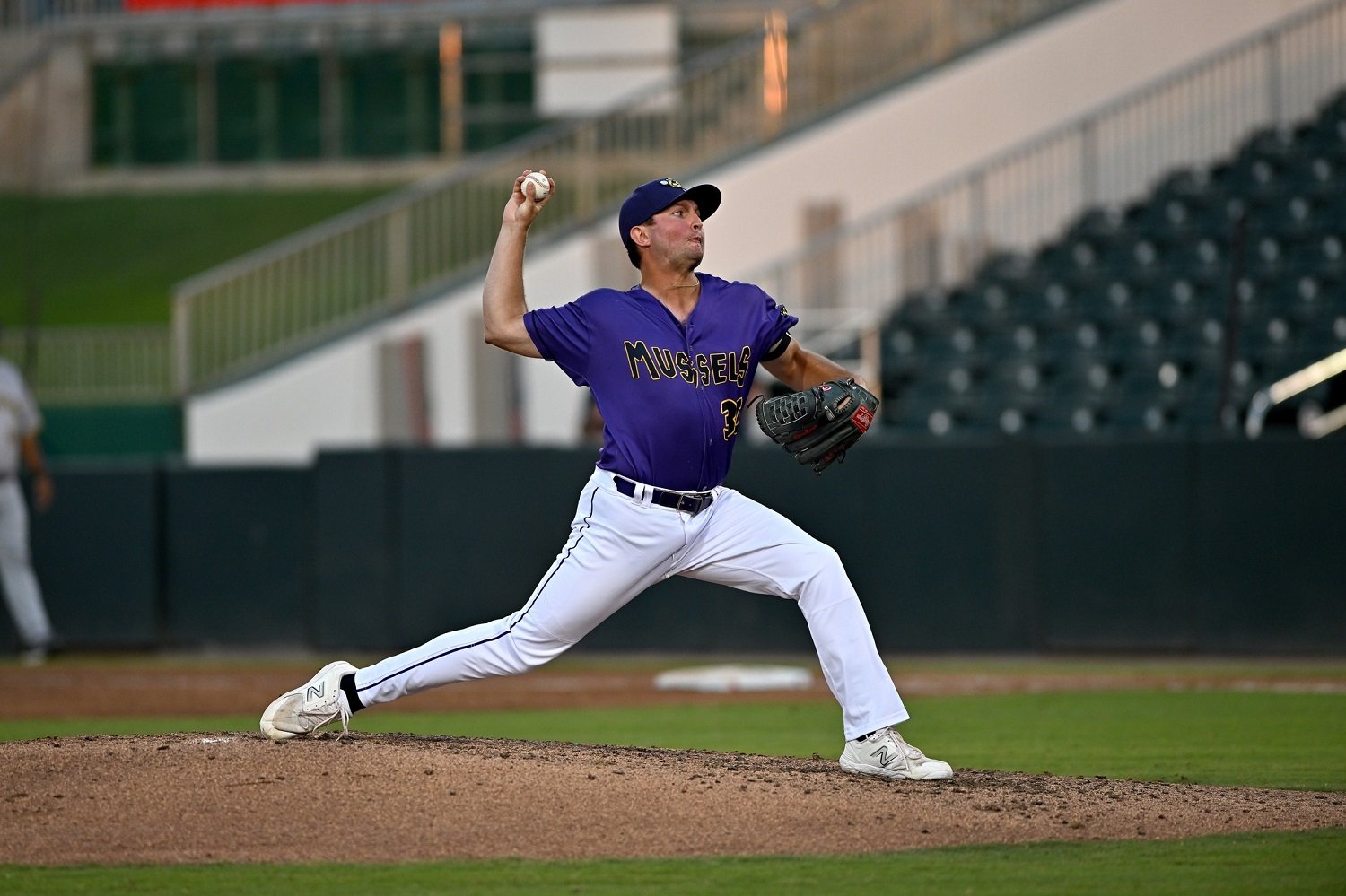 Jack Noble is a bit of an unheralded prospect in the Twins organization which is largely the case for most minor league relief pitchers. The 24-year-old was signed as an undrafted free agent in 2022 out of Long Beach State where he posted a 3.36 ERA, a 61:20 K:BB ratio, and led the team with six wins across 10 starts and seven relief appearances in his junior season. He was immediately assigned to the Florida Complex League where he made two appearances, striking out three and walking one while giving up no earned runs. He started at the same level in 2023, and after three successful starts he earned a promotion to single-A Fort Myers where he made nine more starts and one relief appearance. With the Mighty Mussels he posted a 9.4% K-BB rate and 3.38 ERA / 4.91 FIP across 50 ⅔ innings. He’d again start at the same level in 2024, where he spent a majority of the season, making one start and 32 relief appearances totaling 58 ⅓ innings. He struggled despite being two years older than the average pitcher with a 4.78 ERA / 5.39 FIP but did improve his K-BB rate to 16% and posted a solid 28.8% called strike-whiff rate (CSW). He would be promoted to high-A Cedar Rapids for 3 ⅓ innings and then double-A Wichita for three more innings before his season came to a close. The righty has an incredibly deep pitch mix featuring a low-to-mid 90s four seam and two seam fastball, the latter of which averages 13.1 inches of horizontal break, as well as a cutter, slider, curve, changeup, and split-finger fastball. While his breaking balls spin at more than 3,000 rotations per minute, he has struggled with control throughout his career posting a lowly 60.1% strike rate in 2024. His struggles with control notwithstanding, the Twins sent him to the Arizona Fall League where he posted a 5.56 ERA and a 10:7 K:BB ratio in 11 ⅓ innings of work. Now, he’ll look to get an appearance in the 18th annual Arizona Fall League Fall Stars game with first pitch set for 7:00 pm CDT on Saturday, November 9th.
 -
The St. Louis Cardinals are selling and this Gold Glover is a cheaper, more controllable, and maybe even better version of Willi Castro. Should the Twins tango with the Cards?
-
The St. Louis Cardinals are selling and this Gold Glover is a cheaper, more controllable, and maybe even better version of Willi Castro. Should the Twins tango with the Cards? View full video
-
.jpeg.37c286df02de7abe73184626db4697f0.jpeg) MLBTR’s annual Top 50 Free Agents with Predictions is one of my favorite offseason releases, as we put on our GM caps and start creating the first drafts of our offseason blueprints. Before we get into the predictions, be reminded of a few things that may impact the Twins' spending this offseason: Prior to the next two pieces of news, Twins ownership stated that they would not actively look to decrease payroll but that they also don’t expect it to increase. They found a short-term solution to their broadcasting issues by offering a direct-to-consumer streaming option via MLB.tv. They announced they were exploring a sale of the team. The Twins payroll for the 2024 season was about $125 million, and based on the three facts above, we can anticipate the 2025 payroll to come in around that same number. As of right now, if they were to tender all of their arbitration-eligible players, they are sitting around $135 million, leaving them with really no room to add free agents given the facts above. That is to say, if they plan on adding via free agency, then they’ll need to non-tender one or more of their arbitration-eligible players and/or make a trade. While those decisions aren’t part of the predictions, two different writers with MLBTR have predicted a reliever to land with the Twins, so there must be some thought that they won’t just sit on their hands this offseason. Now, let’s look at the two players predicted to join the Twins. #40 RP Andrew Kittredge The MLBTR team predicts Kittredge to get a two-year, $14-million deal, and Anthony Franco sees the 34-year-old right-handed reliever as one of the solutions to the gaps in the Minnesota bullpen. Next year will be Kittredge’s ninth season in Major League Baseball. He's accrued 2.2 fWAR across 240 relief appearances and 15 starts to date. As a low- to medium-leverage reliever for much of his career, he's pitched to a 3.26 ERA, with a 3.78 FIP and a 16.3% K-BB rate, leveraging a slider and sinker more than 80% of the time. Kittredge entered 2024 having missed a majority of the two previous seasons with various injuries, but bounced back nicely with a 2.80 ERA and matched his career K-BB rate across 70 ⅔ innings of relief for the St. Louis Cardinals. While his FIP may suggest some regression, he was in the 69th and 100th percentile for whiff and chase rates, respectively, suggesting a strikeout rate north of his career average (around 23%) may be in play moving forward. #48 LHP Shinnosuke Ogasawara So, nobody formally predicted Ogasawara to the Twins, but they were mentioned at the end of his writeup—along with half a dozen other teams—as a team that “might feel this is a chance to land an Erick Fedde-esque bargain.” There are questions surrounding the 27-year-old left-handed starter, primarily around the quality of his offerings and his ability to be successful against Major League hitters. I would be absolutely stunned if Ogasawara was wearing Twins colors next season, but for what it’s worth, the team at MLBTR predicted him to earn $12 million over two years. #50 RHP Spencer Turnbull Another reliever? Well... maybe. This time, Steve Adams predicts an aging right-handed pitcher with an injury history to land with the Twins but only on a one-year, $7-million deal. Turnbull will be 32 by the time next season rolls around, and coming back from a lat strain that sidelined from the end of June to the end of the year. Prior to May of this past season, Turnbull had explicitly been a starter throughout his career, but he transitioned to the bullpen for two months prior to the season ending injury. I don’t see the Twins needing him in a starter’s role outside of maybe a spot start here and there, so I’d envision him coming out of the bullpen like he had for the Philadelphia Phillies. While the sample is small, in 20 innings of relief, he posted a 4.05 ERA / 4.17 FIP and a 14.1% K-BB rate featuring a four-seam fastball and sweeper combo for more than 80% of his pitches. Unlike Kittredge, his Savant profile doesn’t hold promise that brighter days could be ahead, but it doesn’t suggest much regression either. I do wonder if better utilization of his pitch mix would lead to better results, he only threw his curveball nine percent of the time, yet it generated an opponent batting average of .067 whereas opponents hit .351 off his fastball. If you’re let down after reading those predictions, I don’t know what to tell you. Given the constraints the front office is under, they will once again be bargain-hunting to fill the gaps in their bullpen. Typically, pitchers are in the bargain bin because they’re either not productive, have an injury history, or both. In this case, we have two solid relief options that come with injury risk. Neither of these guys would move the needle too much, but either would be a nice addition to the front end of the bullpen. Do you like either of these names as relatively cheap fliers? Is there anyone else on the list you’d realistically think the Twins could target? Join the conversation in the comments!
MLBTR’s annual Top 50 Free Agents with Predictions is one of my favorite offseason releases, as we put on our GM caps and start creating the first drafts of our offseason blueprints. Before we get into the predictions, be reminded of a few things that may impact the Twins' spending this offseason: Prior to the next two pieces of news, Twins ownership stated that they would not actively look to decrease payroll but that they also don’t expect it to increase. They found a short-term solution to their broadcasting issues by offering a direct-to-consumer streaming option via MLB.tv. They announced they were exploring a sale of the team. The Twins payroll for the 2024 season was about $125 million, and based on the three facts above, we can anticipate the 2025 payroll to come in around that same number. As of right now, if they were to tender all of their arbitration-eligible players, they are sitting around $135 million, leaving them with really no room to add free agents given the facts above. That is to say, if they plan on adding via free agency, then they’ll need to non-tender one or more of their arbitration-eligible players and/or make a trade. While those decisions aren’t part of the predictions, two different writers with MLBTR have predicted a reliever to land with the Twins, so there must be some thought that they won’t just sit on their hands this offseason. Now, let’s look at the two players predicted to join the Twins. #40 RP Andrew Kittredge The MLBTR team predicts Kittredge to get a two-year, $14-million deal, and Anthony Franco sees the 34-year-old right-handed reliever as one of the solutions to the gaps in the Minnesota bullpen. Next year will be Kittredge’s ninth season in Major League Baseball. He's accrued 2.2 fWAR across 240 relief appearances and 15 starts to date. As a low- to medium-leverage reliever for much of his career, he's pitched to a 3.26 ERA, with a 3.78 FIP and a 16.3% K-BB rate, leveraging a slider and sinker more than 80% of the time. Kittredge entered 2024 having missed a majority of the two previous seasons with various injuries, but bounced back nicely with a 2.80 ERA and matched his career K-BB rate across 70 ⅔ innings of relief for the St. Louis Cardinals. While his FIP may suggest some regression, he was in the 69th and 100th percentile for whiff and chase rates, respectively, suggesting a strikeout rate north of his career average (around 23%) may be in play moving forward. #48 LHP Shinnosuke Ogasawara So, nobody formally predicted Ogasawara to the Twins, but they were mentioned at the end of his writeup—along with half a dozen other teams—as a team that “might feel this is a chance to land an Erick Fedde-esque bargain.” There are questions surrounding the 27-year-old left-handed starter, primarily around the quality of his offerings and his ability to be successful against Major League hitters. I would be absolutely stunned if Ogasawara was wearing Twins colors next season, but for what it’s worth, the team at MLBTR predicted him to earn $12 million over two years. #50 RHP Spencer Turnbull Another reliever? Well... maybe. This time, Steve Adams predicts an aging right-handed pitcher with an injury history to land with the Twins but only on a one-year, $7-million deal. Turnbull will be 32 by the time next season rolls around, and coming back from a lat strain that sidelined from the end of June to the end of the year. Prior to May of this past season, Turnbull had explicitly been a starter throughout his career, but he transitioned to the bullpen for two months prior to the season ending injury. I don’t see the Twins needing him in a starter’s role outside of maybe a spot start here and there, so I’d envision him coming out of the bullpen like he had for the Philadelphia Phillies. While the sample is small, in 20 innings of relief, he posted a 4.05 ERA / 4.17 FIP and a 14.1% K-BB rate featuring a four-seam fastball and sweeper combo for more than 80% of his pitches. Unlike Kittredge, his Savant profile doesn’t hold promise that brighter days could be ahead, but it doesn’t suggest much regression either. I do wonder if better utilization of his pitch mix would lead to better results, he only threw his curveball nine percent of the time, yet it generated an opponent batting average of .067 whereas opponents hit .351 off his fastball. If you’re let down after reading those predictions, I don’t know what to tell you. Given the constraints the front office is under, they will once again be bargain-hunting to fill the gaps in their bullpen. Typically, pitchers are in the bargain bin because they’re either not productive, have an injury history, or both. In this case, we have two solid relief options that come with injury risk. Neither of these guys would move the needle too much, but either would be a nice addition to the front end of the bullpen. Do you like either of these names as relatively cheap fliers? Is there anyone else on the list you’d realistically think the Twins could target? Join the conversation in the comments! -
The long wait for the arrival of MLB Trade Rumors’s Top 50 Free Agents with Predictions is over! Who was predicted to land with the Twins? (Hint: It wasn’t Juan Soto.) Image courtesy of Left: © John Geliebter-Imagn Images, Right: © Jay Biggerstaff-Imagn Images The long wait for the arrival of MLB Trade Rumors’s Top 50 Free Agents with Predictions is over! Who was predicted to land with the Twins? (Hint: It wasn’t Juan Soto.) MLBTR’s annual Top 50 Free Agents with Predictions is one of my favorite offseason releases, as we put on our GM caps and start creating the first drafts of our offseason blueprints. Before we get into the predictions, be reminded of a few things that may impact the Twins' spending this offseason: Prior to the next two pieces of news, Twins ownership stated that they would not actively look to decrease payroll but that they also don’t expect it to increase. They found a short-term solution to their broadcasting issues by offering a direct-to-consumer streaming option via MLB.tv. They announced they were exploring a sale of the team. The Twins payroll for the 2024 season was about $125 million, and based on the three facts above, we can anticipate the 2025 payroll to come in around that same number. As of right now, if they were to tender all of their arbitration-eligible players, they are sitting around $135 million, leaving them with really no room to add free agents given the facts above. That is to say, if they plan on adding via free agency, then they’ll need to non-tender one or more of their arbitration-eligible players and/or make a trade. While those decisions aren’t part of the predictions, two different writers with MLBTR have predicted a reliever to land with the Twins, so there must be some thought that they won’t just sit on their hands this offseason. Now, let’s look at the two players predicted to join the Twins. #40 RP Andrew Kittredge The MLBTR team predicts Kittredge to get a two-year, $14-million deal, and Anthony Franco sees the 34-year-old right-handed reliever as one of the solutions to the gaps in the Minnesota bullpen. Next year will be Kittredge’s ninth season in Major League Baseball. He's accrued 2.2 fWAR across 240 relief appearances and 15 starts to date. As a low- to medium-leverage reliever for much of his career, he's pitched to a 3.26 ERA, with a 3.78 FIP and a 16.3% K-BB rate, leveraging a slider and sinker more than 80% of the time. Kittredge entered 2024 having missed a majority of the two previous seasons with various injuries, but bounced back nicely with a 2.80 ERA and matched his career K-BB rate across 70 ⅔ innings of relief for the St. Louis Cardinals. While his FIP may suggest some regression, he was in the 69th and 100th percentile for whiff and chase rates, respectively, suggesting a strikeout rate north of his career average (around 23%) may be in play moving forward. #48 LHP Shinnosuke Ogasawara So, nobody formally predicted Ogasawara to the Twins, but they were mentioned at the end of his writeup—along with half a dozen other teams—as a team that “might feel this is a chance to land an Erick Fedde-esque bargain.” There are questions surrounding the 27-year-old left-handed starter, primarily around the quality of his offerings and his ability to be successful against Major League hitters. I would be absolutely stunned if Ogasawara was wearing Twins colors next season, but for what it’s worth, the team at MLBTR predicted him to earn $12 million over two years. #50 RHP Spencer Turnbull Another reliever? Well... maybe. This time, Steve Adams predicts an aging right-handed pitcher with an injury history to land with the Twins but only on a one-year, $7-million deal. Turnbull will be 32 by the time next season rolls around, and coming back from a lat strain that sidelined from the end of June to the end of the year. Prior to May of this past season, Turnbull had explicitly been a starter throughout his career, but he transitioned to the bullpen for two months prior to the season ending injury. I don’t see the Twins needing him in a starter’s role outside of maybe a spot start here and there, so I’d envision him coming out of the bullpen like he had for the Philadelphia Phillies. While the sample is small, in 20 innings of relief, he posted a 4.05 ERA / 4.17 FIP and a 14.1% K-BB rate featuring a four-seam fastball and sweeper combo for more than 80% of his pitches. Unlike Kittredge, his Savant profile doesn’t hold promise that brighter days could be ahead, but it doesn’t suggest much regression either. I do wonder if better utilization of his pitch mix would lead to better results, he only threw his curveball nine percent of the time, yet it generated an opponent batting average of .067 whereas opponents hit .351 off his fastball. If you’re let down after reading those predictions, I don’t know what to tell you. Given the constraints the front office is under, they will once again be bargain-hunting to fill the gaps in their bullpen. Typically, pitchers are in the bargain bin because they’re either not productive, have an injury history, or both. In this case, we have two solid relief options that come with injury risk. Neither of these guys would move the needle too much, but either would be a nice addition to the front end of the bullpen. Do you like either of these names as relatively cheap fliers? Is there anyone else on the list you’d realistically think the Twins could target? Join the conversation in the comments! View full article
-
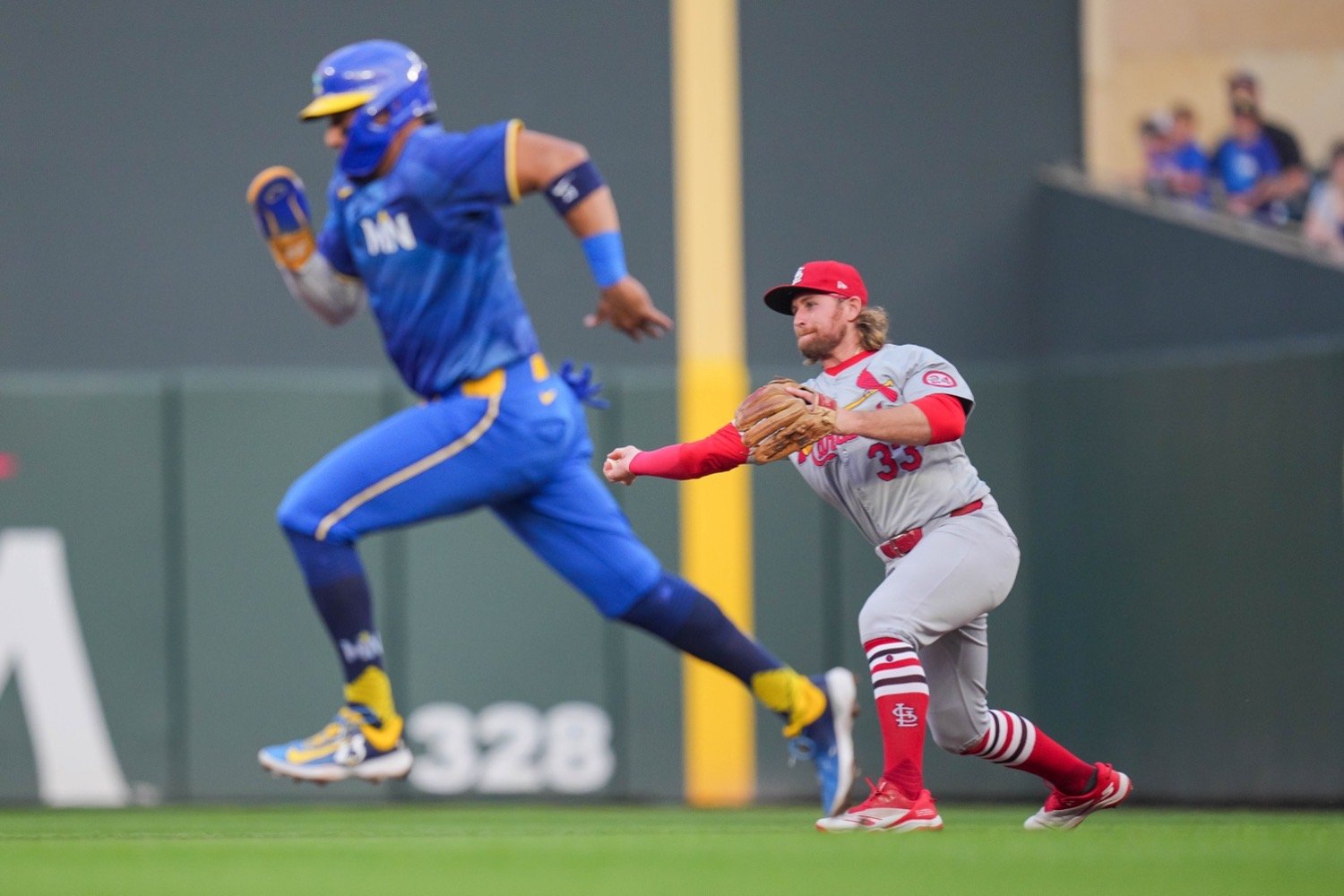 The Cardinals are already waving the white towel for the 2025 season, and look poised to sell off a lot of big names to rebuild their farm system. Big names already mentioned in swirling rumors include Willson Contreras, Nolan Arenado, and Sonny Gray, among others. But super-utility player Brendan Donovan could provide a very good return, too. He’s relatively cheap, entering his first year of arbitration (where Cot’s Baseball Contracts projects him to get $4 million), but he might still be available as the Cards undertake a broad-scale reshuffling. Let’s take a look at what the 28-year-old brings to the table, and how he could help the Twins. Donovan just completed his third season and has a career slash line of .280/.364/.407, with 30 home runs and 12 stolen bases in just under 1,500 plate appearances. He boasts an absurdly low strikeout rate, thanks to impressive bat control that makes up for below-average bat speed and hard-hit rates. To wit, he has a 77th-percentile launch angle sweet-spot rate, despite a 24th-percentile barrel rate. He overcame a low walk rate by posting elite zone contact, chase, and whiff rates, which led to him batting in key positions in the Cardinals lineup. A left-handed hitter, Donovan has traditional splits at the plate, performing better against right-handed pitching and typically batting leadoff when St. Louis faces a righty starter. That said, with a career 94 wRC+ against lefties, he’s more than serviceable against southpaws and typically found himself batting in the middle third of the order when they were on the mound. While he seems to flourish a little lower in the order, he carried a .702 OPS out of the leadoff spot against right-handed pitching in 2024. As a reference, the Twins as a team had a .662 OPS in similar circumstances in 2024, with a strikeout rate 10 percentage points higher than Donovan’s. Overall, the former 7th-round pick’s 2024 offensive production was arguably better than that of any Twins player, and his consistency would have been valuable in an offense that had the third-most variance in runs scored per game in all of baseball. But, wait…there’s more! Like Willi Castro, Donovan was a 2024 Rawlings Gold Glove Finalist as a utility player, but lost out to Jared Triolo of the Pittsburgh Pirates. Last season, Donovan played three different positions (primarily second base and left field) across 153 games, but is only a season removed from contributing at six different positions. Throughout his career, Donovan has graded out as a plus defender at third base and both corner outfield spots, a slightly below-average defender at the keystone, and firmly below average at first base and shortstop. Specifically in 2024, he posted career bests at second with a 1.7 UZR/150, five outs above average (OOA), and 3% success rate added. As I mentioned, Donovan is a plus defender at both corner outfield spots and could be an overall upgrade over Matt Wallner or Trevor Larnach at this point in their careers. He does profile similarly to the two incumbent Twins, as lefties with traditional splits, and doesn’t have the arm strength that Wallner showcases, but his versatility would allow Rocco Baldelli to play to his players' strengths—as Larnach, in particular, has struggled mightily against left-handed pitching. Alas, Donovan has never played an inning in center field, so the Twins would have to rely on Austin Martin or DeShawn Kiersey Jr. to spell Byron Buxton in the event of an injury. I’m not going to get into what it would cost to add Donovan, as I never feel confident in trying to predict that type of stuff, but given his production and team control it’s going to be something significant. Maybe the team could draw from its second tier of rising pitching prospects; the Cardinals are hungry for young hurlers with more upside than their current group. Regardless, Donovan's versatility is a perfect match with the philosophy of this organization, and his consistency would be a welcome sight to a rollercoaster offense. Given the financial constraints the front office faces, giving up distant prospects for cheap, major league-ready production is essential to being successful. Trading for Donovan would probably mean moving on from Castro, but getting extra team control, a few more dollars to spend, and a bit more stability in the bargain. Are you interested in Brendan Donovan? What would you give up to get him?
 -
The St. Louis Cardinals are looking to cut payroll and have a super-utility player who is cheaper, more controllable, and arguably an upgrade over Willi Castro. While the Twins aren’t looking to cut payroll, acquiring this former Gold Glove winner could help fill plenty of holes and give the team more club control to boot. Image courtesy of © Brad Rempel-Imagn Images The St. Louis Cardinals are looking to cut payroll and have a super-utility player who is cheaper, more controllable, and arguably an upgrade over Willi Castro. While the Twins aren’t looking to cut payroll, acquiring this former Gold Glove winner could help fill plenty of holes and give the team more club control to boot. The Cardinals are already waving the white towel for the 2025 season, and look poised to sell off a lot of big names to rebuild their farm system. Big names already mentioned in swirling rumors include Willson Contreras, Nolan Arenado, and Sonny Gray, among others. But super-utility player Brendan Donovan could provide a very good return, too. He’s relatively cheap, entering his first year of arbitration (where Cot’s Baseball Contracts projects him to get $4 million), but he might still be available as the Cards undertake a broad-scale reshuffling. Let’s take a look at what the 28-year-old brings to the table, and how he could help the Twins. Donovan just completed his third season and has a career slash line of .280/.364/.407, with 30 home runs and 12 stolen bases in just under 1,500 plate appearances. He boasts an absurdly low strikeout rate, thanks to impressive bat control that makes up for below-average bat speed and hard-hit rates. To wit, he has a 77th-percentile launch angle sweet-spot rate, despite a 24th-percentile barrel rate. He overcame a low walk rate by posting elite zone contact, chase, and whiff rates, which led to him batting in key positions in the Cardinals lineup. A left-handed hitter, Donovan has traditional splits at the plate, performing better against right-handed pitching and typically batting leadoff when St. Louis faces a righty starter. That said, with a career 94 wRC+ against lefties, he’s more than serviceable against southpaws and typically found himself batting in the middle third of the order when they were on the mound. While he seems to flourish a little lower in the order, he carried a .702 OPS out of the leadoff spot against right-handed pitching in 2024. As a reference, the Twins as a team had a .662 OPS in similar circumstances in 2024, with a strikeout rate 10 percentage points higher than Donovan’s. Overall, the former 7th-round pick’s 2024 offensive production was arguably better than that of any Twins player, and his consistency would have been valuable in an offense that had the third-most variance in runs scored per game in all of baseball. But, wait…there’s more! Like Willi Castro, Donovan was a 2024 Rawlings Gold Glove Finalist as a utility player, but lost out to Jared Triolo of the Pittsburgh Pirates. Last season, Donovan played three different positions (primarily second base and left field) across 153 games, but is only a season removed from contributing at six different positions. Throughout his career, Donovan has graded out as a plus defender at third base and both corner outfield spots, a slightly below-average defender at the keystone, and firmly below average at first base and shortstop. Specifically in 2024, he posted career bests at second with a 1.7 UZR/150, five outs above average (OOA), and 3% success rate added. As I mentioned, Donovan is a plus defender at both corner outfield spots and could be an overall upgrade over Matt Wallner or Trevor Larnach at this point in their careers. He does profile similarly to the two incumbent Twins, as lefties with traditional splits, and doesn’t have the arm strength that Wallner showcases, but his versatility would allow Rocco Baldelli to play to his players' strengths—as Larnach, in particular, has struggled mightily against left-handed pitching. Alas, Donovan has never played an inning in center field, so the Twins would have to rely on Austin Martin or DeShawn Kiersey Jr. to spell Byron Buxton in the event of an injury. I’m not going to get into what it would cost to add Donovan, as I never feel confident in trying to predict that type of stuff, but given his production and team control it’s going to be something significant. Maybe the team could draw from its second tier of rising pitching prospects; the Cardinals are hungry for young hurlers with more upside than their current group. Regardless, Donovan's versatility is a perfect match with the philosophy of this organization, and his consistency would be a welcome sight to a rollercoaster offense. Given the financial constraints the front office faces, giving up distant prospects for cheap, major league-ready production is essential to being successful. Trading for Donovan would probably mean moving on from Castro, but getting extra team control, a few more dollars to spend, and a bit more stability in the bargain. Are you interested in Brendan Donovan? What would you give up to get him? View full article
-
Week 4 of the Arizona Fall League is in the books and Twins prospects were busy! Pitchers combined for 15 1/3 IP and our batters for 35 at-bats. Plus, stick around for a Ben Ross outlook after an interesting quote from a Baseball Prospectus writer. View full video
-
Week 4 of the Arizona Fall League is in the books and Twins prospects were busy! Pitchers combined for 15 1/3 IP and our batters for 35 at-bats. Plus, stick around for a Ben Ross outlook after an interesting quote from a Baseball Prospectus writer.
-
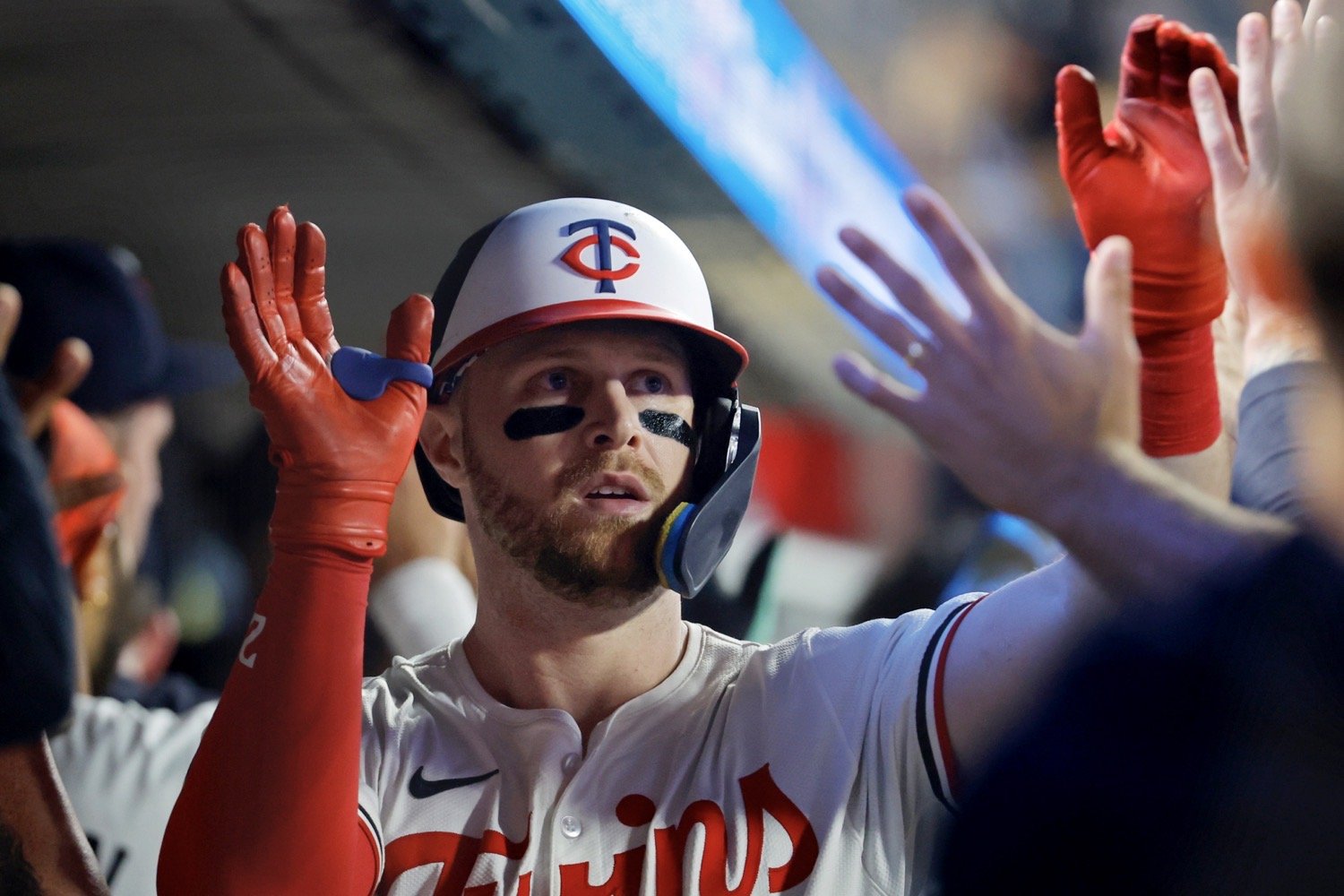 A second round pick in 2018, Jeffers was quietly one the highest regarded catchers in all of Major League Baseball ahead of his debut in 2020. Since then he is one of 20 catchers to surpass 1300 plate appearances and of that group he is 10th in wRC+ and fWAR. MLBTR has projected that Ryan Jeffers will earn $4.7 million via arbitration in 2024, which is roughly a quarter of what FanGraphs value metrics say he was worth in 2024. With that laid out, should the Twins tender or move on from Jeffers? Let's look into both sides of the argument. Why He Should Be Tendered I’ve already started to lay out this argument above. Even despite the roller coaster season, Jeffers finished with a 107 wRC+ meaning that he produced 7% better than the average Major League hitter in a position where offense is often considered an added bonus. Additionally, adjustments at the plate led to a career low 20.2% strikeout rate and a career high 78.2% contact rate. He set career highs in nearly every counting stat in part due to playing in 26 more games and earning 130 more plate appearances in 2024 than he previously had in any one season. What’s more is that ZiPS thinks the approach is sustainable and views him as a plus hitter for at least the next two seasons. Defensively, a career low pop time of 1.93 seconds resulted in an estimated two additional baserunners being gunned down on the base path, per Baseball Savant’s “Catcher’s CS Above Average” metric. From a roster construction perspective, the Twins like having two starting-caliber catchers on the roster. Heck, at times they were carrying three catchers this season due to Jeffers’ ability to contribute as a designated hitter when he wasn’t behind the plate. From a purely offensive standpoint, $4.7 million is a really good price for a hitter of Jeffers’ caliber, and even more so when he’s doing it as a catcher. While the Twins have other options at catcher, they don’t have anyone else to replace his bat. Why He Shouldn’t Be Tendered Almost every positive mentioned above can be tied to something that would give you pause. While Jeffers was setting a career-low strikeout rate, he was also setting a career-low walk rate. While it’s great that he’s making better contact with the ball, he’s doing so by sacrificing power as he saw a dip in his hard-hit metrics nearly across the board. We’d hope that he’d set career highs in home runs, runs, runs batted in, etc. when he had a 39% increase in plate appearances, but unfortunately those counting stats didn’t increase proportionally (not that we’d totally expect them to). When we break down his production by pitch type, it’s clear that he struggles with horizontal movement which isn’t good in a league where the sweeper is king. Defensively, he’s easily one of the worst catchers in baseball despite the Twins bringing in Christian Vázquez to help mentor him into a better catcher. In fact, we’ve generally seen no improvement in his blocking and framing metrics over the past two seasons, according to Baseball Savant. From a roster construction standpoint, $4.7 million is a lot of money to dole out to a guy with this many red flags on both sides of the ball, and the Twins are locked into Vázquez for $10 million as it sits right now. While they value having two catchers that can split time 50-50, you have to wonder if spending more than 10% of your salary “cap” on backstops is the most valuable way to spend that money. What I Would Do I’ve gone back and forth on this one quite a bit. If it weren’t for the salary constraints, this is a no-brainer move for the Twins. At only 27 years old and with one more year of team control after 2025, there is still time for Jeffers to continue developing as a hitter and a catcher. While I don’t anticipate significant improvement at the plate, I think a middle ground could be found between the hard hitter he was in 2023 versus the contact hitter he was in 2024. And let’s not forget, that “contact” hitter approach still led to 21 home runs and the eighth-best slugging percentage of catchers who had 400 or more plate appearances, so I feel like I’m selling him short a bit there. Given that we’re two years into the Vázquez mentorship, I tend to think his defense is what it is at this point. I don’t see value in spending nearly $15 million on backstops in 2025, but the decision here really isn’t whether they should or should not tender Jeffers. The decision here is to figure out how much salary they need to cover and or what level of prospect they need to include to ship Vázquez elsewhere. With Jeffers showing to be a 1.7 fWAR player over 122 games, I think it’s realistic to go into 2025 with Jair Camargo as the team's backup and utilizing a ⅔ / ⅓ split between the vet and prospect. What do you think? How should the Twins handle the catching position in the 2025 season?
 -
For the first two months in 2024, Ryan Jeffers looked like the best offensive catcher in baseball which was something the Minnesota Twins were betting on when they traded away Mitch Garver in March of 2022. Unfortunately, the rest of the season was a roller coaster and now we have to wonder if he’ll be tendered a contract as an arbitration eligible player. Image courtesy of © Bruce Kluckhohn-Imagn Images For the first two months in 2024, Ryan Jeffers looked like the best offensive catcher in baseball which was something the Minnesota Twins were betting on when they traded away Mitch Garver in March of 2022. Unfortunately, the rest of the season was a roller coaster and now we have to wonder if he’ll be tendered a contract as an arbitration eligible player. A second round pick in 2018, Jeffers was quietly one the highest regarded catchers in all of Major League Baseball ahead of his debut in 2020. Since then he is one of 20 catchers to surpass 1300 plate appearances and of that group he is 10th in wRC+ and fWAR. MLBTR has projected that Ryan Jeffers will earn $4.7 million via arbitration in 2024, which is roughly a quarter of what FanGraphs value metrics say he was worth in 2024. With that laid out, should the Twins tender or move on from Jeffers? Let's look into both sides of the argument. Why He Should Be Tendered I’ve already started to lay out this argument above. Even despite the roller coaster season, Jeffers finished with a 107 wRC+ meaning that he produced 7% better than the average Major League hitter in a position where offense is often considered an added bonus. Additionally, adjustments at the plate led to a career low 20.2% strikeout rate and a career high 78.2% contact rate. He set career highs in nearly every counting stat in part due to playing in 26 more games and earning 130 more plate appearances in 2024 than he previously had in any one season. What’s more is that ZiPS thinks the approach is sustainable and views him as a plus hitter for at least the next two seasons. Defensively, a career low pop time of 1.93 seconds resulted in an estimated two additional baserunners being gunned down on the base path, per Baseball Savant’s “Catcher’s CS Above Average” metric. From a roster construction perspective, the Twins like having two starting-caliber catchers on the roster. Heck, at times they were carrying three catchers this season due to Jeffers’ ability to contribute as a designated hitter when he wasn’t behind the plate. From a purely offensive standpoint, $4.7 million is a really good price for a hitter of Jeffers’ caliber, and even more so when he’s doing it as a catcher. While the Twins have other options at catcher, they don’t have anyone else to replace his bat. Why He Shouldn’t Be Tendered Almost every positive mentioned above can be tied to something that would give you pause. While Jeffers was setting a career-low strikeout rate, he was also setting a career-low walk rate. While it’s great that he’s making better contact with the ball, he’s doing so by sacrificing power as he saw a dip in his hard-hit metrics nearly across the board. We’d hope that he’d set career highs in home runs, runs, runs batted in, etc. when he had a 39% increase in plate appearances, but unfortunately those counting stats didn’t increase proportionally (not that we’d totally expect them to). When we break down his production by pitch type, it’s clear that he struggles with horizontal movement which isn’t good in a league where the sweeper is king. Defensively, he’s easily one of the worst catchers in baseball despite the Twins bringing in Christian Vázquez to help mentor him into a better catcher. In fact, we’ve generally seen no improvement in his blocking and framing metrics over the past two seasons, according to Baseball Savant. From a roster construction standpoint, $4.7 million is a lot of money to dole out to a guy with this many red flags on both sides of the ball, and the Twins are locked into Vázquez for $10 million as it sits right now. While they value having two catchers that can split time 50-50, you have to wonder if spending more than 10% of your salary “cap” on backstops is the most valuable way to spend that money. What I Would Do I’ve gone back and forth on this one quite a bit. If it weren’t for the salary constraints, this is a no-brainer move for the Twins. At only 27 years old and with one more year of team control after 2025, there is still time for Jeffers to continue developing as a hitter and a catcher. While I don’t anticipate significant improvement at the plate, I think a middle ground could be found between the hard hitter he was in 2023 versus the contact hitter he was in 2024. And let’s not forget, that “contact” hitter approach still led to 21 home runs and the eighth-best slugging percentage of catchers who had 400 or more plate appearances, so I feel like I’m selling him short a bit there. Given that we’re two years into the Vázquez mentorship, I tend to think his defense is what it is at this point. I don’t see value in spending nearly $15 million on backstops in 2025, but the decision here really isn’t whether they should or should not tender Jeffers. The decision here is to figure out how much salary they need to cover and or what level of prospect they need to include to ship Vázquez elsewhere. With Jeffers showing to be a 1.7 fWAR player over 122 games, I think it’s realistic to go into 2025 with Jair Camargo as the team's backup and utilizing a ⅔ / ⅓ split between the vet and prospect. What do you think? How should the Twins handle the catching position in the 2025 season? View full article
-
The Twins have a decision to make on right-handed reliever Jorge Alcalá. While he is technically arbitration eligible, the Twins actually have a $1.5 million team option that would cost $55 thousand if they decline. Should the Twins accept or decline the team option on Alcalá? Image courtesy of © Jerome Miron-Imagn Images The Twins have a decision to make on right-handed reliever Jorge Alcalá. While he is technically arbitration eligible, the Twins actually have a $1.5 million team option that would cost $55 thousand if they decline. Should the Twins accept or decline the team option on Alcalá? Alcalá came to the Twins at the 2018 trade deadline that sent Ryan Pressly to the Houston Astros. He debuted in 2019 and, despite some injury-shortened seasons, has been a mainstay in the bullpen since 2020, having accrued the fourth most innings of any Twins reliever in that time. While this isn’t an arbitration decision, I think it’s worth noting from a value perspective that MLBTR projected that Alcalá would earn $1.7 million if he went through the arbitration process in 2024. With that laid out, should the Twins tender or move on from 29-year-old Alcalá? Let's look into both sides of the argument. Why He Should Be Tendered Sans two appearances, Jorge Alcalá was arguably the Twins' best reliever in 2024. His 3.24 ERA is inflated due to two appearances that saw him give up just under 43% of his earned run total for the whole season. In fact, more than 44% of his appearances were clean, 1-2-3 innings and allowed zero earned runs in nearly 80% of his outings. His 98-mile-per-hour fastball has plus arm-side movement and is countered by a slider with plus glove-side movement. These two offerings accounted for 83% of his pitches and resulted in a combined .213 opponent batting average and a 31.1% whiff rate, and had above-average strikeout and whiff rates overall. In addition to limiting hard contact, he fits Target Field and the Twins' current defensive strength well as a flyball-oriented pitcher. From a roster construction perspective, the need for reliable relievers is clear and Alcalá more than fits that need. It’s an added plus that he can be equally effective against left-handed and right-handed batters. The Twins are on the hook for $55K regardless of what they decide here, and while that’s pretty negligible, it’s just another reason not to let one of the better relievers in all of baseball walk away. Why He Shouldn’t Be Tendered While the surface stats paint a pretty picture, underneath the hood, Alcalá carried a 4.14 FIP and a fastball that opponents teed off on to the tune of a .513 slugging percentage and six home runs. While his offerings grade out well in terms of Stuff+, a below-average walk rate and a 19th-percentile chase rate indicate a cap to his ceiling and reliance on soft zone contact to remain an effective reliever. From a roster perspective, the Twins have plenty of right-handed relief options, many of which are arbitration-eligible. In addition to the self-imposed salary cap, the Twins have a roster crunch here where they will likely need to decide which righty arms to keep in the bullpen and which they will let walk. What I Would Do Accepting Alcalá’s team option is a pretty easy decision, given the production and the cost. While he is one of the Twins' more “expensive” relief decisions, he’s also one of the more productive ones alongside Jhoan Duran and Griffin Jax. Despite being another right-handed reliever, it also helps that he can be relied upon to effectively face left-handed batters. What do you think? Should Alcalá be tendered and kept, tendered and traded, or non-tendered? View full article
-
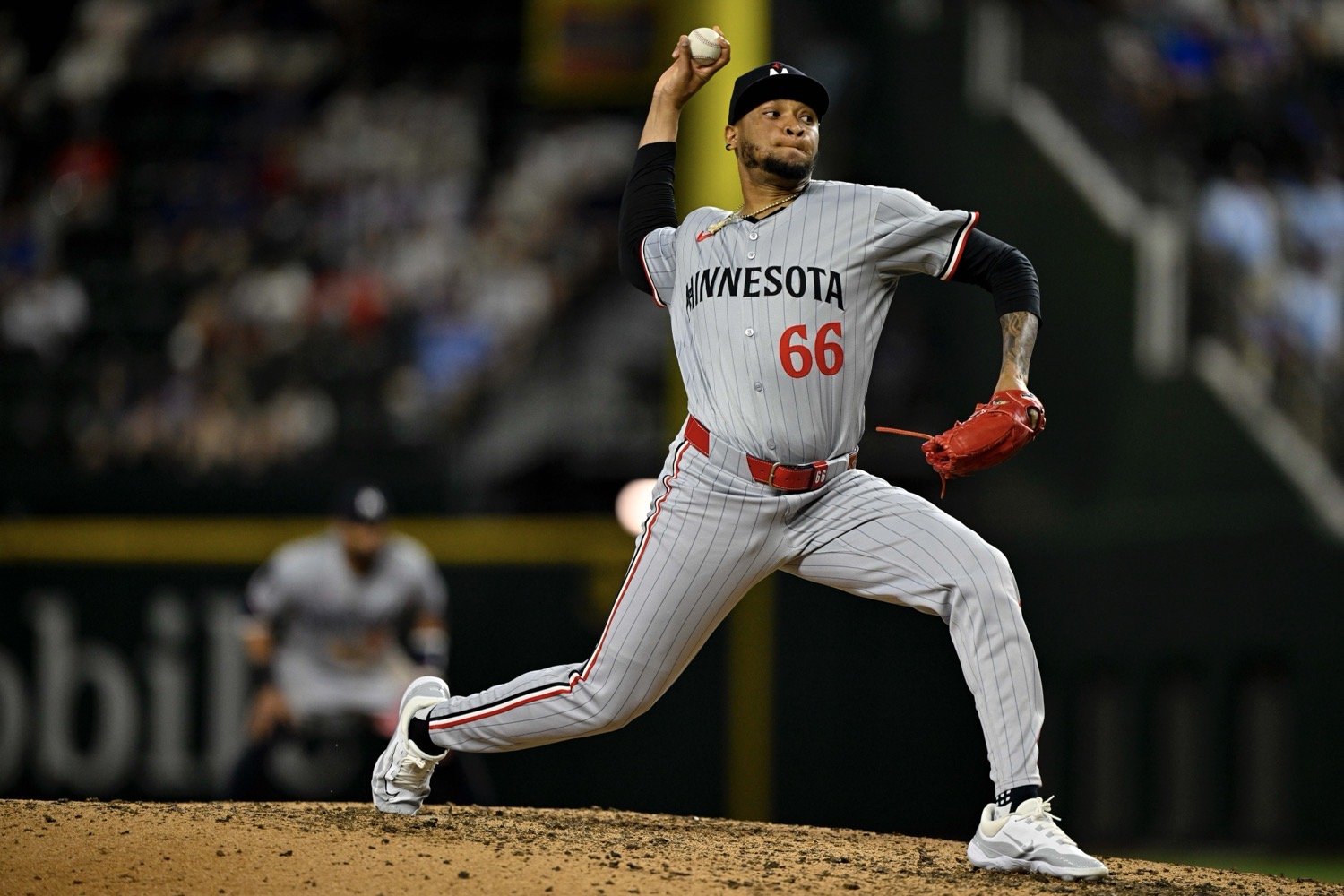 Alcalá came to the Twins at the 2018 trade deadline that sent Ryan Pressly to the Houston Astros. He debuted in 2019 and, despite some injury-shortened seasons, has been a mainstay in the bullpen since 2020, having accrued the fourth most innings of any Twins reliever in that time. While this isn’t an arbitration decision, I think it’s worth noting from a value perspective that MLBTR projected that Alcalá would earn $1.7 million if he went through the arbitration process in 2024. With that laid out, should the Twins tender or move on from 29-year-old Alcalá? Let's look into both sides of the argument. Why He Should Be Tendered Sans two appearances, Jorge Alcalá was arguably the Twins' best reliever in 2024. His 3.24 ERA is inflated due to two appearances that saw him give up just under 43% of his earned run total for the whole season. In fact, more than 44% of his appearances were clean, 1-2-3 innings and allowed zero earned runs in nearly 80% of his outings. His 98-mile-per-hour fastball has plus arm-side movement and is countered by a slider with plus glove-side movement. These two offerings accounted for 83% of his pitches and resulted in a combined .213 opponent batting average and a 31.1% whiff rate, and had above-average strikeout and whiff rates overall. In addition to limiting hard contact, he fits Target Field and the Twins' current defensive strength well as a flyball-oriented pitcher. From a roster construction perspective, the need for reliable relievers is clear and Alcalá more than fits that need. It’s an added plus that he can be equally effective against left-handed and right-handed batters. The Twins are on the hook for $55K regardless of what they decide here, and while that’s pretty negligible, it’s just another reason not to let one of the better relievers in all of baseball walk away. Why He Shouldn’t Be Tendered While the surface stats paint a pretty picture, underneath the hood, Alcalá carried a 4.14 FIP and a fastball that opponents teed off on to the tune of a .513 slugging percentage and six home runs. While his offerings grade out well in terms of Stuff+, a below-average walk rate and a 19th-percentile chase rate indicate a cap to his ceiling and reliance on soft zone contact to remain an effective reliever. From a roster perspective, the Twins have plenty of right-handed relief options, many of which are arbitration-eligible. In addition to the self-imposed salary cap, the Twins have a roster crunch here where they will likely need to decide which righty arms to keep in the bullpen and which they will let walk. What I Would Do Accepting Alcalá’s team option is a pretty easy decision, given the production and the cost. While he is one of the Twins' more “expensive” relief decisions, he’s also one of the more productive ones alongside Jhoan Duran and Griffin Jax. Despite being another right-handed reliever, it also helps that he can be relied upon to effectively face left-handed batters. What do you think? Should Alcalá be tendered and kept, tendered and traded, or non-tendered?
 -
It was on Halloween 2024 that Max Kepler officially became an unrestricted free agent almost guaranteeing that the longest tenured member of the Twins organization will don a different uniform in 2025. Kepler will go down as one of the best right fielders in franchise history. Let's commemorate his accomplishments in navy and red. Image courtesy of © Nick Wosika-Imagn Images It was on Halloween 2024 that Max Kepler officially became an unrestricted free agent almost guaranteeing that the longest tenured member of the Twins organization will don a different uniform in 2025. Kepler will go down as one of the best right fielders in franchise history. Let's commemorate his accomplishments in navy and red. Max Kepler signed as an international free agent out of Germany in 2009. It would take just over six years for him to make his debut on September 27th, 2015 and only a few days after that for him to record his first hit – a single of Kansas City Royals starting pitcher Johnny Cueto. More than a thousand games later across ten seasons, the right fielder finishes his Twins career with 893 hits, 161 home runs, 2027 putouts, and 46 outfield assists. At the time, we didn’t know that his 4th-inning single off Spencer Schwellenbach on August 27th would be his last. It seems fitting it was at least at Target Field. While researching his most memorable performances, I found a very fun piece of bar trivia that is a statistical oddity. Kepler, who has hit the most home runs at Target Field with 84, is responsible for hitting the stadium's 600th, 700th, and 1000th home runs. Less fun but still notable, he has the fourth-highest fielding percentage of all right fielders in Major League Baseball history at 99.21%. With his accomplishments noted, let’s relive some of his most memorable performances with the Minnesota Twins. These are presented in no particular ranking or order. August 1st, 2016 - First Career Three Home Run Game Oddly enough, Kepler has had two three home run games in his career, and both came in Cleveland. He took starter, Danny Salazar, deep twice before getting the hat trick against righty reliever Cody Anderson. June 6th, 2019 - Kepler Adopts Trevor Bauer It was only the first week of June, and the Twins were already enjoying a 9.5-game lead in the AL Central, well on their way to a franchise and league record-breaking season. Kepler led off the game with a 369-foot blast down the right-field line and followed that up with a 375-foot shot in the third. Not only would he go on to add a no-doubter in the seventh, but he would homer off Trevor Bauer in his first two at-bats a little over a month later. According to Elias Sports, homering in five consecutive at-bats against the same pitcher would be the longest streak since 1961 and would forever require Trevor Bauer to call him Daddy. June 12th, 2016 - First Career Walk-Off Home Run Kepler has three career walk-off home runs, the first of which came on June 12th, 2016, against the Boston Red Sox. With two outs and facing an 0-2 hole, the rookie took Matt Barnes deep to give the Twins a 5-4 victory in 10 innings at Target Field. His second career walk-off came just a couple of years later off of Brad Peacock on a full count with two outs. In all, Kepler has walked off his opponent a total of nine times, with the other six being RBI singles. August 6th, 2023 Game Tying Home Run Leads to Win Heading into their game against the Arizona Diamondbacks, the Twins were only 3.5 games up on the Cleveland Guardians with under two months left in the season. They were also trying to keep pace with the eventual World Series Champion Texas Rangers in the race for the second-best division winner in the American League. Down one run in the bottom of the 9th, facing Dbacks closer Paul Sewald, Kepler tied the game with a 438-foot missile that allowed Matt Wallner to hit a walk-off home run two batters later, extending their lead to 4.5 games over the Guardians. Throughout his career, Kepler has tied the game or given his team the lead in the 9th inning or later on nine different occasions, but arguably none were as big as the one on August 6th. June 25th, 2021 - Guns Down Game Tying Run at Second We can’t commemorate Kepler without at least one highlight of how well he handled right field. One of the bigger moments occurred on June 25th, 2021 when Guardians outfielder, Bradley Zimmer, was trying to stretch a 9th inning single into a double. Like he did so many times Kepler played the ball perfect and after review Zimmer, who represented the tying run, was deemed out at second base for the second out of the inning. TXdXeGRfWGw0TUFRPT1fVlFOV1ZsSldCQVlBRDF0UVZ3QUFBQUJXQUZnR1V3TUFWd0FGQkFZTlZBWlVVVk5S.mp4 While Kepler was up and down throughout his career, his longevity and overall production with the team makes him a future candidate for the Twins Hall of Fame – shoot, if Cuddyer is a Twins Hall of Famer then Kepler should be a lock. While it remains to be seen, I think Twins fans will come to miss Kepler holding down right field with a plus glove and a solid bat. Regardless, we wish him the best of luck in the next chapter of his career! What were your favorite Kepler memories and moments? Share in the comments and join the conversation! View full article
-
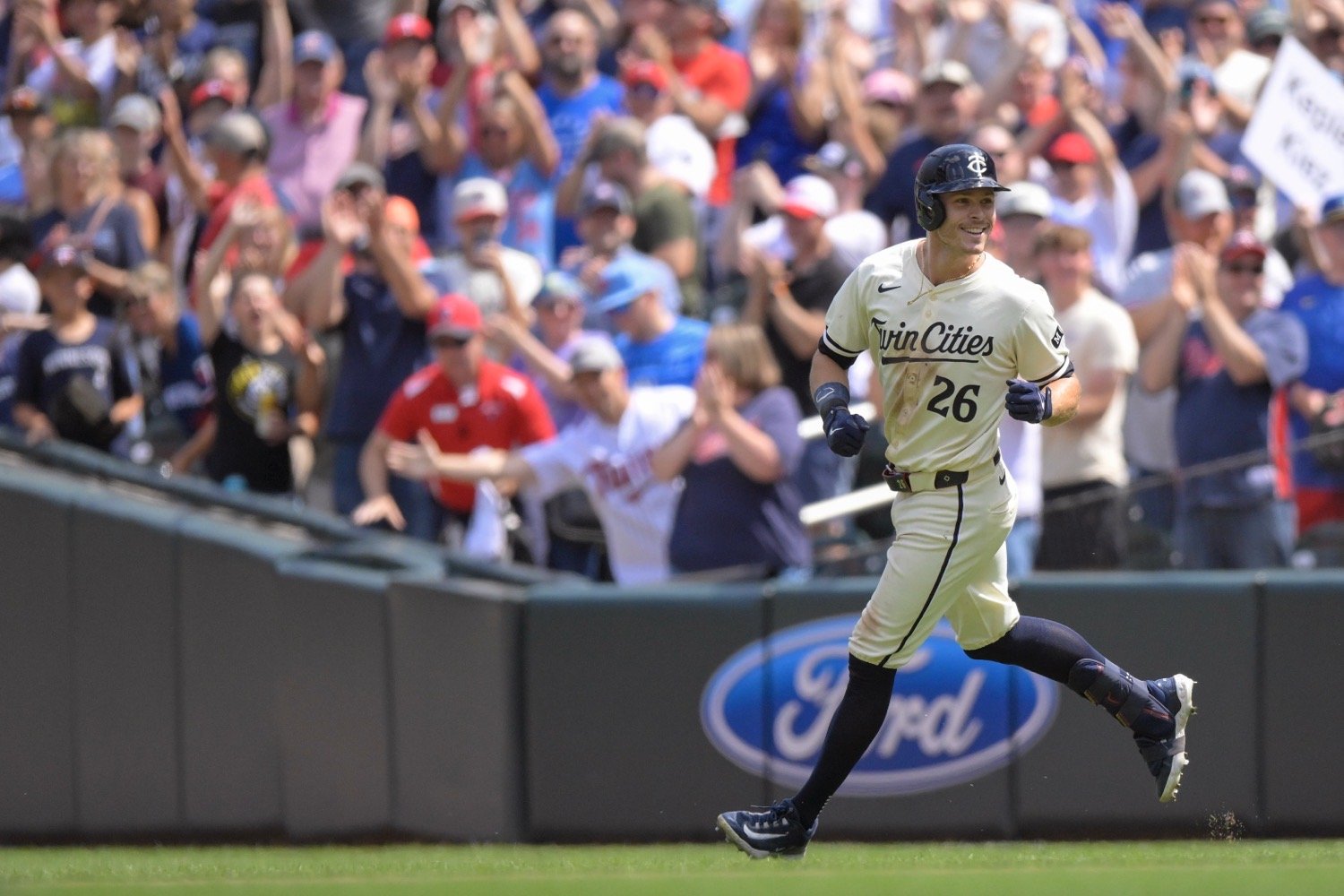 Max Kepler signed as an international free agent out of Germany in 2009. It would take just over six years for him to make his debut on September 27th, 2015 and only a few days after that for him to record his first hit – a single of Kansas City Royals starting pitcher Johnny Cueto. More than a thousand games later across ten seasons, the right fielder finishes his Twins career with 893 hits, 161 home runs, 2027 putouts, and 46 outfield assists. At the time, we didn’t know that his 4th-inning single off Spencer Schwellenbach on August 27th would be his last. It seems fitting it was at least at Target Field. While researching his most memorable performances, I found a very fun piece of bar trivia that is a statistical oddity. Kepler, who has hit the most home runs at Target Field with 84, is responsible for hitting the stadium's 600th, 700th, and 1000th home runs. Less fun but still notable, he has the fourth-highest fielding percentage of all right fielders in Major League Baseball history at 99.21%. With his accomplishments noted, let’s relive some of his most memorable performances with the Minnesota Twins. These are presented in no particular ranking or order. August 1st, 2016 - First Career Three Home Run Game Oddly enough, Kepler has had two three home run games in his career, and both came in Cleveland. He took starter, Danny Salazar, deep twice before getting the hat trick against righty reliever Cody Anderson. June 6th, 2019 - Kepler Adopts Trevor Bauer It was only the first week of June, and the Twins were already enjoying a 9.5-game lead in the AL Central, well on their way to a franchise and league record-breaking season. Kepler led off the game with a 369-foot blast down the right-field line and followed that up with a 375-foot shot in the third. Not only would he go on to add a no-doubter in the seventh, but he would homer off Trevor Bauer in his first two at-bats a little over a month later. According to Elias Sports, homering in five consecutive at-bats against the same pitcher would be the longest streak since 1961 and would forever require Trevor Bauer to call him Daddy. June 12th, 2016 - First Career Walk-Off Home Run Kepler has three career walk-off home runs, the first of which came on June 12th, 2016, against the Boston Red Sox. With two outs and facing an 0-2 hole, the rookie took Matt Barnes deep to give the Twins a 5-4 victory in 10 innings at Target Field. His second career walk-off came just a couple of years later off of Brad Peacock on a full count with two outs. In all, Kepler has walked off his opponent a total of nine times, with the other six being RBI singles. August 6th, 2023 Game Tying Home Run Leads to Win Heading into their game against the Arizona Diamondbacks, the Twins were only 3.5 games up on the Cleveland Guardians with under two months left in the season. They were also trying to keep pace with the eventual World Series Champion Texas Rangers in the race for the second-best division winner in the American League. Down one run in the bottom of the 9th, facing Dbacks closer Paul Sewald, Kepler tied the game with a 438-foot missile that allowed Matt Wallner to hit a walk-off home run two batters later, extending their lead to 4.5 games over the Guardians. Throughout his career, Kepler has tied the game or given his team the lead in the 9th inning or later on nine different occasions, but arguably none were as big as the one on August 6th. June 25th, 2021 - Guns Down Game Tying Run at Second We can’t commemorate Kepler without at least one highlight of how well he handled right field. One of the bigger moments occurred on June 25th, 2021 when Guardians outfielder, Bradley Zimmer, was trying to stretch a 9th inning single into a double. Like he did so many times Kepler played the ball perfect and after review Zimmer, who represented the tying run, was deemed out at second base for the second out of the inning. TXdXeGRfWGw0TUFRPT1fVlFOV1ZsSldCQVlBRDF0UVZ3QUFBQUJXQUZnR1V3TUFWd0FGQkFZTlZBWlVVVk5S.mp4 While Kepler was up and down throughout his career, his longevity and overall production with the team makes him a future candidate for the Twins Hall of Fame – shoot, if Cuddyer is a Twins Hall of Famer then Kepler should be a lock. While it remains to be seen, I think Twins fans will come to miss Kepler holding down right field with a plus glove and a solid bat. Regardless, we wish him the best of luck in the next chapter of his career! What were your favorite Kepler memories and moments? Share in the comments and join the conversation!
 -
That's a fan issue, not an FO issue. The Front Office is by no means perfect, but given the constraints they're working under they've done a very good job.
- 38 replies
-
- 6
-

-

-
- justin topa
- brock stewart
- (and 1 more)
-
We could go back and forth and cherry pick names on both sides. The Twins have acquired PLENTY of relievers who have gone pear shape in the Falvine era. At the time of being released with the Twins, Jeff Hoffman was coming off a healthy, solid (albeit only 0.2 fWAR) season and was four years younger the youngest name in this article...seems a little apples and oranges to me. You only get 26 active roster spots so taking a chance on three guys who profile similarly is not the smartest of moves, IMO.
- 38 replies
-
- 5
-
-
- justin topa
- brock stewart
- (and 1 more)
-
They have other arbitration and roster decisions to make where they could use more funds for a lefty
- 38 replies
-
- 1
-
-
- justin topa
- brock stewart
- (and 1 more)
-
That's typically my motto too but we have to think about the roster and financial constraints. Right now the Twins only have two lefty relieves in their top two levels assuming Headrick is going to continue working out of the bullpen when he's with the Twins. They need a left-handed reliever and I don't know if they have to roster room or "cap space" to do it if they tender all three of these guys.
-
I don't totally disagree with this either. I like Stewart but could go either way on the other two
-
The Twins have arbitration decisions to make on three should-have-been key relievers who combined for just 34 ⅓ innings for them in 2024. Should the organization tender contracts to any of these three or let them walk to free agency? Image courtesy of © Matt Krohn-Imagn Images (left), Jesse Johnson-Imagn Images (top right), Matt Blewett-Imagn Images (bottom right) The Twins have arbitration decisions to make on three should-have-been key relievers who combined for just 34 ⅓ innings for them in 2024. Should the organization tender contracts to any of these three or let them walk to free agency? MLB Trade Rumors projects Brock Stewart, Michael Tonkin, and Justin Topa to get $800,000, $1.5 million, and $1.3 million, respectively, via arbitration this winter. Stewart and Topa were limited in 2024 due to injuries, but each has a track record of being reliable relievers when they've been healthy. On the other hand, Tonkin provided a full season of work with the New York Mets and New York Yankees before finishing with the Twins. Each of the relievers took a different route to the Twins, as Topa was part of the return from the Jorge Polanco trade; Stewart signed as a free agent in the middle of the 2022 season; and Tonkin was poached off waivers from the Yankees. At relatively cheap costs, should the Twins tender any or all of these relievers? Let's look into both sides of the arguments. Why They Should Be Tendered At just $800,000, you can't find a cheaper player than what Stewart is projected to receive. While he wasn't productive in 15 ⅔ big-league innings in 2024, we have a larger (and healthier) body of work from 2023 that suggests he can still be a very good right-handed reliever. In 43 ⅓ innings, Stewart has pitched to a 2.28 ERA supported by a 2.78 FIP, with a 22.7 K-BB% and 86.3% strand rate, which is good for fifth in baseball among pitchers who have thrown 40 or more innings. There's nothing we can garner from Topa’s 2024 season, but if you wanted to try: he performed well in 2 ⅓ innings over three appearances at the end of the season. Topa was one of two major-league pieces acquired in the Jorge Polanco trade, and with the Mariners in 2023, he posted a 2.61 ERA, 3.15 FIP and 15.4 K-BB%. His low-90s sinker, which is his primary offering, was a plus pitch for him with a run value of 10 and sets up his sweeper. Entering the offseason fully healthy from a non-arm injury, I wouldn’t be surprised if he can bounce back to his 2023 self. Old friend Tonkin re-joined the Twins at the end of August, and quickly became one of their most reliable arms. While his 2024 stats aren’t anything to write home about, two straight seasons of roughly 80 quality innings are nothing to be scoffed at, either. His two primary offerings, a mid-90s four-seam fastball and sharp slider, induced a combined .215 and .321 opponent batting average and slugging percentage, respectively, and he generated a 78th-percentile chase rate between all his pitches. From a roster construction standpoint, the Twins need relievers, and each of these present cheap options to bridge the gap between the starters and the back end of the bullpen. They are each fly-ball pitchers which is something to consider, at least in the short term, given the number of question marks surrounding the defensive viability at each of the infield positions. Why They Shouldn’t Be Tendered Before getting into each reliever individually, be reminded that relievers are a very volatile group and it’s always hard to predict when, or how fast, the fall in production comes. Moreover, each of these relievers are entering their age-33 or older season, making the likelihood of regression even higher. And lastly, each of these relievers are right-handed, with traditional splits. Those alone are arguments as to why none of these fringe relievers should be tendered, before we even address their warts. Alright, with that out of the way…let’s look at each of these pitchers individually. Stewart is returning from arthroscopic shoulder surgery, meaning there is a very real chance that we’ve seen the last of a serviceable Stewart. In a small sample of work, he also allowed a lot of hard contact in the air with a .407 opponent slugging percentage. I’m less concerned about Topa’s injury, given that it’s to his lower body, but it can’t totally be ignored—especially considering he basically just missed all of 2024. For what it’s worth, Edwin Díaz returned from a patellar tendon injury this year and experienced a slight dip in performance from 2022. While these players are in completely different echelons, Topa can’t afford much of a decline in performance given his age and arbitration price point. Tonkin is the most expensive arm of this group and, similar to Stewart, he allowed a lot of hard contact in the air to the pull side. While most of his surface-level and peripheral stats suggest the last two seasons weren’t a fluke, ZiPS projection models don’t see him as a serviceable reliever in 2025 and beyond. What I Would Do I don’t think the Twins should keep all three relievers, given that they need to add another left-handed reliever to go alongside Kody Funderburk. And I don’t think any of these relievers are clear choices above the rest, so I am going to go with the two cheapest options, who also provide the most upside. Brock Stewart, whose shoulder should be mostly (if not fully) recovered by the time Spring Training rolls around, was very good for the 2023 Twins. Tendering him for less than a million dollars is a pretty low-risk, high reward move. The same line of reasoning can be used for Topa, but I also want to see some (hopefully) positive return from the Polanco trade and I’d think the Derek Falvey would feel the same way. That leaves Tonkin as the odd man out as I’d repurpose his $1.5 million for a lefty reliever. What do you think? Who, if anybody, from this group would you tender a contract to? View full article
.jpeg.37c286df02de7abe73184626db4697f0.jpeg)
