



Matthew Lenz
-
Posts
1,465 -
Joined
-
Last visited
-
Days Won
3
Content Type
Profiles
News
Minnesota Twins Videos
2026 Minnesota Twins Top Prospects Ranking
2022 Minnesota Twins Draft Picks
Minnesota Twins Free Agent & Trade Rumors, Notes, & Tidbits
Guides & Resources
2023 Minnesota Twins Draft Picks
The Minnesota Twins Players Project
2024 Minnesota Twins Draft Picks
2025 Minnesota Twins Draft Pick Tracker
2026 Minnesota Twins Draft Tracker: Picks & Bonuses
Forums
Blogs
Events
Store
Downloads
Gallery
Everything posted by Matthew Lenz
-
 It wasn’t expected that the Twins would make a lot of noise during the Winter Meetings, but after just one day, Derek Falvey has stoked the hot stove. While nothing is remotely close to imminent, the President of Baseball Operations stated Monday that he’s “open to listening” on offers surrounding his All-Star shortstop. Gulp. Image courtesy of © Matt Blewett-Imagn Images It wasn’t expected that the Twins would make a lot of noise during the Winter Meetings, but after just one day, Derek Falvey has stoked the hot stove. While nothing is remotely close to imminent, the President of Baseball Operations stated Monday that he’s “open to listening” on offers surrounding his All-Star shortstop. Gulp. Dan Hayes of The Athletic was the first to report the conversations as more than speculative fits Monday. He added that the Twins are not looking to simply "dump salary" in any potential Carlos Correa trade. He went on to say that the front office remains “bullish” on Correa, and any move would require any interested team to pay a “high premium”. While it’s unlikely that Correa gets moved, it would all become a moot point if the 30-year-old doesn’t waive his no-trade clause. “When [Correa] was on the field, he was one of the best players in the game," Falvey told Hayes. "Ultimately, he didn’t play as many games as we would have liked. But when he played, he was really good for us. He’s a leader. He’s a key member of the clubhouse.” Correa has been hampered by plantar fasciitis in back-to-back seasons, but has been able to produce 6.1 fWAR by carrying a .711 OPS with 18 home runs, 60 runs scored, and 65 runs batted in. Many metrics indicate he is no longer a Gold Glove-caliber shortstop, but hisapparent decline may be somewhat exaggerated by the aforementioned injury. In terms of his leadership, Twins manager Rocco Baldelli spoke glowingly of the value Correa provides off the field as the team navigated a roller coaster season. All that invites the question: Why in the world would the Twins trade Carlos Correa? Again, it’s not that they are actively looking to trade him. They’re doing their due diligence, which any responsible front office would do, and listening to anyone who wants to chat. While it would be highly unlikely the Twins could truly replace Correa in any deal, they have been forced into a position where they need to be creative and efficient in how they spend their pennies. If a team is willing to meet the premium the Twins are asking and they can be in the ballpark of Correa’s value for a fraction of the cost, they just might be better-served to make the deal. Of course, from an ownership perspective, moving the biggest contract on the team would allow for a potential new owner to spend that money in other ways and put their own thumbprint on the organization. In other words, moving Correa could actually make the Twins a little more attractive to a prospective owner. Ultimately, though, moving on from Correa would be a wildly terrible idea from an organization that completely destroyed the trust of their fan base weeks after winning their first playoff series in 20 years. A historic collapse aside, the Twins spent most of the 2024 season in the playoff picture, and there is no reason to think the same won’t be true in 2025. Moreover, the Twins are in the early stages of a competitive window with the young talent they have at or near the big-league level. What message are you sending to Royce Lewis, Brooks Lee, Walker Jenkins, David Festa, etc. by trading their clubhouse leader? Finally, what message would they be sending to the fans who stuck with them after reducing payroll and botching a broadcasting deal? While the 2024 offseason was the figurative last straw for a number of Twins fans, moving on from any one of their top players (whether it be Correa, Pablo López, or Byron Buxton) would cause another brace of fans to swear off the organization. It’s bad enough that the Pohlads aren't committing to adding salary to a competitive team that has clear needs, but deciding to go backward would be downright irresponsible—and yet, alas, not all that shocking. View full article
 -
If they can find a way for a team to take Christian Vazquez, he's another guy that can free up $10M. Technically, if $130 million is a hard cap, dealing Paddack gets them about 75% of the way there.
-
The Minnesota Twins have just two left-handed relievers on their 40-man roster. Despite a similar situation in 2024, their bullpen handled left-handed hitters very well compared to the rest of the league. Can they rely on similar outcomes in 2025, or do they need to add another reliever who can reliably get left-handed hitters out? Image courtesy of Left: © Isaiah J. Downing-Imagn Images; Right: © David Butler II-Imagn Images The Minnesota Twins have just two left-handed relievers on their 40-man roster. Despite a similar situation in 2024, their bullpen handled left-handed hitters very well compared to the rest of the league. Can they rely on similar outcomes in 2025, or do they need to add another reliever who can reliably get left-handed hitters out? For the first time since 2018, the Twins' go-to southpaw reliever likely will be pitching somewhere else in 2025. Caleb Theilbar’s season was a bit of a roller coaster, but he was still serviceable against lefties with a .653 OPS and 18.0% K-BB rate. Theoretically, the Twins could bring back the Northfield native. That may be a cheap, viable route to go if they can’t move other contracts (i.e., Chris Paddack, Christian Vázquez, and/or Willi Castro) to open up some money. Steven Okert was another reliable option who faced 63 left-handed hitters in 2024, but he is now with the Astros after agreeing to a minor-league deal last month. Even with those two gone, the Twins still have some effective options to get lefties out. Griffin Jax, Jhoan Durán, and Cole Sands were three of the best relievers for the Twins last year and, even as right-handed pitchers, they were very good against opposite-handed hitters. Facing 363 left-handed batters, the trio combined for a .630 opponent OPS, 23.7% K-BB rate, and a 2.73 FIP. The incumbent for Thielbar’s vacancy is Kody Funderburk, who has a career 3.13 FIP and 18.5% K-BB rate against same-handed hitters. Justin Topa is another name who can at least be serviceable against lefties. However, after those two, the Twins currently don’t roster anyone who can confidently be deployed to get a left-handed hitter out. Nick Nelson looked at a handful of names to fill this need earlier in the offseason, and I'm going to look at two more names I like. Instead of strictly focusing on left-handed relievers, I'll widen the scope to relievers who can get left-handed hitters out regardless of their throwing hand. The Twins will likely need to move at least one of the contracts mentioned above to put together a realistic offer for either of the names below. Chris Martin The 39-year-old has announced that the 2025 season will be his last, but he was still an effective option out of the Red Sox bullpen for the last two years. Despite being a righty, he held batters to a .668 OPS and posted a 27.7% K-BB rate against left-handed hitters in 2024, while being equally effective against right-handed hitters. Martin doesn’t have overpowering stuff, but he has elite command of the strike zone, walking just three hitters and producing elite chase rates in 2024. While he limits quality of contact, my one concern about his fit would be that he is a ground ball pitcher. Minnesota's infield defense has quite a few question marks heading into 2025. On the other hand, maybe he can help with that. If Aroldis Chapman is getting $10.75 million on a one-year deal, I’d expect Martin to get quite a bit less than that, given his age, lesser velocity, and less glamorous expected role. A.J. Minter From a cost perspective, Minter is a bit of a long shot to end up with the Twins, as MLB Trade Rumors predicted the left-handed setup man to get $16 million over two years. That said, a hip surgery in August may scare some teams off from the 31-year-old and (for better or worse) this regime has taken these types of risks again and again in their tenure. Minter has already been linked with a few other teams at the Winter Meetings, but it's not too late to swoop in. Over his career, Minter has dominated lefties with a .602 OPS and 22.5% K-BB rate, while also neutralizing righties with his changeup. His mid-90s four-seam fastball has been one of the better pitches in baseball, with plus vertical movement and pinpoint control of his cutter. While he’s another ground ball pitcher, he’s a bit of a better fit than Martin as an actual southpaw who could be had on a one-year, “prove-it” deal. While much ado has been made about the Twins' lack of left-handed options, I think we need to shift our mindset to the crux of the “problem”. While left-handed relievers provide a different look, they’re largely deployed to get out left-handed hitters. which is the root of what the Twins are missing as their bullpen currently stands. Instead of focusing on left-handed relievers exclusively, the Twins need to consider how they plan on getting left-handed hitters out in 2025, and either Martin or Minter would present a viable solution to that need. Are you interested in either reliever for the Twins bullpen? View full article
-
.jpeg.7b967a0b8eb661ed31456eaa0dced738.jpeg) For the first time since 2018, the Twins' go-to southpaw reliever likely will be pitching somewhere else in 2025. Caleb Theilbar’s season was a bit of a roller coaster, but he was still serviceable against lefties with a .653 OPS and 18.0% K-BB rate. Theoretically, the Twins could bring back the Northfield native. That may be a cheap, viable route to go if they can’t move other contracts (i.e., Chris Paddack, Christian Vázquez, and/or Willi Castro) to open up some money. Steven Okert was another reliable option who faced 63 left-handed hitters in 2024, but he is now with the Astros after agreeing to a minor-league deal last month. Even with those two gone, the Twins still have some effective options to get lefties out. Griffin Jax, Jhoan Durán, and Cole Sands were three of the best relievers for the Twins last year and, even as right-handed pitchers, they were very good against opposite-handed hitters. Facing 363 left-handed batters, the trio combined for a .630 opponent OPS, 23.7% K-BB rate, and a 2.73 FIP. The incumbent for Thielbar’s vacancy is Kody Funderburk, who has a career 3.13 FIP and 18.5% K-BB rate against same-handed hitters. Justin Topa is another name who can at least be serviceable against lefties. However, after those two, the Twins currently don’t roster anyone who can confidently be deployed to get a left-handed hitter out. Nick Nelson looked at a handful of names to fill this need earlier in the offseason, and I'm going to look at two more names I like. Instead of strictly focusing on left-handed relievers, I'll widen the scope to relievers who can get left-handed hitters out regardless of their throwing hand. The Twins will likely need to move at least one of the contracts mentioned above to put together a realistic offer for either of the names below. Chris Martin The 39-year-old has announced that the 2025 season will be his last, but he was still an effective option out of the Red Sox bullpen for the last two years. Despite being a righty, he held batters to a .668 OPS and posted a 27.7% K-BB rate against left-handed hitters in 2024, while being equally effective against right-handed hitters. Martin doesn’t have overpowering stuff, but he has elite command of the strike zone, walking just three hitters and producing elite chase rates in 2024. While he limits quality of contact, my one concern about his fit would be that he is a ground ball pitcher. Minnesota's infield defense has quite a few question marks heading into 2025. On the other hand, maybe he can help with that. If Aroldis Chapman is getting $10.75 million on a one-year deal, I’d expect Martin to get quite a bit less than that, given his age, lesser velocity, and less glamorous expected role. A.J. Minter From a cost perspective, Minter is a bit of a long shot to end up with the Twins, as MLB Trade Rumors predicted the left-handed setup man to get $16 million over two years. That said, a hip surgery in August may scare some teams off from the 31-year-old and (for better or worse) this regime has taken these types of risks again and again in their tenure. Minter has already been linked with a few other teams at the Winter Meetings, but it's not too late to swoop in. Over his career, Minter has dominated lefties with a .602 OPS and 22.5% K-BB rate, while also neutralizing righties with his changeup. His mid-90s four-seam fastball has been one of the better pitches in baseball, with plus vertical movement and pinpoint control of his cutter. While he’s another ground ball pitcher, he’s a bit of a better fit than Martin as an actual southpaw who could be had on a one-year, “prove-it” deal. While much ado has been made about the Twins' lack of left-handed options, I think we need to shift our mindset to the crux of the “problem”. While left-handed relievers provide a different look, they’re largely deployed to get out left-handed hitters. which is the root of what the Twins are missing as their bullpen currently stands. Instead of focusing on left-handed relievers exclusively, the Twins need to consider how they plan on getting left-handed hitters out in 2025, and either Martin or Minter would present a viable solution to that need. Are you interested in either reliever for the Twins bullpen?
For the first time since 2018, the Twins' go-to southpaw reliever likely will be pitching somewhere else in 2025. Caleb Theilbar’s season was a bit of a roller coaster, but he was still serviceable against lefties with a .653 OPS and 18.0% K-BB rate. Theoretically, the Twins could bring back the Northfield native. That may be a cheap, viable route to go if they can’t move other contracts (i.e., Chris Paddack, Christian Vázquez, and/or Willi Castro) to open up some money. Steven Okert was another reliable option who faced 63 left-handed hitters in 2024, but he is now with the Astros after agreeing to a minor-league deal last month. Even with those two gone, the Twins still have some effective options to get lefties out. Griffin Jax, Jhoan Durán, and Cole Sands were three of the best relievers for the Twins last year and, even as right-handed pitchers, they were very good against opposite-handed hitters. Facing 363 left-handed batters, the trio combined for a .630 opponent OPS, 23.7% K-BB rate, and a 2.73 FIP. The incumbent for Thielbar’s vacancy is Kody Funderburk, who has a career 3.13 FIP and 18.5% K-BB rate against same-handed hitters. Justin Topa is another name who can at least be serviceable against lefties. However, after those two, the Twins currently don’t roster anyone who can confidently be deployed to get a left-handed hitter out. Nick Nelson looked at a handful of names to fill this need earlier in the offseason, and I'm going to look at two more names I like. Instead of strictly focusing on left-handed relievers, I'll widen the scope to relievers who can get left-handed hitters out regardless of their throwing hand. The Twins will likely need to move at least one of the contracts mentioned above to put together a realistic offer for either of the names below. Chris Martin The 39-year-old has announced that the 2025 season will be his last, but he was still an effective option out of the Red Sox bullpen for the last two years. Despite being a righty, he held batters to a .668 OPS and posted a 27.7% K-BB rate against left-handed hitters in 2024, while being equally effective against right-handed hitters. Martin doesn’t have overpowering stuff, but he has elite command of the strike zone, walking just three hitters and producing elite chase rates in 2024. While he limits quality of contact, my one concern about his fit would be that he is a ground ball pitcher. Minnesota's infield defense has quite a few question marks heading into 2025. On the other hand, maybe he can help with that. If Aroldis Chapman is getting $10.75 million on a one-year deal, I’d expect Martin to get quite a bit less than that, given his age, lesser velocity, and less glamorous expected role. A.J. Minter From a cost perspective, Minter is a bit of a long shot to end up with the Twins, as MLB Trade Rumors predicted the left-handed setup man to get $16 million over two years. That said, a hip surgery in August may scare some teams off from the 31-year-old and (for better or worse) this regime has taken these types of risks again and again in their tenure. Minter has already been linked with a few other teams at the Winter Meetings, but it's not too late to swoop in. Over his career, Minter has dominated lefties with a .602 OPS and 22.5% K-BB rate, while also neutralizing righties with his changeup. His mid-90s four-seam fastball has been one of the better pitches in baseball, with plus vertical movement and pinpoint control of his cutter. While he’s another ground ball pitcher, he’s a bit of a better fit than Martin as an actual southpaw who could be had on a one-year, “prove-it” deal. While much ado has been made about the Twins' lack of left-handed options, I think we need to shift our mindset to the crux of the “problem”. While left-handed relievers provide a different look, they’re largely deployed to get out left-handed hitters. which is the root of what the Twins are missing as their bullpen currently stands. Instead of focusing on left-handed relievers exclusively, the Twins need to consider how they plan on getting left-handed hitters out in 2025, and either Martin or Minter would present a viable solution to that need. Are you interested in either reliever for the Twins bullpen? -
While it has taken longer than some expected, the Minnesota Twins regime formerly known as “Falvine” has built one of the best pitching pipelines in all of baseball. With some of those pitchers at or close to the major-league level, there's an opportunity for the Twins to explore the trade market for their more experienced pitchers. Image courtesy of Left: © Matt Krohn-Imagn Images; Right: © David Banks-Imagn Images; While it has taken longer than some expected, the Minnesota Twins regime formerly known as “Falvine” has built one of the best pitching pipelines in all of baseball. With some of those pitchers at or close to the major-league level, there's an opportunity for the Twins to explore the trade market for their more experienced pitchers. In addition to David Festa and Zebby Matthews, who each debuted in 2024, the Twins added Marco Raya to their 40-man roster ahead of the Rule 5 Draft and have more prospects, such as Andrew Morris and Cory Lewis, close to ready for the majors. A little further away, you have C.J. Culpepper and Connor Prielipp, who are both prospects on the rise. While prospect development (especially for pitchers) is never linear, the Twins have plenty of “bullets in the chamber” if they were to explore the trade market of one of their established starters. Cody Christie recently looked at the idea of trading Pablo López and, of course, Chris Paddack has been the subject of trade conversation among Twins Daily writers, as well. The challenging part about moving either of those would be their contracts: López is locked up long-term and Paddack’s $7.5 million may be more than some teams are willing to pay without getting an additional asset. However, Joe Ryan and Bailey Ober are similarly solid starters with more cost-effective team control left. They figure to have substantial trade value. It would be wild for the Twins to trade both of these arms but, if they had to pick one, which one makes a better trade candidate? Let’s dive in. Before looking at the outlooks of Ryan and Ober, we have to establish what the goal of dealing either of the two would be. Would the Twins look to keep the better pitcher, or would they look to trade whichever guy would net more in return? Given the team is within a competitive window, I would err on the side of keeping whomever they deem the better of the two pitchers. From a controllability perspective, both players are in their first year of arbitration and Cot’s Baseball Contracts projects them to earn somewhere in the ballpark of $3.5 million in 2025. Joe Ryan Ryan is coming off a productive season shortened by a right shoulder injury. Across 135 innings, he carried a 3.60 ERA, a 3.44 FIP and an impressive 23.0% K-BB rate. He features one of the best fastballs in the gam; the pitch has accrued a run value of 47 since he permanently joined the rotation in 2022. As was the trend ahead of the 2024 season, he added a splitter to his arsenal and it quickly became his second-most used and most effective pitch. His sweeper and slider grade out as below-average pitches. I really like Ryan’s long-term outlook, because he is more of a crafty pitcher than one who relies on power. I think that reduces the risk of significant injury and increases the likelihood that his production is sustainable. My biggest concern with Ryan is his aforementioned pitch arsenal featuring just two plus pitches, and I think he could really benefit from developing his slider more. Without developing a third out pitch, I think his value now is the highest it will be as a solid number two on a competitive team. Bailey Ober Overall, Ober had a very solid 2024 season. He would have been a dark-horse Cy Young Award candidate, if we could just remove the five worst starts of his season. Those clunkers accounted for more than 40% of his earned runs, bloating his ERA to 3.98. Regardless, he posted a solid 20.8% K-BB rate and a 93rd-percentile chase rate, thanks to three plus offerings. Similar to Ryan, Ober is a crafty pitcher who relies on his command of the strike zone, as opposed to overpowering hitters. I think that bodes well for his long-term outlook. Unlike Ryan, Ober doesn’t have the “stuff” to overcome days where he is struggling to locate, which leads to the blow-ups we saw in 2024. From a Stuff+ perspective, his changeup is the only plus pitch in his arsenal, which gives him little room for error; hitters feast when a pitch gets too much of the plate. I’d be interested to see him deploy his curveball more. That pitch has generated positive results in a very, very small sample (1.1% usage in 2024, 6.7% in 2023, 11.9& in 2022) and grades out decently via Stuff+. While I think he has proven that those implosions are few and far between, I worry that they will continue if his changeup is the only pitch with an above-average Stuff+. Again, similar to Ryan, I think Ober’s value is at its peak, given his production and team control, and will always be viewed as a solid number three on a competitive team. So Who Should We Trade? Well, I’m not going to put my foot in the ground and say Minnesota should trade one of these two. While their value may be at its ceiling, I think a top of the rotation of López, Ryan, and Ober bodes very well, even in October. But, if the Twins were to explore the trade market of one of these two, I’d like them to shop Ober. I think the two carry roughly the same market value, but Ryan is the better of the two. The one thing that might sway my opinion is if we had insight on their signability, as the two are close enough in value and productivity that if one of them indicated they’d be willing to ink a team-friendly extension, I could be convinced to keep that arm over the other. Do you think we should trade one of Joe Ryan or Bailey Ober given the depth of our minor league system? Join the conversation in the comments! View full article
-
Should the Twins Trade One Of Bailey Ober or Joe Ryan? And If So, Which?
Matthew Lenz posted an article in Twins
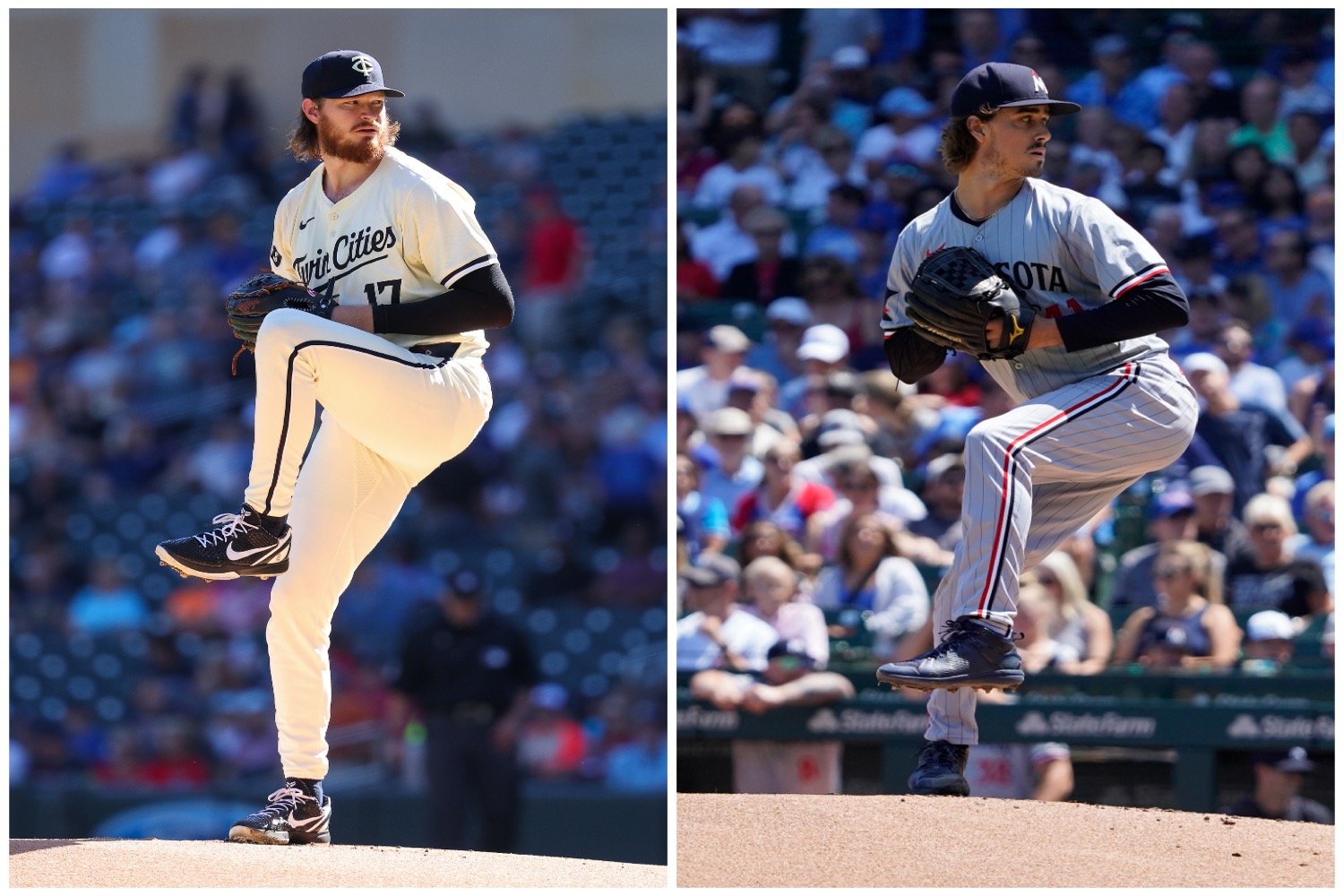 In addition to David Festa and Zebby Matthews, who each debuted in 2024, the Twins added Marco Raya to their 40-man roster ahead of the Rule 5 Draft and have more prospects, such as Andrew Morris and Cory Lewis, close to ready for the majors. A little further away, you have C.J. Culpepper and Connor Prielipp, who are both prospects on the rise. While prospect development (especially for pitchers) is never linear, the Twins have plenty of “bullets in the chamber” if they were to explore the trade market of one of their established starters. Cody Christie recently looked at the idea of trading Pablo López and, of course, Chris Paddack has been the subject of trade conversation among Twins Daily writers, as well. The challenging part about moving either of those would be their contracts: López is locked up long-term and Paddack’s $7.5 million may be more than some teams are willing to pay without getting an additional asset. However, Joe Ryan and Bailey Ober are similarly solid starters with more cost-effective team control left. They figure to have substantial trade value. It would be wild for the Twins to trade both of these arms but, if they had to pick one, which one makes a better trade candidate? Let’s dive in. Before looking at the outlooks of Ryan and Ober, we have to establish what the goal of dealing either of the two would be. Would the Twins look to keep the better pitcher, or would they look to trade whichever guy would net more in return? Given the team is within a competitive window, I would err on the side of keeping whomever they deem the better of the two pitchers. From a controllability perspective, both players are in their first year of arbitration and Cot’s Baseball Contracts projects them to earn somewhere in the ballpark of $3.5 million in 2025. Joe Ryan Ryan is coming off a productive season shortened by a right shoulder injury. Across 135 innings, he carried a 3.60 ERA, a 3.44 FIP and an impressive 23.0% K-BB rate. He features one of the best fastballs in the gam; the pitch has accrued a run value of 47 since he permanently joined the rotation in 2022. As was the trend ahead of the 2024 season, he added a splitter to his arsenal and it quickly became his second-most used and most effective pitch. His sweeper and slider grade out as below-average pitches. I really like Ryan’s long-term outlook, because he is more of a crafty pitcher than one who relies on power. I think that reduces the risk of significant injury and increases the likelihood that his production is sustainable. My biggest concern with Ryan is his aforementioned pitch arsenal featuring just two plus pitches, and I think he could really benefit from developing his slider more. Without developing a third out pitch, I think his value now is the highest it will be as a solid number two on a competitive team. Bailey Ober Overall, Ober had a very solid 2024 season. He would have been a dark-horse Cy Young Award candidate, if we could just remove the five worst starts of his season. Those clunkers accounted for more than 40% of his earned runs, bloating his ERA to 3.98. Regardless, he posted a solid 20.8% K-BB rate and a 93rd-percentile chase rate, thanks to three plus offerings. Similar to Ryan, Ober is a crafty pitcher who relies on his command of the strike zone, as opposed to overpowering hitters. I think that bodes well for his long-term outlook. Unlike Ryan, Ober doesn’t have the “stuff” to overcome days where he is struggling to locate, which leads to the blow-ups we saw in 2024. From a Stuff+ perspective, his changeup is the only plus pitch in his arsenal, which gives him little room for error; hitters feast when a pitch gets too much of the plate. I’d be interested to see him deploy his curveball more. That pitch has generated positive results in a very, very small sample (1.1% usage in 2024, 6.7% in 2023, 11.9& in 2022) and grades out decently via Stuff+. While I think he has proven that those implosions are few and far between, I worry that they will continue if his changeup is the only pitch with an above-average Stuff+. Again, similar to Ryan, I think Ober’s value is at its peak, given his production and team control, and will always be viewed as a solid number three on a competitive team. So Who Should We Trade? Well, I’m not going to put my foot in the ground and say Minnesota should trade one of these two. While their value may be at its ceiling, I think a top of the rotation of López, Ryan, and Ober bodes very well, even in October. But, if the Twins were to explore the trade market of one of these two, I’d like them to shop Ober. I think the two carry roughly the same market value, but Ryan is the better of the two. The one thing that might sway my opinion is if we had insight on their signability, as the two are close enough in value and productivity that if one of them indicated they’d be willing to ink a team-friendly extension, I could be convinced to keep that arm over the other. Do you think we should trade one of Joe Ryan or Bailey Ober given the depth of our minor league system? Join the conversation in the comments!
 -
Recently, Major League Baseball Commissioner Rob Manfred joined Puck Sports Correspondent John Ourand to discuss a variety of topics related to the future of the game. One of those discussions led to Manfred dropping a nugget from the Owner’s Meetings about implementing a Golden At-Bat rule. What are the details surrounding this possible rule change, and would it help reinvigorate the game of baseball? Image courtesy of © Brad Penner-Imagn Images Recently, Major League Baseball Commissioner Rob Manfred joined Puck Sports Correspondent John Ourand to discuss a variety of topics related to the future of the game. One of those discussions led to Manfred dropping a nugget from the Owner’s Meetings about implementing a Golden At-Bat rule. What are the details surrounding this possible rule change, and would it help reinvigorate the game of baseball? For many years now, many have considered baseball to be a game in need of a makeover in order to keep up with how people (especially young people) consume sports and entertainment. To the chagrin of boomers everywhere, the (umm) "beauty" of a three-plus-hour game just doesn’t hold the attention of the younger generations, who crave fast-paced, instantaneous entertainment. In recent years, MLB has introduced a variety of rules aimed at making the game quicker and more exciting, including: Introducing a pitch clock, Requiring relievers to either finish an inning or face at least three hitters Limiting the number of pitchers a team can carry, Putting a guy on 2nd base to start extra innings. Restricting mound visits and pick-off attempts, and Embiggening the bases Each of these has led to positive returns in both the pace of play and the number of fans tuning into and attending baseball games. While we expect more changes, such as an electronic strike zone, Manfred’s newest idea of a “Golden At-Bat” is almost too gimmicky to be taken seriously. In short, the idea is that a team could send their best hitter to the plate regardless of where their spot was in the batting order once a game. So instead of (say) Christian Vázquez being forced to hit in a crucial at-bat, the Twins could use their “Golden At-Bat” and have Royce Lewis get the chance instead. In the words of Manfred, the powers that be are “in the conversation-only stage right now”, so we don’t have much additional insight into the idea being floated around. While it may be nothing more than just a thought bubble on a comic strip, though, the fact that Manfred was comfortable enough sharing the idea in such a public way makes me think that it could grow some legs and one day be a real thing. While I’m open to (and even a proponent of) change, this idea is too far from the figurative “spirit” of the game. In no other sport is a team limited in whom they can rely on in a clutch moment like they are in baseball. Need a two-minute drive to win a football game? Okay, put your best offense out there and substitute between plays as needed. Need to lock down the best shooter in the NBA? Okay, sub in your best perimeter defender. Heck, even in hockey, teams get to choose who and in what order their skaters shoot in a shootout. But baseball is different. In baseball, if your sub-.600 OPS hitter is at the plate with the game on the line, you might be able to pinch-hit—but who’s to say that hitter is much better? And unlike in the sports mentioned above, the pinch-hitter is rarely going to be the best option; they’re usually just the better of two bad alternatives. That’s one of the things that makes baseball unique. Who is Aaron Boone, if not for his unexpected heroics in the 2003 American League Championship Series? Bucky Dent, Bill Mazeroski, and Gene Larkin are not famous as consistently excellent sluggers. On the contrary, their fan bases will remember them forever as players who came through in huge moments, despite being modest hitters. If we conform to other leagues in this way, what are we going to do next, let hitters toss the ball to themselves instead of being the only sport where the defense controls the pace of the ball? Aside from my beef of fundamentally changing the game of baseball, the consequences of this rule would have a negative impact on players. Assuming that the Golden At-Bat is largely used in high-leverage situations, this puts more strain on the bullpen, especially the best relievers, which could have negative repercussions both on their performance and on their physical wellbeing. On the other side of the ball, how do you manage the message you’re sending to the player who was "supposed" to bat? How do you manage the message you’re sending to the player(s) who weren’t selected for the “Golden At-Bat”? How do those decisions impact the clubhouse? Finally, how does a younger player establish themselves as worthy of the “Golden At-Bat,” if they’ve been limited in their high-leverage opportunities for the first part of their career? Some of these are relatively fun and interesting questions, and would deepen the strategic latticework of the game, but others of them expose the basic inconsistency between this proposed rule and the historical nature of baseball. Of course, like almost anything with sports, these are all questions that only get asked if the Golden At-Bat doesn’t work. If Joe Mauer delivers the winning hit in Game 163 in 2009, rather than Alexi Casilla, does the latter balk or the decision get second-guessed? Likely not. But baseball is a game of failure, The Golden At-Bat is going to fail more often than not, and that’s going to create more problems than answers. As the powers that be have recently discovered, there are simpler ways to improve the game that don’t change the very fabric of the game. While I can appreciate the creativity and openness to try new things, let’s hope this idea is saved for the Savannah Bananas. What are your thoughts on the Golden At-Bat? Do you have any outlandish rule change ideas? Join the conversation in the comments! View full article
-
Will the "Golden At-Bat" Be the Thing That Finally Destroys Baseball?
Matthew Lenz posted an article in Twins
 For many years now, many have considered baseball to be a game in need of a makeover in order to keep up with how people (especially young people) consume sports and entertainment. To the chagrin of boomers everywhere, the (umm) "beauty" of a three-plus-hour game just doesn’t hold the attention of the younger generations, who crave fast-paced, instantaneous entertainment. In recent years, MLB has introduced a variety of rules aimed at making the game quicker and more exciting, including: Introducing a pitch clock, Requiring relievers to either finish an inning or face at least three hitters Limiting the number of pitchers a team can carry, Putting a guy on 2nd base to start extra innings. Restricting mound visits and pick-off attempts, and Embiggening the bases Each of these has led to positive returns in both the pace of play and the number of fans tuning into and attending baseball games. While we expect more changes, such as an electronic strike zone, Manfred’s newest idea of a “Golden At-Bat” is almost too gimmicky to be taken seriously. In short, the idea is that a team could send their best hitter to the plate regardless of where their spot was in the batting order once a game. So instead of (say) Christian Vázquez being forced to hit in a crucial at-bat, the Twins could use their “Golden At-Bat” and have Royce Lewis get the chance instead. In the words of Manfred, the powers that be are “in the conversation-only stage right now”, so we don’t have much additional insight into the idea being floated around. While it may be nothing more than just a thought bubble on a comic strip, though, the fact that Manfred was comfortable enough sharing the idea in such a public way makes me think that it could grow some legs and one day be a real thing. While I’m open to (and even a proponent of) change, this idea is too far from the figurative “spirit” of the game. In no other sport is a team limited in whom they can rely on in a clutch moment like they are in baseball. Need a two-minute drive to win a football game? Okay, put your best offense out there and substitute between plays as needed. Need to lock down the best shooter in the NBA? Okay, sub in your best perimeter defender. Heck, even in hockey, teams get to choose who and in what order their skaters shoot in a shootout. But baseball is different. In baseball, if your sub-.600 OPS hitter is at the plate with the game on the line, you might be able to pinch-hit—but who’s to say that hitter is much better? And unlike in the sports mentioned above, the pinch-hitter is rarely going to be the best option; they’re usually just the better of two bad alternatives. That’s one of the things that makes baseball unique. Who is Aaron Boone, if not for his unexpected heroics in the 2003 American League Championship Series? Bucky Dent, Bill Mazeroski, and Gene Larkin are not famous as consistently excellent sluggers. On the contrary, their fan bases will remember them forever as players who came through in huge moments, despite being modest hitters. If we conform to other leagues in this way, what are we going to do next, let hitters toss the ball to themselves instead of being the only sport where the defense controls the pace of the ball? Aside from my beef of fundamentally changing the game of baseball, the consequences of this rule would have a negative impact on players. Assuming that the Golden At-Bat is largely used in high-leverage situations, this puts more strain on the bullpen, especially the best relievers, which could have negative repercussions both on their performance and on their physical wellbeing. On the other side of the ball, how do you manage the message you’re sending to the player who was "supposed" to bat? How do you manage the message you’re sending to the player(s) who weren’t selected for the “Golden At-Bat”? How do those decisions impact the clubhouse? Finally, how does a younger player establish themselves as worthy of the “Golden At-Bat,” if they’ve been limited in their high-leverage opportunities for the first part of their career? Some of these are relatively fun and interesting questions, and would deepen the strategic latticework of the game, but others of them expose the basic inconsistency between this proposed rule and the historical nature of baseball. Of course, like almost anything with sports, these are all questions that only get asked if the Golden At-Bat doesn’t work. If Joe Mauer delivers the winning hit in Game 163 in 2009, rather than Alexi Casilla, does the latter balk or the decision get second-guessed? Likely not. But baseball is a game of failure, The Golden At-Bat is going to fail more often than not, and that’s going to create more problems than answers. As the powers that be have recently discovered, there are simpler ways to improve the game that don’t change the very fabric of the game. While I can appreciate the creativity and openness to try new things, let’s hope this idea is saved for the Savannah Bananas. What are your thoughts on the Golden At-Bat? Do you have any outlandish rule change ideas? Join the conversation in the comments!
- 83 comments
-
- 12
-

-
‘Tis the season of gratitude and reflection. Let’s look back at four statistics from the 2024 Minnesota Twins season that we should be thankful for. Image courtesy of Left: © Matt Blewett-Imagn Images; Left Middle: © Matt Krohn-Imagn Images; Right Middle: © David Banks-Imagn Images; Right: © Eric Canha-Imagn Images ‘Tis the season of gratitude and reflection. Let’s look back at four statistics from the 2024 Minnesota Twins season that we should be thankful for. In a year headlined by the Pohlads' frugality, broadcasting issues, and a historic collapse, we often need the reminder that the Twins were a playoff-caliber club for more than two-thirds of the season. You aren’t a playoff contender without players who are producing at exceptional rates, as compared to the rest of the league. Let’s look at four(ish) statistics that stood out across the league for our local club. Matt Wallner’s Power Matt Wallner is a power player on both sides of the ball, with a 98th percentile exit velocity (EV) and 99th percentile arm strength. While we need to see considerable improvement in Wallner’s contact rate, the lefty hits the snot out of the ball when he makes contact, boasting elite hard-hit rates. With a 93 mile-per-hour average EV and a 116.8 mile-per-hour maximum, the lefty mashed 13 home runs in only 220 at-bats in 2024. His hardest-hit ball was “just” a single, but his second-hardest was this 116.7 MPH scorcher over the right-field fence at Guaranteed Rate Field. And then there was the behemoth off Griffin Canning. On the other side of the ball, Wallner might grade out as a below-average right fielder, but he has one of the best arms in the game. Runners need to tread lightly (er, quickly? Tread not at all?) when they’re thinking about extra bases on a ball hit to Wallner, as he shows off an arm that produced a maximum velocity of 101.2 MPH and an average velocity (on competitive throws) of 96.9. On Aug. 30, the Toronto Blue Jays' Spencer Horwitz learned this this hard way. Byron Buxton’s Speed Twins fans are very aware of Buxton’s speed, and while we’d love to see it employed more on the basepaths, it’s helped him remain one of the best centerfielders in the game. His Sprint Speed and Outs Above Average (OAA) both sit in the 97th percentile in all of baseball, and his best catch of the season was this liner off the bat of Los Angeles Dodgers Teoscar Hernandez, which had a 35% catch probability. Nothin’ but raindrops, folks. Griffin Jax’s Stuff While rumors swirl regarding Jax’s ability to be a starter, he has cemented himself as one of the best relievers in baseball, with a bevy of statistics that sit in the 90th percentile of the league or better. Most notably, his chase rate (99th percentile), whiff rate (98th), and strikeout rate (97th) lead to some of the best actual and expected stats in the majors. Sure, the highlight below is from Spring Training, but my oh my did he send the Pittsburgh Pirates' Tsung-Che Cheng back to medieval times with this sweeper. Joe Ryan’s Command The Twins really missed Joe Ryan down the stretch, in large part due to his ability to control and command the strike zone. With a 96th percentile walk rate and a 98th percentile expected OBP, Ryan limited free passes better than nearly anyone in baseball – an important attribute when you don’t have traditionally overpowering stuff. His ability to live on the edge of the strike zone doesn’t just limit walks. It also limits a hitter’s quality of contact, resulting in better-than-average exit velocities and hard-hit rates for the righty. There’s plenty more to be thankful for this season, and it gives us plenty to look forward to as the calendar inches toward 2025. One thing is for certain: No matter what happens with the team on the field in 2025, we here at Twins Daily are thankful for the owners, editors, content creators, and readers that make this all possible. Happy Thanksgiving to all who celebrate—and cheers, all the same, to those who don’t! What are YOU thankful for this year? View full article
- 3 replies
-
- 1
-
-
- matt wallner
- byron buxton
- (and 2 more)
-
.jpeg.ca95269fce1db9861b700d87a34be4c6.jpeg) In a year headlined by the Pohlads' frugality, broadcasting issues, and a historic collapse, we often need the reminder that the Twins were a playoff-caliber club for more than two-thirds of the season. You aren’t a playoff contender without players who are producing at exceptional rates, as compared to the rest of the league. Let’s look at four(ish) statistics that stood out across the league for our local club. Matt Wallner’s Power Matt Wallner is a power player on both sides of the ball, with a 98th percentile exit velocity (EV) and 99th percentile arm strength. While we need to see considerable improvement in Wallner’s contact rate, the lefty hits the snot out of the ball when he makes contact, boasting elite hard-hit rates. With a 93 mile-per-hour average EV and a 116.8 mile-per-hour maximum, the lefty mashed 13 home runs in only 220 at-bats in 2024. His hardest-hit ball was “just” a single, but his second-hardest was this 116.7 MPH scorcher over the right-field fence at Guaranteed Rate Field. And then there was the behemoth off Griffin Canning. On the other side of the ball, Wallner might grade out as a below-average right fielder, but he has one of the best arms in the game. Runners need to tread lightly (er, quickly? Tread not at all?) when they’re thinking about extra bases on a ball hit to Wallner, as he shows off an arm that produced a maximum velocity of 101.2 MPH and an average velocity (on competitive throws) of 96.9. On Aug. 30, the Toronto Blue Jays' Spencer Horwitz learned this this hard way. Byron Buxton’s Speed Twins fans are very aware of Buxton’s speed, and while we’d love to see it employed more on the basepaths, it’s helped him remain one of the best centerfielders in the game. His Sprint Speed and Outs Above Average (OAA) both sit in the 97th percentile in all of baseball, and his best catch of the season was this liner off the bat of Los Angeles Dodgers Teoscar Hernandez, which had a 35% catch probability. Nothin’ but raindrops, folks. Griffin Jax’s Stuff While rumors swirl regarding Jax’s ability to be a starter, he has cemented himself as one of the best relievers in baseball, with a bevy of statistics that sit in the 90th percentile of the league or better. Most notably, his chase rate (99th percentile), whiff rate (98th), and strikeout rate (97th) lead to some of the best actual and expected stats in the majors. Sure, the highlight below is from Spring Training, but my oh my did he send the Pittsburgh Pirates' Tsung-Che Cheng back to medieval times with this sweeper. Joe Ryan’s Command The Twins really missed Joe Ryan down the stretch, in large part due to his ability to control and command the strike zone. With a 96th percentile walk rate and a 98th percentile expected OBP, Ryan limited free passes better than nearly anyone in baseball – an important attribute when you don’t have traditionally overpowering stuff. His ability to live on the edge of the strike zone doesn’t just limit walks. It also limits a hitter’s quality of contact, resulting in better-than-average exit velocities and hard-hit rates for the righty. There’s plenty more to be thankful for this season, and it gives us plenty to look forward to as the calendar inches toward 2025. One thing is for certain: No matter what happens with the team on the field in 2025, we here at Twins Daily are thankful for the owners, editors, content creators, and readers that make this all possible. Happy Thanksgiving to all who celebrate—and cheers, all the same, to those who don’t! What are YOU thankful for this year?
In a year headlined by the Pohlads' frugality, broadcasting issues, and a historic collapse, we often need the reminder that the Twins were a playoff-caliber club for more than two-thirds of the season. You aren’t a playoff contender without players who are producing at exceptional rates, as compared to the rest of the league. Let’s look at four(ish) statistics that stood out across the league for our local club. Matt Wallner’s Power Matt Wallner is a power player on both sides of the ball, with a 98th percentile exit velocity (EV) and 99th percentile arm strength. While we need to see considerable improvement in Wallner’s contact rate, the lefty hits the snot out of the ball when he makes contact, boasting elite hard-hit rates. With a 93 mile-per-hour average EV and a 116.8 mile-per-hour maximum, the lefty mashed 13 home runs in only 220 at-bats in 2024. His hardest-hit ball was “just” a single, but his second-hardest was this 116.7 MPH scorcher over the right-field fence at Guaranteed Rate Field. And then there was the behemoth off Griffin Canning. On the other side of the ball, Wallner might grade out as a below-average right fielder, but he has one of the best arms in the game. Runners need to tread lightly (er, quickly? Tread not at all?) when they’re thinking about extra bases on a ball hit to Wallner, as he shows off an arm that produced a maximum velocity of 101.2 MPH and an average velocity (on competitive throws) of 96.9. On Aug. 30, the Toronto Blue Jays' Spencer Horwitz learned this this hard way. Byron Buxton’s Speed Twins fans are very aware of Buxton’s speed, and while we’d love to see it employed more on the basepaths, it’s helped him remain one of the best centerfielders in the game. His Sprint Speed and Outs Above Average (OAA) both sit in the 97th percentile in all of baseball, and his best catch of the season was this liner off the bat of Los Angeles Dodgers Teoscar Hernandez, which had a 35% catch probability. Nothin’ but raindrops, folks. Griffin Jax’s Stuff While rumors swirl regarding Jax’s ability to be a starter, he has cemented himself as one of the best relievers in baseball, with a bevy of statistics that sit in the 90th percentile of the league or better. Most notably, his chase rate (99th percentile), whiff rate (98th), and strikeout rate (97th) lead to some of the best actual and expected stats in the majors. Sure, the highlight below is from Spring Training, but my oh my did he send the Pittsburgh Pirates' Tsung-Che Cheng back to medieval times with this sweeper. Joe Ryan’s Command The Twins really missed Joe Ryan down the stretch, in large part due to his ability to control and command the strike zone. With a 96th percentile walk rate and a 98th percentile expected OBP, Ryan limited free passes better than nearly anyone in baseball – an important attribute when you don’t have traditionally overpowering stuff. His ability to live on the edge of the strike zone doesn’t just limit walks. It also limits a hitter’s quality of contact, resulting in better-than-average exit velocities and hard-hit rates for the righty. There’s plenty more to be thankful for this season, and it gives us plenty to look forward to as the calendar inches toward 2025. One thing is for certain: No matter what happens with the team on the field in 2025, we here at Twins Daily are thankful for the owners, editors, content creators, and readers that make this all possible. Happy Thanksgiving to all who celebrate—and cheers, all the same, to those who don’t! What are YOU thankful for this year?- 3 comments
-
- 5
-
-
- matt wallner
- byron buxton
- (and 2 more)
-
My takeaway from reviewing his profile is that his bat is almost too disciplined to a fault.
-
Totally understand yours and others point of view. I think saying Julien had a bad season is underselling it quite a bit. I'm not writing him off but his 2024 was a disaster with both the Twins and Saints. So much so that I don't think we can assume it was a sophomore slump and be hopeful for a full rebound in 2025. I will happily eat crow if I'm wrong, but I don't see it.
-
We're down to the final two in our countdown of the Minnesota Twins' top 20 prospects for the 2024-25 offseason, as voted on by the Twins Daily community. Today, we'll dive into the profile of a left-handed hitter who has a bright future in the Twins outfield. But which one? Image courtesy of Rob Thompson, St. Paul Saints We're down to the final two in our countdown of the Minnesota Twins' top 20 prospects for the 2024-25 offseason, as voted on by the Twins Daily community. Today, we'll dive into the profile of a left-handed hitter who has a bright future in the Twins outfield. But which one? Emmanuel Rodriguez was a member of the 2019 International Free Agency class, signing for $2.5 million that July. Now, entering his age-22 season, he's a consensus top-100 prospect in all of baseball and will likely get an opportunity to make the big-league club in spring training. Given his age and questions surrounding his plate approach, it’s a long shot that he makes the Opening Day roster, but I wouldn’t rule out a debut sometime in 2025. The left-handed hitting outfielder spent most of his 2024 season with the Double-A Wichita Wind Surge, before getting the call to the Triple-A St. Paul Saints for the final seven games of their season. Across 201 plate appearances, he posted a 1.029 OPS with nine home runs and nine stolen bases. While he posted a concerning strikeout rate of 29.4%, that was counterbalanced by an incredible 24.9% walk rate—a sign that his patience at the plate can be a bit of a double-edged sword. The reason for his lack of plate appearances was mainly a nagging right thumb sprain that required multiple stints on the injured list and ultimately resulted in a clean-up procedure after the season concluded. While he has spent most of his time in center field and could stick there at the highest level, it’s also likely that he ends up in a corner outfield spot, given his arm and power profile. There's definitely a lot to be excited about with the young prospect, but it comes with caution: we need to see if his approach at the plate will work against the best pitchers on Earth. Despite the high walk percentage, he has a little too much swing-and-miss in his game, as he carried a lowly 66.3% contact rate in 2024, which is about 10 points lower than you’d want to see for the level he was at. Moreover, his 32% swing rate is too selective and results in falling behind in counts, while a chase rate under 8% is largely the reason he’s able to maintain such a high walk rate. Ultimately, Rodriguez will be better served finding more of a balance in his pitch selection for the prospect industry to feel more confident in the likelihood he reaches his ceiling as a middle-of-the-order slugger for the Twins. Rodriguez does a ton of damage against hard offerings, but struggles to attack breaking balls. That's fairly common amongst young hitters, but it’s another area that gives us pause when we look to project his impact. In fact, this has been part of the reason that current Twins outfielder Trevor Larnach has found it hard to sustain success. Unlike Larnach, Rodriguez doesn’t look to be a platoon bat at this point, as he’s been able to do damage against right-handed and left-handed pitchers alike. While he does have a dip in power against lefties, he was able to slash .303/.465./.545 against southpaws in 2024. Regardless, Rodriguez is inarguably a name to watch in 2025, as he likely spends the season with the Saints and local fans will get the opportunity to see firsthand whether his approach works. After the right thumb sprain in 2024 and a torn meniscus in 2022, Rodriguez hopes to have a full, healthy season and establish himself as a frontrunner for a call-up, if and when there is an opportunity. Do you think Rodriguez’s approach can work or does he need to make adjustments to avoid becoming the next Edouard Julien? View full article
-
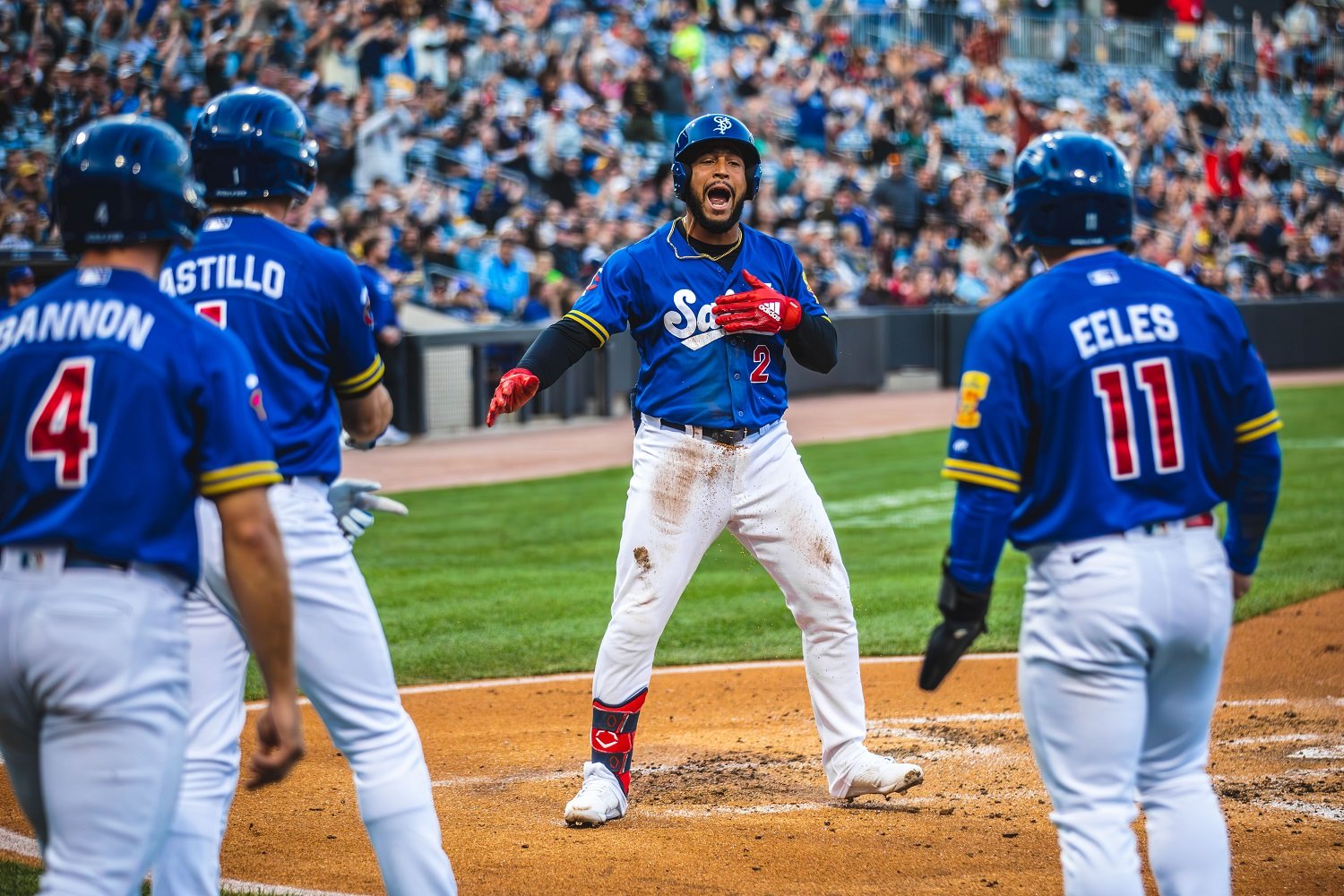 Emmanuel Rodriguez was a member of the 2019 International Free Agency class, signing for $2.5 million that July. Now, entering his age-22 season, he's a consensus top-100 prospect in all of baseball and will likely get an opportunity to make the big-league club in spring training. Given his age and questions surrounding his plate approach, it’s a long shot that he makes the Opening Day roster, but I wouldn’t rule out a debut sometime in 2025. The left-handed hitting outfielder spent most of his 2024 season with the Double-A Wichita Wind Surge, before getting the call to the Triple-A St. Paul Saints for the final seven games of their season. Across 201 plate appearances, he posted a 1.029 OPS with nine home runs and nine stolen bases. While he posted a concerning strikeout rate of 29.4%, that was counterbalanced by an incredible 24.9% walk rate—a sign that his patience at the plate can be a bit of a double-edged sword. The reason for his lack of plate appearances was mainly a nagging right thumb sprain that required multiple stints on the injured list and ultimately resulted in a clean-up procedure after the season concluded. While he has spent most of his time in center field and could stick there at the highest level, it’s also likely that he ends up in a corner outfield spot, given his arm and power profile. There's definitely a lot to be excited about with the young prospect, but it comes with caution: we need to see if his approach at the plate will work against the best pitchers on Earth. Despite the high walk percentage, he has a little too much swing-and-miss in his game, as he carried a lowly 66.3% contact rate in 2024, which is about 10 points lower than you’d want to see for the level he was at. Moreover, his 32% swing rate is too selective and results in falling behind in counts, while a chase rate under 8% is largely the reason he’s able to maintain such a high walk rate. Ultimately, Rodriguez will be better served finding more of a balance in his pitch selection for the prospect industry to feel more confident in the likelihood he reaches his ceiling as a middle-of-the-order slugger for the Twins. Rodriguez does a ton of damage against hard offerings, but struggles to attack breaking balls. That's fairly common amongst young hitters, but it’s another area that gives us pause when we look to project his impact. In fact, this has been part of the reason that current Twins outfielder Trevor Larnach has found it hard to sustain success. Unlike Larnach, Rodriguez doesn’t look to be a platoon bat at this point, as he’s been able to do damage against right-handed and left-handed pitchers alike. While he does have a dip in power against lefties, he was able to slash .303/.465./.545 against southpaws in 2024. Regardless, Rodriguez is inarguably a name to watch in 2025, as he likely spends the season with the Saints and local fans will get the opportunity to see firsthand whether his approach works. After the right thumb sprain in 2024 and a torn meniscus in 2022, Rodriguez hopes to have a full, healthy season and establish himself as a frontrunner for a call-up, if and when there is an opportunity. Do you think Rodriguez’s approach can work or does he need to make adjustments to avoid becoming the next Edouard Julien?
 -
With the non-tender deadline set for Friday, the Minnesota Twins could look to upgrade their roster via trade. While they have some decisions to make of their own, most notably on Willi Castro, acquiring two Baltimore Orioles could make those decisions easier. Image courtesy of Left: © Tommy Gilligan-Imagn Images; Right: © Kevin Jairaj-Imagn Images With the non-tender deadline set for Friday, the Minnesota Twins could look to upgrade their roster via trade. While they have some decisions to make of their own, most notably on Willi Castro, acquiring two Baltimore Orioles could make those decisions easier. Here at Twins Daily, we have written extensively about Willi Castro and the other arbitration eligible players that the Twins need to make a decision on over the next 24 hours. I specifically have been a proponent of non-tendering Castro and using that money elsewhere to improve the roster. That said, if the Twins go that route, they will need to find another utility piece to replace the 2024 Twins Most Valuable Player’s production. In addition to potentially needing utility depth, they absolutely need at least one more left-handed arm in the bullpen. Shifting our focus to the Baltimore Orioles, super-utility Jorge Mateo is blocked by a large and very good young core that are still in their pre-arbitration years. Acquired at last year's deadline, Gregory Soto is a hard-throwing lefty that MLB Trade Rumors suggests the Orioles could move on from via trade or non-tender. Let's dive into each of these players and see how they would fit on the 2025 Twins roster. INF/OF Jorge Mateo From a versatility perspective, Mateo would be a near-perfect replacement for Castro at a cheaper cost. Non-tendering Castro and acquiring the Orioles 29-year-old would allow the Twins some additional funds to spend elsewhere. Cot’s Baseball Contracts ($$) predicts Mateo to earn $3.3 million in his final year of arbitration, about half the projection for Castro. Although his production at the plate would be a downgrade, he’d be an upgrade on basepaths and in the field. After a career year in 2022, Mateo has been a bit lackluster with 67 and 87 wRC+s in 2023 and 2024, respectively. Last season, he carried a .668 OPS with five home runs and 13 stolen bases across 68 games before his season ended with a UCL injury in his non-throwing arm. He may not be fully ready by the start of the 2025 season, but he is expected to be available for most of next year. His plate approach and quality of contact leave something to be desired, with above-average whiff rates and below-average hard-hit and barrel rates. That said, he has posted a positive UZR/150 rate at second, shortstop, and center throughout his career and also has the ability to play in both corner outfield spots. While his production at the plate may be lackluster, the Twins would greatly benefit from adding his glove and speed which makes him a really good fit for this roster. LHRP Gregory Soto As the roster sits now, Kody Funderburk is the Twins' only left-handed reliever, and looking at the top levels of their farm system, there aren't any names that stand out as candidates to fill the need of another left-handed arm out of the bullpen. Like Mateo, Soto is also entering his final year of arbitration and Cot’s predicts him to earn $4.5 million. While Soto has plenty of experience as a high-leverage reliever throughout his career, he has now posted back-to-back seasons with an ERA greater than 4.00—although his sub-4.00 FIP would suggest some positive regression is possible. The 29-year-old is an extreme groundball pitcher who is really good at missing bats and inducing weak contact. He features a plus sinker with above-average arm-side movement and a slider that produced a 49.4% whiff rate in 2024, the latter of which he uses to put away hitters. He also has a 98-mile-per-hour fastball but poor location—mostly sitting middle-middle with it—resulted in a .333 opponent batting average. While the Twins don’t necessarily need him in a high- or even medium-leverage role, fixing his fastball location could unlock another level that the Detroit Tigers, Philadelphia Phillies and Orioles haven’t been able to do. The Twins were a playoff-caliber team for more than two-thirds of the season in 2024 so, while these two players may not be top-end additions to the roster, they are relatively cheap depth pieces that fill needs and fit on this roster nicely. Moreover, if you believe in the team’s ability to develop players, these two players could turn in more meaningful and productive pieces for a team that will look to compete for the AL Central title in 2025. Do you think the Twins should pursue Mateo and Soto? Are there other non-tender candidates that you think they should look at? View full article
-
Can Jorge Mateo and Gregory Soto Fill Key Gaps for the Minnesota Twins?
Matthew Lenz posted an article in Twins
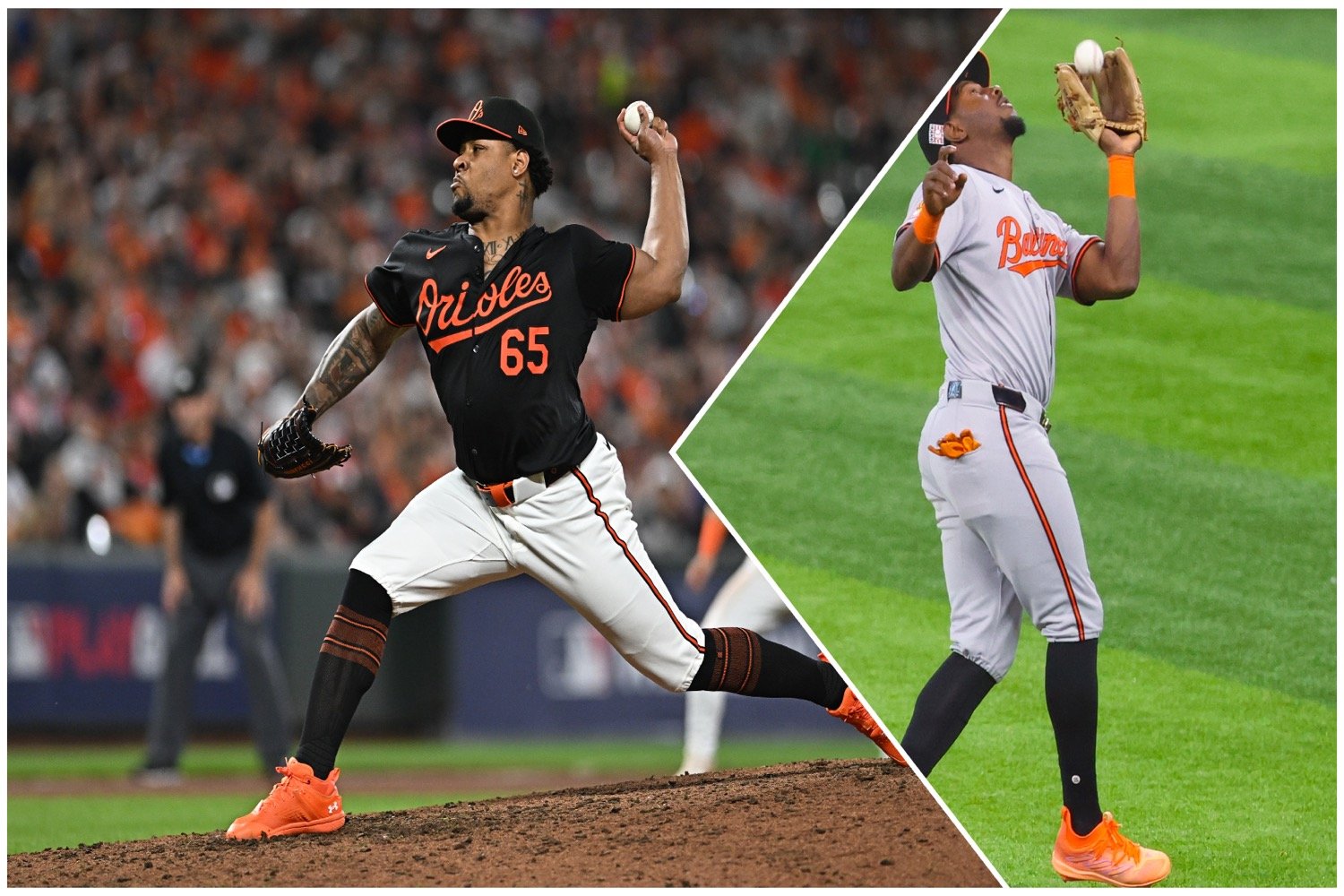 Here at Twins Daily, we have written extensively about Willi Castro and the other arbitration eligible players that the Twins need to make a decision on over the next 24 hours. I specifically have been a proponent of non-tendering Castro and using that money elsewhere to improve the roster. That said, if the Twins go that route, they will need to find another utility piece to replace the 2024 Twins Most Valuable Player’s production. In addition to potentially needing utility depth, they absolutely need at least one more left-handed arm in the bullpen. Shifting our focus to the Baltimore Orioles, super-utility Jorge Mateo is blocked by a large and very good young core that are still in their pre-arbitration years. Acquired at last year's deadline, Gregory Soto is a hard-throwing lefty that MLB Trade Rumors suggests the Orioles could move on from via trade or non-tender. Let's dive into each of these players and see how they would fit on the 2025 Twins roster. INF/OF Jorge Mateo From a versatility perspective, Mateo would be a near-perfect replacement for Castro at a cheaper cost. Non-tendering Castro and acquiring the Orioles 29-year-old would allow the Twins some additional funds to spend elsewhere. Cot’s Baseball Contracts ($$) predicts Mateo to earn $3.3 million in his final year of arbitration, about half the projection for Castro. Although his production at the plate would be a downgrade, he’d be an upgrade on basepaths and in the field. After a career year in 2022, Mateo has been a bit lackluster with 67 and 87 wRC+s in 2023 and 2024, respectively. Last season, he carried a .668 OPS with five home runs and 13 stolen bases across 68 games before his season ended with a UCL injury in his non-throwing arm. He may not be fully ready by the start of the 2025 season, but he is expected to be available for most of next year. His plate approach and quality of contact leave something to be desired, with above-average whiff rates and below-average hard-hit and barrel rates. That said, he has posted a positive UZR/150 rate at second, shortstop, and center throughout his career and also has the ability to play in both corner outfield spots. While his production at the plate may be lackluster, the Twins would greatly benefit from adding his glove and speed which makes him a really good fit for this roster. LHRP Gregory Soto As the roster sits now, Kody Funderburk is the Twins' only left-handed reliever, and looking at the top levels of their farm system, there aren't any names that stand out as candidates to fill the need of another left-handed arm out of the bullpen. Like Mateo, Soto is also entering his final year of arbitration and Cot’s predicts him to earn $4.5 million. While Soto has plenty of experience as a high-leverage reliever throughout his career, he has now posted back-to-back seasons with an ERA greater than 4.00—although his sub-4.00 FIP would suggest some positive regression is possible. The 29-year-old is an extreme groundball pitcher who is really good at missing bats and inducing weak contact. He features a plus sinker with above-average arm-side movement and a slider that produced a 49.4% whiff rate in 2024, the latter of which he uses to put away hitters. He also has a 98-mile-per-hour fastball but poor location—mostly sitting middle-middle with it—resulted in a .333 opponent batting average. While the Twins don’t necessarily need him in a high- or even medium-leverage role, fixing his fastball location could unlock another level that the Detroit Tigers, Philadelphia Phillies and Orioles haven’t been able to do. The Twins were a playoff-caliber team for more than two-thirds of the season in 2024 so, while these two players may not be top-end additions to the roster, they are relatively cheap depth pieces that fill needs and fit on this roster nicely. Moreover, if you believe in the team’s ability to develop players, these two players could turn in more meaningful and productive pieces for a team that will look to compete for the AL Central title in 2025. Do you think the Twins should pursue Mateo and Soto? Are there other non-tender candidates that you think they should look at?
 -
The Minnesota Twins enter the 2024-2025 offseason with a very solid core that should have been a playoff team in the 2024 season. Alas, they watched the playoffs from their couch thanks to a historic collapse, but they still have the foundation for another playoff run in 2025. I’m putting my GM hat on and creating the blueprint I want to see the Twins follow over the next few months. Image courtesy of Left: © Orlando Ramirez-Imagn Images, Middle: © Stan Szeto-Imagn Images, Right: © Jeff Curry-Imagn Images The Minnesota Twins enter the 2024-2025 offseason with a very solid core that should have been a playoff team in the 2024 season. Alas, they watched the playoffs from their couch thanks to a historic collapse, but they still have the foundation for another playoff run in 2025. I’m putting my GM hat on and creating the blueprint I want to see the Twins follow over the next few months. This series of articles is a primer on the release of our new "You're The Twins GM!" tool where you play the role of Derek Falvey and build your own Twins offseason. Please visit the tool here and join in on the fun! Before we get into the moves, let’s establish constraints that need to be followed in order to make this realistic. Would I love to see the Twins pursue Juan Soto? Absolutely. Is that realistic? Absolutely not. And the primary reason for that, other than the infeasibility of him joining a small-market team, is that the Twins have a self-imposed salary cap. According to Cot’s Baseball Contracts, the Twins currently have roughly $137 million on the books in 2025, which includes the players who are arbitration-eligible, such as Willi Castro. It’s been reported that the Twins will not look to reduce payroll for the second consecutive season and, even with a new broadcast deal, it’s safe to assume they won’t be looking to raise payroll, either. So the biggest constraint we have to work with is keeping the payroll around the $137 million figure at which it currently sits. We also have to leave space for 40-man roster additions, who will cost $800,000 each. I'm going to account for four players totaling $3.2 million, so I'll use $133.8 million as the target payroll. Another move to consider is whether Griffin Jax will transition to a starting role in 2025, but that will not be a part of my blueprint: I personally think that’s a terrible idea. With all that laid out, let’s get into the moves. Creating “Cap” Space The Twins have 11 players on whom to make arbitration decisions in the coming weeks, and if they were to tender all of the players a contract it would cost roughly $32.6 million, using Cot’s projections. I'm including Jorge Alcalá in this group, since he is arbitration-eligible, but he would instead be retained via an option at $1.5 million. One way or another, I don’t think Willi Castro should be with the Twins next season, and whether he is non-tendered or tendered and then traded, I am freeing the Twins of his $6 million projection. I am also opening up $1.575 million by non-tendering right-handed reliever Michael Tonkin. I am picking up Alcalá’s option and tendering the rest of the 2024-2025 class, which includes Ryan Jeffers, Joe Ryan, Bailey Ober, Jhoan Durán, Trevor Larnach, Griffin Jax, Royce Lewis, Justin Topa, and Brock Stewart. Next, we turn our sights to players who have guaranteed contracts, but whom we could look to move. We’ve created a series of articles for a few of these players, but the two I am going to do nearly whatever it takes to move are right-handed starter Chris Paddack ($7.5 million) and catcher Christian Vázquez ($10 million). To make that happen, especially in the case of Vázquez, the Twins may have to help cover salary and/or send a prospect to the team receiving either player. When it comes to needing a backup catcher, the Twins have Jair Camargo who could fill the role, which would make Jeffers the primary catcher in 2025. In an attempt to be reasonable, I am going to open up only half of what both Paddack and Vázquez are owed, which gives me an additional $8.75 million to work with. These moves (in addition to excluding Castro) leaves the payroll at $119.05 million, with roughly $14.75 million to spend. Replacing Willi Castro My decision to move on from Castro doesn’t have anything to do with what I think of his production, but simply comes down to the dollars. I think we can recreate his versatility and production with less money. It’s been reported that the St. Louis Cardinals are looking to reduce payroll in 2025, as they look at a multi-year rebuild. I recently wrote about super-utility Brendan Donovan, whom I would love to see the Twins pursue via trade, as someone who could arguably be an upgrade over the 2024 Twins MVP. While I’m not going to get into details of what a trade for the 28-year-old might look like, I’ll at least mention that it’s not going to be cheap given his age, versatility, production, and having three years of team control. Alas, Cot’s projects him to get $4 million in his first year of arbitration, which saves us $2 million (and gives us two extra years) compared to retaining Castro’s services in 2025. This move puts the payroll at $123.05 million and leaves us with $10.75 million to spend. Left-Handed Relief As the 40-man roster sits now, Kody Funderburk is the only left-handed reliever coming out of the Twins bullpen. That needs to be addressed. If we look internally, the Twins do have four left-handed pitchers in their top two levels, three of whom are Rule 5-eligible and two of whom have virtually no relief experience. For a team looking to compete in 2025, they’re going to have to fill this void via trade or free agency. Scott Alexander is a cheap name who stands out to me, after a season that saw him throw 38 ⅔ innings of relief for the Oakland Athletics for just $2.25 million. He posted a 2.56 ERA / 3.89 FIP with a 10% K-BB rate, as an extreme groundball pitcher. While I do have concerns how that would pair with our infield defense, I think he would be a serviceable low- to medium-leverage reliever and would only cost the Twins a few million dollars on the open market. Considering he’s 35 years old with an unspectacular career résumé and experienced some left rotator cuff tendonitis in 2025, I think he could be added on a one-year deal for $4 million. This move puts the payroll at $127.25 million, with $6.75 million left to spend. Infield Depth I’ll be very interested to see the market value for Carlos Santana coming off a Gold Glove season. I’m not going to completely rule out a return to the Twins, but it does seem unlikely. His departure (in addition to Kyle Farmer, Alex Kirilloff, and Castro) needs to be addressed. When it comes to first base, I recently suggested that José Miranda is more than capable of getting the lion’s share at the position. While Donovan can play all around the dirt, it’s worth noting that in 2024, he only played second, third, and left field. We also have rumors that the Twins could move Royce Lewis to second, creating an opening at third, which would likely be filled by Brooks Lee. Regardless of how that puzzle is put together, there is a level of uncertainty surrounding the infield depth players currently on the 40-man roster in Camargo, Michael Helman, Edouard Julien, and Austin Martin, and I don’t foresee anyone in upper levels making an impact in 2025. As a competitive team, I need a solid, versatile bench bat and I’m looking at former Twins utility infielder Donovan Solano. Coming off a 2023 season wherein he posted a 116 wRC+ and a 1.3 fWAR campaign with our Twins, he didn't sign until two weeks into the 2024 season with the San Diego Padres. It was a one-year pact for $1 million, and he produced another above-average season, playing both corner infield spots and second base. I'd venture to guess he’d sign a similar deal to play in 2025, so I'm going to put him at 1 year, $2 million, giving us less than $5 million left in our budget. Corner Outfield v. LHP Nearing the end of our budget, the biggest hole I have on my roster is a corner outfield bat that will be on the short side of a loose platoon with Matt Wallner and Trevor Larnach. Although a left-handed bat, another reason I like Brendan Donovan is that he can be serviceable against left-handed pitching—something Wallner and Larnach cannot say, to this point in their careers. Still, Donovan has been a below-average hitter against southpaws, and we need someone who can fill that gap. One name I really like is Mark Canha, who can also play first, but he will net more than what we have left to spend. For now, I don’t plan on addressing this need, because I want to leave the opportunity for the younger guys on our roster to really prove whether they will be relegated to platoon roles, including Wallner and Larnach. This also includes Martin, who carried a 93 wRC+ against lefties, and DaShawn Kiersey Jr. I’m also learning from the Twins' mistakes in 2024, where they essentially couldn’t improve at the deadline due to financial constraints. Leaving roughly $5 million to play around with isn’t a lot, but at least allows some room for improvement during the season. You may have noticed I didn’t do much to improve the bullpen, but I am banking on Funderburk, Stewart, Topa, and even Ronny Henriquez to be healthy in 2025, which would boost the bullpen. And again, I left myself wiggle room to add to the roster if it’s needed. What do you think of this offseason plan? Do you think you can do better? Then build your own Twins roster and hit the button below! Start Your Payroll Blueprint Now View full article
- 20 replies
-
- 1
-

-
- willi castro
- brendan donovan
- (and 2 more)
-
.jpeg.0bc28c7797fd0eded616e367f773d671.jpeg) This series of articles is a primer on the release of our new "You're The Twins GM!" tool where you play the role of Derek Falvey and build your own Twins offseason. Please visit the tool here and join in on the fun! Before we get into the moves, let’s establish constraints that need to be followed in order to make this realistic. Would I love to see the Twins pursue Juan Soto? Absolutely. Is that realistic? Absolutely not. And the primary reason for that, other than the infeasibility of him joining a small-market team, is that the Twins have a self-imposed salary cap. According to Cot’s Baseball Contracts, the Twins currently have roughly $137 million on the books in 2025, which includes the players who are arbitration-eligible, such as Willi Castro. It’s been reported that the Twins will not look to reduce payroll for the second consecutive season and, even with a new broadcast deal, it’s safe to assume they won’t be looking to raise payroll, either. So the biggest constraint we have to work with is keeping the payroll around the $137 million figure at which it currently sits. We also have to leave space for 40-man roster additions, who will cost $800,000 each. I'm going to account for four players totaling $3.2 million, so I'll use $133.8 million as the target payroll. Another move to consider is whether Griffin Jax will transition to a starting role in 2025, but that will not be a part of my blueprint: I personally think that’s a terrible idea. With all that laid out, let’s get into the moves. Creating “Cap” Space The Twins have 11 players on whom to make arbitration decisions in the coming weeks, and if they were to tender all of the players a contract it would cost roughly $32.6 million, using Cot’s projections. I'm including Jorge Alcalá in this group, since he is arbitration-eligible, but he would instead be retained via an option at $1.5 million. One way or another, I don’t think Willi Castro should be with the Twins next season, and whether he is non-tendered or tendered and then traded, I am freeing the Twins of his $6 million projection. I am also opening up $1.575 million by non-tendering right-handed reliever Michael Tonkin. I am picking up Alcalá’s option and tendering the rest of the 2024-2025 class, which includes Ryan Jeffers, Joe Ryan, Bailey Ober, Jhoan Durán, Trevor Larnach, Griffin Jax, Royce Lewis, Justin Topa, and Brock Stewart. Next, we turn our sights to players who have guaranteed contracts, but whom we could look to move. We’ve created a series of articles for a few of these players, but the two I am going to do nearly whatever it takes to move are right-handed starter Chris Paddack ($7.5 million) and catcher Christian Vázquez ($10 million). To make that happen, especially in the case of Vázquez, the Twins may have to help cover salary and/or send a prospect to the team receiving either player. When it comes to needing a backup catcher, the Twins have Jair Camargo who could fill the role, which would make Jeffers the primary catcher in 2025. In an attempt to be reasonable, I am going to open up only half of what both Paddack and Vázquez are owed, which gives me an additional $8.75 million to work with. These moves (in addition to excluding Castro) leaves the payroll at $119.05 million, with roughly $14.75 million to spend. Replacing Willi Castro My decision to move on from Castro doesn’t have anything to do with what I think of his production, but simply comes down to the dollars. I think we can recreate his versatility and production with less money. It’s been reported that the St. Louis Cardinals are looking to reduce payroll in 2025, as they look at a multi-year rebuild. I recently wrote about super-utility Brendan Donovan, whom I would love to see the Twins pursue via trade, as someone who could arguably be an upgrade over the 2024 Twins MVP. While I’m not going to get into details of what a trade for the 28-year-old might look like, I’ll at least mention that it’s not going to be cheap given his age, versatility, production, and having three years of team control. Alas, Cot’s projects him to get $4 million in his first year of arbitration, which saves us $2 million (and gives us two extra years) compared to retaining Castro’s services in 2025. This move puts the payroll at $123.05 million and leaves us with $10.75 million to spend. Left-Handed Relief As the 40-man roster sits now, Kody Funderburk is the only left-handed reliever coming out of the Twins bullpen. That needs to be addressed. If we look internally, the Twins do have four left-handed pitchers in their top two levels, three of whom are Rule 5-eligible and two of whom have virtually no relief experience. For a team looking to compete in 2025, they’re going to have to fill this void via trade or free agency. Scott Alexander is a cheap name who stands out to me, after a season that saw him throw 38 ⅔ innings of relief for the Oakland Athletics for just $2.25 million. He posted a 2.56 ERA / 3.89 FIP with a 10% K-BB rate, as an extreme groundball pitcher. While I do have concerns how that would pair with our infield defense, I think he would be a serviceable low- to medium-leverage reliever and would only cost the Twins a few million dollars on the open market. Considering he’s 35 years old with an unspectacular career résumé and experienced some left rotator cuff tendonitis in 2025, I think he could be added on a one-year deal for $4 million. This move puts the payroll at $127.25 million, with $6.75 million left to spend. Infield Depth I’ll be very interested to see the market value for Carlos Santana coming off a Gold Glove season. I’m not going to completely rule out a return to the Twins, but it does seem unlikely. His departure (in addition to Kyle Farmer, Alex Kirilloff, and Castro) needs to be addressed. When it comes to first base, I recently suggested that José Miranda is more than capable of getting the lion’s share at the position. While Donovan can play all around the dirt, it’s worth noting that in 2024, he only played second, third, and left field. We also have rumors that the Twins could move Royce Lewis to second, creating an opening at third, which would likely be filled by Brooks Lee. Regardless of how that puzzle is put together, there is a level of uncertainty surrounding the infield depth players currently on the 40-man roster in Camargo, Michael Helman, Edouard Julien, and Austin Martin, and I don’t foresee anyone in upper levels making an impact in 2025. As a competitive team, I need a solid, versatile bench bat and I’m looking at former Twins utility infielder Donovan Solano. Coming off a 2023 season wherein he posted a 116 wRC+ and a 1.3 fWAR campaign with our Twins, he didn't sign until two weeks into the 2024 season with the San Diego Padres. It was a one-year pact for $1 million, and he produced another above-average season, playing both corner infield spots and second base. I'd venture to guess he’d sign a similar deal to play in 2025, so I'm going to put him at 1 year, $2 million, giving us less than $5 million left in our budget. Corner Outfield v. LHP Nearing the end of our budget, the biggest hole I have on my roster is a corner outfield bat that will be on the short side of a loose platoon with Matt Wallner and Trevor Larnach. Although a left-handed bat, another reason I like Brendan Donovan is that he can be serviceable against left-handed pitching—something Wallner and Larnach cannot say, to this point in their careers. Still, Donovan has been a below-average hitter against southpaws, and we need someone who can fill that gap. One name I really like is Mark Canha, who can also play first, but he will net more than what we have left to spend. For now, I don’t plan on addressing this need, because I want to leave the opportunity for the younger guys on our roster to really prove whether they will be relegated to platoon roles, including Wallner and Larnach. This also includes Martin, who carried a 93 wRC+ against lefties, and DaShawn Kiersey Jr. I’m also learning from the Twins' mistakes in 2024, where they essentially couldn’t improve at the deadline due to financial constraints. Leaving roughly $5 million to play around with isn’t a lot, but at least allows some room for improvement during the season. You may have noticed I didn’t do much to improve the bullpen, but I am banking on Funderburk, Stewart, Topa, and even Ronny Henriquez to be healthy in 2025, which would boost the bullpen. And again, I left myself wiggle room to add to the roster if it’s needed. What do you think of this offseason plan? Do you think you can do better? Then build your own Twins roster and hit the button below! Start Your Payroll Blueprint Now
This series of articles is a primer on the release of our new "You're The Twins GM!" tool where you play the role of Derek Falvey and build your own Twins offseason. Please visit the tool here and join in on the fun! Before we get into the moves, let’s establish constraints that need to be followed in order to make this realistic. Would I love to see the Twins pursue Juan Soto? Absolutely. Is that realistic? Absolutely not. And the primary reason for that, other than the infeasibility of him joining a small-market team, is that the Twins have a self-imposed salary cap. According to Cot’s Baseball Contracts, the Twins currently have roughly $137 million on the books in 2025, which includes the players who are arbitration-eligible, such as Willi Castro. It’s been reported that the Twins will not look to reduce payroll for the second consecutive season and, even with a new broadcast deal, it’s safe to assume they won’t be looking to raise payroll, either. So the biggest constraint we have to work with is keeping the payroll around the $137 million figure at which it currently sits. We also have to leave space for 40-man roster additions, who will cost $800,000 each. I'm going to account for four players totaling $3.2 million, so I'll use $133.8 million as the target payroll. Another move to consider is whether Griffin Jax will transition to a starting role in 2025, but that will not be a part of my blueprint: I personally think that’s a terrible idea. With all that laid out, let’s get into the moves. Creating “Cap” Space The Twins have 11 players on whom to make arbitration decisions in the coming weeks, and if they were to tender all of the players a contract it would cost roughly $32.6 million, using Cot’s projections. I'm including Jorge Alcalá in this group, since he is arbitration-eligible, but he would instead be retained via an option at $1.5 million. One way or another, I don’t think Willi Castro should be with the Twins next season, and whether he is non-tendered or tendered and then traded, I am freeing the Twins of his $6 million projection. I am also opening up $1.575 million by non-tendering right-handed reliever Michael Tonkin. I am picking up Alcalá’s option and tendering the rest of the 2024-2025 class, which includes Ryan Jeffers, Joe Ryan, Bailey Ober, Jhoan Durán, Trevor Larnach, Griffin Jax, Royce Lewis, Justin Topa, and Brock Stewart. Next, we turn our sights to players who have guaranteed contracts, but whom we could look to move. We’ve created a series of articles for a few of these players, but the two I am going to do nearly whatever it takes to move are right-handed starter Chris Paddack ($7.5 million) and catcher Christian Vázquez ($10 million). To make that happen, especially in the case of Vázquez, the Twins may have to help cover salary and/or send a prospect to the team receiving either player. When it comes to needing a backup catcher, the Twins have Jair Camargo who could fill the role, which would make Jeffers the primary catcher in 2025. In an attempt to be reasonable, I am going to open up only half of what both Paddack and Vázquez are owed, which gives me an additional $8.75 million to work with. These moves (in addition to excluding Castro) leaves the payroll at $119.05 million, with roughly $14.75 million to spend. Replacing Willi Castro My decision to move on from Castro doesn’t have anything to do with what I think of his production, but simply comes down to the dollars. I think we can recreate his versatility and production with less money. It’s been reported that the St. Louis Cardinals are looking to reduce payroll in 2025, as they look at a multi-year rebuild. I recently wrote about super-utility Brendan Donovan, whom I would love to see the Twins pursue via trade, as someone who could arguably be an upgrade over the 2024 Twins MVP. While I’m not going to get into details of what a trade for the 28-year-old might look like, I’ll at least mention that it’s not going to be cheap given his age, versatility, production, and having three years of team control. Alas, Cot’s projects him to get $4 million in his first year of arbitration, which saves us $2 million (and gives us two extra years) compared to retaining Castro’s services in 2025. This move puts the payroll at $123.05 million and leaves us with $10.75 million to spend. Left-Handed Relief As the 40-man roster sits now, Kody Funderburk is the only left-handed reliever coming out of the Twins bullpen. That needs to be addressed. If we look internally, the Twins do have four left-handed pitchers in their top two levels, three of whom are Rule 5-eligible and two of whom have virtually no relief experience. For a team looking to compete in 2025, they’re going to have to fill this void via trade or free agency. Scott Alexander is a cheap name who stands out to me, after a season that saw him throw 38 ⅔ innings of relief for the Oakland Athletics for just $2.25 million. He posted a 2.56 ERA / 3.89 FIP with a 10% K-BB rate, as an extreme groundball pitcher. While I do have concerns how that would pair with our infield defense, I think he would be a serviceable low- to medium-leverage reliever and would only cost the Twins a few million dollars on the open market. Considering he’s 35 years old with an unspectacular career résumé and experienced some left rotator cuff tendonitis in 2025, I think he could be added on a one-year deal for $4 million. This move puts the payroll at $127.25 million, with $6.75 million left to spend. Infield Depth I’ll be very interested to see the market value for Carlos Santana coming off a Gold Glove season. I’m not going to completely rule out a return to the Twins, but it does seem unlikely. His departure (in addition to Kyle Farmer, Alex Kirilloff, and Castro) needs to be addressed. When it comes to first base, I recently suggested that José Miranda is more than capable of getting the lion’s share at the position. While Donovan can play all around the dirt, it’s worth noting that in 2024, he only played second, third, and left field. We also have rumors that the Twins could move Royce Lewis to second, creating an opening at third, which would likely be filled by Brooks Lee. Regardless of how that puzzle is put together, there is a level of uncertainty surrounding the infield depth players currently on the 40-man roster in Camargo, Michael Helman, Edouard Julien, and Austin Martin, and I don’t foresee anyone in upper levels making an impact in 2025. As a competitive team, I need a solid, versatile bench bat and I’m looking at former Twins utility infielder Donovan Solano. Coming off a 2023 season wherein he posted a 116 wRC+ and a 1.3 fWAR campaign with our Twins, he didn't sign until two weeks into the 2024 season with the San Diego Padres. It was a one-year pact for $1 million, and he produced another above-average season, playing both corner infield spots and second base. I'd venture to guess he’d sign a similar deal to play in 2025, so I'm going to put him at 1 year, $2 million, giving us less than $5 million left in our budget. Corner Outfield v. LHP Nearing the end of our budget, the biggest hole I have on my roster is a corner outfield bat that will be on the short side of a loose platoon with Matt Wallner and Trevor Larnach. Although a left-handed bat, another reason I like Brendan Donovan is that he can be serviceable against left-handed pitching—something Wallner and Larnach cannot say, to this point in their careers. Still, Donovan has been a below-average hitter against southpaws, and we need someone who can fill that gap. One name I really like is Mark Canha, who can also play first, but he will net more than what we have left to spend. For now, I don’t plan on addressing this need, because I want to leave the opportunity for the younger guys on our roster to really prove whether they will be relegated to platoon roles, including Wallner and Larnach. This also includes Martin, who carried a 93 wRC+ against lefties, and DaShawn Kiersey Jr. I’m also learning from the Twins' mistakes in 2024, where they essentially couldn’t improve at the deadline due to financial constraints. Leaving roughly $5 million to play around with isn’t a lot, but at least allows some room for improvement during the season. You may have noticed I didn’t do much to improve the bullpen, but I am banking on Funderburk, Stewart, Topa, and even Ronny Henriquez to be healthy in 2025, which would boost the bullpen. And again, I left myself wiggle room to add to the roster if it’s needed. What do you think of this offseason plan? Do you think you can do better? Then build your own Twins roster and hit the button below! Start Your Payroll Blueprint Now- 20 comments
-
- 1
-
-
- willi castro
- brendan donovan
- (and 2 more)
-
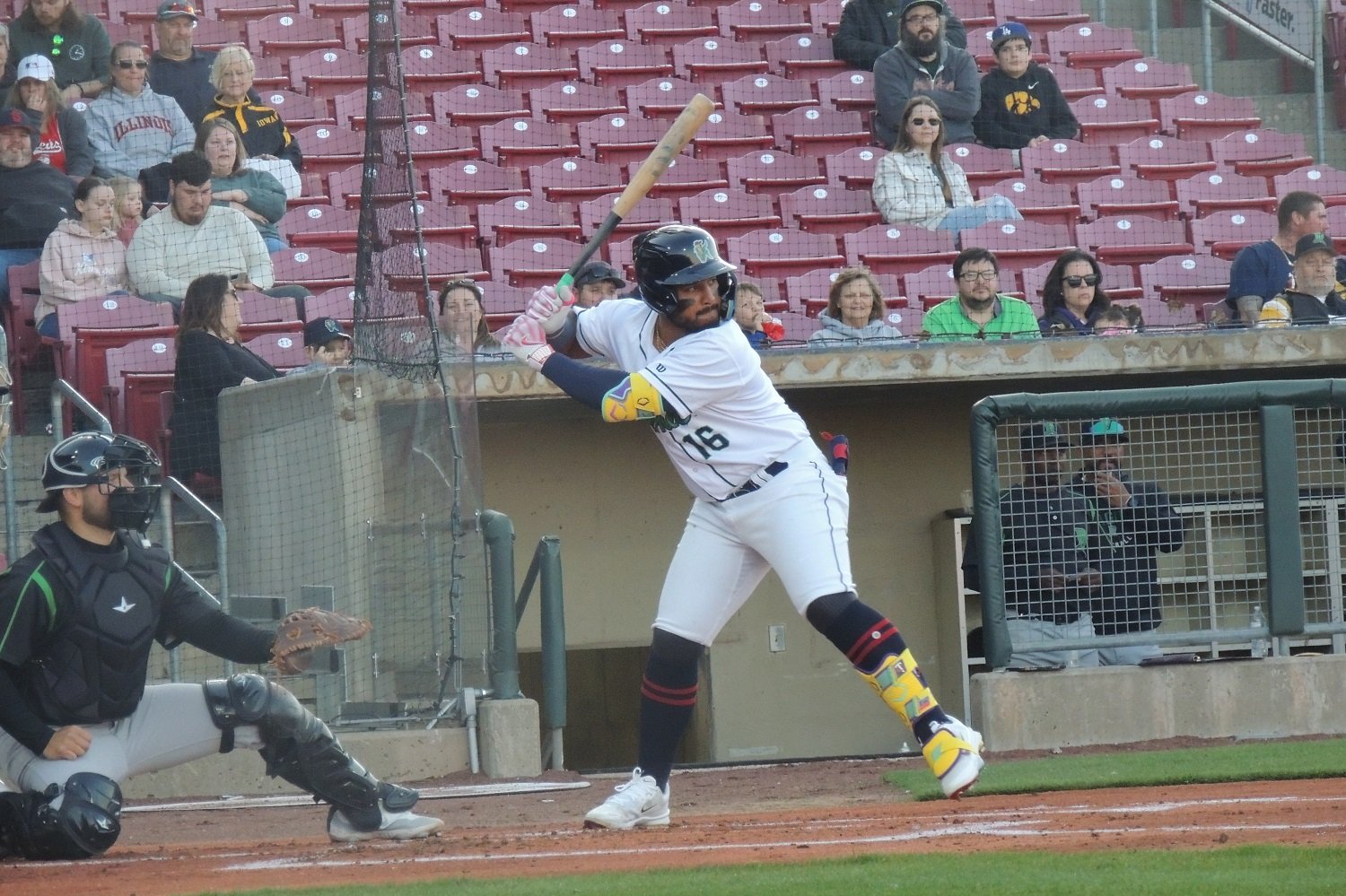 Gabriel “Gabby” Gonzalez comes in as our No. 10 prospect. He was one of the four players acquired when the Twins sent Jorge Polanco to the Seattle Mariners. He landed with the Mariners organization as a member of the 2021-2022 International Free Agency class out of Venezuela, signing for $1.3 million as a right-handed hitting outfielder. At the time of the deal last offseason, he was widely considered a top-100 prospect in all of baseball, despite only being 19 years old and posting average production in a third of a season at High-A. Gabriel Gonzalez finished the 2023 season with a .718 OPS and 83 wRC+ for the Everett AquaSox being three and a half years younger than the average hitter, so it made sense for the Twins to start him at the same level with the Cedar Rapids Kernels in 2024. Unfortunately, after a strong opening month, he would miss nearly two months with a lower back injury before rehabbing in the Complex League for a week and eventually getting back to Cedar Rapids. A so-so season has led to Gonzalez falling down prospect lists, including out of most people's top 100. The corner outfielder posted a .706 OPS with minimal power and speed, but an impressive 15.6% strikeout rate and passable 7.0% walk rate. While these statistics don’t jump off the page, it is important to remember that at only 20 years old, he's still more than two years younger than the average hitter in High-A. Limiting strikeouts at such a young age is largely a positive, but the quality of contact leaves more to be desired. While he's carrying an above-average contact rate of 78%, nearly half of those balls are pounded into the ground, resulting in just four home runs and an iso of .124. I do wonder how much his back injury impacted his power output, as he hit nine home runs in 115 fewer plate appearances at the same level in 2023. “Ground and pound” was a profile he got away from in 2023 and will be something to monitor for Gonzalez as a contact-over-power hitter with minimal speed isn’t a profile you typically see out of a corner outfielder. In fact, I found his 2024 Baseball Prospectus scouting report and had to share their thoughts on his running ability, “[Gonzalez] already profiles in a corner spot due to below-average speed and a running gait that can best be described as scooting.” Yes, scooting. At just 5’ 10” and 180 pounds, the one consistency among scouting reports are concerns about projectability. Given his short stature, relative to other professional athletes, there isn’t a lot of room for him to add mass to frame that could turn into additional power. His physical attributes combined with his position and free swinging approach, put an even stronger emphasis on his ability to make quality contact in order to be serviceable at the Big League level. At this point in his development, many scouting reports see him as someone who will specialize against left-handed hitting on the short side of a platoon. A profile that the Twins actually need right now in their corner outfield to go alongside Matt Wallner and or Trevor Larnach. While it’s far too soon to pigeonhole Gonzalez, his most likely outcome seems to be a right-handed bench bat that can provide a little pop – if he can stop pounding the ball into the ground. Unfortunately, the Twins are only a year removed from him being eligible for the Rule 5 Draft which makes the 2025 season a crucial one for both parties. He will likely start the year at High-A again, where he will still be a year or so younger than the average hitter, and the Twins will be very hard pressed to not protect Gonzalez if he can return to his 2023 form. On the other hand, if he doesn’t improve his quality of contact he’ll continue to slide down prospect lists, possibly to the point where he’s too far away from contributing to be protected by the Twins or drafted in the Rule 5 Draft.
 -
Welcome to the Twins Daily Top 20 Prospects countdown for the 2024-2025 offseason. Today, we’re diving into the 10th-ranked prospect as voted on by the Twins Daily community! Image courtesy of Seth Stohs, Twins Daily Welcome to the Twins Daily Top 20 Prospects countdown for the 2024-2025 offseason. Today, we’re diving into the 10th-ranked prospect as voted on by the Twins Daily community! Gabriel “Gabby” Gonzalez comes in as our No. 10 prospect. He was one of the four players acquired when the Twins sent Jorge Polanco to the Seattle Mariners. He landed with the Mariners organization as a member of the 2021-2022 International Free Agency class out of Venezuela, signing for $1.3 million as a right-handed hitting outfielder. At the time of the deal last offseason, he was widely considered a top-100 prospect in all of baseball, despite only being 19 years old and posting average production in a third of a season at High-A. Gabriel Gonzalez finished the 2023 season with a .718 OPS and 83 wRC+ for the Everett AquaSox being three and a half years younger than the average hitter, so it made sense for the Twins to start him at the same level with the Cedar Rapids Kernels in 2024. Unfortunately, after a strong opening month, he would miss nearly two months with a lower back injury before rehabbing in the Complex League for a week and eventually getting back to Cedar Rapids. A so-so season has led to Gonzalez falling down prospect lists, including out of most people's top 100. The corner outfielder posted a .706 OPS with minimal power and speed, but an impressive 15.6% strikeout rate and passable 7.0% walk rate. While these statistics don’t jump off the page, it is important to remember that at only 20 years old, he's still more than two years younger than the average hitter in High-A. Limiting strikeouts at such a young age is largely a positive, but the quality of contact leaves more to be desired. While he's carrying an above-average contact rate of 78%, nearly half of those balls are pounded into the ground, resulting in just four home runs and an iso of .124. I do wonder how much his back injury impacted his power output, as he hit nine home runs in 115 fewer plate appearances at the same level in 2023. “Ground and pound” was a profile he got away from in 2023 and will be something to monitor for Gonzalez as a contact-over-power hitter with minimal speed isn’t a profile you typically see out of a corner outfielder. In fact, I found his 2024 Baseball Prospectus scouting report and had to share their thoughts on his running ability, “[Gonzalez] already profiles in a corner spot due to below-average speed and a running gait that can best be described as scooting.” Yes, scooting. At just 5’ 10” and 180 pounds, the one consistency among scouting reports are concerns about projectability. Given his short stature, relative to other professional athletes, there isn’t a lot of room for him to add mass to frame that could turn into additional power. His physical attributes combined with his position and free swinging approach, put an even stronger emphasis on his ability to make quality contact in order to be serviceable at the Big League level. At this point in his development, many scouting reports see him as someone who will specialize against left-handed hitting on the short side of a platoon. A profile that the Twins actually need right now in their corner outfield to go alongside Matt Wallner and or Trevor Larnach. While it’s far too soon to pigeonhole Gonzalez, his most likely outcome seems to be a right-handed bench bat that can provide a little pop – if he can stop pounding the ball into the ground. Unfortunately, the Twins are only a year removed from him being eligible for the Rule 5 Draft which makes the 2025 season a crucial one for both parties. He will likely start the year at High-A again, where he will still be a year or so younger than the average hitter, and the Twins will be very hard pressed to not protect Gonzalez if he can return to his 2023 form. On the other hand, if he doesn’t improve his quality of contact he’ll continue to slide down prospect lists, possibly to the point where he’s too far away from contributing to be protected by the Twins or drafted in the Rule 5 Draft. View full article
-
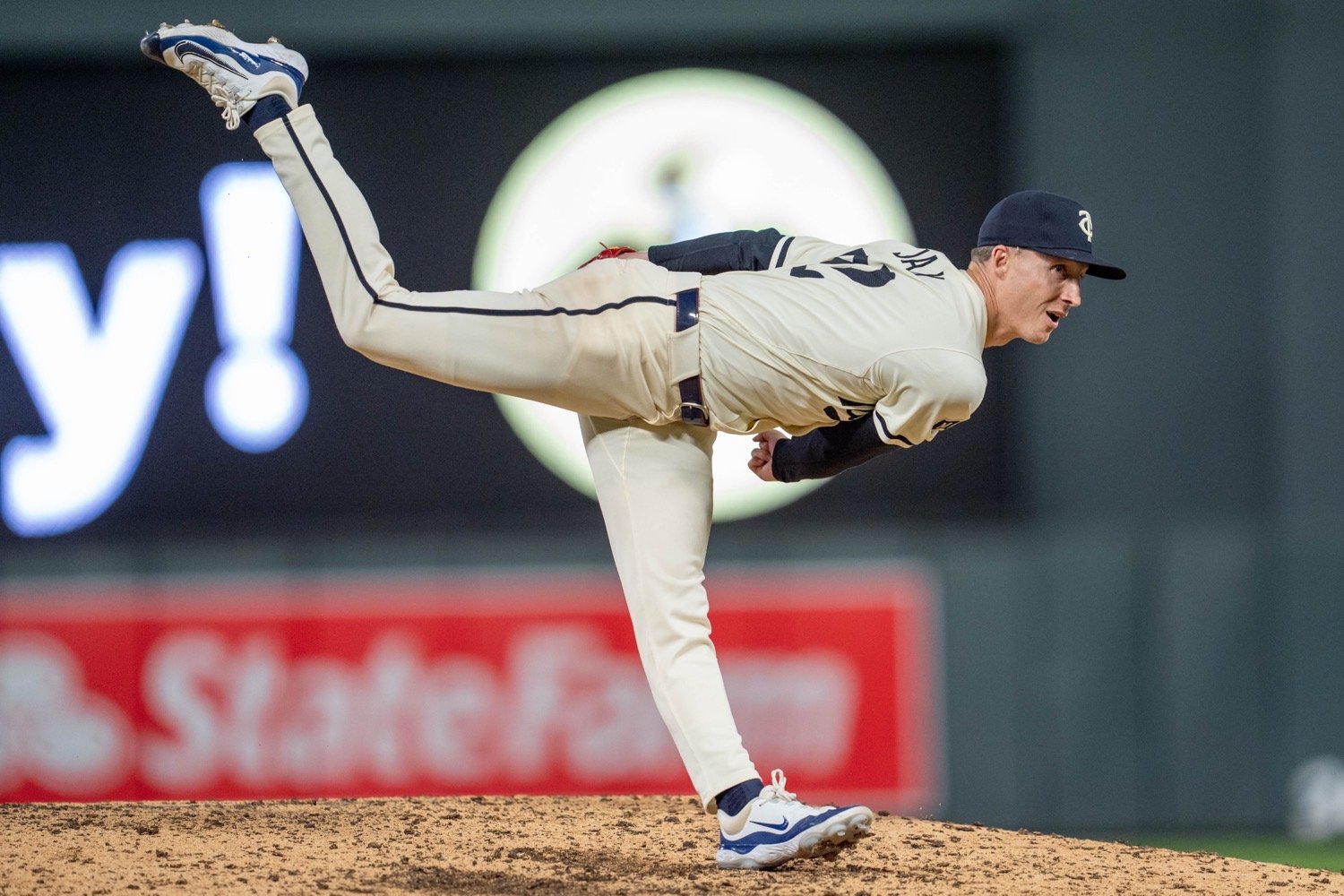 While it's been mostly speculation to this point, it seems the idea to move Griffin Jax to the starting rotation is picking up steam. What started as an interesting article by Eno Sarris of The Athletic ($$) on the impact of a reliever moving into the rotation was followed up by this tweet from Mark Ferrin of MLB Network. So nothing set in stone, yet, but definitely more than just speculation at this point. Before becoming one of the leagues best relievers, Jax did come up as a starter through the Twins system and even made 14 Big League starts in 2021. He wasn't even a little bit effective as a starter, posting a 6.10 ERA / 6.24 FIP with an abysmal 9.9% K-BB rate. Of course, he's had time to master his craft and it's reasonable to think he would perform much better in a starters role in 2025 and beyond. As pointed out by our own Cody Pirkl, it would be an odd move from a roster/organizational perspective. Do you think the Twins should move Jax to the rotation?
 -
While it's been mostly speculation to this point, it seems the idea to move Griffin Jax to the starting rotation is picking up steam. What started as an interesting article by Eno Sarris of The Athletic ($$) on the impact of a reliever moving into the rotation was followed up by this tweet from Mark Ferrin of MLB Network. So nothing set in stone, yet, but definitely more than just speculation at this point. Before becoming one of the leagues best relievers, Jax did come up as a starter through the Twins system and even made 14 Big League starts in 2021. He wasn't even a little bit effective as a starter, posting a 6.10 ERA / 6.24 FIP with an abysmal 9.9% K-BB rate. Of course, he's had time to master his craft and it's reasonable to think he would perform much better in a starters role in 2025 and beyond. As pointed out by our own Cody Pirkl, it would be an odd move from a roster/organizational perspective. Do you think the Twins should move Jax to the rotation? View full rumor
-
 Griffin Jax is coming off a career year that saw him throw 71 innings with a 2.03 ERA, a 1.94 FIP and a K-BB rate of 29%. In his third season as a full-time reliever, Jax established himself not only as the best arm in the Twins bullpen but also one of the best bullpen arms in all of baseball. He’s entering his first season as an arbitration-eligible player, and he is projected to make $2.25 million, per Cot’s Baseball Contracts. He'll have two more years of team control following the 2025 season. The Case for Trading Griffin Jax There is almost always a case to trade away a reliever coming off a strong season, simply because of the volatility of the position. It’s fairly uncommon for a reliever to maintain near-elite production for more than a few years, which Jax already has done, and knowing when their time is up can be next-to-impossible to predict. While relievers of Jax’s caliber don’t grow on trees, they can generally be plucked from other organizations fairly cheaply. Look at the two World Series teams as evidence that good scouting can help teams find productive relievers on the scrap heap. Combining both bullpens, only one reliever was truly homegrown; 11 of them were acquired via free agency, trade, or waivers within the last two years. What’s more, Jax would arguably be the best arm on either team, suggesting that a more balanced bullpen of solid arms may be better than a bullpen with a few top-end arms and sub-optimal ones bridging the gap. Jax is entering his age-30 season and coming off three seasons in a row of more than 65 innings and appearances. From 2021 to 2024, there were 10 pitchers who threw more than 260 innings of relief, and only Emmanuel Clase, who is four years younger than Jax, averaged 1.6 or more fWAR per season. By nearly every metric you can reference, Griffin Jax is coming off of the best season of his career, and his FIP suggests that he could be even more productive with a better defense supporting him. While that may sound like a reason to keep the righty, you can easily flip that as a reason to sell him: his value may never be higher. Examining a Potential Trade Market Another reason to take advantage of Jax’s career year is that, if he were a free agent, he would be the most sought-after right-handed relief arm on the market. Of the high-leverage relief arms available, he’s both coming off the most productive season of the group and the youngest reliever of the group by more than a year. This elevates his value even more, especially considering the three years of cheap team control tied to him. So who needs a relatively young, cheap, near-elite, and controllable reliever? Well, anyone who plans on contending in the 2025 season. Quite literally, if the Twins made him available, I would expect everyone except the Blue Jays, White Sox, Athletics, Angels, Marlins, and Rockies to pick up the phone. And given his team control, I might not even totally eliminate all of those teams. If we focus on what a return might look like in a Jax deal, I want to compare it to recent deals from both the trade deadline and the previous offseason, with the latter probably being a more realistic comparison. I think the reliever market, especially, varies in the offseason as compared to at the trade deadline, and it was very challenging to find even a somewhat similar trade that moved a reliever of Jax’s caliber in the 2023-2024 offseason. Last offseason, Aaron Bummer was coming off an unspectacular season with the Chicago White Sox and was dealt to the Atlanta Braves for a bevy of assets. The Braves sent three former first-round picks in Mike Soroka, Jared Shuster, and Braden Shewmake, all of whom had some prospect pedigree but also had question marks at or close to the major-league level. They also added utility infielder Nicky Lopez and pitching prospect Riley Gowens. Essentially, the White Sox got three kind-of intriguing fliers for their middle reliever. Not long afterward, the White Sox dealt a slightly better reliever, Gregory Santos, to the Seattle Mariners for two top-20 organizational prospects in Prelander Berroa and Zach DeLoach, plus a second-round comp pick (#69 overall). The Dodgers’ Caleb Ferguson was coming off back-to-back solid seasons and getting ready for his age-27 season. In February, he was dealt to the New York Yankees for a lesser bullpen piece in Matt Gage and a 19-year-old pitcher who had performed well in the Complex League. Turning our sights to the trade deadline, where he had more comparable deals to look at, Lucas Erceg of the Oakland Athletics was dealt to the Kansas City Royals. In return, the Athletics received a top-10 organizational pitching prospect with iffy surface stats but strong peripherals; another struggling top-20 prospect; and their most recent 11th-round pick, who was performing well at High A. The San Diego Padres acquired Jason Adam from the Rays for a top-100 pitching prospect and two top-12 organizational prospects. Conclusions I think it’s pretty clear that if the Twins are going to shop Griffin Jax, they would be remiss to do it this offseason. Because of reasons outlined earlier (volatility, dime a dozen, etc.), there just isn’t a strong enough market for a near-elite reliever from November through (say) June. Teams have their sights focused on free agents and acquiring relievers off the scrap heap via waivers, believing in their pitching development system to turn them into productive members of their respective bullpens. The shelves are more bare come mid-to-late July, and that naturally inflates the value of top-end relievers. It’s at that point, if circumstances warrant it, that the Twins should start answering calls on Jax.
 -
The Minnesota Twins would be out of their ever-loving minds to trade one of their most valuable arms from an area of need, right? Right?! Not so fast! The Minnesota Twins would be out of their ever-loving minds to trade one of their most valuable arms from an area of need, right? Right?! Not so fast! Griffin Jax is coming off a career year that saw him throw 71 innings with a 2.03 ERA, a 1.94 FIP and a K-BB rate of 29%. In his third season as a full-time reliever, Jax established himself not only as the best arm in the Twins bullpen but also one of the best bullpen arms in all of baseball. He’s entering his first season as an arbitration-eligible player, and he is projected to make $2.25 million, per Cot’s Baseball Contracts. He'll have two more years of team control following the 2025 season. The Case for Trading Griffin Jax There is almost always a case to trade away a reliever coming off a strong season, simply because of the volatility of the position. It’s fairly uncommon for a reliever to maintain near-elite production for more than a few years, which Jax already has done, and knowing when their time is up can be next-to-impossible to predict. While relievers of Jax’s caliber don’t grow on trees, they can generally be plucked from other organizations fairly cheaply. Look at the two World Series teams as evidence that good scouting can help teams find productive relievers on the scrap heap. Combining both bullpens, only one reliever was truly homegrown; 11 of them were acquired via free agency, trade, or waivers within the last two years. What’s more, Jax would arguably be the best arm on either team, suggesting that a more balanced bullpen of solid arms may be better than a bullpen with a few top-end arms and sub-optimal ones bridging the gap. Jax is entering his age-30 season and coming off three seasons in a row of more than 65 innings and appearances. From 2021 to 2024, there were 10 pitchers who threw more than 260 innings of relief, and only Emmanuel Clase, who is four years younger than Jax, averaged 1.6 or more fWAR per season. By nearly every metric you can reference, Griffin Jax is coming off of the best season of his career, and his FIP suggests that he could be even more productive with a better defense supporting him. While that may sound like a reason to keep the righty, you can easily flip that as a reason to sell him: his value may never be higher. Examining a Potential Trade Market Another reason to take advantage of Jax’s career year is that, if he were a free agent, he would be the most sought-after right-handed relief arm on the market. Of the high-leverage relief arms available, he’s both coming off the most productive season of the group and the youngest reliever of the group by more than a year. This elevates his value even more, especially considering the three years of cheap team control tied to him. So who needs a relatively young, cheap, near-elite, and controllable reliever? Well, anyone who plans on contending in the 2025 season. Quite literally, if the Twins made him available, I would expect everyone except the Blue Jays, White Sox, Athletics, Angels, Marlins, and Rockies to pick up the phone. And given his team control, I might not even totally eliminate all of those teams. If we focus on what a return might look like in a Jax deal, I want to compare it to recent deals from both the trade deadline and the previous offseason, with the latter probably being a more realistic comparison. I think the reliever market, especially, varies in the offseason as compared to at the trade deadline, and it was very challenging to find even a somewhat similar trade that moved a reliever of Jax’s caliber in the 2023-2024 offseason. Last offseason, Aaron Bummer was coming off an unspectacular season with the Chicago White Sox and was dealt to the Atlanta Braves for a bevy of assets. The Braves sent three former first-round picks in Mike Soroka, Jared Shuster, and Braden Shewmake, all of whom had some prospect pedigree but also had question marks at or close to the major-league level. They also added utility infielder Nicky Lopez and pitching prospect Riley Gowens. Essentially, the White Sox got three kind-of intriguing fliers for their middle reliever. Not long afterward, the White Sox dealt a slightly better reliever, Gregory Santos, to the Seattle Mariners for two top-20 organizational prospects in Prelander Berroa and Zach DeLoach, plus a second-round comp pick (#69 overall). The Dodgers’ Caleb Ferguson was coming off back-to-back solid seasons and getting ready for his age-27 season. In February, he was dealt to the New York Yankees for a lesser bullpen piece in Matt Gage and a 19-year-old pitcher who had performed well in the Complex League. Turning our sights to the trade deadline, where he had more comparable deals to look at, Lucas Erceg of the Oakland Athletics was dealt to the Kansas City Royals. In return, the Athletics received a top-10 organizational pitching prospect with iffy surface stats but strong peripherals; another struggling top-20 prospect; and their most recent 11th-round pick, who was performing well at High A. The San Diego Padres acquired Jason Adam from the Rays for a top-100 pitching prospect and two top-12 organizational prospects. Conclusions I think it’s pretty clear that if the Twins are going to shop Griffin Jax, they would be remiss to do it this offseason. Because of reasons outlined earlier (volatility, dime a dozen, etc.), there just isn’t a strong enough market for a near-elite reliever from November through (say) June. Teams have their sights focused on free agents and acquiring relievers off the scrap heap via waivers, believing in their pitching development system to turn them into productive members of their respective bullpens. The shelves are more bare come mid-to-late July, and that naturally inflates the value of top-end relievers. It’s at that point, if circumstances warrant it, that the Twins should start answering calls on Jax. View full article
-
View full video
.jpeg.7b967a0b8eb661ed31456eaa0dced738.jpeg)


.jpeg.ca95269fce1db9861b700d87a34be4c6.jpeg)
.jpeg.0bc28c7797fd0eded616e367f773d671.jpeg)
