



Matthew Lenz
-
Posts
1,465 -
Joined
-
Last visited
-
Days Won
3
Content Type
Profiles
News
Minnesota Twins Videos
2026 Minnesota Twins Top Prospects Ranking
2022 Minnesota Twins Draft Picks
Minnesota Twins Free Agent & Trade Rumors, Notes, & Tidbits
Guides & Resources
2023 Minnesota Twins Draft Picks
The Minnesota Twins Players Project
2024 Minnesota Twins Draft Picks
2025 Minnesota Twins Draft Pick Tracker
2026 Minnesota Twins Draft Tracker: Picks & Bonuses
Forums
Blogs
Events
Store
Downloads
Gallery
Everything posted by Matthew Lenz
-

Black Friday Sale: Cheap Players Who Could Make a Difference
Matthew Lenz posted an article in Twins
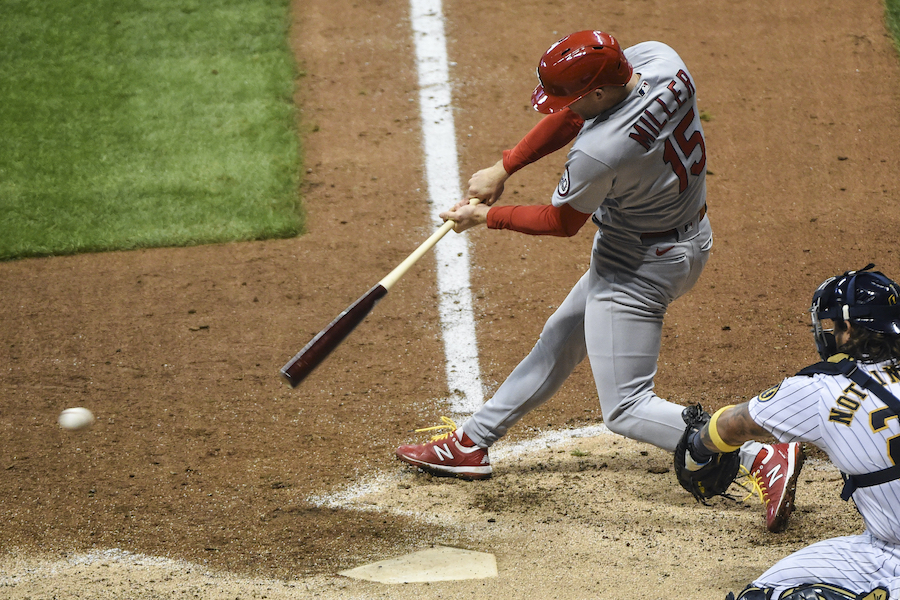 When making your Black Friday shopping list, you first need to think about what you need. The Twins have six days to decide whether they want to tender offers to Jose Berrios, Byron Buxton, Tyler Duffey, Mitch Garver, Taylor Rogers, Eddie Rosario, and Matt Wisler. It’s widely believed that all of those players will be tendered an offer with the lone exception being Eddie Rosario. They could also lose Nelson Cruz, Alex Avila, Marwin Gonzalez, Ehire Adrianza, Rich Hill, Homer Bailey, Jake Odorizzi, Sergio Romo, Trevor May, Tyler Clippard, and Zack Littell to free agency. That’s a long list of players to fill voids for but I’ve summarized a list of the Twins needs based off the players they’re losing: Left fielder Designated Hitter Two starting pitchers Multiple relievers Utility Infielder/Outfielder Now some of these needs will need to be filled by impact players who you aren’t going to find on the cheap. For example, the Twins will hopefully be legitimate suitors for Trevor Bauer to fill one of the starting pitcher voids and, whether or not they are able to attract him, they could also bring back Odorizzi on a deal. Outside of that, they could fill some of the gaps with players who could be had on the cheap. Here’s my list of Major League Baseball’s Black Friday Deals that could help the Twins: Brad Miller - Utility Infielder Defense has never been his strong suit which would make him a downgrade over Adrianza and Gonzalez, but he’s a considerable upgrade offensively and is able to play anywhere in the infield. FanGraphs Free Agent Tracker projects him to get a one-year deal worth two million, which would be a steal compared to the value he could provide ... especially if Josh Donaldson were to miss time in 2021. Kevin Pillar - Utility Outfielder Pillar contributes on both sides of the ball and would be an upgrade over Jake Cave who is entering his final year of team control before entering the arbitration phase of his career. Cave has been solid defensively in his career but has been streaky at the plate. I’m not clamoring for Pillar to replace Rosario but he would provide some consistency and flexibility if a full-time player needed a break or got hurt. Michael Wacha - Right-Handed Starting Pitcher Wacha was a first-round draft pick, who accelerated through the minors, and had a strong five-year start to his career including NLCS MVP in 2013 and All-Star appearance in 2015. In the last three seasons, he’s dealt with injuries that have limited his innings and effectiveness. The Atlanta Braves and Drew Smyly have set an expensive starting pitcher market which might make big name guys like Corey Kluber and Chris Archer too expensive for their inherited risk. FanGraphs has Wacha signing for one-year at three million dollars ... a no-risk, no-brainer deal in my eyes. Brett Anderson - Left-Handed Starting Pitcher Doesn’t have the upside of Wacha but also doesn’t come with the recent injury history, and is thought to be similarly priced. As a cheap option, he might be more attractive to the Twins than Wacha for the sole reason that he is a lefty in a rotation that is dominated by righties and is less of a question mark. I would prefer one of these two over anyone else currently on the Twins 40-man roster. Justin Wilson and/or Jake McGee - Left-Handed Relief Pitchers Relievers are wild cards. They’re nearly impossible to project and, in my opinion, not worth spending on. I like Trevor May but wouldn’t mind letting him walk assuming that he is going to look for a multi-year deal after a ‘bleh’ season. Wilson and McGee are two guys who have shown flashes, are coming off solid seasons, and could shore up the middle of the bullpen. The last cheap option that could help fill various voids is by relying on prospects. The Twins have a few prospects in Brent Rooker, Alex Kiriloff, and Trevor Larnach who could help fill the positions that might be left open by the departure of Eddie Rosario and Nelson Cruz. Even if this is the case, which I hope it is, I still think the Twins need to bring in a utility veteran or two who can fill-in if they rookies show they still need some fine tuning. Again, I do hope that the Twins spend on starting pitching. Kenta Maeda, Michael Pineda, and Jose Berrios make a solid 1-3 but you can never have too much pitching, especially of the power variety. An arm, like Bauer, to slide in front of those three would create one of the best rotations in baseball no matter who the fifth arm is. If the Twins do spend big on a starter, left fielder, or designated hitter then this list serves as some cheaper fill-ins. What do you think of these guys as filling important roles for the Twins? Is there an under-the-radar player that makes your list that didn’t make mine? MORE FROM TWINS DAILY — Latest Twins coverage from our writers — Recent Twins discussion in our forums — Follow Twins Daily via Twitter, Facebook or email
 -
After a record setting 2019, the Twins were +2500 to win the 2020 World Series, just a 3.8% chance. Exactly a year later, after an underwhelming 2020, they’re at +1400 (6.6% chance) to win in 2021. What can history tell us about the movement of these odds as players move around the league? Does it matter who the Twins sign from a betting perspective?After a record setting 2019, the Twins were +2500 to win the 2020 World Series, just a 3.8% chance. Exactly a year later, after an underwhelming 2020, they’re at +1400 (6.6% chance) to win in 2021. What can history tell us about the movement of these odds as players move around the league? Does it matter who the Twins sign from a betting perspective? To attempt to answer that question I will look at the free agents that MLB Trade Rumors (MLBTR) predicts could end up in a Twins uniform and use historical data from the last three seasons to help determine that players impact on their odds to win. As I did previously, I will provide you with the odds to win as well as the percentages using the formula odds/(odds +100). Does a big splash correlate to a big move in the odds? How do important role players and relievers, like Marwin Gonzalez or Trevor May, influence the oddsmakers despite not playing everyday? It’s time to find out. Trevor Bauer MLBTR has Bauer ending up with the defending champion Los Angeles Dodgers, but they do list the Twins as a potential suitor and give various reasons why he might not fit on some other big name teams (i.e. Yankees). To look at his possible impact on the oddsmakers, let's look no further than the 2019-2020 offseason when the Yankees signed Gerrit Cole who was also coming off a Cy Young Award season. Cole signed with the Evil Empire on December 11th which improved the Yankees odds to +400 (20% chance) on signing day from +600 (14% chance) just six days earlier. I’d imagine that Bauer would have an even bigger impact on the Twins current odds of +1400 (6.6%) as +600 (14.2%) was already plenty good. It’s also possible that failing to sign him will decrease the Twins odds. When Cole signed with the Yankees, the fact that the Houston Astros failed to re-sign him moved their odds from +500 (16.6%) to +550 (14.8%). Nelson Cruz The Twins slugger is projected to stay with the team by MLBTR, although that largely depends on whether or not the National League continues to use a designated hitter. According to a tweet from the Star Tribune’s LaVelle E. Neal, this is likely not to happen...for now. Nelson Cruz is nearly in a class of his own being one of the league’s premier players at his position where he only has up to 14 other full-time competitors at any given time. Over the last few seasons, he and J.D. Martinez are really the most notable free agent signings, so why not look at his impact on the Twins 2019 World Series odds. Unfortunately, Sports Betting Dime’s first published odds of the 2019 World Series are after the Twins signed Cruz on January 2nd, but being that he was already part of the team in 2020, I don’t see a potential re-signing impacting the odds too much. Trevor May and Kirby Yates MLBTR has May and Yates as the fourth and sixth best relievers, respectively. Both enter the market coming off a down or injured year. It would be my opinion that middle relievers aren’t going to have a huge impact on World Series odds due to their volatility and, although being used in high leverage situations, they are the least utilized player on the roster from an innings perspective. To validate this let's look at arguably the biggest relief pitcher signing of the last three offseasons: Wade Davis to the Rockies on December 29th, 2017. On November 24th, SBD had the Rockies at +4000 odds (2.4%) to win the 2018 World Series while by January 10th they were +3300 (2.9%) which is a bigger jump than I would have thought, but it’s also important to note they signed two other relievers in Bryan Shaw and Jake McGee in that timeframe. Because of their positions and especially with May already being on the team in previous seasons, I don’t see either of these signings moving the odds. Corey Kluber Given his age, injury history, and peak the only player I can really think that compares here would be Johan Santana. Even if he ends up with the Twins like MLBTR predicts, I don’t see a figurative lottery ticket moving the odds one way or another. Jurickson Profar The Twins are in need of a utility player as Marwin Gonzalez and Ehire Adrianza are both set to be free agents this offseason. Like relief pitchers and figurative lottery tickets, I don’t see a utility player moving the needle a ton. But for the sake of the article, let’s look at how Marwin Gonzalez (admittedly a much better player than Profar) impacted the Twins 2019 World Series odds when he signed on February 25th, 2019. Around the same time the Twins were signing super-utility Gonzalez, the Phillies and Padres landed a couple of super free agents themselves - Bryce Harper and Manny Machado. That might explain why the Twins odds February 20th (+5000 or 2%) were actually better than on March 27th (+5867 or 1.7%). It’d be impossible to draw any concrete conclusions about the above data, but here’s what we can summarize and possibly already knew. A big splash signing (i.e. Bauer) will move somebody’s odds significantly if the oddsmakers weren’t already anticipating the big free agent to land in a certain spot. On the other hand, as seen when the Twins signed Marwin, a big splash signing will also hurt the odds of teams who lost out on the free agent. Only owning the 10th best odds in baseball, it’s clear the Twins will need to make a move to improve those odds. Bauer is obviously a huge piece to this puzzle, but I think the key to this season, more than making a big splash in free agency, is how they handle their top prospects. Do they trade one or two for that immediate difference maker or do they commit to giving them playing time with the assumption there will be a learning curve early on? What do you think the Twins should do this offseason? Make a splash whether it be free agency or a trade, or rely on the likes of Rooker, Kiriloff, etc. to contribute in 2021? MORE FROM TWINS DAILY — Latest Twins coverage from our writers — Recent Twins discussion in our forums — Follow Twins Daily via Twitter, Facebook or email Click here to view the article
-
After a record setting 2019, the Twins were +2500 to win the 2020 World Series, just a 3.8% chance. Exactly a year later, after an underwhelming 2020, they’re at +1400 (6.6% chance) to win in 2021. What can history tell us about the movement of these odds as players move around the league? Does it matter who the Twins sign from a betting perspective?After a record setting 2019, the Twins were +2500 to win the 2020 World Series, just a 3.8% chance. Exactly a year later, after an underwhelming 2020, they’re at +1400 (6.6% chance) to win in 2021. What can history tell us about the movement of these odds as players move around the league? Does it matter who the Twins sign from a betting perspective? To attempt to answer that question I will look at the free agents that MLB Trade Rumors (MLBTR) predicts could end up in a Twins uniform and use historical data from the last three seasons to help determine that players impact on their odds to win. As I did previously, I will provide you with the odds to win as well as the percentages using the formula odds/(odds +100). Does a big splash correlate to a big move in the odds? How do important role players and relievers, like Marwin Gonzalez or Trevor May, influence the oddsmakers despite not playing everyday? It’s time to find out. Trevor Bauer MLBTR has Bauer ending up with the defending champion Los Angeles Dodgers, but they do list the Twins as a potential suitor and give various reasons why he might not fit on some other big name teams (i.e. Yankees). To look at his possible impact on the oddsmakers, let's look no further than the 2019-2020 offseason when the Yankees signed Gerrit Cole who was also coming off a Cy Young Award season. Cole signed with the Evil Empire on December 11th which improved the Yankees odds to +400 (20% chance) on signing day from +600 (14% chance) just six days earlier. I’d imagine that Bauer would have an even bigger impact on the Twins current odds of +1400 (6.6%) as +600 (14.2%) was already plenty good. It’s also possible that failing to sign him will decrease the Twins odds. When Cole signed with the Yankees, the fact that the Houston Astros failed to re-sign him moved their odds from +500 (16.6%) to +550 (14.8%). Nelson Cruz The Twins slugger is projected to stay with the team by MLBTR, although that largely depends on whether or not the National League continues to use a designated hitter. According to a tweet from the Star Tribune’s LaVelle E. Neal, this is likely not to happen...for now. Nelson Cruz is nearly in a class of his own being one of the league’s premier players at his position where he only has up to 14 other full-time competitors at any given time. Over the last few seasons, he and J.D. Martinez are really the most notable free agent signings, so why not look at his impact on the Twins 2019 World Series odds. Unfortunately, Sports Betting Dime’s first published odds of the 2019 World Series are after the Twins signed Cruz on January 2nd, but being that he was already part of the team in 2020, I don’t see a potential re-signing impacting the odds too much. Trevor May and Kirby Yates MLBTR has May and Yates as the fourth and sixth best relievers, respectively. Both enter the market coming off a down or injured year. It would be my opinion that middle relievers aren’t going to have a huge impact on World Series odds due to their volatility and, although being used in high leverage situations, they are the least utilized player on the roster from an innings perspective. To validate this let's look at arguably the biggest relief pitcher signing of the last three offseasons: Wade Davis to the Rockies on December 29th, 2017. On November 24th, SBD had the Rockies at +4000 odds (2.4%) to win the 2018 World Series while by January 10th they were +3300 (2.9%) which is a bigger jump than I would have thought, but it’s also important to note they signed two other relievers in Bryan Shaw and Jake McGee in that timeframe. Because of their positions and especially with May already being on the team in previous seasons, I don’t see either of these signings moving the odds. Corey Kluber Given his age, injury history, and peak the only player I can really think that compares here would be Johan Santana. Even if he ends up with the Twins like MLBTR predicts, I don’t see a figurative lottery ticket moving the odds one way or another. Jurickson Profar The Twins are in need of a utility player as Marwin Gonzalez and Ehire Adrianza are both set to be free agents this offseason. Like relief pitchers and figurative lottery tickets, I don’t see a utility player moving the needle a ton. But for the sake of the article, let’s look at how Marwin Gonzalez (admittedly a much better player than Profar) impacted the Twins 2019 World Series odds when he signed on February 25th, 2019. Around the same time the Twins were signing super-utility Gonzalez, the Phillies and Padres landed a couple of super free agents themselves - Bryce Harper and Manny Machado. That might explain why the Twins odds February 20th (+5000 or 2%) were actually better than on March 27th (+5867 or 1.7%). It’d be impossible to draw any concrete conclusions about the above data, but here’s what we can summarize and possibly already knew. A big splash signing (i.e. Bauer) will move somebody’s odds significantly if the oddsmakers weren’t already anticipating the big free agent to land in a certain spot. On the other hand, as seen when the Twins signed Marwin, a big splash signing will also hurt the odds of teams who lost out on the free agent. Only owning the 10th best odds in baseball, it’s clear the Twins will need to make a move to improve those odds. Bauer is obviously a huge piece to this puzzle, but I think the key to this season, more than making a big splash in free agency, is how they handle their top prospects. Do they trade one or two for that immediate difference maker or do they commit to giving them playing time with the assumption there will be a learning curve early on? What do you think the Twins should do this offseason? Make a splash whether it be free agency or a trade, or rely on the likes of Rooker, Kiriloff, etc. to contribute in 2021? MORE FROM TWINS DAILY — Latest Twins coverage from our writers — Recent Twins discussion in our forums — Follow Twins Daily via Twitter, Facebook or email Click here to view the article
-
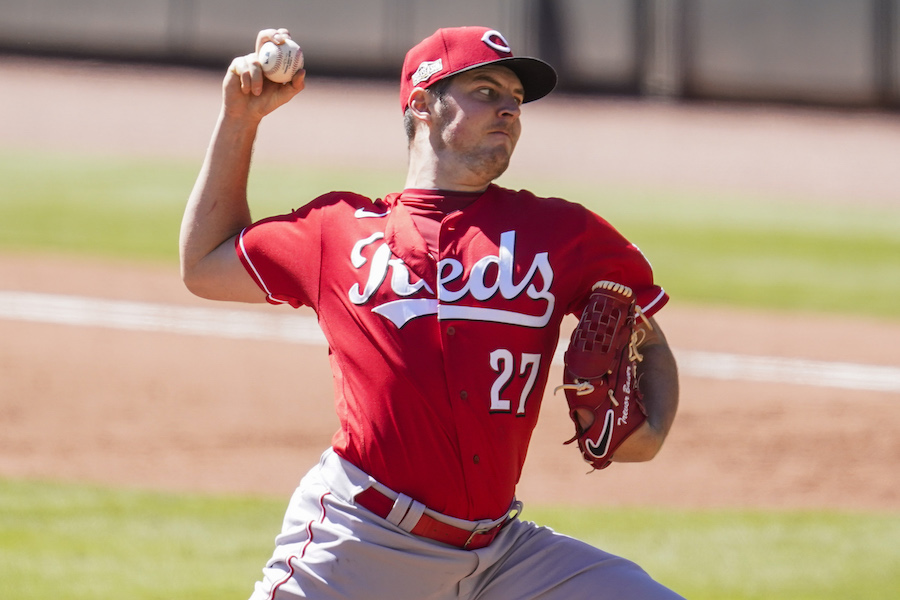 After a record setting 2019, the Twins were +2500 to win the 2020 World Series, just a 3.8% chance. Exactly a year later, after an underwhelming 2020, they’re at +1400 (6.6% chance) to win in 2021. What can history tell us about the movement of these odds as players move around the league? Does it matter who the Twins sign from a betting perspective? To attempt to answer that question I will look at the free agents that MLB Trade Rumors (MLBTR) predicts could end up in a Twins uniform and use historical data from the last three seasons to help determine that players impact on their odds to win. As I did previously, I will provide you with the odds to win as well as the percentages using the formula odds/(odds +100). Does a big splash correlate to a big move in the odds? How do important role players and relievers, like Marwin Gonzalez or Trevor May, influence the oddsmakers despite not playing everyday? It’s time to find out. Trevor Bauer MLBTR has Bauer ending up with the defending champion Los Angeles Dodgers, but they do list the Twins as a potential suitor and give various reasons why he might not fit on some other big name teams (i.e. Yankees). To look at his possible impact on the oddsmakers, let's look no further than the 2019-2020 offseason when the Yankees signed Gerrit Cole who was also coming off a Cy Young Award season. Cole signed with the Evil Empire on December 11th which improved the Yankees odds to +400 (20% chance) on signing day from +600 (14% chance) just six days earlier. I’d imagine that Bauer would have an even bigger impact on the Twins current odds of +1400 (6.6%) as +600 (14.2%) was already plenty good. It’s also possible that failing to sign him will decrease the Twins odds. When Cole signed with the Yankees, the fact that the Houston Astros failed to re-sign him moved their odds from +500 (16.6%) to +550 (14.8%). Nelson Cruz The Twins slugger is projected to stay with the team by MLBTR, although that largely depends on whether or not the National League continues to use a designated hitter. According to a tweet from the Star Tribune’s LaVelle E. Neal, this is likely not to happen...for now. https://twitter.com/LaVelleNeal/status/1319334510580944901 Nelson Cruz is nearly in a class of his own being one of the league’s premier players at his position where he only has up to 14 other full-time competitors at any given time. Over the last few seasons, he and J.D. Martinez are really the most notable free agent signings, so why not look at his impact on the Twins 2019 World Series odds. Unfortunately, Sports Betting Dime’s first published odds of the 2019 World Series are after the Twins signed Cruz on January 2nd, but being that he was already part of the team in 2020, I don’t see a potential re-signing impacting the odds too much. Trevor May and Kirby Yates MLBTR has May and Yates as the fourth and sixth best relievers, respectively. Both enter the market coming off a down or injured year. It would be my opinion that middle relievers aren’t going to have a huge impact on World Series odds due to their volatility and, although being used in high leverage situations, they are the least utilized player on the roster from an innings perspective. To validate this let's look at arguably the biggest relief pitcher signing of the last three offseasons: Wade Davis to the Rockies on December 29th, 2017. On November 24th, SBD had the Rockies at +4000 odds (2.4%) to win the 2018 World Series while by January 10th they were +3300 (2.9%) which is a bigger jump than I would have thought, but it’s also important to note they signed two other relievers in Bryan Shaw and Jake McGee in that timeframe. Because of their positions and especially with May already being on the team in previous seasons, I don’t see either of these signings moving the odds. Corey Kluber Given his age, injury history, and peak the only player I can really think that compares here would be Johan Santana. Even if he ends up with the Twins like MLBTR predicts, I don’t see a figurative lottery ticket moving the odds one way or another. Jurickson Profar The Twins are in need of a utility player as Marwin Gonzalez and Ehire Adrianza are both set to be free agents this offseason. Like relief pitchers and figurative lottery tickets, I don’t see a utility player moving the needle a ton. But for the sake of the article, let’s look at how Marwin Gonzalez (admittedly a much better player than Profar) impacted the Twins 2019 World Series odds when he signed on February 25th, 2019. Around the same time the Twins were signing super-utility Gonzalez, the Phillies and Padres landed a couple of super free agents themselves - Bryce Harper and Manny Machado. That might explain why the Twins odds February 20th (+5000 or 2%) were actually better than on March 27th (+5867 or 1.7%). It’d be impossible to draw any concrete conclusions about the above data, but here’s what we can summarize and possibly already knew. A big splash signing (i.e. Bauer) will move somebody’s odds significantly if the oddsmakers weren’t already anticipating the big free agent to land in a certain spot. On the other hand, as seen when the Twins signed Marwin, a big splash signing will also hurt the odds of teams who lost out on the free agent. Only owning the 10th best odds in baseball, it’s clear the Twins will need to make a move to improve those odds. Bauer is obviously a huge piece to this puzzle, but I think the key to this season, more than making a big splash in free agency, is how they handle their top prospects. Do they trade one or two for that immediate difference maker or do they commit to giving them playing time with the assumption there will be a learning curve early on? What do you think the Twins should do this offseason? Make a splash whether it be free agency or a trade, or rely on the likes of Rooker, Kiriloff, etc. to contribute in 2021? MORE FROM TWINS DAILY — Latest Twins coverage from our writers — Recent Twins discussion in our forums — Follow Twins Daily via Twitter, Facebook or email
 -
Last week, I wrote about the Most Valuable Non-Prospect Offensive Trade Pieces. This week I will focus on which non-prospect pitchers I think are most valuable on the trade market. These are players that I don’t necessarily think will, or should, get traded but provide the most valuable towards a hypothetical move. Image courtesy of Ken Blaze-USA TODAY Sports Last week, I wrote about the Most Valuable Non-Prospect Offensive Trade Pieces. This week I will focus on which non-prospect pitchers I think are most valuable on the trade market. These are players that I don’t necessarily think will, or should, get traded but provide the most valuable towards a hypothetical move. More often than not we tie top prospects to big name trades because of their potential and years of team control remaining. In 2020, the Twins trotted out one of the oldest pitching staffs in all of baseball although, at an average age of 30.0, only four of the 23 pitchers used were older than the average: Kenta Maeda, Caleb Thielbar, Tyler Clippard, and Sergio Romo. Of that group Maeda is the only one guaranteed to return while Thielbar is still under team control and Romo has a club option of five million that could be picked up. Unlike the Twins offensive prospects mentioned in the previous article, there aren’t any pitching prospects that will be sure fire impact players in 2021. Especially considering the pandemic lost 2020 season, you might see the likes of Jordan Balazovic, Jhoan Duran, or Blayne Enlow but I’d be surprised if the Twins are counting on them to make any significant impact next year. That is to say that I think any trade involving non-prospects would come from dealing an offensive player rather than a pitcher. Regardless, the Twins have some valuable pieces that theoretically could be moved. Kenta Maeda, 32, 3 years AAV $3.125MM = 3 years, $9.375MM salary not including incentives The Twins aren’t trading Kenta Maeda. But this article isn’t predicting players that could or should be traded, rather identifying who would be most valuable. Although he’s already 32, he’s coming off a season where he competed for a Cy Young while only making $5.31MM after incentives. Without analyzing every pitchers contract in baseball, I have to imagine that you aren’t going to find a better deal around the league. Jose Berrios, 26, projected 1 year $5.4MM via arbitration per MLB Trade Rumors + 1 year of arbitration = 2 years of team control The Twins aren’t trading Jose Berrios either, but at only 26-years-old and many thinking he hasn’t reached his ceiling he carries a lot of value with two more years of team control. If you follow me on twitter you know I don’t think Berrios will ever be the true “ace” that many thought he was once projected to be and I don’t totally buy into him being a contending teams second best pitcher. My opinion aside, there are plenty of cases of pitchers developing into “aces” in their late 20’s...ever heard of Max Scherzer? Outside of those two your other options include young-ish guys who are still under team control for multiple seasons. The only pitcher guaranteed to come back in 2021 I would exclude from this list is Michael Pineda. Otherwise the likes of Randy Dobnak, Taylor Rogers, Tyler Duffey, Cody Stashak, Devin Smeltzer, and Jorge Alcala could be of interest to some teams. That said, if you trade one of those guys I don’t know that you’re getting a return that improves your 2021 Major League team and I don’t know that you’re getting anyone that really improves your farm system. As I said before, if the Twins were to make a trade to improve the 2021 team that didn’t involve prospects I think you’re looking at someone on the offensive side of the ball. Any trade involving any of the pitchers named above would likely need to include multiple pieces to improve the 2021 team, which makes it unlikely a trade like that happens. If the Twins were to make a trade where is their biggest hole? What would help their 2021 World Series chances the most? MORE FROM TWINS DAILY — Latest Twins coverage from our writers — Recent Twins discussion in our forums — Follow Twins Daily via Twitter, Facebook or email View full article
-
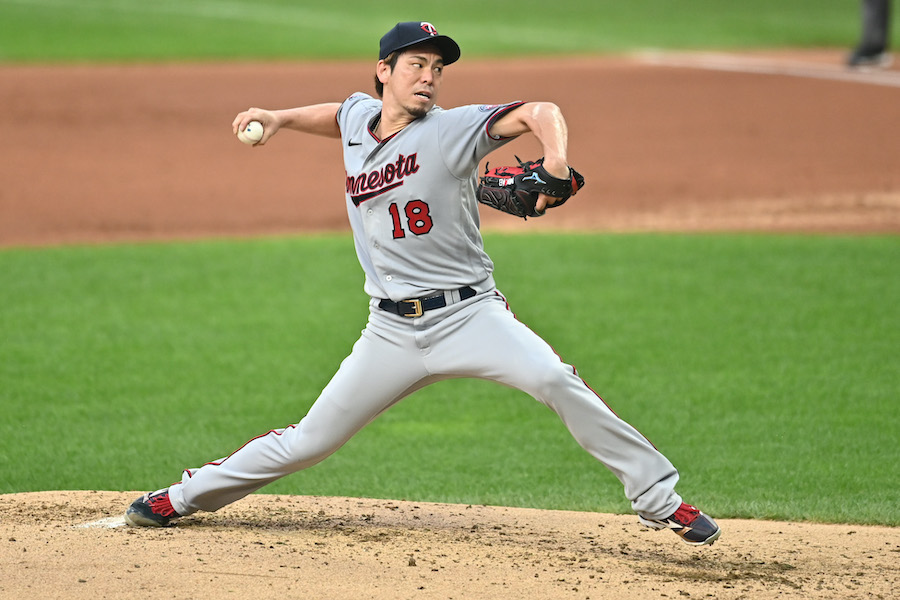 More often than not we tie top prospects to big name trades because of their potential and years of team control remaining. In 2020, the Twins trotted out one of the oldest pitching staffs in all of baseball although, at an average age of 30.0, only four of the 23 pitchers used were older than the average: Kenta Maeda, Caleb Thielbar, Tyler Clippard, and Sergio Romo. Of that group Maeda is the only one guaranteed to return while Thielbar is still under team control and Romo has a club option of five million that could be picked up. Unlike the Twins offensive prospects mentioned in the previous article, there aren’t any pitching prospects that will be sure fire impact players in 2021. Especially considering the pandemic lost 2020 season, you might see the likes of Jordan Balazovic, Jhoan Duran, or Blayne Enlow but I’d be surprised if the Twins are counting on them to make any significant impact next year. That is to say that I think any trade involving non-prospects would come from dealing an offensive player rather than a pitcher. Regardless, the Twins have some valuable pieces that theoretically could be moved. Kenta Maeda, 32, 3 years AAV $3.125MM = 3 years, $9.375MM salary not including incentives The Twins aren’t trading Kenta Maeda. But this article isn’t predicting players that could or should be traded, rather identifying who would be most valuable. Although he’s already 32, he’s coming off a season where he competed for a Cy Young while only making $5.31MM after incentives. Without analyzing every pitchers contract in baseball, I have to imagine that you aren’t going to find a better deal around the league. Jose Berrios, 26, projected 1 year $5.4MM via arbitration per MLB Trade Rumors + 1 year of arbitration = 2 years of team control The Twins aren’t trading Jose Berrios either, but at only 26-years-old and many thinking he hasn’t reached his ceiling he carries a lot of value with two more years of team control. If you follow me on twitter you know I don’t think Berrios will ever be the true “ace” that many thought he was once projected to be and I don’t totally buy into him being a contending teams second best pitcher. My opinion aside, there are plenty of cases of pitchers developing into “aces” in their late 20’s...ever heard of Max Scherzer? Outside of those two your other options include young-ish guys who are still under team control for multiple seasons. The only pitcher guaranteed to come back in 2021 I would exclude from this list is Michael Pineda. Otherwise the likes of Randy Dobnak, Taylor Rogers, Tyler Duffey, Cody Stashak, Devin Smeltzer, and Jorge Alcala could be of interest to some teams. That said, if you trade one of those guys I don’t know that you’re getting a return that improves your 2021 Major League team and I don’t know that you’re getting anyone that really improves your farm system. As I said before, if the Twins were to make a trade to improve the 2021 team that didn’t involve prospects I think you’re looking at someone on the offensive side of the ball. Any trade involving any of the pitchers named above would likely need to include multiple pieces to improve the 2021 team, which makes it unlikely a trade like that happens. If the Twins were to make a trade where is their biggest hole? What would help their 2021 World Series chances the most? MORE FROM TWINS DAILY — Latest Twins coverage from our writers — Recent Twins discussion in our forums — Follow Twins Daily via Twitter, Facebook or email
 -
Despite having one of baseball's best offenses, the Twins are averaging less than two runs per postseason game over the last two seasons. In 2020 a few players took a turn for the worse and with prospects waiting in the wings, now might be the time to move on from some of their big league regulars. Image courtesy of Jordan Johnson, USA Today Despite having one of baseball's best offenses, the Twins are averaging less than two runs per postseason game over the last two seasons. In 2020 a few players took a turn for the worse and with prospects waiting in the wings, now might be the time to move on from some of their big league regulars. More often than not we tie top prospects to big name trades because of their potential and years of team control remaining. According to Baseball Reference, the Twins had the 8th oldest line up in 2020 at an average age of 28.7 although the likes of Nelson Cruz and Marwin Gonzalez skew that a little. Sorting the Twins by at bats in 2020 shows that of the top 10 Cruz and Gonzalez, and Ehire Adrianza are the only players that are older than the average. Replacing Cruz’s 185 at-bats with a 25-year-old Brent Rooker and the Twins are all of a sudden the 8th youngest lineup in baseball. No, that’s not an exact science, but my point is that for having one of the best offenses in baseball the Twins are young. In 2021 the team may try and retain Cruz, but I think we’ve seen the last of Gonzalez and Adrianza in Twins uniforms. This will leave room for either a couple of free agent additions or for a couple prospects to get semi-regular or more playing time. With Rooker, Alex Kiriloff, Trevor Larnach, and Royce Lewis all being legitimate candidates to play for the Twins in 2021 it may be time to make room for them in the Major League lineup rather than wait for a current starter to succumb to an injury. With a logjam in the outfield, I think the Twins will let Eddie Rosario walk...at this point we know Eddie’s ceiling which can be good but we also know his floor. If I’m the Twins I want to give an opportunity to one of the aforementioned prospects in 2021. That still leaves us with two more outfielders and another who could play the outfield if needed. Though they may not be prospects anymore, the Twins have some young Major League starters who have years of team control left and are on team friendly deals. These are the top three most valuable non-prospect offensive players that I would consider trading over the offseason. 1. Max Kepler, 27, 4 years AAV $7MM + $10MM 5th year team option = 5 years, $7.6MM maximum It didn’t take long for Max Kepler to establish himself as an everyday Major Leaguer and really breakthrough in 2019 having his best year as a pro. There’s no doubt that he struggled in 2020, specifically making solid contact, but how much does one weird season outweigh the two seasons previous where he produced a combined 7.1 fWAR? By the way, that would rank him as the 15th best outfielder in baseball. On the defensive side of the ball you have one of the best corner outfielders in the game, as well as someone who has shown the ability to play centerfield at an above average level. Combine this with an extremely cheap contract maxing out at $38MM over five-years, and you may have one of the most valuable Major League starters in all of baseball. 2. Jorge Polanco, 27, 4 years AAV $5.3MM + 10.5MM 5th year vested option + $12MM 6th year team option = 6 years, AAV $7.3MM maximum We knew at the time of Polanco and Kepler contracts that they were very team friendly, but it’s surprising to see how truly team friendly they are when you consider their contributions to the lineup. Like Kepler, Polanco was another player who didn’t take long to establish himself at the Major League level. Like Kepler, he broke out with a bang in 2019. And like Kepler, he really struggled in 2020. Unlike Kepler, it was learned the day after the Twins lost game two against Houston that Polanco hadn’t really been healthy for a majority of the season. Back-to-back offseason ankle surgeries will definitely hurt his value a little bit, but that fifth year option only vests if he has 550 at-bats in year four. Furthermore, the fifth year can be bought out for just $1MM. Assuming this ankle surgery isn’t career altering, at worst a team is looking at a guy who could fill-in at 2B, SS, and 3B for just an average salary of $5.5MM. Not bad considering Marwin made more than double that in 2019 alone. 3. Luis Arraez, 24, 2 years of team control + 3 years of arbitration = 5 years maximum I debated Buxton here but with his checkered injury history and only two years of arbitration remaining, I think Arraez carries more value on the trade market. Arraez unexpectedly broke onto the scene in 2019 in place of a struggling Jonathon Schoop and forced Twins Manager Rocco Baldelli to make him an everyday player. Unlike our previous two players, Arraez mostly picked up from where he left off in 2019. It took him a while to get going in 2020 but he ended the season slashing 0.321/0.364/0.402 while improving his defense immensely. Do I think the Twins will trade him? No. But you can’t deny the value a Major League caliber player has at just 24 years old with five more years of team control, including two of which will be for an AAV around $600K. On base guys with no power may not be the cool thing anymore, but putting a guy like that at the top of a lineup in front of a cool guy sounds enticing to me! Do you think the Twins will make a big move this offseason? If so, does that move just come from free agency? Does it involve a prospect? Or does it involve someone that contributed in 2020 that isn’t on this list? If not, are you really comfortable with them standing pat after the up and down season this offense had in 2020? MORE FROM TWINS DAILY — Latest Twins coverage from our writers — Recent Twins discussion in our forums — Follow Twins Daily via Twitter, Facebook or email View full article
-
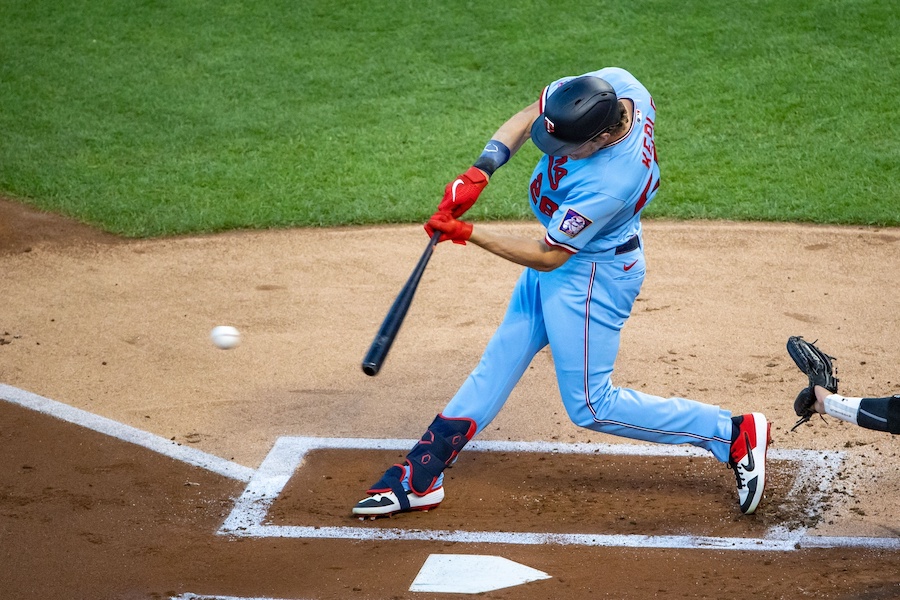 More often than not we tie top prospects to big name trades because of their potential and years of team control remaining. According to Baseball Reference, the Twins had the 8th oldest line up in 2020 at an average age of 28.7 although the likes of Nelson Cruz and Marwin Gonzalez skew that a little. Sorting the Twins by at bats in 2020 shows that of the top 10 Cruz and Gonzalez, and Ehire Adrianza are the only players that are older than the average. Replacing Cruz’s 185 at-bats with a 25-year-old Brent Rooker and the Twins are all of a sudden the 8th youngest lineup in baseball. No, that’s not an exact science, but my point is that for having one of the best offenses in baseball the Twins are young. In 2021 the team may try and retain Cruz, but I think we’ve seen the last of Gonzalez and Adrianza in Twins uniforms. This will leave room for either a couple of free agent additions or for a couple prospects to get semi-regular or more playing time. With Rooker, Alex Kiriloff, Trevor Larnach, and Royce Lewis all being legitimate candidates to play for the Twins in 2021 it may be time to make room for them in the Major League lineup rather than wait for a current starter to succumb to an injury. With a logjam in the outfield, I think the Twins will let Eddie Rosario walk...at this point we know Eddie’s ceiling which can be good but we also know his floor. If I’m the Twins I want to give an opportunity to one of the aforementioned prospects in 2021. That still leaves us with two more outfielders and another who could play the outfield if needed. Though they may not be prospects anymore, the Twins have some young Major League starters who have years of team control left and are on team friendly deals. These are the top three most valuable non-prospect offensive players that I would consider trading over the offseason. 1. Max Kepler, 27, 4 years AAV $7MM + $10MM 5th year team option = 5 years, $7.6MM maximum It didn’t take long for Max Kepler to establish himself as an everyday Major Leaguer and really breakthrough in 2019 having his best year as a pro. There’s no doubt that he struggled in 2020, specifically making solid contact, but how much does one weird season outweigh the two seasons previous where he produced a combined 7.1 fWAR? By the way, that would rank him as the 15th best outfielder in baseball. On the defensive side of the ball you have one of the best corner outfielders in the game, as well as someone who has shown the ability to play centerfield at an above average level. Combine this with an extremely cheap contract maxing out at $38MM over five-years, and you may have one of the most valuable Major League starters in all of baseball. 2. Jorge Polanco, 27, 4 years AAV $5.3MM + 10.5MM 5th year vested option + $12MM 6th year team option = 6 years, AAV $7.3MM maximum We knew at the time of Polanco and Kepler contracts that they were very team friendly, but it’s surprising to see how truly team friendly they are when you consider their contributions to the lineup. Like Kepler, Polanco was another player who didn’t take long to establish himself at the Major League level. Like Kepler, he broke out with a bang in 2019. And like Kepler, he really struggled in 2020. Unlike Kepler, it was learned the day after the Twins lost game two against Houston that Polanco hadn’t really been healthy for a majority of the season. Back-to-back offseason ankle surgeries will definitely hurt his value a little bit, but that fifth year option only vests if he has 550 at-bats in year four. Furthermore, the fifth year can be bought out for just $1MM. Assuming this ankle surgery isn’t career altering, at worst a team is looking at a guy who could fill-in at 2B, SS, and 3B for just an average salary of $5.5MM. Not bad considering Marwin made more than double that in 2019 alone. 3. Luis Arraez, 24, 2 years of team control + 3 years of arbitration = 5 years maximum I debated Buxton here but with his checkered injury history and only two years of arbitration remaining, I think Arraez carries more value on the trade market. Arraez unexpectedly broke onto the scene in 2019 in place of a struggling Jonathon Schoop and forced Twins Manager Rocco Baldelli to make him an everyday player. Unlike our previous two players, Arraez mostly picked up from where he left off in 2019. It took him a while to get going in 2020 but he ended the season slashing 0.321/0.364/0.402 while improving his defense immensely. Do I think the Twins will trade him? No. But you can’t deny the value a Major League caliber player has at just 24 years old with five more years of team control, including two of which will be for an AAV around $600K. On base guys with no power may not be the cool thing anymore, but putting a guy like that at the top of a lineup in front of a cool guy sounds enticing to me! Do you think the Twins will make a big move this offseason? If so, does that move just come from free agency? Does it involve a prospect? Or does it involve someone that contributed in 2020 that isn’t on this list? If not, are you really comfortable with them standing pat after the up and down season this offense had in 2020? MORE FROM TWINS DAILY — Latest Twins coverage from our writers — Recent Twins discussion in our forums — Follow Twins Daily via Twitter, Facebook or email
 -
What does the Twins Playoff Rotation Look Like?
Matthew Lenz replied to Matthew Lenz's topic in Twins Daily Front Page News
I’ve been thinking about this. I actually might lean the following: Maeda for GM1 If win GM1: Berrios for GM2 If lose GM1: Pineda for GM2 If clinch series in GM2: Pineda GM1 of DS If GM3: Pineda if he didn’t pitch GM2, otherwise Berrios. -
With MLB announcing their postseason schedule, questions surrounding Jake Odorizzi’s health, and the option of Randy Dobnak the Twins find themselves in a precarious spot 10 days before their first playoff game. Who should the Twins rely and how should they manage the condensed postseason schedule? Image courtesy of © Jordan Johnson-USA TODAY Sports With MLB announcing their postseason schedule, questions surrounding Jake Odorizzi’s health, and the option of Randy Dobnak the Twins find themselves in a precarious spot 10 days before their first playoff game. Who should the Twins rely and how should they manage the condensed postseason schedule? Typically in the postseason you see teams operate with a three to four-man rotation, but that won’t be the case in 2020 as MLB adds an extra six teams while still starting the World Series in mid-October. In the entire postseason, the only planned off days for teams in the midst of a series are between games 2/3 and 5/6 in the World Series. Other than that, teams only off days will be between series, which likely requires the use of a five man rotation throughout the postseason. The news comes kind of late in the season as I’d think teams would have made some additional moves at the trade deadline to strengthen their bullpen and/or the back end of their rotation had they known that the postseason schedule provided little time for rest. Specifically the Twins, who haven’t had their rotation at 100% for the entire season, really find themselves in a pickle with Odorizzi going back on the IL and Dobnak struggling in three of his last four starts leading to being optioned off the active roster. Now we’re 10 days away from playoff baseball and we need to figure things out pretty quickly, so lets look at what their five-man rotation will look like. #1 Kenta Maeda Maeda is the obvious game one starter for the Wild Card match up. He’s not only been the Twins best pitcher this season, but he’s legitimately in the Cy Young conversation. No matter the opponent, you should have the confidence that Maeda can end the 16-game postseason losing streak. #2 Michael Pineda Michael Pineda has been lights out for the Twins dating back to last season. Say what you want about his suspension, and what that did to the team in 2020, he is the Twins second best pitcher. Prior to missing the 2018 season, you’d see Pineda sitting 93-95 with his fastball and, after his return, it took him until late May to really regain that velo. From his start on May 21st, 2019 to now Pineda has struck out more than a batter per inning while allowing just over one base runner per inning and boasting an ERA/FIP of 3.32/2.95. #3 José Berríos I know ranking him behind Pineda will rub some the wrong way. I know that he has a K/9 of 10.7 and ERA/FIP of 2.60/3.05 in his last five starts including facing the White Sox twice. But for me it takes more than five starts to erase what happened over the calendar prior to these five starts. From August 20th, 2019 to August 19th, 2020 Berrios had an ERA/FIP of 5.24/4.15 while having a poor walk rate of 3.5 BB/9. He’s shown flashes of ace level production throughout his career while also showing flashes of being a middle of the rotation guy. He might have better “stuff” than anyone on the staff but he’s far too inconsistent for my liking. #4 Rich Hill I considered Hill over Berrios but I figured I was suffering from recency bias after watching Rich Hill cruise through 7 innings against the Cubs. Though I did think about it again after I looked at his postseason resume, which features 12 starts including three in the World Series, where he’s allowed just 15 baserunners and three earned runs while striking out 19 over 15 innings pitched. In all, his postseason ERA/FIP is 3.06/3.97 and K/9 is 11.04 and experience matters in the postseason. I think I talked myself into Hill over Berrios but I don’t really want to receive hate mail so I’ll keep him at the number four slot. #5 Jake Odorizzi / Randy Dobnak / Bullpen Game(s) / Homer Bailey With so much unknown it’s really hard to know who the fifth guy should be, let alone who it’s going to be. The order that I listed them is the order in which I would trust them with a considerable gap between Odorizzi and the rest of the group. I noted my concerns with Dobnak earlier this year and I don’t know how we can trust Homer Bailey who has only pitched five innings in 2020...if he's even going to be an option. I wouldn’t rule out a some sort of combo game with Odorizzi and Dobnak or a short start from one of those two combined with a mini bullpen game. Depending on the situation, Rocco might need to get creative here. It’s all about perspective and roles when you talk about starting pitchers, and although the Twins don’t have the big names (I know Maeda is currently making a name for himself), they arguably have the best one through four in all of baseball. What do you think about Hill and Berrios? Am I going crazy or would you consider flip flopping them too? What about that number five spot? No matter who it is, they come with question marks. Which option would you trust most in that group? MORE FROM TWINS DAILY — Latest Twins coverage from our writers — Recent Twins discussion in our forums — Follow Twins Daily via Twitter, Facebook or email View full article
-
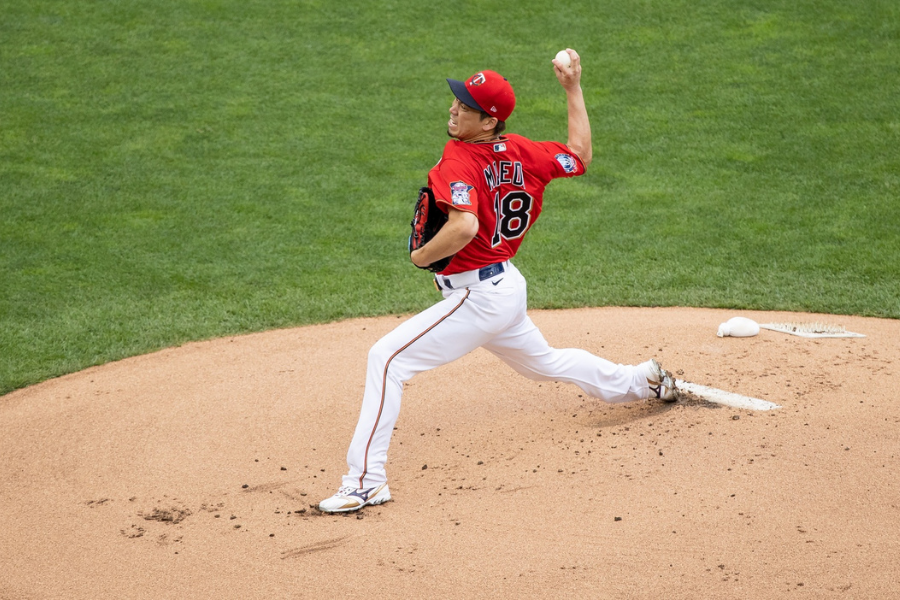 Typically in the postseason you see teams operate with a three to four-man rotation, but that won’t be the case in 2020 as MLB adds an extra six teams while still starting the World Series in mid-October. In the entire postseason, the only planned off days for teams in the midst of a series are between games 2/3 and 5/6 in the World Series. Other than that, teams only off days will be between series, which likely requires the use of a five man rotation throughout the postseason. The news comes kind of late in the season as I’d think teams would have made some additional moves at the trade deadline to strengthen their bullpen and/or the back end of their rotation had they known that the postseason schedule provided little time for rest. Specifically the Twins, who haven’t had their rotation at 100% for the entire season, really find themselves in a pickle with Odorizzi going back on the IL and Dobnak struggling in three of his last four starts leading to being optioned off the active roster. Now we’re 10 days away from playoff baseball and we need to figure things out pretty quickly, so lets look at what their five-man rotation will look like. #1 Kenta Maeda Maeda is the obvious game one starter for the Wild Card match up. He’s not only been the Twins best pitcher this season, but he’s legitimately in the Cy Young conversation. No matter the opponent, you should have the confidence that Maeda can end the 16-game postseason losing streak. #2 Michael Pineda Michael Pineda has been lights out for the Twins dating back to last season. Say what you want about his suspension, and what that did to the team in 2020, he is the Twins second best pitcher. Prior to missing the 2018 season, you’d see Pineda sitting 93-95 with his fastball and, after his return, it took him until late May to really regain that velo. From his start on May 21st, 2019 to now Pineda has struck out more than a batter per inning while allowing just over one base runner per inning and boasting an ERA/FIP of 3.32/2.95. #3 José Berríos I know ranking him behind Pineda will rub some the wrong way. I know that he has a K/9 of 10.7 and ERA/FIP of 2.60/3.05 in his last five starts including facing the White Sox twice. But for me it takes more than five starts to erase what happened over the calendar prior to these five starts. From August 20th, 2019 to August 19th, 2020 Berrios had an ERA/FIP of 5.24/4.15 while having a poor walk rate of 3.5 BB/9. He’s shown flashes of ace level production throughout his career while also showing flashes of being a middle of the rotation guy. He might have better “stuff” than anyone on the staff but he’s far too inconsistent for my liking. #4 Rich Hill I considered Hill over Berrios but I figured I was suffering from recency bias after watching Rich Hill cruise through 7 innings against the Cubs. Though I did think about it again after I looked at his postseason resume, which features 12 starts including three in the World Series, where he’s allowed just 15 baserunners and three earned runs while striking out 19 over 15 innings pitched. In all, his postseason ERA/FIP is 3.06/3.97 and K/9 is 11.04 and experience matters in the postseason. I think I talked myself into Hill over Berrios but I don’t really want to receive hate mail so I’ll keep him at the number four slot. #5 Jake Odorizzi / Randy Dobnak / Bullpen Game(s) / Homer Bailey With so much unknown it’s really hard to know who the fifth guy should be, let alone who it’s going to be. The order that I listed them is the order in which I would trust them with a considerable gap between Odorizzi and the rest of the group. I noted my concerns with Dobnak earlier this year and I don’t know how we can trust Homer Bailey who has only pitched five innings in 2020...if he's even going to be an option. I wouldn’t rule out a some sort of combo game with Odorizzi and Dobnak or a short start from one of those two combined with a mini bullpen game. Depending on the situation, Rocco might need to get creative here. It’s all about perspective and roles when you talk about starting pitchers, and although the Twins don’t have the big names (I know Maeda is currently making a name for himself), they arguably have the best one through four in all of baseball. What do you think about Hill and Berrios? Am I going crazy or would you consider flip flopping them too? What about that number five spot? No matter who it is, they come with question marks. Which option would you trust most in that group? MORE FROM TWINS DAILY — Latest Twins coverage from our writers — Recent Twins discussion in our forums — Follow Twins Daily via Twitter, Facebook or email
 -
Replacing Luis Arraez at Second Base
Matthew Lenz replied to Matthew Lenz's topic in Twins Daily Front Page News
I agree, Rooker and Jeffers look great so far. That said, that has no implication on how Blankenhorn will look. I'm not against giving him a shot but Blankenhorn isn't the prospect Rooker and Jeffers are. -
Replacing Luis Arraez at Second Base
Matthew Lenz replied to Matthew Lenz's topic in Twins Daily Front Page News
-
Replacing Luis Arraez at Second Base
Matthew Lenz replied to Matthew Lenz's topic in Twins Daily Front Page News
Curious why you’re tied to these two? They haven’t been good this year. -
With Dan Hayes of MLB.com breaking the news that Twins second baseman Luis Arráez would be heading to the Injured List, we look at who could fill his shoes best. Is the best option currently on the Twins active roster or should the Twins consider promoting someone from St. Paul? Read on to find out. Image courtesy of © Jeff Curry-USA TODAY Sports With Dan Hayes of MLB.com breaking the news that Twins second baseman Luis Arráez would be heading to the Injured List, we look at who could fill his shoes best. Is the best option currently on the Twins active roster or should the Twins consider promoting someone from St. Paul? Read on to find out. https://twitter.com/DanHayesMLB/status/1304501449016082438 Although Arráez isn’t performing to the standard he set in his rookie season, he’s been having a very solid sophomore year for the Twins slashing .288/.336/.337 and showing improvement on the defensive side of the ball. That said, after a rough August and having multiple occasions where he was noticeably in pain while running the bases he finds himself on the IL for the first time in his career. The Twins will give him a couple weeks to get the knee healthy before entering the playoffs but we are looking at the possibility of needing someone to fill in through the rest of the regular and postseason. This article will look at who that could be and a quick summary of what that might look like. Marwin Gonzalez Given his experience, both at second and on a playoff team, he will likely benefit the most from Arráez’s absence. As valuable as his versatility is, Gonzalez has been dreadful at the plate this season slashing .204/.285/.288 this season. With a career BABIP of .306 some might see it as unlucky that his 2020 BABIP is at .238, and his statcast numbers would support that idea. Many of his advanced metrics are right around his career norms so Marwin could really benefit with more consistent playing time and some positive regression. Ehire Adrianza As bad as Gonzalez has been, Adrianza has been worse. I don’t think anyone expected Adrianza to match what he did in 2019, but I don’t think anyone expected him to slash .174/.250/.232 either. For Adrianza it’s likely his pitch selection that is at least part to blame as he’s making contact on pitches out of the zone much more than he did last season and over his career, other than that his batted ball metrics are actually similar to 2019. That said, throughout Adrianza’s eight year career, 2019 was though he can’t get much worse I trust Marwin to turn it around before him. Travis Blankenhorn Blankenhorn is staying fresh, or as fresh as he can, over in St. Paul with Lewis and would provide the same versatility that Marwin currently does. In a normal season I would not be a fan of giving a prospect a shot at a part-time role on a playoff team but, of course, this isn’t a normal season. Coming in as the Twins 18th ranked and third oldest prospect according to MLB.com, Blankenhorn isn’t going to wow you with his bat or his defense. That said, Marwin and Adrianza aren’t wow-ing anyone right now either so what’s the harm in giving Blankenhorn a shot? Royce Lewis Obviously, he is naturally a shortstop but sliding over to second isn’t what's keeping him across the river. What is keeping him from the Twins active roster is that he’s not on the 40-man roster. The Twins top prospect will likely need to wait until 2021 to make his MLB debut. Nick Gordon Gordon just recently fully recovered from COVID-19 and reported to the Fort Myers complex to begin baseball activities. If not for the long recovery, this just might have been the opening he needed to make his MLB debut. What are your thoughts? Stick with Marwin and Adrianza or give Blankenhorn a shot? I’d be surprised if the Twins put a rookie in this position so I’m guessing we’ll be seeing a heavy dose of Marwin and Adrianza over the next two weeks, if not longer. MORE FROM TWINS DAILY — Latest Twins coverage from our writers — Recent Twins discussion in our forums — Follow Twins Daily via Twitter, Facebook or email View full article
-
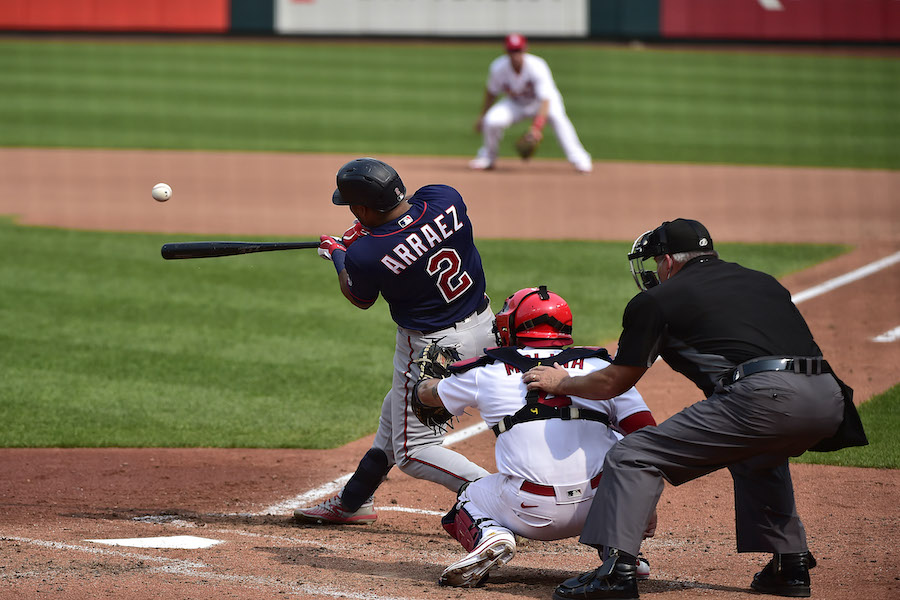 https://twitter.com/DanHayesMLB/status/1304501449016082438 Although Arráez isn’t performing to the standard he set in his rookie season, he’s been having a very solid sophomore year for the Twins slashing .288/.336/.337 and showing improvement on the defensive side of the ball. That said, after a rough August and having multiple occasions where he was noticeably in pain while running the bases he finds himself on the IL for the first time in his career. The Twins will give him a couple weeks to get the knee healthy before entering the playoffs but we are looking at the possibility of needing someone to fill in through the rest of the regular and postseason. This article will look at who that could be and a quick summary of what that might look like. Marwin Gonzalez Given his experience, both at second and on a playoff team, he will likely benefit the most from Arráez’s absence. As valuable as his versatility is, Gonzalez has been dreadful at the plate this season slashing .204/.285/.288 this season. With a career BABIP of .306 some might see it as unlucky that his 2020 BABIP is at .238, and his statcast numbers would support that idea. Many of his advanced metrics are right around his career norms so Marwin could really benefit with more consistent playing time and some positive regression. Ehire Adrianza As bad as Gonzalez has been, Adrianza has been worse. I don’t think anyone expected Adrianza to match what he did in 2019, but I don’t think anyone expected him to slash .174/.250/.232 either. For Adrianza it’s likely his pitch selection that is at least part to blame as he’s making contact on pitches out of the zone much more than he did last season and over his career, other than that his batted ball metrics are actually similar to 2019. That said, throughout Adrianza’s eight year career, 2019 was though he can’t get much worse I trust Marwin to turn it around before him. Travis Blankenhorn Blankenhorn is staying fresh, or as fresh as he can, over in St. Paul with Lewis and would provide the same versatility that Marwin currently does. In a normal season I would not be a fan of giving a prospect a shot at a part-time role on a playoff team but, of course, this isn’t a normal season. Coming in as the Twins 18th ranked and third oldest prospect according to MLB.com, Blankenhorn isn’t going to wow you with his bat or his defense. That said, Marwin and Adrianza aren’t wow-ing anyone right now either so what’s the harm in giving Blankenhorn a shot? Royce Lewis Obviously, he is naturally a shortstop but sliding over to second isn’t what's keeping him across the river. What is keeping him from the Twins active roster is that he’s not on the 40-man roster. The Twins top prospect will likely need to wait until 2021 to make his MLB debut. Nick Gordon Gordon just recently fully recovered from COVID-19 and reported to the Fort Myers complex to begin baseball activities. If not for the long recovery, this just might have been the opening he needed to make his MLB debut. What are your thoughts? Stick with Marwin and Adrianza or give Blankenhorn a shot? I’d be surprised if the Twins put a rookie in this position so I’m guessing we’ll be seeing a heavy dose of Marwin and Adrianza over the next two weeks, if not longer. MORE FROM TWINS DAILY — Latest Twins coverage from our writers — Recent Twins discussion in our forums — Follow Twins Daily via Twitter, Facebook or email
 -
“Will you teach Rocco how to manage a pitching staff”, said [name redacted]. Not being in the room at the time I knew what he meant. Rocco had pulled Dobnak before he could face the Tigers lineup the third time through. What he didn’t know was it was history shows it was probably the right call. Image courtesy of © Ken Blaze-USA TODAY Sports “Will you teach Rocco how to manage a pitching staff”, said [name redacted]. Not being in the room at the time I knew what he meant. Rocco had pulled Dobnak before he could face the Tigers lineup the third time through. What he didn’t know was it was history shows it was probably the right call. [Name redacted] went on to say “... let him start the 6th and if he gives up a hit, then pull him ... that’s my strategy on MLB the show.” So if you ever find yourself playing MNSportsguy21 online in MLB The Show, you better believe he’s sending his guy out there for a third time through. So who’s right? MNSportsguy21 or Rocco Baldelli? Is there even a right answer? We’re about to find out. Let's start by looking at the historical statistics of a starting pitcher facing a lineup for a third time in a game and then narrow it down to focusing on Rocco Baldelli use of the strategy. For this exercise, I wanted to limit my research from 1988 to current day as the National Baseball Hall of Fame (Cooperstown) refers to this era as “Today’s Game”. Unfortunately, Fangraphs only goes as far back as 2002 for this type of statistic so the last 18 seasons will be my timeframe. First, lets just look at a simple line graph that shows this growing trend across Major League Baseball. You can see that from 2002 to 2014 MLB managers stayed pretty consistently around 7,500 innings pitched but since then that trend has decreased to 5,408.1 innings pitched in 2019. A pretty drastic and clear shift in strategy amongst a majority of Major League Baseball teams ... not just Rocco. This strategy should make sense as most pitchers throw more pitches they start to wear down and as teams see them for a third time they know what to expect. That said, such an extreme shift doesn’t happen just based off of assumptions so let's look at another set of data. If you couldn’t see a theme by looking at the numbers I used a color scale to help. Our assumptions were true, teams have more success against starting pitchers the more they face them in a single game. Now let's start to narrow the focus to Rocco Baldelli development of this strategy before taking a look at which, if any, Minnesota Twins starters should be given a longer leash. Coincidentally, Rocco’s first year coaching with Tampa Bay was 2015, which was the year that trend started, and was also the year they ranked 28th in starters innings pitched against the lineup the third time through. From 2015 to 2018, before he joined the Twins, the Rays starters were dead last in innings pitched in the same statistic. You may be thinking they just had a poor pitching staff, but in the same timeframe they were 12th in SP fWAR. If Rocco believes in this strategy, it’s clear that he adopted it from his time with the Tampa Bay Rays. So how has this impacted the starting pitchers on the Twins? Interestingly, the Twins have actually allowed their starters to face the line up the third time through the 10th most in all of baseball. Contrary to what I suggested before, I do think this has more to do with our starters earning a longer leash through their play rather than Rocco ditching the strategy. So let's see how the 2020 Twins starters have fared the third time through a lineup throughout their careers. In the graphic below the two stats are wOBA / FIP in that order and the number in parenthesis is the innings pitched. For reference, since 2015 the median innings pitched in this scenario is 116.2 Obviously, Dobnak’s terrific numbers have to be taken with a grain of salt when he’s pitched a total of 5 2/3 innings in his short career in this scenario. As with any data set there are exceptions to the rules here, as Berrios actually has better numbers the third time through than the first, but we can mostly summarize that turning the game over to the bullpen is likely the best option in most scenarios for this group of Twins starters. I was actually surprised that the Twins had the 10th most innings pitched in this scenario as it seems like Rocco pulls the starter more often than not. MNSportsguy21, you might want to change your MLB The Show strategy. MORE FROM TWINS DAILY — Latest Twins coverage from our writers — Recent Twins discussion in our forums — Follow Twins Daily via Twitter, Facebook or email View full article
-
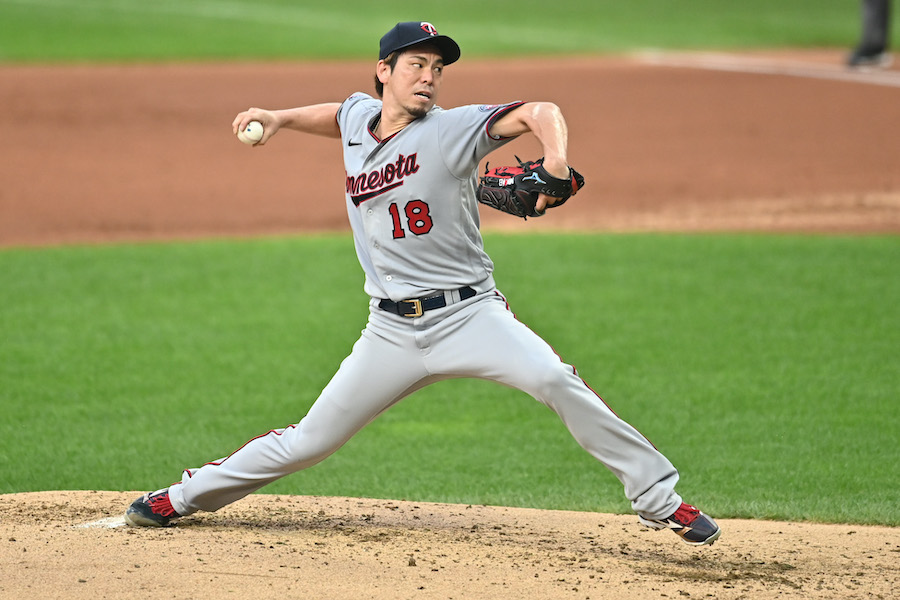 [Name redacted] went on to say “... let him start the 6th and if he gives up a hit, then pull him ... that’s my strategy on MLB the show.” So if you ever find yourself playing MNSportsguy21 online in MLB The Show, you better believe he’s sending his guy out there for a third time through. So who’s right? MNSportsguy21 or Rocco Baldelli? Is there even a right answer? We’re about to find out. Let's start by looking at the historical statistics of a starting pitcher facing a lineup for a third time in a game and then narrow it down to focusing on Rocco Baldelli use of the strategy. For this exercise, I wanted to limit my research from 1988 to current day as the National Baseball Hall of Fame (Cooperstown) refers to this era as “Today’s Game”. Unfortunately, Fangraphs only goes as far back as 2002 for this type of statistic so the last 18 seasons will be my timeframe. First, lets just look at a simple line graph that shows this growing trend across Major League Baseball. You can see that from 2002 to 2014 MLB managers stayed pretty consistently around 7,500 innings pitched but since then that trend has decreased to 5,408.1 innings pitched in 2019. A pretty drastic and clear shift in strategy amongst a majority of Major League Baseball teams ... not just Rocco. This strategy should make sense as most pitchers throw more pitches they start to wear down and as teams see them for a third time they know what to expect. That said, such an extreme shift doesn’t happen just based off of assumptions so let's look at another set of data. If you couldn’t see a theme by looking at the numbers I used a color scale to help. Our assumptions were true, teams have more success against starting pitchers the more they face them in a single game. Now let's start to narrow the focus to Rocco Baldelli development of this strategy before taking a look at which, if any, Minnesota Twins starters should be given a longer leash. Coincidentally, Rocco’s first year coaching with Tampa Bay was 2015, which was the year that trend started, and was also the year they ranked 28th in starters innings pitched against the lineup the third time through. From 2015 to 2018, before he joined the Twins, the Rays starters were dead last in innings pitched in the same statistic. You may be thinking they just had a poor pitching staff, but in the same timeframe they were 12th in SP fWAR. If Rocco believes in this strategy, it’s clear that he adopted it from his time with the Tampa Bay Rays. So how has this impacted the starting pitchers on the Twins? Interestingly, the Twins have actually allowed their starters to face the line up the third time through the 10th most in all of baseball. Contrary to what I suggested before, I do think this has more to do with our starters earning a longer leash through their play rather than Rocco ditching the strategy. So let's see how the 2020 Twins starters have fared the third time through a lineup throughout their careers. In the graphic below the two stats are wOBA / FIP in that order and the number in parenthesis is the innings pitched. For reference, since 2015 the median innings pitched in this scenario is 116.2 Obviously, Dobnak’s terrific numbers have to be taken with a grain of salt when he’s pitched a total of 5 2/3 innings in his short career in this scenario. As with any data set there are exceptions to the rules here, as Berrios actually has better numbers the third time through than the first, but we can mostly summarize that turning the game over to the bullpen is likely the best option in most scenarios for this group of Twins starters. I was actually surprised that the Twins had the 10th most innings pitched in this scenario as it seems like Rocco pulls the starter more often than not. MNSportsguy21, you might want to change your MLB The Show strategy. MORE FROM TWINS DAILY — Latest Twins coverage from our writers — Recent Twins discussion in our forums — Follow Twins Daily via Twitter, Facebook or email
 -
Based on the data shared above on of the points I was making is that he doesn’t have incredible movement, but you’re right about the accuracy. Remember he’s hitting the bottom of the zone but teams still have an above average hard hit rate against him...that’s where I worry a better hitting team is able to do more damage.
-
Since FanGrapbs started tracking GB% the Major League record by a starter is 67.0%. Dobnak is getting groundballs at an historic rate and I don’t buy into that continuing. Hope I’m wrong!
-
Randy Dobnak has produced Cy Young level results in the first four games of 2020 and, in reality, since he first appeared in the Majors. With a 0.90 ERA and WHIP regression is guaranteed, but this article looks at the bigger pitcher: Can Dobnak be effective against the best lineups in baseball? Image courtesy of © Charles LeClaire-USA TODAY Sports Randy Dobnak has produced Cy Young level results in the first four games of 2020 and, in reality, since he first appeared in the Majors. With a 0.90 ERA and WHIP regression is guaranteed, but this article looks at the bigger pitcher: Can Dobnak be effective against the best lineups in baseball? Randy Dobnak’s start to the season has not gone unnoticed by Twins twitter and those of us here at Twins Daily ... you can find Dobnak articles here and here. Rightfully so, both of the aforementioned articles focus on the positives that Dobnak has brought to the table thus far, but I’m here to play devil's advocate of sorts. I’m not convinced that Dobnak is someone who can be trusted against the most formidable lineups in baseball such as the Yankees, Astros, Braves, and Dodgers. Afterall, the Twins are a World Series contender and they likely will need to be two of the aforementioned teams to win the World Series. My first thought was not just to look at who he’s pitched against but, more specifically, how was that lineup performing coming into his start. I went back to each of his starts and looked at the BB/K, OPS, and wRC+ for the previous 10 days of each of his opponents. The two exceptions are when I looked at the 10 days after his start against the White Sox on July 25th (only the second day of the season) and his start against the Indians on July 31st only went back seven days. I then averaged out their results and compared them to the Yankees 10 days leading up to game two of the ALDS. Dobnak’s game log has some solid teams on it in Cleveland (four times), Washington, and Boston but this table shows that he has regularly been facing lineups that were performing at “below average” levels, per FanGraphs. In fact, the only offense that was “above average” in all three categories coming into their matchup against Dobnak were the Red Sox on August 3rd, 2019 and he was only used as an opener for a single inning. Specifically compared to the Yankees, the lineups he has faced in the regular season just haven’t had the same “umph”, so to speak. I know it’s only one start but unfortunately that extra “umph” turned out Dobnak’s worst start of his career allowing eight baserunners and four earned runs over just two plus innings. So this leads to the following question: was it just one bad start or will Dobnak struggle against better competition? In my opinion, the answer can be as simple as looking at his Baseball Savant profile and, if you’re not familiar, seeing a lot of blue is typically not encouraging. To be honest, I’ve been visiting his page throughout the season and all of the batted ball percentile rankings have been slightly increasing as the season has gone on despite still being below in the lower half of the league. To back up these numbers I went back to his FanGraphs page and noticed an 88.9% strand rate, a 0.217 BABIP, and a 66.7% groundball rate. Although Dobnak is a ground ball pitcher, even 66.7% is a significant increase over his career norms and his strand rate and BABIP are further indicators that a combination of luck and poor opponents are skewing his results. What’s even more telling is that it’s more typical for a ground ball pitcher to have a higher than average BABIP...not significantly lower. As much as pitchers norm don’t have to follow the league norms, the next data point that stood out to me was the “fastball spin” ranking. This sent me looking at Baseball Savants Pitch Arsenal page for Dobnak where I could see how Dobnak’s pitches rank against other pitchers in the league, which is picture below. This chart displays the movement of each of Dobnak pitches (the circles) compared to the league average (the gear symbols). With Dobnak topping out in the mid to low 90’s, he needs to rely on precision accuracy and movement to experience good results against good teams. He’s shown the precision accuracy living in the bottom of the strike zone, but as seen in the chart above he doesn’t really have a “plus” pitch compared to his peers. Again, more data that tells me Dobnak won’t fare well against the better offensive teams in baseball. All of this said, Dobnak is a solid pitcher. In my opinion, a back end of the rotation guy or long reliever out of the pen is a realistic long-term role. With the Twins schedule this season, widely considered the easiest in baseball, we may continue to see Cy Young-esque numbers from Dobnak although some regression is almost guaranteed. What’s your confidence level with Dobank making a playoff start? MORE FROM TWINS DAILY — Latest Twins coverage from our writers — Recent Twins discussion in our forums — Follow Twins Daily via Twitter, Facebook or email View full article
-
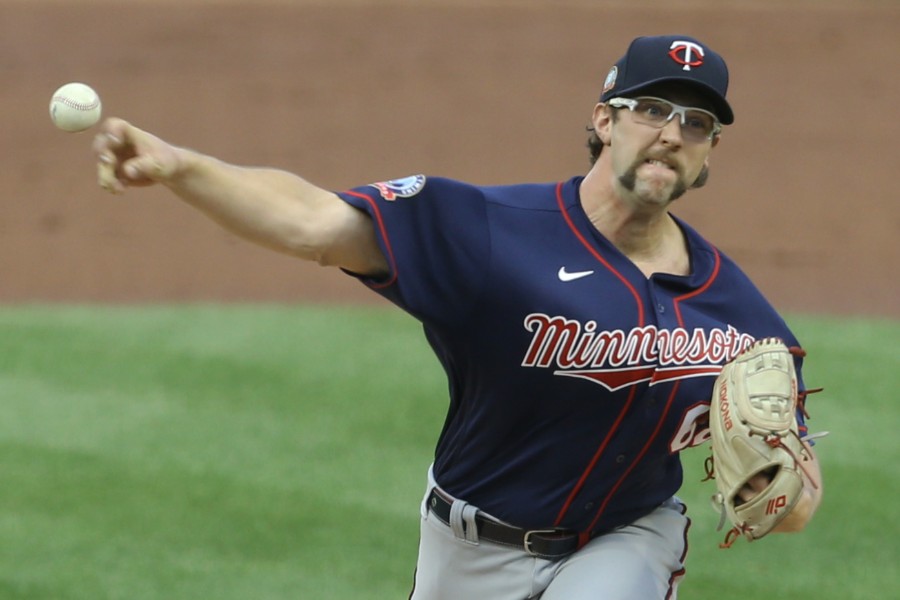 Randy Dobnak’s start to the season has not gone unnoticed by Twins twitter and those of us here at Twins Daily ... you can find Dobnak articles here and here. Rightfully so, both of the aforementioned articles focus on the positives that Dobnak has brought to the table thus far, but I’m here to play devil's advocate of sorts. I’m not convinced that Dobnak is someone who can be trusted against the most formidable lineups in baseball such as the Yankees, Astros, Braves, and Dodgers. Afterall, the Twins are a World Series contender and they likely will need to be two of the aforementioned teams to win the World Series. My first thought was not just to look at who he’s pitched against but, more specifically, how was that lineup performing coming into his start. I went back to each of his starts and looked at the BB/K, OPS, and wRC+ for the previous 10 days of each of his opponents. The two exceptions are when I looked at the 10 days after his start against the White Sox on July 25th (only the second day of the season) and his start against the Indians on July 31st only went back seven days. I then averaged out their results and compared them to the Yankees 10 days leading up to game two of the ALDS. Dobnak’s game log has some solid teams on it in Cleveland (four times), Washington, and Boston but this table shows that he has regularly been facing lineups that were performing at “below average” levels, per FanGraphs. In fact, the only offense that was “above average” in all three categories coming into their matchup against Dobnak were the Red Sox on August 3rd, 2019 and he was only used as an opener for a single inning. Specifically compared to the Yankees, the lineups he has faced in the regular season just haven’t had the same “umph”, so to speak. I know it’s only one start but unfortunately that extra “umph” turned out Dobnak’s worst start of his career allowing eight baserunners and four earned runs over just two plus innings. So this leads to the following question: was it just one bad start or will Dobnak struggle against better competition? In my opinion, the answer can be as simple as looking at his Baseball Savant profile and, if you’re not familiar, seeing a lot of blue is typically not encouraging. To be honest, I’ve been visiting his page throughout the season and all of the batted ball percentile rankings have been slightly increasing as the season has gone on despite still being below in the lower half of the league. To back up these numbers I went back to his FanGraphs page and noticed an 88.9% strand rate, a 0.217 BABIP, and a 66.7% groundball rate. Although Dobnak is a ground ball pitcher, even 66.7% is a significant increase over his career norms and his strand rate and BABIP are further indicators that a combination of luck and poor opponents are skewing his results. What’s even more telling is that it’s more typical for a ground ball pitcher to have a higher than average BABIP...not significantly lower. As much as pitchers norm don’t have to follow the league norms, the next data point that stood out to me was the “fastball spin” ranking. This sent me looking at Baseball Savants Pitch Arsenal page for Dobnak where I could see how Dobnak’s pitches rank against other pitchers in the league, which is picture below. This chart displays the movement of each of Dobnak pitches (the circles) compared to the league average (the gear symbols). With Dobnak topping out in the mid to low 90’s, he needs to rely on precision accuracy and movement to experience good results against good teams. He’s shown the precision accuracy living in the bottom of the strike zone, but as seen in the chart above he doesn’t really have a “plus” pitch compared to his peers. Again, more data that tells me Dobnak won’t fare well against the better offensive teams in baseball. All of this said, Dobnak is a solid pitcher. In my opinion, a back end of the rotation guy or long reliever out of the pen is a realistic long-term role. With the Twins schedule this season, widely considered the easiest in baseball, we may continue to see Cy Young-esque numbers from Dobnak although some regression is almost guaranteed. What’s your confidence level with Dobank making a playoff start? MORE FROM TWINS DAILY — Latest Twins coverage from our writers — Recent Twins discussion in our forums — Follow Twins Daily via Twitter, Facebook or email
 -
The Twins are going to score 600 this season aren’t they?
-
He’s been grunting after almost every pitch the entire game. Early in the season with a shortened “spring training” so him tiring earlier than normal is expected.

