



Matthew Lenz
-
Posts
1,465 -
Joined
-
Last visited
-
Days Won
3
Content Type
Profiles
News
Minnesota Twins Videos
2026 Minnesota Twins Top Prospects Ranking
2022 Minnesota Twins Draft Picks
Minnesota Twins Free Agent & Trade Rumors, Notes, & Tidbits
Guides & Resources
2023 Minnesota Twins Draft Picks
The Minnesota Twins Players Project
2024 Minnesota Twins Draft Picks
2025 Minnesota Twins Draft Pick Tracker
2026 Minnesota Twins Draft Tracker: Picks & Bonuses
Forums
Blogs
Events
Store
Downloads
Gallery
Everything posted by Matthew Lenz
-
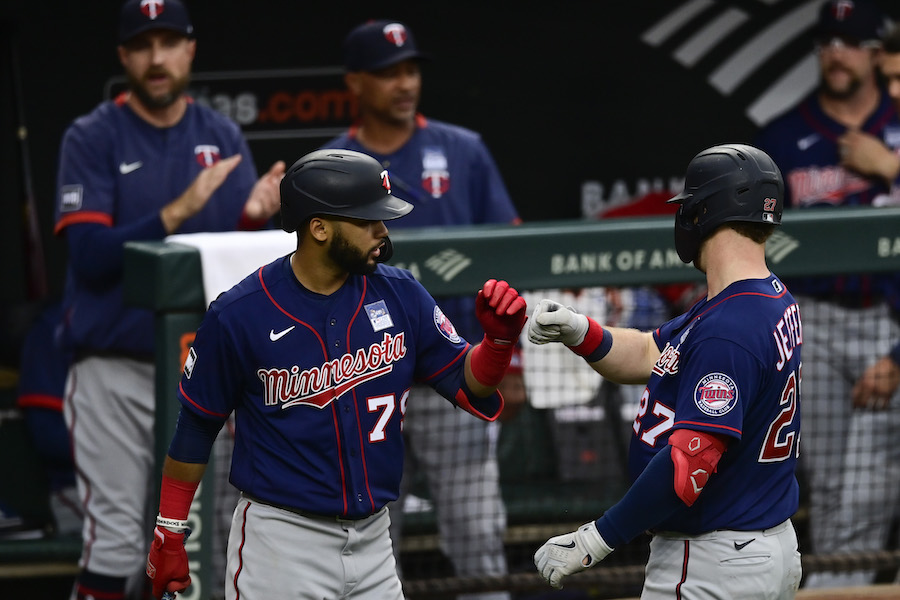 Amateur Career Coming out of the Dominican Republic, there isn’t really any statistical data on his amateur career before being signed as an international free agent in July of 2015. At the time he was considered the #11 international prospect and MLB.com’s scouting report read as follows: “Known for his athletic ability and instincts in the outfield, Celestino is projected to start in center field and likely stay there as he develops because of his speed, arm and his ability to get good jumps in the outfield. He's lean but is expected to fill out as he matures. Scouts like his makeup and expect him to reach his potential once he signs with a team and receives daily instruction. One of the most polished players in the class, Celestino is known as a "gamer" because he has a track record of success in tournaments in the Dominican Republic. He's gained a reputation as one of the better game players in the class, despite varying opinions on his some of his tools.” Professional Career After signing with the Astros for a total of $2.5 million, including a $2.25 million signing bonus, Celestino played 56 games between the Dominican Summer League and Gulf Coast League with two home runs, 15 stolen bases, and an OPS of .758. Over two and a half seasons and 152 games, Celestino sported an OPS of .753 with 10 homeruns and 39 stolen bases reaching as high as AA for the Astros. Just nine days before he was traded to the Twins, The Runners Sports published this article comparing him to the 6th overall pick from the 2012 MLB draft. On July 29th, 2018 the Twins received Celestino and right-handed pitcher Jorge Alcala in a package that sent Ryan Pressly to the Astros. At the time, Celestino was their 15th rated prospect in a farm system that ranked 10th best in baseball according to Sam Dykstra of MiLB.com. In his one-and-a-half seasons prior to losing the 2020 Minor League season to COVID, he hit 11 homeruns, stole 22 bases, and had an OPS of____. The Twins thought highly enough of the speedy centerfield to add him to the 40-man roster following the 2019 season and added him to the 60-man player pool in 2020. After many injuries at the Major League level and a solid start at AA-Wichita he was called up on June 2nd. Twins Daily Coverage WATCH: Highlight Reel created by Tom Froemming in February of 2020. Consider this his HYPE video. READ: Trade Retrospective: How Did the Twins Do in the Ryan Presley Trade? by Cody Christie in August of 2020. I don’t know that we are any closer to a clear answer right now, but it’s encouraging that both pieces from that trade have made it to Minneapolis. READ: Twins Daily 2021 Top Prospects: 11-15 by Nick Nelson in February of 2021. He came in as Twins Daily 11th ranked prospect in 2021, one spot ahead of Brent Rooker, which is one spot higher than he was in 2020. READ: Celestino Looking to Impress this Spring, Debut this Summer(?) by Seth Stohs in March of 2021. Is there anyone more in tune with the Twins farm system than Seth? My vote: “nay”. READ: One Twins Prospect to Watch at Each Minor League Level by Cody Christie in May of 2021. Celestino was Cody’s prospect to watch heading into this season...who knew we’d get to do it at Target Field or on Bally Sports North?! Oh yeah, Seth had a feeling. READ: Examining Minnesota's Center Field Depth by Cody Christie in June of 2021. This was written days ago amid the Twins throwing Rob Refsnyder and Kyle Garlick in centerfield. Welcome to the bigs, Gilberto! MORE FROM TWINS DAILY — Latest Twins coverage from our writers — Recent Twins discussion in our forums — Follow Twins Daily via Twitter, Facebook or email
 -
 I think you're thinking 2018 was a failure and 2017 they overachieved.
 -
More responding to your first post...this has to be one of the biggest ever. They were World Series picks for some!
-
Brilliant
-
Well it went from 3-0 to 6-0 with one swing and he immediately started to warm up Anderson. When it's the first inning, you're going to give your pitcher a little longer leash to work through some damage.
-
Don't forget Berrios!
-
You expect him to have a reliever warm at the start of the game? Did he make the decision to bring in all these rent-a-pitchers?
-
I will be shocked, disappointed, and pissed if he makes another start for the Twins.
-
holy swear words
-
This is fun.
-
Thorpe, Canterino, Duran, etc. Not that they're gonna be better but lets see where they are at. Shoemaker is as good as gone whether it's now or at the end of this awful season.
-
It took me longer than most, but I am officially ready to give a youngster (Thorpe, Balazovic, Canterino, etc.) innings over Shoemaker.
-
Well this aged well.
-
I'd take the other side of that bet!
-
Astudillo swings at everything near the strikezon, including popping up ball 4 into LF. But he didn't strike out so we love it!
-
So uhh how do we feel about Astudillo batting fourth??
-
Trade or Extend? The Michael Pineda Conundrum
Matthew Lenz replied to Jamie Cameron's topic in Twins Daily Front Page News
Would love to see an extension that is no more than 3 years, preferably 2, and at an AAV in the mid to low teens. -
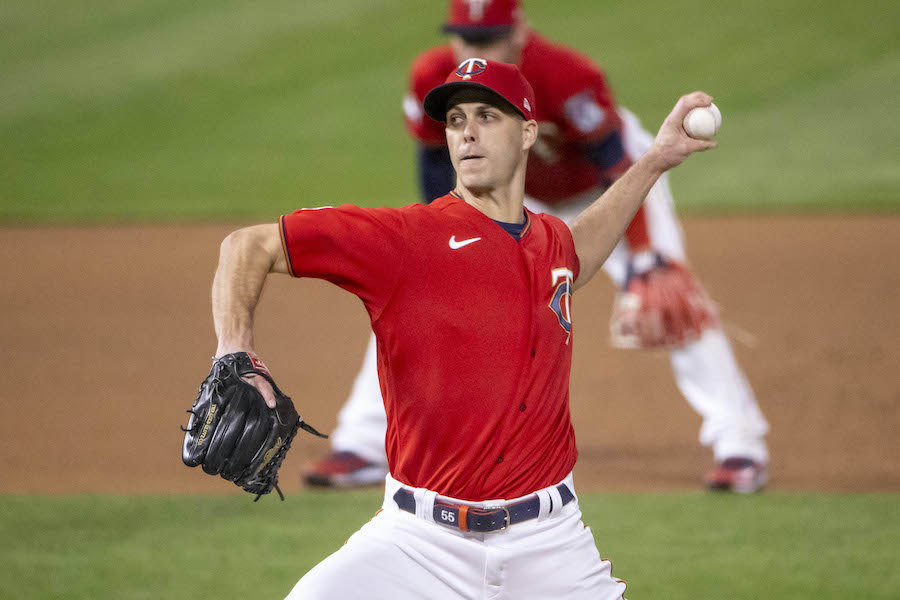 This race wasn’t as clear cut as the race for hitters was, and I found it a challenge trying to value starters versus relievers especially between the Pitcher of the Month and the 1st Honorable Mention. Honorable Mention #3: Alex Colomé This honorable mention feels a lot like writing Sano down in my last piece...not great….BUT I felt it was important to recognize Colomé for the marked improvement since March/April. After all, did you know… ...and on top of that he was statistically the worst reliever in all of baseball for the first month of the season. Woof. On the other hand, in the month of May he made 11 appearances only giving up two earned runs and striking out more than one hitter per inning. Unfortunately, some of his metrics (i.e. BB/9 and FIP) don’t really support the improvement so we’ll see how long it lasts. You could argue Michael Pineda or Randy Dobnak deserve a little recognition and that’s where I struggled valuing relievers versus starters, but ultimately neither of those made more than two appearances in the month. Honorable Mention #2: Hansel Robles Aside from the first couple sentences, I feel like I could copy and paste what I said about Colomé right here. Even down to the “I don’t know how long this will last” comment. With only two clean innings in the month, Tom provided us with a new, yet familiar moniker for his appearances. Honestly, you could use the same monker for Colomé and most of the bullpen, but it feels better fitting for Robles given how he ended the month against the Orioles on Monday. What’s worse about Robles is his penchant for walking people has been a career long issue aside from his career year in 2019, and even in the month of May his FIP is more than a run worse than his ERA. I think the best case scenario for Robles and Colomé is that they remain serviceable enough to provide value at the trade deadline, but I wouldn’t count on it. Honorable Mention #1: José Berríos Berríos made a strong case to win the pitcher of the month with his second best start of the year on Memorial Day against the Orioles, but he was pretty subpar in the first half of the month to take the cake. That said, it was great to see Berríos have an efficient and effective outing against one of the worst hitting teams against right handed pitchers. That’s not to diminish his start but to suggest that he did exactly what he needed to on Monday...attack the zone, let them put the ball in-play, and have the defense do the work for you. Consistency has been Berríos biggest issue throughout his career and this month was no different where he had three starts allowing three or more earned runs and three starts earning two or less earned runs. His next start will likely come against the Royals which he faced on May 2nd and got tagged for four runs over six innings. Pitcher of the Month: Taylor Rogers Take out his first two appearances in the first four days of the month and Rogers puts up a 2.53/1.81 ERA/FIP, a 15.2 K/9, and accruing four holds+saves over 10.1 innings pitched. Even considering those first two appearances where he gave up four earned runs in 2.1 innings, he still was my choice for the first Twins Daily Minnesota Twins Pitcher of the Month. Rogers has had a nice bounce back season in 2020 and that can be at least partially attributed to the location of his sinker. From the GIF above, you can see he has been locating his sinker on the edges of the plate and the results are noticeable. In 2020, batters slugged .561 against the pitch while in this season they are down to .400 and the putaway rate on the pitch has increased by 57% between the last two seasons. What’s more is that Rogers is currently at the 100th percentile in chase rate this year thanks to his command of the zone with that pitch despite his batted ball data being roughly similar over the last two seasons. The Twins still have another year of Rogers after this season, so him coming back to his pre-2020 form is good to see. Congrats to Taylor Rogers on winning the first Twins Daily Minnesota Twins Pitcher of the Month! MORE FROM TWINS DAILY — Latest Twins coverage from our writers — Recent Twins discussion in our forums — Follow Twins Daily via Twitter, Facebook or email
 -
After naming Mitch Garver the first Twins Daily Minnesota Twins Hitter of the Month, it is now time to look at the first pitcher who earned the distinguished honor of being recognized by Twins Daily. Come for the award announcement and stay for the debate in the comments! Image courtesy of © Jesse Johnson-USA TODAY Sports After naming Mitch Garver the first Twins Daily Minnesota Twins Hitter of the Month, it is now time to look at the first pitcher who earned the distinguished honor of being recognized by Twins Daily. Come for the award announcement and stay for the debate in the comments! This race wasn’t as clear cut as the race for hitters was, and I found it a challenge trying to value starters versus relievers especially between the Pitcher of the Month and the 1st Honorable Mention. Honorable Mention #3: Alex Colomé This honorable mention feels a lot like writing Sano down in my last piece...not great….BUT I felt it was important to recognize Colomé for the marked improvement since March/April. After all, did you know… ...and on top of that he was statistically the worst reliever in all of baseball for the first month of the season. Woof. On the other hand, in the month of May he made 11 appearances only giving up two earned runs and striking out more than one hitter per inning. Unfortunately, some of his metrics (i.e. BB/9 and FIP) don’t really support the improvement so we’ll see how long it lasts. You could argue Michael Pineda or Randy Dobnak deserve a little recognition and that’s where I struggled valuing relievers versus starters, but ultimately neither of those made more than two appearances in the month. Honorable Mention #2: Hansel Robles Aside from the first couple sentences, I feel like I could copy and paste what I said about Colomé right here. Even down to the “I don’t know how long this will last” comment. With only two clean innings in the month, Tom provided us with a new, yet familiar moniker for his appearances. Honestly, you could use the same monker for Colomé and most of the bullpen, but it feels better fitting for Robles given how he ended the month against the Orioles on Monday. What’s worse about Robles is his penchant for walking people has been a career long issue aside from his career year in 2019, and even in the month of May his FIP is more than a run worse than his ERA. I think the best case scenario for Robles and Colomé is that they remain serviceable enough to provide value at the trade deadline, but I wouldn’t count on it. Honorable Mention #1: José Berríos Berríos made a strong case to win the pitcher of the month with his second best start of the year on Memorial Day against the Orioles, but he was pretty subpar in the first half of the month to take the cake. That said, it was great to see Berríos have an efficient and effective outing against one of the worst hitting teams against right handed pitchers. That’s not to diminish his start but to suggest that he did exactly what he needed to on Monday...attack the zone, let them put the ball in-play, and have the defense do the work for you. Consistency has been Berríos biggest issue throughout his career and this month was no different where he had three starts allowing three or more earned runs and three starts earning two or less earned runs. His next start will likely come against the Royals which he faced on May 2nd and got tagged for four runs over six innings. Pitcher of the Month: Taylor Rogers Take out his first two appearances in the first four days of the month and Rogers puts up a 2.53/1.81 ERA/FIP, a 15.2 K/9, and accruing four holds+saves over 10.1 innings pitched. Even considering those first two appearances where he gave up four earned runs in 2.1 innings, he still was my choice for the first Twins Daily Minnesota Twins Pitcher of the Month. Rogers has had a nice bounce back season in 2020 and that can be at least partially attributed to the location of his sinker. From the GIF above, you can see he has been locating his sinker on the edges of the plate and the results are noticeable. In 2020, batters slugged .561 against the pitch while in this season they are down to .400 and the putaway rate on the pitch has increased by 57% between the last two seasons. What’s more is that Rogers is currently at the 100th percentile in chase rate this year thanks to his command of the zone with that pitch despite his batted ball data being roughly similar over the last two seasons. The Twins still have another year of Rogers after this season, so him coming back to his pre-2020 form is good to see. Congrats to Taylor Rogers on winning the first Twins Daily Minnesota Twins Pitcher of the Month! MORE FROM TWINS DAILY — Latest Twins coverage from our writers — Recent Twins discussion in our forums — Follow Twins Daily via Twitter, Facebook or email View full article
-
Likewise, we appreciate your readership and engagement. At the end of the day, we all just like talking Twins baseball...even when they're not very good
-
I really wanted to stop my list at 2 honorable mentions but was following the lede of the Minor League pieces that uses three honorable mentions for that exact reason. It didn't feel great writing Sano's name there but it also didn't feel great writing the name of someone who played in half the games and ended the month so poorly. You're right though...that's a reflection of how this season has gone.
-
Along with being the Twins most improved position player, Mitch Garver runs away with the first ever Twins Daily Minnesota Twins Hitter of the Month. Although it’s been a mostly miserable season and month for the Twins, let's look at some other positives at the plate. Image courtesy of Jesse Johnson, USA Today Along with being the Twins most improved position player, Mitch Garver runs away with the first ever Twins Daily Minnesota Twins Hitter of the Month. Although it’s been a mostly miserable season and month for the Twins, let's look at some other positives at the plate. Before we dive into one of Mitch Garver’s best months as a Twins catcher, let's look at a few Twins hitters who had a good month of May but ultimately missed the cut. Honorable Mention #3: Miguel Sano I know, I know….he struck out A LOT, including three more times on Monday against the Orioles but throughout the entirety of the month it was actually right around his career norm. The hot streak was short lived as he finished the month 3-for-36 with all singles but he also led the team and home runs with seven and a solid .331 wOBA. It will be really, really interesting to see how long Rocco Baldelli can justify playing Sano on a daily basis, especially when Kirilloff comes back. You might have been looking for Rob Refsnyder here but he played in just half the games throughout the month, which disqualified him in my mind, and he also finished with just two hits in his last 21 at-bats. Honorable Mention #2: Jorge Polanco It’s good to see Polanco start to hit a bit as he’s been mostly a liability at the plate since September of 2019 and had one of the worst hitting months of his career in March/April of this season. It wasn’t quite on par with his 2019 season but maybe it’s the start of getting back on track, and his Savant metrics seem to concur that his month might not be a fluke. The move over to 2nd hasn’t gone as well as many had hoped and with Luis Arraez, Nick Gordon, and Royce Lewis all looking to compete for a starting spot over the next few years Polanco will need to get back to his 2019 ways to stick in the line up. He had the highest walk percentage he’s had in a month in five seasons and the highest hard hit rate in a month of his career can be attributed to the successful month, but I think a little negative regression is likely as a 50.8-percent hard hit rate is not sustainable and is 18 points higher than his carer norm. Honorable Mention #1: Trevor Larnach For a long time now, Larnach has been overshadowed by Alex Kirilloff when in fact his .857 OPS in 641 Minor League at-bats is just 12 points lower than Kirilloff and he can play just as well in the outfield. He played all the part of a top prospect in his first month with an OPS of .845, a wRC+ of 142, and he ranked 28th in all of baseball with a 9.7-percent barrel per plate appearance of batters with at least 25 batted ball events. Furthermore, our own Parker Hagemen provided this little tidbit after smoking a double on May 17th. At one point, I thought that maybe Larnach would be expendable because of Kirilloff but the first two months of this season have shown that both players belong in the starting lineup on a daily basis. Hitter of the Month: Mitch Garver At the end of the 2019 season, Garver looked like he might be the best complete catcher in the game showing marked improvement at and behind the plate. Unfortunately, extremely poor play possibly due to injury subsided those thoughts in 2020, and it was even more worrisome when that continued into the first month of this season. There were signs at the end of April that Garver was turning a corner as he was hitting the ball hard and had a criminally low BABIP, and that positive regression hit hard in May as he boasted the 6th highest wRC+ and 8th highest OPS of all players who had at least 60 plate appearances. Moreover, nine of his 16 hits in the month went for extra bases including this shot from Friday night against the Royals: Garver is in his 30-year-old season with two-years left of arbitration and, unless he continues hitting like this, will likely start splitting time with catcher-in-waiting Ryan Jeffers over the next two years. The Twins lousy record aside, Garver bouncing back from a down year could be great signs for the future similar to the tandem of him and Jason Castro from 2017-2019. Congrats to Garv Sauce for being the first Twins Daily Minnesota Twins Hitter of the Month! MORE FROM TWINS DAILY — Latest Twins coverage from our writers — Recent Twins discussion in our forums — Follow Twins Daily via Twitter, Facebook or email View full article
-
 Before we dive into one of Mitch Garver’s best months as a Twins catcher, let's look at a few Twins hitters who had a good month of May but ultimately missed the cut. Honorable Mention #3: Miguel Sano I know, I know….he struck out A LOT, including three more times on Monday against the Orioles but throughout the entirety of the month it was actually right around his career norm. The hot streak was short lived as he finished the month 3-for-36 with all singles but he also led the team and home runs with seven and a solid .331 wOBA. It will be really, really interesting to see how long Rocco Baldelli can justify playing Sano on a daily basis, especially when Kirilloff comes back. You might have been looking for Rob Refsnyder here but he played in just half the games throughout the month, which disqualified him in my mind, and he also finished with just two hits in his last 21 at-bats. Honorable Mention #2: Jorge Polanco It’s good to see Polanco start to hit a bit as he’s been mostly a liability at the plate since September of 2019 and had one of the worst hitting months of his career in March/April of this season. It wasn’t quite on par with his 2019 season but maybe it’s the start of getting back on track, and his Savant metrics seem to concur that his month might not be a fluke. The move over to 2nd hasn’t gone as well as many had hoped and with Luis Arraez, Nick Gordon, and Royce Lewis all looking to compete for a starting spot over the next few years Polanco will need to get back to his 2019 ways to stick in the line up. He had the highest walk percentage he’s had in a month in five seasons and the highest hard hit rate in a month of his career can be attributed to the successful month, but I think a little negative regression is likely as a 50.8-percent hard hit rate is not sustainable and is 18 points higher than his carer norm. Honorable Mention #1: Trevor Larnach For a long time now, Larnach has been overshadowed by Alex Kirilloff when in fact his .857 OPS in 641 Minor League at-bats is just 12 points lower than Kirilloff and he can play just as well in the outfield. He played all the part of a top prospect in his first month with an OPS of .845, a wRC+ of 142, and he ranked 28th in all of baseball with a 9.7-percent barrel per plate appearance of batters with at least 25 batted ball events. Furthermore, our own Parker Hagemen provided this little tidbit after smoking a double on May 17th. At one point, I thought that maybe Larnach would be expendable because of Kirilloff but the first two months of this season have shown that both players belong in the starting lineup on a daily basis. Hitter of the Month: Mitch Garver At the end of the 2019 season, Garver looked like he might be the best complete catcher in the game showing marked improvement at and behind the plate. Unfortunately, extremely poor play possibly due to injury subsided those thoughts in 2020, and it was even more worrisome when that continued into the first month of this season. There were signs at the end of April that Garver was turning a corner as he was hitting the ball hard and had a criminally low BABIP, and that positive regression hit hard in May as he boasted the 6th highest wRC+ and 8th highest OPS of all players who had at least 60 plate appearances. Moreover, nine of his 16 hits in the month went for extra bases including this shot from Friday night against the Royals: Garver is in his 30-year-old season with two-years left of arbitration and, unless he continues hitting like this, will likely start splitting time with catcher-in-waiting Ryan Jeffers over the next two years. The Twins lousy record aside, Garver bouncing back from a down year could be great signs for the future similar to the tandem of him and Jason Castro from 2017-2019. Congrats to Garv Sauce for being the first Twins Daily Minnesota Twins Hitter of the Month! MORE FROM TWINS DAILY — Latest Twins coverage from our writers — Recent Twins discussion in our forums — Follow Twins Daily via Twitter, Facebook or email
 -
Potential Trade Packages for José Berríos
Matthew Lenz replied to Matthew Lenz's topic in Twins Daily Front Page News
Those numbers speak more to his durability than anything else as there have only been 53 pitchers to pitch 500+ innings since 2017. I understand that durability adds to his value but being 28th and 23rd in two categories puts him in the middle of the pack of that group. The players I came up with are based off of the recent trades in my previous article that showed a single pitcher doesn’t net you a top-100 guy without adding more to the deal. -
Potential Trade Packages for José Berríos
Matthew Lenz replied to Matthew Lenz's topic in Twins Daily Front Page News
Berríos is not a front line starter on a “****ty squad”, as you would say, what makes you think he’s a frontline starter on a non-“****ty squad”. His career era and FIP are near 4.00...thats “front line” to you???

