



Matthew Lenz
-
Posts
1,465 -
Joined
-
Last visited
-
Days Won
3
Content Type
Profiles
News
Minnesota Twins Videos
2026 Minnesota Twins Top Prospects Ranking
2022 Minnesota Twins Draft Picks
Minnesota Twins Free Agent & Trade Rumors, Notes, & Tidbits
Guides & Resources
2023 Minnesota Twins Draft Picks
The Minnesota Twins Players Project
2024 Minnesota Twins Draft Picks
2025 Minnesota Twins Draft Pick Tracker
2026 Minnesota Twins Draft Tracker: Picks & Bonuses
Forums
Blogs
Events
Store
Downloads
Gallery
Everything posted by Matthew Lenz
-
 Agree. PTBNL or Cash > DFA so I'll take whatever!
 -
At this point, might as well keep trudging him out there for another start or two. Maybe he shows a flash and somebody grabs him on the market and we get some low level flier prospect. Otherwise, I wouldn't be surprised if him and Colome get DFA'd on August 1st.
-
Game Recap: Twins 12, Tigers 9
Matthew Lenz replied to Matthew Lenz's topic in Twins Daily Front Page News
According to his 2020 scouting report from MLB.com, he has a strong arm. Despite all the strikeouts, he still has an OPS of .755 (.718 is the league OPS) and is batting 3rd in the order. He’s a rookie who, like ALL players at times, is in a slump. Let’s not overreact.- 28 replies
-
- 10
-

-
It was a rollercoaster game for the Twins and Tigers who combined for 21 runs after scoring zero runs in the first four innings. Read on to find out how the Twins ended their first half in today's game recap! Image courtesy of © Jordan Johnson-USA TODAY Sports It was a rollercoaster game for the Twins and Tigers who combined for 21 runs after scoring zero runs in the first four innings. Read on to find out how the Twins ended their first half in today's game recap! Box Score Jose Berríos 7.0 IP, 3 H, 4 ER, 4 BB, 8 K (61% strikes) Homeruns: Kepler (10), Rortvedt (2), Polanco (12) Top 3 WPA: Polanco (.534), Duffey (.486), Rortvedt (.355), Win Probability Chart (via Fangraphs) Jose Berríos Falters in Fifth Berríos, coming off a great outing against the White Sox, cruised through the first three innings needing just 37 pitches to set down the Tigers the first time through the lineup. He had some help from Trevor Larnach to end the second inning on a ball that looked like it was going to be an extra base-hit. Although he didn’t allow a hit until there were two outs in the fifth inning, he really started showing signs of inefficiency in the fourth inning where he threw just 50-percent strikes and benefited from Robbie Grossman coming off 2nd base on a steal for a strike ‘em out, throw ‘em out double play to end the inning. Ten, after getting the first two batters out in the fifth, Berríos wouldn’t get the third out until the Tigers plated four runs thanks to back-to-back walks to the eight and nine hitters and a couple hanging curveballs. He would go on to regain his form needing just six pitches in the sixth and ending his day with back-to-back strikeouts looking in the seventh. Aside from the one inning, it was a very good day for Berríos but once again he was bit by his inconsistency. Not to overreact from one bad inning, but this is why I tend to believe his ceiling is limited to mid-rotation arm on a contending team. When he’s efficient with his pitches, he is very effective and can look like a number on option but in his five plus seasons with the Twins there has been enough inconsistency to question whether he can really take the “next step”. Twins Exercise Patience and it Pays Off Through three innings, things weren’t looking great for the Twins offense. And with the exception of Max Kepler’s 10th homerun of the season, they never were able to figure out Tigers starter Wily Peralta. Fortunately, due to his inefficiency, he was pulled needing 97 pitches to get through five innings despite allowing just five Twins batters to reach base. A change on the mound was exactly what the Twins needed as they made the Tigers relievers pay for not throwing strikes. Over the next two innings, the Twins would get four hits from Jorge Polanco twice, Max Kepler, and Alex Kirilloff as well as six walks and five earned runs to take a 6-4 lead entering the eighth. In all, every Twin would reach base at least once with Polanco reaching base four times and Kirilloff, Cruz, and Kepler reaching base in three different at-bats. Moreover, the Twins continued to get production from their rookies as Kirilloff had two RBI's, a run scored, and saw 30 pitches over his six at-bats while Ben Rortvedt tied the game in the bottom of the ninth with a 410 foot blast. It was a tough series for fellow rookie, Trevor Larnach, who went 2-for-18 with 12 strikeouts including back-to-back games with four strikeouts. In addition to his day at the plate, Kirilloff saved the game in the top of the 10th with this fantastic diving play. Then of course came the walk-off... Bullpen Usage Jorge Alcala would relieve Berríos and immediately give up a solo homerun to Akil Baddoo and a single to Jonathan Schoop but was able to get the next two outs before Hansel Robles relieved him to finish the eighth. Taylor Rogers came in on the ninth and allowed the first three batters to reach followed by a Grand Slam that gave the Tigers temporarily gave the Tigers the lead. Tyler Duffey earned the win by shutting down the Tigers in the 10th. TUE WED THU FRI SAT SUN TOT Law 0 50 0 0 27 0 77 Thielbar 0 20 0 20 0 0 40 Duffey 0 0 15 0 21 15 51 Rogers 0 0 6 0 0 22 28 Robles 0 0 0 24 0 3 27 Colomé 14 0 0 0 17 0 31 Coulombe 12 0 0 0 13 0 25 Alcala 0 0 0 23 0 10 33 View full article
-
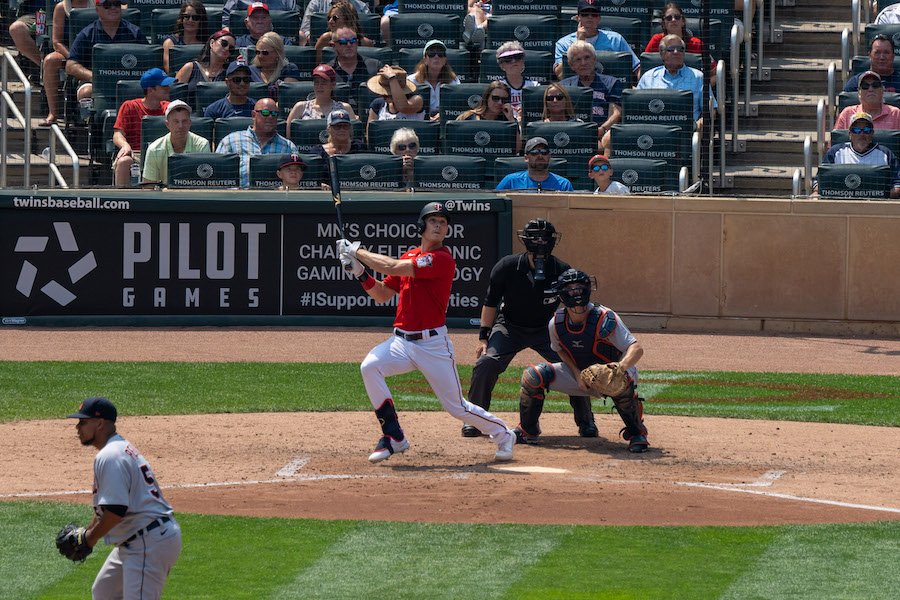 Box Score Jose Berríos 7.0 IP, 3 H, 4 ER, 4 BB, 8 K (61% strikes) Homeruns: Kepler (10), Rortvedt (2), Polanco (12) Top 3 WPA: Polanco (.534), Duffey (.486), Rortvedt (.355), Win Probability Chart (via Fangraphs) Jose Berríos Falters in Fifth Berríos, coming off a great outing against the White Sox, cruised through the first three innings needing just 37 pitches to set down the Tigers the first time through the lineup. He had some help from Trevor Larnach to end the second inning on a ball that looked like it was going to be an extra base-hit. Although he didn’t allow a hit until there were two outs in the fifth inning, he really started showing signs of inefficiency in the fourth inning where he threw just 50-percent strikes and benefited from Robbie Grossman coming off 2nd base on a steal for a strike ‘em out, throw ‘em out double play to end the inning. Ten, after getting the first two batters out in the fifth, Berríos wouldn’t get the third out until the Tigers plated four runs thanks to back-to-back walks to the eight and nine hitters and a couple hanging curveballs. He would go on to regain his form needing just six pitches in the sixth and ending his day with back-to-back strikeouts looking in the seventh. Aside from the one inning, it was a very good day for Berríos but once again he was bit by his inconsistency. Not to overreact from one bad inning, but this is why I tend to believe his ceiling is limited to mid-rotation arm on a contending team. When he’s efficient with his pitches, he is very effective and can look like a number on option but in his five plus seasons with the Twins there has been enough inconsistency to question whether he can really take the “next step”. Twins Exercise Patience and it Pays Off Through three innings, things weren’t looking great for the Twins offense. And with the exception of Max Kepler’s 10th homerun of the season, they never were able to figure out Tigers starter Wily Peralta. Fortunately, due to his inefficiency, he was pulled needing 97 pitches to get through five innings despite allowing just five Twins batters to reach base. A change on the mound was exactly what the Twins needed as they made the Tigers relievers pay for not throwing strikes. Over the next two innings, the Twins would get four hits from Jorge Polanco twice, Max Kepler, and Alex Kirilloff as well as six walks and five earned runs to take a 6-4 lead entering the eighth. In all, every Twin would reach base at least once with Polanco reaching base four times and Kirilloff, Cruz, and Kepler reaching base in three different at-bats. Moreover, the Twins continued to get production from their rookies as Kirilloff had two RBI's, a run scored, and saw 30 pitches over his six at-bats while Ben Rortvedt tied the game in the bottom of the ninth with a 410 foot blast. It was a tough series for fellow rookie, Trevor Larnach, who went 2-for-18 with 12 strikeouts including back-to-back games with four strikeouts. In addition to his day at the plate, Kirilloff saved the game in the top of the 10th with this fantastic diving play. Then of course came the walk-off... Bullpen Usage Jorge Alcala would relieve Berríos and immediately give up a solo homerun to Akil Baddoo and a single to Jonathan Schoop but was able to get the next two outs before Hansel Robles relieved him to finish the eighth. Taylor Rogers came in on the ninth and allowed the first three batters to reach followed by a Grand Slam that gave the Tigers temporarily gave the Tigers the lead. Tyler Duffey earned the win by shutting down the Tigers in the 10th. TUE WED THU FRI SAT SUN TOT Law 0 50 0 0 27 0 77 Thielbar 0 20 0 20 0 0 40 Duffey 0 0 15 0 21 15 51 Rogers 0 0 6 0 0 22 28 Robles 0 0 0 24 0 3 27 Colomé 14 0 0 0 17 0 31 Coulombe 12 0 0 0 13 0 25 Alcala 0 0 0 23 0 10 33
 -
GAME THREAD: Tigers v Twins, 7/11 @ 1:10pm CT
Matthew Lenz replied to Squirrel's topic in Archived Game Threads
The best ability is durability but that's part of the reason why he's ranked so high in fWAR not only this year but over the last five plus years. It's an accrual stat so him being a lock for 180+ innings every year helps him climb that list. -
GAME THREAD: Tigers v Twins, 7/11 @ 1:10pm CT
Matthew Lenz replied to Squirrel's topic in Archived Game Threads
This is who he is and why his ceiling is limited. Durable but Inconsistent. -
GAME THREAD: Tigers v Twins, 7/11 @ 1:10pm CT
Matthew Lenz replied to Squirrel's topic in Archived Game Threads
Berríos just falling apart. This is exactly why I don’t want to pay him more than $15MM AAV. He’s not at the same level as the guys earning closer to $20MM AAV. -
GAME THREAD: Tigers v Twins, 7/11 @ 1:10pm CT
Matthew Lenz replied to Squirrel's topic in Archived Game Threads
-
GAME THREAD: Tigers v Twins, 7/11 @ 1:10pm CT
Matthew Lenz replied to Squirrel's topic in Archived Game Threads
Awful read by Jeffers. Big mistake especially with the top of the order coming up.? -
GAME THREAD: Tigers v Twins, 7/11 @ 1:10pm CT
Matthew Lenz replied to Squirrel's topic in Archived Game Threads
Great catch by Larnach! -
The front office goes cheap in free agency and we look to blame the manager? I don’t want the FO fired either but this is more a reflection on them than Baldelli. Hopefully they adjust their FA strategy moving forward.
-
Perk was pretty good but it didn’t matter because he pitched when they were a lock for 90 losses.
-
When will Thielbar get the appreciation and respect he deserves?! He’s so much more than a “good story”.
-
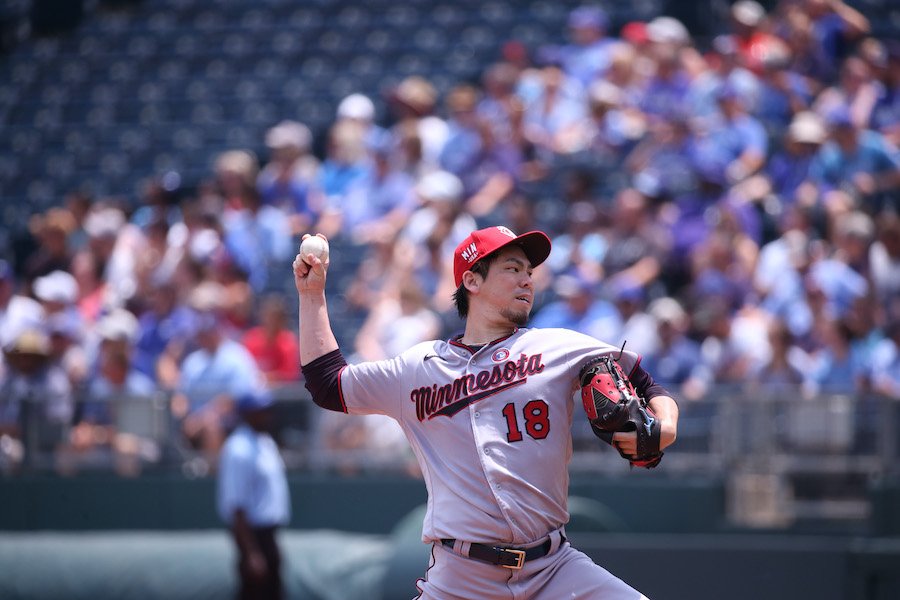 Box Score Kenta Maeda: 6 IP, 2 H, 0 ER, 1 BB, 10 K (69% strikes) Homeruns: Kepler (7), Polanco (10), Kirilloff (7) Top 3 WPA: Maeda (.387), Polanco (.093), Kepler (.087) Win Probability Chart (via Fangraphs) Maeda Dominates Royals Offense Maeda only allowed one runner to get to third base and it was on a Sebastian Rivero 69 mile-per-hour bloop single to right field in the bottom of the second inning. In by far the best outing of his season, Maeda started 15 of 21 batters faced with first pitch strikes and generated 18 swings and misses over his six innings pitched. As Jim Kaat pointed out during the broadcast on Bally Sports North, this was the first time since Maeda’s second start on April 7th that he was able to make it through six innings. Throughout the day Maeda was fooling Royals batters, who sported a .222 expected batting average, with his slider generating 11 called strikes and whiffs on the pitch. Below, Rob “Pitching Ninja” Friedman, shows a great overlay on just why that pitch was so effective today. After his last start, where the spin rates of his slider, fastball, and sinker dipped, there was some concern among an opposing fan base that maybe Maeda’s 2020 Cy Young caliber season was in part due to some “sticky stuff”. It’s too early to know the exact science on just how much “sticky stuff” can impact spin rates but, for what it’s worth, Maeda’s slider was nasty today and had an average spin rate of 2493 which is close to the average spin rate of the same pitch during the 2020 season (2505). The two runs the Royals scored came in the bottom of the ninth inning when Hansel Robles gave up a Dyson single with the bases loaded. Twins Chase Brad Keller but Make Bullpen Pay Today provided a good example of why advanced stats have meaning alongside more traditional stats. Keller was able to pitch through six-and-a-third innings walking just two and striking out seven despite a strike percentage of just 61%. Patience is a virtue, as they say, but for the Twins it’s their kryptonite as they are third in all of baseball at swinging at pitches outside of the strike zone. Like Maeda, Keller never really faced in real threats from the seven baserunners he allowed, aside from the one he created after back-to-back headsy baserunning plays in the third and a Trevor Larnach two-strike, two-out single. Keller's only other mistake on the day ended up 395 feet from home plate, which was one of three long balls on the day. Richard Lovelady came in and allowed homeruns to Jorge Polanco and Alex Kirilloff in the top of the seventh. In all, four of the six runs came from the long ball with Larnach and Arraez pairing up for another RBI and run scored, respectively, in the top of the ninth giving the Twins their sixth run of the day. Bullpen Usage Chart WED THU FRI SAT SUN TOT Coulombe 0 0 16 7 0 23 Duffey 0 0 13 0 0 13 Thielbar 16 0 0 0 0 16 Robles 0 34 0 0 19 53 Law 0 32 0 34 0 66 Colomé 14 0 17 0 0 31 Rogers 0 0 22 0 20 42 Alcala 0 19 0 0 18 37 Jax 0 0 0 88 0 88
 -
The Twins snap their five game skid and take the Sunday matinee with a 6-2 victory over the Kansas City Royals. They improved to 34-48 this year on the back of a dominant start from Kenta Maeda. That and more in today’s recap. Image courtesy of © Gary Rohman-USA TODAY Sports The Twins snap their five game skid and take the Sunday matinee with a 6-2 victory over the Kansas City Royals. They improved to 34-48 this year on the back of a dominant start from Kenta Maeda. That and more in today’s recap. Box Score Kenta Maeda: 6 IP, 2 H, 0 ER, 1 BB, 10 K (69% strikes) Homeruns: Kepler (7), Polanco (10), Kirilloff (7) Top 3 WPA: Maeda (.387), Polanco (.093), Kepler (.087) Win Probability Chart (via Fangraphs) Maeda Dominates Royals Offense Maeda only allowed one runner to get to third base and it was on a Sebastian Rivero 69 mile-per-hour bloop single to right field in the bottom of the second inning. In by far the best outing of his season, Maeda started 15 of 21 batters faced with first pitch strikes and generated 18 swings and misses over his six innings pitched. As Jim Kaat pointed out during the broadcast on Bally Sports North, this was the first time since Maeda’s second start on April 7th that he was able to make it through six innings. Throughout the day Maeda was fooling Royals batters, who sported a .222 expected batting average, with his slider generating 11 called strikes and whiffs on the pitch. Below, Rob “Pitching Ninja” Friedman, shows a great overlay on just why that pitch was so effective today. After his last start, where the spin rates of his slider, fastball, and sinker dipped, there was some concern among an opposing fan base that maybe Maeda’s 2020 Cy Young caliber season was in part due to some “sticky stuff”. It’s too early to know the exact science on just how much “sticky stuff” can impact spin rates but, for what it’s worth, Maeda’s slider was nasty today and had an average spin rate of 2493 which is close to the average spin rate of the same pitch during the 2020 season (2505). The two runs the Royals scored came in the bottom of the ninth inning when Hansel Robles gave up a Dyson single with the bases loaded. Twins Chase Brad Keller but Make Bullpen Pay Today provided a good example of why advanced stats have meaning alongside more traditional stats. Keller was able to pitch through six-and-a-third innings walking just two and striking out seven despite a strike percentage of just 61%. Patience is a virtue, as they say, but for the Twins it’s their kryptonite as they are third in all of baseball at swinging at pitches outside of the strike zone. Like Maeda, Keller never really faced in real threats from the seven baserunners he allowed, aside from the one he created after back-to-back headsy baserunning plays in the third and a Trevor Larnach two-strike, two-out single. Keller's only other mistake on the day ended up 395 feet from home plate, which was one of three long balls on the day. Richard Lovelady came in and allowed homeruns to Jorge Polanco and Alex Kirilloff in the top of the seventh. In all, four of the six runs came from the long ball with Larnach and Arraez pairing up for another RBI and run scored, respectively, in the top of the ninth giving the Twins their sixth run of the day. Bullpen Usage Chart WED THU FRI SAT SUN TOT Coulombe 0 0 16 7 0 23 Duffey 0 0 13 0 0 13 Thielbar 16 0 0 0 0 16 Robles 0 34 0 0 19 53 Law 0 32 0 34 0 66 Colomé 14 0 17 0 0 31 Rogers 0 0 22 0 20 42 Alcala 0 19 0 0 18 37 Jax 0 0 0 88 0 88 View full article
-
That's not at all what I said, but you can sure twist my words to make it sound like it. In a quick google search, from 2000-2010 the team that scored first won about 65% of the time. Without spending more time digging, I'm not sure what the stat would be nowadays but I can imagine it's changed too much. Scoring first, no matter when it happens, is importnat.
-
Fantastic play by Arraez. Whit was looking at him like what the heck!?!?
-
Completely disagree. One of the biggest things you can do is shutdown a team after you score a run. The Twins have won 33 games and have held a lead in 30/48 losses. They've had the lead in 69/82 (including today) games they've played this year an will have 33 or 34 wins pending todays results.
-
Couple good ABs from Sano. Laid off three straight sliders under the zone down 1-2 to take a walk
-
Man, Maeda looks good today! Really hoping that 2020 wasn't a total fluke and he can be our ace ahead of Berrios.
