



Matthew Lenz
-
Posts
1,465 -
Joined
-
Last visited
-
Days Won
3
Content Type
Profiles
News
Minnesota Twins Videos
2026 Minnesota Twins Top Prospects Ranking
2022 Minnesota Twins Draft Picks
Minnesota Twins Free Agent & Trade Rumors, Notes, & Tidbits
Guides & Resources
2023 Minnesota Twins Draft Picks
The Minnesota Twins Players Project
2024 Minnesota Twins Draft Picks
2025 Minnesota Twins Draft Pick Tracker
2026 Minnesota Twins Draft Tracker: Picks & Bonuses
Forums
Blogs
Events
Store
Downloads
Gallery
Everything posted by Matthew Lenz
-
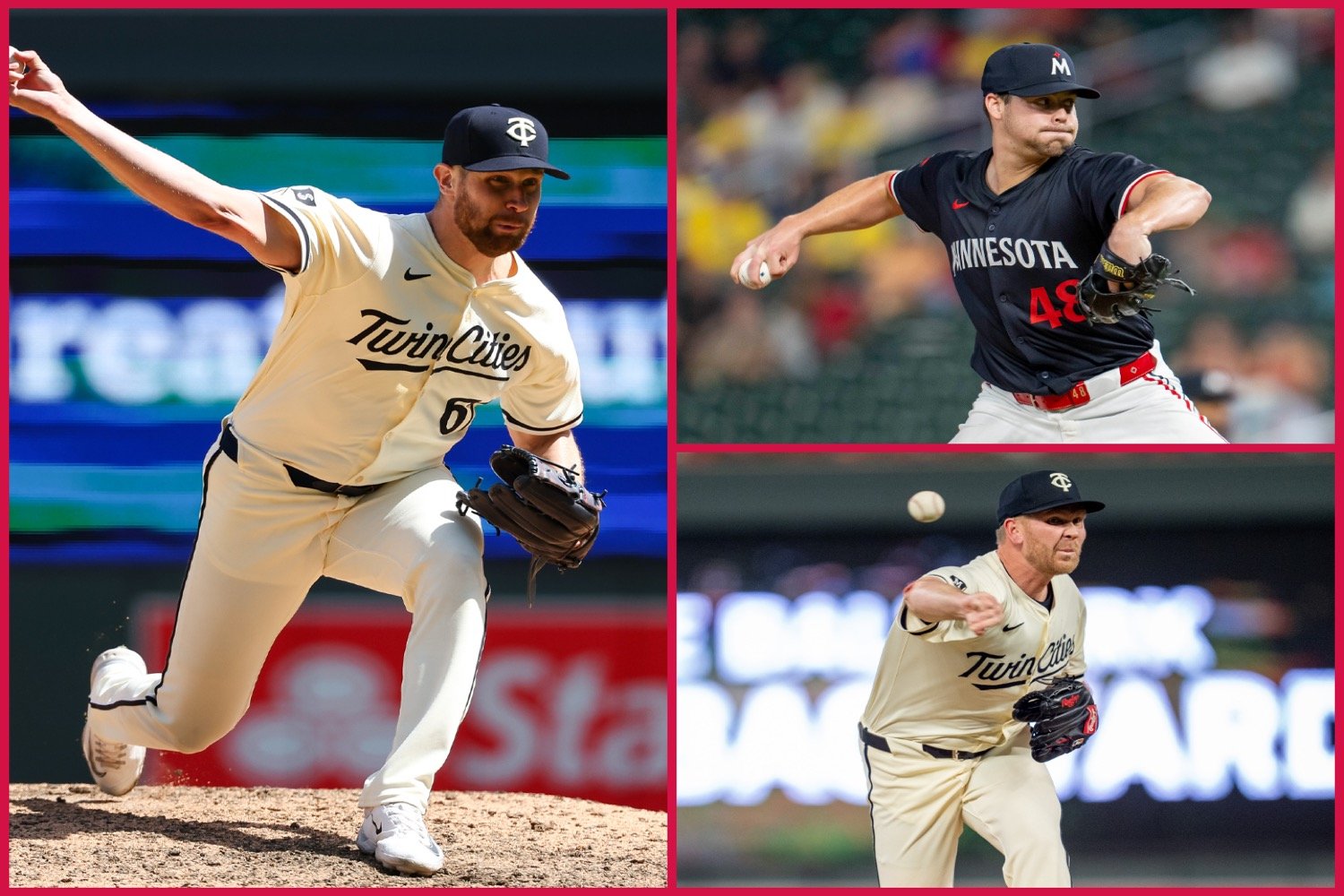 MLB Trade Rumors projects Brock Stewart, Michael Tonkin, and Justin Topa to get $800,000, $1.5 million, and $1.3 million, respectively, via arbitration this winter. Stewart and Topa were limited in 2024 due to injuries, but each has a track record of being reliable relievers when they've been healthy. On the other hand, Tonkin provided a full season of work with the New York Mets and New York Yankees before finishing with the Twins. Each of the relievers took a different route to the Twins, as Topa was part of the return from the Jorge Polanco trade; Stewart signed as a free agent in the middle of the 2022 season; and Tonkin was poached off waivers from the Yankees. At relatively cheap costs, should the Twins tender any or all of these relievers? Let's look into both sides of the arguments. Why They Should Be Tendered At just $800,000, you can't find a cheaper player than what Stewart is projected to receive. While he wasn't productive in 15 ⅔ big-league innings in 2024, we have a larger (and healthier) body of work from 2023 that suggests he can still be a very good right-handed reliever. In 43 ⅓ innings, Stewart has pitched to a 2.28 ERA supported by a 2.78 FIP, with a 22.7 K-BB% and 86.3% strand rate, which is good for fifth in baseball among pitchers who have thrown 40 or more innings. There's nothing we can garner from Topa’s 2024 season, but if you wanted to try: he performed well in 2 ⅓ innings over three appearances at the end of the season. Topa was one of two major-league pieces acquired in the Jorge Polanco trade, and with the Mariners in 2023, he posted a 2.61 ERA, 3.15 FIP and 15.4 K-BB%. His low-90s sinker, which is his primary offering, was a plus pitch for him with a run value of 10 and sets up his sweeper. Entering the offseason fully healthy from a non-arm injury, I wouldn’t be surprised if he can bounce back to his 2023 self. Old friend Tonkin re-joined the Twins at the end of August, and quickly became one of their most reliable arms. While his 2024 stats aren’t anything to write home about, two straight seasons of roughly 80 quality innings are nothing to be scoffed at, either. His two primary offerings, a mid-90s four-seam fastball and sharp slider, induced a combined .215 and .321 opponent batting average and slugging percentage, respectively, and he generated a 78th-percentile chase rate between all his pitches. From a roster construction standpoint, the Twins need relievers, and each of these present cheap options to bridge the gap between the starters and the back end of the bullpen. They are each fly-ball pitchers which is something to consider, at least in the short term, given the number of question marks surrounding the defensive viability at each of the infield positions. Why They Shouldn’t Be Tendered Before getting into each reliever individually, be reminded that relievers are a very volatile group and it’s always hard to predict when, or how fast, the fall in production comes. Moreover, each of these relievers are entering their age-33 or older season, making the likelihood of regression even higher. And lastly, each of these relievers are right-handed, with traditional splits. Those alone are arguments as to why none of these fringe relievers should be tendered, before we even address their warts. Alright, with that out of the way…let’s look at each of these pitchers individually. Stewart is returning from arthroscopic shoulder surgery, meaning there is a very real chance that we’ve seen the last of a serviceable Stewart. In a small sample of work, he also allowed a lot of hard contact in the air with a .407 opponent slugging percentage. I’m less concerned about Topa’s injury, given that it’s to his lower body, but it can’t totally be ignored—especially considering he basically just missed all of 2024. For what it’s worth, Edwin Díaz returned from a patellar tendon injury this year and experienced a slight dip in performance from 2022. While these players are in completely different echelons, Topa can’t afford much of a decline in performance given his age and arbitration price point. Tonkin is the most expensive arm of this group and, similar to Stewart, he allowed a lot of hard contact in the air to the pull side. While most of his surface-level and peripheral stats suggest the last two seasons weren’t a fluke, ZiPS projection models don’t see him as a serviceable reliever in 2025 and beyond. What I Would Do I don’t think the Twins should keep all three relievers, given that they need to add another left-handed reliever to go alongside Kody Funderburk. And I don’t think any of these relievers are clear choices above the rest, so I am going to go with the two cheapest options, who also provide the most upside. Brock Stewart, whose shoulder should be mostly (if not fully) recovered by the time Spring Training rolls around, was very good for the 2023 Twins. Tendering him for less than a million dollars is a pretty low-risk, high reward move. The same line of reasoning can be used for Topa, but I also want to see some (hopefully) positive return from the Polanco trade and I’d think the Derek Falvey would feel the same way. That leaves Tonkin as the odd man out as I’d repurpose his $1.5 million for a lefty reliever. What do you think? Who, if anybody, from this group would you tender a contract to?
- 38 comments
-
- 4
-

-
- justin topa
- brock stewart
- (and 1 more)
-
 It was a pretty quiet week in the Arizona Fall League, so after some brief highlights, we look into the outlook of Twins top prospect, Kala'i Rosario, who is eligible for next months rule 5 draft.
 -
It was a pretty quiet week in the Arizona Fall League, so after some brief highlights, we look into the outlook of Twins top prospect, Kala'i Rosario, who is eligible for next months rule 5 draft. View full video
-
Minnesota Twins Arbitration Dilemma: Jhoan Durán
Matthew Lenz replied to Matthew Lenz's topic in Twins Daily Front Page News
Are you saying you want him traded? -
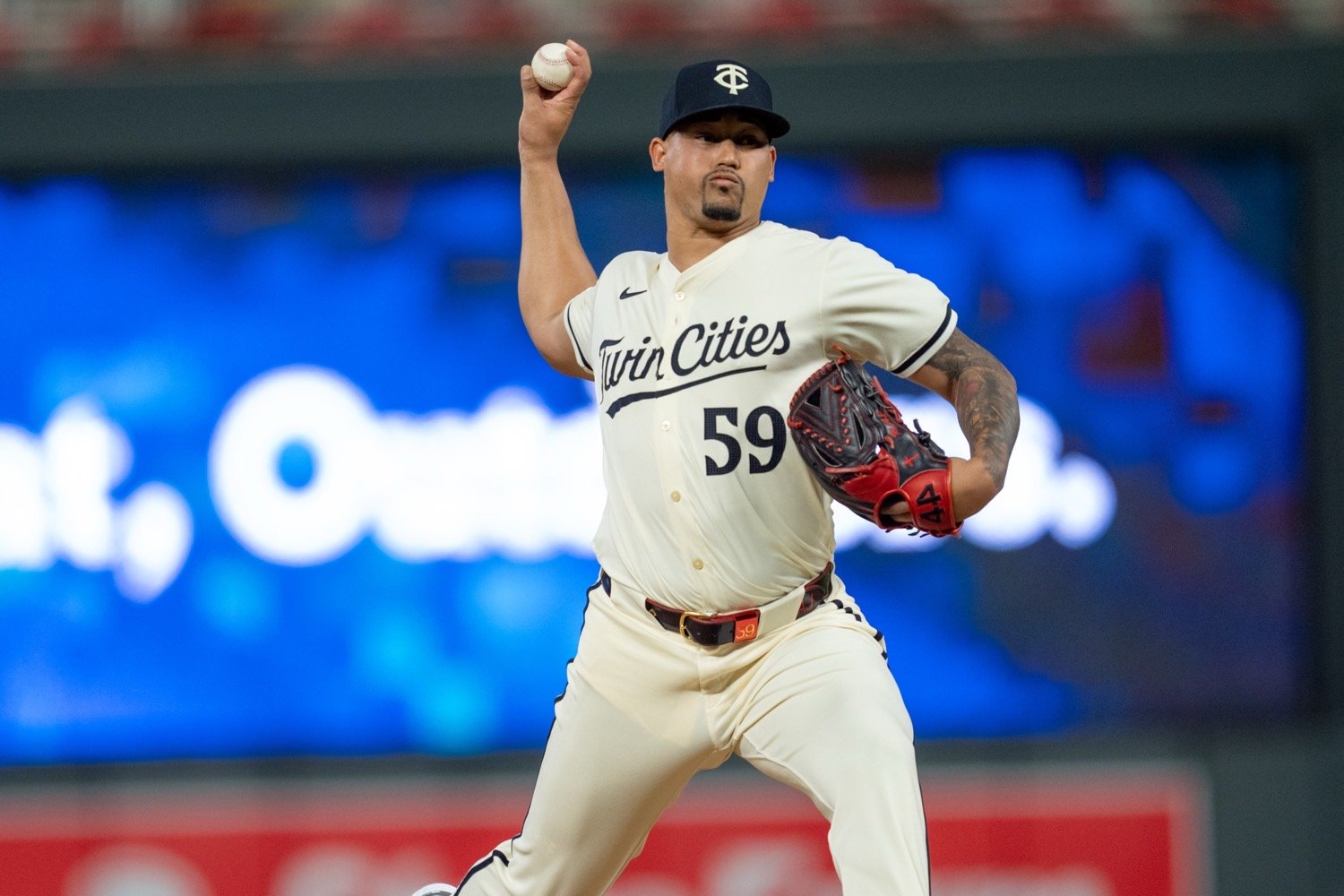 Jhoan Durán came to the Twins via trade, from the Arizona Diamondbacks ahead of the 2018 trade deadline. It was the deal that saw fan favorite Eduardo Escobar head to the desert. I’d be remiss not to include Escobar’s legendary “thank you, Minnesota” tweet here: Durán wasn’t the focal point of that deal, but more than six years later he’s the only part of the deal that has contributed to the big-league roster. Now, after three years as one of the more dominant pitchers in baseball, MLBTR projects the right-handed fireballer to make $3.7 million via arbitration. And if he continues on this trajectory, that number will assuredly more than double going into his final year of arbitration eligibility in the 2026-2027 offseason. For reference, Milwaukee Brewers’ closer Devin Williams is projected for $7.7 million this winter, despite missing two-thirds of the 2024 season. With that laid out, should the Twins tender Durán a contract or move on? Let's look into both sides of the argument. Why He Should Be Tendered Simply put: he’s one of the best relievers in baseball. Yes, he took some lumps in 2024, but ultimately ended the season with a solid 3.64 ERA, a very good 22.4% K-BB rate, and a 60.9% ground-ball rate. Of the 22 earned runs he gave up on the season, 15 of them occurred in five different outings; he had a whole lot of scoreless, even clean appearances. His lumps may seem more magnified, as two of them came in the home stretch of the season when seemingly the entire team was slumping. That said, he pitched to a 2.85 FIP, thanks in part to a curveball that allowed an opponent batting average of .151 and induced a whopping 46.7% whiff rate. When we look at this from a roster construction standpoint, there is an unquestioned need for quality bullpen arms to pair with Griffin Jax and Cole Sands. FanGraphs has his 2024 production worth $9.5 million, so the current price tag for a reliever of this caliber is an absolute steal and a no-brainer, even when considering the financial constraints the front office faces. If they do decide that $3.7 million is too rich for their blood, Durán would undoubtedly draw sizable interest on the trade market from any team on board with cheap production. Why He Shouldn’t Be Tendered Durán seemed to falter when it mattered most, with a 4.56 ERA in the second half of the season, and we’ve now seen his ERA increase for the second straight season after a sub-2.00 ERA in his rookie campaign. While ERA isn’t the best indicator, his FIP has also increased in each of the last two seasons, while his strikeout rate is going in the opposite direction. He’s also seen an overall increase in his opponents' batting average each year, but most concerning is the ineffectiveness of his fastball in 2024. Down more than one mile per hour from 2023, the heater had a run value of -3 in 2024, with an opponent batting average and slugging percentage of .296 and .408, respectively. From a roster perspective, relievers can be an extremely volatile group. It’s really rare for relievers to produce at an elite level for as long as someone like Emmanuel Clase has, and it’s nearly impossible to predict when the fall-off comes. While I don’t expect Durán to turn into a pumpkin and become completely unserviceable, there are signs suggesting that he may already be on the decline as one of baseball’s most dominant relievers. What I Would Do Tender him. The Twins would be absolutely nuts not to. They’d be slightly less nuts to tender him and trade him away, but at least they’d be recouping some value out of the dominant reliever. With three more years of team control via arbitration and currently in a competitive window with more top prospects coming, the Twins need to hold on to one of the best high-leverage arms in baseball. While his blowups are fresh in our minds, we can’t let ourselves suffer from recency bias and think the righty is cooked. Relievers are volatile by nature, but at only 26 years old, hopefully, Durán has many more years of dominance left in his tank. What do you think? Should Durán be tendered and kept, tendered and traded, or non-tendered?
 -
Mr. 105 enters his first year of arbitration in 2025, after an up-and-down year as the Minnesota Twins' primary high-leverage option. With the self-imposed salary constraints looming over the head of Derek Falvey, he’ll have to think carefully about how to proceed. Image courtesy of © Matt Blewett-Imagn Images Mr. 105 enters his first year of arbitration in 2025, after an up-and-down year as the Minnesota Twins' primary high-leverage option. With the self-imposed salary constraints looming over the head of Derek Falvey, he’ll have to think carefully about how to proceed. Jhoan Durán came to the Twins via trade, from the Arizona Diamondbacks ahead of the 2018 trade deadline. It was the deal that saw fan favorite Eduardo Escobar head to the desert. I’d be remiss not to include Escobar’s legendary “thank you, Minnesota” tweet here: Durán wasn’t the focal point of that deal, but more than six years later he’s the only part of the deal that has contributed to the big-league roster. Now, after three years as one of the more dominant pitchers in baseball, MLBTR projects the right-handed fireballer to make $3.7 million via arbitration. And if he continues on this trajectory, that number will assuredly more than double going into his final year of arbitration eligibility in the 2026-2027 offseason. For reference, Milwaukee Brewers’ closer Devin Williams is projected for $7.7 million this winter, despite missing two-thirds of the 2024 season. With that laid out, should the Twins tender Durán a contract or move on? Let's look into both sides of the argument. Why He Should Be Tendered Simply put: he’s one of the best relievers in baseball. Yes, he took some lumps in 2024, but ultimately ended the season with a solid 3.64 ERA, a very good 22.4% K-BB rate, and a 60.9% ground-ball rate. Of the 22 earned runs he gave up on the season, 15 of them occurred in five different outings; he had a whole lot of scoreless, even clean appearances. His lumps may seem more magnified, as two of them came in the home stretch of the season when seemingly the entire team was slumping. That said, he pitched to a 2.85 FIP, thanks in part to a curveball that allowed an opponent batting average of .151 and induced a whopping 46.7% whiff rate. When we look at this from a roster construction standpoint, there is an unquestioned need for quality bullpen arms to pair with Griffin Jax and Cole Sands. FanGraphs has his 2024 production worth $9.5 million, so the current price tag for a reliever of this caliber is an absolute steal and a no-brainer, even when considering the financial constraints the front office faces. If they do decide that $3.7 million is too rich for their blood, Durán would undoubtedly draw sizable interest on the trade market from any team on board with cheap production. Why He Shouldn’t Be Tendered Durán seemed to falter when it mattered most, with a 4.56 ERA in the second half of the season, and we’ve now seen his ERA increase for the second straight season after a sub-2.00 ERA in his rookie campaign. While ERA isn’t the best indicator, his FIP has also increased in each of the last two seasons, while his strikeout rate is going in the opposite direction. He’s also seen an overall increase in his opponents' batting average each year, but most concerning is the ineffectiveness of his fastball in 2024. Down more than one mile per hour from 2023, the heater had a run value of -3 in 2024, with an opponent batting average and slugging percentage of .296 and .408, respectively. From a roster perspective, relievers can be an extremely volatile group. It’s really rare for relievers to produce at an elite level for as long as someone like Emmanuel Clase has, and it’s nearly impossible to predict when the fall-off comes. While I don’t expect Durán to turn into a pumpkin and become completely unserviceable, there are signs suggesting that he may already be on the decline as one of baseball’s most dominant relievers. What I Would Do Tender him. The Twins would be absolutely nuts not to. They’d be slightly less nuts to tender him and trade him away, but at least they’d be recouping some value out of the dominant reliever. With three more years of team control via arbitration and currently in a competitive window with more top prospects coming, the Twins need to hold on to one of the best high-leverage arms in baseball. While his blowups are fresh in our minds, we can’t let ourselves suffer from recency bias and think the righty is cooked. Relievers are volatile by nature, but at only 26 years old, hopefully, Durán has many more years of dominance left in his tank. What do you think? Should Durán be tendered and kept, tendered and traded, or non-tendered? View full article
-
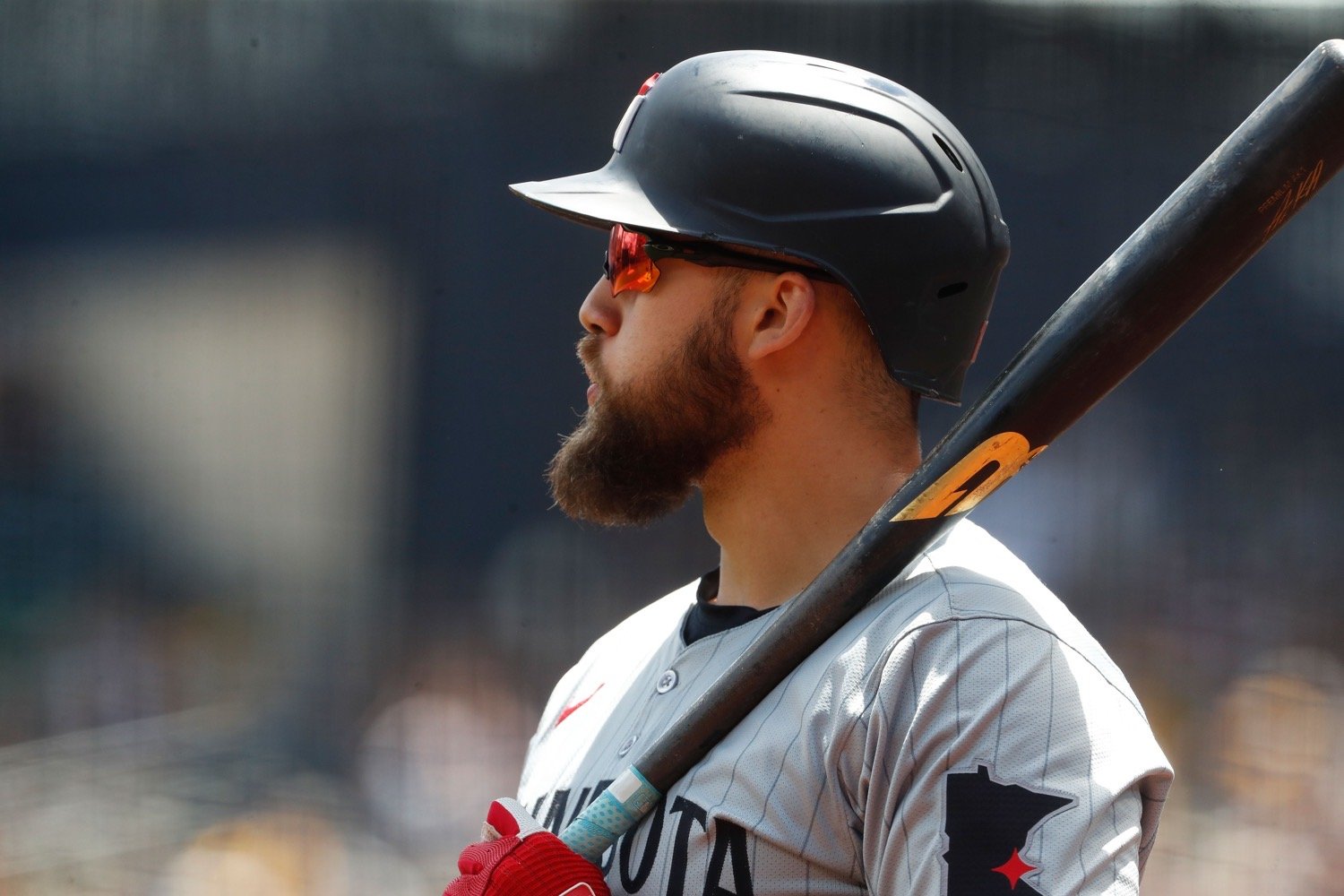 Alex Kirilloff was the 15th overall selection in the 2016 MLB Draft, out of Plum High School in Pennsylvania. He reached the majors in 2020, becoming the third player ever to make his big-league debut in the postseason when he played right field in Game 2 of the American League Division Series against the Houston Astros. He went 1-for-4 in the game, and his future looked bright heading into the 2021 season. Since then, his career has been up and down, marred by various injuries that have really limited his availability. He's yet to exceed 88 games in any single season. Now, MLB Trade Rumors (MLBTR) projects him to get $1.8 million in his second of four possible arbitration years, meaning he still has three years of team control including the 2025 season. Should the Twins tender him a contract, or move on from the former top prospect? Let's look into both sides of the argument. Why He Should Be Tendered Despite a self-imposed salary ceiling and long-term uncertainty surrounding their television broadcasts, $1.8 million is fairly negligible for the Twins. Moreover, given his prospect pedigree, if he was tendered a contract and they later decided to move on, I think he'd draw some interest from other clubs, making him a movable asset. Heck, even Miguel Sanó got some run in 2024, despite his track record—although his power potential is a little different than that of Kirilloff. But if we focus on the Twins’ needs, they are expected to lose Carlos Santana in free agency. Internally, José Miranda is the only other player on the active roster with first base experience and Yunior Severino is the only other possibility currently on the 40-man roster. One way or another, I don't expect the Twins to enter 2025 with Miranda as their full-time first basemen, especially considering his considerable struggles against left-handed pitching throughout his career. Looking closer at Kirilloff’s production, he's shown signs of being a good hitter when healthy and will only be 27 when Opening Day arrives. He's tried to play through injuries so often that it's hard to know when he has and hasn't been at or near 100%, but in his limited action, he has eight months of above-average production, based on his wRC+. Overall, he's been a league-average hitter, slashing .248/.309/.412 with 27 home runs, 116 RBIs, 92 runs, and below-average walk and strikeout rates. Typically, guys with draft and prospect pedigree like Kirilloff's are given a bit of a longer leash to prove they can stick in the Majors. Like it or not, the organization is invested in Kirilloff, so signs of an unexplored upside are taken more seriously from him than from lesser prospects or young players. Why He Shouldn’t Be Tendered I’m really concerned with his wrist, and more generally with his ability to stay on the field. He has not unable to finish three of the four seasons he's played, and has averaged under 63 games per season. Moreover, there was something… funny?… about his 2024 season, where he was optioned to Triple-A, never made an appearance after belatedly reporting an injury, and then was placed on the 10-day IL five days later—where he stayed for more than two months. Upon his return to the Saints lineup, he immediately got injured and didn't play for the rest of the season. When we look at it from a roster construction standpoint, he doesn't fit well with Miranda in a platoon role, as both hitters have struggled significantly against left-handed pitching throughout their careers. Moreover, Alex Kirilloff has graded out to be an average defensive first baseman and a complete liability in the outfield. In other words, his greatest contributions are going to come at the plate where he's been slightly below average when available. Overall, we’re currently looking at a subpar first basemen who is expected to get a million-dollar raise in 2025. What I Would Do Disclaimer: I was a huge believer in Kirilloff and a super collector of his prospect and rookie cards. That said, prior to writing this article and digging into Kirilloff, I had made two (incorrect) assumptions: He’s a very poor defender. His wrist injuries have sapped his power output. Neither of these things are true. Since his wrist injury, he's held a roughly average .153 ISO and really shined in 2023, as he was on pace for roughly 20 home runs, 82 RBIs, and a career-high .445 SLG—good for a wRC+ of 119. And, as highlighted above, he actually grades out to have an average glove in the field, with a 0.3 UZR/150 over his career. Thus, I think the Twins have to tender him given his prospect pedigree and production when he's been healthy. Am I worried about the wrist and checkered medical chart? Yes. But he’s still a young player with three years of team control left, and in the grand scheme of things, a $1.8-million payday isn't going to be the reason the Twins aren't able to bolster their bullpen or add elsewhere. They have players who are projected to make a similar amount of money or more who I think are more reasonable non-tender candidates. I'm not opposed to moving on from him via trade, but I think the Twins would be making a mistake if they were to let him go for nothing. What do you think? Should Kirilloff be tendered and kept, tendered and traded, or non-tendered?
 -
Alex Kirilloff was once one of the top prospects in all of baseball, but after a confounding 2024 season, he now finds himself as a possible budget- and roster-crunch casualty. Here's the case for and against keeping the former highly touted prospect. Image courtesy of © Charles LeClaire-Imagn Images Alex Kirilloff was once one of the top prospects in all of baseball, but after a confounding 2024 season, he now finds himself as a possible budget- and roster-crunch casualty. Here's the case for and against keeping the former highly touted prospect. Alex Kirilloff was the 15th overall selection in the 2016 MLB Draft, out of Plum High School in Pennsylvania. He reached the majors in 2020, becoming the third player ever to make his big-league debut in the postseason when he played right field in Game 2 of the American League Division Series against the Houston Astros. He went 1-for-4 in the game, and his future looked bright heading into the 2021 season. Since then, his career has been up and down, marred by various injuries that have really limited his availability. He's yet to exceed 88 games in any single season. Now, MLB Trade Rumors (MLBTR) projects him to get $1.8 million in his second of four possible arbitration years, meaning he still has three years of team control including the 2025 season. Should the Twins tender him a contract, or move on from the former top prospect? Let's look into both sides of the argument. Why He Should Be Tendered Despite a self-imposed salary ceiling and long-term uncertainty surrounding their television broadcasts, $1.8 million is fairly negligible for the Twins. Moreover, given his prospect pedigree, if he was tendered a contract and they later decided to move on, I think he'd draw some interest from other clubs, making him a movable asset. Heck, even Miguel Sanó got some run in 2024, despite his track record—although his power potential is a little different than that of Kirilloff. But if we focus on the Twins’ needs, they are expected to lose Carlos Santana in free agency. Internally, José Miranda is the only other player on the active roster with first base experience and Yunior Severino is the only other possibility currently on the 40-man roster. One way or another, I don't expect the Twins to enter 2025 with Miranda as their full-time first basemen, especially considering his considerable struggles against left-handed pitching throughout his career. Looking closer at Kirilloff’s production, he's shown signs of being a good hitter when healthy and will only be 27 when Opening Day arrives. He's tried to play through injuries so often that it's hard to know when he has and hasn't been at or near 100%, but in his limited action, he has eight months of above-average production, based on his wRC+. Overall, he's been a league-average hitter, slashing .248/.309/.412 with 27 home runs, 116 RBIs, 92 runs, and below-average walk and strikeout rates. Typically, guys with draft and prospect pedigree like Kirilloff's are given a bit of a longer leash to prove they can stick in the Majors. Like it or not, the organization is invested in Kirilloff, so signs of an unexplored upside are taken more seriously from him than from lesser prospects or young players. Why He Shouldn’t Be Tendered I’m really concerned with his wrist, and more generally with his ability to stay on the field. He has not unable to finish three of the four seasons he's played, and has averaged under 63 games per season. Moreover, there was something… funny?… about his 2024 season, where he was optioned to Triple-A, never made an appearance after belatedly reporting an injury, and then was placed on the 10-day IL five days later—where he stayed for more than two months. Upon his return to the Saints lineup, he immediately got injured and didn't play for the rest of the season. When we look at it from a roster construction standpoint, he doesn't fit well with Miranda in a platoon role, as both hitters have struggled significantly against left-handed pitching throughout their careers. Moreover, Alex Kirilloff has graded out to be an average defensive first baseman and a complete liability in the outfield. In other words, his greatest contributions are going to come at the plate where he's been slightly below average when available. Overall, we’re currently looking at a subpar first basemen who is expected to get a million-dollar raise in 2025. What I Would Do Disclaimer: I was a huge believer in Kirilloff and a super collector of his prospect and rookie cards. That said, prior to writing this article and digging into Kirilloff, I had made two (incorrect) assumptions: He’s a very poor defender. His wrist injuries have sapped his power output. Neither of these things are true. Since his wrist injury, he's held a roughly average .153 ISO and really shined in 2023, as he was on pace for roughly 20 home runs, 82 RBIs, and a career-high .445 SLG—good for a wRC+ of 119. And, as highlighted above, he actually grades out to have an average glove in the field, with a 0.3 UZR/150 over his career. Thus, I think the Twins have to tender him given his prospect pedigree and production when he's been healthy. Am I worried about the wrist and checkered medical chart? Yes. But he’s still a young player with three years of team control left, and in the grand scheme of things, a $1.8-million payday isn't going to be the reason the Twins aren't able to bolster their bullpen or add elsewhere. They have players who are projected to make a similar amount of money or more who I think are more reasonable non-tender candidates. I'm not opposed to moving on from him via trade, but I think the Twins would be making a mistake if they were to let him go for nothing. What do you think? Should Kirilloff be tendered and kept, tendered and traded, or non-tendered? View full article
-
The Minnesota Twins just completed their 63rd season and in that time have had 117 rookie pitchers complete qualified seasons. Using that threshold, let’s create a 13-man pitching staff using the best rookie seasons in Twins history. Who made the cut? Who was snubbed? Let’s dig in. Image courtesy of © Jason Bridge-Imagn Images The Minnesota Twins just completed their 63rd season and in that time have had 117 rookie pitchers complete qualified seasons. Using that threshold, let’s create a 13-man pitching staff using the best rookie seasons in Twins history. Who made the cut? Who was snubbed? Let’s dig in. For this exercise, I’m only including players from 1961 to 2024 who qualified for end of year awards in their respective season and I excluded shortened seasons, such as 1972, 1981, 1994 due to player strikes and 2020 due to COVID. I also considered roster construction, specifically when it comes to the handedness of the pitcher and their ability to manage high lever situations. I included 13 players on the hitter version of this article, and thus will carry 13 pitchers. Without further ado, here is the best active roster of rookie pitcher seasons by position. Ace - 2006 Francisco Liriano Man, what could have been. Francisco Liriano’s rookie run was magical and had us feeling like the 2006 Twins were a team of destiny. Liriano exploded onto the scene with a 28% K-BB rate and a 2.55 FIP holding opposing hitters to a .202 batting average. He'd end up making the All-Star game and finished third in Rookie of the Year voting, despite missing the last two months because his elbow exploded and Tommy John was needed. #2 Starter - 1990 Kevin Tapani Before Kevin Tapani was earning Cy Young votes in 1991, he was earning Rookie of the Year votes in 1990. With precision control, the righty boasted a 4.4% walk rate and didn't allow a single free pass in 12 of his 28 starts. While strikeouts weren't his calling card, he had a miniscule Home Run rate and boasted a 3.10 FIP. He went on to be a reliable innings eater for the Twins, White Sox, and Cubs. #3 Starter - 1970 Bert Blyleven At just 19 years old, Bert Blyleven quickly established himself as one of Major League Baseball’s best starting pitchers. A former third-round pick of the Twins, Blyleven established his ability to pitch late into games early on going seven innings or more in 11 of 25 starts. He finished his rookie campaign with a solid 20% strikeout rate, 7% walk rate, and a 3.18 ERA on his way to a Hall of Fame career. #4 Starter - 1978 Roger Erickson Prior to his career getting derailed by a bum shoulder, Roger Erickson threw 265 2/3 innings for the 1978 Twins as a 21-year-old rookie right hander. A very low strikeout rate and .259 opponent batting average led to a 3.96 ERA, but he was able to limit free passes with a solid 7% walk rate. He went on to pitch three more years for the Twins before being traded to the Yankees and making his final major-league appearance in 1983. #5 Starter - 2022 Joe Ryan It's not often you're on the winning end of a trade with the Tampa Bay Rays, but the Twins can easily claim victory in the Nelson Cruz for Joe Ryan swap in 2021. His rookie year saw him throw 147 innings across 27 starts with a 3.55 ERA and a solid 17.2% K-BB rate. His deceptive delivery and unique fastball movement make up for the lack of velocity, and resulted in a .174 opponent batting average with a run value of 20 ranking as one of the best pitches in baseball. Since then, he's established himself as a mainstay in the top half of the Twins pitching rotation. Spot Starter / Long Reliever - 2012 Scott Diamond Count me as one who would NOT have thought Scott Diamond would have cracked the Top 5, but here we are. After seven lackluster starts in 2011, Diamond managed a 3.54 ERA thanks in part to an impressive 4.3% walk rate, which was needed given his sub 90s fastball and opponent batting average of .271. He was never able to regain his 2012 form and threw his last pitch in Major League Baseball in 2013. Middle Relievers - 2005 RHP Jesse Crain, 2016 LHP Taylor Rogers, 2006 RHP Pat Neshek, 2017 RHP Trevor Hildenberger Setting his postseason shortcomings aside, Jesse Crain was a pretty serviceable reliever and had a stellar 2.71 ERA and .209 opponent batting average as a rookie. What made his effectiveness even more impressive is that he had a NEGATIVE 1.2% K-BB rate, striking out just 25 hitters across 79 2/3 innings of relief. Appearing in mostly low and middle-leverage opportunities, Taylor Rogers provided 61 1/3 innings of relief as a rookie. Despite a solid 18.2% K-BB rate, he boasted a 3.96 ERA largely due to three appearances where he allowed 10 of his 27 earned runs. The lanky lefty allowed a lowly 3.9% barrel rate and held hitters to an average 7.8 launch angle as a groundball pitcher. At least for me, Pat Neshek will go down as one of my all-time favorite Twins. His unique side-arm delivery befuddled hitters to the tune of a 38.4% strikeout rate coupled with a 4.3% walk rate and an .174 opponent batting average. His dominance led to a 2.19 ERA across 37 innings, and he was a key piece to a phenomenal 2006 (regular) season for the organization. On an unrelated note, Neshek was an avid card collector and always welcomed fans to send him memorabilia to sign. #1 High Leverage - 2009 LHP Jose Mijares From a pure performance perspective, Neshek deserves this spot, but from a roster-construction perspective we need a lefty reliever capable to handle high-leverage situations. The analytics of 2009 season suggests Jose Mijares wasn’t an overly-effective reliever in 2009, but with one of the highest win probability added (WPA) for a lefty reliever in Twins history (2.83) he made it work. Across 71 appearances, he donned a 2.34 ERA and a 21.7% strikeout rate with a .219 opponent batting average. Mijares had a little more success in his career with the Kansas City Royals and San Francisco Giants and was suspended due to a positive drug test in 2015 and never pitched in Major League Baseball again. #2 High Leverage - 1980 RHP Doug Corbett A name I was not familiar with prior to this exercise was Doug Corbett who accrued 23 saves across 136 1/3 innings in 1980. Wait, he must have been a part time starter then, right? Nope. He had zero starts in 73 appearances and averaged roughly two innings and seven batters faced per appearance. His 1.98 ERA was vastly different from his 3.06 FIP but, regardless, he got the job done with a Twins reliever record 7.58 WPA and .209 opponent batting average. We need more swing and miss from our closer so, despite his impressive WPA, he's relegated to a high leverage role due to his 16.8% strikeout rate. Closer - 2022 RHP Jhoan Duran Twins fans had long heard of Johan Duran’s electric arsenal and finally got to experience it in 2022. His 89.3% strand rate was good for sixth in baseball among qualified relievers, and he had a 77.2% strikeout rate on his fastball and curveball combined. Moreover, he limited opposing hitters to an excellent 6.0% walk rate and carried a 61.0% groundball rate. All this added up to the second best WPA for a reliever in Twins history at 4.56. What does your rookie roster look like? Was anyone snubbed? Let me know in the comments! View full article
-
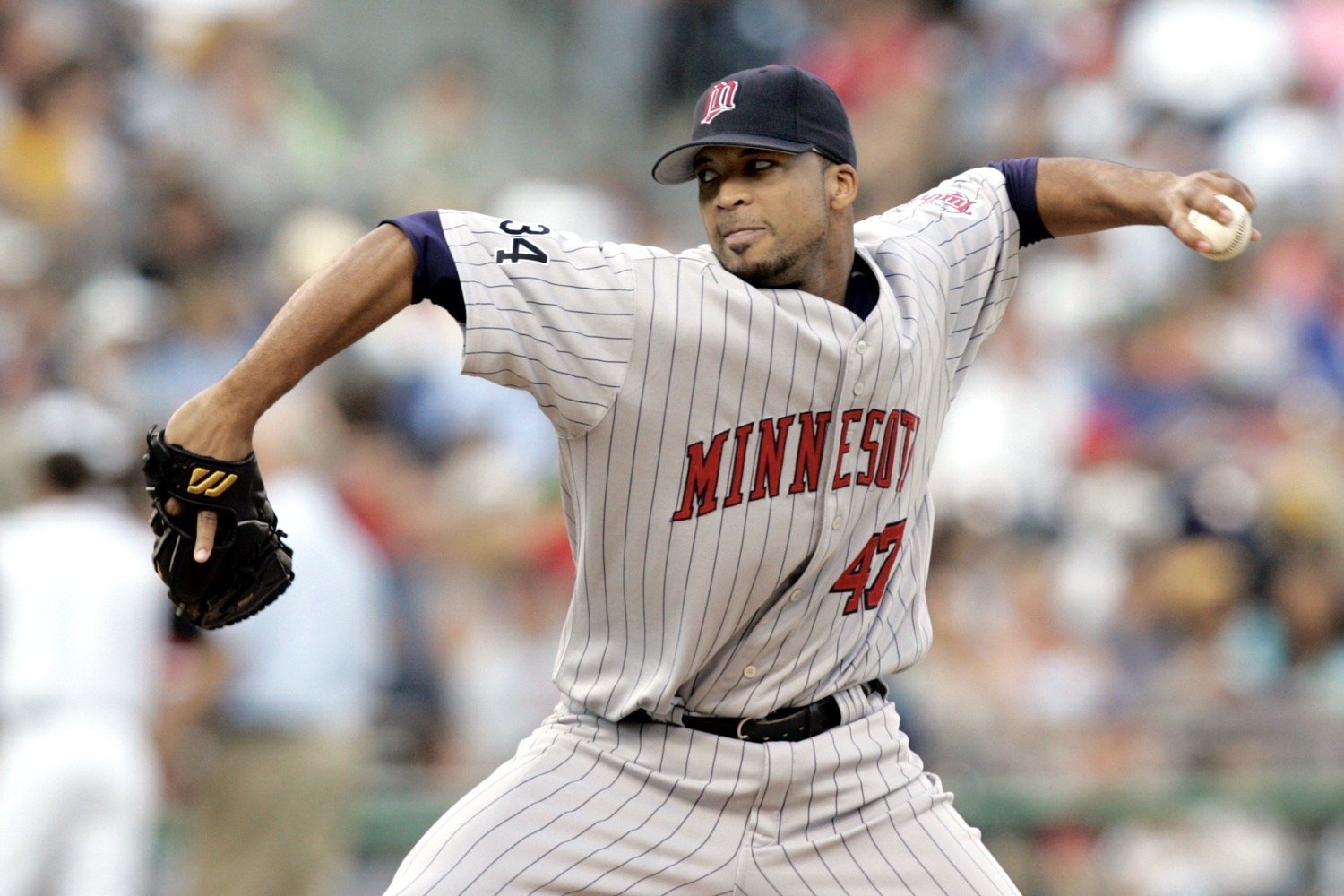 For this exercise, I’m only including players from 1961 to 2024 who qualified for end of year awards in their respective season and I excluded shortened seasons, such as 1972, 1981, 1994 due to player strikes and 2020 due to COVID. I also considered roster construction, specifically when it comes to the handedness of the pitcher and their ability to manage high lever situations. I included 13 players on the hitter version of this article, and thus will carry 13 pitchers. Without further ado, here is the best active roster of rookie pitcher seasons by position. Ace - 2006 Francisco Liriano Man, what could have been. Francisco Liriano’s rookie run was magical and had us feeling like the 2006 Twins were a team of destiny. Liriano exploded onto the scene with a 28% K-BB rate and a 2.55 FIP holding opposing hitters to a .202 batting average. He'd end up making the All-Star game and finished third in Rookie of the Year voting, despite missing the last two months because his elbow exploded and Tommy John was needed. #2 Starter - 1990 Kevin Tapani Before Kevin Tapani was earning Cy Young votes in 1991, he was earning Rookie of the Year votes in 1990. With precision control, the righty boasted a 4.4% walk rate and didn't allow a single free pass in 12 of his 28 starts. While strikeouts weren't his calling card, he had a miniscule Home Run rate and boasted a 3.10 FIP. He went on to be a reliable innings eater for the Twins, White Sox, and Cubs. #3 Starter - 1970 Bert Blyleven At just 19 years old, Bert Blyleven quickly established himself as one of Major League Baseball’s best starting pitchers. A former third-round pick of the Twins, Blyleven established his ability to pitch late into games early on going seven innings or more in 11 of 25 starts. He finished his rookie campaign with a solid 20% strikeout rate, 7% walk rate, and a 3.18 ERA on his way to a Hall of Fame career. #4 Starter - 1978 Roger Erickson Prior to his career getting derailed by a bum shoulder, Roger Erickson threw 265 2/3 innings for the 1978 Twins as a 21-year-old rookie right hander. A very low strikeout rate and .259 opponent batting average led to a 3.96 ERA, but he was able to limit free passes with a solid 7% walk rate. He went on to pitch three more years for the Twins before being traded to the Yankees and making his final major-league appearance in 1983. #5 Starter - 2022 Joe Ryan It's not often you're on the winning end of a trade with the Tampa Bay Rays, but the Twins can easily claim victory in the Nelson Cruz for Joe Ryan swap in 2021. His rookie year saw him throw 147 innings across 27 starts with a 3.55 ERA and a solid 17.2% K-BB rate. His deceptive delivery and unique fastball movement make up for the lack of velocity, and resulted in a .174 opponent batting average with a run value of 20 ranking as one of the best pitches in baseball. Since then, he's established himself as a mainstay in the top half of the Twins pitching rotation. Spot Starter / Long Reliever - 2012 Scott Diamond Count me as one who would NOT have thought Scott Diamond would have cracked the Top 5, but here we are. After seven lackluster starts in 2011, Diamond managed a 3.54 ERA thanks in part to an impressive 4.3% walk rate, which was needed given his sub 90s fastball and opponent batting average of .271. He was never able to regain his 2012 form and threw his last pitch in Major League Baseball in 2013. Middle Relievers - 2005 RHP Jesse Crain, 2016 LHP Taylor Rogers, 2006 RHP Pat Neshek, 2017 RHP Trevor Hildenberger Setting his postseason shortcomings aside, Jesse Crain was a pretty serviceable reliever and had a stellar 2.71 ERA and .209 opponent batting average as a rookie. What made his effectiveness even more impressive is that he had a NEGATIVE 1.2% K-BB rate, striking out just 25 hitters across 79 2/3 innings of relief. Appearing in mostly low and middle-leverage opportunities, Taylor Rogers provided 61 1/3 innings of relief as a rookie. Despite a solid 18.2% K-BB rate, he boasted a 3.96 ERA largely due to three appearances where he allowed 10 of his 27 earned runs. The lanky lefty allowed a lowly 3.9% barrel rate and held hitters to an average 7.8 launch angle as a groundball pitcher. At least for me, Pat Neshek will go down as one of my all-time favorite Twins. His unique side-arm delivery befuddled hitters to the tune of a 38.4% strikeout rate coupled with a 4.3% walk rate and an .174 opponent batting average. His dominance led to a 2.19 ERA across 37 innings, and he was a key piece to a phenomenal 2006 (regular) season for the organization. On an unrelated note, Neshek was an avid card collector and always welcomed fans to send him memorabilia to sign. #1 High Leverage - 2009 LHP Jose Mijares From a pure performance perspective, Neshek deserves this spot, but from a roster-construction perspective we need a lefty reliever capable to handle high-leverage situations. The analytics of 2009 season suggests Jose Mijares wasn’t an overly-effective reliever in 2009, but with one of the highest win probability added (WPA) for a lefty reliever in Twins history (2.83) he made it work. Across 71 appearances, he donned a 2.34 ERA and a 21.7% strikeout rate with a .219 opponent batting average. Mijares had a little more success in his career with the Kansas City Royals and San Francisco Giants and was suspended due to a positive drug test in 2015 and never pitched in Major League Baseball again. #2 High Leverage - 1980 RHP Doug Corbett A name I was not familiar with prior to this exercise was Doug Corbett who accrued 23 saves across 136 1/3 innings in 1980. Wait, he must have been a part time starter then, right? Nope. He had zero starts in 73 appearances and averaged roughly two innings and seven batters faced per appearance. His 1.98 ERA was vastly different from his 3.06 FIP but, regardless, he got the job done with a Twins reliever record 7.58 WPA and .209 opponent batting average. We need more swing and miss from our closer so, despite his impressive WPA, he's relegated to a high leverage role due to his 16.8% strikeout rate. Closer - 2022 RHP Jhoan Duran Twins fans had long heard of Johan Duran’s electric arsenal and finally got to experience it in 2022. His 89.3% strand rate was good for sixth in baseball among qualified relievers, and he had a 77.2% strikeout rate on his fastball and curveball combined. Moreover, he limited opposing hitters to an excellent 6.0% walk rate and carried a 61.0% groundball rate. All this added up to the second best WPA for a reliever in Twins history at 4.56. What does your rookie roster look like? Was anyone snubbed? Let me know in the comments!
- 9 comments
-
- 5
-
-
- francisco liriano
- jhoan duran
- (and 5 more)
-
Best Rookie Campaigns by Position: Hitters
Matthew Lenz replied to Matthew Lenz's topic in Twins Daily Front Page News
He would have definitely been on it, but I did only include Twins rookies so 1961 to current- 18 replies
-
- 1
-
-
- kent hrbek
- rod carew
- (and 5 more)
-
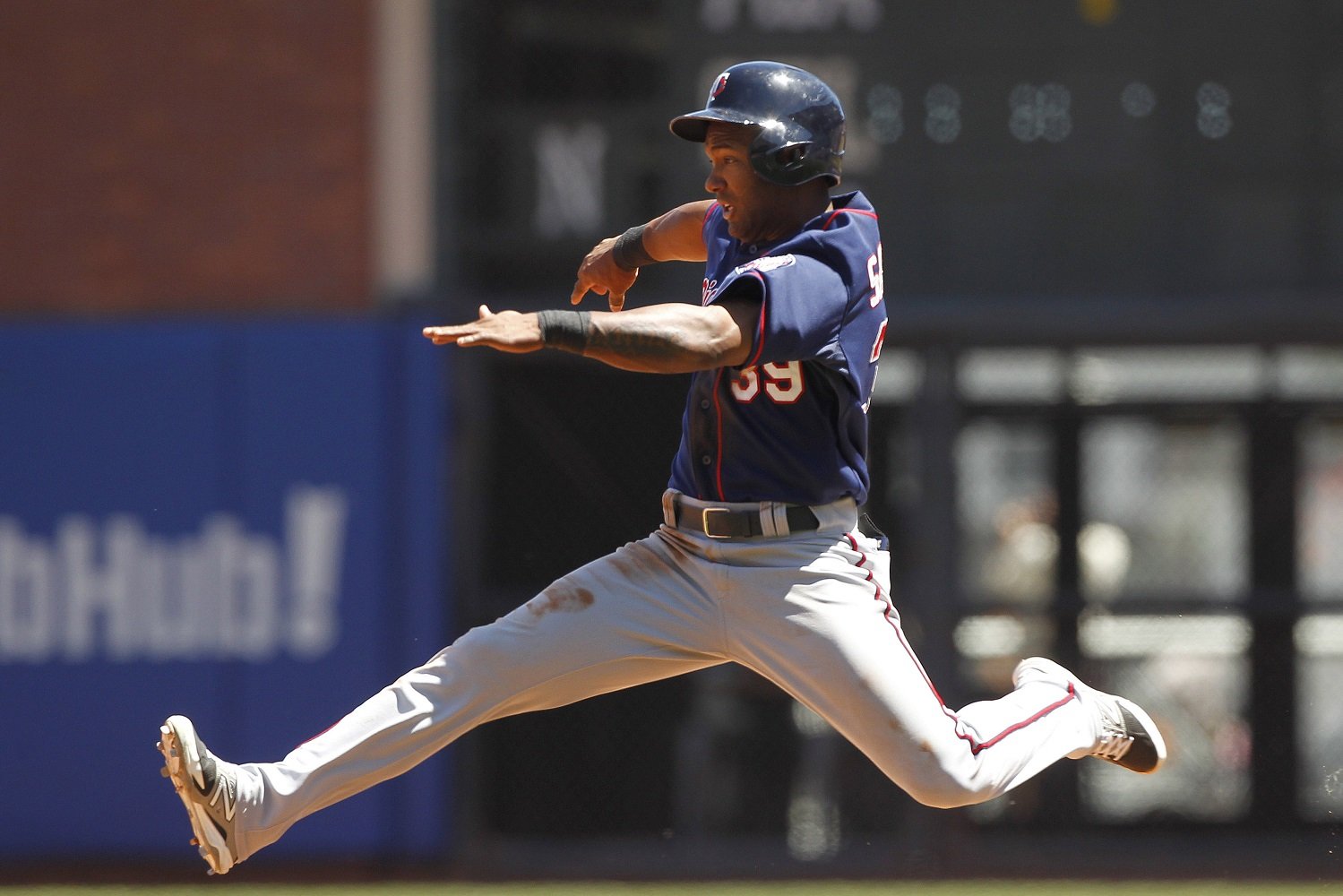 For this exercise, I’m only including players from 1961 to 2024 who qualified for end-of-year awards in their respective season, and I excluded shortened seasons, such as 1972, 1981, 1994 due to player strikes and 2020 due to COVID. I also considered roster construction, specifically when it comes to the depth pieces on the roster, and will be constructing a roster with 13 position players and 13 pitchers. Without further ado, here is the best active roster of rookie-hitter seasons by position. Catcher - 1976 Butch Wynegar In just his age-20 season, Butch Wynegar was one of the top contributors for a Twins team that included legends like Rod Carew, Tony Oliva, and Bert Blyleven. The second-round pick out of Red Lion High School in Pennsylvania contributed on both sides of the ball right away, grading out as above average by Fangraphs “Off” and “Def” metrics. At the plate, he slashed .260/.356/.363 with 10 homeruns, 58 runs scored, and 69 runs batted in while walking more than he struck out. First Base - 1982 Kent Hrbek Despite being a bit of a liability with his glove, the homegrown kid out of Bloomington Jefferson high school was far away the only choice at this position. Slashing .301/.363/.485 with 23 home runs, 82 runs scored and 92 runs batted in on the season, his rookie season at age-22 sparked an impressive career that ended with two World Series rings and being enshrined in the Twins Hall of Fame. Second Base - 1967 Rod Carew From an fWAR perspective, he had the second-best qualified rookie season in Twins history. I gave Carew the nod over 1984 Tim Teufel as he was a more-balanced contributor on both sides of the ball, and especially with the bat in his hands. Carew won the American League Rookie of the Year award at 21 years old with a 150-hit season, an OPS+ of 113, and falling just short of a 10-10 season. Of course, this was just the beginning of what turned out to be a Hall of Fame career for the left-handed hitter from Panama. Third Base - 1979 John Castino John Castino had a short five-year career due to chronic back pain, but in that short time, including his rookie season, he was a solid contributor for the Twins. While this is another shallow position in Twins history, he posted a .285 batting average and an above-average glove at the hot corner, earning Rookie of the Year honors. Shortstop - 2014 Danny Santana Believe it or not, Danny Santana pretty easily had the best rookie campaign out of the 10 rookie shortstops who qualified for this list. In fact, when ranked by fWAR the switch hitter’s season ranks third all-time among qualified rookies for the Twins. I bet you never would have guessed he slashed .319/.353/.472 over 430 plate appearances with seven home runs and 20 steals while also having an above-average glove. While he did have another solid year in 2019 for the Texas Rangers, his downfall was always his approach at the plate where he struck out 22.8% of the time and had a lowly 4.4% walk rate as a rookie. Because of this, the .824 OPS during his age-23 season wasn’t sustainable, and he was out of Major League Baseball when he was 30 years old. Left Field - 1995 Marty Cordova Another Rookie of the Year makes the list, and Marty Cordova might be the most-complete player to make this list having a 20-20 campaign with an .839 OPS and a plus glove in the outfield. What makes the accomplishment even more impressive is that he went on to establish himself as a solid big leaguer over nine seasons as the Twins 10th round pick in the 1989 MLB Draft. Center Field - 1963 Jimmie Hall Until the 2014 season (Jose Abreu), Jimmie Hall held the major-league record with 33 home runs by someone who had no games played prior to their rookie season. He finished third in American League Rookie of the Year voting with a .521 slugging percentage and graded out as an excellent center fielder. Unfortunately, he was relegated to a platoon role just a few years later, resulting in diminished production, and retired following the 1970 season. Right Field - 1964 Tony Oliva The Rookie of the Year had a phenomenal season that also saw him finish fourth in Most Valuable Player voting with 32 home runs and 12 stolen bases. He set career-highs in batting average (.323), doubles (43), and hits (217) which also led Major League Baseball. He was a below-average defender in right field, but more than made up for that wart with his bat. Designated Hitter - 2015 Miguel Sanó Touted as the next David Ortiz, Sanó had a great start to what would be a roller-coaster career for the free-swinging righty. He didn’t debut until July 2nd but was still able to accumulate 18 home runs, 46 runs scored, and 52 runs batted in. He even held a 15.6% walk rate. His offensive productivity made his 35.5% strikeout rate bearable. Unfortunately, the production wasn’t sustainable given his penchant to swing-and-miss coupled with his below-average glove, although I always thought that label was a little unfair given his size. Bench Bats: 1984 Tim Teufel, 1984 Kirby Puckett, 1985 Mark Salas The bench bats consist of Tim Teufel and Kirby Puckett who could play multiple positions in the infield and outfield, respectively, as well as Mark Salas who could serve as a backup catcher to Butch Wynegar. Teufel was a solid player at first, second and third base who slashed .262/.349/.400 during his rookie campaign with more walks than strikeouts and 14 home runs. Puckett on the bench? First time for everything. Having not been born yet, I didn’t realize that he hit zero home runs and just 17 extra base hits as a rookie, but more than made up for it with a .296 batting average. If I wasn’t worried about roster construction, the last bench spot would go to Chuck Knoblauch. Alas, we can’t carry just one catcher so Mark Salas gets the call (Joe Mauer didn’t qualify in his rookie season) with a .300/.332/.458 slash line and an above average glove. What does your rookie roster look like? Was anyone snubbed? Let me know in the comments!
- 18 comments
-
- 5
-
-
- kent hrbek
- rod carew
- (and 5 more)
-
The Minnesota Twins just completed their 63rd season, and in that time have had 62 rookie hitters complete qualified seasons. Using that threshold, let’s create a 26-man active roster of the best rookie seasons at each position starting with position players. Who made the cut? Who was snubbed? Let’s dig in. Image courtesy of © Cary Edmondson-Imagn Images The Minnesota Twins just completed their 63rd season, and in that time have had 62 rookie hitters complete qualified seasons. Using that threshold, let’s create a 26-man active roster of the best rookie seasons at each position starting with position players. Who made the cut? Who was snubbed? Let’s dig in. For this exercise, I’m only including players from 1961 to 2024 who qualified for end-of-year awards in their respective season, and I excluded shortened seasons, such as 1972, 1981, 1994 due to player strikes and 2020 due to COVID. I also considered roster construction, specifically when it comes to the depth pieces on the roster, and will be constructing a roster with 13 position players and 13 pitchers. Without further ado, here is the best active roster of rookie-hitter seasons by position. Catcher - 1976 Butch Wynegar In just his age-20 season, Butch Wynegar was one of the top contributors for a Twins team that included legends like Rod Carew, Tony Oliva, and Bert Blyleven. The second-round pick out of Red Lion High School in Pennsylvania contributed on both sides of the ball right away, grading out as above average by Fangraphs “Off” and “Def” metrics. At the plate, he slashed .260/.356/.363 with 10 homeruns, 58 runs scored, and 69 runs batted in while walking more than he struck out. First Base - 1982 Kent Hrbek Despite being a bit of a liability with his glove, the homegrown kid out of Bloomington Jefferson high school was far away the only choice at this position. Slashing .301/.363/.485 with 23 home runs, 82 runs scored and 92 runs batted in on the season, his rookie season at age-22 sparked an impressive career that ended with two World Series rings and being enshrined in the Twins Hall of Fame. Second Base - 1967 Rod Carew From an fWAR perspective, he had the second-best qualified rookie season in Twins history. I gave Carew the nod over 1984 Tim Teufel as he was a more-balanced contributor on both sides of the ball, and especially with the bat in his hands. Carew won the American League Rookie of the Year award at 21 years old with a 150-hit season, an OPS+ of 113, and falling just short of a 10-10 season. Of course, this was just the beginning of what turned out to be a Hall of Fame career for the left-handed hitter from Panama. Third Base - 1979 John Castino John Castino had a short five-year career due to chronic back pain, but in that short time, including his rookie season, he was a solid contributor for the Twins. While this is another shallow position in Twins history, he posted a .285 batting average and an above-average glove at the hot corner, earning Rookie of the Year honors. Shortstop - 2014 Danny Santana Believe it or not, Danny Santana pretty easily had the best rookie campaign out of the 10 rookie shortstops who qualified for this list. In fact, when ranked by fWAR the switch hitter’s season ranks third all-time among qualified rookies for the Twins. I bet you never would have guessed he slashed .319/.353/.472 over 430 plate appearances with seven home runs and 20 steals while also having an above-average glove. While he did have another solid year in 2019 for the Texas Rangers, his downfall was always his approach at the plate where he struck out 22.8% of the time and had a lowly 4.4% walk rate as a rookie. Because of this, the .824 OPS during his age-23 season wasn’t sustainable, and he was out of Major League Baseball when he was 30 years old. Left Field - 1995 Marty Cordova Another Rookie of the Year makes the list, and Marty Cordova might be the most-complete player to make this list having a 20-20 campaign with an .839 OPS and a plus glove in the outfield. What makes the accomplishment even more impressive is that he went on to establish himself as a solid big leaguer over nine seasons as the Twins 10th round pick in the 1989 MLB Draft. Center Field - 1963 Jimmie Hall Until the 2014 season (Jose Abreu), Jimmie Hall held the major-league record with 33 home runs by someone who had no games played prior to their rookie season. He finished third in American League Rookie of the Year voting with a .521 slugging percentage and graded out as an excellent center fielder. Unfortunately, he was relegated to a platoon role just a few years later, resulting in diminished production, and retired following the 1970 season. Right Field - 1964 Tony Oliva The Rookie of the Year had a phenomenal season that also saw him finish fourth in Most Valuable Player voting with 32 home runs and 12 stolen bases. He set career-highs in batting average (.323), doubles (43), and hits (217) which also led Major League Baseball. He was a below-average defender in right field, but more than made up for that wart with his bat. Designated Hitter - 2015 Miguel Sanó Touted as the next David Ortiz, Sanó had a great start to what would be a roller-coaster career for the free-swinging righty. He didn’t debut until July 2nd but was still able to accumulate 18 home runs, 46 runs scored, and 52 runs batted in. He even held a 15.6% walk rate. His offensive productivity made his 35.5% strikeout rate bearable. Unfortunately, the production wasn’t sustainable given his penchant to swing-and-miss coupled with his below-average glove, although I always thought that label was a little unfair given his size. Bench Bats: 1984 Tim Teufel, 1984 Kirby Puckett, 1985 Mark Salas The bench bats consist of Tim Teufel and Kirby Puckett who could play multiple positions in the infield and outfield, respectively, as well as Mark Salas who could serve as a backup catcher to Butch Wynegar. Teufel was a solid player at first, second and third base who slashed .262/.349/.400 during his rookie campaign with more walks than strikeouts and 14 home runs. Puckett on the bench? First time for everything. Having not been born yet, I didn’t realize that he hit zero home runs and just 17 extra base hits as a rookie, but more than made up for it with a .296 batting average. If I wasn’t worried about roster construction, the last bench spot would go to Chuck Knoblauch. Alas, we can’t carry just one catcher so Mark Salas gets the call (Joe Mauer didn’t qualify in his rookie season) with a .300/.332/.458 slash line and an above average glove. What does your rookie roster look like? Was anyone snubbed? Let me know in the comments! View full article
-
It's time for your Minnesota Twins Arizona Fall League Update for Week 2: Danny De Andrade Still Not Playing. Kala'i Rosario hitting for power, but also striking out. While Twins protect him from the Rule 5 Draft? Knuckleballer Devin Kirby pitcher three scoreless innings using his knuckleball exclusively. More hitting and pitching updates. View full video
-
It's time for your Minnesota Twins Arizona Fall League Update for Week 2: Danny De Andrade Still Not Playing. Kala'i Rosario hitting for power, but also striking out. While Twins protect him from the Rule 5 Draft? Knuckleballer Devin Kirby pitcher three scoreless innings using his knuckleball exclusively. More hitting and pitching updates.
-
Should the Twins Sell High on José Miranda?
Matthew Lenz replied to Matthew Lenz's topic in Twins Daily Front Page News
I think they should shop him not as a knock to his game but because he can return decent value that can help fill gaps elsewhere. -
Should the Twins Sell High on José Miranda?
Matthew Lenz replied to Matthew Lenz's topic in Twins Daily Front Page News
What? They have a pretty big surplus of infielders...none of which are overly great in the field. -
Simeon Woods-Richardson is coming off a mostly successful rookie year. Can one pitch be the key to him taking another step as a starting pitcher? View full video
-
Unlocking Simeon Woods-Richardson's Next Level
Matthew Lenz posted a video in Minnesota Twins Videos
Simeon Woods-Richardson is coming off a mostly successful rookie year. Can one pitch be the key to him taking another step as a starting pitcher? -
The Minnesota Twins had a top-10 offense in baseball, which is impressive considering their month-and-a-half-long slump to end the season. Their depth of positional players, especially on the dirt, gives them the flexibility to sell high on one of their young corner infielders. Image courtesy of © Peter Aiken-Imagn Images The Minnesota Twins had a top-10 offense in baseball, which is impressive considering their month-and-a-half-long slump to end the season. Their depth of positional players, especially on the dirt, gives them the flexibility to sell high on one of their young corner infielders. José Miranda was a relatively unheralded prospect prior to his 2021 breakout with the Twins' Double- and Triple-A affiliates. He carried that success into 2022, where he slashed .268/.325/.426 in 125 games, but then struggled in 2023, largely due to a shoulder injury that hampered him for most of the season. Entering his age-26 season, many wondered if he was a two-year wonder, or if he could re-establish himself as a long-term fixture in the middle of the Twins lineup. A month into the 2024 season, Miranda quickly answered the bell. Through Aug. 17—prior, in other words, to the entire offense collapsing—Miranda slashed .308/.348/.490, with an impressive 14.3% K rate and a 137 wRC+. While he didn’t show the over-the-fence power he flashed in the minors in 2021 and in the bigs in 2022, he still provided plenty of gap-to-gap power, with 26 doubles and even two triples. While being one of the most consistent offensive contributors, he left more to be desired with his glove. Like, a lot more. According to Baseball Savant, Miranda had the third-worst Fielding Run Value of any third baseman who played at least 500 innings. He had an even 0 FRV in a much smaller sample at first base, but in 2022, he posted a -4 there. In short, while Miranda was one of the best contributors at the plate, he’s a well-below-average player in the field, on a team that already has too many question marks around the diamond. Eduoard Julien, Alex Kirilloff, Brooks Lee, Austin Martin, Michael Helman, and even Royce Lewis are other infielders on the big-league roster with average or worse gloves, and that doesn’t even include Yunior Severino, who was added to the 40-man roster last winter as another positionless infield slugger. While Lee and Lewis would return significantly more value than Miranda in trades, they are centerpieces of the Twins' current competitive window, as former first-round picks who are just 23 and 25, respectively. Moreover, their gloves also are far more passable and versatile; they're more likely to stay in defensive lineups throughout their big league careers. Miranda may be better off as a DH as he ages. Young, above-average hitters are always going to be valuable and have a job in Major League Baseball, so (despite his shortcomings in the field) I believe that Miranda would have quite a few suitors of the Twins shopped him around this offseason. One caveat to add is that any player acquired in a trade is likely going to be more expensive than Miranda, who will be in his final pre-arbitration year and make around $800,000, but the Twins also have arbitration decisions to make on a handful of relievers who are projected to earn over $10 million via arbitration in total. If they can make a move on Miranda prior to the mid-November tender deadline, they will have better line of sight into which of those relievers they can “afford” to tender and which ones they may need to let walk. That also doesn’t take into account the roughly $3 million raise that Willi Castro is projected to get in 2025, and how those funds could be repurposed to fill an area of need if they decide to move on from the super-utility player. Miranda's value might be in the sweet spot, where the Twins can get something helpful and shake up their positional group for 2025 without losing a player they view as indispensable. Much depends on how other segments of the market take shape in the weeks ahead, but this possibility bears watching. Would you trade José Miranda or one of the other utility infielders mentioned in this article? If so, what position would you target? Join the conversation in the comments! View full article
-
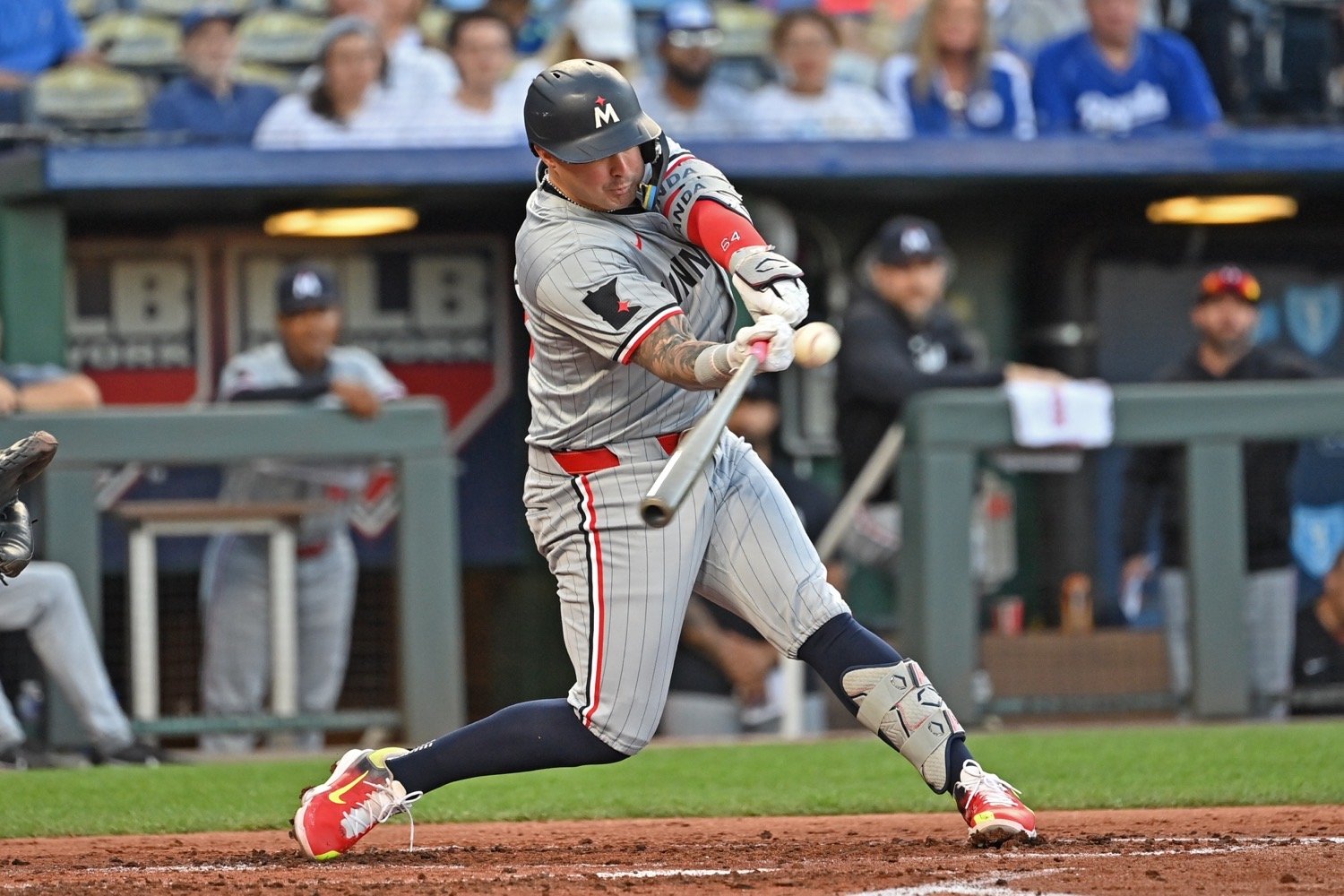 José Miranda was a relatively unheralded prospect prior to his 2021 breakout with the Twins' Double- and Triple-A affiliates. He carried that success into 2022, where he slashed .268/.325/.426 in 125 games, but then struggled in 2023, largely due to a shoulder injury that hampered him for most of the season. Entering his age-26 season, many wondered if he was a two-year wonder, or if he could re-establish himself as a long-term fixture in the middle of the Twins lineup. A month into the 2024 season, Miranda quickly answered the bell. Through Aug. 17—prior, in other words, to the entire offense collapsing—Miranda slashed .308/.348/.490, with an impressive 14.3% K rate and a 137 wRC+. While he didn’t show the over-the-fence power he flashed in the minors in 2021 and in the bigs in 2022, he still provided plenty of gap-to-gap power, with 26 doubles and even two triples. While being one of the most consistent offensive contributors, he left more to be desired with his glove. Like, a lot more. According to Baseball Savant, Miranda had the third-worst Fielding Run Value of any third baseman who played at least 500 innings. He had an even 0 FRV in a much smaller sample at first base, but in 2022, he posted a -4 there. In short, while Miranda was one of the best contributors at the plate, he’s a well-below-average player in the field, on a team that already has too many question marks around the diamond. Eduoard Julien, Alex Kirilloff, Brooks Lee, Austin Martin, Michael Helman, and even Royce Lewis are other infielders on the big-league roster with average or worse gloves, and that doesn’t even include Yunior Severino, who was added to the 40-man roster last winter as another positionless infield slugger. While Lee and Lewis would return significantly more value than Miranda in trades, they are centerpieces of the Twins' current competitive window, as former first-round picks who are just 23 and 25, respectively. Moreover, their gloves also are far more passable and versatile; they're more likely to stay in defensive lineups throughout their big league careers. Miranda may be better off as a DH as he ages. Young, above-average hitters are always going to be valuable and have a job in Major League Baseball, so (despite his shortcomings in the field) I believe that Miranda would have quite a few suitors of the Twins shopped him around this offseason. One caveat to add is that any player acquired in a trade is likely going to be more expensive than Miranda, who will be in his final pre-arbitration year and make around $800,000, but the Twins also have arbitration decisions to make on a handful of relievers who are projected to earn over $10 million via arbitration in total. If they can make a move on Miranda prior to the mid-November tender deadline, they will have better line of sight into which of those relievers they can “afford” to tender and which ones they may need to let walk. That also doesn’t take into account the roughly $3 million raise that Willi Castro is projected to get in 2025, and how those funds could be repurposed to fill an area of need if they decide to move on from the super-utility player. Miranda's value might be in the sweet spot, where the Twins can get something helpful and shake up their positional group for 2025 without losing a player they view as indispensable. Much depends on how other segments of the market take shape in the weeks ahead, but this possibility bears watching. Would you trade José Miranda or one of the other utility infielders mentioned in this article? If so, what position would you target? Join the conversation in the comments!
 -
I wouldn't hate a sign and trade at all, but I wonder how much last year impacts them. It very much seemed (and may have been confirmed) that the Twins only tendered him assuming they could trade him. Now, Willi would be a more attractive option to teams but nonetheless have to wonder if the Twins are too riks adverse after last year.
-
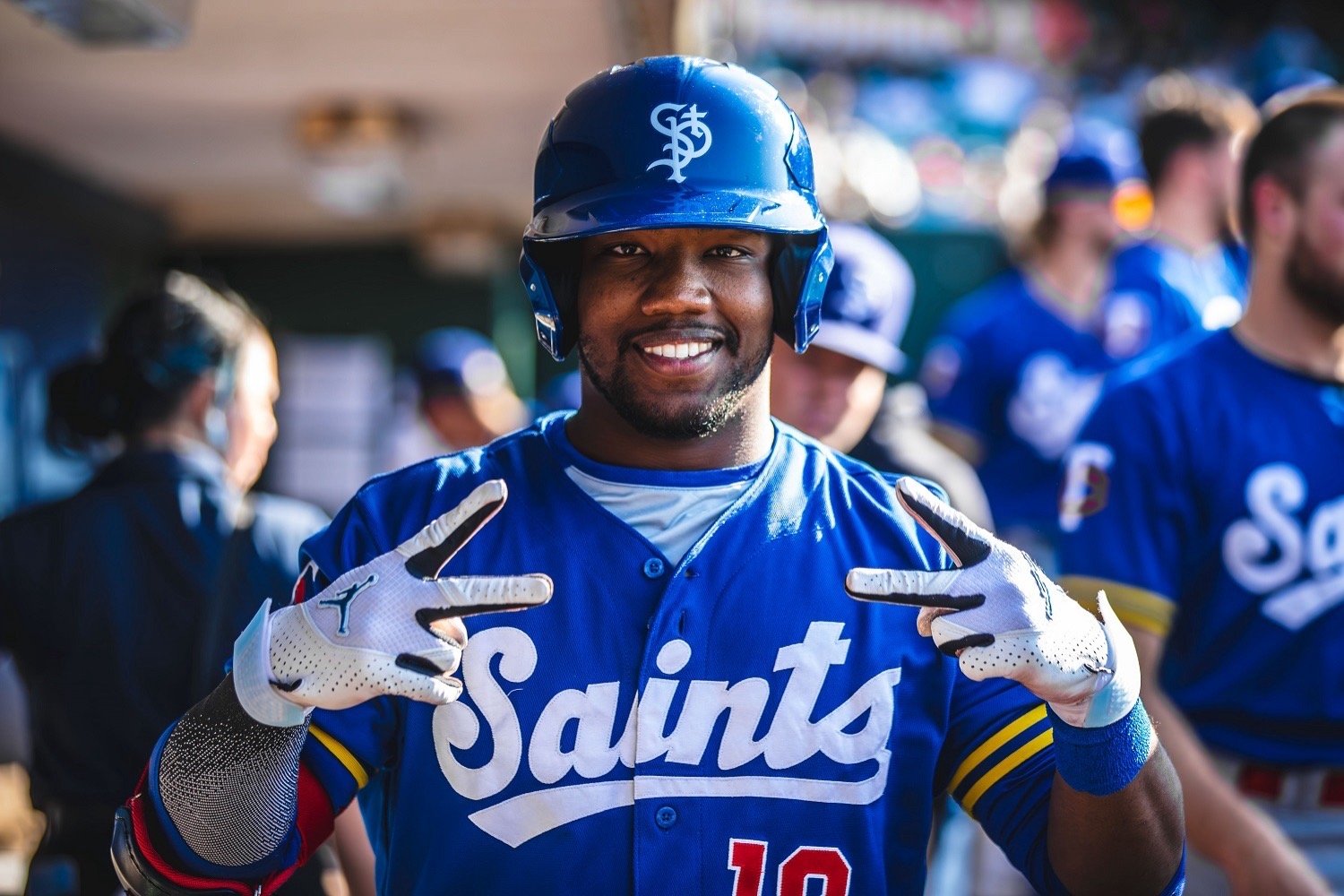 Willi Castro has arguably been the Twins' most valuable player for two years running. He’s played passable defense (or better) at six of the eight defensive positions; that led to him getting votes for a Gold Glove Award in 2024. The crafty righthander has even given the team 3 ⅔ shutout innings on the mound. Over the last two seasons, he has 916 at-bats, boasting a .251/.334/.395 slash line with 80 extra-base hits, 94 RBIs, and 47 stolen bases, all while carrying a 23.9% K rate and 8.1% BB rate. Castro’s journey to the Minnesota Twins has been well-documented: After four-ish below-average seasonswith the Tigers, he was non-tendered in November 2022, and a month later, the Twins signed him to a minor-league deal. He’s the ultimate underdog story and, boy, do people love rooting for an underdog. But sometimes that story can blind us from reality, as was the case with Randy Dobnak and Willians Astudillo. Those two guys were easy to root for and fun to watch, but even when the production waned, we heard plenty of fans clamoring for bigger roles because of their backstories. Could the same thing be happening with Castro? Could the Twins be better served to non-tender Castro and replace his production through multiple avenues? Admittedly, prior to reading Nick Nelson’s tweet, I thought it was a no-brainer that Minnesota would bring Castro back. After all, FanGraphs values his production at $43.6 million over the last two seasons, so how could you say no to a salary that is projected to be roughly a quarter of his annual worth? But Nick forced me to take off my underdog-colored glasses and really think about the value Castro provides, in the added context of the Twins' self-imposed salary cap. Why spend that much on a utility man with a 108 wRC+, when you could spend a fraction of that on a prospect to leave some room for reinforcements elsewhere? Or as Brad Pitt told us in Moneyball, the Twins may be better off trying to recreate him in the aggregate. Enter Yunior Severino. The 25-year-old Severino signed with the Twins back when he was a teenager, after the Braves were sanctioned for violations of IFA signing rules and he was declared a free agent for a second time. Despite posting above-average numbers from 2019-23 from Low A through Double A, the switch-hitter never really found himself gaining the prospect pedigree that you might expect of someone who keeps performing well at multiple levels. Regardless of what outsiders thought, the Twins viewed him as a valuable asset to the organization and (somewhat surprisingly) added him to the 40-man roster last November–protecting him from the Rule 5 draft. What did the Twins see that others didn’t? Well, we know that the Twins really, really value versatility. Throughout his minor-league career, Severino has bounced around the diamond, seeing time at every position aside from pitcher and catcher. More recently, looking at the 2024 season, the utility man saw time at first base, third base, and right field. Various scouting reports indicate that his defense is not a strength, evidenced by his positional versatility shrinking with each season. That said, he can play mostly anywhere if it’s needed, and when you have a bat like his, there is value in that. With the St. Paul Saints, Severino had a .254/.342/.434 slash line, with 21 homers and a solid 12% walk rate. His plate discipline and swing decisions are very solid and, while strikeouts have been a concern over his career, a 27.3% K rate in 2024 is an improvement compared to his stint at the same level in 2023. The elevated strikeout rate can be partially attributed to his all-or-nothing approach at the plate, as he has a below-average contact rate of 66.7%. But, once again, that number is an improvement over what we saw in 2023, which is encouraging to see from a prospect. So, can Severino really be considered a Willi Castro replacement? Short answer: no. But there’s more nuance than that – it’s not black and white. Again, this comes back to money. While Severino is a clear downgrade from Castro, if the Twins elect to “save” money here allowing them to spend elsewhere, then we could be looking at a situation where they’re getting more bang for their buck. Instead of paying "just" Castro, what if the Twins can pay Severino, plus one or two relief arms that help bridge the gap between the starters and the back end of the bullpen? What if, given the versatility of Austin Martin, Brooks Lee, Royce Lewis, and José Miranda (in addition to Severino), there is less of a need for super utility than there was the last two seasons? Going back to Moneyball, the Twins shouldn’t be focusing on how they can replace Castro, but how they can recreate him in the aggregate. With that in mind, I no longer think that Castro is a lock to be on the Twins' 2025 roster. In fact, I may have been swayed to the other side of the argument. While his contributions have been more than expected and greatly appreciated, maybe it makes the most sense to non-tender him in a month and find value elsewhere. What would you do in this situation? Join the conversation in the comments!
 -
The Minnesota Twins will have a tough arbitration decision to make regarding Willi Castro next month. While the decision comes down to dollars more than production, could the Twins get more bang for their buck by non-tendering Castro? Image courtesy of Rob Thompson, St. Paul Saints The Minnesota Twins will have a tough arbitration decision to make regarding Willi Castro next month. While the decision comes down to dollars more than production, could the Twins get more bang for their buck by non-tendering Castro? Willi Castro has arguably been the Twins' most valuable player for two years running. He’s played passable defense (or better) at six of the eight defensive positions; that led to him getting votes for a Gold Glove Award in 2024. The crafty righthander has even given the team 3 ⅔ shutout innings on the mound. Over the last two seasons, he has 916 at-bats, boasting a .251/.334/.395 slash line with 80 extra-base hits, 94 RBIs, and 47 stolen bases, all while carrying a 23.9% K rate and 8.1% BB rate. Castro’s journey to the Minnesota Twins has been well-documented: After four-ish below-average seasonswith the Tigers, he was non-tendered in November 2022, and a month later, the Twins signed him to a minor-league deal. He’s the ultimate underdog story and, boy, do people love rooting for an underdog. But sometimes that story can blind us from reality, as was the case with Randy Dobnak and Willians Astudillo. Those two guys were easy to root for and fun to watch, but even when the production waned, we heard plenty of fans clamoring for bigger roles because of their backstories. Could the same thing be happening with Castro? Could the Twins be better served to non-tender Castro and replace his production through multiple avenues? Admittedly, prior to reading Nick Nelson’s tweet, I thought it was a no-brainer that Minnesota would bring Castro back. After all, FanGraphs values his production at $43.6 million over the last two seasons, so how could you say no to a salary that is projected to be roughly a quarter of his annual worth? But Nick forced me to take off my underdog-colored glasses and really think about the value Castro provides, in the added context of the Twins' self-imposed salary cap. Why spend that much on a utility man with a 108 wRC+, when you could spend a fraction of that on a prospect to leave some room for reinforcements elsewhere? Or as Brad Pitt told us in Moneyball, the Twins may be better off trying to recreate him in the aggregate. Enter Yunior Severino. The 25-year-old Severino signed with the Twins back when he was a teenager, after the Braves were sanctioned for violations of IFA signing rules and he was declared a free agent for a second time. Despite posting above-average numbers from 2019-23 from Low A through Double A, the switch-hitter never really found himself gaining the prospect pedigree that you might expect of someone who keeps performing well at multiple levels. Regardless of what outsiders thought, the Twins viewed him as a valuable asset to the organization and (somewhat surprisingly) added him to the 40-man roster last November–protecting him from the Rule 5 draft. What did the Twins see that others didn’t? Well, we know that the Twins really, really value versatility. Throughout his minor-league career, Severino has bounced around the diamond, seeing time at every position aside from pitcher and catcher. More recently, looking at the 2024 season, the utility man saw time at first base, third base, and right field. Various scouting reports indicate that his defense is not a strength, evidenced by his positional versatility shrinking with each season. That said, he can play mostly anywhere if it’s needed, and when you have a bat like his, there is value in that. With the St. Paul Saints, Severino had a .254/.342/.434 slash line, with 21 homers and a solid 12% walk rate. His plate discipline and swing decisions are very solid and, while strikeouts have been a concern over his career, a 27.3% K rate in 2024 is an improvement compared to his stint at the same level in 2023. The elevated strikeout rate can be partially attributed to his all-or-nothing approach at the plate, as he has a below-average contact rate of 66.7%. But, once again, that number is an improvement over what we saw in 2023, which is encouraging to see from a prospect. So, can Severino really be considered a Willi Castro replacement? Short answer: no. But there’s more nuance than that – it’s not black and white. Again, this comes back to money. While Severino is a clear downgrade from Castro, if the Twins elect to “save” money here allowing them to spend elsewhere, then we could be looking at a situation where they’re getting more bang for their buck. Instead of paying "just" Castro, what if the Twins can pay Severino, plus one or two relief arms that help bridge the gap between the starters and the back end of the bullpen? What if, given the versatility of Austin Martin, Brooks Lee, Royce Lewis, and José Miranda (in addition to Severino), there is less of a need for super utility than there was the last two seasons? Going back to Moneyball, the Twins shouldn’t be focusing on how they can replace Castro, but how they can recreate him in the aggregate. With that in mind, I no longer think that Castro is a lock to be on the Twins' 2025 roster. In fact, I may have been swayed to the other side of the argument. While his contributions have been more than expected and greatly appreciated, maybe it makes the most sense to non-tender him in a month and find value elsewhere. What would you do in this situation? Join the conversation in the comments! View full article
-
Breaking Down the Twins’ 2024 Offense: A Pitch Performance Analysis
Matthew Lenz posted an article in Twins
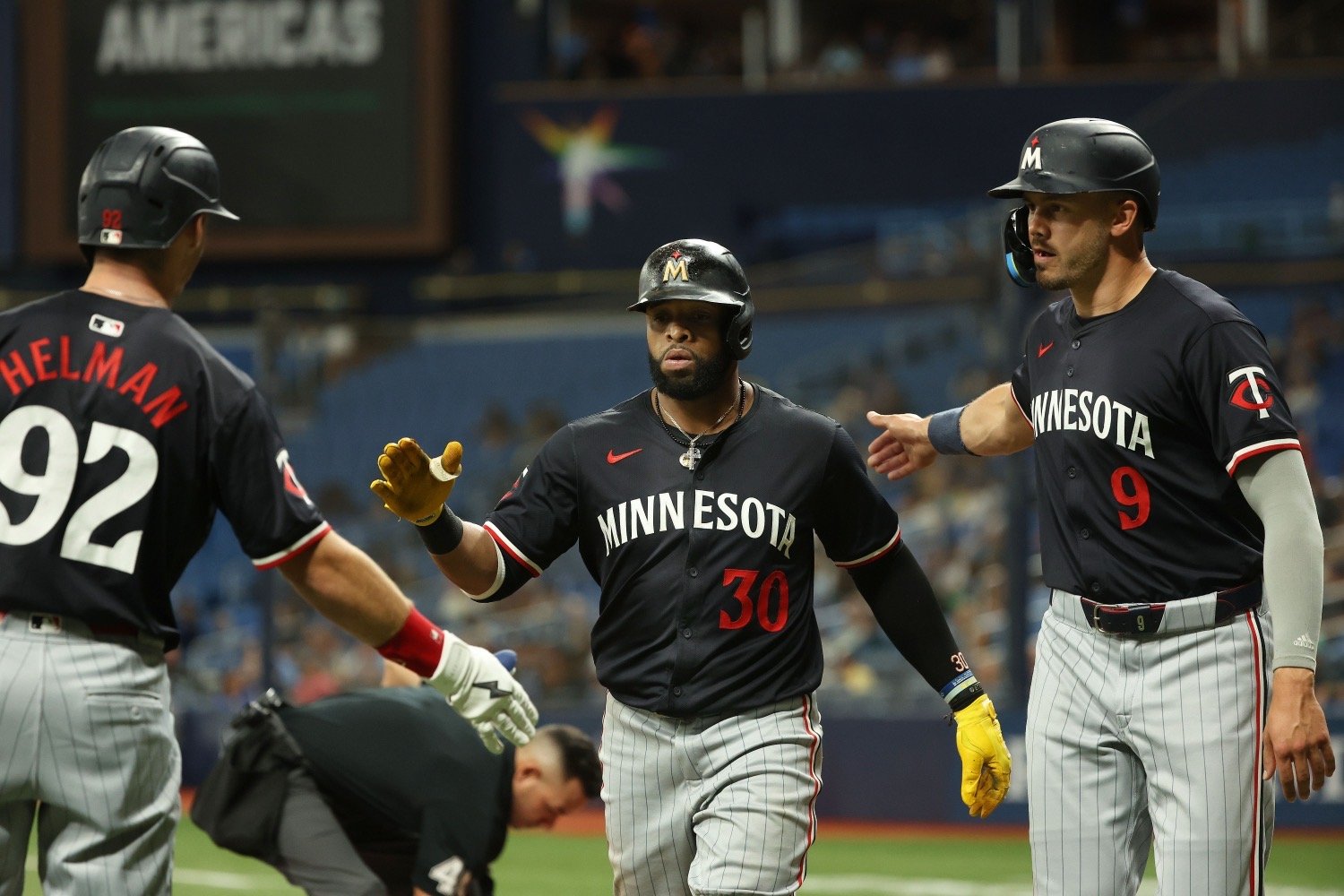 I used a search query on Baseball Savant to find the four most frequent pitches Twins batters faced, and looked at a variety of stats you’ll see referenced throughout. For those unfamiliar with some of Savant’s more advanced stats, I wanted to provide some definitions from their site. Weight On-Base Average (wOBA) takes into account outcomes on contact, walks, and strikeouts. Run value is the run impact of an event based on runners on base, outs, and ball-and-strike count. Alright, let's get into it. Fastball - 31.4% of pitches seen The Twins were a good team against four-seam fastballs in 2024, ranking in the top 10 in batting average, slugging, and wOBA against the offering. Byron Buxton led the way with a run value of 12, a slugging percentage of .657, and a wOBA of .440, and finished second on the team with eight home runs – four behind Carlos Santana. Carlos Correa batted .338 on the pitch, 28th-best in all of baseball, while Buxton finished second on the team at .324. Kyle Farmer was the worst fastball hitter on the team, with a -9 run value and .189 batting average. He saw the pitch a team-leading 37.6% of the time. Pitchers had a scouting report on Farmer, and he wasn’t able to confound it. T1FkclJfWGw0TUFRPT1fRGdjSFZsRUdBZ3NBQ1ZOVEJRQUFVQUpWQUZrQVYxWUFWRklCQWdJTkJGRUdWZ0FD.mp4 Slider - 22.3% of pitches seen The Twins actually performed better against sliders, ranking in the top seven in the following categories: run value, batting average, slugging percentage, and wOBA. Despite their success, opposing pitchers fed them sliders 22.3% of the time – good for 6th-most in all of baseball. Correa was the team leader in batting average (.386), slugging percentage (.579), wOBA (.438), and run value (12), and was one of the best hitters in all of baseball against the offering. Carlos Santana was the worst hitter, sporting a .158 batting average, a .263 slugging percentage, and -6 run value, despite seeing the 3rd-fewest sliders on the team and all those sliders breaking toward him, as a switch-hitter. eFoxNkRfWGw0TUFRPT1fVndoVFhGSlJVZ0FBWEZzQlZnQUFCVk5RQUFCVEFsTUFVMUpYQTFZTVVndFVBRlpl.mp4 Sinker - 13.5% of pitches seen The Twins' biggest weakness this year was handling the sinker, or two-seam fastball. Fortunately, they saw the offering the second-fewest times in all of baseball, as they ranked in the bottom nine teams in run value, batting average, slugging percentage, and wOBA. Interestingly enough, the team whiffed on just 14.1% of the sinkers they saw. Their lousy production, then, indicates poor contact. The team's limited success came from a variety of sources, with Trevor Larnach batting .395 and posting a .420 wOBA against the pitch; Royce Lewis slugging .590; and Correa accruing a run value of 7. Ryan Jeffers struggled mightily, posting a run value of -12--twice as damaging as the next-worst production of -6, by famed pinch-hitter Manuel Margot. NjQxdjRfWGw0TUFRPT1fQkFOUVZRWUJBbE1BQVZVQkF3QUFBbGRSQUFOVVVBQUFVVkFGQUFzSFVnTUVCQU1F.mp4 Changeup - 11.2% of pitches seen The Twins finished in the middle third of teams against the changeup, with a .240 batting average (11th), .386 slugging percentage (19th), and .287 wOBA (13th), but did finish ninth with a run value of 14. Jeffers found the most success, with a team-leading .718 slugging percentage, a .443 wOBA, and a run value of 7, tied with Santana for the best on the roster. Manuel Margot led the way with a .333 batting average. Larnach had the most troubles when opposing pitchers pulled the string, with a .210 batting average, .242 slugging percentage, .209 wOBA, and a run value of -5. That said, Byron Buxton wasn't much better. He posted the worst batting average against cambios, at .175, and ranked toward the bottom of the team in all other categories. WGczeDJfV0ZRVkV3dEdEUT09X0JGZFZCVndGQUZBQVdsQUJBQUFBQnc1VkFBTlhVMUlBVVFBQVV3Y0hVRkVCVXdKZQ==.mp4 Overall, the Twins finished with the 10th-highest batting run value in all of baseball. That, in addition to their relative success against 64.9% of the pitches they saw (four-seam, slider, and changeup), would suggest their offense wasn't bad. In fact, it was pretty darn good. Even against all other offerings, including ones not addressed in this article, they finished 12th in run value. There's still room for valid frustration with their lack of offensive consistency, as the Twins had the third-highest standard deviation of runs scored on a game-by-game basis. The old adage tells us that “hitting is contagious”, and that’s ultimately what defined the 2024 Minnesota Twins offense. In terms of talent, though, it's good to remember that there's lots of room for hope.
- 5 comments
-
- 1
-
-
- byron buxton
- carlos correa
- (and 4 more)

