Jump to content
Twins Daily
  • Create Account
  • Twins Minor League Coverage

    How Kaelen Culpepper Can Keep Forcing the Issue in 2026

    The Twins’ top infield prospect is letting his performance dictate the next step.

    Cody Christie
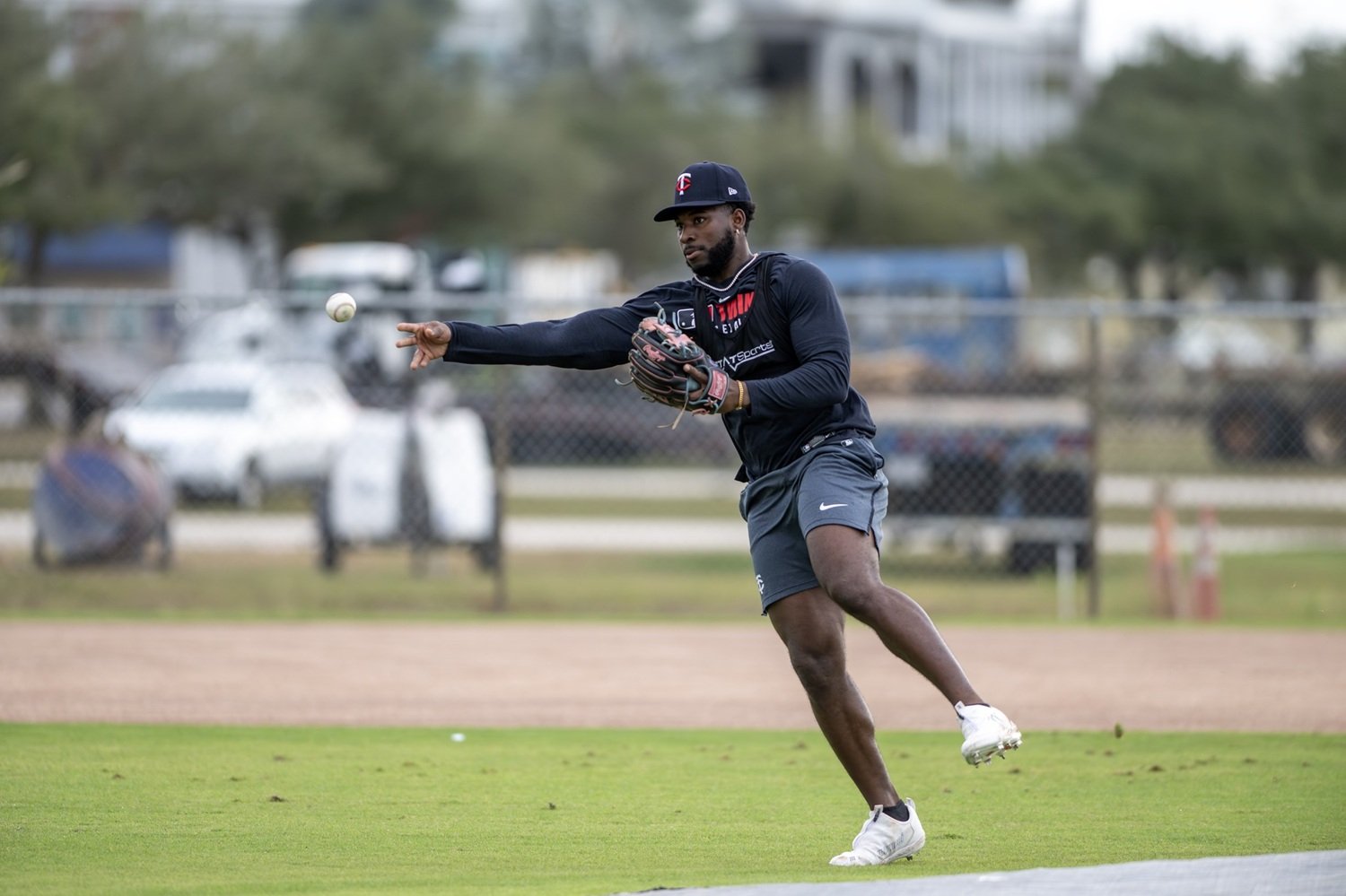
    Image courtesy of William Parmeter (Photo of Kaelen Culpepper)

    Twins Video

    Some prospects move because an organization believes it is time, while others move because the player leaves them little choice. Kaelen Culpepper spent his first full professional season doing everything possible to fall into the latter category, and the Twins are more than happy to let him keep applying that pressure.

    “It was Kaelen’s first full season, and he had an awesome year,” Twins general manager Jeremy Zoll told FanGraphs of the 23-year-old shortstop, whom the Twins drafted 21st overall in 2024 out of Kansas State University. “He was between High-A and Double-A, and we couldn’t have asked for it go much better. We’re really pleased. He had the opportunity to go to the Futures Game.”

    Culpepper’s 2025 season reads like the blueprint for a breakout. Between Cedar Rapids and Wichita, he slashed .289/.375/.469 (.844) with 20 home runs, 25 steals, and a 133 wRC+ across 517 plate appearances. He was named the Twins’ minor league player of the year, emerged as a consensus top-100 prospect, and finished the season as one of the most productive hitters in the system. Even more impressive, he did it while making the jump to Double-A, a level that has a reputation for exposing weaknesses. Culpepper never blinked.

    “I don’t really look at it as there being a big jump,” Culpepper told MLB's Matthew Leach late in the season, after his promotion. “I mean, there is the age gap and stuff like that. The competition here is pristine. Guys are more polished, more mature. But when it comes to the skill gap, it’s pretty similar. It’s still baseball. Baseball is hard. It’s not meant to be easy. If it was, everybody would do it. But I just look at it as two leagues, big leagues and the Minor Leagues.”

    That mindset shows up every time he steps in the box. Culpepper has hit at every stop, from college to wood-bat leagues to his first taste of pro ball. In 2025, the power that some evaluators questioned before the draft arrived in force, even as he maintained his ability to hit for average and control the strike zone. He walked 50 times and struck out just 90 times, a better ratio than many expected, especially given his aggressive approach.

    There is still refinement ahead. Culpepper can be prone to chasing off-speed pitches out of the zone, and his groundball rate was the third highest in the system. Yet reaching the 20-homer mark while keeping the ball on the ground that often hints at more power to come if he can elevate with more consistency. That is the kind of problem teams love to have.

    Following his professional debut in 2024, Culpepper made a conscious effort to get better. He worked to add bat speed, and according to a club official, he did just that, boosting his swing speed by about 3 miles per hour and maintaining it throughout the season.

    “He’s confident in his abilities and also willing to work hard, and I think those are two traits that are going to take guys a long way,” said Bryce Berg, the organization’s minor league hitting coordinator, in Leach's article.

    The offensive performance alone would be enough to push a player up the ladder, but Culpepper has also given the Twins plenty to think about defensively. He has primarily played shortstop, where reviews of his range, instincts, and arm have been encouraging. At the same time, the organization has begun expanding his versatility.

    “He’s primarily playing shortstop, but he’s also getting some early work at second base and third base, as well as a little bit of game exposure at both spots,” Zoll told FanGraphs. “We’ll continue to let that play out as we get through spring training and into the season. We’ll figure it out exactly in terms of placement and proximity. We always kind of let the player dictate that with his performance, but he’s put just about as much pressure on us in terms of us wanting to keep moving him, and keeping him challenged.”

    That flexibility only raises Culpepper’s value. His arm would play comfortably at third base, and his instincts and hands give him a chance to remain at shortstop longer than some initially believed. Wherever he ultimately lands, the bat profiles as an above-average regular with legitimate All-Star upside.

    For 2026, the question is less about whether Culpepper is ready for a challenge and more about how quickly the Twins choose to escalate it. He has yet to face Triple-A pitching and has played just 139 minor league games, but if he keeps hitting the way he has, a big league debut at some point this season is far from unrealistic.

    Culpepper understands there is still work to do, especially when it comes to pitch selection.

    “Hitters hit, you know what I mean?” Culpepper told MLB.com. “I consider myself a hitter. A very good hitter. So I’m always going to want to hit pitches a little off the plate, so I’m going to chase a little bit. It’s OK to chase as long as you’re not chasing too much. Sometimes I find myself chasing a little too much, and I’ve got to get back to being patient, seeing the ball deep, trusting my hands.”

    The Twins are confident that balance will come.

    “It’s a special combination of confidence, and I think that comes from a level of preparedness, and then openness to feedback and improving,” said Twins director of player development Drew MacPhail. “That’s a rare combo, that I think he has both in an incredibly healthy amount.”

    Ultimately, Culpepper’s path will be determined the same way it has been so far. He will keep hitting, keep adjusting, and keep forcing the organization to respond. If 2025 was any indication, the pressure will only increase in 2026.

    What should the Twins expect from Culpepper this season? Leave a comment and start the discussion. 


    Interested in learning more about the Minnesota Twins' top prospects? Check out our comprehensive top prospects list that includes up-to-date stats, articles and videos about every prospect, scouting reports, and more!

    View Twins Top Prospects

    Follow Twins Daily For Minnesota Twins News & Analysis

    Recent Twins Articles

    Recent Twins Videos

    Twins Top Prospects

    Brandon Winokur

    Cedar Rapids Kernels - A+, SS/CF
    Winokur has had multi-hit games in five of his past six games. In that stretch, he is 13-for-23 (.565) with two doubles. He homered in the 8th inning to give the Kernels the lead. Had 4 hits on Saturday.

    User Feedback

    Recommended Comments


    Featured Comments

    2 hours ago, bean5302 said:

    Larnach has been a success. Now with over 4 years of service time, he's made a career in MLB. Though he never materialized as a start player or even a guy you'd really want starting, his floor has been established as a "placeholder" type guy who is good enough to carry on the roster for cheap who won't be a black hole. That's still good.

    Miranda and Julien are part of a concerning trend with this team. Prospects who break out, then never recover after a sophomore slump. The one year wonders happen quite a bit in MLB, but the Twins don't seem to have anybody who doesn't fall off the map after a year. Wallner and Lewis need a bounce back badly.

    In any case, Culpepper has a long way to go to reach Julien/Miranda levels. Since Culpepper just turned 23 a few days ago, and he's not even rule 5 eligible until after the 2027 season, there's no urgency on him. If he earns it, he earns it, but that's a big step away.

    if replacement level is success, than yes Larnach has been an overwhelming success. 

    My math is Culpepper is 23 during the 26 season, 24 during the 27 season, and 25 for the 28 season. Who cares when he rule 5 if he is already 25. Julien and Miranda didn't really start doing good in the minors until they were 23, So if he isn't up this year, he is on the same path as them. (and Larnach and Wallner).

    Again I think the hope is Culpepper is a future core starter and not an unknown for years.

    12 hours ago, Fatbat said:

    All Houston has to do is find his bat and he will be one year behind K.pepper. We could be having this same conversation one year from now with Houston and Winokur. They both need to improve their bats while they are already polished defensively.  We have such a stacked farm system that its not going to be possible to deal with just one prospect at a time. 
    Im not saying every prospect is going to make it but we have had so many misses and now it seems like our drafting and development have improved to where the prospects we have, are going to be knocking down the door very soon. 

    To be clear, I was speaking about th3 INF and K-Pepper in particular, which is why I referenced 1 prospect at a time.

    I think Houston is ahead of Winokur by a good year, and I'm a Winokur fan. Houston is a year older, probably has a little more natural contact ability in his bat, and if his glove is potentially as good as advertised... potentially elite...he doesn't have to be a great hitter to make his mark.

    I'm still not sure where Winokur ends up. He's got the athleticism and arm for 3B. But he also runs so well, with that big arm, he could make a great OF. I've often wondered if long term he wouldn't be a better CF option than either Rodriguez or Jenkins just because of body type. But he could also be a 20/20 man at 1B with Gold Glove potential defensively. How awesome would that be? (He could still play some OF as well).

    But I do think Winokur has got to show an improved overall contact rate to reach his vast potential. 

    18 hours ago, Nashvilletwin said:

    Ideally the pattern is full in the OF with our future trio of Jenkins, ERod and Gonzalez.  All of those three are better  overall defensive OF alternatives inclusive of speed and arm.  But who knows.  

    I feel like people forgot that Keachall had TJ Surgery 18 months ago and before that he was playing CF regularly.

    Gabriel Gonzalez as a better overall defensive OF? Get real. 

    3 hours ago, TwinsDr2021 said:

    if replacement level is success, than yes Larnach has been an overwhelming success. 

    My math is Culpepper is 23 during the 26 season, 24 during the 27 season, and 25 for the 28 season. Who cares when he rule 5 if he is already 25. Julien and Miranda didn't really start doing good in the minors until they were 23, So if he isn't up this year, he is on the same path as them. (and Larnach and Wallner).

    Again I think the hope is Culpepper is a future core starter and not an unknown for years.

    Rule 5 was put out there to help push teams to stop hoarding talent which was MLB-ready.  The fact Culpepper is two years away from being Rule 5 eligible sets a reasonable expectation for where his development path should reasonably be. 

    1-2 years for elite prospects out of college who fly through systems, 3-4 years for high end prospects in general.

    2-3 years for elite prospects out of high school who fly through systems with 4-5 years in general for high end prospects.

    Culpepper was drafted 2 years ago, and he wasn't viewed as an elite prospect at the time. He went 21st overall because there were some things he needed to prove. Taking 3 years to blast through the minors and make opening day 2027 would still be very fast.

    6 hours ago, amjgt said:

    I feel like people forgot that Keachall had TJ Surgery 18 months ago and before that he was playing CF regularly.

    Gabriel Gonzalez as a better overall defensive OF? Get real. 

    The consensus seems to be that Keaschall now has a weak arm.  If so, get real. 

    On 1/19/2026 at 12:34 PM, AlLagoon said:

    Age old question: how many shortstops do you need to spend a high draft pick on to find a winner?

    From Levi Michael to Marek Houston, and Lee, Culpepper, Lewis in between.

    Sheesh, draft a pitcher.

    Wasn't Nick Gordon drafted as a shortstop too? Regardless, I'm with you: I wish they would take more chances on drafting pitchers. I realize it's risky strategy, but the rewards can be very high. 

    10 hours ago, Nashvilletwin said:

    The consensus seems to be that Keaschall now has a weak arm.  If so, get real. 

    Consensus here is often the same thing repeated over and over with no one checking for facts 

    14 hours ago, Nashvilletwin said:

    The consensus seems to be that Keaschall now has a weak arm.  If so, get real. 

    Here are the facts:

    Keascall was throwing harder in high school than he is now.  His prep scouting report from 2019 shows him clocked at 83mph while Baseball Savant has him 74.9mph last year in MLB....Why is that?  Because he had TJ surgery in August 2024. So most of last year he was less than 12 months removed from surgery.  

    It's a reasonable assumption he can and will get back to his HS arm strength.  If he does that, it would put him at about the 45th percentile in MLB.  His Baseball America scouting report has him graded at 50 for arm strength, which is average, and right near that 45th percentile.   

    31 minutes ago, Chembry said:

    Here are the facts:

    Keascall was throwing harder in high school than he is now.  His prep scouting report from 2019 shows him clocked at 83mph while Baseball Savant has him 74.9mph last year in MLB....Why is that?  Because he had TJ surgery in August 2024. So most of last year he was less than 12 months removed from surgery.  

    It's a reasonable assumption he can and will get back to his HS arm strength.  If he does that, that would put him at about the 45th percentile in MLB.  His Baseball America scouting report has him graded at 50 for arm strength, which is average, and right near that 45th percentile.   

    The average CF throws 90MPH, 87 MPH for LF. 83 MPH is still a weak arm for an outfielder. Trevor Larnach throws 83 MPH.

    Infield and outfield throws are different, which leads to different max velocities. Adam Frazier threw 80 MPH in the outfield last year but only 76 MPH at 2B. Addison Barger was 5 MPH slower at 3B than he was in RF. If he was clocked at 83 MPH in the outfield in high school, that doesn't mean he'll throw 83 MPH in the infield. You need to subtract 4-6 MPH for the difference in throwing mechanics. 78 MPH in the infield would be average for 2B.

    6 minutes ago, DJL44 said:

    The average CF throws 90MPH, 87 MPH for LF. 83 MPH is still a weak arm for an outfielder. Trevor Larnach throws 83 MPH.

    Infield and outfield throws are different, which leads to different max velocities. Adam Frazier threw 80 MPH in the outfield last year but only 76 MPH at 2B. Addison Barger was 5 MPH slower at 3B than he was in RF. If he was clocked at 83 MPH in the outfield in high school, that doesn't mean he'll throw 83 MPH in the infield. You need to subtract 4-6 MPH for the difference in throwing mechanics. 78 MPH in the infield would be average for 2B.

    The Twins do not need average in the infield; Correa was not average and it made a difference.  IF, if Keaschall can get his outfield mojo back, that is where he should be.

    16 minutes ago, DJL44 said:

    The average CF throws 90MPH, 87 MPH for LF. 83 MPH is still a weak arm for an outfielder. Trevor Larnach throws 83 MPH.

    Infield and outfield throws are different, which leads to different max velocities. Adam Frazier threw 80 MPH in the outfield last year but only 76 MPH at 2B. Addison Barger was 5 MPH slower at 3B than he was in RF. If he was clocked at 83 MPH in the outfield in high school, that doesn't mean he'll throw 83 MPH in the infield. You need to subtract 4-6 MPH for the difference in throwing mechanics. 78 MPH in the infield would be average for 2B.

    I absolutely agree with that.  I played NAIA college baseball and we were competitive with DII programs, so I know all about differences.  I was a P/OF and topped out at 89mph from the OF and 86 from the mound.  I was just noting the data we have at hand. 

    It makes no sense that he when he is fully recovered he can't at least get back to what he was at in high school, especially since his body has matured more.  What I will say is that, from the prep report, I can't tell you where that throw occurred (from IF or OF).  All we can reference is last years MLB data and scouting reports.  

    16 minutes ago, RpR said:

    The Twins do not need average in the infield; Correa was not average and it made a difference.  IF, if Keaschall can get his outfield mojo back, that is where he should be.

    His “outfield mojo” of 83 MPH was well below average in the outfield. First and second base are the positions where arm matters the least. 

    7 minutes ago, RpR said:

    First yes, but turning a double play as second it makes a Huge difference.

    Quickness on the pivot and accuracy are more important than MPH on the throw. The throw is less than 90 feet. The difference between 73 MPH (107.1 ft/s) and 85 MPH (124.7 ft/s) (the range of velocity for MLB second basemen) over 90 feet is 0.84 - 0.72 = 0.12 seconds. The time it takes to turn the pivot ranges from 0.7 to 1.0 seconds. The average baserunner is running 27 ft/s, which means the difference between the max and min 2B throw velocity is 3 feet, but the time spent on the pivot is 8 feet for the baserunner.

    I looked for ratings on how long it takes 2B to turn the pivot but couldn't find anything on statcast.

    30 minutes ago, DJL44 said:

    Quickness on the pivot and accuracy are more important than MPH on the throw. The throw is less than 90 feet. The difference between 73 MPH (107.1 ft/s) and 85 MPH (124.7 ft/s) (the range of velocity for MLB second basemen) over 90 feet is 0.84 - 0.72 = 0.12 seconds. The time it takes to turn the pivot ranges from 0.7 to 1.0 seconds. The average baserunner is running 27 ft/s, which means the difference between the max and min 2B throw velocity is 3 feet, but the time spent on the pivot is 8 feet for the baserunner.

    I looked for ratings on how long it takes 2B to turn the pivot but couldn't find anything on statcast.

    Agreed. A thrown ball travels much faster than hands and feet can move. Middle infielders who turn it with a minimum amount of hand and foot movement turn it quicker. One obvious example is letting the ball come to your glove (with your throwing hand with the glove) instead of reaching out to the ball and pulling it back to your body which wastes valuable time (this is what Julien frequently does and one reason he has a slow turn). My old Legion coach made us middle infielders practice the turn by trapping the feed on the back of the glove with your throwing hand because it made you keep your hands together and prevented you from reaching out. Of course the accuracy and timing of the feed is critical to a quick turn. If the timing is proper less foot movement is required to throw. 

     
    The speed of a throw from second (or any infield position) to first makes a significant difference directly reducing the runner's time to reach the base, with faster throws shaving off crucial fractions of a second that can determine an out, though accuracy and quick release are often prioritized over pure velocity for second basemen.
    While a slower, more accurate throw might work, a faster release with good velocity is often best, as even slight speed differences (like 10%) create a noticeable half-step advantage for the defense. 
     
    Impact of Throwing Speed
    • Reduced Reaction Time: Faster throws give runners less time to react and reach first base safely.
    • Game-Changing Margins: Baseball is a game of inches; a faster throw can be the difference between safe and out, especially on close plays.
    • Trade-off with Accuracy: Second basemen focus on quick, accurate throws for double plays, but higher velocity still helps beat the runner. 
     
    Key Factors for Infield Throws
    • Velocity: The faster the ball, the less time the runner has.
    • Quick Release: A faster release is often more impactful than just pure arm strength, as it minimizes the time the ball spends in the infielder's hand.
    • Accuracy: Essential for getting the out, especially on double plays where the throw goes to first base after a pivot. 
    Example
    • A 90 mph throw (around 132 ft/sec) from 90 feet (typical infield distance) takes about 0.68 seconds, while a slower 80 mph throw takes around 0.76 seconds, a significant difference for a runner trying to beat the play. (Calculations based on 90 ft distance) 
    In essence, while second basemen value accuracy and quickness for double plays, increasing velocity on throws to first is a major advantage, as it directly cuts down the runner's time to get to the bag, potentially turning a close play into an out
    27 minutes ago, DJL44 said:

    I'm glad whatever AI that wrote that comment agrees with me.

    The speed of a throw from second (or any infield position) to first makes a significant difference directly reducing the runner's time to reach the base, with faster throws shaving off crucial fractions of a second that can determine an out, though accuracy and quick release are often prioritized over pure velocity for second basemen.
    While a slower, more accurate throw might work, a faster release with good velocity is often best, as even slight speed differences (like 10%) create a noticeable half-step advantage for the defense. 
     
    Only if you   ignore what you do not agree with.
    5 hours ago, RpR said:
     
     
    Only if you   ignore what you do not agree with.

    Then there is what you ignore, an efficient pivot to throw is more important than the speed of the throw. The number of times a game it happens the second baseman has to make that throw. The number of times a game a batter with above average footspeed comes up to bat with a runner on and less than 2 outs and hits a ball to the SS or 3b. 

    3 hours ago, Fatbat said:

    I remember when knoblauch got the yips.

    And Steve Sax. Painful to watch, they could be 35 feet from first base and throw it in the dugout. There are times when I think Julien trends that direction. If I recall correctly, at the end of his career Brian Harper got the yips throwing the ball back to the pitcher. Nowhere else but back to the pitcher. 

    10 hours ago, old nurse said:

    Then there is what you ignore, an efficient pivot to throw is more important than the speed of the throw. The number of times a game it happens the second baseman has to make that throw. The number of times a game a batter with above average footspeed comes up to bat with a runner on and less than 2 outs and hits a ball to the SS or 3b. 

    If you say so.

    2 hours ago, RpR said:

    If you say so.

    You are arguing about an infrequent occurrence.  On average the second basemen turn a double play 51 times a year last year. Speed of the throw can matter, but how often it matters gives the meaning whether or not it is significant. You haven’t shown that it is a frequent enough occurrence to matter. 

    On 1/21/2026 at 12:29 PM, old nurse said:

    You are arguing about an infrequent occurrence.  On average the second basemen turn a double play 51 times a year last year. Speed of the throw can matter, but how often it matters gives the meaning whether or not it is significant. You haven’t shown that it is a frequent enough occurrence to matter. 

    I quoted a statement as accurate as any on this site;

    The speed of a throw from second (or any infield position) to first makes a significant difference directly reducing the runner's time to reach the base, with faster throws shaving off crucial fractions of a second that can determine an out, though accuracy and quick release are often prioritized over pure velocity for second basemen.

    While a slower, more accurate throw might work, a faster release with good velocity is often best, as even slight speed differences (like 10%) create a noticeable half-step advantage for the defense. 
     
    Impact of Throwing Speed
    • Reduced Reaction Time: Faster throws give runners less time to react and reach first base safely.
    • Game-Changing Margins: Baseball is a game of inches; a faster throw can be the difference between safe and out, especially on close plays.
    • Trade-off with Accuracy: Second basemen focus on quick, accurate throws for double plays, but higher velocity still helps beat the runner. 
     
    Key Factors for Infield Throws
    • Velocity: The faster the ball, the less time the runner has.
    • Quick Release: A faster release is often more impactful than just pure arm strength, as it minimizes the time the ball spends in the infielder's hand.
    • Accuracy: Essential for getting the out, especially on double plays where the throw goes to first base after a pivot. 
    Example
    • A 90 mph throw (around 132 ft/sec) from 90 feet (typical infield distance) takes about 0.68 seconds, while a slower 80 mph throw takes around 0.76 seconds, a significant difference for a runner trying to beat the play. (Calculations based on 90 ft distance) 
    In essence, while second basemen value accuracy and quickness for double plays, increasing velocity on throws to first is a major advantage, as it directly cuts down the runner's time to get to the bag, potentially turning a close play into an out
    49 minutes ago, RpR said:

    I quoted a statement as accurate as any on this site;

    The speed of a throw from second (or any infield position) to first makes a significant difference directly reducing the runner's time to reach the base, with faster throws shaving off crucial fractions of a second that can determine an out, though accuracy and quick release are often prioritized over pure velocity for second basemen.

    While a slower, more accurate throw might work, a faster release with good velocity is often best, as even slight speed differences (like 10%) create a noticeable half-step advantage for the defense. 
     
    Impact of Throwing Speed
    • Reduced Reaction Time: Faster throws give runners less time to react and reach first base safely.
    • Game-Changing Margins: Baseball is a game of inches; a faster throw can be the difference between safe and out, especially on close plays.
    • Trade-off with Accuracy: Second basemen focus on quick, accurate throws for double plays, but higher velocity still helps beat the runner. 
     
    Key Factors for Infield Throws
    • Velocity: The faster the ball, the less time the runner has.
    • Quick Release: A faster release is often more impactful than just pure arm strength, as it minimizes the time the ball spends in the infielder's hand.
    • Accuracy: Essential for getting the out, especially on double plays where the throw goes to first base after a pivot. 
    Example
    • A 90 mph throw (around 132 ft/sec) from 90 feet (typical infield distance) takes about 0.68 seconds, while a slower 80 mph throw takes around 0.76 seconds, a significant difference for a runner trying to beat the play. (Calculations based on 90 ft distance) 
    In essence, while second basemen value accuracy and quickness for double plays, increasing velocity on throws to first is a major advantage, as it directly cuts down the runner's time to get to the bag, potentially turning a close play into an out

    Inconsequential for one out once a week.

    4 minutes ago, ashbury said:

    An extra hit a week would have turned Eric Wagaman into a .300 hitter in 2025.  Things add up in a long season.

    Only if he came up with a player on base and his HB to first speed was elite on that once a week occasion 


    Create an account or sign in to comment

    You need to be a member in order to leave a comment

    Create an account

    Sign up for a new account in our community. It's easy!

    Register a new account

    Sign in

    Already have an account? Sign in here.

    Sign In Now

×
×
  • Create New...