


Jump to content
Twins Daily
  • Create Account
  • Twins News & Analysis

    The Twins Have a Starting Pitching Crisis Brewing for 2028

    Minnesota has several young arms who could shape its future, but questions about injuries, development, and expiring contracts could leave the organization searching for starting pitching sooner than expected.

    Cody Christie
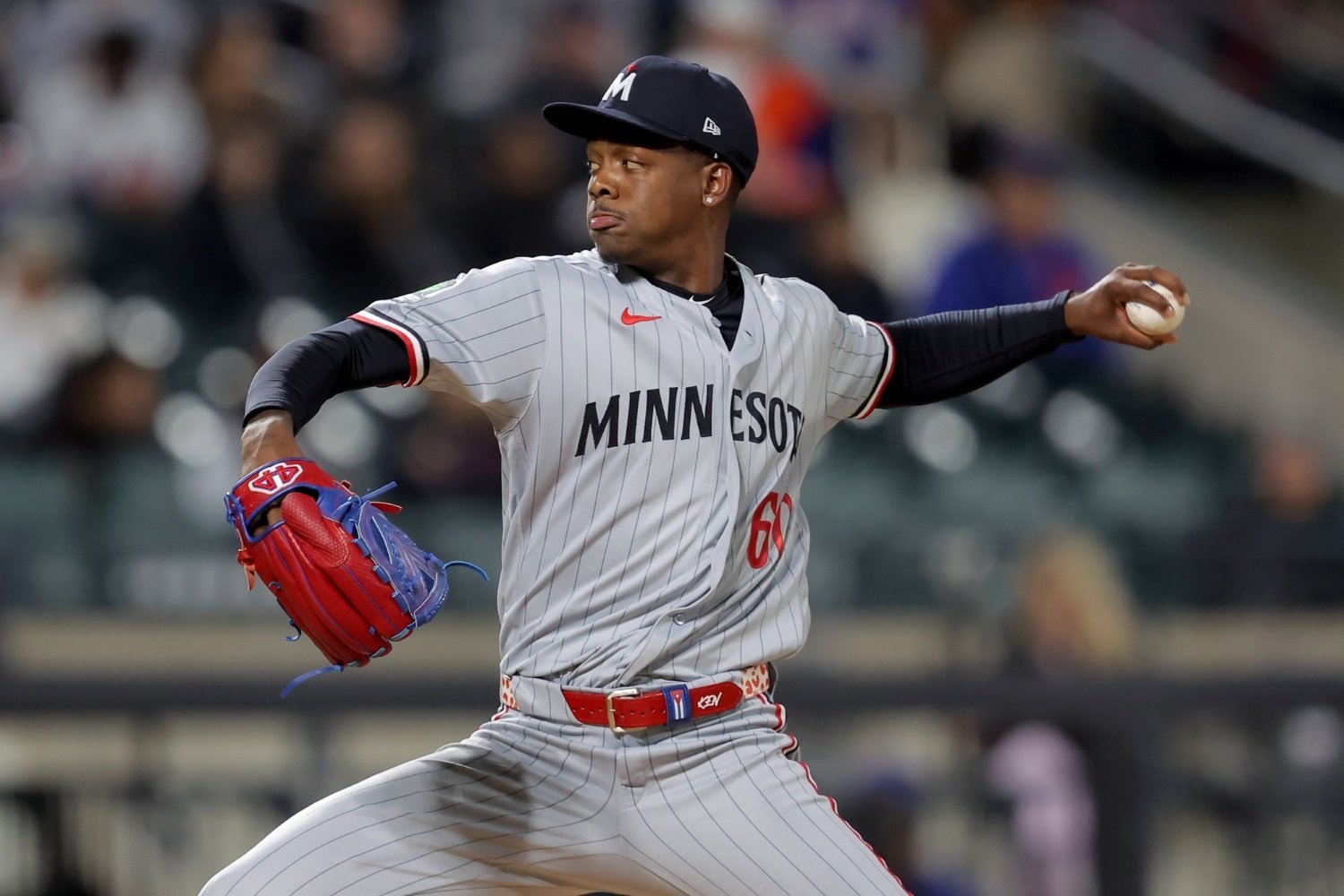
    Image courtesy of © Brad Penner-Imagn Images

    Twins Video

    The Minnesota Twins have plenty of questions to answer about their starting rotation heading into the 2027 season. However, looking one year further into the future reveals an even bigger challenge. Minnesota could lose four of its current starting pitchers to free agency after the 2027 campaign, leaving significant holes to fill in the rotation.

    Pablo López is under contract through next season. Joe Ryan, Bailey Ober, and Dean Kremer will all be arbitration-eligible for the final time in 2027. Unless the Twins extend any of those pitchers or bring them back on new contracts, the organization could be looking at a dramatically different rotation in 2028.

    Minnesota has several young pitchers who could step into those openings. However, potential is not the same as proven production, and injuries have already complicated the development of multiple arms in the organization. Let's examine the options who could shape the Twins' starting rotation in 2028 and beyond.

    Taj Bradley

    Bradley is the easiest name to pencil into Minnesota's future rotation. After arriving from Tampa Bay, he emerged as the Twins' best starting pitcher in 2026 and gave the organization a potential frontline arm to build around. Bradley finished the season with a 3.73 ERA, 113 ERA+, 4.4 rWAR and 205 strikeouts across 178 1/3 innings. He also made 31 starts, providing the kind of workload Minnesota needs from a dependable rotation anchor. His strikeout total ranked fifth among the American League's starters, demonstrating the swing-and-miss ability that made him an intriguing acquisition.

    Bradley is entering his first year of arbitration, giving Minnesota three more seasons of team control after 2026. That timeline makes him particularly important as the organization evaluates its long-term pitching plans. The Twins should explore a contract extension this winter. Bradley is young enough to remain a core piece of the rotation for several seasons, and securing him now could provide cost certainty while allowing the club to build around an established starter. Minnesota has other pitching questions to answer, but Bradley should be part of the solution rather than another uncertainty.

    Connor Prielipp

    Prielipp represents another opportunity for Minnesota to develop a long-term rotation piece. He stayed healthy throughout the 2026 season, an encouraging development for a pitcher whose career has been complicated by injuries. He recorded a 4.87 ERA, 3.73 FIP, with 128 strikeouts over 125 2/3 innings, making 22 starts. Those numbers leave room for improvement, but getting through a season with a substantial workload was an important step in his development.

    Prielipp will not reach arbitration until 2029 and is scheduled to become a free agent after the 2032 season. He should still be in his prime when that opportunity arrives, making him a potentially valuable piece of Minnesota's future. The concern is whether he can continue staying healthy. His injury history makes it difficult to assume that one relatively healthy season guarantees long-term durability. If Prielipp can build on his 2026 performance and establish greater consistency, he could become a dependable member of the rotation. The Twins will need to see more before treating him as a sure thing.

    Zebby Matthews

    Matthews showed flashes of being a dependable starter in 2026, particularly during August, when he looked like one of Minnesota's better rotation options. However, he struggled down the stretch, raising questions about his ability to maintain that performance over a full season. He finished with a 4.90 ERA, 4.70 FIP, and 116 strikeouts across 130 1/3 innings. His 39 walks were a manageable number, but he also surrendered 24 home runs. Limiting damage when hitters make contact will be an important area for improvement.

    There is a possibility Matthews could eventually find more success in the bullpen, where his stuff might play up in shorter appearances. Still, Minnesota should continue giving him opportunities to start. The organization needs to determine whether he can consistently work through a lineup multiple times before making a permanent decision about his role.

    Matthews is scheduled to reach arbitration in 2028 and free agency in 2031. That gives the Twins time to evaluate his development, but his next couple of seasons will be important in determining whether he becomes a rotation fixture or a potential bullpen option.

    Mick Abel

    Abel is another young pitcher who could factor into Minnesota's plans, but his recovery from elbow surgery will play a significant role in determining his future. The right-hander underwent successful arthroscopic surgery on his right elbow on July 1, 2026. Before the procedure, Abel made four appearances, including three starts, and posted a 3.98 ERA with 23 strikeouts in 20 1/3 innings. That was a small sample, but it offered some encouraging signs about his potential.

    Abel is not scheduled to reach arbitration until 2029 and can remain under team control through the 2031 season before reaching free agency in 2032. That timeline gives the Twins several seasons to evaluate him, provided he can return to the mound and stay healthy.

    Minnesota will need to see how Abel looks after his recovery before making any long-term assumptions. His ability to regain his previous form, build up his workload, and consistently get through starts will determine whether he can help fill one of the rotation's potential openings.

    Kendry Rojas

    Rojas had an interesting developmental season in 2026. The young left-hander showed enough promise to remain in the conversation for a future pitching role, but Minnesota used him in a relatively limited capacity. 

    He never threw more than four innings or 65 pitches in a single appearance. That workload makes it difficult to determine whether he can handle the demands of a major-league starting rotation. Rojas recorded a 3.34 ERA with 34 strikeouts in 29 2/3 innings in the majors. However, he also issued 22 walks, highlighting an area that needs improvement as he continues to develop.

    The Twins should use the 2027 season to determine whether Rojas is a legitimate starting option or whether his future might be better suited to the bullpen. His limited workload could have been part of a deliberate development plan, but the organization eventually needs to see how he performs with a more traditional starter's workload.

    Ryan Gallagher

    Gallagher is another organizational arm who could work his way into the rotation conversation, although he has more development ahead of him than Minnesota's major-league options. The 23-year-old right-hander pitched across two minor-league levels in 2026, totaling 113 innings. He finished with a 5.89 ERA, allowing 117 hits and recording 120 strikeouts while issuing 53 walks.

    Those numbers illustrate both his potential and the work still required. Gallagher showed an ability to miss bats, but his run prevention and command will need to improve if he is going to emerge as a viable major-league starter.

    The Twins have time to evaluate his progress, and Gallagher does not need to be ready for a major-league rotation immediately. A stronger 2027 season could help establish whether he belongs in the organization's longer-term plans or is better suited to a depth role.

    Riley Quick

    Quick is a younger pitching prospect who could become more relevant to the rotation picture as he advances through the minor leagues. The 22-year-old spent time across three minor-league levels in 2026, accumulating 77 2/3 innings. He posted a 4.29 ERA and struck out 108 hitters while allowing 57 hits. His 46 walks, however, show that command remains an important part of his development.

    Quick's strikeout ability is an encouraging starting point. Missing bats is an important trait for any prospective major-league starter, but he will need to pair that ability with improved control and greater consistency.

    The Twins should continue developing Quick as a starter until his performance suggests otherwise. His 2027 assignments will help determine whether he can handle a larger workload and continue advancing toward the upper levels of the organization. He is not an immediate solution to the potential 2028 rotation openings, but a strong developmental season could put him on the radar.

    Adrian Bohorquez

    Bohorquez is another prospect worth monitoring as Minnesota looks beyond its current group of major-league starters. The 21-year-old right-hander pitched across three minor-league levels in 2026, recording a 3.29 ERA over 54 2/3 innings. He allowed 39 hits and struck out 65 batters, demonstrating an ability to limit contact while generating strikeouts.

    His workload was considerably smaller than those of Gallagher and some of the organization's other starting prospects. That makes it difficult to project him into a major-league rotation just yet, but his results provide a foundation to build on.

    Bohorquez will need to demonstrate that he can handle more innings, maintain his effectiveness against more advanced hitters, and develop the consistency required of a starting pitcher. His next steps through the minor leagues should provide a clearer picture of his ceiling.

    Like Quick and Gallagher, Bohorquez remains a developmental possibility rather than a guaranteed rotation option. The Twins need several prospects to take meaningful steps forward if they want to build a sustainable rotation internally.

    How Will the Twins Fill the Rotation in 2028?

    The Twins have time to address their long-term rotation concerns, but they cannot assume every young pitcher will develop as hoped. Bradley looks like the clearest building block, while Prielipp, Matthews, Abel, and Rojas each have opportunities to establish themselves in different ways. Gallagher, Quick, and Bohorquez offer additional possibilities, although they still need to prove they can handle the demands of higher-level competition.

    Minnesota should also recognize that developing a rotation entirely from within is difficult. Injuries, inconsistent performance, and stalled development can quickly turn apparent organizational depth into a shortage of reliable starters.

    Extending Bradley would be a logical first step. The Twins should also continue evaluating their younger arms while remaining open to acquiring starting pitching through trades or free agency. The 2027 season will be important for identifying which pitchers belong in the long-term picture. By the time 2028 arrives, Minnesota could have several young starters ready to take on larger roles. However, the organization will need more than potential to replace the experience and production that could depart.

    The question is not simply who will start games for the Twins in 2028. It is whether Minnesota can develop enough reliable pitching to avoid rebuilding its rotation from scratch.


    Who will be part of Minnesota’s 2028 rotation? Leave a comment and start the discussion.

    Want more Twins in your Google results? Add us as a preferred source.

    Follow Twins Daily For Minnesota Twins News & Analysis

    Recent Twins Articles

    Recent Twins Videos

    Twins Top Prospects

    Yasser Mercedes

    Cedar Rapids Kernels - A+, OF
    On Thursday in the Fall League, Mercedes went 2-for-4 with his first double and his first homer run of the AFL season.

    User Feedback

    Recommended Comments


    Featured Comments

    3 hours ago, LyleCole said:

    While the word "crisis" is poorly chosen, the Twins have a serious lack of talent in their pitching pipeline.  I have pointed this out several times when I have posited that the Twins should have entered rebuilding mode before the 2026 season, trading Ryan and Buxton to improve the quality and depth of their pitching prospects.  

    What the Twins have is a significant imbalance between the maturation of their positional prospects (Jenkins, Culpepper, Rodriguez, Houston, Lackey, and others) and their pitching prospects.  The most likely result of all of this will be a continuation of mediocre outcomes and a team that is not a true contender to win the World Series, or even a playoff series, or even a playoff game.  


    In 2028, hopefully, Abel and Prielipp will be in their third years in the big leagues and hitting their primes. Bradley will have settled into being a solid above-average pitcher, and at least one of Rojas and Matthews will have become at least a solid #4. 

    2028 would also be a reasonable year to expect Jenkins, Lackey, etc. to start becoming above-average players.

    I agree that the organization needs more talent, especially high-end talent, but I don't see the same timing imbalance.

    3 hours ago, LyleCole said:

    While the word "crisis" is poorly chosen, the Twins have a serious lack of talent in their pitching pipeline. 

    "Crisis" might turn out to be pretty spot-on come 2028.

    I'm a bit stunned by the number of folks here who seem to think the Twins already have starting pitching depth. They don't have anything remotely close to reliable, consistent depth. After 2027, it will be Taj Bradley and an awful lot of question marks. There is no elite pitching depth anywhere in the farm system, and the Twins have no recent history of producing top-tier starters or signing top-tier starters.

    And yes, 2028 is a ways away. But to have starting pitching depth by 2028, the Twins need top-tier trade chips. They don't have them anymore.

    The best years of Jenkins, Culpepper and Rodriguez are coming up soon. It would be a shame to see them struggle to score enough runs to support a very lackluster, shaky rotation.

    10 minutes ago, MeleMouth said:

    In 2028, hopefully, Abel and Prielipp will be in their third years in the big leagues and hitting their primes.

    You realize that these are perhaps the two greatest injury question marks in any MLB rotation, right? I mean, Prielipp showed a lot this year, but that injury track record of his is rough. So is Abel's.

    Hope is great to have. But no successful team would bank on either of those guys as being anything but exchangeable #4-#5 starters. If you get more, great. Chances are you'll get a lot less.

    Odds are an injury sidelines 2 of those 8 in 2028 and another 2 will be headed for the bullpen. That leaves 4, meaning you need at least 3 additional arms to go 7 deep. Draft a college pitcher with their first pick this year and find 2 more in trades or free agency. Extend Pablo if you can. Plenty of time to work it out but definitely more unsettled than the position players. 

    22 hours ago, Twins GFP said:

    I am still trying to figure out how having too much potential SP depth is a problem...

    There is no reason they won't re-sign at least one of the Lopez/Kremer/Ober group (enough of the dumping on Ober, he is a reliable 4/5). If not, then they will get moved next year.

    This rotation:
    Bradley
    Lopez/Ober/Kremer
    Prelipp
    Abel
    Matthews
    Rojas

    Looks like potentially two SP2 (Lopez, Bradley), two SP3 (Prelipp, Abel), followed by SP4/5s. Could Bradley or Prelipp make a jump? Sure. Could they use a true SP1? Couldn't every team use an SP1? I am not even touching on the other guys mentioned in the article...

    Looking at the totality of the Twins problems, starting pitching doesn't feel to be near the top of the list right now. Even two years down the line.

    Starting Pitching cannot be taken for granted, this seems to be the premise.

    Abel - Prielipp are a couple guys that showed very nice promise in bursts BUT the assumption that both or either will absolutely be available with good health in either ‘27 or ‘28 is the issue.

    Going into Spring Training this year most were just hoping Prielipp made it through the summer without injury ………. I don’t think anyone saw him throwing the innings and  getting the starts he ended up with in ‘26, not with his history of physical ailments.

    Festa - Ober - Lopez - Ryan - Abel - Matthews - Bradley - Prielipp - Morris - Rojas ………..all 6 on the Top Line were injured for varying periods this year and most for significant chunks of time ….. 4 arms issues, leg issue, & blisters were the varying ailments. Ended up being so thin that they needed to trade for Kremer at the deadline. 

    I guess the point is there needs to be, in modern baseball, a plan to have 10 guys assumed to be at MLB level capabilities going into Spring Training…………differing levels of capabilities but presumed capable w/o being a huge stretch.

    On 10/16/2026 at 8:00 AM, DJL44 said:

    The Brewers would be figuring out how to trade all four starters with expiring contracts for new talent.

    While we sit here and project them forward through rose-colored glasses.  I am "bearish" on Twins starting pitching coming though our pipeline until I am proven otherwise.

    10 hours ago, LastOnePicked said:

    You realize that these are perhaps the two greatest injury question marks in any MLB rotation, right? I mean, Prielipp showed a lot this year, but that injury track record of his is rough. So is Abel's.

    Hope is great to have. But no successful team would bank on either of those guys as being anything but exchangeable #4-#5 starters. If you get more, great. Chances are you'll get a lot less.

    The topic being discussed is whether there is a timing imbalance between the Twins' pitching and hitting prospects. Similar risks of injury or failure to reach a ceiling apply to the top position player prospects, such as Jenkins and Culpepper.

    10 hours ago, LastOnePicked said:

    You realize that these are perhaps the two greatest injury question marks in any MLB rotation, right? I mean, Prielipp showed a lot this year, but that injury track record of his is rough. So is Abel's.

    Hope is great to have. But no successful team would bank on either of those guys as being anything but exchangeable #4-#5 starters. If you get more, great. Chances are you'll get a lot less.

    Yeah, since Prielipp had a UCL tear 3.5 years ago, he's super question mark. Meanwhile, he just pitched as many innings as Joe Ryan and hasn't had any significant injury since his UCL tear to start 2023.

    Abel is definitely an injury risk. Can't seem to get over 80-110 innings or so, year after year.

    3 hours ago, JD-TWINS said:

    Starting Pitching cannot be taken for granted, this seems to be the premise.

    Abel - Prielipp are a couple guys that showed very nice promise in bursts BUT the assumption that both or either will absolutely be available with good health in either ‘27 or ‘28 is the issue.

    Going into Spring Training this year most were just hoping Prielipp made it through the summer without injury ………. I don’t think anyone saw him throwing the innings and  getting the starts he ended up with in ‘26, not with his history of physical ailments.

    Festa - Ober - Lopez - Ryan - Abel - Matthews - Bradley - Prielipp - Morris - Rojas ………..all 6 on the Top Line were injured for varying periods this year and most for significant chunks of time ….. 4 arms issues, leg issue, & blisters were the varying ailments. Ended up being so thin that they needed to trade for Kremer at the deadline. 

    I guess the point is there needs to be, in modern baseball, a plan to have 10 guys assumed to be at MLB level capabilities going into Spring Training…………differing levels of capabilities but presumed capable w/o being a huge stretch.

    Cleveland's success this year was helped by the fact they had 4 SP start 30+ games and their 5th started 21.

    The Dodgers had 8 SP start 10+ games, with another at 9 starts.

    Milwaukee had 7 SP start 10+ games with another at 9 starts.

    Luck aside, I agree you need to have 8-9 guys that are at least SP4/5 in the system to be successful. The Twins SP outlook appears to have a high floor, but the ceiling might be lower than hoped. Regardless, I would not use the article as saying the Twins have a problem with SP depth.

    12 hours ago, MeleMouth said:

    In 2028, hopefully, Abel and Prielipp will be in their third years in the big leagues and hitting their primes. Bradley will have settled into being a solid above-average pitcher, and at least one of Rojas and Matthews will have become at least a solid #4. 

    2028 would also be a reasonable year to expect Jenkins, Lackey, etc. to start becoming above-average players.

    I agree that the organization needs more talent, especially high-end talent, but I don't see the same timing imbalance.

    You are counting on high upside for everybody and no injuries, and even those hopes cannot fill the entire pitching roster.  And based on the actual evidence we have seen, while you can put out a rotation with Abel, Matthews, and Prielipp plus Bradley and some #5 starter, that really isn't a good enough rotation to be a real contender.  That rotation isn't as good as our current rotation.

    36 minutes ago, LyleCole said:

    You are counting on high upside for everybody and no injuries, and even those hopes cannot fill the entire pitching roster.  And based on the actual evidence we have seen, while you can put out a rotation with Abel, Matthews, and Prielipp plus Bradley and some #5 starter, that really isn't a good enough rotation to be a real contender.  That rotation isn't as good as our current rotation.

    That's what developing pitchers means. Besides, for 2028, what else can you effectively do now? You can do like Arizona did a couple of times and sign top free agents like Madison Bumgarner and Corbin Burnes, but then you're just exchanging your risk - from the risk of non-development to the risk of injury or decline. 

    These five pitchers are highly unlikely to be the five primary starters on the 2028 team. That doesn't mean that it's a "crisis" that needs to be addressed today. 

    We have no idea if, in 2028, they will be better or worse than our current rotation. Again, that's what developing pitchers means. Overall, it would be a bigger mistake to project a 2028 staff based on how a pitcher performed in 2026.

    You can never have a "crisis" when you have several possible choices. Bradley had a great year but let's see what he does next year. The only club with a "crisis" is the Cubs who could lose their entire starting staff. They are there for the picking. The Mariners have too much pitching right now and starters like Kirby could be had with the right deal. As far as 2028, I'd be more concerned with '27- if there is a '27. Batten down the hatches.

    16 hours ago, Riverbrian said:

    You make a legitimate point. 

    The timing isn't smooth or ideal. Our young position players will be getting major league work in. Our young pitchers may have to wait a little if we attack 2027 with our 4 starters in their last year of control. 

    The front office will have to make another decision.

    Bet on your starting pitching and go for it

    or

    Trade and make room for younger arms. Let them grow along with the young position players. 


    We know what Tommy boy wants. 

    1 hour ago, MeleMouth said:

    That's what developing pitchers means. Besides, for 2028, what else can you effectively do now? You can do like Arizona did a couple of times and sign top free agents like Madison Bumgarner and Corbin Burnes, but then you're just exchanging your risk - from the risk of non-development to the risk of injury or decline. 

    These five pitchers are highly unlikely to be the five primary starters on the 2028 team. That doesn't mean that it's a "crisis" that needs to be addressed today. 

    We have no idea if, in 2028, they will be better or worse than our current rotation. Again, that's what developing pitchers means. Overall, it would be a bigger mistake to project a 2028 staff based on how a pitcher performed in 2026.

    Again, I think the word crisis is an overstatement but what you present is basically impossible.  For the Twins to become anywhere competitive they have only four real choices for roster development:

    1.  Internal player development ;

    2.  Prospects acquired by trading (potential) high cost veterans ;

    3.  Minor free agent signings  and  ;

    4.  Minor trades.

    There isn't a major free agent signing that is coming down the pike, and one reason for that is even if ownership was willing to spend that kind of money there are few high end free agents that want to come to the franchise in Minnesota.  

    And your last statement is a lame argument.  Of course, no one knows for certain if the 2028 staff will be better or worse.  When you are dealing with decisions that involve the future there is uncertainty.  HOWEVER, the lack of certainty does not mean you ignore objective probabilities, and the probability of the 2028 starting rotation being better than the 2026 one is very low.  Why?   Almost the PROJECTED starting rotation would be the same, with the likely exception of Joe Ryan.  

    When evaluating the projected 2028 rotation one easy way of thinking of how it will place the Twins relative to the best teams in major league baseball is to look at the 1-2-3-4-5 type status of the rotation.   Taj Bradley had a pretty good first full season as a starter, but as a #1 starter is he on the level of the existing competitive teams?  The answer is almost certainly no.  Then their other guys are at least "one rotation spot lower than what a competitive staff would have them i.e. our 2nd-3rd starter would be a 4th starter on a high end roation.  Our 4th starter, the 5th.  And the balance of the rotation would probably not be part of any real competitive teams rotation.

    And, as I have pointed out, are there really any high end prospects that follow up those guys?   Maybe Riley Quick?  But he struggled to find the plate this season.  I think Rojas has some potential, maybe the highest of any of the pitchers with rookie status still intact, but the Twins cannot seem to finalize a development path for him.  Their organization seems to not really be able to develop young high school arms (Dasan Hill, Charlie Soto) and is filled with mid-level college arms that they cannot get over the AA hurdle.  

    And, we have not even come close to addressing the bullpen.


    30 minutes ago, LyleCole said:

    Again, I think the word crisis is an overstatement but what you present is basically impossible.  For the Twins to become anywhere competitive they have only four real choices for roster development:

    1.  Internal player development ;

    2.  Prospects acquired by trading (potential) high cost veterans ;

    3.  Minor free agent signings  and  ;

    4.  Minor trades.

    There isn't a major free agent signing that is coming down the pike, and one reason for that is even if ownership was willing to spend that kind of money there are few high end free agents that want to come to the franchise in Minnesota.  

    And your last statement is a lame argument.  Of course, no one knows for certain if the 2028 staff will be better or worse.  When you are dealing with decisions that involve the future there is uncertainty.  HOWEVER, the lack of certainty does not mean you ignore objective probabilities, and the probability of the 2028 starting rotation being better than the 2026 one is very low.  Why?   Almost the PROJECTED starting rotation would be the same, with the likely exception of Joe Ryan.  

    When evaluating the projected 2028 rotation one easy way of thinking of how it will place the Twins relative to the best teams in major league baseball is to look at the 1-2-3-4-5 type status of the rotation.   Taj Bradley had a pretty good first full season as a starter, but as a #1 starter is he on the level of the existing competitive teams?  The answer is almost certainly no.  Then their other guys are at least "one rotation spot lower than what a competitive staff would have them i.e. our 2nd-3rd starter would be a 4th starter on a high end roation.  Our 4th starter, the 5th.  And the balance of the rotation would probably not be part of any real competitive teams rotation.

    And, as I have pointed out, are there really any high end prospects that follow up those guys?   Maybe Riley Quick?  But he struggled to find the plate this season.  I think Rojas has some potential, maybe the highest of any of the pitchers with rookie status still intact, but the Twins cannot seem to finalize a development path for him.  Their organization seems to not really be able to develop young high school arms (Dasan Hill, Charlie Soto) and is filled with mid-level college arms that they cannot get over the AA hurdle.  

    And, we have not even come close to addressing the bullpen.


    Sounds like you think they should just give up hope for 2028. According to you, there's little chance that someone like Abel or Prielipp will be better in 2028 than 2026 Joe Ryan, there's nobody better coming through the pipeline, the opportunity to trade veterans and develop better pitchers may have passed - and the pipeline doesn't really develop pitchers anyway, and they won't sign anybody. 


    Create an account or sign in to comment

    You need to be a member in order to leave a comment

    Create an account

    Sign up for a new account in our community. It's easy!

    Register a new account

    Sign in

    Already have an account? Sign in here.

    Sign In Now

×
×
  • Create New...