

Jump to content
Twins Daily
  • Create Account
  • Twins News & Analysis

    Are Long Starts Coming for the Twins?


    Ted Schwerzler

    The Minnesota Twins saw a franchise record of pitchers used last season, and 14 players took the ball to start a game. Despite leading the AL Central division for much of the year, injuries ravaged the group, and ineffectiveness rose. Now with depth, are starters set to go longer for Minnesota?

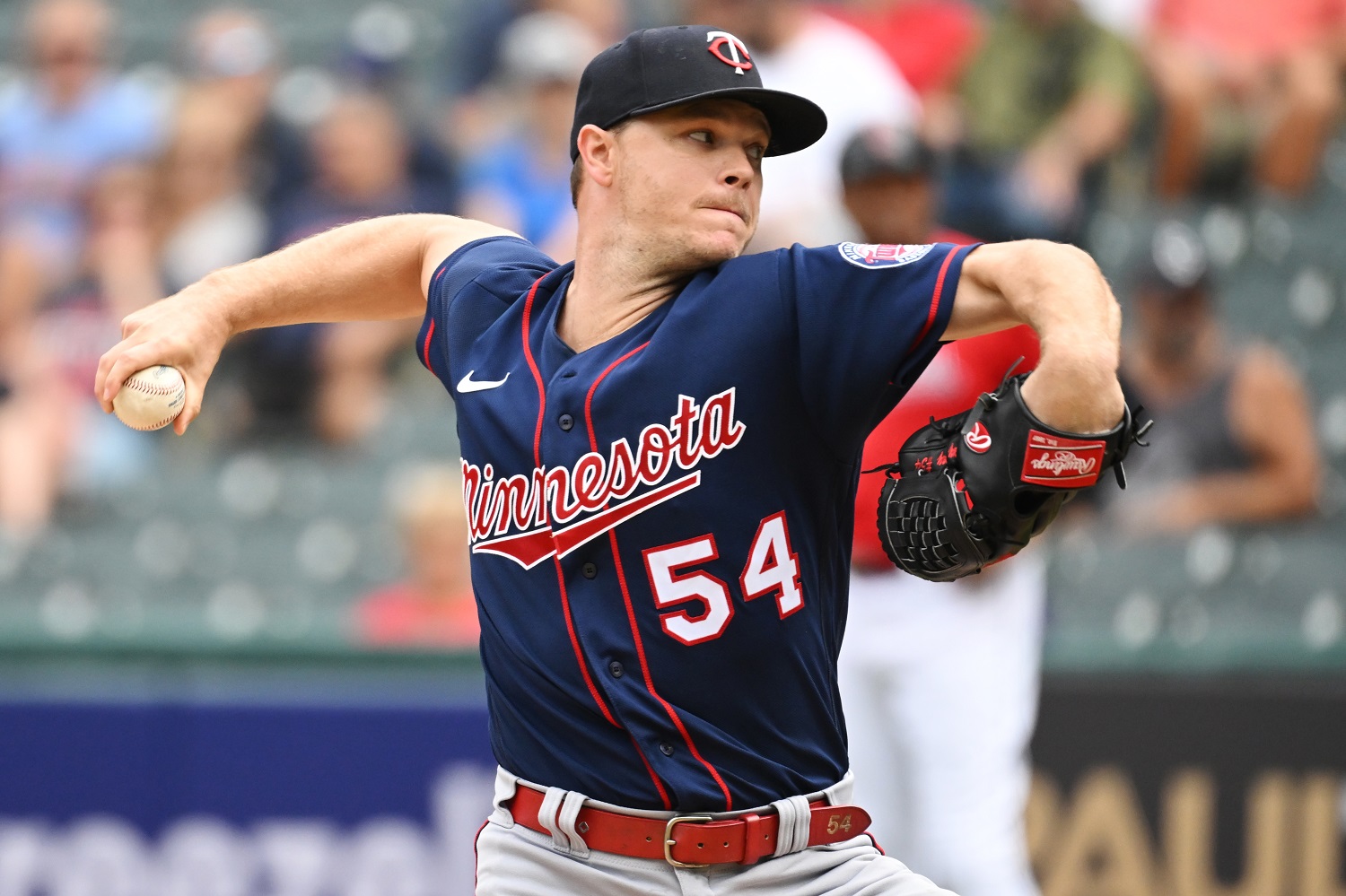
    Image courtesy of Ken Blaze-USA TODAY Sports

    Twins Video

    First and foremost, last season saw a trend of starters going fewer innings take shape across all of baseball. Through the first two months, starting pitchers averaged just over 4 2/3 innings per start. It made a good amount of sense, with relievers being more specialized than ever and starters lacking when a lineup rolls over. For Twins fans, the consternation has always been directly with manager Rocco Baldelli.

    No matter how loud it needed to be yelled last year, though, suggesting, short starts weren’t a Twins thing (or a Baldelli thing) didn’t matter.

    With an overhauled rotation, could longer starts become a Twins thing?

    Gone are the days of Chris Archer and Dylan Bundy being ok with a five and dive routine. Neither was effective enough to be penciled in for more last season, and the Twins knew that. Sonny Gray wasn't ever thrilled about an early hook, but injuries have been a concern for him, and he was lumped in with a bad group last year. At times, Joe Ryan's two pitch mix wasn't enough for him to be efficient, and as a whole, the rotation forced the manager's hand. Trying to protect guys like Bailey Ober and Tyler Mahle from further injury, there was just never opportunity for Baldelli to lengthen the leash.

    Opening Day starter Pablo Lopez threw 180 innings last year for the Miami Marlins. That easily would have been the most for Minnesota, and he did that to the tune of a 3.75 ERA. Across all his 32 starts, Lopez went less than five innings just seven times. Sonny Gray has publicly voiced a desire to go deeper in games, and settling in during year two with this staff could help to accommodate that. Tyler Mahle made 19 starts for Cincinnati before being traded last year, and he went under five innings in only five of them, three of which came during the first month.

    If there are starters to be concerned about length with in the Twins initial stable, it has to be both Joe Ryan and Kenta Maeda. A year ago, Ryan put together a solid rookie campaign, which was highly rooted in dominance against cellar-dwellers. He struggled when facing a lineup more than twice, and he was beat around a bit by lineups of high-caliber opponents. Being able to show a higher level of consistency could lengthen his leash.

    Regarding Maeda, plenty will depend on how effectively he can return from Tommy John surgery. He is well beyond the normal recovery period and has been stretched out plenty this spring. The numbers and performance haven’t been great, but there is a lot to like if he can settle back into where he was during the 2020 season. Maeda never went under five innings during any of the 11 starts that year, and he completed five innings during two-thirds of his 2021 outings.

    Ultimately the length of a start is determined by game flow, but for the Twins, it has largely been reactionary due to the quality of performance. Baldelli would certainly appreciate not having to rely on Jhoan Duran, Jorge Lopez, or Griffin Jax every single night. He can avoid doing that if his starting rotation performs at a high level and presents an opportunity to continue longer in a game.

    I don’t think we’ll suddenly see the Twins returning a Bert Blyleven-like workload this year for the rotation. Still, guys working into the sixth and seventh inning have a much more realistic possibility of happening. This is unquestionably Minnesota’s best rotation in years, and on no night should it be assumed a guy will go out and just get blown up.

    Baldelli may have preferred to yank starters early out of principle, but the much more likely reality is that performance-dictated decisions. We’ll now have a case study opportunity to find out how much truth there is to good starters going longer.

    Follow Twins Daily For Minnesota Twins News & Analysis

    Recent Twins Articles

    Recent Twins Videos


    User Feedback

    Recommended Comments


    Featured Comments

    I think the title of this thread should have been edited. It should read "Are Longer Starts Coming for the Twins?". Without question, I think the Twins starters will work more innings in 2023, mostly because they all have a full spring training this year and there will be fewer short starts due to ineffectiveness.

    i do find it interesting how far Twins pitchers were allowed to stretch out in Florida. I don't think anyone threw as many as 80 pitches in an outing, so I would think the five starters would max out at 6 innings and about 80 pitches if they are effective. Opponents' starters were working deeper into the game during the last week and I would expect these guys could get close to 100 pitches in their next game, so pretty close to maximum as early as April

    44 minutes ago, Fire Dan Gladden said:

    I would have to dig to find it, but this was a huge talking point when Gray complained last summer.  The Twins and the Reds before us all kept his starts short because the numbers backed it up.

    I wouldn't be surprised if the OPS was down last year, but we are talking about a very small sample size, 

    I mean, you said everybody knows this and the numbers show it...maybe it's not as simple and obvious as you stated?

    And yes, when pitchers aren't allowed to pitch 3rd time through the order much, the sample size is going to be small. 

    3 minutes ago, Woof Bronzer said:

    Do we know this for sure though?   Forgive the vague numbers, but last season the Twins had 6 or 7 starts where the starter was pulled in the 5th or earlier with 75 or less pitches after giving up 0 or 1 hit.  If there wasn't a predetermined yank point, with all due respect, the manager should have joined the trainer in the bread line!

    I'm pretty sure you're overstating the number of no-hitters the Twins had going last year, but whatever. My point was there was no predetermined yank point for the staff as a whole. Each pitcher is going to have a different calculus even if the results ended up being similar.

    Here's an example: Chris Archer was on a general pitch limit because of his health and effectiveness. He would get pulled from a start when he neared that limit regardless of how well he was pitching, because of that limit. Joe Ryan didn't have a limit anywhere near that. The Twins were perfectly comfortable letting him run up 90-100 pitches. He got pulled from a game after 7 innings of no-hit ball, though. Why? Because he was at 106 pitches, and was slated to start against Cleveland for his next start in a game that at the time was looked at as being critical to win the division. (We weren't totally out of it by then). If it had been the last week of the season and we were already eliminated, would they have let him go longer and try for the no-hitter? We'll never know for sure, but it seems likely. The decision on when to pull Joe Ryan wasn't predetermined before the game.

    let's look at Sonny Gray, since he always gets thrown into this conversation: he threw 75 or less pitches 6 times last season. 1 of those he had an injury, 2 he was making his first start coming off injury, and the remainder were games where he wasn't particularly effective (or just bad). he got pulled when he'd only given up 1 hit twice: once when he pulled up lame early in the year, and the other late in the season when he had walked 4 guys and was at 90 pitches through 5. 

    32 minutes ago, Woof Bronzer said:

    I mean, you said everybody knows this and the numbers show it...maybe it's not as simple and obvious as you stated?

    And yes, when pitchers aren't allowed to pitch 3rd time through the order much, the sample size is going to be small. 

    Sample size being relative because of how little usage he had in that regard last year...

    I have been using the quote of 10+ ERA 3rd time through the order.  I can't find that source and I look to be incorrect.  However, I did find this article from last year:

    https://www.si.com/fannation/bringmethesports/twins/sonny-gray-makes-it-clear-that-he-wants-to-pitch-deeper-into-games

    Quoting from the article:

    2016: 8.66 ERA third time through an order
    2017: 5.66 ERA
    2018: 3.27 ERA
    2019: 6.12 ERA
    2020: 6.30 ERA
    2021: 7.25 ERA

    The ERA may not be 10, but it is still ugly.  Dude has no business pitching the third time through the order.  He should be happy the Twins recognize this.  By protecting him and pulling him out early, he is staying effective and will generate a bigger contract next year.

    9 minutes ago, Fire Dan Gladden said:


    The ERA may not be 10, but it is still ugly.  Dude has no business pitching the third time through the order.  He should be happy the Twins recognize this.  By protecting him and pulling him out early, he is staying effective and will generate a bigger contract next year.

    But the sample size for those ERAs is also small.  Why count a small sample size when it supports your agenda and disregard it when it doesn't?  And it's going to be skewed when you are only going partially through the lineup the 3rd time - you don't have 7/8/9 patsies to pad your ERA.  

    If Gray hits the 3rd time through the order and he's cruising with a decent pitch count, he should absolutely keep pitching!  This is what drives me nuts about the rigid kind of analytics being advocated here.  Cherrypick stats that fit the narrative, discard those that don't, and - yes, the dreaded "manage by spreadsheet" approach where it's predetermined to yank a pitcher after 2 times through the order, regardless of performance or game context.  

    38 minutes ago, jmlease1 said:

    I'm pretty sure you're overstating the number of no-hitters the Twins had going last year, but whatever. My point was there was no predetermined yank point for the staff as a whole. Each pitcher is going to have a different calculus even if the results ended up being similar.


    Ok, I get what you are saying.  I think we are saying the same thing.  I definitely don't think there was a staff wide yank point all year - I mean, I sure hope not :)  But I still don't like the approach of saying "X starter is going 5 today" or "2 times through the order only" before the game starts.  Let the game play out, and react accordingly.  I didn't think this would be so controversial, sorry I wasn't more clear and thanks for the conversation!

    1 hour ago, stringer bell said:

    I think the title of this thread should have been edited. It should read "Are Longer Starts Coming for the Twins?". Without question, I think the Twins starters will work more innings in 2023, mostly because they all have a full spring training this year and there will be fewer short starts due to ineffectiveness.

    i do find it interesting how far Twins pitchers were allowed to stretch out in Florida. I don't think anyone threw as many as 80 pitches in an outing, so I would think the five starters would max out at 6 innings and about 80 pitches if they are effective. Opponents' starters were working deeper into the game during the last week and I would expect these guys could get close to 100 pitches in their next game, so pretty close to maximum as early as April

    Good point to get ahead of the inevitable threads after they aren't at 120 pitches in April.  It'll be fun to chat about in game threads but this is a topic that we will need a couple months of data to know anything. 

    54 minutes ago, Fire Dan Gladden said:

    The ERA may not be 10, but it is still ugly.  Dude has no business pitching the third time through the order.  He should be happy the Twins recognize this.  By protecting him and pulling him out early, he is staying effective and will generate a bigger contract next year.

    Maybe, the other teams have that data too.  Without the chance to try to go deeper he has no way to improve on those numbers.  He can force the issue by pitching well early and should focus on that. 

    48 minutes ago, Jocko87 said:

    Maybe, the other teams have that data too.  Without the chance to try to go deeper he has no way to improve on those numbers.  He can force the issue by pitching well early and should focus on that. 

    I would agree that someone like Joe Ryan should be given the opportunity to pitch later into games.  You need to know what you have.  But came up through the Twins system, he knows where the limits are.  Someone like Sonny Gray, who has an extensive history of not pitching well 3rd time through does not really deserve that opportunity.  Or, at the very least, should have the shortest of short leashes


    1 hour ago, Woof Bronzer said:

    But the sample size for those ERAs is also small.  Why count a small sample size when it supports your agenda and disregard it when it doesn't?  And it's going to be skewed when you are only going partially through the lineup the 3rd time - you don't have 7/8/9 patsies to pad your ERA.  

    If Gray hits the 3rd time through the order and he's cruising with a decent pitch count, he should absolutely keep pitching!  This is what drives me nuts about the rigid kind of analytics being advocated here.  Cherrypick stats that fit the narrative, discard those that don't, and - yes, the dreaded "manage by spreadsheet" approach where it's predetermined to yank a pitcher after 2 times through the order, regardless of performance or game context.  

    You asked for proof, I gave you proof, and yet you argue still...  There is no cherry picking, the numbers are what the numbers are. 

    The question you need to need to ask yourself is this:
    You need two innings pitched in the middle of the game. Who do you choose:
    Pitcher A:  6.50 ERA
    Pitcher B:  3.50 ERA
    We all know the answer here.  Yes, sometimes pitcher A will get the call.  But wow, what a huge roll of the dice when you have better options.

    I understand what I am saying here doesn't fit your narrative, but using analytics didn't just start yesterday.  Managers have been using analytics for decades.  What has changed is the types of analytics being used.  Where do you think LOOGYs came from or pinch hitting a RH batter to go against a LH pitcher?  How come nobody complains about analytics being used to derive the defensive shift or launch angle or spin rate?  How about the decision to shade outfielders a certain direction?  Sorry, but this is still all analytics, just of a different sort.

    Using analytics gives your team a better chance to be successful.  Otherwise they would not be used.

    I think we will just have to agree to disagree.

    Isn't it interesting how starting pitchers pitch fewer innings but get top dollar?  To  pitch only 5-6 innings once or maybe twice per week and yet make millions seems so backwards.  Bullpens are becoming so important as the pitch up to half the innings in many games.  With Gray, Maeda, and Mahle playing on their last contract year maybe we need to concentrate some on a stronger bullpen.


    Create an account or sign in to comment

    You need to be a member in order to leave a comment

    Create an account

    Sign up for a new account in our community. It's easy!

    Register a new account

    Sign in

    Already have an account? Sign in here.

    Sign In Now

×
×
  • Create New...

