Jump to content
Twins Daily
  • Create Account

Recommended Posts

Twins Daily Contributor
Posted
Image courtesy of © Kim Klement-Imagn Images

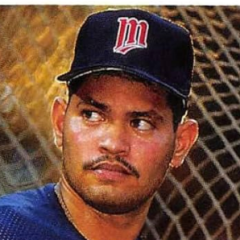
As “the Buffalo” stepped back onto the field this weekend donning a ceremonial Nationals uniform, Wilson Ramos closed the curtain on an 18‑year professional journey that began in the Twins’ farm system and ended with an emotional retirement in Washington. Let’s take one last trek through his storied career: his Twins origins, a headline-grabbing kidnapping in Venezuela, his ascent to All‑Star stardom, and the legacy he leaves behind.

Rise Through the Twins System
Ramos was signed by the Minnesota Twins as a 16‑year‑old international free agent in 2004. Over the following years, fans in the farm system witnessed a slugging catcher grow into his frame, refine his defensive instincts, and show flashes of offensive potential. He reached Triple-A during his age-22 season and was on the cusp of the big leagues. By the time his debut came on May 2, 2010 (He had four hits in the game), Ramos had already shown enough promise to be considered one of the organization’s top prospects. 

However, his stay on Minnesota’s big‑league roster was brief. The Twins traded him to the Washington Nationals at the 2010 trade deadline in exchange for All‑Star closer Matt Capps. Minnesota had Joe Mauer behind the plate and wanted to make a playoff run during Target Field’s inaugural year. Capps added depth to the bullpen, but in hindsight, it has become an exchange Minnesota would long regret.

Washington: From Backup to Star
Ramos arrived in D.C. as a backup catching option, but made a swift climb into the full-time starter role. In 2011, he finished a strong fourth in NL Rookie of the Year voting after showing consistency offensively and improving behind the plate.

His tenure with the Nationals from 2010–2016 became the defining stretch of his career. Ramos caught three no‑hitters, including two by Max Scherzer, and was praised for his game‑calling in Scherzer’s 20‑strikeout performance and Jordan Zimmermann’s gem. His bat stood out, too: a .307/.354/.496 slash in 2016 earned him his first All‑Star nod and a Silver Slugger Award.

“For me, it was the more important part of my job, be a catcher,” Ramos said during his retirement press conference. “If my pitcher’s doing well, it made me feel good all my career. When I was behind the plate, everything I did, it created more special things for me.”

Yet, his stay wasn’t without adversity. In 2012, Ramos suffered a torn ACL just 25 games into what looked to be another breakout year. He battled back from that injury and would face two more serious knee injuries later in his career.

Kidnapped in Venezuela
Off the field, Ramos endured a terrifying chapter in November 2011. While visiting Venezuela in the offseason, he was abducted and held for approximately 50 hours before being rescued by local authorities. The incident shook the baseball world, but Ramos emerged determined to return to the field. That resilience became a signature trait that defined both him and his career.

All‑Star & Silver Slugger Success
After walking away from the Nationals post‑2016, Ramos signed a two‑year, $12.5-million deal with the Rays. The following season brought a second All‑Star appearance in 2018 with Tampa Bay, and he was traded to the Phillies mid-year when they needed more catching depth for the stretch run. 

Signed by the Mets in 2019 on a two‑year, $19-million contract, Ramos delivered immediately. He posted a .288/.351/.416 slash line, knocked 14 homers, drove in 73 RBIs, and famously strung together a 26‑game hitting streak, second‑longest in Mets history, surpassing Mike Piazza’s mark for catchers.

Late‑Career Rollercoaster & Farewell
Ramos’s offensive output dipped after 2019, as his once-reliable bat losing some of its edge. A torn ACL in August 2021 sidelined him once again, bringing his MLB journey to a close following stints with Detroit and Cleveland.

After brief spells in Triple‑A with the Rangers, the Mexican League, independent teams, and winter ball in Venezuela, Ramos remained active until signing a ceremonial one‑day contract this weekend to announce his retirement as a National, a move steeped in sentiment and full-circle meaning.

On Father’s Day, with his family in attendance, Ramos spoke of returning home to focus on his children, reclaim lost time, and impart life lessons learned on the field. Former teammates Adam LaRoche and Daniel Murphy paid tribute to his clubhouse presence and the power in his bat. Manager Dave Martinez summed it up best: Ramos “played the game the right way,” and the Nationals couldn’t be happier to celebrate his career over the weekend. 

Legacy of “The Buffalo”

  • 12 MLB seasons, 990 games, a .271/.318/.432 slash line, 136 home runs, 534 RBIs, 15.3 bWAR.
  • Two‑time All‑Star (2016, 2018) and a Silver Slugger (2016).
  • Played through three ACL tears and a high‑profile kidnapping.
  • A key piece in the Nationals' most successful pitching moments over a dramatic decade.

For Ramos, the timing is right to hang up his catcher’s gear and spend more time with his family.

“I made this decision because I think it's time to spend time with them,” Ramos said. “My kids [are] growing up, and for me, it's time to teach them about life, about baseball, about what I did. So it's time to spend time with them. I lost a lot of time with them, so now it's time to be part of their life.”

Ramos’s journey mirrors a ballpark pop-up that clears the infield: unexpected, gutsy, and ultimately thrilling. From a Twins prospect traded away to a resilient All-Star, his story is one of talent, heart, and triumph over adversity.


What will you remember about Ramos’s career? Would his career have played out differently if he stayed with the Twins? Leave a comment and start the discussion.


View full article

Posted
42 minutes ago, LewFordLives said:

Some trades are only bad in retrospect. This one was a head scratcher from day one.  

Matt Capps people......Matt Capps

Matt Capps=Ron Davis 2.0

Posted

The architect of the Ramos trade, Twins GM Bill Smith, said the rational behind the swap was to add a "proven closer" in Matt Capps. He would never live that comment down. The timing of the Ramos trade, coming at the trade deadline in 2010, couldn't have been worse. Joe Mauer was injured in mid-April of 2011 and didn't come back for over two months. With Ramos gone, the Twins tried to piece things together behind the plate with Steve Holm, Drew Butera, and Rene Rivera. As you might expect, they combined for a WAR of -1.9 and the Twins were toast, limping to a record of 63-99 for the season, after which Smith was (mercifully for Twins fans) fired. "Proven closer" Matthew Dicus Capps had 15 saves in the first half of 2011 but was supplanted in mid-July by "actual closer" Joe Nathan who had 14 saves. Nathan signed as a free agent with Texas after the 2011 season, and, needing a closer, the Twins re-signed Matt Capps for the 2012 season. Capps was again quickly supplanted as closer in June by Glen Perkins, Despite bouncing around in the minor leagues for the Indians, Braves, and Diamondbacks until 2016, after the 2012 season with the Twins he never played another big league game. The "proven closer" was done.  

Posted

The Ramos-Capps trade was one of those trades that everyone knew was going to blow up before the ink was dry on the deal. Very sad from a Twins fan perspective. A mid-tier reliever for a starting caliber catcher... sheesh.

Best wishes to Ramos.

Create an account or sign in to comment

You need to be a member in order to leave a comment

Create an account

Sign up for a new account in our community. It's easy!

Register a new account

Sign in

Already have an account? Sign in here.

Sign In Now
The Twins Daily Caretaker Fund

You all care about this site. The next step is caring for it. We’re asking you to caretake this site so it can remain the premier Twins community on the internet.

×
×
  • Create New...