



jorgenswest
-
Posts
8,284 -
Joined
-
Last visited
-
Days Won
9
Content Type
Profiles
News
Minnesota Twins Videos
2026 Minnesota Twins Top Prospects Ranking
2022 Minnesota Twins Draft Picks
Minnesota Twins Free Agent & Trade Rumors, Notes, & Tidbits
Guides & Resources
2023 Minnesota Twins Draft Picks
The Minnesota Twins Players Project
2024 Minnesota Twins Draft Picks
2025 Minnesota Twins Draft Pick Tracker
2026 Minnesota Twins Draft Tracker: Picks & Bonuses
Forums
Blogs
Events
Store
Downloads
Gallery
Everything posted by jorgenswest
-
Article: Push Candidate: Travis Harrison
jorgenswest replied to Shane Wahl's topic in Twins Daily Front Page News
Harrison does need to be in AA. There don't need to be blocks at any position. Rosario and Sano need to be in AAA. At 25, Hicks is an organizational player. He can be 1B at any level that needs him. If 1B is Harrison's spot, put Hicks in A+ or AAA. -
Article: Ricky Nolasco: Back to the Future
jorgenswest replied to Secondary User's topic in Twins Daily Front Page News
You have to at least wonder why the defense was consistently really bad for just Nolasco. While the Marlin team ERAs were always greater than the team FIPs they were much much closer than the Nolasco difference and a good portion of that difference is due to Nolasco's numbers. -
Article: 10 Burning Questions For Spring Training
jorgenswest replied to Nick Nelson's topic in Twins Daily Front Page News
It will be a positive sign for the future when someone with range forces their way into Hunter's spot in the line up. If on August 1 Buxton, Rosario, Arcia and Hicks are on the roster, the poor defense in the outfield will soon be forgotten. -
Article: Ricky Nolasco: Back to the Future
jorgenswest replied to Secondary User's topic in Twins Daily Front Page News
The frustration should be with the Twin management. Through his prime 5 years of 26-30 he had an ERA+ of 90 in around 1000 innings. That is number 4 starter territory. Very few guys keep getting an opportunity to pitch when their adjusted ERA is 10% worse than league average through their primes. You don't give these guys four year contracts. There were some signs that pointed up for him before he signed. He always had a much better FIP. He did well with the Dodgers. There were reports that the improvement came with a change in pitch mix and pitching backwards. A single season FIP is a better predictor for the next season than ERA. 1000 innings of FIP that is far below ERA and teams should wonder what in his skill set causes the discrepancy. Reality hit when he came to Minnesota. The FIP was still a lot better than the ERA but neither was acceptable. With the Twins, he went back to fastball first and he wasn't able to establish his fastball that had always been mediocre through his career. At 32 the likelihood that he will perform close to a league average pitcher is very slim. The only hope I have is that Allen and Guardado will see something in his time with the Dodgers that they can bring back this year. They need to help him find his slider that was dominant in 2013. He needs to find it and use it often. If he can't find that slider, he isn't a major league pitcher. Last year's plan of first establishing the fast ball was never going to work. -
What can the Twins expect from Santana (and Nolasco)?
jorgenswest commented on jorgenswest's blog entry in Blog jorgenswest
There were six 31 year old pitchers in 2010 with ERA+ ranging 99-133. They are all better than and mostly significantly better than Santana's ERA+ of 92 last year. Cliff Lee had plenty of room for decline and has put up four good seasons. Johan Santana matched Lee at 31 and hasn't pitched well since. Wandy Rodriguez had two seasons of slight decline and two seasons injured. He had more space for decline starting at 110. Jeremy Guthrie was healthy four seasons. His ERA+ was 108 and he has had one season of better than league average (102) ERA+ in the last 4. The others were OK Performing as number 4 or 5. Mark Buerhle has been healthy 4 seasons and continued to pitch league average or better than his 31 year old season. John Lackey was awful for a season. Missed a season. The last two seasons he has been league average or better. The problem for Santana is that he doesn't have space to decline. He can't take a decline like Guthrie and be anything more than a number 5 pitcher. Lackey, Santana and Rodriguez lost two or three seasons to injury. Lee and Buerhle are very different pitchers. Expecting one very good year and two average to above average years is very optimistic for a guy who through his prime seasons was just league average and enters his age 32 season having been below league average at 31. It doesn't fit very well with how other pitchers have aged after 31. -
Article: Ricky Nolasco: Back to the Future
jorgenswest replied to Secondary User's topic in Twins Daily Front Page News
If he doesn't show he is a league average pitcher, they won't be able to clear salary by trading him for nothing. -
What can the Twins expect from Santana (and Nolasco)?
jorgenswest posted a blog entry in Blog jorgenswest
The Twins have invested over 100 million dolars in their pitching rotation buying 8 seasons of starting pitching. What can they expect for their $100,000,000? I started with Ervin Santana looking for a similar group. From ages 27-31 he has performed at a 99 ERA+ with about 1000 innings pitched. I wondered how other groups of pitchers performed from ages 27-31. With the help of BR's play index, I searched for all pitchers since 1975 who have pitched at least 900 innings in their age 27 through 31 seasons. There are 128 pitchers headed by Pedro Martinez and his 228 ERA+ through ages 27-31. The top is loaded with current or future Hall of Famers. I won't be comparing Santana to them. Time for a little sidetrack. Why ERA+? I used ERA+ to adjust for era and ballpark. While a single season of ERA does not predict future ERA as well as FIP or xFIP, a sample size of around 1000 innings does a good job. At that sample, it is more likely to wonder why a players FIP is far different than his ERA and speculate which skill set caused them to outperform or underperform their FIP. For the whole group, it didn't surprise me that the FIP and ERA were within 2% as FIP is supposed to project ERA. Another note on FIP. I looked at players who had FIP over those 5 years significantly different than their ERA. Ricky Nolasco and Ervin Santana can be found at different end of that spectrum. Nolasco has a far better FIP (3.75) than ERA (4.51) and Santana has a better ERA (3.88) than FIP (4.21). Should the Twins hope on Nolasco's FIP while at the same time ignore Santana's? Though FIP might indicate otherwise, I suspect Santana is the better pitcher and ERA at this sample size can be trusted at least equally with FIP. Sidetrack#2 Ricky Nolasco is in the list. He ranks 127 out of 128 with his ERA+ of 87 from ages 27-31. I can't come up with a good comp group for Nolasco. Very few pitchers can pitch at below a mid #4 starter through their peak seasons and be given the ball enough times to gather at least 900 innings. Even if his poor 31 year old season is thrown out and ages 26-30 are used instead, you get a 90 ERA+. That moves him ahead of Jaime Navarro for the 126 spot on the list. Sidetrack#3 I was surprised to see Dennis Martinez at number 128. He had a very interesting and unexpected career after age 31. At 32 he was traded with a player to be named laster (catcher John Stefaro) to the Expos for a player to be named later in Rene Gonzalez. The Orioles had essentially given him away. Martinez was named to the first of 4 all star games at age 36 and pitched until he was 44. I am not sure what he changed once he joined the Expos but walks were down, strike out were up and hit batsmen were way up after the trade. Sidetrack#4 I had play index help set levels for starter numbers. I looked at over the last 10 seasons (and 1500 pitchers with the most starts per season) and sorted starters by ERA+ grouping them in sets of 300. The 150th rank should be the mid of the number 1 starters. Starters ranked around 300 would be strong #2/fringe #1 starters. I have done this before and the results were similar. Number ERA+ #1 133 (121- ) #2 114 (107-121) #3 100 ( 95-107) #4 90 ( 84- 95) #5 76 ( - 84) So a pitcher like Nolasco had the performance of a number 4 starter at the time the Twins signed him. Back to Ervin Santana. Of the 128 pitchers in the group, Santana ranked 106 with an ERA+ of 99. The 99s ran from 106-111. That isn't very exciting as a rank but it is possible to build a group of pitchers on both sides of his performance. I chose a group that included 16 pitchers below and above him. They had ERA+ ranging from 95 to 103. The group can be found here I then had to throw out some of the pitchers. I don't know how Jason Vargas will perform after age 31. He is the same age as Santana. Some guys like Rick Langford, Erick Hanson or Russ Ortiz were injured in their age 31 season. Theie careers were over as a result. One guy was in prison. I kept Mike Scott and Dave Stewart though they had significantly better age 31 seasons and would probably earned a contract somewhere around Lester. It would be really nice of I knew how to do tables. The image above is a picture of a table. Not sure if it is a link or picture. The results can also be found on sheet 2 of the google doc. Essentially of the remaining 26 pitchers in the group 13 performed with an ERA+ of 94 or better and 13 below. I think it is reasonable to expect Santana to perform as a number 3/4 starter next year. The group changes to size 25 at age 33 as Eckersley became a closer. There number of pitchers that performed at or above 94 is now 10 and there are 11 pitchers either did not pitch or would be classified as a number 5 pitcher. The median is a number 4 pitcher with a 40% of the group performing better. The median drops to number 5 starter at age 34 and not starting at age 35. How will Santana Perform? If Santana follows the age curve of similar pitchers the Twins might expect for him to start as a fringe #3 next year and decline to a #4, #5 and possibly the bullpen in the following years. There is hope that at age 34, 32% performed at least at an ERA+ of 94. The number drops to 16% at age 35 but it isn't 0%. Nolasco doesn't have enough comps that have pitched similarly. They have one bad season out of him. Is it reasonable to hope that they will get a number 4 and maybe a number 5 out of him in the next three years. Maybe not. 2016 and Beyond It looks as if the Twins can hope to have filled their number 4 and 5 pitching slots in 2016 with their $100,000,000. They just to fill in the top 3. Let's hope it comes from Hughes, Meyer, May, Gibson or Berrios. That is a lot to expect of a young pitcher. It might be better to sign a top of the rotation guy and fill the 4-5 slots with young pitchers struggling to adjust to the majors. As for 2017, they really need those young pitchers to adjust quickly so they have the pitching to back up the young hitters. They could have a lot of money committed to two guys fighting for the number 5 spot. -
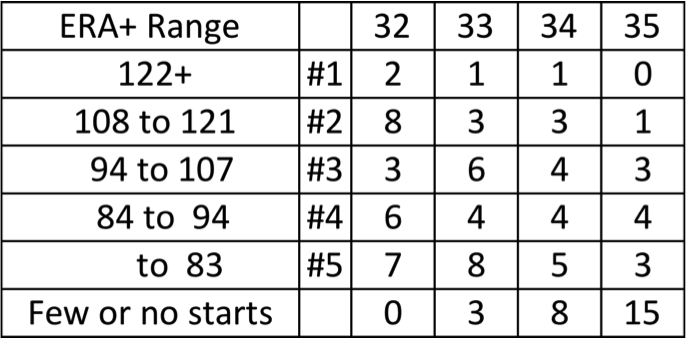
From the album: Santana Group
-
-
-
Walker starting in AA isn't a push. He needs to be there. Earning a move to Rochester mid season would give him unquestioned prospect status. At 23 if he can't earn a spot in AA to start the season after two full seasons in A ball, it is very unlikely he will have a major league career of any significance.
-
Article: 5th Starter Candidate: Tommy Milone
jorgenswest replied to Seth Stohs's topic in Twins Daily Front Page News
Simply cite the first hand report characterizing Milone as a complainer. The original Rosenthal report for fox sports and the Gleeman report for hardtalk simply started he asked to be traded. Kurt Suzuki's take on Tommy Milone -
Article: 5th Starter Candidate: Tommy Milone
jorgenswest replied to Seth Stohs's topic in Twins Daily Front Page News
Why take a shot at his character? I can't find anything in reports other than a guy who loves baseball, works hard and did not want to get sent down to the minors. Do the Twins want an established player who easily accepts a demotion to the minors? He requested a trade after being sent down with a 3.84 ERA in nearly 500 innings. He had options. Other guys didn't. I hope he and his wife don't look at this stuff. If so, they must be secretly hoping that he can move to a team where the fan base has better character. -
Article: 5th Starter Candidate: Tommy Milone
jorgenswest replied to Seth Stohs's topic in Twins Daily Front Page News
The use of "complain" and "demand" are words that carry a connection to attitude and paint the picture of a guy sulking in the AAA clubhouse. Ken Rosenthal has the original report that was repeated by many outlets "Left-hander Tommy Milone has asked the club to trade him, major-league sources tell FOX Sports. The A’s sent Milone to Triple-A on July 5 after acquiring right-handers Jeff Samardzija and Jason Hammel from the Chicago Cubs. It is not unusual for players to request trades after getting demoted. Milone, though, is more established than most – in 468 2/3 major-league innings, he has a 3.84 ERA." That gives me a different picture. Ask is different from demand. No mention of complain. I don't see attitude in that report. I would hope established players would not easily accept a demotion to AAA. He has an option left. The Twins would be wise to use it if he doesn't earn the fifth starter job. There will be an opportunity if he returns to form in AAA and the Twins are better off keeping him stretched out. I would expect he would work his tail off to get back to the majors either with the Twins or through trade. -
Are we confident in the Twins handling and devloping of Alex Meyer? Does he need more time in AAA? Should he have been called up last June? We don't really know what has kept the Twins from calling up Alex Meyer. We speculate it is his walk rate. How unusual is it for a pitcher with his stuff to give up a lot of walks in AAA? How would other teams respond?Do all teams wait for their pitchers with good stuff to manage their walk rates? Here are some pitchers and their walks per 9 innings in AAA prior to coming to the majors. Hernandez 4.9 Price 4.6 Lester 4.3 Samardzija 4.2 Ventura 3.9 Kershaw (no AAA but AA was 3.9 in 16 starts) Kluber 3.9 Scherzer 3.7 (4.9 in AA) It isn't unusual for pitchers who throw hard and have good stuff to walk batters in AAA. Why does their walk rate per 9 go down in the majors? I am not sure. I would imagine that better hitters put the ball in play before a walk results. AAA hitters may be experienced enough to lay off a pitch they can't hit or they foul it off. Longer counts and more walks result. It could also be the quality of the umpiring. High walk rates do not stop other teams from bringing up their pitchers with good stuff to the majors. I think some teams would have brought Alex Meyer to the majors last June. Is it the Twins plan to wait until Meyer brings his walk rate down before bringing him up to the majors? I hope not. That might not happen until his stuff isn't as good and the AAA hitters start putting the ball in play more often. Click here to view the article
-
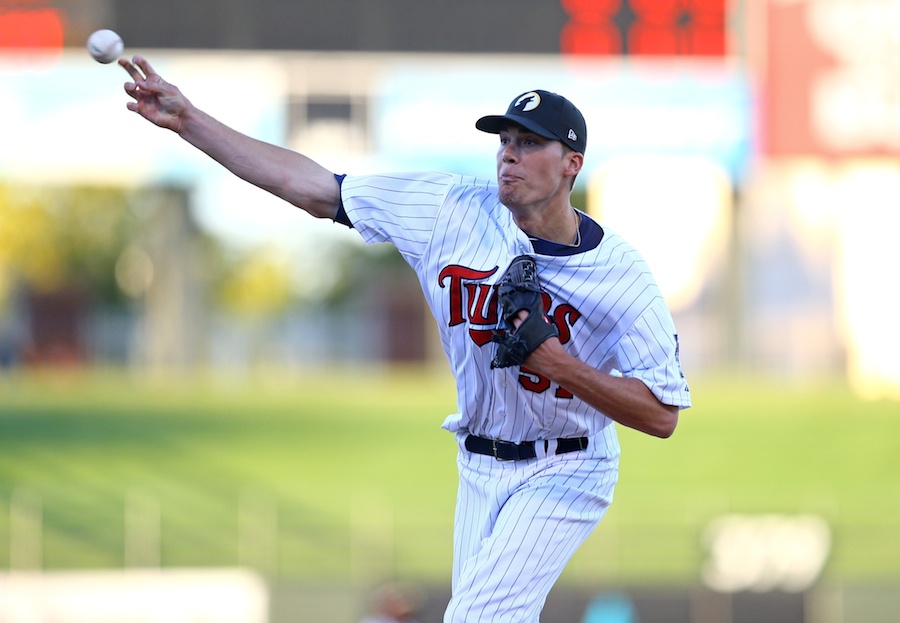 Do all teams wait for their pitchers with good stuff to manage their walk rates? Here are some pitchers and their walks per 9 innings in AAA prior to coming to the majors. Hernandez 4.9 Price 4.6 Lester 4.3 Samardzija 4.2 Ventura 3.9 Kershaw (no AAA but AA was 3.9 in 16 starts) Kluber 3.9 Scherzer 3.7 (4.9 in AA) It isn't unusual for pitchers who throw hard and have good stuff to walk batters in AAA. Why does their walk rate per 9 go down in the majors? I am not sure. I would imagine that better hitters put the ball in play before a walk results. AAA hitters may be experienced enough to lay off a pitch they can't hit or they foul it off. Longer counts and more walks result. It could also be the quality of the umpiring. High walk rates do not stop other teams from bringing up their pitchers with good stuff to the majors. I think some teams would have brought Alex Meyer to the majors last June. Is it the Twins plan to wait until Meyer brings his walk rate down before bringing him up to the majors? I hope not. That might not happen until his stuff isn't as good and the AAA hitters start putting the ball in play more often.
 -
DocBauer brought up minor league experience. It is hard to compare innings in the lower minirs with some getting those innings in college. I have listed below innings in AA/AAA. I added AA in order to make sure Meyer's season cut short by injury was included. Hernandez 24 Price 21 Lester 52 Samardzija 59 Ventura 31 Kershaw 16 Kluber 87 Scherzer 26 Alex Meyer's 40 AA/AAA starts is on the bigger side of the middle of that group. It certainly wouldn't keep teams from calling him up. His walk rate wouldn't keep teams from calling him up either. Consistency? All of those pitchers were inconsistent with their control. They all had bad starts. Want consistency in the minors? Look for a control pitcher like Albers. The Twins are waiting for something that won't reasonably happen in a pitcher with great stuff.
-
Are we confident in the Twins handling and developing of Alex Meyer? Does he need more time in AAA? Should he have been called up last June? We don't really know what has prevented the Twins from calling up Alex Meyer. We speculate it is his walk rate. How unusual is it for a pitcher with his stuff to give up a lot of walks in AAA? How would other teams respond? Do all teams wait for their pitchers with good stuff to manage their walk rates? Here are some pitchers and their walks per 9 in AAA prior to coming to the majors. Hernandez 4.9 Price 4.6 Lester 4.3 Samardzija 4.2 Ventura 3.9 Kershaw (no AAA but AA was 3.9 in 16 starts) Kluber 3.9 Scherzer 3.7 (4.9 in AA) It isn't unusual for pitchers that throw hard and have good stuff to walk batters in AAA. Why does their walk per 9 go down in the majors? I am not sure. I would imagine that better hitters put the ball in play before a walk results. AAA hitters may be experienced enough to lay off a pitch they can't hit or foul it off. Longer counts and more walks result. It could be the quality of the umpiring. High walk rates does not stop other teams from bringing up their pitchers with good stuff to the majors. I think some teams would have brought Alex Meyer to the majors last June. Is it the Twins plan to wait until Meyer brings his walk rate down before bringing him up to the majors? I hope not. That might not happen until his stuff isn't as good and the AAA hitters start putting the ball in play more often.
-
Article: 5th Starter Candidate: Alex Meyer
jorgenswest replied to Seth Stohs's topic in Twins Daily Front Page News
Is this an argument to go with a veteran? Meyer and May will likely struggle. I would have given all of Correia's starts to them last year, but I am not certain they would have performed better in their rookie year. I do think that there second 25 starts would be better than their first 25. I doubt Viola brought in many fans in his first 50 starts. -
Article: 5th Starter Candidate: Mike Pelfrey
jorgenswest replied to Seth Stohs's topic in Twins Daily Front Page News
I still don't see the upside of a low leverage relief role. It does nothing to develop a talent for the future, the role has little impact on the team's won loss record and there is no trade market for low leverage relievers. It does hurt the future to give him that role only to see him leave at the end of the year. They just develop any potential relief talent for another team's benefit in 2016. -
Article: 5th Starter Candidate: Mike Pelfrey
jorgenswest replied to Seth Stohs's topic in Twins Daily Front Page News
I don't see the pedigree. His performance drops much more than the norm with runners on base. Any relief role would need to be one that starts an inning. Mid game relievers don't have that luxury. I also wonder if he has the kind of arm that can pitch on back to back days. Suppose he puts up good numbers in low leverage relief appearances. What is the upside for the Twins? He gets a year to adjust to the role and is somewhere else in 2016. Low leverage relievers won't be in demand at the deadline. No reason to keep him in hopes of trade value. They just lose the opportunity to give those innings to someone with upside. Best case- Pelfrey wins the fifth starter job and puts up a league average ERA before he is traded. Worst case- he plays out the year as a low leverage reliever before hitting fee agency Unthinkable case- he gets extended after a few months of good relief numbers. Liveable case - he doesn't win the fifth starter job and is released -
Article: 5th Starter Candidate: Mike Pelfrey
jorgenswest replied to Seth Stohs's topic in Twins Daily Front Page News
There is a difference between spring training performance and spring training stats. Spring training stats are meaningless. They should not be kept or reported. Spring training performance is about the velocity, movement and command of his pitches. The skill of the staff in assessing his ability to contribute to the team based on the way he throws as seen in work outs and games is critical in determing whether he is released or wins the fifth starter spot. -
What does it mean to contend? To me, a team isn't contending if they haven't spent a day in first place (or even in one of the wild card slots) in the previous two weeks It isn't contending if an occasional win streak puts you a few games a way from the second wild card spot. It is possible to bring yourself into contention by continuing that win streak, but teams have to get there. Being a competitive is a lower bar. Competitive teams score more runs than they give up. The Twins have neither contended or been competitive in quite a while. Various objective sources do not project the Twins to contend or be competitive this year either.
-
As I started my comment, I believe the Royals will suffer from losing Shields in two ways. They lose his starts and the bullpen will have a bigger work load. That will lead to more runs given up and more losses. I also believe they will continue to have the skills that will give them more wins than their Pythagorean projection whatever it is for 2015.
-
Losing Shields will hurt in two ways. They will not only lose his starts but also work the bullpen more in games he would have started. For that reason, they should drop back. However, I think the the Pythagorean projection is a little misused here. There has been several studies about teams that outperform or underperform their projections. Teams that outperform their projections win more one run games and have a more even distribution of offensive runs scored (fewer big innings) and are good at preventing runs with their pitching/defense. Teams with good bullpens will win more games than Pythagorean projects. Teams adept at playing small ball as measured by stolen bases, sacrifice hits and fewer home runs more evenly distribute their offensive runs and win more games than pythagorean projects. The Royals have a very good bullpen. No one played better small ball last year. They won more games than their Pythagorean projection because of their skill set. It wasn't a matter of luck. Won't they bring a similar skill set forward next year?
-
Article: Dozier's Expected Extension
jorgenswest replied to Cody Christie's topic in Twins Daily Front Page News
I don't think it is coming from the Twins. It doesn't make any sense to extend him into his free agent year. At this point his career OPS+ is 98. It is extremely rare that a player will outperform their career OPS+ through age 27 during their age 32 season or older. Trade him by age 30.

