



Squirrel
-
Posts
34,841 -
Joined
-
Last visited
-
Days Won
167
Content Type
Profiles
Minnesota Twins News, Rumors & Analysis
Minnesota Twins Videos
2026 Minnesota Twins Top Prospect Rankings
2022 Minnesota Twins Draft Picks & Signing Bonuses
Minnesota Twins Trade & Free Agent Rumors
Minnesota Twins Fan Guides & Resources
2023 Minnesota Twins Draft Picks & Signing Bonuses
The Minnesota Twins Players Project
2024 Minnesota Twins Draft Picks & Signing Bonuses
2025 Minnesota Twins Draft Picks & Signing Bonuses
2026 Minnesota Twins Draft Picks & Signing Bonuses
Forums
Blogs
Events
Store
Downloads
Gallery
Everything posted by Squirrel
-

Way too Early: Predict Opening Day Roster
Squirrel replied to AZTwin's topic in Minnesota Twins Talk
Eh ... now I'm doubting myself ... but I'm pretty sure he's out of options. I just don't know what they are going to do with that last spot ... 4th bench person, 13th pitcher ... I have no clue. Personally I'd rather have the bench spot, but early in the season, it seems that more and more, teams want the pitchers available due to still stretching out in the early season and the cooler weather. Just don't know. -
Way too Early: Predict Opening Day Roster
Squirrel replied to AZTwin's topic in Minnesota Twins Talk
I have no idea at this point how things will shake out, but kudos to you for trying. Do you really think Pineda will start on the DL? Maybe that's what the Perez signing was about ... Pineda not quite being ready? Or someone else not sure? But if Pineda is ready, look for Gonsalves to start in AAA. I think we'll lose Mejia if he's not on the roster. He's out of options and he will get claimed. I think it's a matter of who don't you want to lose more ... Mejia or Austin. -
I’m not much of a football person, but that was quite the list, Seth. I had to laugh, though, with the number of people who said Patriots but started with saying, ‘I hate to say it, but ...’ It’s probably how I’d say it if I were making a prediction. But I’ll cheer on the Rams. Well, I would if I were watching.
-
Uh ... Sunday ... what else is on TV then? I think I'll read a book. Or go for a walk in the 45 degree weather we'll be having. Hmm ... or maybe a bike ride. Or ... wait ... maybe I'll even go into work. That's about all the excitement for the Super Bowl I can handle.
-
And with temperatures expected to reach the upper 40s in Chicago, preparing for flooding.
-
I think the decision has been made already between Cron and Austin. I think the decision now is between 12 or 13 pitchers and Austin or someone else.
- 41 replies
-
- 18
-

-
https://chicago.cbslocal.com/2019/01/30/lake-michigan-chicago-cold-rescue-fire-department/
-
I won’t be one of those people who falls into the lake.
-
And we’ve been told to stay home again tomorrow ... weird for me. I live a mile away and know how to dress properly for this weather. I may go in anyway.
-
Local story: https://www.theonion.com/frigid-chicago-bean-shrivels-up-from-below-zero-tempera-1832192615?utm_medium=SocialMarketing&utm_content=Main&utm_campaign=SF&utm_source=Facebook&fbclid=IwAR0RODMOPbgqm1oJV-knRLS0y2-ETUZ70DQvLUrqUjGp4I8eCXwzKF9Eqlc
-
Heh, probably not, but you don’t know which network it’s for. But it’s on the door for public use.
-
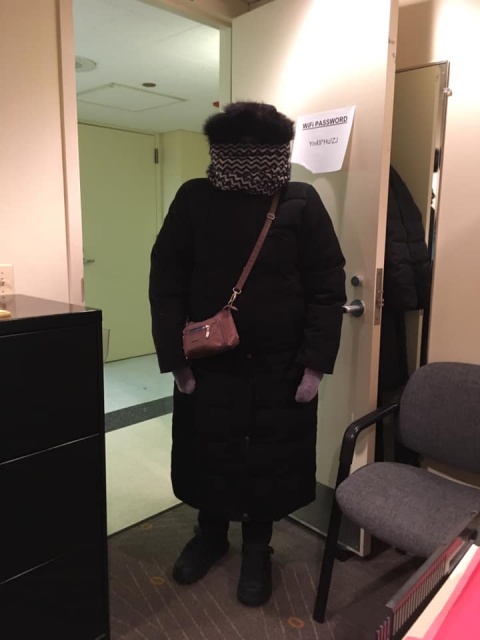
Yep, surviving just fine. They told us not to come to work today. I could have managed, but am staying home. This was me yesterday heading home from work.
-
Meltdown Countdown: Thank You For Joining Us
Squirrel replied to John Bonnes's topic in Twins Daily Front Page News
And I was really watching his hands closely to see if I could spot the slight of hand and didn't see anything. It was really magic!! -
Root away, but beware of karma. That said, a good portion of my list is a wish list ...
-
Meltdown Countdown: Thank You For Joining Us
Squirrel replied to John Bonnes's topic in Twins Daily Front Page News
Great event, as always! Thank you to everyone who made it happen. -
Lewis, Kirilloff, Rooker Among Twins Non-Roster Invites
Squirrel replied to Seth Stohs's topic in Twins Daily Front Page News
If you put [ i ] [ /i ] (without the extra spaces) around the words you want italicized, that should work. It is a bit more unwieldy, however.- 33 replies
-
- 2
-
-
- royce lewis
- alex kirilloff
- (and 3 more)
-
I can’t fault you for wanting starting pitching. We all do. But I think the wait and see game only leaves us with a missed opportunity. I’m betting on this core, now, and wanting to add to it now. Harper and Machado aren’t available next year. I think adding one of them now puts us over for this season, because I think our core will be ready and will perform this season. I don’t think it’s wise to wait for some time tbd. If we signed Machado now, he moves to 3rd when Lewis is ready, and he’s here to anchor the next core. If you sign Harper, our OF depth can be used in a trade for better pitching. And you have either one into the future. We can wait and see, but if the core responds as I think they will this year, we will still be missing a piece and we’ll be out of the playoffs in the first round. But, you never know. That’s baseball. I’d be very happy to be wrong on that count.
-
I agree that one player doesn't make the team by themselves. And agreed, one player can't make a bad team good. So ... does this mean you think we have a bad team, or a team not good enough to sign someone like Machado or Harper? The way I see it, I'm betting on this team to be good, that the core is primed and ready, or at least competitive in the central. Adding a Machado or a Harper, in my opinion, makes us competitive with Boston, New York and Houston. That's why I think one of these players should be added ... to get us to the next level, and hopefully beyond. And having him the next few years, while this young group keeps getting better, you've become a force to be reckoned with. That's what I want this team to be. And I don't see it happening standing pat or waiting and seeing ... because the opportunity is now. We have the flexibility in payroll, and we have two superstar players ripe for the picking. That's how I view it, anyway.
-
Buxton Has Gained 21 Pounds of Muscle this Offseason
Squirrel replied to nytwinsfan's topic in Minnesota Twins Talk
There's always a trade off ... but then maybe when he runs into walls he won't be going quite as fast ... -
Oh sure ... there is most definitely a way to approach things. You want someone to think, you want to provoke real thought; you don't want to provoke a shut down. So you do want to approach it without instantaneous labeling and combativeness. 'Left' and 'Right' do this in different instances. That won't solve anything and won't get anyone to think about their own actions, and is more likely to make someone dig in their heels even more. I think Brock said it at one point above ... or someone did ... maybe, when at home, under calmer surroundings, could this be a teaching moment for those kids? Perhaps that moment is now lost because of what transpired in the media, and that is truly unfortunate I can't even begin to address, but there are moments where I believe learning and thought could and should begin. Will that happen for everyone involved? No, but it will for some, and that's where I think you start. Hmm ... are you responsible for your privilege? Not in that you have it. But yes, in how you view it and how you are aware of it, and how you take it granted or use it (not saying you do, just saying that generally) and how you pass that ideology down to your children ... maybe? (And no, I'm not trying to tell you how to parent, here. Just offering my thoughts.) But I think you said this by saying you are responsible for how you react; I think all of what I said is part of how you react to it. Are you responsible for ignorance? That's a more difficult one. How does one know of their own ignorance unless they are made aware? I guess if you are going to approach life without thinking beyond your own boundaries, maybe then to some extent you are responsible for your own ignorance. Maybe by having these discussions, as openly and as honestly as we each can, we are acknowledging to some degree our own ignorance and are trying to over come it? Am I now acting too ... self-righteous in my thoughts? I'm no better than anyone else. I try to hide that fact. As I said before ... I question myself ... a lot. I do try and think about what I say and do, particularly if I get a response to something I've said or done that is ... less than favorable. I will initially react with ... well ... denial, maybe, push back, certainly ... but then I do go and think about what caused that particular exchange ... why it hurt or offended me, why it made me angry, why I reacted as I did. But am I responsible for others ignorance beyond myself? Maybe we should be, to some extent, by taking on 'teachable moments' rather than leaving the more difficult task to others? And now we are getting into depths that are well beyond an internet message board, imo. We all have a personal journey, and I think we are all responsible for where that journey takes us, and hopefully we explore the whys of it, or some of it, along the way. <shrug> I really don't know how to answer that for anyone else let alone myself.
-
It does make sense. And I'm initially inclined to think ill-intent makes it worse. But on a deeper level, I think lack of intent makes it worse ... I'm not sure I can explain exactly what I mean or why I feel that way. We all know when it's obvious and that makes it much easier to point to and say, 'No!' And yes, those actions are truly more heinous, i.e. lynching, cross burning, racial slurs, swastikas. But that which is just ... well ... actions without ill-intent that are ... well ... for lack of a better way to say it ... culturally ingrained ... it's difficult to point to it with as much certainty and say, 'No!' without getting a lot of backlash. 'But I didn't mean anything by it' is a truly felt common response. That's where this whole idea of privilege is so difficult to discuss and define ... because it is just so difficult to point to with certainty and know it's wrong. It's much more difficult to get inside someone and try and get them to relearn and rethink what their actions might mean to someone else. And I'm not saying we should walk on eggshells ... but then, maybe we all should, for a while, until we can really see how what we might do in jest, or on a regular basis just because it's become second nature to us. To start to think and see how and why we say and do what we do; coming to realize how what one takes for granted another doesn't have the privilege. I know that sounds like overkill, and it is absolutely possible to take things too much the other direction, but there is also a lot that some of us just take for granted, because we've never had to give it a 2nd thought. While maybe these students in Jordon aren't racist in the purest definition of the word, but did they give it a 2nd thought, at all, about what that symbolizes for someone else, particularly members of the other team? If they thought to antagonize, or play some sort of psych out game, to gain an advantage at a basketball game, then why did they think that would have an affect, if on some level, it wasn't racially motivated, even if they couldn't really articulate that or think of it in that way? Again, maybe I'm taking it into the realm of becoming over-sensitive, and maybe I'm not exactly explaining it right, but sometimes actions with no intent to be so, still are. There have been many a time where I've been ignored, made suggestions that go on deaf ears or are put down, only to have a male colleague make the same suggestion and it's met with praise. What is that? It's not an overt act of sexism, and yet, it is, but without intent. And yet when I raise the question, it is received with a horrible response. (And that isn't even close to comparison, imo, as to what brought up this issue.) I don't have a solution. But maybe we each need to re-evaluate and truly examine each and everything we do and say, and ask the hard questions of ourselves. Maybe those student in Washington shouldn't have gone where they were told not to go, and shouldn't have donned their hats, to do ... what? What was in their minds? I can't know that for certain, but I'm pretty sure some of them were thinking, 'Heh, watch this' as if it's some joke to them, because hey, they didn't really mean anything by it. And I'm not saying they were at fault in this situation, but I think they do bear some of the responsibility. As do we all. I just question a lot. Myself more than anyone else.
-
Hmm, okay ... but I guess I don't agree. I don't think there needs to be overt intent for it to be a racist act. But that has been debated on this sight with no agreement, so I'll leave it at that. We don't agree.
-
This is an honest question because this confuses me ... and I'm not trying to pick a fight or be indignant with this question ... but if it was deliberate to antagonize a mostly black team by mostly white kids ... how is it not racist?
-
Are the Twins better this year than last?
Squirrel replied to Twodogs's topic in Minnesota Twins Talk
On paper I’m not sure. In play they should be. I’m not sure what our BP will look like and that’s a component, too. Again, I think it should be better. But will they be better isn’t the right question for me. Better is, will they win more games. Yes, I think they will. Will they win enough more. No, I don’t think they will. There was opportunity to do so, but I feel that was squandered, particularly in significantly upgrading the BP, which wouldn’t have been difficult to do. Maybe the FO feels strongly about what this team can do based on all the information they have. I think they are counting on a lot of bounce back and steps forward. If that happens then I think we can compete for the division and that’s it.
