IndianaTwin
-
Posts
6,561 -
Joined
-
Last visited
-
Days Won
27
Content Type
Profiles
News
Minnesota Twins Videos
2026 Minnesota Twins Top Prospects Ranking
2022 Minnesota Twins Draft Picks
Minnesota Twins Free Agent & Trade Rumors, Notes, & Tidbits
Guides & Resources
2023 Minnesota Twins Draft Picks
The Minnesota Twins Players Project
2024 Minnesota Twins Draft Picks
2025 Minnesota Twins Draft Pick Tracker
2026 Minnesota Twins Draft Tracker: Picks & Bonuses
Forums
Blogs
Events
Store
Downloads
Gallery
Everything posted by IndianaTwin
-
https://twinsdaily.com/news-rumors/minnesota-twins/twins-reassign-dinged-up-top-prospect-brooks-lee-to-minors-camp-r15868/
-
Imitation Game: 3 Ways the Twins Emulate the Rays
IndianaTwin replied to Cody Christie's topic in Twins Daily Front Page News
When people talk about the Rays starters averaging fewer innings than other teams, they don't take into account the Opener effect. If you use a two-inning Opener 15 times over the course of the year, your innings per start number is going to drop by about 0.3. It's a little hard to see how often the Rays used an Opener last year, but they had 17 starts on three or fewer days rest, which points to an Opener. They had 20 games when a starter didn't pitch to any batters a second time. A starter could have been shelled, but more often that's an Opener. So it looks like they used an Opener at least 15 times. It's not unusual an Opener goes less than two full innings, but even you use the 15 x 2 figure and add 0.3 to the Rays' 4.9 average, voila, they are above average at 5.2. Eflin, Glassnow and McClanahan combined to average 5.6 innings per start. The Rays don't "pull their starters early" -- they just use an Opener more often than other teams.- 60 replies
-
- 5
-

-
- matt wallner
- edouard julien
- (and 1 more)
-
Imitation Game: 3 Ways the Twins Emulate the Rays
IndianaTwin replied to Cody Christie's topic in Twins Daily Front Page News
Yeah, I've noticed that too. And is it just me, or does it seem like every time the starter sucks, the Twins don't let him pitch the third time through the order? Amazing how that works. 😃- 60 replies
-
- 4
-
-
- matt wallner
- edouard julien
- (and 1 more)
-
Possum?
-
For the record, I've now listened to four Buxton at bats over the course of two spring training games, and he's hit for the cycle.
-
On the pop fly to short right, Atteberry wondered if the multilingual Kepler called off Julien in French. Reminded me of a story from the early days of the Mets. Not sure if I've got the positions right, but it was something like they had a Spanish-speaking shortstop. Pop fly to short center and the outfielder comes in yelling, "I got it." He gets clocked by the shortstop coming out, who didn't understand what the center fielder was calling. To address the situation, the team decides to teach the center fielder a few key Spanish phrases. Sure enough, there's a pop fly to short center and the outfielder comes in yelling, "Yo lo tengo." Annnd, he gets clocked by the second baseman.
-
Without pictures, it didn't happen.
-
Even on the radio he sounded fast.
-
Many teams are wearing goofy hats in spring training.
-
Maybe go with a thinner cut when games count?
-
Gladden is in mid-season form. Three batters into the lineup and we get, "A-rose-a-rain-ya." He finally figures out how to pronounce an enye on a Spanish name, and he uses it where it doesn't belong.
-
You know how every food item tastes better when served in a plastic helmet? Every lineup looks better when written on a dry-erase board mounted on a cement block wall. And speaking of lineups, that looks like a pretty formidable one for the home team, one that would look pretty good in Game Seven.
-
1968 Topps and the Minnesota Twins
IndianaTwin commented on Al from SoDak's blog entry in Al from SoDak
The 1968 set is another favorite set of mine. I got my first baseball card, a 1974 Rod Carew, as a gift from my college-age older brother when I was eight. I was able to buy a few cards the next year and went as whole-hog as a 10-year-old kid could go in 1976. It must have been the Christmas of 1976 or 1977 when my brother-in-law gifted me all of his cards, which were almost exclusively 1968 and 1969. While the 1968s are a little ugly, the 1969s were completely bland, so I preferred the 1968s. My individual favorites are the Carew and the “Manager’s Dream,” at least in part because of also being inspired by Clemente. Alas, over the next number of years I approached life like a GM. What major league team wouldn’t trading a single stud for two really good players, for example? That meant I was trading away a Reggie Jackson rookie for a Sal Bando AND a Joe Rudi or a Nolan Ryan rookie for a Jon Matlack AND a Rusty Staub. I know that I had multiple of both the Ryan and Jackson rookies. I know that I also had way more college debt than I should have. 🤑- 2 comments
-
- 1
-

-
- harmon killebrew
- rod carew
- (and 3 more)
-
Has Varland Won the 5th Starter Job? What Are the Options For DeSclafani?
IndianaTwin commented on LA Vikes Fan's blog entry in LA Vikes Fan
Um, if DeSclafini is indeed increasing his workload, there’s no way they put him on the 60-day IL and commit to not using him until the end of May. They also don’t risk the wrath of the MLBPA by indiscriminately putting him there. Second, there’s no reason to put anyone on the 60-day IL unless you need an open spot on the 40-man roster. I haven’t been following spring training closely, but it doesn’t sound like there’s any non-roster invitee banging on the door. EDIT to add: The March 13 injury update on MLB.com says DeSclafini is scheduled to pitch on March 16 and is still expected to be ready by Opening Day. Keep in mind that “Opening Day” for a No. 5 starter doesn’t come until April 3. -
Yes. And the corollary is that both teams can "win" a trade, because both received what they needed in exchange for something they needed less. In fact, the ideal is when both teams "win" the trade, because you get a good reputation and are able to make future trades. Trades aren't a zero sum game, particularly when they happen across league lines. In my vast experience as a geezer, even in my half-vast experience, seeking to "beat" the other person in a negotiation situation is rarely a long-term winning strategy.
-
Twins/Rays is at the same time as Jays/Yankees. Guess which one is on TV...
- 17 replies
-
- 1
-
-
- kalai rosario
- zebby matthews
- (and 1 more)
-
Miguel Sano signs minor league deal with the Angels
IndianaTwin replied to Cory Engelhardt's topic in Other Baseball
I assume this is the same game that was on replay on MLB Network when I woke up at four and couldn't get back to sleep. I saw two of his at bats, and he looked really good physically. Didn't see the stolen base, but saw the homer. This isn't a "the FO is so stupid for letting him go" post, but based on those two at bats and how he looked physically, I don't think we'd mind having him in spring training. Kudos to Sano for what's clearly been a lot of work on his part. I hope he makes their team. -
1964 Topps Giants and the Minnesota Twins
IndianaTwin commented on Al from SoDak's blog entry in Al from SoDak
You guessed it. It’s a cool set overall, but it’s got a great picture of him, the little “Topps All Rookie team” trophy and it’s the first “solo” card in the regular sets. Honorable mention goes to the 1976 card, but that’s primarily for the set as a whole, since it’s the set I spent the most time sorting as a kid and the first set I ever completed (as opposed to buying a few complete sets over the years).- 8 comments
-
- 1
-
-
- tony oliva
- harmon killebrew
- (and 1 more)
-
1964 Topps Giants and the Minnesota Twins
IndianaTwin commented on Al from SoDak's blog entry in Al from SoDak
A variation on your “favorite card in the set” is to identify the favorite card of a given player. If you are going in chronological order, I will soon find out if you rank my favorite Oliva card as the best in that particular set. Keep the posts coming! -
1964 Topps Giants and the Minnesota Twins
IndianaTwin commented on Al from SoDak's blog entry in Al from SoDak
This is shaping up to be a fun series @Al from SoDak. I’m looking forward to more posts. Last fall, I had a blog post describing the project of making a wall display of a complete set of Oliva cards, along with a bunch of Carews, Killebrews, Hrbeks, Puckett and others. See That blog included an in-process picture, so here’s my final result (as if projects of this nature are ever “final”). Near the upper left is the Oliva from this set, which I wasn’t familiar with until I began working on this. Olivas make up the first five rows on the left half.- 8 comments
-
- 1
-
-
- tony oliva
- harmon killebrew
- (and 1 more)
-
From the OP: "The Twins' payroll situation has been discussed at length from multiple perspectives at Twins Daily." -------- Ad nauseum would be a suitable replacement for the words "at length," in my opinion. I get it -- salary is less than what many here want it to be and/or think it should be, but all of our "analysis" is done with incomplete information and without being privy to the internal discussions of what's going on. Not to mention that it's a little hard to compare "Opening Day" salaries when we're still a couple weeks from Opening Day. A late spring training trade or a signing of the Boras However Many Are Left by any of these teams changes the list.
-
1963 Topps and the Minnesota Twins
IndianaTwin commented on Al from SoDak's blog entry in Al from SoDak
He had an OPS+ of 100, 94, 100 and 100 in his ages 19-22 seasons, even being an All-Star at age 20. But they averaged 104 losses per season, so most of the time, he was about the third-best hitter on the team. -
Fifth Starter Conversation Turns to Chestnut
IndianaTwin replied to RandBalls Stu's topic in Twins Daily Front Page News
Also, Gus.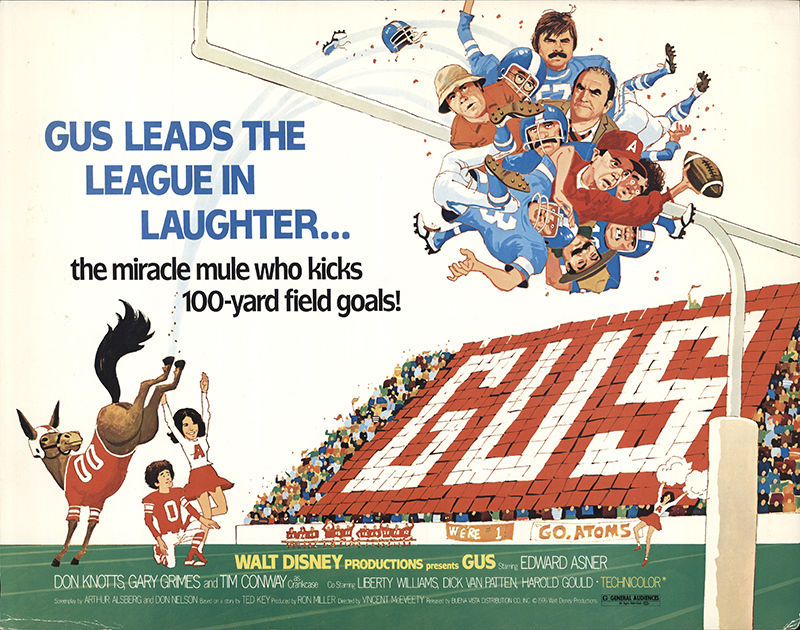
-
Fifth Starter Conversation Turns to Chestnut
IndianaTwin replied to RandBalls Stu's topic in Twins Daily Front Page News
Is this any relation to Joey Chestnut? I hear he eats like a horse. -
I wouldn't say Max has been inconsistent at all. In five of his seven full seasons, he's had an OPS+ from 92-98, which is a very tight range. His two outliers have been significantly better than that (and are actually very tight with each other). Going backwards, his bWAR is 2.9, 2.1 and 2.0 and would have extrapolated to 2.7 in the shortened 2020. Again, consistent. "Counting on a particular level of production" implies having a consistent floor. With Kepler, you can count on a floor that is very close to average offensively, partnered with what's seen as outstanding defense, particularly in a home park that can be tricky. We can talk about whether his contract his justified for a right fielder who is significantly above average defensively and a known floor OPS+ of 95. But inconsistency isn't the issue. There's not many people who have been as consistent as he has. For the record, I do think the contract is worth it and can understand why he "escaped the budget crunch," to borrow the phrase from the title. With the potential that's in the rest of the lineup, stick him in the nine hole to start the season and move him up if he gets on one of his rolls. If you've got a 95 OPS+ at the bottom of the lineup, that's pretty impressive.