



Cody Christie
-
Posts
7,809 -
Joined
-
Last visited
-
Days Won
5
Content Type
Profiles
News
Minnesota Twins Videos
2026 Minnesota Twins Top Prospects Ranking
2022 Minnesota Twins Draft Picks
Minnesota Twins Free Agent & Trade Rumors, Notes, & Tidbits
Guides & Resources
2023 Minnesota Twins Draft Picks
The Minnesota Twins Players Project
2024 Minnesota Twins Draft Picks
2025 Minnesota Twins Draft Pick Tracker
2026 Minnesota Twins Draft Tracker: Picks & Bonuses
Forums
Blogs
Events
Store
Downloads
Gallery
Everything posted by Cody Christie
-
 MINNEAPOLIS — In a shocking turn of events that defies decades of trauma, the Minnesota Twins’ starting rotation has once again shown signs of being competent, maybe even good. Naturally, this has led a certain segment of the fanbase to descend into full denial, clutching their Bert Blyleven bobbleheads like emotional support animals and waiting for the inevitable collapse. Despite a team ERA that ranks among the top in the American League and peripherals that make even hardened sabermetricians blush, the average Twins fan remains unconvinced. “I don’t care if Pablo López strikes out 15 batters in seven innings while simultaneously curing plantar fasciitis,” said longtime Twins enthusiast Dale Knudsen of Bloomington. “Until I see a Twins starter go three seasons without giving up a home run to a light-hitting backup catcher, I’m not buying it.” Knudsen, who proudly wears a fading “Santana 57” jersey to every game, went on to explain that his baseball instincts were irreparably damaged in the early 2010s. “You think I can just unsee Jason Marquis grooving a 79-mph meatball to a guy who’d never hit a homer outside of batting practice?” he said, shaking his head while scrolling through Liriano highlights on an iPod. “No sir. Not in this lifetime.” While the 2023 Twins led the league in strikeouts and had one of the deepest rotations in franchise history, many fans dismissed it as a statistical fluke akin to seeing Nick Blackburn pitch a clean inning. “2023 was a fever dream,” said Twitter user @FireRoccoPlz43. “They were probably using trick baseballs. Or maybe every other team had food poisoning. There’s no way that was real. This is the same franchise that once convinced us Kevin Correia was an ‘innings eater.’” When asked about the Twins' hot start to 2025 including several dominant outings from Joe Ryan, Bailey Ober, and new folk hero Chris Paddack, many fans remained unconvinced. “Look, I want to believe,” said fan Jenna Melrose of Coon Rapids, holding a laminated newspaper clipping of Johan Santana’s 17-strikeout game. “But every time I see a strong outing, I hear the ghost of Vance Worley whispering, ‘Regression is coming.’” The bar for Twins starting pitching remains tragically high, thanks largely to the fact that no one in the rotation currently possesses a Cy Young award, a devastating changeup, or a faint whiff of Venezuelan wizardry. “Unless one of these guys wins back-to-back ERA titles and throws a no-hitter with a blindfold on, I’m reserving judgment,” said retired teacher Tom Thorson. “Johan didn’t just pitch, he healed. I’m pretty sure my arthritis went into remission during his 2006 stretch.” Even younger fans who never saw Santana or peak Liriano in their prime are deeply skeptical. “My dad told me stories about a time when Twins pitchers made people miss,” said 19-year-old college student Caleb Olsen. “I thought it was a bedtime myth, like unicorns or competent bullpen management.” Hope on the Horizon (Maybe) Still, not everyone is clinging to their pitching PTSD. A quiet but growing number of fans are starting to entertain the possibility that maybe, just maybe, the Twins can sustain their current level of performance. “I mean, sure, I’ve been hurt before,” said moderately optimistic fan Sandra Wallen. “But if the bullpen doesn’t implode and the starters keep going six-plus, I might allow myself to feel something... cautiously.” She paused, then added: “Unless they re-sign Kyle Gibson. Then I’m out.” Whether or not the Twins’ pitching renaissance is real or just another cruel mirage remains to be seen. But one thing is clear: after years of watching errant sinkers and fly balls land in the seats, some scars just don’t heal. So if you see a Twins fan watching a 1-0 game with a twitch in their eye and a ‘Free Anthony Swarzak’ shirt, just be gentle. They’ve been through things. Very, very specific things. View full article
 -
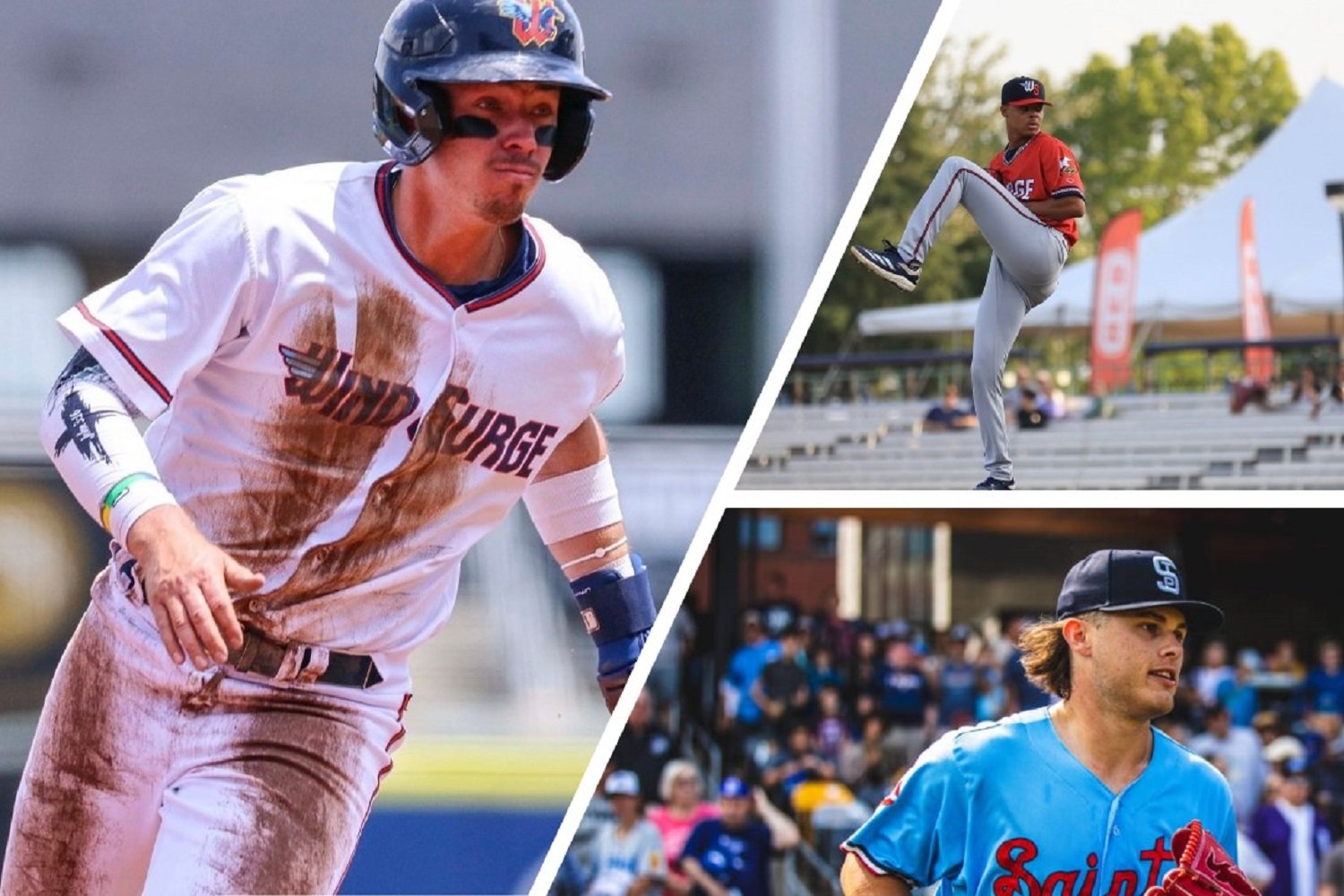 Welcome to a new twist on a familiar weekly article here at Twins Daily. Previously, the Minor League Week in Review allowed prospect fans to gain insight into the ebbs and flows of the team’s affiliates. However, it didn’t offer a space to focus on specific prospects and what they may be doing to help their prospect stock. With the Twins Prospect Hot Sheet, we will take a weekly view of multiple prospects rising on prospect lists due to their recent performance. These could be some of the organization’s top-ranked prospects, but it could also be some under-the-radar names who are putting themselves on the prospect map. Let’s dive in and see who makes this week’s Hot Sheet. RHP Darren Bowen, Wichita Wind Surge Bowen might not be a familiar name for Twins fans, because he has yet to be considered among the team’s top 20 prospects. He came to the organization as part of the Jorge Polanco trade, along with Gabriel Gonzalez, Anthony DeSclafani, and Justin Topa. That trade is starting to look like a win for both teams based on Polanco’s hot start to 2025 and Bowen and Gonzalez starting to establish themselves. Hitting the Hot Button Bowen is in his age-24 season and getting his first taste of Double-A baseball. On Friday, he threw five innings of no-hit baseball with an earned run, three walks, and four strikeouts. He's made eight starts, and has yet to allow more than two earned runs in any appearance. Batters are hitting .147/.250/.319 against him and have only gone 4-for-49 (.082) in his last four starts. There are areas for him to improve, but he’s putting himself in the discussion to make the team’s top 20 prospects when lists are updated later this season. Tanner Schobel, Wichita Wind Surge Schobel has been on the prospect map for the Twins since they selected him with their second-round pick in 2022. He has spent parts of the last three seasons at Double A, but he is about average age for that level this season. In 2024, he played 122 games and slashed .211/.301/.338 with 20 doubles and 10 home runs. Schobel showed some defensive versatility by playing four defensive positions last season, starting at second base, third base, shortstop, and left field. That utility could help him crack the big leagues. Hitting the Hot Button During May, Schobel has been on a tear at the plate. After posting a .752 OPS in April, he's slashed .326/.367/.528 with nine doubles and three home runs in his last 20 games. Through Sunday’s action, he has a 13-game hit streak wherein he has gone 19-for-54 (.352 BA) with more walks (6) than strikeouts (5). Even more impressive is that he has been facing older [itchers in nearly 70% of his plate appearances. He is solidifying himself as one of the team’s top 20 prospects, and should be promoted to St. Paul soon if he continues to hit this well. Travis Adams, St. Paul Saints Adams may be a less familiar name to some fans, but some will remember him because the Twins surprisingly added him to the team’s 40-man roster this winter to protect him from the Rule 5 Draft. Minnesota selected him in the sixth round of the 2021 MLB Draft, and he had a breakout season in 2024 at Double-A Wichita. In 22 appearances (108 IP), he posted a 3.67 ERA and a 1.14 WHIP, with a 24.5 K% and a 6.3 BB%. The Twins thought highly enough of him to protect him, but the Saints' starting staff has been stacked this year, forcing him to serve in a unique role. Hitting the Hot Button For most of the season, Adams has been used as a piggyback for one of the team’s more highly ranked starters. He has averaged 3 1/3 innings per appearance, even picking up some multi-inning saves in the middle of April. On Friday, David Festa was on a pitch limit as he has been dealing with a minor arm issue, so Adams was ready to follow him. He allowed one hit in 4 1/3 shutout innings, while striking out six and walking two. His Hard Hit% has dropped 1.5% this season compared to last year at Triple A. Adams might not have the same pedigree as some of the team’s other pitching options, but the Twins may need him since he is on the 40-man roster. Schobel has been ranked among the Twins top prospects and sits in 17th on Twins Daily’s most recently updated list. Adams and Bowen might not crack the team's top 20 just yet, but their performances are worth watching, especially since they are both in the upper minors. Every player on the list has a chance to impact the Twins roster over the next two years. Which prospect has helped their stock the most in recent weeks? Leave a comment and start the discussion.
- 9 comments
-
- 7
-

-
- darren bowen
- tanner schobel
- (and 1 more)
-
Image courtesy of Ed Bailey (Schobel), Rob Thompson (Adams), Ashley Monjaras (Bowen) Welcome to a new twist on a familiar weekly article here at Twins Daily. Previously, the Minor League Week in Review allowed prospect fans to gain insight into the ebbs and flows of the team’s affiliates. However, it didn’t offer a space to focus on specific prospects and what they may be doing to help their prospect stock. With the Twins Prospect Hot Sheet, we will take a weekly view of multiple prospects rising on prospect lists due to their recent performance. These could be some of the organization’s top-ranked prospects, but it could also be some under-the-radar names who are putting themselves on the prospect map. Let’s dive in and see who makes this week’s Hot Sheet. RHP Darren Bowen, Wichita Wind Surge Bowen might not be a familiar name for Twins fans, because he has yet to be considered among the team’s top 20 prospects. He came to the organization as part of the Jorge Polanco trade, along with Gabriel Gonzalez, Anthony DeSclafani, and Justin Topa. That trade is starting to look like a win for both teams based on Polanco’s hot start to 2025 and Bowen and Gonzalez starting to establish themselves. Hitting the Hot Button Bowen is in his age-24 season and getting his first taste of Double-A baseball. On Friday, he threw five innings of no-hit baseball with an earned run, three walks, and four strikeouts. He's made eight starts, and has yet to allow more than two earned runs in any appearance. Batters are hitting .147/.250/.319 against him and have only gone 4-for-49 (.082) in his last four starts. There are areas for him to improve, but he’s putting himself in the discussion to make the team’s top 20 prospects when lists are updated later this season. Tanner Schobel, Wichita Wind Surge Schobel has been on the prospect map for the Twins since they selected him with their second-round pick in 2022. He has spent parts of the last three seasons at Double A, but he is about average age for that level this season. In 2024, he played 122 games and slashed .211/.301/.338 with 20 doubles and 10 home runs. Schobel showed some defensive versatility by playing four defensive positions last season, starting at second base, third base, shortstop, and left field. That utility could help him crack the big leagues. Hitting the Hot Button During May, Schobel has been on a tear at the plate. After posting a .752 OPS in April, he's slashed .326/.367/.528 with nine doubles and three home runs in his last 20 games. Through Sunday’s action, he has a 13-game hit streak wherein he has gone 19-for-54 (.352 BA) with more walks (6) than strikeouts (5). Even more impressive is that he has been facing older [itchers in nearly 70% of his plate appearances. He is solidifying himself as one of the team’s top 20 prospects, and should be promoted to St. Paul soon if he continues to hit this well. Travis Adams, St. Paul Saints Adams may be a less familiar name to some fans, but some will remember him because the Twins surprisingly added him to the team’s 40-man roster this winter to protect him from the Rule 5 Draft. Minnesota selected him in the sixth round of the 2021 MLB Draft, and he had a breakout season in 2024 at Double-A Wichita. In 22 appearances (108 IP), he posted a 3.67 ERA and a 1.14 WHIP, with a 24.5 K% and a 6.3 BB%. The Twins thought highly enough of him to protect him, but the Saints' starting staff has been stacked this year, forcing him to serve in a unique role. Hitting the Hot Button For most of the season, Adams has been used as a piggyback for one of the team’s more highly ranked starters. He has averaged 3 1/3 innings per appearance, even picking up some multi-inning saves in the middle of April. On Friday, David Festa was on a pitch limit as he has been dealing with a minor arm issue, so Adams was ready to follow him. He allowed one hit in 4 1/3 shutout innings, while striking out six and walking two. His Hard Hit% has dropped 1.5% this season compared to last year at Triple A. Adams might not have the same pedigree as some of the team’s other pitching options, but the Twins may need him since he is on the 40-man roster. Schobel has been ranked among the Twins top prospects and sits in 17th on Twins Daily’s most recently updated list. Adams and Bowen might not crack the team's top 20 just yet, but their performances are worth watching, especially since they are both in the upper minors. Every player on the list has a chance to impact the Twins roster over the next two years. Which prospect has helped their stock the most in recent weeks? Leave a comment and start the discussion. View full article
-
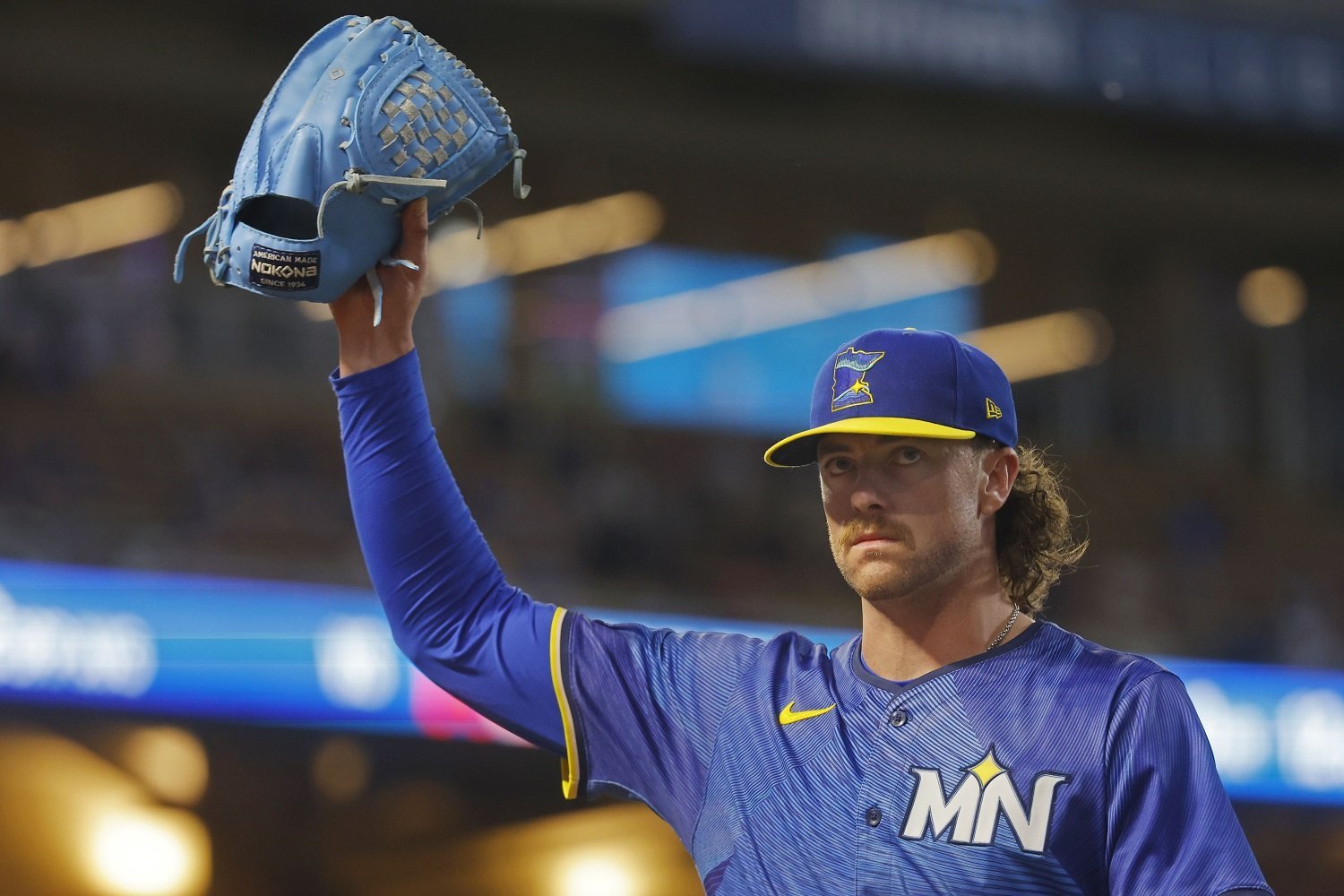 Chris Paddack's 2025 season has been a tale of two narratives. After a disastrous first start of the season against the White Sox wherein he surrendered nine earned runs over just 3 1/3 innings, Paddack has (seemingly) rebounded impressively. Over his other nine starts, he posted a commendable 2.59 ERA, suggesting a return to form for a pitcher who was only expected to be a back-of-the-rotation option. However, a deeper dive into his underlying metrics raises questions about the sustainability of this performance. Surface Success vs. Underlying Metric While Paddack's recent ERA is impressive, his Fielding Independent Pitching (FIP) during this stretch stands at 3.77, over a run higher than his ERA. This discrepancy often indicates that a pitcher has benefited from factors outside their control, such as defensive support or favorable sequencing. Moreover, Paddack's strikeout-to-walk ratio during this period is 33-to-15, over 48 2/3 innings. These totals translate to a strikeout rate (K%) of 16.1% and a walk rate (BB%) of 8.8%, both of which are career worsts for him. For context, the league average strikeout rate hovers around 22%, making Paddack's decline in strikeouts particularly concerning. If a pitcher doesn’t have a strikeout pitch, it can lead to longer at-bats, higher pitch counts, and quicker hooks. Hard Contact and Batted-Ball Concerns Paddack's batted-ball profile also augurs potential issues. His Hard Hit%, the percentage of opponents' batted balls hit with an exit velocity of 95 mph or higher, is at 45.1%. This total is significantly above the MLB average of 36.7%. His Hard Hit% ranks in the 23rd percentile, suggesting that hitters will start having more pitches fall in against him because of the regular solid contact they are making. His fastball has been concerning. Batters' expected slugging percentage (xSLG) is .460 versus his four-seamer, compared to an actual slugging percentage (SLG) of .299. This 161-point gap indicates that, based on the quality of contact, hitters should be slugging much higher against him. His velocity is slightly up on the pitch this season, so it’s more of a concern with his location than stuff. Such disparities often regress over time, potentially leading to more extra-base hits allowed. Another red flag is the increase in pulled air balls against Paddack. His Pull AIR%, the percentage of balls hit in the air to the pull side, is at a career-high 19.1%, compared to the league average of 16.6%. Pulled fly balls are more likely to result in home runs, suggesting a heightened risk of long balls in the future. He’s given up seven home runs this season, but three came in his disastrous first outing. Batters will get luckier against him, and more fly balls will leave the yard. A closer look at Paddack's pitch arsenal reveals diminished effectiveness. In 2024, all four of his primary pitches achieved at least a 19% whiff rate. This season, only two pitches (the changeup and slider) have maintained that threshold, with whiff rates of 25.9% and 27.5%, respectively. His fastball, which he throws over 50% of the time, has a whiff rate of just 17.9% and is being hit hard, with a Hard Hit% of 51.8%. The decline in swing-and-miss capability across his arsenal suggests that hitters are seeing his pitches better, leading to more contact and, potentially, more damage. While Paddack's recent stretch has provided a boost to the Twins' rotation, the underlying metrics paint a more cautionary tale. His reduced strikeout rate, increased walk rate, elevated hard contact rate, and declining isolated pitch effectiveness all point toward potential regression. Unless adjustments are made (such as refining pitch locations, altering pitch usage, or enhancing pitch movement), Paddack's current success may prove unsustainable. Monitoring and addressing these underlying issues will be crucial for the Twins to maintain their competitive edge in the coming weeks. What’s the most concerning part of Paddack’s underlying numbers? What can he do to avoid a future blowup? Leave a comment and start the discussion.
 -
Image courtesy of © Bruce Kluckhohn-Imagn Images Chris Paddack's 2025 season has been a tale of two narratives. After a disastrous first start of the season against the White Sox wherein he surrendered nine earned runs over just 3 1/3 innings, Paddack has (seemingly) rebounded impressively. Over his other nine starts, he posted a commendable 2.59 ERA, suggesting a return to form for a pitcher who was only expected to be a back-of-the-rotation option. However, a deeper dive into his underlying metrics raises questions about the sustainability of this performance. Surface Success vs. Underlying Metric While Paddack's recent ERA is impressive, his Fielding Independent Pitching (FIP) during this stretch stands at 3.77, over a run higher than his ERA. This discrepancy often indicates that a pitcher has benefited from factors outside their control, such as defensive support or favorable sequencing. Moreover, Paddack's strikeout-to-walk ratio during this period is 33-to-15, over 48 2/3 innings. These totals translate to a strikeout rate (K%) of 16.1% and a walk rate (BB%) of 8.8%, both of which are career worsts for him. For context, the league average strikeout rate hovers around 22%, making Paddack's decline in strikeouts particularly concerning. If a pitcher doesn’t have a strikeout pitch, it can lead to longer at-bats, higher pitch counts, and quicker hooks. Hard Contact and Batted-Ball Concerns Paddack's batted-ball profile also augurs potential issues. His Hard Hit%, the percentage of opponents' batted balls hit with an exit velocity of 95 mph or higher, is at 45.1%. This total is significantly above the MLB average of 36.7%. His Hard Hit% ranks in the 23rd percentile, suggesting that hitters will start having more pitches fall in against him because of the regular solid contact they are making. His fastball has been concerning. Batters' expected slugging percentage (xSLG) is .460 versus his four-seamer, compared to an actual slugging percentage (SLG) of .299. This 161-point gap indicates that, based on the quality of contact, hitters should be slugging much higher against him. His velocity is slightly up on the pitch this season, so it’s more of a concern with his location than stuff. Such disparities often regress over time, potentially leading to more extra-base hits allowed. Another red flag is the increase in pulled air balls against Paddack. His Pull AIR%, the percentage of balls hit in the air to the pull side, is at a career-high 19.1%, compared to the league average of 16.6%. Pulled fly balls are more likely to result in home runs, suggesting a heightened risk of long balls in the future. He’s given up seven home runs this season, but three came in his disastrous first outing. Batters will get luckier against him, and more fly balls will leave the yard. A closer look at Paddack's pitch arsenal reveals diminished effectiveness. In 2024, all four of his primary pitches achieved at least a 19% whiff rate. This season, only two pitches (the changeup and slider) have maintained that threshold, with whiff rates of 25.9% and 27.5%, respectively. His fastball, which he throws over 50% of the time, has a whiff rate of just 17.9% and is being hit hard, with a Hard Hit% of 51.8%. The decline in swing-and-miss capability across his arsenal suggests that hitters are seeing his pitches better, leading to more contact and, potentially, more damage. While Paddack's recent stretch has provided a boost to the Twins' rotation, the underlying metrics paint a more cautionary tale. His reduced strikeout rate, increased walk rate, elevated hard contact rate, and declining isolated pitch effectiveness all point toward potential regression. Unless adjustments are made (such as refining pitch locations, altering pitch usage, or enhancing pitch movement), Paddack's current success may prove unsustainable. Monitoring and addressing these underlying issues will be crucial for the Twins to maintain their competitive edge in the coming weeks. What’s the most concerning part of Paddack’s underlying numbers? What can he do to avoid a future blowup? Leave a comment and start the discussion. View full article
-
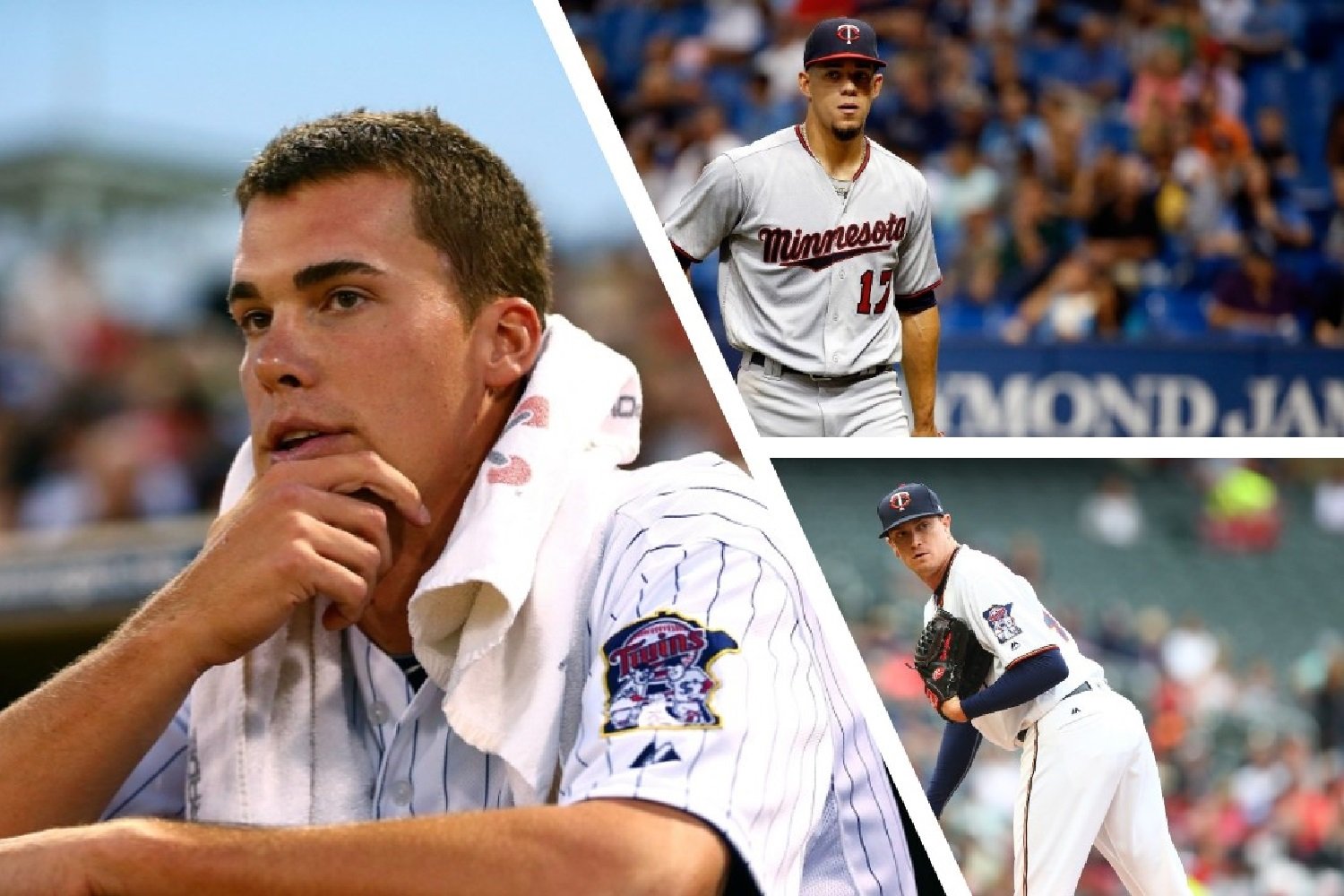 Regarding pitching, the Twins’ farm has delivered a remarkable array of arms over the past 25 years, including flamethrowers, craft artists, and power relievers alike. For the All-Century Prospect Team at Twins Daily, there have been some remarkable hitting prospects, while the pitching prospects have left something to be desired. Below are profiles of five starters and two relievers who carried sky-high expectations during their time in the Twins system. SP: Francisco Liriano The Twins acquired Liriano in one of the most famous trades in team history, sending A.J. Pierzynski to the Giants for Liriano, Joe Nathan, and Boof Bonser. Liriano’s 96–97 mph heater and wipe-out slider quickly made him one of baseball’s top prospects. In 2005, his 2.63 ERA in Minnesota’s upper minors vaulted him to Baseball America’s No. 6 overall prospect. He was electric with a 2.16 ERA en route to an All-Star selection. In a rotation with Johan Santana, he was the team’s best starter. Injury woes curtailed his prime, but Liriano still ranks among the greatest prospect-to-breakout conversions in club history. SP: José Berríos Taken with the 32nd overall pick in the 2012 MLB Draft, Berríos was a consensus top-50 prospect entering the 2015 season and peaked in the top 20 on multiple top-100 lists. The 2014 season was his breakout season as he rocketed through High- to Triple-A, posting a 2.76 ERA and 9.0 K/9 over 140 innings while only being 20 years old. By 2016, he became a regular in Minnesota’s rotation and was one of the league’s most consistent pitchers during his Twins tenure. Though he never quite reached ace territory before being traded in 2019, Berríos was a two-time All-Star and helped carry the team’s pitching staff through some tough years. SP: Kyle Gibson A first-round pick in 2009, Gibson’s college pedigree allowed him to move through the system quickly. In 2010, he made his professional debut and dominated three different levels with a 2.96 ERA and a 1.15 WHIP while vaulting himself into national top-100 prospect lists. Gibson became a reliable starter for the Twins from 2013–19, becoming prized for his durability even if he was never considered an ace. His career arc peaked with a 3.5 WAR in 2018 and rewarded the organization with 147+ innings six times, an underrated luxury in the modern era. SP: Joe Ryan Ryan was considered a borderline top-100 prospect when the Twins acquired him in the Nelson Cruz trade from Tampa Bay. His prospect profile was unique because he could dominate in the high minors by relying almost exclusively on his fastball. In the Twins system, he has further developed his secondary pitches to establish himself as a borderline All-Star over the last two seasons. Since 2023, he ranks 12th in the AL in fWAR and third in K/9 behind Cole Ragans and Tarik Skubal. Ryan’s high-ceiling arsenal suggests he’s the first of this group still climbing. SP: Alex Meyer Meyer was drafted 23rd overall by the Washington Nationals in 2011 and came to the Twins in a one-for-one trade for Denard Span. He was a top-100 prospect from 2013-15. Yet Meyer struggled with command in the upper minors, walking 4.0 batters per nine in his time at Triple-A. He only made four appearances for the Twins and allowed 10 earned runs over 6 1/3 innings. Minnesota traded him to the Angels in 2016 as part of the Ricky Nolasco deal. A shoulder injury led to surgery and, ultimately, retirement. Meyer’s story remains a cautionary tale: elite tools don’t always translate without consistent control and health. RP: Jhoan Durán The Arizona Diamondbacks signed Durán in 2015, and he was traded to the Twins three years later as part of the Eduardo Escobar swap. He quickly started turning heads in the Twins organization as he consistently hit triple-digits as a starter. As he moved through the upper minors, there began to be some injury concerns, and he was moved to the bullpen. His MLB introduction in 2022 was electric: 8 saves, a sub-2.00 ERA, and gas up to 103 mph. Durán’s devastating splinker adds an exclamation point, and when healthy, he’s arguably the best reliever prospect in franchise annals. RP: Brusdar Graterol The Twins signed Graterol in August 2014, but he was limited to four starts from 2014-16 after undergoing Tommy John surgery. All three national top-100 lists had Graterol ranked as high as No. 32 entering the 2020 season. Before that season, Minnesota traded Graterol to the Dodgers as part of the Kenta Maeda trade, so he was never fully able to be used as a reliever with the Twins. Still, he has become a vital part of the Dodgers bullpen as they have won multiple World Series titles since he was acquired. Over the last quarter century, the Twins have had a mixed bag of pitcher prospects. For multiple years, Berríos was the biggest success story, while Gibson carved out a long, durable career. Ryan looks to be the next star in the making, his early results boding well for sustained success. On the flip side, Meyer is a reminder that there is no such thing as a pitching prospect, as he tried to compensate for nagging control issues and injuries. As prospect lists turn over, the Twins have attempted to redefine their pitching pipeline, and there have been positive results so far. However, these seven arms represent some dark years in Minnesota as the organization underwent franchise-altering changes on the pitching and development front. Whether culmination or cautionary tale, each profile offers a window into what it takes to transform raw talent into Major League production, and why, in Minnesota, prospect fever never really subsides. Would you add other pitchers to the list? What stands out about this group? Leave a comment and start the discussion.
- 10 comments
-
- 1
-
-
- jose berrios
- kyle gibson
- (and 5 more)
-
Image courtesy of © Kim Klement (Berrios), Mark J. Rebilas (Gibson, Meyer)- Imagn Images Regarding pitching, the Twins’ farm has delivered a remarkable array of arms over the past 25 years, including flamethrowers, craft artists, and power relievers alike. For the All-Century Prospect Team at Twins Daily, there have been some remarkable hitting prospects, while the pitching prospects have left something to be desired. Below are profiles of five starters and two relievers who carried sky-high expectations during their time in the Twins system. SP: Francisco Liriano The Twins acquired Liriano in one of the most famous trades in team history, sending A.J. Pierzynski to the Giants for Liriano, Joe Nathan, and Boof Bonser. Liriano’s 96–97 mph heater and wipe-out slider quickly made him one of baseball’s top prospects. In 2005, his 2.63 ERA in Minnesota’s upper minors vaulted him to Baseball America’s No. 6 overall prospect. He was electric with a 2.16 ERA en route to an All-Star selection. In a rotation with Johan Santana, he was the team’s best starter. Injury woes curtailed his prime, but Liriano still ranks among the greatest prospect-to-breakout conversions in club history. SP: José Berríos Taken with the 32nd overall pick in the 2012 MLB Draft, Berríos was a consensus top-50 prospect entering the 2015 season and peaked in the top 20 on multiple top-100 lists. The 2014 season was his breakout season as he rocketed through High- to Triple-A, posting a 2.76 ERA and 9.0 K/9 over 140 innings while only being 20 years old. By 2016, he became a regular in Minnesota’s rotation and was one of the league’s most consistent pitchers during his Twins tenure. Though he never quite reached ace territory before being traded in 2019, Berríos was a two-time All-Star and helped carry the team’s pitching staff through some tough years. SP: Kyle Gibson A first-round pick in 2009, Gibson’s college pedigree allowed him to move through the system quickly. In 2010, he made his professional debut and dominated three different levels with a 2.96 ERA and a 1.15 WHIP while vaulting himself into national top-100 prospect lists. Gibson became a reliable starter for the Twins from 2013–19, becoming prized for his durability even if he was never considered an ace. His career arc peaked with a 3.5 WAR in 2018 and rewarded the organization with 147+ innings six times, an underrated luxury in the modern era. SP: Joe Ryan Ryan was considered a borderline top-100 prospect when the Twins acquired him in the Nelson Cruz trade from Tampa Bay. His prospect profile was unique because he could dominate in the high minors by relying almost exclusively on his fastball. In the Twins system, he has further developed his secondary pitches to establish himself as a borderline All-Star over the last two seasons. Since 2023, he ranks 12th in the AL in fWAR and third in K/9 behind Cole Ragans and Tarik Skubal. Ryan’s high-ceiling arsenal suggests he’s the first of this group still climbing. SP: Alex Meyer Meyer was drafted 23rd overall by the Washington Nationals in 2011 and came to the Twins in a one-for-one trade for Denard Span. He was a top-100 prospect from 2013-15. Yet Meyer struggled with command in the upper minors, walking 4.0 batters per nine in his time at Triple-A. He only made four appearances for the Twins and allowed 10 earned runs over 6 1/3 innings. Minnesota traded him to the Angels in 2016 as part of the Ricky Nolasco deal. A shoulder injury led to surgery and, ultimately, retirement. Meyer’s story remains a cautionary tale: elite tools don’t always translate without consistent control and health. RP: Jhoan Durán The Arizona Diamondbacks signed Durán in 2015, and he was traded to the Twins three years later as part of the Eduardo Escobar swap. He quickly started turning heads in the Twins organization as he consistently hit triple-digits as a starter. As he moved through the upper minors, there began to be some injury concerns, and he was moved to the bullpen. His MLB introduction in 2022 was electric: 8 saves, a sub-2.00 ERA, and gas up to 103 mph. Durán’s devastating splinker adds an exclamation point, and when healthy, he’s arguably the best reliever prospect in franchise annals. RP: Brusdar Graterol The Twins signed Graterol in August 2014, but he was limited to four starts from 2014-16 after undergoing Tommy John surgery. All three national top-100 lists had Graterol ranked as high as No. 32 entering the 2020 season. Before that season, Minnesota traded Graterol to the Dodgers as part of the Kenta Maeda trade, so he was never fully able to be used as a reliever with the Twins. Still, he has become a vital part of the Dodgers bullpen as they have won multiple World Series titles since he was acquired. Over the last quarter century, the Twins have had a mixed bag of pitcher prospects. For multiple years, Berríos was the biggest success story, while Gibson carved out a long, durable career. Ryan looks to be the next star in the making, his early results boding well for sustained success. On the flip side, Meyer is a reminder that there is no such thing as a pitching prospect, as he tried to compensate for nagging control issues and injuries. As prospect lists turn over, the Twins have attempted to redefine their pitching pipeline, and there have been positive results so far. However, these seven arms represent some dark years in Minnesota as the organization underwent franchise-altering changes on the pitching and development front. Whether culmination or cautionary tale, each profile offers a window into what it takes to transform raw talent into Major League production, and why, in Minnesota, prospect fever never really subsides. Would you add other pitchers to the list? What stands out about this group? Leave a comment and start the discussion. View full article
-
Is it Time for the Twins to Move Marco Raya to the Bullpen?
Cody Christie posted an article in Minor Leagues
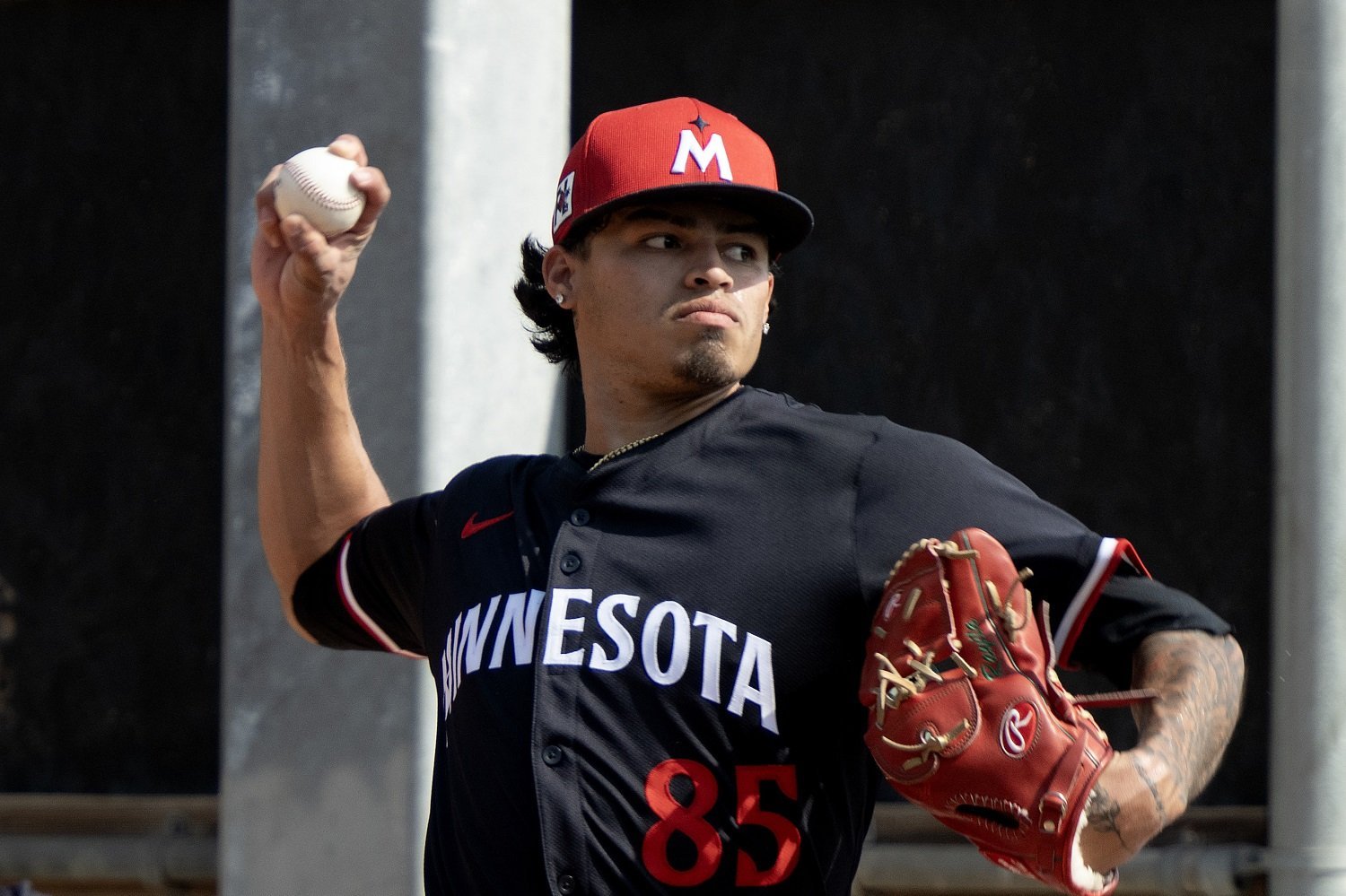 Marco Raya’s ascent through the Twins’ system has been meteoric, but his 2025 performance has been equally dramatic in the opposite direction. After years of tightly controlled workloads, his 2025 performance has been disastrous. At this juncture, the Twins must acknowledge that Raya’s future isn’t in the rotation, and a shift to the bullpen is logical and overdue. Rapid Promotions Mask Uncertainty Since being drafted in 2020, Raya’s six-pitch arsenal has made him one of the Twins’ top pitching prospects. However, his smaller frame (6-foot-1, 170 pounds) made the Twins systematically capped his outings. Most starts from 2022–2023 were five innings or fewer, followed by a cautious bump to five innings in select late-2024 outings. This conservative approach stemmed from Raya’s 2021 shoulder strain, during which Twins development staff prioritized long-term health over short-term success. The result was no significant setbacks but also no true test of his stamina against lineups multiple times. Paradoxically, while Raya’s pitch counts were restrained, his ascent through the minors was swift. After dominating High-A Cedar Rapids, he graduated to Double-A Wichita mid-2023, and later in 2024 made a brief Triple-A cameo before his contract was added to the 40-man roster in November. This rapid promotion was a clear signal of the Twins’ belief in his high ceiling. Yet that rapid climb never fully answered whether his repertoire could maintain bite deeper into games or if his body could adapt to extended starts. 2024: The Harbinger of Confidence Despite workload caps, Raya’s 2024 numbers hinted at genuine promise. Across 97 2/3 innings between Double-A and Triple-A, he posted a 4.05 ERA, a 24.6% strikeout rate, and a 10.5% walk rate. Those metrics underscored his swing-and-miss stuff, particularly his plus mid-80s slider. His four-seam fastball regularly registered in the mid-90s, touching 97 mph, and both ride and sink variants averaged over 94 mph, offering a solid base for continued growth. Encouraged by that profile, the Twins gradually loosened the leash late in 2024, allowing Raya to eclipse five innings in five of his last seven starts. This shift represented a turning point: the organization was signaling readiness to test him as a bona fide starter, armed with data suggesting his arsenal could play beyond limited stints. It was a positive end to the season for a player who was only 21-years old. 2025: A Statistical Implosion In his first seven outings of 2025, Raya has been charged with 21 earned runs in 15 2/3 innings, translating to a 12.06 ERA which is an unsustainable level for any rotation hopeful. His walk tally stands at 18, more free passes than strikeouts (17), driving his walk-rate to 19.4% compared to 10.5% last year. Meanwhile, his K-rate has cratered by 6.3 percentage points, an alarming sign that his once-electric slider and fastball aren’t missing bats like they used to. Beyond the walks and missed bats, opponents are punishing Raya’s mistakes. Through seven games, batters are hitting .431/.533/.556 with a 1.088 OPS that ranks among the worst marks for any starter at any level this season. When a pitcher is yielding more walks than strikeouts and allowing hits at a near-45% clip. There may be some small sample size caveats, but he’s shown few positive signs in any outing. Why Relief Is the Only Viable Path 1. Simplifying the Arsenal Raya’s six-pitch mix has allowed him to be successful in the past, but his command inconsistencies in 2025 suggest he’s better suited to focusing on a two- or three-pitch repertoire out of the bullpen. In shorter outings, he can lean on his four-seam fastball (already touching the upper 90s) and his plus slider, the latter being the pitch that has been his best in the past. Concentrating on his best offerings could unlock more downhill arm speed and sharpen the break of his secondary pitches. 2. The Bulldozer Role In relief, Raya’s heater could tick upward, potentially hitting the upper 90s, a velocity boost that would add an extra dimension to his profile. The slider, which graded as a plus pitch in 2024, would morph into a true weapon if thrown with the fire and conviction only shorter stints can provide. Given his current struggles to navigate batting order turns, a “bulldozer” relief role (one inning of max-effort, swing-and-miss stuff) feels tailor-made. Raya’s journey has been marked by tantalizing highs and cautious development, but the 2025 results leave little doubt: his path to MLB impact must diverge from the rotation. The Twins owe it to one of their top prospects to realign expectations and harness his best qualities in the bullpen. By embracing a relief role, Raya can rebuild confidence, increase velocity, and reestablish his slider as an elite offering. For a pitcher whose future has long been in question, this change is a strategic pivot toward realizing his undeniable upside. Is it time to move Raya to the bullpen? Leave a comment and start the discussion.
 -
I was trying to select prospects from a few different eras and there were some dark prospect lists in the 2010s.
- 14 replies
-
- 2
-
-
- joe mauer
- justin morneau
- (and 7 more)
-
Jenkins was included because he is already considered one of baseball's top prospects. It was more about how he is viewed from a national level as he's a top-10 global prospect. He is already seen as a better prospect than Kepler was ever considered.
-
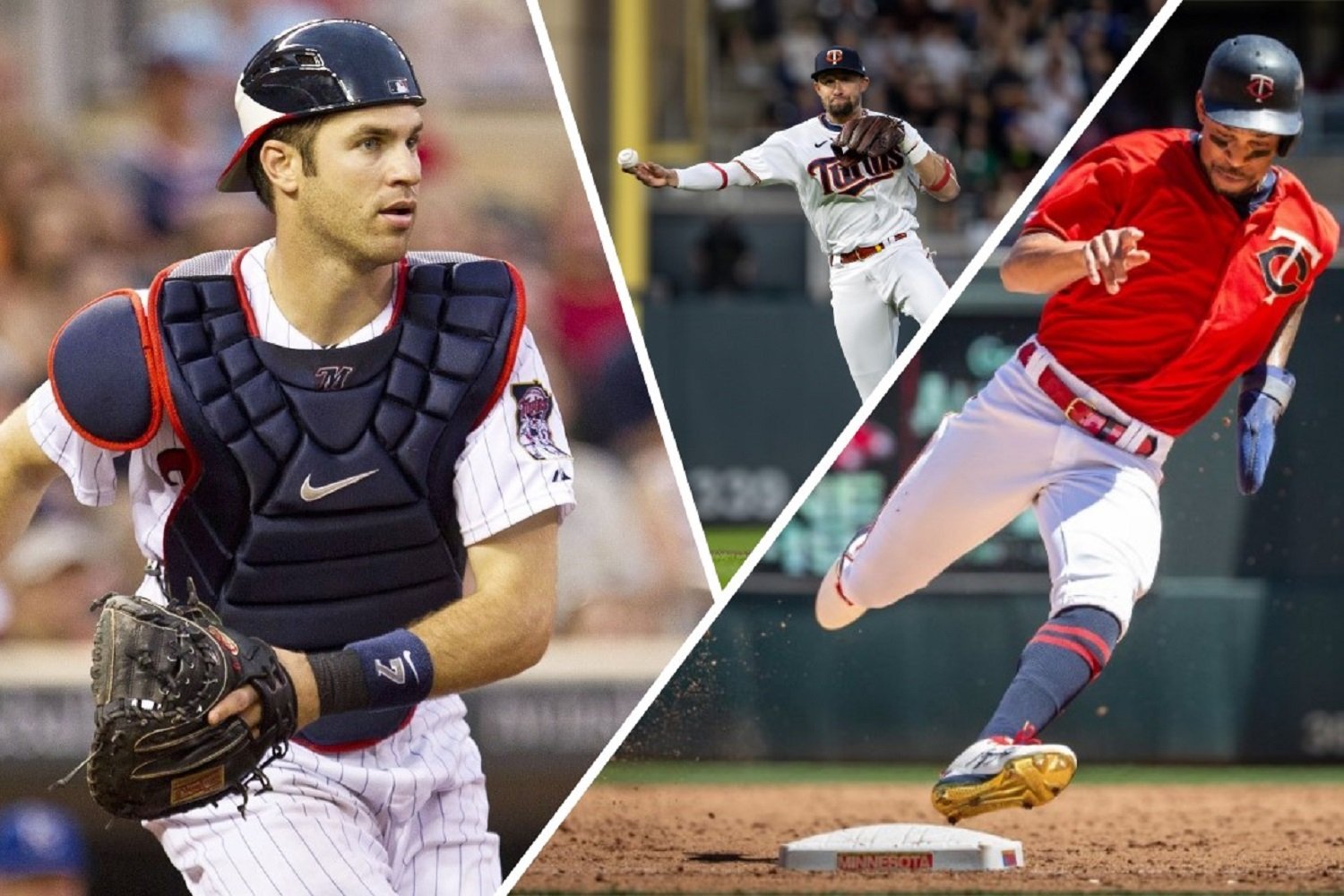 Throughout the franchise’s history, the Twins have prided themselves on drafting and developing talent into big-league impact. Today, we look at the nine hitters who have left a lasting legacy on the organization, examining what made them can’t-miss stars, how they fared once they arrived in the Show, and why one bright young phenom is still waiting in the wings. C: Joe Mauer Selected first overall in the 2001 draft, Mauer was the rare catcher whose bat overshadowed even his gold-glove glove. Scouts drooled over his advanced plate discipline (he walked more than he struck out in High-A) and natural hitter’s hands. He debuted as a 21-year-old and went on to win three batting titles and an MVP (2009). While chronic concussions eventually forced him off the position to first base, Mauer vastly exceeded expectations, becoming the face of the franchise and retiring as perhaps the greatest pure-hitting catcher in MLB history. He was a first-ballot Hall of Famer and quite possibly the best prospect in Twins history. 1B: Justin Morneau Taken in the third round in 1999, Morneau was a hulking slugger with jaw-dropping raw power and surprising on-base chops for someone who hit so many homers. His swing’s blend of torque and balance made him an easy fit for the Metrodome’s friendly right-center dimensions. He debuted in 2003, but 2006 was his breakout: .321/.375/.559 (.934), and the start of a five-year run that included an MVP (2006), two All-Star nods, and a Silver Slugger. While injuries, especially back and concussion issues, chipped away at his production later on, Morneau met, and at times surpassed, the lofty prospect billing. 2B: Brian Dozier Dozier wasn’t a household name when the Twins drafted him in the eighth round of 2009, and he was never a consensus top-100 prospect. However, he put himself on the map after hitting .320/.399/.491 (.890) between High-A and Double-A. Over seven Twins seasons, he clubbed 167 homers, peaking at 42 in 2016, and earned an All-Star nod in 2015. Some could argue that Jorge Polanco could’ve held this second base spot because he was a top-100 prospect but spent the first several years of his career at shortstop. Dozier’s blend of defense and power ultimately gave him the nod, and he might be the prospect that most greatly exceeded expectations. SS: Royce Lewis Lewis entered the 2019 season as a global top-10 prospect after a standout debut at Cedar Rapids, where he posted a .803 OPS with 14 homers and 29 doubles. Lewis possessed five-tool upside with power and the agility to handle shortstop. Unfortunately, he tore his ACL twice on his way to becoming a big-league regular. When healthy, Lewis looks every bit the centerpiece he was projected to be in the minors. He hasn’t yet had the sustained opportunity to prove he can deliver on that top-100 billing, but the pedigree remains impeccable. 3B: Miguel Sanó Signed as part of the heralded 2009 international class, Sanó carried a slugger’s reputation on par with any in baseball. At just 18, he blasted 20 homers in 66 rookie ball games, showcasing uncanny raw power. Scouts worried about his swing-and-miss tendencies and defensive footwork, but few doubted he’d hit. When Sanó finally debuted in 2015, he mashed 18 homers in 80 games, confirming the prodigious power and finishing third in the AL Rookie of the Year voting. Yet inconsistency at the plate (.233 career average) and defensive limitations frustrated fans. Sanó delivered on part of his prospect promise (115 OPS+) but fell short of becoming a complete star. OF: Byron Buxton Buxton might be the most hyped prospect in Twins' history. Everyone remembers turning on a Twins game circa 2016 to see him beat out an infield hit or uncork a laser throw from center. That was Buxton in a nutshell: the dynamic athleticism that made him the consensus No. 1 Twins prospect for multiple seasons (2014-15). He paired 80-grade speed with a 70-grade arm and sneaky pop. Yet injuries have been the overarching story of his big-league career. He’s been an All-Star and won a Gold Glove but has only played over 100 games twice. Health remains the significant variable. When he’s on the field, he’s closer to his prospect projection than almost anyone, but consistency has been elusive. OF: Walker Jenkins In 2023, the Twins selected Jenkins with the 5th overall pick, instantly vaulting him to the top of their farm system. His combination of plus raw power, 60-grade hit tool, and high-end athleticism drew immediate comparisons to Buxton. Yet Jenkins remains a prospect in the truest sense: his time in the minors has been severely impacted by injuries, so it has been tough to gauge his long-term skills. Will he stick in center or shift to a corner spot? Can he refine his swing-and-miss rate? He remains one of the game’s top prospects, but he must find a way to be successful in the upper minors. OF: Aaron Hicks The 14th overall pick in 2008, Hicks broke into pro ball as a five-tool threat. He was a top-100 prospect leading into four different seasons. He posted a .829 OPS in low A, turning heads with gap power and plus defense in center. Yet Hicks didn’t debut until 2013, and it took until 2018 with the Yankees for him to deliver a full 500-PA season (127 OPS+). With the Twins from 2013–15, Hicks provided streaky hitting but never quite blossomed into the atop-the-chart prospect many had pegged. His career line of .231/.330/.383 (.713) suggests a solid fourth-outfielder profile rather than the five-tool star once envisioned. DH: Jason Kubel Kubel, a 12th-rounder in 2000, emerged as one of the game’s best prospects, with Baseball America ranking him 17th entering the 2005 season. He earned prospect props for his mature approach and power potential as he hit 17 homers in Low-A at age 20, then slashed .352/.414/.590 (1.004) in Double-A. His polished bat hinted at a middle-of-the-order future, but a devastating knee injury slowed his trajectory. From 2004–10, Kubel delivered six seasons above 20 homers, including a .300 average in 2009, and slotted into the middle of the order behind Mauer and Morneau. Chronic back issues and a shoulder injury later sapped his pop. Still, Kubel never blossomed into an MVP candidate after his injury in the minors, but he carved out a decent big-league career. Across a quarter century of scouting, the Twins have uncovered hitters whose tools promised stardom: Mauer’s sweet swing, Morneau’s thunder, Lewis’s five-tool ceiling, and Jenkins’s potential emergence. Some like Mauer, Morneau, or Dozier met or exceeded those lofty marks, embedding themselves in franchise lore. Others like Sanó, Hicks, and Kubel delivered parts of the package, leaving fans to wonder what might have been. Lewis and Jenkins remind us that the story isn’t finished, with both attempting to overcome injury adversity. As the Twins look toward their next quarter century, these nine hitters stand as proof that top prospects can define eras, shape franchises, and captivate fans, no matter whether they crush it in a Twins uniform or simply crush homers in our memories. Should someone else have made the list? Leave a comment and start the discussion.
- 14 comments
-
- 3
-
-
- joe mauer
- justin morneau
- (and 7 more)
-
Image courtesy of © Bruce Kluckhohn (Buxton), Jordan Johnson (Lewis, Mauer)- Imagn Images Throughout the franchise’s history, the Twins have prided themselves on drafting and developing talent into big-league impact. Today, we look at the nine hitters who have left a lasting legacy on the organization, examining what made them can’t-miss stars, how they fared once they arrived in the Show, and why one bright young phenom is still waiting in the wings. C: Joe Mauer Selected first overall in the 2001 draft, Mauer was the rare catcher whose bat overshadowed even his gold-glove glove. Scouts drooled over his advanced plate discipline (he walked more than he struck out in High-A) and natural hitter’s hands. He debuted as a 21-year-old and went on to win three batting titles and an MVP (2009). While chronic concussions eventually forced him off the position to first base, Mauer vastly exceeded expectations, becoming the face of the franchise and retiring as perhaps the greatest pure-hitting catcher in MLB history. He was a first-ballot Hall of Famer and quite possibly the best prospect in Twins history. 1B: Justin Morneau Taken in the third round in 1999, Morneau was a hulking slugger with jaw-dropping raw power and surprising on-base chops for someone who hit so many homers. His swing’s blend of torque and balance made him an easy fit for the Metrodome’s friendly right-center dimensions. He debuted in 2003, but 2006 was his breakout: .321/.375/.559 (.934), and the start of a five-year run that included an MVP (2006), two All-Star nods, and a Silver Slugger. While injuries, especially back and concussion issues, chipped away at his production later on, Morneau met, and at times surpassed, the lofty prospect billing. 2B: Brian Dozier Dozier wasn’t a household name when the Twins drafted him in the eighth round of 2009, and he was never a consensus top-100 prospect. However, he put himself on the map after hitting .320/.399/.491 (.890) between High-A and Double-A. Over seven Twins seasons, he clubbed 167 homers, peaking at 42 in 2016, and earned an All-Star nod in 2015. Some could argue that Jorge Polanco could’ve held this second base spot because he was a top-100 prospect but spent the first several years of his career at shortstop. Dozier’s blend of defense and power ultimately gave him the nod, and he might be the prospect that most greatly exceeded expectations. SS: Royce Lewis Lewis entered the 2019 season as a global top-10 prospect after a standout debut at Cedar Rapids, where he posted a .803 OPS with 14 homers and 29 doubles. Lewis possessed five-tool upside with power and the agility to handle shortstop. Unfortunately, he tore his ACL twice on his way to becoming a big-league regular. When healthy, Lewis looks every bit the centerpiece he was projected to be in the minors. He hasn’t yet had the sustained opportunity to prove he can deliver on that top-100 billing, but the pedigree remains impeccable. 3B: Miguel Sanó Signed as part of the heralded 2009 international class, Sanó carried a slugger’s reputation on par with any in baseball. At just 18, he blasted 20 homers in 66 rookie ball games, showcasing uncanny raw power. Scouts worried about his swing-and-miss tendencies and defensive footwork, but few doubted he’d hit. When Sanó finally debuted in 2015, he mashed 18 homers in 80 games, confirming the prodigious power and finishing third in the AL Rookie of the Year voting. Yet inconsistency at the plate (.233 career average) and defensive limitations frustrated fans. Sanó delivered on part of his prospect promise (115 OPS+) but fell short of becoming a complete star. OF: Byron Buxton Buxton might be the most hyped prospect in Twins' history. Everyone remembers turning on a Twins game circa 2016 to see him beat out an infield hit or uncork a laser throw from center. That was Buxton in a nutshell: the dynamic athleticism that made him the consensus No. 1 Twins prospect for multiple seasons (2014-15). He paired 80-grade speed with a 70-grade arm and sneaky pop. Yet injuries have been the overarching story of his big-league career. He’s been an All-Star and won a Gold Glove but has only played over 100 games twice. Health remains the significant variable. When he’s on the field, he’s closer to his prospect projection than almost anyone, but consistency has been elusive. OF: Walker Jenkins In 2023, the Twins selected Jenkins with the 5th overall pick, instantly vaulting him to the top of their farm system. His combination of plus raw power, 60-grade hit tool, and high-end athleticism drew immediate comparisons to Buxton. Yet Jenkins remains a prospect in the truest sense: his time in the minors has been severely impacted by injuries, so it has been tough to gauge his long-term skills. Will he stick in center or shift to a corner spot? Can he refine his swing-and-miss rate? He remains one of the game’s top prospects, but he must find a way to be successful in the upper minors. OF: Aaron Hicks The 14th overall pick in 2008, Hicks broke into pro ball as a five-tool threat. He was a top-100 prospect leading into four different seasons. He posted a .829 OPS in low A, turning heads with gap power and plus defense in center. Yet Hicks didn’t debut until 2013, and it took until 2018 with the Yankees for him to deliver a full 500-PA season (127 OPS+). With the Twins from 2013–15, Hicks provided streaky hitting but never quite blossomed into the atop-the-chart prospect many had pegged. His career line of .231/.330/.383 (.713) suggests a solid fourth-outfielder profile rather than the five-tool star once envisioned. DH: Jason Kubel Kubel, a 12th-rounder in 2000, emerged as one of the game’s best prospects, with Baseball America ranking him 17th entering the 2005 season. He earned prospect props for his mature approach and power potential as he hit 17 homers in Low-A at age 20, then slashed .352/.414/.590 (1.004) in Double-A. His polished bat hinted at a middle-of-the-order future, but a devastating knee injury slowed his trajectory. From 2004–10, Kubel delivered six seasons above 20 homers, including a .300 average in 2009, and slotted into the middle of the order behind Mauer and Morneau. Chronic back issues and a shoulder injury later sapped his pop. Still, Kubel never blossomed into an MVP candidate after his injury in the minors, but he carved out a decent big-league career. Across a quarter century of scouting, the Twins have uncovered hitters whose tools promised stardom: Mauer’s sweet swing, Morneau’s thunder, Lewis’s five-tool ceiling, and Jenkins’s potential emergence. Some like Mauer, Morneau, or Dozier met or exceeded those lofty marks, embedding themselves in franchise lore. Others like Sanó, Hicks, and Kubel delivered parts of the package, leaving fans to wonder what might have been. Lewis and Jenkins remind us that the story isn’t finished, with both attempting to overcome injury adversity. As the Twins look toward their next quarter century, these nine hitters stand as proof that top prospects can define eras, shape franchises, and captivate fans, no matter whether they crush it in a Twins uniform or simply crush homers in our memories. Should someone else have made the list? Leave a comment and start the discussion. View full article
-
Image courtesy of © Chris Tilley-Imagn Images Marco Raya’s ascent through the Twins’ system has been meteoric, but his 2025 performance has been equally dramatic in the opposite direction. After years of tightly controlled workloads, his 2025 performance has been disastrous. At this juncture, the Twins must acknowledge that Raya’s future isn’t in the rotation, and a shift to the bullpen is logical and overdue. Rapid Promotions Mask Uncertainty Since being drafted in 2020, Raya’s six-pitch arsenal has made him one of the Twins’ top pitching prospects. However, his smaller frame (6-foot-1, 170 lb.) made the Twins systematically capped his outings. Most starts from 2022–2023 were five innings or fewer, followed by a cautious bump to five innings in select late-2024 outings. This conservative approach stemmed from Raya’s 2021 shoulder strain, during which Twins development staff prioritized long-term health over short-term success. The result was no significant setbacks but also no true test of his stamina against lineups multiple times. Paradoxically, while Raya’s pitch counts were restrained, his ascent through the minors was swift. After dominating High-A Cedar Rapids, he graduated to Double-A Wichita mid-2023, and later in 2024 made a brief Triple-A cameo before his contract was added to the 40-man roster in November. This rapid promotion was a clear signal of the Twins’ belief in his high ceiling. Yet that rapid climb never fully answered whether his repertoire could maintain bite deeper into games or if his body could adapt to extended starts. 2024: The Harbinger of Confidence Despite workload caps, Raya’s 2024 numbers hinted at genuine promise. Across 97 2/3 innings between Double-A and Triple-A, he posted a 4.05 ERA, a 24.6% strikeout rate, and a 10.5% walk rate. Those metrics underscored his swing-and-miss stuff, particularly his plus mid-80s slider. His four-seam fastball regularly registered in the mid-90s, touching 97 mph, and both ride and sink variants averaged over 94 mph, offering a solid base for continued growth. Encouraged by that profile, the Twins gradually loosened the leash late in 2024, allowing Raya to eclipse five innings in five of his last seven starts. This shift represented a turning point: the organization was signaling readiness to test him as a bona fide starter, armed with data suggesting his arsenal could play beyond limited stints. It was a positive end to the season for a player who was only 21-years old. 2025: A Statistical Implosion In his first seven outings of 2025, Raya has been charged with 21 earned runs in 15 2/3 innings, translating to a 12.06 ERA which is an unsustainable level for any rotation hopeful. His walk tally stands at 18, more free passes than strikeouts (17), driving his walk-rate to 19.4% compared to 10.5% last year. Meanwhile, his K-rate has cratered by 6.3 percentage points, an alarming sign that his once-electric slider and fastball aren’t missing bats like they used to. Beyond the walks and missed bats, opponents are punishing Raya’s mistakes. Through seven games, batters are hitting .431/.533/.556 with a 1.088 OPS that ranks among the worst marks for any starter at any level this season. When a pitcher is yielding more walks than strikeouts and allowing hits at a near-45% clip. There may be some small sample size caveats, but he’s shown few positive signs in any outing. Why Relief Is the Only Viable Path 1. Simplifying the Arsenal Raya’s six-pitch mix has allowed him to be successful in the past, but his command inconsistencies in 2025 suggest he’s better suited to focusing on a two- or three-pitch repertoire out of the bullpen. In shorter outings, he can lean on his four-seam fastball (already touching the upper 90s) and his plus slider, the latter being the pitch that has been his best in the past. Concentrating on his best offerings could unlock more downhill arm speed and sharpen the break of his secondary pitches. 2. The Bulldozer Role In relief, Raya’s heater could tick upward, potentially hitting the upper 90s, a velocity boost that would add an extra dimension to his profile. The slider, which graded as a plus pitch in 2024, would morph into a true weapon if thrown with the fire and conviction only shorter stints can provide. Given his current struggles to navigate batting order turns, a “bulldozer” relief role (one inning of max-effort, swing-and-miss stuff) feels tailor-made. Raya’s journey has been marked by tantalizing highs and cautious development, but the 2025 results leave little doubt: his path to MLB impact must diverge from the rotation. The Twins owe it to one of their top prospects to realign expectations and harness his best qualities in the bullpen. By embracing a relief role, Raya can rebuild confidence, increase velocity, and reestablish his slider as an elite offering. For a pitcher whose future has long been in question, this change is a strategic pivot toward realizing his undeniable upside. Is it time to move Raya to the bullpen? Leave a comment and start the discussion. View full article
-
Image courtesy of © Benny Sieu-Imagn Images The Twins have a sizable offensive void in the lineup, with the team’s two top players (Byron Buxton and Carlos Correa) on the concussion IL. With no assurances of either star returning quickly or being at their best when they do come back, Minnesota turns to its up-and-coming infield duo of Brooks Lee and Royce Lewis to shoulder the offensive burden. Concussions and the recuperation therefrom are unpredictable, so the Twins’ success over the next several games may hinge on whether Lee and Lewis can ignite the lineup in Correa and Buxton’s absence. A $50-Million Collision Last Thursday in Baltimore, Correa and Buxton collided while chasing a shallow pop-up, resulting in both players entering MLB’s concussion protocol. Unfortunately, Correa and Buxton were placed on the seven-day concussion injured list, a massive blow for a team on a hot streak. Buxton had been arguably the Twins’ best player this season, leading the club with a 1.9 WAR through 173 plate appearances. His availability in center field has been one of the biggest bright spots after limited availability over the last two seasons. The Twins will need to turn to Harrison Bader or DaShawn Keirsey Jr. in center field, but Bader has also been dealing with an injury. Correa’s campaign has been muted by a nagging wrist issue that has impacted his offensive output. Still, there were beginning to be signs of life with his bat. In 10 May games, he has gone 12-for-40 (.300), including a mammoth homer and a whole bunch of singles. His defense continues to be strong, making replacing him on that side of the ball challenging. Yet, concussions defy timetables, and the Twins cannot bank on either star’s swift return. Brooks Lee’s Emergence In the vacuum created by Correa’s departure, Lee has seized shortstop duties and has looked markedly different at the plate, compared to his rookie campaign. Through the early weeks of 2025, Lee’s process-centric approach has translated into tangible improvements: his average exit velocity is up to 89.7 mph, his hard-hit rate has climbed to 40%, and his barrel rate sits at an impressive 10.5%. Under the hood, xwOBA has spiked to .321, suggesting better contact is now fueling better outcomes. Lee’s swing is no longer one-dimensional. He’s spraying line drives to right-center and cutting balls into the opposite field—a stark contrast to his debut in 2024, when he struggled to drive the ball consistently. His xSLG in 2024 was .340, 65 points lower than average. However, in 2025, he has posted a .439 xSLG, which is 46 points lower than his actual slugging percentage. The underlying metrics hint at a breakout in the making. Defensively, Lee will be given every opportunity to stick at shortstop, because the Twins have few other options. Last season, he posted -2 Outs Above Average at shortstop, over 80 attempts. Those poor totals might mask some of the injuries he tried to play through. In 2025, his totals are improved, with 1 OAA and 1 Defensive Run Saved (DRS). He’s putting in the work before games, even if he feels he has too much weight on his frame right now. “You have to do it repetitively to stay on top of it,” Lee said. “Just working the different angles of where you need to start the ball. … It’s different. If I lost five or 10 pounds, I’d be in better shape to play the position. I feel good, I just want to excel at it.” Royce Lewis’s Resurgence Lewis missed Minnesota’s first 35 games rehabbing a spring-training hamstring strain. Upon his May 5 activation, Lewis logged a week and a half of struggles, an expected hiccup for someone whose ramp-up began in earnest only weeks ago. Patience is necessary, especially for a player who has missed significant time throughout his professional career. In recent action, Lewis has begun to show positive signs. On Sunday, he launched his first homer of 2025, a 417-foot blast off Freddy Peralta that registered at 109.5 mph off the bat. He nearly had another home run later in the game that Jackson Chourio robbed in the eighth inning. Over his last four games, he has gone 6-for-16 (.375 BA) with two extra-base hits and a walk. “I feel great,” Lewis told reporters in Milwaukee. “I feel like I just had my spring training. Those first 40 at-bats, I was just trying to get back, and I still have a long way to go. There is a lot of season, thank goodness for that.” Defensively, some thought the Twins would use Lewis more regularly at DH as he returned from injury. Unfortunately, the team’s extensive injury list has forced Lewis to be used regularly at the hot corner. Last season, some issues with his throwing at third base led to multiple errors. However, he has shown some improved mechanics this season and has been worth 1 OAA in limited attempts in 2025. Concussion recoveries are notoriously fickle, and the return dates for Correa and Buxton remain murky. In the interim, the burden falls squarely on Lee’s ascendant bat and Lewis’s burgeoning power. If either (or preferably both) can deliver above-average offensive value, the Twins can weather this storm and extend their recent hot streak. Lewis and Lee are part of the team’s long-term plans, and the next few weeks will be an opportunity to prove they can carry the lineup. Is Lee or Lewis more important to the team in Correa and Buxton’s absence? Leave a comment and start the discussion. View full article
-
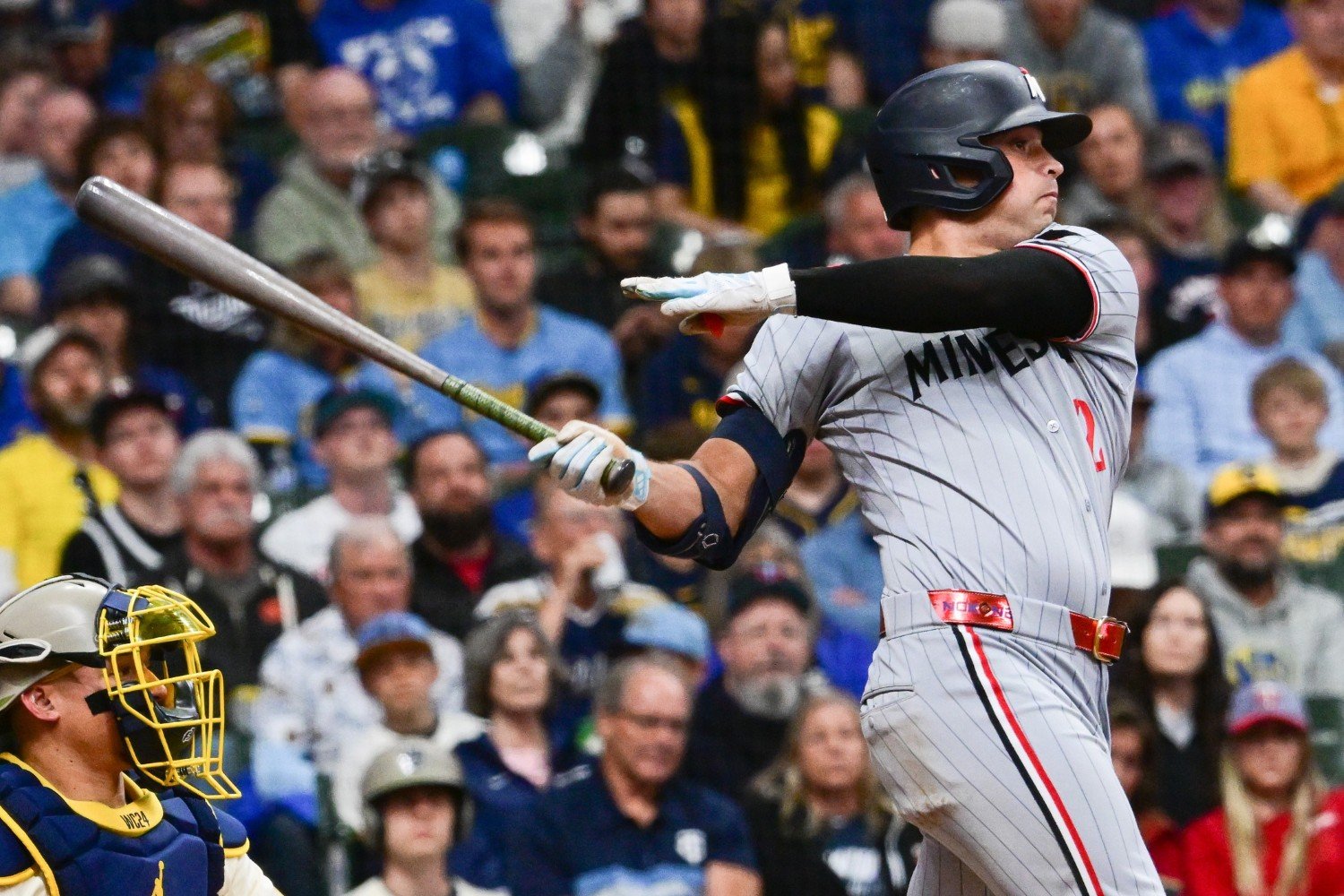 The Twins have a sizable offensive void in the lineup, with the team’s two top players (Byron Buxton and Carlos Correa) on the concussion IL. With no assurances of either star returning quickly or being at their best when they do come back, Minnesota turns to its up-and-coming infield duo of Brooks Lee and Royce Lewis to shoulder the offensive burden. Concussions and the recuperation therefrom are unpredictable, so the Twins’ success over the next several games may hinge on whether Lee and Lewis can ignite the lineup in Correa and Buxton’s absence. A $50-Million Collision Last Thursday in Baltimore, Correa and Buxton collided while chasing a shallow pop-up, resulting in both players entering MLB’s concussion protocol. Unfortunately, Correa and Buxton were placed on the seven-day concussion injured list, a massive blow for a team on a hot streak. Buxton had been arguably the Twins’ best player this season, leading the club with a 1.9 WAR through 173 plate appearances. His availability in center field has been one of the biggest bright spots after limited availability over the last two seasons. The Twins will need to turn to Harrison Bader or DaShawn Keirsey Jr. in center field, but Bader has also been dealing with an injury. Correa’s campaign has been muted by a nagging wrist issue that has impacted his offensive output. Still, there were beginning to be signs of life with his bat. In 10 May games, he has gone 12-for-40 (.300), including a mammoth homer and a whole bunch of singles. His defense continues to be strong, making replacing him on that side of the ball challenging. Yet, concussions defy timetables, and the Twins cannot bank on either star’s swift return. Brooks Lee’s Emergence In the vacuum created by Correa’s departure, Lee has seized shortstop duties and has looked markedly different at the plate, compared to his rookie campaign. Through the early weeks of 2025, Lee’s process-centric approach has translated into tangible improvements: his average exit velocity is up to 89.7 mph, his hard-hit rate has climbed to 40%, and his barrel rate sits at an impressive 10.5%. Under the hood, xwOBA has spiked to .321, suggesting better contact is now fueling better outcomes. Lee’s swing is no longer one-dimensional. He’s spraying line drives to right-center and cutting balls into the opposite field—a stark contrast to his debut in 2024, when he struggled to drive the ball consistently. His xSLG in 2024 was .340, 65 points lower than average. However, in 2025, he has posted a .439 xSLG, which is 46 points lower than his actual slugging percentage. The underlying metrics hint at a breakout in the making. Defensively, Lee will be given every opportunity to stick at shortstop, because the Twins have few other options. Last season, he posted -2 Outs Above Average at shortstop, over 80 attempts. Those poor totals might mask some of the injuries he tried to play through. In 2025, his totals are improved, with 1 OAA and 1 Defensive Run Saved (DRS). He’s putting in the work before games, even if he feels he has too much weight on his frame right now. “You have to do it repetitively to stay on top of it,” Lee said. “Just working the different angles of where you need to start the ball. … It’s different. If I lost five or 10 pounds, I’d be in better shape to play the position. I feel good, I just want to excel at it.” Royce Lewis’s Resurgence Lewis missed Minnesota’s first 35 games rehabbing a spring-training hamstring strain. Upon his May 5 activation, Lewis logged a week and a half of struggles, an expected hiccup for someone whose ramp-up began in earnest only weeks ago. Patience is necessary, especially for a player who has missed significant time throughout his professional career. In recent action, Lewis has begun to show positive signs. On Sunday, he launched his first homer of 2025, a 417-foot blast off Freddy Peralta that registered at 109.5 mph off the bat. He nearly had another home run later in the game that Jackson Chourio robbed in the eighth inning. Over his last four games, he has gone 6-for-16 (.375 BA) with two extra-base hits and a walk. “I feel great,” Lewis told reporters in Milwaukee. “I feel like I just had my spring training. Those first 40 at-bats, I was just trying to get back, and I still have a long way to go. There is a lot of season, thank goodness for that.” Defensively, some thought the Twins would use Lewis more regularly at DH as he returned from injury. Unfortunately, the team’s extensive injury list has forced Lewis to be used regularly at the hot corner. Last season, some issues with his throwing at third base led to multiple errors. However, he has shown some improved mechanics this season and has been worth 1 OAA in limited attempts in 2025. Concussion recoveries are notoriously fickle, and the return dates for Correa and Buxton remain murky. In the interim, the burden falls squarely on Lee’s ascendant bat and Lewis’s burgeoning power. If either (or preferably both) can deliver above-average offensive value, the Twins can weather this storm and extend their recent hot streak. Lewis and Lee are part of the team’s long-term plans, and the next few weeks will be an opportunity to prove they can carry the lineup. Is Lee or Lewis more important to the team in Correa and Buxton’s absence? Leave a comment and start the discussion.
- 19 comments
-
- 4
-
-
- royce lewis
- brooks lee
- (and 2 more)
-
Image courtesy of © Katie Stratman--Imagn Images The Minnesota Twins are poised to receive a significant boost to their lineup soon, as outfielder Matt Wallner edges closer to returning from a left hamstring strain. On the pitching side, Minnesota’s bullpen was expected to be among the league’s best. After some early season snafus, the relief core has rounded into form, but some injury issues have impacted the group. OF Matt Wallner Injury: Left hamstring strain Wallner landed on the 10-day injured list retroactive to April 15 due to a strained left hamstring suffered against the Mets, sidelining him since that mid-April contest at Target Field. Since that time, Wallner has gradually ramped up his activity, running the bases and taking batting practice. The team hoped a clean workout on Tuesday would clear him to begin a rehab assignment at Triple-A St. Paul on Wednesday. Obviously, the rainy weather in the Twin Cities will impact when he can begin playing. Manager Rocco Baldelli called the progress “encouraging,” noting that Wallner is about as far along in his recovery as the staff could have hoped for at this stage. Before the injury, the left-handed slugger was Minnesota’s top hitter, posting a .263/.373/.474 line through the first 18 games of the season. “I would much rather have them winning games when I’m not out there as opposed to the other way around,” Wallner said. “Like it was kind of early. Makes you a bit more excited to get back out there, but 10 times out of 10, you’d rather have the team go on a streak like that as opposed to having them struggle like we were in the beginning.” Assuming there are no setbacks, Wallner would slot into the Saints’ lineup later this week, where he’ll need a handful of games to regain timing before the Twins feel comfortable activating him. Expected return: Late May LHP Danny Coulombe Injury: Left forearm extensor strain Coulombe was placed on the 15-day injured list on May 18 with forearm extensor soreness, stemming from lingering muscle tightness in his forearm that has bothered him for much of the year. The Twins view Coulombe’s condition as relatively minor, believing that rest and recovery will allow him to return quickly rather than a long-term concern. “It’s been something I’ve been kind of just dealing with all year,” Coulombe said. “When you’re 35, you’re not going to feel good all the time. But it’s just something that’s gotten progressively a little worse. … I feel pretty optimistic it’s going to be a short absence.” Through 19 scoreless appearances before hitting the IL, Coulombe established himself as one of Minnesota’s most reliable bullpen options, yielding only one unearned run and striking out 19 while walking two. In Win Probability Added (WPA), Coulombe trails only closer Jhoan Duran among Twins relievers, underlining his value this season. Expected Return: Early June RHP Michael Tonkin Injury: Right shoulder strain Tonkin has yet to make his 2025 debut for the parent club, after beginning the season on the IL with a right shoulder strain. He was cleared to begin minor-league rehab outings in mid-April. However, during his sixth rehab appearance, Tonkin developed biceps tendinitis, which the team’s medical team treated with an anti-inflammatory injection. His throwing program has been paused as a result. Baldelli confirmed that Tonkin will be shut down temporarily to address the new soreness and will need to rebuild arm strength before resuming a rehab assignment. Given the timing of this setback, after he had nearly completed a 30-day rehab window, Tonkin won’t return to game action until he completes another ramp-up cycle. Expected Return: Early July With Wallner’s rehab assignment looming, the Twins could soon regain one of their most potent bats. He can offer a timely lift to an offense missing multiple big bats, including Byron Buxton and Carlos Correa. Meanwhile, bullpen depth remains in flux, as Coulombe and Tonkin navigate their respective injuries. Fans will watch closely over the next week to see if Wallner’s return sparks another Twins winning stretch and how the bullpen pieces slot back into place once healthy. What does Wallner’s return mean for the lineup? Leave a comment and start the discussion. View full article
-
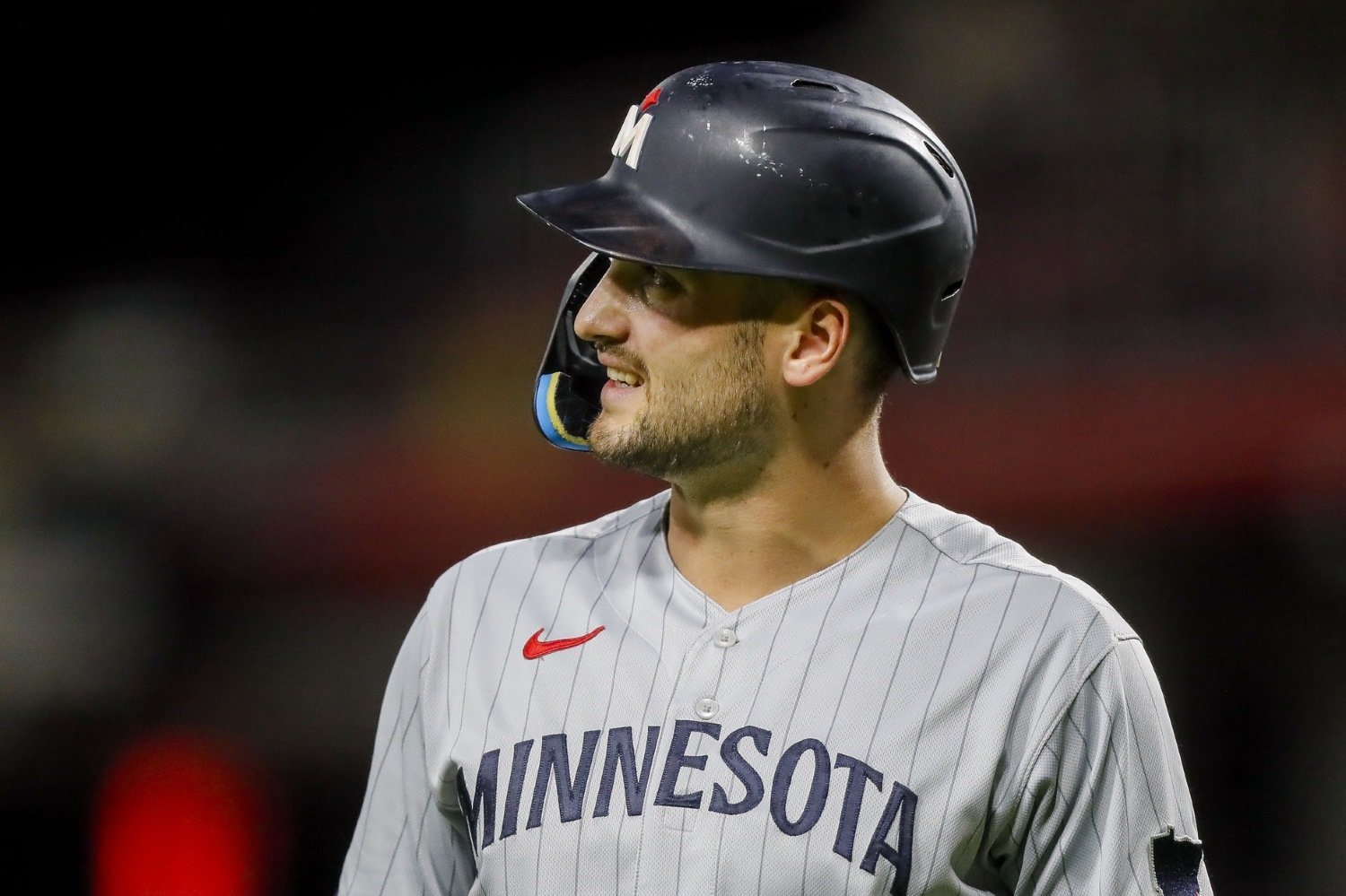 The Minnesota Twins are poised to receive a significant boost to their lineup soon, as outfielder Matt Wallner edges closer to returning from a left hamstring strain. On the pitching side, Minnesota’s bullpen was expected to be among the league’s best. After some early season snafus, the relief core has rounded into form, but some injury issues have impacted the group. OF Matt Wallner Injury: Left hamstring strain Wallner landed on the 10-day injured list retroactive to April 15 due to a strained left hamstring suffered against the Mets, sidelining him since that mid-April contest at Target Field. Since that time, Wallner has gradually ramped up his activity, running the bases and taking batting practice. The team hoped a clean workout on Tuesday would clear him to begin a rehab assignment at Triple-A St. Paul on Wednesday. Obviously, the rainy weather in the Twin Cities will impact when he can begin playing. Manager Rocco Baldelli called the progress “encouraging,” noting that Wallner is about as far along in his recovery as the staff could have hoped for at this stage. Before the injury, the left-handed slugger was Minnesota’s top hitter, posting a .263/.373/.474 line through the first 18 games of the season. “I would much rather have them winning games when I’m not out there as opposed to the other way around,” Wallner said. “Like it was kind of early. Makes you a bit more excited to get back out there, but 10 times out of 10, you’d rather have the team go on a streak like that as opposed to having them struggle like we were in the beginning.” Assuming there are no setbacks, Wallner would slot into the Saints’ lineup later this week, where he’ll need a handful of games to regain timing before the Twins feel comfortable activating him. Expected return: Late May LHP Danny Coulombe Injury: Left forearm extensor strain Coulombe was placed on the 15-day injured list on May 18 with forearm extensor soreness, stemming from lingering muscle tightness in his forearm that has bothered him for much of the year. The Twins view Coulombe’s condition as relatively minor, believing that rest and recovery will allow him to return quickly rather than a long-term concern. “It’s been something I’ve been kind of just dealing with all year,” Coulombe said. “When you’re 35, you’re not going to feel good all the time. But it’s just something that’s gotten progressively a little worse. … I feel pretty optimistic it’s going to be a short absence.” Through 19 scoreless appearances before hitting the IL, Coulombe established himself as one of Minnesota’s most reliable bullpen options, yielding only one unearned run and striking out 19 while walking two. In Win Probability Added (WPA), Coulombe trails only closer Jhoan Duran among Twins relievers, underlining his value this season. Expected Return: Early June RHP Michael Tonkin Injury: Right shoulder strain Tonkin has yet to make his 2025 debut for the parent club, after beginning the season on the IL with a right shoulder strain. He was cleared to begin minor-league rehab outings in mid-April. However, during his sixth rehab appearance, Tonkin developed biceps tendinitis, which the team’s medical team treated with an anti-inflammatory injection. His throwing program has been paused as a result. Baldelli confirmed that Tonkin will be shut down temporarily to address the new soreness and will need to rebuild arm strength before resuming a rehab assignment. Given the timing of this setback, after he had nearly completed a 30-day rehab window, Tonkin won’t return to game action until he completes another ramp-up cycle. Expected Return: Early July With Wallner’s rehab assignment looming, the Twins could soon regain one of their most potent bats. He can offer a timely lift to an offense missing multiple big bats, including Byron Buxton and Carlos Correa. Meanwhile, bullpen depth remains in flux, as Coulombe and Tonkin navigate their respective injuries. Fans will watch closely over the next week to see if Wallner’s return sparks another Twins winning stretch and how the bullpen pieces slot back into place once healthy. What does Wallner’s return mean for the lineup? Leave a comment and start the discussion.
- 12 comments
-
- 5
-
-
- matt wallner
- danny coulombe
- (and 1 more)
-
Yes, that is correct. He had a .231 BA and a .577 SLG.
- 11 replies
-
- 1
-

-
- gabriel gonzalez
- andrew morris
- (and 8 more)
-
Twins Announce “Heritage Rotation” Week
Cody Christie replied to Cody Christie's topic in Twins Daily Front Page News
- 5 replies
-
- 1
-
-
- scott diamond
- nick blackburn
- (and 2 more)
-
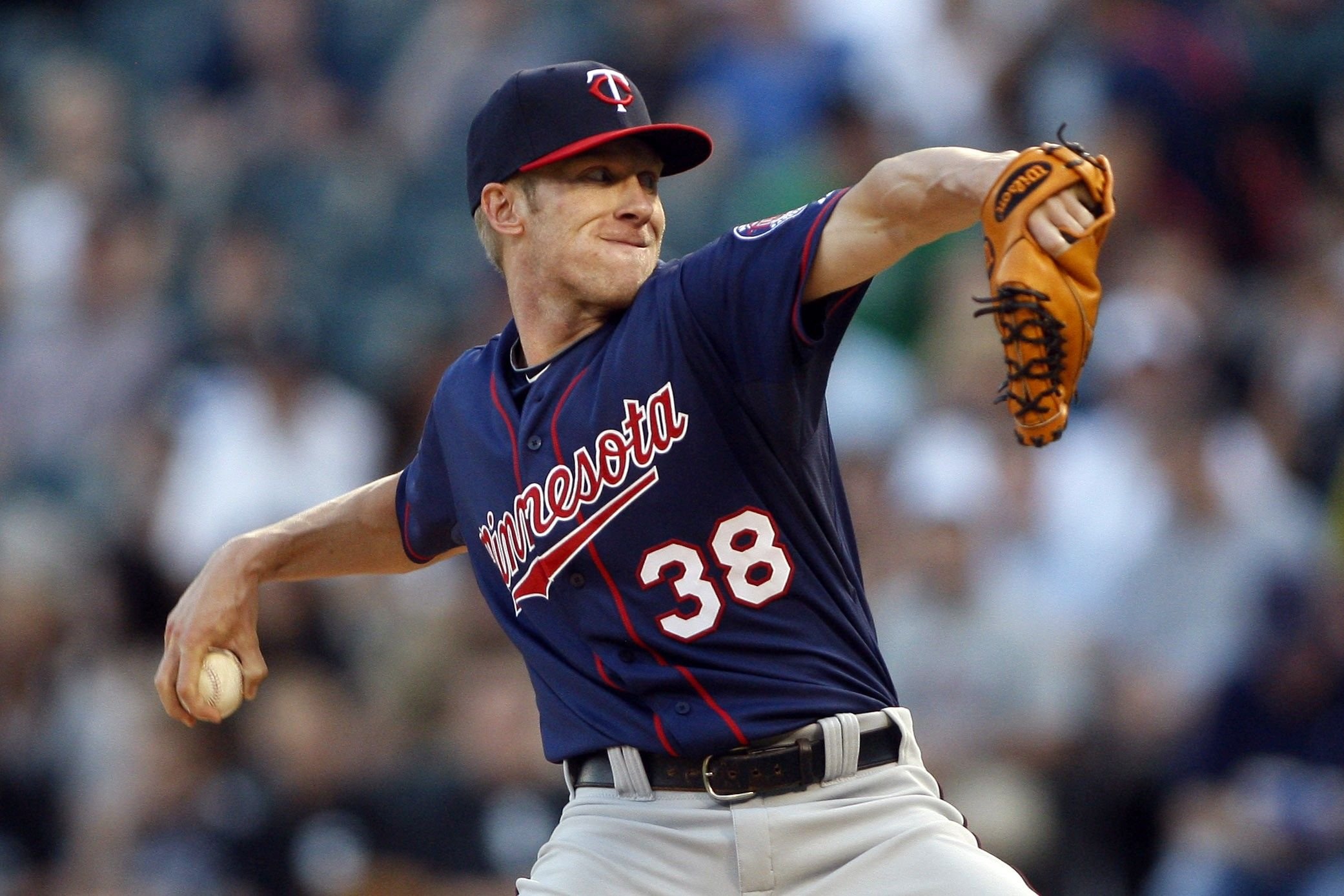 Minneapolis–They say hindsight is 20/20, so this week, the Twins are literally pitching with yesterday’s stars. Well, maybe not stars, but at least they are functional arms. In a move part corporate wellness, part time-travel experiment, Minnesota today unveiled “Heritage Rotation Week,” a bold plan to deploy only members of the 2012 starting staff for the next series. Why? Because the Twins rotation has been humming along, and it’s time to throw the opposition a bone. Who better to prove it than Francisco Liriano, Nick Blackburn, Scott Diamond and Cole De Vries? “We looked at our injury reports and thought, ‘What if everyone simply stopped throwing for a week?’” said Twins president Derek Falvey, pausing for dramatic effect. “Then we realized: why stop when we can rewind? These guys were perfectly adequate, and no one will have updated scouting reports on them.” Ceremonial opener Diamond, who was known for some quirky behavior, will now hurl the first three innings. “It’s like stepping into a time machine,” Diamond chuckled. “Only this one smells faintly of the burnt nacho cheese. I’m here to set a tone—mostly by reminding our modern arms that pizza after a flight to Cleveland is a perfectly acceptable dinner.” Francisco Liriano, who once clocked triple-digit fastballs and then… didn’t, is back to “rediscover the joy.” “I miss the days when my slider was sharper than my razor,” he quipped, finger-wagging at an imaginary batter. “Plus, free old-school clubhouse tunes. 'Call Me Maybe' is on heavy rotation.” Nick Blackburn, the oft-memed “Blackburn’d,” hasn’t forgotten the 2012 heartbreak. “I’ll be fine,” he insisted. “It’s not every week I get to remind Twitter what ‘4.88 ERA’ feels like live. Besides, the analytics team insists I’m a perfect ‘matchup start.’ I still don’t know what that means, but it sounds important.” Cole De Vries, whose claim to fame is the worst WAR ever for an Eden Prairie High School graduate (-0.1 WAR) and a career high in hot dogs consumed, is thrilled to be back in a starter’s role, if only temporarily. “They asked me to warm up. I thought, ‘Do they want the hot dogs?’" De Vries said. "Turns out, it was innings.” Meanwhile, the current rotation (including Pablo López, Bailey Ober, Joe Ryan and company) will enjoy an unscheduled “wellness week.” López, pacing with a Theragun in one hand, sighed: “Thought I’d finally face a division rival. Instead, I’m staring at my ceiling, contemplating a Zoom Pilates class. My shoulder’s never been happier.” Twins manager Rocco Baldelli says Heritage Week is as much philosophy as strategy. “We’re honoring our past while preserving our future. These veterans will pitch, yes, but more importantly, they’ll mentor via osmosis. If Pablo picks up a trick from Nick Blackburn about ‘how not to give up a 3rd-inning bomb,’ that’s synergy.” Baldelli laughed when pressed on potential drawbacks—say, opponents studying 2012 film and finding that Blackburn’s changeup was straight-out schlepped. “Baseball’s the ultimate rematch. We all know Nick’s off-speed stuff, but do the kids? It’s like dropping Beethoven on a TikTok remix: classic, but confusing.” Falvey insists the move isn’t just for laughs. “We ran simulations,” he explained, sipping coffee from a fading coffee mug with the 2012 London Olympics logo. “Turns out pitching every fifth day can boil your arm faster than a July porch party. This rotation is an R&D project. If it works, we might do ‘Heritage Third Base Week’ next, with Corey Koskie and Nick Punto.” Jeremy Zoll interjected: “And if it fails, we’ve got social-media gold for days. #ThrowbackTwins.” Love it or loathe it, Heritage Rotation Week is upon us. If these 2012 starters can keep the ship afloat, the Twins will have achieved the ultimate feat: a 162-game season that feels like one glorious, slightly grayer throwback. And if they falter… well, at least we’ll get plenty of tweets about it. (In 2012, we still called them that.)
- 5 comments
-
- 1
-
-
- scott diamond
- nick blackburn
- (and 2 more)
-
Image courtesy of © Jerry Lai-Imagn Images Minneapolis–They say hindsight is 20/20, so this week, the Twins are literally pitching with yesterday’s stars. Well, maybe not stars, but at least they are functional arms. In a move part corporate wellness, part time-travel experiment, Minnesota today unveiled “Heritage Rotation Week,” a bold plan to deploy only members of the 2012 starting staff for the next series. Why? Because the Twins rotation has been humming along, and it’s time to throw the opposition a bone. Who better to prove it than Francisco Liriano, Nick Blackburn, Scott Diamond and Cole De Vries? “We looked at our injury reports and thought, ‘What if everyone simply stopped throwing for a week?’” said Twins president Derek Falvey, pausing for dramatic effect. “Then we realized: why stop when we can rewind? These guys were perfectly adequate, and no one will have updated scouting reports on them.” Ceremonial opener Diamond, who was known for some quirky behavior, will now hurl the first three innings. “It’s like stepping into a time machine,” Diamond chuckled. “Only this one smells faintly of the burnt nacho cheese. I’m here to set a tone—mostly by reminding our modern arms that pizza after a flight to Cleveland is a perfectly acceptable dinner.” Francisco Liriano, who once clocked triple-digit fastballs and then… didn’t, is back to “rediscover the joy.” “I miss the days when my slider was sharper than my razor,” he quipped, finger-wagging at an imaginary batter. “Plus, free old-school clubhouse tunes. 'Call Me Maybe' is on heavy rotation.” Nick Blackburn, the oft-memed “Blackburn’d,” hasn’t forgotten the 2012 heartbreak. “I’ll be fine,” he insisted. “It’s not every week I get to remind Twitter what ‘4.88 ERA’ feels like live. Besides, the analytics team insists I’m a perfect ‘matchup start.’ I still don’t know what that means, but it sounds important.” Cole De Vries, whose claim to fame is the worst WAR ever for an Eden Prairie High School graduate (-0.1 WAR) and a career high in hot dogs consumed, is thrilled to be back in a starter’s role, if only temporarily. “They asked me to warm up. I thought, ‘Do they want the hot dogs?’" De Vries said. "Turns out, it was innings.” Meanwhile, the current rotation (including Pablo López, Bailey Ober, Joe Ryan and company) will enjoy an unscheduled “wellness week.” López, pacing with a Theragun in one hand, sighed: “Thought I’d finally face a division rival. Instead, I’m staring at my ceiling, contemplating a Zoom Pilates class. My shoulder’s never been happier.” Twins manager Rocco Baldelli says Heritage Week is as much philosophy as strategy. “We’re honoring our past while preserving our future. These veterans will pitch, yes, but more importantly, they’ll mentor via osmosis. If Pablo picks up a trick from Nick Blackburn about ‘how not to give up a 3rd-inning bomb,’ that’s synergy.” Baldelli laughed when pressed on potential drawbacks—say, opponents studying 2012 film and finding that Blackburn’s changeup was straight-out schlepped. “Baseball’s the ultimate rematch. We all know Nick’s off-speed stuff, but do the kids? It’s like dropping Beethoven on a TikTok remix: classic, but confusing.” Falvey insists the move isn’t just for laughs. “We ran simulations,” he explained, sipping coffee from a fading coffee mug with the 2012 London Olympics logo. “Turns out pitching every fifth day can boil your arm faster than a July porch party. This rotation is an R&D project. If it works, we might do ‘Heritage Third Base Week’ next, with Corey Koskie and Nick Punto.” Jeremy Zoll interjected: “And if it fails, we’ve got social-media gold for days. #ThrowbackTwins.” Love it or loathe it, Heritage Rotation Week is upon us. If these 2012 starters can keep the ship afloat, the Twins will have achieved the ultimate feat: a 162-game season that feels like one glorious, slightly grayer throwback. And if they falter… well, at least we’ll get plenty of tweets about it. (In 2012, we still called them that.) View full article
-
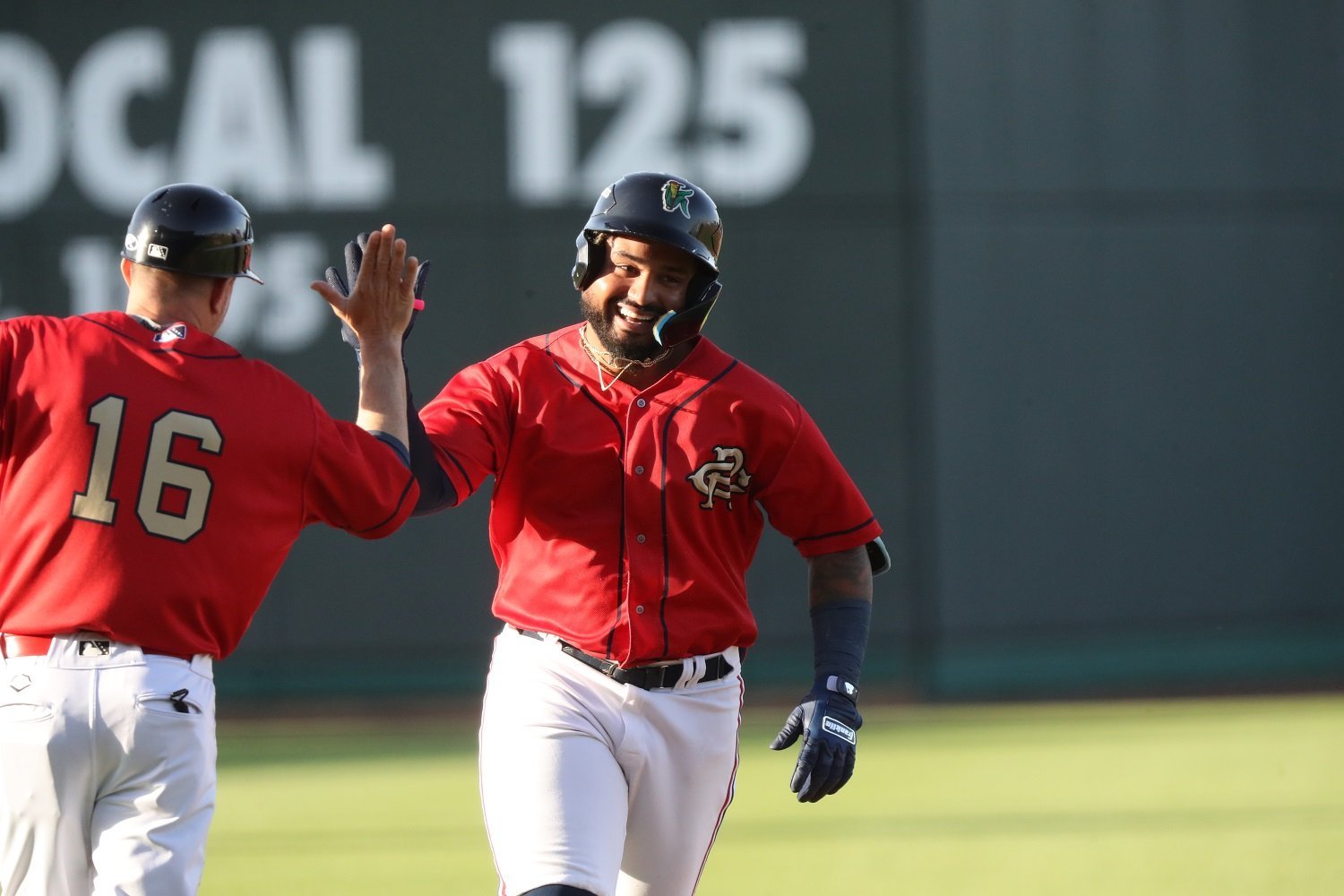 The Twins have kept together some of the organization’s top prospects at Cedar Rapids, but movement in the upper minors forced a move on Monday. Gabriel Gonzalez, Twins Daily’s 14th ranked prospect, is heading to Double-A. He had been riding a hot bat with Cedar Rapids and now gets an opportunity in the high minors. MONDAY’S TRANSACTIONS RF Gabriel Gonzalez assigned to Wichita Wind Surge from Cedar Rapids Kernels. RHP Josh Bortka has been signed as a MiLB free agent and been assigned to Fort Myers. INF Jake Rucker promoted from Wichita to St. Paul. TWINS DAILY MINOR LEAGUE CONTENT -Carson McCusker, Aaron Judge, and Realistic Expectations for Monster Mashers -Twins Minor League Report (5/18): Farm System on Fire - Three Wins on the Day and The Mussels Edge Closer to .500 -Twins Daily Minor League Report (5/17): Surge Power Past Travelers -Twins Minor League Report (5/16): Kaelen Culpepper Collects First Multi-Homer Game -Simeon Woods Richardson Must Improve These 4 Things Following His Demotion -Twins Minor League Report (5/15): Payton Eeles Rehabs; Khadim Diaw, Gabriel Gonzalez Power Kernels Offensive Explosion -Mickey Gasper and the Danger of Being Labeled a Quad-A Player -Twins Minor League Report (5/14): Ryan Fitzgerald Cannot be Stopped -Twins Minor League Report (5/13): Jose Salas Pops for Cedar Rapids, But The Kernels Get Burned WEEK IN REVIEW Triple-A: St. Paul Saints Overall: 22-20 (7.5 Games Out of First) Last Week: 2-5 Andrew Morris pitched his best outing this season. In five shutout innings, he allowed four hits while walking one and striking out eight, one shy of his career high. Will Holland hit a towering two-run homer in support of Morris. It was his third of the season and he finished the game 2-for-3. Entering play on Saturday, the Saints were tied for the most home runs in all of Minor League Baseball. Armando Alvarez hit the team’s 42nd homer in that game. The Saints offense was clicking on Saturday. Eight of the nine batters collected a hit and scored a run while six different players had an RBI. On Friday, the Saints played in rough conditions with 25 mph winds that were gusting to 40 mph. St. Paul and Iowa combined for 19 runs on 29 hits with seven home runs. Edouard Julien hit his first home run since being demoted in the windy environment. Mickey Gasper continued his hot hitting with a two-run homer on Friday. It was his seventh of the season. Emmanuel Rodriguez is starting to heat up. He tied Friday’s game with a two-run homer. St. Paul lost both games of a doubleheader on Thursday. The Saints had a four-run lead in the last inning but allowed four that inning before an extra-inning walk-off. Rodriguez went 2-for-4 with a double, triple, and RBI in Thursday’s second game. Jair Camargo hit his second homer of the season on Thursday, a two-run shot. Rodriguez had led off the inning with a double. Carson McCusker finished 3-for-3 in Thursday’s first game. The perfect game raised his batting average above .350 for the season. On Wednesday, the Saints stranded a franchise record tying 15 runners. They drew 10 walks and had 22 baserunners in the game. Ryan Fitzgerald tied a career high with four hits on Wednesday. He finished going 4-for-5 with two doubles, two RBI, and a run. Tuesday’s victory put the Saints a season high six games over .500. In the win, Julien went 2-for-3 with two doubles and three runs. McCusker had a three hit game with a double and three RBI. What’s Next: The Saints are off on Monday and return to action on Tuesday morning at 11:07 AM CST at CHS Field. Double-A: Wichita Wind Surge Overall: 22-17 (1.0 Game Up) Last Week: 3-3 Jorel Ortega homered twice on Sunday as the Wind Surge scored multiple runs in three different innings. Six Wind Surge players recorded multi-hit games, with four tallying multiple RBI. The 15 runs scored by Wichita on Sunday were a season high. Andrew Cossetti, Kyler Fedko, and Tanner Schobel all hit home runs in a blowout win on Saturday night. Mike Paredes has five wins, tied for the best in the Texas League. He threw three innings by allowing three hits with two walks and five strikeouts. Kyler Fedko hit his team-leading sixth homer of the season on Friday. All nine Wind Surge batters recorded a hit in the game. Aaron Rozek struck out six batters over five innings on Thursday. He has struck out five or more batters in five of his six starts this season. John Klein took over for Rozek and threw three innings of one-hit baseball with a walk and four strikeouts. On Wednesday, three different Wind Surge hitters recorded multiple RBIs in the team’s win (Jorel Ortega, Tyler Dearden, Ricardo Olivar). Ortega recorded his second game with at least four RBI in 2025. They were the first team in the Texas League North to get to 20 wins. Noah Cardenas started the week by homering in his second straight game. He is one of five Wichita players with multiple go-ahead long balls this season. Trent Baker pitched five innings and allowed two runs on four hits with five strikeouts and no walks. What’s Next: Wichita heads down to Texas to begin a series with the San Antonio Missions on May 20 at 7:05 PM CST. High-A: Cedar Rapids Kernels Overall: 22-16 (2.0 Games Back) Last Week: 2-4 Cedar Rapids fell behind early on Sunday, but their bullpen performed well. Eston Stull faces the minimum in the sixth while striking out his first batter as a Kernel. Gabriel Yanez tossed two perfect frames and struck out five of the six batters he faced. On Saturday, the Kernels put the tying run into scoring position in each of the final four innings but couldn’t tie it up. Khadim Diaw and Kyle DeBarge had two hits each. Jacob Wosinski pitched three shutout innings to end Saturday’s game. He allowed two hits and struck out a pair. Kaelen Culpepper launched two homers on Friday night. He hit a three-run homer in the first and a solo homer in the fifth. In the fifth, Brandon Winokur (two-run HR) and Jaime Ferrer (three-run HR) joined the home run part. Jeremy Lee allowed just one earned run across five innings of work en route to his third win of the season. Behind Lee, Kade Bragg tossed three perfect innings and Cole Percival pitched a scoreless ninth of Friday’s victory. Diaw and Gabriel Gonzalez helped lead an offensive eruption on Thursday. Diaw crushed a pair of homers, while Gonzalez ended the night with three extra-base hits. On Wednesday, Gonzalez and Danny De Andrade both hit home runs but the team lost in 11 innings. Jose Salas started the week with a two home run game. He added five RBI but the Kernels lost 13-10. What’s Next: The Kernels hit the road Tuesday to open a series in Fort Wayne at 5:35 PM CST. Low-A: Fort Myers Mighty Mussels Overall: 19-20 (4.0 Games Back) Last Week: 4-2 Dameury Pena and Daniel Pena came up with big hits on Sunday. Dameury hit a lead off homer in the first inning. Daniel drove in a run with a double later in the same frame. Devin Kirby finished Sunday’s win with two shutout innings by allowing two hits and walking one. Jose Rodriguez hit a big three-run homer on Saturday. Fort Myers was down three and with one swing Rodriguez tied the game. It was his fourth of the season. Dasan Hill started on Friday and didn’t allow a hit in 2 1/3 innings. He walked two and struck out two. Fort Myers had a power packed game on Friday. Yasser Mercedes and Maddux Houghton both hit home runs while Jefferson Valladares collected a pair of doubles. Zander Sechrist and Hunter Hoopes ended the game with 3 1/3 shutout innings to preserve the win. Houghton showed his speed tool in Thursday’s loss. He stole two bases and legged out a triple, the team’s only extra-base hit in the game. He reached base four times and scored three runs. On Wednesday, Mercedes showcased his speed on the bases with a pair of steals, leading to two runs. He has 14 steals on the season. Brennen Oxford, Sechrist and Hoopes combined for five shutout innings in relief to keep the team in Wednesday’s game. Miguel Briceno started the week going 2-for-4 with a home run, two RBI, and two runs. Poncho Ruiz reached base four times and scored two runs in Tuesday’s game. Cole Peschl took his first loss but pitched 4 2/3 innings of relief. He allowed two runs (one earned) with three strikeouts and one walk. What’s Next: After an off day on Monday, Fort Myers will travel to Lakeland to take on the Flying Tigers on Tuesday at 5:30 PM CST. Rookie: FCL Twins Overall: 6-5 (2.5 Game Back) Last Week: 1-4 Daiber De Los Santos added his first double on the season in Monday’s loss. The team was limited to three hits. On Monday, Leonardo Rondon made his second appearance of the week and his first start. He allowed three earned runs on three hits with two walks. Luis Fragoza and Ramiro Dominquez both collected doubles on Saturday to help the Twins win. Fragoza also stole his fourth base of the season. Joel Garcia started on Saturday and allowed one run on three hits with three strikeouts and no walks. Eduardo Beltre had his first triple of the year on Friday. On Thursday, Bryan Acuna went 2-for-3 with a double and an RBI. He had two of the team’s three hits. He added his second two-hit game on Monday. Ruddy Gomez and Santiago Rojas finished the game with three shutout innings in relief. Gomez struck out three while Rojas had a perfect final frame. Merphy Hernandez started the week by going 2-for-3 with a pair of doubles. Yoel Roque made his season debut and pitched a perfect inning on Tuesday. What’s Next: The Twins have two games against the FCL Pirates and Red Sox during the coming week and another game versus the FCL Braves. PROSPECT SUMMARY Check out the Prospect Tracker for much more on our Twins Top 20 prospects. And, be sure to note the new, updated Top 20 rankings. Walker Jenkins (Wichita): On injured list Luke Keaschall (Minnesota): On injured list Emmanuel Rodriguez (St. Paul): 6-25, 1 HR, 1 3B, 3 2B, 3 RBI, 6 R, 4 BB, 12 K Charlee Soto (Cedar Rapids): On injured list Connor Prielipp (Wichita): 2 IP, 2 H, 2 ER, 2 BB, 2 K Kaelen Culpepper (Cedar Rapids): 8-22, 2 2B, 2 HR, 5 RBI, 7 R, 3 BB, 5 K Marco Raya (St. Paul): 2.2 IP, 3 H, 3 ER, 5 BB, 2 K Andrew Morris (St. Paul): 5 IP, 4 H, 0 ER, 1 BB, 8 K Brandon Winokur (Cedar Rapids): 6-26, 3 2B, 2 HR, 8 RBI, 6 R, 2 BB, 7 K, 3 SB Dasan Hill (Fort Myers): 2.1 IP, 0 H, 0 ER, 2 BB, 2 K Kyle DeBarge (Cedar Rapids): 6-16, 2 2B, 1 3B, 4 RBI, 6 R, 4 BB, 5 K, 3 SB Cory Lewis (St. Paul): 3.1 IP, 4 H, 5 ER, 5 BB, 3 K Billy Amick (Cedar Rapids): On injured list Gabriel Gonzalez (Cedar Rapids): 9-24, 3 2B, 2 HR, 9 RBI, 5 R, 4 BB, 6 K C.J. Culpepper (Wichita): On injured list Eduardo Beltre (FCL Twins): 2-12, 1 3B, 3 R, 3 BB, 2 K Tanner Schobel (Wichita): 6-23, 3 2B, 1 HR, 6 RBI, 6 R, 2 BB, 2 K Yasser Mercedes (Fort Myers): 4-25, 1 HR, 2 RBI, 5 R, 1 BB, 6 K, 3 SB Carson McCusker (St. Paul): 10-24, 3 2B, 1 HR, 7 RBI, 2 R, 2 BB, 8 K Ricardo Olivar (Wichita): 6-22, 1 2B, 1 HR, 6 RBI, 5 R, 1 BB, 2 K PLAYERS OF THE WEEK Hitter of the Week: Gabriel Gonzalez, Cedar Rapids Kernels 9-for-24, .375/.433/.750 (1.183), 3 2B, 2 HR, 9 RBI, 5 R, 4 BB, 6 K Pitcher of the Week: Andrew Morris (St. Paul Saints) 5.0 IP, 0 ER, 4 H, 8 K, 1 BB, 78 pitches (51 strikes), 17 swinging strikes What questions do you have about the last week in the minor leagues? Leave a comment and start the discussion.
- 11 comments
-
- 3
-
-
- gabriel gonzalez
- andrew morris
- (and 8 more)
-
Image courtesy of David Malamut (photo of Gabriel Gonzalez) The Twins have kept together some of the organization’s top prospects at Cedar Rapids, but movement in the upper minors forced a move on Monday. Gabriel Gonzalez, Twins Daily’s 14th ranked prospect, is heading to Double-A. He had been riding a hot bat with Cedar Rapids and now gets an opportunity in the high minors. MONDAY’S TRANSACTIONS RF Gabriel Gonzalez assigned to Wichita Wind Surge from Cedar Rapids Kernels. RHP Josh Bortka has been signed as a MiLB free agent and been assigned to Fort Myers. INF Jake Rucker promoted from Wichita to St. Paul. TWINS DAILY MINOR LEAGUE CONTENT -Carson McCusker, Aaron Judge, and Realistic Expectations for Monster Mashers -Twins Minor League Report (5/18): Farm System on Fire - Three Wins on the Day and The Mussels Edge Closer to .500 -Twins Daily Minor League Report (5/17): Surge Power Past Travelers -Twins Minor League Report (5/16): Kaelen Culpepper Collects First Multi-Homer Game -Simeon Woods Richardson Must Improve These 4 Things Following His Demotion -Twins Minor League Report (5/15): Payton Eeles Rehabs; Khadim Diaw, Gabriel Gonzalez Power Kernels Offensive Explosion -Mickey Gasper and the Danger of Being Labeled a Quad-A Player -Twins Minor League Report (5/14): Ryan Fitzgerald Cannot be Stopped -Twins Minor League Report (5/13): Jose Salas Pops for Cedar Rapids, But The Kernels Get Burned WEEK IN REVIEW Triple-A: St. Paul Saints Overall: 22-20 (7.5 Games Out of First) Last Week: 2-5 Andrew Morris pitched his best outing this season. In five shutout innings, he allowed four hits while walking one and striking out eight, one shy of his career high. Will Holland hit a towering two-run homer in support of Morris. It was his third of the season and he finished the game 2-for-3. Entering play on Saturday, the Saints were tied for the most home runs in all of Minor League Baseball. Armando Alvarez hit the team’s 42nd homer in that game. The Saints offense was clicking on Saturday. Eight of the nine batters collected a hit and scored a run while six different players had an RBI. On Friday, the Saints played in rough conditions with 25 mph winds that were gusting to 40 mph. St. Paul and Iowa combined for 19 runs on 29 hits with seven home runs. Edouard Julien hit his first home run since being demoted in the windy environment. Mickey Gasper continued his hot hitting with a two-run homer on Friday. It was his seventh of the season. Emmanuel Rodriguez is starting to heat up. He tied Friday’s game with a two-run homer. St. Paul lost both games of a doubleheader on Thursday. The Saints had a four-run lead in the last inning but allowed four that inning before an extra-inning walk-off. Rodriguez went 2-for-4 with a double, triple, and RBI in Thursday’s second game. Jair Camargo hit his second homer of the season on Thursday, a two-run shot. Rodriguez had led off the inning with a double. Carson McCusker finished 3-for-3 in Thursday’s first game. The perfect game raised his batting average above .350 for the season. On Wednesday, the Saints stranded a franchise record tying 15 runners. They drew 10 walks and had 22 baserunners in the game. Ryan Fitzgerald tied a career high with four hits on Wednesday. He finished going 4-for-5 with two doubles, two RBI, and a run. Tuesday’s victory put the Saints a season high six games over .500. In the win, Julien went 2-for-3 with two doubles and three runs. McCusker had a three hit game with a double and three RBI. What’s Next: The Saints are off on Monday and return to action on Tuesday morning at 11:07 AM CST at CHS Field. Double-A: Wichita Wind Surge Overall: 22-17 (1.0 Game Up) Last Week: 3-3 Jorel Ortega homered twice on Sunday as the Wind Surge scored multiple runs in three different innings. Six Wind Surge players recorded multi-hit games, with four tallying multiple RBI. The 15 runs scored by Wichita on Sunday were a season high. Andrew Cossetti, Kyler Fedko, and Tanner Schobel all hit home runs in a blowout win on Saturday night. Mike Paredes has five wins, tied for the best in the Texas League. He threw three innings by allowing three hits with two walks and five strikeouts. Kyler Fedko hit his team-leading sixth homer of the season on Friday. All nine Wind Surge batters recorded a hit in the game. Aaron Rozek struck out six batters over five innings on Thursday. He has struck out five or more batters in five of his six starts this season. John Klein took over for Rozek and threw three innings of one-hit baseball with a walk and four strikeouts. On Wednesday, three different Wind Surge hitters recorded multiple RBIs in the team’s win (Jorel Ortega, Tyler Dearden, Ricardo Olivar). Ortega recorded his second game with at least four RBI in 2025. They were the first team in the Texas League North to get to 20 wins. Noah Cardenas started the week by homering in his second straight game. He is one of five Wichita players with multiple go-ahead long balls this season. Trent Baker pitched five innings and allowed two runs on four hits with five strikeouts and no walks. What’s Next: Wichita heads down to Texas to begin a series with the San Antonio Missions on May 20 at 7:05 PM CST. High-A: Cedar Rapids Kernels Overall: 22-16 (2.0 Games Back) Last Week: 2-4 Cedar Rapids fell behind early on Sunday, but their bullpen performed well. Eston Stull faces the minimum in the sixth while striking out his first batter as a Kernel. Gabriel Yanez tossed two perfect frames and struck out five of the six batters he faced. On Saturday, the Kernels put the tying run into scoring position in each of the final four innings but couldn’t tie it up. Khadim Diaw and Kyle DeBarge had two hits each. Jacob Wosinski pitched three shutout innings to end Saturday’s game. He allowed two hits and struck out a pair. Kaelen Culpepper launched two homers on Friday night. He hit a three-run homer in the first and a solo homer in the fifth. In the fifth, Brandon Winokur (two-run HR) and Jaime Ferrer (three-run HR) joined the home run part. Jeremy Lee allowed just one earned run across five innings of work en route to his third win of the season. Behind Lee, Kade Bragg tossed three perfect innings and Cole Percival pitched a scoreless ninth of Friday’s victory. Diaw and Gabriel Gonzalez helped lead an offensive eruption on Thursday. Diaw crushed a pair of homers, while Gonzalez ended the night with three extra-base hits. On Wednesday, Gonzalez and Danny De Andrade both hit home runs but the team lost in 11 innings. Jose Salas started the week with a two home run game. He added five RBI but the Kernels lost 13-10. What’s Next: The Kernels hit the road Tuesday to open a series in Fort Wayne at 5:35 PM CST. Low-A: Fort Myers Mighty Mussels Overall: 19-20 (4.0 Games Back) Last Week: 4-2 Dameury Pena and Daniel Pena came up with big hits on Sunday. Dameury hit a lead off homer in the first inning. Daniel drove in a run with a double later in the same frame. Devin Kirby finished Sunday’s win with two shutout innings by allowing two hits and walking one. Jose Rodriguez hit a big three-run homer on Saturday. Fort Myers was down three and with one swing Rodriguez tied the game. It was his fourth of the season. Dasan Hill started on Friday and didn’t allow a hit in 2 1/3 innings. He walked two and struck out two. Fort Myers had a power packed game on Friday. Yasser Mercedes and Maddux Houghton both hit home runs while Jefferson Valladares collected a pair of doubles. Zander Sechrist and Hunter Hoopes ended the game with 3 1/3 shutout innings to preserve the win. Houghton showed his speed tool in Thursday’s loss. He stole two bases and legged out a triple, the team’s only extra-base hit in the game. He reached base four times and scored three runs. On Wednesday, Mercedes showcased his speed on the bases with a pair of steals, leading to two runs. He has 14 steals on the season. Brennen Oxford, Sechrist and Hoopes combined for five shutout innings in relief to keep the team in Wednesday’s game. Miguel Briceno started the week going 2-for-4 with a home run, two RBI, and two runs. Poncho Ruiz reached base four times and scored two runs in Tuesday’s game. Cole Peschl took his first loss but pitched 4 2/3 innings of relief. He allowed two runs (one earned) with three strikeouts and one walk. What’s Next: After an off day on Monday, Fort Myers will travel to Lakeland to take on the Flying Tigers on Tuesday at 5:30 PM CST. Rookie: FCL Twins Overall: 6-5 (2.5 Game Back) Last Week: 1-4 Daiber De Los Santos added his first double on the season in Monday’s loss. The team was limited to three hits. On Monday, Leonardo Rondon made his second appearance of the week and his first start. He allowed three earned runs on three hits with two walks. Luis Fragoza and Ramiro Dominquez both collected doubles on Saturday to help the Twins win. Fragoza also stole his fourth base of the season. Joel Garcia started on Saturday and allowed one run on three hits with three strikeouts and no walks. Eduardo Beltre had his first triple of the year on Friday. On Thursday, Bryan Acuna went 2-for-3 with a double and an RBI. He had two of the team’s three hits. He added his second two-hit game on Monday. Rudy Gomez and Santiago Rojas finished the game with three shutout innings in relief. Gomez struck out three while Rojas had a perfect final frame. Murphy Hernandez started the week by going 2-for-3 with a pair of doubles. Yoel Roque made his season debut and pitched a perfect inning on Tuesday. What’s Next: The Twins have two games against the FCL Pirates and Red Sox during the coming week and another game versus the FCL Braves. PROSPECT SUMMARY Check out the Prospect Tracker for much more on our Twins Top 20 prospects. And, be sure to note the new, updated Top 20 rankings. Walker Jenkins (Wichita): On injured list Luke Keaschall (Minnesota): On injured list Emmanuel Rodriguez (St. Paul): 6-25, 1 HR, 1 3B, 3 2B, 3 RBI, 6 R, 4 BB, 12 K Charlee Soto (Cedar Rapids): On injured list Connor Prielipp (Wichita): 2 IP, 2 H, 2 ER, 2 BB, 2 K Kaelen Culpepper (Cedar Rapids): 8-22, 2 2B, 2 HR, 5 RBI, 7 R, 3 BB, 5 K Marco Raya (St. Paul): 2.2 IP, 3 H, 3 ER, 5 BB, 2 K Andrew Morris (St. Paul): 5 IP, 4 H, 0 ER, 1 BB, 8 K Brandon Winokur (Cedar Rapids): 6-26, 3 2B, 2 HR, 8 RBI, 6 R, 2 BB, 7 K, 3 SB Dasan Hill (Fort Myers): 2.1 IP, 0 H, 0 ER, 2 BB, 2 K Kyle DeBarge (Cedar Rapids): 6-16, 2 2B, 1 3B, 4 RBI, 6 R, 4 BB, 5 K, 3 SB Cory Lewis (St. Paul): 3.1 IP, 4 H, 5 ER, 5 BB, 3 K Billy Amick (Cedar Rapids): On injured list Gabriel Gonzalez (Cedar Rapids): 9-24, 3 2B, 2 HR, 9 RBI, 5 R, 4 BB, 6 K C.J. Culpepper (Wichita): On injured list Eduardo Beltre (FCL Twins): 2-12, 1 3B, 3 R, 3 BB, 2 K Tanner Schobel (Wichita): 6-23, 3 2B, 1 HR, 6 RBI, 6 R, 2 BB, 2 K Yasser Mercedes (Fort Myers): 4-25, 1 HR, 2 RBI, 5 R, 1 BB, 6 K, 3 SB Carson McCusker (St. Paul): 10-24, 3 2B, 1 HR, 7 RBI, 2 R, 2 BB, 8 K Ricardo Olivar (Wichita): 6-22, 1 2B, 1 HR, 6 RBI, 5 R, 1 BB, 2 K PLAYERS OF THE WEEK Hitter of the Week: Gabriel Gonzalez, Cedar Rapids Kernels 9-for-24, .375/.433/.750 (1.183), 3 2B, 2 HR, 9 RBI, 5 R, 4 BB, 6 K Pitcher of the Week: Andrew Morris (St. Paul Saints) 5.0 IP, 0 ER, 4 H, 8 K, 1 BB, 78 pitches (51 strikes), 17 swinging strikes What questions do you have about the last week in the minor leagues? Leave a comment and start the discussion. View full article
-
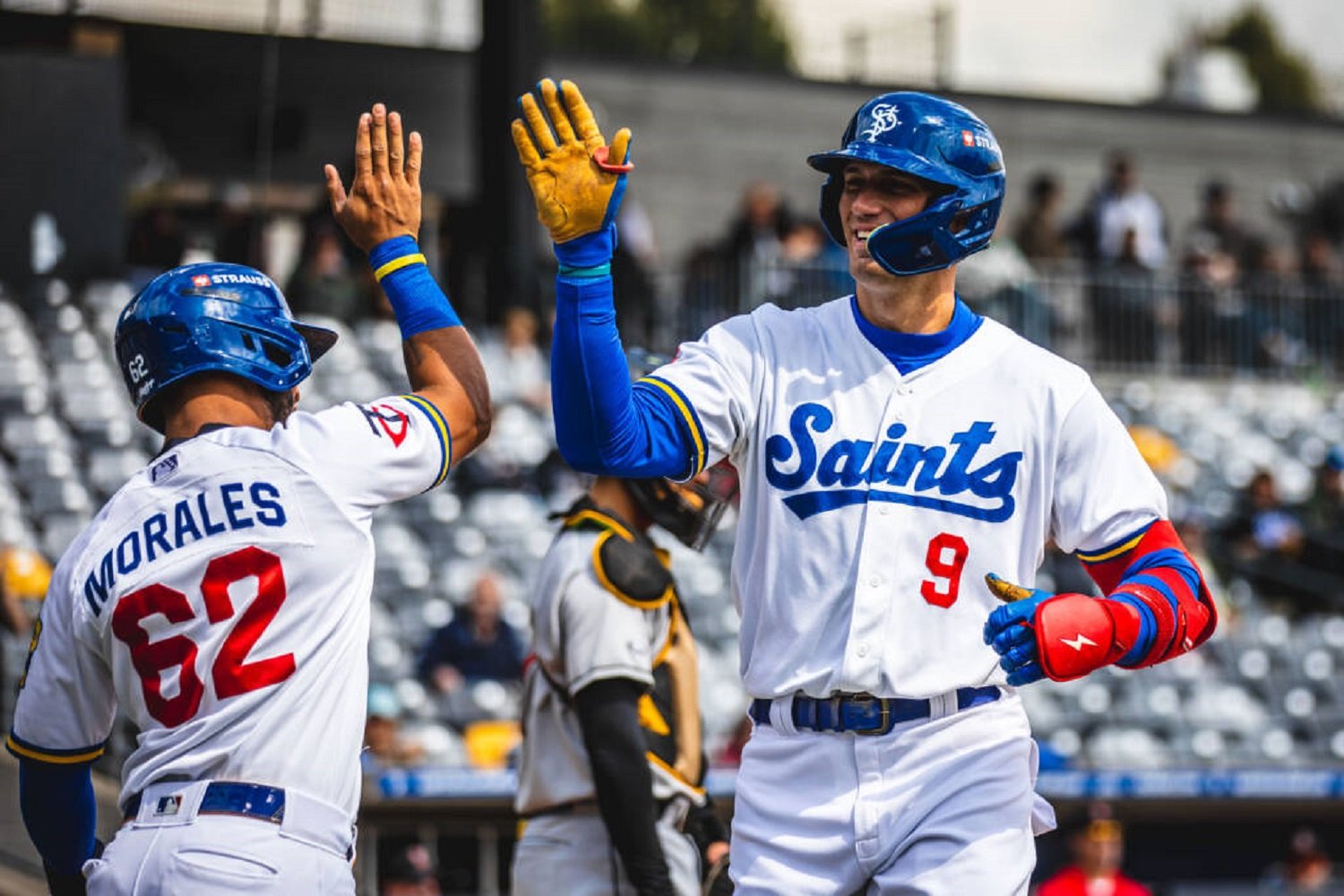 Carson McCusker’s ascent to the Minnesota Twins is a fascinating blend of perseverance and power, arriving just as the club faces a dearth of right-handed bats following multiple big-league injuries. Turning 27 later this week, McCusker is markedly older than the typical call-up. His right-handed power could be a timely infusion, but expectations should be kept in check. McCusker’s story diverges sharply from the typical draftee pipeline. After being selected in the 26th round by the Brewers in 2017, he opted not to sign, and instead played four seasons at Oklahoma State University before going undrafted in 2021. Undeterred, he spent parts of three seasons in independent ball before earning a minor-league contract with the Twins in June 2023. Standing 6-foot-8 and 250 pounds, his imposing frame and prodigious raw power quickly separated him in the minors. His relative inexperience against professional pitching may temper expectations about his development curve, but his success in that timeframe speaks to a polished approach born of necessity. The Twins’ Right-Handed Void With both Byron Buxton and Carlos Correa placed on the seven-day concussion list over the weekend, Minnesota’s lineup suddenly lacks its two best right-handed bats. Buxton, leading the team in many offensive categories, ran face-first into the back of Correa while chasing a pop-up against Baltimore, and has since entered concussion protocol. Correa exited the same game immediately, and was placed on the IL the day before Buxton. Royce Lewis, freshly activated on May 5 from a hamstring strain, has been slowly regaining form but still lacks consistent power production. José Miranda, once seen as a potential solution, was demoted after a slow start, slashing just .167/.167/.250 in 12 MLB games. That leaves a glaring hole for a right-handed power bat, and the Twins hope McCusker can fill the need. The Good: Power Explosion At Triple-A St. Paul, McCusker has torched opposing pitching, with 10 home runs and a 1.061 OPS in 154 plate appearances. His batted-ball profile is head-turning: Barrel Rate (16.3 %): Among the best in the International League, indicative of optimal exit-velocity/launch-angle combinations. Average EV (94.2 mph) & Max EV (115.0 mph): Reflecting elite raw power. Hard-Hit Rate (58.1 %): Over half of his batted balls measure 95 mph or higher off the bat. wOBA (.461): Ranking in the 97th percentile of Triple-A hitters, underscoring his run-creation prowess. These metrics paint McCusker as a true slugger. He has the kind of bat that can alter the balance of a game with a single swing. The Bad: Contact and Discipline Concerns On the other hand, McCusker’s power profile comes with exaggerated versions of the warts associated with many power hitters. He has struck out in 29.9% of his plate appearances, which raises red flags about his ability to handle big-league offspeed stuff. His 8.4% walk rate is an improvement, compared to his 7.1% rate at Triple-A last season. Still, his swing-and-miss tendencies remain: Whiff Rate (33.5%): Evident in his high strikeout percentage, prompting concerns that MLB pitchers will exploit his occasional inability to adjust mid-at-bat. Z-Contact Rates (78.8%): In-zone contact rates have room for improvement, hinting at potential struggles catching up to major-league velocity. Big-league pitchers will surely test McCusker’s chase zones early, forcing him to prove he can consistently put the bat on the ball at the highest level. Not Just a Lefty Masher Although many long-legged sluggers show a stark platoon split, McCusker’s Triple-A numbers tell a different story this year. In 37 plate appearances against right-handed pitching, he’s slashed .361/.411/.649, virtually neck-and-neck with his overall Triple-A line. Last season, he posted a .959 OPS against lefties with an .804 OPS versus righties. That said, the Twins will likely continue to deploy him in a traditional righty/lefty, platoon simply because big-league matchups (and how Minnesota manages its roster) still favor handing McCusker more at-bats versus southpaws and having him on the bench against righties. His statistical neutrality won’t immediately override established platoon principles, especially given his lack of prospect sheen. Hitting at 6-Foot-8: What It Takes McCusker is a monster in the batter's box. Only five position players in MLB history have stood 6-foot-7 or taller and weighed at least 240 pounds: Frank Howard, Aaron Judge, Oneil Cruz, Steven Moya, and Nate Freiman. Here’s why each offers insight into the skill set McCusker must harness: Frank Howard (6-7, 275 lb): The “Capital Punisher” led the AL in homers twice with a short, powerful swing that maximized his loft and exit velocities. Despite limited athleticism, Howard showed how a strong lower half and quick hands can turn length into launch. Aaron Judge (6-7, 282 lb): Judge pairs his mammoth frame with elite bat speed and an uncanny ability to cover the strike zone. He routinely barrels pitches on both inner and outer thirds thanks to remarkable coordination for his size. His athleticism proves that power and defense can coexist at XXL proportions. Oneil Cruz (6-7, 260 lb): Cruz’s loose, handsy swing lets him adjust to high-spin fastballs in the upper zone. This is an uncommon trait for such a long-armed hitter and underscores the value of barrel control. That said, he still strikes out at a very high rate. Steven Moya (6-7, 260 lb): Moya combined strength with surprisingly good balance, translating into solid plate discipline and the ability to drive both grounders and fly balls. His career shows that a tall slugger must still hone strike-zone judgment to stick at the highest level; that's what separates Judge and Howard from the rest of the bunch. Nate Freiman (6-8, 245 lb): The former A’s first-baseman used a compact stroke and low-centered stance to reach pitches down in the zone, proving that tall hitters succeed when they optimize leverage and maintain a level bat path. However, like that of Moya, his career in the majors was relatively short and forgettable. The blueprint for McCusker is clear: convert his extraordinary raw power into consistent contact by refining his plate mechanics and strike-zone control, leveraging his size to drive balls to all fields. Realistic Expectations It would be unreasonable to project McCusker as an offensive savior for the Twins. Instead, realistic expectations for the former independent-league slugger include: Immediate Impact: A power boost from the right side, capable of multiple extra-base hits in his first handful of games against favorable matchups. Patience Needed: Early struggles with strikeouts are likely. A 25% K rate would be a win. Defensive Replication: Limited to corner outfield and DH duties, minimizing the need for defensive adjustments. McCusker brings raw power to the Twins at a crucial juncture, after an unconventional ascent through independent ball and the minor leagues. While he must prove his contact skills and adjust to big-league pitching, his potential to deliver right-handed power makes him more of a threat than many of Minnesota’s other righty options. Expect him to be a high-variance bat, capable of game-changing homers but prone to strikeout frustrations as he acclimates to MLB life. What stands out about McCusker? Leave a comment and start the discussion.
- 41 comments
-
- 4
-
-
- carson mccusker
- aaron judge
- (and 4 more)
-
Image courtesy of Rob Thompson, St. Paul Saints Carson McCusker’s ascent to the Minnesota Twins is a fascinating blend of perseverance and power, arriving just as the club faces a dearth of right-handed bats following multiple big-league injuries. Turning 27 later this week, McCusker is markedly older than the typical call-up. His right-handed power could be a timely infusion, but expectations should be kept in check. McCusker’s story diverges sharply from the typical draftee pipeline. After being selected in the 26th round by the Brewers in 2017, he opted not to sign, and instead played four seasons at Oklahoma State University before going undrafted in 2021. Undeterred, he spent parts of three seasons in independent ball before earning a minor-league contract with the Twins in June 2023. Standing 6-foot-8 and 250 pounds, his imposing frame and prodigious raw power quickly separated him in the minors. His relative inexperience against professional pitching may temper expectations about his development curve, but his success in that timeframe speaks to a polished approach born of necessity. The Twins’ Right-Handed Void With both Byron Buxton and Carlos Correa placed on the seven-day concussion list over the weekend, Minnesota’s lineup suddenly lacks its two best right-handed bats. Buxton, leading the team in many offensive categories, ran face-first into the back of Correa while chasing a pop-up against Baltimore, and has since entered concussion protocol. Correa exited the same game immediately, and was placed on the IL the day before Buxton. Royce Lewis, freshly activated on May 5 from a hamstring strain, has been slowly regaining form but still lacks consistent power production. José Miranda, once seen as a potential solution, was demoted after a slow start, slashing just .167/.167/.250 in 12 MLB games. That leaves a glaring hole for a right-handed power bat, and the Twins hope McCusker can fill the need. The Good: Power Explosion At Triple-A St. Paul, McCusker has torched opposing pitching, with 10 home runs and a 1.061 OPS in 154 plate appearances. His batted-ball profile is head-turning: Barrel Rate (16.3 %): Among the best in the International League, indicative of optimal exit-velocity/launch-angle combinations. Average EV (94.2 mph) & Max EV (115.0 mph): Reflecting elite raw power. Hard-Hit Rate (58.1 %): Over half of his batted balls measure 95 mph or higher off the bat. wOBA (.461): Ranking in the 97th percentile of Triple-A hitters, underscoring his run-creation prowess. These metrics paint McCusker as a true slugger. He has the kind of bat that can alter the balance of a game with a single swing. The Bad: Contact and Discipline Concerns On the other hand, McCusker’s power profile comes with exaggerated versions of the warts associated with many power hitters. He has struck out in 29.9% of his plate appearances, which raises red flags about his ability to handle big-league offspeed stuff. His 8.4% walk rate is an improvement, compared to his 7.1% rate at Triple-A last season. Still, his swing-and-miss tendencies remain: Whiff Rate (33.5%): Evident in his high strikeout percentage, prompting concerns that MLB pitchers will exploit his occasional inability to adjust mid-at-bat. Z-Contact Rates (78.8%): In-zone contact rates have room for improvement, hinting at potential struggles catching up to major-league velocity. Big-league pitchers will surely test McCusker’s chase zones early, forcing him to prove he can consistently put the bat on the ball at the highest level. Not Just a Lefty Masher Although many long-legged sluggers show a stark platoon split, McCusker’s Triple-A numbers tell a different story this year. In 37 plate appearances against right-handed pitching, he’s slashed .361/.411/.649, virtually neck-and-neck with his overall Triple-A line. Last season, he posted a .959 OPS against lefties with an .804 OPS versus righties. That said, the Twins will likely continue to deploy him in a traditional righty/lefty, platoon simply because big-league matchups (and how Minnesota manages its roster) still favor handing McCusker more at-bats versus southpaws and having him on the bench against righties. His statistical neutrality won’t immediately override established platoon principles, especially given his lack of prospect sheen. Hitting at 6-Foot-8: What It Takes McCusker is a monster in the batter's box. Only five position players in MLB history have stood 6-foot-7 or taller and weighed at least 240 pounds: Frank Howard, Aaron Judge, Oneil Cruz, Steven Moya, and Nate Freiman. Here’s why each offers insight into the skill set McCusker must harness: Frank Howard (6-7, 275 lb): The “Capital Punisher” led the AL in homers twice with a short, powerful swing that maximized his loft and exit velocities. Despite limited athleticism, Howard showed how a strong lower half and quick hands can turn length into launch. Aaron Judge (6-7, 282 lb): Judge pairs his mammoth frame with elite bat speed and an uncanny ability to cover the strike zone. He routinely barrels pitches on both inner and outer thirds thanks to remarkable coordination for his size. His athleticism proves that power and defense can coexist at XXL proportions. Oneil Cruz (6-7, 260 lb): Cruz’s loose, handsy swing lets him adjust to high-spin fastballs in the upper zone. This is an uncommon trait for such a long-armed hitter and underscores the value of barrel control. That said, he still strikes out at a very high rate. Steven Moya (6-7, 260 lb): Moya combined strength with surprisingly good balance, translating into solid plate discipline and the ability to drive both grounders and fly balls. His career shows that a tall slugger must still hone strike-zone judgment to stick at the highest level; that's what separates Judge and Howard from the rest of the bunch. Nate Freiman (6-8, 245 lb): The former A’s first-baseman used a compact stroke and low-centered stance to reach pitches down in the zone, proving that tall hitters succeed when they optimize leverage and maintain a level bat path. However, like that of Moya, his career in the majors was relatively short and forgettable. The blueprint for McCusker is clear: convert his extraordinary raw power into consistent contact by refining his plate mechanics and strike-zone control, leveraging his size to drive balls to all fields. Realistic Expectations It would be unreasonable to project McCusker as an offensive savior for the Twins. Instead, realistic expectations for the former independent-league slugger include: Immediate Impact: A power boost from the right side, capable of multiple extra-base hits in his first handful of games against favorable matchups. Patience Needed: Early struggles with strikeouts are likely. A 25% K rate would be a win. Defensive Replication: Limited to corner outfield and DH duties, minimizing the need for defensive adjustments. McCusker brings raw power to the Twins at a crucial juncture, after an unconventional ascent through independent ball and the minor leagues. While he must prove his contact skills and adjust to big-league pitching, his potential to deliver right-handed power makes him more of a threat than many of Minnesota’s other righty options. Expect him to be a high-variance bat, capable of game-changing homers but prone to strikeout frustrations as he acclimates to MLB life. What stands out about McCusker? Leave a comment and start the discussion. View full article
