Lou Hennessy
-
Posts
326 -
Joined
-
Last visited
Content Type
Profiles
News
Minnesota Twins Videos
2026 Minnesota Twins Top Prospects Ranking
2022 Minnesota Twins Draft Picks
Minnesota Twins Free Agent & Trade Rumors, Notes, & Tidbits
Guides & Resources
2023 Minnesota Twins Draft Picks
The Minnesota Twins Players Project
2024 Minnesota Twins Draft Picks
2025 Minnesota Twins Draft Pick Tracker
2026 Minnesota Twins Draft Tracker: Picks & Bonuses
Forums
Blogs
Events
Store
Downloads
Gallery
Everything posted by Lou Hennessy
-
 After making his third All Star roster in his 10-year career, Sonny Gray’s trade value is at its highest peak since becoming a Twin two off-seasons ago. Even so, trading him now would likely be a misguided, panicked idea as the team approaches the August 1st trade deadline. Image courtesy of Stephen Brashear-USA TODAY Sports After making his third All Star roster in his 10-year career, Sonny Gray’s trade value is at its highest peak since becoming a Twin two off-seasons ago. Even so, trading him now would likely be a misguided, panicked idea as the team approaches the August 1st trade deadline. Without question, the Twins’ win-loss record from the first half was a disappointment to fans, players, coaches and front office decision-makers alike. There’s very little to sugarcoat when the team carries a losing record into the All-Star break. But there’s one emotion that can be just as unpleasant as disappointment, and far more dangerous. Panic. Based on the common themes that are presented across various social-media spheres, frustration has a way of boiling over when expectations aren’t being met. That panic leads to reckless speculation, which leads to loud, bombastic ideas for how to improve the team. The latest concept to come out of this line of thinking is the idea that the Twins should trade their All Star starting pitcher, Sonny Gray, at this year’s trade deadline. While it’s smart for front offices to listen to offers on any and all players, a trade of this magnitude likely wouldn’t yield the return that many would expect, and it would send a problematic message about where expectations should be going forward. Oftentimes when a Gray trade is suggested, the return package isn’t even a consideration. The logic of the proposal revolves around the idea that this team isn’t good enough to make a deep run in the playoffs, so they should sell their best assets to the highest bidder. It’s a knee-jerk reaction to a decades-long championship drought, made by surly grumps who see little more to the game than box scores and win-loss records. They don’t like what they see, which is understandable given the struggles of the lineup, but they think changes are needed by any means necessary. But two issues arise from this proposal. First, they don’t fully understand Gray’s worth to the Twins. Second, they don’t fully understand his value to a team trying to acquire him, and how the price shifts around the qualifying offer. Gray has been about as good as anyone could’ve expected when he was acquired from the Cincinnati Reds in exchange for Chase Petty, the Twins’ first round draft pick in 2021. In just under 220 innings pitched for the Twins, he has a 3.00 ERA with a 24% strikeout rate and an 8.3% walk rate. That performance has been worth 5.2 fWAR since joining the Twins, and he’s taken his game to a new level this season (2.89 ERA, 11.4% swinging-strike rate across 18 starts). He’s been carried by two traits that would be rather enticing to teams that are in buy-now mode as we creep toward the trade deadline; an ultra-effective slider that pairs magnificently with his modest fastball and the ability to limit damage. Opponents are hitting just .128 against Gray’s slider, which is best in MLB among qualified pitchers according to Inside Edge. Part of that offering’s effectiveness comes from his ability to pair it with his deceptive fastball that boasts an elite spin rate (96th percentile) despite modest velocity. In terms of limiting damage, look no further than Gray’s 77.5% left-on-base average and his .515 OPS allowed with runners in scoring position (fifth-best in MLB). That pitchability bodes well for teams as they consider a pitcher that turns 34 later this year. That should include the Twins. While this is Gray’s final year of club control before he reaches free agency, the club can extend him a qualifying offer at season’s end. That price will likely be around $20 million for a one-year contract, and if he declines it and signs elsewhere, the Twins would receive compensation in the form of picks in next year’s amateur draft. If he accepts that offer, the Twins get to return him atop a competitive rotation for 2024 at a reasonable price. The value of the picks that would be awarded to the Twins if he signs elsewhere depends on how much Gray signs for with another team. If he signs a deal in excess of $50 million, then the Twins would receive a pick just after the first round of next year’s draft (likely in the 31-39 range). That outcome seems likely if Gray stays healthy and on his current trajectory. If he were to reject the qualifying offer and sign elsewhere for less than $50 million, the compensation pick for those teams would come after Competitive Balance Round B, which follows the second round (likely in the 65-70 range). So if the Twins don’t trade Gray, and he continues to pitch like he has since joining the club, they will likely get him signed for a one-year $20 million deal for 2024 based on the qualifying offer, or receive an extra top-75 pick in next year’s draft. As great as Gray has been, it’s hard to picture a team trading a prospect of this caliber for just two months of control of a pitcher that missed weeks of action with a hamstring issue just last year. Disappointment is understandable when looking at an underwhelming first half from the Twins. After years of losing baseball and the complete absence of playoff success since 2004, it’s easy to see why fans would be frustrated. Many lack faith that this roster can reach the playoffs in 2023, let alone make a deep run. The easy call in that scenario would be to sell high on expiring assets in an effort to re-fertilize the prospect corps. But the easy call isn’t always the smartest call. The Twins need to find a way to be competitive for the rest of this year and in 2024, and the best way to do that is to keep their strong rotation intact while trimming the fat from the lackluster lineup. Gray holds more value to the Twins by remaining in their rotation for a possible playoff run, then returning for one more year, or at least getting high-end draft picks in return if he signs elsewhere. Barring some mythical offer that is too good to pass up, trading him now would be a decision based on panic and nothing more. What do you think? Should the Twins consider trading Gray to the highest bidder? Or would they be better off building around him for another year? Let us know what you think in the comment section below. View full article
 -
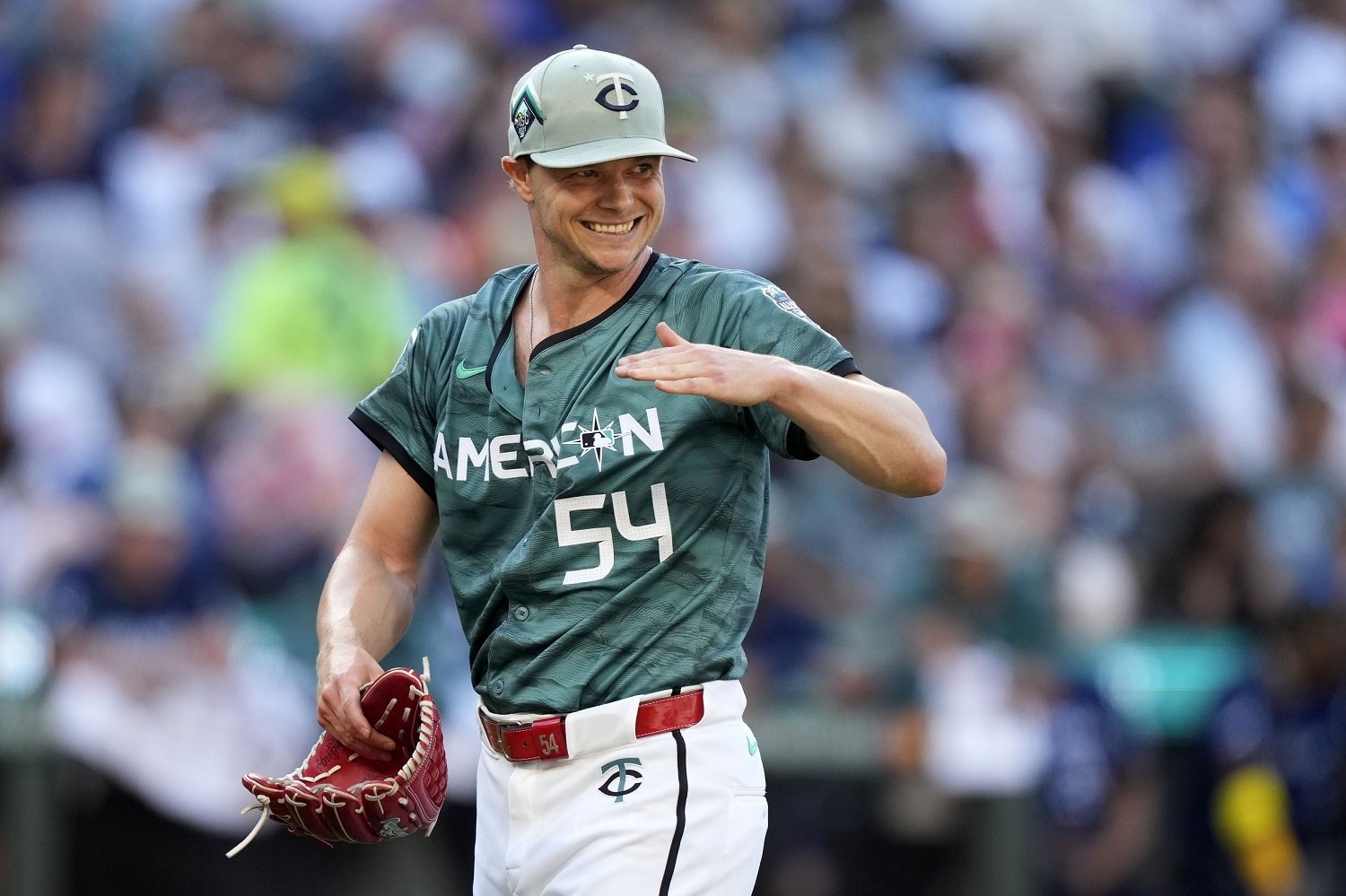 Without question, the Twins’ win-loss record from the first half was a disappointment to fans, players, coaches and front office decision-makers alike. There’s very little to sugarcoat when the team carries a losing record into the All-Star break. But there’s one emotion that can be just as unpleasant as disappointment, and far more dangerous. Panic. Based on the common themes that are presented across various social-media spheres, frustration has a way of boiling over when expectations aren’t being met. That panic leads to reckless speculation, which leads to loud, bombastic ideas for how to improve the team. The latest concept to come out of this line of thinking is the idea that the Twins should trade their All Star starting pitcher, Sonny Gray, at this year’s trade deadline. While it’s smart for front offices to listen to offers on any and all players, a trade of this magnitude likely wouldn’t yield the return that many would expect, and it would send a problematic message about where expectations should be going forward. Oftentimes when a Gray trade is suggested, the return package isn’t even a consideration. The logic of the proposal revolves around the idea that this team isn’t good enough to make a deep run in the playoffs, so they should sell their best assets to the highest bidder. It’s a knee-jerk reaction to a decades-long championship drought, made by surly grumps who see little more to the game than box scores and win-loss records. They don’t like what they see, which is understandable given the struggles of the lineup, but they think changes are needed by any means necessary. But two issues arise from this proposal. First, they don’t fully understand Gray’s worth to the Twins. Second, they don’t fully understand his value to a team trying to acquire him, and how the price shifts around the qualifying offer. Gray has been about as good as anyone could’ve expected when he was acquired from the Cincinnati Reds in exchange for Chase Petty, the Twins’ first round draft pick in 2021. In just under 220 innings pitched for the Twins, he has a 3.00 ERA with a 24% strikeout rate and an 8.3% walk rate. That performance has been worth 5.2 fWAR since joining the Twins, and he’s taken his game to a new level this season (2.89 ERA, 11.4% swinging-strike rate across 18 starts). He’s been carried by two traits that would be rather enticing to teams that are in buy-now mode as we creep toward the trade deadline; an ultra-effective slider that pairs magnificently with his modest fastball and the ability to limit damage. Opponents are hitting just .128 against Gray’s slider, which is best in MLB among qualified pitchers according to Inside Edge. Part of that offering’s effectiveness comes from his ability to pair it with his deceptive fastball that boasts an elite spin rate (96th percentile) despite modest velocity. In terms of limiting damage, look no further than Gray’s 77.5% left-on-base average and his .515 OPS allowed with runners in scoring position (fifth-best in MLB). That pitchability bodes well for teams as they consider a pitcher that turns 34 later this year. That should include the Twins. While this is Gray’s final year of club control before he reaches free agency, the club can extend him a qualifying offer at season’s end. That price will likely be around $20 million for a one-year contract, and if he declines it and signs elsewhere, the Twins would receive compensation in the form of picks in next year’s amateur draft. If he accepts that offer, the Twins get to return him atop a competitive rotation for 2024 at a reasonable price. The value of the picks that would be awarded to the Twins if he signs elsewhere depends on how much Gray signs for with another team. If he signs a deal in excess of $50 million, then the Twins would receive a pick just after the first round of next year’s draft (likely in the 31-39 range). That outcome seems likely if Gray stays healthy and on his current trajectory. If he were to reject the qualifying offer and sign elsewhere for less than $50 million, the compensation pick for those teams would come after Competitive Balance Round B, which follows the second round (likely in the 65-70 range). So if the Twins don’t trade Gray, and he continues to pitch like he has since joining the club, they will likely get him signed for a one-year $20 million deal for 2024 based on the qualifying offer, or receive an extra top-75 pick in next year’s draft. As great as Gray has been, it’s hard to picture a team trading a prospect of this caliber for just two months of control of a pitcher that missed weeks of action with a hamstring issue just last year. Disappointment is understandable when looking at an underwhelming first half from the Twins. After years of losing baseball and the complete absence of playoff success since 2004, it’s easy to see why fans would be frustrated. Many lack faith that this roster can reach the playoffs in 2023, let alone make a deep run. The easy call in that scenario would be to sell high on expiring assets in an effort to re-fertilize the prospect corps. But the easy call isn’t always the smartest call. The Twins need to find a way to be competitive for the rest of this year and in 2024, and the best way to do that is to keep their strong rotation intact while trimming the fat from the lackluster lineup. Gray holds more value to the Twins by remaining in their rotation for a possible playoff run, then returning for one more year, or at least getting high-end draft picks in return if he signs elsewhere. Barring some mythical offer that is too good to pass up, trading him now would be a decision based on panic and nothing more. What do you think? Should the Twins consider trading Gray to the highest bidder? Or would they be better off building around him for another year? Let us know what you think in the comment section below.
 -
I loved and still love the idea of Turner on the Twins. He's been great for the Red Sox. I wonder if there'll be a trade market for him. Sox aren't clear sellers at the moment, but they're in a stacked division and a lot can happen in a few weeks.
- 18 replies
-
- 1
-

-
- andrew mccutchen
- max kepler
- (and 2 more)
-
Andrew McCutchen Was the Perfect Signing That the Twins Didn't Make
Lou Hennessy posted an article in Twins
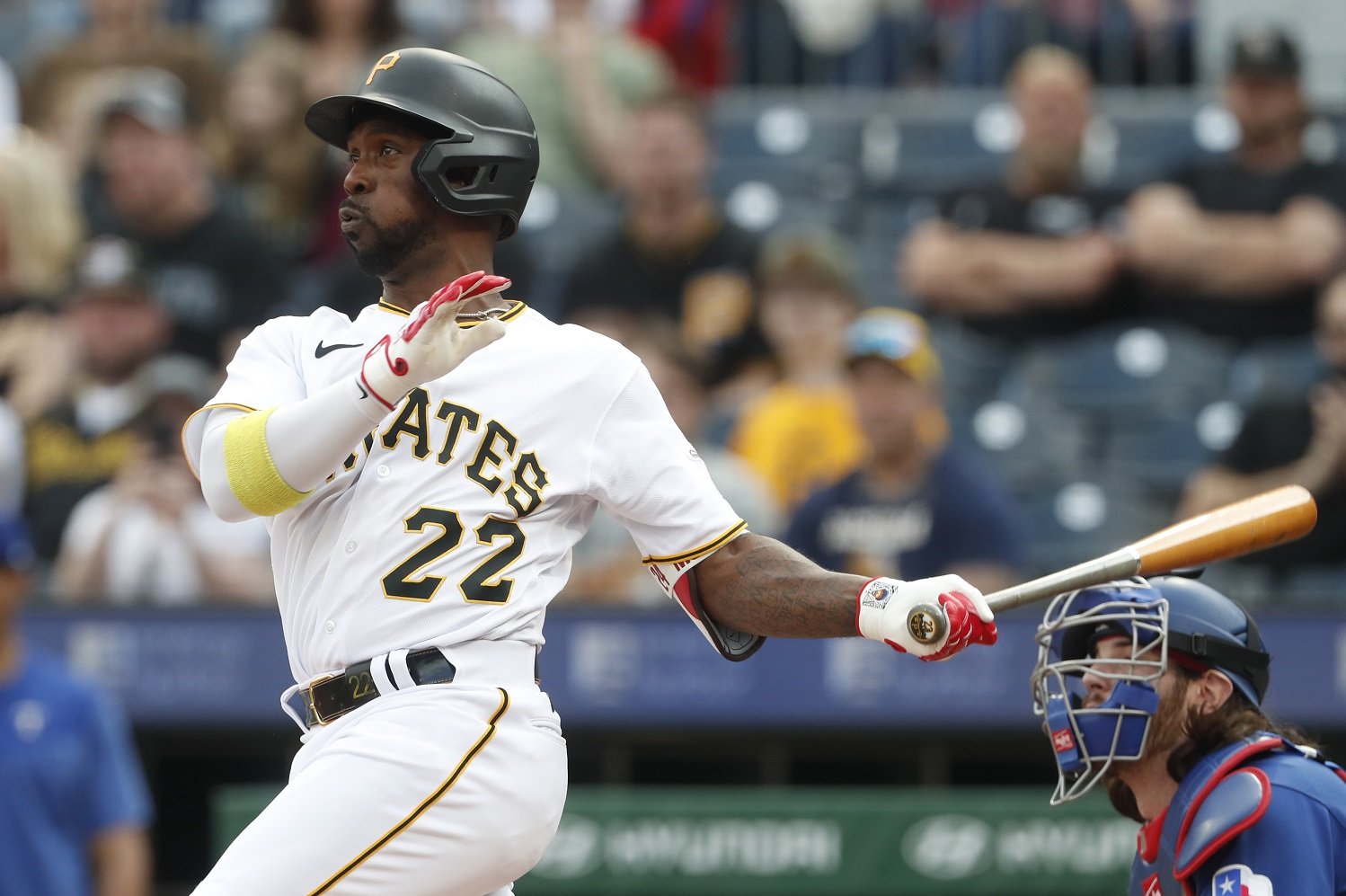 The Twins seemed like a natural fit as a landing spot for a right-handed bat with a proven track record over the off-season. Given the team’s need for a short-term deal and a relatively top-heavy free agent class, there wasn’t a plethora of options to play with. However, there were a handful of names that would have fit that mold. Near the top of that list was former National League MVP, Andrew McCutchen. I asked in January if he did anything for Twins fans, and the general consensus was that he could represent a modest improvement in a more-limited role. It turns out that the Twins agreed. According to Darren Wolfson of 5 Eyewitness News, the Twins had “heavy interest” in the veteran outfielder, but couldn’t promise the same playing time as he would get from the Pittsburgh Pirates. So McCutchen returned to the organization that drafted him on a reasonable one-year, $5 million contract. Instead, the Twins opted for a plan that included giving that starter’s share of starting opportunities to Joey Gallo, and a re-sign of Kyle Garlick to a guaranteed deal to avoid arbitration to fill the right-handed side of a platoon. Now, Gallo is once again in the middle of a brutal slump, and Garlick was just designated for assignment. McCutchen is currently performing at a level that the Twins desperately need from their corner outfielders. Through 62 games with the Pirates, he has a strong .264/.385/.425 (124 wRC+) slash line, with nine home runs, 24 RBI and seven stolen bases. All in all, Fangraphs pegs McCutchen’s performance worth 1.1 WAR, which would lead all Twins’ hitters. Sure, there’s no crystal ball that assures he would have performed at this level if he had signed with the Twins, but the point remains that McCutchen still possesses a potent bat in his age-36 season. Compare that to what the Twins have received from their corner outfielders, and the point really gets hammered home. McCutchen could have raised the tide with this offense with a modest investment. The Twins have the American League’s 4th-worst WAR total from their right fielders in 2023, and a combined OPS of just .699. McCutchen alone has an .810 OPS, which is more than 50 points higher than that of Gallo, 148 points higher than that of Garlick and 160 points higher than that of Max Kepler. Simply put, the plan that the Twins decided to go with has not panned out. It should be noted that McCutchen has played the bulk of his games this year as the Pirates’ DH, but there’s still reason to believe that he can be a strong defender in a corner outfield spot. He took the field in 53 games just last year, and he held his own with relatively neutral results when it came to Outs Above Average (0 OAA in 434 innings). He also still boasts above-average sprint speed (81st percentile), which is much faster than the three aforementioned Twins players. In terms of one of the team’s greatest weaknesses in 2023, McCutchen could have significantly improved the offense’s results with runners in scoring position. In those instances this year, the slugger has a whopping .901 OPS with just a 12.7% strikeout rate. His performance in those situations has been about 38% better than the league-average hitter. Again, there’s no promising that McCutchen would have been a vast improvement when compared to the options that the Twins are working with in their current corner outfield depth chart. But at this point, it’s hard to make the case against it. And for a team whose platoon-heavy game plan hasn’t mustered much firepower, the idea of having Cutch as a near-everyday regular sounds pretty refreshing. It’s easy to think about all the moves that haven’t gone the Twins’ way in recent years. From their disastrous free agent signings to their ill-fated trades at last year’s deadline. But what can drive people even crazier is thinking about all of the relatively-minor investment moves that could have paid off exponentially. McCutchen certainly fits that mold all too well. What do you think? Should the Twins have been more willing to promise significant playing time to McCutchen? Do you think he would have helped this offense that currently finds themselves in a tailspin? Let us know what you think in the comment section down below.
- 18 comments
-
- 4
-
-

-
- andrew mccutchen
- max kepler
- (and 2 more)
-
The Twins reportedly had significant interest in the former MVP over the winter, but decided to go another direction. What could have been if the two sides had come to a deal? Image courtesy of Charles LeClaire-USA TODAY Sports The Twins reportedly had significant interest in the former MVP over the winter, but decided to go another direction. What could have been if the two sides had come to a deal? The Twins seemed like a natural fit as a landing spot for a right-handed bat with a proven track record over the off-season. Given the team’s need for a short-term deal and a relatively top-heavy free agent class, there wasn’t a plethora of options to play with. However, there were a handful of names that would have fit that mold. Near the top of that list was former National League MVP, Andrew McCutchen. I asked in January if he did anything for Twins fans, and the general consensus was that he could represent a modest improvement in a more-limited role. It turns out that the Twins agreed. According to Darren Wolfson of 5 Eyewitness News, the Twins had “heavy interest” in the veteran outfielder, but couldn’t promise the same playing time as he would get from the Pittsburgh Pirates. So McCutchen returned to the organization that drafted him on a reasonable one-year, $5 million contract. Instead, the Twins opted for a plan that included giving that starter’s share of starting opportunities to Joey Gallo, and a re-sign of Kyle Garlick to a guaranteed deal to avoid arbitration to fill the right-handed side of a platoon. Now, Gallo is once again in the middle of a brutal slump, and Garlick was just designated for assignment. McCutchen is currently performing at a level that the Twins desperately need from their corner outfielders. Through 62 games with the Pirates, he has a strong .264/.385/.425 (124 wRC+) slash line, with nine home runs, 24 RBI and seven stolen bases. All in all, Fangraphs pegs McCutchen’s performance worth 1.1 WAR, which would lead all Twins’ hitters. Sure, there’s no crystal ball that assures he would have performed at this level if he had signed with the Twins, but the point remains that McCutchen still possesses a potent bat in his age-36 season. Compare that to what the Twins have received from their corner outfielders, and the point really gets hammered home. McCutchen could have raised the tide with this offense with a modest investment. The Twins have the American League’s 4th-worst WAR total from their right fielders in 2023, and a combined OPS of just .699. McCutchen alone has an .810 OPS, which is more than 50 points higher than that of Gallo, 148 points higher than that of Garlick and 160 points higher than that of Max Kepler. Simply put, the plan that the Twins decided to go with has not panned out. It should be noted that McCutchen has played the bulk of his games this year as the Pirates’ DH, but there’s still reason to believe that he can be a strong defender in a corner outfield spot. He took the field in 53 games just last year, and he held his own with relatively neutral results when it came to Outs Above Average (0 OAA in 434 innings). He also still boasts above-average sprint speed (81st percentile), which is much faster than the three aforementioned Twins players. In terms of one of the team’s greatest weaknesses in 2023, McCutchen could have significantly improved the offense’s results with runners in scoring position. In those instances this year, the slugger has a whopping .901 OPS with just a 12.7% strikeout rate. His performance in those situations has been about 38% better than the league-average hitter. Again, there’s no promising that McCutchen would have been a vast improvement when compared to the options that the Twins are working with in their current corner outfield depth chart. But at this point, it’s hard to make the case against it. And for a team whose platoon-heavy game plan hasn’t mustered much firepower, the idea of having Cutch as a near-everyday regular sounds pretty refreshing. It’s easy to think about all the moves that haven’t gone the Twins’ way in recent years. From their disastrous free agent signings to their ill-fated trades at last year’s deadline. But what can drive people even crazier is thinking about all of the relatively-minor investment moves that could have paid off exponentially. McCutchen certainly fits that mold all too well. What do you think? Should the Twins have been more willing to promise significant playing time to McCutchen? Do you think he would have helped this offense that currently finds themselves in a tailspin? Let us know what you think in the comment section down below. View full article
-
Willi Castro did just about everything he could to keep the Twins afloat through a turbulent month of May. But his production has cratered as of late. Is it time to give the versatile utility player a reset at Triple-A? Image courtesy of Bruce Kluckhohn-USA TODAY Sports Willi Castro did just about everything he could to keep the Twins afloat through a turbulent month of May. But his production has cratered as of late. Is it time to give the versatile utility player a reset at Triple-A? Coming out of spring training, the Twins dubbed Willi Castro as the winner of the last spot on their 26-man roster. They may not have intended for him to be so disturbingly valuable in the first few months of the season, but nagging injuries will do that to a club. Thankfully, the multitalented Castro made the most of his opportunities with a truly spectacular month of May (.319/.355/.500 in 72 at-bats). But now that he’s cooled off exponentially (.402 OPS in the month of June), and some of his high-profile teammates are returning to form, it certainly starts a dialogue regarding what should come next. While there is merit to the idea of keeping him around for the foreseeable future, the evidence is mounting on the side of giving Castro a pit stop in Triple-A St. Paul when the roster reaches full strength. The good news for Castro and his admirers in Twins Territory is that he can be optioned to the minor leagues without being exposed to waivers. That way the team can be assured that he’ll remain in the organization and on the 40-man roster, but the club could use his 26-man MLB roster spot on someone else. And as underwhelming as Castro has been over the last few weeks, he’s almost certainly going to be needed again based on the overall health of the Twins’ collection of players. But with such a fragile lead in the AL Central, the Twins can’t afford to wait for the May-version of Castro to reappear, especially when considering his modest overall numbers throughout his career. They definitely can’t afford to give him everyday playing time if everyone is healthy. The Twins’ roster is inching closer to what many expected them to look like, with Joey Gallo returning from the IL on Monday and Byron Buxton seemingly due to return in short order. When that happens, the likely outcome will be Trevor Larnach packing his bags for Triple-A yet again. On the surface that move would be fine enough, as Larnach’s offensive production has been subpar for most of this season. But what happens when more offensive assets force the hand of the front office? If Matt Wallner or Jose Miranda keep raking with the Saints, and the Twins keep failing to score consistently, it’ll be hard justifying Castro’s roster spot. Wallner currently boasts a hearty .299/.405/.549 (139 wRC+) clip at the Triple-A level and Miranda has gone on a tear in the last few weeks. The 25-year-old has a .356 batting average over his last 11 games with the Saints, and looks as locked in as he was when he raised eyebrows as a rookie in 2022. Yes, Castro has far more defensive versatility than either of them, but there’s enough flexibility with the rest of the roster that the club could feasibly make it work without him. And if that leads to a more prudent offense as the team heads toward the heart of the summer, it might be worth it. Castro has a tendency to swing at everything. When that strategy goes well, and he’s able to lock in on a certain pitch early in counts, things have gone really well. He has a .529 average on the first pitch of his at-bats, which is well above league average (.357 according to Inside Edge). But as pitchers figure him out more and more, Castro has had trouble adjusting his high-swing approach, leading to far too many swings on pitches out of the zone. This is especially true against breaking pitches, where Castro has swung at 45% of those offerings out of the zone. And this is nothing new for him, either. Since the start of the 2021 season, only three players have chased a higher percentage of breaking pitches out of the zone. That’s not a good recipe for a player that has been below-average offensively in four of his five MLB seasons. The decision might not be imminent, but there’s a likelihood that the Twins will have to make a call on Castro in the near-future if things keep trending like they have been. Maybe a pit stop in Triple-A would benefit Castro and the team simultaneously. As steadier bats return to the Twins’ dugout, they could have better options in their pursuit to increase scoring, and the speedy Castro can refine his approach in the minors while remaining with the organization. It’s reasonable to think a 26-year-old is still capable of changing their ways, but it’s hard to see that happening at the game’s highest level while opportunities become more and more sparse. Maybe Castro could carve out a role similar to the one he held on Tuesday night when he came off the bench as a late-inning pinch runner. He does lead the team in steals and currently ranks in the 89th percentile of sprint speed among qualified players. That outcome would be ideal, but it’s hard to reserve a roster spot for such sparse opportunities. It becomes likelier when the roster expands to 28 players in September, but for now the path seems relatively clear. Castro needs to pick up his offensive production, or be subjected to a pit stop in St. Paul to change his tires and refuel for the postseason push. What do you think? Should Castro get a reset in St. Paul or is he too valuable to the Twins roster? Who would you like to see in his place if he does get optioned? Let us know in the comment section down below. View full article
-
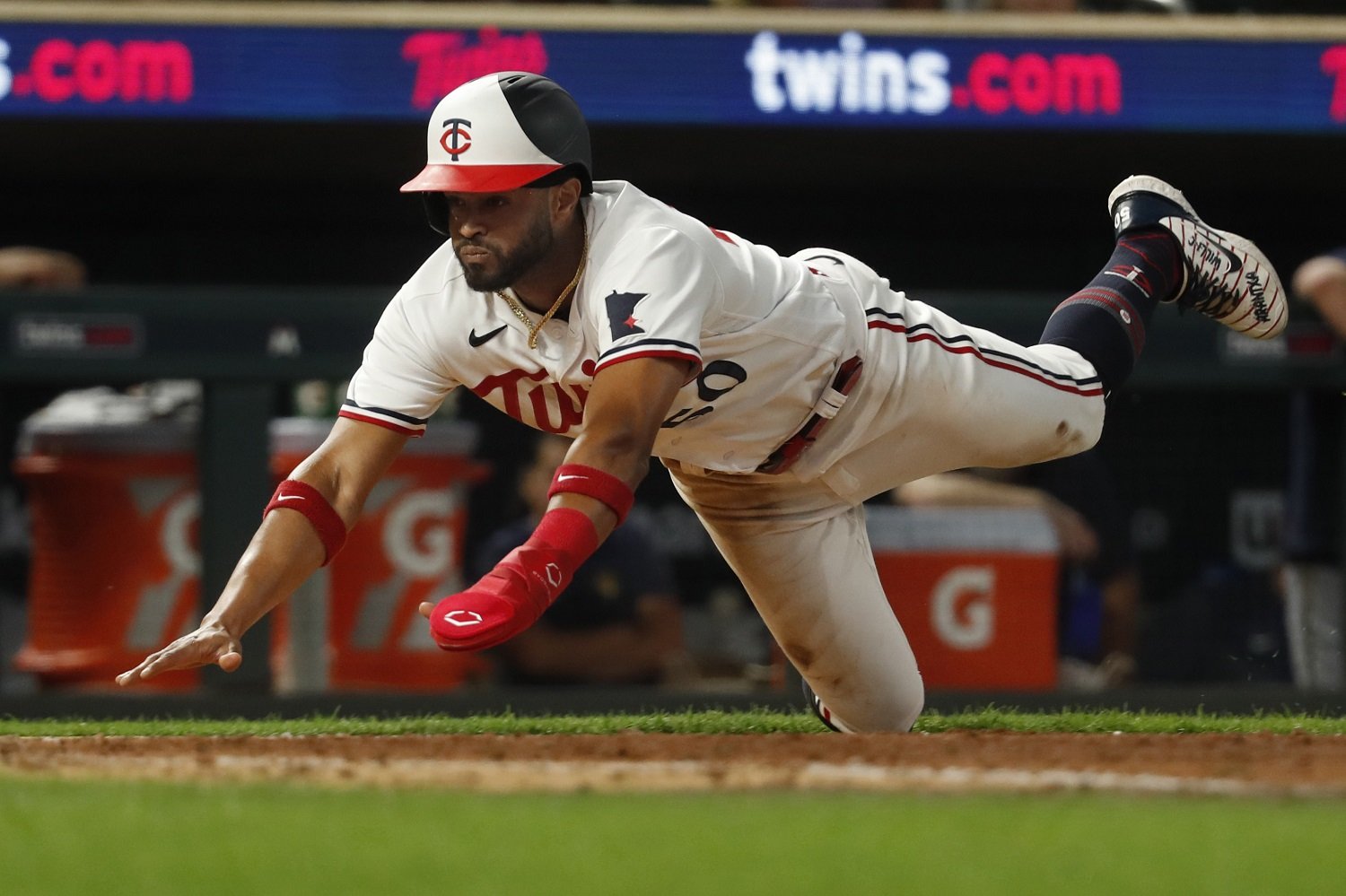 Coming out of spring training, the Twins dubbed Willi Castro as the winner of the last spot on their 26-man roster. They may not have intended for him to be so disturbingly valuable in the first few months of the season, but nagging injuries will do that to a club. Thankfully, the multitalented Castro made the most of his opportunities with a truly spectacular month of May (.319/.355/.500 in 72 at-bats). But now that he’s cooled off exponentially (.402 OPS in the month of June), and some of his high-profile teammates are returning to form, it certainly starts a dialogue regarding what should come next. While there is merit to the idea of keeping him around for the foreseeable future, the evidence is mounting on the side of giving Castro a pit stop in Triple-A St. Paul when the roster reaches full strength. The good news for Castro and his admirers in Twins Territory is that he can be optioned to the minor leagues without being exposed to waivers. That way the team can be assured that he’ll remain in the organization and on the 40-man roster, but the club could use his 26-man MLB roster spot on someone else. And as underwhelming as Castro has been over the last few weeks, he’s almost certainly going to be needed again based on the overall health of the Twins’ collection of players. But with such a fragile lead in the AL Central, the Twins can’t afford to wait for the May-version of Castro to reappear, especially when considering his modest overall numbers throughout his career. They definitely can’t afford to give him everyday playing time if everyone is healthy. The Twins’ roster is inching closer to what many expected them to look like, with Joey Gallo returning from the IL on Monday and Byron Buxton seemingly due to return in short order. When that happens, the likely outcome will be Trevor Larnach packing his bags for Triple-A yet again. On the surface that move would be fine enough, as Larnach’s offensive production has been subpar for most of this season. But what happens when more offensive assets force the hand of the front office? If Matt Wallner or Jose Miranda keep raking with the Saints, and the Twins keep failing to score consistently, it’ll be hard justifying Castro’s roster spot. Wallner currently boasts a hearty .299/.405/.549 (139 wRC+) clip at the Triple-A level and Miranda has gone on a tear in the last few weeks. The 25-year-old has a .356 batting average over his last 11 games with the Saints, and looks as locked in as he was when he raised eyebrows as a rookie in 2022. Yes, Castro has far more defensive versatility than either of them, but there’s enough flexibility with the rest of the roster that the club could feasibly make it work without him. And if that leads to a more prudent offense as the team heads toward the heart of the summer, it might be worth it. Castro has a tendency to swing at everything. When that strategy goes well, and he’s able to lock in on a certain pitch early in counts, things have gone really well. He has a .529 average on the first pitch of his at-bats, which is well above league average (.357 according to Inside Edge). But as pitchers figure him out more and more, Castro has had trouble adjusting his high-swing approach, leading to far too many swings on pitches out of the zone. This is especially true against breaking pitches, where Castro has swung at 45% of those offerings out of the zone. And this is nothing new for him, either. Since the start of the 2021 season, only three players have chased a higher percentage of breaking pitches out of the zone. That’s not a good recipe for a player that has been below-average offensively in four of his five MLB seasons. The decision might not be imminent, but there’s a likelihood that the Twins will have to make a call on Castro in the near-future if things keep trending like they have been. Maybe a pit stop in Triple-A would benefit Castro and the team simultaneously. As steadier bats return to the Twins’ dugout, they could have better options in their pursuit to increase scoring, and the speedy Castro can refine his approach in the minors while remaining with the organization. It’s reasonable to think a 26-year-old is still capable of changing their ways, but it’s hard to see that happening at the game’s highest level while opportunities become more and more sparse. Maybe Castro could carve out a role similar to the one he held on Tuesday night when he came off the bench as a late-inning pinch runner. He does lead the team in steals and currently ranks in the 89th percentile of sprint speed among qualified players. That outcome would be ideal, but it’s hard to reserve a roster spot for such sparse opportunities. It becomes likelier when the roster expands to 28 players in September, but for now the path seems relatively clear. Castro needs to pick up his offensive production, or be subjected to a pit stop in St. Paul to change his tires and refuel for the postseason push. What do you think? Should Castro get a reset in St. Paul or is he too valuable to the Twins roster? Who would you like to see in his place if he does get optioned? Let us know in the comment section down below.
 -
Despite sitting atop the AL Central division, the Twins currently find themselves stuck in a hole when it comes to getting consistent availability and production out of their 26-man roster. Even though the MLB trade deadline is still roughly seven weeks away, should they consider dipping their toes into the trade market earlier than normal? Image courtesy of Bruce Kluckhohn-USA TODAY Sports Despite sitting atop the AL Central division, the Twins currently find themselves stuck in a hole when it comes to getting consistent availability and production out of their 26-man roster. Even though the MLB trade deadline is still roughly seven weeks away, should they consider dipping their toes into the trade market earlier than normal? The Minnesota Twins fan base went into this season with palpable angst, and a mediocre record that continues to graze a .500 winning percentage hasn’t helped. What usually happens next in this scenario is a call from impassioned followers to make some trades, shake up the roster, and ignite a spark by any means necessary. And while the deadline is still nearly two months away, whispers of an early market have already been heard around the league. Whether any deals happen in the near-future is still to be determined. But the idea of making a move or two in June could be beneficial to a team like the Twins, who are currently in pole position in their division race, but need considerable help getting their vehicle up to speed. However, there are certainly drawbacks to trying to make an early deal. With merits and concerns on both sides of this coin, the Twins will have to figure out what they are going to prioritize relatively soon. Pros of an early trade While the team has boasted a few notable strengths so far in the 2023 season (a stellar starting rotation, some impressive stretches from key youngsters in the lineup, a fire breathing dragon at the back end of the bullpen, to name a few), there is no doubt that they could use a pick-me-up in a few different areas. The team’s depth has been tested multiple times this year, most of the bullpen has been inconsistent and the sluggers that were supposed to star on this squad are marred by injury, ineffectiveness or both. If a team can identify their needs for the rest of the year, an early entrance into trade conversations could be prudential. They can theoretically alleviate their woes with an effective addition, remap their depth chart with their acquisitions and hopefully get more balance on their roster. Not only could they improve the club in the short-term, but acquiring a key contributor in June would give them an additional month of production from this hypothetical player. For example, it’s pretty clear that if the Twins remain on the path that they’re currently on, a high-leverage bullpen addition will be necessary. If they were to swing a trade for a relief arm right now, that’s probably around 10-12 additional appearances that they’d be getting instead of waiting for the August 1st deadline to approach. Obviously, a high-impact deal in June is unlikely, and has become more-rare around the league with each passing year. But there are a few notable swaps that worked wonders for the teams involved, sometimes even more than the clubs anticipated. The Los Angeles Dodgers acquired infielder Chris Taylor in June of 2016, and he went on to be a stalwart in their lineup for years to come. The eventual World Series champion Boston Red Sox traded for Steve Pearce in June of 2018, and he instantly became a catalyst for the club, eventually being named the World Series MVP that year. Jeff Samardzija was traded to the Oakland Athletics just after the calendar flipped to July in 2014, and went on to lead his new club to a postseason appearance. Each of these players were able to give their new teams additional contributions thanks to their early acquisition. And while that’s beneficial, it can come with a price. Cons of an early trade There’s a reason why these early trades have become so rare. It’s not that buying teams are unwilling to pull the trigger, but rather, the market is still in its infancy and the selling teams use the time left on the clock as leverage. If they get to the day of the trade deadline, sellers will surely be sifting through offers to determine the best return. But in June, what’s to stop a selling team from sitting on any offer and waiting for a better proposal down the road? Say the Twins are in the market for a starting-caliber, right-handed hitting veteran infielder. They could go to a team like the Red Sox and offer a mid-level pitching prospect (let’s go with Matt Canterino) for Justin Turner. Boston could sit on that offer and tell the next team that they’ll need to beat the Twins’ proposal if they want a shot at landing the veteran slugger. They have the luxury of waiting for the market to heat up to their liking. Sure, there’s a risk for these sellers in that they could sit on their hands too long, and their tradable asset either declines or gets injured. But in the end, sellers have the upper hand in June. That leads to the next con when looking at early trades: increased cost. If the Twins or any other buying team really wants to nail down a trade with so much time before the deadline, they’ll need to offer a package that is too good for the other side to pass on. That could mean a headlining prospect, multiple valuable assets, or taking on more salary in return. Just this week, Ken Rosenthal of The Athletic reported that the Kansas City Royals are open for business when it comes to bullpen weapon Aroldis Chapman, but they want a steeper prospect package and/or additional salary relief to make a move this far in advance of the trade deadline. While that could be worth it for a team like the Twins, it’s understandable why teams might be hesitant. The needs of the team are also in flux for teams like the Twins. They could have a totally different shopping list by the time the trade market usually heats up in mid-July, so they might be apprehensive about meeting a higher price for an asset right now. Maybe some of their veteran cornerstone players start performing to their expectations, or maybe some of their upper-level prospects take hold of a roster spot in the coming weeks. There’s a lot of moving pieces, and adding another movable piece might not be what’s ultimately best for the club in the long-haul What do you think? Are there other pros or cons to making a trade this early in the season? What do you think are the Twins’ biggest needs right now? Let us know your thoughts in the comment section below. View full article
-
 The Minnesota Twins fan base went into this season with palpable angst, and a mediocre record that continues to graze a .500 winning percentage hasn’t helped. What usually happens next in this scenario is a call from impassioned followers to make some trades, shake up the roster, and ignite a spark by any means necessary. And while the deadline is still nearly two months away, whispers of an early market have already been heard around the league. Whether any deals happen in the near-future is still to be determined. But the idea of making a move or two in June could be beneficial to a team like the Twins, who are currently in pole position in their division race, but need considerable help getting their vehicle up to speed. However, there are certainly drawbacks to trying to make an early deal. With merits and concerns on both sides of this coin, the Twins will have to figure out what they are going to prioritize relatively soon. Pros of an early trade While the team has boasted a few notable strengths so far in the 2023 season (a stellar starting rotation, some impressive stretches from key youngsters in the lineup, a fire breathing dragon at the back end of the bullpen, to name a few), there is no doubt that they could use a pick-me-up in a few different areas. The team’s depth has been tested multiple times this year, most of the bullpen has been inconsistent and the sluggers that were supposed to star on this squad are marred by injury, ineffectiveness or both. If a team can identify their needs for the rest of the year, an early entrance into trade conversations could be prudential. They can theoretically alleviate their woes with an effective addition, remap their depth chart with their acquisitions and hopefully get more balance on their roster. Not only could they improve the club in the short-term, but acquiring a key contributor in June would give them an additional month of production from this hypothetical player. For example, it’s pretty clear that if the Twins remain on the path that they’re currently on, a high-leverage bullpen addition will be necessary. If they were to swing a trade for a relief arm right now, that’s probably around 10-12 additional appearances that they’d be getting instead of waiting for the August 1st deadline to approach. Obviously, a high-impact deal in June is unlikely, and has become more-rare around the league with each passing year. But there are a few notable swaps that worked wonders for the teams involved, sometimes even more than the clubs anticipated. The Los Angeles Dodgers acquired infielder Chris Taylor in June of 2016, and he went on to be a stalwart in their lineup for years to come. The eventual World Series champion Boston Red Sox traded for Steve Pearce in June of 2018, and he instantly became a catalyst for the club, eventually being named the World Series MVP that year. Jeff Samardzija was traded to the Oakland Athletics just after the calendar flipped to July in 2014, and went on to lead his new club to a postseason appearance. Each of these players were able to give their new teams additional contributions thanks to their early acquisition. And while that’s beneficial, it can come with a price. Cons of an early trade There’s a reason why these early trades have become so rare. It’s not that buying teams are unwilling to pull the trigger, but rather, the market is still in its infancy and the selling teams use the time left on the clock as leverage. If they get to the day of the trade deadline, sellers will surely be sifting through offers to determine the best return. But in June, what’s to stop a selling team from sitting on any offer and waiting for a better proposal down the road? Say the Twins are in the market for a starting-caliber, right-handed hitting veteran infielder. They could go to a team like the Red Sox and offer a mid-level pitching prospect (let’s go with Matt Canterino) for Justin Turner. Boston could sit on that offer and tell the next team that they’ll need to beat the Twins’ proposal if they want a shot at landing the veteran slugger. They have the luxury of waiting for the market to heat up to their liking. Sure, there’s a risk for these sellers in that they could sit on their hands too long, and their tradable asset either declines or gets injured. But in the end, sellers have the upper hand in June. That leads to the next con when looking at early trades: increased cost. If the Twins or any other buying team really wants to nail down a trade with so much time before the deadline, they’ll need to offer a package that is too good for the other side to pass on. That could mean a headlining prospect, multiple valuable assets, or taking on more salary in return. Just this week, Ken Rosenthal of The Athletic reported that the Kansas City Royals are open for business when it comes to bullpen weapon Aroldis Chapman, but they want a steeper prospect package and/or additional salary relief to make a move this far in advance of the trade deadline. While that could be worth it for a team like the Twins, it’s understandable why teams might be hesitant. The needs of the team are also in flux for teams like the Twins. They could have a totally different shopping list by the time the trade market usually heats up in mid-July, so they might be apprehensive about meeting a higher price for an asset right now. Maybe some of their veteran cornerstone players start performing to their expectations, or maybe some of their upper-level prospects take hold of a roster spot in the coming weeks. There’s a lot of moving pieces, and adding another movable piece might not be what’s ultimately best for the club in the long-haul What do you think? Are there other pros or cons to making a trade this early in the season? What do you think are the Twins’ biggest needs right now? Let us know your thoughts in the comment section below.
 -
The Twins Were Wise to Pass on These 3 Sluggers
Lou Hennessy replied to Lou Hennessy's topic in Twins Daily Front Page News
I didn't intend to make it seem like the Solano signing was a wise choice, or that he's been a sight for sore eyes. But he has been better than the alternatives listed here, and he's been cheaper than Abreu and Bell. If Solano's production does tank this year, it would be easier to cut/swallow the remainder of his contract.- 18 replies
-
- 3
-
-
- donovan solano
- jose abreu
- (and 2 more)
-
The Twins were rumored to have varying degrees of interest in a handful of first basemen in the off-season. While Donovan Solano has been rather unexciting, the club is surely relieved to have him aboard rather than the names on this list. What exactly did the Twins dodge by passing on these former standout sluggers? Image courtesy of Troy Taormina-USA TODAY Sports The Twins were rumored to have varying degrees of interest in a handful of first basemen in the off-season. While Donovan Solano has been rather unexciting, the club is surely relieved to have him aboard rather than the names on this list. What exactly did the Twins dodge by passing on these former standout sluggers? All in all, most of the Twins’ needs were addressed in the off-season, with a few glaring exceptions. One of the areas that went relatively untouched was the need for a right-handed slugger that could play first base. The club was rumored to have some interest in a few notable names, and eventually landed on Donovan Solano as the de facto plug for their leak. He didn’t follow the mold of the players that are on this list, but he’s put up numbers that are solid, if unexciting. On the year, Solano is batting .270/.360/.350 (104 wRC+), and playing passable defense at first base (with rare appearances at second and third). His performance has been a likely outcome for a 35-year-old veteran with a high on-base profile. But how does Solano stack up against the other names that were loosely-attached to the Twins in the off-season? Josh Bell A one-time top prospect for the Pittsburgh Pirates, Bell entered free agency as one of the better options among corner infielders. Despite a rocky couple of months with the San Diego Padres post-trade deadline, he finished the season with a .262/.362/.422 clip and 17 home runs. That’s the type of player many wanted for the Twins as someone that could split time with a left-handed platoon partner such as Alex Kirilloff or Joey Gallo. Bell went on to sign a two-year contract with the Cleveland Guardians, worth $33 million with an opt-out after the first year. The player option grants him the ability to re-enter the free agent market if he has a big year in 2023. But so far, Bell doesn’t look like somebody that’s lining up for a big payday this winter. In 45 games, the switch-hitter has a .228/.342/.348 clip with just three home runs. It should be noted that Bell has only been given 46 at-bats against left-handed pitching, which has been the Twins’ kryptonite all year. If they wanted someone that could mash from the right side of the plate, it’s probably wise that they passed on Bell. Luke Voit The home run king of the pandemic-shortened 2020 season looked like an ideal fit for the Twins on paper. He still boasted plenty of power from the right side in 2022 while blasting 22 home runs for the Padres and Washington Nationals, but his overall output was roughly replacement level (102 wRC+, 0.2 fWAR). Like Solano, Voit’s market failed to materialize until February, when teams were already in the thick of spring training. That soft market was part of the appeal when it came to Voit’s potential fit in Minnesota. The club could have theoretically signed the 32-year-old to a cheap, incentive-laden deal to be one of the last names on the 26-man roster, or even a minor-league “prove it” contract as he ended up doing with the Milwaukee Brewers. No matter how insignificant the price tag could have been, it’s fortunate that the Twins didn’t land Voit. In 22 games with the Brew Crew, he has a brutal .221/.284/.265 (54 wRC+) and has missed significant time with a neck injury. Like Bell, his numbers against left-handed pitching have been abysmal, as he’s slashing just .091/.091/.121 (-53 wRC+) with a shocking 60% strikeout rate. You’d be hard pressed to find somebody with a worse clip against southpaw pitching. If the Twins had signed Voit to be the right-handed side of a platoon at first base, it would have been a huge swing-and-miss, something Voit is all too familiar with. Jose Abreu Arguably the biggest name on the first base market last winter was the former-MVP who had a brilliant nine-year career with the rival Chicago White Sox. Abreu won three Silver Slugger awards and was named to three All-Star teams, so his offensive reputation was enough to land him a three-year, $58.5 million guarantee from the reigning world champion Houston Astros. Early in the off-season, he looked like a perfect fit for the Twins as a veteran leader that could still mash in the middle of a lineup and play a reasonably sound first base. But now, Abreu is one of the more confounding players in the league, and not in a good way. His power has seemingly vanished, as he has yet to hit a homerun in 47 games played this season. His anemic .221/.281/.260 (52 wRC+) slash line is borderline unplayable, and his .540 OPS is fourth-lowest among all qualified hitters. His inability to do any damage against breaking balls (36.1% whiff rate) has been a main culprit when trying to diagnose a cause for his sharp decline, but honestly, his numbers against fastballs (.263 slugging) and off-speed (21.7% whiff rate) aren’t going to save him, either. He would have been viewed as a Nelson Cruz-esque acquisition for the Twins – someone who could still be productive in his late-30s while leading by example from a corner locker. But instead, it looks like father time is catching up to one of the premier Cuban-born players of this generation. At the end of the day, it looks like the Twins chose wisely when they signed Solano to a one-year deal, especially when compared to these three rumored off-season targets. An ideal fit would have been to go the route that the Boston Red Sox ended up taking, by signing Justin Turner and transitioning him to a primary first baseman/designated hitter. He’s currently batting .267/.360/.407 (111 wRC+) and absolutely crushing left-handed pitching to the tune of a .291/.391/.509 (146 wRC+) clip while playing slightly above-average defense. Passing on the former Dodger legend is regrettable. Passing on the other names on this list has ended up being a blessing for an already-troubled Twins lineup. What do you think? Are you surprised by the lackluster performance of these three rumored targets? Who else would be a good fit as a right-handed hitting first baseman? Let us know your thoughts in the comment section below. View full article
-
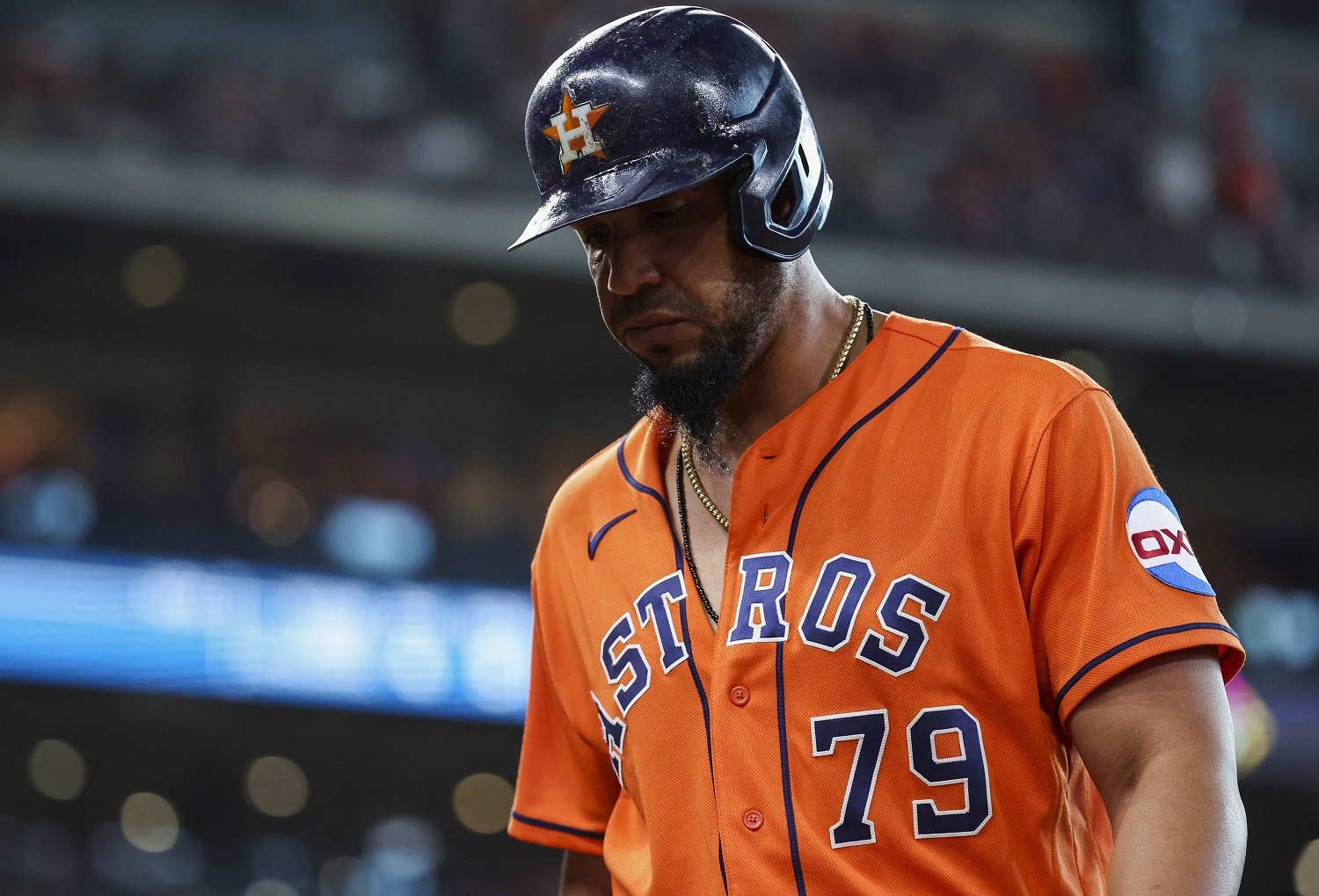 All in all, most of the Twins’ needs were addressed in the off-season, with a few glaring exceptions. One of the areas that went relatively untouched was the need for a right-handed slugger that could play first base. The club was rumored to have some interest in a few notable names, and eventually landed on Donovan Solano as the de facto plug for their leak. He didn’t follow the mold of the players that are on this list, but he’s put up numbers that are solid, if unexciting. On the year, Solano is batting .270/.360/.350 (104 wRC+), and playing passable defense at first base (with rare appearances at second and third). His performance has been a likely outcome for a 35-year-old veteran with a high on-base profile. But how does Solano stack up against the other names that were loosely-attached to the Twins in the off-season? Josh Bell A one-time top prospect for the Pittsburgh Pirates, Bell entered free agency as one of the better options among corner infielders. Despite a rocky couple of months with the San Diego Padres post-trade deadline, he finished the season with a .262/.362/.422 clip and 17 home runs. That’s the type of player many wanted for the Twins as someone that could split time with a left-handed platoon partner such as Alex Kirilloff or Joey Gallo. Bell went on to sign a two-year contract with the Cleveland Guardians, worth $33 million with an opt-out after the first year. The player option grants him the ability to re-enter the free agent market if he has a big year in 2023. But so far, Bell doesn’t look like somebody that’s lining up for a big payday this winter. In 45 games, the switch-hitter has a .228/.342/.348 clip with just three home runs. It should be noted that Bell has only been given 46 at-bats against left-handed pitching, which has been the Twins’ kryptonite all year. If they wanted someone that could mash from the right side of the plate, it’s probably wise that they passed on Bell. Luke Voit The home run king of the pandemic-shortened 2020 season looked like an ideal fit for the Twins on paper. He still boasted plenty of power from the right side in 2022 while blasting 22 home runs for the Padres and Washington Nationals, but his overall output was roughly replacement level (102 wRC+, 0.2 fWAR). Like Solano, Voit’s market failed to materialize until February, when teams were already in the thick of spring training. That soft market was part of the appeal when it came to Voit’s potential fit in Minnesota. The club could have theoretically signed the 32-year-old to a cheap, incentive-laden deal to be one of the last names on the 26-man roster, or even a minor-league “prove it” contract as he ended up doing with the Milwaukee Brewers. No matter how insignificant the price tag could have been, it’s fortunate that the Twins didn’t land Voit. In 22 games with the Brew Crew, he has a brutal .221/.284/.265 (54 wRC+) and has missed significant time with a neck injury. Like Bell, his numbers against left-handed pitching have been abysmal, as he’s slashing just .091/.091/.121 (-53 wRC+) with a shocking 60% strikeout rate. You’d be hard pressed to find somebody with a worse clip against southpaw pitching. If the Twins had signed Voit to be the right-handed side of a platoon at first base, it would have been a huge swing-and-miss, something Voit is all too familiar with. Jose Abreu Arguably the biggest name on the first base market last winter was the former-MVP who had a brilliant nine-year career with the rival Chicago White Sox. Abreu won three Silver Slugger awards and was named to three All-Star teams, so his offensive reputation was enough to land him a three-year, $58.5 million guarantee from the reigning world champion Houston Astros. Early in the off-season, he looked like a perfect fit for the Twins as a veteran leader that could still mash in the middle of a lineup and play a reasonably sound first base. But now, Abreu is one of the more confounding players in the league, and not in a good way. His power has seemingly vanished, as he has yet to hit a homerun in 47 games played this season. His anemic .221/.281/.260 (52 wRC+) slash line is borderline unplayable, and his .540 OPS is fourth-lowest among all qualified hitters. His inability to do any damage against breaking balls (36.1% whiff rate) has been a main culprit when trying to diagnose a cause for his sharp decline, but honestly, his numbers against fastballs (.263 slugging) and off-speed (21.7% whiff rate) aren’t going to save him, either. He would have been viewed as a Nelson Cruz-esque acquisition for the Twins – someone who could still be productive in his late-30s while leading by example from a corner locker. But instead, it looks like father time is catching up to one of the premier Cuban-born players of this generation. At the end of the day, it looks like the Twins chose wisely when they signed Solano to a one-year deal, especially when compared to these three rumored off-season targets. An ideal fit would have been to go the route that the Boston Red Sox ended up taking, by signing Justin Turner and transitioning him to a primary first baseman/designated hitter. He’s currently batting .267/.360/.407 (111 wRC+) and absolutely crushing left-handed pitching to the tune of a .291/.391/.509 (146 wRC+) clip while playing slightly above-average defense. Passing on the former Dodger legend is regrettable. Passing on the other names on this list has ended up being a blessing for an already-troubled Twins lineup. What do you think? Are you surprised by the lackluster performance of these three rumored targets? Who else would be a good fit as a right-handed hitting first baseman? Let us know your thoughts in the comment section below.
- 18 comments
-
- 2
-
-
- donovan solano
- jose abreu
- (and 2 more)
-
One Pitcher From Each Minor League Level That Deserves a Promotion
Lou Hennessy posted an article in Minor Leagues
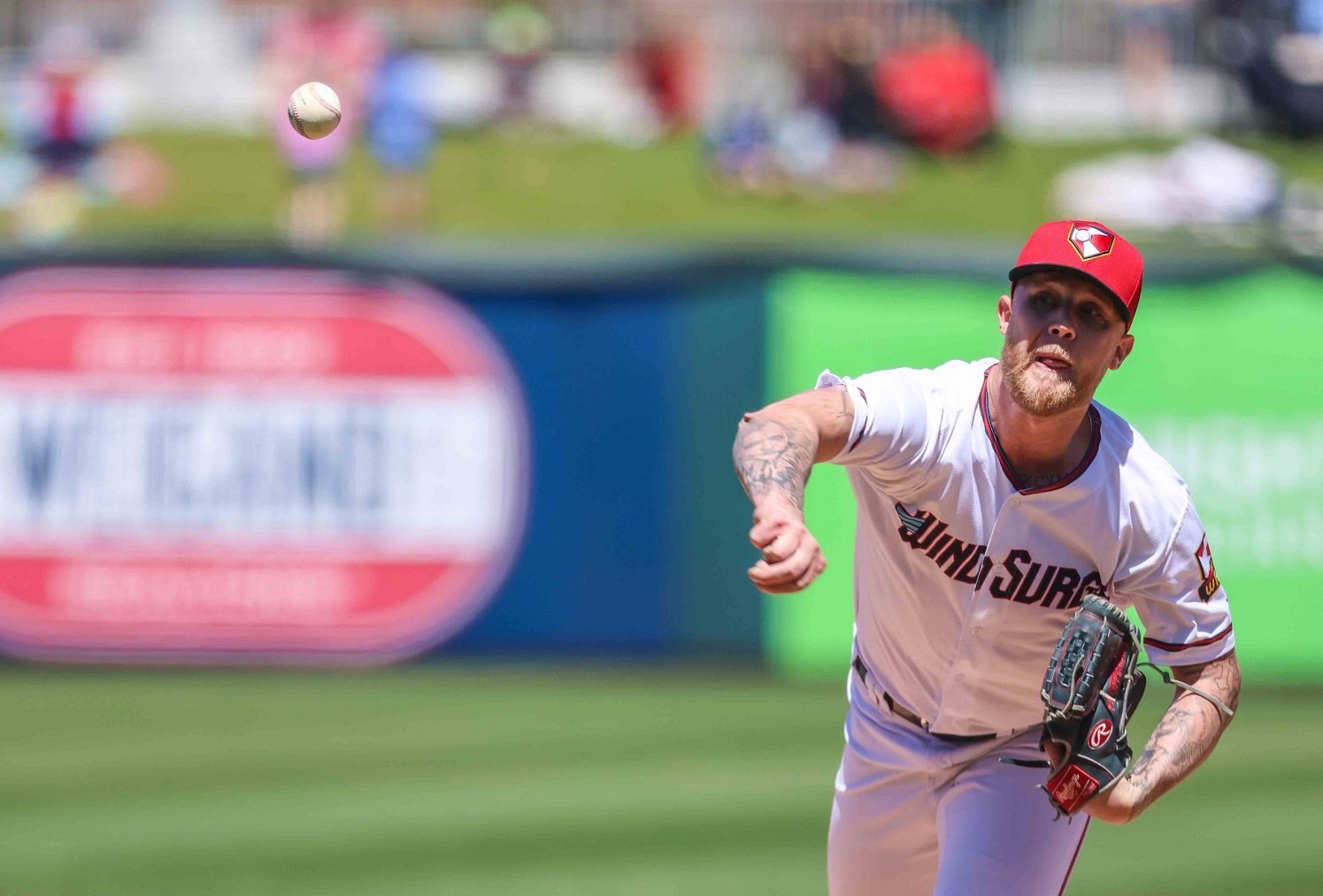 Even though we’re less than two months into the minor league season, we’re getting to the point where sample sizes for prospects start to require more serious discussion in terms of what comes next. Whether the organization decides to reward them with a promotion to the game’s next level is very much up in the air. But at the very least, the players are getting the attention of the Twins’ top-brass. Here are three players that should be in the conversation when the time comes to adjust the competition level. Pierson Ohl (High-A Cedar Rapids Kernels) After being drafted in the 14th-round of the 2021 draft, Ohl made only one appearance for the Florida complex league. But before that, he was a three-year starter for Grand Canyon University, where he started a total of 35 games. He had a career ERA of 2.99 in college, and while he didn’t get the fanfare of some other college arms in that draft class, he showed some strengths that led him to a professional career. In his final collegiate season, Ohl threw just over 100 innings of 2.60 ERA ball and averaged just over a strikeout per inning. Baseball America liked his plus-changeup and usable curveball, saying he was “the textbook example of a pitcher thriving on pitchability to compensate for a below-average fastball.” Without the comfort of a big heater, Ohl had to develop his off-speed as a swing-and-miss offering. He’s always been a pitcher with strong control, averaging just 1.3 walks per nine innings at GCU. That has carried over to professional ball, and has even reached new heights in his second year with the Twins Organization (0.69 BB/9). All in all, Ohl has a 2.77 ERA with a 25% strikeout rate and just two walks in the season’s first month. Yes, that’s a small sample, but players with three or more seasons at the collegiate level under their belts tend to progress quickly – or not at all. If Ohl keeps pitching like he has thus far, a promotion to Double-A Wichita is a reasonable jump since he’s going to turn 24-years-old later this summer. Blayne Enlow (Double-A Wichita Wind Surge) There was much ballyhoo in January when the Twins placed Enlow on outright waivers. He was the odd man out when the club needed to make room on the 40-man roster for the newly-acquired Oliver Ortega. The logic behind the decision was sound, as the team needed to bring in some competition for their bullpen spots, and Enlow was still easing back into his development after undergoing Tommy John surgery in 2021. He had become somewhat of an afterthought on the depth chart, but many were still disappointed to see him cut from the roster. After all, he was drafted in the third round of the 2017 draft and was touted as a first-round talent that only slipped due to signability concerns. The Twins were able to give him an over-slot offer after saving some funds by taking Royce Lewis first overall. They liked Enlow for his lethal curveball and his big-league starter upside coming out of high school. Now in 2023, he’s starting to show flashes of that potential in the upper-minors. Through seven starts with Double-A Wichita, the 24-year-old right-hander has a solid 3.28 ERA, but he’s striking out 31.8% of opponents and limiting his walks back to the levels he was showing pre-surgery. He had a rough go results-wise upon returning to the hill last season, especially when it came to control (11.6% walk rate), so it’s nice to see him button this up so far in 2023 with just a 6.8% walk rate. Now that more time has passed since his procedure, he’s showing why fans were worried about another team claiming him when he was outrighted. He’s benefitted from adding a pitch to his repertoire – something he has in common with a handful of arms on the Twins’ staff. “Like several other Twins pitchers, he’s added a sweeper to the mix this year, giving him five usable offerings and some potential for untapped upside as he gets more comfortable with it,” Aaron Gleeman said in a recent piece for The Athletic. “Durability and consistency will be key, but Enlow is still young enough to get back on the prospect map.” Jordan Balazovic (Triple-A St. Paul Saints) The former fifth-round pick in the 2016 draft has lost some of his luster since being a back-end Top 100 prospect a few years ago. He battled various injuries, most notably a left knee injury that affected his delivery for much of last season. He was then sidelined for the first few weeks of spring training after breaking his jaw in an off-field incident. It was a real punch to the face for the 24-year-old, both figuratively and literally. But Balazovic has found a way to put the past behind him, and has had an impressive first month at Triple-A with the Saints. On the year, he has a 2.89 ERA across 18 ⅔ innings pitched. He has made eight appearances (three starts), and seems to be the ideal candidate for the Twins’ desire to find a crop of arms to be bulk relievers. If all goes well, he’ll get a promotion to the major league club as a low-leverage reliever that can sop up innings if a starter departs early, or if the score gets out of reach for either team. And by all accounts, all is going well so far for Balazovic. His strikeout numbers are strong (12.5 K/9) thanks to a very strong 14.6% swinging-strike rate, and he’s only allowed one home run, which was his biggest crux in 2022 when he allowed 20 bombs. Scouts praise his curveball as his best offering, and his splitter draws solid marks, as well. If he can limit the damage done against his fastball, he’ll take the next step as an MLB-ready arm entering the prime seasons of his career. What do you think? Are we going to see any of these three at the next level in 2023? Who else has impressed you enough to deserve a promotion? Let us know what you think in the comment section below.
- 7 comments
-
- 6
-
-
- pierson ohl
- blayne enlow
- (and 1 more)
-
In just over a month’s worth of minor league games, some pitchers are starting to stand out. Here are three arms, one from each level, that have impressed so far in 2023. If they keep it up for much longer, they could be pressing for a promotion in the near-future. Image courtesy of Ed Bailey, Wichita Wind Surge In just over a month’s worth of minor league games, some pitchers are starting to stand out. Here are three arms, one from each level, that have impressed so far in 2023. If they keep it up for much longer, they could be pressing for a promotion in the near-future. Even though we’re less than two months into the minor league season, we’re getting to the point where sample sizes for prospects start to require more serious discussion in terms of what comes next. Whether the organization decides to reward them with a promotion to the game’s next level is very much up in the air. But at the very least, the players are getting the attention of the Twins’ top-brass. Here are three players that should be in the conversation when the time comes to adjust the competition level. Pierson Ohl (High-A Cedar Rapids Kernels) After being drafted in the 14th-round of the 2021 draft, Ohl made only one appearance for the Florida complex league. But before that, he was a three-year starter for Grand Canyon University, where he started a total of 35 games. He had a career ERA of 2.99 in college, and while he didn’t get the fanfare of some other college arms in that draft class, he showed some strengths that led him to a professional career. In his final collegiate season, Ohl threw just over 100 innings of 2.60 ERA ball and averaged just over a strikeout per inning. Baseball America liked his plus-changeup and usable curveball, saying he was “the textbook example of a pitcher thriving on pitchability to compensate for a below-average fastball.” Without the comfort of a big heater, Ohl had to develop his off-speed as a swing-and-miss offering. He’s always been a pitcher with strong control, averaging just 1.3 walks per nine innings at GCU. That has carried over to professional ball, and has even reached new heights in his second year with the Twins Organization (0.69 BB/9). All in all, Ohl has a 2.77 ERA with a 25% strikeout rate and just two walks in the season’s first month. Yes, that’s a small sample, but players with three or more seasons at the collegiate level under their belts tend to progress quickly – or not at all. If Ohl keeps pitching like he has thus far, a promotion to Double-A Wichita is a reasonable jump since he’s going to turn 24-years-old later this summer. Blayne Enlow (Double-A Wichita Wind Surge) There was much ballyhoo in January when the Twins placed Enlow on outright waivers. He was the odd man out when the club needed to make room on the 40-man roster for the newly-acquired Oliver Ortega. The logic behind the decision was sound, as the team needed to bring in some competition for their bullpen spots, and Enlow was still easing back into his development after undergoing Tommy John surgery in 2021. He had become somewhat of an afterthought on the depth chart, but many were still disappointed to see him cut from the roster. After all, he was drafted in the third round of the 2017 draft and was touted as a first-round talent that only slipped due to signability concerns. The Twins were able to give him an over-slot offer after saving some funds by taking Royce Lewis first overall. They liked Enlow for his lethal curveball and his big-league starter upside coming out of high school. Now in 2023, he’s starting to show flashes of that potential in the upper-minors. Through seven starts with Double-A Wichita, the 24-year-old right-hander has a solid 3.28 ERA, but he’s striking out 31.8% of opponents and limiting his walks back to the levels he was showing pre-surgery. He had a rough go results-wise upon returning to the hill last season, especially when it came to control (11.6% walk rate), so it’s nice to see him button this up so far in 2023 with just a 6.8% walk rate. Now that more time has passed since his procedure, he’s showing why fans were worried about another team claiming him when he was outrighted. He’s benefitted from adding a pitch to his repertoire – something he has in common with a handful of arms on the Twins’ staff. “Like several other Twins pitchers, he’s added a sweeper to the mix this year, giving him five usable offerings and some potential for untapped upside as he gets more comfortable with it,” Aaron Gleeman said in a recent piece for The Athletic. “Durability and consistency will be key, but Enlow is still young enough to get back on the prospect map.” Jordan Balazovic (Triple-A St. Paul Saints) The former fifth-round pick in the 2016 draft has lost some of his luster since being a back-end Top 100 prospect a few years ago. He battled various injuries, most notably a left knee injury that affected his delivery for much of last season. He was then sidelined for the first few weeks of spring training after breaking his jaw in an off-field incident. It was a real punch to the face for the 24-year-old, both figuratively and literally. But Balazovic has found a way to put the past behind him, and has had an impressive first month at Triple-A with the Saints. On the year, he has a 2.89 ERA across 18 ⅔ innings pitched. He has made eight appearances (three starts), and seems to be the ideal candidate for the Twins’ desire to find a crop of arms to be bulk relievers. If all goes well, he’ll get a promotion to the major league club as a low-leverage reliever that can sop up innings if a starter departs early, or if the score gets out of reach for either team. And by all accounts, all is going well so far for Balazovic. His strikeout numbers are strong (12.5 K/9) thanks to a very strong 14.6% swinging-strike rate, and he’s only allowed one home run, which was his biggest crux in 2022 when he allowed 20 bombs. Scouts praise his curveball as his best offering, and his splitter draws solid marks, as well. If he can limit the damage done against his fastball, he’ll take the next step as an MLB-ready arm entering the prime seasons of his career. What do you think? Are we going to see any of these three at the next level in 2023? Who else has impressed you enough to deserve a promotion? Let us know what you think in the comment section below. View full article
- 7 replies
-
- 1
-
-
- pierson ohl
- blayne enlow
- (and 1 more)
-
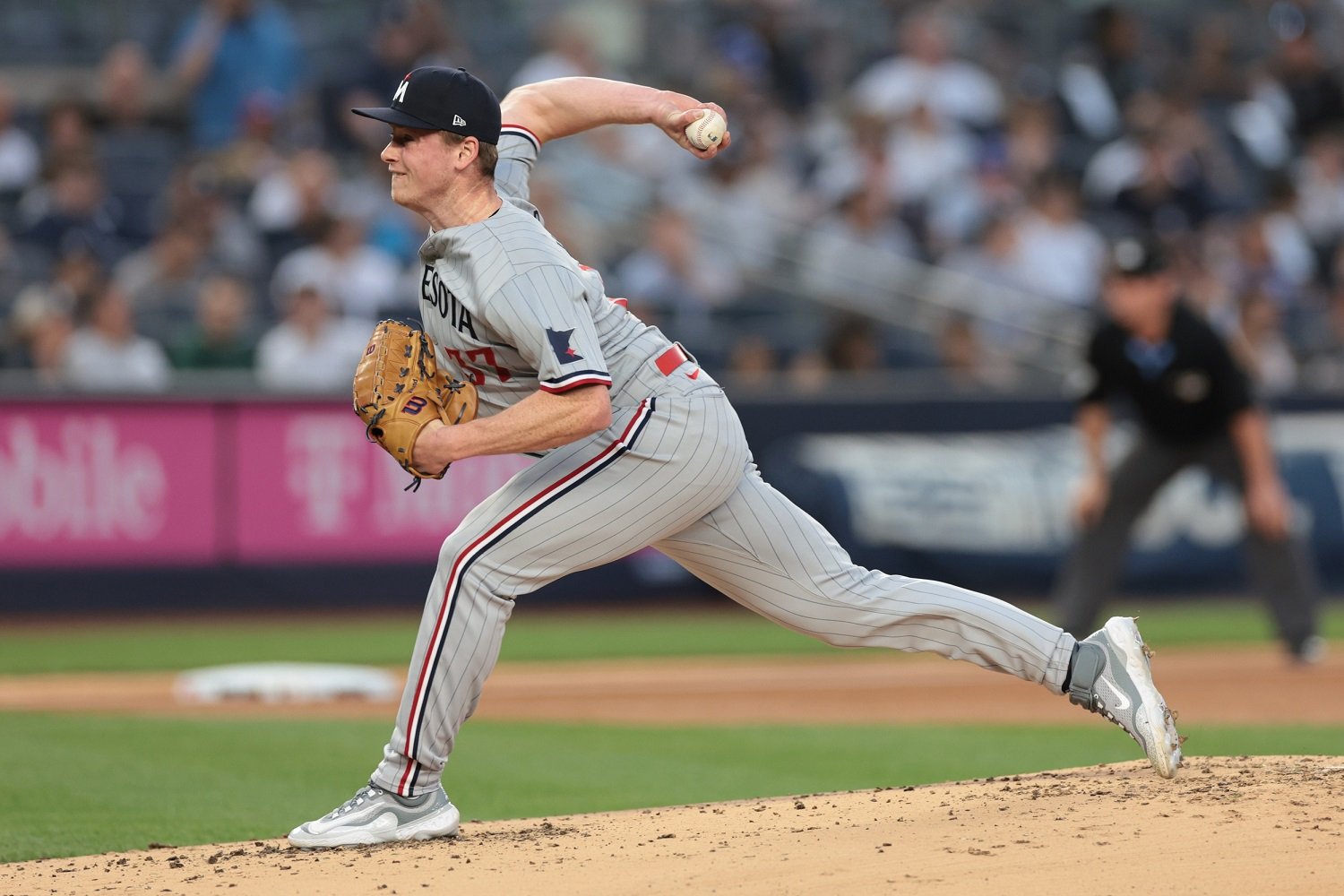 Louie Varland didn’t spend the offseason planning for an easy ride to MLB stardom. He didn’t head to the Dominican Republic or Mexico to play winter ball. He didn’t hang around with an entire entourage of MLB players (aside from his brother Gus Varland , who is currently rehabbing in Triple-A for the Milwaukee Brewers). Instead, he mixed in his off-season workouts around a side hustle working for the man. More specifically, he worked for his old man, Wade, who owns Varland drywall. Surely, plastering drywall didn’t have some magical effect on his pitches, their individual intricacies and his execution of each offering. But those pitches in his repertoire are already off to a great start for the 25-year-old. They even share some key characteristics with a certain surefire future member of the Hall of Fame. So what has made Varland Drywall’s ace effective so far in his young career, and what can he patch up if he wants to reach his ceiling? One of the young right-hander’s biggest areas of growth over the last few seasons has been his fastball, especially in terms of adding velocity. He topped out at 88-89 mph while pitching for Concordia University, St. Paul, but has already ramped all the way up to averaging 95.7 mph on his heater in 2023. In his game this week against the Padres, he hit 99 mph. On its own, that velocity is solid, if unspectacular (45th percentile). But Varland’s fastball also boasts above-average spin, creating more deception for opposing hitters. So far, his four-seamer has resulted in a 26.1% whiff rate in his three starts, which is above the league average over the last two years (22.3%). He works quickly, using that fastball early in counts so that he can set the table for his strong secondary offerings. His changeup has had more swinging-misses than any of the other options in his repertoire (43.5% whiff rate), but he’s limited damage with his high-spin cutter (.267 opponent slugging percentage). On top of that, he has a plus slider that he’s used less often in 2023, but was his most effective offering in 2022. Look for him to start using it more as the season progresses and the league adjusts to him as a more permanent fixture in the Twins’ rotation for the time being. Interestingly enough, Varland’s pitches have a high similarity score to those in Max Scherzer’s 2022 repertoire in terms of velocity and movement according to Baseball Savant. Granted, this doesn’t mean that he’s bound to follow in the steps of a three-time Cy Young award winner. But it’s encouraging to see that his raw stuff bears a resemblance to a frontline starter in a season where he had a 2.29 ERA and struck out 30.6% of opponents faced. In order to have a performance in the same realm as Scherzer had when he was healthy last year, Varland is going to have to find a way to limit the damage on that same fastball that has developed into a mid-to-upper nineties weapon. While its growth has been impressive, it still gets knocked around a decent amount. It’s not uncommon to have a higher expected slugging percentage on fastballs, but Varland’s .690 mark in that regard is not sustainable for how essential it is when it comes to setting up the rest of the at-bat. This can be seen in the fact that he currently finds himself below average when it comes to barrel percentage (9th percentile) and average exit velocity (41st percentile). When hitters get a hold of one, it gets plastered, and not in the way that Varland is familiar with. With veterans Tyler Mahle and Kenta Maeda out for the foreseeable future, Varland is going to have an extended opportunity to hone his craft at the game’s highest level on the fly. Like he did with his dad in the offseason, he’ll have success by hitting the corners, working quickly and paving over the cracks that are presented to him. What do you think? Have you been encouraged by the North St. Paul product? What are reasonable expectations for Varland going forward? Let us know what you think in the comment section below.
 -
Louie Varland didn’t make the Opening Day rotation out of spring training, but he is every bit as vital to the team’s plans as the five pitchers that did. With such a small sample for his MLB career, it’s unreasonable to deem him as a star at this point. But he’s shown an interesting pitch mix that compares him to one of the best arms in the game. So what’s next for the pride of North St. Paul now that he has a more permanent spot in the starting five? Image courtesy of Vincent Carchietta-USA TODAY Sports Louie Varland didn’t make the Opening Day rotation out of spring training, but he is every bit as vital to the team’s plans as the five pitchers that did. With such a small sample for his MLB career, it’s unreasonable to deem him as a star at this point. But he’s shown an interesting pitch mix that compares him to one of the best arms in the game. So what’s next for the pride of North St. Paul now that he has a more permanent spot in the starting five? Louie Varland didn’t spend the offseason planning for an easy ride to MLB stardom. He didn’t head to the Dominican Republic or Mexico to play winter ball. He didn’t hang around with an entire entourage of MLB players (aside from his brother Gus Varland , who is currently rehabbing in Triple-A for the Milwaukee Brewers). Instead, he mixed in his off-season workouts around a side hustle working for the man. More specifically, he worked for his old man, Wade, who owns Varland drywall. Surely, plastering drywall didn’t have some magical effect on his pitches, their individual intricacies and his execution of each offering. But those pitches in his repertoire are already off to a great start for the 25-year-old. They even share some key characteristics with a certain surefire future member of the Hall of Fame. So what has made Varland Drywall’s ace effective so far in his young career, and what can he patch up if he wants to reach his ceiling? One of the young right-hander’s biggest areas of growth over the last few seasons has been his fastball, especially in terms of adding velocity. He topped out at 88-89 mph while pitching for Concordia University, St. Paul, but has already ramped all the way up to averaging 95.7 mph on his heater in 2023. In his game this week against the Padres, he hit 99 mph. On its own, that velocity is solid, if unspectacular (45th percentile). But Varland’s fastball also boasts above-average spin, creating more deception for opposing hitters. So far, his four-seamer has resulted in a 26.1% whiff rate in his three starts, which is above the league average over the last two years (22.3%). He works quickly, using that fastball early in counts so that he can set the table for his strong secondary offerings. His changeup has had more swinging-misses than any of the other options in his repertoire (43.5% whiff rate), but he’s limited damage with his high-spin cutter (.267 opponent slugging percentage). On top of that, he has a plus slider that he’s used less often in 2023, but was his most effective offering in 2022. Look for him to start using it more as the season progresses and the league adjusts to him as a more permanent fixture in the Twins’ rotation for the time being. Interestingly enough, Varland’s pitches have a high similarity score to those in Max Scherzer’s 2022 repertoire in terms of velocity and movement according to Baseball Savant. Granted, this doesn’t mean that he’s bound to follow in the steps of a three-time Cy Young award winner. But it’s encouraging to see that his raw stuff bears a resemblance to a frontline starter in a season where he had a 2.29 ERA and struck out 30.6% of opponents faced. In order to have a performance in the same realm as Scherzer had when he was healthy last year, Varland is going to have to find a way to limit the damage on that same fastball that has developed into a mid-to-upper nineties weapon. While its growth has been impressive, it still gets knocked around a decent amount. It’s not uncommon to have a higher expected slugging percentage on fastballs, but Varland’s .690 mark in that regard is not sustainable for how essential it is when it comes to setting up the rest of the at-bat. This can be seen in the fact that he currently finds himself below average when it comes to barrel percentage (9th percentile) and average exit velocity (41st percentile). When hitters get a hold of one, it gets plastered, and not in the way that Varland is familiar with. With veterans Tyler Mahle and Kenta Maeda out for the foreseeable future, Varland is going to have an extended opportunity to hone his craft at the game’s highest level on the fly. Like he did with his dad in the offseason, he’ll have success by hitting the corners, working quickly and paving over the cracks that are presented to him. What do you think? Have you been encouraged by the North St. Paul product? What are reasonable expectations for Varland going forward? Let us know what you think in the comment section below. View full article
-
Oops! Missed the mark on that one. My mistake.
-
The Twins got the Top Gun out of Air Force Academy when they selected Griffin Jax in the third round of the 2016 MLB draft. Since then, his career has taken some evasive action, including a move to full-time relief duties. His stuff is there, he’s trusted by his manager and he’s in the prime of his career. What’s next for Captain Jax? Image courtesy of Baseball Savant The Twins got the Top Gun out of Air Force Academy when they selected Griffin Jax in the third round of the 2016 MLB draft. Since then, his career has taken some evasive action, including a move to full-time relief duties. His stuff is there, he’s trusted by his manager and he’s in the prime of his career. What’s next for Captain Jax? From becoming the first player out of Air Force Academy in MLB history, to debuting as a mid-level starting pitcher prospect in 2021, to locking down high-leverage situations out of the Twins’ bullpen, Griffin Jax has gone through more turns than an F-22 Raptor aircraft. Now, manager Rocco Baldelli has entrusted him to be a late-inning, shutdown relief weapon. If you were to only look at his ERA as the true indicator of his value, you’d be somewhat underwhelmed by his results this year. But if you look at nearly any other figure in his stat line, it’s clear that Jax has the stuff to be a Top Gun in the Twins’ bullpen for the foreseeable future. Let’s be perfectly clear, nobody should be making any declarations about a 28-year-old pitcher based on a good-not-great ERA after the first month of a season. His 3.86 ERA would be totally welcome, if not celebrated by virtually every ball club. But some Twins fans aren’t quite as sold on Jax, and a lot of that probably stems from the three lone blemishes on his game log. He’s only given up earned runs in four of his 15 appearances, but the modest level of competition in that quad of games seemed to magnify their relevance. He coughed up two earned runs to the Miami Marlins in the first week of the season, gave up two runs to the Washington Nationals on April 21st, was responsible for the game-tying run in the lone loss to the Kansas City Royals last Saturday, and gave up the go-ahead run in Wednesday's loss to the Chicago White Sox. Those are four teams that are now projected to be well-below average when all is said and done in 2023, which unjustly caused many raised eyebrows when Jax didn’t mow them down. But even the best relievers give up runs every now and then, sometimes due to just having an off-day and sometimes it’s just bad luck. For Jax this year, the argument can be made that it’s mostly been the latter. His strikeouts are as high as they’ve ever been (10.4 K/9), his walk rate is the lowest of his career (5.7%) and he is among the best in the league when it comes to inducing soft contact. Just look at all of the stellar marks in his Baseball Savant profile. Not only are his batted-ball numbers quite strong, even elite in some regards, but they suggest that the hits he’s given up in his hiccup games are softer than they came across in the box score. Perhaps his performance is better represented by his Fielding Independent Pitching, which is worlds better than his ERA (1.75 FIP). His .257 Batting Average of Balls In Play (BABIP) is dead-on when compared to his career rate, and his opponents’ lack of ability to land a hit off of him is laughable (.180 batting average against). So when teams like the Nationals or the Royals score off of him in highly-improbable ways, it’s hard to knock the guy. Maybe it’s bad luck, maybe Jax broke the unwritten law that a righty reliever should never throw two changeups in a row to a right-handed hitter, or maybe we’re talking about a comically small sample size. Either way, Jax doesn’t deserve much haste when looking at his season to this point. If he can keep playing to his strengths, his modest surface numbers will catch up to his peripherals. Notably, his strengths are plentiful. Jax has been lethal against left-handed hitters (.083 on-base percentage, best in MLB according to Inside Edge), opponents have a 38% chase rate against him (15th-best in MLB) and he’s allowed just a .105 slugging percentage on his slider (7th-best). So there’s plenty to like with the former Air Force Academy Falcon, and the light turbulence that fans have experienced is worth it in the grand scheme of things. If he stays on the flight plan that he’s currently using, projections suggest Jax could be as successful as a Tom Cruise blockbuster. What do you think? Is Jax bound for a breakout? What do you think he needs to do to be the Top Gun in the Twins’ bullpen? Let us know your thoughts in the comment section below. View full article
-
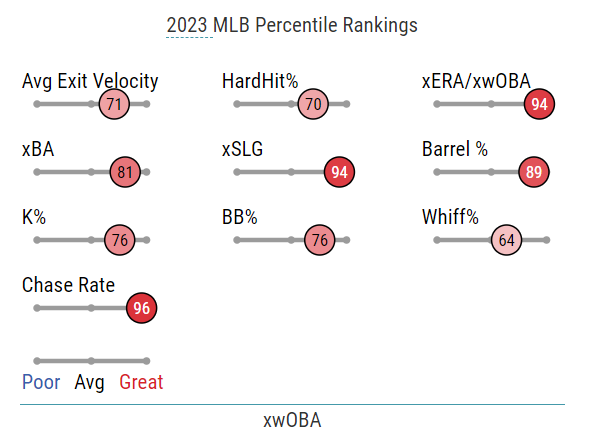 From becoming the first player out of Air Force Academy in MLB history, to debuting as a mid-level starting pitcher prospect in 2021, to locking down high-leverage situations out of the Twins’ bullpen, Griffin Jax has gone through more turns than an F-22 Raptor aircraft. Now, manager Rocco Baldelli has entrusted him to be a late-inning, shutdown relief weapon. If you were to only look at his ERA as the true indicator of his value, you’d be somewhat underwhelmed by his results this year. But if you look at nearly any other figure in his stat line, it’s clear that Jax has the stuff to be a Top Gun in the Twins’ bullpen for the foreseeable future. Let’s be perfectly clear, nobody should be making any declarations about a 28-year-old pitcher based on a good-not-great ERA after the first month of a season. His 3.86 ERA would be totally welcome, if not celebrated by virtually every ball club. But some Twins fans aren’t quite as sold on Jax, and a lot of that probably stems from the three lone blemishes on his game log. He’s only given up earned runs in four of his 15 appearances, but the modest level of competition in that quad of games seemed to magnify their relevance. He coughed up two earned runs to the Miami Marlins in the first week of the season, gave up two runs to the Washington Nationals on April 21st, was responsible for the game-tying run in the lone loss to the Kansas City Royals last Saturday, and gave up the go-ahead run in Wednesday's loss to the Chicago White Sox. Those are four teams that are now projected to be well-below average when all is said and done in 2023, which unjustly caused many raised eyebrows when Jax didn’t mow them down. But even the best relievers give up runs every now and then, sometimes due to just having an off-day and sometimes it’s just bad luck. For Jax this year, the argument can be made that it’s mostly been the latter. His strikeouts are as high as they’ve ever been (10.4 K/9), his walk rate is the lowest of his career (5.7%) and he is among the best in the league when it comes to inducing soft contact. Just look at all of the stellar marks in his Baseball Savant profile. Not only are his batted-ball numbers quite strong, even elite in some regards, but they suggest that the hits he’s given up in his hiccup games are softer than they came across in the box score. Perhaps his performance is better represented by his Fielding Independent Pitching, which is worlds better than his ERA (1.75 FIP). His .257 Batting Average of Balls In Play (BABIP) is dead-on when compared to his career rate, and his opponents’ lack of ability to land a hit off of him is laughable (.180 batting average against). So when teams like the Nationals or the Royals score off of him in highly-improbable ways, it’s hard to knock the guy. Maybe it’s bad luck, maybe Jax broke the unwritten law that a righty reliever should never throw two changeups in a row to a right-handed hitter, or maybe we’re talking about a comically small sample size. Either way, Jax doesn’t deserve much haste when looking at his season to this point. If he can keep playing to his strengths, his modest surface numbers will catch up to his peripherals. Notably, his strengths are plentiful. Jax has been lethal against left-handed hitters (.083 on-base percentage, best in MLB according to Inside Edge), opponents have a 38% chase rate against him (15th-best in MLB) and he’s allowed just a .105 slugging percentage on his slider (7th-best). So there’s plenty to like with the former Air Force Academy Falcon, and the light turbulence that fans have experienced is worth it in the grand scheme of things. If he stays on the flight plan that he’s currently using, projections suggest Jax could be as successful as a Tom Cruise blockbuster. What do you think? Is Jax bound for a breakout? What do you think he needs to do to be the Top Gun in the Twins’ bullpen? Let us know your thoughts in the comment section below.
 -
I certainly don't mean to make it sound like Kepler should be run out of town. Like I said, he's been quite solid since coming back from the IL. The point is that he's going to leave this party eventually, even if it isn't in the near future. The product is still totally usable right now, but he's playing with an expiration date that guys like Larnach, Kirilloff and other young players don't have at the moment.
-
Max Kepler has been a solid contributor for the Twins since he became a regular in 2016. He’s even contributing right now. But it’s starting to feel like we’re watching him get the dreaded, drawn-out Minnesota Goodbye. Image courtesy of Bruce Kluckhohn-USA TODAY Sports Max Kepler has been a solid contributor for the Twins since he became a regular in 2016. He’s even contributing right now. But it’s starting to feel like we’re watching him get the dreaded, drawn-out Minnesota Goodbye. Everyone from Ada to Zumbrota has experienced this phenomenon. As a party or family get-together is starting to wind down, some guests will plant their hands on their knees demonstrably. They’ll make sure to say a key phrase out loud to nobody in particular. “Welp, it’s gettin’ to be that time.” “Better hit the ol’ dusty trail.” “Well, dear? Whadya say?” They’ll make their way towards the door, but they will inevitably find themselves unable to actually leave. They start new conversations, get into forgotten stories and exchange pleasantries in an accent that is so quintessentially midwestern that it would make the Coen brothers blush. Minnesotans know the script. After all, it’s their namesake send-off. It’s the notorious Minnesota Goodbye. And right now, it feels like the Twins are playing the part of gracious host, with Max Kepler being their treasured guest who just will not leave. Make no mistake, it’s not like Kepler is being kicked out of the party. The Twins seem happy to give him plenty of playing time as an everyday player based on various factors, from his defensive prowess to a team-wide slow start offensively. And it’s not unreasonable to expect him to bring some value to the table. Since returning from the injured list, his bat has reignited and his defense has been as charming as ever. Kepler was invited to the party for a reason. He’s accrued at least two wins above replacement in six of the last seven seasons, with the lone outlier being the pandemic-shortened 2020 campaign. But everyone has to leave the party eventually, and for the Twins and Max, it feels like they’ve had a few opportunities to bid adieu already. This past off-season was a perfect opportunity for a clean break. The outfielder still had plenty of value to likely suitors who were looking for a high-floor option at a reasonable cost, and the Twins had a small army of left-handed hitting outfielders that could slide into his seat at the table. The club’s signing of Joey Gallo felt like a telling sign that Kepler would be leaving the party. But as it turned out, that was more like Kepler making his way toward the coat rack, only to be reminded that he and his hosts had more to talk about. He continues to hang around the party at Target Field thanks to his strong marks when it comes to whiff rate (86th percentile), strikeout percentage (74th percentile) and barrel percentage (69th percentile). Those are all great features, and represent the good that Kepler can provide. And the Twins will gladly take that for what it’s worth. But there are other factors, both in terms of Kepler’s faults and the circumstances that surround the club’s current depth chart, that require the Twins’ attention. Since his brilliant 2019 season where he put up a robust .252/.336/.519 clip (122 wRC+), Kepler has maintained mediocre, unexciting numbers. He sports a .220/.312/.393 batting line in that time frame, which is just under league average. While the defensive shift limitations might gift him a few extra hits on ground balls, he’s settled into being a defense-first player with a diminishing walk rate and a newfound, crucial inability to perform outside of low-leverage situations this season (.574 OPS in medium-leverage, .452 OPS in high-leverage). The team’s perceived depth continues to improve, with Jorge Polanco already back to with the big league club, Alex Kirilloff knocking on the door of a triumphant return and youngsters such as Royce Lewis, Edouard Julien and possibly Brooks Lee all tabbed to find their way to Target Field at some point this season. As each of these future contributors get planted into a role with the Twins, it will be harder to make time for Kepler. That’s partly by design, too. As many Minnesota sports fans know, you can never bank on the promise of top prospects making an immediate impact upon their call up. But you can account for them needing substantial playing time so that the club can take stock in what they have. Maybe that’s the idea behind Kepler’s contract that included multiple affordable option years at the back end. It gives the team flexibility when it’s time to part ways. But those options also have an unintended consequence of creating the situation that the Twins and Kepler find themselves in today. The club still likes their speedy outfielder, and I’m sure they’re really happy that he was one of their treasured guests at this shindig. Minnesota’s favorite son, Prince, painted a perfect picture for this situation with one of his most iconic lines. Life is just a party, and parties weren’t meant to last. It might not happen at this very moment, this week, this month, or even this season, but Kepler’s farewell is inevitable. He’s taking his sweet time as he and the Twins scoot towards the door, exchanging pleasantries for the umpteenth time. Make no mistake, the gracious hosts are giving plenty of attention to their continually-departing friend, but they also have an eye on the clock as they passively push him toward the dusty trail. What do you think? When do you see Kepler’s time with the Twins ending? Let us know how you feel in the comment section below. View full article
-
It Feels Like the Twins and Max Kepler Are Stuck in a "Minnesota Goodbye"
Lou Hennessy posted an article in Twins
 Everyone from Ada to Zumbrota has experienced this phenomenon. As a party or family get-together is starting to wind down, some guests will plant their hands on their knees demonstrably. They’ll make sure to say a key phrase out loud to nobody in particular. “Welp, it’s gettin’ to be that time.” “Better hit the ol’ dusty trail.” “Well, dear? Whadya say?” They’ll make their way towards the door, but they will inevitably find themselves unable to actually leave. They start new conversations, get into forgotten stories and exchange pleasantries in an accent that is so quintessentially midwestern that it would make the Coen brothers blush. Minnesotans know the script. After all, it’s their namesake send-off. It’s the notorious Minnesota Goodbye. And right now, it feels like the Twins are playing the part of gracious host, with Max Kepler being their treasured guest who just will not leave. Make no mistake, it’s not like Kepler is being kicked out of the party. The Twins seem happy to give him plenty of playing time as an everyday player based on various factors, from his defensive prowess to a team-wide slow start offensively. And it’s not unreasonable to expect him to bring some value to the table. Since returning from the injured list, his bat has reignited and his defense has been as charming as ever. Kepler was invited to the party for a reason. He’s accrued at least two wins above replacement in six of the last seven seasons, with the lone outlier being the pandemic-shortened 2020 campaign. But everyone has to leave the party eventually, and for the Twins and Max, it feels like they’ve had a few opportunities to bid adieu already. This past off-season was a perfect opportunity for a clean break. The outfielder still had plenty of value to likely suitors who were looking for a high-floor option at a reasonable cost, and the Twins had a small army of left-handed hitting outfielders that could slide into his seat at the table. The club’s signing of Joey Gallo felt like a telling sign that Kepler would be leaving the party. But as it turned out, that was more like Kepler making his way toward the coat rack, only to be reminded that he and his hosts had more to talk about. He continues to hang around the party at Target Field thanks to his strong marks when it comes to whiff rate (86th percentile), strikeout percentage (74th percentile) and barrel percentage (69th percentile). Those are all great features, and represent the good that Kepler can provide. And the Twins will gladly take that for what it’s worth. But there are other factors, both in terms of Kepler’s faults and the circumstances that surround the club’s current depth chart, that require the Twins’ attention. Since his brilliant 2019 season where he put up a robust .252/.336/.519 clip (122 wRC+), Kepler has maintained mediocre, unexciting numbers. He sports a .220/.312/.393 batting line in that time frame, which is just under league average. While the defensive shift limitations might gift him a few extra hits on ground balls, he’s settled into being a defense-first player with a diminishing walk rate and a newfound, crucial inability to perform outside of low-leverage situations this season (.574 OPS in medium-leverage, .452 OPS in high-leverage). The team’s perceived depth continues to improve, with Jorge Polanco already back to with the big league club, Alex Kirilloff knocking on the door of a triumphant return and youngsters such as Royce Lewis, Edouard Julien and possibly Brooks Lee all tabbed to find their way to Target Field at some point this season. As each of these future contributors get planted into a role with the Twins, it will be harder to make time for Kepler. That’s partly by design, too. As many Minnesota sports fans know, you can never bank on the promise of top prospects making an immediate impact upon their call up. But you can account for them needing substantial playing time so that the club can take stock in what they have. Maybe that’s the idea behind Kepler’s contract that included multiple affordable option years at the back end. It gives the team flexibility when it’s time to part ways. But those options also have an unintended consequence of creating the situation that the Twins and Kepler find themselves in today. The club still likes their speedy outfielder, and I’m sure they’re really happy that he was one of their treasured guests at this shindig. Minnesota’s favorite son, Prince, painted a perfect picture for this situation with one of his most iconic lines. Life is just a party, and parties weren’t meant to last. It might not happen at this very moment, this week, this month, or even this season, but Kepler’s farewell is inevitable. He’s taking his sweet time as he and the Twins scoot towards the door, exchanging pleasantries for the umpteenth time. Make no mistake, the gracious hosts are giving plenty of attention to their continually-departing friend, but they also have an eye on the clock as they passively push him toward the dusty trail. What do you think? When do you see Kepler’s time with the Twins ending? Let us know how you feel in the comment section below.
 -
Something New or Déjà Vu? Another Hot Start for the Twins' Rotation
Lou Hennessy posted an article in Twins
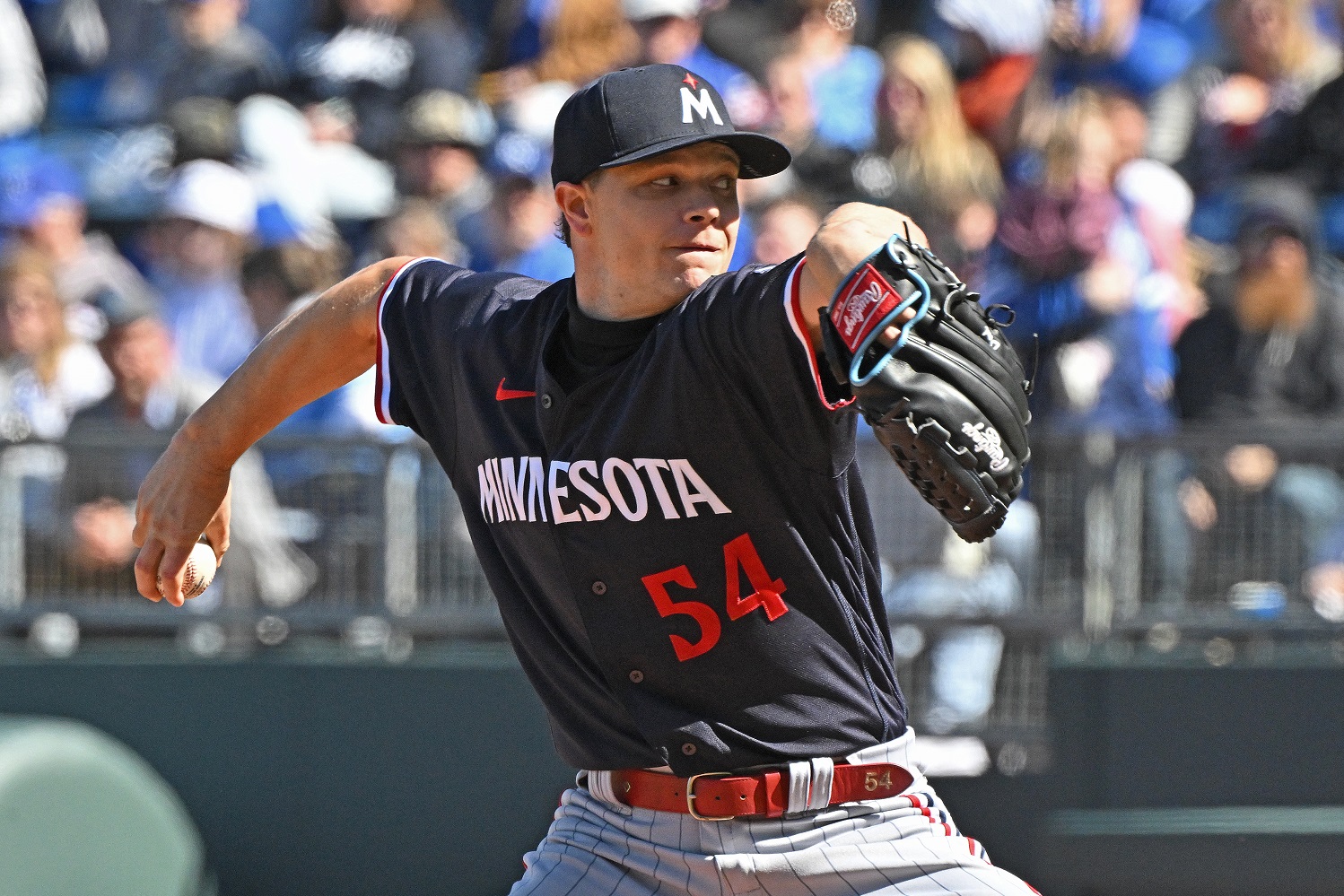 Going into the 2023 campaign, there was optimism that the Twins’ starting rotation would take a major step forward. Top to bottom, the group represented a breath of fresh air despite some health questions on the back end. The addition of Pablo Lopez at the top, along with the returns of Sonny Gray and Joe Ryan, had fans feeling optimistic that the club would find some consistency. There was also the added upside that Tyler Mahle and Kenta Maeda would return from their injuries of yesteryear and perform much closer to what the team expected when they acquired them. So far in this young season, that plan is coming together about as good as the club could have hoped. We’ve now seen a few trips through the rotation, and the starting staff has propelled the club to a competitive, hot start to the season. If that storyline sounds familiar to you, it’s for good reason. Just last year, the rotation was a major bright spot in April before coming apart at the seams as the season wore on. Does that mean fans should temper their excitement for this year’s class of starting pitchers? Or is there bound to be substantial regression to the mean? The answer is probably somewhere in between, but it’s interesting to look at the numbers from the first two times through the rotation in each year. There are a few key differences between the 2022 rotation and this year’s staff, namely the contrast in expectations surrounding the members of each group. For example, it’s not hard to expect better production from Lopez compared to Chris Archer. A healthy Mahle will surely outperform Dylan Bundy. Even this year’s version of Ryan has bigger expectations than he had a year ago. Expectations aside, the 2022 rotation looked strong through their first 10 games, igniting a spark of excitement for fans that have been begging for stronger pitching ever since baseball bloggers were buying Beanie Babies. In that short span, last year’s rotation had the second-best ERA in the league (2.96 ERA), the third-best walk rate (5.9%) and the fifth-highest rank when it came to runners left on base (75%). This year’s five starters also excelled in these areas through their first 10 games. They once again had the second-best ERA (2.62 ERA) and only trailed the Tampa Bay Rays, who are undefeated through their first 13 games. This year’s Twins rotation also ranked third-best in walk rate in their first two trips through the staff (6.2%) and they led the league in runners stranded on base (82.3%). Much of this improvement had to do with a massive increase in strikeouts. This increase has come from a better selection of put-away pitches, meaning a pitch selection once the count gets to two strikes. When the count gets to that point, the Twins have by far the best strikeout rate in all of baseball at 58% (league average is 42%). Maybe it's better execution, or the fact that each member of this year's staff seemingly came into the season with new pitches in their repertoire, but the fact remains that they have been far more lethal in put-away situations. Even in their hot start, last year’s rotation never showed that high-punch out power that the current group has displayed. In 2022, they started the season with a 20% strikeout percentage in the first 10 games (8th in the league), and stayed around that mark through the end of the year. This year’s club came out of the gate ready to rumble, mowing down opponents with a dazzling 31.4% strikeout rate in their first 10 games. That mark led the league. In hindsight, last year’s rotation success in the first 10 games ended up being a mirage. By the end of the season, their ERA dropped to ninth in the American League (4.11 ERA), their walk rate ballooned to tenth (6.9%) and they stopped leaving as many runners stranded (72 %, seventh in the league). The only rate that stayed relatively consistent was the mediocre strikeout totals, where they finished tenth in the league at 20.2%. Obviously there are a few different paths that this rotation can go down as the season progresses. If their strikeout numbers regress to the mean, it’s reasonable to expect the strand rate to start to balloon, and the staff ERA would likely follow suit. But if this group stays healthy and effective, especially when it comes to their high-punch out tendencies, they could remain at or close to the top of the leaderboard when it comes to these figures. And that would be a major breath of fresh air. What do you think? Is this year’s rotation bound for considerable regression? Or have they finally found a staff that can lead a contending team?
- 18 comments
-
- 5
-
-
- sonny gray
- tyler mahle
- (and 3 more)
-
The Twins rotation has been mighty impressive through the first few weeks of the season. But we said something similar last year. Here’s why this year’s hot start is different, and what fans should expect going forward. Image courtesy of Peter Aiken-USA TODAY Sports The Twins rotation has been mighty impressive through the first few weeks of the season. But we said something similar last year. Here’s why this year’s hot start is different, and what fans should expect going forward. Going into the 2023 campaign, there was optimism that the Twins’ starting rotation would take a major step forward. Top to bottom, the group represented a breath of fresh air despite some health questions on the back end. The addition of Pablo Lopez at the top, along with the returns of Sonny Gray and Joe Ryan, had fans feeling optimistic that the club would find some consistency. There was also the added upside that Tyler Mahle and Kenta Maeda would return from their injuries of yesteryear and perform much closer to what the team expected when they acquired them. So far in this young season, that plan is coming together about as good as the club could have hoped. We’ve now seen a few trips through the rotation, and the starting staff has propelled the club to a competitive, hot start to the season. If that storyline sounds familiar to you, it’s for good reason. Just last year, the rotation was a major bright spot in April before coming apart at the seams as the season wore on. Does that mean fans should temper their excitement for this year’s class of starting pitchers? Or is there bound to be substantial regression to the mean? The answer is probably somewhere in between, but it’s interesting to look at the numbers from the first two times through the rotation in each year. There are a few key differences between the 2022 rotation and this year’s staff, namely the contrast in expectations surrounding the members of each group. For example, it’s not hard to expect better production from Lopez compared to Chris Archer. A healthy Mahle will surely outperform Dylan Bundy. Even this year’s version of Ryan has bigger expectations than he had a year ago. Expectations aside, the 2022 rotation looked strong through their first 10 games, igniting a spark of excitement for fans that have been begging for stronger pitching ever since baseball bloggers were buying Beanie Babies. In that short span, last year’s rotation had the second-best ERA in the league (2.96 ERA), the third-best walk rate (5.9%) and the fifth-highest rank when it came to runners left on base (75%). This year’s five starters also excelled in these areas through their first 10 games. They once again had the second-best ERA (2.62 ERA) and only trailed the Tampa Bay Rays, who are undefeated through their first 13 games. This year’s Twins rotation also ranked third-best in walk rate in their first two trips through the staff (6.2%) and they led the league in runners stranded on base (82.3%). Much of this improvement had to do with a massive increase in strikeouts. This increase has come from a better selection of put-away pitches, meaning a pitch selection once the count gets to two strikes. When the count gets to that point, the Twins have by far the best strikeout rate in all of baseball at 58% (league average is 42%). Maybe it's better execution, or the fact that each member of this year's staff seemingly came into the season with new pitches in their repertoire, but the fact remains that they have been far more lethal in put-away situations. Even in their hot start, last year’s rotation never showed that high-punch out power that the current group has displayed. In 2022, they started the season with a 20% strikeout percentage in the first 10 games (8th in the league), and stayed around that mark through the end of the year. This year’s club came out of the gate ready to rumble, mowing down opponents with a dazzling 31.4% strikeout rate in their first 10 games. That mark led the league. In hindsight, last year’s rotation success in the first 10 games ended up being a mirage. By the end of the season, their ERA dropped to ninth in the American League (4.11 ERA), their walk rate ballooned to tenth (6.9%) and they stopped leaving as many runners stranded (72 %, seventh in the league). The only rate that stayed relatively consistent was the mediocre strikeout totals, where they finished tenth in the league at 20.2%. Obviously there are a few different paths that this rotation can go down as the season progresses. If their strikeout numbers regress to the mean, it’s reasonable to expect the strand rate to start to balloon, and the staff ERA would likely follow suit. But if this group stays healthy and effective, especially when it comes to their high-punch out tendencies, they could remain at or close to the top of the leaderboard when it comes to these figures. And that would be a major breath of fresh air. What do you think? Is this year’s rotation bound for considerable regression? Or have they finally found a staff that can lead a contending team? View full article
-
How Sweep It Is: Joe Ryan and the New Weapon in His Repertoire
Lou Hennessy posted an article in Twins
 The Twins organization boasts an interesting crop of young pitchers that are ready to contribute to the big-league club in 2023. Few offer as much fan excitement as prized righty Joe Ryan as he enters his second full season in a Twins uniform. From his colorful personality, to his Grateful Dead entrance music, to his unorthodox fastball and his wacky collection of untraditional bikes that he rides to the stadium – very little is normal when it comes to the youngest gun in Minnesota’s starting rotation. The Twins probably like it that way. They acquired him in a bittersweet swap at the trade deadline in 2021, where the club and fans alike had to say goodbye to the cherished Nelson Cruz. Ryan then proceeded to surf into the hearts of pitching-starved fans, and into the blueprint of the front office for years to come. The 26-year-old Californian has shown that he can hold his own in a Major League rotation, with a career 3.56 ERA in 33 starts. But what’s it going to take for him to level up? For starters, Ryan is taking that wave head-on, as he’s one of a handful of Twins’ pitchers that did extensive training with Driveline over the off-season. Some players turn to this performance-training development program to clean up their mechanics, increase velocity, learn new offerings, or even reshape pitches in their repertoire. For Ryan, that was a focus on improving his slider, which he threw 17.8% of the time last year. It was also his de facto put away pitch when he got to two strikes in the count. However, the results on that offering did not merit the love it was getting from the righty. Opposing hitters batted .262 with a whopping .540 slugging percentage against that pitch, which was curious given the nearly 30% whiff rate that it produced. For some reason, the bender just wasn’t working as it should have. After his off-season working with Driveline, Ryan came into spring training ready to unleash his new and improved “Sweeper” which is essentially a retooled version of a slider that offers a more substantial glove-side break. That means that instead of just diving toward the ground as it approaches the plate, it also breaks away from right-handed hitters with a more slurvy bend. Dan Hayes of The Athletic wrote about Ryan’s adjustments in a recent article, where he spoke to Driveline’s director of pitching about the thought process behind developing this new twist on a secondary offering. “He’s got the perfect (arm) slot for a sweeper,” Driveline director of pitching Chris Langin said of Ryan. “The main modification was an alteration to the grip. It was a spike on the index finger and it allowed him to stay in front of the ball when he threw it, which basically makes it when you’re in a game environment you’re not backing it up too much. … It was just pretty clear that if he can just develop some 50-grade secondary stuff, that’s going to help you a ton.” A better secondary offering will surely work wonders for Ryan, whose fastball has been his bread and butter for his entire professional career, and will likely remain that way going forward. His heater has some deception to it, and this allows for plenty of misses despite its modest 92 MPH average velocity on the pitch. Since 2020, opponents are hitting just .177 off of his fastball, good for 3rd-best among all qualified starting pitchers in that span according to Inside Edge. Not only that, but he’s allowed just a .319 slugging percentage on that pitch since his debut. That ranks 4th-best in baseball. Clearly, Ryan’s four-seam fastball is pound-for-pound one of the most effective heaters in the game. That’s why establishing a more successful secondary offering is essential to him taking his game to the next level. Early results are encouraging on that front. Ryan dazzled in his first regular-season start on Sunday against the Kansas City Royals, twirling six innings of three-hit ball with two walks and six punch outs. Better yet, his new and improved sweeper was a dazzling success. Ryan threw it 16 times, getting eight misses without allowing a hit. Look for him to continue driving that train going forward. Small sample aside, it’s encouraging to see that there is a process in place for adding a weapon to the arsenal of a pitcher that many around the organization consider to be a building block. Young players that find early success in their careers can have a tendency to try and stick to the status quo. But Ryan knows that baseball is a game of adjustments and the more that you give, the more it will take, to the thin line beyond, which you really can't fake. As long as Ryan keeps putting in the work to grow and develop just as he did this off-season, he's going to keep on truckin'. What do you think about Ryan's new sweeper? Does his new pitch change his chances of becoming a frontline starter in the future? Did you catch all of the Grateful Dead nods in the article? Let us know what you think in the comment section.