Lou Hennessy
-
Posts
326 -
Joined
-
Last visited
Content Type
Profiles
News
Minnesota Twins Videos
2026 Minnesota Twins Top Prospects Ranking
2022 Minnesota Twins Draft Picks
Minnesota Twins Free Agent & Trade Rumors, Notes, & Tidbits
Guides & Resources
2023 Minnesota Twins Draft Picks
The Minnesota Twins Players Project
2024 Minnesota Twins Draft Picks
2025 Minnesota Twins Draft Pick Tracker
2026 Minnesota Twins Draft Tracker: Picks & Bonuses
Forums
Blogs
Events
Store
Downloads
Gallery
Everything posted by Lou Hennessy
-
 Joe Ryan was a bright spot for a Twins pitching staff that lacked many, well, bright spots in 2022. After an off-season of growth and development, can the promising young hurler take things to the next level in 2023? Image courtesy of Peter Aiken, USA Today Joe Ryan was a bright spot for a Twins pitching staff that lacked many, well, bright spots in 2022. After an off-season of growth and development, can the promising young hurler take things to the next level in 2023? The Twins organization boasts an interesting crop of young pitchers that are ready to contribute to the big-league club in 2023. Few offer as much fan excitement as prized righty Joe Ryan as he enters his second full season in a Twins uniform. From his colorful personality, to his Grateful Dead entrance music, to his unorthodox fastball and his wacky collection of untraditional bikes that he rides to the stadium – very little is normal when it comes to the youngest gun in Minnesota’s starting rotation. The Twins probably like it that way. They acquired him in a bittersweet swap at the trade deadline in 2021, where the club and fans alike had to say goodbye to the cherished Nelson Cruz. Ryan then proceeded to surf into the hearts of pitching-starved fans, and into the blueprint of the front office for years to come. The 26-year-old Californian has shown that he can hold his own in a Major League rotation, with a career 3.56 ERA in 33 starts. But what’s it going to take for him to level up? For starters, Ryan is taking that wave head-on, as he’s one of a handful of Twins’ pitchers that did extensive training with Driveline over the off-season. Some players turn to this performance-training development program to clean up their mechanics, increase velocity, learn new offerings, or even reshape pitches in their repertoire. For Ryan, that was a focus on improving his slider, which he threw 17.8% of the time last year. It was also his de facto put away pitch when he got to two strikes in the count. However, the results on that offering did not merit the love it was getting from the righty. Opposing hitters batted .262 with a whopping .540 slugging percentage against that pitch, which was curious given the nearly 30% whiff rate that it produced. For some reason, the bender just wasn’t working as it should have. After his off-season working with Driveline, Ryan came into spring training ready to unleash his new and improved “Sweeper” which is essentially a retooled version of a slider that offers a more substantial glove-side break. That means that instead of just diving toward the ground as it approaches the plate, it also breaks away from right-handed hitters with a more slurvy bend. Dan Hayes of The Athletic wrote about Ryan’s adjustments in a recent article, where he spoke to Driveline’s director of pitching about the thought process behind developing this new twist on a secondary offering. “He’s got the perfect (arm) slot for a sweeper,” Driveline director of pitching Chris Langin said of Ryan. “The main modification was an alteration to the grip. It was a spike on the index finger and it allowed him to stay in front of the ball when he threw it, which basically makes it when you’re in a game environment you’re not backing it up too much. … It was just pretty clear that if he can just develop some 50-grade secondary stuff, that’s going to help you a ton.” A better secondary offering will surely work wonders for Ryan, whose fastball has been his bread and butter for his entire professional career, and will likely remain that way going forward. His heater has some deception to it, and this allows for plenty of misses despite its modest 92 MPH average velocity on the pitch. Since 2020, opponents are hitting just .177 off of his fastball, good for 3rd-best among all qualified starting pitchers in that span according to Inside Edge. Not only that, but he’s allowed just a .319 slugging percentage on that pitch since his debut. That ranks 4th-best in baseball. Clearly, Ryan’s four-seam fastball is pound-for-pound one of the most effective heaters in the game. That’s why establishing a more successful secondary offering is essential to him taking his game to the next level. Early results are encouraging on that front. Ryan dazzled in his first regular-season start on Sunday against the Kansas City Royals, twirling six innings of three-hit ball with two walks and six punch outs. Better yet, his new and improved sweeper was a dazzling success. Ryan threw it 16 times, getting eight misses without allowing a hit. Look for him to continue driving that train going forward. Small sample aside, it’s encouraging to see that there is a process in place for adding a weapon to the arsenal of a pitcher that many around the organization consider to be a building block. Young players that find early success in their careers can have a tendency to try and stick to the status quo. But Ryan knows that baseball is a game of adjustments and the more that you give, the more it will take, to the thin line beyond, which you really can't fake. As long as Ryan keeps putting in the work to grow and develop just as he did this off-season, he's going to keep on truckin'. What do you think about Ryan's new sweeper? Does his new pitch change his chances of becoming a frontline starter in the future? Did you catch all of the Grateful Dead nods in the article? Let us know what you think in the comment section. View full article
 -
Look, I'm not saying he'll be a surefire MVP or anything. I'm just relieved to have him now given the injuries to the current roster. Lack of depth killed this team in the last six weeks of last season. I'm glad there's higher-upside backup plan in place this year. I'm not calling for the team to hand him an extension after one game. There's no need to start building a statue for him. But my perspective on his addition has changed since he was signed. That's all.
-
I Was Skeptical of Joey Gallo. Now I'm Relieved to Have Him Aboard.
Lou Hennessy posted an article in Twins
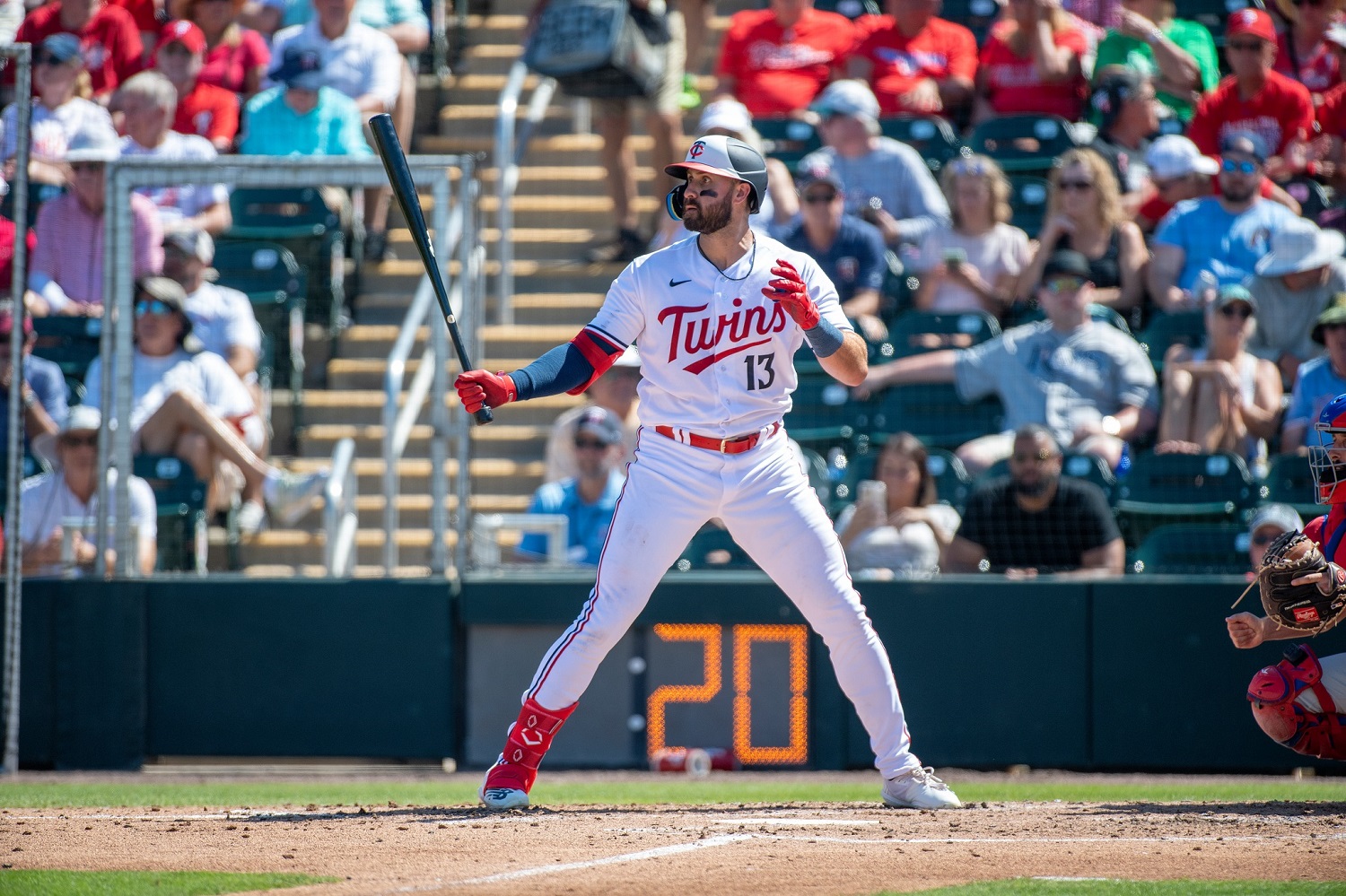 The Twins went into the off-season with some clear needs on their roster. A left-handed corner outfielder was not one of them. In fact, that mold of player was one of the only assets that the club seemingly had in excess. Their surplus consisted of Max Kepler, Alex Kirilloff, Nick Gordon, Trevor Larnach, and Matt Wallner. Then it was announced that two-time all star Joey Gallo would be joining that group, warts and all. This left many Twins followers, myself included, befuddled as to how this game of musical chairs would turn out. The move played into the notion that this front office likes a good contract more than it likes a good player, and it gave the team’s critics a fresh slab of red meat to feast upon. As a prototypical three-true-outcome player, Gallo would surely require ample playing time for the $11 million investment to be worth it. How might this impact the development of the young talent such as Kirilloff, Larnach and Wallner? Where would Gallo play defensively for it all to make sense? Would this make a trade of one of the incumbent lefty bats all but certain? Clearly, Gallo’s signing created more questions than answers, and that tends to turn a lot of people off when molding a contending roster. But now, Gallo is one of the most vital cogs in the Twins’ 2023 blueprint. That begs one last question - did he change, or did we? When his signing became official in late-December, many griped about Gallo’s high-strikeout, boom-or-bust approach. That criticism is certainly valid. Gallo has a career strikeout rate of 37.3%, which is the highest among qualified active players. Not only that, but Gallo has only put 25% of his swings in play over the last two seasons, which is by far the lowest in the major leagues in that time. About a month later, the Twins shipped fan-favorite Luis Arraez to the Miami Marlins in return for Pablo López and two prospects. This sent fans into even more of a tizzy, as Arraez is one of the premier contact hitters in the game. This magnified the bitter aftertaste that many were experiencing, whether that was fair to Gallo or not. But now, his fit on the roster makes more sense, especially given the injury concerns that are once again emerging in the lineup. Kirilloff was the on-paper starting first baseman for most of the off-season, but is now pegged to miss the beginning of the regular season as his recovery from last season’s wrist surgery is taking longer than expected. Second baseman and lineup stalwart Jorge Polanco missed the entirety of the Grapefruit League slate with knee soreness, and will once again hit the dreaded injury list. Even superstar Byron Buxton will be limited to designated hitter duties as he continues to recover from his many leg and hip ailments. This gives Gallo plenty of opportunity for playing time. That could mean sliding in as the regular first baseman until Kirilloff returns. It could mean more of an opening for him in the outfield, with Gordon shifting to second base. It could mean more starts in center field until Buxton is back out there. It could even mean increased time back at third base while Jose Miranda slides over to first. No matter where it happens, Gallo will get plenty of looks all across the diamond. The bigger question surrounds which version of Gallo’s bat comes north to Target Field. Will he be the behemoth that slugged 38 home runs in three different seasons? Or will he be the heir-apparent to Miguel Sano’s throne of punch outs? The good news is that Gallo did extensive training with hitting coach David Popkins over the off-season in an effort to make more contact. The Twins’ coach has been lauded by Gordon and Carlos Correa for the in-season work that paid dividends in the second half of last season. Hopefully Popkins’ tutelage will continue to be effective as he continues to work with Gallo, who is likely his biggest challenge yet. What do you think? Are you happy to have Gallo aboard as the Twins begin their 2023 campaign? Where do you think he will get most of his playing time? Do you think Popkins will be able to help Gallo as he did with Correa and Gordon in 2022? Let us know in the comment section below.
 -
"Man, I'm glad I called that guy. . ." - Billy Madison The Twins' signing of Joey Gallo was a head-scratcher when it was announced in late-December. Now, it’s one of the more essential transactions that the club made this off-season. So what changed? Image courtesy of William Parmeter "Man, I'm glad I called that guy. . ." - Billy Madison The Twins' signing of Joey Gallo was a head-scratcher when it was announced in late-December. Now, it’s one of the more essential transactions that the club made this off-season. So what changed? The Twins went into the off-season with some clear needs on their roster. A left-handed corner outfielder was not one of them. In fact, that mold of player was one of the only assets that the club seemingly had in excess. Their surplus consisted of Max Kepler, Alex Kirilloff, Nick Gordon, Trevor Larnach, and Matt Wallner. Then it was announced that two-time all star Joey Gallo would be joining that group, warts and all. This left many Twins followers, myself included, befuddled as to how this game of musical chairs would turn out. The move played into the notion that this front office likes a good contract more than it likes a good player, and it gave the team’s critics a fresh slab of red meat to feast upon. As a prototypical three-true-outcome player, Gallo would surely require ample playing time for the $11 million investment to be worth it. How might this impact the development of the young talent such as Kirilloff, Larnach and Wallner? Where would Gallo play defensively for it all to make sense? Would this make a trade of one of the incumbent lefty bats all but certain? Clearly, Gallo’s signing created more questions than answers, and that tends to turn a lot of people off when molding a contending roster. But now, Gallo is one of the most vital cogs in the Twins’ 2023 blueprint. That begs one last question - did he change, or did we? When his signing became official in late-December, many griped about Gallo’s high-strikeout, boom-or-bust approach. That criticism is certainly valid. Gallo has a career strikeout rate of 37.3%, which is the highest among qualified active players. Not only that, but Gallo has only put 25% of his swings in play over the last two seasons, which is by far the lowest in the major leagues in that time. About a month later, the Twins shipped fan-favorite Luis Arraez to the Miami Marlins in return for Pablo López and two prospects. This sent fans into even more of a tizzy, as Arraez is one of the premier contact hitters in the game. This magnified the bitter aftertaste that many were experiencing, whether that was fair to Gallo or not. But now, his fit on the roster makes more sense, especially given the injury concerns that are once again emerging in the lineup. Kirilloff was the on-paper starting first baseman for most of the off-season, but is now pegged to miss the beginning of the regular season as his recovery from last season’s wrist surgery is taking longer than expected. Second baseman and lineup stalwart Jorge Polanco missed the entirety of the Grapefruit League slate with knee soreness, and will once again hit the dreaded injury list. Even superstar Byron Buxton will be limited to designated hitter duties as he continues to recover from his many leg and hip ailments. This gives Gallo plenty of opportunity for playing time. That could mean sliding in as the regular first baseman until Kirilloff returns. It could mean more of an opening for him in the outfield, with Gordon shifting to second base. It could mean more starts in center field until Buxton is back out there. It could even mean increased time back at third base while Jose Miranda slides over to first. No matter where it happens, Gallo will get plenty of looks all across the diamond. The bigger question surrounds which version of Gallo’s bat comes north to Target Field. Will he be the behemoth that slugged 38 home runs in three different seasons? Or will he be the heir-apparent to Miguel Sano’s throne of punch outs? The good news is that Gallo did extensive training with hitting coach David Popkins over the off-season in an effort to make more contact. The Twins’ coach has been lauded by Gordon and Carlos Correa for the in-season work that paid dividends in the second half of last season. Hopefully Popkins’ tutelage will continue to be effective as he continues to work with Gallo, who is likely his biggest challenge yet. What do you think? Are you happy to have Gallo aboard as the Twins begin their 2023 campaign? Where do you think he will get most of his playing time? Do you think Popkins will be able to help Gallo as he did with Correa and Gordon in 2022? Let us know in the comment section below. View full article
-
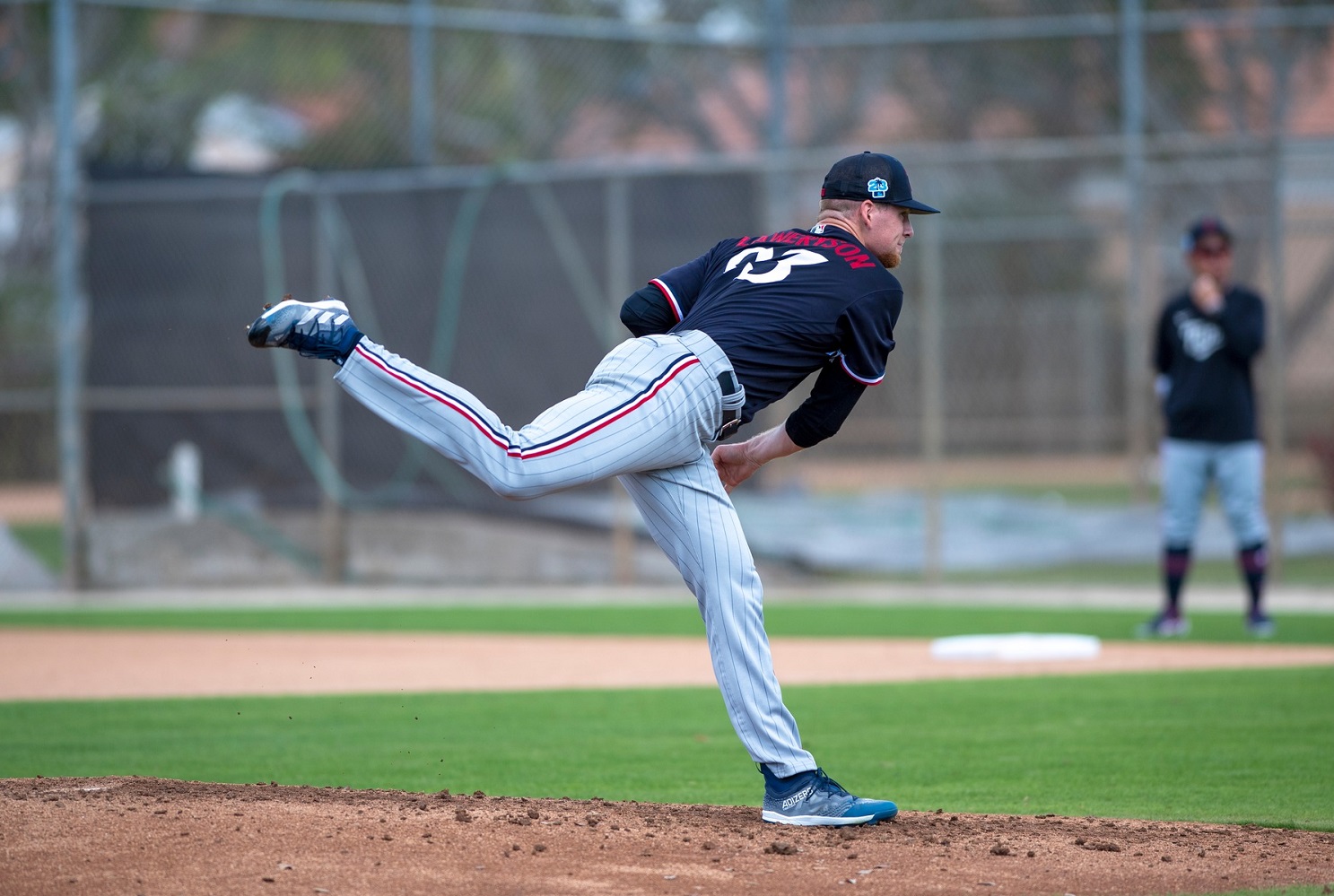 As spring training winds down, we’re starting to get a better picture of what the Twins’ roster is going to look like when the team heads north to Kansas City on March 30th. Piece by piece, the depth chart is being whittled down. However, not every player that gets chipped off in March is bound to remain in the minor leagues all season long. As much as everyone is sick of hearing about health concerns to key contributors, injuries are inevitable. So are under-performances from players that make the big league roster on Opening Day. When these inevitabilities happen, a successful Twins team is going to need some unexpected characters to step up and claim effective roles on the club while they can. That’s especially true when talking about the relief corps. Jhoan Duran, Jorge Lopez, Caleb Thielbar, Griffin Jax and Emilio Pagan are seen as near-locks to make the club out of spring training, and other arms including Jorge Alcala and Jovani Moran are other current front-runners to claim bullpen spots right off the bat. Beyond that group, there are a handful of players that could find their way up to the big league club when given the call. Here are three dark horse candidates to make a name for themselves out of the Twins’ bullpen in 2023. Jose De Leon After signing the 30-year-old Jose De Leon to a minor-league deal with an invite to spring training, the Twins finally got their longtime target. He was the headliner in a rumored trade proposal with the Los Angeles Dodgers back in 2018 when the club was shopping second baseman Brian Dozier. DeLeon is no longer the prized starting pitching prospect that he was back then, but he could still provide value to a Twins’ bullpen that has sorely lacked an effective multi-inning weapon. His upside was clearly evident in an appearance for team Puerto Rico in the World Baseball Classic, where he dazzled through 5 2/3 perfect innings in his lone start. In that outing, he racked up 10 punch outs without walking anyone and without giving up a single hit. While the competition that De Leon is bound to face in the season is probably much better than that of Team Israel, the results were still encouraging. Even more eye-opening than that outcome was the quality of pitches that De Leon was featuring. Eno Sarris of The Athletic noted that the righty displayed the third-best Stuff+ among starters in the WBC. “Stuff+ looks only at the physical characteristics of a pitch,” as stated in Fangraphs’ definition of the metric. “Important features include, but are not limited to, release point, velocity, vertical and horizontal movement, and spin rate.” If De Leon and the Twins are amenable to seeing how that stuff plays in a relief role, the righty could be among the first arms to be called up in-season. Maybe he fits the Jharel Cotton mold of 2022, where he is called to mop up some innings if a starter has to leave a game early. Perhaps he gets the ball in extra innings and is tasked with finishing it out. No matter the role, if De Leon can maintain this quality of stuff in his pitches, he could get ample opportunities at the big league level. Oliver Ortega The Twins claimed Oliver Ortega off of waivers from the Los Angeles Angels in early-January, and were enticed by his mix of hard fastball and big slider. Does that sound familiar? The club has shown an affinity for this kind of repertoire in their pitchers (especially relievers) over the last few years. From Jax, to Alcala, to Matt Wisler, this front office just can’t get enough of this pitch combo. Ortega was outrighted off of the 40-man roster later in the off-season, and has two option years remaining. This could play into his favor as a potential taxi squad regular, or someone that can shuffle between the major leagues and Triple-A multiple times over the next two seasons. Remember how often the Twins would have someone walk the plank to eat up innings before being switched out with a fresh arm immediately after the game? Keep that formula in mind when trying to map out an opening for Ortega. What will determine the lean right-hander’s ability to establish himself into an MLB role is his sky-high walk tendencies. Yes, the Twins love his upper-90s heat and slurvy breaking pitch, but this repertoire only goes as far as his ability to get swinging misses and avoid walks. Last season, he had an unsightly 12.2% walk rate and a good-not-great 11.1% swinging strike rate. His strength is in his strikeout rate, which was fantastic in the upper-minors over the last two seasons (33% in Double-A, 24% in Triple-A). He started to show that in the big leagues with the Angels last season when he struck out 22.3% of batters faced in 34 innings pitched. If Ortega can rein in those walks while continuing to develop swing-and-miss stuff, he could claim a low-leverage role in the major-league bullpen. Cody Laweryson A 14th-round draft pick in 2019, Laweryson is often overlooked when scouring the Twins’ depth chart. He was limited to 45 innings pitched in 2019, missed all of 2020 due to the pandemic and then underwhelmed in 2021 at High-A where he had a 4.91 ERA in 59 innings across 14 starts. It should be noted that a .340 batting average on balls in play likely inflated that shaky earned run total. Still, after a strong showing in the Arizona Fall League, the Twins had faith that he would straighten things out in 2022, and he did just that. Cody Laweryson made 16 appearances at High-A to start the 2022 campaign, 14 of which were out of the bullpen. He had a much more encouraging 2.57 ERA this time around, with a 29.4% strikeout rate and a serviceable 8% walk rate. He got promoted to Double-A midway through the season, and continued to flourish with similar results. At Wichita, he held opposing hitters to a .196 batting average and had a promising 10.4 K/9. His swinging-strike rate dipped from 15.2% to 14.1%, but so did his walk rate (8.4% to 6.7%). The Twins don’t seem in a rush to give up on Laweryson as a starter. He made eight starts at Double-A in the second half of last season, and finally showed some success in that role. However, he is entering his age-25 season and is well down the list of starting pitcher options on the Twins’ depth chart. It’s going to be hard to find starting opportunities at the Triple-A level with prospects such as Louie Varland, Simeon Woods Richardson, Jordan Balazovic, and maybe Cole Sands all occupying spots in the Saints’ rotation. Not to mention, there’s a slew of veterans on minor-league deals that are vying for opportunities. Maybe a permanent move to the bullpen can yield more solid results from Laweryson while creating a clearer path to the major leagues. What do you think? Can any of these three establish themselves in the Twins' bullpen? Who are some other lesser-known arms that could claim a relief role for themselves in 2023?
- 19 comments
-
- 5
-

-
- jose de leon
- oliver ortega
- (and 1 more)
-
The Twins emphasized depth when making their additions over the off-season. Even with a deeper roster, there are bound to be opportunities for players currently on the outside looking in. Which arms could be dark horse candidates to establish themselves in the big league bullpen at some point in 2023? Image courtesy of William Parmeter The Twins emphasized depth when making their additions over the off-season. Even with a deeper roster, there are bound to be opportunities for players currently on the outside looking in. Which arms could be dark horse candidates to establish themselves in the big league bullpen at some point in 2023? As spring training winds down, we’re starting to get a better picture of what the Twins’ roster is going to look like when the team heads north to Kansas City on March 30th. Piece by piece, the depth chart is being whittled down. However, not every player that gets chipped off in March is bound to remain in the minor leagues all season long. As much as everyone is sick of hearing about health concerns to key contributors, injuries are inevitable. So are under-performances from players that make the big league roster on Opening Day. When these inevitabilities happen, a successful Twins team is going to need some unexpected characters to step up and claim effective roles on the club while they can. That’s especially true when talking about the relief corps. Jhoan Duran, Jorge Lopez, Caleb Thielbar, Griffin Jax and Emilio Pagan are seen as near-locks to make the club out of spring training, and other arms including Jorge Alcala and Jovani Moran are other current front-runners to claim bullpen spots right off the bat. Beyond that group, there are a handful of players that could find their way up to the big league club when given the call. Here are three dark horse candidates to make a name for themselves out of the Twins’ bullpen in 2023. Jose De Leon After signing the 30-year-old Jose De Leon to a minor-league deal with an invite to spring training, the Twins finally got their longtime target. He was the headliner in a rumored trade proposal with the Los Angeles Dodgers back in 2018 when the club was shopping second baseman Brian Dozier. DeLeon is no longer the prized starting pitching prospect that he was back then, but he could still provide value to a Twins’ bullpen that has sorely lacked an effective multi-inning weapon. His upside was clearly evident in an appearance for team Puerto Rico in the World Baseball Classic, where he dazzled through 5 2/3 perfect innings in his lone start. In that outing, he racked up 10 punch outs without walking anyone and without giving up a single hit. While the competition that De Leon is bound to face in the season is probably much better than that of Team Israel, the results were still encouraging. Even more eye-opening than that outcome was the quality of pitches that De Leon was featuring. Eno Sarris of The Athletic noted that the righty displayed the third-best Stuff+ among starters in the WBC. “Stuff+ looks only at the physical characteristics of a pitch,” as stated in Fangraphs’ definition of the metric. “Important features include, but are not limited to, release point, velocity, vertical and horizontal movement, and spin rate.” If De Leon and the Twins are amenable to seeing how that stuff plays in a relief role, the righty could be among the first arms to be called up in-season. Maybe he fits the Jharel Cotton mold of 2022, where he is called to mop up some innings if a starter has to leave a game early. Perhaps he gets the ball in extra innings and is tasked with finishing it out. No matter the role, if De Leon can maintain this quality of stuff in his pitches, he could get ample opportunities at the big league level. Oliver Ortega The Twins claimed Oliver Ortega off of waivers from the Los Angeles Angels in early-January, and were enticed by his mix of hard fastball and big slider. Does that sound familiar? The club has shown an affinity for this kind of repertoire in their pitchers (especially relievers) over the last few years. From Jax, to Alcala, to Matt Wisler, this front office just can’t get enough of this pitch combo. Ortega was outrighted off of the 40-man roster later in the off-season, and has two option years remaining. This could play into his favor as a potential taxi squad regular, or someone that can shuffle between the major leagues and Triple-A multiple times over the next two seasons. Remember how often the Twins would have someone walk the plank to eat up innings before being switched out with a fresh arm immediately after the game? Keep that formula in mind when trying to map out an opening for Ortega. What will determine the lean right-hander’s ability to establish himself into an MLB role is his sky-high walk tendencies. Yes, the Twins love his upper-90s heat and slurvy breaking pitch, but this repertoire only goes as far as his ability to get swinging misses and avoid walks. Last season, he had an unsightly 12.2% walk rate and a good-not-great 11.1% swinging strike rate. His strength is in his strikeout rate, which was fantastic in the upper-minors over the last two seasons (33% in Double-A, 24% in Triple-A). He started to show that in the big leagues with the Angels last season when he struck out 22.3% of batters faced in 34 innings pitched. If Ortega can rein in those walks while continuing to develop swing-and-miss stuff, he could claim a low-leverage role in the major-league bullpen. Cody Laweryson A 14th-round draft pick in 2019, Laweryson is often overlooked when scouring the Twins’ depth chart. He was limited to 45 innings pitched in 2019, missed all of 2020 due to the pandemic and then underwhelmed in 2021 at High-A where he had a 4.91 ERA in 59 innings across 14 starts. It should be noted that a .340 batting average on balls in play likely inflated that shaky earned run total. Still, after a strong showing in the Arizona Fall League, the Twins had faith that he would straighten things out in 2022, and he did just that. Cody Laweryson made 16 appearances at High-A to start the 2022 campaign, 14 of which were out of the bullpen. He had a much more encouraging 2.57 ERA this time around, with a 29.4% strikeout rate and a serviceable 8% walk rate. He got promoted to Double-A midway through the season, and continued to flourish with similar results. At Wichita, he held opposing hitters to a .196 batting average and had a promising 10.4 K/9. His swinging-strike rate dipped from 15.2% to 14.1%, but so did his walk rate (8.4% to 6.7%). The Twins don’t seem in a rush to give up on Laweryson as a starter. He made eight starts at Double-A in the second half of last season, and finally showed some success in that role. However, he is entering his age-25 season and is well down the list of starting pitcher options on the Twins’ depth chart. It’s going to be hard to find starting opportunities at the Triple-A level with prospects such as Louie Varland, Simeon Woods Richardson, Jordan Balazovic, and maybe Cole Sands all occupying spots in the Saints’ rotation. Not to mention, there’s a slew of veterans on minor-league deals that are vying for opportunities. Maybe a permanent move to the bullpen can yield more solid results from Laweryson while creating a clearer path to the major leagues. What do you think? Can any of these three establish themselves in the Twins' bullpen? Who are some other lesser-known arms that could claim a relief role for themselves in 2023? View full article
-
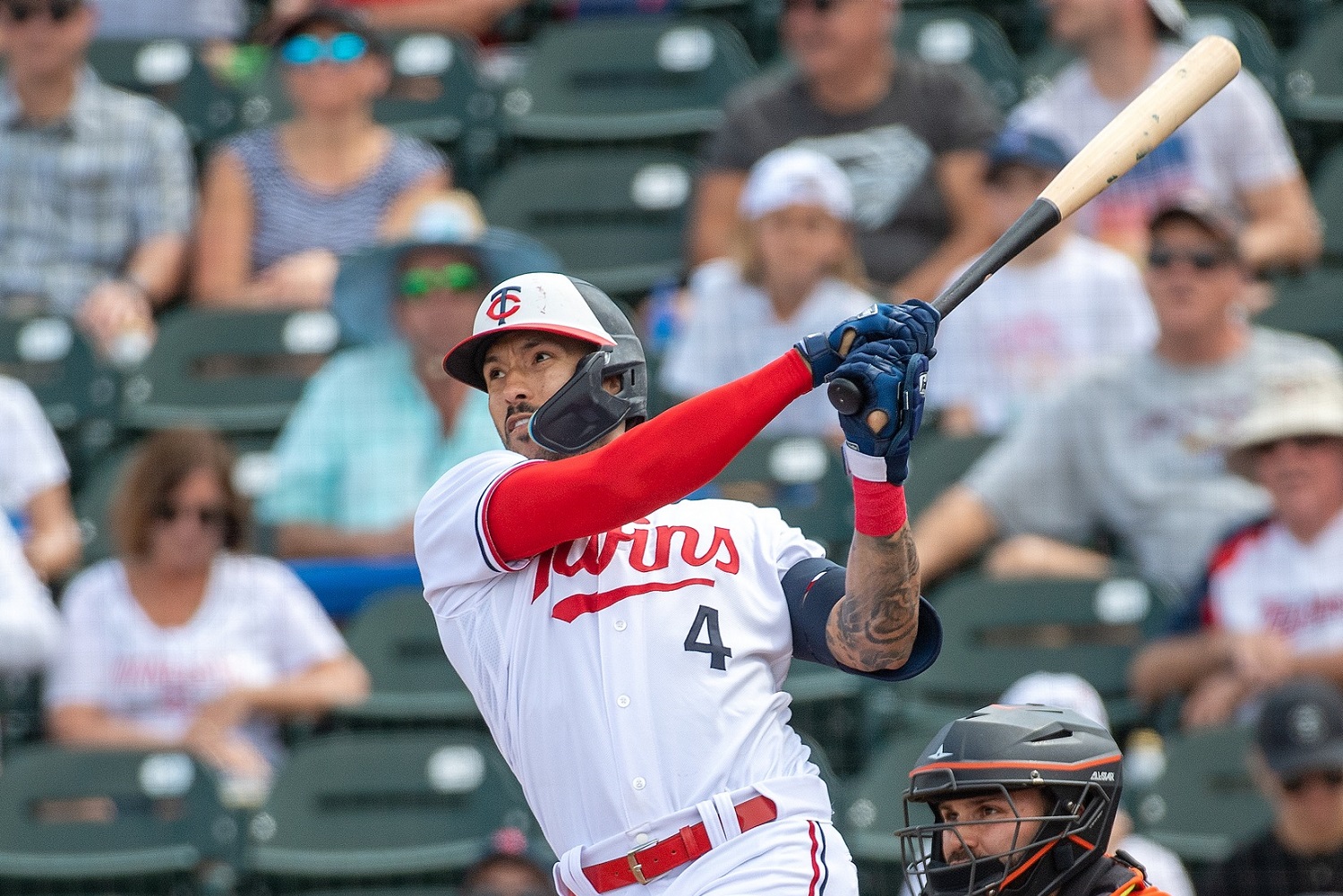 Going into the off-season, it was clear that retaining Carlos Correa was the main objective for the Twins. While countless injuries forced the team into a crash-landing in September, their star shortstop’s engine was still firing on all cylinders. Sadly, his incredible performance over the season’s final 50 games went relatively unnoticed by most, as the cabin became too filled with the smoke of another lost season. With Correa settled back into a corner locker in the Twins’ clubhouse, the hope is that the subtle changes to his swing that propelled him through the end of a tumultuous season will once again prove successful. Perhaps he can even soar to new heights with continued tutelage from hitting coach David Popkins. That’s going to be a tall task, as Correa was one of the best hitters in the game through the homestretch of 2022. So how good was he, and how reasonable is it to expect even more from C4 in 2023? The last 50 games of Correa’s 2022 campaign were indeed phenomenal. His season as a whole was certainly above average, but this final stretch was the type of performance that many imagined when he was inked to a $35.1 million guarantee in March. From the start of the season until August 11th, Correa had a strong slash line of .264/.340/.427, good for 21% better than league average. That’s roughly borderline all star level play, but notably worse than his career 130 wRC+. HIs incredible play from August 12th through the end of the season was the type of stretch that leads contending teams to deep playoff runs. In that span, he had an other-worldly .339/.411/.536 (172 wRC+) in 50 games played, despite his teams’ brutal record. Twins Daily’s own Parker Hageman went to Twitter to break down some of the subtle adjustments that Correa made with Popkins’ direction. Most notably, the slugger adjusted his swing delivery and posture in an effort to clean up his bat path. Dan Hayes of The Athletic also wrote in great detail about the change in approach that Correa was undertaking through the season. “The goal was to incorporate natural movements from when Correa previously experienced success,” Hayes wrote. “Popkins said the first change was to create a more direct path to the ball. Next, they worked on reducing the amount of loop in Correa’s barrel.” As Hageman noted in his analysis, having a cleaner bat path helped Correa to do more damage when hitting high-velocity pitches later in the season. In fact, there were very few players in baseball that did this better than the star slugger in September. According to Inside Edge, Correa batted .545 with a whopping .955 slugging percentage on pitches 95 MPH or greater in the last 30 days of the season. That was best in baseball among qualified hitters. These adjustments that Carlos Correa made also helped him to lower his strikeout rate that had skyrocketed over the first month of the season. In April, he had a strikeout in 29.6% of his at-bats. By September, that rate fell back down to his career norm, which is roughly 20.3%. In the last month of the season. In that timeframe, Correa thrived when the count reached two strikes. He batted .286 when he had two strikes against him and he had a .529 slugging percentage, good for second-best in all of baseball. With a more traditional off-season that wasn’t limited by a leaguewide lockout, the hope is that these changes to Correa’s swing will stick and that he will continue to develop alongside David Popkins . Not only that, but the coach’s success working with Correa will hopefully continue to increase his reputation throughout the organization as he heads into his second year with the club. “Midway through last season, Correa began encouraging teammates to work with Popkins, providing a young coach with much-needed credibility in the clubhouse.” Hayes wrote. If the rest of the team can adjust and improve as Correa did in 2022, while maintaining good health in the homestretch, the Twins will avoid the catastrophe that fans suffered through last September. With Popkins flying the plane and Correa sitting in as a co-pilot, the club can avoid a crash-landing and hopefully touch down on the 2023 postseason landing strip. What do you think? Will Correa be able to carry these subtle changes to his swing into the 2023 season? Let us know in the comment section below.
 -
Carlos Correa turned on the afterburners in the last 50 games of the 2022 season. With some help from hitting coach David Popkins, the star slugger cleaned up his swing with some notable, subtle changes. Can the Twins’ shortstop carry that success over into his 2023 campaign? Image courtesy of William Parmeter Carlos Correa turned on the afterburners in the last 50 games of the 2022 season. With some help from hitting coach David Popkins, the star slugger cleaned up his swing with some notable, subtle changes. Can the Twins’ shortstop carry that success over into his 2023 campaign? Going into the off-season, it was clear that retaining Carlos Correa was the main objective for the Twins. While countless injuries forced the team into a crash-landing in September, their star shortstop’s engine was still firing on all cylinders. Sadly, his incredible performance over the season’s final 50 games went relatively unnoticed by most, as the cabin became too filled with the smoke of another lost season. With Correa settled back into a corner locker in the Twins’ clubhouse, the hope is that the subtle changes to his swing that propelled him through the end of a tumultuous season will once again prove successful. Perhaps he can even soar to new heights with continued tutelage from hitting coach David Popkins. That’s going to be a tall task, as Correa was one of the best hitters in the game through the homestretch of 2022. So how good was he, and how reasonable is it to expect even more from C4 in 2023? The last 50 games of Correa’s 2022 campaign were indeed phenomenal. His season as a whole was certainly above average, but this final stretch was the type of performance that many imagined when he was inked to a $35.1 million guarantee in March. From the start of the season until August 11th, Correa had a strong slash line of .264/.340/.427, good for 21% better than league average. That’s roughly borderline all star level play, but notably worse than his career 130 wRC+. HIs incredible play from August 12th through the end of the season was the type of stretch that leads contending teams to deep playoff runs. In that span, he had an other-worldly .339/.411/.536 (172 wRC+) in 50 games played, despite his teams’ brutal record. Twins Daily’s own Parker Hageman went to Twitter to break down some of the subtle adjustments that Correa made with Popkins’ direction. Most notably, the slugger adjusted his swing delivery and posture in an effort to clean up his bat path. Dan Hayes of The Athletic also wrote in great detail about the change in approach that Correa was undertaking through the season. “The goal was to incorporate natural movements from when Correa previously experienced success,” Hayes wrote. “Popkins said the first change was to create a more direct path to the ball. Next, they worked on reducing the amount of loop in Correa’s barrel.” As Hageman noted in his analysis, having a cleaner bat path helped Correa to do more damage when hitting high-velocity pitches later in the season. In fact, there were very few players in baseball that did this better than the star slugger in September. According to Inside Edge, Correa batted .545 with a whopping .955 slugging percentage on pitches 95 MPH or greater in the last 30 days of the season. That was best in baseball among qualified hitters. These adjustments that Carlos Correa made also helped him to lower his strikeout rate that had skyrocketed over the first month of the season. In April, he had a strikeout in 29.6% of his at-bats. By September, that rate fell back down to his career norm, which is roughly 20.3%. In the last month of the season. In that timeframe, Correa thrived when the count reached two strikes. He batted .286 when he had two strikes against him and he had a .529 slugging percentage, good for second-best in all of baseball. With a more traditional off-season that wasn’t limited by a leaguewide lockout, the hope is that these changes to Correa’s swing will stick and that he will continue to develop alongside David Popkins . Not only that, but the coach’s success working with Correa will hopefully continue to increase his reputation throughout the organization as he heads into his second year with the club. “Midway through last season, Correa began encouraging teammates to work with Popkins, providing a young coach with much-needed credibility in the clubhouse.” Hayes wrote. If the rest of the team can adjust and improve as Correa did in 2022, while maintaining good health in the homestretch, the Twins will avoid the catastrophe that fans suffered through last September. With Popkins flying the plane and Correa sitting in as a co-pilot, the club can avoid a crash-landing and hopefully touch down on the 2023 postseason landing strip. What do you think? Will Correa be able to carry these subtle changes to his swing into the 2023 season? Let us know in the comment section below. View full article
-
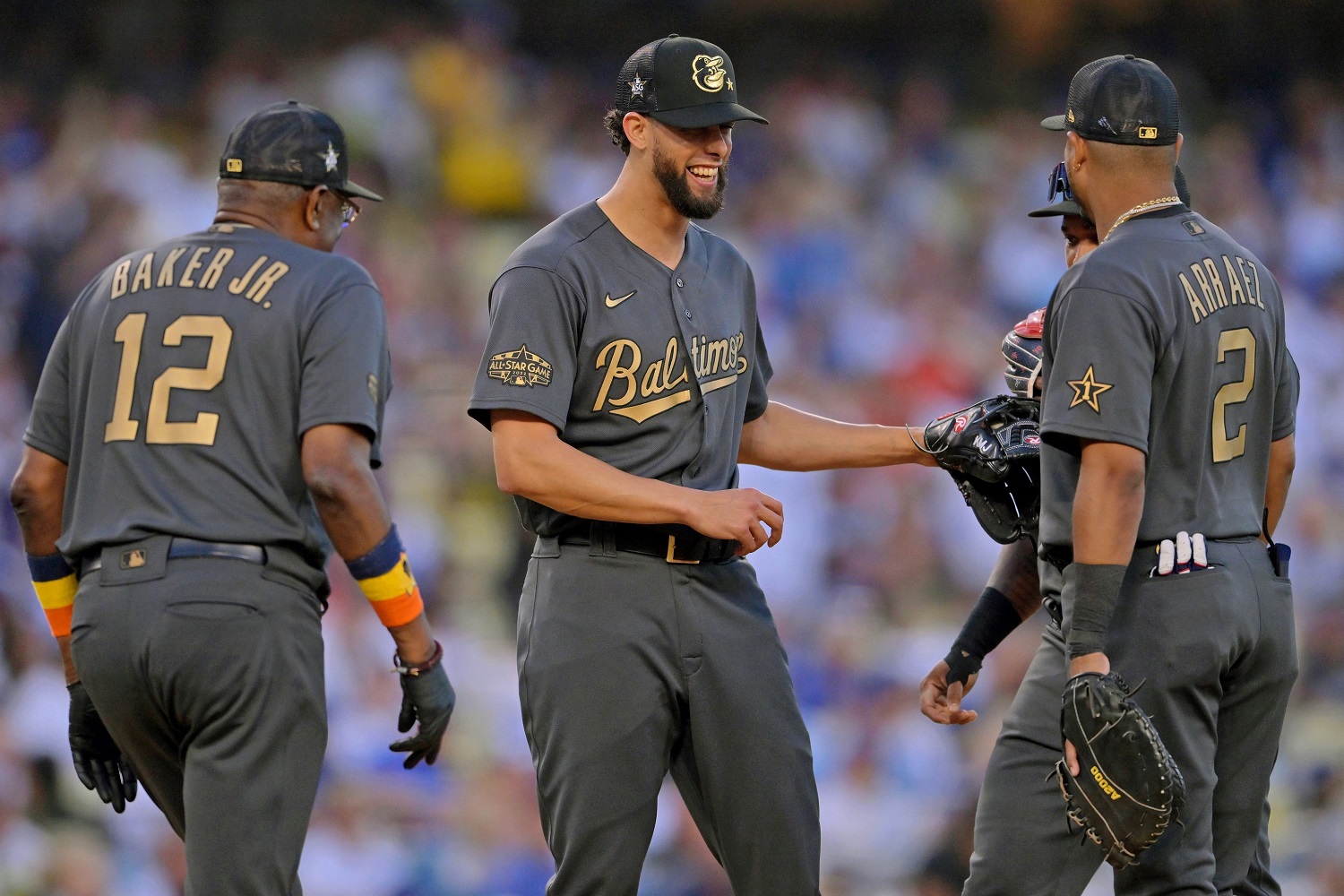 In late-July of last year, the Twins were still grasping to a small division lead, with more holes seemingly appearing by the day. One of the biggest gaps in their roster at the time fell between superstar relief ace Jhoan Duran – and pretty much anyone else in their relief corps. Sure, Griffin Jax had built some trust equity from the skipper, as did Caleb Thielbar. They weren’t all-star caliber players, but they could be trusted to pass the baton in a relay that led to Duran. The team then went out and made a trade for the star-level arm that was desperately needed to help bridge the gap. Enter Jorge López. The former Baltimore Oriole was having a career-year when the Twins acquired him in exchange for pitching prospects Cade Povich and Yennier Cano. He had a fantastic 1.68 ERA with a 27.6% strikeout rate and a 60% ground ball rate, leading to his first all star nod. His fastballs ran hot, with an average of 97.4 MPH for his four-seamer and 98 MPH on his preferred sinker, and he paired them with a slew of secondary offerings that have carried over from his time as a starting pitcher. His curveball, in particular, was a real weapon, with his slider and changeup serving as additional tricks up his sleeve. So Lopez had big strikeout numbers, got plenty of ground ball outs, and had two and a half years of club control at the time of the trade. What’s not to like? While he wasn’t a train wreck with his new team, Lopez’s first two months as a Twin were disappointing based on the expectations that were set when the team acquired him. In that time, he had a 4.37 ERA across 23 innings pitched, due in large part to a walk rate (13.7%) that nearly eclipsed his strikeout percentage (17.6%). Lopez’s sinker was his bread and butter in the first few months of the season, but its success trailed off considerably once the calendar flipped to July. In the first three months of the 2022 campaign, he allowed just 11 hits on that offering, but in the second half that figure nearly doubled to 20 (six of which went for extra bases). This pitch wasn’t just his most used offering, but it was a notable choice when deciding what to use as a “put away” pitch – or what he used in an effort to get a strikeout once he got to two strikes in the count. That rate for his sinker went from about 16.5% in April and May, all the way up to 29.6% in June and July, but then it plummeted to just 4.5% by the time September rolled around. That’s a big kick to his confidence in his best pitch. That "put away" pitch selection is vital to Lopez’s end results because he’s one of the best at getting to that point when facing opposing hitters, especially those that are right-handed. Last year, he was able to get at least two strikes in the first three pitches against 73% of the right-handed hitters that he faced, according to Inside Edge. Obviously that can be a huge advantage in the grand scheme of things, and indeed it was for the first half of last season when he had a 28.7% strikeout rate. But for whatever reason -- whether it was trying a different pitch mix, or his sinker lost some zip, or he wasn’t locating his pitches as well, or hitters were merely catching up to him -- he was unable to tap into that put away stuff in the second half. That could come across as a grim outlook going forward. Baseball fans suffer from perpetual recency bias, and Lopez’s most recent month of work was uninspiring. However, the Twins don’t need him to be the monster that he was for Baltimore in the first few months of last season. They just need him to be in the same mix as Jax and Thielbar, which is probably somewhere between the two poles that Lopez set last season. The Twins need him to be in that group of guys that can be trusted in a relay that leads to Duran taking on the highest-leverage situations at or near the end of the game. But what do you think? Can Jorge Lopez regain some of his value that the team had in mind when they traded for him? Or did the club get duped into buying-high on an inconsistent arm? Let us know your thoughts and expectations in the comments below.
- 12 comments
-
- 4
-
-
- jorge lopez
- griffin jax
- (and 3 more)
-
The Twins made a much-needed trade for an all-star reliever at last year’s deadline, but what they got fell short of expectations. Can Jorge López rediscover what made him so successful in the first half of last year? Image courtesy of Jayne Kamin-Oncea-USA TODAY Sports The Twins made a much-needed trade for an all-star reliever at last year’s deadline, but what they got fell short of expectations. Can Jorge López rediscover what made him so successful in the first half of last year? In late-July of last year, the Twins were still grasping to a small division lead, with more holes seemingly appearing by the day. One of the biggest gaps in their roster at the time fell between superstar relief ace Jhoan Duran – and pretty much anyone else in their relief corps. Sure, Griffin Jax had built some trust equity from the skipper, as did Caleb Thielbar. They weren’t all-star caliber players, but they could be trusted to pass the baton in a relay that led to Duran. The team then went out and made a trade for the star-level arm that was desperately needed to help bridge the gap. Enter Jorge López. The former Baltimore Oriole was having a career-year when the Twins acquired him in exchange for pitching prospects Cade Povich and Yennier Cano. He had a fantastic 1.68 ERA with a 27.6% strikeout rate and a 60% ground ball rate, leading to his first all star nod. His fastballs ran hot, with an average of 97.4 MPH for his four-seamer and 98 MPH on his preferred sinker, and he paired them with a slew of secondary offerings that have carried over from his time as a starting pitcher. His curveball, in particular, was a real weapon, with his slider and changeup serving as additional tricks up his sleeve. So Lopez had big strikeout numbers, got plenty of ground ball outs, and had two and a half years of club control at the time of the trade. What’s not to like? While he wasn’t a train wreck with his new team, Lopez’s first two months as a Twin were disappointing based on the expectations that were set when the team acquired him. In that time, he had a 4.37 ERA across 23 innings pitched, due in large part to a walk rate (13.7%) that nearly eclipsed his strikeout percentage (17.6%). Lopez’s sinker was his bread and butter in the first few months of the season, but its success trailed off considerably once the calendar flipped to July. In the first three months of the 2022 campaign, he allowed just 11 hits on that offering, but in the second half that figure nearly doubled to 20 (six of which went for extra bases). This pitch wasn’t just his most used offering, but it was a notable choice when deciding what to use as a “put away” pitch – or what he used in an effort to get a strikeout once he got to two strikes in the count. That rate for his sinker went from about 16.5% in April and May, all the way up to 29.6% in June and July, but then it plummeted to just 4.5% by the time September rolled around. That’s a big kick to his confidence in his best pitch. That "put away" pitch selection is vital to Lopez’s end results because he’s one of the best at getting to that point when facing opposing hitters, especially those that are right-handed. Last year, he was able to get at least two strikes in the first three pitches against 73% of the right-handed hitters that he faced, according to Inside Edge. Obviously that can be a huge advantage in the grand scheme of things, and indeed it was for the first half of last season when he had a 28.7% strikeout rate. But for whatever reason -- whether it was trying a different pitch mix, or his sinker lost some zip, or he wasn’t locating his pitches as well, or hitters were merely catching up to him -- he was unable to tap into that put away stuff in the second half. That could come across as a grim outlook going forward. Baseball fans suffer from perpetual recency bias, and Lopez’s most recent month of work was uninspiring. However, the Twins don’t need him to be the monster that he was for Baltimore in the first few months of last season. They just need him to be in the same mix as Jax and Thielbar, which is probably somewhere between the two poles that Lopez set last season. The Twins need him to be in that group of guys that can be trusted in a relay that leads to Duran taking on the highest-leverage situations at or near the end of the game. But what do you think? Can Jorge Lopez regain some of his value that the team had in mind when they traded for him? Or did the club get duped into buying-high on an inconsistent arm? Let us know your thoughts and expectations in the comments below. View full article
-
In 2020, Kenta Maeda ran the game and had the whole world talkin'. After a brilliant stretch of 11 starts, he was crowned the king of the Twins rotation. But Tommy John surgery has kept him out of action for nearly 18 months. What are reasonable expectations for King Kenta as he makes his triumphant return to his kingdom? Image courtesy of William Parmeter In 2020, Kenta Maeda ran the game and had the whole world talkin'. After a brilliant stretch of 11 starts, he was crowned the king of the Twins rotation. But Tommy John surgery has kept him out of action for nearly 18 months. What are reasonable expectations for King Kenta as he makes his triumphant return to his kingdom? While the pandemic-shortened 2020 season consisted of just 60 games, it gave Twins fans a performance that they had been begging for. Finally, a pitcher was able to break through as a true frontline starter, even if it was an abbreviated campaign. Kenta Maeda assumed his throne that year as he twirled 67 innings of 2.70 ERA ball across 11 starts. He established new career-bests in strikeout rate (32.3%), walk rate (4.0%), swinging strike rate (17.2%) and WHIP (0.75). That led to a second-place finish in the Cy Young award competition, and vindicated the franchise’s years-long pursuit of a true ace-level pitcher. Or so we thought. Maeda took an expected step back in 2021. He was still serviceable through July (4.40 ERA, 24.6% strikeout rate, 7.1% walk rate) but it became clear that his ailment was becoming increasingly more troublesome. He ultimately succumbed to Tommy John surgery in August 2021, and was banished from his kingdom while he recovered. Now, he’s returning to the rotation after roughly 17 months of recovery. But what should Twins fans expect from their former king? Two of the most-popular projection models agree that his per-pitch numbers will closely resemble his pre-injury self from 2021. ZiPS and Steamer both predict he’ll finish the year with an ERA around 4.15, slightly lower strikeout rates at around 22% and a 1.27 WHIP. Their differences however, lie in Maeda’s ability to remain in the starting rotation. Steamer thinks he’ll start 24 games and they project him for 150 innings pitched. That raises his predicted wins above replacement to 1.4, which is totally respectable for a starter’s first season after returning from Tommy John surgery. ZiPS, however, thinks that Maeda will only manage to start 15 games, and will be limited to just 83 innings pitched. This limits their predicted WAR figure for the veteran right-hander to just 0.9 in 2023. Upon first glance, it would be sensible that the ZiPS projection is factoring a mid-season role change for Maeda due to an inning limitation. However, they only predict that he’ll make three appearances out of the bullpen, even with the low games started prediction. That essentially means that they think Kenta Maeda will have trouble staying healthy in 2023. That’s not unheard of for players coming back from an extended absence, and injury limitations are certainly not uncharted territory for this Twins roster. One model thinks Maeda bounces back as a starter, and stays relatively healthy. The other sees him breaking down and only pitching about half as many innings. Time will tell which projection will be more accurate. Perhaps a look at another arm that recently bounced back from Tommy John surgery can help provide some more reasonable expectations for King Kenta in 2023. Noah Syndergaard had this procedure in March of 2020, just after spring training was halted due to the pandemic. He also had an extended recovery period, as he didn’t return to game action until late-September in 2021, roughly 18 months after his surgery. Even then, he only appeared in two games as a one-inning opener before having another five months of recovery in the off-season. Syndergaard returned to full-strength heading into the 2022 season, where he finished the year with a 3.94 ERA across 24 starts between the Los Angeles Angels and Philadelphia Phillies. He tossed 135 innings last year, and though his strikeout rate slipped considerably (26.4% from 2015-2019, 16.8% in 2022), he still managed to accumulate a respectable 2.2 wins above replacement. Syndergaard was able to be this successful by limiting hitters to soft contact – which has also been a calling card of Maeda throughout his career. It should be noted that there are a handful of differences between Syndergaard and Maeda when comparing their respective recoveries. Notably, the former was one of the hardest throwers in the history of the game before his surgery, averaging 98.1 MPH on his heater in that time. Maeda, on the other hand, has never relied on fastball velocity, but rather the quality of his secondary offerings. In his first spring training appearance last week, his fastball did average about 90.3 MPH. That’s an encouraging sign, as it averaged about 91.6 MPH in his brilliant 2020 season. Of course, remaining healthy is going to be the defining factor for the 35-year-old this season, and for the rest of his career for that matter. But if he can have similar production to Syndergaard in his first year back in action, the Twins would gladly take that. He may not be returning to the throne that he held in 2020, but King Kenta is no longer banished from his kingdom. What are your expectations for Maeda in 2023 and beyond? Can he follow Syndergaard’s lead in having a relatively successful season? Let us know what you think in the comments below. View full article
-
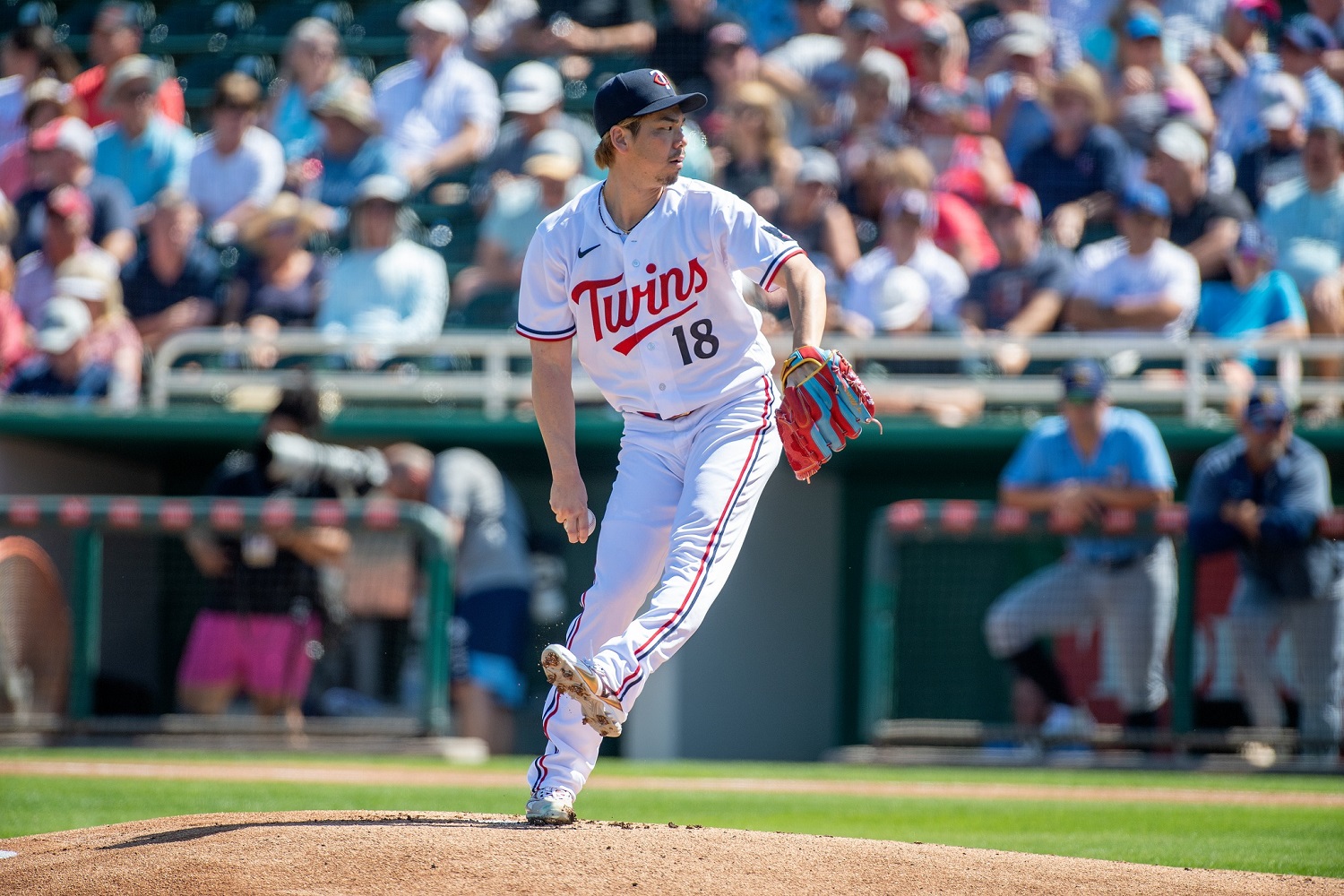 While the pandemic-shortened 2020 season consisted of just 60 games, it gave Twins fans a performance that they had been begging for. Finally, a pitcher was able to break through as a true frontline starter, even if it was an abbreviated campaign. Kenta Maeda assumed his throne that year as he twirled 67 innings of 2.70 ERA ball across 11 starts. He established new career-bests in strikeout rate (32.3%), walk rate (4.0%), swinging strike rate (17.2%) and WHIP (0.75). That led to a second-place finish in the Cy Young award competition, and vindicated the franchise’s years-long pursuit of a true ace-level pitcher. Or so we thought. Maeda took an expected step back in 2021. He was still serviceable through July (4.40 ERA, 24.6% strikeout rate, 7.1% walk rate) but it became clear that his ailment was becoming increasingly more troublesome. He ultimately succumbed to Tommy John surgery in August 2021, and was banished from his kingdom while he recovered. Now, he’s returning to the rotation after roughly 17 months of recovery. But what should Twins fans expect from their former king? Two of the most-popular projection models agree that his per-pitch numbers will closely resemble his pre-injury self from 2021. ZiPS and Steamer both predict he’ll finish the year with an ERA around 4.15, slightly lower strikeout rates at around 22% and a 1.27 WHIP. Their differences however, lie in Maeda’s ability to remain in the starting rotation. Steamer thinks he’ll start 24 games and they project him for 150 innings pitched. That raises his predicted wins above replacement to 1.4, which is totally respectable for a starter’s first season after returning from Tommy John surgery. ZiPS, however, thinks that Maeda will only manage to start 15 games, and will be limited to just 83 innings pitched. This limits their predicted WAR figure for the veteran right-hander to just 0.9 in 2023. Upon first glance, it would be sensible that the ZiPS projection is factoring a mid-season role change for Maeda due to an inning limitation. However, they only predict that he’ll make three appearances out of the bullpen, even with the low games started prediction. That essentially means that they think Kenta Maeda will have trouble staying healthy in 2023. That’s not unheard of for players coming back from an extended absence, and injury limitations are certainly not uncharted territory for this Twins roster. One model thinks Maeda bounces back as a starter, and stays relatively healthy. The other sees him breaking down and only pitching about half as many innings. Time will tell which projection will be more accurate. Perhaps a look at another arm that recently bounced back from Tommy John surgery can help provide some more reasonable expectations for King Kenta in 2023. Noah Syndergaard had this procedure in March of 2020, just after spring training was halted due to the pandemic. He also had an extended recovery period, as he didn’t return to game action until late-September in 2021, roughly 18 months after his surgery. Even then, he only appeared in two games as a one-inning opener before having another five months of recovery in the off-season. Syndergaard returned to full-strength heading into the 2022 season, where he finished the year with a 3.94 ERA across 24 starts between the Los Angeles Angels and Philadelphia Phillies. He tossed 135 innings last year, and though his strikeout rate slipped considerably (26.4% from 2015-2019, 16.8% in 2022), he still managed to accumulate a respectable 2.2 wins above replacement. Syndergaard was able to be this successful by limiting hitters to soft contact – which has also been a calling card of Maeda throughout his career. It should be noted that there are a handful of differences between Syndergaard and Maeda when comparing their respective recoveries. Notably, the former was one of the hardest throwers in the history of the game before his surgery, averaging 98.1 MPH on his heater in that time. Maeda, on the other hand, has never relied on fastball velocity, but rather the quality of his secondary offerings. In his first spring training appearance last week, his fastball did average about 90.3 MPH. That’s an encouraging sign, as it averaged about 91.6 MPH in his brilliant 2020 season. Of course, remaining healthy is going to be the defining factor for the 35-year-old this season, and for the rest of his career for that matter. But if he can have similar production to Syndergaard in his first year back in action, the Twins would gladly take that. He may not be returning to the throne that he held in 2020, but King Kenta is no longer banished from his kingdom. What are your expectations for Maeda in 2023 and beyond? Can he follow Syndergaard’s lead in having a relatively successful season? Let us know what you think in the comments below.
 -
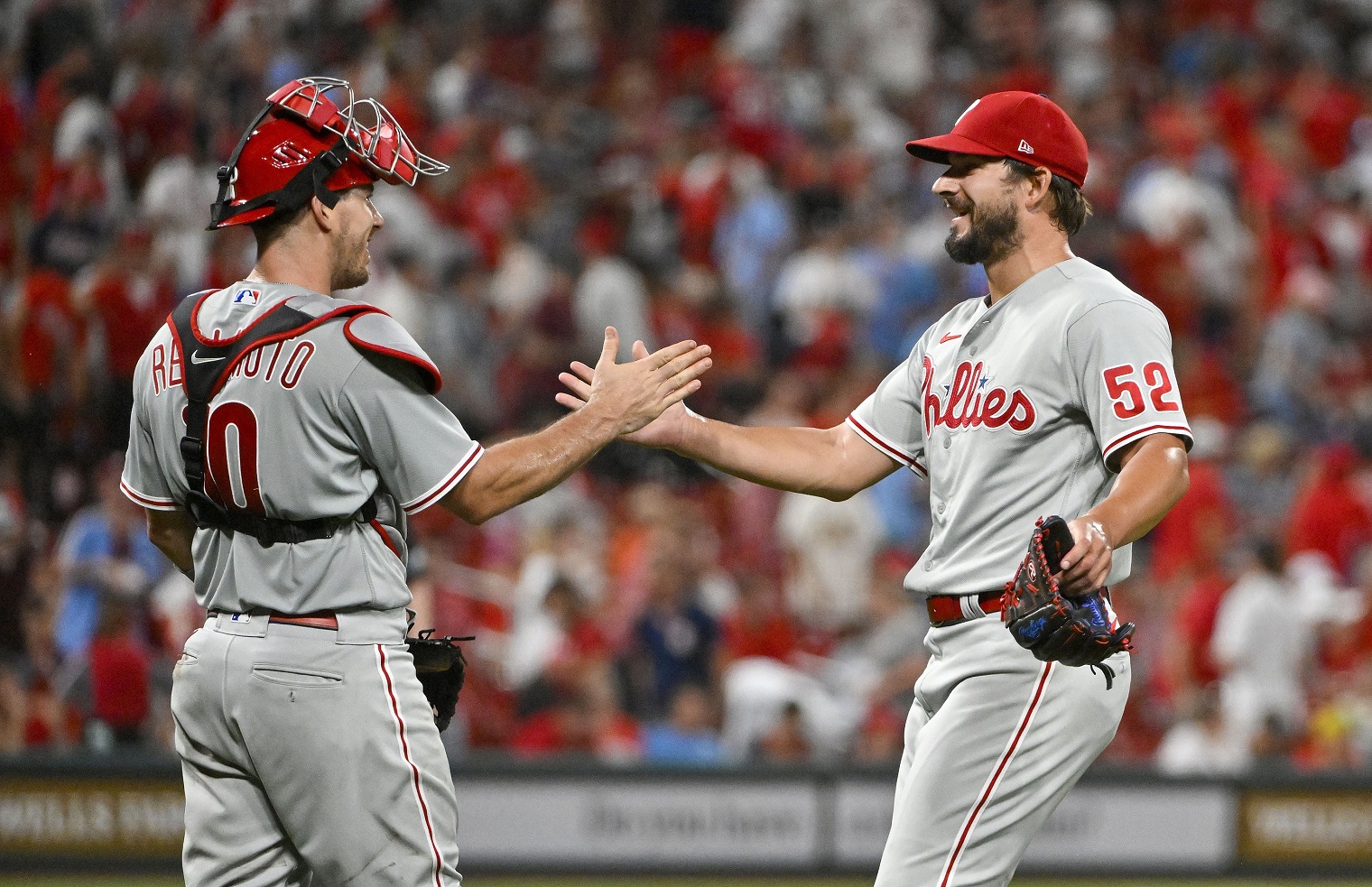 The Twins find themselves in a heated hand of five-card draw. They like most of the cards they’re holding in the bullpen, but they could take a chance on trading in their last piece for a fresh one in the hopes that it complements their hand better. There are plenty of face cards in this hand, including relief ace Jhoan Duran, veteran king Caleb Thielbar, and a young jack, or should I say Jax, rather. Other members in their relief corps such as Jorge Lopez or Jorge Alcala could find themselves in that high-value card class, but the jury is still out on if they can be counted on to be healthy and/or effective. Still, the club could be looking to add one last card in the hopes of landing a royal flush. But is it really worth it to go for a wild card, or should the Twins stick with the hand they were dealt? Imperfect analogies aside, the club has been tied by Darren Wolfson to veteran southpaw Brad Hand, who is coming off of a relatively successful, if uninspiring, 2022 season. Right now, the last member of the Twins’ bullpen is projected to be righty Trevor Megill, who showcased a blazing fastball in the last few months of the season but left much to be desired overall. Adding Hand to the mix carries a possibility that he continues to outshine his peripherals, as has been the case since he transitioned to a full-time reliever in 2016. Even just last season, he had a fantastic 2.80 ERA despite having a 4.40 xERA. The expected figure is due in large part to his unspectacular 1.65 K/BB rate, an unexciting 7.3% swinging strike rate, and diminishing values on his fastball as the season wore on. But aside from the discouraging numbers under the hood, he managed to throw 45 innings of mostly unproblematic baseball in 2022. So would the Twins be wise to bring him on board with an inexpensive one-year deal? Let’s start with the upside of such a deal. As the last few years have shown us, you can never have too many options in a relief corps. Signing Hand likely moves Megill down to Triple-A for the time being, but the Twins wouldn’t be required to drop anyone from their 40-man roster. Both Chris Paddack and Royce Lewis are now eligible to be moved to the 60-day injured list, which would remove them from the 40-man roster until reinstatement. If Hand produces as expected, he’d be the third left-handed pitcher in the projected bullpen depth chart. Thielbar is a lock as a high-leverage option, and Jovani Moran is bound to get more time after impressing in 41 MLB innings last year. Sure, Moran has shown more success against right-handed batters thanks to his big changeup, but he’s had success against fellow lefties, as well (12 K/9, 2.8 BB/9 vs. LHH). So overall, it's not too much of a gamble just to have Hand aboard. The downside of such a move isn’t that someone like Megill misses MLB opportunities. There are bound to be multiple injuries throughout the season and surely the big-league club will have to tap into the depth stashed in St. Paul. The downside comes from the Twins’ recent track record of giving established MLB veterans too long of a leash when their performance underwhelms. From J.A. Happ and Matt Shoemaker, to Tyler Duffey and Joe Smith, sometimes it feels as if the decision-makers are more concerned with hurting their reputation as a veteran-friendly organization rather than the results on the field. Granted, sometimes that patience pays off. In 2021, Alex Colome had a brutal 8.31 ERA in April before turning things around (3.51 ERA from May 1st through the end of the season). But in that first month, the club was unable to remove him from high-leverage situations, whether due to a lack of MLB-quality replacements or an excess of confidence in Colome’s projected regression to the mean. That lack of action regarding the veteran (among other things) essentially derailed their hopes of contention by May. After two consecutive losing seasons, the Twins can’t afford to have that same mindset with someone like Hand, especially given the fact that he would likely be their sole addition to the bullpen. Their efforts might be better suited to give their current cards more playing time and reevaluate their needs down the line. Maybe Kenta Maeda eventually transitions to the bullpen as he approaches an inning limit in his first season post-Tommy John surgery. Perhaps someone like Megill or Ronny Henriquez emerges as a relief weapon. Maybe one of their back-end starters such as Josh Winder or Bailey Ober gets a boost from moving to a relief role. The team is bound to have a handful of options in 2023, and they need to put their chips behind those who will find the most success rather than trying to squeeze out as much value as they can from an aging veteran. But what do you think? Are the Twins better off sticking with the hand that they were dealt, or should they try for the Hand that's still available on the free agent market? Let us know what you think in the comments below.
 -
The Twins bullpen is mostly set for the start of the upcoming season. Should they roll with what they have, or make one last addition by bringing home a native Minnesotan for that last spot? Image courtesy of Jeff Curry-USA TODAY Sports The Twins bullpen is mostly set for the start of the upcoming season. Should they roll with what they have, or make one last addition by bringing home a native Minnesotan for that last spot? The Twins find themselves in a heated hand of five-card draw. They like most of the cards they’re holding in the bullpen, but they could take a chance on trading in their last piece for a fresh one in the hopes that it complements their hand better. There are plenty of face cards in this hand, including relief ace Jhoan Duran, veteran king Caleb Thielbar, and a young jack, or should I say Jax, rather. Other members in their relief corps such as Jorge Lopez or Jorge Alcala could find themselves in that high-value card class, but the jury is still out on if they can be counted on to be healthy and/or effective. Still, the club could be looking to add one last card in the hopes of landing a royal flush. But is it really worth it to go for a wild card, or should the Twins stick with the hand they were dealt? Imperfect analogies aside, the club has been tied by Darren Wolfson to veteran southpaw Brad Hand, who is coming off of a relatively successful, if uninspiring, 2022 season. Right now, the last member of the Twins’ bullpen is projected to be righty Trevor Megill, who showcased a blazing fastball in the last few months of the season but left much to be desired overall. Adding Hand to the mix carries a possibility that he continues to outshine his peripherals, as has been the case since he transitioned to a full-time reliever in 2016. Even just last season, he had a fantastic 2.80 ERA despite having a 4.40 xERA. The expected figure is due in large part to his unspectacular 1.65 K/BB rate, an unexciting 7.3% swinging strike rate, and diminishing values on his fastball as the season wore on. But aside from the discouraging numbers under the hood, he managed to throw 45 innings of mostly unproblematic baseball in 2022. So would the Twins be wise to bring him on board with an inexpensive one-year deal? Let’s start with the upside of such a deal. As the last few years have shown us, you can never have too many options in a relief corps. Signing Hand likely moves Megill down to Triple-A for the time being, but the Twins wouldn’t be required to drop anyone from their 40-man roster. Both Chris Paddack and Royce Lewis are now eligible to be moved to the 60-day injured list, which would remove them from the 40-man roster until reinstatement. If Hand produces as expected, he’d be the third left-handed pitcher in the projected bullpen depth chart. Thielbar is a lock as a high-leverage option, and Jovani Moran is bound to get more time after impressing in 41 MLB innings last year. Sure, Moran has shown more success against right-handed batters thanks to his big changeup, but he’s had success against fellow lefties, as well (12 K/9, 2.8 BB/9 vs. LHH). So overall, it's not too much of a gamble just to have Hand aboard. The downside of such a move isn’t that someone like Megill misses MLB opportunities. There are bound to be multiple injuries throughout the season and surely the big-league club will have to tap into the depth stashed in St. Paul. The downside comes from the Twins’ recent track record of giving established MLB veterans too long of a leash when their performance underwhelms. From J.A. Happ and Matt Shoemaker, to Tyler Duffey and Joe Smith, sometimes it feels as if the decision-makers are more concerned with hurting their reputation as a veteran-friendly organization rather than the results on the field. Granted, sometimes that patience pays off. In 2021, Alex Colome had a brutal 8.31 ERA in April before turning things around (3.51 ERA from May 1st through the end of the season). But in that first month, the club was unable to remove him from high-leverage situations, whether due to a lack of MLB-quality replacements or an excess of confidence in Colome’s projected regression to the mean. That lack of action regarding the veteran (among other things) essentially derailed their hopes of contention by May. After two consecutive losing seasons, the Twins can’t afford to have that same mindset with someone like Hand, especially given the fact that he would likely be their sole addition to the bullpen. Their efforts might be better suited to give their current cards more playing time and reevaluate their needs down the line. Maybe Kenta Maeda eventually transitions to the bullpen as he approaches an inning limit in his first season post-Tommy John surgery. Perhaps someone like Megill or Ronny Henriquez emerges as a relief weapon. Maybe one of their back-end starters such as Josh Winder or Bailey Ober gets a boost from moving to a relief role. The team is bound to have a handful of options in 2023, and they need to put their chips behind those who will find the most success rather than trying to squeeze out as much value as they can from an aging veteran. But what do you think? Are the Twins better off sticking with the hand that they were dealt, or should they try for the Hand that's still available on the free agent market? Let us know what you think in the comments below. View full article
-
Pitchers and Catchers Report (A Poem)
Lou Hennessy replied to John Bonnes's topic in Twins Daily Front Page News
With high expectations they raised the floor Pitchers and catchers report Our minds were blown with a little C4 Pitchers and catchers report So come as my guest, there's no need to thank me It's time to dust off that old Homer Hanky At least we're not the answer to "where Frankie?" Pitchers and catchers report! -
Twins Valentine's Day Cards!
Lou Hennessy replied to Melissa Berman's topic in Twins Daily Front Page News
Killed it once again! These are gold 😂- 33 replies
-
- 4
-
-

-
- griffin jax
- carlos correa
- (and 2 more)
-
How Close Is Sonny Gray to Ace Status?
Lou Hennessy replied to Lou Hennessy's topic in Twins Daily Front Page News
I'm sorry but this take is just too logical, level-headed and reasonable. I'm going to have to ask you to bring some heat the next time you hop in these comments. All kidding aside -- I really like this response and it's just about where my head is at when it comes to this topic. -
How Close Is Sonny Gray to Ace Status?
Lou Hennessy replied to Lou Hennessy's topic in Twins Daily Front Page News
That's a really good point. The game has certainly changed. Maybe our definition of ace needs to change with it. Regardless, Gray certainly needs to level up if he's going to be in the same conversation as guys like Verlander, DeGrom, Kershaw, etc. -
How Close Is Sonny Gray to Ace Status?
Lou Hennessy replied to Lou Hennessy's topic in Twins Daily Front Page News
"Of course, this comparison is totally hypothetical. At the end of the day, Gray didn’t pitch those additional 25 innings, and who’s to say he would be just as effective if he had?" Definitely not trying to give him credit for games he didn't pitch. I was merely trying to show the quality of his work when he did pitch in 2022. FWIW I absolutely consider Woodruff, Cortes, Wheeler and Castillo to be far closer to ace-level than Gray. -
How Close Is Sonny Gray to Ace Status?
Lou Hennessy replied to Lou Hennessy's topic in Twins Daily Front Page News
Feels like quite the catch-22 here: Gray can't be seen as an ace if Rocco pulls him before he faces the order for a third time. Rocco can't reasonably keep Gray in if he gets nailed when facing the order for a third time. -
How Close Is Sonny Gray to Ace Status?
Lou Hennessy replied to Lou Hennessy's topic in Twins Daily Front Page News
Just curious -- How many aces do you think there are in baseball right now? -
How Close Is Sonny Gray to Ace Status?
Lou Hennessy replied to Lou Hennessy's topic in Twins Daily Front Page News
Interesting. I think I disagree on that definition of an Ace, but I agree that Gray isn't one at the moment. I'd take 2.4 WAR from him in 2023, but here's hoping it's even higher with a healthy season. -
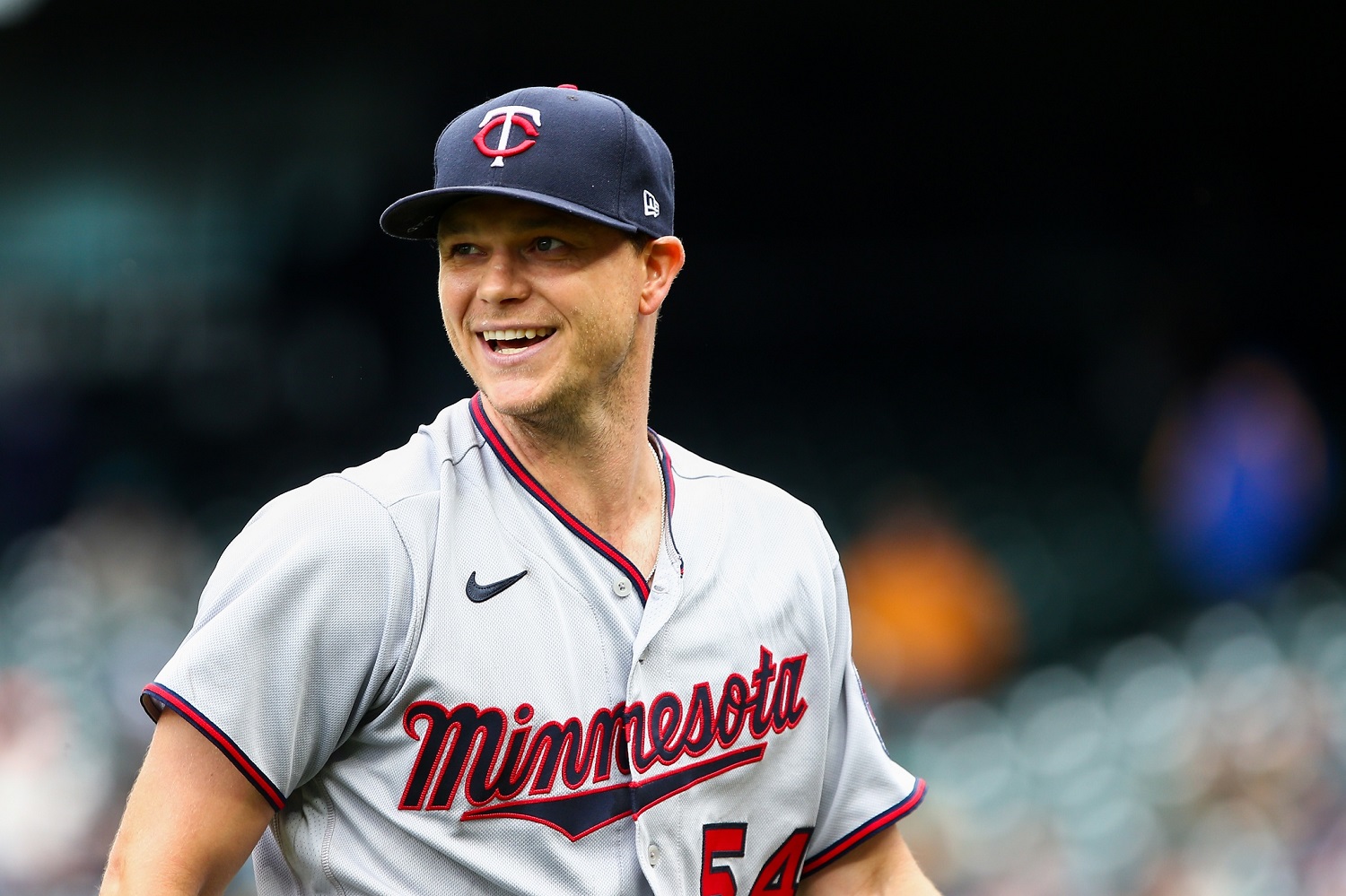 Pitchers and catchers officially report to spring training next week, and all eyes are going to be on a group of arms that make up the five-man starting rotation. Sure, a lot can happen throughout the course of the spring, but the club pretty much has five names penciled in for their starting corps. If healthy, veterans Tyler Mahle, Kenta Maeda, and Pablo Lopez join a rotation that will feature last year’s Opening Day starter, Joe Ryan. But the man that rounds out that group is the one that most closely resembles a frontline starter. Sonny Gray was limited to just 120 innings pitched last year, but he mostly showed the peripheral stats that offer ace-level upside when he was able to take the field. That resulted in strong surface-level marks, including a 3.08 ERA with a 1.13 WHIP. His 2.7 BB/9 was the strongest mark in his last six seasons, and while his 8.8 K/9 was his lowest rate since 2018, he was able to get outs by allowing fewer barreled balls (78th percentile). Unfortunately, a nagging hamstring issue put Gray on the shelf at various points during the 2022 campaign, including the final three weeks of the season. If these injury woes didn’t hold him back, how close would he be to a true ace? Let’s say he remained healthy enough to keep going at the same pace in the final three weeks last year. That probably equates to about four additional appearances, not to mention his final start on September 19th when he had to leave in the third inning due to his hamstring issue. So let’s say about five additional starts. If he averaged around five innings in each of those games, he would have 25 additional innings under his belt. That puts him at just about 150 innings pitched. That seems underwhelming at first, but it is definitely a full season in today’s major-league baseball. While it’s well below the American League leader (Framber Valdez, 201 IP), it puts him in the same conversation as other starting pitcher stars such as Luis Castillo (150 1/3 IP), Zack Wheeler (153 IP), Brandon Woodruff (153 1/3 IP) and Nestor Cortes (158 1/3 IP). All four of those pitchers have made All-Star game appearances in the last two years and are considered true frontline starters despite their lower innings totals. Gray’s ERA and WHIP marks in 2022 weren’t far off from these four either. Of course, this comparison is totally hypothetical. At the end of the day, Gray didn’t pitch those additional 25 innings, and who’s to say he would be just as effective if he had? But the point remains that his performance, when healthy, was commendable. So how can Gray and the Twins make sure that he’s in a position to remain mostly healthy in his contract year? First, a regular offseason is bound to help. Due to the MLB lockout, players weren’t allowed to contact team officials from early December through February last year, and that hurt a lot of pitchers, Gray included. They couldn’t get that necessary communication with the training staff and were essentially on their own for nearly three months. Then, spring training was delayed and shortened, and Gray needed extra time to ramp up his activity. That’s not a winning combination for a veteran pitcher that has a very particular process. This year should be much more normal for Gray and the rest of the pitchers around the league. He has a normal off-season operation, a regular spring training, and not to mention, the further all pitchers get from the pandemic-shortened 2020 season the better. So with more normalcy in his pre-season routine, can his tools carry him to ace status as he enters his age-33 season? To do that, he’ll need to continue to evolve as a pitcher with diminished velocity. His fastball averaged just 92.1 MPH last season, but he was able to rely on heavy spin rates to still use it effectively. His heater averaged 2485 RPM last season, which was the fifth-highest among pitchers with at least 80 innings pitched. Other names atop that leaderboard include Joe Musgrove, Julio Urias, and Dylan Cease. If he can pair that heavy fastball with his curveball that batters only hit at a .193 clip with just a .273 slugging percentage, then he should be able to maintain his effectiveness as he ages. He can’t rely on pumping his fastball past his opponents anymore, but he can use it in an effort to get weak contact or to set up his "yacker" later in the at-bat. So yes, Gray falls short of ace status as things currently stand, but he’s not far off from being a comfortable Game 1 starter in a playoff series. At the very least, he has put himself in the same conversation as the frontline starters listed above, each of whom has a star-level reputation. What are your thoughts on what constitutes an "Ace" in today's MLB? Do you agree that Sonny Gray is probably a touch below "Ace," but would you be comfortable with him as a Game 1 starter in a playoff series? Jump in the comments and let us know your thoughts.
 -
While the Twins’ 2023 rotation looks much deeper than last year’s group, many would say that they still lack a true ace on the staff. How close is Sonny Gray to being that guy? Image courtesy of Lindsey Wasson-USA TODAY Sports While the Twins’ 2023 rotation looks much deeper than last year’s group, many would say that they still lack a true ace on the staff. How close is Sonny Gray to being that guy? Pitchers and catchers officially report to spring training next week, and all eyes are going to be on a group of arms that make up the five-man starting rotation. Sure, a lot can happen throughout the course of the spring, but the club pretty much has five names penciled in for their starting corps. If healthy, veterans Tyler Mahle, Kenta Maeda, and Pablo Lopez join a rotation that will feature last year’s Opening Day starter, Joe Ryan. But the man that rounds out that group is the one that most closely resembles a frontline starter. Sonny Gray was limited to just 120 innings pitched last year, but he mostly showed the peripheral stats that offer ace-level upside when he was able to take the field. That resulted in strong surface-level marks, including a 3.08 ERA with a 1.13 WHIP. His 2.7 BB/9 was the strongest mark in his last six seasons, and while his 8.8 K/9 was his lowest rate since 2018, he was able to get outs by allowing fewer barreled balls (78th percentile). Unfortunately, a nagging hamstring issue put Gray on the shelf at various points during the 2022 campaign, including the final three weeks of the season. If these injury woes didn’t hold him back, how close would he be to a true ace? Let’s say he remained healthy enough to keep going at the same pace in the final three weeks last year. That probably equates to about four additional appearances, not to mention his final start on September 19th when he had to leave in the third inning due to his hamstring issue. So let’s say about five additional starts. If he averaged around five innings in each of those games, he would have 25 additional innings under his belt. That puts him at just about 150 innings pitched. That seems underwhelming at first, but it is definitely a full season in today’s major-league baseball. While it’s well below the American League leader (Framber Valdez, 201 IP), it puts him in the same conversation as other starting pitcher stars such as Luis Castillo (150 1/3 IP), Zack Wheeler (153 IP), Brandon Woodruff (153 1/3 IP) and Nestor Cortes (158 1/3 IP). All four of those pitchers have made All-Star game appearances in the last two years and are considered true frontline starters despite their lower innings totals. Gray’s ERA and WHIP marks in 2022 weren’t far off from these four either. Of course, this comparison is totally hypothetical. At the end of the day, Gray didn’t pitch those additional 25 innings, and who’s to say he would be just as effective if he had? But the point remains that his performance, when healthy, was commendable. So how can Gray and the Twins make sure that he’s in a position to remain mostly healthy in his contract year? First, a regular offseason is bound to help. Due to the MLB lockout, players weren’t allowed to contact team officials from early December through February last year, and that hurt a lot of pitchers, Gray included. They couldn’t get that necessary communication with the training staff and were essentially on their own for nearly three months. Then, spring training was delayed and shortened, and Gray needed extra time to ramp up his activity. That’s not a winning combination for a veteran pitcher that has a very particular process. This year should be much more normal for Gray and the rest of the pitchers around the league. He has a normal off-season operation, a regular spring training, and not to mention, the further all pitchers get from the pandemic-shortened 2020 season the better. So with more normalcy in his pre-season routine, can his tools carry him to ace status as he enters his age-33 season? To do that, he’ll need to continue to evolve as a pitcher with diminished velocity. His fastball averaged just 92.1 MPH last season, but he was able to rely on heavy spin rates to still use it effectively. His heater averaged 2485 RPM last season, which was the fifth-highest among pitchers with at least 80 innings pitched. Other names atop that leaderboard include Joe Musgrove, Julio Urias, and Dylan Cease. If he can pair that heavy fastball with his curveball that batters only hit at a .193 clip with just a .273 slugging percentage, then he should be able to maintain his effectiveness as he ages. He can’t rely on pumping his fastball past his opponents anymore, but he can use it in an effort to get weak contact or to set up his "yacker" later in the at-bat. So yes, Gray falls short of ace status as things currently stand, but he’s not far off from being a comfortable Game 1 starter in a playoff series. At the very least, he has put himself in the same conversation as the frontline starters listed above, each of whom has a star-level reputation. What are your thoughts on what constitutes an "Ace" in today's MLB? Do you agree that Sonny Gray is probably a touch below "Ace," but would you be comfortable with him as a Game 1 starter in a playoff series? Jump in the comments and let us know your thoughts. View full article
-
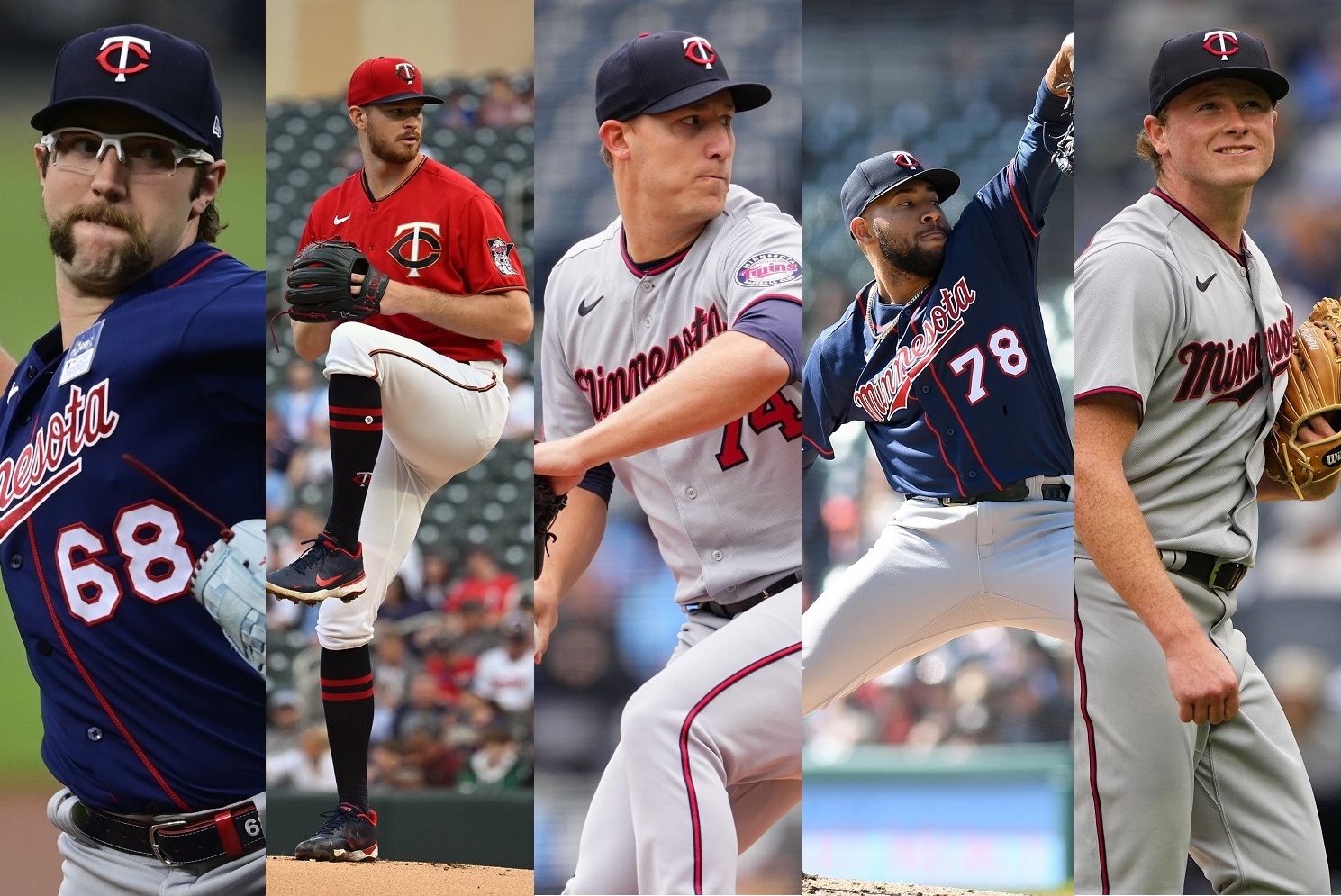 While many would argue that the starting rotation that breaks camp in late March is still lacking a true bonafide ace, there’s no arguing that the Twins have a much deeper class of pitchers than in recent years. Take the 2022 season as an example. As the campaign opened, the big-league starting corps consisted of Sonny Gray, Joe Ryan, Chris Paddack, Bailey Ober, Dylan Bundy, and Chris Archer. Even with a six-man rotation, the depth was tested early on. When the calendar flipped to May, Gray, and Ober both found themselves on the IL, with Josh Winder getting the call to fill in on the now five-man rotation. Just two weeks later, Paddack succumbed to an elbow injury and was replaced by Devin Smeltzer. Just weeks after that, the Twins trotted out Cole Sands and Chi Chi Gonzalez to fill out an even more depleted staff. As you can see, things can go south rather quickly when nagging injuries rise to the surface. That’s why depth is a critical aspect of building a competitive team. And this year, the group looks much deeper on paper. Beyond their projected major-league rotation consisting of Gray, Ryan, Pablo Lopez, Tyler Mahle, and Kenta Maeda, they actually have a full staff of quality starter options stashed across the river in St. Paul. Rather than relying on the likes of Smeltzer, Gonzalez, or Sands when someone in the big-league rotation goes down, the Twins are on track to have a much stronger group of replacements. This includes top prospects Simeon Woods Richardson (No. 5 on Twins Daily’s prospect rankings), Louie Varland (No. 7) and hopefully a healthy Jordan Balazovic (No. 15). It would also presumably feature Ober and Winder, two exciting young arms that have shown flashes of belonging in the MLB despite notable injuries over the last two years. They could also look at Ronny Henriquez (No. 16) and Cole Sands in the Saints’ rotation, though both finished the 2022 campaign in the bullpen and may be best suited for that role going forward. After that collection, a group of non-roster invitees could theoretically stick around depending on what opportunities present themselves at the end of spring training. This class includes Jose De Leon, Randy Dobnak, and Dereck Rodriguez. None of these are expected to be big contributors to the big league roster, but then again, neither were Gonzalez, Sands and Aaron Sanchez in 2022. Nevertheless, this year’s crop of starting pitcher options at Triple-A looks better equipped to answer the call when the time comes. But how do they compare to the rest of the AL Central? The Cleveland Guardians have the best MLB rotation in the division thanks to staff aces Shane Bieber and Triston McKenzie, as well as mid-rotation types such as Cal Quantrill, Aaron Civale, and Zach Plesac. But what if one or more go down with an injury? They’d be looking at the likes of Triple-A starters Xzavion Curry (their No. 23 ranked prospect according to Fangraphs), Hunter Gaddis (No. 37), and Konnor Pilkington. Each has already had a taste of MLB action, but none inspire much confidence. Other options include non-roster invitee Touki Toussaint, as well as Logan Allen (No. 4), but he would need to be added to their 40-man roster. On paper, the Chicago White Sox also have a strong MLB rotation to start the year. They’ll rely on stalwarts such as Lucas Giolito, Lance Lynn, and Dylan Cease, with Michael Kopech and Mike Clevinger (maybe?) rounding out their staff, albeit with less certainty due to an extensive injury history or off-the-field issues, respectively. Long story short, they have a likely chance of needing some reinforcements early on, and that’s where things get dicey on the south side. Next in line would be Davis Martin, Jonathan Stiever, and recent waiver-claim A.J. Alexy, who was just claimed from the Twins. All three have seen MLB action, but none have the prospect pedigree to suggest a breakout is imminent. Beyond that, the Sox are pretty short-handed thanks to a depleted farm system. The Detroit Tigers have many holes in their boat as they try to stay afloat after another front-office regime change. Starting pitching depth is among their biggest challenges. Their MLB rotation will most likely consist of Eduardo Rodriguez, Matthew Boyd, Michael Lorenzen, Matt Manning, and Spencer Turnbull. That staff would look a lot stronger if it included former top prospects Casey Mize and Tarik Skubal, but both are unlikely to be ready by opening day after having Tommy John and flexor tendon repair surgeries, respectively, in the second half of last year. Their Triple-A rotation will likely consist of Joey Wentz, Beau Brieske, Zach Logue, and Alex Faedo, who have each seen MLB action in the past year. After that, there really aren’t any top prospects or former big leaguers that project to be studying presences when the injury bug inevitably bites them. The Kansas City Royals may still be a few years away from competing for the division crown, but their starting rotation options are plentiful for the time being. Their opening day staff will likely consist of Zack Greinke, Jordan Lyles, Brady Singer, Ryan Yarbrough, and Brad Keller, pushing their younger options to Triple-A. These young arms consist of mostly high draft picks, including four pitchers that were all taken in 2018 and have made their MLB debuts. This class includes Daniel Lynch, Jonathan Heasley, Kris Bubic, and Jackson Kowar. Between them, they have combined for 674 innings at the MLB level, so they should be set when the time comes. As you can see from the rundown of the rest of the division, the Twins probably have the deepest starting pitcher corps even if it lacks the height seen in Cleveland or Chicago. The Royals have a similarly deep group at Triple-A, but their on-paper MLB rotation lacks the upside that can be seen in the Twins’ rotation. Does that mean the Twins are guaranteed to have the best pitching staff in the division? Absolutely not. But they are certainly better equipped to withstand a few injuries than they were last year. What do you think? Let us know in the comments whether you think the Twins’ pitching depth will be an asset or a liability this year.
- 30 comments
-
- 7
-
-
- sonny gray
- joe ryan
- (and 3 more)