



Greggory Masterson
-
Posts
819 -
Joined
-
Last visited
-
Days Won
2
Content Type
Profiles
News
Minnesota Twins Videos
2026 Minnesota Twins Top Prospects Ranking
2022 Minnesota Twins Draft Picks
Minnesota Twins Free Agent & Trade Rumors, Notes, & Tidbits
Guides & Resources
2023 Minnesota Twins Draft Picks
The Minnesota Twins Players Project
2024 Minnesota Twins Draft Picks
2025 Minnesota Twins Draft Pick Tracker
2026 Minnesota Twins Draft Tracker: Picks & Bonuses
Forums
Blogs
Events
Store
Downloads
Gallery
Everything posted by Greggory Masterson
-
 He can be sent down without waiving him. However if he’s called up, he can’t be sent down without waiving him again
 -
I think there’s a solid chance that he’d get claimed if that that happened but it would depend on the needs of the other 29 teams. I’d be stunned if he got waived over ST performance because that doesn’t really happen in modern baseball. However, even if he was passed through waivers, he has enough service time to refuse a trip to minors and would likely need to be released.
- 74 replies
-
- 2
-

-
- jay jackson
- steven okert
- (and 1 more)
-
Option restrictions play a big part in roster decisions. This spring, they may as well be that man behind the curtain controlling the Twins’ Opening Day roster--but you should pay attention to him. It’s essential to keep them in mind as you start to put together your own projected roster. Image courtesy of © Kim Klement Neitzel-USA TODAY Sports Spring training is often a time when big-league hopefuls compete against each other to etch out a spot on the parent club. The last couple spots of the bullpen, the fifth starter, the fourth outfielder, or the utility guy are often contested. Sometimes, even a starting role is fought over between two veterans. As time has passed, there have been fewer position battles, as teams tend to have a better idea of what each player on the roster is capable of, and less attention is paid to spring statistics. This year, it’s debatable how much flexibility for position battles the Twins have at all, but it’s not entirely because of clearly better or worse players—it’s also because of roster rules. Enter the minor league option. Once Opening Day arrives, I’ll publish a complete primer on options and which Twins have them, as I did last year, but it’s worth discussing a few cases during the spring. Very quickly, to be eligible for an MLB active roster, a player must be on that team’s expanded 40-man roster. A player on the 40-man roster can be in the majors or minors. If a player is sent to the minors while on the team’s 40-man roster, they must have option years remaining. If the player has no option years remaining, they must be exposed to waivers to be sent down. When a player is exposed to waivers, any team willing to pay their salary can acquire their services without the player or their original team having the ability to stop the move. Why does this matter? Several players in the organization are out of options, and need to either break camp with the Twins or pass through waivers to be sent to Triple-A St. Paul. Some of those players who are out of options aren’t send-down candidates anyway, as they’re expected to be significant contributors. Byron Buxton, Max Kepler, Carlos Correa, Pablo López, Caleb Thielbar, and Brock Stewart are all out of options, but none are in any danger of getting sent down (regardless of what you wanted them to do last May with Kepler). Other players who still have options can be considered locks to make the Opening Day roster, health permitting, such as Royce Lewis, Edouard Julien, Matt Wallner, Ryan Jeffers, Alex Kirilloff, Willi Castro, Joe Ryan, Bailey Ober, Jhoan Duran, Griffin Jax, and Justin Topa. You can quibble with a few of these, but seeing them not head north with the club would be surprising. If you haven’t been taking notes, that leaves three bench spots, two rotation spots, and three bullpen spots. But some of those are likely claimed. Three Bench Spots Unnamed in the top lists are Kyle Farmer and Christian Vazquez, both of whom have no options remaining but are still locks for the roster. Even if you believe Brooks Lee or Austin Martin should be the utility infielder or Jair Camargo should be the backup catcher, that can’t be solved by stashing Famer or Vazquez at Triple-A. They would need to be waived. Farmer and Vazquez are locks because they were out of options and paid a combined $16 million. There was one spot left that could have gone to minor leaguers like Martin, Camargo, Jose Miranda, or Yunior Severino, but, with the arrival of Manuel Margot, that's unlikely. Margot is also out of options, all but guaranteeing a spot on the bench. Two Starting Rotation Spots There are two spots beyond Lopez, Ryan, and Ober, but options also cloud the process of picking those pitchers. Chris Paddack and Anthony DeSclafani are out of options, effectively penning them into the fourth and fifth spots in the rotation. Even if the Twins are not excited about these two options (DeSclafani more likely than Paddack), they’re compelled to keep them there. Unfortunately for Louie Varland, Simeon Woods Richardson, David Festa, or even Randy Dobnak, those spots are filled by pitchers who can’t be sent down, which means that the youngsters will need to wait their time, no matter how much they dazzle in the spring. How long a leash DeSclafani will get if his 2022 and 2023 struggles continue is a good question, but for Opening Day, his status will likely make the Twins’ decision for them. Three Bullpen Spots The Twins boast one of—if not the—deepest bullpen in team history. Behind the top five already mentioned are veterans like Steven Okert, Jay Jackson, Josh Staumont, and Zack Weiss, along with organizational products like Jorge Alcala, Kody Funderburk, Josh Winder, Cole Sands, and Jordan Balazovic. There are a lot of names there, and it would be fun to watch a classic position battle for the last three spots, but options will get in the way again. Okert and Jackson are both out of options and making a few million dollars combined. That pretty much settles that debate. If the Twins are unwilling to expose those two veterans to waivers, they’re also locks for the Opening Day roster. That brings the count down to one bullpen role, with many pitchers who can fill it. Unfortunately, for fans who love watching position battles, that’s the only spot that isn’t occupied by a lock or a player out of options. As a side note, Balazovic is out of options but not on the 40-man roster, so he's fine to be sent to the minors. If he gets added to the Twins roster again, though, he'd need to be DFAd and clear waivers to be sent down. Conclusion So, to count off the players whose option status is nigh on guaranteed by their being out of options, we have Vazquez, Farmer, Margot, Paddack, DeSclafani, Okert, and Jackson. If you wonder why one of these bums (your words, not mine) is on the team over your favorite prospect, options are part of the reason. In truth, only one line won’t be occupied by a lock or a player out of options: the last reliever. Of course, injuries can change these situations, but it’s worth taking note of which players have little chance of not making the team, either because of their abilities or those pesky roster rules. Don’t say I didn’t warn ya! View full article
-
Key Minnesota Twins Who Are Out of Minor-League Options This Spring
Greggory Masterson posted an article in Twins
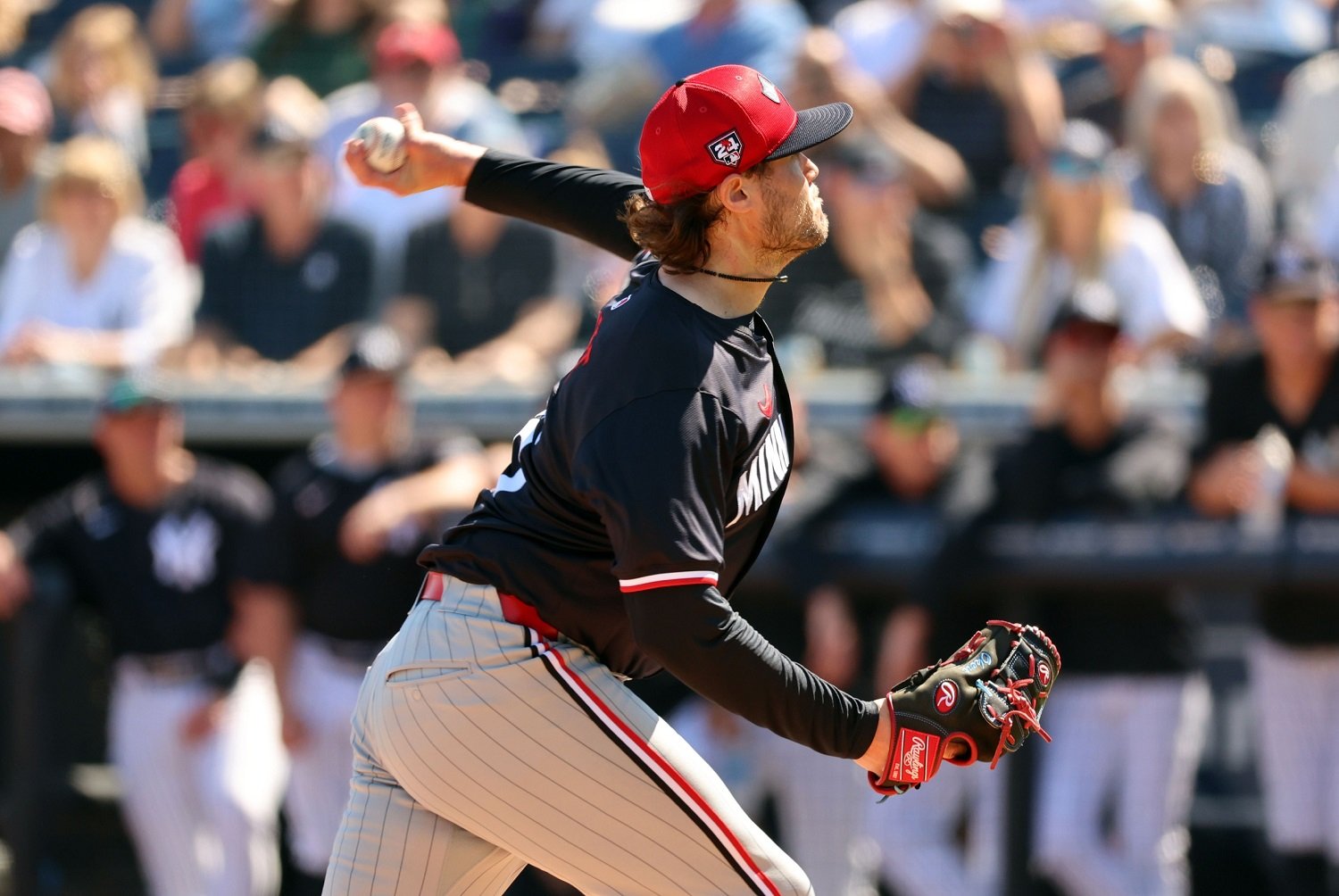 Spring training is often a time when big-league hopefuls compete against each other to etch out a spot on the parent club. The last couple spots of the bullpen, the fifth starter, the fourth outfielder, or the utility guy are often contested. Sometimes, even a starting role is fought over between two veterans. As time has passed, there have been fewer position battles, as teams tend to have a better idea of what each player on the roster is capable of, and less attention is paid to spring statistics. This year, it’s debatable how much flexibility for position battles the Twins have at all, but it’s not entirely because of clearly better or worse players—it’s also because of roster rules. Enter the minor league option. Once Opening Day arrives, I’ll publish a complete primer on options and which Twins have them, as I did last year, but it’s worth discussing a few cases during the spring. Very quickly, to be eligible for an MLB active roster, a player must be on that team’s expanded 40-man roster. A player on the 40-man roster can be in the majors or minors. If a player is sent to the minors while on the team’s 40-man roster, they must have option years remaining. If the player has no option years remaining, they must be exposed to waivers to be sent down. When a player is exposed to waivers, any team willing to pay their salary can acquire their services without the player or their original team having the ability to stop the move. Why does this matter? Several players in the organization are out of options, and need to either break camp with the Twins or pass through waivers to be sent to Triple-A St. Paul. Some of those players who are out of options aren’t send-down candidates anyway, as they’re expected to be significant contributors. Byron Buxton, Max Kepler, Carlos Correa, Pablo López, Caleb Thielbar, and Brock Stewart are all out of options, but none are in any danger of getting sent down (regardless of what you wanted them to do last May with Kepler). Other players who still have options can be considered locks to make the Opening Day roster, health permitting, such as Royce Lewis, Edouard Julien, Matt Wallner, Ryan Jeffers, Alex Kirilloff, Willi Castro, Joe Ryan, Bailey Ober, Jhoan Duran, Griffin Jax, and Justin Topa. You can quibble with a few of these, but seeing them not head north with the club would be surprising. If you haven’t been taking notes, that leaves three bench spots, two rotation spots, and three bullpen spots. But some of those are likely claimed. Three Bench Spots Unnamed in the top lists are Kyle Farmer and Christian Vazquez, both of whom have no options remaining but are still locks for the roster. Even if you believe Brooks Lee or Austin Martin should be the utility infielder or Jair Camargo should be the backup catcher, that can’t be solved by stashing Famer or Vazquez at Triple-A. They would need to be waived. Farmer and Vazquez are locks because they were out of options and paid a combined $16 million. There was one spot left that could have gone to minor leaguers like Martin, Camargo, Jose Miranda, or Yunior Severino, but, with the arrival of Manuel Margot, that's unlikely. Margot is also out of options, all but guaranteeing a spot on the bench. Two Starting Rotation Spots There are two spots beyond Lopez, Ryan, and Ober, but options also cloud the process of picking those pitchers. Chris Paddack and Anthony DeSclafani are out of options, effectively penning them into the fourth and fifth spots in the rotation. Even if the Twins are not excited about these two options (DeSclafani more likely than Paddack), they’re compelled to keep them there. Unfortunately for Louie Varland, Simeon Woods Richardson, David Festa, or even Randy Dobnak, those spots are filled by pitchers who can’t be sent down, which means that the youngsters will need to wait their time, no matter how much they dazzle in the spring. How long a leash DeSclafani will get if his 2022 and 2023 struggles continue is a good question, but for Opening Day, his status will likely make the Twins’ decision for them. Three Bullpen Spots The Twins boast one of—if not the—deepest bullpen in team history. Behind the top five already mentioned are veterans like Steven Okert, Jay Jackson, Josh Staumont, and Zack Weiss, along with organizational products like Jorge Alcala, Kody Funderburk, Josh Winder, Cole Sands, and Jordan Balazovic. There are a lot of names there, and it would be fun to watch a classic position battle for the last three spots, but options will get in the way again. Okert and Jackson are both out of options and making a few million dollars combined. That pretty much settles that debate. If the Twins are unwilling to expose those two veterans to waivers, they’re also locks for the Opening Day roster. That brings the count down to one bullpen role, with many pitchers who can fill it. Unfortunately, for fans who love watching position battles, that’s the only spot that isn’t occupied by a lock or a player out of options. As a side note, Balazovic is out of options but not on the 40-man roster, so he's fine to be sent to the minors. If he gets added to the Twins roster again, though, he'd need to be DFAd and clear waivers to be sent down. Conclusion So, to count off the players whose option status is nigh on guaranteed by their being out of options, we have Vazquez, Farmer, Margot, Paddack, DeSclafani, Okert, and Jackson. If you wonder why one of these bums (your words, not mine) is on the team over your favorite prospect, options are part of the reason. In truth, only one line won’t be occupied by a lock or a player out of options: the last reliever. Of course, injuries can change these situations, but it’s worth taking note of which players have little chance of not making the team, either because of their abilities or those pesky roster rules. Don’t say I didn’t warn ya!
- 74 comments
-
- 13
-
-
- jay jackson
- steven okert
- (and 1 more)
-
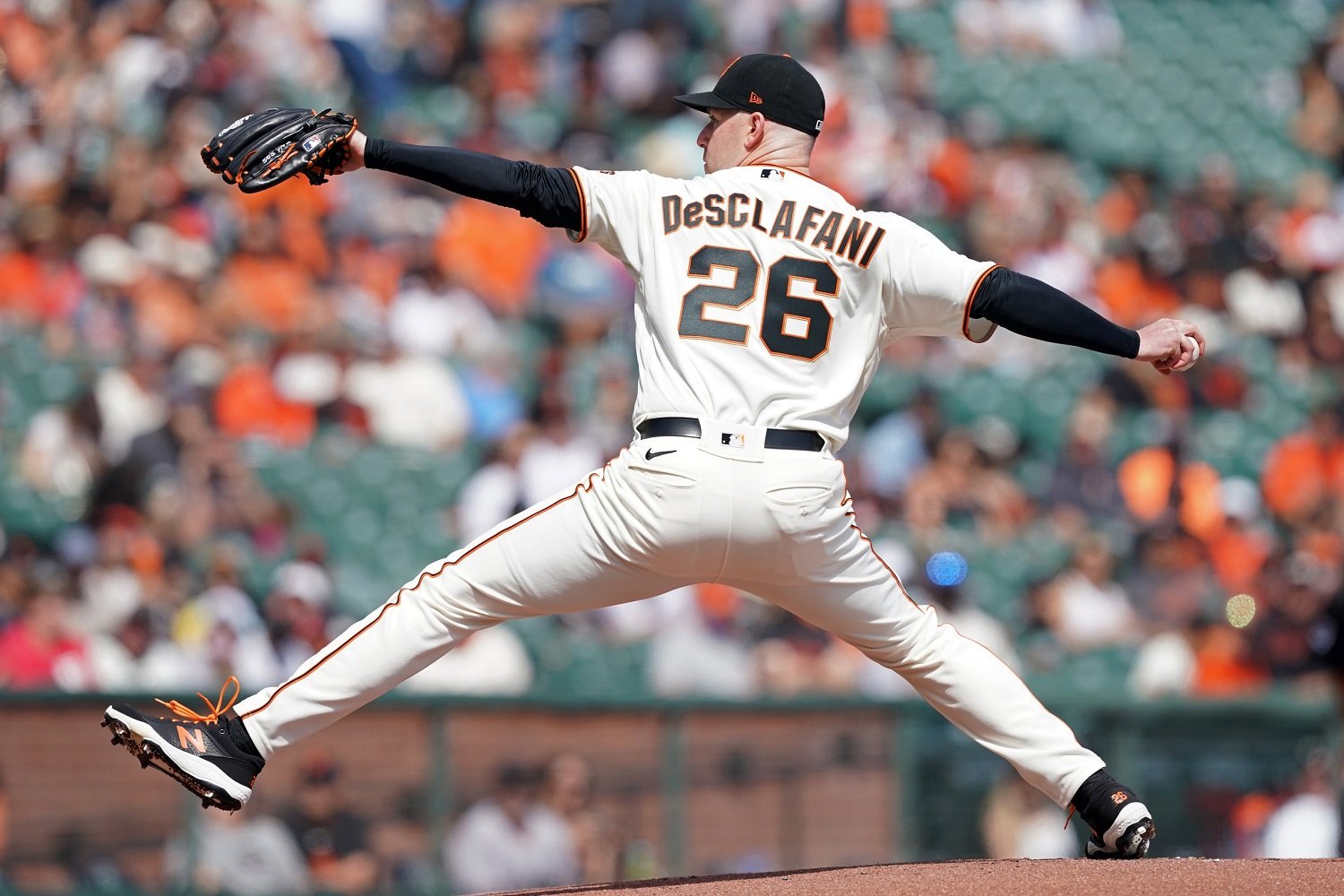 Imagine that—a Twins Daily writer is not only talking about four-seamers and sinkers, but this hurler's sinker in particular. If you haven’t already, check out Matt and Lucas’s Caretaker content on the topic. Anthony DeSclafani's career has been all over the place, with an ERA in the 3s every other year between 2015 (when he was 25) and 2022 (when he was 32)—with years in the 6s and 7s in between. He pitched well enough to earn a four-year, $48-million contract with San Francisco ahead of the 2021 season. Early results were solid, as he had a 3.17 ERA and 3.89 FIP in 167 innings in 2021. However, in the two years following that performance, he had a 5.16 ERA and 4.43 FIP in just 118 innings. The apparent culprit could be injury, but it’s never that simple. Part of the struggles may be an overreliance on his sinker. DeSclafani has always thrown both a sinker and a four-seamer, but he had thrown the fastball at least 50 percent more often than the sinker until 2022--at which point he began throwing the sinker twice as often as the fastball. Those familiar with the Giants and their pitching philosophy may already know why. Brian Bannister, the San Francisco director of pitching (fancy title, wow), could be affectionately referred to as a sinker wackadoodle. If you were labeled a sinker guy, you were throwing it early and often. DeSclafani was labeled a sinker guy. A redesign of his pitch mix may do him good, as Lucas Seehafer laid out in his Caretakers-exclusive article, relying more on his four-seamer at the expense of the sinker. His slider pairs better with it, and has been his most-thrown pitch over the last three years, and his most effective. Another option would be to retain both pitches and deploy them based on location, throwing fastballs high and sinkers down, or sinkers predominantly to righties and four-seamers to lefties, as he has been doing in recent years. Another less-discussed delineation that DeSclafani could make would be based on count. Blake Newberry of Viva el Birdos recently had a great breakdown of using the sinker as a pitch to get called strikes. Most of the time, pitches are thrown in the same direction that they break. Sliders are thrown to the glove side (as opposed to the arm side) because they are already breaking that way. So a right-handed pitcher will throw a slider that breaks away from righties or inside to lefties. It makes sense. The sinker has armside break. A righty’s sinker will move toward a right-handed batter and away from a left-handed batter. Therefore, throwing the sinker to the pitcher’s arm side has been popular—inside to righties and outside to lefties. DeSclafani has been doing both in recent years. Given Bannister’s pitching philosophy, he has been relying on the sinker in most fastball situations. He tends to throw in two spots—arm-side sinkers up (up and in to righties, up and outside to lefties) and glove-side sinkers down (low and outside to righties, low and inside to lefties). Newberry’s research suggests that glove-side sinkers have actually been more effective than arm-side sinkers. Beyond that, having already relied on sinkers to both sides, DeSclafani could be able to use his sinker in a way that is gaining popularity—as a strikeout pitch. It seems antithetical to say that. Sinkers are regaining popularity because they induce weak contact and grounders, not because they fool batters into swinging and missing. The thing is, that's not what makes a sinker a potential strikeout pitch—it's that they can fool batters into not swinging. Think about it like this: If an armside sinker breaks to the arm side, the break may bring it outside of the strike zone, preferably in on righties (if a right-handed pitcher like DeSclafani is pitching). If the batter swings, they’ll probably at least foul it off, and if it’s breaking in, it may be a ball that they can lay off. However, if the pitch is thrown well to the glove side, it will appear to be going out of the zone before snapping back in, hopefully catching the edge of the plate. Gloveside sinkers that catch the edge of the plate are only swung at about 40 percent of the time, giving the pitcher a shot at a free strike. More significantly, with two strikes, when the batter should be looking to make contact with anything in the zone, they still only swing at a gloveside sinker 60 to 65 percent of the time. Utilizing a good gloveside sinker in a strikeout count, at least recently, leads to a called third strike about a third of the time. And then, if the batter does swing, they’re making contact with a painted sinker, which limits the potential damage. Given DeSclafani’s existing ability to throw sinkers both glove- and armside, he could unlock another aspect of his game, relying more on the gloveside sinkers—pairing them with his great slider, which would also be thrown glove side, to make a hitter second-guess whether that pitch is going to break out of the zone or snap back into it. The front-door sinker is a strategy employed by Corey Kluber a decade ago in Cleveland, when Derek Falvey was in the organization, so it's not an outlandish idea. The primary question for DeSclafani in 2024 is whether the Twins can get him back to being a reliable presence in the rotation, not whether he can start a playoff game. Introducing this sinker strategy, while reincorporating his four-seamer and continuing to rely on his slider, could pay dividends in that endeavor. There are many adjustments that the organization could make to try to revive DeSclafani's career (or at least squeeze the remaining juice out of it), and this could be one of them.
 -
The Twins have a lot of innings to replace in 2024, and apparently, Anthony DeSclafani is part of their plan to do so. He's looking to regain his former reputation as a solid big-league starter after two injury-plagued seasons, and one important aspect of that is a careful mix of his two fastballs. Image courtesy of © Darren Yamashita-USA TODAY Sports Imagine that—a Twins Daily writer is not only talking about four-seamers and sinkers, but this hurler's sinker in particular. If you haven’t already, check out Matt and Lucas’s Caretaker content on the topic. Anthony DeSclafani's career has been all over the place, with an ERA in the 3s every other year between 2015 (when he was 25) and 2022 (when he was 32)—with years in the 6s and 7s in between. He pitched well enough to earn a four-year, $48-million contract with San Francisco ahead of the 2021 season. Early results were solid, as he had a 3.17 ERA and 3.89 FIP in 167 innings in 2021. However, in the two years following that performance, he had a 5.16 ERA and 4.43 FIP in just 118 innings. The apparent culprit could be injury, but it’s never that simple. Part of the struggles may be an overreliance on his sinker. DeSclafani has always thrown both a sinker and a four-seamer, but he had thrown the fastball at least 50 percent more often than the sinker until 2022--at which point he began throwing the sinker twice as often as the fastball. Those familiar with the Giants and their pitching philosophy may already know why. Brian Bannister, the San Francisco director of pitching (fancy title, wow), could be affectionately referred to as a sinker wackadoodle. If you were labeled a sinker guy, you were throwing it early and often. DeSclafani was labeled a sinker guy. A redesign of his pitch mix may do him good, as Lucas Seehafer laid out in his Caretakers-exclusive article, relying more on his four-seamer at the expense of the sinker. His slider pairs better with it, and has been his most-thrown pitch over the last three years, and his most effective. Another option would be to retain both pitches and deploy them based on location, throwing fastballs high and sinkers down, or sinkers predominantly to righties and four-seamers to lefties, as he has been doing in recent years. Another less-discussed delineation that DeSclafani could make would be based on count. Blake Newberry of Viva el Birdos recently had a great breakdown of using the sinker as a pitch to get called strikes. Most of the time, pitches are thrown in the same direction that they break. Sliders are thrown to the glove side (as opposed to the arm side) because they are already breaking that way. So a right-handed pitcher will throw a slider that breaks away from righties or inside to lefties. It makes sense. The sinker has armside break. A righty’s sinker will move toward a right-handed batter and away from a left-handed batter. Therefore, throwing the sinker to the pitcher’s arm side has been popular—inside to righties and outside to lefties. DeSclafani has been doing both in recent years. Given Bannister’s pitching philosophy, he has been relying on the sinker in most fastball situations. He tends to throw in two spots—arm-side sinkers up (up and in to righties, up and outside to lefties) and glove-side sinkers down (low and outside to righties, low and inside to lefties). Newberry’s research suggests that glove-side sinkers have actually been more effective than arm-side sinkers. Beyond that, having already relied on sinkers to both sides, DeSclafani could be able to use his sinker in a way that is gaining popularity—as a strikeout pitch. It seems antithetical to say that. Sinkers are regaining popularity because they induce weak contact and grounders, not because they fool batters into swinging and missing. The thing is, that's not what makes a sinker a potential strikeout pitch—it's that they can fool batters into not swinging. Think about it like this: If an armside sinker breaks to the arm side, the break may bring it outside of the strike zone, preferably in on righties (if a right-handed pitcher like DeSclafani is pitching). If the batter swings, they’ll probably at least foul it off, and if it’s breaking in, it may be a ball that they can lay off. However, if the pitch is thrown well to the glove side, it will appear to be going out of the zone before snapping back in, hopefully catching the edge of the plate. Gloveside sinkers that catch the edge of the plate are only swung at about 40 percent of the time, giving the pitcher a shot at a free strike. More significantly, with two strikes, when the batter should be looking to make contact with anything in the zone, they still only swing at a gloveside sinker 60 to 65 percent of the time. Utilizing a good gloveside sinker in a strikeout count, at least recently, leads to a called third strike about a third of the time. And then, if the batter does swing, they’re making contact with a painted sinker, which limits the potential damage. Given DeSclafani’s existing ability to throw sinkers both glove- and armside, he could unlock another aspect of his game, relying more on the gloveside sinkers—pairing them with his great slider, which would also be thrown glove side, to make a hitter second-guess whether that pitch is going to break out of the zone or snap back into it. The front-door sinker is a strategy employed by Corey Kluber a decade ago in Cleveland, when Derek Falvey was in the organization, so it's not an outlandish idea. The primary question for DeSclafani in 2024 is whether the Twins can get him back to being a reliable presence in the rotation, not whether he can start a playoff game. Introducing this sinker strategy, while reincorporating his four-seamer and continuing to rely on his slider, could pay dividends in that endeavor. There are many adjustments that the organization could make to try to revive DeSclafani's career (or at least squeeze the remaining juice out of it), and this could be one of them. View full article
-
In fairness, during his breakout 2021 in the minors, they did run him out in left field and abandoned it very quickly
- 47 replies
-
- 1
-
-
- michael a taylor
- carlos santana
- (and 1 more)
-
This is true, but why not find a right-handed version of Nick Gordon the outfielder, rather than starting the season with Nick Gordon the lefty who doesn’t have functional utility on this team? A lateral move would be welcome.
- 47 replies
-
- 2
-
-
- michael a taylor
- carlos santana
- (and 1 more)
-
In the wake of the Jorge Polanco trade, the Twins have cash to spend. Some of that has been directed toward the newest Twin, Carlos Santana, but is there room for another addition? The offseason is almost complete, but the Twins are just getting started. On Friday night, they filled the gap left by Jorge Polanco’s departure with a veteran slugging first baseman and designated hitter in Carlos Santana. The signing seemingly allows the Twins to feel comfortable with quality bats and flexibility at every spot in the lineup. So, what’s next? Santana’s signing was for slightly less than the money the Jorge Polanco trade saved, so they, at least, still have a little bit more cash than they did last week. Although the Twins appear to have a full roster, with a solid lineup and quality projected bench of Willi Castro, Kyle Farmer, Christian Vazquez, and Nick Gordon, there’s still room to improve if the Twins choose to do so. Santana solved the most significant hole in the roster, but as a first baseman or designated hitter, his presence doesn’t help at every position. One of the more significant areas for improvement is now in the outfield (as long as we’re ignoring the potential for a substantial rotation upgrade). Although the Twins have three quality outfielders in Byron Buxton, Max Kepler, and Matt Wallner, their depth is a bit more suspect—which is vital for a team counting on Buxton. At present, Castro and Gordon are the first line of defense in the outfield, with Trevor Larnach and potentially Austin Martin at Triple-A in waiting. Alex Kirilloff could also play a corner when necessary. It’s a motley crew, and it’s redundant. Castro, Gordon, Larnach, and Kirilloff all hit righties better than lefties. Castro and Gordon are super-utility players, and Martin could also be in the same role by midseason. Gordon, specifically, is coming off a disaster of a year following his popup breakout season in 2022. Everyone’s favorite hype man is in a position to get squeezed out. If Gordon does find himself waived or traded (as he has no options remaining) or if another outfielder is moved separately, there would be room to bring in a right-handed outfielder. The fit would be great, as a right-handed outfielder could serve as the top backup—allowing Castro to be utilized as an in-game substitution weapon more frequently. A right-handed outfielder can also serve as a platoon corner outfield bat alongside Castro against left-handed pitching, as Kepler and Wallner are lefties. If that player can play somewhat regularly against righties, then all the better. Who are the options for such a role? Trades are always a possibility, but they’re even more difficult to project than free agents, so let’s stick with free agency. The most obvious answer may be a reunion with Michael A. Taylor, coming off a year as the Twins' de facto center fielder, in which he hit 20 home runs and played stellar defense. If the Twins were to reunite with Taylor, he could easily be a platoon bat against lefties and start frequently in center field as needed. His return made less sense before Santana’s arrival, as he wouldn’t help the team nearly as much offensively and was not a candidate to fill a DH role. However, as a high-usage fourth outfielder, he would fit great into the current roster and provide functional utility on several fronts. Despite his below-average overall offensive numbers in 2023, he still had a .914 OPS against lefties, and the glove plays no matter who’s pitching. Furthermore, Taylor’s presence would allow the Twins to selectively rest Byron Buxton and do what they can to keep him as healthy as possible through 2024. No remaining free agent outfielders, short of Cody Bellinger, can provide that to the Twins. Taylor could be more interested in a proper everyday job. Beyond that, many have projected him to command a salary of around $9M, and his two comparable center fielders in this free agent class—Kevin Kiermaier and Harrison Bader—each signed for $10.5M in the past months. Still, this reunion makes more sense today than it did at this time yesterday. There are other options out there that may also make sense. Adam Duvall and Tommy Pham can both play center field (Duvall better than Pham) and would be complimentary everyday-worthy bats with the ability to play both corners. In contrast to Taylor, Duvall and Pham would provide more consistent thump and compete for DH action alongside Santana. Both Duvall and Pham were also projected to earn approximately $9M, but given that they’re still on the market in February, that price has likely come down (which may be true for Taylor as well). However, they both make a bit less sense after the Santana signing, as there’s less opportunity to get their bats in the lineup more regularly, but we’ll see if that comes to fruition. Randal Grichuk and Robbie Grossman are lesser options in this vein who probably shouldn’t play any center field (and honestly, Grossman may be a DH-only very soon). Both would cost less than Santana did (Grossman might even be a spring training invite candidate), so if the Twins are genuinely strapped for cash but desperate to bring someone in, their options are slightly better than whoever the 2024 Kyle Garlick equivalent may be. If the club were looking to bring in an outfielder with more utility, Whit Merrifield or Enrique Hernandez would add even more flexibility with their abilities to play on the dirt. However, the fit doesn't seem to be there with Farmer still on the team and Castro already in a super-utility role. The Twins have room to make one more move, and they still have some team needs they could reinforce. The good news is that some decent options remain. So, should the Twins try to bring in one more righty after the Santana deal? If so, who would you prefer it be? View full article
- 47 replies
-
- 1
-
-
- michael a taylor
- carlos santana
- (and 1 more)
-
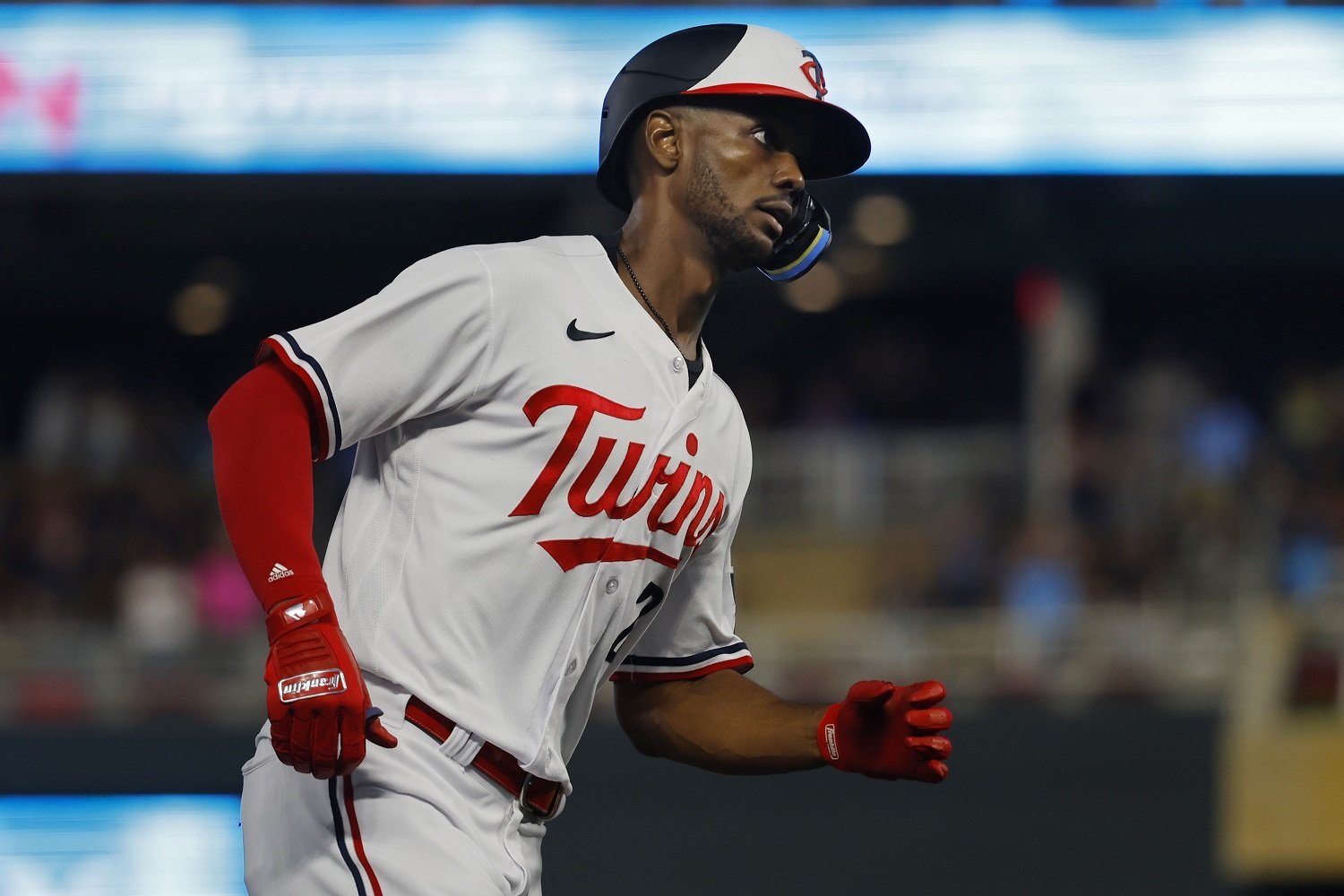 The offseason is almost complete, but the Twins are just getting started. On Friday night, they filled the gap left by Jorge Polanco’s departure with a veteran slugging first baseman and designated hitter in Carlos Santana. The signing seemingly allows the Twins to feel comfortable with quality bats and flexibility at every spot in the lineup. So, what’s next? Santana’s signing was for slightly less than the money the Jorge Polanco trade saved, so they, at least, still have a little bit more cash than they did last week. Although the Twins appear to have a full roster, with a solid lineup and quality projected bench of Willi Castro, Kyle Farmer, Christian Vazquez, and Nick Gordon, there’s still room to improve if the Twins choose to do so. Santana solved the most significant hole in the roster, but as a first baseman or designated hitter, his presence doesn’t help at every position. One of the more significant areas for improvement is now in the outfield (as long as we’re ignoring the potential for a substantial rotation upgrade). Although the Twins have three quality outfielders in Byron Buxton, Max Kepler, and Matt Wallner, their depth is a bit more suspect—which is vital for a team counting on Buxton. At present, Castro and Gordon are the first line of defense in the outfield, with Trevor Larnach and potentially Austin Martin at Triple-A in waiting. Alex Kirilloff could also play a corner when necessary. It’s a motley crew, and it’s redundant. Castro, Gordon, Larnach, and Kirilloff all hit righties better than lefties. Castro and Gordon are super-utility players, and Martin could also be in the same role by midseason. Gordon, specifically, is coming off a disaster of a year following his popup breakout season in 2022. Everyone’s favorite hype man is in a position to get squeezed out. If Gordon does find himself waived or traded (as he has no options remaining) or if another outfielder is moved separately, there would be room to bring in a right-handed outfielder. The fit would be great, as a right-handed outfielder could serve as the top backup—allowing Castro to be utilized as an in-game substitution weapon more frequently. A right-handed outfielder can also serve as a platoon corner outfield bat alongside Castro against left-handed pitching, as Kepler and Wallner are lefties. If that player can play somewhat regularly against righties, then all the better. Who are the options for such a role? Trades are always a possibility, but they’re even more difficult to project than free agents, so let’s stick with free agency. The most obvious answer may be a reunion with Michael A. Taylor, coming off a year as the Twins' de facto center fielder, in which he hit 20 home runs and played stellar defense. If the Twins were to reunite with Taylor, he could easily be a platoon bat against lefties and start frequently in center field as needed. His return made less sense before Santana’s arrival, as he wouldn’t help the team nearly as much offensively and was not a candidate to fill a DH role. However, as a high-usage fourth outfielder, he would fit great into the current roster and provide functional utility on several fronts. Despite his below-average overall offensive numbers in 2023, he still had a .914 OPS against lefties, and the glove plays no matter who’s pitching. Furthermore, Taylor’s presence would allow the Twins to selectively rest Byron Buxton and do what they can to keep him as healthy as possible through 2024. No remaining free agent outfielders, short of Cody Bellinger, can provide that to the Twins. Taylor could be more interested in a proper everyday job. Beyond that, many have projected him to command a salary of around $9M, and his two comparable center fielders in this free agent class—Kevin Kiermaier and Harrison Bader—each signed for $10.5M in the past months. Still, this reunion makes more sense today than it did at this time yesterday. There are other options out there that may also make sense. Adam Duvall and Tommy Pham can both play center field (Duvall better than Pham) and would be complimentary everyday-worthy bats with the ability to play both corners. In contrast to Taylor, Duvall and Pham would provide more consistent thump and compete for DH action alongside Santana. Both Duvall and Pham were also projected to earn approximately $9M, but given that they’re still on the market in February, that price has likely come down (which may be true for Taylor as well). However, they both make a bit less sense after the Santana signing, as there’s less opportunity to get their bats in the lineup more regularly, but we’ll see if that comes to fruition. Randal Grichuk and Robbie Grossman are lesser options in this vein who probably shouldn’t play any center field (and honestly, Grossman may be a DH-only very soon). Both would cost less than Santana did (Grossman might even be a spring training invite candidate), so if the Twins are genuinely strapped for cash but desperate to bring someone in, their options are slightly better than whoever the 2024 Kyle Garlick equivalent may be. If the club were looking to bring in an outfielder with more utility, Whit Merrifield or Enrique Hernandez would add even more flexibility with their abilities to play on the dirt. However, the fit doesn't seem to be there with Farmer still on the team and Castro already in a super-utility role. The Twins have room to make one more move, and they still have some team needs they could reinforce. The good news is that some decent options remain. So, should the Twins try to bring in one more righty after the Santana deal? If so, who would you prefer it be?
- 47 comments
-
- 2
-
-
- michael a taylor
- carlos santana
- (and 1 more)
-
I appreciate it—I’d like to respond to the points. What I meant by sad reality was from a fan’s attachment perspective. Yes, I want a competent front office to make these moves running my favorite team. However, it’s sad that we have to say goodbye to a fan favorite before he’s fallen off the cliff or is no longer under contract. For the second point, there are pretty widely-used estimates that convert value to dollars based on WAR. Those values are based on how much free agents are paid that year compared to how much WAR they put up. It’s not a perfect system, but it’s a good shorthand to see if a player was worth their salary. A contract extension also isn’t a free market—26M was what the Twins and only the Twins were willing to pay. None of the other 29 teams had a chance to negotiate with him. So his value could have definitely been higher on the free market
-
 You, personally, might have an opinion on the return for Jorge Polanco. Maybe it was a good deal; maybe the Twins were too concerned with shedding salary. Maybe it’s the worst deal since the Tommy Herr trade. Whatever your stance on it, though, in most situations, the Twins wouldn’t have had a chance to move him and recoup any value at all. Polanco surpassed six years of service time in 2022. Generally, a player who reaches six years of service will be a free agent. He may be subject to a qualifying offer, but the team cannot force him to accept it. In one of the most underrated extensions in recent baseball history, the Twins signed Polanco to a deal before his age-25 season in 2019—a year he started at shortstop in the All-Star Game. The guaranteed sum for Polanco was $25.75 million over five years, an average of a meager $5.15 million per season. Polanco had yet to reach arbitration, meaning he was still making approximately $500,000 per year, even though he had already spent parts of five seasons with the Twins. That contract gave him a raise to $3,583,333 in 2019, but it was also guaranteed to be under Twins control through 2023, a year past the point that he would otherwise have become a free agent. It may have been partly due to the guaranteed, life-changing money for the Dominican native. It may have also been related to his 2018 PED suspension, and general uncertainty. It could be because he had been in the Twins organization since he was 16 years old. There are likely other reasons, but Derek Falvey made a bet on his young shortstop, and it paid off for him. Max Kepler, who was also part of the 2009 international amateur signing class—along with Miguel Sanó—signed a similar deal at the same time. Both contracts paid off to different degrees, but this story is about Polanco. Polanco played 544 games during his five-year contract and hit .268/.337/.458, for a 117 OPS+. If you’re a WAR person, playing shortstop, second base, and third base to different extents, he accumulated 14.5 rWAR and 11.4 fWAR (worth over $90,000,000 no matter how it’s calculated), as compared to the $25,750,000 he was paid. That value would be a victory in itself, especially considering that he played for an extra year at a reasonable $7,500,000 contract in 2023, a number he surely would have surpassed on the open market. However, the most significant stroke was the additional two years of team options. (Technically, Polanco could have forced the team to retain him if he reached 550 plate appearances, but that’s also in the team’s control—he didn’t choose how much he played.) Those two option years, worth $10.5 million and $12 million in 2024 and 2025, respectively, gave the team incredible flexibility. Both sums are likely less than what Polanco would get on the free market, but they also retained the ability to be flexible in how they handled him. It’s fitting, really. Polanco has provided flexibility on the field his whole career. He’s played shortstop, willingly moved to second base to make room for Andrelton Simmons and later Carlos Correa, and he volunteered to cover third base in 2023—a 30-year-old veteran making room for the man who would eventually replace him. He switch-hits and has batted in every batting order spot (but primarily second, third, and leadoff). And yet, at the end of his Twins career, he provided more flexibility. No, he didn’t reach the end of the contract with the Twins, but most baseball decision-makers would tell you that that’s not an issue. This trade wouldn’t have been possible had he never signed an extension. He would already be playing elsewhere. The sad reality is that front offices are constantly playing a value game, trying to keep as much talent in the organization as possible. Sometimes, that requires selling high. Sometimes, that requires moving on before the player is no longer valuable, whether based on them leaving the team in free agency or their production diminishing. The Rays are notorious for selling off the back end of their larger contracts, for instance, even if the player is still producing. However, Polanco’s situation was nearly perfect for the Twins. If he had bottomed out—if the injuries had caught up to him, if the bat had slowed, whatever—they could wash their hands of him. If they truly needed him on the field—if there was no Edouard Julien, Brooks Lee, Royce Lewis—he would have been a fine option, retaining his role. However, the Twins were in a position to move him with a controllable contract that the Mariners could also wash their hands of after 2024. But had they not struck a deal in 2019, none of that would have been relevant. Polanco would be playing second base for, I don’t know, maybe even the Mariners. But the Twins would have nothing to show for it. Sometimes pre-arbitration extensions backfire, but this one paid off. Even at the moment, it was entirely sensible. It’s a victory that the Twins had a decision to make in the first place. I wish it didn’t have to be. I was hoping for a rotation of five good infielders patrolling the dirt (and also warming a spot for Lee) in 2024. I wish that the payroll wasn’t something you, me, or my cousin Geoff needed to concern ourselves with. But good baseball teams make these types of moves and work within the confines they’re given. So long, Jorge. And thanks for the parting gifts.
 -
The Twins’ longest-tenured player was traded on Monday for a return of four players. However, the Twins put themselves in a position to decide what to do with him on their terms way back in 2019. Image courtesy of © Matt Blewett-USA TODAY Sports You, personally, might have an opinion on the return for Jorge Polanco. Maybe it was a good deal; maybe the Twins were too concerned with shedding salary. Maybe it’s the worst deal since the Tommy Herr trade. Whatever your stance on it, though, in most situations, the Twins wouldn’t have had a chance to move him and recoup any value at all. Polanco surpassed six years of service time in 2022. Generally, a player who reaches six years of service will be a free agent. He may be subject to a qualifying offer, but the team cannot force him to accept it. In one of the most underrated extensions in recent baseball history, the Twins signed Polanco to a deal before his age-25 season in 2019—a year he started at shortstop in the All-Star Game. The guaranteed sum for Polanco was $25.75 million over five years, an average of a meager $5.15 million per season. Polanco had yet to reach arbitration, meaning he was still making approximately $500,000 per year, even though he had already spent parts of five seasons with the Twins. That contract gave him a raise to $3,583,333 in 2019, but it was also guaranteed to be under Twins control through 2023, a year past the point that he would otherwise have become a free agent. It may have been partly due to the guaranteed, life-changing money for the Dominican native. It may have also been related to his 2018 PED suspension, and general uncertainty. It could be because he had been in the Twins organization since he was 16 years old. There are likely other reasons, but Derek Falvey made a bet on his young shortstop, and it paid off for him. Max Kepler, who was also part of the 2009 international amateur signing class—along with Miguel Sanó—signed a similar deal at the same time. Both contracts paid off to different degrees, but this story is about Polanco. Polanco played 544 games during his five-year contract and hit .268/.337/.458, for a 117 OPS+. If you’re a WAR person, playing shortstop, second base, and third base to different extents, he accumulated 14.5 rWAR and 11.4 fWAR (worth over $90,000,000 no matter how it’s calculated), as compared to the $25,750,000 he was paid. That value would be a victory in itself, especially considering that he played for an extra year at a reasonable $7,500,000 contract in 2023, a number he surely would have surpassed on the open market. However, the most significant stroke was the additional two years of team options. (Technically, Polanco could have forced the team to retain him if he reached 550 plate appearances, but that’s also in the team’s control—he didn’t choose how much he played.) Those two option years, worth $10.5 million and $12 million in 2024 and 2025, respectively, gave the team incredible flexibility. Both sums are likely less than what Polanco would get on the free market, but they also retained the ability to be flexible in how they handled him. It’s fitting, really. Polanco has provided flexibility on the field his whole career. He’s played shortstop, willingly moved to second base to make room for Andrelton Simmons and later Carlos Correa, and he volunteered to cover third base in 2023—a 30-year-old veteran making room for the man who would eventually replace him. He switch-hits and has batted in every batting order spot (but primarily second, third, and leadoff). And yet, at the end of his Twins career, he provided more flexibility. No, he didn’t reach the end of the contract with the Twins, but most baseball decision-makers would tell you that that’s not an issue. This trade wouldn’t have been possible had he never signed an extension. He would already be playing elsewhere. The sad reality is that front offices are constantly playing a value game, trying to keep as much talent in the organization as possible. Sometimes, that requires selling high. Sometimes, that requires moving on before the player is no longer valuable, whether based on them leaving the team in free agency or their production diminishing. The Rays are notorious for selling off the back end of their larger contracts, for instance, even if the player is still producing. However, Polanco’s situation was nearly perfect for the Twins. If he had bottomed out—if the injuries had caught up to him, if the bat had slowed, whatever—they could wash their hands of him. If they truly needed him on the field—if there was no Edouard Julien, Brooks Lee, Royce Lewis—he would have been a fine option, retaining his role. However, the Twins were in a position to move him with a controllable contract that the Mariners could also wash their hands of after 2024. But had they not struck a deal in 2019, none of that would have been relevant. Polanco would be playing second base for, I don’t know, maybe even the Mariners. But the Twins would have nothing to show for it. Sometimes pre-arbitration extensions backfire, but this one paid off. Even at the moment, it was entirely sensible. It’s a victory that the Twins had a decision to make in the first place. I wish it didn’t have to be. I was hoping for a rotation of five good infielders patrolling the dirt (and also warming a spot for Lee) in 2024. I wish that the payroll wasn’t something you, me, or my cousin Geoff needed to concern ourselves with. But good baseball teams make these types of moves and work within the confines they’re given. So long, Jorge. And thanks for the parting gifts. View full article
-
Ryan Jeffers is a Return to Framing Form From Being an All-Star
Greggory Masterson posted an article in Twins
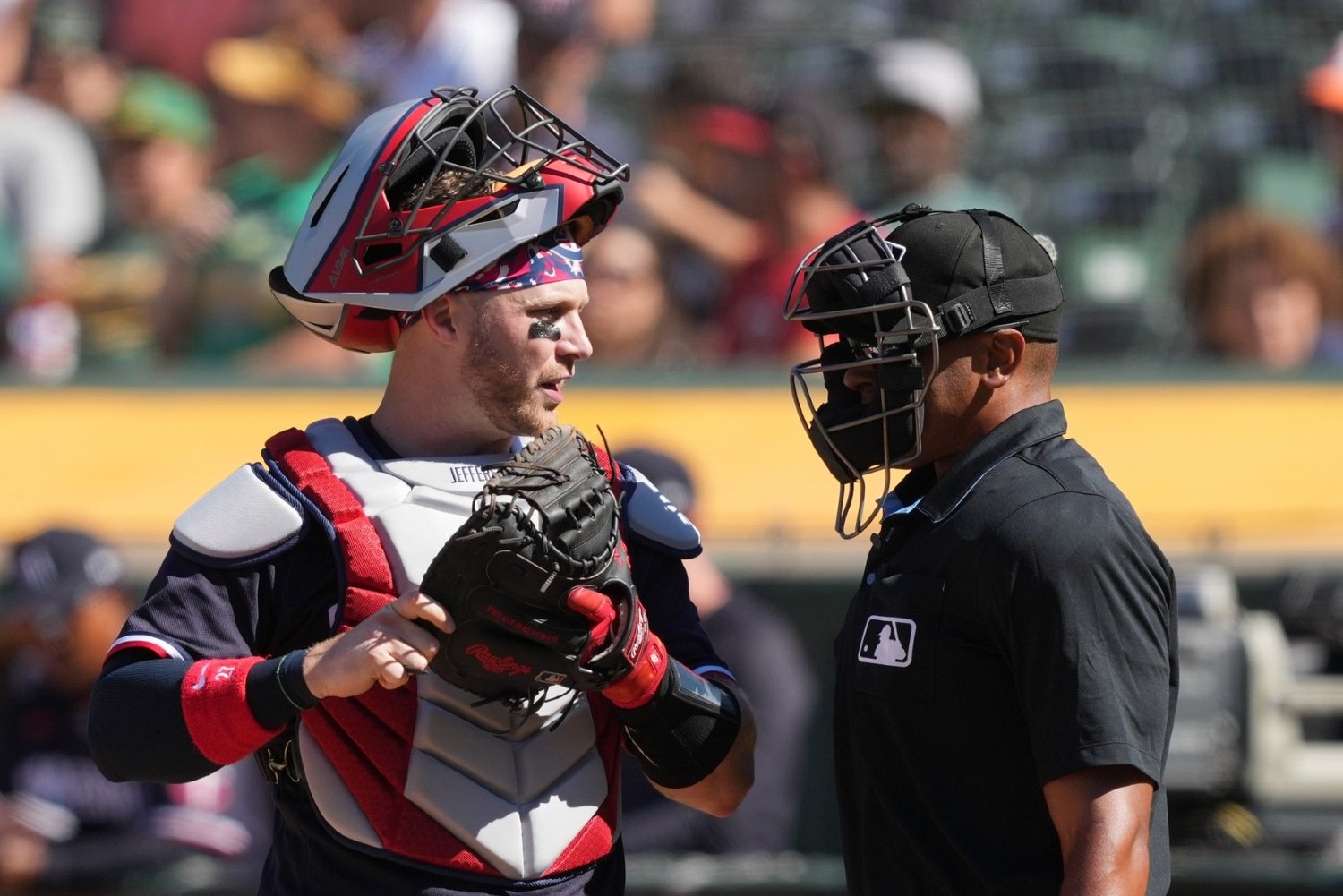 One of the most pleasant surprises in 2023 for the Minnesota Twins was Ryan Jeffers's year at the plate. In 335 plate appearances, he had an OPS of .858, 34 percent above league average, fueled by a second half in which he slashed .294/.379/.549. Among guys who primarily played catcher with at least 160 plate appearances, Jeffers had the best wRC+, at 138. A year like that was so unexpected that the Twins had brought in a defense-first catcher (in Christian Vázquez) on a three-year deal last offseason to start ahead of Jeffers. Despite Jeffers outhitting Vazquez by .260 in OPS, Vazquez accumulated 20 more plate appearances over the year. Though he started only 71 games at catcher, Jeffers was worth approximately three wins above replacement (WAR), according to both FanGraphs and Baseball Reference, which roughly translates to being an above-average regular on the year. Again, he did that, starting less than half the time behind the plate (and just six times as a designated hitter). The offense wasn't a surprise to those following Jeffers throughout his professional career: he had a reputation as a bat-first player. However, beyond a 19-game debut in the 2020 abbreviated season, Jeffers failed to hit a league-average level between 2021 and 2022. Nonetheless, his defensive ability behind the plate was rated favorably. The progress he's made so far is why Cody Christie wrote yesterday on the question of whether Jeffers is underrated on a national level. The defense, as opposed to his bat, was not expected to be a strength when drafted. As the years went by, Jeffers took a different profile annually. Let's start at the beginning. As noted, the Twins drafted him as a bat-first catcher out of UNC-Wilmington. In the 2018 draft, Baseball America had him ranked as the 295th prospect, though they assumed he could go somewhere in the middle of the top 10 rounds if a team believed in his bat. The Twins—in a pick that seemed at the time to be due to Andy Reid-level clock mismanagement—picked him in the second round. They did believe in his bat. At the time, many expected his days behind the plate would end. He was viewed as a potential first baseman or designated hitter because his work behind the plate wouldn't cut it. However, as a minor leaguer, with the help of catching coordinator Tanner Swanson, Jeffers improved his footwork and his ability to receive the ball. By the time he reached Double-A, he was viewed as a potential plus behind the plate, in addition to his dangerous bat. He broke into the Majors in 2020, putting up solid hitting numbers, and showed a penchant for pitch-framing—ensuring that all strikes are called strikes and even making some borderline balls out to be strikes. His style wasn't the most aesthetically pleasing--occasionally derided as "finger painting"--but it worked. He wasn't good at blocking pitches or throwing out baserunners, throwing out just two of 16 base stealers, but that could be overlooked (to a degree) due to his framing and his bat. That could be improved with the same amount of work he had put into receiving, right? In 2021, he fared better in both categories, per FanGraphs's catching metrics. However, he was still slightly below average at throwing runners out (24 percent caught stealing, as opposed to the general benchmark of 25 percent). However, in 2022, his metrics in both categories plummeted, including catching just seven of 38 runners (18 percent). Nonetheless, his strong framing kept him at least at a league-average level of defense overall. His offensive numbers between 2021 and 2022 didn't justify a starting role. A so-so defensive catcher with a mediocre bat is a backup. At least one of those traits needs to be above-average, so pairing him with an established veteran like Vázquez was a priority. Still, his pitch framing remained consistently effective—not elite, but enough to justify his presence behind the plate. If he could also improve in controlling the running game and blocking pitches in front of him, he could reach his ceiling as a plus catcher. He went through an arm-strengthening program before the 2023 season, determined to eliminate that weakness from his game. Despite a solid start to the year, based on numbers provided by FanGraphs, Jeffers caught just 14 percent of runners at second base, compared to a 29 percent expected rate, given the speed and position of the runners when he caught the ball. He caught five fewer runners than expected, 61st of 63 in the league. However, as in past years, his struggles with the running game could have been negated by his ability to frame pitches. Instead, surprisingly, Jeffers ranked in the bottom quartile of the league in framing runs with -4. For reference, he had two runs saved in 2021 and 2022 in less action each year. He negated two years of good pitch framing in a single year. I can't sit here and tell you definitively that he sacrificed his framing to be a better thrower behind the plate—though he did struggle mightily framing anything that wasn't up and to his left, despite previous success with pitches down in the zone. If there was a change in his approach to be better able to get rid of the ball that prevented him from getting those low calls—such as setting up less often on one knee—it might be worth reevaluating, though. For example, see the two videos below. The first is from 2022, as Jeffers gets a called strike off the plate. The second is from 2023, and he fails to get a strike call. In the second, he waits longer to get down, seemingly to hold the runner and stay in a position that allows him to get up. Furthermore, he catches the ball with his arm full extended, perhaps to get the ball as soon as possible, which leads to a jerkier receiving motion. d3pOODhfWGw0TUFRPT1fQXdoV1hWeFJYd0lBRGxwUVZnQUFBd2NGQUZnREFsZ0FCMVVIQlZjQkNRc0dBRlFF.mp4 eFprRFZfWGw0TUFRPT1fRGxWU1hGRUZVUUlBWFZ0VUF3QUFWd0VFQUZnQVVRSUFBd0JSVkZaUVVnRlRWVmNE.mp4 Neither his baserunner control nor his blocking saw any benefit to whatever changes he made coming into last season (if there were any any), to the point that he was (overall) a far worse than average defensive catcher, with all areas diminishing. If Jeffers can return to form with his framing in 2024, even without a marked improvement to his other abilities, he can elevate his game and become one of the league's top catchers. He might not repeat the offensive year that ranked him the top-hitting catcher. Still, if he can pair well-above-average offense with an average to above-average total defensive package, he could be one of the best overall catchers in the league. He's earned more time than he got in 2023. However, the Twins have tended to prefer a timeshare at catcher. If he starts 60 percent of the team's games, that would amount to 95 starts and approximately 400 plate appearances, giving him the potential to turn in a 4-WAR season—a good baseline standard for an All-Star. To be in that conversation, he must restore his framing to its former glory.
 -
Ryan Jeffers had a terrific offensive year in 2023. As he looks to build on it—or merely repeat it—he has room to grow, and returning to form defensively could help him garner All-Star attention. Image courtesy of © Darren Yamashita-USA TODAY Sports One of the most pleasant surprises in 2023 for the Minnesota Twins was Ryan Jeffers's year at the plate. In 335 plate appearances, he had an OPS of .858, 34 percent above league average, fueled by a second half in which he slashed .294/.379/.549. Among guys who primarily played catcher with at least 160 plate appearances, Jeffers had the best wRC+, at 138. A year like that was so unexpected that the Twins had brought in a defense-first catcher (in Christian Vázquez) on a three-year deal last offseason to start ahead of Jeffers. Despite Jeffers outhitting Vazquez by .260 in OPS, Vazquez accumulated 20 more plate appearances over the year. Though he started only 71 games at catcher, Jeffers was worth approximately three wins above replacement (WAR), according to both FanGraphs and Baseball Reference, which roughly translates to being an above-average regular on the year. Again, he did that, starting less than half the time behind the plate (and just six times as a designated hitter). The offense wasn't a surprise to those following Jeffers throughout his professional career: he had a reputation as a bat-first player. However, beyond a 19-game debut in the 2020 abbreviated season, Jeffers failed to hit a league-average level between 2021 and 2022. Nonetheless, his defensive ability behind the plate was rated favorably. The progress he's made so far is why Cody Christie wrote yesterday on the question of whether Jeffers is underrated on a national level. The defense, as opposed to his bat, was not expected to be a strength when drafted. As the years went by, Jeffers took a different profile annually. Let's start at the beginning. As noted, the Twins drafted him as a bat-first catcher out of UNC-Wilmington. In the 2018 draft, Baseball America had him ranked as the 295th prospect, though they assumed he could go somewhere in the middle of the top 10 rounds if a team believed in his bat. The Twins—in a pick that seemed at the time to be due to Andy Reid-level clock mismanagement—picked him in the second round. They did believe in his bat. At the time, many expected his days behind the plate would end. He was viewed as a potential first baseman or designated hitter because his work behind the plate wouldn't cut it. However, as a minor leaguer, with the help of catching coordinator Tanner Swanson, Jeffers improved his footwork and his ability to receive the ball. By the time he reached Double-A, he was viewed as a potential plus behind the plate, in addition to his dangerous bat. He broke into the Majors in 2020, putting up solid hitting numbers, and showed a penchant for pitch-framing—ensuring that all strikes are called strikes and even making some borderline balls out to be strikes. His style wasn't the most aesthetically pleasing--occasionally derided as "finger painting"--but it worked. He wasn't good at blocking pitches or throwing out baserunners, throwing out just two of 16 base stealers, but that could be overlooked (to a degree) due to his framing and his bat. That could be improved with the same amount of work he had put into receiving, right? In 2021, he fared better in both categories, per FanGraphs's catching metrics. However, he was still slightly below average at throwing runners out (24 percent caught stealing, as opposed to the general benchmark of 25 percent). However, in 2022, his metrics in both categories plummeted, including catching just seven of 38 runners (18 percent). Nonetheless, his strong framing kept him at least at a league-average level of defense overall. His offensive numbers between 2021 and 2022 didn't justify a starting role. A so-so defensive catcher with a mediocre bat is a backup. At least one of those traits needs to be above-average, so pairing him with an established veteran like Vázquez was a priority. Still, his pitch framing remained consistently effective—not elite, but enough to justify his presence behind the plate. If he could also improve in controlling the running game and blocking pitches in front of him, he could reach his ceiling as a plus catcher. He went through an arm-strengthening program before the 2023 season, determined to eliminate that weakness from his game. Despite a solid start to the year, based on numbers provided by FanGraphs, Jeffers caught just 14 percent of runners at second base, compared to a 29 percent expected rate, given the speed and position of the runners when he caught the ball. He caught five fewer runners than expected, 61st of 63 in the league. However, as in past years, his struggles with the running game could have been negated by his ability to frame pitches. Instead, surprisingly, Jeffers ranked in the bottom quartile of the league in framing runs with -4. For reference, he had two runs saved in 2021 and 2022 in less action each year. He negated two years of good pitch framing in a single year. I can't sit here and tell you definitively that he sacrificed his framing to be a better thrower behind the plate—though he did struggle mightily framing anything that wasn't up and to his left, despite previous success with pitches down in the zone. If there was a change in his approach to be better able to get rid of the ball that prevented him from getting those low calls—such as setting up less often on one knee—it might be worth reevaluating, though. For example, see the two videos below. The first is from 2022, as Jeffers gets a called strike off the plate. The second is from 2023, and he fails to get a strike call. In the second, he waits longer to get down, seemingly to hold the runner and stay in a position that allows him to get up. Furthermore, he catches the ball with his arm full extended, perhaps to get the ball as soon as possible, which leads to a jerkier receiving motion. d3pOODhfWGw0TUFRPT1fQXdoV1hWeFJYd0lBRGxwUVZnQUFBd2NGQUZnREFsZ0FCMVVIQlZjQkNRc0dBRlFF.mp4 eFprRFZfWGw0TUFRPT1fRGxWU1hGRUZVUUlBWFZ0VUF3QUFWd0VFQUZnQVVRSUFBd0JSVkZaUVVnRlRWVmNE.mp4 Neither his baserunner control nor his blocking saw any benefit to whatever changes he made coming into last season (if there were any any), to the point that he was (overall) a far worse than average defensive catcher, with all areas diminishing. If Jeffers can return to form with his framing in 2024, even without a marked improvement to his other abilities, he can elevate his game and become one of the league's top catchers. He might not repeat the offensive year that ranked him the top-hitting catcher. Still, if he can pair well-above-average offense with an average to above-average total defensive package, he could be one of the best overall catchers in the league. He's earned more time than he got in 2023. However, the Twins have tended to prefer a timeshare at catcher. If he starts 60 percent of the team's games, that would amount to 95 starts and approximately 400 plate appearances, giving him the potential to turn in a 4-WAR season—a good baseline standard for an All-Star. To be in that conversation, he must restore his framing to its former glory. View full article
-
All the title needs is the word “Permanently,” but it was already wordy enough, so I took that out.
-
We all saw what he could do in the pen. It’s tempting, but it’s not the time. Image courtesy of Jeffrey Becker-USA TODAY Sports It’s frankly a compliment to the Twins’ front office, amateur scouts, and player development that we’re even having this discussion. As a 15th-round pick in 2019, the bar was pretty low, but he’s vaulted over it, and now coaches and executives have a tricky question: let him continue to develop as a starter or turn him loose in the bullpen. Although Louie Varland was a relative unknown coming out of the draft, he has worked hard behind the scenes to add velocity to his fastball—which sat in the low 90s on draft day but now averages 95—and develop usable breaking pitches to add to his excellent control and extension. He’s already had some success as both a starter and a reliever. Through his first 12 career starts between 2022 and 2023, he had a sub-4.00 ERA, though his FIP was about a run higher than that due to a homerun per nine innings rate of nearly 2.00. The wheels came off in his final three starts, giving up 17 runs and five home runs in 15 innings with an opposing OPS of 1.101. Varland returned to St. Paul and stayed at the Twins’ Triple-A affiliate from June 18th until September 6th. Upon his return, a new Louie Varland was at manager Rocco Baldelli’s disposal, slinging his fastball up to the high 90s and touching 100. Over 12 relief innings, struck 17 batters out, holding them to a .471 OPS and allowing just two runs (1.50 ERA). In addition to pumping his fastball velocity, working out of the bullpen has also allowed him to rely more heavily on his fastball. Since leaving Division II Concordia-St. Paul with only a fastball, he’s experimented with several off-speed pitches to mixed results. If he’s a reliever, there will be less emphasis on developing those secondary pitches, which is another tick in favor of leaving him in the pen. However, there are two reasons that Varland should not be moved to the bullpen—just yet. First, he deserves one more shot at being a starter—something he’s openly opined for himself—and the Twins need to ensure they don’t start the permanent transition too early. Does Varland project as a frontline starter? No. At present, he seems like a competent backend option. Depending on his ceiling in the bullpen, there’s absolutely a case to be made that he would be more valuable in the eighth inning. However, the starting option should be exhausted before that move is made. With few exceptions, pitchers do not return from the bullpen to the rotation. If Varland can get his changeup or slider up to an above-league-average pitch, or if he further develops his cutter, he could have a role as a mid-rotation starter, and those do not grow on trees. There are often two reasons a career starter is permanently moved to the bullpen—ineffectiveness and injury. Current Twins examples include Griffin Jax and Jhoan Duran, respectively. Jax was cartoonishly ineffective as a 26-year-old rookie starter in 2022 (after the first time through the order), but his fastball and slider played enough to warrant work in the pen. Duran endured several injuries as a starter, and his raw stuff was begging for an MLB job anyway. Varland fits neither of those camps. Again, if he is revealed to be no more than a backend option, it’s probably time to let him cook as a reliever. However, given the time and effort he’s expended to get to the spot he’s in, few would be surprised if he took one more step and could be a mid-rotation arm. But to figure that out, the team must keep the toothpaste in the tube. The second reason is more practical and logistical. The Twins don’t have the depth right now to remove him from the mix. All indications suggest that the team will acquire another starter this offseason, bumping Varland out of the rotation, but as recent history indicates, teams need more than five MLB starters. Varland can slide into the next-man-up position occupied by Bailey Ober in 2023, on call in St. Paul until a rotation spot opens up—which is inevitable in modern MLB. He would be moved up from the seventh option that he occupied in 2023, a position that gave him 10 starts—and probably would have given him more opportunities were it not for Dallas Keuchel’s emergence as A Man Who Throws Innings midseason. Currently behind Varland on that depth chart are arms like Simeon Woods Richardson, David Festa, Brent Headrick, and Randy Dobnak. You might have your favorite of that lot, but if forced up to the sixth option—which meant 26 starts for Bailey Ober last year—there’s reason to be worried about the rotation. Keeping Varland there and giving the other options more time to separate themselves in St. Paul, or simply continue to develop, is the safest course of action. Another option is bringing in a veteran to occupy that sixth spot, which would make keeping Varland on standby less of a necessity, but that, too, is a logistic hard bargain. In order to bring a veteran in to sit in Triple-A, the organization probably needs to find a player with no offers to join a big-league team out of camp. That caliber of player is someone like late-career-Keuchel, Chi Chi Gonzalez, Aaron Sanchez, or Jose De Leon. None of those names inspire the same amount of confidence that Varland does. Bringing in someone with an opt-out for that position may raise the ceiling a bit on the type of veteran who can be stashed in St. Paul, but that’s still someone like 2020’s Jhoulys Chacín (who did, in fact, opt out before the Twins had reason to call him up. If starting pitching doesn’t work out for Varland in 2024, there’s plenty of room for him to transition. Shoot, even if he is an effective starter, he can still be bumped down to the pen in September for the playoff run, similar to how Kenta Maeda was handled in Los Angeles. It’s just not time to force it today. View full article
-
Moving Louie Varland to the Bullpen would be Malpractice
Greggory Masterson posted an article in Twins
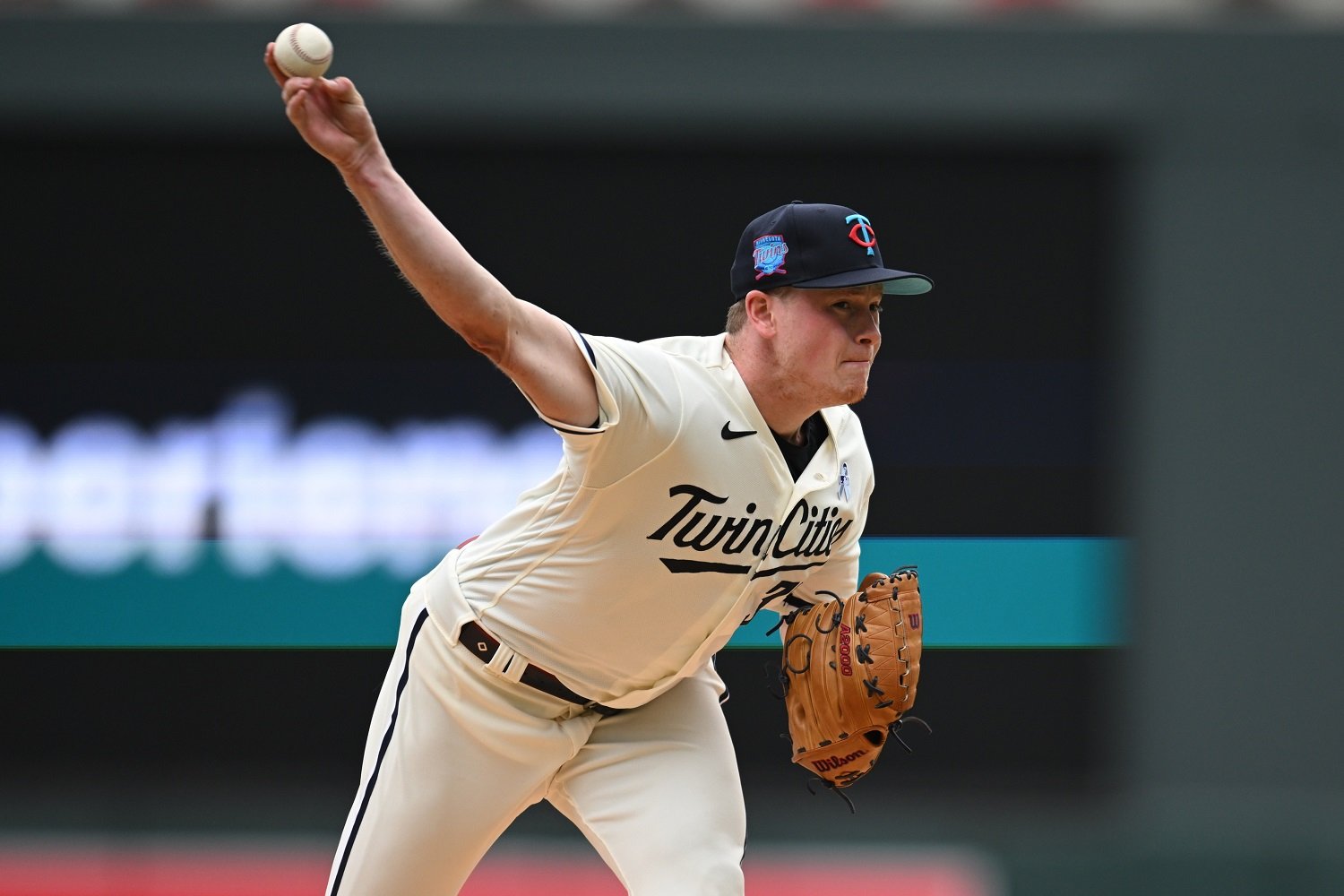 It’s frankly a compliment to the Twins’ front office, amateur scouts, and player development that we’re even having this discussion. As a 15th-round pick in 2019, the bar was pretty low, but he’s vaulted over it, and now coaches and executives have a tricky question: let him continue to develop as a starter or turn him loose in the bullpen. Although Louie Varland was a relative unknown coming out of the draft, he has worked hard behind the scenes to add velocity to his fastball—which sat in the low 90s on draft day but now averages 95—and develop usable breaking pitches to add to his excellent control and extension. He’s already had some success as both a starter and a reliever. Through his first 12 career starts between 2022 and 2023, he had a sub-4.00 ERA, though his FIP was about a run higher than that due to a homerun per nine innings rate of nearly 2.00. The wheels came off in his final three starts, giving up 17 runs and five home runs in 15 innings with an opposing OPS of 1.101. Varland returned to St. Paul and stayed at the Twins’ Triple-A affiliate from June 18th until September 6th. Upon his return, a new Louie Varland was at manager Rocco Baldelli’s disposal, slinging his fastball up to the high 90s and touching 100. Over 12 relief innings, struck 17 batters out, holding them to a .471 OPS and allowing just two runs (1.50 ERA). In addition to pumping his fastball velocity, working out of the bullpen has also allowed him to rely more heavily on his fastball. Since leaving Division II Concordia-St. Paul with only a fastball, he’s experimented with several off-speed pitches to mixed results. If he’s a reliever, there will be less emphasis on developing those secondary pitches, which is another tick in favor of leaving him in the pen. However, there are two reasons that Varland should not be moved to the bullpen—just yet. First, he deserves one more shot at being a starter—something he’s openly opined for himself—and the Twins need to ensure they don’t start the permanent transition too early. Does Varland project as a frontline starter? No. At present, he seems like a competent backend option. Depending on his ceiling in the bullpen, there’s absolutely a case to be made that he would be more valuable in the eighth inning. However, the starting option should be exhausted before that move is made. With few exceptions, pitchers do not return from the bullpen to the rotation. If Varland can get his changeup or slider up to an above-league-average pitch, or if he further develops his cutter, he could have a role as a mid-rotation starter, and those do not grow on trees. There are often two reasons a career starter is permanently moved to the bullpen—ineffectiveness and injury. Current Twins examples include Griffin Jax and Jhoan Duran, respectively. Jax was cartoonishly ineffective as a 26-year-old rookie starter in 2022 (after the first time through the order), but his fastball and slider played enough to warrant work in the pen. Duran endured several injuries as a starter, and his raw stuff was begging for an MLB job anyway. Varland fits neither of those camps. Again, if he is revealed to be no more than a backend option, it’s probably time to let him cook as a reliever. However, given the time and effort he’s expended to get to the spot he’s in, few would be surprised if he took one more step and could be a mid-rotation arm. But to figure that out, the team must keep the toothpaste in the tube. The second reason is more practical and logistical. The Twins don’t have the depth right now to remove him from the mix. All indications suggest that the team will acquire another starter this offseason, bumping Varland out of the rotation, but as recent history indicates, teams need more than five MLB starters. Varland can slide into the next-man-up position occupied by Bailey Ober in 2023, on call in St. Paul until a rotation spot opens up—which is inevitable in modern MLB. He would be moved up from the seventh option that he occupied in 2023, a position that gave him 10 starts—and probably would have given him more opportunities were it not for Dallas Keuchel’s emergence as A Man Who Throws Innings midseason. Currently behind Varland on that depth chart are arms like Simeon Woods Richardson, David Festa, Brent Headrick, and Randy Dobnak. You might have your favorite of that lot, but if forced up to the sixth option—which meant 26 starts for Bailey Ober last year—there’s reason to be worried about the rotation. Keeping Varland there and giving the other options more time to separate themselves in St. Paul, or simply continue to develop, is the safest course of action. Another option is bringing in a veteran to occupy that sixth spot, which would make keeping Varland on standby less of a necessity, but that, too, is a logistic hard bargain. In order to bring a veteran in to sit in Triple-A, the organization probably needs to find a player with no offers to join a big-league team out of camp. That caliber of player is someone like late-career-Keuchel, Chi Chi Gonzalez, Aaron Sanchez, or Jose De Leon. None of those names inspire the same amount of confidence that Varland does. Bringing in someone with an opt-out for that position may raise the ceiling a bit on the type of veteran who can be stashed in St. Paul, but that’s still someone like 2020’s Jhoulys Chacín (who did, in fact, opt out before the Twins had reason to call him up. If starting pitching doesn’t work out for Varland in 2024, there’s plenty of room for him to transition. Shoot, even if he is an effective starter, he can still be bumped down to the pen in September for the playoff run, similar to how Kenta Maeda was handled in Los Angeles. It’s just not time to force it today.
 -
 Let’s be blunt. The Twins spent a few years giving contracts to bad starting pitchers. Since 2020, the Twins have signed six starting pitchers to MLB deals in free agency. Five were out of baseball the following year, and the other is 43-year-old Rich Hill, looking for his 14th MLB team this offseason. These signings get lumped together regularly. You’ll probably hear the list rattled off by a cynical friend when the topic of the Twins going after starting pitching comes up. You might have it memorized yourself for just such an occasion. However, looking at it retrospectively, the only thing the names on the list share is that they didn’t work out. Derek Falvey has preferred to trade for front-end starters and sign backend starters, so it makes sense that few free agent gambits have paid off. I ask you, though, is there a process that links the signings together? Once in a while, Twins Daily lets me grind an axe, and it’s Christmas, so here I am. A company man, through, and through, I’m going to explain why each of those bargain bin pitchers was acquired via a different process, and it doesn’t do justice to lump them in as one coherent philosophical shortcoming. First though, as an overarching idea—I want to stress that none of the names here were acquired to pitch Game 2 at Yankee Stadium, so they need to be analyzed as what they are—backend starter options. None were signed to deals north of $8 million, so expectations should have been low at the onset. Dylan Bundy, 2022 Let’s start with the face of the list. Despite having a Number 4 overall draft pick pedigree, Bundy never lived up to his hype, but he was a fine pitcher in Baltimore. By fine, I mean that a team wouldn’t lose sleep over him living in the back of the rotation. He had a terrific 2020 abbreviated season with the Angels, placing ninth in the American League Cy Young voting, but then he bottomed out in 2021 while also dealing with injury. Leading into the 2022 lockout, the Twins had a rotation that featured Joe Ryan, Bailey Ober, and—well—not much. Griffin Jax was penciled into a spot. The day before the lockout began, the Twins signed Bundy to a $5 million deal with an option for $10 million in 2023. It’s a bit unreasonable to get too upset at the team facing an uncertainty like a lockout just trying to find someone to pencil in and start to fill in a nonexistent rotation. Bundy carried with him the potential to be something more, as well. It didn’t come to fruition, though. Chris Archer, 2022 Archer signed a similar deal to Bundy, though only earning $2.75 in the first year before the option. Archer’s story was similar to Bundy's, though more extreme. Four years and several surgeries removed from his two All-Star nominations, Archer was recovering from yet another surgery going into the 2022 season. There were more questions about Archer than Bundy, but the ceiling would undoubtedly be higher if the Twins could assist him through a healthy recovery. The rotation had one more empty spot after the additions of Bundy and Sonny Gray (via trade). Other options to fill the final spot included Johnny Cueto. In the past, the club had been criticized for setting the ceiling too low in their signings, and Archer had as high a ceiling as nearly anyone that offseason—he could reasonably have been a low playoff starter, given a return to form—but his risk was nearly as high. In the end, he was moderately effective but rarely had the juice to finish the fifth inning. JA Happ, 2021 Happ was the polar inverse of Archer, and his struggles may have been some of the impetus for the Twins to opt for Archer over an innings eater like Cueto. Happ was 38 and at the end of a career that had seen him throw for a 3.98 ERA over 14 years. The one-time All-Star was a World Series winner in 2008 and the platonic ideal of a competent backend starter. The Twins already had Kenta Maeda, Jose Berrios, and Michael Pineda penciled in as arms they were happy to roll with in 2021, and adding Happ was supposed to provide reliable, veteran stability at the back end, so he was paid a moderate $8 million to do so. However, Father Time catches up to all of us, and Happ reached the end of his rope. Those types of things happen. But he wasn’t a reclamation project like Bundy or Archer, and no one was dreaming big on him. They just wanted some competent innings, and Happ failed to deliver. Matt Shoemaker, 2021 (or The Shoe, if you please) Shoemaker is the most puzzling signing on this list if you ignore all of the context. Randy Dobnak, coming off two promising partial seasons, was slated to fill the fifth spot, but to add a bit of depth, the team brought in Shoemaker to bump Dobnak down a peg. Who was Shoemaker? A pitcher who had a few decent years in his late 20s but was 34 and working on coming back from several injuries. Call him the proto-Archer, if you will. The Twins didn’t break the bank on him, paying him just $2 million. The idea was simple: if it works, keep him, and if it doesn’t, cut him free. It didn’t work. However, to make matters worse, the cavalry didn’t come. Although they did part with him, the Twins finished the year getting starts from Griffin Jax, Charlie Barnes, John Gant, and several other unfortunate names. Had Dobnak been healthy and taken his spot when it was clear he didn’t have it anymore, it would have been a failed experiment. No matter what, though, it’s not as if the Twins staked their season or drained their pockets on the Matt Shoemaker Experiment. He was essentially a minor league veteran who skipped a step and broke camp with the team. Homer Bailey, 2020 If Shoemaker was the proto-Archer, Bailey was the proto-Happ. However, the signs were much more evident that his time was running out. From 2009 to 2014, his ERA started with a 3, and he was a competent innings eater, when healthy. However, it was 2020, and he had a 5.56 ERA since 2015, throwing fewer than 400 innings in five years. The Twins were in a strange place, having swung and missed on frontline starters in free agency like Zack Wheeler, and although they would go on to trade for Kenta Maeda, they needed some depth to pair with Berrios and Jake Odorizzi. However, another factor was at play—both Pineda (serving a PED suspension) and Hill (recovering from Tommy John surgery) were slated to miss the first months of the season. The Twins needed someone to throw innings in April, May, and June, keeping the seat warm for Pineda and Hill, so the Bailey signing, or something like it, was necessary, if only to reach the summer. It’s hard to knock them for not getting another frontline pitcher, but choosing Bailey specifically is a bit of a headscratcher. He would also only throw eight innings for the Twins, adding to his thief in the night legend. Conclusion So why have I been prattling on about a bunch of pitchers who didn’t work out in Minnesota? Maybe it’s because I’m a pedant. Something about me gets annoyed when I hear all of these pitchers lumped in together as if there was a connecting tissue among their signings. There were factors like suspensions, depth, and a lockout that played into each signing, and each pitcher was valued for different reasons, to different degrees. Matt Shoemaker and JA Happ are in no way the same concept, nor were they expected to serve the same role. I just get annoyed when these mistakes are all made out to be one idea. Was this a waste of time to write and read? Sound off in the comments. Also, before you ask, let’s speed run the rest (who may or may not be on your list, depending on how crotchety you are). Rich Hill: did exactly what was asked of him; stop complaining about a journeyman fifth starter. Martin Perez: almost had it, but also did what was expected of him. Lance Lynn (he hated it here, and he was grumpy, and it makes Minnesotans sad): weird situation; he was good for 11 years as long as he wasn’t in Minnesota. Michael Pineda: good signing; if you list him, I don’t know what to tell you.
- 19 comments
-
- 7
-
-

-
- dylan bundy
- chris archer
- (and 5 more)
-
We all know the list. You probably just said it in your own head. Did you stop before or after Rich Hill? Do all the names on that list belong on that list? Do they each deserve the same amount of scorn? Image courtesy of Nick Turchiaro-USA TODAY Sports Let’s be blunt. The Twins spent a few years giving contracts to bad starting pitchers. Since 2020, the Twins have signed six starting pitchers to MLB deals in free agency. Five were out of baseball the following year, and the other is 43-year-old Rich Hill, looking for his 14th MLB team this offseason. These signings get lumped together regularly. You’ll probably hear the list rattled off by a cynical friend when the topic of the Twins going after starting pitching comes up. You might have it memorized yourself for just such an occasion. However, looking at it retrospectively, the only thing the names on the list share is that they didn’t work out. Derek Falvey has preferred to trade for front-end starters and sign backend starters, so it makes sense that few free agent gambits have paid off. I ask you, though, is there a process that links the signings together? Once in a while, Twins Daily lets me grind an axe, and it’s Christmas, so here I am. A company man, through, and through, I’m going to explain why each of those bargain bin pitchers was acquired via a different process, and it doesn’t do justice to lump them in as one coherent philosophical shortcoming. First though, as an overarching idea—I want to stress that none of the names here were acquired to pitch Game 2 at Yankee Stadium, so they need to be analyzed as what they are—backend starter options. None were signed to deals north of $8 million, so expectations should have been low at the onset. Dylan Bundy, 2022 Let’s start with the face of the list. Despite having a Number 4 overall draft pick pedigree, Bundy never lived up to his hype, but he was a fine pitcher in Baltimore. By fine, I mean that a team wouldn’t lose sleep over him living in the back of the rotation. He had a terrific 2020 abbreviated season with the Angels, placing ninth in the American League Cy Young voting, but then he bottomed out in 2021 while also dealing with injury. Leading into the 2022 lockout, the Twins had a rotation that featured Joe Ryan, Bailey Ober, and—well—not much. Griffin Jax was penciled into a spot. The day before the lockout began, the Twins signed Bundy to a $5 million deal with an option for $10 million in 2023. It’s a bit unreasonable to get too upset at the team facing an uncertainty like a lockout just trying to find someone to pencil in and start to fill in a nonexistent rotation. Bundy carried with him the potential to be something more, as well. It didn’t come to fruition, though. Chris Archer, 2022 Archer signed a similar deal to Bundy, though only earning $2.75 in the first year before the option. Archer’s story was similar to Bundy's, though more extreme. Four years and several surgeries removed from his two All-Star nominations, Archer was recovering from yet another surgery going into the 2022 season. There were more questions about Archer than Bundy, but the ceiling would undoubtedly be higher if the Twins could assist him through a healthy recovery. The rotation had one more empty spot after the additions of Bundy and Sonny Gray (via trade). Other options to fill the final spot included Johnny Cueto. In the past, the club had been criticized for setting the ceiling too low in their signings, and Archer had as high a ceiling as nearly anyone that offseason—he could reasonably have been a low playoff starter, given a return to form—but his risk was nearly as high. In the end, he was moderately effective but rarely had the juice to finish the fifth inning. JA Happ, 2021 Happ was the polar inverse of Archer, and his struggles may have been some of the impetus for the Twins to opt for Archer over an innings eater like Cueto. Happ was 38 and at the end of a career that had seen him throw for a 3.98 ERA over 14 years. The one-time All-Star was a World Series winner in 2008 and the platonic ideal of a competent backend starter. The Twins already had Kenta Maeda, Jose Berrios, and Michael Pineda penciled in as arms they were happy to roll with in 2021, and adding Happ was supposed to provide reliable, veteran stability at the back end, so he was paid a moderate $8 million to do so. However, Father Time catches up to all of us, and Happ reached the end of his rope. Those types of things happen. But he wasn’t a reclamation project like Bundy or Archer, and no one was dreaming big on him. They just wanted some competent innings, and Happ failed to deliver. Matt Shoemaker, 2021 (or The Shoe, if you please) Shoemaker is the most puzzling signing on this list if you ignore all of the context. Randy Dobnak, coming off two promising partial seasons, was slated to fill the fifth spot, but to add a bit of depth, the team brought in Shoemaker to bump Dobnak down a peg. Who was Shoemaker? A pitcher who had a few decent years in his late 20s but was 34 and working on coming back from several injuries. Call him the proto-Archer, if you will. The Twins didn’t break the bank on him, paying him just $2 million. The idea was simple: if it works, keep him, and if it doesn’t, cut him free. It didn’t work. However, to make matters worse, the cavalry didn’t come. Although they did part with him, the Twins finished the year getting starts from Griffin Jax, Charlie Barnes, John Gant, and several other unfortunate names. Had Dobnak been healthy and taken his spot when it was clear he didn’t have it anymore, it would have been a failed experiment. No matter what, though, it’s not as if the Twins staked their season or drained their pockets on the Matt Shoemaker Experiment. He was essentially a minor league veteran who skipped a step and broke camp with the team. Homer Bailey, 2020 If Shoemaker was the proto-Archer, Bailey was the proto-Happ. However, the signs were much more evident that his time was running out. From 2009 to 2014, his ERA started with a 3, and he was a competent innings eater, when healthy. However, it was 2020, and he had a 5.56 ERA since 2015, throwing fewer than 400 innings in five years. The Twins were in a strange place, having swung and missed on frontline starters in free agency like Zack Wheeler, and although they would go on to trade for Kenta Maeda, they needed some depth to pair with Berrios and Jake Odorizzi. However, another factor was at play—both Pineda (serving a PED suspension) and Hill (recovering from Tommy John surgery) were slated to miss the first months of the season. The Twins needed someone to throw innings in April, May, and June, keeping the seat warm for Pineda and Hill, so the Bailey signing, or something like it, was necessary, if only to reach the summer. It’s hard to knock them for not getting another frontline pitcher, but choosing Bailey specifically is a bit of a headscratcher. He would also only throw eight innings for the Twins, adding to his thief in the night legend. Conclusion So why have I been prattling on about a bunch of pitchers who didn’t work out in Minnesota? Maybe it’s because I’m a pedant. Something about me gets annoyed when I hear all of these pitchers lumped in together as if there was a connecting tissue among their signings. There were factors like suspensions, depth, and a lockout that played into each signing, and each pitcher was valued for different reasons, to different degrees. Matt Shoemaker and JA Happ are in no way the same concept, nor were they expected to serve the same role. I just get annoyed when these mistakes are all made out to be one idea. Was this a waste of time to write and read? Sound off in the comments. Also, before you ask, let’s speed run the rest (who may or may not be on your list, depending on how crotchety you are). Rich Hill: did exactly what was asked of him; stop complaining about a journeyman fifth starter. Martin Perez: almost had it, but also did what was expected of him. Lance Lynn (he hated it here, and he was grumpy, and it makes Minnesotans sad): weird situation; he was good for 11 years as long as he wasn’t in Minnesota. Michael Pineda: good signing; if you list him, I don’t know what to tell you. View full article
-
This is correct; they’re all intertwined, but I try to hold myself to 1,100 word writeups, max
- 42 replies
-
- 1
-
-
- delmon young
- matt garza
- (and 4 more)
-
The point is “wow, this is a pretty fun story.” This isn’ta Very Special Episode or anything. It’s just interesting
- 42 replies
-
- 7
-
-
- delmon young
- matt garza
- (and 4 more)
-
Do you ever hear those stories about the kid who started with a paper clip and, after a few dozen swaps, managed to end up trading for a used car? Have you ever wondered about the poor dunderhead who started the string of trades by trading their pencil for that paper clip? Image courtesy of © Brace Hemmelgarn-USA TODAY Sports The Twins were that dunderhead. Had they only been able to see into the future, they could have kept their pencil and traded up to being the proud owners of a used car. That paper clip? Delmon Young. The pencil? Matt Garza and Jason Bartlett. The used car at the end? 63.5 Wins Above Replacement (and counting), according to Baseball Reference, for the Tampa Bay Rays. If you don’t know this story, you're in for a treat. Let’s go back to 2007, when Young was a rising star for the Tampa Bay Devil Rays. This tale started before they even changed their name. The former first-round pick, famously suspended for 50 games in the minors for hitting an umpire with a bat, had just finished second in American League Rookie of the Year voting. Minnesota, looking for a long-term answer in left field, traded MLB regular shortstop Jason Bartlett, starting pitcher Matt Garza, and minor-league pitcher Eddie Morlan for the promising star. Along with Young came journeyman infielder Brendan Harris and outfielder Jason Pridie. I will use bWAR as a shorthand for performance here, because we have much to cover in this trade's fallout. Young had a rocky career for the Twins, with only one season in which he was an above-average hitter—and his defense didn’t make up for any of that offensive inconsistency. Over four years with the Twins, he accumulated 1 WAR and was traded for Cole Nelson (who never made MLB) and Lester Oliveros, who threw 21.1 innings for the Twins (0.0 WAR) before his release. Harris had a three-year career with the Twins as a utility player, which went poorly after the first year (-0.6 WAR total). He was included in the trade sending J.J. Hardy to the Orioles for Brett Jacobsen (never made MLB) and reliever Jim Hoey (-0.6 WAR). Out of mercy and because Hardy was also part of the trade, I’ll leave Hoey out. After 10 games and six plate appearances, Pridie (-0.2 WAR) was waived. So, in total, the Twins received 0.4 WAR between Young, Harris, Oliveros, and Pridie. How did the Rays come out on the deal? Well. They came out real well. Bartlett played three years in Tampa as the everyday shortstop, and he even got an All-Star selection (10.4 WAR). Garza started 94 games over three very good years (8.5 WAR). If this were the end of the story, it would be rough for the Twins, as their 0.4 WAR pales compared to Tampa’s 18.9. Instead, we’re just getting started. Bartlett was traded in 2010 to San Diego for Cole Figueroa (-0.1 WAR), Brandon Gomes (-0.1 WAR), Cesár Ramos (1.4 WAR), and Adam Russell (0.2). It’s really not much to write home about, but extracting trade value from declining or departing players is part of what’s helped the Rays remain competitive despite a bottom-tier payroll. Sometimes, it leads to dead ends (1.4 WAR between them), but sometimes, it works out better. Speaking of which, Garza was also traded before 2011, along with minor-league lefty Zac Rosscup and quadruple-A outfielder Fernando Pérez, to the Cubs, for Hak-Ju Lee (never reached MLB), catcher Robinson Chirinos (0.2 WAR), outfielder Sam Fuld (2.3 WAR), and outfielder Brandon Guyer (5.8 WAR). Oh, they also got Chris Archer in that trade--not the Twins version, but the two-time All-Star (12.5 WAR). That’s a total of 20.8 WAR gained from trading Bartlett and Garza themselves. But the Rays also traded Archer to Pittsburgh amid his worst full season. Archer brought back pitchers Tyler Glasnow (8.6 WAR) and Shane Baz (0.5 WAR), who are both still with the club and continuing to accrue value for the team. They could also be traded to continue the chain further, as happened with the third piece of the Archer trade, Austin Meadows (6.6 WAR; 15.7 WAR from the Archer tree). Meadows was shipped to Detroit in 2022 for Isaac Paredes (6.7 WAR), who still has four years of team control and is now a subject of trade rumors. The Rays also received the Tigers’ second-round compensatory pick in 2022, which they used to select outfielder Ryan Cermak, a 22-year-old in A ball. If he reaches the Rays, they can stretch this tree into the 2030s. As of December 14th, it appears Glasnow (pending an extension) has also been flipped, along with Manuel Margot, to the Dodgers for Ryan Pepiot and Johnny Deluca. To date, the Garza half of this tree has amounted to 51.7 WAR for the Rays. Margot's inclusion in the deal muddies the math for Pepiot and Deluca in this trade, but it will nonetheless continue to grow. Altogether, however, the Rays have netted 63.5 WAR in players acquired in the Delmon Young trade (and players acquired through players acquired in the Delmon Young trade). In comparison to what Minnesota got (0.4 WAR), that’s alarming. And it will continue to grow as the club derives value from Paredes, Baz, Cermak, Pepiot, and Deluca—along with whomever they’re eventually traded for. Even on the field, the trade continues to bite the Twins. On June 7, Paredes homered to give the Rays an early lead, then started an inning-ending double play in the field in the top of the ninth, killing a Twins bases-loaded rally, before Randy Arozarena walked off Jhoan Durán in the bottom of the inning. Now, you might be thinking to yourself, “Gregg, you great lout! Every team has this type of trade! Players are traded all the time, so they’re bound to catch a few good ones in a row!” I may be a great lout, but let’s look at the Twins' own history for context. Many cite the 2003 trade that sent A.J. Pierzynski to San Francisco as the greatest heist in Twins history. Pierzynski played for the Giants for one year (0.3 WAR) and was released. In return, the Twins gained Boof Bonser (-0.2 WAR), fireballer Francisco Liriano (9.3 WAR), and the greatest closer in team history, Joe Nathan (18.4 WAR). It was undeniably a franchise-altering move that also paved the way for Joe Mauer’s ascent. It gets better, though. Nathan walked in free agency after nine seasons, and Bonser was traded for Chris Province, who never made the big leagues, but Liriano was traded in 2012. In return, the White Sox sent pitcher Pedro Hernández (-0.7 WAR) and utility infielder Eduardo Escobar. Escobar had a productive seven-season career in Minnesota (5.7 WAR) and was traded in 2018 to Arizona during a deadline fire sale. The Diamondbacks returned a package that included Gabriel Maciel and Ernie De La Trinidad, who left the organization before reaching the majors. It also brought back hard-throwing pitching prospect Jhoan Durán (4.7 WAR). Durán will continue accumulating value for Minnesota, and the returns for Pierzynski currently add up to 37.2 WAR, which is substantial. Compared to the 0.3 WAR Pierzynski put up in San Francisco, there’s no way to take the trades as anything other than a win. However, it’s just over half of the value of the Young trade, and there’s only one piece in Minnesota still chugging along, compared to four in Tampa. The Pierzynski also took place four seasons earlier than the Young trade. Is this reason to harbor resentment toward the Twins or Terry Ryan? No. It’s just a comically absurd series of events that span nearly two decades and continue to get funnier. These things happen, but it’s usually not to this extent. Could the Twins have kept Garza and Bartlett, starting the same chain reaction for themselves? Maybe, but so many things had to go right for the Rays to get to this place that I wouldn't count on any GM to pull it off. Heck, it's taken four Rays GMs to do it. View full article
- 42 replies
-
- 2
-
-
- delmon young
- matt garza
- (and 4 more)
-
The Delmon Young Trade is Still Haunting the Twins 17 Years Later
Greggory Masterson posted an article in Twins
 The Twins were that dunderhead. Had they only been able to see into the future, they could have kept their pencil and traded up to being the proud owners of a used car. That paper clip? Delmon Young. The pencil? Matt Garza and Jason Bartlett. The used car at the end? 63.5 Wins Above Replacement (and counting), according to Baseball Reference, for the Tampa Bay Rays. If you don’t know this story, you're in for a treat. Let’s go back to 2007, when Young was a rising star for the Tampa Bay Devil Rays. This tale started before they even changed their name. The former first-round pick, famously suspended for 50 games in the minors for hitting an umpire with a bat, had just finished second in American League Rookie of the Year voting. Minnesota, looking for a long-term answer in left field, traded MLB regular shortstop Jason Bartlett, starting pitcher Matt Garza, and minor-league pitcher Eddie Morlan for the promising star. Along with Young came journeyman infielder Brendan Harris and outfielder Jason Pridie. I will use bWAR as a shorthand for performance here, because we have much to cover in this trade's fallout. Young had a rocky career for the Twins, with only one season in which he was an above-average hitter—and his defense didn’t make up for any of that offensive inconsistency. Over four years with the Twins, he accumulated 1 WAR and was traded for Cole Nelson (who never made MLB) and Lester Oliveros, who threw 21.1 innings for the Twins (0.0 WAR) before his release. Harris had a three-year career with the Twins as a utility player, which went poorly after the first year (-0.6 WAR total). He was included in the trade sending J.J. Hardy to the Orioles for Brett Jacobsen (never made MLB) and reliever Jim Hoey (-0.6 WAR). Out of mercy and because Hardy was also part of the trade, I’ll leave Hoey out. After 10 games and six plate appearances, Pridie (-0.2 WAR) was waived. So, in total, the Twins received 0.4 WAR between Young, Harris, Oliveros, and Pridie. How did the Rays come out on the deal? Well. They came out real well. Bartlett played three years in Tampa as the everyday shortstop, and he even got an All-Star selection (10.4 WAR). Garza started 94 games over three very good years (8.5 WAR). If this were the end of the story, it would be rough for the Twins, as their 0.4 WAR pales compared to Tampa’s 18.9. Instead, we’re just getting started. Bartlett was traded in 2010 to San Diego for Cole Figueroa (-0.1 WAR), Brandon Gomes (-0.1 WAR), Cesár Ramos (1.4 WAR), and Adam Russell (0.2). It’s really not much to write home about, but extracting trade value from declining or departing players is part of what’s helped the Rays remain competitive despite a bottom-tier payroll. Sometimes, it leads to dead ends (1.4 WAR between them), but sometimes, it works out better. Speaking of which, Garza was also traded before 2011, along with minor-league lefty Zac Rosscup and quadruple-A outfielder Fernando Pérez, to the Cubs, for Hak-Ju Lee (never reached MLB), catcher Robinson Chirinos (0.2 WAR), outfielder Sam Fuld (2.3 WAR), and outfielder Brandon Guyer (5.8 WAR). Oh, they also got Chris Archer in that trade--not the Twins version, but the two-time All-Star (12.5 WAR). That’s a total of 20.8 WAR gained from trading Bartlett and Garza themselves. But the Rays also traded Archer to Pittsburgh amid his worst full season. Archer brought back pitchers Tyler Glasnow (8.6 WAR) and Shane Baz (0.5 WAR), who are both still with the club and continuing to accrue value for the team. They could also be traded to continue the chain further, as happened with the third piece of the Archer trade, Austin Meadows (6.6 WAR; 15.7 WAR from the Archer tree). Meadows was shipped to Detroit in 2022 for Isaac Paredes (6.7 WAR), who still has four years of team control and is now a subject of trade rumors. The Rays also received the Tigers’ second-round compensatory pick in 2022, which they used to select outfielder Ryan Cermak, a 22-year-old in A ball. If he reaches the Rays, they can stretch this tree into the 2030s. As of December 14th, it appears Glasnow (pending an extension) has also been flipped, along with Manuel Margot, to the Dodgers for Ryan Pepiot and Johnny Deluca. To date, the Garza half of this tree has amounted to 51.7 WAR for the Rays. Margot's inclusion in the deal muddies the math for Pepiot and Deluca in this trade, but it will nonetheless continue to grow. Altogether, however, the Rays have netted 63.5 WAR in players acquired in the Delmon Young trade (and players acquired through players acquired in the Delmon Young trade). In comparison to what Minnesota got (0.4 WAR), that’s alarming. And it will continue to grow as the club derives value from Paredes, Baz, Cermak, Pepiot, and Deluca—along with whomever they’re eventually traded for. Even on the field, the trade continues to bite the Twins. On June 7, Paredes homered to give the Rays an early lead, then started an inning-ending double play in the field in the top of the ninth, killing a Twins bases-loaded rally, before Randy Arozarena walked off Jhoan Durán in the bottom of the inning. Now, you might be thinking to yourself, “Gregg, you great lout! Every team has this type of trade! Players are traded all the time, so they’re bound to catch a few good ones in a row!” I may be a great lout, but let’s look at the Twins' own history for context. Many cite the 2003 trade that sent A.J. Pierzynski to San Francisco as the greatest heist in Twins history. Pierzynski played for the Giants for one year (0.3 WAR) and was released. In return, the Twins gained Boof Bonser (-0.2 WAR), fireballer Francisco Liriano (9.3 WAR), and the greatest closer in team history, Joe Nathan (18.4 WAR). It was undeniably a franchise-altering move that also paved the way for Joe Mauer’s ascent. It gets better, though. Nathan walked in free agency after nine seasons, and Bonser was traded for Chris Province, who never made the big leagues, but Liriano was traded in 2012. In return, the White Sox sent pitcher Pedro Hernández (-0.7 WAR) and utility infielder Eduardo Escobar. Escobar had a productive seven-season career in Minnesota (5.7 WAR) and was traded in 2018 to Arizona during a deadline fire sale. The Diamondbacks returned a package that included Gabriel Maciel and Ernie De La Trinidad, who left the organization before reaching the majors. It also brought back hard-throwing pitching prospect Jhoan Durán (4.7 WAR). Durán will continue accumulating value for Minnesota, and the returns for Pierzynski currently add up to 37.2 WAR, which is substantial. Compared to the 0.3 WAR Pierzynski put up in San Francisco, there’s no way to take the trades as anything other than a win. However, it’s just over half of the value of the Young trade, and there’s only one piece in Minnesota still chugging along, compared to four in Tampa. The Pierzynski also took place four seasons earlier than the Young trade. Is this reason to harbor resentment toward the Twins or Terry Ryan? No. It’s just a comically absurd series of events that span nearly two decades and continue to get funnier. These things happen, but it’s usually not to this extent. Could the Twins have kept Garza and Bartlett, starting the same chain reaction for themselves? Maybe, but so many things had to go right for the Rays to get to this place that I wouldn't count on any GM to pull it off. Heck, it's taken four Rays GMs to do it.
- 42 comments
-
- 16
-
-

-

-

-
- delmon young
- matt garza
- (and 4 more)
-
Thank you, we Greg(g)s have to stick to gether

