Parker Hageman
-
Posts
4,152 -
Joined
-
Last visited
-
Days Won
6
Content Type
Profiles
News
Minnesota Twins Videos
2026 Minnesota Twins Top Prospects Ranking
2022 Minnesota Twins Draft Picks
Minnesota Twins Free Agent & Trade Rumors, Notes, & Tidbits
Guides & Resources
2023 Minnesota Twins Draft Picks
The Minnesota Twins Players Project
2024 Minnesota Twins Draft Picks
2025 Minnesota Twins Draft Pick Tracker
2026 Minnesota Twins Draft Tracker: Picks & Bonuses
Forums
Blogs
Events
Store
Downloads
Gallery
Everything posted by Parker Hageman
-

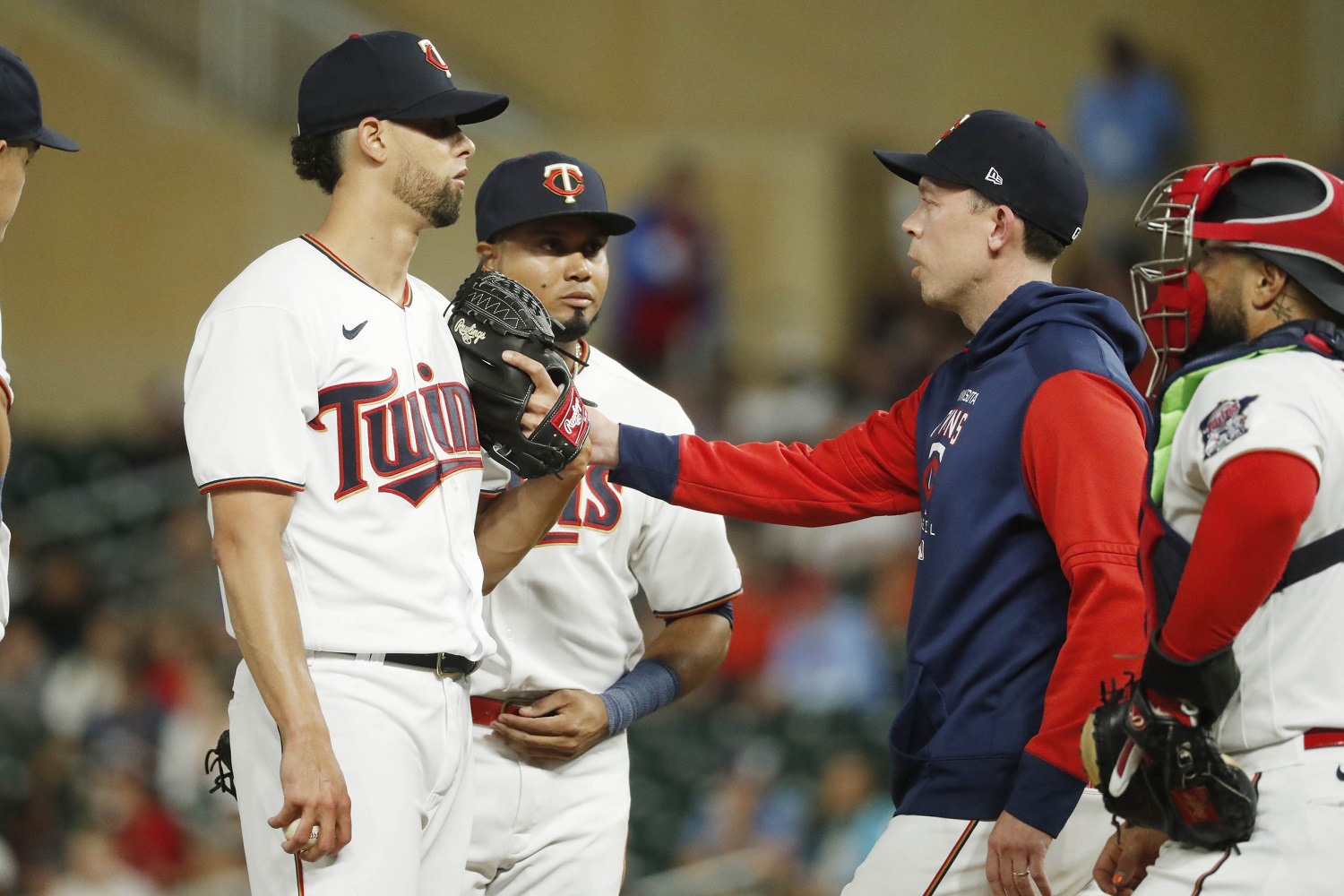 With the Orioles, Jorge López was a dominant backend of the bullpen arm, outfitted with an upper 90s sinker and wiffleball movement at the top of the zone. He had some intriguing offspeed stuff, was missing bats, and locking down games. The Twins may have thought they could take a pitcher right near the cusp of being elite and make him that much better. However, that initial experiment has backfired. What happened? Pick any stat you want from López and it was likely substantially worse with the Twins. Strikeouts? Down — from 28% with Baltimore to 16% with the Twins. Walk rate? Up — from 9% to 15%. Batting average allowed? Up — it was a clean 174 with Baltimore and grew to a grotesque 314 with the Twins. Hard hit balls? Up — exit velocity of balls over 95 mph went from 30% to 44%. Star Tribune columnist Patrick Reusse tweeted on September 20 that López "was tremendous and always had excellent stuff… Finally harvested in the bullpen. Twins were dazzled by his 97 mph sinker and proceeded to turn him into a guy constantly behind in the count throwing breaking balls." The reality is the Twins kept him consistent in his sinker usage. "There's been suggestions that we have him throwing more offspeed pitches than in Baltimore," Falvey later refuted to Reusse. "That's not true. He's still throwing a lot of fastballs and with the same velocity." Which was an accurate statement but also… misleading. True, if you look at the overall pitch data of his sinker/two-seam fastball usage (50.3% in Baltimore and 50.9% with the Twins), they are basically the same. It is also true that López maintained that same crisp velocity in both uniforms (97.8 in Baltimore, 97.4 with the Twins). And finally, López threw more pitches while ahead in the count with the Twins than he did with the Orioles (so, no, he wasn’t “constantly behind in the count”). Falvey's narrative holds up as long as you only look as far as the total pitch type percentage and velocity. Consider two-strike counts. López used his sinker less frequently with the Twins — it went down from 47% to 40%. Equally as important was how he was using it. Watch this video. We have arrived at the point of the analysis where I post heat maps, charts, and video clips to support the trends and tendencies outlined above. I have done that and more but that content is reserved for Twins Daily Caretaker’s eyes only. Fear not: You too can become a Caretaker for as low as $4/month. In addition to getting to read the rest of the meaty López post, you also get free Twins Daily publications, Winter Meltdown tickets (WHICH ARE GOING EXTREMELY FAST) and other special recognition. Finally, if you do jump into the TD Caretaker pool and read the rest of this article and are not completely satisfied, you can totally call me out publicly on Twitter – @HagemanParker.
 -
Jorge López's half-season with the Twins has people wondering if the team was hustled like some easy-mark Stanford grad on a Sicilian vacation. With the Orioles, López was a dominant backend of the bullpen arm, outfitted with an upper 90s sinker and wiffleball movement at the top of the zone. He had some intriguing offspeed stuff, was missing bats, and locking down games. The Twins may have thought they could take a pitcher right near the cusp of being elite and make him that much better. However, that initial experiment has backfired. What happened? Pick any stat you want from Jorge López and it was likely substantially worse with the Twins. Strikeouts? Down — from 28% with Baltimore to 16% with the Twins. Walk rate? Up — from 9% to 15%. Batting average allowed? Up — it was a clean 174 with Baltimore and grew to a grotesque 314 with the Twins. Hard hit balls? Up — exit velocity of balls over 95 mph went from 30% to 44%. Star Tribune columnist Patrick Reusse tweeted on September 20 that López "was tremendous and always had excellent stuff… Finally harvested in the bullpen. Twins were dazzled by his 97 mph sinker and proceeded to turn him into a guy constantly behind in the count throwing breaking balls." The reality is the Twins kept him consistent in his sinker usage. "There's been suggestions that we have him throwing more offspeed pitches than in Baltimore," Falvey later refuted to Reusse. "That's not true. He's still throwing a lot of fastballs and with the same velocity." Which was an accurate statement but also… misleading. True, if you look at the overall pitch data of his sinker/two-seam fastball usage (50.3% in Baltimore and 50.9% with the Twins), they are basically the same. It is also true that López maintained that same crisp velocity in both uniforms (97.8 in Baltimore, 97.4 with the Twins). And finally, López threw more pitches while ahead in the count with the Twins than he did with the Orioles (so, no, he wasn’t “constantly behind in the count”). Falvey's narrative holds up as long as you only look as far as the total pitch type percentage and velocity. Consider two-strike counts. López used his sinker less frequently with the Twins — it went down from 47% to 40%. Equally as important was how he was using it. Watch this video. Jorge Lopez Video.mp4 If you watched those clips and thought I was trying to hypnotize you by staring at the blobbies, here's what's up: With Baltimore, López threw his sinker at the top of the zone with 2-strikes. With the Twins, it was middle and down. With the Orioles, it was thrown with conviction and intent. In Minnesota, instead of ripping it, it feels like he was guiding it, trying to get the right amount of run and sink. He was trying to blow their doors off. Look at how much the performance suffered. Jorge López Sinker In 2-Strike Counts Thrown% K Upper 3rd% Swinging Strike% BAA BALT 46.5 26 69.3 16.7 .122 MINN 39.5 3 46.7 2.2 .227 It was not just that the sinker's use was limited with the Twins — he also was throwing more changeups in 2-strike counts. With the Orioles, López got a bulk of his strikeouts with his sinker and used his other pitches fairly evenly (sliders 18%, curveballs 14%, and change up 18%). Hitters held a .044 batting average against his non-fastballs with 2-strikes. The Twins had him use the sinker less and all but eliminated the slider from his arsenal in the 2-strike scenarios, throwing more changeups (35%) compared to sliders (4%) and curveballs (15%). Hitters posted a .286 batting average against those pitches. This is the element that Reusse was referring to, that López was not using his sinker as much and opting for other stuff (“throwing breaking balls”). When you look at his sinker's greasy metrics — such as tilt, release point, and movement — you'll find that it was a slightly different shape with the Orioles than it was with the Twins. The axis in which the ball spins out of his hand changed a bit (from 1:32 to 1:48), and his release point was about 2 inches lower (from 70.2 inches to 68.7 inches), and the vertical movement had two more inches of drop (from 8.9 induced vert to 6.7 induced vert). This was a concerted attempt at getting the ball to stay down in the zone. SINKER LOCATION (ORIOLES VS TWINS) It cannot be said with absolute certainty because no one has publicly acknowledged this, but the Twins have encouraged Jorge to adjust his sinker. The working theory is that by throwing it down in the zone, he can pair it better with his changeup (a solid pitch in its own right). Like the sinker, López slightly altered his changeup at release (different spin axis, lower release, etc.) and induced more horizontal run and drop. Those results were positive. CHANGEUP LOCATION (ORIOLES VS TWINS) Jorge López Changeup Thrown% Swing% K Zone% Swinging Strike % BALT 15 43.5 6 31 14 MINN 17 42.1 9 24 24 In short, López’s changeup benefitted from the modification of his sinker whereas his sinker’s performance -- his prime pitch with the O’s – suffered. Plenty of what López is going through stems from the tough lessons the Twins learned in the Ryan Pressly trade. Notoriously Presley was traded to the Astros and was told to spin it. Spin it good. He did and went from a pitcher with excellent stuff to a lights-out All-Star closer. "It was a very hard lesson and very discouraging for us," Assistant General Manager Daniel Adler said in October 2018. "On the other hand, in some ways, it was a really strong teachable moment for us. … In some ways, I think it makes it easier to go to the next player." To ensure they never fail to communicate information like that again, the Twins built a strong bridge that extends from the player development system into the clubhouse. Knowledge discovered in the front office is integrated into the day-to-day. Pitchers acquired – no matter how much success they are having at their previous stop – will receive information to optimize them, be it through an arsenal change, mechanical tweak, or something else. Kenta Maeda. Chris Paddack. Matt Shoemaker. Sonny Gray. Jharel Cotton. Nobody is a finished product. With the Twins, Jorge López has gone down the same path to middling results. The changeup seems much improved and could be an excellent weapon. On the other hand, they may have come at the expense of his sinker's performance – especially in those 2-strike situations. There appear to be crossroads ahead. López will be part of the 2023 bullpen, but what will his approach be? Will he continue to lean into the sinker/changeup mix, hoping to perfect that combination by next season? Or will he return to throwing moving heat at the top of the zone? View full article
-
 With the Orioles, López was a dominant backend of the bullpen arm, outfitted with an upper 90s sinker and wiffleball movement at the top of the zone. He had some intriguing offspeed stuff, was missing bats, and locking down games. The Twins may have thought they could take a pitcher right near the cusp of being elite and make him that much better. However, that initial experiment has backfired. What happened? Pick any stat you want from Jorge López and it was likely substantially worse with the Twins. Strikeouts? Down — from 28% with Baltimore to 16% with the Twins. Walk rate? Up — from 9% to 15%. Batting average allowed? Up — it was a clean 174 with Baltimore and grew to a grotesque 314 with the Twins. Hard hit balls? Up — exit velocity of balls over 95 mph went from 30% to 44%. Star Tribune columnist Patrick Reusse tweeted on September 20 that López "was tremendous and always had excellent stuff… Finally harvested in the bullpen. Twins were dazzled by his 97 mph sinker and proceeded to turn him into a guy constantly behind in the count throwing breaking balls." The reality is the Twins kept him consistent in his sinker usage. "There's been suggestions that we have him throwing more offspeed pitches than in Baltimore," Falvey later refuted to Reusse. "That's not true. He's still throwing a lot of fastballs and with the same velocity." Which was an accurate statement but also… misleading. True, if you look at the overall pitch data of his sinker/two-seam fastball usage (50.3% in Baltimore and 50.9% with the Twins), they are basically the same. It is also true that López maintained that same crisp velocity in both uniforms (97.8 in Baltimore, 97.4 with the Twins). And finally, López threw more pitches while ahead in the count with the Twins than he did with the Orioles (so, no, he wasn’t “constantly behind in the count”). Falvey's narrative holds up as long as you only look as far as the total pitch type percentage and velocity. Consider two-strike counts. López used his sinker less frequently with the Twins — it went down from 47% to 40%. Equally as important was how he was using it. Watch this video. Jorge Lopez Video.mp4 If you watched those clips and thought I was trying to hypnotize you by staring at the blobbies, here's what's up: With Baltimore, López threw his sinker at the top of the zone with 2-strikes. With the Twins, it was middle and down. With the Orioles, it was thrown with conviction and intent. In Minnesota, instead of ripping it, it feels like he was guiding it, trying to get the right amount of run and sink. He was trying to blow their doors off. Look at how much the performance suffered. Jorge López Sinker In 2-Strike Counts Thrown% K Upper 3rd% Swinging Strike% BAA BALT 46.5 26 69.3 16.7 .122 MINN 39.5 3 46.7 2.2 .227 It was not just that the sinker's use was limited with the Twins — he also was throwing more changeups in 2-strike counts. With the Orioles, López got a bulk of his strikeouts with his sinker and used his other pitches fairly evenly (sliders 18%, curveballs 14%, and change up 18%). Hitters held a .044 batting average against his non-fastballs with 2-strikes. The Twins had him use the sinker less and all but eliminated the slider from his arsenal in the 2-strike scenarios, throwing more changeups (35%) compared to sliders (4%) and curveballs (15%). Hitters posted a .286 batting average against those pitches. This is the element that Reusse was referring to, that López was not using his sinker as much and opting for other stuff (“throwing breaking balls”). When you look at his sinker's greasy metrics — such as tilt, release point, and movement — you'll find that it was a slightly different shape with the Orioles than it was with the Twins. The axis in which the ball spins out of his hand changed a bit (from 1:32 to 1:48), and his release point was about 2 inches lower (from 70.2 inches to 68.7 inches), and the vertical movement had two more inches of drop (from 8.9 induced vert to 6.7 induced vert). This was a concerted attempt at getting the ball to stay down in the zone. SINKER LOCATION (ORIOLES VS TWINS) It cannot be said with absolute certainty because no one has publicly acknowledged this, but the Twins have encouraged Jorge to adjust his sinker. The working theory is that by throwing it down in the zone, he can pair it better with his changeup (a solid pitch in its own right). Like the sinker, López slightly altered his changeup at release (different spin axis, lower release, etc.) and induced more horizontal run and drop. Those results were positive. CHANGEUP LOCATION (ORIOLES VS TWINS) Jorge López Changeup Thrown% Swing% K Zone% Swinging Strike % BALT 15 43.5 6 31 14 MINN 17 42.1 9 24 24 In short, López’s changeup benefitted from the modification of his sinker whereas his sinker’s performance -- his prime pitch with the O’s – suffered. Plenty of what López is going through stems from the tough lessons the Twins learned in the Ryan Pressly trade. Notoriously Presley was traded to the Astros and was told to spin it. Spin it good. He did and went from a pitcher with excellent stuff to a lights-out All-Star closer. "It was a very hard lesson and very discouraging for us," Assistant General Manager Daniel Adler said in October 2018. "On the other hand, in some ways, it was a really strong teachable moment for us. … In some ways, I think it makes it easier to go to the next player." To ensure they never fail to communicate information like that again, the Twins built a strong bridge that extends from the player development system into the clubhouse. Knowledge discovered in the front office is integrated into the day-to-day. Pitchers acquired – no matter how much success they are having at their previous stop – will receive information to optimize them, be it through an arsenal change, mechanical tweak, or something else. Kenta Maeda. Chris Paddack. Matt Shoemaker. Sonny Gray. Jharel Cotton. Nobody is a finished product. With the Twins, Jorge López has gone down the same path to middling results. The changeup seems much improved and could be an excellent weapon. On the other hand, they may have come at the expense of his sinker's performance – especially in those 2-strike situations. There appear to be crossroads ahead. López will be part of the 2023 bullpen, but what will his approach be? Will he continue to lean into the sinker/changeup mix, hoping to perfect that combination by next season? Or will he return to throwing moving heat at the top of the zone?
 -
A Former Insider's Thoughts on Losing the Big Fish
Parker Hageman replied to jdgoin's topic in Twins Daily Front Page News
✋ question for @jdgoin: there is a narrative that the twins "missed" out on other free agents while waiting on Correa's decision. from your experience, do teams "miss" players when they are targeting one or do they conduct due diligence and make an informed decision on who to target, keep multiple conversations going, etc? for example, if one team, say the twins, are targeting a premium shortstop named, say, karlos korrea, would they then neglect to try to acquire a pitcher like karlos rodawn? or does the pursuit of korrea hinder a team's ability to make other signings, thereby allowing other teams to swoop in? -
Glen Perkins Headlines the Winter Meltdown
Parker Hageman replied to John Bonnes's topic in Twins Daily Front Page News
ok, shut it down. no winter meltdown this year. we'll try again next year. sorry everyone. sorry. -
Great write-up Matthew.
-
Excellent question. I will connect with the TD leadership committee and see how we can make that happen.
-
FullSizeRender.MOV I asked Miranda on Friday if he felt teams adjusted to him. Obviously a very standard response and he didn’t expand on it (it’s a media day, I didn’t expect him to wade too far into the weeds) but I did like his confidence.
-
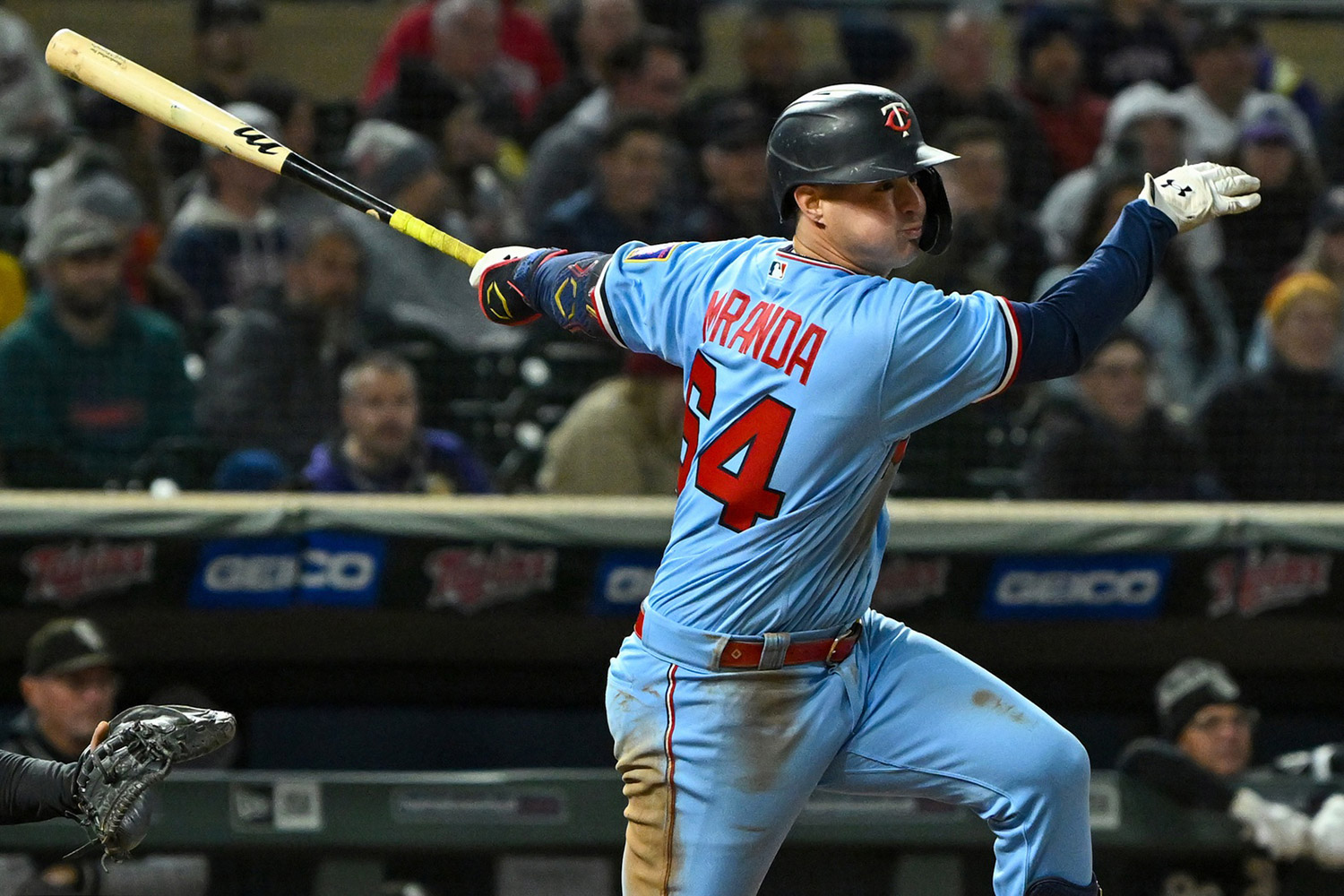
It’s hard not to like what Jose Miranda brings to the Twins’ offense. After an initial slow start in May, he quickly caught fire and elevated himself to one of the more reliable bats in the lineup: In 150 plate appearances in June and July, he posted a .329/.373/.557 slash line while adding 8 home runs. He had the presence of a savvy veteran, taking professional at bats and spraying line drives all around the field. Image courtesy of © Nick Wosika-USA TODAY Sports Nevertheless, Miranda’s performance began to cool in August and leveled out for the remainder of the year. He hit .262 over his final 136 plate appearances with far less power production. How did teams adjust to him and what does it say about his potential going forward? Before we start disparaging Miranda’s late season performance, let’s consider some of his strengths. His 117 weighted runs created plus – a rate stat that takes into consideration park factors and current run environment of the league – was the seventh best by a Minnesota Twins rookie and tied with notable legend Rod Carew. From June through August, he led the team with 49 runs driven in and collected 74 hits (behind the eventual AL hit king, Luis Arraez). He was anointed the AL’s Rookie of the Month in July. He carried the Twins offense as best he could through a stretch in which the team was preparing for a late season nosedive. In that time Miranda showed a keen ability to hit non-fastballs well. His .325 average against non-fastballs during that stretch was the 5th best in major league baseball. This is noteworthy considering how often rookie hitters struggle with spin: Over the last ten years, rookies have posted a .230/.270/.378 line against non-fastballs. Unsurprisingly, pitchers adjusted their game plan to Miranda after he showed the propensity to wallop non-fastballs left in the strike zone. In August, teams started to shift to throwing him more sliders and locating them off the plate. Miranda began to swing more often and chased more frequently and so teams continued that trend throughout the rest of the season. Miranda did an exceptional job of ambushing pitchers early in the count and this coincided with his ability to hit in-zone breaking balls hard. As pitchers tried to use get-me-over breaking balls to work ahead early, Miranda would attack. Spotting this trend, teams adjusted their approach and began to throw him breaking stuff away rather than risk catching too much of the zone. Let’s acknowledge here that the division of the data is not as clean as simply turning the calendar. Teams did not wake up on September 1st and decided to throw Miranda more sweeping sliders off the plate – they started to phase those in more in August. But that strategy proved fruitful and likely enticed other teams to follow suit. Miranda’s success may have prompted another strategy for the opposition. Earlier in the year, he held an average platoon advantage rate against relief pitchers. Meaning that teams were not necessarily ensuring they would gain an edge with a right-handed pitcher on the mound. This year, right-handed hitters in baseball had the platoon advantage against relief pitching in 23.6% of the plate appearances. From June through August, Miranda was at 21.6% (but he held a 27% advantage in June and July alone). Platoon Advantage % MLB Platoon (RP vs RHB) 24% Miranda RP Platoon (June-July) 27% Miranda RP Platoon (Sept-Oct) 10% There are two reasons why teams began to make sure they had a right-handed pitcher on the mound when Miranda came to the plate. The first is simple lineup construction. In June and July, Miranda often hit behind left-handed sluggers like Trevor Larnach and Alex Kirilloff. Opponents were more likely to use a lefty reliever against Larnach and Kirilloff while rolling the dice for an at bat with Miranda. Meanwhile, in August and after, Miranda was hitting behind Correa and Buxton. Once Larnach and Kirilloff were out of the lineup, teams were able to use a nasty righty reliever against Miranda – especially considering he was positioned with Correa ahead of him and Nick Gordon (who hit .190 against all relievers from June onward) following him. Miranda’s percentage of plate appearances with the platoon advantage fell from 21.6% to 10.4%. Similarly, like the blobby heat map above suggests, teams realized that they could stymie him with sliders and they would dispatch relievers to do just that. In his hot stretch, he saw sliders 27% of the time. During the last month and change, he got sliders 47% of the time out of the pen. Miranda Vs Relievers (Pitch Selection) Date Slider% June-July 27% September-October 47% So those factors explain some of the decline in the latter portion of the season. The other element was how Miranda slowly incorporated bigger movements into his swing. Take a look at the video below: What started to happen in August is that Miranda’s barrel tip – a rhythm mechanism during the load process that some hitters use to time up a pitcher – got more pronounced. His hands got lower and further away from his body as he would tip the barrel further toward the left-handed batters’ box. Why this happened is unclear. It’s possible that the movement slowly got bigger as Miranda felt the need to add more power to his swing. After all, his home run totals sagged later in the year and as someone in the heart of the order, he may have felt the need to press. Similarly, Miranda may have also been aware that pitchers were throwing him more offspeed and breaking balls and the added movement was meant to keep him back for a split second longer. However, it is hard to subscribe to the latter theory since he was so successful against breaking stuff previous to the late season issues. Admittedly, Miranda would get to the same launch point (which some would argue is more essential than anything else) at roughly the same time but it’s hard not to conclude that the additional movement is mucking up the system in his timing and swing pattern to some degree. Fractions of inches and seconds matter a lot when trying to get to a round ball on time. The combination of the two – a change in how teams were attacking him as well as the small adjustment in his swing pattern – may have been a reason why his late season performance dipped. There is a lot to like about Miranda’s future based on his recent past. You have to appreciate how well he was able to hit spin as well as fastballs. The key will be to adjust to that outside slider and stay locked in on spin middle-in. His flatter bat path allowed him to maintain optimal launch angle better than most rookies (31.7% of his balls in play were between 10 and 30 degrees – 3rd highest rate among rookies) and allowed him to spray the ball to all fields with strength in the barrel (his 93 MPH average exit velo to center was the 2nd highest among rookies). As hot as Miranda was for the two month stretch in June and July, it is difficult to envision him maintaining that pace over an entire season. Likewise, with his offensive tools and consistent ability to perform at every minor league level, it’s hard to see him replicating the September/October performance for a long stretch, too. Based on his swing and his tendency to adjust, Jose Miranda will continue to find success at the plate. Look for him to be an offensive force in the middle of the order. View full article
-
 Nevertheless, Miranda’s performance began to cool in August and leveled out for the remainder of the year. He hit .262 over his final 136 plate appearances with far less power production. How did teams adjust to him and what does it say about his potential going forward? Before we start disparaging Miranda’s late season performance, let’s consider some of his strengths. His 117 weighted runs created plus – a rate stat that takes into consideration park factors and current run environment of the league – was the seventh best by a Minnesota Twins rookie and tied with notable legend Rod Carew. From June through August, he led the team with 49 runs driven in and collected 74 hits (behind the eventual AL hit king, Luis Arraez). He was anointed the AL’s Rookie of the Month in July. He carried the Twins offense as best he could through a stretch in which the team was preparing for a late season nosedive. In that time Miranda showed a keen ability to hit non-fastballs well. His .325 average against non-fastballs during that stretch was the 5th best in major league baseball. This is noteworthy considering how often rookie hitters struggle with spin: Over the last ten years, rookies have posted a .230/.270/.378 line against non-fastballs. Unsurprisingly, pitchers adjusted their game plan to Miranda after he showed the propensity to wallop non-fastballs left in the strike zone. In August, teams started to shift to throwing him more sliders and locating them off the plate. Miranda began to swing more often and chased more frequently and so teams continued that trend throughout the rest of the season. Miranda did an exceptional job of ambushing pitchers early in the count and this coincided with his ability to hit in-zone breaking balls hard. As pitchers tried to use get-me-over breaking balls to work ahead early, Miranda would attack. Spotting this trend, teams adjusted their approach and began to throw him breaking stuff away rather than risk catching too much of the zone. Let’s acknowledge here that the division of the data is not as clean as simply turning the calendar. Teams did not wake up on September 1st and decided to throw Miranda more sweeping sliders off the plate – they started to phase those in more in August. But that strategy proved fruitful and likely enticed other teams to follow suit. Miranda’s success may have prompted another strategy for the opposition. Earlier in the year, he held an average platoon advantage rate against relief pitchers. Meaning that teams were not necessarily ensuring they would gain an edge with a right-handed pitcher on the mound. This year, right-handed hitters in baseball had the platoon advantage against relief pitching in 23.6% of the plate appearances. From June through August, Miranda was at 21.6% (but he held a 27% advantage in June and July alone). Platoon Advantage % MLB Platoon (RP vs RHB) 24% Miranda RP Platoon (June-July) 27% Miranda RP Platoon (Sept-Oct) 10% There are two reasons why teams began to make sure they had a right-handed pitcher on the mound when Miranda came to the plate. The first is simple lineup construction. In June and July, Miranda often hit behind left-handed sluggers like Trevor Larnach and Alex Kirilloff. Opponents were more likely to use a lefty reliever against Larnach and Kirilloff while rolling the dice for an at bat with Miranda. Meanwhile, in August and after, Miranda was hitting behind Correa and Buxton. Once Larnach and Kirilloff were out of the lineup, teams were able to use a nasty righty reliever against Miranda – especially considering he was positioned with Correa ahead of him and Nick Gordon (who hit .190 against all relievers from June onward) following him. Miranda’s percentage of plate appearances with the platoon advantage fell from 21.6% to 10.4%. Similarly, like the blobby heat map above suggests, teams realized that they could stymie him with sliders and they would dispatch relievers to do just that. In his hot stretch, he saw sliders 27% of the time. During the last month and change, he got sliders 47% of the time out of the pen. Miranda Vs Relievers (Pitch Selection) Date Slider% June-July 27% September-October 47% So those factors explain some of the decline in the latter portion of the season. The other element was how Miranda slowly incorporated bigger movements into his swing. Take a look at the video below: What started to happen in August is that Miranda’s barrel tip – a rhythm mechanism during the load process that some hitters use to time up a pitcher – got more pronounced. His hands got lower and further away from his body as he would tip the barrel further toward the left-handed batters’ box. Why this happened is unclear. It’s possible that the movement slowly got bigger as Miranda felt the need to add more power to his swing. After all, his home run totals sagged later in the year and as someone in the heart of the order, he may have felt the need to press. Similarly, Miranda may have also been aware that pitchers were throwing him more offspeed and breaking balls and the added movement was meant to keep him back for a split second longer. However, it is hard to subscribe to the latter theory since he was so successful against breaking stuff previous to the late season issues. Admittedly, Miranda would get to the same launch point (which some would argue is more essential than anything else) at roughly the same time but it’s hard not to conclude that the additional movement is mucking up the system in his timing and swing pattern to some degree. Fractions of inches and seconds matter a lot when trying to get to a round ball on time. The combination of the two – a change in how teams were attacking him as well as the small adjustment in his swing pattern – may have been a reason why his late season performance dipped. There is a lot to like about Miranda’s future based on his recent past. You have to appreciate how well he was able to hit spin as well as fastballs. The key will be to adjust to that outside slider and stay locked in on spin middle-in. His flatter bat path allowed him to maintain optimal launch angle better than most rookies (31.7% of his balls in play were between 10 and 30 degrees – 3rd highest rate among rookies) and allowed him to spray the ball to all fields with strength in the barrel (his 93 MPH average exit velo to center was the 2nd highest among rookies). As hot as Miranda was for the two month stretch in June and July, it is difficult to envision him maintaining that pace over an entire season. Likewise, with his offensive tools and consistent ability to perform at every minor league level, it’s hard to see him replicating the September/October performance for a long stretch, too. Based on his swing and his tendency to adjust, Jose Miranda will continue to find success at the plate. Look for him to be an offensive force in the middle of the order.
 -
It’s hard not to like what Jose Miranda brings to the Twins’ offense. After an initial slow start in May, he quickly caught fire and elevated himself to one of the more reliable bats in the lineup: In 150 plate appearances in June and July, he posted a .329/.373/.557 slash line while adding 8 home runs. He had the presence of a savvy veteran, taking professional at-bats and spraying line drives all around the field. Nevertheless, Miranda’s performance began to cool in August and leveled out for the remainder of the year. He hit .262 over his final 136 plate appearances with far less power production. How did teams adjust to him and what does it say about his potential going forward? Image courtesy of Nick Wosika-USA TODAY Sports Before we start disparaging Miranda’s late-season performance, let’s consider some of his strengths. His 117 weighted runs created plus – a rate stat that takes into consideration park factors and current run environment of the league – was the seventh-best by a Minnesota Twins rookie and tied with notable legend Rod Carew. From June through August, he led the team with 49 runs driven in and collected 74 hits (behind the eventual AL hit king, Luis Arraez). He was anointed the AL’s Rookie of the Month in July. He carried the Twins offense as best he could through a stretch in which the team was preparing for a late season nosediIn that time Miranda showed a keen ability to hit non-fastballs well. His .325 average against non-fastballs during that stretch was the 5th best in major league baseball. This is noteworthy considering how often rookie hitters struggle with spin: Over the last ten years, rookies have posted a .230/.270/.378 line against non-fastballs. Unsurprisingly, pitchers adjusted their game plan to Miranda after he showed the propensity to wallop non-fastballs left in the strike zone. In August, teams started to shift to throwing him more sliders and locating them off the plate. Miranda began to swing more often and chased more frequently and so teams continued that trend throughout the rest of the season. We have arrived at the point of the analysis where I normally post heat maps, charts, and video clips to support the trends and tendencies outlined above. I have done that and more but that content is reserved for Twins Daily Caretaker’s eyes only. Fear not: You too can become a Caretaker for as low as $4/month. In addition to getting to read the rest of the meaty Miranda post, you also get free Twins Daily publications, Winter Meltdown tickets and other special recognition. Finally, if you do jump into the TD Caretaker pool and read the rest of this article and are not completely satisfied, you can totally call me out publicly on Twitter – @HagemanParker -- and… I will likely mute you. I have a very fragile ego. View full article
-
What Happened to Jose Miranda's Swing During the 2022 Season? (Excerpt)
Parker Hageman posted an article in Twins
 Before we start disparaging Miranda’s late-season performance, let’s consider some of his strengths. His 117 weighted runs created plus – a rate stat that takes into consideration park factors and current run environment of the league – was the seventh-best by a Minnesota Twins rookie and tied with notable legend Rod Carew. From June through August, he led the team with 49 runs driven in and collected 74 hits (behind the eventual AL hit king, Luis Arraez). He was anointed the AL’s Rookie of the Month in July. He carried the Twins offense as best he could through a stretch in which the team was preparing for a late season nosediIn that time Miranda showed a keen ability to hit non-fastballs well. His .325 average against non-fastballs during that stretch was the 5th best in major league baseball. This is noteworthy considering how often rookie hitters struggle with spin: Over the last ten years, rookies have posted a .230/.270/.378 line against non-fastballs. Unsurprisingly, pitchers adjusted their game plan to Miranda after he showed the propensity to wallop non-fastballs left in the strike zone. In August, teams started to shift to throwing him more sliders and locating them off the plate. Miranda began to swing more often and chased more frequently and so teams continued that trend throughout the rest of the season. We have arrived at the point of the analysis where I normally post heat maps, charts, and video clips to support the trends and tendencies outlined above. I have done that and more but that content is reserved for Twins Daily Caretaker’s eyes only. Fear not: You too can become a Caretaker for as low as $4/month. In addition to getting to read the rest of the meaty Miranda post, you also get free Twins Daily publications, Winter Meltdown tickets and other special recognition. Finally, if you do jump into the TD Caretaker pool and read the rest of this article and are not completely satisfied, you can totally call me out publicly on Twitter – @HagemanParker -- and… I will likely mute you. I have a very fragile ego.
 -
Parker breaks down Jose Miranda's swing from early 2022 - when he was successfully driving the ball with authority - and shows how that differed from his late-season swing when he was struggling to make solid contact. View full video
-
Parker breaks down Jose Miranda's swing from early 2022 - when he was successfully driving the ball with authority - and shows how that differed from his late-season swing when he was struggling to make solid contact.
-
Twins To Sign Carlos Correa
Parker Hageman replied to Seth Stohs's topic in Twins Daily Front Page News
I, for one, welcome my new shortstop overlord. -
The Twins Daily Caretaker Fund
Parker Hageman replied to John Bonnes's topic in Twins Daily Front Page News
I believe Gold Caretakers will receive a voice mail from John saying "Annnnnnd welcome.' -
Having been on the national club circuit with some 16 & 17U players the last two years, I've had some interesting conversations about Minnesota talent. The two things that people for outside of the state (and usually in the warmer states) say that our teams really can hit and pitch. I think when you break it down, that's where the vast majority of the offseason development time is focused. Minnesotans can get into cages for swings and throw bullpens in gyms, field houses and warehouses. The downside is that the defensive talent is usually 12 months or more behind the warm-weather kids. They just get more reps at a younger age. It takes a while for the northern class to catch up. But the state has been known to produce dudes so more D1 schools are making a swing through the state to look at the high school talent whereas they wouldn't have just a few years ago.
- 4 replies
-
- 2
-

-
- brody rodning
- austin martin
- (and 1 more)
-
Twins Daily College Baseball Notebook: Week 1
Parker Hageman replied to Jamie Cameron's topic in Twins Daily Front Page News
Or Woodbury's Adam Mazur who had nine punchies in six for Iowa on Opening Day while chucking 97 mph darts. (can do this all day so many minnesota contributing across the country right now it's so much fun.)- 11 replies
-
- 1
-
-
- druw jones
- landon sims
- (and 2 more)
-
Twins Daily College Baseball Notebook: Week 1
Parker Hageman replied to Jamie Cameron's topic in Twins Daily Front Page News
Whoa whoa whoa whoa. No Will Rogers shoutout?
- 11 replies
-
- 1
-
-
- druw jones
- landon sims
- (and 2 more)
-
Lockout Lookup: John Ryan Murphy
Parker Hageman replied to RandBalls Stu's topic in Twins Daily Front Page News
Dead inside. -
Parker Hageman and Dan Anderson visit CHS Field and attempt to catch a homer... with a beer in their hands. View full video
-
Parker Hageman and Dan Anderson visit CHS Field and attempt to catch a homer... with a beer in their hands.
-
Twins Hire Jayce Tingler as New Bench Coach
Parker Hageman replied to Nick Nelson's topic in Twins Daily Front Page News
I think a bench coach adds a lot to the culture and the operations of a team. There was a good MLB Network feature on Derek Shelton from 2019 that demonstrated how valuable a coach can be to a manager. Does it effect the win-loss column much? Maybe. Maybe not. Being prepared certainly doesn't hurt. -
This isn't to say that velocity doesn't help. Fastball velo plays. But more teams have recognized that more outs happen on non-fastballs. If you are going to miss bats and chase strikeouts, development begins to focus on movement.
-
TruMedia. Baseball Savant counts cutters as fastballs. TruMedia doesn't. Given the increased movement of cutters lately, I think that's more accurate to exclude them from the fastball pool.