



Parker Hageman
-
Posts
4,152 -
Joined
-
Last visited
-
Days Won
6
Content Type
Profiles
News
Minnesota Twins Videos
2026 Minnesota Twins Top Prospects Ranking
2022 Minnesota Twins Draft Picks
Minnesota Twins Free Agent & Trade Rumors, Notes, & Tidbits
Guides & Resources
2023 Minnesota Twins Draft Picks
The Minnesota Twins Players Project
2024 Minnesota Twins Draft Picks
2025 Minnesota Twins Draft Pick Tracker
2026 Minnesota Twins Draft Tracker: Picks & Bonuses
Forums
Blogs
Events
Store
Downloads
Gallery
Everything posted by Parker Hageman
-
 Are we witnessing greatness?Way back in 2016, Byron Buxton was a 22-year-old and had 46 games of major league experience. Baseball America, MLB.com, and Baseball Prospectus all considered him the game’s number two prospect overall. Expectations were sky high. Impressively, Buxton finished that year with 35 extra base hits, including 10 home runs, in 92 games. The 118 strikeouts, meanwhile, drew concern. While he slugged a respectable .430, he chased that with a paltry .225 batting average -- an improvement over his .205 mark in 2015, to be sure, but a concern nonetheless. This sent the young center fielder into a dizzying array of mechanical changes which included big leg kicks, no leg kicks, toe-taps, and small strides. Coaches were in his head about what type of hitter he was. They wanted him to focus on hitting ground balls. Coaches were in his face about bunting for hits. Of all the five tools he possessed, he was asked to utilize his speed above all. Over the next three seasons, he posted a .245/.300/.423 slash line in 255 games. His 723 OPS was 263rd among qualified MLB hitters, trailing players like Niko Goodrum and Danny Valencia in a similar amount of games played. In 2019, Buxton started to simplify his mechanics. There was a return to his original swing -- one he grew comfortable with as an amateur in Georgia -- and he stopped listening to input from others, instead doing what he felt best with and seeking out trusted sources. While limited by injuries, there was a noticeable difference in the collision between the bat and ball. In 2020, his exit velocity and launch angle both jumped. His fly balls now traveled an average of 344 feet. Which brings us to today and Byron Buxton’s unrelenting start to the 2021 season. The contrast between the swing of the number two overall prospect in 2016 and the one from baseball’s current OPS leader is pretty stark. If you happened to tune out between those eras and just see these two products, you would hardly recognize the player. First because of his sheer volume of muscle but also because of the swing movements. The two swings are very different in a lot of ways but here are two aspects that should be highlighted that help explain how he got here: The hands at his forward move. Download attachment: Buxton Hands.png If you look at Buxton’s hands on the left, they still need to move back into the launch position (the point where a hitter moves his hands forward at the ball). Now his hands begin at the launch position. They don’t have to travel backward before going forward. It is closer to where Nelson Cruz and his minimal movement are at. When Buxton’s hands had to travel back, it would cause him to rush through his swing. He is now in go-mode meaning he can react or shut the swing down much easier. It helps his overall timing. The swing path. If you watch enough clips of his swing between then and now, one thing that jumps out is his swing plane. Just by looking at where he finishes with the bat you can see how different the route he took to get there is. Download attachment: Buxton Follow-Through.png In 2016 his swing plane followed a much more merry-go-round path. It was level, likely something that was designed to make contact and hit balls on the ground. Now the swing has become more of a Ferris wheel than a merry-go-round, a motion similar to a hockey slapshot. This might be the point where someone mumbles something about a launch angle swing (which doesn’t exist). He may be trying to hit the ball in the air more now, but he actually has hit ground balls at a higher rate this year than he did in 2016. The difference is that when he hit the ball in the air in 2016, he was often clipping the bottom of the ball instead of driving through it. With the Ferris wheel action, Buxton has increased the vertical angle of the bat, meaning he is going to hit it square instead of hitting part of the bottom. In all of 2016, he hit 10 fly balls/line drives at 105 miles per hour or higher. So far this year he’s already hit 13 of those. In addition to selecting the right pitch and being on time, the square, optimal contact comes from having the right bat approach. What is interesting is that Buxton’s overall approach has not changed that much over the years: He still swings through a high amount of pitches.He still chases a lot of pitches out of the zone.What has changed for Buxton is the contact:Over 66% of his balls in play are hit 95+. Only Giancarlo Stanton has done better.Buxton still pulls the ball but at a much lower rate, choosing to use the middle of the field more (this may be an indication of more optimal backspin and not side or topspin).He has fouled off just 29% of balls on swings this year (one of the lowest in the league and well below his 35% career rate).Another data point that is emerging is how teams are choosing to tangle with this monster:He’s seeing far fewer fastballs this year (42% fastballs, Aaron Judge slugger territory).Just 77% of pitches thrown to him have been considered “competitive” (i.e. within 18 inches of the center of the zone which leads to a decent chance of a swing).What it means is that teams are starting to be afraid of the damage he can do. This version of Byron Buxton is quite different from the one that arrived in Minnesota. It has been a long road but this version has eliminated weaknesses and has become one of the game’s elite hitters. Click here to view the article
 -
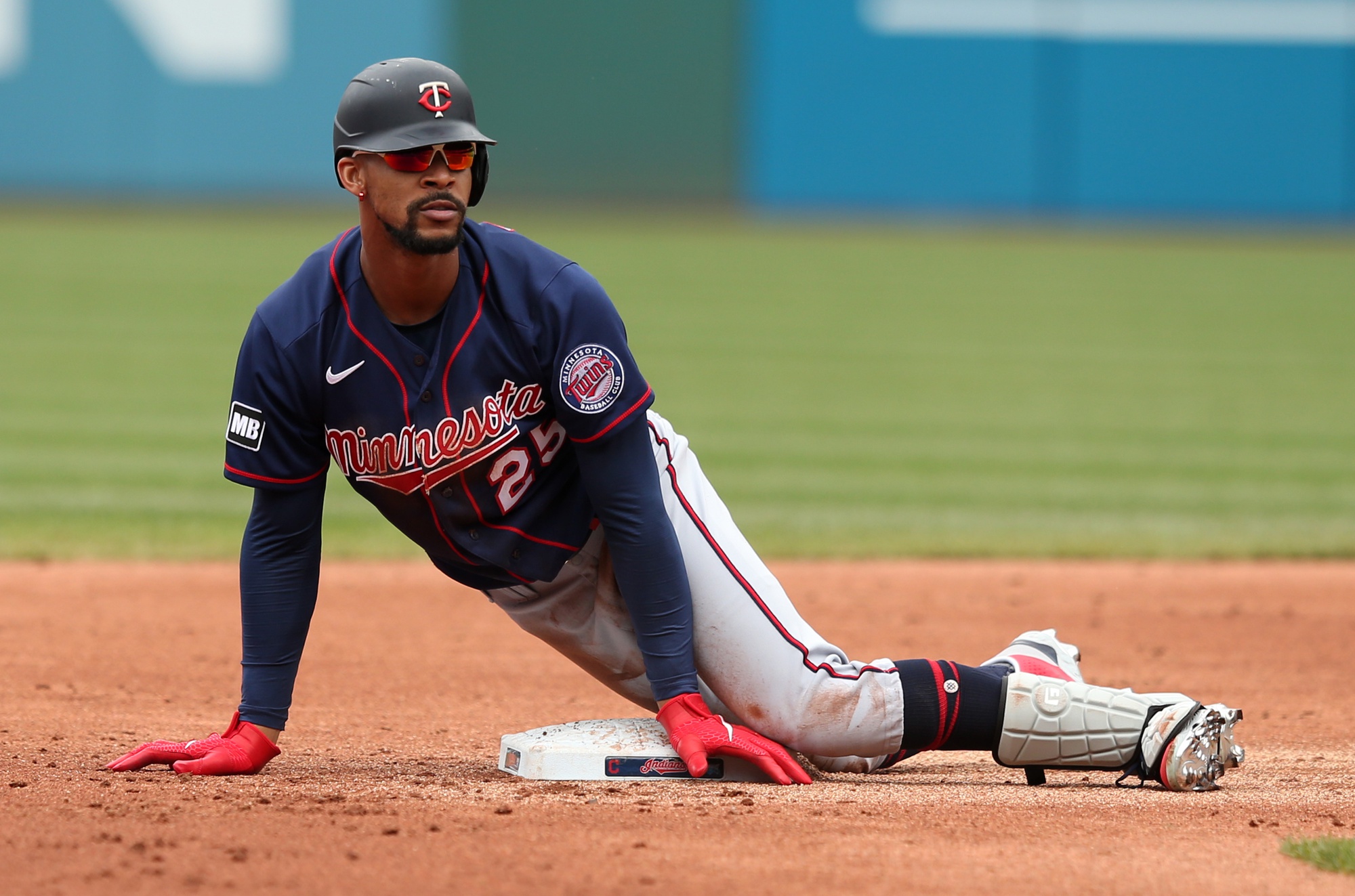 Way back in 2016, Byron Buxton was a 22-year-old and had 46 games of major league experience. Baseball America, MLB.com, and Baseball Prospectus all considered him the game’s number two prospect overall. Expectations were sky high. Impressively, Buxton finished that year with 35 extra base hits, including 10 home runs, in 92 games. The 118 strikeouts, meanwhile, drew concern. While he slugged a respectable .430, he chased that with a paltry .225 batting average -- an improvement over his .205 mark in 2015, to be sure, but a concern nonetheless. This sent the young center fielder into a dizzying array of mechanical changes which included big leg kicks, no leg kicks, toe-taps, and small strides. Coaches were in his head about what type of hitter he was. They wanted him to focus on hitting ground balls. Coaches were in his face about bunting for hits. Of all the five tools he possessed, he was asked to utilize his speed above all. Over the next three seasons, he posted a .245/.300/.423 slash line in 255 games. His 723 OPS was 263rd among qualified MLB hitters, trailing players like Niko Goodrum and Danny Valencia in a similar amount of games played. In 2019, Buxton started to simplify his mechanics. There was a return to his original swing -- one he grew comfortable with as an amateur in Georgia -- and he stopped listening to input from others, instead doing what he felt best with and seeking out trusted sources. While limited by injuries, there was a noticeable difference in the collision between the bat and ball. In 2020, his exit velocity and launch angle both jumped. His fly balls now traveled an average of 344 feet. Which brings us to today and Byron Buxton’s unrelenting start to the 2021 season. The contrast between the swing of the number two overall prospect in 2016 and the one from baseball’s current OPS leader is pretty stark. If you happened to tune out between those eras and just see these two products, you would hardly recognize the player. First because of his sheer volume of muscle but also because of the swing movements. The two swings are very different in a lot of ways but here are two aspects that should be highlighted that help explain how he got here: The hands at his forward move. If you look at Buxton’s hands on the left, they still need to move back into the launch position (the point where a hitter moves his hands forward at the ball). Now his hands begin at the launch position. They don’t have to travel backward before going forward. It is closer to where Nelson Cruz and his minimal movement are at. When Buxton’s hands had to travel back, it would cause him to rush through his swing. He is now in go-mode meaning he can react or shut the swing down much easier. It helps his overall timing. The swing path. If you watch enough clips of his swing between then and now, one thing that jumps out is his swing plane. Just by looking at where he finishes with the bat you can see how different the route he took to get there is. In 2016 his swing plane followed a much more merry-go-round path. It was level, likely something that was designed to make contact and hit balls on the ground. Now the swing has become more of a Ferris wheel than a merry-go-round, a motion similar to a hockey slapshot. This might be the point where someone mumbles something about a launch angle swing (which doesn’t exist). He may be trying to hit the ball in the air more now, but he actually has hit ground balls at a higher rate this year than he did in 2016. The difference is that when he hit the ball in the air in 2016, he was often clipping the bottom of the ball instead of driving through it. With the Ferris wheel action, Buxton has increased the vertical angle of the bat, meaning he is going to hit it square instead of hitting part of the bottom. In all of 2016, he hit 10 fly balls/line drives at 105 miles per hour or higher. So far this year he’s already hit 13 of those. In addition to selecting the right pitch and being on time, the square, optimal contact comes from having the right bat approach. What is interesting is that Buxton’s overall approach has not changed that much over the years: He still swings through a high amount of pitches. He still chases a lot of pitches out of the zone. What has changed for Buxton is the contact: Over 66% of his balls in play are hit 95+. Only Giancarlo Stanton has done better. Buxton still pulls the ball but at a much lower rate, choosing to use the middle of the field more (this may be an indication of more optimal backspin and not side or topspin). He has fouled off just 29% of balls on swings this year (one of the lowest in the league and well below his 35% career rate). Another data point that is emerging is how teams are choosing to tangle with this monster: He’s seeing far fewer fastballs this year (42% fastballs, Aaron Judge slugger territory). Just 77% of pitches thrown to him have been considered “competitive” (i.e. within 18 inches of the center of the zone which leads to a decent chance of a swing). What it means is that teams are starting to be afraid of the damage he can do. This version of Byron Buxton is quite different from the one that arrived in Minnesota. It has been a long road but this version has eliminated weaknesses and has become one of the game’s elite hitters.
 -
This is my entire point in a nutshell. If you continue to hit the ball hard, they will eventually find vacant real estate.
-
Just making sure you (and others) understand that hitting the ball hard is often a qualifier for getting hits. And getting lots of hits frequently means a high(er) batting average. For example, the Minnesota Twins have the league's highest percentage of batted balls over 95 mph (43.7%) AND the baseball's fourth highest batting average (.253) right now. Pretty crazy considering the bad luck they've had against lefties, huh? Obviously, and I mentioned this in the article, not every hard hit ball becomes a hit but if you do it consistently over a larger sample size, the results are usually positive. Your original comment made it sound as if there is a choice between hitting the ball hard and having a high batting average. I guess what I am asking you then is, what do you propose they change? You don't think they are currently trying to hit the ball AT fielders, right?
-
your proposal is to, what, AIM it at places the fielders are not standing?
-
you do understand how hitting the ball hard correlates to a high batting average, right?
-
I...{logs off}
-
Left-handed pitching was a bane to the Minnesota Twins’ existence in the shortened 2020 season. Is this trend really going to continue this year?In 2019, the Twins posted a .349 slugging percentage against left-handed pitching. Only the Mariners and the Cubs fared worse. It was expected to be an anomaly. After all, almost the exact same lineup walloped lefties with a .521 slugging percentage. What’s more, they anticipated having healthy contributions from Josh Donaldson and Mitch Garver. As Aaron Gleeman wrote earlier this month, the 2021 roster was designed with right-handed thump up and down the lineup. “I expect us to be able to put a group out consistently that makes life difficult for left-handed starters,” manager Rocco Baldelli told him. “We can throw some very good right-handed hitters out there, and our goal is to just have good at-bats. … I think right now, where we sit, we should be able to go out there and have those at-bats that we want to have.” The season is just a few weeks old but so far the trend set in 2020 has continued into this season: they are slugging just .347 after the doubleheader in Oakland on Tuesday. Before you panic, consider that Twins hitters are doing almost everything right and not being rewarded appropriately. They have the highest amount of batted balls hit 95 miles per hour or higher (44.9) and they have the second highest exit velocity average (89.7). If you trust the process, then the extra base hits will surely follow. For the analytically optimistic, however, Baseball Savant notes that the expected slugging is closer to .439 which would place them closer to the middle of the pack. What is concerning is that the balls aren’t going anywhere. While they are rocketing off of their bats and the optimal speed (95+) and angle (10-30 degrees), the ones that are hit in the air aren’t traveling. Their fly balls against lefties are averaging 301.4 feet, second lowest in the game. This is not that far off from their 314.4 feet from 2020, to be sure, but it is certainly not headed in the right direction if they wish to improve upon their slugging totals from a year ago. Last year, when they did make that optimal contact, their fly balls averaged 425 feet of travel, highest in baseball. This year it’s just 379.5 feet, 25th out of 30 teams. So far this year lefties have challenged the Twins’ hitters. After staying in the zone just 45.9% of the time in 2020, they are filling it up at a 52.8% clip in 2021, perhaps unafraid of having damage done. Another notable change from last year is how left-handed opponents are using their fastballs against Twins’ hitters. In 2020, they stayed away from the inner-half of the zone (42.7% of fastballs were thrown inner-half, lowest in MLB). This year, they are going inside more often with the fastball (50.3%). It’s difficult to say anything is really driving this decline in distance. It’s possible that the colder weather is playing a role or the new baseball is shaving off a dozen or so feet. Maybe there is too much topspin on their swing. Or a combination of everything. It is still early in the season -- one that will hopefully stretch well beyond last year’s parameters -- so most of the results could be attributed to a small sample size. If they continue to hit the ball hard, the extra base hits will surely follow. But, as Baldelli said, health is the one true wild card for this lineup. With Miguel Sano and Nelson Cruz both ailing and Josh Donaldson seemingly on a knife’s edge with every sprint, the ability to hit the ball hard against left-handed pitching could quickly become an issue. Click here to view the article
-
Will the Twins Make Life Difficult for Left Handed Pitching?
Parker Hageman posted an article in Twins
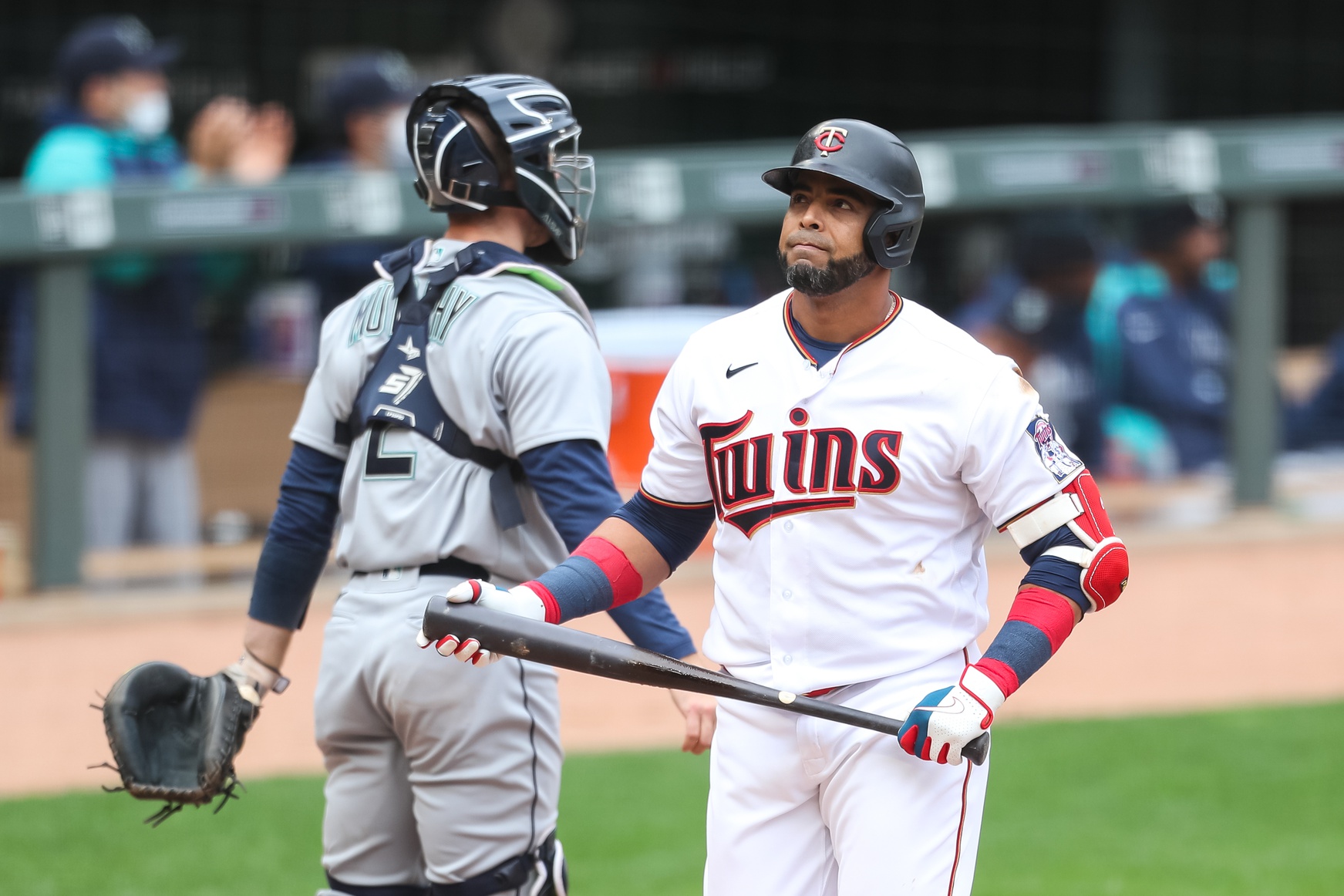 In 2019, the Twins posted a .349 slugging percentage against left-handed pitching. Only the Mariners and the Cubs fared worse. It was expected to be an anomaly. After all, almost the exact same lineup walloped lefties with a .521 slugging percentage. What’s more, they anticipated having healthy contributions from Josh Donaldson and Mitch Garver. As Aaron Gleeman wrote earlier this month, the 2021 roster was designed with right-handed thump up and down the lineup. “I expect us to be able to put a group out consistently that makes life difficult for left-handed starters,” manager Rocco Baldelli told him. “We can throw some very good right-handed hitters out there, and our goal is to just have good at-bats. … I think right now, where we sit, we should be able to go out there and have those at-bats that we want to have.” The season is just a few weeks old but so far the trend set in 2020 has continued into this season: they are slugging just .347 after the doubleheader in Oakland on Tuesday. Before you panic, consider that Twins hitters are doing almost everything right and not being rewarded appropriately. They have the highest amount of batted balls hit 95 miles per hour or higher (44.9) and they have the second highest exit velocity average (89.7). If you trust the process, then the extra base hits will surely follow. For the analytically optimistic, however, Baseball Savant notes that the expected slugging is closer to .439 which would place them closer to the middle of the pack. What is concerning is that the balls aren’t going anywhere. While they are rocketing off of their bats and the optimal speed (95+) and angle (10-30 degrees), the ones that are hit in the air aren’t traveling. Their fly balls against lefties are averaging 301.4 feet, second lowest in the game. This is not that far off from their 314.4 feet from 2020, to be sure, but it is certainly not headed in the right direction if they wish to improve upon their slugging totals from a year ago. Last year, when they did make that optimal contact, their fly balls averaged 425 feet of travel, highest in baseball. This year it’s just 379.5 feet, 25th out of 30 teams. So far this year lefties have challenged the Twins’ hitters. After staying in the zone just 45.9% of the time in 2020, they are filling it up at a 52.8% clip in 2021, perhaps unafraid of having damage done. Another notable change from last year is how left-handed opponents are using their fastballs against Twins’ hitters. In 2020, they stayed away from the inner-half of the zone (42.7% of fastballs were thrown inner-half, lowest in MLB). This year, they are going inside more often with the fastball (50.3%). It’s difficult to say anything is really driving this decline in distance. It’s possible that the colder weather is playing a role or the new baseball is shaving off a dozen or so feet. Maybe there is too much topspin on their swing. Or a combination of everything. It is still early in the season -- one that will hopefully stretch well beyond last year’s parameters -- so most of the results could be attributed to a small sample size. If they continue to hit the ball hard, the extra base hits will surely follow. But, as Baldelli said, health is the one true wild card for this lineup. With Miguel Sano and Nelson Cruz both ailing and Josh Donaldson seemingly on a knife’s edge with every sprint, the ability to hit the ball hard against left-handed pitching could quickly become an issue.
 -
After being diagnosed with a mild strain in his hamstring, the Twins have moved Josh Donaldson to the 10-day injured list and have recalled Brent Rooker from the taxi squad.Remaining healthy has been a priority for Donaldson. After missing a substantial amount of time in 2020 with calf issues, he reportedly tried to improve his running style and changed his pre-game prep work to avoid aggravating that area. "I wish I was a robot and I wish I could be 100 percent and tell you that I'm great," he told reporters in February. “But it's a sport, and a pretty fast sport. And sometimes things happen." Things indeed happened. Donaldson ripped the third pitch of the 2021 season he saw from Milwaukee’s Bradley Woodruff into the left-center field gap for a double -- a continuation from his spring training performance. Unfortunately, while rounding first, he came up limping and would be removed from the game after the inning. It was his hamstring and not calf, if you are looking for potential positives. "We're very optimistic at how I've responded to this point," Donaldson told reporters on Saturday. The 26-year-old Rooker was 9-for-31 with a 19-to-1 strikeout-to-walk ratio in 40 spring training plate appearances. Click here to view the article
-
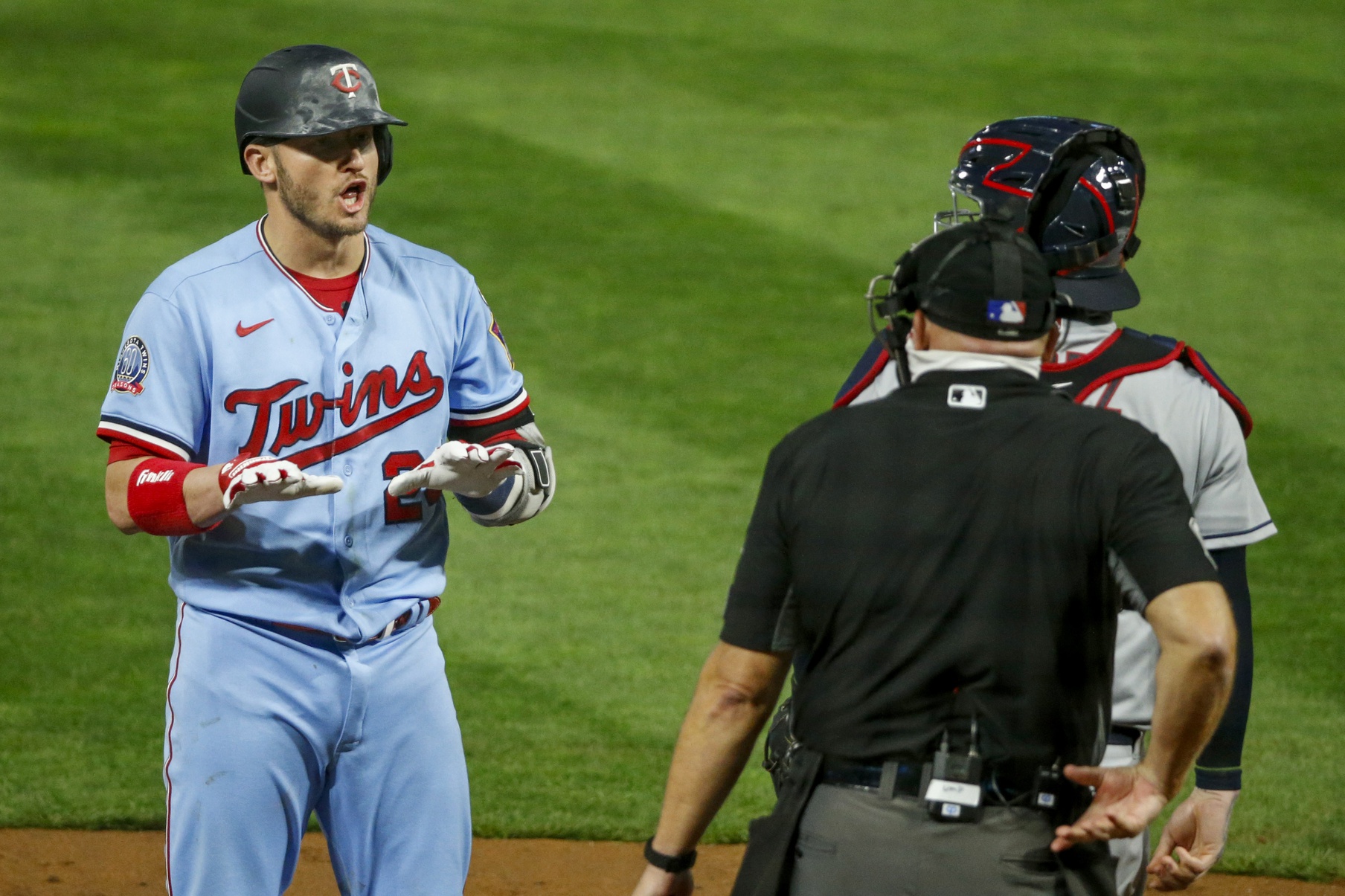 Remaining healthy has been a priority for Donaldson. After missing a substantial amount of time in 2020 with calf issues, he reportedly tried to improve his running style and changed his pre-game prep work to avoid aggravating that area. "I wish I was a robot and I wish I could be 100 percent and tell you that I'm great," he told reporters in February. “But it's a sport, and a pretty fast sport. And sometimes things happen." Things indeed happened. Donaldson ripped the third pitch of the 2021 season he saw from Milwaukee’s Bradley Woodruff into the left-center field gap for a double -- a continuation from his spring training performance. Unfortunately, while rounding first, he came up limping and would be removed from the game after the inning. It was his hamstring and not calf, if you are looking for potential positives. "We're very optimistic at how I've responded to this point," Donaldson told reporters on Saturday. The 26-year-old Rooker was 9-for-31 with a 19-to-1 strikeout-to-walk ratio in 40 spring training plate appearances.
 -
José Berríos is On Top of Things
Parker Hageman replied to Matthew Trueblood's topic in Twins Daily Front Page News
This isn't necessarily true. When you look at his spin rates/release height per game to include 2019, you'll find that his highest spin rate (2,291) came with a lower release points (5.49) in March 2019. His 4th highest spin was also another lower release slot. There's definitely an effect where the more over-the-top the delivery is, the more likely the pitcher's hand is going to generate 12:00 backspin which is going to have less arm side run. But there are plenty of lower arm slot guys who generate a lot of spin (8 of the 10 top spinners in 2019-2020 are sub 5.6) and are still 12:00 backspin guys. It's a matter of the hand position/tilt at release. The Twins have worked with him to tighten his arm circle this offseason -- where the arm action doesn't too far away from the body. The biomechanics guys say this helps a lot with direction and staying through the ball rather than around it (when he's throwing his sinker) when he arm leaks away from his body into the release point. More energy transferred into and through the ball = more spin. https://twitter.com/HagemanParker/status/1367176864603766797/photo/1 -
Minnesota Twins prospect Twitter went atwitter when video dropped of Louie Varland hitting 100 miles per hour in a February bullpen session. It was an incredible achievement for the North St. Paul graduate. For most of his career, Varland had been in the mid-90s, maxing at 94. In training, his velocity had been increasing but not like this. On that day,he was shooting upper 90s consistently. There were 97s, 98s, 99s, and, finally, there it was: three numbers, a dot, and another number. And it almost didn’t happen.On what was to be his final pitch of the session, Varland hit 99.6 off the mound. It was a fantastic achievement. Had Varland been throwing at Target Field, that 99.6 would be rounded to 100 on the broadcast, an effect that Trevor May called “the TV hundge.” Still, the staff at the facility Varland has trained at begged him for one more pitch. Empty the tank, they said, give it everything and try to clear that barrier. An instructor gave Varland a “velo slap” and the right-hander took a deep breath and let it fly. The iPad read 100.2. The 100-mile-per-hour mark is a mystical and, too often, mythical figure for the Minnesota Twins organization. Since tracking and archiving of velocity began in 2008, the Twins have reached 100-miles-per-hour 16 times. Until 2018, they had only hit it 3 times -- all by the forgettable Juan Morillo. Only the Brewers (13), Indians (13) and Diamondbacks (5) have thrown fewer triple digit fastballs than the Twins. Thankfully, in the last two seasons, Brusdar Graterol (12) and Jorge Alcala (1) helped move the Twins up the velocity leaderboard. Maybe because of this lack of heat at the big league level, whenever a Twins prospect hits one-double-oh -- regardless if it is indoors in the offseason -- it draws attention. In March, Varland returned to face hitters in live at-bats with the goal of reaching that number again. As he warmed up, he threw an effortless 97. It had an incoming sizzle that popped the catcher’s glove like a firecracker. High school players stopped their training and turned their attention to Louie’s cage. In addition to the players and staff, another attendee was Wade Varland, Louie’s father. Wade was tasked with setting up a GoPro on the catcher’s helmet to capture mechanics and pitch movement. But he said his real motivation was to witness his son break the century mark. He had seen the clip circulating and wanted to see him do it up close. Asked at what point he knew he was raising two future professional athletes in Louie and older brother Gus, a member of the Dodgers organization, Wade laughed. There was no high-pressure upbringing to be pros. He had padded mats in the basement and let them run amok and be athletes as kids. He encouraged them to be competitive in all endeavors, having them play football and wrestling. They just happened to like — and eventually excel at — baseball. As the boys got older, Wade tried to keep them hungry. Gus or Louie would spin a breaking ball or dot the corner with a fastball and Wade would just say meh. That didn’t impress him. Hell, if he had a bat in his hands, he’d hit it clear to Washington County, he’d add. His intention was to keep them from becoming complacent. He didn’t want them to settle for pretty good, no matter what path they chose. The key to the entire system, Wade admitted, was never to let a bat get into his hands. He’d sidestep any requests for a challenge, especially when they started to throw harder. As they got older and more cocksure, they’d beg their father to stand in and face them. Let’s see you try to knock it into the next county, they’d ask. Wade knew he didn’t stand a chance. When Gus was in college, after years of dodging pleas and making excuses to avoid a showdown, he was finally able to put a bat into Wade’s hands. They headed to the fieldhouse on Concordia’s campus. Wade was going to face his oldest son in a live AB round. An umpire looking for some preseason work crouched behind the catcher. Players gathered around to watch. This was going to happen officially and publicly. Wade knew he was overmatched. His son was playing in an elite college league for major league worthy prospects and was sitting 92-93. There was no way he was going to redirect anything across any adjacent county lines. Nevertheless, Wade Varland stood in there and competed, just like he had preached to his boys. It was laughable. Gus’s fastballs slammed into the catcher’s mitt and Wade would be starting his swing. This repeated several times. Then, by the grace of baseball’s divine, Wade made contact. It was, as he described it, the latest any swing could have possibly happened, as deep into the zone as physics would allow, but the ball shot off into foul territory. It landed feet — not a county — away but it was contact. The crowd erupted. “It was like I won gold in the Olympics,” Wade said with a chuckle. The reason he went through this charade was because he wanted the boys to keep working, keep improving, and to never be satisfied with where they were at. That lesson seemed to take hold. Both Varland boys found themselves at a small Division II program rather than the prototypical D1 powerhouses. That didn’t stop them from working to get on the radar of professional teams. That mindset may explain why the younger Varland, Louie, was not settling for the 99.6 and looking to hit that hundo. Louie credits the Twins’ pitching development for unlocking this extra gear. After being drafted in the 15th round, he entered the minor league system at Elizabethton in 2019. He made three outings and started to feel discomfort in his elbow and forearm. A barrage of tests showed no signs of torn ligaments. The Twins asked him to make some adjustments to his mechanics hoping it would help him feel better and unlock some velocity. “I had elbow climb that took my arm above my shoulder plane,” Louie said, demonstrating where his release point was and, through adjusting it by training with connection and plyo balls, where it is now (several inches lower). Elbow climb is considered an inefficient movement and leads to a pushing action, zapped velocity, and potentially injuries. Now his arm action follows a more optimal path, mirroring his shoulder rotation. When he rotates, his elbow and forearm follow his shoulder plane rather than rising above it. He said the delivery feels more natural. Download attachment: image_6483441.JPG On the left, Varland pitching for the Willmer Stingers in 2019. On the right, Varland at Starters Sports Training in February 2020. Notice how much lower the elbow is compared to his head level. With the new release point comes added challenges. At the lower point, he has to try to keep on top of the fastball to maintain a high vertical break and he’s refining his slider’s movement from the new angle. Those are two of his focuses this spring. That, and sustaining the upper 90s velocity over longer stretches. He knows he still has a long way to go. The 100 mile per hour pitch in the great indoors is fine but it’s a far cry from repeating it on the mound in a game situation. For now, the ball keeps firing out of his hand. During the live ABs, Varland wasn’t able to show his dad the 100 mile per hour pitch -- Wade would have to settle for a 99er. The Stalker radar gun set up behind home plate registered 97s and 98s. The Rapsodo caught one at 99 while his fastball maxed out over 20 inches of vertical break (the latter datapoint excited Louie since his previous range was closer to 17 inches).
-
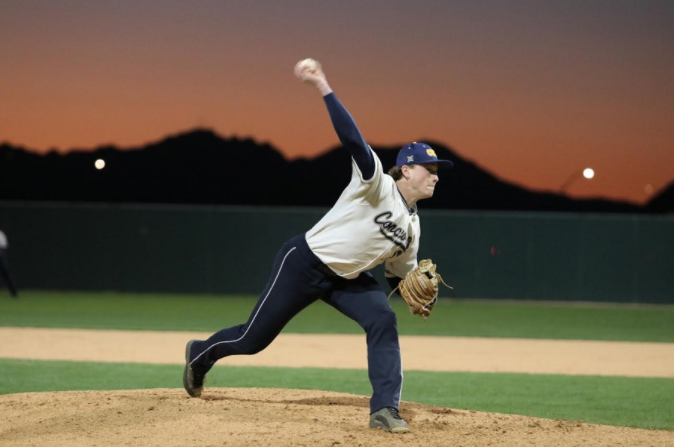 On what was to be his final pitch of the session, Varland hit 99.6 off the mound. It was a fantastic achievement. Had Varland been throwing at Target Field, that 99.6 would be rounded to 100 on the broadcast, an effect that Trevor May called “the TV hundge.” Still, the staff at the facility Varland has trained at begged him for one more pitch. Empty the tank, they said, give it everything and try to clear that barrier. An instructor gave Varland a “velo slap” and the right-hander took a deep breath and let it fly. The iPad read 100.2. https://twitter.com/npgsports/status/1365387580573970436 The 100-mile-per-hour mark is a mystical and, too often, mythical figure for the Minnesota Twins organization. Since tracking and archiving of velocity began in 2008, the Twins have reached 100-miles-per-hour 16 times. Until 2018, they had only hit it 3 times -- all by the forgettable Juan Morillo. Only the Brewers (13), Indians (13) and Diamondbacks (5) have thrown fewer triple digit fastballs than the Twins. Thankfully, in the last two seasons, Brusdar Graterol (12) and Jorge Alcala (1) helped move the Twins up the velocity leaderboard. Maybe because of this lack of heat at the big league level, whenever a Twins prospect hits one-double-oh -- regardless if it is indoors in the offseason -- it draws attention. In March, Varland returned to face hitters in live at-bats with the goal of reaching that number again. As he warmed up, he threw an effortless 97. It had an incoming sizzle that popped the catcher’s glove like a firecracker. High school players stopped their training and turned their attention to Louie’s cage. In addition to the players and staff, another attendee was Wade Varland, Louie’s father. Wade was tasked with setting up a GoPro on the catcher’s helmet to capture mechanics and pitch movement. But he said his real motivation was to witness his son break the century mark. He had seen the clip circulating and wanted to see him do it up close. Asked at what point he knew he was raising two future professional athletes in Louie and older brother Gus, a member of the Dodgers organization, Wade laughed. There was no high-pressure upbringing to be pros. He had padded mats in the basement and let them run amok and be athletes as kids. He encouraged them to be competitive in all endeavors, having them play football and wrestling. They just happened to like — and eventually excel at — baseball. As the boys got older, Wade tried to keep them hungry. Gus or Louie would spin a breaking ball or dot the corner with a fastball and Wade would just say meh. That didn’t impress him. Hell, if he had a bat in his hands, he’d hit it clear to Washington County, he’d add. His intention was to keep them from becoming complacent. He didn’t want them to settle for pretty good, no matter what path they chose. The key to the entire system, Wade admitted, was never to let a bat get into his hands. He’d sidestep any requests for a challenge, especially when they started to throw harder. As they got older and more cocksure, they’d beg their father to stand in and face them. Let’s see you try to knock it into the next county, they’d ask. Wade knew he didn’t stand a chance. When Gus was in college, after years of dodging pleas and making excuses to avoid a showdown, he was finally able to put a bat into Wade’s hands. They headed to the fieldhouse on Concordia’s campus. Wade was going to face his oldest son in a live AB round. An umpire looking for some preseason work crouched behind the catcher. Players gathered around to watch. This was going to happen officially and publicly. Wade knew he was overmatched. His son was playing in an elite college league for major league worthy prospects and was sitting 92-93. There was no way he was going to redirect anything across any adjacent county lines. Nevertheless, Wade Varland stood in there and competed, just like he had preached to his boys. It was laughable. Gus’s fastballs slammed into the catcher’s mitt and Wade would be starting his swing. This repeated several times. Then, by the grace of baseball’s divine, Wade made contact. It was, as he described it, the latest any swing could have possibly happened, as deep into the zone as physics would allow, but the ball shot off into foul territory. It landed feet — not a county — away but it was contact. The crowd erupted. “It was like I won gold in the Olympics,” Wade said with a chuckle. The reason he went through this charade was because he wanted the boys to keep working, keep improving, and to never be satisfied with where they were at. That lesson seemed to take hold. Both Varland boys found themselves at a small Division II program rather than the prototypical D1 powerhouses. That didn’t stop them from working to get on the radar of professional teams. That mindset may explain why the younger Varland, Louie, was not settling for the 99.6 and looking to hit that hundo. Louie credits the Twins’ pitching development for unlocking this extra gear. After being drafted in the 15th round, he entered the minor league system at Elizabethton in 2019. He made three outings and started to feel discomfort in his elbow and forearm. A barrage of tests showed no signs of torn ligaments. The Twins asked him to make some adjustments to his mechanics hoping it would help him feel better and unlock some velocity. “I had elbow climb that took my arm above my shoulder plane,” Louie said, demonstrating where his release point was and, through adjusting it by training with connection and plyo balls, where it is now (several inches lower). Elbow climb is considered an inefficient movement and leads to a pushing action, zapped velocity, and potentially injuries. Now his arm action follows a more optimal path, mirroring his shoulder rotation. When he rotates, his elbow and forearm follow his shoulder plane rather than rising above it. He said the delivery feels more natural. On the left, Varland pitching for the Willmer Stingers in 2019. On the right, Varland at Starters Sports Training in February 2020. Notice how much lower the elbow is compared to his head level. With the new release point comes added challenges. At the lower point, he has to try to keep on top of the fastball to maintain a high vertical break and he’s refining his slider’s movement from the new angle. Those are two of his focuses this spring. That, and sustaining the upper 90s velocity over longer stretches. He knows he still has a long way to go. The 100 mile per hour pitch in the great indoors is fine but it’s a far cry from repeating it on the mound in a game situation. For now, the ball keeps firing out of his hand. During the live ABs, Varland wasn’t able to show his dad the 100 mile per hour pitch -- Wade would have to settle for a 99er. The Stalker radar gun set up behind home plate registered 97s and 98s. The Rapsodo caught one at 99 while his fastball maxed out over 20 inches of vertical break (the latter datapoint excited Louie since his previous range was closer to 17 inches). https://twitter.com/twinsdaily/status/1367931763511619584 Malcolm Gladwell pointed out that one of the most useful predictors of real success is people’s willingness to persevere past the point of pretty good. Having a 94-mile-per-hour fastball is pretty good. Reaching 99.6 miles per hour is pretty dang good. Louie Varland isn’t looking to stop at pretty good and that says a lot about him as a prospect.
 -
Texas is the worst.
-
Twin Cities baseball fans will get an early look at one of their professional teams: The St. Paul Saints begin the 2021 season two days ahead of the Minnesota Twins. The Toby Gardenhire-led Saints will officially begin their first season as the Twins’ top affiliate on April 6th at CHS Field against Cleveland's AAA club, the Columbus Clippers.The Clippers will stay in St. Paul for a six-game series. The league announced that each series will be six games, with games being played from Tuesday through Sunday. Monday will be a league-wide off-day, allowing the players to stay fresh and reduce travel overall. The Saints recently announced that they will play in the Midwest Division of the Triple-A East League. While the Saints are scheduled to face all of the Midwest Division teams in 2021, Because of travel and COVID-19 concerns, the Saints, Iowa Cubs and Omaha Storm Chasers will not play teams outside of the Midwest Division this year. Overall, the Saints will have a 142-game schedule that stretches from April 6th through September 19th and will be divided between 70 at CHS Field and 72 games on the road. More details on start times will be announced at a later date. Download attachment: Saints Schedule.png Click here to view the article
-
Pigs In A Blanket: St. Paul Saints Start Season On April 6
Parker Hageman posted an article in Twins
 The Clippers will stay in St. Paul for a six-game series. The league announced that each series will be six games, with games being played from Tuesday through Sunday. Monday will be a league-wide off-day, allowing the players to stay fresh and reduce travel overall. The Saints recently announced that they will play in the Midwest Division of the Triple-A East League. While the Saints are scheduled to face all of the Midwest Division teams in 2021, Because of travel and COVID-19 concerns, the Saints, Iowa Cubs and Omaha Storm Chasers will not play teams outside of the Midwest Division this year. Overall, the Saints will have a 142-game schedule that stretches from April 6th through September 19th and will be divided between 70 at CHS Field and 72 games on the road. More details on start times will be announced at a later date.
 -
Interestingly, Byron Buxton had 7 of his 13 home runs tagged as "no doubters" by Statcast. That was the second-highest on the team outside of Cruz. Miguel Sano hit his an average of 412 feet. Buxton hit his an average of 409 feet. Buxton is surprisingly strong. Now Polanco...just one of his 4 home runs were of the "no doubt" variety and the average travel was 361, 4th lowest in all of baseball. If the ankle injury isn't driving his lack of power, then the new ball will hurt him in 2021.
-
I'll add this to the conversation since it was on the cutting room floor of my post: We expect 40-year-old players to decline because that's what 40-year-olds do. Since 1970, there are about 25 seasons in which players have had above-average wOBAs. When you looked back at the list of qualified players who were age-40 or older, most of those seasons took place in the 1980s-1990s when older players weren't quickly removed for the younger, more affordable ones. Perhaps, too, the growth of research also made teams realize that the risk of having 40-year-olds as everyday players was often a losing proposition. There have only been 9 seasons since 2010 of 40-year-old or older players receiving at least 300 plate appearances (88 total since 1970). Four of those seasons belong to Ichiro (2) and Raul Ibanez (2). The most recent one was from Carlos Beltran in 2017. The amount of preparation that today's players receive compared to those even 10-15 year ago is far superior. The way that players took care of themselves in the 1980s and 1990s looks quaint. The amount of science applied to every aspect of their training and condition is absurd. What’s more, the amount of work Nelson Cruz puts in is even more absurd. Even compared to his younger teammates. From the nutrition, training and recovery standpoint, I’d wager that not one of the names prior to 2000 had the same experience as Cruz. With that in mind, is performance at 40 really that difficult to maintain? Are teams valuing and projecting older players with a bias when you are drawing from a limited pool of players, most of whom had their careers in an era where the training and conditioning isn’t even a fraction as comparable to today’s standards? Are teams pushing out players because of cost while some still have productive years remaining? Is there an undervalued market there? There’s no question that skills erode with age. Not every player is going to reach their late-30s let alone their 40s. The question is, with the modern training systems in place, how much better can an aging player be compared to that of the ones from 10-to-20 years ago?
-
That was the figure cited in the Sports Illustrated article linked in the paragraph above. "Accordingly, its manufacturer, Skyline, made the ball one gram heavier, increased the circumference by one millimeter and decreased the coefficient of restitution (COR), which basically measures the bounciness of a ball. (Think of dribbling a soft, uninflated basketball versus a hard, inflated one.) The result was a ball that traveled, on average, 13 to 16 feet less, leading to a 40.7% home run drop."
-
What does Nelson Cruz dream of during his twenty minute power naps? When he’s stretched out in his lawn chair with the sleep shades pulled over his eyes, is he acquiring a new skill? Is he reviewing every pitch he’s ever seen like Neo learning martial arts in The Matrix? Is he sleeping so deep he’s reversing the aging process? We do know one thing about Cruz. When he wakes up, he’s going to hit.Cruz’s mechanics are impeccably groomed, minimal and sharp, not unlike his well-coiffed facial hair. His simple yet violent swing construction is one of the reasons he has been able to roll out of bed and starts raking. A wake and rake, if you will. The old adage is that hitters have the tendency to start slow, struggle to find their timing, and require enough live pitches before getting into midseason form. Cruz rises from his hibernation, steps to the plate and mashes. From 2015-2019, during the period of the season when the northern part of the country is still defrosting, Cruz has posted a .401 weighted on-base average (wOBA) in games in March and April. That was the fourth-highest among hitters with 450 or more plate appearances in that time. Only Mike Trout, Bryce Harper and Freddie Freeman -- three hitters who were prepubescent when Cruz began his Major League career -- posted better numbers in March/April than him. Even during his advanced aging years Cruz is consistent, showing no indications of tiring with the long slog of the season. In that same span, 2015 to 2019, his wOBA in August/September dropped all the way down to .397. With season-prepping routines upended by the global pandemic, Cruz shook off the months-long hiatus and smashed baseballs. In July and August, he maintained a .437 wOBA over his first 141 plate appearances, 7th highest among qualified hitters. Some hitters never had the chance to look comfortable at the plate. Beyond a granite physique and minimal swing mechanics, Cruz has demonstrated that he is fully engaged with the team. He’s a mentor and coach who also happens to hit home runs in critical spots during the game. His ability to study opposing pitchers appears unrivaled. You’ll find him cemented at the railing of the dugout, focused on finding bread crumbs a pitcher leaves on the mound that might tip the balance into the hitter’s favor. He has influenced the team’s pitching staff as well, helping them craft their arsenals and giving them insight in a way that only a veteran with over 7,000 plate appearances can. During the game, other players might turn inward to focus on their own performance but, again, he’s at the top of the dugout steps yelling words of encouragement to his teammates, even firing up veteran players like Josh Donaldson. All of this adds up to invaluable intangibles that benefits the team and the organization. “Nelson is a rarity in a lot of ways, and it’s very significant when you find someone that enhances everything going on around him,” Twins manager Rocco Baldelli said. “He makes people better. He shows them routines. He points out small things. He talks about big things and having a plan and how to prepare.” There is value in having that presence in the clubhouse, dugout, and on the field. Asked about his own leadership, Cruz talked about playing with Michael Young in Texas and modeled his career after the former Ranger. If his presence means one young Twins player is able to use Cruz as his model, that’s a worthy investment. All that feelgoodery aside, it’s hard not to overlook the fact that in 2020 Cruz outperformed a lot of key metrics with some signs of decline in other ones. According to Baseball Savant’s expected metrics -- projections of what players should post based on what types of batted balls they produce -- Cruz over-performed in 2020. By Savant‘s methods, Cruz’s batting average should have been closer to .269 rather than .303 (his .034 difference was the 26th highest among qualified hitters). His expected weighted on-base average was .363 rather than the actual .405 (27th highest). How much weight should be put on something like that? If you operate like the New York Yankees, not much. They gave DJ LeMahieu a $90 million contract this offseason after he posted the highest expected-to-actual wOBA difference in baseball last year. If the Yankees and their army of data quants don’t care, maybe the Twins shouldn’t either. Even if his 2020 numbers were closer to the anticipated ones, Nelson Cruz would still have had a very good season. If his “true performance” happened to be a .363 wOBA season, that would equal what JD Martinez has produced over the last six years. That’s a very good proposition. While Cruz did carry the offense early in the 2020, that production started to erode later in the summer. He posted his lowest exit velocity (91.6 mph) of the last six seasons. His strikeout rate, fly ball rate, and overall contact rate were the lowest marks in that time as well. He also pulled fewer pitches, hit more ground balls, and had the lowest percentage of balls hit 95 mph or higher since before 2015. Are these early indications of the coming regression or just a giant nothingburger? It is difficult to say how much of that performance was due to things like aging, a shortened season, or not having access to in-game video. In the case of the two latter issues, he won’t have those issues in 2021. This year MLB expects to be back to the full 162-game slate. Plus, in-game video, with it’s too-hot-for-TV blackened screen box so teams cannot pick up the catcher’s signs, will return as well allowing Cruz to resume his dissection between at bats. But what’s to say about the aging effect? While production can decline due to age, it’s other factors like increased injury risk and longer recovery time that older players tend to battle. Cruz incorporates a detailed daily regiment of nutrition, workout, and recovery (sleep) to optimize his performance and curb the effects of aging. As a prospect, he found in his first full season his numbers in the second-half of the year dropped off considerably. It was then he began to continue his workouts into the season to keep himself ready for the full year. He has since refined that process and credits the transition to full-time DH as another reason he’s able to keep hitting at this level. “Once I started playing DH, my legs are fresher because I don't have to be running in the outfield. I think that has been key for the last few years in being able to play more games,” Cruz said. “I know my body better, so I know what I need to do to stay on the field on a daily basis.” There is a new caveat looming for 2021: the deadened baseball. Following two seasons of juiced baseballs, MLB will begin to manufacture balls with less springiness in hopes of curbing the home run onslaught. But the thought of hitting a ball with flight restrictions doesn’t phase Cruz. As long as everyone else is in the same boat, he has no problem with it. “That’s for everybody,” Cruz said of the proposed ball changes. “I’ll be good.” Even if MLB’s changes are successful in reducing the average fly ball by 13-to-16 feet like the KBO did in 2018, that shouldn’t affect Cruz significantly. If the new ball shaved off that amount, he would still average 335 feet on his fly balls -- basically what Khris Davis and JD Martinez averaged this season. In his “no doubt” home run total was 67%, meaning nearly 70% of his home runs would have been a home run at any stadium, in any condition. This might discount a few of his shorter home runs (he had 2 “doubters” and 6 “mostly gone” shots last year) but the bulk of his power should remain. Again, if the deadened ball knocks off 13-16 feet, most of his home runs would remain. From all the publicly-facing data available, it’s difficult to reach the conclusion that he would regress all that much. Cruz should be on the downward slope of his career yet he’s done everything humanly possible to rage against the dying of the light and continued to put up superhuman numbers when most players have long since retired. Could this actually be his last season? “I guess when you think about retirement, it’s about ending, and I don’t want to put that in my mind going into the season,” Cruz said. “I understand my team, to be able to go where we want to go, I have to do my best. I have to be my best, I have to be on top of my game, so retirement is not on my mind. My body feels great. My mind is still good, too. So there’s no reason. I still love the game.” At some point, like most mortals, the irreversible effects of aging will finally catch up to Nelson Cruz and retirement will beckon. But not this year. This year, he’s chasing a ring. Click here to view the article
-
Will 40-Year-Old Nelson Cruz Continue To Wake And Rake For The Twins?
Parker Hageman posted an article in Twins
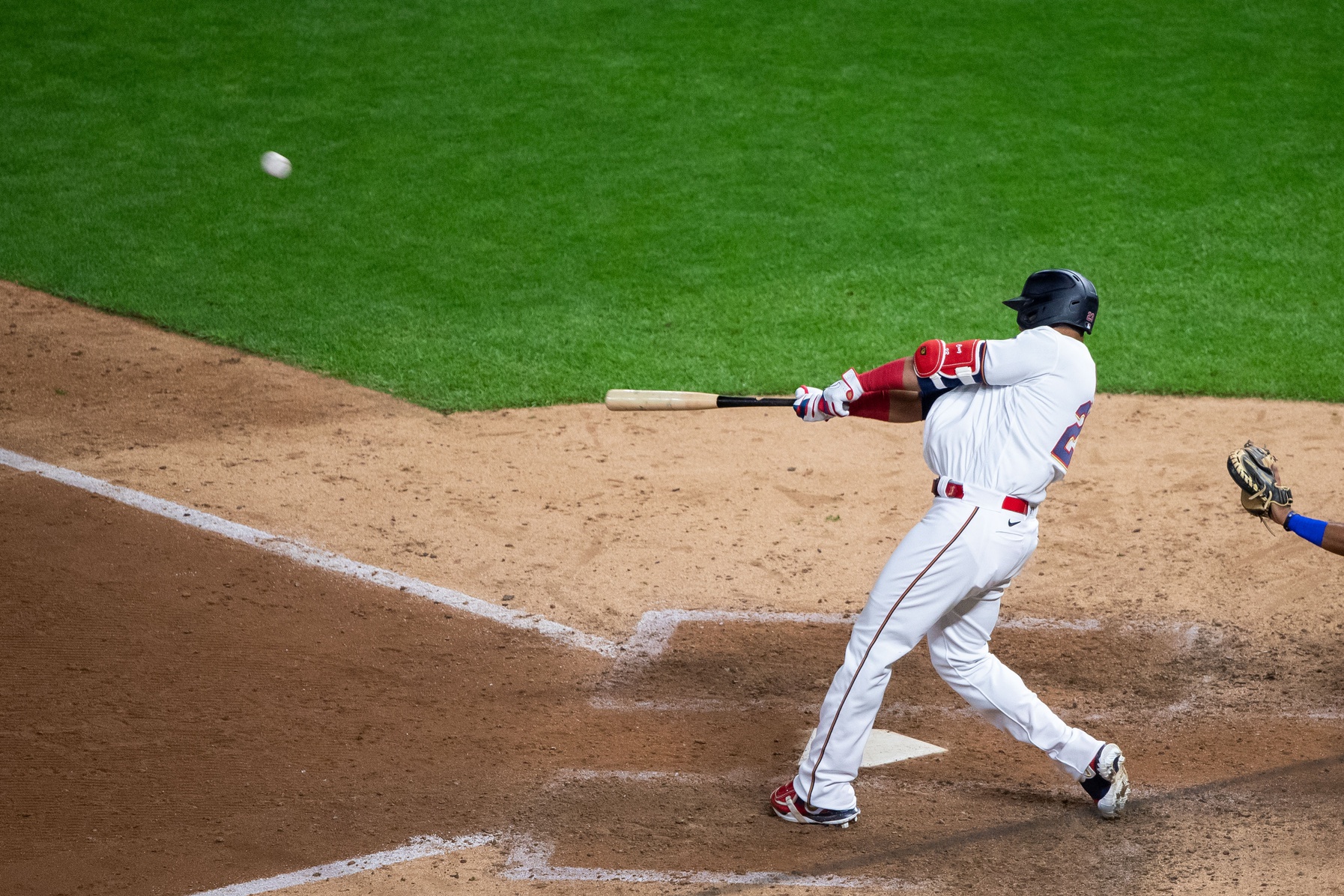 Cruz’s mechanics are impeccably groomed, minimal and sharp, not unlike his well-coiffed facial hair. His simple yet violent swing construction is one of the reasons he has been able to roll out of bed and starts raking. A wake and rake, if you will. The old adage is that hitters have the tendency to start slow, struggle to find their timing, and require enough live pitches before getting into midseason form. Cruz rises from his hibernation, steps to the plate and mashes. From 2015-2019, during the period of the season when the northern part of the country is still defrosting, Cruz has posted a .401 weighted on-base average (wOBA) in games in March and April. That was the fourth-highest among hitters with 450 or more plate appearances in that time. Only Mike Trout, Bryce Harper and Freddie Freeman -- three hitters who were prepubescent when Cruz began his Major League career -- posted better numbers in March/April than him. Even during his advanced aging years Cruz is consistent, showing no indications of tiring with the long slog of the season. In that same span, 2015 to 2019, his wOBA in August/September dropped all the way down to .397. With season-prepping routines upended by the global pandemic, Cruz shook off the months-long hiatus and smashed baseballs. In July and August, he maintained a .437 wOBA over his first 141 plate appearances, 7th highest among qualified hitters. Some hitters never had the chance to look comfortable at the plate. Beyond a granite physique and minimal swing mechanics, Cruz has demonstrated that he is fully engaged with the team. He’s a mentor and coach who also happens to hit home runs in critical spots during the game. His ability to study opposing pitchers appears unrivaled. You’ll find him cemented at the railing of the dugout, focused on finding bread crumbs a pitcher leaves on the mound that might tip the balance into the hitter’s favor. He has influenced the team’s pitching staff as well, helping them craft their arsenals and giving them insight in a way that only a veteran with over 7,000 plate appearances can. During the game, other players might turn inward to focus on their own performance but, again, he’s at the top of the dugout steps yelling words of encouragement to his teammates, even firing up veteran players like Josh Donaldson. All of this adds up to invaluable intangibles that benefits the team and the organization. “Nelson is a rarity in a lot of ways, and it’s very significant when you find someone that enhances everything going on around him,” Twins manager Rocco Baldelli said. “He makes people better. He shows them routines. He points out small things. He talks about big things and having a plan and how to prepare.” There is value in having that presence in the clubhouse, dugout, and on the field. Asked about his own leadership, Cruz talked about playing with Michael Young in Texas and modeled his career after the former Ranger. If his presence means one young Twins player is able to use Cruz as his model, that’s a worthy investment. All that feelgoodery aside, it’s hard not to overlook the fact that in 2020 Cruz outperformed a lot of key metrics with some signs of decline in other ones. According to Baseball Savant’s expected metrics -- projections of what players should post based on what types of batted balls they produce -- Cruz over-performed in 2020. By Savant‘s methods, Cruz’s batting average should have been closer to .269 rather than .303 (his .034 difference was the 26th highest among qualified hitters). His expected weighted on-base average was .363 rather than the actual .405 (27th highest). How much weight should be put on something like that? If you operate like the New York Yankees, not much. They gave DJ LeMahieu a $90 million contract this offseason after he posted the highest expected-to-actual wOBA difference in baseball last year. If the Yankees and their army of data quants don’t care, maybe the Twins shouldn’t either. Even if his 2020 numbers were closer to the anticipated ones, Nelson Cruz would still have had a very good season. If his “true performance” happened to be a .363 wOBA season, that would equal what JD Martinez has produced over the last six years. That’s a very good proposition. While Cruz did carry the offense early in the 2020, that production started to erode later in the summer. He posted his lowest exit velocity (91.6 mph) of the last six seasons. His strikeout rate, fly ball rate, and overall contact rate were the lowest marks in that time as well. He also pulled fewer pitches, hit more ground balls, and had the lowest percentage of balls hit 95 mph or higher since before 2015. Are these early indications of the coming regression or just a giant nothingburger? It is difficult to say how much of that performance was due to things like aging, a shortened season, or not having access to in-game video. In the case of the two latter issues, he won’t have those issues in 2021. This year MLB expects to be back to the full 162-game slate. Plus, in-game video, with it’s too-hot-for-TV blackened screen box so teams cannot pick up the catcher’s signs, will return as well allowing Cruz to resume his dissection between at bats. But what’s to say about the aging effect? While production can decline due to age, it’s other factors like increased injury risk and longer recovery time that older players tend to battle. Cruz incorporates a detailed daily regiment of nutrition, workout, and recovery (sleep) to optimize his performance and curb the effects of aging. As a prospect, he found in his first full season his numbers in the second-half of the year dropped off considerably. It was then he began to continue his workouts into the season to keep himself ready for the full year. He has since refined that process and credits the transition to full-time DH as another reason he’s able to keep hitting at this level. “Once I started playing DH, my legs are fresher because I don't have to be running in the outfield. I think that has been key for the last few years in being able to play more games,” Cruz said. “I know my body better, so I know what I need to do to stay on the field on a daily basis.” There is a new caveat looming for 2021: the deadened baseball. Following two seasons of juiced baseballs, MLB will begin to manufacture balls with less springiness in hopes of curbing the home run onslaught. But the thought of hitting a ball with flight restrictions doesn’t phase Cruz. As long as everyone else is in the same boat, he has no problem with it. “That’s for everybody,” Cruz said of the proposed ball changes. “I’ll be good.” Even if MLB’s changes are successful in reducing the average fly ball by 13-to-16 feet like the KBO did in 2018, that shouldn’t affect Cruz significantly. If the new ball shaved off that amount, he would still average 335 feet on his fly balls -- basically what Khris Davis and JD Martinez averaged this season. In his “no doubt” home run total was 67%, meaning nearly 70% of his home runs would have been a home run at any stadium, in any condition. This might discount a few of his shorter home runs (he had 2 “doubters” and 6 “mostly gone” shots last year) but the bulk of his power should remain. Again, if the deadened ball knocks off 13-16 feet, most of his home runs would remain. From all the publicly-facing data available, it’s difficult to reach the conclusion that he would regress all that much. Cruz should be on the downward slope of his career yet he’s done everything humanly possible to rage against the dying of the light and continued to put up superhuman numbers when most players have long since retired. Could this actually be his last season? “I guess when you think about retirement, it’s about ending, and I don’t want to put that in my mind going into the season,” Cruz said. “I understand my team, to be able to go where we want to go, I have to do my best. I have to be my best, I have to be on top of my game, so retirement is not on my mind. My body feels great. My mind is still good, too. So there’s no reason. I still love the game.” At some point, like most mortals, the irreversible effects of aging will finally catch up to Nelson Cruz and retirement will beckon. But not this year. This year, he’s chasing a ring.
 -
I may have phrased that poorly. What I mean by targeting the top of the zone is that the Twins may be able to tweak the carry on his fastball, so it holds the plane longer and thereby ends up at the upper half vs lower half. Right now he had 13.5 inches of vertical break. If they are able to increase this by even an inch on average, it’d have a little extra separation from his cutter. The tunnel and commitment point wouldn’t necessarily change, the fastball wouldn’t be sinking as much after that point. There would be a little extra carry. Does this make sense?
-
When it seemed that every other team was throwing money at high-power, high-velo relievers, the Minnesota Twins zagged and concentrated on those who could contort a ball’s flight. They wanted master manipulators and movement magicians. So when Alex Colomé and his cutter were on the market, you knew that it had to draw the interest of the organization’s pitching department.Here was an arm capable of throwing in the mid-90s but favored his biting cutter at a near 3-to-1 pace. Targeting pitchers who have a hard-to-handle non-fastball makes sense as a strategy. From 2010 to 2019, relievers had an expected FIP of 4.83 on all types of fastballs. Opponents posted a .342 weighted on-base average. On breaking balls, on the other hand, relievers had a 2.45 expected FIP and a much more benign .254 weighted on-base average. Theoretically, if some is good then more is probably better. In 2020, the Minnesota Twins put it into practice. Only the Houston Astros bullpen threw more non-fastballs than the Twins’ did. The Twins bullpen finished the season with a 3.97 expected FIP, the third lowest in baseball, and a 3.62 ERA, the sixth best. The Astros did not fare as well and that might have to do with the weapon of choice. While the Astros favored curveballs, the Twins embraced sliders. The proliferation of the slider use in Minnesota may have something to do with the Twins’ top pitching analyst. Way back in 2008 when the internet ran on coal, Josh Kalk studied pitch f/x data and found that sliders had been more effective than curveballs. He theorized at the time that the curveball’s hump, the point in which the pitch jumps up out of a tunnel, gives the hitter advanced warning that something is amiss. Sliders, meanwhile, demonstrated later break, tending to tunnel with fastballs better and don’t tip off the hitters. Sliders, it seemed, were better than curveballs. The organization embraced this principle. For existing pitchers like Tyler Duffey, Taylor Rogers, and Trevor May, the Twins helped them reshape their curveballs, reducing the amount of tunnel-jump displayed and creating more late break. This has led to more favorable results. On the acquisition side, it means targeting pitchers whose sliders or cutters have outstanding movement but possibly have been underutilized (Matt Wisler). Minnesota’s relief corp threw sliders as 34% of their mix — more than any team besides the Reds. Naturally, a lot of those sliders came from Matt Wisler and Sergio Romo. But even pitchers like Jorge Alcala, another right-hander with a high powered arm, threw his slider at a very high rate. Now with Wisler gone, the Twins can have Colomé slide into the nothing but breaking balls role. He doesn’t throw a slider like Wisler but his cutter behaves like a souped up slider. To understand how his particular pitch moves, consider the active spin of the pitch -- the amount of spin that contributes to its movement. A fastball that has 100% active spin, if thrown with a 12:00 tilt, will have perfect backspin. A curveball with similar traits, such as Rich Hill’s bender, will have just the opposite -- a topspin ball with 12-6 break. The lower the active spin rate on a pitch, the more gyro spin is present (spin that doesn’t contribute to movement) and the more gravity affects the direction of the pitch (i.e. down). Cutters, when they are close to the cut fastball variety, have a high active spin rate. The reigning cutter king, Kanley Jansen, has a nice active spin of 69 on his. This means it has a lot of useful spin, similar to a fastball, but with enough gyro spin to make it drop some. Also, at over 2,500 RPMs on average, Jansen’s cutter is rotating enough on the way to the plate to result in that big horizontal run. But there are cutters that blend into the slider movement category. Sliders typically have active spin between the 10-30% range (although the frisbee kind tends to be higher). That’s where Colomé’s cutter lands. His cutter ranges from 35-40% in active spin rate, meaning that it can have similar spin properties as a slider even though it is thrown near 90 mph. Colomé’s cutter (2,100 RPMs) does not have the overall spin rate like Jansen’s so it doesn’t generate the massive east-west movement but with the lower active spin rate, gravity helps it drop more than his Dodger counterpart. More importantly for Colomé than overall total movement is the way the cutter hides in the same tunnel as his fastball, breaking off late. Download attachment: Colome Tunneling.png This is the average movement path of Colomé’s fastball (red) and cutter (brown). The dots represent the release point, the recognition point, and the commitment point (pink dots). The fastball and cutter share the same path until after the commitment point. Essentially, this is doing exactly what Kalk’s research over a decade ago found to be so enticing. Hitters are given no hints about the pitch until after they have made their move to swing. “As we know, the later the movement, the better the pitch,” Twins pitching coach Wes Johnson told reporters in 2020. “I should say, the better the chance you have for more swings and misses.” Johnson was talking about Wisler’s slider but the same could be said about Colome’s cutter. We say that Colomé’s cutter tunnels off his fastball but given that the cutter is his primary pitch, it’s really his fastball that gives the hitter a different look. The fastball spins up to the plate with a 12:15 tilt (and 96% active spin) providing him with a good amount of carry or ride. While the cutter darts down, the fastball just keeps going. As a hitter, you have to decide with little early indication which pitch is coming and either have to account for the fastball’s carry or the cutter’s drop. This combination and execution explains why hitters struggled so much to put anything in the air against him. After posting fly ball rates of 22%, 22% and 25% in 2017-2019, opponents were able to lift the ball on just 9% of balls in play. And, after a year in 2019 when he was barreled (hard hit at optimal launch angles) by opponents at a 9% rate, he rebounded and allowed barreled contact on just 3% of balls in play, putting him in the top 5% of the league, in 2020. What made 2020 so different from the previous seasons? One adjustment that benefited him last year was his tendency to stay out of the strike zone. In 2016, he struck out 31% of batters faced. That rate has steadily declined each season since. During his first year with the White Sox, he told reporters that the reason this happened was because he had switched his focus from strikeouts to getting hitters out in three pitches or less. This meant more contact in the zone and more balls in play. However, over the last two seasons Colomé has started to pitch off the plate more. In 2016-2018, his zone rate on all his pitches was near or above 50%. This past year, his zone rate was down to 41%. Most notably, he began to locate his cutter more underneath the zone (one reason why opponents were now hitting the top of the ball and worm-burning the infield around him). After locating the cutter in the zone at a 50% rate, he was down to 37% in 2020. Hitters were still making contact but now they were chopping the top of the ball. If he continues to produce the same amount of grounders, it’s likely he will enjoy pitching in front of the Twins’ defense. Download attachment: Webp.net-gifmaker.gif Overall, the 2020 season was a step forward for Colomé but there are some areas that the Twins could tweak. Colomé has recently improved his fastball’s vertical carry. While with the Tampa Bay Rays in 2016, his vertical movement on his fastball was 11.5 inches. This past season it was at 13.5. The added 2 inches is notable considering it provides separation from his cutter. Interestingly, even as he was improving the carry on his fastball, Colomé targeted the top of the zone less in 2020. In 2018, he threw his fastball in the upper half of the strike zone 63% of the time but did so only 47% of the time in 2020. When he did locate up, opponents had a much more difficult time making solid contact (83.3 exit velocity) compared to when he would pitch to the bottom of the zone (93.8 exit velocity). It’s possible that the Twins could have him set his sights higher with his fastball in 2021. If he can keep that same tunnel effect while increasing the amount of separation between where the pitches end up, Colomé has the potential to miss more bats next year. There is the inherent risk of overvaluing performance in the shortened season. After all, most of the data above is from 22.1 innings. That’s hardly a sampling. Still, the Twins haven’t had too many misses when it comes to pitching acquisitions. They have a good process for identifying talent, undoubtedly diving into motion data for Colomé to see if 2020’s success is based on anything mechanical, and they have a strong system in place to fully develop their potential, either by optimizing an arsenal or by tweaking their motion. There’s a healthy combination of front office nerds and grizzled road-worn coaches reaching this conclusion. Even if they don’t do anything with him and he regresses some, Alex Colomé is still a very good late innings relief option at a reasonable cost. Click here to view the article
-
Cut Your Bat In Two Pieces: What Alex Colomé Brings To The Twins
Parker Hageman posted an article in Twins
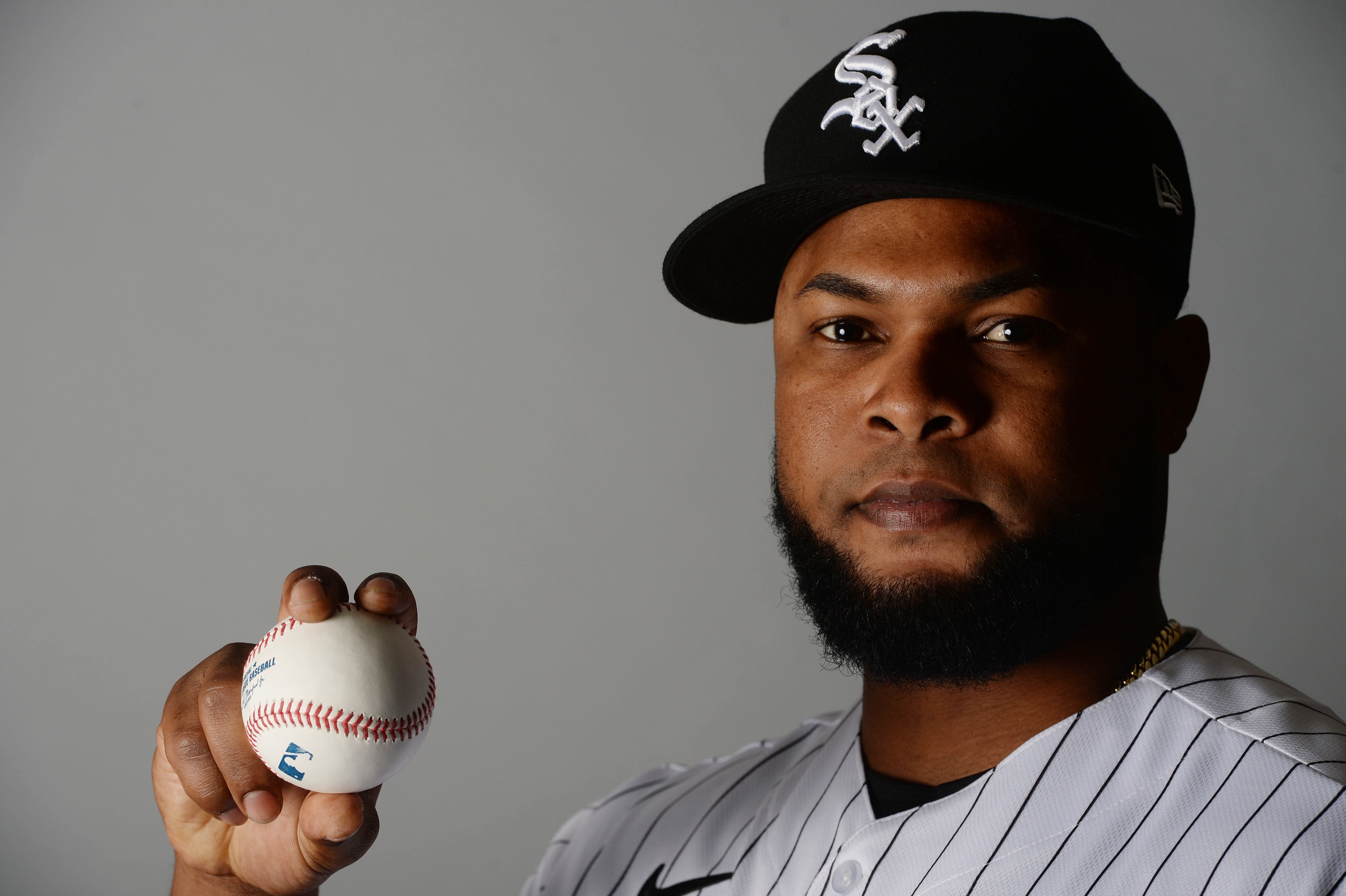 Here was an arm capable of throwing in the mid-90s but favored his biting cutter at a near 3-to-1 pace. Targeting pitchers who have a hard-to-handle non-fastball makes sense as a strategy. From 2010 to 2019, relievers had an expected FIP of 4.83 on all types of fastballs. Opponents posted a .342 weighted on-base average. On breaking balls, on the other hand, relievers had a 2.45 expected FIP and a much more benign .254 weighted on-base average. Theoretically, if some is good then more is probably better. In 2020, the Minnesota Twins put it into practice. Only the Houston Astros bullpen threw more non-fastballs than the Twins’ did. The Twins bullpen finished the season with a 3.97 expected FIP, the third lowest in baseball, and a 3.62 ERA, the sixth best. The Astros did not fare as well and that might have to do with the weapon of choice. While the Astros favored curveballs, the Twins embraced sliders. The proliferation of the slider use in Minnesota may have something to do with the Twins’ top pitching analyst. Way back in 2008 when the internet ran on coal, Josh Kalk studied pitch f/x data and found that sliders had been more effective than curveballs. He theorized at the time that the curveball’s hump, the point in which the pitch jumps up out of a tunnel, gives the hitter advanced warning that something is amiss. Sliders, meanwhile, demonstrated later break, tending to tunnel with fastballs better and don’t tip off the hitters. Sliders, it seemed, were better than curveballs. The organization embraced this principle. For existing pitchers like Tyler Duffey, Taylor Rogers, and Trevor May, the Twins helped them reshape their curveballs, reducing the amount of tunnel-jump displayed and creating more late break. This has led to more favorable results. On the acquisition side, it means targeting pitchers whose sliders or cutters have outstanding movement but possibly have been underutilized (Matt Wisler). Minnesota’s relief corp threw sliders as 34% of their mix — more than any team besides the Reds. Naturally, a lot of those sliders came from Matt Wisler and Sergio Romo. But even pitchers like Jorge Alcala, another right-hander with a high powered arm, threw his slider at a very high rate. Now with Wisler gone, the Twins can have Colomé slide into the nothing but breaking balls role. He doesn’t throw a slider like Wisler but his cutter behaves like a souped up slider. To understand how his particular pitch moves, consider the active spin of the pitch -- the amount of spin that contributes to its movement. A fastball that has 100% active spin, if thrown with a 12:00 tilt, will have perfect backspin. A curveball with similar traits, such as Rich Hill’s bender, will have just the opposite -- a topspin ball with 12-6 break. The lower the active spin rate on a pitch, the more gyro spin is present (spin that doesn’t contribute to movement) and the more gravity affects the direction of the pitch (i.e. down). Cutters, when they are close to the cut fastball variety, have a high active spin rate. The reigning cutter king, Kanley Jansen, has a nice active spin of 69 on his. This means it has a lot of useful spin, similar to a fastball, but with enough gyro spin to make it drop some. Also, at over 2,500 RPMs on average, Jansen’s cutter is rotating enough on the way to the plate to result in that big horizontal run. But there are cutters that blend into the slider movement category. Sliders typically have active spin between the 10-30% range (although the frisbee kind tends to be higher). That’s where Colomé’s cutter lands. His cutter ranges from 35-40% in active spin rate, meaning that it can have similar spin properties as a slider even though it is thrown near 90 mph. Colomé’s cutter (2,100 RPMs) does not have the overall spin rate like Jansen’s so it doesn’t generate the massive east-west movement but with the lower active spin rate, gravity helps it drop more than his Dodger counterpart. https://twitter.com/PitchingNinja/status/882353695278628864 More importantly for Colomé than overall total movement is the way the cutter hides in the same tunnel as his fastball, breaking off late. This is the average movement path of Colomé’s fastball (red) and cutter (brown). The dots represent the release point, the recognition point, and the commitment point (pink dots). The fastball and cutter share the same path until after the commitment point. Essentially, this is doing exactly what Kalk’s research over a decade ago found to be so enticing. Hitters are given no hints about the pitch until after they have made their move to swing. “As we know, the later the movement, the better the pitch,” Twins pitching coach Wes Johnson told reporters in 2020. “I should say, the better the chance you have for more swings and misses.” Johnson was talking about Wisler’s slider but the same could be said about Colome’s cutter. We say that Colomé’s cutter tunnels off his fastball but given that the cutter is his primary pitch, it’s really his fastball that gives the hitter a different look. The fastball spins up to the plate with a 12:15 tilt (and 96% active spin) providing him with a good amount of carry or ride. While the cutter darts down, the fastball just keeps going. As a hitter, you have to decide with little early indication which pitch is coming and either have to account for the fastball’s carry or the cutter’s drop. This combination and execution explains why hitters struggled so much to put anything in the air against him. After posting fly ball rates of 22%, 22% and 25% in 2017-2019, opponents were able to lift the ball on just 9% of balls in play. And, after a year in 2019 when he was barreled (hard hit at optimal launch angles) by opponents at a 9% rate, he rebounded and allowed barreled contact on just 3% of balls in play, putting him in the top 5% of the league, in 2020. What made 2020 so different from the previous seasons? One adjustment that benefited him last year was his tendency to stay out of the strike zone. In 2016, he struck out 31% of batters faced. That rate has steadily declined each season since. During his first year with the White Sox, he told reporters that the reason this happened was because he had switched his focus from strikeouts to getting hitters out in three pitches or less. This meant more contact in the zone and more balls in play. However, over the last two seasons Colomé has started to pitch off the plate more. In 2016-2018, his zone rate on all his pitches was near or above 50%. This past year, his zone rate was down to 41%. Most notably, he began to locate his cutter more underneath the zone (one reason why opponents were now hitting the top of the ball and worm-burning the infield around him). After locating the cutter in the zone at a 50% rate, he was down to 37% in 2020. Hitters were still making contact but now they were chopping the top of the ball. If he continues to produce the same amount of grounders, it’s likely he will enjoy pitching in front of the Twins’ defense. Overall, the 2020 season was a step forward for Colomé but there are some areas that the Twins could tweak. Colomé has recently improved his fastball’s vertical carry. While with the Tampa Bay Rays in 2016, his vertical movement on his fastball was 11.5 inches. This past season it was at 13.5. The added 2 inches is notable considering it provides separation from his cutter. Interestingly, even as he was improving the carry on his fastball, Colomé targeted the top of the zone less in 2020. In 2018, he threw his fastball in the upper half of the strike zone 63% of the time but did so only 47% of the time in 2020. When he did locate up, opponents had a much more difficult time making solid contact (83.3 exit velocity) compared to when he would pitch to the bottom of the zone (93.8 exit velocity). It’s possible that the Twins could have him set his sights higher with his fastball in 2021. If he can keep that same tunnel effect while increasing the amount of separation between where the pitches end up, Colomé has the potential to miss more bats next year. There is the inherent risk of overvaluing performance in the shortened season. After all, most of the data above is from 22.1 innings. That’s hardly a sampling. Still, the Twins haven’t had too many misses when it comes to pitching acquisitions. They have a good process for identifying talent, undoubtedly diving into motion data for Colomé to see if 2020’s success is based on anything mechanical, and they have a strong system in place to fully develop their potential, either by optimizing an arsenal or by tweaking their motion. There’s a healthy combination of front office nerds and grizzled road-worn coaches reaching this conclusion. Even if they don’t do anything with him and he regresses some, Alex Colomé is still a very good late innings relief option at a reasonable cost.

