



Parker Hageman
-
Posts
4,152 -
Joined
-
Last visited
-
Days Won
6
Content Type
Profiles
News
Minnesota Twins Videos
2026 Minnesota Twins Top Prospects Ranking
2022 Minnesota Twins Draft Picks
Minnesota Twins Free Agent & Trade Rumors, Notes, & Tidbits
Guides & Resources
2023 Minnesota Twins Draft Picks
The Minnesota Twins Players Project
2024 Minnesota Twins Draft Picks
2025 Minnesota Twins Draft Pick Tracker
2026 Minnesota Twins Draft Tracker: Picks & Bonuses
Forums
Blogs
Events
Store
Downloads
Gallery
Everything posted by Parker Hageman
-
 I think the real question you have to ask is if fastballs even matter anymore. Most competitive teams have started to go away from fastballs. The Rays pitchers threw fastballs in just 43% of their mix. Twins were 49% (up from 43% from last year, thanks Joe Ryan). Dodgers, Yankees, Braves and Astros were all also under 50% fastballs thrown. The future of this organization is not fastballs.
 -
What’s Gotten Into Caleb Thielbar?
Parker Hageman replied to Cody Christie's topic in Twins Daily Front Page News
Thielbar is almost a completely different pitcher this second time around. And his time with Driveline and the new pitching development staff with the Twins have unlocked a lot for him. This thread is from August 2020, but it still applies today. Driveline helped him improve his spin rates/spin direction so that the fastball and the curveball now have mirror spin at nearly 100% active rates. The Twins helped him activate more lower half muscles by staying in his glute longer during the delivery process (it's probably no wonder why he's able to generate a little more velo, especially late in the season, when he's not solely generating off his quad and arm). I think this year you also see a little bit better movements out of his top half as well. He get a bit more layback in his shoulders, aiding in that slight velo increase. Credit him and the S&C staff for working on that. He's also moved over to the third base side of the rubber this year, allowing for a more direct path to the plate. As someone with that good 12-6 spin, this provides the best route and maximizes that spin direction. -
oh no evidence that i wore cargo shorts.
-
"Tell 'em like it is, Koos" is a great line.
-
A Heartfelt Apology to Jorge Polanco
Parker Hageman replied to Nick Nelson's topic in Twins Daily Front Page News
Wrote about Polanco's 2020 season and how there was a definite change in his swing last year. All of the changes resulted in a longer swing in 2020. This was before we found out that he was playing hurt. And this year he acknowledged that the injury was causing him to alter his swing, which makes sense: His swing got longer because he was likely trying to muscle up more, but the change also made his swing worse. This year's swing looks so much more like his 2019 cut: The output now is very similar to the 2019 juiced ball era: Polanco vs RHP 2019: 40% pull rate / .441 pull-side BA / 334 ft pull-side FB distance 2020: 38% pull rate / .229 pull-side BA / 307 ft pull-side FB distance 2021: 57% pull rate / ,417 pull-side BA / 343 ft pull-side FB distance The one other notable change in-season this year is that he opened his stance more and backed away from the plate, given him much better barrel coverage throughout the entire zone: He's a switch-hitter, obviously, but because he faces more right-handed pitchers, his left-side swing really has to carry him through the season. His performance from the right-side has been almost the same over the last three years so finding his swing from the left-side was much needed. -
Scouting Twins Prospects: RHP Ben Gross
Parker Hageman replied to Lucas Seehafer PT's topic in Twins Minor League Talk
Is that backed by some data or based off of visual scouting reports? -
St. Paul to Stardom: Louie Varland is the Real Deal
Parker Hageman replied to David Youngs's topic in Twins Minor League Talk
His slider was a work in progress this offseason. Because he has altered his arm angle and is now presetting his wrist angle for his fastball (trying to increase the vertical carry numbers), he felt that his slider needed more work. You can see the shape on some of those in this video from May. It's ok, he just needs to get more consistent with it. The thing that I want to stress about him is that because of his low release point and high fastball carry, his attack angle plays a lot like Josh Hader. Obviously he's not as side-windy or coming at hitters from close to the first base bag, but what makes his fastball difficult to hit is that it come out of a low slot and then the ball just doesn't fall. So, data-wise, Varland has that effect. The velocity is really nice, don't get me wrong, but the special sauce is that angle plus carry. -
26 and 39? Oh boy. WCCO's Cory Hepola and Parker Hageman discuss the current state of the Minnesota Twins. Topics include: What are you hoping to see right now? If the Twins stayed 50% more healthy this year - what’s their record right now? Managing a Bullpen? WALK OFF WIN: Are you able to enjoy the moment? What needs to be done for the Twins to compete in 2022? Watch ⬇️
-
Alex Kirilloff’s Growing Pains
Parker Hageman replied to Tom Froemming's topic in Twins Daily Front Page News
Let me add something here: Because the sampling sizes are so small, it's sometimes difficult to decipher if this is an actual approach change by pitchers/opponents or a glitch in the data. For instance, in the first stretch, Kirilloff saw 14% cutters and 15% sliders (29% total). Post-IL, he saw 3% cutters/26% sliders (29% total). MLB's data center buckets cutters as fastballs and sliders as breaking balls. (There was a good thread by a Driveline researcher that showed how sliders/cutters are sort of blending together.) So this may be a product of teams wanting to give him some run and the Royals (who threw him a high percentage of sliders) just have more arms that throw sliders rather than cutters. When you look at just 4S/2S data, there really isn't that much of a difference: 36% before, 38% after. But, in terms of how teams are attacking him with those fastballs, teams are seemingly throwing fewer in the zone. In the first stretch, he saw 64% of fastballs (excluding cutters) in the zone. Post-IL, he received 48% in-zone -- 54% being league-average. So it would appear that teams are taking note of his ability to obliterate fastballs and just showing him those off the plate (although SSS is still in consideration here). -
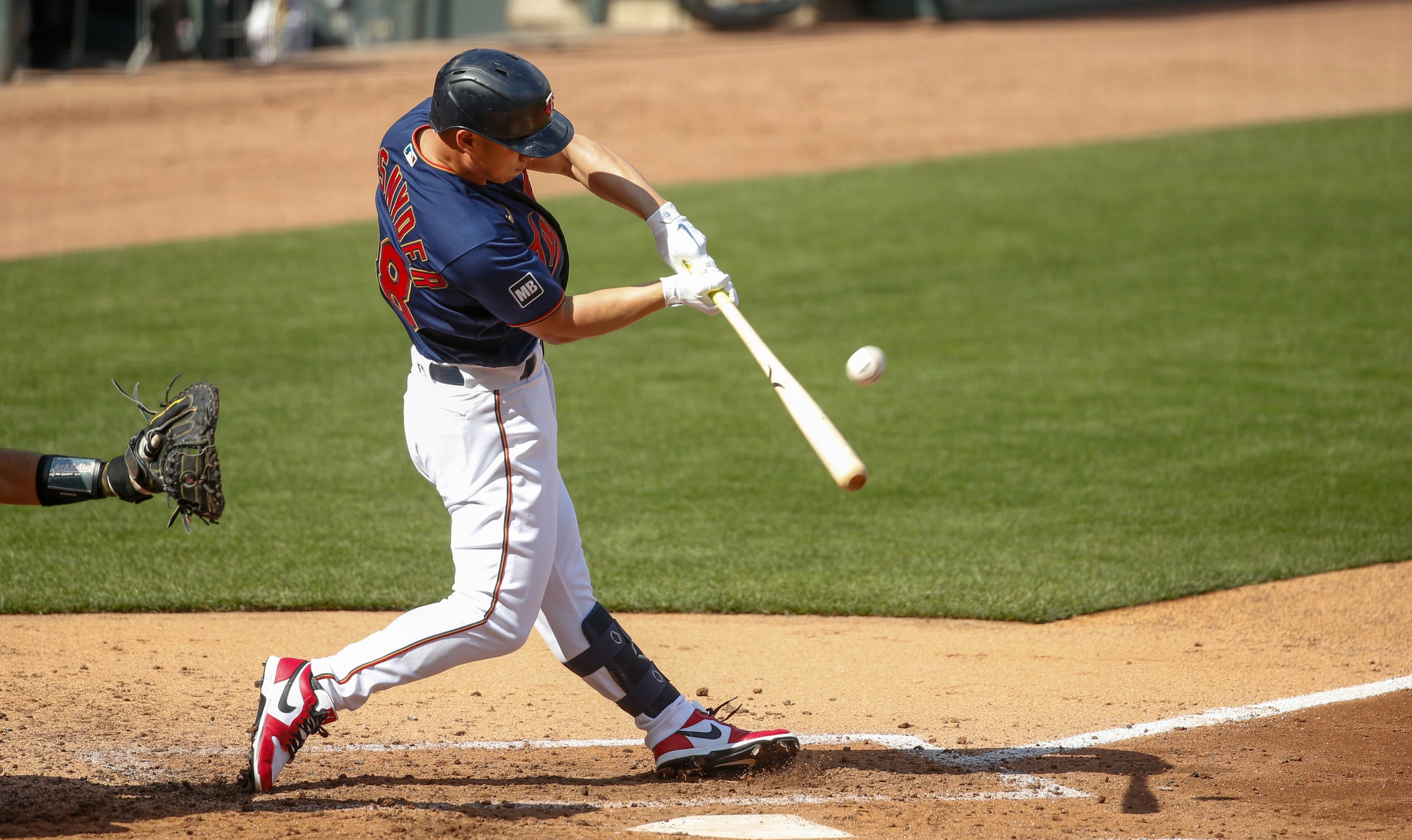 In 2016, Refsnyder was a 25-year-old floating between Triple-A and the New York Yankees. The Arizona State alumni -- a former College World Series’ Most Outstanding Player to boot -- had yet to make an impact on his club. He had a brilliant idea: He would add power to his game. His idea involved mirroring the approach of Minnesota Twin Brian Dozier. He noted that Dozier’s short, compact swing provided him with a high pull rate. The spray-to-all-fields approach wasn’t going to give him the requisite direction to hit home runs in bunches, he believed. So, over the next few years he tried to pull the ball. Refsnyder would finally pop his third career home run on April 27, 2018, by this time in a Tampa Bay Rays uniform. He would do it again on May 30 in Oakland but would not enjoy the slow jog around the bases again for almost three years. https://twitter.com/BallySportsNOR/status/1395888740976009218 A lot has happened between major league home runs. Refsynder has been with four different organizations. He didn’t see any MLB time in 2019 while with the Diamondbacks and Reds. The following year, he was a member of the Rangers’ alternate site in 2020 and received 35 plate appearances in Texas. He would do a stint in St. Paul, first at the Twins’ preseason alternate site, then as a member of the Triple-A Saints. Notably, his swing morphed from a loosy, leg kick with multiple parts (left) to an inward twist (middle) and then back to a hanging leg kick with more stability bridging the upper and lower half while creating a stretch with the front and back (right). You can see the drastic change between his previous swing with Texas and his recent one with the Twins. You would understand that, after all those years of not being able to trot around the bases, that Refsnyder would take a moment to bask in the adulation for destroying a Triston Mckenzie fastball left up. But he did not. What did Refsnyder do? He thanked his Triple-A hitting coach. “I was working on a couple things with Borgs,” Refsnyder told the media when asked about his swing, “and, thankfully, it has been working out.” Matt Borgschulte, or Borgs as Refsnyder called him, said that it is a testament to what type of person Refsnyder is to take the time to give recognition to those who have helped him. “All the credit goes to Rob, I’ve learned a lot from him as well,” says Matt Borgschulte, pointing out that Refsnyder’s career through multiple organizations comes with tacit knowledge on hitting. Each stop gives him a new perspective from different coaches and players. Smart players are able to retain and transfer that to their next destination. Refsnyder was signed by the Twins in November and invited to spring training. He wasn’t thrilled with his performance in March, deriding the pull-side ground balls he hit, so he and the Twins’ staff reviewed video of his swing and re-wrote the plan. He said he was able to try some things while in the alternate camp without the worry of what his performance looked like. “Not having to worry about games means not worrying about numbers or statistics that are on the back of baseball cards,” says Borgschulte, emphasizing the process over the outcome. The Twins work on fitting hitters with their best movements. But in doing so it becomes a conversation between the player and the staff. Refsnyder had a vision and, as they rebuilt his approach, they would have a back-and-forth on what felt good, what was working and what needed adjustments. Borgschulte highlighted Refsnyder’s load as an important component of his swing, setting him up to be in a good position to attack good pitches. When asked about the physical changes to his swing and how that impacted his ability to drive the ball, Borgschulte deferred and spoke toward Refsnyder’s overall approach: “Thinking too much about mechanics can be difficult on your approach,” he said. “Rob worked on trying to stay on the ball, going up the middle with it to the right-center field gap.” That’s very different from the approach Refsnyder outlined in 2016 when he began to be hyper-focused on pulling the ball. In his limited time with the Twins, the majority of balls off his bat have gone to center field (52%) while less than a quarter have been pulled. Maybe more importantly to Refsnyder’s results, just 24% of batted balls have been on the ground. The Twins organization has implemented a system for communication between coaches at different levels, so after Refsnyder left the Saints, hitting coaches Edgar Varela and Rudy Hernandez were able to continue with -- and enhance -- the preparation plan for him when he arrived at the big league club. To be fair, getting excited over less than 40 plate appearances is not advised. After all, Refsnyder’s line (.438/.472/.719 with 2 HR) looks an awful lot like Robbie Grossman’s (.361/.452/.694 with 2 HR) after 11 games in a Twins uniform. Still, there are signs that this might be the culmination of Refsnyder’s 2016 plan to add power and, if that is the case, having a right-handed outfielder with some pop isn’t a bad addition. Enjoy the ride.
 -
Rob Refsnyder has been so damn hot at the plate he’s practically glowing. This stretch has been the intended results of a plan he devised nearly six years ago. After a short yet productive rookie season with the Yankees, Refsnyder stated that he was going to add the element of power to his game. “I’m going to try to hit home runs next year,” Refsnyder told Fangraphs’ David Laurila in September 2016. “I’ve had a lot of good conversations with people and I’m going to try to completely change my game. I think it will help my career.” While he might have tried, he did not hit a home run, let alone many home runs, the next year. In 2016, Refsnyder was a 25-year-old floating between Triple-A and the New York Yankees. The Arizona State alumni -- a former College World Series’ Most Outstanding Player to boot -- had yet to make an impact on his club. He had a brilliant idea: He would add power to his game. His idea involved mirroring the approach of Minnesota Twin Brian Dozier. He noted that Dozier’s short, compact swing provided him with a high pull rate. The spray-to-all-fields approach wasn’t going to give him the requisite direction to hit home runs in bunches, he believed. So, over the next few years he tried to pull the ball. Refsnyder would finally pop his third career home run on April 27, 2018, by this time in a Tampa Bay Rays uniform. He would do it again on May 30 in Oakland but would not enjoy the slow jog around the bases again for almost three years. https://twitter.com/BallySportsNOR/status/1395888740976009218 A lot has happened between major league home runs. Refsynder has been with four different organizations. He didn’t see any MLB time in 2019 while with the Diamondbacks and Reds. The following year, he was a member of the Rangers’ alternate site in 2020 and received 35 plate appearances in Texas. He would do a stint in St. Paul, first at the Twins’ preseason alternate site, then as a member of the Triple-A Saints. Notably, his swing morphed from a loosy, leg kick with multiple parts (left) to an inward twist (middle) and then back to a hanging leg kick with more stability bridging the upper and lower half while creating a stretch with the front and back (right). You can see the drastic change between his previous swing with Texas and his recent one with the Twins. You would understand that, after all those years of not being able to trot around the bases, that Refsnyder would take a moment to bask in the adulation for destroying a Triston Mckenzie fastball left up. But he did not. What did Refsnyder do? He thanked his Triple-A hitting coach. “I was working on a couple things with Borgs,” Refsnyder told the media when asked about his swing, “and, thankfully, it has been working out.” Matt Borgschulte, or Borgs as Refsnyder called him, said that it is a testament to what type of person Refsnyder is to take the time to give recognition to those who have helped him. “All the credit goes to Rob, I’ve learned a lot from him as well,” says Matt Borgschulte, pointing out that Refsnyder’s career through multiple organizations comes with tacit knowledge on hitting. Each stop gives him a new perspective from different coaches and players. Smart players are able to retain and transfer that to their next destination. Refsnyder was signed by the Twins in November and invited to spring training. He wasn’t thrilled with his performance in March, deriding the pull-side ground balls he hit, so he and the Twins’ staff reviewed video of his swing and re-wrote the plan. He said he was able to try some things while in the alternate camp without the worry of what his performance looked like. “Not having to worry about games means not worrying about numbers or statistics that are on the back of baseball cards,” says Borgschulte, emphasizing the process over the outcome. The Twins work on fitting hitters with their best movements. But in doing so it becomes a conversation between the player and the staff. Refsnyder had a vision and, as they rebuilt his approach, they would have a back-and-forth on what felt good, what was working and what needed adjustments. Borgschulte highlighted Refsnyder’s load as an important component of his swing, setting him up to be in a good position to attack good pitches. When asked about the physical changes to his swing and how that impacted his ability to drive the ball, Borgschulte deferred and spoke toward Refsnyder’s overall approach: “Thinking too much about mechanics can be difficult on your approach,” he said. “Rob worked on trying to stay on the ball, going up the middle with it to the right-center field gap.” That’s very different from the approach Refsnyder outlined in 2016 when he began to be hyper-focused on pulling the ball. In his limited time with the Twins, the majority of balls off his bat have gone to center field (52%) while less than a quarter have been pulled. Maybe more importantly to Refsnyder’s results, just 24% of batted balls have been on the ground. The Twins organization has implemented a system for communication between coaches at different levels, so after Refsnyder left the Saints, hitting coaches Edgar Varela and Rudy Hernandez were able to continue with -- and enhance -- the preparation plan for him when he arrived at the big league club. To be fair, getting excited over less than 40 plate appearances is not advised. After all, Refsnyder’s line (.438/.472/.719 with 2 HR) looks an awful lot like Robbie Grossman’s (.361/.452/.694 with 2 HR) after 11 games in a Twins uniform. Still, there are signs that this might be the culmination of Refsnyder’s 2016 plan to add power and, if that is the case, having a right-handed outfielder with some pop isn’t a bad addition. Enjoy the ride. View full article
-
Let Them Swing How They Want
Parker Hageman commented on Parker Hageman's blog entry in Baseball Good
There hasn't been a publicly provide update on the attack angle (or other swing data) since 2017 so it is difficult to say if there has been a significant league-wide shift on that. It's possible it is a factor in combination with the trend of higher velo, higher located fastballs. In regards to Max Kepler, in 2017 Kepler had one of the lowest attack angles in baseball at 4 degrees. The "optimal" attack angle for fastballs was around 8-10 degrees. By comparison, Joe Mauer was 11 degrees and Nelson Cruz was 12. It makes sense about Kepler considering coaches said that they felt he was too steep into the swing zone and that resulted on him getting on top of balls (grounders into the shift). I can't say how much he has or hasn't changed in terms of attack angle. He has acknowledged that in 2019, he tried to chase launch angle -- and he both increased that, his exit velo and pulled the ball more. I don't know how much of that is from the coaching side either. Another factor is VERTICAL BAT ANGLE. This is another measurement of the degree at which the barrel of the bat is compared to the knob of the bat at contact. There is a good thread on this concept here but, simply, a flat vertical bat angle produces more in-play mi****s (infield field balls and weak grounders) while a steeper vertical bat angle will typically produce more mi****s out of play (foul balls) and squarely hit balls. If you look at the picture in this 2017 article, you can see an example of Kepler's flat vertical bat angle. It's possible that Kepler still has a very flat swing (attack angle-wise) which is resulting in that high rate of infield flies and ground balls. As far as backspin goes, research by Dr. Alan Nathan shows that the best and most consistent way to hit balls with backspin is by (1) hitting them square and (2) slightly south of the ball's equator. If your attack angle is steep, like Kepler's in 2017, you have to have nearly perfect timing to get to that spot. With an optimal attack angle closer to 8-10 degrees, you have more room for error. Adding to this, high backspin, as shown in some research, isn't optimal either. A recent Fangraphs' study showed that players who have high backspin underperform compared to those in the square contact group. High backspin adds flight carry but does not necessarily get as many hits. While it is good to have a backspinning ball flight, exit velocity is a superior indicator of hit potential. This is to say, hitters shouldn't focus on backspin contact. I don't know if this has answered anything but it certainly killed some time. -
Byron Buxton, a father who happens to play center field for the Minnesota Twins, was asked how he approaches working with his young son on his game. On the Sports Info Solutions podcast with Mark Simon, Buxton said that he lets his kid hit anyway he wants. “When we go out to hit, before we do anything, he’ll hit like any player he wants to hit like. He wants to hit like Max Kepler or hit like Cody Bellinger. Anybody he wants to hit like, that’s what I let him do,” Buxton says. “For him, he likes Mookie Betts’ leg kick but he likes where Cody Bellinger’s hands are at. I’m not going to make you hit like me or hit like this person because there are days where you might have to back off the plate or open up a little bit. So it’s one of those where I’m literally whatever he wants to do on the diamond, I do whatever he wants to do because that’s what keeps it fun.” There are coaches and parents who give relentless instructions until the young hitters conform to some preconceived notion of what a hitter should look like. This presents several problems. This first is that motor learning rarely progresses well from that style of teaching. And what works for one hitter, might not for another. People need to have creativity and freedom to explore movements in order to find optimal ones for them. “I was forever trying a new stance, trying to hit like [Hank] Greenberg or [Jimmy] Foxx or somebody, and then going back to my old way,” Ted Williams wrote in his book, The Science of Hitting. “I recommend that for kids. Experiment. Try what you see that looks good on somebody else.” Read the rest of the post at Get Better Baseball.
-
The Bomba Show: Can The 2021 Twins Season Be Saved?
Parker Hageman posted a blog entry in Baseball Good
WCCO's Cory Hepola and Parker Hageman discuss the current state of the Minnesota Twins. Topics include: More depressing: 2011 or 2021 Twins? How is this happening? Should we have seen this coming? What’s worse: Pitching or Defense? What do you do with Miguel Sano? Give me ONE positive? Who does Trevor Larnach remind you of? Can this team save this season? -
I can’t believe I didn’t even consider the possibility that someday there would be a brand new stadium in downtown St. Paul. so stupid of me.
-
Went to the Saints game last night with @John Bonnes and @Nick Nelson.
Amazing atmosphere. Started to feel normal again.
While the game was dull (if you were rooting for the Saints), we did get to witness the first Saints home run (Tomas Talis) hit in St. Paul by a Twins' affiliated player. Also, I-Cubs' 31-year-old Robert Stock was humming 102-mile per hour darts at the end of the game.
CHS Field is a beaut.
-
GameDay Program Flashback: Rethinking the Farm System
Parker Hageman posted an article in Minor Leagues
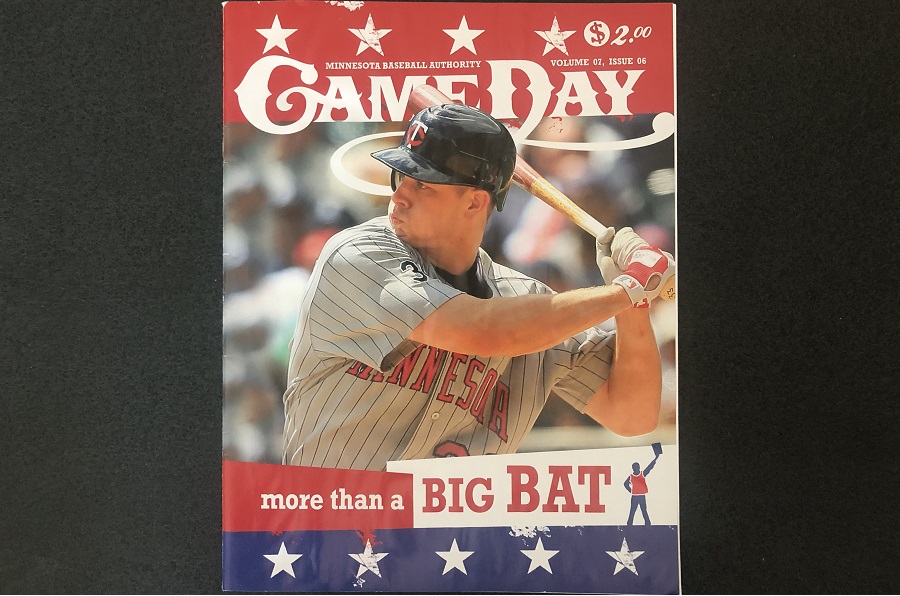 Similarly, the Philadelphia Phillies recently moved their top affiliate from Ottawa to Allentown, PA, a nice complement to the organization’s Double-A affiliate, also located in-state in the city of Reading. With these teams grouped so closely, in theory a Phillies fan can spend a weekend and just two hours and forty-five minutes in the car and watch three levels of Phillie talent. On the opposite side of the Manifest Destiny, the Seattle Mariners have nursed a pair of 13-year relationships with both the Class-AAA Tacoma Rainiers (33 miles south of Safeco Field) and the Class-A Everett AquaSox (30 miles north of Safeco Field). This proximity has encouraged local blog communities such as USS Mariner and Lookout Landing to organize outings to inspect the developing Mariner talent first-hand. For diehard fans in Twins Territory, it is hard not to be envious. In comparison to a Braves fan who will be able to see up-and-coming prospects perform in Atlanta's northern suburbs starting next year, an ambitious Twins fan in Minneapolis or Saint Paul must drive nearly 17 hours to catch a glimpse of the team's Triple-A prospects in Rochester, New York. Can the Twins organization consider following the path of teams like Atlanta and Philadelphia? Notable Braves blogger (Sabernomics.com) and associate professor at Kennesaw State University J.C. Bradbury cited several economical positives regarding the geographical convenience of these farm clubs. First, travel time for scouts and coaches to analyze a potential call-up is greatly reduced. Second, once a player is needed due to injury or general promotion, the cost of getting that player from point A to point B is reduced significantly. In the case of the Braves, Phillies and Mariners, each have two of their clubs within manageable driving distance, thus reducing the cost of shuffling players around. The final but possibly most important reason for clustering the ball clubs is that it creates a commitment to players by the fans region-wide. Not long ago, hometown fans received brief snippets of information and weekly reports on players down on the farm through the local paper. Since the proliferation of the Internet, however, minor-league statistics have been readily available to every rube with a modem. Now it appears that major-league organizations are discovering the added benefit of allowing the average fan to see these players before their very eyes. If every Twins draft pick spent a season in St. Cloud, Fargo or Mankato before ascending to the other levels, an investment of sorts would be made between the spectator and the organization. That spectator may be enticed to visit the new Twins stadium when the player was eventually promoted. A relationship is created. But there are several barriers that impede the Twins from easily replicating this system. Unlike the Atlanta Braves who own the Richmond Braves franchise, the Twins are only in a partnership with the majority of their farm teams (they own rookie-league Elizabethton outright). The Braves are able to move their club on a whim. For the Twins to adjust their alignment, they would need to wait for one of the Player Development Contracts to expire and simultaneously find a community that would be accommodating to the new club. Another issue is that the sparsely populated Midwest region limits the encroachment of almost all of the leagues (minus the Midwest League, of course) which are situated on the dense coasts. The Class-AA Eastern League's closest team to Minnesota is the Akron Aeros, a 12-hour drive from the Twin Cities (but a 45-minute drive for Cleveland Indians fans to see their second-highest farm club). Therefore, relocating the New Britain Rock Cats to the similarly sized Duluth-Superior area would greatly increase the travel budget, completely negating the entire purpose of saving money if every road trip takes a minimum 12-hour bus ride. Likewise, the International League, home of the Twins’ current Triple-A affiliate Rochester Red Wings, has a minimum nine-hour drive from Minnesota to the nearest competitor (Indianapolis Indians). Obviously Des Moines would be a great city to host a Twins affiliate, as it is just three hours and 40 minutes south on Interstate 35 and has drawn 14,000 people to one game. The problem, however, is that the Player Development Contract between the Iowa Cubs and the Chicago Cubs is signed through 2012. The Twins do have one affiliate that would benefit from relocation. In August 2007, the Twins and the Beloit Professional Baseball Association (BPBA), purveyors of the Low-A Snappers, agreed to a two-year extension on their P.D.C., ensuring the partnership would last through the 2010 season. The Snappers’ home ballpark, Harry Pohlman Field, seats just 3,501 in a league where most of the facilities have around 1,500 more seats per stadium. The Beloit ballpark has been renovated several times – adding box seats and other amenities – but lacks the revenue generators that flashier, newer ballparks have. Recent attempts to get a new stadium built in nearby Janesville, Wisconsin have been thwarted. Since the Beloit Snappers are community-owned (like the Green Bay Packers) the sale of the team appears to be an unlikely outcome. So, for a franchise to come to Minnesota, an entrepreneur would need to purchase an existing team (the most recent Midwest League team sold for $6.2 million in 2006), wait until the Twins' P.D.C. with the Beloit organization expired, and then relocate the purchased team to a community closer to the Twin Cities. One appealing location is the recently proposed stadium in Burnsville, Minnesota (25 minutes south of the Metrodome). Two private financiers, Tony Pettit and Terry Deroche, have submitted preliminary designs to the city of Burnsville for a 7,300-seat ballpark to be constructed without government assistance and potentially ready for independent Northern League games by 2009. Dakota County, Minnesota's third most populous county with over 380,000 residences, also has strong economic base to support a minor league franchise, just like Gwinnett County in Georgia. Bringing a Low-A Midwest League team into the Twin Cities would be a good reward to local Twins fans, providing them with a low-cost alternative to what is sure to be an increasingly expensive ticket at the taxpayer-funded stadium. The team would reap dividends from the residual marketing effect of having future major-league players develop just south of the Minnesota River while saving on travel costs for scouts and coaches. And maybe in 2013 the Twins can finally wrestle Des Moines away from the Cubs, and turn I-35 into a solid corridor of Twins baseball.
 -
As Parker Hageman and I watched the Saints' debut as the Twins' AAA affiliate last night at CHS field, he reminded me that one of the first stories he ever wrote for GameDay Program and Scorecard concerned the challenges the Twins face in getting their minor league parks closer together. I dug it up for us old-timers. It was originally published in September of 2008. That's how long we've been talking about this. - JB This past offseason, the Atlanta Braves announced plans to terminate their 42-year minor-league relationship with the city of Richmond, Virginia. The plan is to relocate the Richmond Triple-A affiliate 469 miles to the south. So starting with the 2009 season, the Braves’ most major-league ready prospects will be just a 45-minute drive away from Turner Field. The Braves, who already have a Class-A affiliate in Rome, Georgia – roughly 70 miles northwest of Atlanta – will have two of their farm clubs within a two-hour drive of their fan base. Similarly, the Philadelphia Phillies recently moved their top affiliate from Ottawa to Allentown, PA, a nice complement to the organization’s Double-A affiliate, also located in-state in the city of Reading. With these teams grouped so closely, in theory a Phillies fan can spend a weekend and just two hours and forty-five minutes in the car and watch three levels of Phillie talent. On the opposite side of the Manifest Destiny, the Seattle Mariners have nursed a pair of 13-year relationships with both the Class-AAA Tacoma Rainiers (33 miles south of Safeco Field) and the Class-A Everett AquaSox (30 miles north of Safeco Field). This proximity has encouraged local blog communities such as USS Mariner and Lookout Landing to organize outings to inspect the developing Mariner talent first-hand. For diehard fans in Twins Territory, it is hard not to be envious. In comparison to a Braves fan who will be able to see up-and-coming prospects perform in Atlanta's northern suburbs starting next year, an ambitious Twins fan in Minneapolis or Saint Paul must drive nearly 17 hours to catch a glimpse of the team's Triple-A prospects in Rochester, New York. Can the Twins organization consider following the path of teams like Atlanta and Philadelphia? Notable Braves blogger (Sabernomics.com) and associate professor at Kennesaw State University J.C. Bradbury cited several economical positives regarding the geographical convenience of these farm clubs. First, travel time for scouts and coaches to analyze a potential call-up is greatly reduced. Second, once a player is needed due to injury or general promotion, the cost of getting that player from point A to point B is reduced significantly. In the case of the Braves, Phillies and Mariners, each have two of their clubs within manageable driving distance, thus reducing the cost of shuffling players around. The final but possibly most important reason for clustering the ball clubs is that it creates a commitment to players by the fans region-wide. Not long ago, hometown fans received brief snippets of information and weekly reports on players down on the farm through the local paper. Since the proliferation of the Internet, however, minor-league statistics have been readily available to every rube with a modem. Now it appears that major-league organizations are discovering the added benefit of allowing the average fan to see these players before their very eyes. If every Twins draft pick spent a season in St. Cloud, Fargo or Mankato before ascending to the other levels, an investment of sorts would be made between the spectator and the organization. That spectator may be enticed to visit the new Twins stadium when the player was eventually promoted. A relationship is created. But there are several barriers that impede the Twins from easily replicating this system. Unlike the Atlanta Braves who own the Richmond Braves franchise, the Twins are only in a partnership with the majority of their farm teams (they own rookie-league Elizabethton outright). The Braves are able to move their club on a whim. For the Twins to adjust their alignment, they would need to wait for one of the Player Development Contracts to expire and simultaneously find a community that would be accommodating to the new club. Another issue is that the sparsely populated Midwest region limits the encroachment of almost all of the leagues (minus the Midwest League, of course) which are situated on the dense coasts. The Class-AA Eastern League's closest team to Minnesota is the Akron Aeros, a 12-hour drive from the Twin Cities (but a 45-minute drive for Cleveland Indians fans to see their second-highest farm club). Therefore, relocating the New Britain Rock Cats to the similarly sized Duluth-Superior area would greatly increase the travel budget, completely negating the entire purpose of saving money if every road trip takes a minimum 12-hour bus ride. Likewise, the International League, home of the Twins’ current Triple-A affiliate Rochester Red Wings, has a minimum nine-hour drive from Minnesota to the nearest competitor (Indianapolis Indians). Obviously Des Moines would be a great city to host a Twins affiliate, as it is just three hours and 40 minutes south on Interstate 35 and has drawn 14,000 people to one game. The problem, however, is that the Player Development Contract between the Iowa Cubs and the Chicago Cubs is signed through 2012. The Twins do have one affiliate that would benefit from relocation. In August 2007, the Twins and the Beloit Professional Baseball Association (BPBA), purveyors of the Low-A Snappers, agreed to a two-year extension on their P.D.C., ensuring the partnership would last through the 2010 season. The Snappers’ home ballpark, Harry Pohlman Field, seats just 3,501 in a league where most of the facilities have around 1,500 more seats per stadium. The Beloit ballpark has been renovated several times – adding box seats and other amenities – but lacks the revenue generators that flashier, newer ballparks have. Recent attempts to get a new stadium built in nearby Janesville, Wisconsin have been thwarted. Since the Beloit Snappers are community-owned (like the Green Bay Packers) the sale of the team appears to be an unlikely outcome. So, for a franchise to come to Minnesota, an entrepreneur would need to purchase an existing team (the most recent Midwest League team sold for $6.2 million in 2006), wait until the Twins' P.D.C. with the Beloit organization expired, and then relocate the purchased team to a community closer to the Twin Cities. One appealing location is the recently proposed stadium in Burnsville, Minnesota (25 minutes south of the Metrodome). Two private financiers, Tony Pettit and Terry Deroche, have submitted preliminary designs to the city of Burnsville for a 7,300-seat ballpark to be constructed without government assistance and potentially ready for independent Northern League games by 2009. Dakota County, Minnesota's third most populous county with over 380,000 residences, also has strong economic base to support a minor league franchise, just like Gwinnett County in Georgia. Bringing a Low-A Midwest League team into the Twin Cities would be a good reward to local Twins fans, providing them with a low-cost alternative to what is sure to be an increasingly expensive ticket at the taxpayer-funded stadium. The team would reap dividends from the residual marketing effect of having future major-league players develop just south of the Minnesota River while saving on travel costs for scouts and coaches. And maybe in 2013 the Twins can finally wrestle Des Moines away from the Cubs, and turn I-35 into a solid corridor of Twins baseball. View full article
-
Really enjoyed reading your Griffin Jax article. Good luck at CHS tonight!
-
Last month I wrote that the Twins’ lineup was poised to make life difficult for left-handed pitching. Since that post, the Twins own the second-highest slugging percentage and OPS versus lefties in baseball (.539 and .844, respectively). Unfortunately, there is another lefty problem: their own pitching staff cannot get left-handed hitters out. Left-handed hitters have decimated Twins’ pitching to the tune of .301/.377/.563, leading to the worst OPS against in baseball. Essentially, they are turning every hitter on the left side into Bryce Harper. In fact, if the season ended today, that .940 OPS against left-handed hitters would be the worst on record dating back to at least 1990. Only three teams have finished the season with an OPS above .900 against left-handed hitters -- the 1999 Colorado Rockies (.917), the 1994 Texas Rangers (.907) and the 2000 Houston Astros (.903). Fortunately for the Twins, the season does not end today -- with all the new rules I had to double-check -- but this is a historically bad pace. In a time where everything is skewed toward pitching, not being able to get hitters out is a huge problem. Since most teams started shifting heavily on lefties, their overall performance has tanked. The current league-wide OPS for left-handed hitters is at .704 -- only 2014’s .701 OPS was worse. Unlike the previous situation where the underlying metrics suggested (as Beck famously added to one of his songs), things are going to change, I can feel it, the pitching staff is getting hit hard across the board. Opponents average a 90.1 mph exit velocity, the second highest in baseball, while nearly 46% of the balls put into play are 95 mph or higher, also the second highest. A year ago, as they cruised to a division title, the Twins had one of the lowest marks in either category. The starting rotation is faring slightly better than the bullpen (867 OPS vs 1.049 OPS) but right-handers Matt Shoemaker (1.023), Kenta Maeda (.980), and Jose Berrios (.961) have a big problem to solve. The 2020 Twins starters kept lefties subdued with a barrage of non-fastballs. Nearly 60% of incoming pitches were not of the fastball variety and lefties had a 495 OPS against them, the second lowest in baseball. This year, while still throwing a high percentage of non-fastballs, left-handed hitters have a 756 OPS against those. Both Berrios (874 OPS) and Maeda (867) are struggling to keep them off of their breaking ball and changeup combinations -- which is surprising when you consider they both finished last year with those numbers 300 points lower. The larger issue is that bullpen, an area in which match-ups can be somewhat controlled, is failing even worse than the rotation. Both Cody Stashak and Jorge Alcala have OPS figures above 1.400 in 36 match-ups against lefties, albeit in lower leverage situations. Alexander Colomẽ has been almost equally as bad (1.156) in 27 plate appearances (17 of those coming in high leverage situations). Perhaps most frustrating has been the performance of left-handed pitchers Caleb Thielbar (1.189 OPS in 20 plate appearances) and Taylor Rogers (.947 OPS in 19 plate appearances). There are adjustments that need to be made. Maeda and Berrios are better than their numbers indicate. Maeda needs to find his release point for his slider and changeup. Berrios needs to determine which combination to use to get lefties out. Shoemaker needs to...do a lot of things. Many of the arms in the bullpen are capable of getting outs and the numbers are likely to improve over a larger sampling. If the Twins can fix this problem -- and do so in a hurry -- they might have a chance to get back in the race. View full article
-
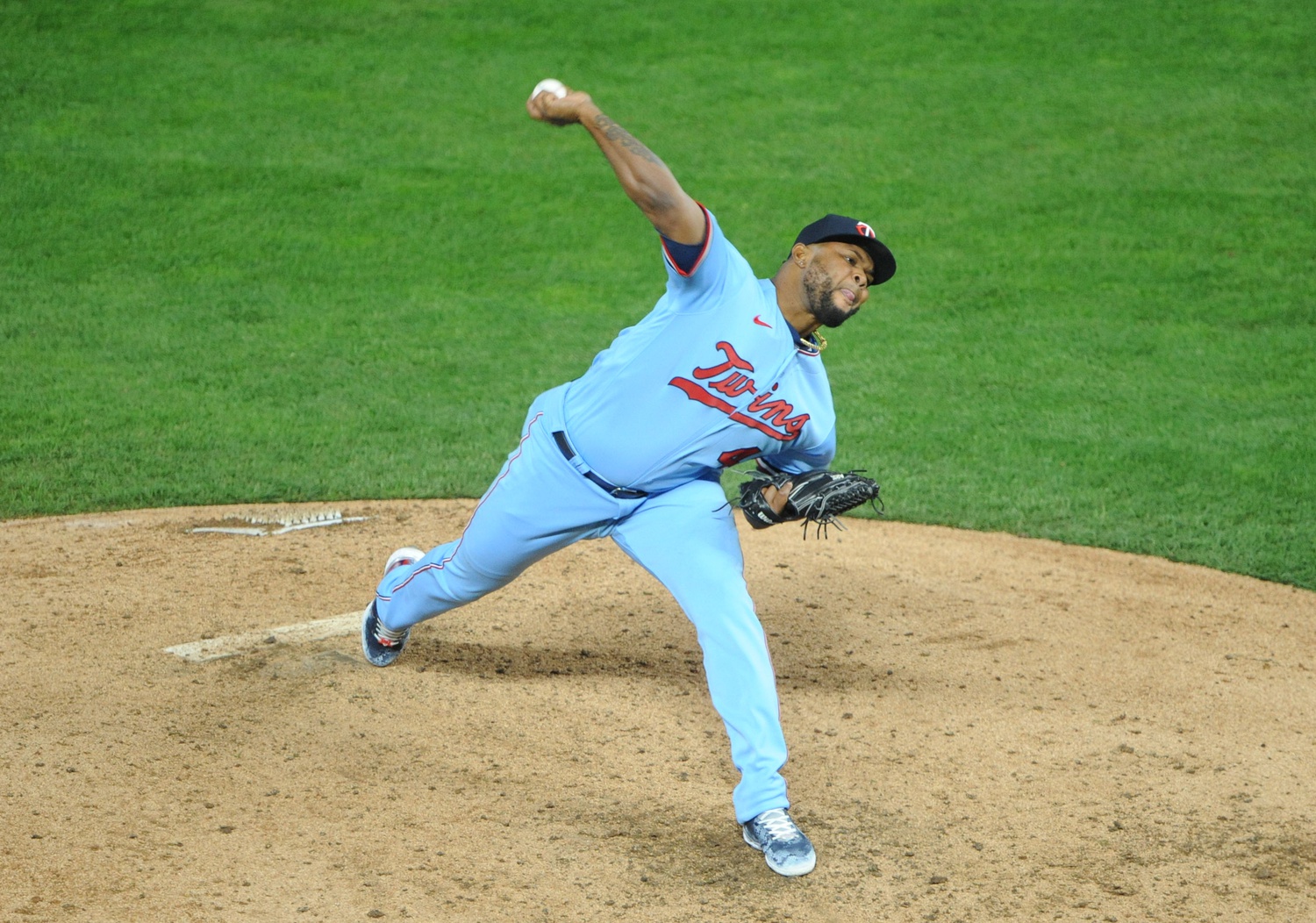 Left-handed hitters have decimated Twins’ pitching to the tune of .301/.377/.563, leading to the worst OPS against in baseball. Essentially, they are turning every hitter on the left side into Bryce Harper. In fact, if the season ended today, that .940 OPS against left-handed hitters would be the worst on record dating back to at least 1990. Only three teams have finished the season with an OPS above .900 against left-handed hitters -- the 1999 Colorado Rockies (.917), the 1994 Texas Rangers (.907) and the 2000 Houston Astros (.903). Fortunately for the Twins, the season does not end today -- with all the new rules I had to double-check -- but this is a historically bad pace. In a time where everything is skewed toward pitching, not being able to get hitters out is a huge problem. Since most teams started shifting heavily on lefties, their overall performance has tanked. The current league-wide OPS for left-handed hitters is at .704 -- only 2014’s .701 OPS was worse. Unlike the previous situation where the underlying metrics suggested (as Beck famously added to one of his songs), things are going to change, I can feel it, the pitching staff is getting hit hard across the board. Opponents average a 90.1 mph exit velocity, the second highest in baseball, while nearly 46% of the balls put into play are 95 mph or higher, also the second highest. A year ago, as they cruised to a division title, the Twins had one of the lowest marks in either category. The starting rotation is faring slightly better than the bullpen (867 OPS vs 1.049 OPS) but right-handers Matt Shoemaker (1.023), Kenta Maeda (.980), and Jose Berrios (.961) have a big problem to solve. The 2020 Twins starters kept lefties subdued with a barrage of non-fastballs. Nearly 60% of incoming pitches were not of the fastball variety and lefties had a 495 OPS against them, the second lowest in baseball. This year, while still throwing a high percentage of non-fastballs, left-handed hitters have a 756 OPS against those. Both Berrios (874 OPS) and Maeda (867) are struggling to keep them off of their breaking ball and changeup combinations -- which is surprising when you consider they both finished last year with those numbers 300 points lower. The larger issue is that bullpen, an area in which match-ups can be somewhat controlled, is failing even worse than the rotation. Both Cody Stashak and Jorge Alcala have OPS figures above 1.400 in 36 match-ups against lefties, albeit in lower leverage situations. Alexander Colomẽ has been almost equally as bad (1.156) in 27 plate appearances (17 of those coming in high leverage situations). Perhaps most frustrating has been the performance of left-handed pitchers Caleb Thielbar (1.189 OPS in 20 plate appearances) and Taylor Rogers (.947 OPS in 19 plate appearances). There are adjustments that need to be made. Maeda and Berrios are better than their numbers indicate. Maeda needs to find his release point for his slider and changeup. Berrios needs to determine which combination to use to get lefties out. Shoemaker needs to...do a lot of things. Many of the arms in the bullpen are capable of getting outs and the numbers are likely to improve over a larger sampling. If the Twins can fix this problem -- and do so in a hurry -- they might have a chance to get back in the race.
 -
Ted Williams wrote in The Science of Hitting that the “slightly upward swing is the ideal path.” It took years for Williams’ theories to be embraced but he has largely been vindicated in the modern era: Hitting the ball in the air has proven to be more impactful than driving it into the ground. (If you think otherwise, you can yell at me on Twitter.) Understanding a hitter’s swing path is one way to tell if they are capable of getting the ball in the air on a regular basis. Experienced coaches will be able to tell from swings what a hitter’s path is (up, down or level), however, by using a bat sensor from Blast Motion or Diamond Kinetic, you can obtain a metric called attack angle and have certainty of where in the swing path the hitter’s bat is making contact with the ball. Certainly you don’t need to invest in the tech but, as this clip below from Driveline Baseball’s hitting trainer John Soteropulos shows, a hitter’s swing can have all three elements in it. With a bat sensor, you can isolate the data point that will tell you if a hitter is swinging uphill, level, or downhill at the moment of contact. If the attack angle number is positive, a hitter is swinging with an upward plane. If a hitter’s attack angle is in the negative range, they are swinging down on the ball. A measurement of zero is a swing that is parallel to the ground. Read the rest of the post at Get Better Baseball.
-
How Did Byron Buxton Get This Damn Good?
Parker Hageman replied to Parker Hageman's topic in Twins Daily Front Page News
I don't think there was ever a question that he could be this good. I still remember Jason Parks' at Baseball Prospectus deeming him "super magic unicorn good" after watching him in the lower minors. Buxton has shown plenty of flashes of this. Injuries have derailed some of that progress. Listening to what others think he should be was another issue. Now that he's one of the most dangerous hitters, it will be interesting to see how he responds to teams adjusting. Teams have started throwing him fewer strikes (and no where near the zone) so it will be up to him to keep adjusting. I cannot speak to what happens in season or who Buxton is or is not currently listening to. Either way, hard to question his process right now. -
How Did Byron Buxton Get This Damn Good?
Parker Hageman replied to Parker Hageman's topic in Twins Daily Front Page News
I don't know the source or the context of where the other stats came from but, he is still chasing (35% chase% in 2021 compared to 34% career average) and swinging through a high amount of pitches (31.2% miss% vs 31% career average). Overall, he's striking out a lot less (20% compared to 28% career average). That might be where the confusion comes from. Again, it goes back to the point about his contact. When he makes contact, it goes hard. It's not a foul ball strike like in previous season.



