



Parker Hageman
-
Posts
4,152 -
Joined
-
Last visited
-
Days Won
6
Content Type
Profiles
News
Minnesota Twins Videos
2026 Minnesota Twins Top Prospects Ranking
2022 Minnesota Twins Draft Picks
Minnesota Twins Free Agent & Trade Rumors, Notes, & Tidbits
Guides & Resources
2023 Minnesota Twins Draft Picks
The Minnesota Twins Players Project
2024 Minnesota Twins Draft Picks
2025 Minnesota Twins Draft Pick Tracker
2026 Minnesota Twins Draft Tracker: Picks & Bonuses
Forums
Blogs
Events
Store
Downloads
Gallery
Everything posted by Parker Hageman
-
 Of course the Braves fire Seitzer. https://x.com/DOBrienATL/status/1844464174363181398
 -
Cody Stavenhagen wrote a great piece at The Athletic on the state of hitting coaches back in 2023. The trend has been to hire younger coaches to relate to the players more. The Braves' hitting coach Kevin Seitzer has been in his role for 10 years now, which is a huge anomaly considering how volitile the role is: When the Braves added players midseason this year, Seitzer said that the support he had from the front office allowed him to help players make quick adjustments once they came into the team: It makes me wonder if the Twins' front office was able to give Popkins, et al the same support as the Braves did for Seitzer. Did they feel that they equipped their hitting staff with the right information handing into games/series that should be sufficient game planning? If the Twins can say that they provided all the information that coaches needed and more, and the staff struggled to communicate it effectively, then it makes sense to move on and not just because players underperformed.
-
Royce Lewis told reporters earlier this year that he doesn’t do that slump thing. That’s cap. Image courtesy of © Brad Rempel-Imagn Images On Jun. 18, Royce Lewis went 0-for-5 with a pair of strikeouts against Tampa Bay. The very next day, he went 3-for-4 with a home run. Afterward, he told reporters that “I don’t do that slump thing,” and proceeded to launch two more home runs in each of the next two games for good measure. To paraphrase Arrested Development, players somehow delude themselves into thinking they’ll never slump, but it never works… but it might just work for Royce. [Narrator: It did not.] Before we get too deep into this, we must acknowledge that Lewis is likely playing through some sort of injury, and the most notable indicator is his decline in sprint speed. According to Baseball Savant, Lewis has lost two feet per second in his overall sprint speed compared to the previous two seasons (26.3 feet per second, compared to 28.4 in 2022 and 28.2 in 2023). This season, Edouard Julien, Alex Kirilloff, and Max Kepler have better sprint speeds. For someone whose speed was very much a touted tool coming up, it has eroded fairly quickly for Lewis, leading one to conclude that a lower-half injury is a significant factor in his overall play. And it’s not just about speed: The movements that help a player run fast are vital in the hitting process, creating ground force to generate bat speed and power. Offensively, he’s seen a decline in his average exit velocity, percentage of balls hit 95 mph or harder, and fly-ball distance--all key metrics for power production. There may be some underlying physical issues that are causing a lot of slippage in his output. When players are trying to play through discomfort, there exists the potential that they will alter something mechanical or in their process that will cause issues downstream. For instance, hitters who might not feel they have their usual power output might try swinging harder or unintentionally pulling the ball, to make up for not quite moving as their best selves. Layered on top of that is the fact that players are human, and can fall into the trap of forcing things when the going is not so good. Hitters will expand their zones, swinging at everything and anything to get themselves out of a slump. These are probably two elements of Royce Lewis's current state, and teams have begun to take advantage of that. View full article
-
.png.803ce1770b4c872c9b1955a9a5758696.png) On Jun. 18, Royce Lewis went 0-for-5 with a pair of strikeouts against Tampa Bay. The very next day, he went 3-for-4 with a home run. Afterward, he told reporters that “I don’t do that slump thing,” and proceeded to launch two more home runs in each of the next two games for good measure. To paraphrase Arrested Development, players somehow delude themselves into thinking they’ll never slump, but it never works… but it might just work for Royce. [Narrator: It did not.] Before we get too deep into this, we must acknowledge that Lewis is likely playing through some sort of injury, and the most notable indicator is his decline in sprint speed. According to Baseball Savant, Lewis has lost two feet per second in his overall sprint speed compared to the previous two seasons (26.3 feet per second, compared to 28.4 in 2022 and 28.2 in 2023). This season, Edouard Julien, Alex Kirilloff, and Max Kepler have better sprint speeds. For someone whose speed was very much a touted tool coming up, it has eroded fairly quickly for Lewis, leading one to conclude that a lower-half injury is a significant factor in his overall play. And it’s not just about speed: The movements that help a player run fast are vital in the hitting process, creating ground force to generate bat speed and power. Offensively, he’s seen a decline in his average exit velocity, percentage of balls hit 95 mph or harder, and fly-ball distance--all key metrics for power production. There may be some underlying physical issues that are causing a lot of slippage in his output. When players are trying to play through discomfort, there exists the potential that they will alter something mechanical or in their process that will cause issues downstream. For instance, hitters who might not feel they have their usual power output might try swinging harder or unintentionally pulling the ball, to make up for not quite moving as their best selves. Layered on top of that is the fact that players are human, and can fall into the trap of forcing things when the going is not so good. Hitters will expand their zones, swinging at everything and anything to get themselves out of a slump. These are probably two elements of Royce Lewis's current state, and teams have begun to take advantage of that.
On Jun. 18, Royce Lewis went 0-for-5 with a pair of strikeouts against Tampa Bay. The very next day, he went 3-for-4 with a home run. Afterward, he told reporters that “I don’t do that slump thing,” and proceeded to launch two more home runs in each of the next two games for good measure. To paraphrase Arrested Development, players somehow delude themselves into thinking they’ll never slump, but it never works… but it might just work for Royce. [Narrator: It did not.] Before we get too deep into this, we must acknowledge that Lewis is likely playing through some sort of injury, and the most notable indicator is his decline in sprint speed. According to Baseball Savant, Lewis has lost two feet per second in his overall sprint speed compared to the previous two seasons (26.3 feet per second, compared to 28.4 in 2022 and 28.2 in 2023). This season, Edouard Julien, Alex Kirilloff, and Max Kepler have better sprint speeds. For someone whose speed was very much a touted tool coming up, it has eroded fairly quickly for Lewis, leading one to conclude that a lower-half injury is a significant factor in his overall play. And it’s not just about speed: The movements that help a player run fast are vital in the hitting process, creating ground force to generate bat speed and power. Offensively, he’s seen a decline in his average exit velocity, percentage of balls hit 95 mph or harder, and fly-ball distance--all key metrics for power production. There may be some underlying physical issues that are causing a lot of slippage in his output. When players are trying to play through discomfort, there exists the potential that they will alter something mechanical or in their process that will cause issues downstream. For instance, hitters who might not feel they have their usual power output might try swinging harder or unintentionally pulling the ball, to make up for not quite moving as their best selves. Layered on top of that is the fact that players are human, and can fall into the trap of forcing things when the going is not so good. Hitters will expand their zones, swinging at everything and anything to get themselves out of a slump. These are probably two elements of Royce Lewis's current state, and teams have begun to take advantage of that. -
Official official.
-
Guess who's back? Tell a friend. Image courtesy of © Matt Marton-Imagn Images We're getting the band back together. On Friday night, Byron Buxton made his return to the Twins lineup, punctuated with a game-tying solo blast. Following that game, the Twins announced that shortstop Carlos Correa will be activated for Saturday's game. It's a big turnaround for the All-Star, who just a few days ago was not expected to be activated during the current homestand. He switched treatments, and, while painful to the point of bringing him near tears, the results showed rapid signs of improvement and manager Rocco Baldelli hinted recently that his return might come sooner than expected. Outside of the leadership and offensive production (Correa was hitting .308/.377/.520 at the time of the injury), the Twins' defense could potentially use his presence the most. After a month of August in which the team posted an Outs Above Average mark of -7 (27th out of 30 teams), they are currently matching that number this month. If nothing else, the pitching staff should be happy to see Buxton and Correa in vital up-the-middle defense again. If you are looking for a little optimism, this is it. View full article
-
Carlos Correa Returns to Twins Lineup as Playoff Push Intensifies
Parker Hageman posted an article in Twins
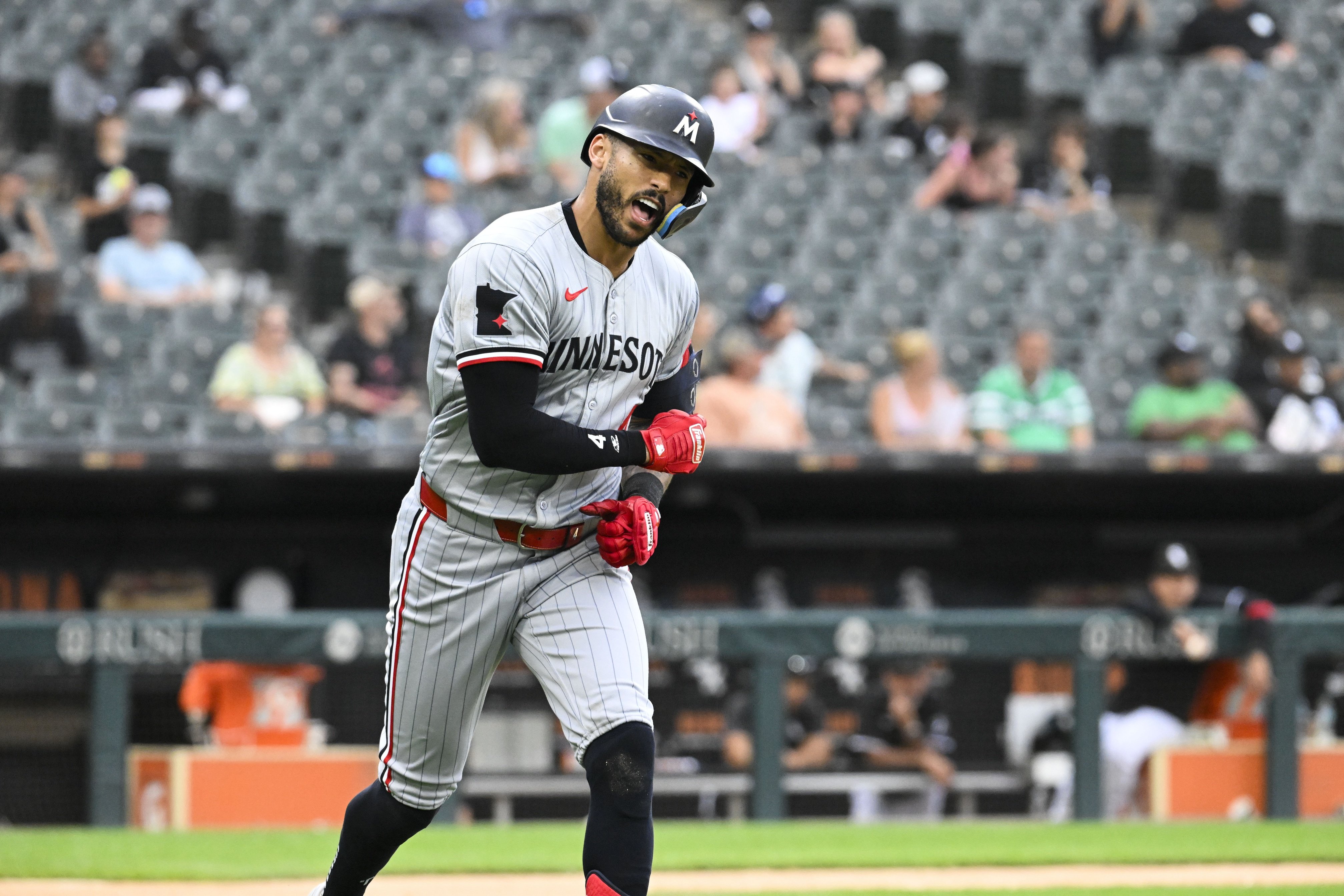 We're getting the band back together. On Friday night, Byron Buxton made his return to the Twins lineup, punctuated with a game-tying solo blast. Following that game, the Twins announced that shortstop Carlos Correa will be activated for Saturday's game. It's a big turnaround for the All-Star, who just a few days ago was not expected to be activated during the current homestand. He switched treatments, and, while painful to the point of bringing him near tears, the results showed rapid signs of improvement and manager Rocco Baldelli hinted recently that his return might come sooner than expected. Outside of the leadership and offensive production (Correa was hitting .308/.377/.520 at the time of the injury), the Twins' defense could potentially use his presence the most. After a month of August in which the team posted an Outs Above Average mark of -7 (27th out of 30 teams), they are currently matching that number this month. If nothing else, the pitching staff should be happy to see Buxton and Correa in vital up-the-middle defense again. If you are looking for a little optimism, this is it.
 -
The Twins have incorporated the vault lead with some of their runners: You can see Andrew Stevenson here trying to time it with the A's last year. Essentially, it's about timing the landing and going when the pitcher delivers. I wish the broadcast showed more of the player's jumps for those bases in the examples from the article above. A few years ago I was interviewing Terry Ryan for Twins Daily's offseason handbook. We were talking about Dozier's 21 steals and how he wasn't fast while Escobar was thrown out in both his attempts and was verifiably faster than Dozier. Ryan's point was that there was definitely a learning curve on how to take bases.
- 11 replies
-
- 1
-

-
- carlos santana
- matt wallner
- (and 3 more)
-
I'm definitely gonna need your definition of a "love fest article" because, brother, that's not what I do.
-
Development isn’t linear. Image courtesy of © Jerome Miron-USA TODAY Sports This offseason at Driveline, Christian Vázquez went through many strength assessments and had his ample figure loaded with electrodes, to determine how to optimize his swing. Driveline’s hitting program is not as vaunted as their pitching side, but they have had their fair share of clients who have had success. At its core, Driveline’s hitting philosophy focuses on two key aspects: bat speed and pulling the ball. The numbers show that increasing bat speed leads to more hits, and pulling the ball leads to more power. Combining the two should help players improve their productivity over the season. Of course, the peril of focusing on bat speed and pulling the ball can result in some bad habits. If a hitter tries to pull the ball, they may be susceptible to offspeed and breaking balls, or exposed on the outer third of the plate. Pull-focused hitters may also find themselves hooking the ball instead of driving through it, resulting in more foul balls or balls that don’t carry as well. Develop the approach correctly: pull balls with backspin that don’t hook or die. It’s a fine needle to thread, to be specific. In their offseason promos, Driveline also highlighted players like Lars Nootbaar (currently hitting .231/.322/.385), Paul Goldschmidt (.230/.290/.391), and JD Martinez (.257/.344/.432) using some of the same bat speed training techniques as Vázquez. For various reasons, none of those players have enjoyed career years or even improved results from their prior season. This isn’t to suggest that Driveline’s training is the issue, but it means that simply going to the facility in one offseason might not be a magical salve for hitting. Bat speed is essential, but how you use that tool in games is just as important. While his work at Driveline prepared him to pull the ball more – which he did 40% of the time in April and at the highest pace of his career – Vázquez was chewed up in the initial month. At the month’s end, he was hitting .231/.255/.288, while chasing 37% of out-of-zone pitches and posting a 15% swinging-strike rate. Those numbers continued to crater in May. Few expected Vázquez to contribute much offensively in a Twins uniform. Historically, outside of the juiced-ball 2019 season (wherein he hit an improbable 23 home runs), Vázquez has been a below-average hitter even for the catcher position. For the Twins, the bar to clear would be to hit enough to not erase his defensive contributions, not necessarily regaining his output from the aeroball era. Still, he had hit .223/.280/.318 in 355 plate appearances in 2023, lousy enough to make him trek to the Driveline facility in Seattle to undergo a transformation of sorts. Yet, as the 2024 season bled into mid-May, Vázquez’s stat line was a paltry .171/.195/.207 through his first 89 plate appearances. The lesson here is that development isn’t linear, and work done in the cages does not always translate in the field – at least not without some refinements and ongoing adjustments. For Vázquez, that adjustment was in the form of a timing mechanism. View full article
-
.png.cef6b9138b9d130aa69ec86f8baa3bd4.png) This offseason at Driveline, Christian Vázquez went through many strength assessments and had his ample figure loaded with electrodes, to determine how to optimize his swing. Driveline’s hitting program is not as vaunted as their pitching side, but they have had their fair share of clients who have had success. At its core, Driveline’s hitting philosophy focuses on two key aspects: bat speed and pulling the ball. The numbers show that increasing bat speed leads to more hits, and pulling the ball leads to more power. Combining the two should help players improve their productivity over the season. Of course, the peril of focusing on bat speed and pulling the ball can result in some bad habits. If a hitter tries to pull the ball, they may be susceptible to offspeed and breaking balls, or exposed on the outer third of the plate. Pull-focused hitters may also find themselves hooking the ball instead of driving through it, resulting in more foul balls or balls that don’t carry as well. Develop the approach correctly: pull balls with backspin that don’t hook or die. It’s a fine needle to thread, to be specific. In their offseason promos, Driveline also highlighted players like Lars Nootbaar (currently hitting .231/.322/.385), Paul Goldschmidt (.230/.290/.391), and JD Martinez (.257/.344/.432) using some of the same bat speed training techniques as Vázquez. For various reasons, none of those players have enjoyed career years or even improved results from their prior season. This isn’t to suggest that Driveline’s training is the issue, but it means that simply going to the facility in one offseason might not be a magical salve for hitting. Bat speed is essential, but how you use that tool in games is just as important. While his work at Driveline prepared him to pull the ball more – which he did 40% of the time in April and at the highest pace of his career – Vázquez was chewed up in the initial month. At the month’s end, he was hitting .231/.255/.288, while chasing 37% of out-of-zone pitches and posting a 15% swinging-strike rate. Those numbers continued to crater in May. Few expected Vázquez to contribute much offensively in a Twins uniform. Historically, outside of the juiced-ball 2019 season (wherein he hit an improbable 23 home runs), Vázquez has been a below-average hitter even for the catcher position. For the Twins, the bar to clear would be to hit enough to not erase his defensive contributions, not necessarily regaining his output from the aeroball era. Still, he had hit .223/.280/.318 in 355 plate appearances in 2023, lousy enough to make him trek to the Driveline facility in Seattle to undergo a transformation of sorts. Yet, as the 2024 season bled into mid-May, Vázquez’s stat line was a paltry .171/.195/.207 through his first 89 plate appearances. The lesson here is that development isn’t linear, and work done in the cages does not always translate in the field – at least not without some refinements and ongoing adjustments. For Vázquez, that adjustment was in the form of a timing mechanism.
This offseason at Driveline, Christian Vázquez went through many strength assessments and had his ample figure loaded with electrodes, to determine how to optimize his swing. Driveline’s hitting program is not as vaunted as their pitching side, but they have had their fair share of clients who have had success. At its core, Driveline’s hitting philosophy focuses on two key aspects: bat speed and pulling the ball. The numbers show that increasing bat speed leads to more hits, and pulling the ball leads to more power. Combining the two should help players improve their productivity over the season. Of course, the peril of focusing on bat speed and pulling the ball can result in some bad habits. If a hitter tries to pull the ball, they may be susceptible to offspeed and breaking balls, or exposed on the outer third of the plate. Pull-focused hitters may also find themselves hooking the ball instead of driving through it, resulting in more foul balls or balls that don’t carry as well. Develop the approach correctly: pull balls with backspin that don’t hook or die. It’s a fine needle to thread, to be specific. In their offseason promos, Driveline also highlighted players like Lars Nootbaar (currently hitting .231/.322/.385), Paul Goldschmidt (.230/.290/.391), and JD Martinez (.257/.344/.432) using some of the same bat speed training techniques as Vázquez. For various reasons, none of those players have enjoyed career years or even improved results from their prior season. This isn’t to suggest that Driveline’s training is the issue, but it means that simply going to the facility in one offseason might not be a magical salve for hitting. Bat speed is essential, but how you use that tool in games is just as important. While his work at Driveline prepared him to pull the ball more – which he did 40% of the time in April and at the highest pace of his career – Vázquez was chewed up in the initial month. At the month’s end, he was hitting .231/.255/.288, while chasing 37% of out-of-zone pitches and posting a 15% swinging-strike rate. Those numbers continued to crater in May. Few expected Vázquez to contribute much offensively in a Twins uniform. Historically, outside of the juiced-ball 2019 season (wherein he hit an improbable 23 home runs), Vázquez has been a below-average hitter even for the catcher position. For the Twins, the bar to clear would be to hit enough to not erase his defensive contributions, not necessarily regaining his output from the aeroball era. Still, he had hit .223/.280/.318 in 355 plate appearances in 2023, lousy enough to make him trek to the Driveline facility in Seattle to undergo a transformation of sorts. Yet, as the 2024 season bled into mid-May, Vázquez’s stat line was a paltry .171/.195/.207 through his first 89 plate appearances. The lesson here is that development isn’t linear, and work done in the cages does not always translate in the field – at least not without some refinements and ongoing adjustments. For Vázquez, that adjustment was in the form of a timing mechanism. -
Keep in mind he has 8 home runs in that span as well. It definitely has an element of picking his spots with the defensive alignment and how a pitcher is pitching to him. He punched a 3-2 pitch the other way for a hit against the White Sox this series with the second baseman playing him up the middle. Teams will certain counter -- that's baseball, after all -- but Correa has been a good example of a headsy player who added a tool to his tool box trying to eliminate a weakness.
-
Carlos Correa’s recent surge has been refreshing, and it’s going against the modern trends of hitting. Image courtesy of © Matt Kartozian-USA TODAY Sports Josh Donaldson is arguably the poster child for the new era of hitting. In an interview on MLB Network back in 2016, he explained his entire approach. “If you're ten years old and your coach tells you to get on top of the ball, tell him no,” Donaldson said emphatically, staring into the Studio 42 camera. “Because in the big leagues, these things that they call ‘ground balls’ are outs. They don’t pay you for ground balls.” Donaldson was coming off an MVP season with the Blue Jays, and he won the award by air raiding the entire league. He was second in the American League in slugging and third in home runs. He led the league in both runs scored and runs batted in. Elevating the baseball paid him handsomely. Most hitters and organizational philosophies agreed. In today’s game, we see fewer ground balls than ever before. Apparently, those 10-year-olds (along with everyone else) listened to Donaldson. In 2024, just 42.9% of all batted balls in play have been the ground-ball variety – the lowest rate in the last 30 years. While the league attempted to spice up the game by eradicating defensive shifts and biggie-sizing the bases, the results have mostly stayed the same in the new environment. In 2016, when teams could stack their infield to the pull side and gobble up any worm-burner ball headed their way, players had a batting average on ground balls in play of .246. All that maneuvering resulted in (or at least failed to prevent) an even lower batting average on ground balls: .242 this year. It would seem foolish for anyone to lean into this mess. But that’s exactly what Carlos Correa has done. Often, when you start to see players heat up, you’ll find a common trend of them elevating the baseball more, hitting the ball harder, or pulling the ball more frequently. Pulled, hard-hit line drives and fly balls result in more home runs and extra bases. It's the signature and symbol of the Twins' approach. That’s not what happened with Correa, however. View full article
-
Are Ground Balls... Good? Carlos Correa's Low-Trajectory Liftoff
Parker Hageman posted an article in Caretakers
.png.043384dd4f1b60714fd9cc07c2a3e6e4.png) Josh Donaldson is arguably the poster child for the new era of hitting. In an interview on MLB Network back in 2016, he explained his entire approach. “If you're ten years old and your coach tells you to get on top of the ball, tell him no,” Donaldson said emphatically, staring into the Studio 42 camera. “Because in the big leagues, these things that they call ‘ground balls’ are outs. They don’t pay you for ground balls.” Donaldson was coming off an MVP season with the Blue Jays, and he won the award by air raiding the entire league. He was second in the American League in slugging and third in home runs. He led the league in both runs scored and runs batted in. Elevating the baseball paid him handsomely. Most hitters and organizational philosophies agreed. In today’s game, we see fewer ground balls than ever before. Apparently, those 10-year-olds (along with everyone else) listened to Donaldson. In 2024, just 42.9% of all batted balls in play have been the ground-ball variety – the lowest rate in the last 30 years. While the league attempted to spice up the game by eradicating defensive shifts and biggie-sizing the bases, the results have mostly stayed the same in the new environment. In 2016, when teams could stack their infield to the pull side and gobble up any worm-burner ball headed their way, players had a batting average on ground balls in play of .246. All that maneuvering resulted in (or at least failed to prevent) an even lower batting average on ground balls: .242 this year. It would seem foolish for anyone to lean into this mess. But that’s exactly what Carlos Correa has done. Often, when you start to see players heat up, you’ll find a common trend of them elevating the baseball more, hitting the ball harder, or pulling the ball more frequently. Pulled, hard-hit line drives and fly balls result in more home runs and extra bases. It's the signature and symbol of the Twins' approach. That’s not what happened with Correa, however.
Josh Donaldson is arguably the poster child for the new era of hitting. In an interview on MLB Network back in 2016, he explained his entire approach. “If you're ten years old and your coach tells you to get on top of the ball, tell him no,” Donaldson said emphatically, staring into the Studio 42 camera. “Because in the big leagues, these things that they call ‘ground balls’ are outs. They don’t pay you for ground balls.” Donaldson was coming off an MVP season with the Blue Jays, and he won the award by air raiding the entire league. He was second in the American League in slugging and third in home runs. He led the league in both runs scored and runs batted in. Elevating the baseball paid him handsomely. Most hitters and organizational philosophies agreed. In today’s game, we see fewer ground balls than ever before. Apparently, those 10-year-olds (along with everyone else) listened to Donaldson. In 2024, just 42.9% of all batted balls in play have been the ground-ball variety – the lowest rate in the last 30 years. While the league attempted to spice up the game by eradicating defensive shifts and biggie-sizing the bases, the results have mostly stayed the same in the new environment. In 2016, when teams could stack their infield to the pull side and gobble up any worm-burner ball headed their way, players had a batting average on ground balls in play of .246. All that maneuvering resulted in (or at least failed to prevent) an even lower batting average on ground balls: .242 this year. It would seem foolish for anyone to lean into this mess. But that’s exactly what Carlos Correa has done. Often, when you start to see players heat up, you’ll find a common trend of them elevating the baseball more, hitting the ball harder, or pulling the ball more frequently. Pulled, hard-hit line drives and fly balls result in more home runs and extra bases. It's the signature and symbol of the Twins' approach. That’s not what happened with Correa, however. -
Rerick is a really interesting prospect. He really hasn't done the thorough offseason development programs a lot of the elite prep pitchers do so you could say there's go to be some more in the tank. He's got a bit of the babyface yet so you could see him making another push. I scouted him in May and he was as advertised. He was still in the low 90s during his last inning of work. It's pretty solid.
- 5 replies
-
- 1
-

-
- mlb draft 2024
- ryan sloan
- (and 4 more)
-
It's also a tactic to "save" passed balls/wild pitches. Frawley talked about that strategy a little bit in the article linked above: I can't tell you if this is happening with Jeffers -- if you just look at the photo above, he appears to be in the same depth as he was in 2021. League wide, however, we've see a big drop in the number of passed balls allowed (even with the one-knee set-up!). From 2014 through 2021 (excluding the shortened 2020 season), catchers averaged 354 passed balls per season. Starting in 2022, that dropped to 231 and was 232 last year. This year's pace is set to be even lower than that. Wild pitches are also down about 200 per season in the last two years. 10 years ago catcher called fastballs at a 57% clip. That's down to 47% this year. In theory, with pitches with more spin, there should be more balls in the dirt. If a catcher is further up toward the plate, there is less of a chance that ball hits the dirt. The other factor for this is that a lot of the decline in passed balls/wild pitches happened after pitch com was introduced, theoritically eliminating more of the cross-ups that might happen when a catcher is throwing down longer sign sequences.
-
Parker breaks down how the Twins are setting up catcher Ryan Jeffers to frame pitches. View full video
-
Parker breaks down how the Twins are setting up catcher Ryan Jeffers to frame pitches.
-
There's been a shift in the state of the art of pitch framing, having everything to do with where you set up to wait for the ball. The Twins are on the cutting edge of it, especially with the man they hope is their catcher of the medium-term future. Image courtesy of © Jay Biggerstaff-USA TODAY Sports If you log onto the World Wide Web and check out the 2024 Catcher Framing Leaderboard on Baseball Savant, you must scroll pretty far down to find Minnesota Twins catcher Ryan Jeffers. It's been a slow slide down that leaderboard since 2021, when he was near the top of the list, saving the team two runs in the process. But his downward trajectory isn't all his fault: the Twins have instructed catchers in the organization to sit middle-middle, presenting prominent targets. This somewhat counters the bottomfeeder ethos introduced by Tanner Swanson. The Twins catchers were encouraged to get under the ball and get it back toward the middle of the zone, thus blurring the edges of the strike zone for pitches at or near the bottom. Swanson moved on to the New York Yankees organization, and his successor, Tucker Frawley, leaned into the philosophy that catchers should set up middle-middle to present a clear target well within the borders of the strike zone for the pitcher. This method diverted from trying to nab pitches on the corners to some degree. Framing is still very much a practice the Twins emphasize in their receiving methods – catchers will still pull pitches toward the middle of the zone – but the newer practice centers on the idea that pitchers will miss less when aiming directly at the center of the zone. Research shows that even the most elite pitchers in the league do not have the precision we like to believe. Many readers will swear Greg Maddux had command so fine he could hit a penny off a hummingbird's back, but most pitchers regularly miss their intended targets by up to two baseballs’ diameters. If a catcher is set up on the edges of the zone, this could mean pitches wind up in non-competitive areas. The concepts of framing and targeting are intertwined. Both are mainly trying to increase the margins in favor of the defense, and to flip counts. By setting up middle-middle, the defensive side is hedging that they will be able to increase the number of favorable counts by having their pitchers throw more in-zone strikes – even if they miss their intended target. While a catcher might gain strikes by providing targets or setting up on the corners or bottom of the strike zone, pitchers may lose more strikes by egregiously missing their spot. No amount of showmanship behind the plate will win a strike that bounces on the way there. View full article
-
.png.3bbf394fb8affba2b7affc29d78cf149.png) If you log onto the World Wide Web and check out the 2024 Catcher Framing Leaderboard on Baseball Savant, you must scroll pretty far down to find Minnesota Twins catcher Ryan Jeffers. It's been a slow slide down that leaderboard since 2021, when he was near the top of the list, saving the team two runs in the process. But his downward trajectory isn't all his fault: the Twins have instructed catchers in the organization to sit middle-middle, presenting prominent targets. This somewhat counters the bottomfeeder ethos introduced by Tanner Swanson. The Twins catchers were encouraged to get under the ball and get it back toward the middle of the zone, thus blurring the edges of the strike zone for pitches at or near the bottom. Swanson moved on to the New York Yankees organization, and his successor, Tucker Frawley, leaned into the philosophy that catchers should set up middle-middle to present a clear target well within the borders of the strike zone for the pitcher. This method diverted from trying to nab pitches on the corners to some degree. Framing is still very much a practice the Twins emphasize in their receiving methods – catchers will still pull pitches toward the middle of the zone – but the newer practice centers on the idea that pitchers will miss less when aiming directly at the center of the zone. Research shows that even the most elite pitchers in the league do not have the precision we like to believe. Many readers will swear Greg Maddux had command so fine he could hit a penny off a hummingbird's back, but most pitchers regularly miss their intended targets by up to two baseballs’ diameters. If a catcher is set up on the edges of the zone, this could mean pitches wind up in non-competitive areas. The concepts of framing and targeting are intertwined. Both are mainly trying to increase the margins in favor of the defense, and to flip counts. By setting up middle-middle, the defensive side is hedging that they will be able to increase the number of favorable counts by having their pitchers throw more in-zone strikes – even if they miss their intended target. While a catcher might gain strikes by providing targets or setting up on the corners or bottom of the strike zone, pitchers may lose more strikes by egregiously missing their spot. No amount of showmanship behind the plate will win a strike that bounces on the way there.
If you log onto the World Wide Web and check out the 2024 Catcher Framing Leaderboard on Baseball Savant, you must scroll pretty far down to find Minnesota Twins catcher Ryan Jeffers. It's been a slow slide down that leaderboard since 2021, when he was near the top of the list, saving the team two runs in the process. But his downward trajectory isn't all his fault: the Twins have instructed catchers in the organization to sit middle-middle, presenting prominent targets. This somewhat counters the bottomfeeder ethos introduced by Tanner Swanson. The Twins catchers were encouraged to get under the ball and get it back toward the middle of the zone, thus blurring the edges of the strike zone for pitches at or near the bottom. Swanson moved on to the New York Yankees organization, and his successor, Tucker Frawley, leaned into the philosophy that catchers should set up middle-middle to present a clear target well within the borders of the strike zone for the pitcher. This method diverted from trying to nab pitches on the corners to some degree. Framing is still very much a practice the Twins emphasize in their receiving methods – catchers will still pull pitches toward the middle of the zone – but the newer practice centers on the idea that pitchers will miss less when aiming directly at the center of the zone. Research shows that even the most elite pitchers in the league do not have the precision we like to believe. Many readers will swear Greg Maddux had command so fine he could hit a penny off a hummingbird's back, but most pitchers regularly miss their intended targets by up to two baseballs’ diameters. If a catcher is set up on the edges of the zone, this could mean pitches wind up in non-competitive areas. The concepts of framing and targeting are intertwined. Both are mainly trying to increase the margins in favor of the defense, and to flip counts. By setting up middle-middle, the defensive side is hedging that they will be able to increase the number of favorable counts by having their pitchers throw more in-zone strikes – even if they miss their intended target. While a catcher might gain strikes by providing targets or setting up on the corners or bottom of the strike zone, pitchers may lose more strikes by egregiously missing their spot. No amount of showmanship behind the plate will win a strike that bounces on the way there. -
What I think is interesting about this change is that the Twins basically moved him back to his natural slot. It goes to the notion that he was coached out of it at some point in the minor leagues.
-
you are wrong. respectfully.
-
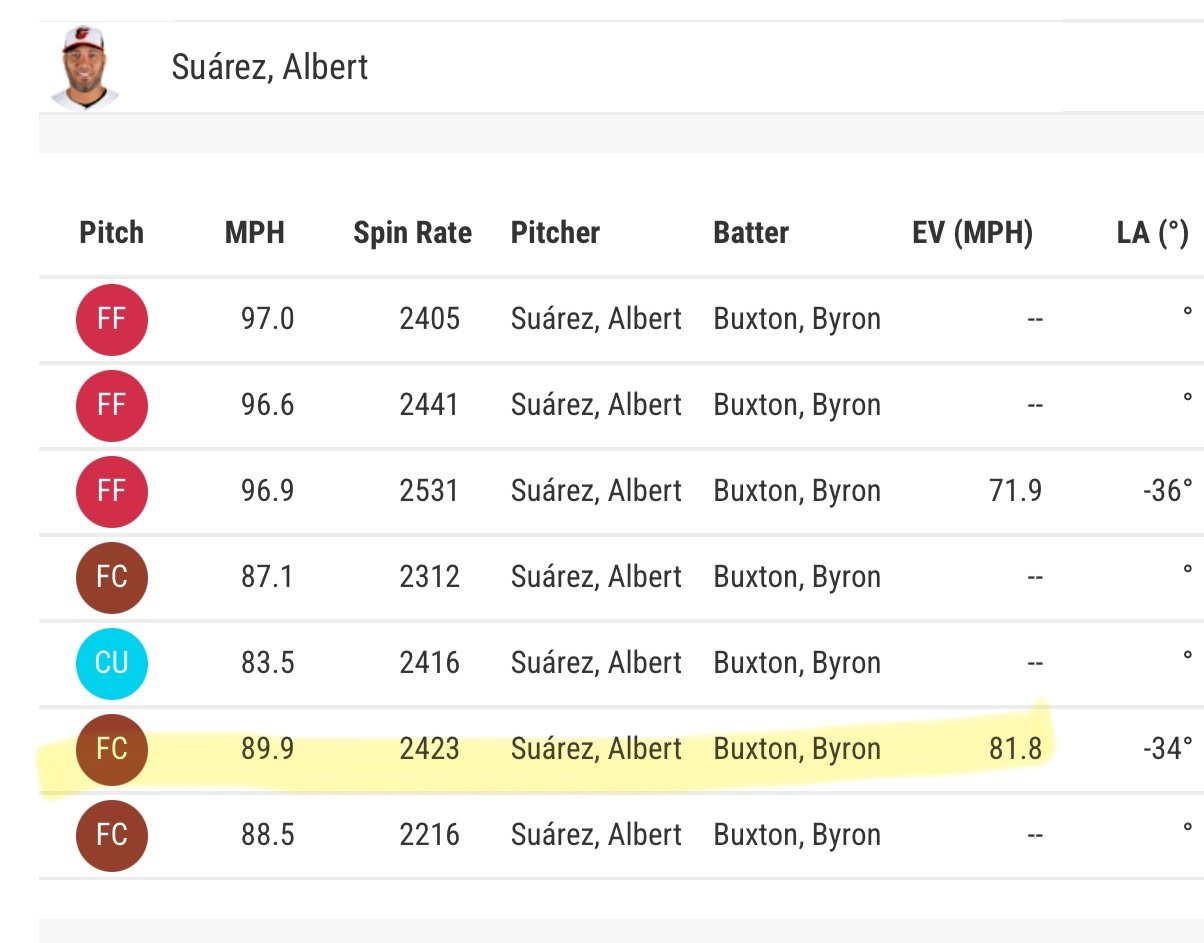
Parker Hageman breaks down how pitchers are approaching Byron Buxton differently this season and why it's leading to an astronomical swing-and-miss rate. View full video
-
Parker Hageman breaks down how pitchers are approaching Byron Buxton differently this season and why it's leading to an astronomical swing-and-miss rate.
-
I think most hitters in today's era will tell you that it's not that simple. Even Joey VOTTO says that earlier in his career he was able to do it more when pitchers used to front hip sinker left-handed hitters with high 80s/low 90s pitches, but that attack method has gone away with more velocity and spin. https://www.nytimes.com/2023/07/28/sports/baseball/foul-balls.html Plus, it's not really a sustainable skill among hitters. Even Luis Arraez's 2-strike foul rate fluctuates 3-4% each year and this year it's up and he's also got his highest 2-strike swing-and-miss rate of his career (13%).
.png.803ce1770b4c872c9b1955a9a5758696.png)

.png.cef6b9138b9d130aa69ec86f8baa3bd4.png)
.png.043384dd4f1b60714fd9cc07c2a3e6e4.png)
.png.3bbf394fb8affba2b7affc29d78cf149.png)
