



Parker Hageman
-
Posts
4,162 -
Joined
-
Last visited
-
Days Won
6
Content Type
Profiles
Minnesota Twins News, Rumors & Analysis
Minnesota Twins Videos
2026 Minnesota Twins Top Prospect Rankings
2022 Minnesota Twins Draft Picks & Signing Bonuses
Minnesota Twins Trade & Free Agent Rumors
Minnesota Twins Fan Guides & Resources
2023 Minnesota Twins Draft Picks & Signing Bonuses
2024 Minnesota Twins Draft Picks & Signing Bonuses
2025 Minnesota Twins Draft Picks & Signing Bonuses
2026 Minnesota Twins Draft Picks & Signing Bonuses
Forums
Blogs
Events
Store
Downloads
Gallery
Everything posted by Parker Hageman
-
 You can view the page at http://twinsdaily.com/content.php/2886-Things-You-Need-To-Know-About-Joe-Mauer
-
The narrative for Joe Mauer this offseason was that the transition to first base was going to heal his legs, provide him with superhuman power, and maybe help him find the missing Malaysian plane in his spare time. So far, none of that has happened. To Twins fans, the most relevant is the power. Through 19 games this year, he has just three extra base hits in his back pocket - two doubles and a home run. Beyond that, Mauer has accumulated 24 strikeouts in 90 plate appearances, an extremely high rate by his standards. While the conversation revolving around his lack of dingers and ribbies is mindbogglingly shortsighted, there are some elements to his early season numbers that may help confirm some of what the “eye-testers” are seeing. Here are a few things to consider. Mauer is having issues against non-fastballs Curves, sliders, changeups and everything in between, if it ain’t straight heat, Mauer has not been Mauer this season. From 2009 to the end of last season Mauer compiled a .262 batting average on pitches that were not fastballs. That rate is not otherworldly -- Miguel Cabrera leads baseball with a .301 average in that time -- but Mauer’s figure was still well above the league’s average. His ability to allow the ball to travel deep into the zone before executing his patent inside-out swing, combined with a doctorate in zone comprehension, made it a difficult proposition for pitchers to break off a bender. This year has been a different story. Pitchers have mixed in more of these types of pitches to improved results. Following Tuesday’s game against the Rays, the curve that he laced off the cup of pitcher David Price notwithstanding, Mauer is hitting just .182 against non-fastballs. The most significant difference appears to be his ability to put the ball in play. According to ESPN/TruMedia’s database, Mauer has put the ball in play on just 33% of his swings compared to the 49% he has in the previous years. What’s more, the balls Mauer is putting in play have not been exactly scorched, says his well-hit average. From 2009 to 2013, Mauer held a .213 well-hit average on secondary pitches. So far in 2014, that number is at .093. (While it is almost certain that the video scouts would include the fourth-inning liner off of Price’s manhood as “well-hit”, that hit failed to even knock the big lefty out of the game in spite of catching the pitcher square between the legs.) Two-strike situations have been un-Mauer-like Over the previous five seasons, Mauer has been one of the best two-strike hitters in the game. With the best batting average (.257) and seventh-highest on-base percentage (.312) in that time, the Twins’ best compensated player was the hardest for pitchers to retire despite the two-strike advantage. This year, with a direct correlation to the aforementioned secondary struggles, Mauer has been decisively different. Putting the ball in play with success has been difficult, and as his current .167 average would suggest, pitchers are finding it much easier to put him away with a strikeout. In two-strike situations, Mauer’s vaunted contact abilities have taken a leave of absence so far this year. Whereas from 2009 to 2013 he had a 14.8% swing-and-miss rate, that has skyrocketed to 27.7% this year. For the visual learners, Mauer’s contact rate heat map shows a Swiss cheese-like pattern on his two-strike swings (below) in comparison to last year (above): Mauer’s swing zone has changed One of the explanations behind his increased strikeout rate and his lack of power may have to do with his swing location selection. Mauer has had a very concise swing zone over the past five years, focusing mainly on offerings that come in on the upper inner-half of the plate. These pitches he has been able to drive to left field with some authority as he lets the ball travel deeper into the zone. So far this year he has expanded this area, bleeding over to the other hemisphere of the plate. In the past, Mauer has done well with pitches on the outer half -- particularly when going the other way. For instance, last year he hit .536 (37-for-69) with 14 doubles and four home runs when he drove the ball to left on the outside portion of the zone. This year he’s just 3-for-13 with no extra base hits when going the other way on pitches away. Repeat of last year? So, for those who feel that this Joe Mauer is different than previous versions of Joe Mauer, you are not wrong. One big reason not to panic is because of the overall sample size. After missing substantial amount of time at the end of 2012, Mauer came into 2013 cold as well. A little over 100 plate appearances (109 to be exact), he was hitting .283/.349/.394. This prompted a similar write-up to this one in response to the mass hysteria regarding his lack of production. Per usual, Mauer responded and rebounded by hitting an absurd .335/.415/.500 from then until his untimely concussion in August. This season’s slow start, like that of last year, may just be residue of rust hanging on from his extended time away from the game or simply a slow start. Settle down, everyone.
-
-
-
You can view the page at http://twinsdaily.com/content.php/2869-Phil-Hughes-Attempts-to-Reinvent-Himself-In-Minnesota
-
Over his career, Phil Hughes has seemingly been one solid secondary pitch away from taking over the world. Since his prospect days, his curveball was considered this dangerous weapon. For Hughes, unfortunately, the pitch never manifested as that killer pitch as projected. Eventually, the pitch was unceremoniously dropped from his arsenal in 2012. When asked why the deuce took the backseat to other pitches in his repertoire, Hughes cited his inability to execute as one of the main reasons. “It was one of those things where basically it became a first-pitch strike pitch and that’s all I was using it for, and that’s not what I want it to be,” Hughes said in the clubhouse this spring. “But it was out of necessity because I was kind of looping it up there. It wasn’t a good thing.” In his final year with the Yankees, Hughes certainly favored the pitch to start an at-bat off. While he threw the pitch just 11% of the time overall, he spun it up to the plate a nearly quarter of the time on the first pitch to a hitter. Opponents, trained to seek-and-destroy fastballs on the opening pitch, often allowed the big bend to sail past only to find themselves down in the count no balls and one strike. As the at-bat would progress, Hughes had the tendency to then lean on his impressive fastball. Much like former Twin Scott Baker, Hughes would target the top of the zone with a 92+ heater and would register a high percentage of swing-and-misses with an equally insane number of foul balls. With two strikes, and fear that the looping curve would be tipped out of his hand, Hughes stuck to the fastball and slider -- demonstrating a near fifty-fifty split in usage between the two. The results left something to be desired as his .253 opponent batting average against in two-strike situations, the second highest in the game last year, suggested that the current plan was not working. On top of that, his 44% foul ball rate with two-strikes meant he handed out a lot of souvenirs to the ticket holders in the gated community areas of the stadium and also that his pitch count increased quickly. This translated to premature clubhouse showers. So with all that in mind, but without all the numbers to back it up and just ball guy intuitive stuff, Hughes focused on redeveloping the curve to be a legitimate weapon in those types of circumstances. “Coming into spring it was a conscious effort to make sure I was finishing that pitch and keeping my hand out in front so you don’t pick up any spin or have it pop out of my hand,” Hughes explained. Camouflaging your secondary pitches is one of the biggest keys in pitching and, to Hughes’ concern of keeping the curve from “popping” out of his hand, is a big one for that particular pitch. The looping curve, as he described it, is one that has the tendency to come out of the pitcher’s hand a bit higher than a fastball. “A lot of times with curveballs, more than any other pitch, it will go above the fastball plane,” major league pitching instructor Tom House told the Washington Post in 2012. “And if it goes above the fastball plane, then the hitter knows it’s not a fastball.” Which means they sit and let it pass. Or they swing out of their cleats at it. Either way, it becomes a less effective pitch. Through three starts in 2014, it is hard to tell if the tinkering has worked. He has thrown more curveballs throughout each plate appearance but the percentage of times hitters have swung at it has decreased. Plus, no one is chasing after the pitch out of the zone, which means it is not getting buried for strike three. While his strikeout rate has climbed so far this season and may not be directly due to his curveball (12 of his 17 K’s have come on fastballs) it is possible that just occasionally flashing the curve keeps hitters off his fastball. “It’s altering sequences,” Hughes said this spring, “I’ve gotten into some predictable sequences for the most part, so once I get my changeup and cutter going I can kind of alter those a little bit, you know, flipping a few first-pitch curveballs, always keeping it different, that will be good.” In terms of his curve -- his large, looping pitch thrown around 74.1 mph on average -- hitters will see it mainly early in the count (16 of the 44 were thrown on first-pitch) or occasionally with two-strikes (another 18 were thrown in two-strike situations). In both instances, hitters refrained from swinging. Of the 44 thrown, just 14 (31.8%) have been offered at. That’s quite a low total for a curveball overall. Does predictable sequencing explain why Hughes’ curveball has been roundly ignored by opponents? Or is the big loop helping hitters differentiate his curve from other pitches? Some attribute the modern hitters’ ability to lay off these slower breaking pitches to improved analytics and scouting reports. In Boston, a Providence Journal article noted that the Red Sox staff was tightening up their pitch types, moving to cutters and splitters instead of sliders and curves, because the late break of the former would confuse hitters better than the looping curve or long tilt of the slider. “There’s more knowledge in a game now of bat paths and technologies and studies and charts and hot zones, so you can get a picture of somebody’s bat path and where they like to hit the ball,” Red Sox catcher David Ross told the Providence Journal’s Brian Macpherson. “Guys try to stay off that as much as they can off the fastball with a cut or a sink or sharp breaking stuff. The big breaking ball is pretty much obsolete.” While Ross may consider the big breaking ball obsolete, Hughes still breaks his out, just not at the same rate as he did a few years ago while coming up with the Yankees when it was considered a plus-pitch for him. It was last year when Hughes started to feel that hitters were not reacting to the pitch the same and shelved it in favor of the late-break cutter. This season, while he’s thrown his curve more frequently than last year, it is still the cutter that is thrown with greater frequency. Unlike his curve, the cutter is (1) swung at, (2) swung at out of the zone and (3) missed at a higher rate. So maybe the curveball is the savior of a pitch for Phil Hughes that it was made out to be in spring training. He still is doing many things right at this juncture, such as leading the staff in strikeouts and avoiding home runs. If, however, he can find some help in reducing his unsightly batting average on balls in play or the number of foul balls that has blown up his pitch count so frequently, he might be able to stay on the mound beyond the typical five innings of work.
-
Phil Hughes Attempts to Reinvent Himself In Minnesota
Parker Hageman posted a blog entry in Over the Baggy
-
Just two in his first 9.2 innings. Big step for May.
-
Any reax to Fangraphs article on Hughes?
Parker Hageman replied to BigTrane's topic in Minnesota Twins Talk
Couple of factoids: Hughes is currently leading baseball with a 50% foul rate (league average being 34%). With two strikes, that rate goes to 54% but several other pitchers leapfrog him. Part of the reason he has always had a high foul rate is the same reason Scott Baker did as well: With two-strikes they attacked just above the zone. That is prime real estate for a hitter to send one back to the screen. Beyond that, while hitters are looking for the 92 mph letter-high cheese, he drops a fair number of slow curves which hitters have no choice but to pull into the stands or down the line. -
Article: Jason Kubel Off To A Fast Start
Parker Hageman replied to Parker Hageman's topic in Twins Daily Front Page News
This comment was posted over at the Strib's TwinsCentric blog on this topic: Yeah, that's about right, right? -
Article: Jason Kubel Off To A Fast Start
Parker Hageman replied to Parker Hageman's topic in Twins Daily Front Page News
What can I say? I was out late rioting over the Gophers big win. -
You can view the page at http://twinsdaily.com/content.php/2841-Jason-Kubel-Off-To-A-Fast-Start
-
Let’s just say Jason Kubel’s return to Minnesota was not exactly met with wild enthusiasm from Twins fandom. Based on the previous season’s production -- a stomach-turning batting line of .216/.293/.317 (avg/obp/slg) with just five home runs in 290 plate appearances -- you could not fault anyone on the outside looking in for faulting the acquisition. Nevertheless Kubel and those close to him maintained that, at 31-years-old, the left-handed outfielder-slash-designated hitter was not over the hill. After all, I’m 33 and if I can still dress myself, cook my own meals and wipe my own bottom, surely Jason Kubel, a finely tuned athlete, could still hit a sphere thrown at him. When he departed the Twins, he may not have thrown kerosene on the club but in his exit interview he criticized the home ballpark, suggesting it was frustrating to hit in the left-handed power suppressing stadium. To make matters worse, Kubel groaned to the Phoenix media of his displeasure at having been a designated hitter -- suggesting it was “boring”. [Writer’s Note: Oh, really? You know what I find boring, Jason? Working at an office for nine hours a day.] On his return to his original organization, he insisted he was just stymied by a quad injury that lingered throughout the 2013 season, and not aging or anything affiliated with that. His quad was now healed. Oh, and that whole Target Field configuration thing? He was fine with that now too. Except all spring training, it didn’t seem fine. He went nine-for-fifty-two. A .196 average with two extra base hits and 17 strikeouts. Certainly some of those plate appearances were against real, honest-to-goodness, major league starters and others were against OH-MY-GAWD-THAT’S-JASON-KUBEL-type pitchers with a tight end’s number on their jersey. While the spring training numbers are meaningless, the performance just reduced the overall confidence in the decision to bring him back. Still, the Twins brass continued to insist they saw a noticeable improvement out of Kubel despite what the numbers said. He was squaring up balls better in the latter portion of the spring and taking better at-bats. That, and the lack of outfield-slash-bench options, made him a prime candidate to head north despite not being on the 40-man roster. Perhaps he needed to be above the Mason-Dixon line in order to hit because, once there, he put on a show. As the current American League batting average leader, Kubel has begun the season 13-for-29 (.448) with five extra base hits including one long blast at Target Field, a stadium which now can’t hold him. Kubel’s biggest improvement at the plate has been his connectivity. Last year his swing was holier than the Pope. In his contact rate heat map from ESPN/trumedia, you see that his swings were often empty -- he swung and missed on nearly 33% of his swings, well above the league average rate of 22%. This season, while still above average, he has reined in the errant swings to a more manageable rate (25%). Here is a side-by-side of his contact heat map with 2013 on the left and 2014 on the right (click to embiggen): What’s more is that when Kubel did make contact last year, it was not only weak, it was often late. His pull rate dropped considerably. Where this really stands out is against the fastball, a pitch Kubel used to flourish against. As I wrote at the time of the Kubel acquisition: “One of Kubel's biggest issues in 2013 was his inability to handle fastballs. According to ESPN Stats & Info, in 2012 Kubel hit .298/.368/.616 with 20 home runs and a whopping .309 well-hit average. That dropped considerably in 2013 when he finished the year hitting .261/.315/.400 with just 3 home runs and a well-hit average of .171 off of fastballs.” Yes, the production was bad against the cheese but it was not until an comparison of his (fastball) spray charts of last year and this year when facing that it is clear Kubel may be fully healed as he and the coaching staff insisted. Last season, he was unable to get around on the heat, often hitting lazy fly balls. This year he is once again yanking that pitch into and over the right field wall. All standard small sample size warnings apply. However, Kubel’s early season production in addition to these indicators are reassuring that he is in good health. If he can remain in the lineup, the Twins could wind up with a solid bargain out of a minor league signing. There still is, of course, a lot of baseball left but, so far, the signs are good for Jason Kubel.
-
-
You can view the page at http://twinsdaily.com/content.php/2826-Chris-Colabello-Finds-Comfort-at-the-Plate
-
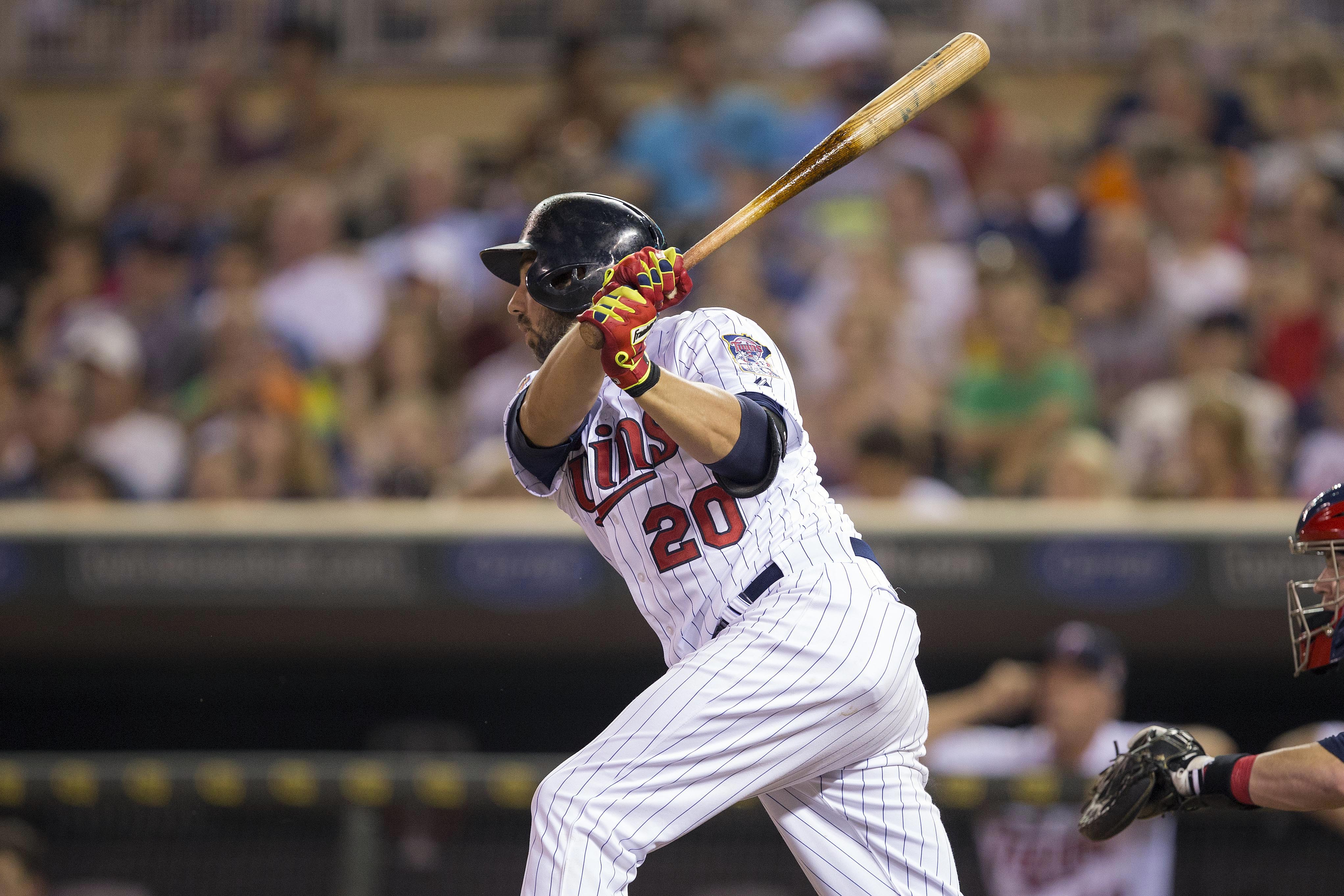 Of course, playing professional baseball on the Korean Peninsula was not Colabello’s lifelong dream. He stayed with the Twins, even if that meant another season in the minors or the possibility of being cut in spring training. This plight had become standard practice for Colabello in his career. A career that almost ended before it started when the Worcester Tornadoes of the Cam-Am League released him after eight at-bats in his first season to make room for a backup catcher. In 2006, he was cut from the Italian team in the World Baseball Classic, then later dropped by the Detroit Tigers after a spring training tryout the same year. Obviously the snow has not even completely melted from the northern cities but, after a fast start which included sharing the American League’s Player of the Week with the Angels’ Josh Hamilton, Colabello is starting the 2014 season like he wants the Twins to regret even considering the idea of moving him just a few months ago. From the Beer Leagues to the Major Leagues Colabello’s discovery almost sounded like pure happenstance. “One of our scouts in the northeast, John Wilson, had got a tip that there was a guy over there,” Twins general manager Terry Ryan said last year when he was summoned to the show. “Of course [Colabello] continued to put up number after number, year after year, and was worth a look. And John went over and took a look and I think that year he was named the Independent League Player of the Year, all that good stuff. Ok, this guy deserves an invite to minor league spring training. He got down there, he was pretty good. He started in Double-A and never really had an off-week.” For seven years, Colabello toiled in the Cam-Am League, bouncing between Worcester and Nashua. Toiled might be putting it lightly. Twins manager Ron Gardenhire joked that the slugger came from the beer leagues, and he’s not far off. Nashua, the team Colabello played for 43 games in 2007, had Olympic skier, Bode Miller, play one home game each year from 2006 to 2008. While Miller had six at-bats and five strikeouts, the New Hampshire native and baseball sideshow failed to generate interest. The team was eventually evicted from their stadium in 2009 for failing to pay rent. Meanwhile, Worcester, whose nickname came from a tornado which ravaged the community in the early 1950s and the team Colabello had played with for his 540 other games in the league, folded for unceremonious reasons similar to the Nashua team. In 2012, the season after the Twins plucked (or was it saved?) Colabello from the Massachusetts town team, the Worcester Tornadoes had their charter revoked for being unable to pay for uniform cleaning. The collapse of the Tornadoes did not come before one last Hail Mary scheme, however. In April of 2012, the team reached out to baseball pariah, Jose Canseco, hoping that the former major leaguer’s diminishing star would help ignite some local interest in the club. While being compensated $14,000 a month, more than quadrupling Colabello’s monthly take in his final year in Worcester, the toxified outfielder could not find enough juice to buoy the sinking franchise and the 47-year-old hit just .194 with one home runs in 74 at-bats. In that season’s final weeks, even the team’s uniforms were repossessed and the players were forced the finish the year in generic loaner unis for the last few games before the team was shuttered for good. So, yeah, just for surviving that league for seven years you could say Chris Colabello deserved a minor league invite at the very least. How exactly does a player of Colabello’s offensive aptitude not only fall through the cracks but manage to avoid detection from other major league organizations for almost a decade of success in the lower ranks? “It happens,” Ryan said bluntly. “There are numerous players who are from the independent leagues who are on big league clubs who fell through the cracks. Some players who are in minor league baseball do not get opportunities because there is a bigger draft in front of them or something like that so then all of a sudden they start losing confidence. Before you know it, they get released and then they get signed by the [st. Paul] Saints or somebody and they get there and they play well.” It is not as if Colabello was a mythical Hobbsian-type hitter who was injured and finally healed enough to tear the cover off the ball. He went vastly unnoticed in his amateur career, failing to draw interest in a pool of thousands of other high school and collegiate players -- mainly because he played out of a little known Division II school in Worcester. (Knowing where the ballpark was certainly made the transition to the Cam-Am League a little easier.) No, Colabello constantly tinkered and improved his approach, acknowledging the ever-evolving tango between pitcher and hitter. “I’ve always had this desire to be complete in terms of being a hitter,” Colabello told me this spring. “To be able to do what the best hitters in the world have done and that means, in my humble opinion, means hit .300 and 30-plus home runs a year.” Those are lofty goals for a player who was two years removed from playing against washouts and pitchers whose hopes of seeing a major league stadium involved buying a ticket. Colabello, however, said it was always putting in the work at the field, in the cages and at the tee, which helped him improve physically, and constant game-planning that propelled him into the position where he is at today. Unlike some of his fellow employees who were drafted or signed massive bonuses and have a safety net of a large investment by ownership supporting them and knowing that they will have every opportunity to succeed, Colabello has been afforded no such luxury. If he did not produce, the Twins could send him back to what is left of the Cam-Am League, no worse for the wear. “If I’m getting stagnant that means I’m getting worse. I want the ability to do everything and to be able to have the clearness mentally to be aware of that and want to do it is the first step.” In the minors, Colabello started to feel the pitchers were attacking him on the inside half of the plate. In response, he started to back away from the plate. This led to him driving the ball with authority to the opposite field -- something that is not typical of undeveloped players, said Terry Ryan. “There are a lot of people who like to see an opposite field hitter when they are younger because you know guys will eventually learn to pull -- very rarely does a hitter learn to hit the other way with authority when they are 28 or 29,” Ryan said of Colabello’s approach. When he reached the Twins, Colabello was an opposite-field machine, slugging over .750 when going to right as four of his seven home runs left the park in that direction. But when he pulled the ball he wound up batting just .194 with little power. Something was not clicking. “As last year progressed I started to get more and more confident in my ability to drive the ball over the wall that way, that pulling the baseball became an afterthought,” Colabello said. “It almost got to the point where I wanted to pull the ball or needed to pull the ball, that I got so confounded by that, that I was in search of it for a while.” “I’ve watched guys like Miguel Cabrera, for one, and the Albert Pujols of the world and to be able to see them drive the ball over the walls to all three parts of the field and still maintain the ability to hit .300, that’s pretty amazing. I always looked at that and said ‘wow’. I’ve been a guy who could hit .300 in Indy ball and at the minor league level and I had this aspiration to continue to improve and figure out how they did that. And I think that has been the evolution of me as a hitter.” “I think it is really just a comfort thing.” Much has been made on the televised broadcasts of Colabello moving closer to the plate in his stance. When the subject was broached, the right-hander shook his head and shrugged. “I think that varied a lot. I feel like because I’m long and my stance is open that they thought I was further away than I was. I watched guys like [Dustin] Pedroia and Ryan Braun stand on the other side of the box sometimes when they knew guys were throwing them in but I think what happened more than anything else is that I did not have the awareness to make the adjustments when I needed to or the comfort level to say that ‘ok, I can still get to this ball’ because things were going a little too fast.” “In Triple-A, one day I might get closer or one day I might get further away and it is really depended on how I felt that they were going to attack me or patterns that I saw and I think that is part of the self-awareness thing. I think at the big league level last year I had gotten to the point at [Rochester] that I had gotten so comfortable being off the plate that I hadn’t even realized how far I was. I used to stand on the inside white line.” Colabello acknowledged that one of the reasons that he was frequently heading back to the dugout after a fruitless at-bat had a lot to do with being uncomfortable and not fully prepared for what was coming at him. As he said, the game moved fast. That, and the sheer impressive talent that existed on the mound at the major league level. He cited the handiwork of Detroit Tigers’ pitcher Anibal Sanchez as a lingering memory for him. The pair matched up four times in 2013, once in May and three times in August. On each occasion, the results were the same: a Sanchez strikeout. What Sanchez demonstrated to Colabello was the uncanny ability to unleash a low-80s changeup in any situation -- first-pitch, up in the count, behind, it didn’t matter. Fixating too much on that pitch allowed Sanchez to buzz his low-90s fastball at the knees. This was an awakening for Colabello, recognizing that he would need to tighten up his plan if he wanted to succeed at this level. “There are definitely physical things that you become aware of every day but that only enhances your mind’s ability to become confident.” For hitters uninitiated into the major leagues, the prolonged slumps can be deflating. “I think part of what makes me a good baseball player is my mental ability to play the cat-and-mouse games with the pitchers and I felt like that was very far off from what I was doing in Triple-A and Double-A there year before where I went up to bat when I had plans,” Colabello said of his 58 strikeouts in 181 plate appearances last year. “You are going to go through times as a hitter where you get away from your plan or your plans kind of skew, but it is all based on results which, at the end of the day, the game for a hitter, it is more than the results: it is about the process.” The game is focused on output and production. A hitter’s value is tied to his ability to reach base, avoid outs, score and drive in runs. With this constant scrutiny, hitters always know where they stand when they see numbers like their batting averages plastered wall-to-wall in every stadium. And they know when it is dropping lower and lower. They know when a manager’s confidence may be waning. They know when the front office may be discussing booking a flight back to the International League. The key, Colabello realized, was to focus on the process -- hitting the ball square and taking good at-bats -- and forgetting about the stretches when the hits don’t fall. “You can go oh-for-4 on any given day and hit the ball right on the button, every time,” he said transitioning into a near Crash Davis-esque soliloquy about the baseball gods. “Then there are days when you go 4-for-4 and not hit a ball square and break three bats so, realistically, what should give you more confidence, the fact that you squared four balls up or that you got four hits? The obvious answer is you squared four balls up but when you go home and look at the box score and you are aware that you are oh-for-8 or oh-for-12 or oh-for-20, it looms on you. I think maturity allows you to realize that, ok, it is not about that and I think that is what the best hitters in the world are capable of doing.” Colabello said he reached out to players, coaches, instructors, trainers, friends and anyone who would discuss hitting who could lead to an improvement. He tried to absorb everything he could. “I watched Joe [Mauer] be present all the time. That’s one of the biggest things I took from last year from watching him everyday that he’s so self-aware. So self-aware. And understand who he is and what he wants to do about as well as anyone in the game. I learned a lot from that, to be able to say this is who I am, this is what I’m going to do, this is how I’m going to handle it and not stray too far away from it.” Clearly modeling your style after a three-time batting champion is not a bad route to go. He already shares his patented opposite field stroke but would he consider stealing Mauer’s signature move of watching the first-pitch pass by? “Being a guy who is typically a middle-of-the-order guy, who is going to produce runs and try to hit the ball out of the ballpark, you have to get yourself in offensive counts and I think oh-oh is as offensive of a count as we get,” he said. “So if you get the chance to do some damage on oh-oh, for me, I’m going to let it go. I certainly think it is about keeping that in reason and understand how to not doing too much with it. I think most of my success came last year in oh-oh counts or hitter’s counts because that’s when you are suppose to do damage.” After doing damage in Chicago and Cleveland to start the season, Colabello has demonstrated that good things happen to those who work hard and are stubborn enough to keep hanging around.
-
-
Article: Heated Observations: Game #3
Parker Hageman replied to Parker Hageman's topic in Twins Daily Front Page News
Because of our affiliation with ESPN's Sweet Spot Network, we have access to these charts and data which are provided by pitch f/x and Inside Edge among other data sources. -
You can view the page at http://twinsdaily.com/content.php/2814-Heated-Observations-Game-3
-
How Phil Hughes Worked Of all starting pitchers who threw more than 100 innings last year, Phil Hughes led the group with a first-pitch strike rate of 71% -- one of only two pitchers who cracked the 70% mark (Arizona’s Patrick Corbin being the other). Naturally, Hughes continued that first-pitch strike tendency in his first start with the Minnesota Twins, turning the count over to 0-1 on 19 of the 24 batters he faced. Yesterday, sticking mainly with his heat in those situations (20 of 24), Hughes has been known to flip a get-me-over curveball on the first-pitch (21% of the time last year). However he twisted just one curve in yesterday’s game. While with the Yankees, when Hughes had his opponents on the ropes, he turned to his fastball -- a tendency he has displayed regularly. In two-strike situations against the White Sox, Hughes targeted the upper portion of the zone and above, getting five of his seven strikeouts on the high heat (as shown below). Trevor Plouffe and the Other Direction No one will ever claim Trevor Plouffe’s bread-and-butter was taking a pitch the other way. After all, when Plouffe went on his home run binge a few years back, all those pitches were yanked into the left field seats. Yet, so far this year, Plouffe has six hits, four of which have been to RIGHT field. Here’s the interesting part: When Plouffe did go the other way last year, it mostly produced flies and pops. Those pitches were ones he was fooled on and fought off -- mostly sliders and fastballs down and away: This season, Plouffe has DRIVEN pitches that have been up in the zone, shooting line drives to right field: Plouffe having success going the other way? What’s next, cats sleeping with dogs? Anyone Heard of Chris Colabello? Starting the year 5-for-10 with three doubles (ok, one may have been a gift) and six RBIs is a strong way to jump out of the gate for Chris Colabello. This spring Colabello spoke about how he was approaching his at-bats and said he moved back off the plate in the minor leagues when teams began to attack him on the inner-half. Last year he didn’t see too many pitches on the inside portion of the plate so he inched up closer to stay in the same zip code as where pitchers were targeting him. Here is his pitch frequency chart from 2013: Away, away and more away. This year the modus operandi has been the same: What’s more is that the big right-hander has seen almost exclusively fastballs. It will be interesting to see how teams change their approach against Colabello as his success continues. Strike Three To Joe Mauer Juuuuuust a bit outside. All charts and data provided by ESPN Stats & Info ~~~ Thanks to the Twins come back win over the White Sox on Thursday, you can get 50% off a Large of Extra Large pizza on Friday when you use the “TWINSWIN” promotion code at PapaJohns.com.
-
-
You can view the page at http://twinsdaily.com/content.php/2810-Heated-Observations-Game-2
-
-
Joe Mauer’s 8 Balls-In-Play Have Been Grounders So, yeah, infinitesimally small sample of eight plate appearances in which Joe Mauer has put the ball in play have resulted in grounders. One of those games was against Chris-Freaking-Sale who was so dominant against left-handed opponents that he only faced 163 in 2013 because no manager in his right mind would trot his lefties out there to spin holes in the batter’s box (Sale led the league with a .133 batting average against). With all that in mind, Mauer’s put eight balls in play, all have been on the ground, and (AND!) only one has been slashed the other way. ONE. [PRBREAK][/PRBREAK] Could this be concussion-related/time-off/rust issues at the plate? Possibly, but again, CHRIS EFFIN SALE. Something to watch for over the next few games. More likely however, Mauer will revert back to his above-20% line drive clip while peppering left field with tons of balls soon enough. Glen Perkins Pumped Nothing But Gas In his first appearance of the season and since his new monolithic closer extension was signed, Glen Perkins... (wait for it) ...blew a save. Now, Perkins had help in the form of Trevor Plouffe’s errant throw to the plate but the usually lights-out closer did not appear to be his usual self. Perhaps it was the cold (pitchers struggle to find the grip on the ball in cold weather), working with a new catcher or possibly the start of the season but -- for whatever reason -- Perkins eschewed using his biting slider. Against the Sox, he threw 28 pitches with 24 of them being fastballs and one being a slider**. To their credit, the White Sox hitters jumped all over Perkins’ first-pitch fastballs that were in-zone and collected two of their three hits early in the count. It should be noted too that Perkins’ fastball velocity was down compared to last season’s average -- averaging 92.2 at the Cell yesterday. While he was a few clicks above that for the year in 2013, his first outing of the year he was averaging 92.4. Probably nothing to worry about. **This means either those pitches were not identified or some glitch in the system. BrooksBaseball.net says he threw 25 total pitches -- 24 fastballs and one slider. Hot Start For Aaron Hicks Last year’s start for Hicks was more frigid than the Minnesota temps. This year, however, he’s already collected four hits. Sample size notwithstanding, what is impressive about Hicks this season is that he has a strong two-strike approach that did not exist at this point (and longer) in his rookie year. In six of his plate appearances so far in two-strike situations, he has collected two of his four hits while putting a third ball in play. Through two games last year, he had seven two-strike scenarios and struck out five times and put the ball into play just once. What you can see in the heat map is that Hicks has taken advantage of pitcher’s up-in-the-zone mistakes in two-strike counts. Are we witnessing a maturing Aaron Hicks who is going to battle with a game plan this year? All charts and data is provided by ESPN Stats & Info
-
Heat Map Observations: Game #1
Parker Hageman replied to Parker Hageman's topic in Minnesota Twins Talk
I think that is the key in all of these observations. While they may eventually become trends, they are just data points right now. What I will be looking for is a lot of things that Kurt Suzuki told me at camp about having Nolasco fewer fastballs. Or, conversely, will Suzuki's trend of calling a high percentage of fastballs continue? http://twinsdaily.com/content.php/2793-Twins-Looking-for-Leadership-Out-of-Suzuki
