



Parker Hageman
-
Posts
4,152 -
Joined
-
Last visited
-
Days Won
6
Content Type
Profiles
News
Minnesota Twins Videos
2026 Minnesota Twins Top Prospects Ranking
2022 Minnesota Twins Draft Picks
Minnesota Twins Free Agent & Trade Rumors, Notes, & Tidbits
Guides & Resources
2023 Minnesota Twins Draft Picks
The Minnesota Twins Players Project
2024 Minnesota Twins Draft Picks
2025 Minnesota Twins Draft Pick Tracker
2026 Minnesota Twins Draft Tracker: Picks & Bonuses
Forums
Blogs
Events
Store
Downloads
Gallery
Everything posted by Parker Hageman
-
Ain't that the truth. My nap time consists of eating too much and just lying down as I lose consciousness. Other than that, we're basically the same people.
-
Welcome to What I'm Reading. This is a collection of interesting or insightful articles I’ve read this past week. Behind Nelson Cruz’s Maniacal Preparation: From his Seattle Mariner days but a reminder of how much work the 40-year-old Cruz puts in to maintain his elite level of play. Nap time can vary, but it’s daily. “If we play at home, I like to do it after BP,” he said. “If we are on the road, I do it before BP.” Post nap will include a dip in the cold tub for about five minutes, followed by some time in the warm tub. Cruz’s on-field workout is another process. He doesn’t walk into the cage and try to bomb homers. There’s a plan to his batting practice, which includes driving the ball to the opposite field. Sure, by the end, he’s launching balls over the fence at distances his teammates only wish they could reach. But he’s become a more complete hitter by showing this discipline in batting practice. Though he rarely plays in the field anymore, Cruz will still take fly balls on most days because he still wants to play in the outfield at some point. He’ll even take ground balls in the infield to keep his body active. “It’s fun for me,” he said. Kansas City Royals Pitching Development Has Changed: “We’re not going to draft a guy, have them come in and be like, ‘We need to do this, this and this,'” Stetter said. “The biggest thing is, you have to trust your eyes. If a pitch is working, the hitter is going to tell you. The hitter is going to let you know if your stuff is good enough. And if it is, you’re going to keep going with it. And if you get to Double-A and the hitters start hitting it, you’re not getting swings and misses, we’ll know what kind of changes we might make to that pitch to make it better.” {snip} “A lot of times, if you’re having a guy throw a four-seam, and it’s got a two-seam tilt, it might not always add up that he should be throwing all four-seams,” Stetter said. “There’s some stuff with Rapsodo and Edgertronic camera where we can sit there and make a decision on a guy, where, it might be more beneficial if he throws more two-seams, or it might be beneficial that he throws more four-seams. With new technology, you can tailor it to the guy. Certain grips play better to horizontal-breaking sliders.” Joe West Never Missed A Call: "This is what people don't understand: When an umpire has a bad night, he goes back and looks at it," he said. "There has to be a reason you missed the call. Three ways you can miss a call: lack of concentration, lack of positioning, lack of timing. The Denkinger play at first base [in 1985 when the] Cardinals lost the World Series to the Royals. Don Denkinger overhustled on that play. He took himself out of position to see that play. Is that a bad thing that he hustled? No. But he put himself in the wrong spot. He's one of the best umpires the American League has ever had. He's remembered for that call. That's not fair. There's no batting average for performance for an umpire. They grade you, yes. But when you miss some, you can't go out and hit a homer. You have no recourse to get that back." 99-Year-Old Roger Angell On Modern Baseball Statistics: I think some of the new stats are useful. Good baseball played by Major Leaguers is so far beyond us—it’s the hardest game in the world to play well. And what underlies [the stat revolution] is, I think, a conscious and effective way to get some of this back, to say, “We know better. We know what the batters are doing. They don’t know what they’re doing.” It’s understandable, but it doesn’t add to the joy of the game for me. I’m not very statistical by nature, so I could be wrong about this. And I know a lot of people now use these stats and talk about them with interest. But also, it’s part of the huge alteration of the game itself. People tilting their swings and swinging for homers and striking out in huge numbers. This is a gigantic change in the game. I think home runs are OK, but on the whole, I prefer a triple. Are We Teaching Wrong? Mr. Hirsch also takes issue with grade schools’ focus on “skills.” Whether it is imparting “critical thinking skills,” “communication skills” or “problem-solving skills,” he says such instruction is a waste of time in the absence of specific knowledge. He describes the findings of the National Academy of Sciences on the subject of the “domain specificity of human skills.” What this means, he explains in the new book, “is that being good at tennis does not make you good at golf or soccer. You may be a talented person with great hand-eye coordination—and indeed there are native general abilities that can be nurtured in different ways—but being a first-class swimmer will not make a person good at hockey.” He cites the “baseball study,” conducted by researchers at Marquette University in the 1980s, which found that kids who knew more about how baseball was played performed better when answering questions about a text on baseball than those who didn’t understand the game—regardless of their reading level. The conventional response in education circles is that standardized tests are unfair because some kids are exposed to more specific knowledge than others. In Mr. Hirsch’s view that’s precisely why children should be exposed to more content: Educators “simply haven’t faced up to their duty to provide a coherent sequence of knowledge to children.” What I'm Listening To (Spotify Playlist) What I'm Listening To (Podcast Recommendation)
-

What Happened To Jorge Polanco's Sota Pop?
Parker Hageman replied to Parker Hageman's topic in Twins Daily Front Page News
This is from the July series against the Yankees last year. The amount of video I watch for research for these posts is appalling. The amount of time versus amount of ROI I get for each post is laughable. If I were to tell my wife, she would probably pack the home up and leave. Rest assured, there was a lot of due diligence performed when using this clip (for the record, these two swings were chosen because they were of the same pitch type/speed in the same zone in similar counts). From the beginning of the year to the end of the year, nothing really changed in his left-side mechanics. Second, as far as his power numbers, yes, early season was much better but it was not like the power went away like it did in 2020. He still slugged over .400 in every month from the left side except in August (366) which was the only month he didn't hit a home run in (although he had 3 doubles and a triple). I think it is fair to ask what prompted the changes. It's possible that the late season swings felt less comfortable and he decided to make some changes (the most notable difference is that his average dropped about a 100 points between May and September). However, we are deeper into the season now and it begs consideration of possibly adjusting to his previous mechanics. The Twins have the answers to that question. Keep an eye on Polanco these next few weeks and see if anything changes.- 6 replies
-
- 2
-

-
- jorge polanco
- pandemic
- (and 1 more)
-
What Happened To Jorge Polanco's Sota Pop?
Parker Hageman replied to Parker Hageman's topic in Twins Daily Front Page News
Been about 2 months now. Those guys should probably get on it.- 6 replies
-
- 1
-
-
- jorge polanco
- pandemic
- (and 1 more)
-
Among the many breakout talents in the Minnesota Twins’ 2019 lineup, Jorge Polanco’s emergence as a top of the order bat who could not only make contact but put a charge into the ball was refreshing. That season his .355 weighted on-base average was the seventh-highest among qualified shortstops -- even outperforming division rival Francisco Lindor. But so far in 2020 that power source just hasn’t been there.Polanco takes the majority of his plate appearances from the left side and that’s where he put up most of his power numbers in 2019 -- including 16 of his home runs, 30 of his doubles and six of his triples -- so this analysis will focus on that batter’s box. Now, admittedly, we are still in the early-to-mid stages of players getting their feet underneath them. Polanco has yet to have 100 plate appearances as a left-handed hitter this season. Still, in those appearances, the 26-year-old has only collected three extra base hits (one double and a pair of home runs). In 2019 he slugged 519 from the left side while he is posting a 354 mark in 2020. It would be easy to dismiss this as a sample-size issue and say, just wait, he’ll get hot. Except there are some data points that suggests there is something more to this stretch of offense. First, let’s be clear that Polanco has not changed anything about his approach from the left-side. If you look at all of his plate discipline and swing decision metrics -- chase rates, miss rates, swing rates, etc -- they are almost identical to the year before. Second, this year has been a really, really messed up. There was spring training. Then there was nothing. Then there was like a long weekend to be ready to face live pitching again. It is hard to say how a hitter would respond to that. But also the year has been messed up in general. All around. There’s a raging pandemic. An economic crisis. The government more or less said UFOs exist and we didn’t even flinch. Hell, the Timberwolves just received the number one overall draft pick. The globe is probably off its axis and we’re all sliding into an invisible black hole so spending time worrying how one human swings a stick at a thrown projectile should be the least of our concerns. The most notable difference in the two performance sets is Polanco’s hit types and his hit locations: His ground ball rate has jumped from 31% in 2019 to 44% in 2020. His line drive rate is down to 21% from 31% in 2019. He is not pulling the ball in the air as much as he did a year ago. In 2019 he would pull the ball in the air 34% of the time while this season it’s down to 23%. Finally, his exit velocity is down from 89 to 84 on average. What stands out the most to me among that data soup is the decline in the rate of aerial pulls. That’s not actually a term anyone uses but aerial pulls sounds like it has gravitas. Frankly, he is not pulling the ball in the air with authority this season. While I’m certain the spouting of random numbers is compelling as hell, you should also take a gander at his spray chart here to see how different it looks...in dot form. Download attachment: Polanco Spray Charts.png Last year he collected 47 hits including nine home runs, 15 doubles and two triples when pulling the ball in the air (or aerial pulling, if you will). This year Polanco has amassed just three hits (two home runs and a double) when pulling the ball in the air from the left side. To summarize the situation: As a left-handed hitter, Polanco is attacking pitches the same as last year but he’s just not able to elevate them with any power to his pull side. It is obvious that something is off and I’m not so sure it has anything to do with the UFOs. When you look at a side-by-side of Polanco’s swing from last year versus this year you will start to see where things are getting a little loose for the former All Star in 2020. There are three key differences: The first is where he starts his hands. In 2019, his hands were below his shoulder level. This year the hands are at or above his shoulders. Next is the position of the bat. In 2019 he held it much more vertical (upright) while he holds the bat more with more tilt now. The last piece is how much the barrel wraps behind his head now compared to a year ago as he moves into the launch position. This year the hands are much further back in the launch position (toward the catcher) and have to travel further forward to the contact point. The barrel turns wider behind him instead of the tighter turn you see in 2019. Similarly, with the bat now more prone instead of vertical, his swing plane is also slightly altered. What ensues are armsier swings with timing issues that lack the same punch as a year ago. This would result in less power and more grounders. The interesting part of this development is that Polanco has been a vocal proponent of using video to break down his swing. “I’m a guy who used a lot of video last year,” he told The Athletic’s Dan Hayes. “I think everything at-bat, I used to watch me to see what I’m doing good and what I’m doing bad, to make an adjustment from there.” As someone who is used to dissecting his swing on video, he would surely notice this difference. Clearly if he had a side-by-side of these last two seasons he could see the strengths and weaknesses. So it begs the question, is he doing this intentionally? Does he feel more comfortable with the new swing? There is no question of his ability to make contact. Since the start of 2019 Polanco has maintained an 82.9% contact rate (21st among all qualified hitters). He can put the bat on the ball at an elite level. But what is lacking is his ability to drive it with luster like he did last year. It is fairly evident that if Polanco needs to review the two swings and decide if he wants to make the necessary adjustments to regain the pop he had in 2019. Click here to view the article
-
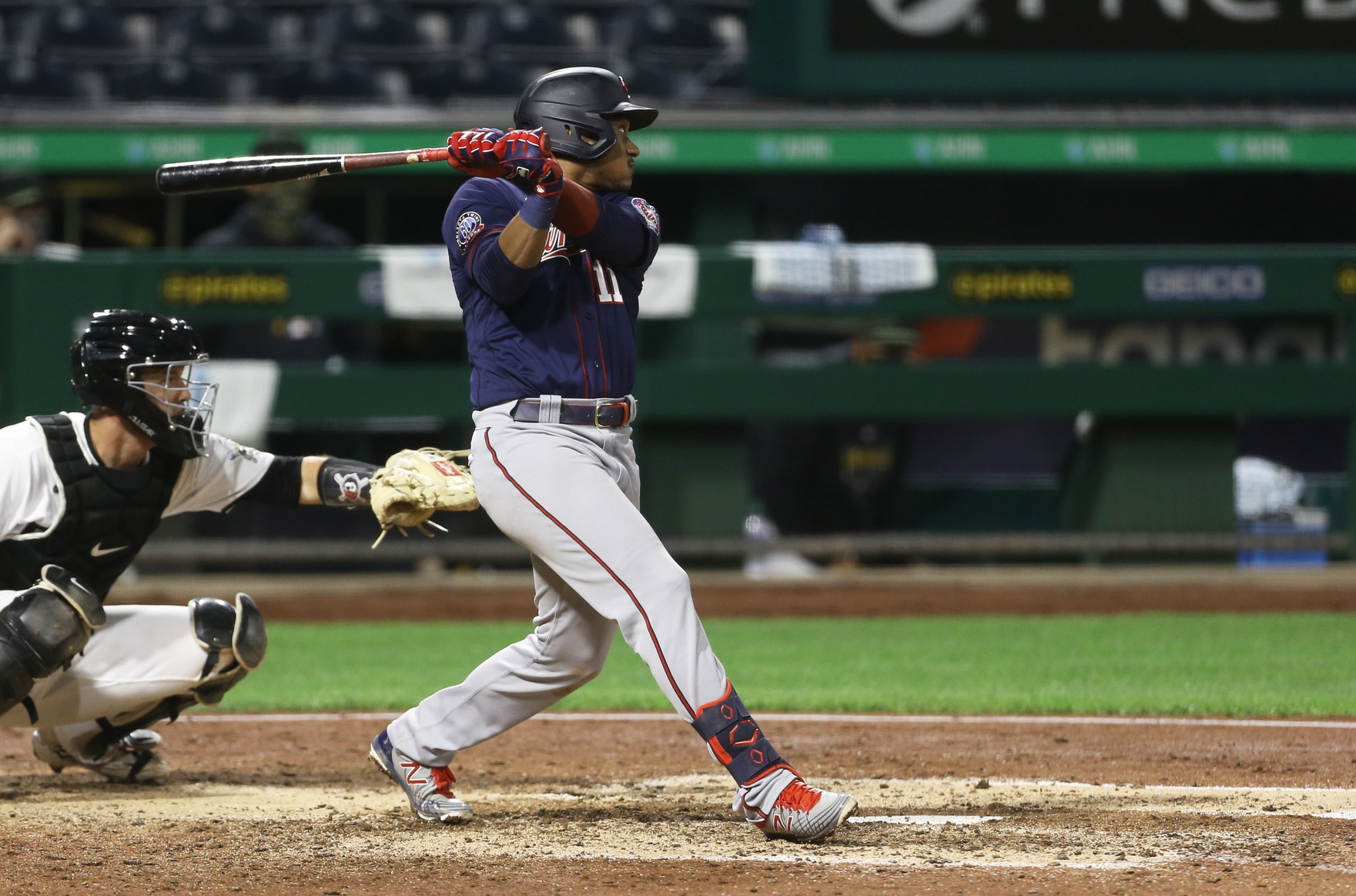 Polanco takes the majority of his plate appearances from the left side and that’s where he put up most of his power numbers in 2019 -- including 16 of his home runs, 30 of his doubles and six of his triples -- so this analysis will focus on that batter’s box. Now, admittedly, we are still in the early-to-mid stages of players getting their feet underneath them. Polanco has yet to have 100 plate appearances as a left-handed hitter this season. Still, in those appearances, the 26-year-old has only collected three extra base hits (one double and a pair of home runs). In 2019 he slugged 519 from the left side while he is posting a 354 mark in 2020. It would be easy to dismiss this as a sample-size issue and say, just wait, he’ll get hot. Except there are some data points that suggests there is something more to this stretch of offense. First, let’s be clear that Polanco has not changed anything about his approach from the left-side. If you look at all of his plate discipline and swing decision metrics -- chase rates, miss rates, swing rates, etc -- they are almost identical to the year before. Second, this year has been a really, really messed up. There was spring training. Then there was nothing. Then there was like a long weekend to be ready to face live pitching again. It is hard to say how a hitter would respond to that. But also the year has been messed up in general. All around. There’s a raging pandemic. An economic crisis. The government more or less said UFOs exist and we didn’t even flinch. Hell, the Timberwolves just received the number one overall draft pick. The globe is probably off its axis and we’re all sliding into an invisible black hole so spending time worrying how one human swings a stick at a thrown projectile should be the least of our concerns. The most notable difference in the two performance sets is Polanco’s hit types and his hit locations: His ground ball rate has jumped from 31% in 2019 to 44% in 2020. His line drive rate is down to 21% from 31% in 2019. He is not pulling the ball in the air as much as he did a year ago. In 2019 he would pull the ball in the air 34% of the time while this season it’s down to 23%. Finally, his exit velocity is down from 89 to 84 on average. What stands out the most to me among that data soup is the decline in the rate of aerial pulls. That’s not actually a term anyone uses but aerial pulls sounds like it has gravitas. Frankly, he is not pulling the ball in the air with authority this season. While I’m certain the spouting of random numbers is compelling as hell, you should also take a gander at his spray chart here to see how different it looks...in dot form. Last year he collected 47 hits including nine home runs, 15 doubles and two triples when pulling the ball in the air (or aerial pulling, if you will). This year Polanco has amassed just three hits (two home runs and a double) when pulling the ball in the air from the left side. To summarize the situation: As a left-handed hitter, Polanco is attacking pitches the same as last year but he’s just not able to elevate them with any power to his pull side. It is obvious that something is off and I’m not so sure it has anything to do with the UFOs. When you look at a side-by-side of Polanco’s swing from last year versus this year you will start to see where things are getting a little loose for the former All Star in 2020. There are three key differences: The first is where he starts his hands. In 2019, his hands were below his shoulder level. This year the hands are at or above his shoulders. Next is the position of the bat. In 2019 he held it much more vertical (upright) while he holds the bat more with more tilt now. The last piece is how much the barrel wraps behind his head now compared to a year ago as he moves into the launch position. https://twitter.com/HagemanParker/status/1296503293720637442 What this means is a longer swing path. It is especially apparent when you watch just his hands work. https://twitter.com/HagemanParker/status/1296503295507345410 This year the hands are much further back in the launch position (toward the catcher) and have to travel further forward to the contact point. The barrel turns wider behind him instead of the tighter turn you see in 2019. Similarly, with the bat now more prone instead of vertical, his swing plane is also slightly altered. What ensues are armsier swings with timing issues that lack the same punch as a year ago. This would result in less power and more grounders. The interesting part of this development is that Polanco has been a vocal proponent of using video to break down his swing. “I’m a guy who used a lot of video last year,” he told The Athletic’s Dan Hayes. “I think everything at-bat, I used to watch me to see what I’m doing good and what I’m doing bad, to make an adjustment from there.” As someone who is used to dissecting his swing on video, he would surely notice this difference. Clearly if he had a side-by-side of these last two seasons he could see the strengths and weaknesses. So it begs the question, is he doing this intentionally? Does he feel more comfortable with the new swing? There is no question of his ability to make contact. Since the start of 2019 Polanco has maintained an 82.9% contact rate (21st among all qualified hitters). He can put the bat on the ball at an elite level. But what is lacking is his ability to drive it with luster like he did last year. It is fairly evident that if Polanco needs to review the two swings and decide if he wants to make the necessary adjustments to regain the pop he had in 2019.
 -
In Search of a Why Behind Mitch Garver's Slump
Parker Hageman replied to Derek Wetmore's topic in Twins Daily Front Page News
wouldn’t it be something if players came here to read about what to do. wait, maybe that’s what happened in 2016. -
Minnie and Paul Changing for Twins?
Parker Hageman commented on Ted Schwerzler 's blog entry in Off The Baggy
Why is requesting a "subtle yet very significant update that honors and reflects the team’s players and its fans from different backgrounds" a false sense of need? Inclusion is a very real need. As I read Crutchfield's statements, he is using that as an opportunity for a discussion on what that looks like, not a condemnation on the existing logo. Nobody said that the logo was offensive. Crutchfield never mentioned being offended about the logo or the logo itself being offensive. In fact, he said that he has "always loved Ray Barton’s original ‘Minnie and Paul’ logo design" in his statement. He provided updated version of the logo he provided on his Facebook page. In addition to being a seamless transition, the Black person on the St. Paul side not only provides a level of diversity to the logo, but it could also serve to honor Roy Campanella who became the first African-American to play in the American Association when he joined the Saints in 1948. There is certainly room for both in this game. The sport honors Jackie Robinson one day a year by having every player wearing 42 or black and white jerseys. Some teams choose to use Negro League uniforms on turn-back-the-clock days. This is imagery. You can have both discussions about how images are perceived AND work toward actionable changes. Again, no one said the logo was offensive. Still, we know that former owner Calvin Griffith said 'I'll tell you why we came to Minnesota. It was when I found out you only had 15,000 blacks here. Black people don't go to ball games" and while he was making that decision, he was likely deciding on logos and branding. The 1961 designed logo could have been a reflection of that mindset -- or it could have just been an misguided reflection of the state's demographics at that time. Either way, it does not take much for an organization to reflect on that past and that future. Baseball's audience is overwhelmingly white. According to Bloomberg in 2019, only 9% of the television-viewing audience is black. I cite James Clear's Atomic Habits a lot because of the main points he makes in his book is that small changes can have significant impacts later on. If making small change to the logo could help improve the perception of the organization to more people, it would be foolish not to take it into consideration. There is A LOT more that needs to be done to grow the game in that regard, to be sure, but making small strides when possible should be on the table. It may seem like a minor thing to us, but the impact could be felt down the road. Finally, just to reiterate, there are many reasons to consider making changes to a logo but let's be clear here and understand that no one is outright offended by this logo. That is not a part of the conversation. -
In Search of a Why Behind Mitch Garver's Slump
Parker Hageman replied to Derek Wetmore's topic in Twins Daily Front Page News
Average exit velocity probably isn't a good measure because when you dig in you'll see there are two different stories. Overall, yes, he's hitting the ball 89.8 in 2020 and was at 91.8 in 2019. The reason it's not far off this year is because his exit velo on ground balls is much higher this year than last year while the EV on balls in the air is much lower. So the average EV looks similar. Last year when he hit a line drive, it average 98.9 while this year it's averaging 91. So the "good contact" EV is much lower than the "bad contact". So "bad luck" really isn't an answer in this case. I posted this last week on Twitter but it demonstrates where his swing has been deficient so far this year: He was a monster at hitting pitches up last year. Pitchers are still giving him fastballs up that he's just swinging under. You can see how he was coming down at the ball in 2019 but is trying to come up at it this year. This may be just a symptom of minimal reps heading into the season. Feels like he could use some high-spin fastball machine work or doing some of the high tee drills that Nelson Cruz loves. The last thing I'll add is that since the second half of last year, Garver has broadcasted everywhere that he goal is to pull the ball. That's not a bad goal, to be sure. Brian Dozier always said the shortest way out of the park down the left field line. Given that opponents are just throwing stuff away at him, it's likely they are trying to get him off that game. Trueblood touched upon that today too but Garver may have to make that adjustment of being able to drive that outer-third fastball into center-right-center instead of his usual pull mindset. Thanks Derek for the discussion. -
Velocity in this case comes from movements of the lower half, not like accelerating or decelerating the arm intentionally. If pitchers try to do that -- in either direction -- they tend to have more issues. I don't think the Twins staff would advise him to take anything off or make changes to those movements now. It would definitely be great if they worked 100% on day one but there's still some issues. I think they understand that it is a process and it takes time to master.
-
This is a very good analysis. I should clarify something however because I may have not described what is happening with his hips well enough in the adjustment. When I said his hips are now more open, I'm referring to the static alignment prior to foot strike and not their rotation. So it's not an opening-timing thing, it's a directional piece. His hips are now open (if you are looking at a pitcher overhead and drew a line through his hips, think somewhere between this \ and this | instead of /) striding out into foot strike before he starts rotating into the lead leg block. Last year Berrios demonstrated a much more pronounced toe push off of his back foot. This movement in general keeps pitchers from maintaining their hip line with the plate. When pitchers are able to drive from their full foot more, they tend to have better direction home as the hips fire forward. The Twins and Wes Johnson have used this to improve several of their relievers (Duffey, Littell, May) and got more consistency and velocity out of them. When a pitcher closes off the hip alignment, the position of hips can decrease the transfer of kinetic energy which zaps velocity and command. We saw this last year with his inability to locate a glove-side fastball. For some pitchers the crossfire move isn't inherently bad. Brewers' reliever Freddy Peralta uses it to his advantage but if you watch his alignment, his hips are still in a better position with the plate than Berrios was last year. Peralta is crossfiring but he's also in a good position. All that said, there may be other rotational parts of his mechanics that are causing some of the issues you've outlined. One of the big issues for him last year was chest rotation and rotating that too early. That was one cue that was constantly preached to him (keep your chest closed as long as possible). I would not be surprised to learn that the biodata still shows he's opening that up too quickly which would lead to command issues. We should not forget that he's also working on his arm action as well which could also lead to timing issues as he's trying to sync everything up. My personal thoughts on this is that he is much improved mechanically. This is the right direction for him. But incorporating new movements into the game environment is challenging. Several years ago Kyle Gibson revamped his mechanics and arm action during an offseason at Florida Baseball Ranch and it took the first half for it to feel comfortable. And that was with a normal spring training and season. The velocity component of my post may have gotten a little overemphasized but that's one of the products of the improved movements. The other *should be* command. Gibson came back to Minnesota in 2017 with the new mechanics and needed the first half of the season to feel comfortable but his second half and 2018 were very solid -- strikeout rate went up, walks went down. I think we'll see him settle in more after getting the necessary game reps to feel comfortable. For Gibson, he told me in spring training a few years ago that that was about 10 starts. So it's quite possible it could take this entire weird season for Berrios. Good thoughts.
-
I don't think I've once said velocity is more important that location. I don't understand this black and white stance on the issue.
-
I think what has happened this year is just the opposite. The Twins/Berrios are trying to incorporate more four-seamers. In his first start, he fired a lot of those against the White Sox but switched back to the two-seamer when he wasn't able to elevate the other pitch consistently enough. This 0-2 pitch against Edwin Encarncion is a prime example of that. Garver wants it up and it ends up middle-middle (and fouled instead of banging off seats in the outfield). Last year when he threw his four-seamer he threw it in the upper third of the zone 44% of the time. This year it is just 25%. What I thought was interesting about the start against the Royals in that Avila was calling for the four-seamer down in the zone on the corners in 2-strike situations instead of targeting above the zone. He did throw some good ones in those situations but most were fouled off, not chased at or crushed when he missed his spot by 2 zones. So far he's allowed 8 extra base hits this year and 7 of those have come on his four-seamer. The takeaways of the GIFs should be not be a loss in movement. He still has an incredible amount of horizontal run in his four-seamer. It's got 4 inches more of run than the average four-seamer whereas a year ago it only had 2.1 inches of movement. This year's sinker is actually running more and (to Steve's point) may be a bit harder for him to command but he's also getting more swinging strikes on it and throwing it for strikes overall more. Another -- and final point -- about those two examples, one thing that Berrios struggles with a lot last year was hitting the glove side of the zone consistently. You'd see him trying to hit an inside target to a lefty only to have it run back into the middle. That's one thing that the poor hip alignment did was keep him from hitting that area well. Overall, I believe Jose Berrios has better stuff this year than last year. He just needs to figure out what would make that arsenal most effective and execute. The dude has a hell of a lot of drive and want to win.
-
The notion that the “focus on velocity is overblown” is not accurate. Velocity is one of the most significant keys to success. It’s not everything, to be sure, but it certainly isn’t an overblown factor. Again, I agree with you that Berrios needs better command and part of that may be due to the shutdown and late start to the season but both things — need more velocity and better command — can exist in the same space.
-
Good thoughts. And, again, not to continue to beat this drum but the shutdown and short ramp up period may be hindering him too. Hard to say.
-
No, it’s not. No, he’s not, that’s cherry-picking an example. That said, he does need to improve his command.
-
During the third inning of his Opening Day start, Jose Berrios reared back on a 3-2 pitch to Chicago’s Eloy Jimenez and fired a two-seam fastball down in the zone which Jimenez promptly spoiled, sending a foul ball back to the screen. The score chyron flashed the velocity at the upper left-handed coroner of the broadcast: 97 MPH. It was a very exciting development for the Twins pitcher.Berrios failed to run his fastball up past 96 miles per hour in 2019. For somebody with fanatical dedication to training combined with a pitching coach known to be a velocity whisperer, it was a strange development. During spring training in 2019 Berrios tried to make some mechanical changes - such as keeping his chest closer longer and driving through his heel instead of his toes -- during his preseason outings. He would hit 96 on the Hammond Stadium gun. When the regular seasons started however, the promised heat remained in Florida. In reviewing Berrios’ outings from 2019 on Baseball Savant, one would find he hit 95 and ran it up to 96 twice yet there were other outings where he threw fastballs that didn’t even crack 90 (40 times). For the entire year, he averaged 92.7 on his fastball. His fastball velocity was in the 45th percentile (that’s bad). This year it is in the 73th percentile (that’s...better than average!). Fastball velocity matters for Berrios because when he has thrown his fastball under 94 miles per hour, opponents have posted a .287 batting average. When traveling 94.1 and above however he has a .161 average. That is one reason why being able to maintain that elite level of velo can be one key to his success. Here we have two examples from 2019 and 2020. The action on the left is a 91.3 mph fastball and the one on the right is at 95.8. Download attachment: FSFrameGIFImage (14).GIF While a high frame rate Edgertronic camera would be better suited for this type of analysis, we can still see several key points in his mechanics that have been improved upon. The first is the sink into his back leg. Download attachment: IMG_6202.jpeg By sinking into his back leg, as he does in the example on the right, he’s activating his big leg muscles and feeding the engine to rotate faster. Cincinnati’s Trevor Bauer had a great explanation of hip rotation in this drill video. Rather getting too dominant on his front side, Berrios maintains connection to his back leg a bit longer now. That stores some force when he pops his hips open and generates better hip speed. Additionally, when his front foot lands, his hips are now more open which, compared to last year, when Berrios would land with his hips slightly closed off and have to throw around it, leading to drift in his hip direction. This is an important factor considering that research has shown that when pitchers have their hips closer to 45 degrees of home plate (assuming perfectly inline with home and second base is 0 degrees), they are able to generate more hip speed when they rotate. Download attachment: IMG_6204.jpeg Another reason why Berrios has been throwing harder this year is because he has more elbow spiral to his arm action. Again, a high definition, high frame rate slow motion camera would provide a better perspective but in lieu of that, you can see some of the action in this grainy clip. Download attachment: FSFrameGIFImage (15).GIF There are multiple ways to achieve this arm action but one effective method would be the pivot pick drill in order to implant this movement into his system which, in addition to the arm path, helps reinforce the necessary hip and shoulder separation needed to gain velocity. It is not known if Berrios actually incorporated that drill into his offseason regiment but it is a drill that Kenta Maeda uses regularly to keep his arm path consistent. What most fail to understand is how in-depth this process is. The Twins have a network of brain power at work trying to unlock additional velocity -- from the front office to the training room to the coaching staff. In addition to their Rapsodo, Trackman and Statcast data, the Minnesota Twins are armed with the latest motion capture technology like Simi Motion systems and Newtforce ground plates, allowing the organization to see the unseen. While most viewers just see velocity readings or -- for those who dig into Statcast data -- spin rate and pitch movement data, the Twins can tell how a pitcher is moving and where things can be optimized. There’s the hip speed, chest speed, pelvic tilt, arm action and more. These metrics can indicate where deficiencies exist. Increasing hip speed and arm path takes work. It takes time with the training staff to build those muscles, balance, and flexibility. It takes time with the coaches working on technique. We have seen this process in action with several players now. Pitchers like Jake Odorizzi (91.1 in 2018 to 92.9 in 2019), Trevor May (94 to 95.5), Martin Perez (92.8 to 94.2), Zack Littell (92 to 93.8), and Taylor Rogers (93.5 to 94.8) all showed gains from 2018 to 2019. One of the few that didn’t follow that trend was Berrios but that is looking like it is changing. When they review his last four outings from their massive data collection system, the Twins will likely see these signs of progress for Berrios. They will see how his hip speed increased aiding in the transfer of energy through the baseball. They will see improved arm action and other various movement patterns changes which entices more velocity. So it’s not as if he is just throwing harder based on some early season adrenaline rush. It’s possible that the results of the Jose Berrios velocity overhaul project were just delayed a year. And while that is all fine and well, the real concern is the actual performance. The velocity is up, which is a good thing, however the results have been average at best. His souped up four-seam is heading in at 94.2 but it’s coming back at him at 96.2 miles per hour and opponents have amassed a .792 slugging percentage off of it. Velocity is great and increases a pitcher’s margin for error but that margin evaporates quickly when you miss your spots that badly. Last year with less velocity on his fastball he had lower exit velocities, hard hit averages, fewer barrels, more whiffs, basically everything a pitcher needs to sustain success. What it may come down to with Berrios is a matter of pitch direction. There was a fervent push to re-haul some of Berrios’ pitch mix, including getting him to throw his four-seam fastball more and adding a more north-south breaking ball to complement the sweeping version. The four-seam fastball is definitely in vogue but the right-hander has struggled to elevate his and he uses that pitch 40% of his mix. Meanwhile, the combination of his sinker heading to the east and his curveball heading to the west have hitters posting a .125 average. The sinker, in general, won’t be thrown quite as hard as the four-seamer but it’s been one of his most effective pitches thus far. So rather than trying to squeeze Berrios into the north-south mode, he might be better served working east-west with the occasional upstairs showpiece. He's been one of the team's most promise yet hard to solve projects. Click here to view the article
-
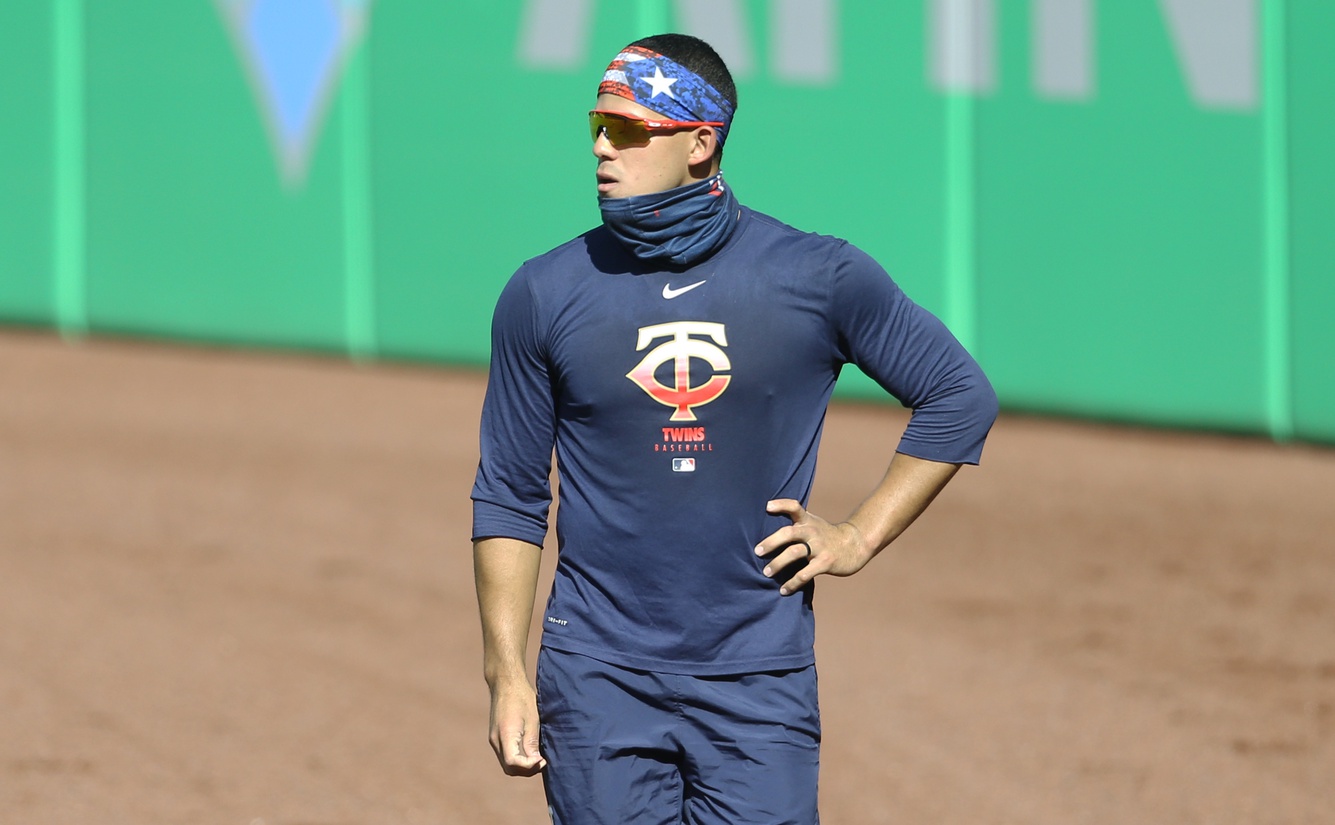 Berrios failed to run his fastball up past 96 miles per hour in 2019. For somebody with fanatical dedication to training combined with a pitching coach known to be a velocity whisperer, it was a strange development. During spring training in 2019 Berrios tried to make some mechanical changes - such as keeping his chest closer longer and driving through his heel instead of his toes -- during his preseason outings. He would hit 96 on the Hammond Stadium gun. When the regular seasons started however, the promised heat remained in Florida. In reviewing Berrios’ outings from 2019 on Baseball Savant, one would find he hit 95 and ran it up to 96 twice yet there were other outings where he threw fastballs that didn’t even crack 90 (40 times). For the entire year, he averaged 92.7 on his fastball. His fastball velocity was in the 45th percentile (that’s bad). This year it is in the 73th percentile (that’s...better than average!). Fastball velocity matters for Berrios because when he has thrown his fastball under 94 miles per hour, opponents have posted a .287 batting average. When traveling 94.1 and above however he has a .161 average. That is one reason why being able to maintain that elite level of velo can be one key to his success. Here we have two examples from 2019 and 2020. The action on the left is a 91.3 mph fastball and the one on the right is at 95.8. While a high frame rate Edgertronic camera would be better suited for this type of analysis, we can still see several key points in his mechanics that have been improved upon. The first is the sink into his back leg. By sinking into his back leg, as he does in the example on the right, he’s activating his big leg muscles and feeding the engine to rotate faster. Cincinnati’s Trevor Bauer had a great explanation of hip rotation in this drill video. Rather getting too dominant on his front side, Berrios maintains connection to his back leg a bit longer now. That stores some force when he pops his hips open and generates better hip speed. Additionally, when his front foot lands, his hips are now more open which, compared to last year, when Berrios would land with his hips slightly closed off and have to throw around it, leading to drift in his hip direction. This is an important factor considering that research has shown that when pitchers have their hips closer to 45 degrees of home plate (assuming perfectly inline with home and second base is 0 degrees), they are able to generate more hip speed when they rotate. Another reason why Berrios has been throwing harder this year is because he has more elbow spiral to his arm action. Again, a high definition, high frame rate slow motion camera would provide a better perspective but in lieu of that, you can see some of the action in this grainy clip. There are multiple ways to achieve this arm action but one effective method would be the pivot pick drill in order to implant this movement into his system which, in addition to the arm path, helps reinforce the necessary hip and shoulder separation needed to gain velocity. It is not known if Berrios actually incorporated that drill into his offseason regiment but it is a drill that Kenta Maeda uses regularly to keep his arm path consistent. What most fail to understand is how in-depth this process is. The Twins have a network of brain power at work trying to unlock additional velocity -- from the front office to the training room to the coaching staff. In addition to their Rapsodo, Trackman and Statcast data, the Minnesota Twins are armed with the latest motion capture technology like Simi Motion systems and Newtforce ground plates, allowing the organization to see the unseen. While most viewers just see velocity readings or -- for those who dig into Statcast data -- spin rate and pitch movement data, the Twins can tell how a pitcher is moving and where things can be optimized. There’s the hip speed, chest speed, pelvic tilt, arm action and more. These metrics can indicate where deficiencies exist. Increasing hip speed and arm path takes work. It takes time with the training staff to build those muscles, balance, and flexibility. It takes time with the coaches working on technique. We have seen this process in action with several players now. Pitchers like Jake Odorizzi (91.1 in 2018 to 92.9 in 2019), Trevor May (94 to 95.5), Martin Perez (92.8 to 94.2), Zack Littell (92 to 93.8), and Taylor Rogers (93.5 to 94.8) all showed gains from 2018 to 2019. One of the few that didn’t follow that trend was Berrios but that is looking like it is changing. When they review his last four outings from their massive data collection system, the Twins will likely see these signs of progress for Berrios. They will see how his hip speed increased aiding in the transfer of energy through the baseball. They will see improved arm action and other various movement patterns changes which entices more velocity. So it’s not as if he is just throwing harder based on some early season adrenaline rush. It’s possible that the results of the Jose Berrios velocity overhaul project were just delayed a year. And while that is all fine and well, the real concern is the actual performance. The velocity is up, which is a good thing, however the results have been average at best. His souped up four-seam is heading in at 94.2 but it’s coming back at him at 96.2 miles per hour and opponents have amassed a .792 slugging percentage off of it. Velocity is great and increases a pitcher’s margin for error but that margin evaporates quickly when you miss your spots that badly. Last year with less velocity on his fastball he had lower exit velocities, hard hit averages, fewer barrels, more whiffs, basically everything a pitcher needs to sustain success. What it may come down to with Berrios is a matter of pitch direction. There was a fervent push to re-haul some of Berrios’ pitch mix, including getting him to throw his four-seam fastball more and adding a more north-south breaking ball to complement the sweeping version. The four-seam fastball is definitely in vogue but the right-hander has struggled to elevate his and he uses that pitch 40% of his mix. Meanwhile, the combination of his sinker heading to the east and his curveball heading to the west have hitters posting a .125 average. The sinker, in general, won’t be thrown quite as hard as the four-seamer but it’s been one of his most effective pitches thus far. So rather than trying to squeeze Berrios into the north-south mode, he might be better served working east-west with the occasional upstairs showpiece. He's been one of the team's most promise yet hard to solve projects.
 -
3 things i've noticed about his movements is that 1. he occasionally goes into the slide step similar to 2019 but he did this with no one on base against the pirates the other night. seems to me he is messing with timing of the hitter when he does this now. 2. although he modified his delivery in the second half of last season to be closer to what he is today he and the twins still cleaned a lot of his actions up for this season. they tightened up his arm action, as matthew mentioned, but they also gave him the wes johnson revamp where pitchers are sitting on their back heel more through the delivery. so his weight sinks into his backside more now than he did in the second half last year. this helps clean up direction for a pitcher. 3. the last thing i'll mention with some hesitation is that his pitches are moving differently so far this year. i say that with hesitation because people tell me that the hawkeye system that mlb replaced trackman with has been providing some really bad data. like to the point that some teams are using other data sources instead of the league approved one (and one you find at baseball savant). there will definitely be some faulty player analysis coming out based on this i'm sure. but if you look at brooks baseball's profile, which i have a little more confidence in because they clean their data, they show that wisler's slider is moving on a different axis (potentially a different grip or a byproduct of the arm action) and running about 3 more inches on average than it did last year. the really impressive thing is how the twins have set up an amazing system to identify players and then coach them into making changes.
-
There is a third or fourth replay which shows the batter and third baseman down the line. In it, the third baseman is in the air(*) while the ball is hit. https://twitter.com/dai_squared/status/1263538364277538816?s=20 This is something movement people discovered from tennis players. Tennis players are often in the air at contact so they can react. Boyer came to Minnesota last winter and gave a presentation at our baseball conference. He showed a clip of some minor leaguers trying to race a clubhouse guy 10 yards in a meeting room. They were both looking at a screen that had a countdown that would say which way to run (left or right). The clubby was instructed to hop on the countdown of 1 before the direction would be revealed while the player was supposed to remain in a ready position with feet on the ground. When the direction flashed and they both ran left, the slower clubby beat the player by like 3 steps. The notion is that when you come down you are balanced and able to move any direction quickly because your brain processed what is happening as you are coming down. If you are static, your brain first has to process which direction to run and then begin momentum. This is an especially helpful technique for corner infielders who have to read and react quickly. *air might be misleading, he's off the ground a bit.
-
It's like catcher framing. The more you do it, the more opportunities you have for gaining outs and reducing bigger innings. In infield play, the more balls you get to, the more outs you make, the less opportunity you give other thumpers a chance to hit.
-
The OAA metric at statcast not only breaks down each player but which direction is their strength/weakness. https://baseballsavant.mlb.com/leaderboard/outs_above_average?type=Fielder&year=2019&team=MIN&range=year&min=q&pos=if&roles=&viz=show For the Twins, the bottom three go: 3. Sano -5 2. Arraez -6 1. Polanco -14 Arraez was good in almost every direction but was poor at making plays going to his right (up the middle -6). I think just experience will help make him better in that area. Polanco was especially bad at plays in which he had to come in on (-9) but ranging to his right (toward 3B) was also not good. Donaldson's addition should help in the latter but it will take work to improve on balls he has to move in on.
-
When Baseball Savant published their end of the year fielding stats, the Minnesota Twins infield unit finished 25th out of the 30 teams according to their Outs Above Average metric. For a team that aims to be complete in all areas of the game, it was an opportunity for improvement. They may have finished near the bottom of the league but they expect to be closer to the top going forward. Here’s how they are going to do it.In terms of runs prevented, last year’s World Series-winning Washington Nationals’ infield core stopped 17 additional runs from scoring. The World Series participation trophy winners, the Houston Astros, finished second with 8 runs prevented. The Twins? Their infield defense cost them 5 runs according to Baseball Savant’s system. For a team that won 101 games, it’s hard to say this aspect of their game was actually costing them yet the fielding metric is a significant decline from just two seasons earlier when the Twins’ infield finished with 25 runs prevented, the best in baseball. Tony Diaz is the Twins’ third base coach but he also manages the infield instruction. He’s seen the numbers. He’s seen the publicly available ones. He’s seen the team’s proprietary ones. He believes the team is much better than what the numbers say. “Obviously BaseballSavant, Fangraphs, and all of that, you have to definitely honor what they do, it’s objective data, but I thought we played better than the numbers show,” Diaz said this spring. “I think you can ask any member of our team and they feel the same way but that being said, we definitely have to get better and we are working towards it.” In Diaz’s first season with the team, he oversaw projects around the diamond. There was trying to improve Miguel Sano’s defense at third base. There was working with shortstop Jorge Polanco’s arm action as he went back to firing balls from a sidearm slot rather than over-the-top. He managed a shift strategy that saw the team shift right-handed hitters in 35% of their plate appearances (second highest only to the data-driven Dodgers). Now the focus is to get to more batted balls. “One of our main themes is ‘half-a-step better’ and we are working on that consciously and hopefully our range numbers increase, I think they are already increasing based on the spring training sample,” said Diaz. “It’s a conscious effort by everybody and adding Donaldson to the mix is going to help tremendously as well.” If 2019 was any indication, Donaldson should be a tremendous help. He prevented 7 runs last year, third best among qualified third basemen. One of his strengths was ranging to his left (3 runs prevented) which may help Polanco’s numbers at short. Plus, Donaldson allows for the Twins to transition Sano to first base where he can develop as a cornerstone. The veteran has already ingrained himself within the clubhouse’s culture and has embraced being a role model. “He likes to share his knowledge and experience,” Diaz said of Donaldson. “It’s been a blessed addition, for sure.” In order to improve overall, the Twins changed their routines. For starters, during infield work, Diaz uses a standard baseball bat rather than a traditional fungo. He also takes soft-toss feeds from another coach instead of tossing them up in the air himself. “It’s about replicating the ball coming off a real bat, which I’m using - a real bat - so try to replicate that as much as we can so hopefully that translated to better prepared infielders,” said Diaz. Fungo reps don’t provide the fielders with the game-like reads. While Tom Kelly’s infamous Good Morning rapid-fire fungo ground ball session that would last for two hours provided the players with excellent cardio, the reps were not mirroring what happens in game action. The ball spins differently off of the thinner fungo bat than it would during a live swing. It tends to have more top spin as a coach cuts down on the ball -- vastly different than an in-game swing. The soft-toss feed also helps close the gap in creating more game-like swing speed for fielders to get their timing down (more on that in a moment) and batted ball spin. If even a minor change like that can help players improve by one percent, the Twins are all in. On the player development side of the system, infield instructor Billy Boyer has been scheming ways to improve the overall play. Like Tanner Swanson’s approach to catching that disrupted the industry last year, Boyer and his staff have been rethinking how to do the same for the players on the dirt. They have introduced dailies that warm-up the hands long before they put spikes on the field. They bring out a junior hack attack pitching machine, having players take ground ball reps on their knees, using different sized gloves and different weighted balls, giving the players alternating feels in order to be more connected with their hands. “It's something we do every morning, we call it our tee work,” Boyer said, referencing how hitters will take multiple swings on a tee before seeing live pitching. “A lot of fielders will go right out to the dirt and start taking full length ground balls, we start in and just do a lot of routines that are fun, challenging and different. We're just trying to get the hands working. And then we add the feet, then we go full distance.” The Twins also train all of their infielders at each position to increase flexibility but also because of the reliance on shifts. Infielders like prospect Travis Blankenhorn will receive reps at multiple positions to make him more fungible if needed at the major league level. They have instituted some vision training, hoping to get players to fixate on the contact zone earlier and gain that half-step as the ball leaves the bat. Improvements in these areas should help increase the infield coverage. There is an emphasis on moving at the right time. The Twins found that being in the air at contact can help a player react better. If you watch closely, a third baseman might not even be touching the Earth when the barrel meets the ball. This can help players gain that vital half step. “I think technique can enhance [range],” says Boyer about using various prep steps. “I don't think it can astronomically advance it. One's ability to move laterally is one's ability. But there are techniques that we are trying to tap into to open up, again, the brain processing power and the ability to ready direction and adapt and move directionally.” Diaz said he enjoyed working with Boyer and discussing techniques. “We got a very good flow for communication, up and down and down and up,” said Diaz in regards to how the team values input from all levels. “Billy was here in the big league camp for the first couple of weeks. We’ve had numerous conversations and he’s got really good ideas.” There’s a lot that goes into infield play but getting the as many balls as possible is the organization’s number one priority. “Everyone is different so we make sure that we tailor our approach to the differences too,” Diaz said. “And whatever maximizes that first-step quickness, prep step, traditional or maybe walking into it, whatever they are comfortable with, we just have to maximize that on an infield basis.” Half a step better. Everyday. Click here to view the article
-
Half-A-Step Better: How The Twins Are Reinventing Infield Play
Parker Hageman posted an article in Twins
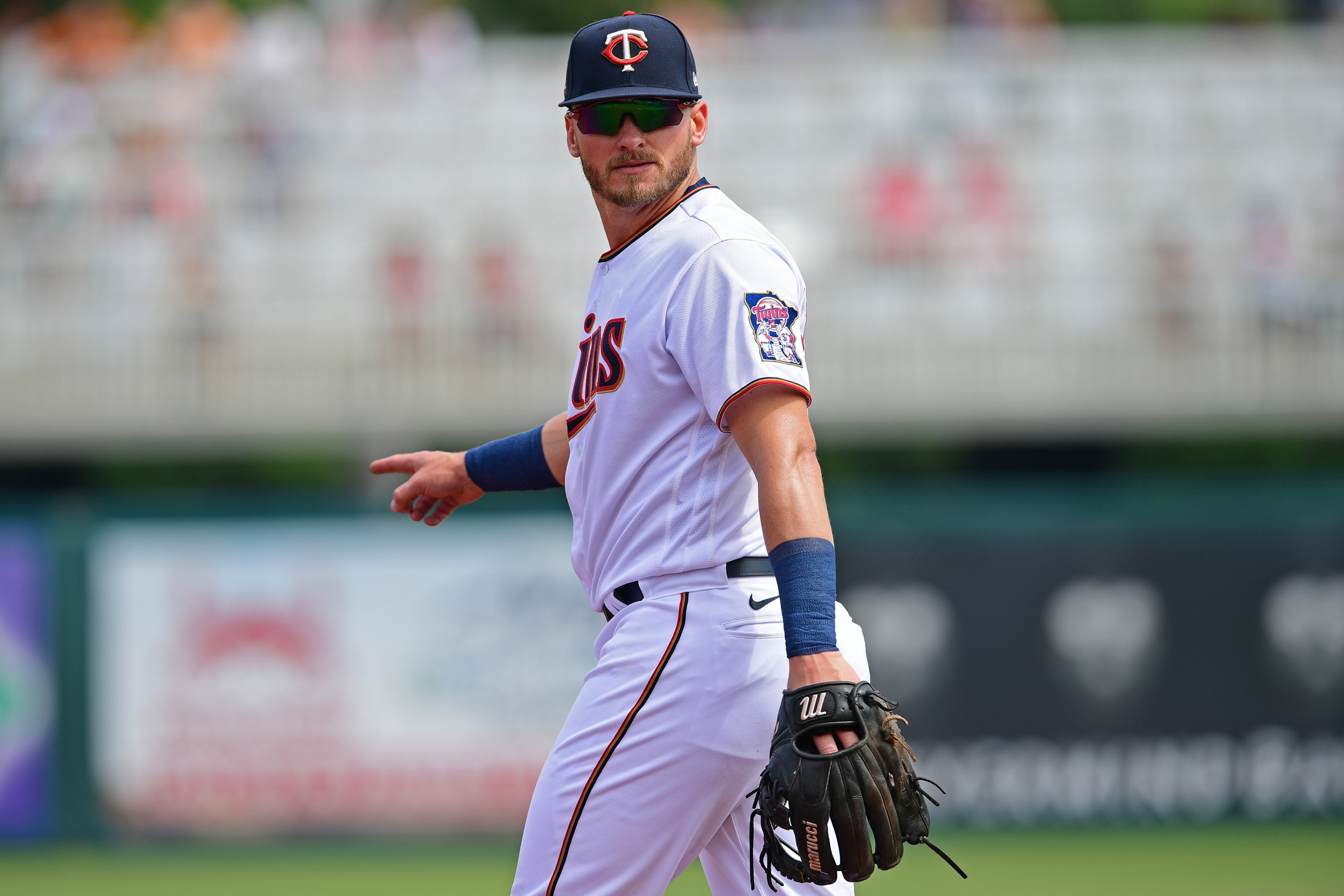 In terms of runs prevented, last year’s World Series-winning Washington Nationals’ infield core stopped 17 additional runs from scoring. The World Series participation trophy winners, the Houston Astros, finished second with 8 runs prevented. The Twins? Their infield defense cost them 5 runs according to Baseball Savant’s system. For a team that won 101 games, it’s hard to say this aspect of their game was actually costing them yet the fielding metric is a significant decline from just two seasons earlier when the Twins’ infield finished with 25 runs prevented, the best in baseball. Tony Diaz is the Twins’ third base coach but he also manages the infield instruction. He’s seen the numbers. He’s seen the publicly available ones. He’s seen the team’s proprietary ones. He believes the team is much better than what the numbers say. “Obviously BaseballSavant, Fangraphs, and all of that, you have to definitely honor what they do, it’s objective data, but I thought we played better than the numbers show,” Diaz said this spring. “I think you can ask any member of our team and they feel the same way but that being said, we definitely have to get better and we are working towards it.” In Diaz’s first season with the team, he oversaw projects around the diamond. There was trying to improve Miguel Sano’s defense at third base. There was working with shortstop Jorge Polanco’s arm action as he went back to firing balls from a sidearm slot rather than over-the-top. He managed a shift strategy that saw the team shift right-handed hitters in 35% of their plate appearances (second highest only to the data-driven Dodgers). Now the focus is to get to more batted balls. “One of our main themes is ‘half-a-step better’ and we are working on that consciously and hopefully our range numbers increase, I think they are already increasing based on the spring training sample,” said Diaz. “It’s a conscious effort by everybody and adding Donaldson to the mix is going to help tremendously as well.” If 2019 was any indication, Donaldson should be a tremendous help. He prevented 7 runs last year, third best among qualified third basemen. One of his strengths was ranging to his left (3 runs prevented) which may help Polanco’s numbers at short. Plus, Donaldson allows for the Twins to transition Sano to first base where he can develop as a cornerstone. The veteran has already ingrained himself within the clubhouse’s culture and has embraced being a role model. “He likes to share his knowledge and experience,” Diaz said of Donaldson. “It’s been a blessed addition, for sure.” In order to improve overall, the Twins changed their routines. For starters, during infield work, Diaz uses a standard baseball bat rather than a traditional fungo. He also takes soft-toss feeds from another coach instead of tossing them up in the air himself. “It’s about replicating the ball coming off a real bat, which I’m using - a real bat - so try to replicate that as much as we can so hopefully that translated to better prepared infielders,” said Diaz. Fungo reps don’t provide the fielders with the game-like reads. While Tom Kelly’s infamous Good Morning rapid-fire fungo ground ball session that would last for two hours provided the players with excellent cardio, the reps were not mirroring what happens in game action. The ball spins differently off of the thinner fungo bat than it would during a live swing. It tends to have more top spin as a coach cuts down on the ball -- vastly different than an in-game swing. The soft-toss feed also helps close the gap in creating more game-like swing speed for fielders to get their timing down (more on that in a moment) and batted ball spin. If even a minor change like that can help players improve by one percent, the Twins are all in. On the player development side of the system, infield instructor Billy Boyer has been scheming ways to improve the overall play. Like Tanner Swanson’s approach to catching that disrupted the industry last year, Boyer and his staff have been rethinking how to do the same for the players on the dirt. They have introduced dailies that warm-up the hands long before they put spikes on the field. They bring out a junior hack attack pitching machine, having players take ground ball reps on their knees, using different sized gloves and different weighted balls, giving the players alternating feels in order to be more connected with their hands. “It's something we do every morning, we call it our tee work,” Boyer said, referencing how hitters will take multiple swings on a tee before seeing live pitching. “A lot of fielders will go right out to the dirt and start taking full length ground balls, we start in and just do a lot of routines that are fun, challenging and different. We're just trying to get the hands working. And then we add the feet, then we go full distance.” The Twins also train all of their infielders at each position to increase flexibility but also because of the reliance on shifts. Infielders like prospect Travis Blankenhorn will receive reps at multiple positions to make him more fungible if needed at the major league level. They have instituted some vision training, hoping to get players to fixate on the contact zone earlier and gain that half-step as the ball leaves the bat. Improvements in these areas should help increase the infield coverage. There is an emphasis on moving at the right time. The Twins found that being in the air at contact can help a player react better. If you watch closely, a third baseman might not even be touching the Earth when the barrel meets the ball. This can help players gain that vital half step. “I think technique can enhance [range],” says Boyer about using various prep steps. “I don't think it can astronomically advance it. One's ability to move laterally is one's ability. But there are techniques that we are trying to tap into to open up, again, the brain processing power and the ability to ready direction and adapt and move directionally.” Diaz said he enjoyed working with Boyer and discussing techniques. “We got a very good flow for communication, up and down and down and up,” said Diaz in regards to how the team values input from all levels. “Billy was here in the big league camp for the first couple of weeks. We’ve had numerous conversations and he’s got really good ideas.” There’s a lot that goes into infield play but getting the as many balls as possible is the organization’s number one priority. “Everyone is different so we make sure that we tailor our approach to the differences too,” Diaz said. “And whatever maximizes that first-step quickness, prep step, traditional or maybe walking into it, whatever they are comfortable with, we just have to maximize that on an infield basis.” Half a step better. Everyday.
 -
I don't believe modern research necessarily supports this claim. It was once thought of as a pitch that caused injury to the UCL but more studies now conclude that high-velocity fastballs can be more capable of producing injuries. Driveline looked at multiple studies and used Motus to measure stress levels in the elbow and found that sliders did not induce any more stress. One study showed that youth pitchers had higher rates of elbow pain when throwing sliders but the thought was they had improper mechanics and throwing motion of the pitch. In regards to the two specific cases, I will say this about Erickson: He went from throwing 91 innings in college to being drafted and throwing another 78.2 in the Twins' system as a 21-year-old -- 169.2 innings combined -- in the same season. The next year the Twins had him through 214 innings between AA and the majors. No organization would do that to a pitcher anymore. I would bet that his injury had more to do with a workload issue than any one type of pitch. I do believe the method in which Smeltzer describes his slider flowing off of the finger rather than torquing the pitch is also likely less of a stress factor.
