



Parker Hageman
-
Posts
4,152 -
Joined
-
Last visited
-
Days Won
6
Content Type
Profiles
News
Minnesota Twins Videos
2026 Minnesota Twins Top Prospects Ranking
2022 Minnesota Twins Draft Picks
Minnesota Twins Free Agent & Trade Rumors, Notes, & Tidbits
Guides & Resources
2023 Minnesota Twins Draft Picks
The Minnesota Twins Players Project
2024 Minnesota Twins Draft Picks
2025 Minnesota Twins Draft Pick Tracker
2026 Minnesota Twins Draft Tracker: Picks & Bonuses
Forums
Blogs
Events
Store
Downloads
Gallery
Everything posted by Parker Hageman
-
 In one year’s time, Toby Gardenhire climbed from 45th to first on a managerial list. Gardenhire was scheduled to be the Rochester Red Wings’ 45th manager in 2020. This season, however, he will be the St. Paul Saints’ first manager.First manager with the club under the Minnesota Twins’ affiliate umbrella, anyway. After all, there have been five managers in the history of this iteration of the Saints franchise -- most recently with George Tsamis for the last 18 years. Prior to officially introducing him to the media, Saints general manager, Derek Sharrer offered Gardenhire a “blanket apology” in advance for the onslaught of promotions, silliness and fun that has become synonymous with St. Paul Saints baseball. He will possibly have to navigate farm animals, messes, and general goofiness as he tries to develop players ready for the highest level of baseball. Gardenhire is well aware of the legendary on-field extravaganza that is Saints baseball. As someone who grew up just outside of the St. Paul city limits, he knows they can be a blast. In some ways it has come full circle for him. He logged innings at Midway, the Saints’ previous home, as a high school player for Roseville, continually getting bested by Joe Mauer’s Cretin team. He’s had former teammates and even former kids he coached while at UW-Stout go on to play for the Saints. Not too long ago, he and his father took in a game at CHS to watch Joe Vavra’s son Tanner play. His coaching experience started in Division III UW-Stout, in Menomonie, Wisconsin, an hour’s drive east on Interstate 94. There, he learned that being a college coach involves more than just writing a lineup card. He would be doing field maintenance, laundry and ordering the uniforms. “You learn a lot doing the laundry and pulling the tarp on the field at midnight,” he joked. Even before he became a coach, Gardenhire thought he was being groomed to eventually lead instead of play. When he was a utility player for Triple-A, his then-manager Tom Nieto would give him the duties of signaling in plays for the catcher. He worried that he’d return to his locker and find his cleats and glove replaced with turf shoes and a fungo. It’s probably not a difficult conclusion to draw when your father is managing the team’s big league club. He’s dealt with people tossing out accusations of nepotism for years now. As a player, he tried to tune it out but fans would yell lines that would pierce his psyche. Once when he was with the Twins in a spring training game, the heckles rained down. “They’d say ‘what is this take-you-kid-to-work-day or did Christmas come early’,” Gardenhire recalled. Having a father with a long coaching career certainly comes with benefits, such as access to some of the great managerial minds. When he was 10 years old, Tom Kelly told little Toby to fill out a lineup card. Toby did and gave it back to the manager. Kelly looked at the lineup, proclaimed it terrible and tossed it in the garbage. Not a bad lesson to learn at a young age. Gardenhire believes his experience as a minor league role player prepared him well to handle the Triple-A position. He witnessed first hand the elation and devastation that comes with the promotion and demotion of players. He knows how to handle conversations that are sure to come this summer. After managing Cedar Rapids and Fort Myers in 2018 and 2019, Gardenhire was to continue his ascent and be Rochester’s in 2020 before the coronavirus pandemic ended the minor league season. Gardenhire remained active coaching during the shutdown. After initially staying in Fort Myers to work with the big league players, he joined the Twins in Minnesota during the summer camp session. Following that, he familiarized himself with CHS Field and the Twins’ minor league camp. Eventually he returned to Target Field to coach at the end of the year and during the playoffs. He found that experience invaluable, getting to know Twins manager Rocco Baldelli and bench coach Mike Bell. Those relationships -- between a Triple-A manager and the big league staff -- is critical when it comes to communicating about a player’s performance, Gardenhire says. There needs to be a level of trust. Rochester, New York is nearly a thousand miles of hard driving around multiple great lakes away from Minnesota’s capital but the Twins’ highest affiliate shipped the same coaching staff largely intact to St. Paul. The 2020 season was expected to have Gardenhire overseeing a coaching staff of Cibney Bello (pitching), Matt Borgschulte (hitting), Mike McCarthy (bullpen), and Robbie Robinson (bench coach). Of course, with the pandemic, the minor league season never happened. Bello, Borgschulte and McCarthy will all resume those roles in St. Paul. For 2021, the Twins have added Tyler Smarslok as the team’s infield coach, replacing Robinson in the dugout. As far as the reduced travel time between the parent club and it’s Triple-A affiliate, Gardenhire views that as a positive. He might have to re-write a few lineup cards or make a last minute substitution right before batting practice as players no longer have to be ready to hop on a 6 AM flight west to reach Target Field. While the Saints are always up for some shenanigans and tomfoolery, Sharrer made sure to emphasize that the team takes pride in what happens between the white lines. The Twins will have a lot of major league experience and rising prospects ready on the east side of the Mississippi. There are still a lot of unknowns -- such as when the season will start -- but for now the St. Paul Saints have their leadership in place. Click here to view the article
 -
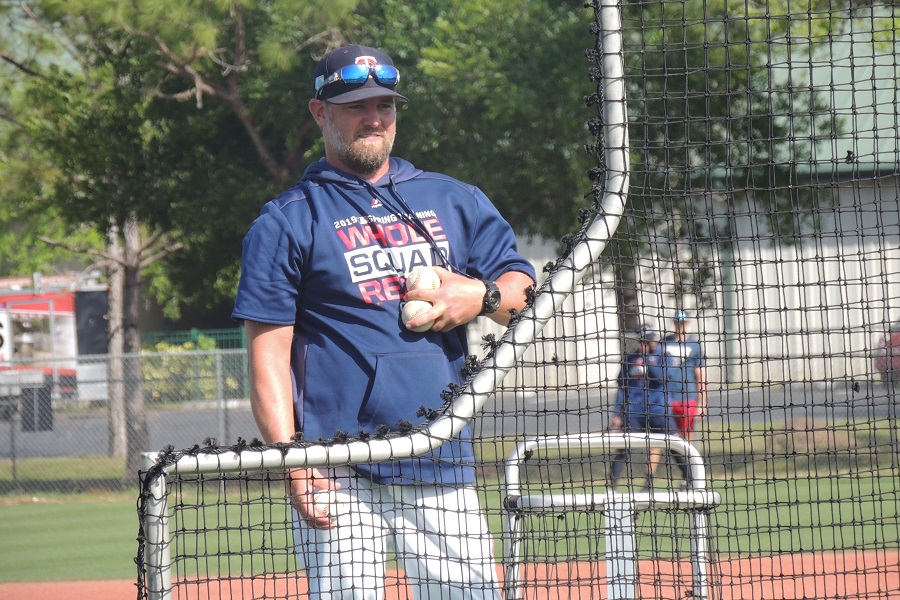 First manager with the club under the Minnesota Twins’ affiliate umbrella, anyway. After all, there have been five managers in the history of this iteration of the Saints franchise -- most recently with George Tsamis for the last 18 years. Prior to officially introducing him to the media, Saints general manager, Derek Sharrer offered Gardenhire a “blanket apology” in advance for the onslaught of promotions, silliness and fun that has become synonymous with St. Paul Saints baseball. He will possibly have to navigate farm animals, messes, and general goofiness as he tries to develop players ready for the highest level of baseball. Gardenhire is well aware of the legendary on-field extravaganza that is Saints baseball. As someone who grew up just outside of the St. Paul city limits, he knows they can be a blast. In some ways it has come full circle for him. He logged innings at Midway, the Saints’ previous home, as a high school player for Roseville, continually getting bested by Joe Mauer’s Cretin team. He’s had former teammates and even former kids he coached while at UW-Stout go on to play for the Saints. Not too long ago, he and his father took in a game at CHS to watch Joe Vavra’s son Tanner play. His coaching experience started in Division III UW-Stout, in Menomonie, Wisconsin, an hour’s drive east on Interstate 94. There, he learned that being a college coach involves more than just writing a lineup card. He would be doing field maintenance, laundry and ordering the uniforms. “You learn a lot doing the laundry and pulling the tarp on the field at midnight,” he joked. Even before he became a coach, Gardenhire thought he was being groomed to eventually lead instead of play. When he was a utility player for Triple-A, his then-manager Tom Nieto would give him the duties of signaling in plays for the catcher. He worried that he’d return to his locker and find his cleats and glove replaced with turf shoes and a fungo. It’s probably not a difficult conclusion to draw when your father is managing the team’s big league club. He’s dealt with people tossing out accusations of nepotism for years now. As a player, he tried to tune it out but fans would yell lines that would pierce his psyche. Once when he was with the Twins in a spring training game, the heckles rained down. “They’d say ‘what is this take-you-kid-to-work-day or did Christmas come early’,” Gardenhire recalled. Having a father with a long coaching career certainly comes with benefits, such as access to some of the great managerial minds. When he was 10 years old, Tom Kelly told little Toby to fill out a lineup card. Toby did and gave it back to the manager. Kelly looked at the lineup, proclaimed it terrible and tossed it in the garbage. Not a bad lesson to learn at a young age. Gardenhire believes his experience as a minor league role player prepared him well to handle the Triple-A position. He witnessed first hand the elation and devastation that comes with the promotion and demotion of players. He knows how to handle conversations that are sure to come this summer. After managing Cedar Rapids and Fort Myers in 2018 and 2019, Gardenhire was to continue his ascent and be Rochester’s in 2020 before the coronavirus pandemic ended the minor league season. Gardenhire remained active coaching during the shutdown. After initially staying in Fort Myers to work with the big league players, he joined the Twins in Minnesota during the summer camp session. Following that, he familiarized himself with CHS Field and the Twins’ minor league camp. Eventually he returned to Target Field to coach at the end of the year and during the playoffs. He found that experience invaluable, getting to know Twins manager Rocco Baldelli and bench coach Mike Bell. Those relationships -- between a Triple-A manager and the big league staff -- is critical when it comes to communicating about a player’s performance, Gardenhire says. There needs to be a level of trust. Rochester, New York is nearly a thousand miles of hard driving around multiple great lakes away from Minnesota’s capital but the Twins’ highest affiliate shipped the same coaching staff largely intact to St. Paul. The 2020 season was expected to have Gardenhire overseeing a coaching staff of Cibney Bello (pitching), Matt Borgschulte (hitting), Mike McCarthy (bullpen), and Robbie Robinson (bench coach). Of course, with the pandemic, the minor league season never happened. Bello, Borgschulte and McCarthy will all resume those roles in St. Paul. For 2021, the Twins have added Tyler Smarslok as the team’s infield coach, replacing Robinson in the dugout. As far as the reduced travel time between the parent club and it’s Triple-A affiliate, Gardenhire views that as a positive. He might have to re-write a few lineup cards or make a last minute substitution right before batting practice as players no longer have to be ready to hop on a 6 AM flight west to reach Target Field. While the Saints are always up for some shenanigans and tomfoolery, Sharrer made sure to emphasize that the team takes pride in what happens between the white lines. The Twins will have a lot of major league experience and rising prospects ready on the east side of the Mississippi. There are still a lot of unknowns -- such as when the season will start -- but for now the St. Paul Saints have their leadership in place.
 -
Suddenly back-to-back division titles are meaningless. How quickly we've been jaded around here. This glib comment deserves a much more robust response than I'm about to give but I think there is a little bit of Billy Beane's "my **** doesn't work in the postseason" element to everything. So far this front office has been really good at solving problems (fielding, pitching, catching, etc). I would suspect they are working hard to figure out how to cross that last bridge. One of the first things that Falvine did in 2017 was sign Matt Belisle, Craig Breslow and Chris Gimenez. Falvey said that was a deliberate attempt to establish a better clubhouse culture that was supposedly lacking in the TSF season of 2016. In a similar fashion, I think they are very interested in finding players who have "been there before", such as targeting Charlie Morton. They want talent first but having more people who have experience going deep in the postseason might also be one way they can get over that postseason drought.
-
Just to be clear, this article is not about strikeout rate. It's about how the Twins improved one area of their team and the culture shifts they did to do so (and these same shifts have helped them in other areas as well). To the statement about regular season strikeout rates not equating to playoff success: Well yeah. You can say the same with home runs. One statistic alone is not a predictor of success. You do a little bit of everything well and you can be a good team. You do a little bit of everything very well in the postseason and you can go deep. I would also say that strikeout rate is very much a driving force behind postseason success. It's not everything, of course, but if you look at the strikeout rates of the all the playoff teams over the last five years that had 20 or more postseason games (LAD, HOU, WAS, CLE, TB, NYY) all over-performed their regular season marks in those years. The Twins pitchers and their six win-less appearances, meanwhile, have under-performed their regular season rates (and were the second lowest ahead of just the Rangers). Not striking people out wasn't the only reason the Twins are on their playoff drought but it definitely didn't help.
-
I do not care about your killjoy math rules.
-
Nobody usually celebrates finishing sixth in anything but it could be understood if Derek Falvey fired off a low-key fist pump after the Twins pitching staff finished the 2020 season with the sixth-highest strikeout rate in baseball. After all, in 2016 the Twins had finished with the 3rd lowest strikeout rate in baseball, which was actually a marginal improvement after finishing dead-last in the previous six seasons. The last time they finished in the top-10 in strikeout rate was when Johan Santana was in the rotation. It would seem that when the Twins traded him to the Mets, they must have packed their blueprint for striking hitters out along with him. So, after years of wallowing at the bottom of the league, Falvey finally gave them a new one.A younger generation of fans might not recall that for a stretch in the 2000s, the Twins’ pitchers were a perennial top-10 strikeout staff. That was mostly due to one man: Johan Santana. In 2006, with Santana and Francisco Liriano in the same rotation, they led the American League while finishing behind only the Chicago Cubs in strikeout rate overall. It was a glorious era of missing bats in Minnesota. The Johan Santana trade happened right as strikeouts began to skyrocket. The Twins, however, never got the memo. From 2008 until 2016 they never finished higher than 23rd out of the 30 teams. By 2011 Minnesota was ensconced as the anti-strikeout team, actively bragging about their ability to hit bats and finishing last in strikeouts. It is hard to pinpoint exactly what was to blame. There were obvious factors like targeting free agents with low strikeout arms, a philosophy of developing sinkerball pitchers, and encouraging quick contact (“I’m not trying to strike people out,” Nick Blackburn readily admitted in 2012). Meanwhile pitchers with swing-and-miss potential like Liriano and Scott Baker battled injuries and ineffectiveness. They were also pushed by coaches toward pitching to contact. When it became beyond apparent that the game had shifted toward big velocity, the front office tried to course correct by drafting college power arms, trading a future Gold Glove shortstop and two starting center fielders for more hard-throwers. Prompted by 2016’s “Total System Failure”, ownership finally accepted that it could no longer continue on the same path. And because a lot of the failure stemmed from years of poor pitching performances and inability to develop it consistently, it was no surprise when the person chosen to lead baseball operations was a pitching savant. Interestingly, Falvey and company did not make any sudden or major moves. With the exception of adding Jason Castro and Chris Gimenez as catchers -- one a strong framer, the other a strong clubhouse presence -- the 2017 team advanced with the same set of arms as the previous year. They retained the same pitching coach. By simply progressing to the mean, the Twins’ pitching staff finished a half-run better in ERA, 20 points lower in batting average and winning 26 more games overall. Yet at the conclusion of Falvey’s first year, the staff dropped to 28th in strikeout rate. That wasn’t necessarily by design but it was clear that Falvey spent his first season evaluating what he currently had at his disposal. After that task was completed, the real work began. It was that offseason in which the organization held a pivotal meeting. The Twins had recently hired two key people to lead the pitching development process: Pete Maki from Duke to be the team’s minor league pitching coordinator and pitching analyst Josh Kalk from the Tampa Bay Rays. In order to create a unified vision for the team’s pitching, they hosted a summit with coaches, coordinators, front office members and former players turned advisors. With so many great minds in one room, there is potential danger for certain personalities to dominate the conversation. Front office officials, based on their title alone, might carry more sway in the conversation. Long-time instructors could have belittled and dismissed ideas from newly hired college coaches. A former pitcher-turned-advisor might be vocal about how things were done in his day and poo-poo this new age technobabble nonsense. None of that happened, however. “You almost set ground rules for things like that. Where you start at the outset and say, this is egoless, hierarchy doesn't matter, this is about us brainstorming and think-tanking,” said Falvey, discussing the team’s pitching summit in the winter of 2018. “Let's vet it. Let's talk about it. Let's disagree.” Falvey came away impressed by the group’s dynamic. “I know we are in a good place organizationally when we were sitting in that room and two guys had totally different opinions and they went back and forth and then the meeting ended and they still talked and walked out the room. That's a healthy place to be. Because we're never going to agree completely, if we do that just means we are saying yes to one idea. If we can disagree and actually, genuinely talk about different perspectives, we’ve got a chance to make up ground and be better.” What is notable is not just the brainstorming, but Falvey’s emphasis on allowing for disagreement. Research has shown that creativity is substantially increased when members are allowed to criticize one another’s ideas. Provided that the criticism goes beyond the “oh man that will never work” shutdown, it can spark a cycle of critical feedback that can lead to creative breakthroughs — such as entertaining the notion of hiring a major league pitching coach straight from the college ranks. Wes Johnson’s name likely did not arise at the gathering that year. Still, that mindset eventually led the organization in the right direction. If they had stayed within the pool of established pitching coaches -- as was the norm -- it is hard to say where the team would be right now. “This is the way we’ve always done it” is considered a poisonous phrase. It is partially responsible for why the Twins held so tightly to a pitching philosophy long after it became productive to do so. The new front office fought hard to avoid that from happening again. It was preferable, but not necessarily a prerequisite, to hire employees who came from outside of baseball. Those hires wouldn’t be tainted by a preconceived notion of how things are done in professional baseball. With new eyes comes fresh ideas. Similarly, on the field the Twins added Johnson and Jeremy Hefner, who had no coaching experience, as the primary and assistant pitching coach in 2019. Throughout the organization, coaches and instructors were given free reign to try new methods and techniques at the lower levels -- some of which led to significant changes at the big league level (i.e. the catchers one-leg stance). If you follow them on Twitter, you will find the coaches as a collective very active during the offseason, sharing new research, training methods and working on things. No one is sitting around and waiting for spring training to start. “If you wait to know if you’re right about something, you will never try,” the Twins’ assistant GM Jeremy Zoll said on The Mound Visit podcast last April, expressing the organization’s willingness to challenge existing ideas. Minor league coaches were given resources to experiment. Nothing was off-limits but results had to be documented and demonstrated useful. Not everything they have tried worked but they were trying. While some teams choose a top-down method -- planning with a select leadership group at the top and distributing the marching orders to staff in the field -- members of the Twins organization spoke highly of the way the senior officials of the front office and major league coaching staff looked to them for suggestions. Rather than top-down, ideas are shared in every direction. Ultimately the strikeouts themselves came from the players. Players who embraced ideas and concepts generated from people throughout the organization. Those ideas and concepts made it to the players because the organization created an open flow of communication. To wit: One reason the team’s swing-and-miss numbers spiked in 2020 was due to the well-designed pitch sequencing and strategies created by Kalk and his team of analysts. A major change made during Falvey’s tenure was an increase in slider-driven pitchers. Pitchers in the system had been encouraged to transition away from curveballs and into sliders. Sliders, Kalk found, had the ability to hide in a fastball’s tunnel longer. As a game-calling strategy, these were summoned more frequently than any other team in the league: In 2020, Twins catchers flashed the slider sign 28% of the time -- well above the league average of 18%. What’s more is that they were not afraid to come at hitters with back-to-back sliders more often than any other team. Aided by technology, the Twins created a development plan to help their pitchers increase break in their sliders. The front office also targeted available pitchers who had the foundations of a solid slider but just needed a slight tweaking (Matt Wisler, Kenta Maeda) to supercharge that offering. To implement this plan on the field, the Twins turned to Wes Johnson. Johnson’s reputation as an educator and innovator preceded him. He spent a significant amount of time on the speaking circuit, providing other coaches with glimpses into the methods he used to make college pitchers better. His ability to distill difficult biomechanical insights into transferable skills is lauded throughout the industry. And there’s little question that pitchers have benefited from his tutelage. Of course, Derek Falvey’s mission wasn’t to improve the team’s strikeout rate. Similar to how Moneyball was not about finding cheap players through statistics, Falvey’s overhaul of the organization was not focused on increasing strikeouts -- it was to create an environment that works to stay ahead of current trends and continuously adapt. While high fastball and sharp sliders are in vogue now, hitting styles might adjust. The best organizations are the ones that are constantly trying to push convention and establish new ideas. Those organizations are built to last. Ending the year sixth in strikeout rate is about as minor of a victory as one can get. But the consistent upward mobility in that category is a sign that Falvey’s plan of improving pitching overall is progressing. It might not be a World Series title but climbing the ladder in strikeout rate is at least worthy of a low-key fist pump. Click here to view the article
-
 A younger generation of fans might not recall that for a stretch in the 2000s, the Twins’ pitchers were a perennial top-10 strikeout staff. That was mostly due to one man: Johan Santana. In 2006, with Santana and Francisco Liriano in the same rotation, they led the American League while finishing behind only the Chicago Cubs in strikeout rate overall. It was a glorious era of missing bats in Minnesota. The Johan Santana trade happened right as strikeouts began to skyrocket. The Twins, however, never got the memo. From 2008 until 2016 they never finished higher than 23rd out of the 30 teams. By 2011 Minnesota was ensconced as the anti-strikeout team, actively bragging about their ability to hit bats and finishing last in strikeouts. It is hard to pinpoint exactly what was to blame. There were obvious factors like targeting free agents with low strikeout arms, a philosophy of developing sinkerball pitchers, and encouraging quick contact (“I’m not trying to strike people out,” Nick Blackburn readily admitted in 2012). Meanwhile pitchers with swing-and-miss potential like Liriano and Scott Baker battled injuries and ineffectiveness. They were also pushed by coaches toward pitching to contact. When it became beyond apparent that the game had shifted toward big velocity, the front office tried to course correct by drafting college power arms, trading a future Gold Glove shortstop and two starting center fielders for more hard-throwers. Prompted by 2016’s “Total System Failure”, ownership finally accepted that it could no longer continue on the same path. And because a lot of the failure stemmed from years of poor pitching performances and inability to develop it consistently, it was no surprise when the person chosen to lead baseball operations was a pitching savant. Interestingly, Falvey and company did not make any sudden or major moves. With the exception of adding Jason Castro and Chris Gimenez as catchers -- one a strong framer, the other a strong clubhouse presence -- the 2017 team advanced with the same set of arms as the previous year. They retained the same pitching coach. By simply progressing to the mean, the Twins’ pitching staff finished a half-run better in ERA, 20 points lower in batting average and winning 26 more games overall. Yet at the conclusion of Falvey’s first year, the staff dropped to 28th in strikeout rate. That wasn’t necessarily by design but it was clear that Falvey spent his first season evaluating what he currently had at his disposal. After that task was completed, the real work began. It was that offseason in which the organization held a pivotal meeting. The Twins had recently hired two key people to lead the pitching development process: Pete Maki from Duke to be the team’s minor league pitching coordinator and pitching analyst Josh Kalk from the Tampa Bay Rays. In order to create a unified vision for the team’s pitching, they hosted a summit with coaches, coordinators, front office members and former players turned advisors. With so many great minds in one room, there is potential danger for certain personalities to dominate the conversation. Front office officials, based on their title alone, might carry more sway in the conversation. Long-time instructors could have belittled and dismissed ideas from newly hired college coaches. A former pitcher-turned-advisor might be vocal about how things were done in his day and poo-poo this new age technobabble nonsense. None of that happened, however. “You almost set ground rules for things like that. Where you start at the outset and say, this is egoless, hierarchy doesn't matter, this is about us brainstorming and think-tanking,” said Falvey, discussing the team’s pitching summit in the winter of 2018. “Let's vet it. Let's talk about it. Let's disagree.” Falvey came away impressed by the group’s dynamic. “I know we are in a good place organizationally when we were sitting in that room and two guys had totally different opinions and they went back and forth and then the meeting ended and they still talked and walked out the room. That's a healthy place to be. Because we're never going to agree completely, if we do that just means we are saying yes to one idea. If we can disagree and actually, genuinely talk about different perspectives, we’ve got a chance to make up ground and be better.” What is notable is not just the brainstorming, but Falvey’s emphasis on allowing for disagreement. Research has shown that creativity is substantially increased when members are allowed to criticize one another’s ideas. Provided that the criticism goes beyond the “oh man that will never work” shutdown, it can spark a cycle of critical feedback that can lead to creative breakthroughs — such as entertaining the notion of hiring a major league pitching coach straight from the college ranks. Wes Johnson’s name likely did not arise at the gathering that year. Still, that mindset eventually led the organization in the right direction. If they had stayed within the pool of established pitching coaches -- as was the norm -- it is hard to say where the team would be right now. “This is the way we’ve always done it” is considered a poisonous phrase. It is partially responsible for why the Twins held so tightly to a pitching philosophy long after it became productive to do so. The new front office fought hard to avoid that from happening again. It was preferable, but not necessarily a prerequisite, to hire employees who came from outside of baseball. Those hires wouldn’t be tainted by a preconceived notion of how things are done in professional baseball. With new eyes comes fresh ideas. Similarly, on the field the Twins added Johnson and Jeremy Hefner, who had no coaching experience, as the primary and assistant pitching coach in 2019. Throughout the organization, coaches and instructors were given free reign to try new methods and techniques at the lower levels -- some of which led to significant changes at the big league level (i.e. the catchers one-leg stance). If you follow them on Twitter, you will find the coaches as a collective very active during the offseason, sharing new research, training methods and working on things. No one is sitting around and waiting for spring training to start. “If you wait to know if you’re right about something, you will never try,” the Twins’ assistant GM Jeremy Zoll said on The Mound Visit podcast last April, expressing the organization’s willingness to challenge existing ideas. Minor league coaches were given resources to experiment. Nothing was off-limits but results had to be documented and demonstrated useful. Not everything they have tried worked but they were trying. While some teams choose a top-down method -- planning with a select leadership group at the top and distributing the marching orders to staff in the field -- members of the Twins organization spoke highly of the way the senior officials of the front office and major league coaching staff looked to them for suggestions. Rather than top-down, ideas are shared in every direction. Ultimately the strikeouts themselves came from the players. Players who embraced ideas and concepts generated from people throughout the organization. Those ideas and concepts made it to the players because the organization created an open flow of communication. To wit: One reason the team’s swing-and-miss numbers spiked in 2020 was due to the well-designed pitch sequencing and strategies created by Kalk and his team of analysts. A major change made during Falvey’s tenure was an increase in slider-driven pitchers. Pitchers in the system had been encouraged to transition away from curveballs and into sliders. Sliders, Kalk found, had the ability to hide in a fastball’s tunnel longer. As a game-calling strategy, these were summoned more frequently than any other team in the league: In 2020, Twins catchers flashed the slider sign 28% of the time -- well above the league average of 18%. What’s more is that they were not afraid to come at hitters with back-to-back sliders more often than any other team. Aided by technology, the Twins created a development plan to help their pitchers increase break in their sliders. The front office also targeted available pitchers who had the foundations of a solid slider but just needed a slight tweaking (Matt Wisler, Kenta Maeda) to supercharge that offering. To implement this plan on the field, the Twins turned to Wes Johnson. Johnson’s reputation as an educator and innovator preceded him. He spent a significant amount of time on the speaking circuit, providing other coaches with glimpses into the methods he used to make college pitchers better. His ability to distill difficult biomechanical insights into transferable skills is lauded throughout the industry. And there’s little question that pitchers have benefited from his tutelage. Of course, Derek Falvey’s mission wasn’t to improve the team’s strikeout rate. Similar to how Moneyball was not about finding cheap players through statistics, Falvey’s overhaul of the organization was not focused on increasing strikeouts -- it was to create an environment that works to stay ahead of current trends and continuously adapt. While high fastball and sharp sliders are in vogue now, hitting styles might adjust. The best organizations are the ones that are constantly trying to push convention and establish new ideas. Those organizations are built to last. Ending the year sixth in strikeout rate is about as minor of a victory as one can get. But the consistent upward mobility in that category is a sign that Falvey’s plan of improving pitching overall is progressing. It might not be a World Series title but climbing the ladder in strikeout rate is at least worthy of a low-key fist pump.
 -
Player development has turned into a technological arms race among organizations. Nearly even bullpen and batting cage has Rapsodo cameras. Hitters are outfitted with K-Vest motion and Blast bat monitoring devices. Pitchers might slip into a Motus sleeve and throw off plated mounds. These are just some of the standard items used in today's game and, to paraphrase Will Ferrell's character Frank in Old School, there's probably something really cool that we don't even know about yet. The end game for amassing this artillery is, ostensibly, to improve performance. While the high-tech devices are extremely important for progress, there may be a very useful and underrated low-tech tool that can help individual players reach and maintain their optimal on-field performance.In his book, The Inner Game of Tennis, W. Timothy Gallwey describes the phenomenon of an athlete having two selves -- the self that talks and the self that does. The first self is the voice in your head. It’s the part of you that tells you what to do or what to focus on. The second self is the performer, the part of you that reacts or does the task. “Imagine that instead of being parts of the same person, Self 1 (teller) and Self 2 (doer) are two separate persons,” Gallwey writes. “The player on the court is trying to make a stroke improvement. ‘Okay, dammit, keep your stupid wrist firm,’ he orders. Then as ball after ball comes over the net, Self 1 reminds Self 2, ‘Keep it firm. Keep it firm. Keep it firm!’” In baseball terms, it’s like a pitcher reminding himself to keep a firm wrist when delivering a breaking ball (Self 1) while the body performs the action (Self 2). Gallwey goes on to say that Self 2, which includes the unconscious mind and nervous system, remembers forever how the muscles felt once it performed the task correctly. Once a hitter routinely connects with batting practice fastballs and repeatedly laces them into the gap, that action is committed somewhere in the person’s software. However, the dominance of Self 1 and mistrust in one’s own ability to perform the task often takes over and can sabotage that player’s actions. Self 1 will send messages to Self 2 with the intent of accomplishing the same task but can mislead the system. In short, once an athlete is able to accomplish a task on a regular basis, be it throwing 95 mile per hour fastballs or hitting them solidly, the body should have the knowledge of what it should do in order to repeat it. But a person can send conflicting messages or incorrect internal cues that disrupt his or her ability to perform the task they had previously spent hours perfecting. Through technology almost every movement can be measured and a plan can be created to improve them through various external drills and exercises. By reducing overall processes like pitching or hitting mechanics to simple movement patterns -- such as instilling a pitcher’s ability to hinge properly or a hitter to internally rotate their hip -- that movement becomes second nature and eventually doesn’t require Self 1 badgering Self 2 into conducting the action. The autopilot kicks on. Yet, in spite of all of the time spent committing the right movements to muscle memory, there still exists the human override that can throw that complex system out of whack. In 2019, Twins closer Taylor Rogers had a blend of two breaking balls -- a curveball and a slider. They were two pitches moving differently but thrown with the same grip. By manipulating his hand at release, he would either be on top of the ball or on the side of it, generating slightly different movement profiles. They were similar enough that even Statcast struggled to categorize them properly. In a conversation with Lance Brozdowski in June 2019 on whether he increased the usage of one breaking ball, Rogers confessed that he hadn’t made any significant pitch usage changes (at least not in the regard that Statcast was suggesting he did). He also revealed a little into his preparation practice. “When you go into the offseason and you don’t throw at all, and you come back, things could probably change that you don’t realize,” Rogers told Brozdowski. “Maybe that has something to do with what [statcast’s data changes] is showing? In my brain, [i’m] the same, but maybe I just don’t notice it.” There again is an example of dualities that exist inside of a player. Rogers feels like he is executing the same pitch but the data says otherwise. He is doing something he’s done thousands of times before but, for whatever reason, it is now producing slightly different results. Rogers performed very well in 2019 and, despite his overall numbers, did so in 2020 too. He missed a lot of bats with his slider (a combination of his slider and curveball that Statcast simply combined into one) and his metrics would suggest he was “unlucky” when it came to batted balls turning into hits. That said, it would seem that he left his Self 1 without a roadmap to guide Self 2 back on track if things had spiraled out of control for him -- which may or may not have happened as he struggled to bury his breaking ball in 2-strike situations. Another player influenced by this effect may have been Mitch Garver. In 2020, Garver’s season was marred a bit by injuries and a 480-point dip in his OPS. He was coming off a breakout season in 2019, one that was launched after he had spent the offseason working with a private instructor on his swing. One drill Garver and his instructor did was to hit off a pitching machine that was placed at 35 feet away and mimicked a 100+ mile per hour fastball reaction time. This practice removed a lot of slack and unnecessary movements in his swing, resulting in an ability to ambush fastballs in game situations, which he did with aplomb in 2019. Unfortunately, this past season that same stroke failed him. Fastballs elevated ate him up. In September, he told reporters that he had noticed elements of his swing in video that were out of whack. By this point the season was essentially over. Presuming they were not already doing so, Taylor Rogers and Mitch Garver could have stood to gain from maintaining a journal. During his playing career Justin Morneau said he was encouraged to use a journal to track his performance. “One of the things someone told me as my career was going on, write down what you are thinking right now,” Morneau told FSN viewers on a broadcast this summer. “Write down what is going through your mind in your at bats, what you feel like you are doing well. So when you are struggling, you have something to look back on.” Like Morneau said, the pen is a fantastic tool that can be used to reaffirm actions that Self 1 (the teller) can tell Self 2 (the doer). Yankees reliever Adam Ottavino writes in his journal everyday. On two separate pages, he spends time reciting all of his activities physically performed (i.e. threw 25 bullpen pitches, long toss, weighted balls, etc) on the right side and puts thoughts and mental cues on the left side (things like ‘have a short circle’ to keep his arm path short and ‘quiet body, fast hands’ to aid in his delivery process). If he had a particularly good day when his devastating slider was especially lethal, he would write down what he felt while releasing it. That way, if he ever started to struggle with the pitch, he could go back and remember what to tell himself in order to return to that feeling. We have witnessed players -- hitters and pitchers alike -- struggle for multiple games, weeks and months trying to find “it”. A hitter goes through a hot stretch only to look completely lost for an equal number of at bats. Some of the doldrums can be injury-related though this can also be a byproduct of an unintentional small change in their swing process. A standard response to working out of slumps is to use external cues provided by a hitting coach or a teammate, by reviewing video or a combination of all three. While targeted drills can help jar the body back into the right patterns, this process could take an indefinite amount of time, especially if Self 1 keeps interfering. Meanwhile, the ability to review a detailed journal which guides the player back to the proper mental cues to regain their swings or throwing mechanics could hasten that same process. By combining video review, external coaching and the internal cue reminders derived from a journal, players can expedite the correction process. This is like a mental roadmap back to the right place. As Morneau noted in his commentary, with the advances of modern technology, players no longer have to carry with them a pen and paper to jot down their thoughts (although there is some research that suggests writing things down can help solidify things internally), they can just as easily whip out their phones and type down some notes or verbally record their thoughts. This can be done after games or practice sessions. The journaling practice does have its in-season benefits, there are also plenty of reasons to be used during the player development process as well. In the case of Ottavino, an early adopter to the Rapsodo technology, one of the simplest things to do during a pitch design session is when you start to form your pitches to the targeted data, you can write down exactly what you were feeling or cueing Self 2 in order to achieve that goal. To be fair, no one has outright asked Rogers if he is maintaining a journal but it would appear that he too could benefit from achieving his internal cues. The Twins have a bevy of tools that could notify Rogers when he is throwing his best version of the breaking ball -- at which point Rogers could commit those cues to a journal. The same can be said for hitters who are working on hitting a pitch in a particular area of the zone. For instance, if a hitter is working on hitting a high-spin, elevated fastball consistently, once the Trackman or HitTrax data reflects the exit numbers they want to see, they should be marking down their thought process. In Garver’s case, once he started jacking those close-up fastballs (assuming he was not not doing so already), he could start writing down what he was thinking and feeling as he punished pitch after pitch. That way, if he goes astray in season, he would have the breadcrumbs to find his way out. A pen and paper doesn’t need to be charged, calibrated or bluetooth'ed. It is about as low-tech as it gets. It can, however, very much be a performance-enhancer. What’s more, players at all levels stand to benefit from this practice -- from the developing prospect to the seasoned veteran. It doesn’t take much outside of the discipline to make it a regular habit. Click here to view the article
-
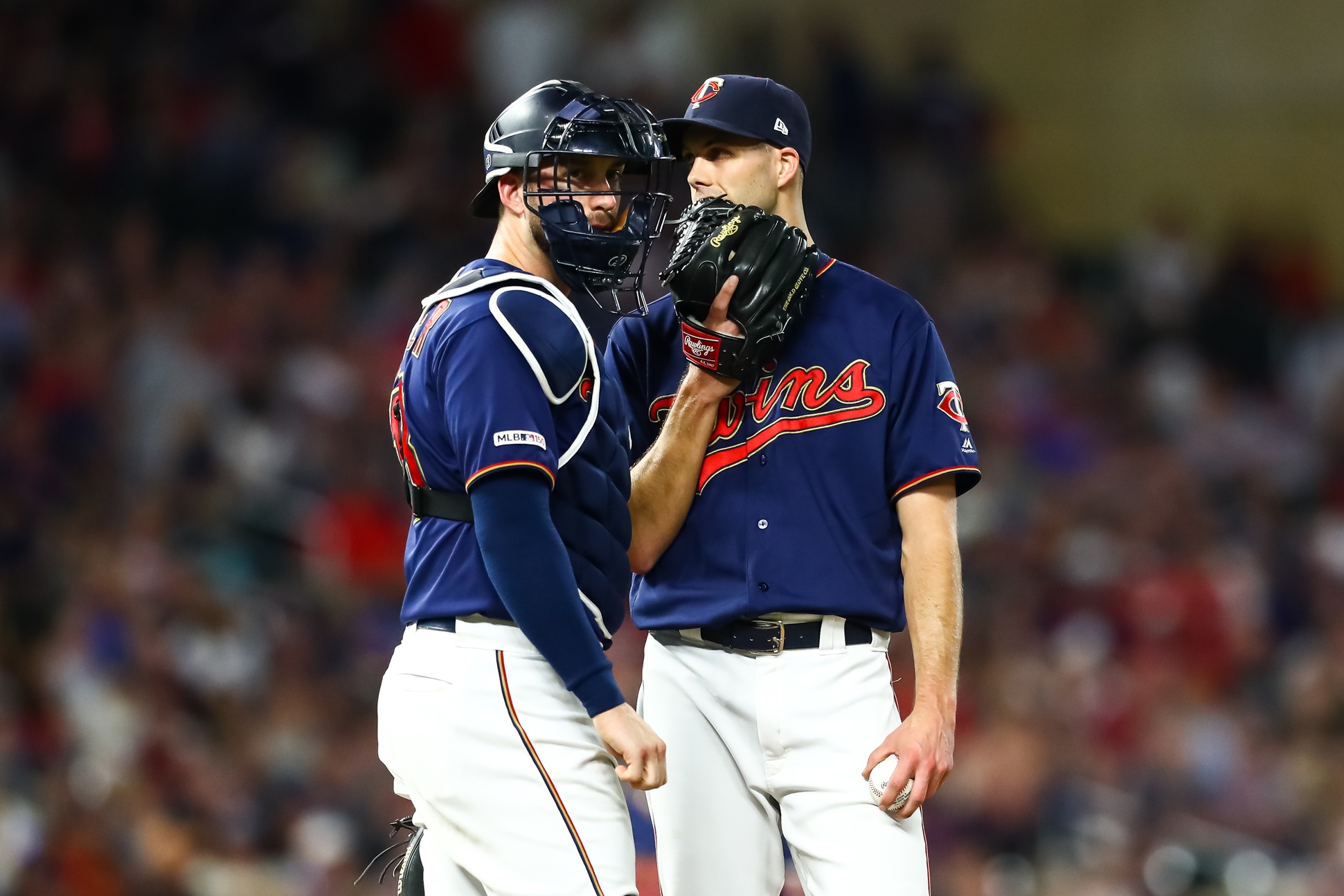 In his book, The Inner Game of Tennis, W. Timothy Gallwey describes the phenomenon of an athlete having two selves -- the self that talks and the self that does. The first self is the voice in your head. It’s the part of you that tells you what to do or what to focus on. The second self is the performer, the part of you that reacts or does the task. “Imagine that instead of being parts of the same person, Self 1 (teller) and Self 2 (doer) are two separate persons,” Gallwey writes. “The player on the court is trying to make a stroke improvement. ‘Okay, dammit, keep your stupid wrist firm,’ he orders. Then as ball after ball comes over the net, Self 1 reminds Self 2, ‘Keep it firm. Keep it firm. Keep it firm!’” In baseball terms, it’s like a pitcher reminding himself to keep a firm wrist when delivering a breaking ball (Self 1) while the body performs the action (Self 2). Gallwey goes on to say that Self 2, which includes the unconscious mind and nervous system, remembers forever how the muscles felt once it performed the task correctly. Once a hitter routinely connects with batting practice fastballs and repeatedly laces them into the gap, that action is committed somewhere in the person’s software. However, the dominance of Self 1 and mistrust in one’s own ability to perform the task often takes over and can sabotage that player’s actions. Self 1 will send messages to Self 2 with the intent of accomplishing the same task but can mislead the system. In short, once an athlete is able to accomplish a task on a regular basis, be it throwing 95 mile per hour fastballs or hitting them solidly, the body should have the knowledge of what it should do in order to repeat it. But a person can send conflicting messages or incorrect internal cues that disrupt his or her ability to perform the task they had previously spent hours perfecting. Through technology almost every movement can be measured and a plan can be created to improve them through various external drills and exercises. By reducing overall processes like pitching or hitting mechanics to simple movement patterns -- such as instilling a pitcher’s ability to hinge properly or a hitter to internally rotate their hip -- that movement becomes second nature and eventually doesn’t require Self 1 badgering Self 2 into conducting the action. The autopilot kicks on. Yet, in spite of all of the time spent committing the right movements to muscle memory, there still exists the human override that can throw that complex system out of whack. In 2019, Twins closer Taylor Rogers had a blend of two breaking balls -- a curveball and a slider. They were two pitches moving differently but thrown with the same grip. By manipulating his hand at release, he would either be on top of the ball or on the side of it, generating slightly different movement profiles. They were similar enough that even Statcast struggled to categorize them properly. In a conversation with Lance Brozdowski in June 2019 on whether he increased the usage of one breaking ball, Rogers confessed that he hadn’t made any significant pitch usage changes (at least not in the regard that Statcast was suggesting he did). He also revealed a little into his preparation practice. “When you go into the offseason and you don’t throw at all, and you come back, things could probably change that you don’t realize,” Rogers told Brozdowski. “Maybe that has something to do with what [statcast’s data changes] is showing? In my brain, [i’m] the same, but maybe I just don’t notice it.” There again is an example of dualities that exist inside of a player. Rogers feels like he is executing the same pitch but the data says otherwise. He is doing something he’s done thousands of times before but, for whatever reason, it is now producing slightly different results. Rogers performed very well in 2019 and, despite his overall numbers, did so in 2020 too. He missed a lot of bats with his slider (a combination of his slider and curveball that Statcast simply combined into one) and his metrics would suggest he was “unlucky” when it came to batted balls turning into hits. That said, it would seem that he left his Self 1 without a roadmap to guide Self 2 back on track if things had spiraled out of control for him -- which may or may not have happened as he struggled to bury his breaking ball in 2-strike situations. Another player influenced by this effect may have been Mitch Garver. In 2020, Garver’s season was marred a bit by injuries and a 480-point dip in his OPS. He was coming off a breakout season in 2019, one that was launched after he had spent the offseason working with a private instructor on his swing. One drill Garver and his instructor did was to hit off a pitching machine that was placed at 35 feet away and mimicked a 100+ mile per hour fastball reaction time. This practice removed a lot of slack and unnecessary movements in his swing, resulting in an ability to ambush fastballs in game situations, which he did with aplomb in 2019. Unfortunately, this past season that same stroke failed him. Fastballs elevated ate him up. In September, he told reporters that he had noticed elements of his swing in video that were out of whack. By this point the season was essentially over. Presuming they were not already doing so, Taylor Rogers and Mitch Garver could have stood to gain from maintaining a journal. During his playing career Justin Morneau said he was encouraged to use a journal to track his performance. “One of the things someone told me as my career was going on, write down what you are thinking right now,” Morneau told FSN viewers on a broadcast this summer. “Write down what is going through your mind in your at bats, what you feel like you are doing well. So when you are struggling, you have something to look back on.” Like Morneau said, the pen is a fantastic tool that can be used to reaffirm actions that Self 1 (the teller) can tell Self 2 (the doer). Yankees reliever Adam Ottavino writes in his journal everyday. On two separate pages, he spends time reciting all of his activities physically performed (i.e. threw 25 bullpen pitches, long toss, weighted balls, etc) on the right side and puts thoughts and mental cues on the left side (things like ‘have a short circle’ to keep his arm path short and ‘quiet body, fast hands’ to aid in his delivery process). If he had a particularly good day when his devastating slider was especially lethal, he would write down what he felt while releasing it. That way, if he ever started to struggle with the pitch, he could go back and remember what to tell himself in order to return to that feeling. We have witnessed players -- hitters and pitchers alike -- struggle for multiple games, weeks and months trying to find “it”. A hitter goes through a hot stretch only to look completely lost for an equal number of at bats. Some of the doldrums can be injury-related though this can also be a byproduct of an unintentional small change in their swing process. A standard response to working out of slumps is to use external cues provided by a hitting coach or a teammate, by reviewing video or a combination of all three. While targeted drills can help jar the body back into the right patterns, this process could take an indefinite amount of time, especially if Self 1 keeps interfering. Meanwhile, the ability to review a detailed journal which guides the player back to the proper mental cues to regain their swings or throwing mechanics could hasten that same process. By combining video review, external coaching and the internal cue reminders derived from a journal, players can expedite the correction process. This is like a mental roadmap back to the right place. As Morneau noted in his commentary, with the advances of modern technology, players no longer have to carry with them a pen and paper to jot down their thoughts (although there is some research that suggests writing things down can help solidify things internally), they can just as easily whip out their phones and type down some notes or verbally record their thoughts. This can be done after games or practice sessions. The journaling practice does have its in-season benefits, there are also plenty of reasons to be used during the player development process as well. In the case of Ottavino, an early adopter to the Rapsodo technology, one of the simplest things to do during a pitch design session is when you start to form your pitches to the targeted data, you can write down exactly what you were feeling or cueing Self 2 in order to achieve that goal. To be fair, no one has outright asked Rogers if he is maintaining a journal but it would appear that he too could benefit from achieving his internal cues. The Twins have a bevy of tools that could notify Rogers when he is throwing his best version of the breaking ball -- at which point Rogers could commit those cues to a journal. The same can be said for hitters who are working on hitting a pitch in a particular area of the zone. For instance, if a hitter is working on hitting a high-spin, elevated fastball consistently, once the Trackman or HitTrax data reflects the exit numbers they want to see, they should be marking down their thought process. In Garver’s case, once he started jacking those close-up fastballs (assuming he was not not doing so already), he could start writing down what he was thinking and feeling as he punished pitch after pitch. That way, if he goes astray in season, he would have the breadcrumbs to find his way out. A pen and paper doesn’t need to be charged, calibrated or bluetooth'ed. It is about as low-tech as it gets. It can, however, very much be a performance-enhancer. What’s more, players at all levels stand to benefit from this practice -- from the developing prospect to the seasoned veteran. It doesn’t take much outside of the discipline to make it a regular habit.
 -
We Need To Talk About Analytics
Parker Hageman replied to Matt Braun's topic in Twins Daily Front Page News
In 1991, Morris' best results during the regular season came on pitch 101 and beyond. He had 113 plate appearances after throwing 100 pitches and held opponents to a .194 average and a .568 OPS. Maybe TK's analytics team tipped him off. https://www.baseball-reference.com/players/split.fcgi?id=morrija02&year=1991&t=p -
Will Major League Baseball Ban the Shift?
Parker Hageman replied to Cody Christie's topic in Twins Daily Front Page News
Five years ago I was in camp for Twins Daily when Manfred visited and addressed reporters. After all the national and local people got their questions in, I asked about his intention with the shift, because he had just recently mentioned banning it in an interview with ESPN. He had been receiving a lot of softball questions (one national reporter asked about his first time attending a baseball game, someone else asked him his favorite player, etc). When I asked my question he was rather...I don't know...terse. http://twinsdaily.com/_/minnesota-twins-news/minnesota-twins/mlb-has-no-plans-for-killing-the-shift-r3486 Here's what he said: “My comment on defensive shifts came after a series of questions so without repeating them all, we are looking at the issue of offense in the game. We wouldn’t be doing our jobs if we’re not because there is a lot of conversation in the game about the fact that offense is down. Where we are on that issue analytically is we haven’t even decided whether we have an aberration or a trend that may require a remedy. I went through all that before I got to defensive shifts. As a follow, somebody said ‘If and when you decide you have a problem what might you talk about, what might you be willing to consider?’ In that context I mentioned defensive shifts. Nothing more serious than that. Frankly, given the feedback that I’ve gotten since I made that comment I’m not even certain that I would even consider it anymore.” Five years later we're right back where we started. Not to single you out on this mike, but this is definitely an argument I see a lot during the conversation about infield shifts. Can you imagine how historically good hitter so-and-so would have hit with an infield shift? Yes, in that era of baseball, it would have been foolish to do that. However, given the amount of data that teams have on players AND the increase in velocity and overall stuff from pitchers, I'm not sure the Cobbs, Hornsbys or even Carews of the world would not be the hitters they are now, regardless of where fielders are positioned. The counter is that these are supremely talented individuals and would likely develop the timing necessary to handle the changes in the game. Sure, maybe. But I'm of the belief that if you plucked any hitter from before 1955 (arbitrary, I know) and pit them against almost any regular starter today, they'd be wildly over-matched. The game has changed that much. -
The Shift Is Burning Teams: I wrote about how the Astros dismantled the Twins’ infield shift during the Wild Card series. The Ringer’s Ben Lindbergh dove in further, detailing how right-handed hitters should not receive the shift treatment: In September, Tango took a more rigorous look. The noted sabermetrician, who now serves as MLB’s senior data architect, examined the results of bases-empty matchups since 2015 between the same batter-pitcher duos, with and without three fielders on one side of second. He found that left-handed hitters suffered a 24-point drop in wOBA against the same pitchers when the shift was on. Right-handed hitters fared 38 points better with the shift on. When Tango repeated his study but treated batter-pitcher duos as different if the pitcher had changed teams, the takeaway was even clearer: a 25-point drop for lefties against the shift, and a 43-point improvement for righties. Tango also found a similar boost to right-handed hitters’ stats when he looked into 2020 alone. For the record, the Twins finished 5th in shifts versus right-handed hitters -- overloading the left side in 31.5% of plate appearances in 2020. That’s actually down from last year when they did that in 34.9% of plate appearances, second only behind the Dodgers. Bo Jackson Was Amazing: Jeff Pearlman tweeted a May 16, 1989 sidebar which lauded the Royals outfielder for hitting a batting practice home run into the upper tank at the Metrodome, one of the longest shots in stadium history. The twist? The right-handed hitting Jackson was doing this from the left side of the plate. Peter Gammons detailed that event in a Sports Illustrated article later that season: "Bo, it's your turn. One last swing," hollered Kansas City Royals hitting coach Mike Lum. The righthanded Jackson darted into the cage and jumped up to the plate—on the lefthand side. He took his one cut, and it was the last scene from The Natural, in nonfiction. The ball towered past the dome lights, crashing off the Hardware Hank sign on the facade of the second deck in far right center-field, an estimated 450 feet away and only 30 feet short of the longest rightfield homer ever hit in the Metrodome. Kirby Puckett, standing in back of the cage with several other Twins, howled at Bo as he walked slowly toward the dugout to put the bat in the rack. Jackson glanced back at Puckett and yelled, "I got work to do," then picked up his glove and strolled nonchalantly out to leftfield to take some fly balls. All Right All Right All Right: Not a read but an audio segment from an interview of Matthew McConaughey on the Tim Ferriss Show (full episode here). In the segment, the actor/pitchman describes how he keeps a journal: making sure to log something in during good times and bad times. Whereas some people have a tendency to spend more time journaling during tough times, McConaughey says he details the moments of success as well as failure. That way he can look back at the positives, helping him with his present mindset. This practice reminded me of something former Minnesota Twin and current announcer Justin Morneau talked about this year -- maintaining a hitter’s journal. https://twitter.com/HagemanParker/status/1306694753464061953 “One of the things someone told me as my career was going on, write down what you are thinking right now,” Morneau said. “Write down what is going through your mind in your at bats, what you feel like you are doing well. So when you are struggling, you have something to look back on.” This is definitely something that can be utilized on and off the diamond. The 3 M’s Of Deliberate Practicing: Speaking of journaling, that’s one of the key tenets of deliberate practice. Here are three things to keep in mind while engaging in deliberate practice: Instead of mindlessly practicing a skill for months without improving, being deliberate can result in a better performance, and to a shorter road to mastery. Deliberate practice requires three specific skills: Measurement. You cannot manage what you cannot measure. Deliberate practice requires to objectively track and measure your progress. You do not need complicated tools: a simple note-taking app or a spreadsheet can do the job. Metacognition. Simply measuring your progress is not enough; it’s important to make space for self-reflection. Journaling can be a powerful metacognitive tool to understand and improve one’s performance. Mentoring. Finally, having a coach or a teacher can vastly improve the impact of deliberate practice. The mentorship often consists in assisting with both the measurement and the metacognitive aspect of deliberate practice. For instance, an expert could keep track of your progress while you are practicing, and recommend improvements before you give the activity another go. Random: Recently listened to The Office: Untold Stories of the Greatest Sitcom Series of the 2000s. It’s a fascinating look at how one of the most popular television series was conceived and executed -- recommended for any fan of the show as well as anyone interested in how to build a really good culture in an organization or team. One story that stood out was how Creed Bratton was added to the cast. Bratton had been a musician in The Grass Roots, a late 1960s psychedelic pop rock band that landed a pair of top ten radio hits and performed in large West Coast music festivals. Bratton however was kicked out of the group in 1969 after having a bad acid trip on stage during a show at the Fillmore West (Bratton had already stirred up issues within the band prior to that meltdown). As his music career fizzled, he would have bit parts as an extra or stand-in in movies and shows but no steady work. That is, until the American version of The Office. In trying to make the Dunder Mifflin office to look like a real workplace, the producers tapped several people for non-speaking roles. Bratton was one of them. One of the show’s original directors, Ken Kwapis, had known Bratton as a stand-in during their time together at The Bernie Mac Show and so Kwapis got Bratton a seat at a desk as a background role for the pilot episode. Because of the relationship, Bratton returned to the background in several more of the episodes during the first season. It was in the second season when the showrunner, Greg Daniels, had an episode where one of the office's employees -- background actors Bratton or Devon Abner -- would be fired by the branch’s boss Michael Scott. To the show’s producer, it didn’t matter which one of the background actors was permanently removed from the series. The two non-actor actors reportedly discussed who would get the ax from the show. Bratton, whose musical skill set and quirky improvisation endeared him to some writers, won out and Devon, who was slated to star in an off Broadway play, left. That episode -- Halloween -- was the first in which Bratton had an actual line in the show. The show's producers weren't even sure if he could act. At 60 years old, Bratton recognized he may never get an opportunity like this again. In the book, Bratton talked about how much time he devoted to learning his lines. He said he set up a tape recorder to listen to them as he fell asleep at night. He did an unbelievable amount of preparation for what amounted to a few on-camera words. Knowing the decision-makers might not present another chance like this to showcase his skills, he wanted to deliver the best performance possible. Bratton’s performance in that episode was well-received and so eventually he was given more lines and was later added to the full cast. Bratton was on the cusp of being removed from the show. Instead, he made his way from being a background actor who held up the scenery to one of the cast members -- a cult favorite at that -- of the biggest shows of the early 2000s. You never know at what point a life-changing opportunity is going to present itself.
-
Becoming a More Patient Leader: Two good tips on how to increase patience in these stressful times. Redefine the meaning of speed. The U.S. Navy SEALs are known for their saying “Slow is smooth, and smooth is fast.” These rapid-response special forces teams are paradoxically methodical and patient in both planning and executing their time-critical missions. They have learned over 60 years of operating in crisis situations that working at a slow and smooth pace reduces mistakes and re-dos and in the end speeds up the mission. In short, they have learned that leaders shouldn’t “confuse operational speed (moving quickly) with strategic speed (reducing the time it takes to deliver value).” And this of course means that leaders need to clearly define what delivering value means from the start. Thank your way to patience. Gratitude has powerful effects on a wide range of our attitudes and behaviors. For example, keeping a journal about things you are thankful for increases generosity with others and lowers stress. It is no wonder then that gratitude may also positively spill over to our ability to demonstrate patience. Research in experimental psychology has found when people feel more grateful, they are better at delaying gratification and are more patient. Travis D’Arnaud’s Offensive Breakout: Atlanta’s Travis D’Arnaud has transformed into a dangerous hitting catcher, finally living up to his draft expectations. Here’s some good insight on how he reached that level and an interesting take on how playing with the Rays versus one of the New York teams could allow him to focus on his development: Mottola would watch his batting practice swings, his on-deck swings, his in-game swings, and ask questions. Why are you attacking heaters this way? Why don’t you try to stay on top of the ball, without pulling off with your front side? Sometimes d’Arnaud didn’t have an answer. But because he knew Mottola — because he trusted him — he didn’t get defensive. This was coming from a place of compassion. They tried every idea they could think of. D’Arnaud hit barefoot for a couple of days. One time, he added another tee to create a right bat path. Another time, Mottola had him try a wide-open stance, just so they could figure out what his straight line through the middle of the zone was. “It was all these little moments that just finally came together,” he said. “In St. Pete, it was just like, man, the only people I have to answer to are my teammates and coaches. That’s why we’re allowed to do some things outside the box; we don’t have the same scrutiny. It seems like when you’re on the Yankees and Mets, you need to hang out in the cage all day just to get a little peace. “To be yourself, and not always have to answer to your failures, is really refreshing for a lot of these guys.” Loss of Sports Hurting Families: Sports have a way of bringing families together and without it, will some families lose bonding time? To Luker, the pandemic-fueled decline in youth participation is just one piece of a larger puzzle. Few people are attending games of any kind. The fear of large crowds is wise, and it’s keeping most of us away from sitting in stands or standing on sidelines or even gathering for television watch parties. But we need to be aware of the cost: Children, families and friends have been cut from fandom’s communal tradition. There are now far fewer chances to form friendships around watching sports together, and less opportunity for our youth to feel the generation-to-generation connections that come from getting together and rooting for a team. Better Sleep Equals Better Results: Houston Astros’ reliever Josh James had terrible sleep habits as a prospect. He credits improving his rest to his improved performance (2020 stats notwithstanding). James did some research and finally saw a sleep specialist in December 2016. He spent the night hooked up to monitors and was diagnosed with sleep apnea, a potentially serious sleep disorder in which breathing repeatedly stops and starts. The condition caused the 2004 death of NFL Hall of Famer Reggie White. James was given possible surgical remedies that included removing his tonsils or fixing his deviated septum, though none of those were a guaranteed fix. Instead, he chose to start using a CPAP machine (Continuous Positive Airway Pressure), which delivers pressurized air through a mask that's worn at night to stop snoring. The effects on James' energy were gradual. "Just a little bit more refreshed in the morning, a little bit more refreshed about the day, and slowly I started feeling a little bit better every day," James said. "No naps needed. Normally, I'd come home and need a nap, and now I'd come home and be able to do stuff or cut the grass or watch TV." The effects on James' career began blossoming this season. He went from sitting at 91-94 mph with his fastball, occasionally hitting 95, to touching 100 mph, to go along with a good slider and changeup. A beast was unleashed. Improving Your Batting Practice Environment: As winter begins here in the north, baseball players will retreat to the comforts of indoor training. Brock Hammit has some excellent (and affordable) tips for coaches and trainers on how to improve that environment. Random: I recently finished reading The Fish That Ate The Whale, a story of a banana peddler’s rise to one of the most powerful men on the planet. The story of Sam Zemurray is fascinating as well as tragic for the Central American countries that he would disrupt in order to maximize profits for his fruit companies. In order to accomplish toppling governments and replace them with ones who would be more aligned with his business desires, Zemurray would require the help of Edward Bernays, the father of public relations, to tell his story and portray him favorably. Bernays, Sigmund Freud’s nephew, would use psychological tactics in his approach to managing people and brands. One of his specialities was indirection. Bernays was once hired by the publishing industry to increase the sales of books. Rather than take the message directly to the public that they should purchase more books for entertainment or educational purposes, Bernays approached homebuilders and convinced them to add built-in bookshelves to their new homes thereby making the owners head to the bookstore to fill the empty space. The subtle indirection greatly boosted sales of books.
-
According to my video search, there was one instance where a team had a runner on third and first, less than 2 outs and hit a ground ball that could have been construed as a potential double play ball. https://baseballsavant.mlb.com/sporty-videos?playId=8aea6ebf-3690-4e6a-8f88-2c49b7b74d82 You never can assume two outs but with the slow-footed Ravelo running, it's probably a higher probability of turning it. That said, it's fine that the Twins rolled the dice. It's not always going to land in their favor but over time it has the odds of reducing runs.
-
When it comes to run prevention, the Minnesota Twins have discovered that marginal improvements across a variety of areas has led to substantial gains. They have experimented with catching set-ups, even hiring umpires in spring camp to test these strategies against. They reexamined their infield play, adding new warm-up techniques to their routines in order to improve the defense. They added biomechanic systems to measure posture, direction and angles, hoping to improve velocity and command with the slightest tweaks. And so on. Recently they found a new use for an old trick.Admittedly, pulling the infield in is nothing new. With no exact origin story, the alignment likely began when the first runner reached third base at Elysian Fields. As an organization, the Minnesota Twins have hired people to run their baseball operations who question the game’s status quo -- Why do pitchers need to establish their fastballs when a breaking ball might be their best pitch? Why do catchers need to squat on two legs? Playing the infield in early in the game is another traditionally held no-no, but why? Part of the long-standing rationale is the tendency to surrender extra hits. Cheap hits at that. Baseball Info Solution recently looked at all of their infield positioning data going back to 2015. According to their research, in the face of the infield drawn in, hitters posted a batting average 70 points higher on ground balls and low liners as those balls found more seams and carried just out of reach of the defenders. From 2015 through 2019, hitters posted a .296 average with a normal infield alignment while they hit .366 average with the infield in. Like the defense shift, nothing seems to agitate traditional baseball people more than when a weak grounder squibs through an opening where a defender should be. But here’s the rub: according to BIS’s study, runs scored declined significantly with a drawn in infield. Under normal conditions, that runner on third would score 63% of the time yet with the infield playing in, the runner scored just 49% of the time. That’s a significant swing. The Twins are not alone in pushing the boundaries of the game, especially in this regard. In 2017, depending on the situation, the Boston Red Sox looked to cut off the runner at third early in the game. “We try to tell our guys defensively, ‘Let’s not give away easy runs. Let’s make the other team execute. If they don’t execute, let’s knock down lead runners,’” Red Sox third base coach Brian Butterfield told the Providence Journal’s Tim Britton. “It changes a guy’s hitting approach. With all the infielders back, he just has to stand in the middle and play pepper with the second baseman or shortstop and you’re guaranteed a run.” Twins manager Rocco Baldelli echoed this sentiment in this season when he told reporters that the teams’ decision is based on “trying to cut down runs and giving yourself an opportunity to cut down runs as opposed to giving them up and simply playing the infield back.” As BIS’s research previously showed, the odds indicate that teams would indeed save runs. So why not take advantage of them? A runner on third will score on a hit to the outfield no matter what. While a normal depth infield might increase the range of where an out can be made, it also means that a run would likely score regardless. Because the Twins have confidence in their batted ball data and their starting pitchers’ ability to execute pitches, they believe they can maximize coverage with the infield pulled in. When the Red Sox were determining whether or not to move everyone in, there were several factors at play in their decision-making process. For instance, is the person hitting fast and capable of stealing a base? Sacrificing a cheap hit and a run might result in a runner in scoring position quickly. Is there a runner on second? If that runner is fast, a cheap hit through the infield might score two. Under those circumstances, it might be better to play it conservatively. Data suggests that Baldelli tended to be more aggressive in 2020 when it came to those situations. There is no publicly available data that shows exactly how many times the Twins opted to play the infield in early in the game but if you were to examine Statcast’s infield starting position, you can see that there was a big effort in moving their infield in when runners are on third and less than 2 outs. Looking at just the middle infield positions, both fielders started on average over 10 feet closer to the plate than they did in 2019 (and more so than 2018 and 2017). Download attachment: MIN Infield Alignment 2017-2020.png Compared to the rest of baseball this season, the Twins were second in the depth their infield started in those situations. In the first three innings, only the forward-thinking Tampa Bay Rays positioned their infield closer on average in runner-on-third/less than 2 out situations. Their shortstop would begin precariously close to a hitter at 113 feet. Meanwhile, the Twins would start Jorge Polanco, et al at 121 feet, the next closest in. In all, the Twins had 21 instances where there was a runner on third and less than 2 outs. A review of those plays shows that among those 21 balls in play, there were only three plays that 1) the infield was in and 2) managed to keep the runner from scoring where a normal defense would have conceded the run. A more robust analysis would be required to determine how many of those bleeder/cheap hits gained during the shift resulted in extended innings. That being said, saving three runs in a shortened season is not nothing. Focusing on reducing easy runs might be one of the reasons why the Rays (67) and the Twins (69) were second and third in baseball at allowing the fewest runs in the first three innings in 2020. On its own, bringing the infield in to cut off a handful of runs might not seem that significant but if you look at it in the aggregate -- combined with the other elements -- it becomes another piece of overall run prevention. Tiny improvements. Big gains. That’s the secret sauce. Click here to view the article
- 7 replies
-
- 1
-

-
- rocco baldelli
- run prevention
- (and 1 more)
-
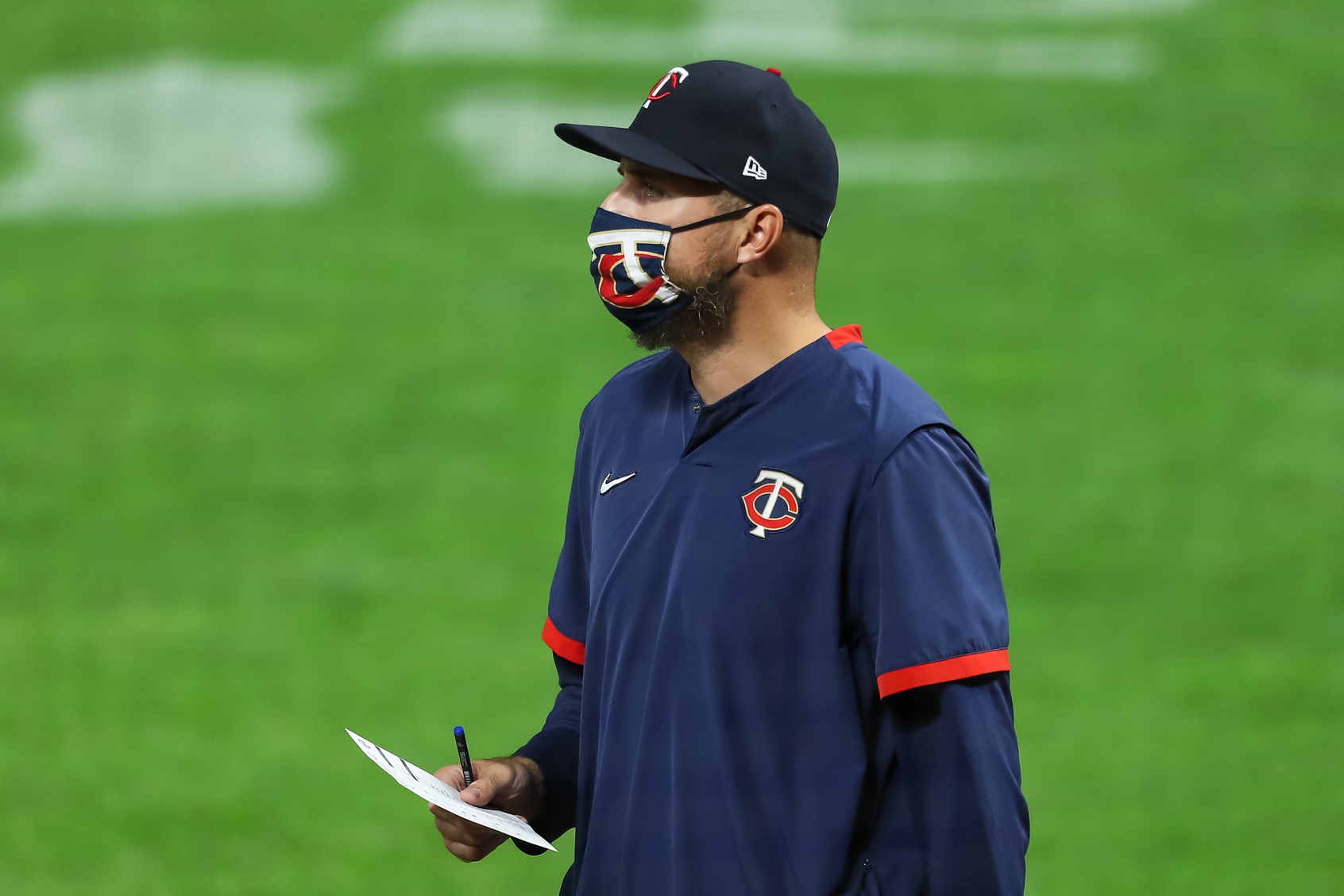 Admittedly, pulling the infield in is nothing new. With no exact origin story, the alignment likely began when the first runner reached third base at Elysian Fields. As an organization, the Minnesota Twins have hired people to run their baseball operations who question the game’s status quo -- Why do pitchers need to establish their fastballs when a breaking ball might be their best pitch? Why do catchers need to squat on two legs? Playing the infield in early in the game is another traditionally held no-no, but why? Part of the long-standing rationale is the tendency to surrender extra hits. Cheap hits at that. Baseball Info Solution recently looked at all of their infield positioning data going back to 2015. According to their research, in the face of the infield drawn in, hitters posted a batting average 70 points higher on ground balls and low liners as those balls found more seams and carried just out of reach of the defenders. From 2015 through 2019, hitters posted a .296 average with a normal infield alignment while they hit .366 average with the infield in. Like the defense shift, nothing seems to agitate traditional baseball people more than when a weak grounder squibs through an opening where a defender should be. But here’s the rub: according to BIS’s study, runs scored declined significantly with a drawn in infield. Under normal conditions, that runner on third would score 63% of the time yet with the infield playing in, the runner scored just 49% of the time. That’s a significant swing. The Twins are not alone in pushing the boundaries of the game, especially in this regard. In 2017, depending on the situation, the Boston Red Sox looked to cut off the runner at third early in the game. “We try to tell our guys defensively, ‘Let’s not give away easy runs. Let’s make the other team execute. If they don’t execute, let’s knock down lead runners,’” Red Sox third base coach Brian Butterfield told the Providence Journal’s Tim Britton. “It changes a guy’s hitting approach. With all the infielders back, he just has to stand in the middle and play pepper with the second baseman or shortstop and you’re guaranteed a run.” Twins manager Rocco Baldelli echoed this sentiment in this season when he told reporters that the teams’ decision is based on “trying to cut down runs and giving yourself an opportunity to cut down runs as opposed to giving them up and simply playing the infield back.” As BIS’s research previously showed, the odds indicate that teams would indeed save runs. So why not take advantage of them? A runner on third will score on a hit to the outfield no matter what. While a normal depth infield might increase the range of where an out can be made, it also means that a run would likely score regardless. Because the Twins have confidence in their batted ball data and their starting pitchers’ ability to execute pitches, they believe they can maximize coverage with the infield pulled in. When the Red Sox were determining whether or not to move everyone in, there were several factors at play in their decision-making process. For instance, is the person hitting fast and capable of stealing a base? Sacrificing a cheap hit and a run might result in a runner in scoring position quickly. Is there a runner on second? If that runner is fast, a cheap hit through the infield might score two. Under those circumstances, it might be better to play it conservatively. Data suggests that Baldelli tended to be more aggressive in 2020 when it came to those situations. There is no publicly available data that shows exactly how many times the Twins opted to play the infield in early in the game but if you were to examine Statcast’s infield starting position, you can see that there was a big effort in moving their infield in when runners are on third and less than 2 outs. Looking at just the middle infield positions, both fielders started on average over 10 feet closer to the plate than they did in 2019 (and more so than 2018 and 2017). Compared to the rest of baseball this season, the Twins were second in the depth their infield started in those situations. In the first three innings, only the forward-thinking Tampa Bay Rays positioned their infield closer on average in runner-on-third/less than 2 out situations. Their shortstop would begin precariously close to a hitter at 113 feet. Meanwhile, the Twins would start Jorge Polanco, et al at 121 feet, the next closest in. In all, the Twins had 21 instances where there was a runner on third and less than 2 outs. A review of those plays shows that among those 21 balls in play, there were only three plays that 1) the infield was in and 2) managed to keep the runner from scoring where a normal defense would have conceded the run. A more robust analysis would be required to determine how many of those bleeder/cheap hits gained during the shift resulted in extended innings. That being said, saving three runs in a shortened season is not nothing. Focusing on reducing easy runs might be one of the reasons why the Rays (67) and the Twins (69) were second and third in baseball at allowing the fewest runs in the first three innings in 2020. On its own, bringing the infield in to cut off a handful of runs might not seem that significant but if you look at it in the aggregate -- combined with the other elements -- it becomes another piece of overall run prevention. Tiny improvements. Big gains. That’s the secret sauce.
 -
MLB’s Brain Drain: The Minnesota Twins are hiring but it would seem that the industry as a whole might be in trouble. However the next several years play out, it appears that the baseball industry is in a liminal space. Front office gigs, long glamorized, have become less desirable to those with options. The individuals who remain in the industry feel underpaid, undervalued, and overstressed. The most conscientious are concerned that an already exclusive industry is going to build larger gates, and become more homogenous and bland because of misplaced priorities. The industry, then, is in a bad place -- and it might remain there for the foreseeable future. "A lot of people call it their dream job," the former senior analytics member said. "This was one of those things that makes you realize that a dream job sometimes is still a dream." Practice Analytically, Perform Intuitively: Training with data will not impede a player’s ability to improvise during play. Seeing the errors in how people intuitively think about the golf swing made Bryson question how other parts of the game were played. Having majored in physics at college, he operates like a scientist. He subscribes to Charles Dickens’ famous line from Great Expectations: “Take nothing on its looks; take everything on evidence. There’s no better rule.” Where other golfers guess why they’re struggling at the driving range, Bryson brings two military-grade launch monitors so he can quantify his swing path to the tenth-of-a-degree. Where other golfers use standard grips, Bryson uses the world's largest commercially available grips so he can reduce wrist cock in his swing and hold the club with his palms instead of his fingertips. Where other golfers have a half-inch length difference between every iron, all of Bryson’s are cut to 37.5 degrees, the length of a standard 8-iron. Where other golfers change their putting technique based on how they feel that day, Bryson’s implemented a system called vector putting: he uses math to compute the break and determine how the ball will roll along the grass. Where other golfers hit 7-10 degree drivers, Bryson copied the world long-drive champion and put a 5.5 degree driver in the bag. Where other golfers use a 45-inch driver, Bryson’s experimenting with a 48-inch one. Bryson showed that a determined contrarian, armed with the right data and a definitive plan, can upend conventional wisdom and prove that there’s a better way to do something. Gophers Baseball PACK Mentality: The University of Minnesota’s offense has been good. That’s owed partially to a cultural mindset. One of the signature components of Gopher Baseball's offensive approach is the PACK Mentality, centered on four primary characteristics: performance, aggressive, consistent and knowledgeable. The goal of the PACK Mentality is to turn individual at bats into a team approach. As a unit, the offense is more effective than if at bats were attacked solely as individuals. "The idea of this is like a pack of wolves hungry to hit," said Raabe. "No matter who is on the mound, we have a sense of 'no fear,' because you have eight other guys behind you if you fail… Everyone has an individual role in the PACK system." {snip} The PACK Mentality also drives Minnesota's success in these areas of emphasis, as the situational scenario of the game is different every time a player steps into the box. This requires absolute buy-in from every member of the offense, allowing each hitter to adapt to the unique situations that occur as they arise. "We are all three-hole hitters that have many tools at our disposal in order to get whatever job done that needs to be done," said senior catcher Jack Kelly. "At the very least, be a tough hitter to pitch to by having quality at bats with lots of hard contact and good two-strike approaches." Stock Up On Average Players ($): Some teams have found success by loading a roster with “average” players. Amid the welter of modern stat tools, one idea often gets buried: The difference between a great or near-great player and an average or slightly above-average player is enormous in terms of glamour, fan appeal, all-star and even Hall of Fame consideration. But the difference — on the field, in run differential and in the standings — often just isn’t that big. The Mad Genius of Eddie Van Halen: RIP. The Van Halen family—father Jan and mother Eugenia, plus Eddie and Alex—left Holland for the United States in 1962; Eddie was 7 years old and spoke very little English when he arrived in Pasadena, California. Jan Van Halen was a musician—a working one, when he could find a gig. He played clarinet and saxophone, and in their teens, the boys would often join him in his various wedding bands. Eddie was an introvert, an inventor: He boiled guitar strings (for elasticity), dipped his pickups in hot paraffin, cut vibrato bars in half, transplanted the neck of one guitar onto the body of another. One early El Dorado was something he called the “brown sound”—a distortion that was thick, sleek, organic, and unrelenting, but that didn’t blow up your amp. He pursued this brownness with endless mad-scientist tinkerings. “He tried aiming the amp at the wall,” writes the Van Halen biographer Ian Christe in his peerless Everybody Wants Some, “stuffing it with padding, and covering it with a plastic hood before discovering that he could overdrive it at a lower volume if he starved it for voltage using a Variac variable power supply.” Later, he would house a delay unit inside the hollowed-out body of a decommissioned U.S. Army bomb, to create what Christe calls a “big metal ordnance-cum-reverb-chamber” that he would face onstage while playing “Eruption.” Telling A Great Bedtime Story: Some excellent advice for the newer parents out there. “Listening to the story without the benefits of the illustrations requires the child to picture the characters and the events in their own mind,” said Rebecca Isbell, Ph.D., an early childhood education consultant and professor emerita at East Tennessee State University. “They are creating the story for themselves. They are listening to it, and as they do they’re turning on that movie in their head.” These mental movies are powerful — in her research, Dr. Isbell has found children understood (and retained) more of a story they were told out loud than having the same story read to them. “I think that’s something that gets lost with reading,” she said. “You’re focused on the words and the phrases, not the deeper meaning of it.” When you tell a story, there’s no book to focus on, for you or your child, so you can use gestures and eye contact to add drama, suspense and intrigue. Podcast Recommendation: Gaynor Strength & Pitching
-
This is a good reminder that home runs are still king no matter the scenario. That being said, what we saw between the Astros and Twins is a good reminder that you need to have another offensive tool in case the home runs disappear.
-
On Tuesday Josh Donaldson was consuming playoff baseball when the Twins’ third baseman unleashed a tweet that read “Shifts in MLB playoffs are continuing to hurt teams!!” Not one but two exclamation points. Donaldson had presumably just witnessed this play, an Austin Riley grounder with eyes that dribbled right through the spot where a straight-up second baseman would have played. And, if that second baseman had a pulse, it would have easily been converted into the inning’s first out. Instead, the loafing baseball reached the outfield grass, Riley reached safely and the Braves launched a 6-run assault on the Marlins that inning, giving Atlanta a one-game lead in the NLDS. The Miami Marlins were, in fact, hurt by the shift.A few hours later, Donaldson, whose current team shifted 41.3% of plate appearances (7th most frequent in baseball), expanded on his viewpoint saying “pitchers are getting hurt because of these shifts. Hitters are taking advantage of it. Love to see it.” In the simplest form, the goal of hitting is to not make an out. The next level would be to not make an out while gaining as many bases as possible in one at bat. By deploying the infield shift, teams are playing the percentages on a hitter’s batted ball tendencies while also tempting that hitter into a B-swing - one that does not do as much damage as it tries to direct a pitch to a certain area of the field. Teams in the field will concede the occasional single in the short term in exchange for more outs and fewer extra base hits over the long haul. Over the course of a 162 game schedule, this alignment typically favors the defense. Recency bias likely plays a factor in Donaldson’s sentiments toward the shift. In a failed shift deployment, it becomes very noticeable (and usually highlighted by the broadcast crew) whereas the ground ball at a well-positioned infielder or the results of a hitter taking a less than optimal swing does not get amplified nearly as much during the telecasts. Of course, from an offensive perspective, there are certainly times where teams would benefit from a well-placed hit rather than gambling on a gap shot. In Riley’s case, the Braves were down by a run in the seventh inning. While a blast would have quickly tied it, simply reaching base would ensure that the top of Atlanta’s order - Ronald Acuna, Freddie Freeman and Marcell Ozuna - would get licks with a runner on base. So Riley inside-outs a 97-mile per hour sinker and starts a rally. Josh Donaldson is not going to keep an opinion to himself. He’s very outspoken. He also just finished watching the Houston Astros dismantle the Minnesota Twins’ infield shifts. In Game 1, with a 1-0 lead and runners on first and second, the Twins used a modified shift, pulling the infield around to the left against George Springer. On the mound, Tyler Duffey spins his knuckle-curves at the right-handed hitting Springer hoping to get him to over-pull into the shifted Marwin Gonzalez at third and Jorge Polanco at short. Springer, however, stays in line and drives the pitch back to the left side of second base where the shortstop might play. This ties the game 1-1. Now, it comes off the bat at a hundred miles an hour so even if positioned a few steps over toward that hole might not be enough for Polanco to corral it. And Polanco was in a spot where a bulk of Springer’s ground balls were hit. So you can’t fault the logic. But this goes to show the approach the Astros are seemingly taking: hit toward the empty real estate. Sure, Springer could have used his A-swing. He could have tried to drive the ball and put up a crooked number. He does not. He stays within himself and moves the line along. Aside from the terrible baserunning that ensued resulting in the third out at third, it was a fine piece of hitting. In Game 2, more shift-beating ensued. With two out and two on in the fourth inning, Jose Berrios was tangling with the left-handed hitting Kyle Tucker. The infield was swung around the right, with shortstop Jorge Polanco on the right side of second base and Marwin Gonzalez, playing slightly in at third to guard from the bunt, as the only body on the left side. On a two-two pitch, a very well located fastball by Berrios at that, Tucker keeps his hands in and inside-outs the ball to exactly where a straight-up shortstop would be playing. Tucker’s swing was in protect mode but he undoubtedly saw the gaping hole on that side of the field. He didn’t need his best swing, he just needed a good enough swing. The Astros would take the early lead. Then there was the ninth inning encounter between Taylor Rogers and Alex Bregman. With a runner on first and no outs, Rogers throws Bregman an 0-1 fastball on the outer edge of the zone. It is left up and Bregman punches it right toward the vacant left side. The ball bounces at least five times as it travels into right field. Michael Brantley on first, alertly heads to third. In a previous life, this would have been a double-play ball and the Twins might get their chance to tie it with a one-run game in the bottom of the ninth. In the modern era, Luis Arraez can only watch from 20 feet away as it bounds into the outfield. This was an intentional approach by Bregman. He wasn’t protecting the plate or fighting anything off. He had what amounted to an automatic hit available to him and he took it when Rogers failed to execute his location. When the dust settled, the Astros hitters were 7-for-15 on ground balls facing the infield shift from the Twins. Some were legit hits regardless of the alignment, others were borderline. Similarly, the Astros have since picked apart the Oakland A’s defensive shifts as well, going 7-for-20 in those situations in the ALDS as well. It seems to be a premeditated strategy. Given that the Astros abused the Twins’ defensive alignment, which was viewed up close and personal by the injured third baseman, as well as the Braves’ march over the Marlins in Game 1 which was ignited by a shift buster, it’s no small wonder that Donaldson sees the shift as something that hurts pitching. In some regards it does hurt pitching but for most teams not playing the Houston Astros, defensive shifts have been fairly effective in the postseason. While the Astros have hit .444 on grounders facing the shift, the rest of the teams in the postseason have hit .180. For better or worse, the Minnesota Twins built their offense around the home run. Like the NBA’s increase in three-point shots, favoring the long ball has its advantages over the course of a season. As Earl Weaver said, the home run equals instant runs. That being said, throughout the year the Twins struggled to get others on base and score runs through other means. While they finished third in the American League in total home runs, they also finished 18th in overall runs scored. In short, the team’s offensive toolbox only had one tool. And this became painfully apparent during the Wild Card series. Because the games were close, the Astros could use the take-what-they-give-you approach rather than chucking up three point shots. The Minnesota Twins weren’t undone by infield positioning so much as they were outmaneuvered by the Houston Astros and their strategic bat control. Click here to view the article
-
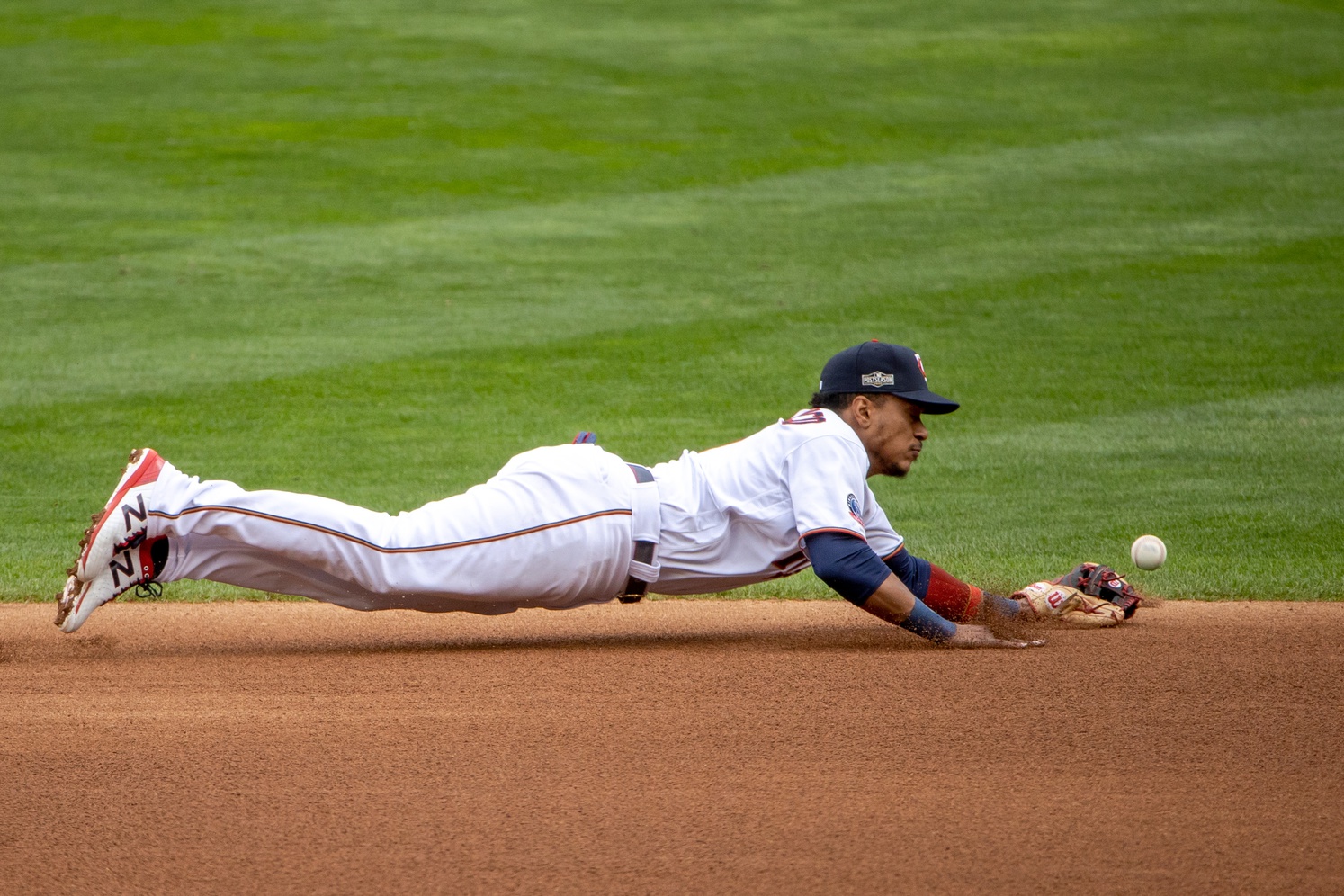 A few hours later, Donaldson, whose current team shifted 41.3% of plate appearances (7th most frequent in baseball), expanded on his viewpoint saying “pitchers are getting hurt because of these shifts. Hitters are taking advantage of it. Love to see it.” In the simplest form, the goal of hitting is to not make an out. The next level would be to not make an out while gaining as many bases as possible in one at bat. By deploying the infield shift, teams are playing the percentages on a hitter’s batted ball tendencies while also tempting that hitter into a B-swing - one that does not do as much damage as it tries to direct a pitch to a certain area of the field. Teams in the field will concede the occasional single in the short term in exchange for more outs and fewer extra base hits over the long haul. Over the course of a 162 game schedule, this alignment typically favors the defense. Recency bias likely plays a factor in Donaldson’s sentiments toward the shift. In a failed shift deployment, it becomes very noticeable (and usually highlighted by the broadcast crew) whereas the ground ball at a well-positioned infielder or the results of a hitter taking a less than optimal swing does not get amplified nearly as much during the telecasts. Of course, from an offensive perspective, there are certainly times where teams would benefit from a well-placed hit rather than gambling on a gap shot. In Riley’s case, the Braves were down by a run in the seventh inning. While a blast would have quickly tied it, simply reaching base would ensure that the top of Atlanta’s order - Ronald Acuna, Freddie Freeman and Marcell Ozuna - would get licks with a runner on base. So Riley inside-outs a 97-mile per hour sinker and starts a rally. Josh Donaldson is not going to keep an opinion to himself. He’s very outspoken. He also just finished watching the Houston Astros dismantle the Minnesota Twins’ infield shifts. In Game 1, with a 1-0 lead and runners on first and second, the Twins used a modified shift, pulling the infield around to the left against George Springer. On the mound, Tyler Duffey spins his knuckle-curves at the right-handed hitting Springer hoping to get him to over-pull into the shifted Marwin Gonzalez at third and Jorge Polanco at short. Springer, however, stays in line and drives the pitch back to the left side of second base where the shortstop might play. This ties the game 1-1. Now, it comes off the bat at a hundred miles an hour so even if positioned a few steps over toward that hole might not be enough for Polanco to corral it. And Polanco was in a spot where a bulk of Springer’s ground balls were hit. So you can’t fault the logic. But this goes to show the approach the Astros are seemingly taking: hit toward the empty real estate. Sure, Springer could have used his A-swing. He could have tried to drive the ball and put up a crooked number. He does not. He stays within himself and moves the line along. Aside from the terrible baserunning that ensued resulting in the third out at third, it was a fine piece of hitting. In Game 2, more shift-beating ensued. With two out and two on in the fourth inning, Jose Berrios was tangling with the left-handed hitting Kyle Tucker. The infield was swung around the right, with shortstop Jorge Polanco on the right side of second base and Marwin Gonzalez, playing slightly in at third to guard from the bunt, as the only body on the left side. On a two-two pitch, a very well located fastball by Berrios at that, Tucker keeps his hands in and inside-outs the ball to exactly where a straight-up shortstop would be playing. Tucker’s swing was in protect mode but he undoubtedly saw the gaping hole on that side of the field. He didn’t need his best swing, he just needed a good enough swing. The Astros would take the early lead. Then there was the ninth inning encounter between Taylor Rogers and Alex Bregman. With a runner on first and no outs, Rogers throws Bregman an 0-1 fastball on the outer edge of the zone. It is left up and Bregman punches it right toward the vacant left side. The ball bounces at least five times as it travels into right field. Michael Brantley on first, alertly heads to third. In a previous life, this would have been a double-play ball and the Twins might get their chance to tie it with a one-run game in the bottom of the ninth. In the modern era, Luis Arraez can only watch from 20 feet away as it bounds into the outfield. This was an intentional approach by Bregman. He wasn’t protecting the plate or fighting anything off. He had what amounted to an automatic hit available to him and he took it when Rogers failed to execute his location. When the dust settled, the Astros hitters were 7-for-15 on ground balls facing the infield shift from the Twins. Some were legit hits regardless of the alignment, others were borderline. Similarly, the Astros have since picked apart the Oakland A’s defensive shifts as well, going 7-for-20 in those situations in the ALDS as well. It seems to be a premeditated strategy. Given that the Astros abused the Twins’ defensive alignment, which was viewed up close and personal by the injured third baseman, as well as the Braves’ march over the Marlins in Game 1 which was ignited by a shift buster, it’s no small wonder that Donaldson sees the shift as something that hurts pitching. In some regards it does hurt pitching but for most teams not playing the Houston Astros, defensive shifts have been fairly effective in the postseason. While the Astros have hit .444 on grounders facing the shift, the rest of the teams in the postseason have hit .180. For better or worse, the Minnesota Twins built their offense around the home run. Like the NBA’s increase in three-point shots, favoring the long ball has its advantages over the course of a season. As Earl Weaver said, the home run equals instant runs. That being said, throughout the year the Twins struggled to get others on base and score runs through other means. While they finished third in the American League in total home runs, they also finished 18th in overall runs scored. In short, the team’s offensive toolbox only had one tool. And this became painfully apparent during the Wild Card series. Because the games were close, the Astros could use the take-what-they-give-you approach rather than chucking up three point shots. The Minnesota Twins weren’t undone by infield positioning so much as they were outmaneuvered by the Houston Astros and their strategic bat control.
 -
The Minnesota Twins' Wild Card Series Game 1 starter doesn’t have a 100 mile an hour fastball and, even if he did have one, he probably wouldn’t throw it either. Kenta Maeda doesn’t need it. His specialty in 2020 has been a one-two punch from his slider and his split-changeup, keeping hitters twisted in knots as the ball bends in any direction, in any place, at any time.When Maeda landed in Minnesota, the organization had him go through the tweaking process. As The Athletic’s Dan Hayes recently detailed, the Twins had him work on some minor mechanics improvements, such as keeping his chest closed longer in order to gain additional depth on that changeup. They also determined that he could stand to fire fewer fastballs. And add a cutter. The veteran right-handed embraced everything. Keeping hitters off-balance with a slew of sliders and changeups was a trait from last year but this season he has taken that to the nth degree. He comes at hitters with non-fastballs 72% of the time which is the highest among all qualified starters and well above the league average of 43%. Beyond just increasing the use of secondary stuff, Maeda also altered the situations he would deploy those pitches. With the Dodgers Maeda would throw his changeup to lefties and his slider to righties. This year the Twins convinced him to mix in a little bit of both. Now hitters have to anticipate off-speed pitches breaking in either direction. Ultimately Maeda shaved off at least 100 points off of his OPS by inserting one additional option for hitters to consider. But it is his use of his split-change that has made it such an effective pitch in 2020. The results on Maeda’s changeup are significantly improved over the previous year. According to ESPN/TruMedia’s data warehouse, hitters whiffed on 27% of their swings -- the highest mark in baseball -- up from 20%. The 41% strikeout rate on his changeup is a big increase over his 2019 rate of 27%. And in 2020 no qualified pitcher struck out a higher percentage of hitters on their changeup than, you guessed it, Kenta Maeda. Without resorting to throwing more numbers at you, we can all agree that it is indeed a splendidly lethal pitch. While the Twins have made changes to his macro use of the pitch, there is also an interesting increase in the sequencing. Maeda likes to double-up on his pitches, frequently throwing two in a row of the same type. No one came at you with two consecutive sliders as much as Maeda did this year. If he threw a slider that wasn’t put into play, 54% of the time he would do it again. Similarly, if he hit you with a change, odds were he would come back with it 42% of the time (5th highest among starters). The latter has been a game-changer for him and one of the reasons he amassed 38 of his 80 strikeouts on that pitch. He recorded 17 of those strikeouts when going back-to-back with his changeup. It’s not just that he’s throwing two consecutive changeups and that alone is stifling hitters. It’s the cat-and-mouse bait game that Maeda has perfected. He will set up the first changeup on an edge or just off the edge of the zone where it could be a called strike or, if the hitter swings, it will either induce soft contact, foul or swinging strike. At two strikes now and firmly in the driver’s seat, Maeda throws his next changeup in a very similar tunnel only to have it dive or dart just a bit further out of the hitter’s reach. The hitter sees what appears to be a borderline pitch just like the last one and is determined to defend the zone -- only this pitch is in the dirt or running the other way from the bat. Here’s what all those words look like in technicolor form. Download attachment: Webp.net-gifmaker (7).gif What this shows is the location of his change in one-strike and two-strike counts. With one strike, Maeda’s changeups linger over the southern border and with two-strikes it’s now decidedly not there. Some examples: In facing Pittsburgh’s Josh Bell, Maeda tries to throw him a 2-strike changeup after a fastball. Maeda leaves this one up a little higher than he wants and Bell fouls it off. But with a 1-2 count still, Maeda has him set-up for a change that tunnels off the one he just was able to make contact with only to fall well below the zone. Download attachment: Maeda vs Bell.gif In Maeda’s battle with Detroit’s Niko Goodrum, Maeda gives him a changeup that is below the strike zone but then drops the two-strike one even further below that one. Download attachment: Maeda vs Goodrum.gif While the sequence has been really good against lefties, Maeda has not been afraid to do the same to right-handed hitters. In his matchup with Milwaukee’s Ryan Braun, Maeda goes with a beautiful changeup that lands just inside the corner but gets a swing-and-miss out of Braun. Again, Maeda throws the next changeup along the same path only to have much more depth than the previous one. Download attachment: Maeda vs Goodrum (1).gif In the final example, returning to a left-handed matchup against Chicago’s Yoan Moncada, Maeda throws a changeup just off the plate that Moncada is gracious enough to foul into Ryan Jeffers’ upper thigh. No matter, Maeda dispatches him with another changeup out of reach. It would be interesting to find out what accounts for this. Is this old-fashion gut pitching from Maeda, aware that he has a hitter on the line and by dangling a sweet morsel just a little bit further out of reach he can get a strikeout? Or is this work of the pitching analysts in the front office who have shrewdly calculate this outcome from billions of terabytes of data? Maybe a little of both? There are multiple reasons why Maeda has had a career year in 2020, not the least of which is that he is a really good pitcher with amazing feel for his entire arsenal. But he also is now teamed with an organization that has the ability to maximize a pitcher’s ability. Click here to view the article
-
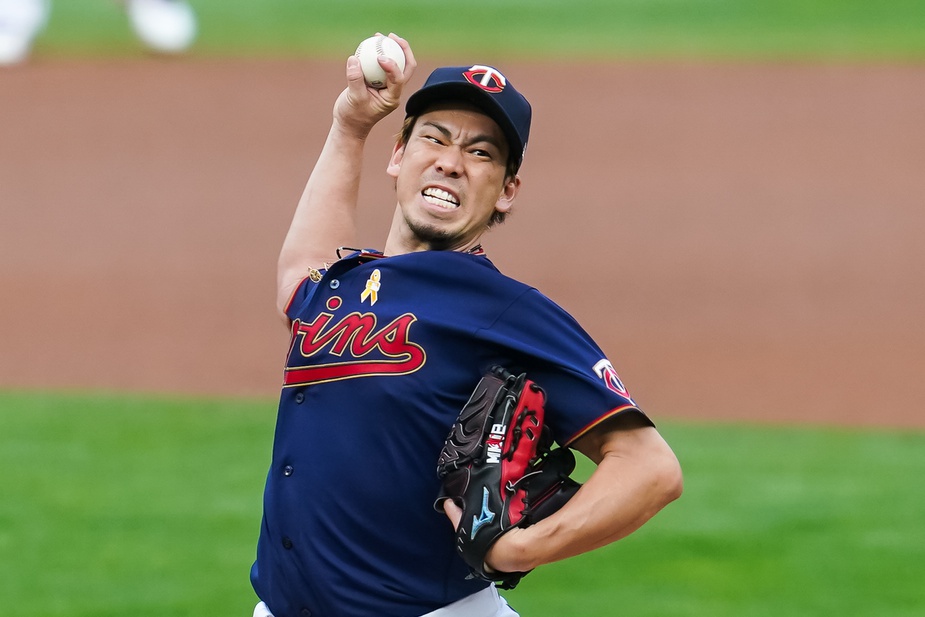 When Maeda landed in Minnesota, the organization had him go through the tweaking process. As The Athletic’s Dan Hayes recently detailed, the Twins had him work on some minor mechanics improvements, such as keeping his chest closed longer in order to gain additional depth on that changeup. They also determined that he could stand to fire fewer fastballs. And add a cutter. The veteran right-handed embraced everything. Keeping hitters off-balance with a slew of sliders and changeups was a trait from last year but this season he has taken that to the nth degree. He comes at hitters with non-fastballs 72% of the time which is the highest among all qualified starters and well above the league average of 43%. Beyond just increasing the use of secondary stuff, Maeda also altered the situations he would deploy those pitches. With the Dodgers Maeda would throw his changeup to lefties and his slider to righties. This year the Twins convinced him to mix in a little bit of both. Now hitters have to anticipate off-speed pitches breaking in either direction. Ultimately Maeda shaved off at least 100 points off of his OPS by inserting one additional option for hitters to consider. But it is his use of his split-change that has made it such an effective pitch in 2020. The results on Maeda’s changeup are significantly improved over the previous year. According to ESPN/TruMedia’s data warehouse, hitters whiffed on 27% of their swings -- the highest mark in baseball -- up from 20%. The 41% strikeout rate on his changeup is a big increase over his 2019 rate of 27%. And in 2020 no qualified pitcher struck out a higher percentage of hitters on their changeup than, you guessed it, Kenta Maeda. Without resorting to throwing more numbers at you, we can all agree that it is indeed a splendidly lethal pitch. While the Twins have made changes to his macro use of the pitch, there is also an interesting increase in the sequencing. Maeda likes to double-up on his pitches, frequently throwing two in a row of the same type. No one came at you with two consecutive sliders as much as Maeda did this year. If he threw a slider that wasn’t put into play, 54% of the time he would do it again. Similarly, if he hit you with a change, odds were he would come back with it 42% of the time (5th highest among starters). The latter has been a game-changer for him and one of the reasons he amassed 38 of his 80 strikeouts on that pitch. He recorded 17 of those strikeouts when going back-to-back with his changeup. It’s not just that he’s throwing two consecutive changeups and that alone is stifling hitters. It’s the cat-and-mouse bait game that Maeda has perfected. He will set up the first changeup on an edge or just off the edge of the zone where it could be a called strike or, if the hitter swings, it will either induce soft contact, foul or swinging strike. At two strikes now and firmly in the driver’s seat, Maeda throws his next changeup in a very similar tunnel only to have it dive or dart just a bit further out of the hitter’s reach. The hitter sees what appears to be a borderline pitch just like the last one and is determined to defend the zone -- only this pitch is in the dirt or running the other way from the bat. Here’s what all those words look like in technicolor form. What this shows is the location of his change in one-strike and two-strike counts. With one strike, Maeda’s changeups linger over the southern border and with two-strikes it’s now decidedly not there. Some examples: In facing Pittsburgh’s Josh Bell, Maeda tries to throw him a 2-strike changeup after a fastball. Maeda leaves this one up a little higher than he wants and Bell fouls it off. But with a 1-2 count still, Maeda has him set-up for a change that tunnels off the one he just was able to make contact with only to fall well below the zone. In Maeda’s battle with Detroit’s Niko Goodrum, Maeda gives him a changeup that is below the strike zone but then drops the two-strike one even further below that one. While the sequence has been really good against lefties, Maeda has not been afraid to do the same to right-handed hitters. In his matchup with Milwaukee’s Ryan Braun, Maeda goes with a beautiful changeup that lands just inside the corner but gets a swing-and-miss out of Braun. Again, Maeda throws the next changeup along the same path only to have much more depth than the previous one. In the final example, returning to a left-handed matchup against Chicago’s Yoan Moncada, Maeda throws a changeup just off the plate that Moncada is gracious enough to foul into Ryan Jeffers’ upper thigh. No matter, Maeda dispatches him with another changeup out of reach. It would be interesting to find out what accounts for this. Is this old-fashion gut pitching from Maeda, aware that he has a hitter on the line and by dangling a sweet morsel just a little bit further out of reach he can get a strikeout? Or is this work of the pitching analysts in the front office who have shrewdly calculate this outcome from billions of terabytes of data? Maybe a little of both? There are multiple reasons why Maeda has had a career year in 2020, not the least of which is that he is a really good pitcher with amazing feel for his entire arsenal. But he also is now teamed with an organization that has the ability to maximize a pitcher’s ability.
 -
It's time.It has been a strange year but the time has come to build this dream together. Here’s to a long and fruitful postseason. Click here to view the article
-
 It has been a strange year but the time has come to build this dream together. Here’s to a long and fruitful postseason.
 -
Welcome to this week’s What I’m Reading. This is a collection of interesting or insightful articles that you might enjoy. The Brilliance of Brad: Facing American League-favorite Oakland in the opening round of the 2002 playoffs, the Twins got off to a horrendous start. Radke issued a one-out walk in the first inning to Scott Hatteberg and Pierzynski’s error on Eric Chavez’s two-out single would ultimately lead to two runs scoring. The Twins got a run back in the top of the second inning but more disaster awaited in the bottom half. They allowed a harmless infield pop fly to fall in with two outs, allowing a run to score, then third baseman Corey Koskie booted the next play. “(Radke) was ticked off,” Koskie said. Pierzynski rarely saw Radke get frustrated. That wasn’t the case in Game 1. “He never got mad at anything but he came in and started screaming at us,” Pierzynski said. “’Wait a minute, Brad is mad? We must have really screwed something up.’” Steady as always, Radke found a way to work around it. He retired 10 of the final 13 batters he faced, completing five innings. Though he left with a 5-3 deficit (only one of the runs was earned), Radke set the tone for an all-time Twins comeback. The Porta Potty Park: Ah, the temporary outdoor stadium that never was. Minnesotans had been staying away from the Dome in impressive numbers. It had become a cliché for former Twins attendees to say, “It’s not just the losing. We don’t get enough nice summer days to waste them by going inside the Dome.’’ Clouser decided passion could be rekindled by giving the fans a chance to see the Twins play outdoors. Ellerbe Becket was recruited to design a ballpark with bleachers holding 25,000. The grass at Bloomington’s Kelley Farm site would be manicured. Temporary restroom facilities and concession areas would be constructed … this only a handful of Killebrew home runs from where the fans last saw an outdoor home game for the Twins at Met Stadium in 1981. Voit’s Growth As A Hitter: Health is part of the explanation for Voit’s season, but Pilittere said he’s focused on working more efficiently and in preparation for a game-by-game basis. Instead of taking pregame swings by volume, he’s facing machine pitching that simulates the pitchers the Yankees expect to see on a given night. If the starting pitcher is a slider-heavy left-hander, he’ll take swings in preparation for that. Data-Driven Decisions: Sam Bornstein, a University of Iowa baseball’s analytics team member, has joined SimpleSabermetric’s Jake Stone to contribute to that website. In his introductory post, he demonstrates how technology is improving an organization’s player development decisions. While some may view the introduction of these technologies as bad for the game, that is certainly not the case. These technologies give us a quantifiable method to make data-driven decisions. Using technology to aid in the player development process is a lot like using a calculator on a math exam - without it you may be able to get to the right answer, but with it you can be sure you're making the best decisions possible to get to that answer quicker. This example is directly applicable to today’s game as well. The coaches who have been in the game forever have an immense amount of valuable experience. However, as more and more technology is introduced we are able to rely more on data to make our decisions than previous experiences. Matthew Wolff’s Unorthodox Golf Swing: He’s a golfer who swings the club like a baseball player. And he’s 18 holes away from defying logic all the way to a historic major championship. {snip} Wolff and DeChambeau are at the vanguard of a generation of golfers who hit the ball far. Really, really far. They worry about the consequences later. “There’s a lot of holes out there that maybe people would try to hit it in the fairway or maybe take the safe play because it is a U.S. Open and they know that pars are a good score, but I don’t really like to think of it that way,” Wolff said Saturday. {snip} Before swinging, Wolff shimmies his hips like he’s readying himself for a dancing number. Then when he draws the clubhead back, he takes it unusually far outside. It sets up for an unusual follow through. But the result is clear: Wolf creates an extraordinary amount of power that few on tour can rival. Here’s a video breakdown of Wolff’s swing. While not necessarily the same, you can see some of the same elements in some baseball swings. For instance, Byron Buxton’s hips and legs using the ground to generate force. It’s amazing to me how much golf as a sport has embraced using technology and breaking convention if the numbers back it up, which feels different when watching baseball broadcasts and hearing announcers lament the “launch angle swing”. While Wolff is a good story, I would be remiss if I failed to mention that US Open champion Bryson DeChambeau transformed himself into one of the greatest long ball hitters on the tour today -- through science, technology and intent. What’s interesting is that Dechambeau developed his own powerful swing derived from a 45-year-old golf textbook, not unlike one of today’s hitter’s refining their craft using Ted Williams’ seminal book. Building Mentally Strong Players: Footballers can tend to mentally rehearse failure daily. They can remember the mistakes and the poor plays in detail. They can learn helplessness in the quiet of their mind. They may need to deliberately shift these inner pictures to their best games, best moments, best plays. This tweet from sports psychologist Dan Abrahams reminded me of something pitching coach Wes Johnson did for Jose Berrios last year. LAST: What I'm Listening To (Spotify Rec) What I'm Listening To (Podcast Rec)
