



Hans Birkeland
-
Posts
458 -
Joined
-
Days Won
1
Content Type
Profiles
News
Minnesota Twins Videos
2026 Minnesota Twins Top Prospects Ranking
2022 Minnesota Twins Draft Picks
Minnesota Twins Free Agent & Trade Rumors, Notes, & Tidbits
Guides & Resources
2023 Minnesota Twins Draft Picks
The Minnesota Twins Players Project
2024 Minnesota Twins Draft Picks
2025 Minnesota Twins Draft Pick Tracker
2026 Minnesota Twins Draft Tracker: Picks & Bonuses
Forums
Blogs
Events
Store
Downloads
Gallery
Everything posted by Hans Birkeland
-
Following Saturday's rainout, the Twins immediately went to work against a team designed to lose. Bailey Ober showed a lot of encouraging signs and ended up pitching deep in the game, and Carlos Correa showed no signs of slowing down, clobbering two of the team's four home runs in a solid win. Image courtesy of © Matt Krohn-USA TODAY Sports Following Saturday's rainout, the Twins immediately went to work against a team designed to lose. Bailey Ober showed a lot of encouraging signs and ended up pitching deep in the game, and Carlos Correa showed no signs of slowing down, clobbering two of the team's four home runs in a solid win. Box Score: Starting Pitcher: Bailey Ober: 6 1/3 IP, 6 H, 1 ER, 2 BB, 8 K (96 Pitches, 64 Strikes, 66.6%) Home Runs: Carlos Correa 2 (8), Royce Lewis (6), Carlos Santana (11) Top 3 WPA: Ober (.220), Correa (.213), Lewis (.073) Win Probability Chart (Via Fangraphs): It's been quite a homestand for the Twins thus far, featuring the triumphant return of Louie Varland; (perhaps) the end of Caleb Thielbar; the Buxton-Correa-Lewis trio clicking for the first time.. ever; Flo Rida; and an overall record of five wins in six games. After Saturday's game was rained out, the Twins turned to the scuffling Bailey Ober in game one of a Fathers Day twinbill. Ober seemed to be on the cusp of settling into one of his patented grooves in his last start, until Henry Davis and Andrew McCutchen wore him down with two outs in the fifth, seeing 17 combined pitches with each batter walking. Bryan Reynolds and Connor Joe made Ober pay, ruining his pitching line for the day. This, after he pitched his guts out in New York, beaten only because of a jam shot off the bat of Aaron Judge. Ober started the day well, spotting a fastball that has proven more hittable this year. It was consistently 93 MPH, and his changeup looked as good as it has been this year, even to righties. Overall, the change accounted for four of his eight strikeouts, with eight whiffs on that pitch alone. He cruised the first time through the lineup, but then faced the visitors' best hitter, old friend Brent Rooker, in the third with two men on. This time, Ober did what he couldn't in Pittsburgh, dotting a change-up below Rooker's bat to end the threat. Also unlike in Pittsburgh, the defense made some excellent plays behind him. Opposing Ober was A's lefty J.P. Sears, a really nice number four starter they acquired for the husk of Frankie Montas at the 2022 trade deadline. However, in a change from the rest of the post-COVID Twins teams, this one can hit lefties. The resurgent Manuel Margot drew a tough walk to start the game against Sears, and then Carlos Correa unloaded on a high fastball for a two-run home run that surprised no one, given how unconscious Correa has been since that fateful tweet from a certain former-beat-reporter-turned-columnist whose distance from the center of things is starting to show. Twins Daily's winning "Make It Official!" game recaps are sponsored by Official Fried Chicken, which you can find in center field of Target Field. With a name like "Official," we know we have to be the best in the game every day, and from your first bite, you'll know that's a promise we make good on. And then Royce Lewis did something even less surprising, homering on the first pitch to the overhang in right field. Correa wasn't done, though, as he back-legged a sweeper from Sears in the fourth 408 feet for his third hit of the day, making the game 4-0. And with Ober in his biggest pickle of the day in the sixth, Correa made the unassisted double play off a hot ground ball from Soderstrom to preserve the shutout and hopefully give his starter something to build off of. After Daz Cameron spoiled Ober's quest for a seven inning shut out by hammering an elevated change-up to make the score 4-1, Carlos Santana provided the insurance with a home run off lefty Brady Basso. Jorge Alcala pitched 1 2/3 scoreless innings before giving away to Cole Sands to finish off the win. The Good: -Correa's dominance is great, but for me as a fan of Larry David, the spite aspect of his "raking" makes it even better. -Ober was not at his absolute best, but reversed a few trends in this start. He finished hitters off, as his eight strikeouts attest, and his changeup was a weapon.. until the last one he threw to Daz Cameron. -Of Alcala's 22 pitches, 17 were strikes. Considering how high-octane his stuff is, that's real nice. The Bad: -Not a lot of bad stuff here, but Kyle Farmer made another out on the bases, which you would like to see less of. -Sands struggled after he attempted to make an acrobatic play on a ball hit off of his body to start the ninth. After allowing two hits and a walk, Jhoan Duran was summoned in a 6-2 game to get the final out. What’s Next: Chris Paddack (5-3, 4.79 ERA) opposes Joey Estes (2-2, 4.78 ERA) as the Twins look to sweep the doubleheader and the series. Estes is a 22-year-old right-hander who has held his own thus far in his career, but features below-average fastball velocity and was the eleventh ranked prospect in Oakland's fairly weak farm system entering the year. Paddack was much better against Colorado last time out, and his velocity has been on the rise since he battled a dead arm period a few weeks ago. Postgame Interviews: Bullpen Usage Chart: WED THU FRI SAT SUN TOT Sands 0 0 25 0 27 52 Jax 0 19 23 0 0 42 Thielbar 22 0 0 0 0 22 Durán 16 0 20 0 9 45 Staumont 0 0 15 0 0 15 Alcalá 10 13 0 0 22 45 Jackson 22 0 0 0 0 22 Okert 18 0 0 0 0 18 View full article
-
 Box Score: Starting Pitcher: Bailey Ober: 4 2/3 IP 7 H 4 ER 2 BB 5 K (85 Pitches, 57 Strikes, 67%) Home Runs: (None) Top 3 WPA: Manuel Margot (.241), Royce Lewis (.150), Jhoan Duran (.143) Win Probability Chart (Via Fangraphs): Riding the roller coaster of the 2024 Twins, we've hit the fourth or fifth low point, with the offense having its water completely shut off over the past week. The starting pitching performances, after a rough go-around in New York, have been excellent in the series against Pittsburgh thus far, yet the losing streak stands at five. Today, the Twins turned to Bailey Ober and his suddenly-hittable fastball, while the Pirates countered with flamethrowing rookie Jared Jones. Things couldn't have begun better, despite Rocco Baldelli inexplicably turning to Carlos Santana in the leadoff spot. Against a righty, against whom the switch-hitter has a .639 OPS. Predictably, Santana made the first out, but that was followed by a hard hit single by Trevor Larnach after falling behind 0-2, a ringing single from Carlos Correa that a Connor Joe error in left turned into a two base hit, and a Max Kepler walk to load the bases. Jose Miranda worked an excellent at-bat that resulted in a walk, and Alex Kirilloff grounded out to drive in the second run. Perhaps making up for some of the abhorrent calls made against the Twins in Saturday's game, a foul ball off the bat of Byron Buxton was then ruled a passed ball, allowing Kepler to score the third run. Ober, meanwhile, pitched fairly well. locating his fastball with velocities up to 94 MPH, and throwing his change-up and cutter equally as much as the heater. He left a few cutters towards the middle of the plate, but the power deficient Pirates could only manage a few singles and a Rowdy Tellez double in the early going, resulting in one run. Correa made all three outs in the third, making an incredible stop and bounce throw on this grounder from Henry Davis, nearly making an equally great stop on a ball up the middle from Andrew McCutchen, and then taking the double play himself on a shot up the middle from Bryan Reynolds. Jones seemed to make an adjustment starting in the second inning, relying heavily on his changeup and getting into a rhythm versus a Twins team whose game plan seemed to be to jump on Jones early in counts, since has essentially been a fastball-slider pitcher thus far in his career. The changeup emphasis put the Twins hitters just a bit off balance, and were held scoreless in innings two through five, despite putting traffic on the bases in every inning. Ober cruised through four innings and got two quick outs in the fifth. But Davis and McCutchen worked excellent at-bats, seeing 17 pitches between them and refusing to chase as they each walked. Reynolds lined a double into the corner to score Davis, and Connor Joe then tripled to the gap to score two more runs, chasing Ober from the game. It's hard to fault Ober for not giving in to Davis and McCutchen, but at a certain point you have the get the third strike and the third out, and as good as Ober has looked at times this year, that has been a pain point for him. The Twins quickly tied the game back up, capitalizing on some wildness from reliever Kyle Nicholas, who issued a single to Jeffers, hit Willie Castro with a pitch, threw a wild pitch and walked Santana. Royce Lewis was called upon to pinch hit for Larnach, and hit a sacrifice fly to bring home Jeffers. After a Correa walk, Kepler grounded out weakly against lefty Justin Bruihl to end the threat. After a few quick innings, the Pirates brought in Aroldis Chapman to start the ninth. With the score still 4-4. Lewis launched a 98 MPH fastball into the left-center gap for a double. Correa did everything in his power to hit a ball to the right side of the field, but ended up popping out in that direction. Kepler lined a ball to center that old friend Michael A. Taylor made a nice read on, and Miranda flied out to end the scoring chance. After a 1-2-3 bottom of the ninth from Jhoan Duran, Manuel Margot led off the tenth (only the second extra innings game of the year for the Twins) with a triple to the gap in right-center to score ghost runner Kyle Farmer. Pirates reliever Ben Heller then drilled Buxton in the back and allowed him to steal second. Jeffers then worked an excellent ten pitch at-bat that resulted in a walk, bringing up Castro with the bases loaded. Castro was hit by a pitch, his second of the game and fourth time he had been hit in the series. Going back to last year's series against the Pirates, where Matt Wallner earned the nickname "Cement-Bones," Pirates pitching has hit Twins hitters approximately 700 times the past two years. Santana then broke through with a two-run double, Correa added a two-run single and Kepler a run scoring single to break the game open. Not to be outdone, Heller then hit Kyle Farmer for his third of the inning. Given that the Twins scored seven runs and none of the hit-by-pitches resulted in injury, I have never been happier seeing a man's career end, as he has no reason to remain a big league pitcher. The Good: -Correa took smart at-bats, roped two hard hit singles and made several great defensive plays. -Lewis still can do no wrong, with a crucial RBI and a leadoff double in the ninth. -Cole Sands, Thielbar, Griffin Jax, Jorge Alcala and Jhoan Duran all pitched scoreless appearances, and all looked good doing so. The Bad: -Ober was good to start, but his inability to finish off innings and hitters bit him badly. Both rallies by the Pirates came with two outs already recorded. -Santana can provide value to a team at this stage in his career, since he can hit lefties and play a great first base. The Twins are not putting him in a good position to maximize that value right now. What’s Next: Chris Paddack (4-3, 5.26 ERA) will try and bounce back against righty Dakota Hudson (2-7, 5.25 ERA) as the Twins return home to face one of the sorrier teams in the National League, the Colorado Rockies. Postgame Interviews: Bullpen Usage Chart: WED THU FRI SAT SUN TOT Alcalá 0 30 0 12 17 59 Staumont 20 19 0 0 10 49 Castillo 32 0 0 11 0 43 Jax 0 0 19 0 24 43 Sands 0 16 0 0 19 35 Durán 0 0 0 19 15 34 Thielbar 0 12 0 0 2 14 Okert 12 0 0 0 0 12
- 35 comments
-
- 3
-

-
- bailey ober
- carlos correa
- (and 2 more)
-
What began as a 3-0 lead for the Twins against one of the more promising young starters in baseball, quickly turned into a brutal war of attrition after an impressive fifth inning rally bounced Bailey Ober from the game. Twins batters were hit by five pitches and finally broke through in the tenth with seven runs off soon-to-be former Pirates reliever Ben Heller. Image courtesy of Charles LeClaire-USA TODAY Sports What began as a 3-0 lead for the Twins against one of the more promising young starters in baseball, quickly turned into a brutal war of attrition after an impressive fifth inning rally bounced Bailey Ober from the game. Twins batters were hit by five pitches and finally broke through in the tenth with seven runs off soon-to-be former Pirates reliever Ben Heller. Box Score: Starting Pitcher: Bailey Ober: 4 2/3 IP 7 H 4 ER 2 BB 5 K (85 Pitches, 57 Strikes, 67%) Home Runs: (None) Top 3 WPA: Manuel Margot (.241), Royce Lewis (.150), Jhoan Duran (.143) Win Probability Chart (Via Fangraphs): Riding the roller coaster of the 2024 Twins, we've hit the fourth or fifth low point, with the offense having its water completely shut off over the past week. The starting pitching performances, after a rough go-around in New York, have been excellent in the series against Pittsburgh thus far, yet the losing streak stands at five. Today, the Twins turned to Bailey Ober and his suddenly-hittable fastball, while the Pirates countered with flamethrowing rookie Jared Jones. Things couldn't have begun better, despite Rocco Baldelli inexplicably turning to Carlos Santana in the leadoff spot. Against a righty, against whom the switch-hitter has a .639 OPS. Predictably, Santana made the first out, but that was followed by a hard hit single by Trevor Larnach after falling behind 0-2, a ringing single from Carlos Correa that a Connor Joe error in left turned into a two base hit, and a Max Kepler walk to load the bases. Jose Miranda worked an excellent at-bat that resulted in a walk, and Alex Kirilloff grounded out to drive in the second run. Perhaps making up for some of the abhorrent calls made against the Twins in Saturday's game, a foul ball off the bat of Byron Buxton was then ruled a passed ball, allowing Kepler to score the third run. Ober, meanwhile, pitched fairly well. locating his fastball with velocities up to 94 MPH, and throwing his change-up and cutter equally as much as the heater. He left a few cutters towards the middle of the plate, but the power deficient Pirates could only manage a few singles and a Rowdy Tellez double in the early going, resulting in one run. Correa made all three outs in the third, making an incredible stop and bounce throw on this grounder from Henry Davis, nearly making an equally great stop on a ball up the middle from Andrew McCutchen, and then taking the double play himself on a shot up the middle from Bryan Reynolds. Jones seemed to make an adjustment starting in the second inning, relying heavily on his changeup and getting into a rhythm versus a Twins team whose game plan seemed to be to jump on Jones early in counts, since has essentially been a fastball-slider pitcher thus far in his career. The changeup emphasis put the Twins hitters just a bit off balance, and were held scoreless in innings two through five, despite putting traffic on the bases in every inning. Ober cruised through four innings and got two quick outs in the fifth. But Davis and McCutchen worked excellent at-bats, seeing 17 pitches between them and refusing to chase as they each walked. Reynolds lined a double into the corner to score Davis, and Connor Joe then tripled to the gap to score two more runs, chasing Ober from the game. It's hard to fault Ober for not giving in to Davis and McCutchen, but at a certain point you have the get the third strike and the third out, and as good as Ober has looked at times this year, that has been a pain point for him. The Twins quickly tied the game back up, capitalizing on some wildness from reliever Kyle Nicholas, who issued a single to Jeffers, hit Willie Castro with a pitch, threw a wild pitch and walked Santana. Royce Lewis was called upon to pinch hit for Larnach, and hit a sacrifice fly to bring home Jeffers. After a Correa walk, Kepler grounded out weakly against lefty Justin Bruihl to end the threat. After a few quick innings, the Pirates brought in Aroldis Chapman to start the ninth. With the score still 4-4. Lewis launched a 98 MPH fastball into the left-center gap for a double. Correa did everything in his power to hit a ball to the right side of the field, but ended up popping out in that direction. Kepler lined a ball to center that old friend Michael A. Taylor made a nice read on, and Miranda flied out to end the scoring chance. After a 1-2-3 bottom of the ninth from Jhoan Duran, Manuel Margot led off the tenth (only the second extra innings game of the year for the Twins) with a triple to the gap in right-center to score ghost runner Kyle Farmer. Pirates reliever Ben Heller then drilled Buxton in the back and allowed him to steal second. Jeffers then worked an excellent ten pitch at-bat that resulted in a walk, bringing up Castro with the bases loaded. Castro was hit by a pitch, his second of the game and fourth time he had been hit in the series. Going back to last year's series against the Pirates, where Matt Wallner earned the nickname "Cement-Bones," Pirates pitching has hit Twins hitters approximately 700 times the past two years. Santana then broke through with a two-run double, Correa added a two-run single and Kepler a run scoring single to break the game open. Not to be outdone, Heller then hit Kyle Farmer for his third of the inning. Given that the Twins scored seven runs and none of the hit-by-pitches resulted in injury, I have never been happier seeing a man's career end, as he has no reason to remain a big league pitcher. The Good: -Correa took smart at-bats, roped two hard hit singles and made several great defensive plays. -Lewis still can do no wrong, with a crucial RBI and a leadoff double in the ninth. -Cole Sands, Thielbar, Griffin Jax, Jorge Alcala and Jhoan Duran all pitched scoreless appearances, and all looked good doing so. The Bad: -Ober was good to start, but his inability to finish off innings and hitters bit him badly. Both rallies by the Pirates came with two outs already recorded. -Santana can provide value to a team at this stage in his career, since he can hit lefties and play a great first base. The Twins are not putting him in a good position to maximize that value right now. What’s Next: Chris Paddack (4-3, 5.26 ERA) will try and bounce back against righty Dakota Hudson (2-7, 5.25 ERA) as the Twins return home to face one of the sorrier teams in the National League, the Colorado Rockies. Postgame Interviews: Bullpen Usage Chart: WED THU FRI SAT SUN TOT Alcalá 0 30 0 12 17 59 Staumont 20 19 0 0 10 49 Castillo 32 0 0 11 0 43 Jax 0 0 19 0 24 43 Sands 0 16 0 0 19 35 Durán 0 0 0 19 15 34 Thielbar 0 12 0 0 2 14 Okert 12 0 0 0 0 12 View full article
-
I wasn't finished. Roughned Odor, Clint Frazier, Tyler Wade, Mike Ford, Andrew Velasquez, Jay Bruce, Estevan Florial, Gary Sanchez, Josh Donaldson, Thairo Estrada, Erik Kratz, and frequently DJ LeMahieu, Anthony Rizzo, Giancarlo Stanton and Gleyber Torres. Ask any Yankees fan, the problem with the team since 2019 has been the lack of lineup depth behind Judge. They scored under 700 runs last year. They are doing better this year because the role players are hitting a little better in addition to Soto being Soto, but mainly they are pitching their brains out.
-
No offense but have you been alive the past 3-4 years? Jake Bauers, Willie Calhoun, Oswaldo Cabrera, Franchy Cordero, Jose Trevino, Aaron Hicks, IKF, Billy McKinney, Greg Allen, Kyle Higashioka, Harrison Bader, Oswald Peraza, Joey Gallo, Marwin Gonzalez, Miguel Andujar and Tim Locastro would like a word
- 47 replies
-
- 4
-
-
- simeon woods richardson
- trevor larnach
- (and 3 more)
-
I'm not into whataboutism, but bad pitch sequencing led to all three Houston runs
- 47 replies
-
- 3
-
-
- simeon woods richardson
- trevor larnach
- (and 3 more)
-
Fair, definitely something I debated. Looking back it feels like he wasn't bunting on his own, and if so he did his job.
- 47 replies
-
- 2
-
-
- simeon woods richardson
- trevor larnach
- (and 3 more)
-
(11).png.a8c04b295c93ed84987f980d092f71cd.png) Box Score: Starting Pitcher: Simeon Woods Richardson: 4 1/3 IP, 3 H, 3 ER, 2 BB, 6 K (66 Pitches, 45 Strikes, 68.2%) Home Runs: Trevor Larnach (6), José Miranda (6) Top 3 WPA: Miranda (.368), Jhoan Durán (.199), Steven Okert (.145) Win Probability Chart (Via Fangraphs): After being humbled in Joe Ryan's worst start of the year, losing the middle game of the three-game series in Houston 5-2, the Twins sent out rookie Simeon Woods Richardson, hoping to complete a 5-2 road trip. It was a homecoming for the Sugarland, Tex. native, and he looked good, striking out Alex Bregman and Jeremy Pena in a solid first inning. Opposing Woods Richardson was attempted Justin Verlander clone, Hunter Brown. Brown doesn't draw as many JV comparisons these days, and in fact, has altered his pitch mix since stumbling down the stretch last year and coming out of the gates as one of the worst starters in MLB this year. He has implemented a sinker in an attempt to neutralize right-handed hitters (who entered Sunday's game with a .910 OPS against Brown). That would prove to be a good adjustment, but in the early going, it was the Twins' left-handed hitters who did damage to Brown, beginning with Trevor Larnach hitting a leadoff homer on a cutter left middle-in. Another lefty fighting to not be demoted upon the return of Royce Lewis, Alex Kirilloff, hit a hanging sinker from Brown off the fence in right-center in the second inning to score Willi Castro from first, making the game (briefly) 2-0. That lead would be cut in half when Victor Caratini hit a changeup from Woods Richardson on an 0-2 count into the right-field stands. The stuff looked good from the rookie, but Houston's experience and baseball IQ were better. Woods Richardson threw three consecutive changeups before Caratini's homer, and with a man on an inning later, he tried to flip a first-pitch curveball to Alex Bregman. Bregman was expecting just that, and obliterated the pitch beyond the Crawford boxes to make the score 3-2. Brown started to settle into a rhythm following the Kirilloff double, establishing his sinker and allowing zero hits or walks from Twins righties through four innings. The pitch hit 97 MPH and was complemented well by his splitter and curveball. In Kirilloff's second at-bat, Brown didn't even go to the fastball, throwing two splitters in the zone to get ahead 0-2, and then getting Kirilloff to swing through a curveball to strike him out. Woods Richardson kept the score where it was, but with the off day Monday, he was not allowed to pitch to the Houston lineup a third time, finishing with 66 pitches. Caleb Thielbar came in and was able to retire Kyle Tucker and Bregman to complete the fifth inning. Twins Daily's winning "Make It Official!" game recaps are sponsored by Official Fried Chicken, which you can find in center field of Target Field. With a name like "Official," we know we have to be the best in the game every day, and from your first bite, you'll know that's a promise we make good on. Brown nearly got through his outing with six innings and only two runs allowed, but Miranda had other ideas, demolishing a four-seamer on the upper outside corner 406 feet to tie the game at three. The Astros attempted to rally against Jorge Alcalá in the seventh. After Caratini launched a ball that Byron Buxton made a leaping catch on, he allowed a walk and a bunt single to bring up Tucker. Steven Okert relieved Alcalá and got Tucker to pop out. Bregman singled, but Okert threw some excellent pitches to Alvarez before inducing a weak flyout to retire the side. The Twins immediately pounced on the opportunity. Larnach took five balls (one called strike was not close) to draw a walk leading off the inning against Ryan Pressly. Jeffers bunted to advance pinch runner Manuel Margot to second, which would have been a very questionable decision had Miranda not stepped to the plate and ripped a double to give the Twins a 4-3 lead. Max Kepler lined out, and Buxton came about five feet from hitting a ball off the Crawford boxes, with Alvarez catching the fly ball to end the threat. Griffin Jax and Jhoan Durán both pitched 1-2-3 innings to seal the victory. The Good: -Woods Richardson threw well, but poor pitch sequencing led to all of the runs against him. Still, he showed good composure and his fastball registered as fast as 95 MPH. -Larnach, Miranda and Kirilloff, all potential roster casualties upon Lewis's return, had good at-bats and all drove in runs with authority. -Steven Okert, who has given up a couple of big hits thus far in 2024, retired both Kyle Tucker and Yordan Alvarez in a key spot in the seventh. The Bad: -Ryan Jeffers did not record any hits, and his pitch calling led to three Houston runs. -Thielbar just can't get Alvarez out, as he scorched a single 110 MPH off of him to lead off the sixth. What’s Next: Bailey Ober (5-1, 3.02 ERA not against the Royals, 5-3, 4.89 ERA overall) faces former Twins farmhand Luis Gil (7-1, 1.99 ERA) as the Twins open a series in New York on Tuesday. The Yankees swept the Twins at Target Field in May, and are playing quite well, easily leading MLB in runs allowed despite losing Gerrit Cole to start the year, with Aaron Judge and Juan Soto more than making up for a lack of lineup depth. Postgame Interviews: (Coming soon) Bullpen Usage Chart: WED THU FRI SAT SUN TOT Castillo 29 0 0 34 0 63 Durán 0 20 0 0 17 37 Sands 18 0 13 0 0 31 Alcalá 0 13 0 0 19 32 Jax 0 10 0 0 14 24 Staumont 0 0 0 10 0 10 Okert 8 0 10 0 16 34 Thielbar 0 12 0 0 9 21
Box Score: Starting Pitcher: Simeon Woods Richardson: 4 1/3 IP, 3 H, 3 ER, 2 BB, 6 K (66 Pitches, 45 Strikes, 68.2%) Home Runs: Trevor Larnach (6), José Miranda (6) Top 3 WPA: Miranda (.368), Jhoan Durán (.199), Steven Okert (.145) Win Probability Chart (Via Fangraphs): After being humbled in Joe Ryan's worst start of the year, losing the middle game of the three-game series in Houston 5-2, the Twins sent out rookie Simeon Woods Richardson, hoping to complete a 5-2 road trip. It was a homecoming for the Sugarland, Tex. native, and he looked good, striking out Alex Bregman and Jeremy Pena in a solid first inning. Opposing Woods Richardson was attempted Justin Verlander clone, Hunter Brown. Brown doesn't draw as many JV comparisons these days, and in fact, has altered his pitch mix since stumbling down the stretch last year and coming out of the gates as one of the worst starters in MLB this year. He has implemented a sinker in an attempt to neutralize right-handed hitters (who entered Sunday's game with a .910 OPS against Brown). That would prove to be a good adjustment, but in the early going, it was the Twins' left-handed hitters who did damage to Brown, beginning with Trevor Larnach hitting a leadoff homer on a cutter left middle-in. Another lefty fighting to not be demoted upon the return of Royce Lewis, Alex Kirilloff, hit a hanging sinker from Brown off the fence in right-center in the second inning to score Willi Castro from first, making the game (briefly) 2-0. That lead would be cut in half when Victor Caratini hit a changeup from Woods Richardson on an 0-2 count into the right-field stands. The stuff looked good from the rookie, but Houston's experience and baseball IQ were better. Woods Richardson threw three consecutive changeups before Caratini's homer, and with a man on an inning later, he tried to flip a first-pitch curveball to Alex Bregman. Bregman was expecting just that, and obliterated the pitch beyond the Crawford boxes to make the score 3-2. Brown started to settle into a rhythm following the Kirilloff double, establishing his sinker and allowing zero hits or walks from Twins righties through four innings. The pitch hit 97 MPH and was complemented well by his splitter and curveball. In Kirilloff's second at-bat, Brown didn't even go to the fastball, throwing two splitters in the zone to get ahead 0-2, and then getting Kirilloff to swing through a curveball to strike him out. Woods Richardson kept the score where it was, but with the off day Monday, he was not allowed to pitch to the Houston lineup a third time, finishing with 66 pitches. Caleb Thielbar came in and was able to retire Kyle Tucker and Bregman to complete the fifth inning. Twins Daily's winning "Make It Official!" game recaps are sponsored by Official Fried Chicken, which you can find in center field of Target Field. With a name like "Official," we know we have to be the best in the game every day, and from your first bite, you'll know that's a promise we make good on. Brown nearly got through his outing with six innings and only two runs allowed, but Miranda had other ideas, demolishing a four-seamer on the upper outside corner 406 feet to tie the game at three. The Astros attempted to rally against Jorge Alcalá in the seventh. After Caratini launched a ball that Byron Buxton made a leaping catch on, he allowed a walk and a bunt single to bring up Tucker. Steven Okert relieved Alcalá and got Tucker to pop out. Bregman singled, but Okert threw some excellent pitches to Alvarez before inducing a weak flyout to retire the side. The Twins immediately pounced on the opportunity. Larnach took five balls (one called strike was not close) to draw a walk leading off the inning against Ryan Pressly. Jeffers bunted to advance pinch runner Manuel Margot to second, which would have been a very questionable decision had Miranda not stepped to the plate and ripped a double to give the Twins a 4-3 lead. Max Kepler lined out, and Buxton came about five feet from hitting a ball off the Crawford boxes, with Alvarez catching the fly ball to end the threat. Griffin Jax and Jhoan Durán both pitched 1-2-3 innings to seal the victory. The Good: -Woods Richardson threw well, but poor pitch sequencing led to all of the runs against him. Still, he showed good composure and his fastball registered as fast as 95 MPH. -Larnach, Miranda and Kirilloff, all potential roster casualties upon Lewis's return, had good at-bats and all drove in runs with authority. -Steven Okert, who has given up a couple of big hits thus far in 2024, retired both Kyle Tucker and Yordan Alvarez in a key spot in the seventh. The Bad: -Ryan Jeffers did not record any hits, and his pitch calling led to three Houston runs. -Thielbar just can't get Alvarez out, as he scorched a single 110 MPH off of him to lead off the sixth. What’s Next: Bailey Ober (5-1, 3.02 ERA not against the Royals, 5-3, 4.89 ERA overall) faces former Twins farmhand Luis Gil (7-1, 1.99 ERA) as the Twins open a series in New York on Tuesday. The Yankees swept the Twins at Target Field in May, and are playing quite well, easily leading MLB in runs allowed despite losing Gerrit Cole to start the year, with Aaron Judge and Juan Soto more than making up for a lack of lineup depth. Postgame Interviews: (Coming soon) Bullpen Usage Chart: WED THU FRI SAT SUN TOT Castillo 29 0 0 34 0 63 Durán 0 20 0 0 17 37 Sands 18 0 13 0 0 31 Alcalá 0 13 0 0 19 32 Jax 0 10 0 0 14 24 Staumont 0 0 0 10 0 10 Okert 8 0 10 0 16 34 Thielbar 0 12 0 0 9 21- 47 comments
-
- 8
-
-
- simeon woods richardson
- trevor larnach
- (and 3 more)
-
Facing the team that ended their 2023 playoff run, the Twins battled the Astros in a game that was tight from the start on Lou Gehrig Day. Through a lot of high-leverage moments, it was José Miranda who proved to be the difference, driving in the tying and winning runs. Image courtesy of © Erik Williams-USA TODAY Sports Facing the team that ended their 2023 playoff run, the Twins battled the Astros in a game that was tight from the start on Lou Gehrig Day. Through a lot of high-leverage moments, it was José Miranda who proved to be the difference, driving in the tying and winning runs. Box Score: Starting Pitcher: Simeon Woods Richardson: 4 1/3 IP, 3 H, 3 ER, 2 BB, 6 K (66 Pitches, 45 Strikes, 68.2%) Home Runs: Trevor Larnach (6), José Miranda (6) Top 3 WPA: Miranda (.368), Jhoan Durán (.199), Steven Okert (.145) Win Probability Chart (Via Fangraphs): After being humbled in Joe Ryan's worst start of the year, losing the middle game of the three-game series in Houston 5-2, the Twins sent out rookie Simeon Woods Richardson, hoping to complete a 5-2 road trip. It was a homecoming for the Sugarland, Tex. native, and he looked good, striking out Alex Bregman and Jeremy Pena in a solid first inning. Opposing Woods Richardson was attempted Justin Verlander clone, Hunter Brown. Brown doesn't draw as many JV comparisons these days, and in fact, has altered his pitch mix since stumbling down the stretch last year and coming out of the gates as one of the worst starters in MLB this year. He has implemented a sinker in an attempt to neutralize right-handed hitters (who entered Sunday's game with a .910 OPS against Brown). That would prove to be a good adjustment, but in the early going, it was the Twins' left-handed hitters who did damage to Brown, beginning with Trevor Larnach hitting a leadoff homer on a cutter left middle-in. Another lefty fighting to not be demoted upon the return of Royce Lewis, Alex Kirilloff, hit a hanging sinker from Brown off the fence in right-center in the second inning to score Willi Castro from first, making the game (briefly) 2-0. That lead would be cut in half when Victor Caratini hit a changeup from Woods Richardson on an 0-2 count into the right-field stands. The stuff looked good from the rookie, but Houston's experience and baseball IQ were better. Woods Richardson threw three consecutive changeups before Caratini's homer, and with a man on an inning later, he tried to flip a first-pitch curveball to Alex Bregman. Bregman was expecting just that, and obliterated the pitch beyond the Crawford boxes to make the score 3-2. Brown started to settle into a rhythm following the Kirilloff double, establishing his sinker and allowing zero hits or walks from Twins righties through four innings. The pitch hit 97 MPH and was complemented well by his splitter and curveball. In Kirilloff's second at-bat, Brown didn't even go to the fastball, throwing two splitters in the zone to get ahead 0-2, and then getting Kirilloff to swing through a curveball to strike him out. Woods Richardson kept the score where it was, but with the off day Monday, he was not allowed to pitch to the Houston lineup a third time, finishing with 66 pitches. Caleb Thielbar came in and was able to retire Kyle Tucker and Bregman to complete the fifth inning. Twins Daily's winning "Make It Official!" game recaps are sponsored by Official Fried Chicken, which you can find in center field of Target Field. With a name like "Official," we know we have to be the best in the game every day, and from your first bite, you'll know that's a promise we make good on. Brown nearly got through his outing with six innings and only two runs allowed, but Miranda had other ideas, demolishing a four-seamer on the upper outside corner 406 feet to tie the game at three. The Astros attempted to rally against Jorge Alcalá in the seventh. After Caratini launched a ball that Byron Buxton made a leaping catch on, he allowed a walk and a bunt single to bring up Tucker. Steven Okert relieved Alcalá and got Tucker to pop out. Bregman singled, but Okert threw some excellent pitches to Alvarez before inducing a weak flyout to retire the side. The Twins immediately pounced on the opportunity. Larnach took five balls (one called strike was not close) to draw a walk leading off the inning against Ryan Pressly. Jeffers bunted to advance pinch runner Manuel Margot to second, which would have been a very questionable decision had Miranda not stepped to the plate and ripped a double to give the Twins a 4-3 lead. Max Kepler lined out, and Buxton came about five feet from hitting a ball off the Crawford boxes, with Alvarez catching the fly ball to end the threat. Griffin Jax and Jhoan Durán both pitched 1-2-3 innings to seal the victory. The Good: -Woods Richardson threw well, but poor pitch sequencing led to all of the runs against him. Still, he showed good composure and his fastball registered as fast as 95 MPH. -Larnach, Miranda and Kirilloff, all potential roster casualties upon Lewis's return, had good at-bats and all drove in runs with authority. -Steven Okert, who has given up a couple of big hits thus far in 2024, retired both Kyle Tucker and Yordan Alvarez in a key spot in the seventh. The Bad: -Ryan Jeffers did not record any hits, and his pitch calling led to three Houston runs. -Thielbar just can't get Alvarez out, as he scorched a single 110 MPH off of him to lead off the sixth. What’s Next: Bailey Ober (5-1, 3.02 ERA not against the Royals, 5-3, 4.89 ERA overall) faces former Twins farmhand Luis Gil (7-1, 1.99 ERA) as the Twins open a series in New York on Tuesday. The Yankees swept the Twins at Target Field in May, and are playing quite well, easily leading MLB in runs allowed despite losing Gerrit Cole to start the year, with Aaron Judge and Juan Soto more than making up for a lack of lineup depth. Postgame Interviews: (Coming soon) Bullpen Usage Chart: WED THU FRI SAT SUN TOT Castillo 29 0 0 34 0 63 Durán 0 20 0 0 17 37 Sands 18 0 13 0 0 31 Alcalá 0 13 0 0 19 32 Jax 0 10 0 0 14 24 Staumont 0 0 0 10 0 10 Okert 8 0 10 0 16 34 Thielbar 0 12 0 0 9 21 View full article
-
Rangers 6, Twins 2: Seager Goes Off as Rangers Avoid Sweep
Hans Birkeland posted an article in Twins
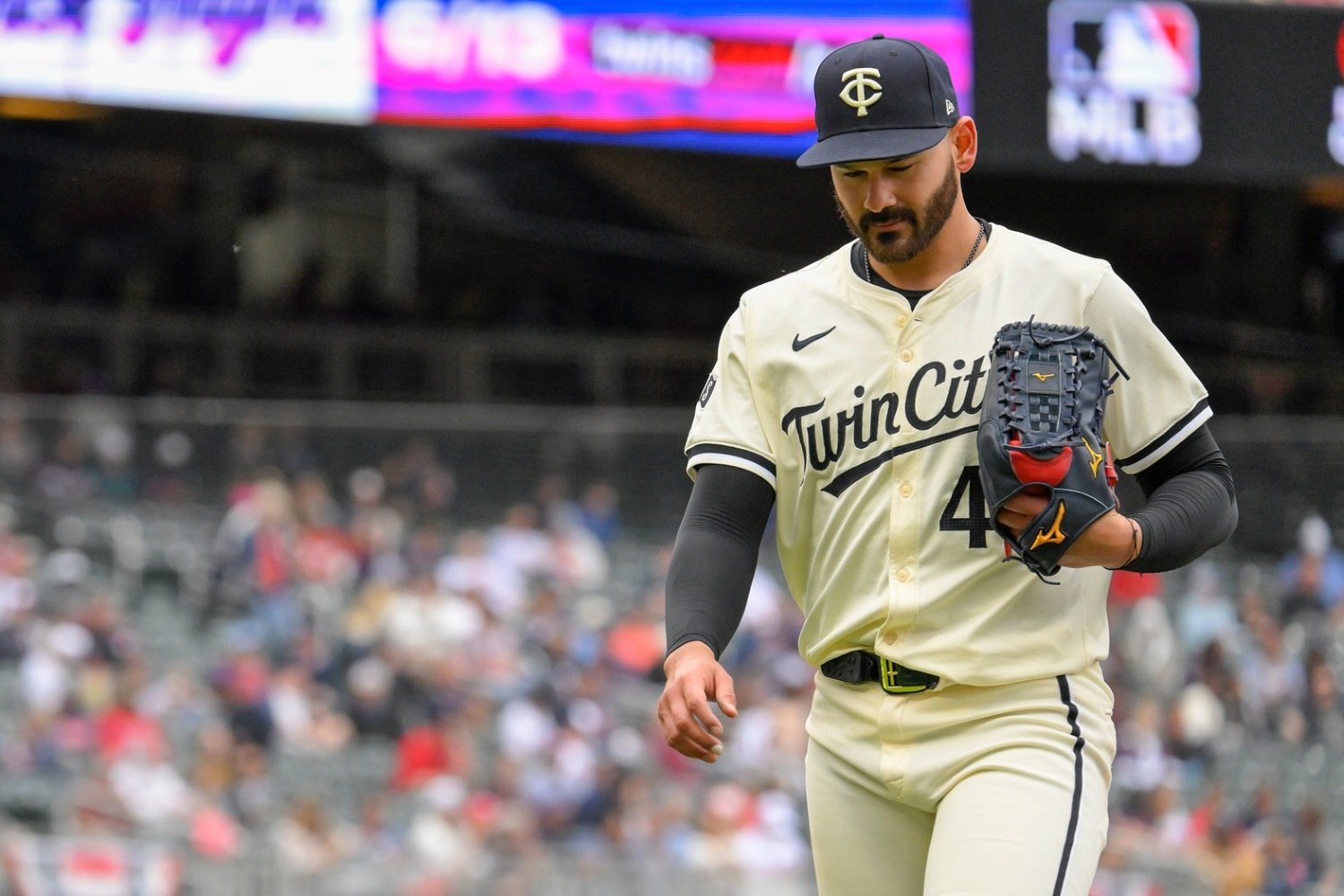 Box Score: Starting Pitcher: Pablo López: 4 2/3 IP, 7 H, 6 ER, 1 BB, 6 K (92 Pitches, 60 Strikes, 65.2%) Home Runs: None Bottom 3 WPA: López (-.265), Edouard Julien (-.077), José Miranda (-.069) Win Probability Chart (Via Fangraphs): The vibes were good after Saturday's come-from-behind victory over the defending champion Rangers. The winning streak had reached four, and today's pitching matchup certainly favored the Twins, as staff ace Pablo López faced career minor-leaguer Gerson Garabito, who was making his major-league debut. Could they complete the sweep and establish positive momentum going into a series with the surprisingly good Royals? López started strong, striking out Corey Seager and Adolis Garcia in the first on elevated fastballs; the one to Garcia registered 96 MPH. He then pitched a 1-2-3 second, with another strikeout added in. Things shifted in the third. After two fairly easy outs, Lopez battled with leadoff hitter Marcus Semien, an eight-pitch at-bat that resulted in a walk. That brought up Seager, who demolished a López curveball (to the tune of a 109-MPH exit velocity) to make the score 2-0. Seager has been hot since his brutal start to the season (.631 OPS in April), and he would not be done. López's fourth inning was even worse, his changeup being hit particularly hard. Following a hit-by-pitch to García, López allowed two sharp singles and a double en route to the Rangers doubling their lead. Home runs gave way to a series of base hits last outing, as well. Garabito looked decent early, flashing a plus slider and working around some shaky command to put up a couple of zeroes. He walked three through his first three innings, but did not allow a hit, with no Twin able to register an exit velocity 100 MPH or greater. Carlos Correa and Max Kepler changed that storyline quickly to start the fourth, with Correa singling and Kepler nearly homering (18/30 ballparks) to make the game 4-1. After two outs, Garabito walked Carlos Santana, and his day was done. Normally, getting into a weak Texas bullpen in the fourth inning would be considered a good sign, but Jonathan Hernandez retired the slumping Edouard Julien to end the threat. Seager rendered Kepler's double meaningless by jumping on López's first pitch to start the fifth and launching it into the right-field pavilion. A double and two outs later, López was done. He did not get a single whiff on non-fastballs all afternoon. The Twins attempted to mount rallies against the underbelly of Texas's struggling bullpen, but managed only a run before José Leclerc was brought in. Leclerc has struggled this year, but was nails in the playoffs last year, and his slider remains elite. He pitched the final 2 1/3 innings to seal the win. The Good: -Kepler and Correa are doing damage in the middle of the order right now, putting up quality at-bats and not missing their pitch. -Bullpen whipping boy Jorge Alcalá threw well, his slider looking sharp at 92 MPH and his fastball reaching 99 MPH. Seems like a weapon to me, but what do I know? -Josh Staumont struck out Seager with a 98-MPH sinker. Maybe there have been advances in Thoracic Outlet Surgery, because generally, velocity and command do not return to those who have undergone the procedure. Staumont never had much command, so if his velo is back, his signing is a steal for the Twins, who have him under team control for two years after this one. The Bad: -López needs to be perfect with his fastball command if his secondaries are going to be as hittable as they were today. The Twins also may want to review film to see if he is tipping his non-fastballs. -Julien is scuffling badly, striking out in the zone, or rolling over and hitting grounders to the right side. It may be time to let him work through these struggles in the minors, with Miranda hitting well, and Royce Lewis (as well as Brooks Lee) on the mend. -Miranda made errors in consecutive innings, neither of them particularly pretty. What’s Next: Joe Ryan (3-3, 3.15 ERA) goes against Alec Marsh (4-1, 2.74 ERA) as the Twins open a four game series against a confident Royals squad, currently at 14 games above .500. Marsh was a second round pick of the Royals, and never had good minor league numbers, but nonetheless represents a developmental success story for a team with very few of those. Postgame Interviews: Coming Soon Bullpen Usage Chart: WED THU FRI SAT SUN TOT Thielbar 15 0 12 0 0 27 Jax 6 0 10 0 0 16 Durán 15 0 15 8 0 38 Okert 14 0 5 0 0 19 Staumont 0 0 0 0 19 19 Funderburk 14 0 0 25 19 58 Alcalá 0 0 0 0 38 38 Sands 0 0 0 22 0 22
 -
Riding a four-game winning streak after stealing Saturday's game late, the Twins couldn't stretch that string through the weekend. Pablo López was shelled, with Rangers slugger Corey Seager leading the charge. Image courtesy of © Nick Wosika-USA TODAY Sports Riding a four-game winning streak after stealing Saturday's game late, the Twins couldn't stretch that string through the weekend. Pablo López was shelled, with Rangers slugger Corey Seager leading the charge. Box Score: Starting Pitcher: Pablo López: 4 2/3 IP, 7 H, 6 ER, 1 BB, 6 K (92 Pitches, 60 Strikes, 65.2%) Home Runs: None Bottom 3 WPA: López (-.265), Edouard Julien (-.077), José Miranda (-.069) Win Probability Chart (Via Fangraphs): The vibes were good after Saturday's come-from-behind victory over the defending champion Rangers. The winning streak had reached four, and today's pitching matchup certainly favored the Twins, as staff ace Pablo López faced career minor-leaguer Gerson Garabito, who was making his major-league debut. Could they complete the sweep and establish positive momentum going into a series with the surprisingly good Royals? López started strong, striking out Corey Seager and Adolis Garcia in the first on elevated fastballs; the one to Garcia registered 96 MPH. He then pitched a 1-2-3 second, with another strikeout added in. Things shifted in the third. After two fairly easy outs, Lopez battled with leadoff hitter Marcus Semien, an eight-pitch at-bat that resulted in a walk. That brought up Seager, who demolished a López curveball (to the tune of a 109-MPH exit velocity) to make the score 2-0. Seager has been hot since his brutal start to the season (.631 OPS in April), and he would not be done. López's fourth inning was even worse, his changeup being hit particularly hard. Following a hit-by-pitch to García, López allowed two sharp singles and a double en route to the Rangers doubling their lead. Home runs gave way to a series of base hits last outing, as well. Garabito looked decent early, flashing a plus slider and working around some shaky command to put up a couple of zeroes. He walked three through his first three innings, but did not allow a hit, with no Twin able to register an exit velocity 100 MPH or greater. Carlos Correa and Max Kepler changed that storyline quickly to start the fourth, with Correa singling and Kepler nearly homering (18/30 ballparks) to make the game 4-1. After two outs, Garabito walked Carlos Santana, and his day was done. Normally, getting into a weak Texas bullpen in the fourth inning would be considered a good sign, but Jonathan Hernandez retired the slumping Edouard Julien to end the threat. Seager rendered Kepler's double meaningless by jumping on López's first pitch to start the fifth and launching it into the right-field pavilion. A double and two outs later, López was done. He did not get a single whiff on non-fastballs all afternoon. The Twins attempted to mount rallies against the underbelly of Texas's struggling bullpen, but managed only a run before José Leclerc was brought in. Leclerc has struggled this year, but was nails in the playoffs last year, and his slider remains elite. He pitched the final 2 1/3 innings to seal the win. The Good: -Kepler and Correa are doing damage in the middle of the order right now, putting up quality at-bats and not missing their pitch. -Bullpen whipping boy Jorge Alcalá threw well, his slider looking sharp at 92 MPH and his fastball reaching 99 MPH. Seems like a weapon to me, but what do I know? -Josh Staumont struck out Seager with a 98-MPH sinker. Maybe there have been advances in Thoracic Outlet Surgery, because generally, velocity and command do not return to those who have undergone the procedure. Staumont never had much command, so if his velo is back, his signing is a steal for the Twins, who have him under team control for two years after this one. The Bad: -López needs to be perfect with his fastball command if his secondaries are going to be as hittable as they were today. The Twins also may want to review film to see if he is tipping his non-fastballs. -Julien is scuffling badly, striking out in the zone, or rolling over and hitting grounders to the right side. It may be time to let him work through these struggles in the minors, with Miranda hitting well, and Royce Lewis (as well as Brooks Lee) on the mend. -Miranda made errors in consecutive innings, neither of them particularly pretty. What’s Next: Joe Ryan (3-3, 3.15 ERA) goes against Alec Marsh (4-1, 2.74 ERA) as the Twins open a four game series against a confident Royals squad, currently at 14 games above .500. Marsh was a second round pick of the Royals, and never had good minor league numbers, but nonetheless represents a developmental success story for a team with very few of those. Postgame Interviews: Coming Soon Bullpen Usage Chart: WED THU FRI SAT SUN TOT Thielbar 15 0 12 0 0 27 Jax 6 0 10 0 0 16 Durán 15 0 15 8 0 38 Okert 14 0 5 0 0 19 Staumont 0 0 0 0 19 19 Funderburk 14 0 0 25 19 58 Alcalá 0 0 0 0 38 38 Sands 0 0 0 22 0 22 View full article
-
Guardians 5, Twins 2: Hiccup of a Comeback Goes for Naught
Hans Birkeland posted an article in Twins
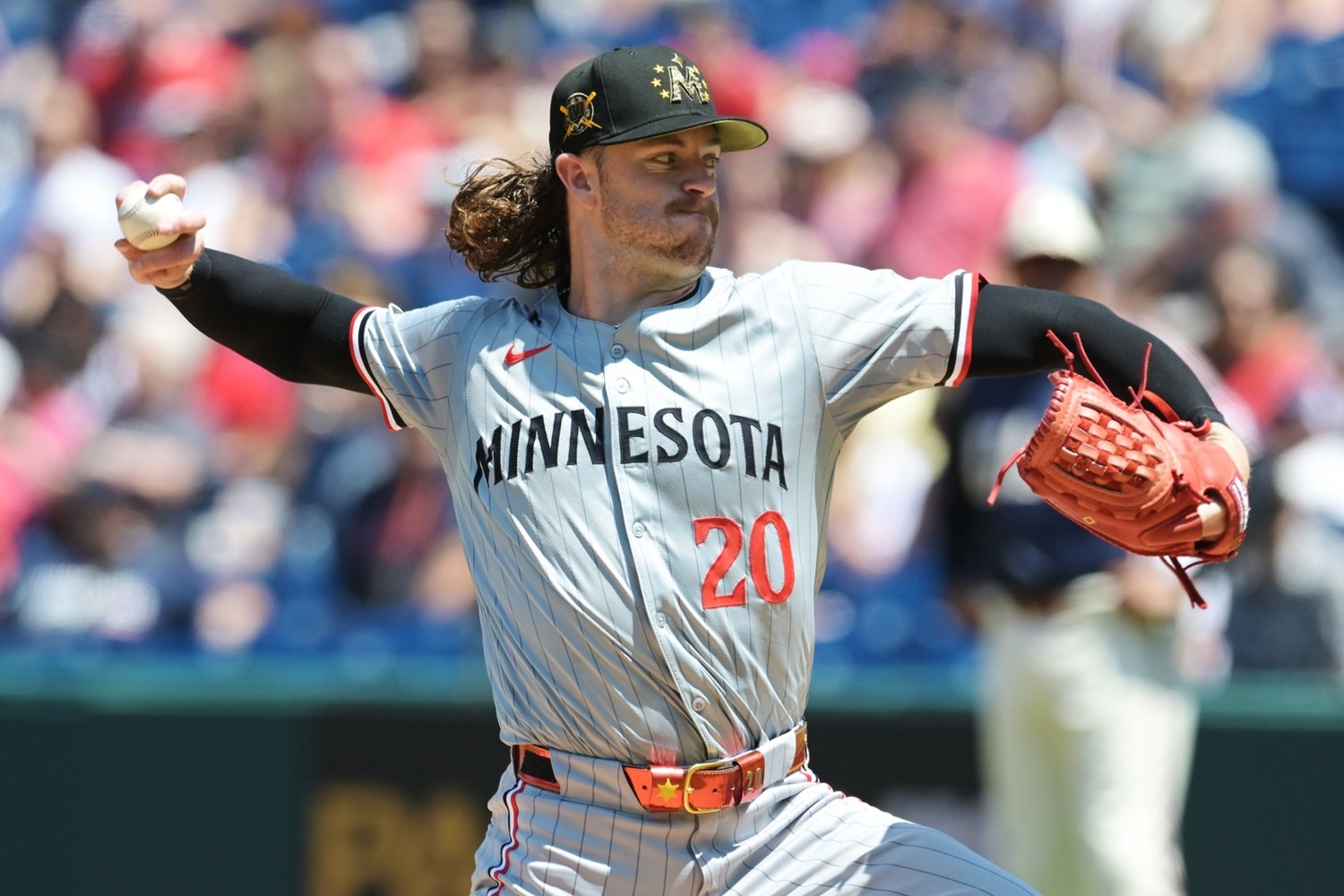 Box Score: Starting Pitcher: Chris Paddack: 8 IP, 3 H 2 ER, 0 BB, 6 K (100 Pitches, 72 Strikes, 72%) Home Runs: Jose Miranda (3) Bottom 3 WPA: Jhoan Duran (-.366), Carlos Santana (-.270), Ryan Jeffers (-.120) Win Probability Chart (Via Fangraphs): The Twins came into today's matchup with the Guardians on a five-game losing streak, their offense completely shut down by an assortment of Yankees and Guardians pitchers. Those two teams have frustrated the Twins more than any other teams post-9/11, and that trend would continue today. Tanner Bibee took the ball for Cleveland. He has had a down 2024 compared to his rookie season last year, in which he finished second in Rookie of the Year voting. His fastball has been hit hard, despite good velocity, (up to 98 MPH) as it registers in the first percentile regarding fastball run value, according to Baseball Savant. His offspeed? The 98th percentile. His polar opposite is Chris Paddack, who took the start for the Twins. His fastball has rated highly and far outpaces his offspeed and breaking pitches. The first batter he faced grounded to Jose Miranda at third base, who couldn't handle the pick and allowed Tyler Freeman to reach. That would prove crucial, as Andres Gimenez jumped on a 2-0 fastball and crushed it to right center, 412 feet. Jose Ramirez, fresh off being called underrated/unheralded/underappreciated for the 7,000th time, a league record, nearly hit another homer on Paddack's next pitch but Max Kepler made a leaping catch at the wall for the first out. The second inning was much more impressive, as Paddack set the Guardians down in order, emphasizing his change-up and slider and getting several whiffs. In the third inning, Miranda redeemed himself for his earlier misplay, as he took a fastball above the zone at 97 MPH from Bibee and deposited it in the left field seats to cut the lead in half. It was a quality swing from Miranda, but also underscores the weakness of Bibee- 97 MPH fastballs out of the zone should not be hit for damage, particularly if the hitter also has to guard against two other quality pitches. Paddack was cruising by this point, taking advantage of an aggressive approach from Cleveland's hitters to get quick outs and lots of weak contact. He finished his fourth inning at 36 pitches, throwing every non-fastball for strikes, Gabriel Arias was able to hit two balls above 110 MPH, but one was a lineout to center, and the other an innocent double in the fifth. The Twins made plenty of hard contact against Bibee, as well (Particularly Trevor Larnach), but were unable to string anything together. They began the seventh with a Max Kepler double, but Bibee struck out Santana on a questionable call to retire the side. The Twins did the impossible in the ninth, as Jeffers drew a two-out hit-by-pitch and was pinch run for by Byron Buxton. Willi Castro smoked a ball up the middle, and shortstop Bryan Rocchio tried to beat Buxton to the bag. Buxton was ruled safe and that was upheld after review. Alex Kirilloff then hit a weak grounder to first, but Cleveland's closer Emannual Clase inexplicably dropped the ball. Buxton then got caught between third and home, but first baseman Josh Naylor threw to third, and Buxton dashed home to tie the game. This was the traditional Guardians tease, as with two outs and facing Jhoan Duran, singles hitter Will Brennan hit a curveball on the inside corner out to right field to win the game. And I have to write that. The Good: -Paddack was efficient and effective, even while relying heavily on non-fastballs, a good sign for him going forward. -Santana and Larnach were stinging balls all over the park, with almost nothing to show for it. The Bad: -Ryan Jeffers seems to be pressing to lift the offense all by himself. it's not working, although he did spur the Twins uprising in the ninth. -Edouard Julien is really in a funk, unable to drive anything and getting consistently fooled by good pitch sequencing. What’s Next: Pablo Lopez (4-3, 3.93 ERA), goes against Mitchell Parker (2-2, 3.09 ERA) as the Twins begin a series in D.C. Parker is a 24-year-old lefty with good stuff, while Lopez had one of his worst starts of 2023 against the Nationals, although that could be attributed to 30-degree temperatures for that April game. Postgame Interviews: Bullpen Usage Chart: WED THU FRI SAT SUN TOT Boushley 0 0 0 0 0 0 Staumont 17 0 0 0 0 17 Funderburk 29 0 0 38 0 67 Okert 0 6 11 0 0 27 Sands 0 18 0 0 0 18 Durán 0 0 10 0 14 24 Thielbar 0 9 0 0 0 9 Jax 0 0 9 0 0 9
 -
The Twins have struggled against the Guardians recently, and Sunday was no exception. Cleveland took an early lead, gave it up in a fairly silly sequence, and then walked the Twins off on the strength of a walkoff homer by Twins killer Will Brennan. Image courtesy of © Ken Blaze-USA TODAY Sports The Twins have struggled against the Guardians recently, and Sunday was no exception. Cleveland took an early lead, gave it up in a fairly silly sequence, and then walked the Twins off on the strength of a walkoff homer by Twins killer Will Brennan. Box Score: Starting Pitcher: Chris Paddack: 8 IP, 3 H 2 ER, 0 BB, 6 K (100 Pitches, 72 Strikes, 72%) Home Runs: Jose Miranda (3) Bottom 3 WPA: Jhoan Duran (-.366), Carlos Santana (-.270), Ryan Jeffers (-.120) Win Probability Chart (Via Fangraphs): The Twins came into today's matchup with the Guardians on a five-game losing streak, their offense completely shut down by an assortment of Yankees and Guardians pitchers. Those two teams have frustrated the Twins more than any other teams post-9/11, and that trend would continue today. Tanner Bibee took the ball for Cleveland. He has had a down 2024 compared to his rookie season last year, in which he finished second in Rookie of the Year voting. His fastball has been hit hard, despite good velocity, (up to 98 MPH) as it registers in the first percentile regarding fastball run value, according to Baseball Savant. His offspeed? The 98th percentile. His polar opposite is Chris Paddack, who took the start for the Twins. His fastball has rated highly and far outpaces his offspeed and breaking pitches. The first batter he faced grounded to Jose Miranda at third base, who couldn't handle the pick and allowed Tyler Freeman to reach. That would prove crucial, as Andres Gimenez jumped on a 2-0 fastball and crushed it to right center, 412 feet. Jose Ramirez, fresh off being called underrated/unheralded/underappreciated for the 7,000th time, a league record, nearly hit another homer on Paddack's next pitch but Max Kepler made a leaping catch at the wall for the first out. The second inning was much more impressive, as Paddack set the Guardians down in order, emphasizing his change-up and slider and getting several whiffs. In the third inning, Miranda redeemed himself for his earlier misplay, as he took a fastball above the zone at 97 MPH from Bibee and deposited it in the left field seats to cut the lead in half. It was a quality swing from Miranda, but also underscores the weakness of Bibee- 97 MPH fastballs out of the zone should not be hit for damage, particularly if the hitter also has to guard against two other quality pitches. Paddack was cruising by this point, taking advantage of an aggressive approach from Cleveland's hitters to get quick outs and lots of weak contact. He finished his fourth inning at 36 pitches, throwing every non-fastball for strikes, Gabriel Arias was able to hit two balls above 110 MPH, but one was a lineout to center, and the other an innocent double in the fifth. The Twins made plenty of hard contact against Bibee, as well (Particularly Trevor Larnach), but were unable to string anything together. They began the seventh with a Max Kepler double, but Bibee struck out Santana on a questionable call to retire the side. The Twins did the impossible in the ninth, as Jeffers drew a two-out hit-by-pitch and was pinch run for by Byron Buxton. Willi Castro smoked a ball up the middle, and shortstop Bryan Rocchio tried to beat Buxton to the bag. Buxton was ruled safe and that was upheld after review. Alex Kirilloff then hit a weak grounder to first, but Cleveland's closer Emannual Clase inexplicably dropped the ball. Buxton then got caught between third and home, but first baseman Josh Naylor threw to third, and Buxton dashed home to tie the game. This was the traditional Guardians tease, as with two outs and facing Jhoan Duran, singles hitter Will Brennan hit a curveball on the inside corner out to right field to win the game. And I have to write that. The Good: -Paddack was efficient and effective, even while relying heavily on non-fastballs, a good sign for him going forward. -Santana and Larnach were stinging balls all over the park, with almost nothing to show for it. The Bad: -Ryan Jeffers seems to be pressing to lift the offense all by himself. it's not working, although he did spur the Twins uprising in the ninth. -Edouard Julien is really in a funk, unable to drive anything and getting consistently fooled by good pitch sequencing. What’s Next: Pablo Lopez (4-3, 3.93 ERA), goes against Mitchell Parker (2-2, 3.09 ERA) as the Twins begin a series in D.C. Parker is a 24-year-old lefty with good stuff, while Lopez had one of his worst starts of 2023 against the Nationals, although that could be attributed to 30-degree temperatures for that April game. Postgame Interviews: Bullpen Usage Chart: WED THU FRI SAT SUN TOT Boushley 0 0 0 0 0 0 Staumont 17 0 0 0 0 17 Funderburk 29 0 0 38 0 67 Okert 0 6 11 0 0 27 Sands 0 18 0 0 0 18 Durán 0 0 10 0 14 24 Thielbar 0 9 0 0 0 9 Jax 0 0 9 0 0 9 View full article
-
(3).png.e54c9490f8c82337d3dfbe0f02de5b7a.png) Coming off one of the more surprising losses of the year in Saturday's 10-8 tilt, the Twins faced the mercurial Alek Manoah as they looked to win their sixth consecutive series. Manoah hasn't been anywhere close to good since the 2022 season concluded. What version of him would show up today? The Twins countered with Bailey Ober, who has looked the part of their missing playoff-caliber starter following his season-opening clunker against the Royals. Box Score Starting Pitcher: Bailey Ober: 6 1/3 IP, 1 H, 0 ER, 0 BB, 10 K (104 Pitches, 67 Strikes, 64.4%) Home Runs: Carlos Santana (7) Bottom 3 WPA: Santana (.388), Ober (.380), Kody Funderburk (.213) Win Probability Chart (Via Fangraphs): Manoah's issues have been largely command-based this year following a lost 2023 season in which he lost his mechanics and dealt with injuries. Towards the end of that year, there was some question about where he was as he did not report to the minor league affiliate he was assigned to to work out his mechanical issues. It turns out he was getting multiple physical ailments examined, but the lack of communication was eyebrow-raising. This year, it appears his stuff is back and he proved that today, sitting 96 MPH with his fastball and showing good movement with his secondary pitches. In his first start of the year, against Washington, Manoah showed a lot of swing and miss but lost the strike zone in the fourth inning, resulting in a poor pitching line of 4 IP, 6 H, 6 ER, 4 BB, 6 K with two home runs allowed. This against an interesting but still rebuilding Nationals squad. Today Manoah allowed a sharp leadoff single to Edouard Julien but retired the next three hitters to avoid any damage. He walked Willi Castro to lead off the second, but Alex Kirilloff quickly grounded into a double play to end that threat. Christian Vazquez led off the third by reaching on an error, but Austin Martin grounded into a double play of his own to quell that uprising. Manoah's body language at this point started to resemble his Cy-Young runner up form from 2022, as he was strutting about and shouting at Twins hitters, clearly settling into a groove. Fortunately for the Twins, Ober was just as good, and was perfect the first trip through the Blue Jays order, getting whiffs and weak contact primarily from his change-up and fastball. After a 23 pitch first inning, Ober was more efficient, finishing his six and one third innings at 103 pitches, 15 whiffs and ten strikeouts in a masterful outing. The Blue Jays approach seemed to be that they would wait Ober out, hoping for a mistake, but at his best, Ober has pinpoint command and gave the Jays absolutely nothing. Perhaps surprised by the effectiveness of the (until today) broken Manoah, the Twins were aggressive and let the big righty get through six innings at just 57 pitches. Outside of a long fly out from Carlos Correa in the fourth and a sharp single from Carlos Santana in the fifth, the Twins had no answers offensively. That is, until the seventh. Twins Daily's winning "Make It Official!" game recaps are sponsored by Official Fried Chicken, which you can find in center field of Target Field. With a name like "Official," we know we have to be the best in the game every day, and from your first bite, you'll know thats a promise we make good on. After Kepler reached on an error (the second of the day from thir d baseman Ernie Clement) with one out, Castro laced a single to right. The slumping Kirilloff nearly grounded into another double play but reached first safely, and then Santana made the Blue Jays pay by rocking an 2-0 change-up, up in the zone, for a game-breaking three run home run. After Ober got the first out of the seventh, he was relieved by Cole Sands, who gave up three base runners before he was mercifully removed in favor of Kody Funderburk, who got the final two outs, surrendering just a sacrifice fly off the bat of Danny Jansen in the process. The Twins were not done, however, as Julien singled on a 3-0 pitch to start the eighth and stole second. Correa walked and with two outs, Kepler doubled them both home to extend the lead to four. The Good: -Santana continues to sting the ball. His numbers are still depressed by his horrid start, but he has contributed some big hits lately. -Ober with good command is just an elite pitcher, and more often than not, he has been that pitcher this year. -Kepler extended his hitting streak to 14 games, and added another bundle of WPA to his total, which is now at 1.11 for the year. The Bad: -Kirilloff is rolling over on pitches, even when ahead in the count, and is missing on velocity up in the zone. It may be time for the annual game of "Is he hurt or just slumping?" -The Cole Sands magic from April has clearly run out, as he relieved Ober in the seventh with one out, and proceeded to allow a walk, single and hit-by-pitch before exiting in favor of Kody Funderburk. What’s Next: Chris Paddack (4-1, 4.34 ERA) goes against Carlos Rodon (3-2, 3.56 ERA) as the Twins welcome the beloved Yankees to Target Field for a three game set. Twins fans were clamoring to sign Rodon when it appeared Correa had signed elsewhere prior to the 2023 season, but Rodon was not interested in signing with a non tough-guy team like the Twins and ended up becoming an albatross and a symbol for all that went wrong for New York last year, getting hurt and coming back to provide 14 starts with a 6.85 ERA. He has bounced back this year to some extent but looking at his underlying numbers, he has been homer prone with ineffective breaking pitches. Postgame Interviews: Bullpen Usage Chart: WED THU FRI SAT SUN TOT Jax 26 0 26 0 0 52 Durán 18 0 13 0 14 45 Funderburk 0 27 0 0 23 50 Thielbar 14 0 0 25 0 39 Staumont 0 26 0 21 0 47 Okert 0 0 0 11 0 11 Jackson 0 0 0 10 0 10 Sands 0 0 0 28 12 40
Coming off one of the more surprising losses of the year in Saturday's 10-8 tilt, the Twins faced the mercurial Alek Manoah as they looked to win their sixth consecutive series. Manoah hasn't been anywhere close to good since the 2022 season concluded. What version of him would show up today? The Twins countered with Bailey Ober, who has looked the part of their missing playoff-caliber starter following his season-opening clunker against the Royals. Box Score Starting Pitcher: Bailey Ober: 6 1/3 IP, 1 H, 0 ER, 0 BB, 10 K (104 Pitches, 67 Strikes, 64.4%) Home Runs: Carlos Santana (7) Bottom 3 WPA: Santana (.388), Ober (.380), Kody Funderburk (.213) Win Probability Chart (Via Fangraphs): Manoah's issues have been largely command-based this year following a lost 2023 season in which he lost his mechanics and dealt with injuries. Towards the end of that year, there was some question about where he was as he did not report to the minor league affiliate he was assigned to to work out his mechanical issues. It turns out he was getting multiple physical ailments examined, but the lack of communication was eyebrow-raising. This year, it appears his stuff is back and he proved that today, sitting 96 MPH with his fastball and showing good movement with his secondary pitches. In his first start of the year, against Washington, Manoah showed a lot of swing and miss but lost the strike zone in the fourth inning, resulting in a poor pitching line of 4 IP, 6 H, 6 ER, 4 BB, 6 K with two home runs allowed. This against an interesting but still rebuilding Nationals squad. Today Manoah allowed a sharp leadoff single to Edouard Julien but retired the next three hitters to avoid any damage. He walked Willi Castro to lead off the second, but Alex Kirilloff quickly grounded into a double play to end that threat. Christian Vazquez led off the third by reaching on an error, but Austin Martin grounded into a double play of his own to quell that uprising. Manoah's body language at this point started to resemble his Cy-Young runner up form from 2022, as he was strutting about and shouting at Twins hitters, clearly settling into a groove. Fortunately for the Twins, Ober was just as good, and was perfect the first trip through the Blue Jays order, getting whiffs and weak contact primarily from his change-up and fastball. After a 23 pitch first inning, Ober was more efficient, finishing his six and one third innings at 103 pitches, 15 whiffs and ten strikeouts in a masterful outing. The Blue Jays approach seemed to be that they would wait Ober out, hoping for a mistake, but at his best, Ober has pinpoint command and gave the Jays absolutely nothing. Perhaps surprised by the effectiveness of the (until today) broken Manoah, the Twins were aggressive and let the big righty get through six innings at just 57 pitches. Outside of a long fly out from Carlos Correa in the fourth and a sharp single from Carlos Santana in the fifth, the Twins had no answers offensively. That is, until the seventh. Twins Daily's winning "Make It Official!" game recaps are sponsored by Official Fried Chicken, which you can find in center field of Target Field. With a name like "Official," we know we have to be the best in the game every day, and from your first bite, you'll know thats a promise we make good on. After Kepler reached on an error (the second of the day from thir d baseman Ernie Clement) with one out, Castro laced a single to right. The slumping Kirilloff nearly grounded into another double play but reached first safely, and then Santana made the Blue Jays pay by rocking an 2-0 change-up, up in the zone, for a game-breaking three run home run. After Ober got the first out of the seventh, he was relieved by Cole Sands, who gave up three base runners before he was mercifully removed in favor of Kody Funderburk, who got the final two outs, surrendering just a sacrifice fly off the bat of Danny Jansen in the process. The Twins were not done, however, as Julien singled on a 3-0 pitch to start the eighth and stole second. Correa walked and with two outs, Kepler doubled them both home to extend the lead to four. The Good: -Santana continues to sting the ball. His numbers are still depressed by his horrid start, but he has contributed some big hits lately. -Ober with good command is just an elite pitcher, and more often than not, he has been that pitcher this year. -Kepler extended his hitting streak to 14 games, and added another bundle of WPA to his total, which is now at 1.11 for the year. The Bad: -Kirilloff is rolling over on pitches, even when ahead in the count, and is missing on velocity up in the zone. It may be time for the annual game of "Is he hurt or just slumping?" -The Cole Sands magic from April has clearly run out, as he relieved Ober in the seventh with one out, and proceeded to allow a walk, single and hit-by-pitch before exiting in favor of Kody Funderburk. What’s Next: Chris Paddack (4-1, 4.34 ERA) goes against Carlos Rodon (3-2, 3.56 ERA) as the Twins welcome the beloved Yankees to Target Field for a three game set. Twins fans were clamoring to sign Rodon when it appeared Correa had signed elsewhere prior to the 2023 season, but Rodon was not interested in signing with a non tough-guy team like the Twins and ended up becoming an albatross and a symbol for all that went wrong for New York last year, getting hurt and coming back to provide 14 starts with a 6.85 ERA. He has bounced back this year to some extent but looking at his underlying numbers, he has been homer prone with ineffective breaking pitches. Postgame Interviews: Bullpen Usage Chart: WED THU FRI SAT SUN TOT Jax 26 0 26 0 0 52 Durán 18 0 13 0 14 45 Funderburk 0 27 0 0 23 50 Thielbar 14 0 0 25 0 39 Staumont 0 26 0 21 0 47 Okert 0 0 0 11 0 11 Jackson 0 0 0 10 0 10 Sands 0 0 0 28 12 40- 61 comments
-
- 6
-
-
- max kepler
- bailey ober
- (and 3 more)
-
The Twins coughed up a six-run lead on Saturday, but thanks to Bailey Ober, there would be no such offensive onslaught from the Jays today. Carlos Santana had a big three-run home run and Max Kepler added the insurance as the Twins ruined Alek Manoah's best start in 20 months, notching their 17th victory in 20 contests. Image courtesy of © Dan Hamilton-USA TODAY Sports The Twins coughed up a six-run lead on Saturday, but thanks to Bailey Ober, there would be no such offensive onslaught from the Jays today. Carlos Santana had a big three-run home run and Max Kepler added the insurance as the Twins ruined Alek Manoah's best start in 20 months, notching their 17th victory in 20 contests. Coming off one of the more surprising losses of the year in Saturday's 10-8 tilt, the Twins faced the mercurial Alek Manoah as they looked to win their sixth consecutive series. Manoah hasn't been anywhere close to good since the 2022 season concluded. What version of him would show up today? The Twins countered with Bailey Ober, who has looked the part of their missing playoff-caliber starter following his season-opening clunker against the Royals. Box Score Starting Pitcher: Bailey Ober: 6 1/3 IP, 1 H, 0 ER, 0 BB, 10 K (104 Pitches, 67 Strikes, 64.4%) Home Runs: Carlos Santana (7) Bottom 3 WPA: Santana (.388), Ober (.380), Kody Funderburk (.213) Win Probability Chart (Via Fangraphs): Manoah's issues have been largely command-based this year following a lost 2023 season in which he lost his mechanics and dealt with injuries. Towards the end of that year, there was some question about where he was as he did not report to the minor league affiliate he was assigned to to work out his mechanical issues. It turns out he was getting multiple physical ailments examined, but the lack of communication was eyebrow-raising. This year, it appears his stuff is back and he proved that today, sitting 96 MPH with his fastball and showing good movement with his secondary pitches. In his first start of the year, against Washington, Manoah showed a lot of swing and miss but lost the strike zone in the fourth inning, resulting in a poor pitching line of 4 IP, 6 H, 6 ER, 4 BB, 6 K with two home runs allowed. This against an interesting but still rebuilding Nationals squad. Today Manoah allowed a sharp leadoff single to Edouard Julien but retired the next three hitters to avoid any damage. He walked Willi Castro to lead off the second, but Alex Kirilloff quickly grounded into a double play to end that threat. Christian Vazquez led off the third by reaching on an error, but Austin Martin grounded into a double play of his own to quell that uprising. Manoah's body language at this point started to resemble his Cy-Young runner up form from 2022, as he was strutting about and shouting at Twins hitters, clearly settling into a groove. Fortunately for the Twins, Ober was just as good, and was perfect the first trip through the Blue Jays order, getting whiffs and weak contact primarily from his change-up and fastball. After a 23 pitch first inning, Ober was more efficient, finishing his six and one third innings at 103 pitches, 15 whiffs and ten strikeouts in a masterful outing. The Blue Jays approach seemed to be that they would wait Ober out, hoping for a mistake, but at his best, Ober has pinpoint command and gave the Jays absolutely nothing. Perhaps surprised by the effectiveness of the (until today) broken Manoah, the Twins were aggressive and let the big righty get through six innings at just 57 pitches. Outside of a long fly out from Carlos Correa in the fourth and a sharp single from Carlos Santana in the fifth, the Twins had no answers offensively. That is, until the seventh. Twins Daily's winning "Make It Official!" game recaps are sponsored by Official Fried Chicken, which you can find in center field of Target Field. With a name like "Official," we know we have to be the best in the game every day, and from your first bite, you'll know thats a promise we make good on. After Kepler reached on an error (the second of the day from thir d baseman Ernie Clement) with one out, Castro laced a single to right. The slumping Kirilloff nearly grounded into another double play but reached first safely, and then Santana made the Blue Jays pay by rocking an 2-0 change-up, up in the zone, for a game-breaking three run home run. After Ober got the first out of the seventh, he was relieved by Cole Sands, who gave up three base runners before he was mercifully removed in favor of Kody Funderburk, who got the final two outs, surrendering just a sacrifice fly off the bat of Danny Jansen in the process. The Twins were not done, however, as Julien singled on a 3-0 pitch to start the eighth and stole second. Correa walked and with two outs, Kepler doubled them both home to extend the lead to four. The Good: -Santana continues to sting the ball. His numbers are still depressed by his horrid start, but he has contributed some big hits lately. -Ober with good command is just an elite pitcher, and more often than not, he has been that pitcher this year. -Kepler extended his hitting streak to 14 games, and added another bundle of WPA to his total, which is now at 1.11 for the year. The Bad: -Kirilloff is rolling over on pitches, even when ahead in the count, and is missing on velocity up in the zone. It may be time for the annual game of "Is he hurt or just slumping?" -The Cole Sands magic from April has clearly run out, as he relieved Ober in the seventh with one out, and proceeded to allow a walk, single and hit-by-pitch before exiting in favor of Kody Funderburk. What’s Next: Chris Paddack (4-1, 4.34 ERA) goes against Carlos Rodon (3-2, 3.56 ERA) as the Twins welcome the beloved Yankees to Target Field for a three game set. Twins fans were clamoring to sign Rodon when it appeared Correa had signed elsewhere prior to the 2023 season, but Rodon was not interested in signing with a non tough-guy team like the Twins and ended up becoming an albatross and a symbol for all that went wrong for New York last year, getting hurt and coming back to provide 14 starts with a 6.85 ERA. He has bounced back this year to some extent but looking at his underlying numbers, he has been homer prone with ineffective breaking pitches. Postgame Interviews: Bullpen Usage Chart: WED THU FRI SAT SUN TOT Jax 26 0 26 0 0 52 Durán 18 0 13 0 14 45 Funderburk 0 27 0 0 23 50 Thielbar 14 0 0 25 0 39 Staumont 0 26 0 21 0 47 Okert 0 0 0 11 0 11 Jackson 0 0 0 10 0 10 Sands 0 0 0 28 12 40 View full article
- 61 replies
-
- 1
-
-
- max kepler
- bailey ober
- (and 3 more)
-
Should Max Kepler Have Stayed at Third?
Hans Birkeland replied to Matthew Trueblood's topic in Twins Daily Front Page News
If the person's health matters more than the game (which it does), then shouldn't it not matter if a run is scored or not? If Kepler is standing there saying he is Sparticus, I don't think that necessarily makes him more or less compassionate. It could, but if he doesn't score because he wants to score points on social media or something, that's more of a moral failing than if he scores and actually felt bad about it. I'll reserve judgment until I see brain scans. -
Red Sox 9, Twins 2: Streak Ends Amid Physical and Mental Mistakes
Hans Birkeland posted an article in Twins
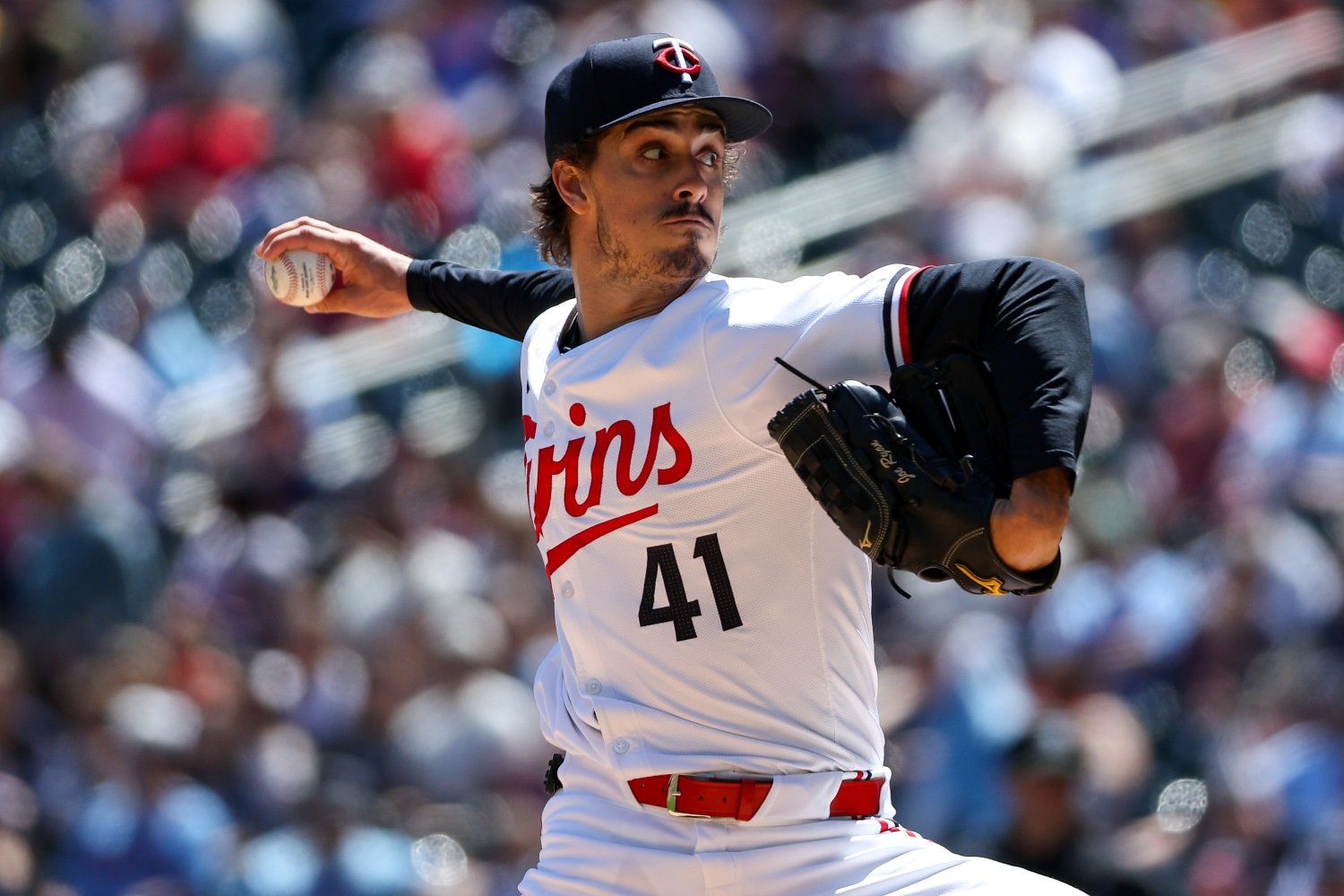 The Twins have had a difficult time losing of late. They haven't dominated teams offensively, Atlanta Braves-style, where they come out bashing the opposing starting pitcher into oblivion. In fact, they have been shut down offensively for the first half of many games during the streak. They haven't allowed 20 total runs in 21 starting pitching outings, a la the Seattle Mariners. They've just been hanging around until the sixth, seventh, or eighth inning and finding a way to win. Would that be the case again today? Box Score: Starting Pitcher: Joe Ryan: 6 IP, 4 H, 3 ER, 1 BB 5 K (95 Pitches, 62 Strikes, 65.2%) Home Runs: Ryan Jeffers (6) Bottom 3 WPA: Jose Miranda (-.194), Willi Castro (-.151), Manuel Margot (-.097) Win Probability Chart (Via Fangraphs): Joe Ryan has been the team's best starter thus far, so the timing was right for the Twins to make this a 13-gamer, especially with the Red Sox sporting a getaway day lineup with Rafael Devers at DH and team home run leader Tyler O'Neill getting the day off. Ryan was sharp early, conscious of the approach the White Sox took in his last turn in which they jumped on the first fastball they saw. That seemed to be on leadoff hitter Jarren Duran's mind, but the fastball he got was well off the plate, and Duran popped out weakly. Ryan then dominated the at-bat against all-world hitter Devers, who was fortunate to stay alive against a 1-2 splitter below the zone, and then got locked up on a painted 4-seamer down and in. Boston started Cooper Criswell, whom they signed as a minor-league free agent this offseason after he was cut loose by the Rays. Generally, if the Rays can't squeeze any value out of you, it might be time to hang 'em up, but Criswell has had a strong start to the year and continues that trend today. His arsenal doesn't jump off the page, as he topped out barely above 90 MPH on his fastball, while his changeup and sweeper don't boast elite spin rates. But as old friend Tommy Milone shows us every two or three years, sometimes, that just doesn't matter for a short period. After a quick first inning, Criswell allowed consecutive singles to Max Kepler, Carlos Correa, and Trevor Larnach to start the second. I have long lamented that Kepler is the least aggressive baserunner (proportional to his speed) in the league, and that came back to bite the Twins, as he did not attempt to score on Larnach's single--despite being around third by the time the right fielder got to the ball, I say that because Willi Castro, Carlos Santana, and Jose Miranda all got carved up by Criswell, who escaped the no-out, bases-loaded jam without a scratch. Criswell would not be so fortunate in the third, as Ryan Jeffers jumped on a splitter below the zone for a solo home run. Criswell was genuinely surprised by that outcome, but Jeffers seems intent on making the All-Star team and guessed the pitch perfectly. That would prove important, because Ryan ran into trouble in the fourth. After an excuse-me schtoink by the speedster Duran turned into a double, Devers advanced him to third with a grounder, and then old friend Rob Refsnyder singled sharply off of Correa's glove for Boston's first run. Ryan recovered to retire Wilyer Abreu on a short fly ball and induced a weak grounder from Vaughn Grissom. The fifth, too, was a struggle, though initially not due to any mistakes from Ryan. After Reese McGuire was jammed, and blooped a single to center, Ryan's pickoff throw was dropped by the usually sure-handed Santana. McGuire (who was catching, mind you) then stole third base upon review after Miranda bungled the tag. Then it was Angel Hernandez's time. Ryan was under the impression that he had an 0-2 count on the batter, Ceddanne Rafaela, but Hernandez had called the pitch that McGuire ran on a ball, despite it being a clear strike. Ryan was rattled, and he threw a few "angry" fastballs before missing his location by a foot, and the talented but free-swinging Rafaela took advantage, smoking the inside fastball 105 MPH into the left field seats, making it 3-1 Red Sox. Perhaps Anthony Edwards could give Ryan a few pointers on composure in big moments, after being the victim of a terrible call. The Twins squandered a few scoring opportunities in the sixth and seventh, and the Red Sox made them pay in the second inning of Kody Funderburk's afternoon. Devers singled, and lefty-masher O'Neill then pinch hit and singled to left, which was played into a double via a bobble from Manuel Margot. After a walk, Grissom launched a double off the right-center field wall to drive home two and put the game out of reach. In case that was in question, Margot, who came up short with men on base twice after pinch-hitting for Alex Kirilloff before his bobble earlier, dropped a fly ball off the bat of Dominic Smith, allowing the sixth and seventh runs to score. It was ruled a double, much to Funderburk's chagrin. A Kepler double and Larnach single made the game 7-2 in the bottom of the eighth, but Devers unloaded on a Jay Jackson offering in the ninth with one on to officially put any thoughts of a comeback to rest. The Good: -Ryan's stuff was sharp, and he got through six innings. -Jeffers will not be denied with his impressive home run and his throw to third should have resulted in an out with McGuire running in the fourth. -Santana had some hard contact, resulting in two hits leading off innings. Unfortunately, hitting behind him was: The Bad: -Miranda, who looked overmatched in all his at-bats, falling behind and contributing very weak contact, outside of his strikeout in the seventh. -Ryan's mind. We saw glimpses of this in 2022, pre-pitch clock, when batters would step out of the box repeatedly to get under Ryan's skin and upset his rhythm. He will likely look back at this start as one in which he made one bad pitch, and yet he took the loss because he was rattled for just a moment. -Margot appears to be the Twins version of Shake Milton on the Timberwolves. His acquisition made total sense, but nothing he has done has worked for the first month and a half. Provided Byron Buxton can return, Margot's roster spot is better utilized by Austin Martin, who can do everything Margot does, and potentially better. What’s Next: Simeon Woods Richardson (1-0, 2.45 ERA) goes against Mariners ace Luis Castillo (3-4, 3.46 ERA) as the team looks to start a new winning streak against a Seattle team that both were projected to and has, the best rotation in baseball. The series will feature the return of Jorge Polanco, the former fan favorite offloaded this offseason while the team was building its giant sinkhole to throw fan morale into. Postgame Interviews: Bullpen Usage Chart: WED THU FRI SAT SUN TOT Jax 10 0 11 0 0 21 Funderburk 0 0 0 0 42 42 Thielbar 0 0 7 0 0 7 Durán 0 0 11 15 0 26 Sands 0 0 12 9 0 21 Alcalá 0 0 0 21 0 21 Jackson 0 0 0 0 35 35 Okert 13 0 0 14 0 27
- 39 comments
-
- 4
-
-
- joe ryan
- ryan jeffers
- (and 4 more)
-
The Twins looked primed to extend their winning streak Sunday, applying ample early pressure on offense. But some bad at-bats in key situations, mental lapses and Angel Hernandez ensured that the streak would go no further than 12. Bullpen Usage Chart: WED THU FRI SAT SUN TOT Jax 10 0 11 0 0 21 Funderburk 0 0 0 0 42 42 Thielbar 0 0 7 0 0 7 Durán 0 0 11 15 0 26 Sands 0 0 12 9 0 21 Alcalá 0 0 0 21 0 21 Jackson 0 0 0 0 35 35 Okert 13 0 0 14 0 27 View full article
- 39 replies
-
- 2
-
-
- joe ryan
- ryan jeffers
- (and 4 more)
-
Maybe Farmer had a little extra aggression from hitting .050 for four weeks!
- 30 replies
-
- 2
-
-

-
- pablo lopez
- jose miranda
- (and 2 more)
-
The Twins were looking for their seventh win in a row, which would put their record above .500 for the first time since early April. Reid Detmers shut them down early, but they rallied the second and third times through the lineup, and kept it going en route to an 11-5 thumping of the struggling Angels. Image courtesy of © Gary A. Vasquez-USA TODAY Sports The Twins were looking for their seventh win in a row, which would put their record above .500 for the first time since early April. Reid Detmers shut them down early, but they rallied the second and third times through the lineup, and kept it going en route to an 11-5 thumping of the struggling Angels. Twins fans have certainly been tempted into unsufferability lately. First, with the team underperforming to a 7-13 start, the sky appeared to be falling. Even so-called "level-headed" analysts thought so and looked for signs of organizational rot to explain such a disaster (Does David Popkins need to be drawn and quartered? Do we even know how to acquire players with plate approaches?) Well, the team won six games in a row on the backs of guys hitting .150 getting their batting average to .200. Lots of guys were hurt, and the schedule was tough. We all should know better by now, and we don't, but the upshot is that the team is now likely to finish April with a .500 or better record. A similar concern popped up with ace Pablo López. He threw a couple of pitches at 91-92 MPH after a 40-pitch inning his last start and everyone freaked out, thinking he was hurt. I was hoping ending the playoff streak would chill everyone out a bit, but I guess not. Although, I haven't been a fan of a baseball team with recent playoff success since I was 14 so maybe this is all normal. In any case, the Twins are (probably) fine and so is López, who sat at 93-96 MPH all afternoon. Box Score: Starting Pitcher: Pablo López: 5 IP 4 H, 4 ER, 1 BB, 8 K (87 Pitches, 55 Strikes, 63.2%) Home Runs: None Top 3 WPA: Ryan Jeffers (.166), Austin Martin (.132), Alex Kirilloff (.094) Win Probability Chart (Via Fangraphs): The Twins were attempting to sweep the Angels but had to beat Reid Detmers to do so. Detmers has been a good pitcher, and is in the midst of his fourth season in the big leagues, despite being only 24. His stuff is electric from the left side, and he has a no-hitter to prove it. In past years, however, the third time through the order has been a problem for Detmers, along with some shaky command. Last year, the Twins faced Detmers on May 19th and were shut out through five innings, with absolutely no hard contact and twelve strikeouts. They mounted a rally in the sixth and drove Detmers from the game. Today, Detmers was locked in from the start, painting change-ups and curveballs on the corners and locating his fastball (as hard as 96 MPH) up in the zone. López was just as good to start, hitting 96 MPH with his fastball and getting whiffs on his offspeed stuff. His body language was confident and his location was sharp. Both pitchers were perfect through three innings. Ryan Jeffers put an end to that to start the fourth, rifling a double off a hanging curveball to break up the stalemate. Byron Buxton then grounded to third, and Nolan Schanuel couldn't handle the throw, putting runners on first and second and nobody out. The broadcast was advocating for a bunt from three-hole hitter Manuel Margot, and considering Margot is hitting .173 and Detmers was dealing, I was inclined to agree with them. Instead, Margot grounded into a double play, seemingly extinguishing the rally. Not quite, as Jose Miranda laced a single to left that scored Buxton easily. Things got worse for Detmers in the fifth. Christian Vazquez singled on a painted slider down and in, and a Resurgent Kyle Farmer roped a double to left, bringing up Austin Martin in a pivotal at-bat. Martin worked the count to 3-2 and then singled sharply through the left side, scoring Vazquez, but also Farmer, who deked the outfielder and scored when the relay was bobbled by catcher Logan O'Hoppe, who had missed a pop-up the previous inning. Jeffers then hit a pop-up that confused the Trout-less outfield of the Angels, with both Jo Adell and Aaron Hicks having a shot at the ball. It dropped and scored Martin, which probably prompted manager Ron Washington to wonder if he could have his old job in Atlanta back. This may have caused Detmers to lose focus a little, as he allowed a loud sacrifice fly to Margot, and a ringing double to Miranda before finally stopping the bleeding by retiring Santana on a grounder. However, the Angels can still hit a little, and they rallied in their half of the fifth, with all damage coming from players who had either had a misplay or error to that point in the game. After retiring the first two hitters fairly easily, López started to lose command, allowing a double to O'Hoppe and a sharp single to Adell before Rengifo launched a 94 MPH fastball from López on the inner half for a two-run homer. Schanuel then went back-to-back with Rengifo on essentially the same pitch, making it a one-run game. López got the final out, but his day was done. The Twins got some insurance against reliever Luis Garcia in the seventh. Martin led off with a walk, Jeffers scooped a breaking ball off the dirt for a single, and Buxton walked after a lengthy battle to load the bases. Alex Kirilloff hit for Margot and worked the count to 3-1 before launching a double the other way to score two and swing the momentum back to the Twins' side. Santana hit a grounder to score the eighth run, and Willi Castro stroked a single to right for the ninth. The Good: -López's velocity was fine. -Miranda got the barrel on a couple of balls, as he looked to make the case that he shouldn't be sent down upon Carlos Correa's return. He finished 3-5 with two run-scoring hits. -Martin also made that case, however, as his fifth-inning RBI single was crucial. He also scored three runs and stole a base. -Jeffers takes a lot of smart at-bats and has shown an ability to find the barrel even when he expands the zone. He went 3-4, upping his OPS to .964. How long does he have to be this good before he gets an ounce of national recognition? He has a 142 OPS+ since the start of 2023. -The interchange between LaTroy Hawkins' perspective as a pitcher and Trevor Plouffe's as a hitter is pretty good TV, and hopefully, that makes up for the late start times going forward when the Twins play on the West Coast. The Bad: -The Angels. I don't see what the plan is. Four or five balls were hit to their outfield this series where the fielder pulled up, possibly to avoid injury. They mix awkward and sad in equal measure; their fans deserve better. -López lost the zone and gave up a lot of hard contact in the fifth. Edouard Julien got looked at by trainers after an awkward swing in the ninth. It looked like he was flexing his elbow, but was allowed to continue the at-bat. What’s Next: Joe Ryan (1-1, 3.45 ERA) goes against White Sox "ace" Garrett Crochet (1-4, 6.37 ERA) as the Twins look to continue their dominance against Chicago. Crochet has great stuff, however, and the Sox just swept Tampa Bay, so it won't be a cakewalk. Postgame Interviews: WED THU FRI SAT SUN TOT Jackson 0 0 0 29 0 29 Funderburk 0 0 0 38 0 38 Bowman 6 0 35 0 0 41 Sands 0 13 0 0 35 48 Stewart 11 20 0 0 0 31 Okert 0 10 0 0 29 39 Thielbar 0 13 7 0 0 20 Jax 9 9 0 0 6 24 View full article
- 30 replies
-
- 1
-
-
- pablo lopez
- jose miranda
- (and 2 more)
-
.png.2b0f95af92ad4d52e1ed62277377ad1d.png) Twins fans have certainly been tempted into unsufferability lately. First, with the team underperforming to a 7-13 start, the sky appeared to be falling. Even so-called "level-headed" analysts thought so and looked for signs of organizational rot to explain such a disaster (Does David Popkins need to be drawn and quartered? Do we even know how to acquire players with plate approaches?) Well, the team won six games in a row on the backs of guys hitting .150 getting their batting average to .200. Lots of guys were hurt, and the schedule was tough. We all should know better by now, and we don't, but the upshot is that the team is now likely to finish April with a .500 or better record. A similar concern popped up with ace Pablo López. He threw a couple of pitches at 91-92 MPH after a 40-pitch inning his last start and everyone freaked out, thinking he was hurt. I was hoping ending the playoff streak would chill everyone out a bit, but I guess not. Although, I haven't been a fan of a baseball team with recent playoff success since I was 14 so maybe this is all normal. In any case, the Twins are (probably) fine and so is López, who sat at 93-96 MPH all afternoon. Box Score: Starting Pitcher: Pablo López: 5 IP 4 H, 4 ER, 1 BB, 8 K (87 Pitches, 55 Strikes, 63.2%) Home Runs: None Top 3 WPA: Ryan Jeffers (.166), Austin Martin (.132), Alex Kirilloff (.094) Win Probability Chart (Via Fangraphs): The Twins were attempting to sweep the Angels but had to beat Reid Detmers to do so. Detmers has been a good pitcher, and is in the midst of his fourth season in the big leagues, despite being only 24. His stuff is electric from the left side, and he has a no-hitter to prove it. In past years, however, the third time through the order has been a problem for Detmers, along with some shaky command. Last year, the Twins faced Detmers on May 19th and were shut out through five innings, with absolutely no hard contact and twelve strikeouts. They mounted a rally in the sixth and drove Detmers from the game. Today, Detmers was locked in from the start, painting change-ups and curveballs on the corners and locating his fastball (as hard as 96 MPH) up in the zone. López was just as good to start, hitting 96 MPH with his fastball and getting whiffs on his offspeed stuff. His body language was confident and his location was sharp. Both pitchers were perfect through three innings. Ryan Jeffers put an end to that to start the fourth, rifling a double off a hanging curveball to break up the stalemate. Byron Buxton then grounded to third, and Nolan Schanuel couldn't handle the throw, putting runners on first and second and nobody out. The broadcast was advocating for a bunt from three-hole hitter Manuel Margot, and considering Margot is hitting .173 and Detmers was dealing, I was inclined to agree with them. Instead, Margot grounded into a double play, seemingly extinguishing the rally. Not quite, as Jose Miranda laced a single to left that scored Buxton easily. Things got worse for Detmers in the fifth. Christian Vazquez singled on a painted slider down and in, and a Resurgent Kyle Farmer roped a double to left, bringing up Austin Martin in a pivotal at-bat. Martin worked the count to 3-2 and then singled sharply through the left side, scoring Vazquez, but also Farmer, who deked the outfielder and scored when the relay was bobbled by catcher Logan O'Hoppe, who had missed a pop-up the previous inning. Jeffers then hit a pop-up that confused the Trout-less outfield of the Angels, with both Jo Adell and Aaron Hicks having a shot at the ball. It dropped and scored Martin, which probably prompted manager Ron Washington to wonder if he could have his old job in Atlanta back. This may have caused Detmers to lose focus a little, as he allowed a loud sacrifice fly to Margot, and a ringing double to Miranda before finally stopping the bleeding by retiring Santana on a grounder. However, the Angels can still hit a little, and they rallied in their half of the fifth, with all damage coming from players who had either had a misplay or error to that point in the game. After retiring the first two hitters fairly easily, López started to lose command, allowing a double to O'Hoppe and a sharp single to Adell before Rengifo launched a 94 MPH fastball from López on the inner half for a two-run homer. Schanuel then went back-to-back with Rengifo on essentially the same pitch, making it a one-run game. López got the final out, but his day was done. The Twins got some insurance against reliever Luis Garcia in the seventh. Martin led off with a walk, Jeffers scooped a breaking ball off the dirt for a single, and Buxton walked after a lengthy battle to load the bases. Alex Kirilloff hit for Margot and worked the count to 3-1 before launching a double the other way to score two and swing the momentum back to the Twins' side. Santana hit a grounder to score the eighth run, and Willi Castro stroked a single to right for the ninth. The Good: -López's velocity was fine. -Miranda got the barrel on a couple of balls, as he looked to make the case that he shouldn't be sent down upon Carlos Correa's return. He finished 3-5 with two run-scoring hits. -Martin also made that case, however, as his fifth-inning RBI single was crucial. He also scored three runs and stole a base. -Jeffers takes a lot of smart at-bats and has shown an ability to find the barrel even when he expands the zone. He went 3-4, upping his OPS to .964. How long does he have to be this good before he gets an ounce of national recognition? He has a 142 OPS+ since the start of 2023. -The interchange between LaTroy Hawkins' perspective as a pitcher and Trevor Plouffe's as a hitter is pretty good TV, and hopefully, that makes up for the late start times going forward when the Twins play on the West Coast. The Bad: -The Angels. I don't see what the plan is. Four or five balls were hit to their outfield this series where the fielder pulled up, possibly to avoid injury. They mix awkward and sad in equal measure; their fans deserve better. -López lost the zone and gave up a lot of hard contact in the fifth. Edouard Julien got looked at by trainers after an awkward swing in the ninth. It looked like he was flexing his elbow, but was allowed to continue the at-bat. What’s Next: Joe Ryan (1-1, 3.45 ERA) goes against White Sox "ace" Garrett Crochet (1-4, 6.37 ERA) as the Twins look to continue their dominance against Chicago. Crochet has great stuff, however, and the Sox just swept Tampa Bay, so it won't be a cakewalk. Postgame Interviews: WED THU FRI SAT SUN TOT Jackson 0 0 0 29 0 29 Funderburk 0 0 0 38 0 38 Bowman 6 0 35 0 0 41 Sands 0 13 0 0 35 48 Stewart 11 20 0 0 0 31 Okert 0 10 0 0 29 39 Thielbar 0 13 7 0 0 20 Jax 9 9 0 0 6 24
Twins fans have certainly been tempted into unsufferability lately. First, with the team underperforming to a 7-13 start, the sky appeared to be falling. Even so-called "level-headed" analysts thought so and looked for signs of organizational rot to explain such a disaster (Does David Popkins need to be drawn and quartered? Do we even know how to acquire players with plate approaches?) Well, the team won six games in a row on the backs of guys hitting .150 getting their batting average to .200. Lots of guys were hurt, and the schedule was tough. We all should know better by now, and we don't, but the upshot is that the team is now likely to finish April with a .500 or better record. A similar concern popped up with ace Pablo López. He threw a couple of pitches at 91-92 MPH after a 40-pitch inning his last start and everyone freaked out, thinking he was hurt. I was hoping ending the playoff streak would chill everyone out a bit, but I guess not. Although, I haven't been a fan of a baseball team with recent playoff success since I was 14 so maybe this is all normal. In any case, the Twins are (probably) fine and so is López, who sat at 93-96 MPH all afternoon. Box Score: Starting Pitcher: Pablo López: 5 IP 4 H, 4 ER, 1 BB, 8 K (87 Pitches, 55 Strikes, 63.2%) Home Runs: None Top 3 WPA: Ryan Jeffers (.166), Austin Martin (.132), Alex Kirilloff (.094) Win Probability Chart (Via Fangraphs): The Twins were attempting to sweep the Angels but had to beat Reid Detmers to do so. Detmers has been a good pitcher, and is in the midst of his fourth season in the big leagues, despite being only 24. His stuff is electric from the left side, and he has a no-hitter to prove it. In past years, however, the third time through the order has been a problem for Detmers, along with some shaky command. Last year, the Twins faced Detmers on May 19th and were shut out through five innings, with absolutely no hard contact and twelve strikeouts. They mounted a rally in the sixth and drove Detmers from the game. Today, Detmers was locked in from the start, painting change-ups and curveballs on the corners and locating his fastball (as hard as 96 MPH) up in the zone. López was just as good to start, hitting 96 MPH with his fastball and getting whiffs on his offspeed stuff. His body language was confident and his location was sharp. Both pitchers were perfect through three innings. Ryan Jeffers put an end to that to start the fourth, rifling a double off a hanging curveball to break up the stalemate. Byron Buxton then grounded to third, and Nolan Schanuel couldn't handle the throw, putting runners on first and second and nobody out. The broadcast was advocating for a bunt from three-hole hitter Manuel Margot, and considering Margot is hitting .173 and Detmers was dealing, I was inclined to agree with them. Instead, Margot grounded into a double play, seemingly extinguishing the rally. Not quite, as Jose Miranda laced a single to left that scored Buxton easily. Things got worse for Detmers in the fifth. Christian Vazquez singled on a painted slider down and in, and a Resurgent Kyle Farmer roped a double to left, bringing up Austin Martin in a pivotal at-bat. Martin worked the count to 3-2 and then singled sharply through the left side, scoring Vazquez, but also Farmer, who deked the outfielder and scored when the relay was bobbled by catcher Logan O'Hoppe, who had missed a pop-up the previous inning. Jeffers then hit a pop-up that confused the Trout-less outfield of the Angels, with both Jo Adell and Aaron Hicks having a shot at the ball. It dropped and scored Martin, which probably prompted manager Ron Washington to wonder if he could have his old job in Atlanta back. This may have caused Detmers to lose focus a little, as he allowed a loud sacrifice fly to Margot, and a ringing double to Miranda before finally stopping the bleeding by retiring Santana on a grounder. However, the Angels can still hit a little, and they rallied in their half of the fifth, with all damage coming from players who had either had a misplay or error to that point in the game. After retiring the first two hitters fairly easily, López started to lose command, allowing a double to O'Hoppe and a sharp single to Adell before Rengifo launched a 94 MPH fastball from López on the inner half for a two-run homer. Schanuel then went back-to-back with Rengifo on essentially the same pitch, making it a one-run game. López got the final out, but his day was done. The Twins got some insurance against reliever Luis Garcia in the seventh. Martin led off with a walk, Jeffers scooped a breaking ball off the dirt for a single, and Buxton walked after a lengthy battle to load the bases. Alex Kirilloff hit for Margot and worked the count to 3-1 before launching a double the other way to score two and swing the momentum back to the Twins' side. Santana hit a grounder to score the eighth run, and Willi Castro stroked a single to right for the ninth. The Good: -López's velocity was fine. -Miranda got the barrel on a couple of balls, as he looked to make the case that he shouldn't be sent down upon Carlos Correa's return. He finished 3-5 with two run-scoring hits. -Martin also made that case, however, as his fifth-inning RBI single was crucial. He also scored three runs and stole a base. -Jeffers takes a lot of smart at-bats and has shown an ability to find the barrel even when he expands the zone. He went 3-4, upping his OPS to .964. How long does he have to be this good before he gets an ounce of national recognition? He has a 142 OPS+ since the start of 2023. -The interchange between LaTroy Hawkins' perspective as a pitcher and Trevor Plouffe's as a hitter is pretty good TV, and hopefully, that makes up for the late start times going forward when the Twins play on the West Coast. The Bad: -The Angels. I don't see what the plan is. Four or five balls were hit to their outfield this series where the fielder pulled up, possibly to avoid injury. They mix awkward and sad in equal measure; their fans deserve better. -López lost the zone and gave up a lot of hard contact in the fifth. Edouard Julien got looked at by trainers after an awkward swing in the ninth. It looked like he was flexing his elbow, but was allowed to continue the at-bat. What’s Next: Joe Ryan (1-1, 3.45 ERA) goes against White Sox "ace" Garrett Crochet (1-4, 6.37 ERA) as the Twins look to continue their dominance against Chicago. Crochet has great stuff, however, and the Sox just swept Tampa Bay, so it won't be a cakewalk. Postgame Interviews: WED THU FRI SAT SUN TOT Jackson 0 0 0 29 0 29 Funderburk 0 0 0 38 0 38 Bowman 6 0 35 0 0 41 Sands 0 13 0 0 35 48 Stewart 11 20 0 0 0 31 Okert 0 10 0 0 29 39 Thielbar 0 13 7 0 0 20 Jax 9 9 0 0 6 24- 30 comments
-
- 4
-
-
- pablo lopez
- jose miranda
- (and 2 more)
-
The Twins ended their losing streak at five games on Saturday, but a familiar set of problems presented themselves: The offense let a starting pitcher get into a rhythm, and Louie Varland looked like he needs to iron out some things in St. Paul. Image courtesy of Bruce Kluckhohn-USA TODAY Sports The Twins ended their losing streak at five games on Saturday, but a familiar set of problems presented themselves: The offense let a starting pitcher get into a rhythm, and Louie Varland looked like he needs to iron out some things in St. Paul. Following a nervous win to end a five-game slide on Saturday, the Twins turned to their most nervous pitcher, Louie Varland, in Sunday's rubber match. He was out of sorts from the outset, and the Twins offense didn't have anywhere near the firepower to back him up. Box Score: Starting Pitcher: Louie Varland: 2 2/3 IP, 3 H, 4 ER, 4 BB, 2 K (74 Pitches, 35 Strikes, 47.3%) Home Runs: Austin Martin (1) Bottom 3 WPA: Varland (-.245), Martin (-.116), Kyle Farmer (-.087) Win Probability Chart (Via Fangraphs): Varland started to game off by walking the first two hitters he faced. This was undoubtedly a reaction to his performances thus far in 2024, in which he has left far too many pitches in the zone in pitcher's counts. You can overcorrect in this game, and Varland may have found the approach he employed against the Orioles and Dodgers may have worked just fine against the far more mortal (outside of Kerry Carpenter) Tigers lineup. If you dabble in writing Louie Varland hate-fiction, you could script the rest of his outing. Spencer Torkelson smashed a grounder to Willi Castro that the shortstop bungled just a bit, barely getting the out at second thanks to a good stretch by Edouard Julien. Carpenter got jammed, but hot hitters will hit, and he dumped a single down the right field line to score the first run. Matt Vierling then walked, Buddy Kennedy hit a sacrifice fly, and then Varland fell behind Parker Meadows 3-1. His fifth pitch was a ball, but Meadows swung through it and then took strike three looking, ending a 39-pitch first inning. Opposing the Twins was former number one overall pick, Casey Mize. Mize missed most of the 2022 season and the entire 2023 season recovering from Tommy John surgery. His stuff doesn't appear to be all the way back, but he did hit 97 MPH and got better as the outing went along. The Twins did take some good at-bats in their half of the first, loading the bases with a Trevor Larnach walk, Byron Buxton single and a walk to Alex Kirilloff. Austin Martin lined out softly, and Willi Castro flied out to let Mize off the hook. Varland somehow walked Javier Baez leading off the second inning but managed his way out of it by getting a charitable strike two call on Jake Rogers (who struck out later in the at-bat), and then coaxing a long fly out from Riley Greene. The third inning started with a single from Torkelson and a hit-by-pitch from Carpenter. After a fortuitous double play off the bat of Vierling, Buddy Kennedy launched a Varland cutter 104 MPH into the seats in left-field, ending Varland's day. He certainly has the velocity and movement profile to succeed as a starter, but Varland is no nibbler, and trying to tickle the edges of the zone with four to five pitches seems a recipe doomed to fail. He would be better served finding a middle ground between today and his first three starts of the year. It remains to be seen if Varland gets that chance next turn through the rotation, as he has never looked worse than today and Simeon Woods-Richardson definitely has more helium down at Triple-A. Meanwhile, Mize looked hardly dominant, inducing only two whiffs the first time through the lineup, both on fastballs. Yet again, however, the Twins struggled to capitalize on the opportunities that presented themselves. By the fifth inning, Mize started relying on his splitter, striking out Julien and Larnach after Christian Vazquez led off with a single. The Twins' bullpen was a bright spot once again, with Cole Sands and Matt Bowman providing scoreless relief through the sixth and (theoretically) keeping the Twins in the game if their offense could break through. They couldn't and Jay Jackson entered in the seventh and nearly served up a two-run home run to Torkelson (it ended up as run-scoring a double) before recovering and working a scoreless eighth inning. Noted Twin killer Tyler Holton shut down the Twins in the seventh and eighth innings. The lefty worked quickly and gave the Twins nothing to hit, improving his career line against the Twins to 15 1/3 innings, allowing one earned run with 18 strikeouts. The Twins tried to make things interesting in the ninth, down 6-0. Martin launched his first big league home run, Castro got a squib double and Santana walked. The Good: Sands and Bowman both look confident, and are slinging some top-tier breaking stuff at opponents with decent command. Buxton looks less overmatched, rifling a single through the left side and putting the ball in play his other three at-bats. Martin kept his hitting streak alive in the ninth with the first home run of his career off Tigers reliever Alex Faedo. The Bad: Kyle Farmer continues to struggle in his at-bats, leaving several men on base in today's game. Varland didn't have many positives from his outing. Jackson and Caleb Thielbar continue to struggle, and remain the only bullpen arms that are not pitching quite well at the moment. What’s Next: Chris Paddack (0-1, 8.36 ERA) faces off against Jonathan Cannon (0-0, 1.80 ERA) as the Twins open a three game series against the White Sox at Target Field. The White Sox were supposed to be bad this year, and they are worse than that, so if the Twins hope to get off the mat at some point this season, there is no better time. Postgame Interviews: Bullpen Usage Chart: WED THU FRI SAT SUN TOT Bowman 0 0 0 3 30 33 Jackson 0 0 0 0 32 32 Stewart 17 0 15 0 0 32 Jax 10 0 21 12 0 43 Thielbar 0 0 17 0 22 39 Okert 18 0 0 17 0 35 Funderburk 0 0 2 22 0 24 Sands 0 0 0 10 23 33 View full article
- 55 replies
-
- 1
-
-
- louis varland
- matt bowman
- (and 3 more)
-
Tigers 6, Twins 1: Varland Rocked, Offense Remains Dormant in Loss
Hans Birkeland posted an article in Twins
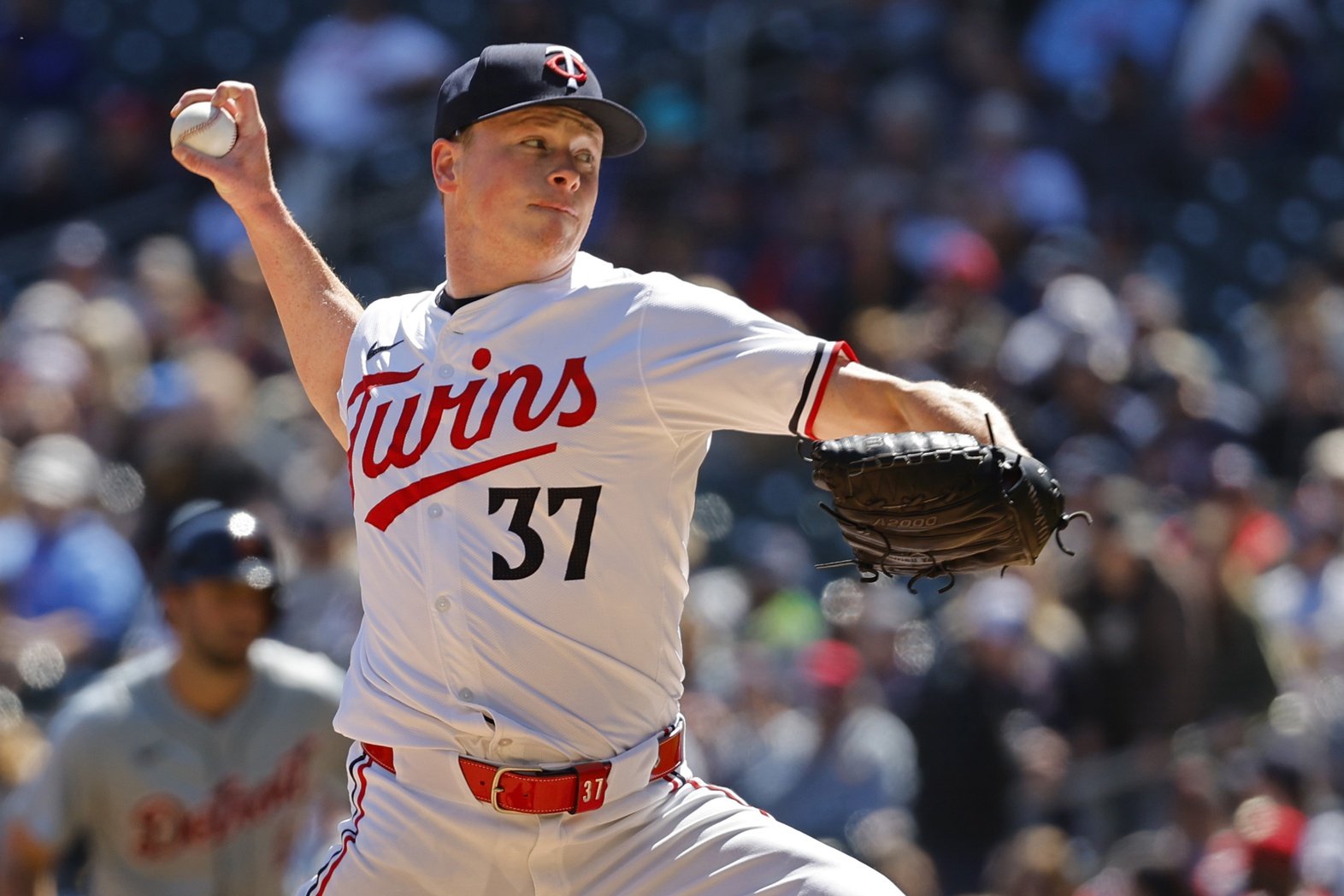 Following a nervous win to end a five-game slide on Saturday, the Twins turned to their most nervous pitcher, Louie Varland, in Sunday's rubber match. He was out of sorts from the outset, and the Twins offense didn't have anywhere near the firepower to back him up. Box Score: Starting Pitcher: Louie Varland: 2 2/3 IP, 3 H, 4 ER, 4 BB, 2 K (74 Pitches, 35 Strikes, 47.3%) Home Runs: Austin Martin (1) Bottom 3 WPA: Varland (-.245), Martin (-.116), Kyle Farmer (-.087) Win Probability Chart (Via Fangraphs): Varland started to game off by walking the first two hitters he faced. This was undoubtedly a reaction to his performances thus far in 2024, in which he has left far too many pitches in the zone in pitcher's counts. You can overcorrect in this game, and Varland may have found the approach he employed against the Orioles and Dodgers may have worked just fine against the far more mortal (outside of Kerry Carpenter) Tigers lineup. If you dabble in writing Louie Varland hate-fiction, you could script the rest of his outing. Spencer Torkelson smashed a grounder to Willi Castro that the shortstop bungled just a bit, barely getting the out at second thanks to a good stretch by Edouard Julien. Carpenter got jammed, but hot hitters will hit, and he dumped a single down the right field line to score the first run. Matt Vierling then walked, Buddy Kennedy hit a sacrifice fly, and then Varland fell behind Parker Meadows 3-1. His fifth pitch was a ball, but Meadows swung through it and then took strike three looking, ending a 39-pitch first inning. Opposing the Twins was former number one overall pick, Casey Mize. Mize missed most of the 2022 season and the entire 2023 season recovering from Tommy John surgery. His stuff doesn't appear to be all the way back, but he did hit 97 MPH and got better as the outing went along. The Twins did take some good at-bats in their half of the first, loading the bases with a Trevor Larnach walk, Byron Buxton single and a walk to Alex Kirilloff. Austin Martin lined out softly, and Willi Castro flied out to let Mize off the hook. Varland somehow walked Javier Baez leading off the second inning but managed his way out of it by getting a charitable strike two call on Jake Rogers (who struck out later in the at-bat), and then coaxing a long fly out from Riley Greene. The third inning started with a single from Torkelson and a hit-by-pitch from Carpenter. After a fortuitous double play off the bat of Vierling, Buddy Kennedy launched a Varland cutter 104 MPH into the seats in left-field, ending Varland's day. He certainly has the velocity and movement profile to succeed as a starter, but Varland is no nibbler, and trying to tickle the edges of the zone with four to five pitches seems a recipe doomed to fail. He would be better served finding a middle ground between today and his first three starts of the year. It remains to be seen if Varland gets that chance next turn through the rotation, as he has never looked worse than today and Simeon Woods-Richardson definitely has more helium down at Triple-A. Meanwhile, Mize looked hardly dominant, inducing only two whiffs the first time through the lineup, both on fastballs. Yet again, however, the Twins struggled to capitalize on the opportunities that presented themselves. By the fifth inning, Mize started relying on his splitter, striking out Julien and Larnach after Christian Vazquez led off with a single. The Twins' bullpen was a bright spot once again, with Cole Sands and Matt Bowman providing scoreless relief through the sixth and (theoretically) keeping the Twins in the game if their offense could break through. They couldn't and Jay Jackson entered in the seventh and nearly served up a two-run home run to Torkelson (it ended up as run-scoring a double) before recovering and working a scoreless eighth inning. Noted Twin killer Tyler Holton shut down the Twins in the seventh and eighth innings. The lefty worked quickly and gave the Twins nothing to hit, improving his career line against the Twins to 15 1/3 innings, allowing one earned run with 18 strikeouts. The Twins tried to make things interesting in the ninth, down 6-0. Martin launched his first big league home run, Castro got a squib double and Santana walked. The Good: Sands and Bowman both look confident, and are slinging some top-tier breaking stuff at opponents with decent command. Buxton looks less overmatched, rifling a single through the left side and putting the ball in play his other three at-bats. Martin kept his hitting streak alive in the ninth with the first home run of his career off Tigers reliever Alex Faedo. The Bad: Kyle Farmer continues to struggle in his at-bats, leaving several men on base in today's game. Varland didn't have many positives from his outing. Jackson and Caleb Thielbar continue to struggle, and remain the only bullpen arms that are not pitching quite well at the moment. What’s Next: Chris Paddack (0-1, 8.36 ERA) faces off against Jonathan Cannon (0-0, 1.80 ERA) as the Twins open a three game series against the White Sox at Target Field. The White Sox were supposed to be bad this year, and they are worse than that, so if the Twins hope to get off the mat at some point this season, there is no better time. Postgame Interviews: Bullpen Usage Chart: WED THU FRI SAT SUN TOT Bowman 0 0 0 3 30 33 Jackson 0 0 0 0 32 32 Stewart 17 0 15 0 0 32 Jax 10 0 21 12 0 43 Thielbar 0 0 17 0 22 39 Okert 18 0 0 17 0 35 Funderburk 0 0 2 22 0 24 Sands 0 0 0 10 23 33
- 55 comments
-
- 1
-
-
- louis varland
- matt bowman
- (and 3 more)
-
Bailey Ober turned in a virtuoso performance, but the Twins bullpen faltered late and could not preserve a three-run lead, partially because of some shaky infield defense. Minnesota looked good early against Jack Flaherty, but let him find a rhythm and did not score over the final five innings. Image courtesy of © Brian Bradshaw Sevald-USA TODAY Sports Bailey Ober turned in a virtuoso performance, but the Twins bullpen faltered late and could not preserve a three-run lead, partially because of some shaky infield defense. Minnesota looked good early against Jack Flaherty, but let him find a rhythm and did not score over the final five innings. The Twins entered Sunday's game in a strange spot. They have pitched pretty well thus far this season, but their top players have been either injured (Carlos Correa, Royce Lewis Jhoan Durán) or mediocre (Pablo López, Byron Buxton). Just when everything was at its bleakest following an 8-2 trouncing by the Tigers in Detroit on Friday in which Correa sustained his oblique injury, the club went ahead and swept a doubleheader Saturday. You would be forgiven for thinking the outlook felt very much like 2021 and 2018, but with a victory today, the Twins would get their record to .500 and take a four-game series against (arguably) their most legitimate competitor in the division. Well, it looked good for a while. Box Score: Starting Pitcher: Bailey Ober: 6+ IP, 3 H, 0 ER, 0 BB, 3 K (84 Pitches, 58 Strikes, 69%) Home Runs: Christian Vázquez (1) Bottom 3 WPA: Griffin Jax (-.543), Caleb Thielbar (-.200), Carlos Santana (-.081) Win Probability Chart (Via Fangraphs): For Sunday's game, the Tigers turned to reclamation project Jack Flaherty and the Twins started Bailey Ober. Flaherty hasn't been the same since he battled arm troubles following his dominant 2019 season. Hopefully, people haven't forgotten what Flaherty did the second half of that year as a 23-year-old: 15 starts with a 0.91 ERA, as he led his Cardinals to the postseason, He's never been near that level before or after that, with injuries and a drop in velocity as well as command turning him into a mercurial fifth starter. The Orioles traded for him at the deadline last year hoping he could become 85 percent of what he was for those magical 15 starts, and the Tigers spent $13 million this past offseason hoping the same. So far, he's disappointed on all fronts. His slider is still decent and his velocity is mid-90s, but the Twins quickly showed how important command is in this league. They made Flaherty battle during the first inning before Willi Castro struck out on a ball inside to end a two-out, two-on threat. They got to him in the second, running a lot of deep counts, drawing walks and finally getting a bases-loaded hit off the bat of Ryan Jeffers. He then gave up a home run to Christian Vázquez, which seemed to irk the starter. His velocity jumped to the high 90s after that, and he simply out-stuffed the Twins from that point forward. On the other side, Ober was trying to build off on impressive outing against the Dodgers last Monday in which his command was excellent and his cutter looked like a weapon. He served up a leadoff double to wunderkind Riley Greene, but settled down from there, inducing pop-ups galore. Ober, when he is going well, can settle into a rhythm where he lulls the batter to sleep, eliciting a ton of swings on pitches they just can't quite get the barrel on. For example, the bottom of the fifth inning took approximately 35 seconds for Ober to retire the side. He had a ten-pitch at-bat with Spencer Torkelson leading off the seventh, and after the Tigers' first baseman doubled off the left-center-field wall, Ober's day was done. Brock Stewart entered and promptly walked Kerry Carpenter, which was not at all intentional, but considering Carpenter has been the Tigers' most consistent hitter for a couple of years now, it may have been a blessing in disguise. Two grounders later, Stewart had cleaned up what mess there was, preserving Ober's line. The Twins' lineup was fairly silent outside of the exploits of their two catchers. They let Flaherty off the hook while he settled into his rhythm, and didn't get a chance at the Tigers' bullpen until the seventh. It appeared that early on, they were attacking pitches early in counts. Later, they tried to work more counts but by then Flaherty's stuff was playing up. Caleb Thielbar made his long-awaited return to start the eighth, and it wasn't pretty. He got Twins killer Matt Vierling to pop out, but then served up a home run to the free-swinging Javier Báez; a sharp grounder that Castro misplayed for a hit; and then another base hit to put the go-ahead run at the plate. Griffin Jax entered and induced a grounder from Mark Canha that Kyle Farmer misplayed into a double, allowing the tying run to score. In a further homage to his 2023 bad-luck struggles, Jax then allowed a bloop hit to Torkelson to score the go-ahead run. The Good: Ober's form is starting to resemble his mid-2023 form, where for a brief moment, he was the Twins' best starter. Jeffers looks well-suited to the two spot in the lineup. I would never have believed that a week ago. Carlos Santana took some good at-bats, walking to start the second-inning rally and lining out sharply to Greene in left. The Bad: Castro took some brutal at-bats today, swinging at balls and looking at strikes. Perhaps his big home run Saturday was much ado about nothing. He also made a key misplay on a sharp grounder (ruled a hit) as the Tigers staged their comeback in the eighth. Thielbar was throwing strikes and his stuff looked fine, but it was certainly not the debut he wanted. What’s Next: Louie Varland (0-2, 9.00 ERA) faces lefty Cole Irvin (0-1, 8.10 ERA) as the Twins look to bounce back against one of the more fungible lefty starters in the AL. The Orioles were a trendy pick to contend for a World Series, but the reality is their lineup, starting rotation and particularly their bullpen, have pretty big holes. They called up number one overall prospect Jackson Holliday last week as they looked to channel some of their 2023 magic. Postgame Interviews: Bullpen Usage Chart: WED THU FRI SAT SUN TOT Bowman 0 0 0 0 0 0 Funderburk 11 0 15 17 0 43 Stewart 13 0 0 19 10 42 Jax 16 0 0 11 18 45 Sands 0 0 0 28 0 28 Jackson 0 0 13 10 0 23 Okert 16 0 0 13 0 29 Thielbar 0 0 0 0 13 13 View full article
- 42 replies
-
- 1
-
-
- baiiley ober
- ryan jeffers
- (and 3 more)
-
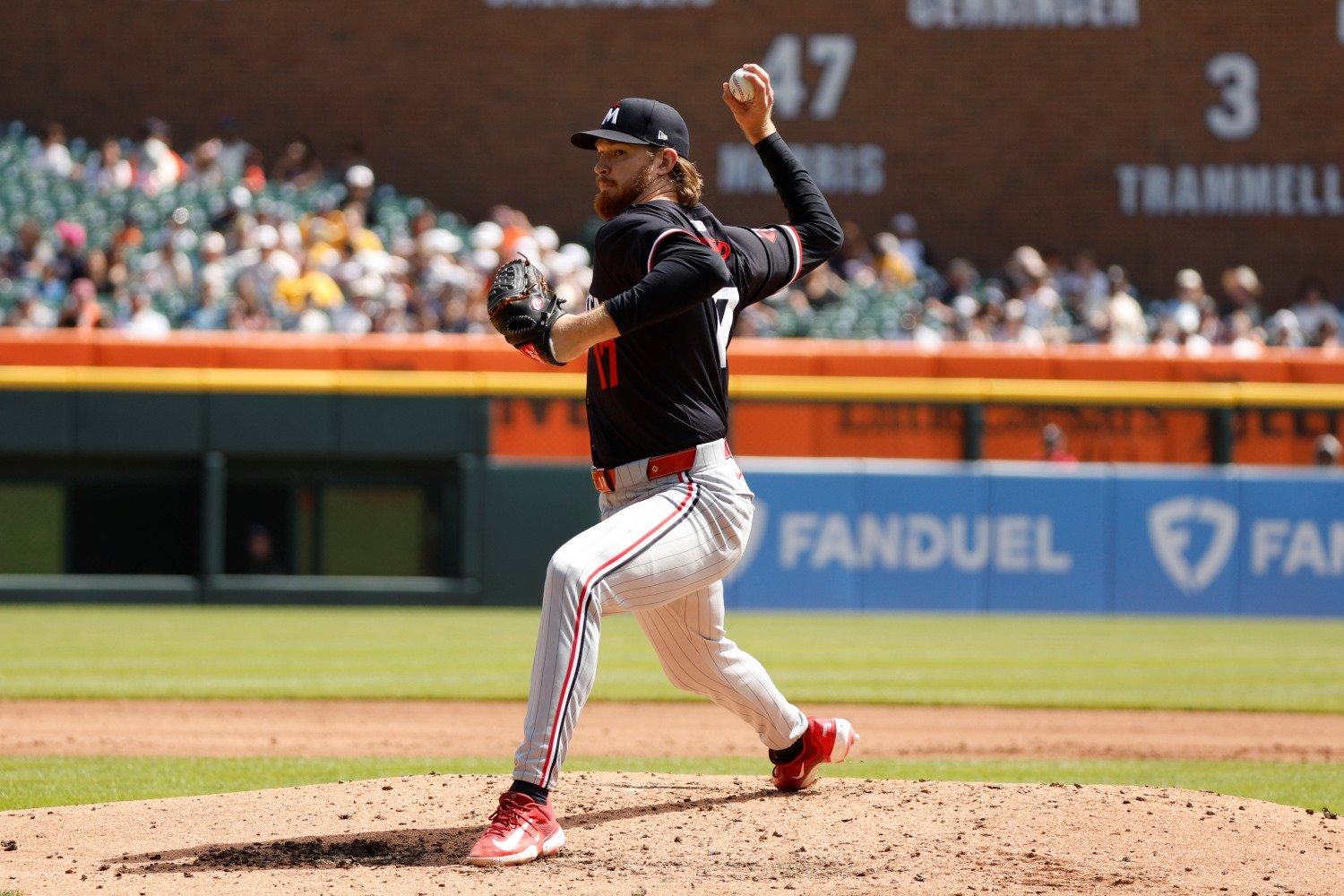 The Twins entered Sunday's game in a strange spot. They have pitched pretty well thus far this season, but their top players have been either injured (Carlos Correa, Royce Lewis Jhoan Durán) or mediocre (Pablo López, Byron Buxton). Just when everything was at its bleakest following an 8-2 trouncing by the Tigers in Detroit on Friday in which Correa sustained his oblique injury, the club went ahead and swept a doubleheader Saturday. You would be forgiven for thinking the outlook felt very much like 2021 and 2018, but with a victory today, the Twins would get their record to .500 and take a four-game series against (arguably) their most legitimate competitor in the division. Well, it looked good for a while. Box Score: Starting Pitcher: Bailey Ober: 6+ IP, 3 H, 0 ER, 0 BB, 3 K (84 Pitches, 58 Strikes, 69%) Home Runs: Christian Vázquez (1) Bottom 3 WPA: Griffin Jax (-.543), Caleb Thielbar (-.200), Carlos Santana (-.081) Win Probability Chart (Via Fangraphs): For Sunday's game, the Tigers turned to reclamation project Jack Flaherty and the Twins started Bailey Ober. Flaherty hasn't been the same since he battled arm troubles following his dominant 2019 season. Hopefully, people haven't forgotten what Flaherty did the second half of that year as a 23-year-old: 15 starts with a 0.91 ERA, as he led his Cardinals to the postseason, He's never been near that level before or after that, with injuries and a drop in velocity as well as command turning him into a mercurial fifth starter. The Orioles traded for him at the deadline last year hoping he could become 85 percent of what he was for those magical 15 starts, and the Tigers spent $13 million this past offseason hoping the same. So far, he's disappointed on all fronts. His slider is still decent and his velocity is mid-90s, but the Twins quickly showed how important command is in this league. They made Flaherty battle during the first inning before Willi Castro struck out on a ball inside to end a two-out, two-on threat. They got to him in the second, running a lot of deep counts, drawing walks and finally getting a bases-loaded hit off the bat of Ryan Jeffers. He then gave up a home run to Christian Vázquez, which seemed to irk the starter. His velocity jumped to the high 90s after that, and he simply out-stuffed the Twins from that point forward. On the other side, Ober was trying to build off on impressive outing against the Dodgers last Monday in which his command was excellent and his cutter looked like a weapon. He served up a leadoff double to wunderkind Riley Greene, but settled down from there, inducing pop-ups galore. Ober, when he is going well, can settle into a rhythm where he lulls the batter to sleep, eliciting a ton of swings on pitches they just can't quite get the barrel on. For example, the bottom of the fifth inning took approximately 35 seconds for Ober to retire the side. He had a ten-pitch at-bat with Spencer Torkelson leading off the seventh, and after the Tigers' first baseman doubled off the left-center-field wall, Ober's day was done. Brock Stewart entered and promptly walked Kerry Carpenter, which was not at all intentional, but considering Carpenter has been the Tigers' most consistent hitter for a couple of years now, it may have been a blessing in disguise. Two grounders later, Stewart had cleaned up what mess there was, preserving Ober's line. The Twins' lineup was fairly silent outside of the exploits of their two catchers. They let Flaherty off the hook while he settled into his rhythm, and didn't get a chance at the Tigers' bullpen until the seventh. It appeared that early on, they were attacking pitches early in counts. Later, they tried to work more counts but by then Flaherty's stuff was playing up. Caleb Thielbar made his long-awaited return to start the eighth, and it wasn't pretty. He got Twins killer Matt Vierling to pop out, but then served up a home run to the free-swinging Javier Báez; a sharp grounder that Castro misplayed for a hit; and then another base hit to put the go-ahead run at the plate. Griffin Jax entered and induced a grounder from Mark Canha that Kyle Farmer misplayed into a double, allowing the tying run to score. In a further homage to his 2023 bad-luck struggles, Jax then allowed a bloop hit to Torkelson to score the go-ahead run. The Good: Ober's form is starting to resemble his mid-2023 form, where for a brief moment, he was the Twins' best starter. Jeffers looks well-suited to the two spot in the lineup. I would never have believed that a week ago. Carlos Santana took some good at-bats, walking to start the second-inning rally and lining out sharply to Greene in left. The Bad: Castro took some brutal at-bats today, swinging at balls and looking at strikes. Perhaps his big home run Saturday was much ado about nothing. He also made a key misplay on a sharp grounder (ruled a hit) as the Tigers staged their comeback in the eighth. Thielbar was throwing strikes and his stuff looked fine, but it was certainly not the debut he wanted. What’s Next: Louie Varland (0-2, 9.00 ERA) faces lefty Cole Irvin (0-1, 8.10 ERA) as the Twins look to bounce back against one of the more fungible lefty starters in the AL. The Orioles were a trendy pick to contend for a World Series, but the reality is their lineup, starting rotation and particularly their bullpen, have pretty big holes. They called up number one overall prospect Jackson Holliday last week as they looked to channel some of their 2023 magic. Postgame Interviews: Bullpen Usage Chart: WED THU FRI SAT SUN TOT Bowman 0 0 0 0 0 0 Funderburk 11 0 15 17 0 43 Stewart 13 0 0 19 10 42 Jax 16 0 0 11 18 45 Sands 0 0 0 28 0 28 Jackson 0 0 13 10 0 23 Okert 16 0 0 13 0 29 Thielbar 0 0 0 0 13 13
(11).png.a8c04b295c93ed84987f980d092f71cd.png)
(3).png.e54c9490f8c82337d3dfbe0f02de5b7a.png)
.png.2b0f95af92ad4d52e1ed62277377ad1d.png)
