


Twins Video
A 20-home run, 20-stolen base season is not necessarily a guarantee that a prospect will become a big-league star. Baseball is rarely that simple. Still, reaching both benchmarks in the same season tells us something important about a player's development.
First, there has to be a level of health. A player can't accumulate 20 homers and 20 steals without getting enough opportunities on the field. There also has to be production. Twenty home runs require some legitimate power, while 20 stolen bases require speed, athleticism and enough offensive success to consistently get on base.
The Twins had three prospects accomplish that feat in 2026, with another coming within two home runs of joining them.
Just Missed: Yasser Mercedes
18 Home Runs, 52 Stolen Bases
Mercedes might have the most interesting statistical profile of the group despite falling short of the 20-homer mark. The 21-year-old outfielder put together a strong 2026 campaign, combining his developing power with game-changing speed. His 52 stolen bases were by far the most among this group, showing just how much athleticism he brings to the organization.
Mercedes' season earned him a trip to the Arizona Fall League, where he'll have another opportunity to face some of the organization's top competition alongside other highly regarded prospects.
The 18 home runs also represent an important part of his development. Mercedes doesn't need to become a 30-homer hitter to have significant value. If the Twins can continue to see his power develop while he maintains his ability to impact games with his legs, there is a compelling offensive foundation.
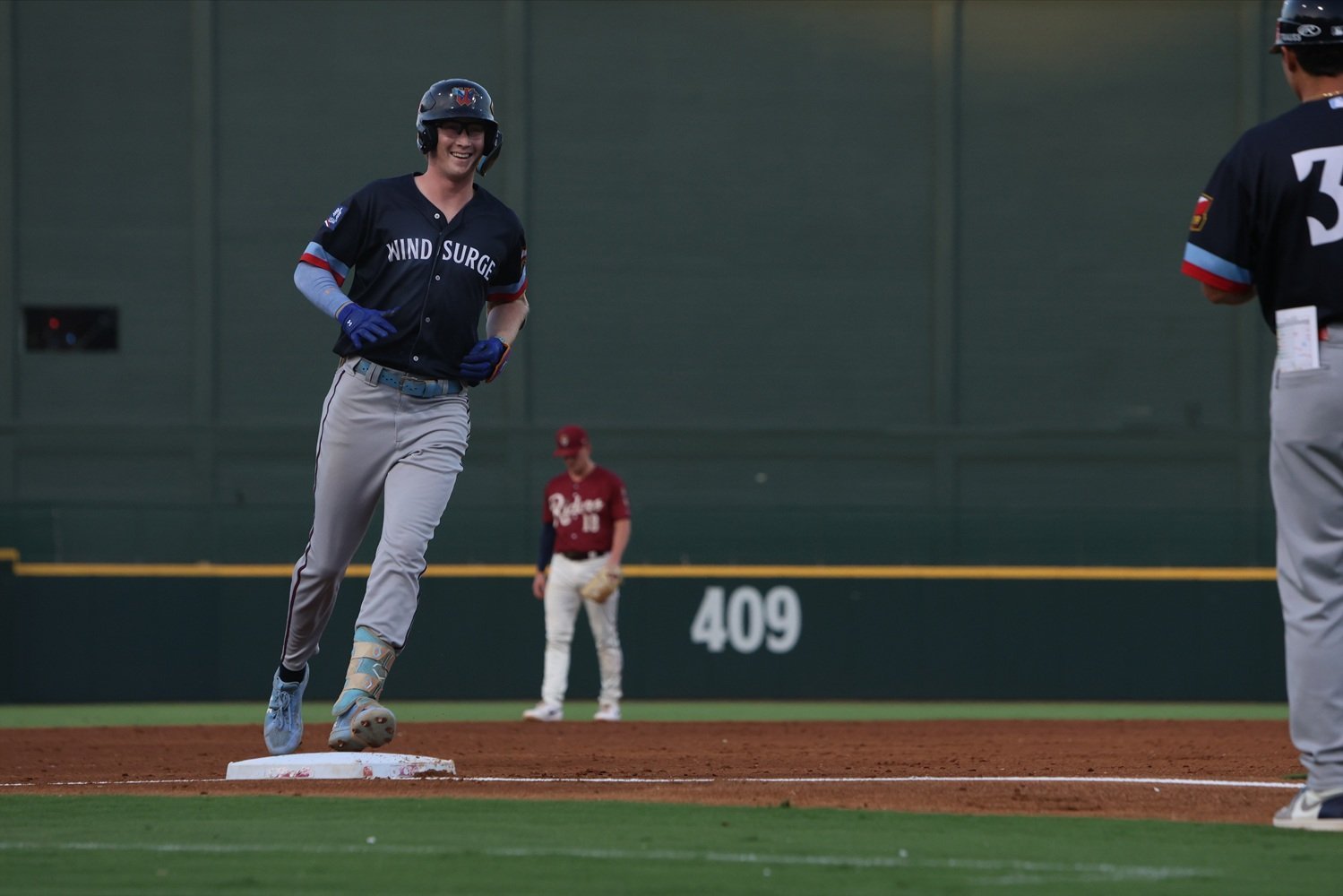
Garrett Spain - Wichita Wind Surge
20-20 Season: 22 Home Runs, 23 Stolen Bases
Spain's path to a 20-20 season is unlike the others on this list. Minnesota selected Spain in the Triple-A Phase of the Rule 5 Draft last December. Originally drafted by Toronto in the 15th round of the 2021 MLB Draft, Spain had already bounced between organizations before arriving in the Twins system. The Brewers selected him from Toronto in the Triple-A phase of the Rule 5 Draft before the 2025 season. He spent time at Double-A and Triple-A, hitting .203/.280/.364 with 16 home runs, 19 doubles and an 88 wRC+.
The Twins kept him at Wichita for the entirety of the 2026 season. Spain was more than a year older than the average player in the Texas League, but he took advantage of the opportunity. He slashed .244/.341/.463 with an .804 OPS and a 102 wRC+, adding 22 home runs and 23 stolen bases.
Spain is the lowest-ranked prospect of the three players discussed here, but his 2026 season still matters. After bouncing through multiple organizations, he finally found a home where he could play every day and produce.
A 20-20 season at Double-A doesn't suddenly turn Spain into a top prospect, especially given his age relative to the competition. It does, however, provide some evidence that the Twins made a worthwhile gamble on a player who had already been passed over by multiple organizations.
Brandon Winokur - Cedar Rapids Kernels, Wichita Wind Surge
20-20 Season: 21 Home Runs, 30 Stolen Bases
Winokur has been in the Twins organization long enough that he might have a little freezer burn. Minnesota selected him in the third round of the 2023 MLB Draft, and his development has taken a little longer than the organization might have hoped. Last season, he spent the entire year at High-A Cedar Rapids despite being more than two years younger than the average Midwest League player.
He hit .226/.304/.388 with 17 home runs, 26 stolen bases and a 98 wRC+. The Twins then sent him to the Arizona Fall League, where he struggled, posting a .592 OPS in 83 plate appearances. Minnesota sent Winokur back to Cedar Rapids to begin 2026, and he responded with one of the better offensive stretches of his professional career. In 74 games, he hit .252/.362/.421 with 10 home runs, 13 doubles and a 106 wRC+.
That earned the 21-year-old a promotion to Double-A Wichita, where he was nearly three years younger than the average player in the Texas League. The results were more mixed. Winokur posted a .738 OPS with 11 home runs and an 82 wRC+ in 53 games.
Even with the uneven offensive performance, the 20-20 season is significant. He finished with 21 home runs and 30 stolen bases, once again showing why his athleticism has made him an intriguing prospect throughout his professional career. The next step is turning that athleticism into more consistent offensive production against older competition.
Ben Ross– Wichita Wind Surge, St. Paul Saints
20-20 Season: 20 Home Runs, 20 Stolen Bases
Ross' 20-20 season might be the most encouraging development of the group because of where his offensive game appeared to be heading a year ago. In 2025, Ross hit .219/.308/.363 with 14 home runs, 17 doubles, an 85 wRC+ and 18 stolen bases over 120 games. His OPS improved from .626 to .671, but he was still searching for consistency at the plate.
Then came 2026. Ross started the season back at Double-A Wichita and immediately looked like a completely different hitter. In 16 games, he hit .424/.528/.797 with five home runs, seven doubles and eight stolen bases. The Twins promoted him to Triple-A St. Paul on April 24. Ross has continued producing at the higher level. Combined between the two stops, he has hit .275/.380/.510 with 20 home runs, 71 RBI and 20 stolen bases in 2026.
The biggest development may not even be the 20-20 season. Ross has shown improved plate discipline, posting a 13.4% walk rate, while also producing more impactful contact. Baseball America recently noted that Ross' average exit velocity increased from 85.1 mph in 2025 to 88.5 mph this season. His 90th-percentile exit velocity also jumped from 100.9 mph to 103 mph.
That's meaningful progress for a player whose offensive value once appeared to be driven more by speed and defensive versatility.
What Does It Mean?
The Twins don't suddenly have three future stars because three prospects reached 20-20 seasons. Prospect development doesn't work that way. But these seasons do provide useful information.
Mercedes showed an intriguing combination of developing power and elite speed. Spain found some stability after bouncing between organizations. Winokur continued to display the athleticism that has made him interesting while facing increasingly difficult competition. Ross took the biggest offensive step of the group, particularly with his improved contact quality and plate discipline.
The 20-20 benchmark is ultimately just that, a benchmark. The more important question is what comes next. For these four players, 2026 provided plenty of reasons for the Twins to keep watching.
What stands out about this group? What prospects can reach the 20-20 club in 2027? Leave a comment and start the discussion.
Do you approve of the job the Twins front office is doing?

Interested in learning more about the Minnesota Twins' top prospects? Check out our comprehensive top prospects list that includes up-to-date stats, articles and videos about every prospect, scouting reports, and more!
View Twins Top Prospects





Recommended Comments
Create an account or sign in to comment
You need to be a member in order to leave a comment
Create an account
Sign up for a new account in our community. It's easy!
Register a new accountSign in
Already have an account? Sign in here.
Sign In Now