Jump to content
Twins Daily
  • Create Account
  • Twins News & Analysis

    Why Josh Bell’s Poor Defense Isn’t Something to Worry About

    The Twins have a recent track record of turning defensive question marks at first base into strengths through smart positioning, and that history matters with their newest signing.

    Matthew Taylor
    Image courtesy of © Daniel Kucin Jr.-Imagn Images

    Twins Video

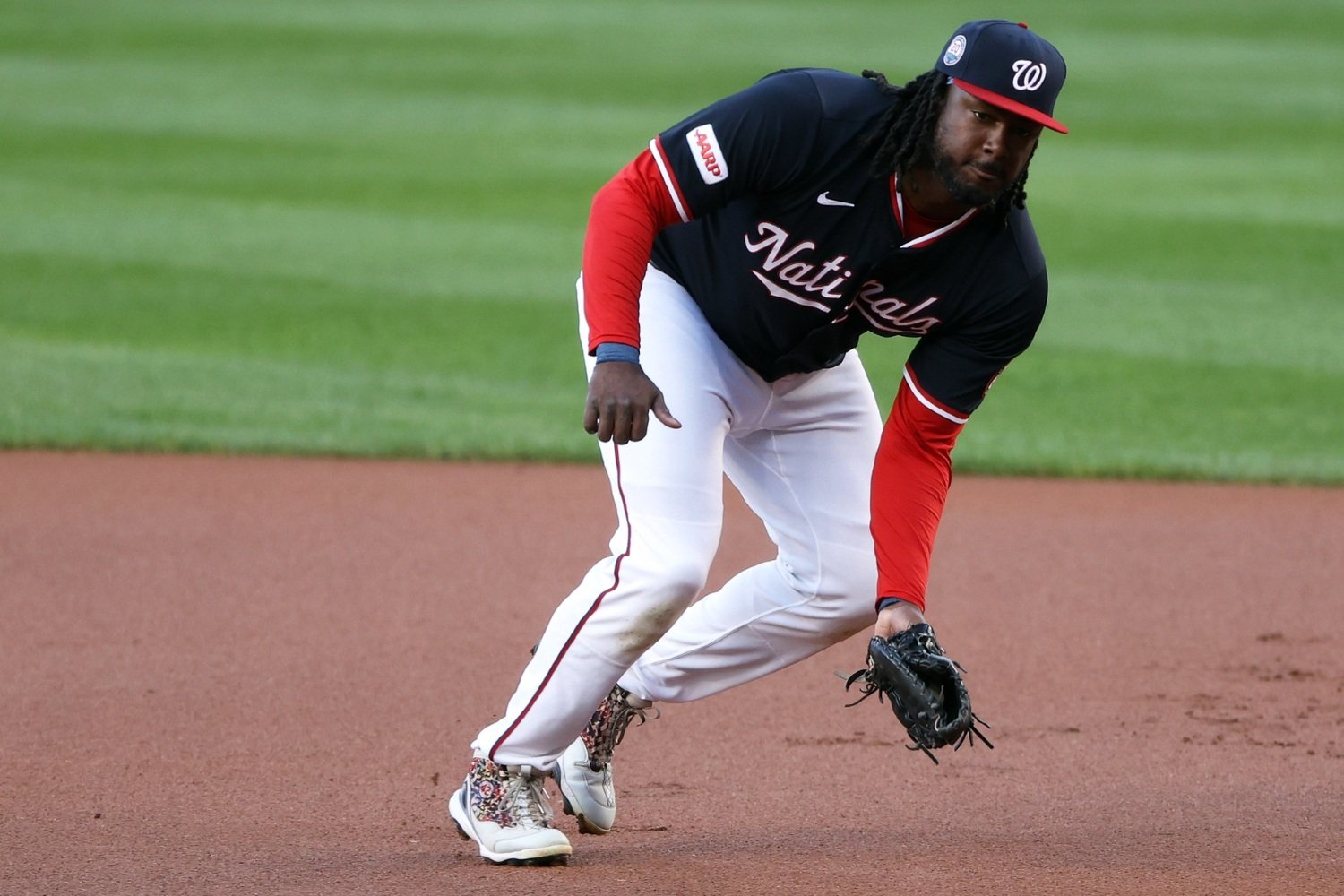
    When the Twins signed Josh Bell, it was easy to shrug. This is not the kind of move that lights up the timeline or changes preseason projections overnight. Bell is a veteran switch-hitting first baseman on his fourth team in three years, and defensive metrics have not been kind to him. If you stop there, it is fair to wonder why the Twins would invest in a bat-first player at a position where defense has quietly become one of their biggest strengths. But this front office has earned a bit of trust when it comes to first base defense, and the way the Twins play the position goes a long way toward explaining why Josh Bell’s glove is not something to panic about.

    Over the past two seasons, the Twins have done some of their best defensive work at the cold corner, not because they suddenly discovered elite athletes, but because they found a way to simplify the job. Against left-handed hitters, in particular, the Twins have leaned heavily into aggressive positioning. The first baseman plays right on top of the line, and the second baseman shades over next to him. The goal is straightforward: Take away the pull-side ground balls that left-handed hitters most often produce, and reduce the amount of ground the first baseman has to cover.

    Carlos Santana is a clear example of how much this approach can matter. Santana had always been a solid defender, but he was not a perennial Gold Glove threat. In 2023 with Cleveland, he played close to the line against left-handed hitters 29% of the time. The result was a respectable but unspectacular -2 outs above average against lefties.

    In 2024 with the Twins, that number jumped dramatically. Santana played close to the line 53% of the time. With fewer balls sneaking down the line and less lateral ground to cover, Santana posted an impressive 13 outs above average against left-handed hitters. His athleticism and instincts mattered, but the positioning mattered just as much, and it was a major factor in Santana taking his defense to another level and ultimately winning a Gold Glove. The Twins put him in spots where he could succeed.

    They doubled down on that idea last season with Ty France, and the results were even more striking. In 2024, before joining the Twins, France played close to the line against left-handed hitters only 34 percent of the time and finished with -8 outs above average. After arriving in Minnesota in 2025, that number jumped to 86 percent. Suddenly, the same player with the same physical limitations turned into a plus defender, posting 7 outs above average. That shift in positioning played a significant role in France’s defensive turnaround and helped lead to him winning a Gold Glove, as well. The Twins did not make France faster or more agile. They made his job easier.

    That context matters when talking about Josh Bell. There's no way around it. Bell is not a good defensive first baseman. He is tall, thickly built, and slow-moving. He does not have great range, and the advanced metrics reflect that. Over the past three seasons, Bell has posted -2, -7, and -4 outs above average at first base. On a neutral team with neutral positioning, that is exactly the kind of profile that scares people off.

    But Bell’s usage against left-handed hitters suggests there is real room for improvement. From 2023 through 2025, Bell logged 231 defensive chances at first base against lefties. Of those, he played close to the line just 41 percent of the time. On those plays, he posted -9 outs above average. That is bad, but it also shows how rarely his teams committed to hiding his weaknesses.

    Compare that to what the Twins did with Santana and France, and the opportunity becomes obvious. Minnesota has shown a willingness to push that close-to-the-line rate north of 50 percent and even into the mid-80s, when the situation calls for it. If Bell’s alignment against left-handed hitters jumps anywhere near those levels, he will simply be asked to do less. Fewer hard grounders will sneak past him down the line, and fewer balls will require him to range deep into the hole.

    This is not about turning Josh Bell into a Gold Glove defender. That is not happening. It's about getting him closer to average by removing the plays he is least equipped to make. Bell does not need to be special defensively for this signing to work. He needs to catch what is hit at him, scoop throws in the dirt, and avoid being a liability. The Twins have already shown they know how to do that with players at this position.

    Ultimately, this signing is a bet on offense first. The Twins’ lineup badly needs quality at-bats, and first base has been a problem area for far too long. Outside of a couple of strong months from Carlos Santana in 2023, production from the position has been inconsistent at best. Bell brings switch-hitting power and a track record of getting on base, even if the peaks have been less frequent in recent years.

    Choosing a bat-first first baseman over a glove-first option makes sense, given where this roster is right now. The Twins do not need to win games 2-1. They need to score runs. If positioning can turn Josh Bell from a below-average defender into something closer to playable, the overall value equation starts to tilt in Minnesota’s favor.

    Bell is not a perfect player, and this is not a perfect signing. But the Twins have a clear blueprint for maximizing first base defense, and it has worked with multiple players who came with similar questions. If they follow that same playbook here, Bell’s glove should not overshadow what he is actually here to do.


    What do you think? Are you worried about Josh Bell’s defense, or do you trust the Twins to work their positioning magic again? Leave a comment below and start the conversation!

    Follow Twins Daily For Minnesota Twins News & Analysis

    Recent Twins Articles

    Recent Twins Videos

    Twins Top Prospects

    Marek Houston

    Cedar Rapids Kernels - A+, SS
    The 22-year-old went 2-for-5 on Friday night, his fourth straight multi-hit game. Heading into the week, he was hitting .246/.328/.404 (.732). Four games later, he is hitting .303/.361/.447 (.808).

    User Feedback

    Recommended Comments


    Featured Comments

    7 minutes ago, chpettit19 said:

    It doesn't. That's the point. They moved them closer to the line so there are fewer balls to their right that the algorithm expects them to get to. They aren't improving performance, they're limiting the expectations. Guard the line and get to the base quickly for throws. They've cut down on the amount of ground they're asking their 1B to cover and the algorithms spit out drastically different data because of it.

    Partly because balls down the line turn into doubles and triples while balls between 1B and 2B turn into singles, especially with the shallow RF in Target Field. They are maximizing the run value of their defense.

    5 minutes ago, DJL44 said:

    Partly because balls down the line turn into doubles and triples while balls between 1B and 2B turn into singles, especially with the shallow RF in Target Field. They are maximizing the run value of their defense.

    I'm sure that's part of the thought process. I think the difference in percentages of being close to the line between Santana and France is telling. They trusted Santana's range more. I'd bet Bell is much closer to France's number than Santana's. The more you trust your 1B the further away you're comfortable with them playing.

    2 minutes ago, chpettit19 said:

    I'm sure that's part of the thought process. I think the difference in percentages of being close to the line between Santana and France is telling. They trusted Santana's range more. I'd bet Bell is much closer to France's number than Santana's. The more you trust your 1B the further away you're comfortable with them playing.

    This is where a LH throwing 1B has an advantage. They'll naturally be better going to their right - where their glove is. Stand on the line and you never have to worry about fielding a ball with your backhand.

    1 hour ago, DJL44 said:

    If this team is going to trade someone, they should trade the oldest and most expensive player and keep the youngest and cheapest player. That means they should solve the DH conflict by trading Josh Bell.

    This is only true if you believe the Twins are rebuilding. Since Falvey did the salary dump at the 2025 deadline, one would expect he'd bypass paying $7M for a veteran. He just dumped a bunch of players that cost a whole lot less than that. Then through his brilliant use of payroll he throws $7M at a DH type HR hitter. It just pure stupidity.

    1 hour ago, DJL44 said:

    The arbitration projections for each of them is less than the $7M they gave Josh Bell.

    I guess that depends on where you look and whether or not you count the buyout against this year's contract or next? But yeah, the Cheap Pohlads cut the #@%$* out of the payroll, and a lot of our guys are now on minimum salary or early arbitration salaries.

    So?

    It's an indictment of ownership, not really about Bell's (reasonable) contract.

    8 minutes ago, DJL44 said:

    The Twins can't afford to pay players $14M per WAR.

    Well, we'll see if it lands there? If he hits like he did in the second half of 2025 we won't be. That's the risk we're taking here. If you're saying we can't take risks paying players looking for improvement or bounce back seasons...what exactly are our options with this ownership?

    I'd rather take a swing at Bell (who people find attractive in the trade market if the Twins season is toast at the deadline) than some others. I'd have been willing to try and acquire someone from the O's, but who knows what they were demanding in a trade package? Mayo might turn out to be A Guy, but if the price is Pablo Lopez? Hell no.

    8 minutes ago, jmlease1 said:

    Well, we'll see if it lands there? If he hits like he did in the second half of 2025 we won't be. That's the risk we're taking here. If you're saying we can't take risks paying players looking for improvement or bounce back seasons...what exactly are our options with this ownership?

    I'd rather take a swing at Bell (who people find attractive in the trade market if the Twins season is toast at the deadline) than some others. I'd have been willing to try and acquire someone from the O's, but who knows what they were demanding in a trade package? Mayo might turn out to be A Guy, but if the price is Pablo Lopez? Hell no.

    Teams usually pay a premium for less risky players, not more risky players. Bell has averaged -0.1 WAR over the last 3 seasons so I was giving the benefit of the doubt that he can produce 0.5 WAR. Plus, it makes the math easier if I'm not using 0 WAR as the divisor. His defensive value is non-existent so he's going to have to do it all with his bat. His 80% projection is what he did in Arizona: a 120 OPS+, 1.5 WAR season. The Twins are paying him like that performance is a lock.

    Nobody has found Bell attractive in the trade market. The Nationals weren't able to trade him last season. Arizona gave up nothing to Miami the previous season to obtain him. He returned a grade C utility outfielder prospect the season before that. This isn't surprising. Contenders are looking for good players to improve their chances of winning, not stopgaps who are barely worth a roster spot. Pushing a big chunk of his salary into the option buyout will make him more difficult to trade since the cost is backloaded. Do you think he'll be more or less attractive than he was last season with an extra $1M commitment?

    One other way the defensive metrics get fooled by a first baseman standing that close to the base is they tend to take the ball to first base on their own instead of flipping to the pitcher. That means fewer assists and more putouts, which can fool some defensive calculators.

    On 12/17/2025 at 11:01 AM, chpettit19 said:

    It doesn't. That's the point. They moved them closer to the line so there are fewer balls to their right that the algorithm expects them to get to. They aren't improving performance, they're limiting the expectations. Guard the line and get to the base quickly for throws. They've cut down on the amount of ground they're asking their 1B to cover and the algorithms spit out drastically different data because of it.

    I played first base myself.  A lifetime ago. And, obviously, at a different level.  But guarding the line and being able to get to the base quickly to catch the baseball were tantamount to playing the spot.  I don't know (or care) about algorithms but whatever they are doing seems to spit out Gold Gloves so it can't be all bad.


    30 minutes ago, dxpavelka said:

    I played first base myself.  A lifetime ago. And, obviously, at a different level.  But guarding the line and being able to get to the base quickly to catch the baseball were tantamount to playing the spot.  I don't know (or care) about algorithms but whatever they are doing seems to spit out Gold Gloves so it can't be all bad.


    I didn't say it was bad, I said they weren't improving guy's ability to actually field. If you can look at Ty France being negative in OAA for literally every season of his career before last year and then see him at +10 and honestly think the Twins spun him from a -12 fielder to a +10 fielder at the age of 30 with just 1 spring training, I'll tell you we'll just have to agree to disagree.

    The Twins have done a great job with knowing the limits of their 1B and putting them in positions where they aren't asking them to do things they can't do. That isn't bad at all. That's why I never said it was "all bad." I'm simply pointing out the significant flaws in using OAA as evidence that the Twins are making guys better fielders. They aren't. They're just aren't asking them to make as many plays as other teams do. Santana playing off the line 47% of the time compared to only 14% for France is a great example of this. Santana was trusted to be further from the line more often because he could cover more ground. France wasn't trusted at all.

    Of course it's important to guard the line and get to the bag. What separates the great from the good from the ok from the bad from the very bad is how far away from the line you can stand and still accomplish those goals. If I can put Freddie Freeman off the line 90% of the time and get the same results from him on guarding the line and getting to the bag as you get from putting France off the line 14% of the time I get a significant advantage because Freeman can cover so much more ground towards the hole that you are simply giving away because France can't even attempt to get to those balls.

    Using OAA as proof the Twins made Ty France 22 runs better in 1 spring training is ridiculous. They didn't. The algorithm simply isn't very good.

    I'd be curious what the effect of OAA/DRS/etc has been on their second basemen as they've moved their first basemen closer to the line.  Regardless of where they're put, you have 4 guys to defend the infield.  Shortening the range required for one means you're asking more from another.  So any gains made by the first basemen should be netted against any losses by the second basemen created by asking him to cover more ground by default.  I'm not saying it's a bad strategy - it makes sense to have guys with limited range cover less ground and guys with more range cover more ground, and the point someone made that balls down the line being more likely to be extra base hits is valid - but the effect this puts on second basemen shouldn't be ignored.  They certainly haven't been churning out gold glove second basemen going this route

    Damn....I wish I had the time to go back and look at the reaction most on here had when we signed France last year.  Vast majority said he was a terrible first baseman and were lamenting the loss of Santana.  

    Let's face it...you can't please most on here.  The Twins made a signing for a switch hitting 1B/DH who hit over 20+ homers last year and is known by our manager.  

    If it's the only signing they make, that would suck.  But it's not a bad start.  

    Perhaps they should just have him play with his left foot on the bag. He’ll never be late to the bag or allow a hit down the line. Seriously does anyone think this doesn’t have other consequences?  If Bell has to be closer to the bag that leaves more territory for the second baseman to cover. Not like we are stellar there either 

    8 hours ago, chpettit19 said:

    I didn't say it was bad, I said they weren't improving guy's ability to actually field. If you can look at Ty France being negative in OAA for literally every season of his career before last year and then see him at +10 and honestly think the Twins spun him from a -12 fielder to a +10 fielder at the age of 30 with just 1 spring training, I'll tell you we'll just have to agree to disagree.

    The Twins have done a great job with knowing the limits of their 1B and putting them in positions where they aren't asking them to do things they can't do. That isn't bad at all. That's why I never said it was "all bad." I'm simply pointing out the significant flaws in using OAA as evidence that the Twins are making guys better fielders. They aren't. They're just aren't asking them to make as many plays as other teams do. Santana playing off the line 47% of the time compared to only 14% for France is a great example of this. Santana was trusted to be further from the line more often because he could cover more ground. France wasn't trusted at all.

    Of course it's important to guard the line and get to the bag. What separates the great from the good from the ok from the bad from the very bad is how far away from the line you can stand and still accomplish those goals. If I can put Freddie Freeman off the line 90% of the time and get the same results from him on guarding the line and getting to the bag as you get from putting France off the line 14% of the time I get a significant advantage because Freeman can cover so much more ground towards the hole that you are simply giving away because France can't even attempt to get to those balls.

    Using OAA as proof the Twins made Ty France 22 runs better in 1 spring training is ridiculous. They didn't. The algorithm simply isn't very good.

    Again, I'm not using OAA or any other algorithm.  I'm simply using Gold Gloves.  Good, bad or otherwise. They give an award for it.  Twins guys have won the last two.  

    8 hours ago, dxpavelka said:

    Again, I'm not using OAA or any other algorithm.  I'm simply using Gold Gloves.  Good, bad or otherwise. They give an award for it.  Twins guys have won the last two.  

    And Derek Jeter has a handful. That's not a useful metric either. Ty France won his because of algorithms. Voters use those way too much now. Ty France didn't suddenly become better at catching the ball at age 30 because of some sweet trick the Twins used at his 1 spring training with them. If you believe that, you believe the Twins are just refusing to use that trick with the rest of their team.

    7 hours ago, chpettit19 said:

    And Derek Jeter has a handful. That's not a useful metric either. Ty France won his because of algorithms. Voters use those way too much now. Ty France didn't suddenly become better at catching the ball at age 30 because of some sweet trick the Twins used at his 1 spring training with them. If you believe that, you believe the Twins are just refusing to use that trick with the rest of their team.

    Believe what you want.  They still won them.


    On 12/19/2025 at 2:49 PM, dxpavelka said:

    Believe what you want.  They still won them.


    So you are saying the Twins could, in the span of 1 season, turn any player on the MLB team or in their system into a great 1B.  However, they actively choose not do this for some reason, instead intentionally developing all homegrown 1B into such poor players that the team is forced to spend limited resources on external MLB 1Bs on 1 year deals every year.  Is that what you are saying here?  

    8 hours ago, Woof Bronzer said:

    So you are saying the Twins could, in the span of 1 season, turn any player on the MLB team or in their system into a great 1B.  However, they actively choose not do this for some reason, instead intentionally developing all homegrown 1B into such poor players that the team is forced to spend limited resources on external MLB 1Bs on 1 year deals every year.  Is that what you are saying here?  

    Not saying anything of the sort.  I'm saying that in two years they've managed to have two first basemen win Gold Gloves.  Nothing more nothing less.  


    Create an account or sign in to comment

    You need to be a member in order to leave a comment

    Create an account

    Sign up for a new account in our community. It's easy!

    Register a new account

    Sign in

    Already have an account? Sign in here.

    Sign In Now

×
×
  • Create New...