Jump to content
Twins Daily
  • Create Account
  • Twins News & Analysis

    The Table Setter, Dec 12, 2023: Dodger Deferrals and Royal Paydays


    Cody Schoenmann

    In a shocking turn of events, the baseball world discovered that Shohei Ohtani will make only $2 million per season during his 10-year contract with the Los Angeles Dodgers. Read about that and more in today's Twins Daily Table Setter.

    Image courtesy of Yukihito Taguchi - USA TODAY Sports

    Twins Video

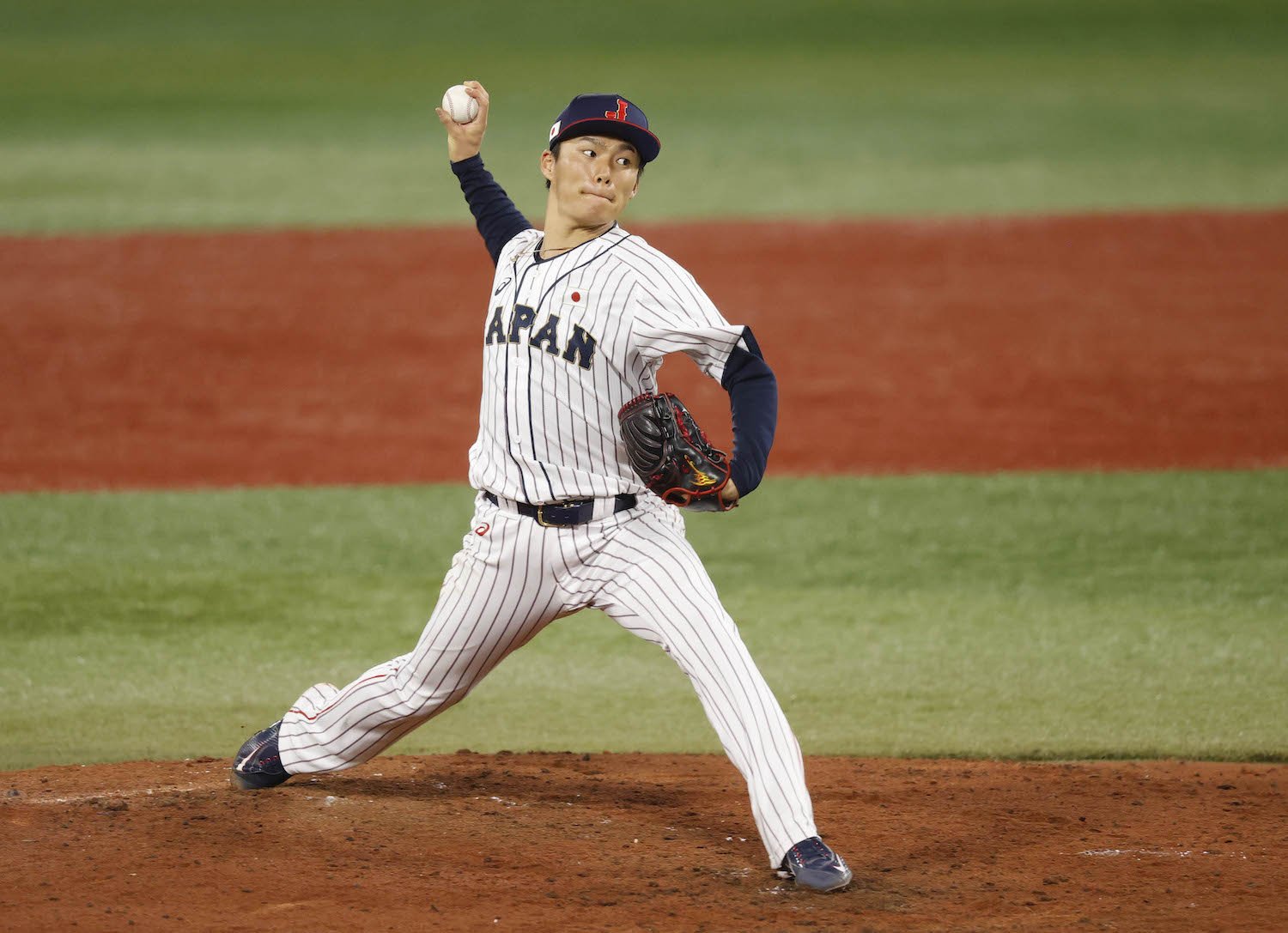
    Obviously, the biggest news of the day was that Shohei Ohtani will defer $68 million of his $70-million annual salary in each year of his 10-year, $700-million contract with the Los Angeles Dodgers. That could allow the team to keep spending, and potentially sign or trade for a frontline starting pitcher like Lucas Giolito, Tyler Glasnow, Dylan Cease, or, most notably, Yoshinobu Yamamoto.

    Ohtani's deferrals make the word "unprecedented" seem insufficient. Reportedly, the generational talent proposed the unique structure of the deal, as his off-the-field earnings are significant enough for him to maintain a lavish lifestyle. There are many intricacies within Ohtani's deal, and I highly recommend reading Fabian Ardaya's piece at The Athletic to understand how the deal came to be and its effects on the Dodgers and Major League Baseball.

    Other important, non-Ohtani contract tidbits and information around the league were shared on Monday, and the kind people at Twins Daily are here to help keep you engaged and informed fans of all things Major League Baseball.

    Do Not Go Gentle Into That Good Night
    Upon the news of Ohtani's official departure from the organization, the ever-persistent and often misguided Los Angeles Angels are swimming in deep waters. On Monday night, Ken Rosenthal of The Athletic reported that the Angels are in the trade market for Corbin Burnes, Glasnow, and Bieber.

    If the organization is unable to acquire one of the three pitchers listed above, it is believed they will shift to the second-tier free-agent starters market, with Marcus Stroman being brought up as a potential target. 

    Though the Angels are probably better off undergoing an organizational reset in this post-Ohtani world, they are steadfast in attempting to compete in 2024. Will that come back to haunt them? Only time will tell, but as the popular maxim states, past performance is the best indicator of future performance.

    Yamamoto Meets With Big Market Teams
    After New York Mets owner Steve Cohen flew to Japan to meet with Yamamoto and his family in his home country, the former NPB star met with the San Francisco Giants on Sunday, the New York Yankees on Monday and is expected to meet with the Dodgers this upcoming Friday, in what has become a melee for baseball's top remaining free agent.

    As reported last week, Yamamoto's total contract is expected to surpass $300 million. Will the Dodgers spend $1 billion in total value in one offseason? Will one of the New York teams give Yamamoto an offer he can't refuse, out of desperation? Will franchises who need to make a splash, like the Giants or Toronto Blue Jays, hand Yamamoto and his representatives a blank check? The thrilling conclusion to Yamamoto's decision must come by January 4, 2024, the final day of the prized free agent's 45-day posting window. 

    St. Louis Cardinals Discussing Extension With Former NL MVP 
    On Monday, Derrick Goold of the St. Louis Post-Dispatch reported that the Cardinals are planning on approaching first baseman Paul Goldschmidt to discuss a contract extension. Goldschmidt, 36, is slated to make $26.5 million in the final year of an extension he signed with the Cardinals in 2019.

    Considering Goldschmidt's age and the Cardinals' struggles last season, the news of this development is surprising, from an outside perspective. Yet, considering the Cardinals' intentions to compete in 2024 and the former MVP expressing a strong desire to stay in "The Lou" in the past, the two sides coming to an agreement later this offseason feels inevitable. 

    Kansas City Royals Remain Active in Pitching Market
    One of the more surprising developments during the first wave of free agency has been how aggressive the Royals have been in the pitching market. On Sunday, the team agreed on a one-year, $5-million contract with left-handed relief pitcher Will Smith. Following the unexpected signing of Smith on Monday, Mark Feinsand of MLB.com reported that the Royals have had discussions with starting pitchers Michael Wacha and Jack Flaherty. The Royals have also been linked to free-agent starters Stroman, Giolito, and Seth Lugo

    Earlier this offseason, Royals General Manager J.J. Piccolo stated that he hopes to bolster the team's starting rotation, and news of their interest in the five starters noted earlier further pushes that narrative. What is the driving force behind the Royals' desire to acquire this level of help? While it is unlikely the Royals will be serious contenders to win the American League Central or earn a Wild Card spot, it would make sense for the organization to want to improve what was the fourth-worst rotation in baseball in 2023, according to Wins Above Replacement at FanGraphs. 

    Miscellaneous Twins Notes

    • Pitcher Louie Varland celebrated his 26th birthday on Monday. 
    • Joe Mauer is currently on track to become a first-ballot Hall of Fame entry, with 76.8% of the vote. (No, we are not afraid to keep a daily count. Yes, dear BBWAA voter reading this, we are watching you.)
    • Read Theodore Tollefson's incredible piece on Wichita Wind Surge's head groundskeeper, Ben Hartman.
    • Fun Fact: Willi Castro (projected $3.8 million salary) will make more money playing baseball in 2024 than Ohtani.

    Happy Tuesday, everyone. Let's talk baseball! Join the conversation and comment below. 

    Follow Twins Daily For Minnesota Twins News & Analysis

    Recent Twins Articles

    Recent Twins Videos

    Twins Top Prospects

    Marek Houston

    Cedar Rapids Kernels - A+, SS
    The 22-year-old went 2-for-5 on Friday night, his fourth straight multi-hit game. Heading into the week, he was hitting .246/.328/.404 (.732). Four games later, he is hitting .303/.361/.447 (.808).

    User Feedback

    Recommended Comments


    Featured Comments

    3 hours ago, Major League Ready said:

      However, how many players do you suppose would be willing to accept this type of "creative approach". 

    If you mean basically take nothing for 10 years then get it , probably not too many. But for a team like the Twins with a fairly high state tax, why wouldn't they offer it to a player? They could have offered Correa the same contract and deferred 200 million to say he is age 44-50 when he likely won't be in MN and gets the close to 20 million in tax saving?

    Look at the money Betts and Freeman deferred.

    2 minutes ago, chpettit19 said:

    I'm confused on how all that works. It doesn't make sense to me that he'd be able to dodge any taxes this way since he signed the contract for work in California, and is being paid for work done for a California company. Somebody much smarter than me is going to have to explain to me exactly how this all works.

    You have to pay California tax if you’re a resident, a part-year resident, or a nonresident who earns income in the state. So Ohtani will have to pay California tax on the money he earns from the Dodgers over the next 10 years, but from there it gets complicated.

    When it comes to deferred payments, if Ohtani is not living in California and not with the Dodgers, he won't have to pay California taxes. Interestingly, deferred compensation is not considered earned or taxable income until you receive it.

    https://www.sportskeeda.com/baseball/fact-check-is-shohei-ohtani-s-dodgers-contract-exempt-california-tax-examining-ambiguity-surrounding-historic-mlb-deal

    2 minutes ago, chpettit19 said:

    I'm confused on how all that works. It doesn't make sense to me that he'd be able to dodge any taxes this way since he signed the contract for work in California, and is being paid for work done for a California company. Somebody much smarter than me is going to have to explain to me exactly how this all works.

    Athletes (and entertainers) have to pay taxes where the games are played each season. It's not where you live or even where you play your home games.

    Here's How Professional Athletes Pay Taxes (fool.com)

    If the deferrals mean he doesn't have to pay taxes until later and only where he lives then he's really dodging Minnesota (and other state) taxes by deferring the money.

    4 minutes ago, TwinsDr2021 said:

    You have to pay California tax if you’re a resident, a part-year resident, or a nonresident who earns income in the state. So Ohtani will have to pay California tax on the money he earns from the Dodgers over the next 10 years, but from there it gets complicated.

    When it comes to deferred payments, if Ohtani is not living in California and not with the Dodgers, he won't have to pay California taxes. Interestingly, deferred compensation is not considered earned or taxable income until you receive it.

    https://www.sportskeeda.com/baseball/fact-check-is-shohei-ohtani-s-dodgers-contract-exempt-california-tax-examining-ambiguity-surrounding-historic-mlb-deal

    Fascinating.

    1 minute ago, DJL44 said:

    Athletes (and entertainers) have to pay taxes where the games are played each season. It's not where you live or even where you play your home games.

    Here's How Professional Athletes Pay Taxes (fool.com)

    If the deferrals mean he doesn't have to pay taxes until later and only where he lives then he's really dodging Minnesota (and other state) taxes by deferring the money.

    They pay taxes in both states when they play games, and then get a credit for one of them thus meaning they're really paying just their state tax unless they live in a non-tax state and then they're only paying taxes in the states where they play their games.

    4 hours ago, nicksaviking said:

    Agree that there needs to be a hard salary cap along with a hard salary floor.

    But the owners need to step up and make it in the players best interest too, I'm in no mood for them to bust a union. I'm sure the players would at least come to the table if the offer was a 200-220M floor. The billionaires should be making a far greater sacrifice than the millionaires; that being across the board revenue sharing.

    And if the big shot owners are not willing, there are way more 'have-nots' than 'haves'. The have-nots can go right ahead and kick the Yankees and Dodgers out of the league if they're not willing to make the game equitable.

    Agree 100% with this post, if they ever adopt a salary cap I certainly hope it comes with with a healthy salary floor. 

    The second point on being more 'have-nots' than 'haves is right on the money as well. The 'have-nots' are content with the way things are because of how much money they make.

    12 hours ago, Scott51104 said:

    It turns out that the Twins could have afforded the first ten years of Ohtani.

    Wonder if Ohtani thought ahead and asked for an opt-out clause after year 10, in case he suspects a better offer might be out there at that far future date. :)

    I almost stayed out if this, but just couldn't. 

    FIRST, I want to make it clear that I like Ohtani from what little I know about him. A generational talent, and a seemingly good guy and teammate. And I love his "I have enough $ coming in from elsewhere, oay me later, and build up the best team you can" attitude/idea. I also want to state that I like the Dodgers. Always have liked them, respected them as an organization, and appreciated their history. They're one of my favorite teams, on my plan "B" list of teams behind the Twins.

    SECOND, there is NOTHING by the rules the Dodgers did wrong here.

    THIRD, I don't subscribe to busting up the players union. They fought hard to have one, as others have before them, and they should have their union.

    That being said, I CARE THE FUTURE OF BASEBALL! If the Dodgers end up hurting 10yrs or so now by having to spend $68M of their income/payroll for a player no longer in MLB, that's on them. But I would say that ONLY they, the Yankees, and the Mets could afford to do/try something like this. If you want to argue there's another 2-4 who might be able to pull it off, I won't argue with you.

    But what they've done...while perfectly within the rules and regulations as they stand today...is not FAIR. Now, we can argue about "fairness". But in sports themselves, and I dare say all ALL sports, rules and regulations are set up to play FAIR. All teams get the same number of players and coaches. (At least on the field). All teams play by the same rules on the field, court, ice, etc. Even in individual sports, golf and tennis, for example, each participant still plays by the same rules.

    When financial implications are so out of whack in a sport where only a handful of teams could ever do/try/risk something like this, your sport is on a dangerous path of non competition, and loss of public/fan interest.

    A high payroll guarantees NOTHING in regard to winning a championship. But it sure does allow a greater opportunity to build a super talented, deep, All Star caliber team with a better chance to reach the post season and win it all on a YEARLY BASIS than a mid or small market team. To deny that is being obstinate.

    In the NFl and the NBA, with salary floors and ceiling caps and revenue sharing, (even with a loophole here and there), there is still a basis of equal opportunity FINANCIALLY to assemble a team. It DOESN'T MEAN a team can't EARN greater profits than other teams! And that's a KEY POINT. In the NFL, for instance, would anyone ever believe the Carolina Panthers...as an organization...would EVER earn as much $ as say the Dallas Cowboys in pure profit? Or in the NBA, the Lakers over, IDK, the Pelicans? (They're still a team, right? Lol).

    But we're NOT talking about pure profit/income for an organization...make all the $ you can!...we're talking about a level playing field of competition. 

    In MLB, right now, I feel the "problem" is not the union...though I have some issues with them...but the owners. Ownership, IMO, is broke down to 3 categories:

    1] The rich teams who want to win and will/can spend to such a degree they will fight against or exceed any punitive cap to make it happen. Generally speaking, they usually have enough pure profit to absorb any financial penalties to do so.

    2] More mid market teams that are trying to win, assemble the best construct organizationally they can, spend what they feel is viable, put the best product on the field to compete, and win best they can, and do so once in a while, ultimate prize, not just yearly competitive speaking wise. (Hint, this would be where the Twins sit). 

    3] A third group that either doesn't care about winning. Or only cares enough about it to keep the turnstiles moving to keep fans coming to the park, pocket their revenue sharing $, and call it a day.

    A big shout out to chpettit19 for his breakdown of a potential revenue sharing of all 30 MLB teams based on MLB profits, the only REAL financial number that we can know/calculate accurately. His $10.5 BILLION divided amongst 30 teams, resulting in approximately $170M per team does not include OTHER profits any team might/can earn additionally through merchandising and and more localized deals, such as radio, etc. 

    Or do I have that wrong? Please correct me if I am. 

    So if the TOP ML ownership groups would flex muscle, probably with help from the mid market teams, they could FORCE the lower end teams to stop lining their pockets with profit sharing...can't believe they haven't already objected to lining the pockets of those owners...and present a plan to the players for a 51/52% split of revenue like the NFL has done. 

    For every $30M dollar player, there's another 5-6-7 veteran players earning far less to earn that, right? And that $170M MIGHT be a floor, adjusted 10-20-30M on a per year basis as a roster turns over. But what should an ownership care if it's coming from a pool? They can STILL make $ from so many diversifying elements for their portfolio. 

    And if the Dodgers, Yankees, Mets, Giants. Phillies. etc, want to spend more, then why not. They have the market size to earn and spend far more than that. It's not about capping your payroll, necessarily, and DEFINITELY not about capping your earnings as an organization. It's about BUILDING your product and sustaining it!

    The NFL has become a juggernaut in this country. And to a degree, world wide. The NBA is not as large, but probably has a far greater reach globally. And while baseball HAS become a more global sport over the years, how many kids, worldwide, wear LeBron jerseys over, say, a Trout jersey? How many jerseys might be worn by Mahones vs Seager?

    Honestly, when you stroll down a street, or in a public mall, how many MLB jerseys or T Shirts do you see that are MLB vs the NFL or NBA?

    I do hold blame to the players union for just being too focused on huge contracts for the elite and not the general personnel and the growth of the sport. I think they're stubborn as hell. But I put FAR more blame on MLB ownership to just being OBTUSE to the world around them and NOT forcing changes that in their structure that would allow the sport to GROW. And ultimately, growth means even more potential profit. 

    I hate to say it, but it sometimes feels like MLB is still stuck in an archaic mid 20th century attitude/power trip. I know it's not ALL owners, but it feels that way at times. The fan in me hates what Cohen, owner of the Mets is doing. Part of me likes it because it might "WAKE UP" MLB as a whole. And MAYBE this kind of deal the Dodgers did will add to the WAKE UP CALL MLB needs to realize crap is BROKE!

    And if you actually WANT your team, and INVESTMENT to grow, maybe you need to FINALLY step forward and make some changes.

    **I can't even pretend what it's going to be like for a Dodger game in a few years for a ticket, a dog and a beer.


    20 hours ago, mikelink45 said:

    Baseball is not a game where one star makes the difference, it truly is a team game. 

    Yeah, and the Angels had both Otani and Trout the past couple of years  and they still couldn't even make the playoffs at all. A team game and a weird game. Gotta love it no matter what!

    It's human nature for an owner to try to out-compete the other teams to become a winning team and I get that business people by nature want to earn as much money as possible. But each individual team is not a business unto itself. MLB is the business. If a team has no other viable teams to compete with the team ceases to exist. I don't understand how the owners of the richest teams can think that doing whatever they want without considering the effect on MLB as a whole is good business.

    11 hours ago, DocBauer said:

    I almost stayed out if this, but just couldn't. 

    FIRST, I want to make it clear that I like Ohtani from what little I know about him. A generational talent, and a seemingly good guy and teammate. And I love his "I have enough $ coming in from elsewhere, oay me later, and build up the best team you can" attitude/idea. I also want to state that I like the Dodgers. Always have liked them, respected them as an organization, and appreciated their history. They're one of my favorite teams, on my plan "B" list of teams behind the Twins.

    SECOND, there is NOTHING by the rules the Dodgers did wrong here.

    THIRD, I don't subscribe to busting up the players union. They fought hard to have one, as others have before them, and they should have their union.

    That being said, I CARE THE FUTURE OF BASEBALL! If the Dodgers end up hurting 10yrs or so now by having to spend $68M of their income/payroll for a player no longer in MLB, that's on them. But I would say that ONLY they, the Yankees, and the Mets could afford to do/try something like this. If you want to argue there's another 2-4 who might be able to pull it off, I won't argue with you.

    But what they've done...while perfectly within the rules and regulations as they stand today...is not FAIR. Now, we can argue about "fairness". But in sports themselves, and I dare say all ALL sports, rules and regulations are set up to play FAIR. All teams get the same number of players and coaches. (At least on the field). All teams play by the same rules on the field, court, ice, etc. Even in individual sports, golf and tennis, for example, each participant still plays by the same rules.

    When financial implications are so out of whack in a sport where only a handful of teams could ever do/try/risk something like this, your sport is on a dangerous path of non competition, and loss of public/fan interest.

    A high payroll guarantees NOTHING in regard to winning a championship. But it sure does allow a greater opportunity to build a super talented, deep, All Star caliber team with a better chance to reach the post season and win it all on a YEARLY BASIS than a mid or small market team. To deny that is being obstinate.

    In the NFl and the NBA, with salary floors and ceiling caps and revenue sharing, (even with a loophole here and there), there is still a basis of equal opportunity FINANCIALLY to assemble a team. It DOESN'T MEAN a team can't EARN greater profits than other teams! And that's a KEY POINT. In the NFL, for instance, would anyone ever believe the Carolina Panthers...as an organization...would EVER earn as much $ as say the Dallas Cowboys in pure profit? Or in the NBA, the Lakers over, IDK, the Pelicans? (They're still a team, right? Lol).

    But we're NOT talking about pure profit/income for an organization...make all the $ you can!...we're talking about a level playing field of competition. 

    In MLB, right now, I feel the "problem" is not the union...though I have some issues with them...but the owners. Ownership, IMO, is broke down to 3 categories:

    1] The rich teams who want to win and will/can spend to such a degree they will fight against or exceed any punitive cap to make it happen. Generally speaking, they usually have enough pure profit to absorb any financial penalties to do so.

    2] More mid market teams that are trying to win, assemble the best construct organizationally they can, spend what they feel is viable, put the best product on the field to compete, and win best they can, and do so once in a while, ultimate prize, not just yearly competitive speaking wise. (Hint, this would be where the Twins sit). 

    3] A third group that either doesn't care about winning. Or only cares enough about it to keep the turnstiles moving to keep fans coming to the park, pocket their revenue sharing $, and call it a day.

    A big shout out to chpettit19 for his breakdown of a potential revenue sharing of all 30 MLB teams based on MLB profits, the only REAL financial number that we can know/calculate accurately. His $10.5 BILLION divided amongst 30 teams, resulting in approximately $170M per team does not include OTHER profits any team might/can earn additionally through merchandising and and more localized deals, such as radio, etc. 

    Or do I have that wrong? Please correct me if I am. 

    So if the TOP ML ownership groups would flex muscle, probably with help from the mid market teams, they could FORCE the lower end teams to stop lining their pockets with profit sharing...can't believe they haven't already objected to lining the pockets of those owners...and present a plan to the players for a 51/52% split of revenue like the NFL has done. 

    For every $30M dollar player, there's another 5-6-7 veteran players earning far less to earn that, right? And that $170M MIGHT be a floor, adjusted 10-20-30M on a per year basis as a roster turns over. But what should an ownership care if it's coming from a pool? They can STILL make $ from so many diversifying elements for their portfolio. 

    And if the Dodgers, Yankees, Mets, Giants. Phillies. etc, want to spend more, then why not. They have the market size to earn and spend far more than that. It's not about capping your payroll, necessarily, and DEFINITELY not about capping your earnings as an organization. It's about BUILDING your product and sustaining it!

    The NFL has become a juggernaut in this country. And to a degree, world wide. The NBA is not as large, but probably has a far greater reach globally. And while baseball HAS become a more global sport over the years, how many kids, worldwide, wear LeBron jerseys over, say, a Trout jersey? How many jerseys might be worn by Mahones vs Seager?

    Honestly, when you stroll down a street, or in a public mall, how many MLB jerseys or T Shirts do you see that are MLB vs the NFL or NBA?

    I do hold blame to the players union for just being too focused on huge contracts for the elite and not the general personnel and the growth of the sport. I think they're stubborn as hell. But I put FAR more blame on MLB ownership to just being OBTUSE to the world around them and NOT forcing changes that in their structure that would allow the sport to GROW. And ultimately, growth means even more potential profit. 

    I hate to say it, but it sometimes feels like MLB is still stuck in an archaic mid 20th century attitude/power trip. I know it's not ALL owners, but it feels that way at times. The fan in me hates what Cohen, owner of the Mets is doing. Part of me likes it because it might "WAKE UP" MLB as a whole. And MAYBE this kind of deal the Dodgers did will add to the WAKE UP CALL MLB needs to realize crap is BROKE!

    And if you actually WANT your team, and INVESTMENT to grow, maybe you need to FINALLY step forward and make some changes.

    **I can't even pretend what it's going to be like for a Dodger game in a few years for a ticket, a dog and a beer.


    Let’s start with the premise that the Owners and the league have done in inadequate job of growing the game.  I am sure you have looked at the year over year revenue growth and the salary increases to players.  If you’re a player, you should be thrilled with the growth of the game and what that has meant to player compensation.   MLB player compensation has outplaced inflation by 100X over the past 50 years so I think the industry has done quite well.  Now, the distribution of that money has very much favored elite players but the players have driven that model or at the very least not focused the increases to the masses.  The league was also quite innovative with rule changes last year that improved the product significantly.   Point being that the premise that they have not adequately grown the game is not consistent with history.

    As much as I would like to see much less variance in revenue like the NFL, you just can’t realign all the revenue streams.  The other leagues were built on a different business model.  Baseball was around for 75 years before the NBA and NFL.  At this point there would be enormous economic sanctions on the top teams if an equity model was instituted.  Imagine you own the Dodgers, Yankees, red Sox, etc and the league proposes revenues be shared equally.  The drop in evaluation would be somewhere in the neighborhood of a couple billion dollars.  It also would not be the best thing for the league.  Revenues are maximized by having the highest profile players in the biggest markets.  Neither the owners or the players want this model.  Small market fans would like it but that’s not of great influence here.

    I would also be surprised if the ownership group does not have some sort of legally binding agreement that mandates the terms of any changes to revenue sharing which protects the interests of the top revenue generating teams.  

    11 hours ago, DocBauer said:

    A big shout out to chpettit19 for his breakdown of a potential revenue sharing of all 30 MLB teams based on MLB profits, the only REAL financial number that we can know/calculate accurately. His $10.5 BILLION divided amongst 30 teams, resulting in approximately $170M per team does not include OTHER profits any team might/can earn additionally through merchandising and and more localized deals, such as radio, etc. 

    Or do I have that wrong? Please correct me if I am. 

    You're wrong. 10.5 B divided 30 ways is $350M per team. The $10.5B includes all the revenue MLB is generating so it is inclusive of local revenue.

    The way it's divided now each team gets at least $210M from the central pool plus 50% of their local revenue. Instead of the $350M each they would get if things were divided evenly they get $250-$550M in revenue per team divided unevenly. I don't think dividing things evenly would be helpful. Teams need an incentive to try to win to appeal to fans.

    36 minutes ago, Nine of twelve said:

    It's human nature for an owner to try to out-compete the other teams to become a winning team and I get that business people by nature want to earn as much money as possible. But each individual team is not a business unto itself. MLB is the business. If a team has no other viable teams to compete with the team ceases to exist. I don't understand how the owners of the richest teams can think that doing whatever they want without considering the effect on MLB as a whole is good business.

    Do you understand that during the last CBA the players took an adamant stand about increasing the luxury tax threshold above what the owners offered and by doing so increased the disparity.

    2 minutes ago, DJL44 said:

    You're wrong. 10.5 B divided 30 ways is $350M per team. The $10.5B includes all the revenue MLB is generating so it is inclusive of local revenue.

    The way it's divided now each team gets at least $210M from the central pool plus 50% of their local revenue. Instead of the $350M each they would get if things were divided evenly they get $250-$550M in revenue per team divided unevenly. I don't think dividing things evenly would be helpful. Teams need an incentive to try to win to appeal to fans.

    You also can't assume a 50/50 model nets the same in every sport.  Baseball has more significant operating costs.  The 50/50 split here also does not include benefits and signing bonuses.  NBA players don't get a draft bonus like MLB.  Those bonuses are at least 5% of the Twins revenue.  Taxes and player benefits are over 10%. That's a total of 65% of the revenue before the other hundreds of employees are paid, facilities costs, equipment, office space, travel, etc are paid for.  IDK how accurate this is by a read an article once that suggested operating costs were around 35%.

    19 hours ago, chpettit19 said:

    Why? Would that make a significant difference? The only way to truly show he wants to win is to take less than half of what he could get? Seems dramatic. There's also the push from the MLBPA to maximize your value so the guys who come after you can maximize theirs. He's getting paid, helping future players, and still setting himself to be on the best team in baseball while allowing them more flexibility to improve their team.

    I think I disagree wholeheartedly that this helps future players. Ohtani is the "unicorn," to use the term everyone else is.

    Don't get me wrong, it's a GREAT deal for him and his situation. 

    But hell no is it a good deal for everyone else and the MLB.

    OK... I understand that money in 2034 will have less value than it does today. And if that makes the value of the contract 480 million it makes the value of the contract 480 million. I'm not an economist so I will nod my head and say OK if that is indeed the case. 

    But... this leads me to a few questions that hopefully someone can answer. 

    The luxury tax hit is the AAV of the contract. If a player signs a 2 year 20 million dollar contract. 1st year for 5 million and the 2nd year for 15 million. The luxury tax for both years is the average annual value of 10 million. In the first year the team pays 5 million in salary but the competitive balance tax is 10. The 2nd year the team pays 15 million in salary but the tax is still 10. 

    To go deeper into the weeds let's use Manny Machado for example. His contract has a luxury tax hit of 31,818,182 dollars for every year of his 11 year contract. That is the average AAV for his 11 year 350 million dollar contract. The 350 million is listed as 305 million in salary plus a 45 million dollar signing bonus that is spread out a 4.09 million for 11 years over the course of the contract. Which adds up to 350 million. 

    350 million divided by 11 is... 31,818,182. 

    Manny was paid 13 million in 2023 and will be paid 13 million in 2024 and 2025. The luxury tax hit for 2023, 2024 and 2025 was and will be 31,818,182 for all 3 of these years based on his average AAV.  

    Manny will make 21 million in 2026. The luxury tax hit will be 31,818,182 based on his average AAV. 

    In 2027, 2028, 2029, 2030, 2031, 2032 and 2033 Many will be paid 35 million each year and his luxury tax hit will be 31,818,182 based on his average AAV. 

    The salary escalated the competitive balance tax remains the same throughout. 

    OK... here's the question... I understand that money in 2034 is of less value than money in 2024. But wouldn't the same be true for money in 2033, 2032 and 2031. Wouldn't the 35 million paid on the back end of Manny Machado's contract also be of less value and then also subject to inflation adjustments that have occurred in the Ohtani contract?

    In the case of Manny Machado... the luxury tax remains static... completely locked in on the AAV of the contract. In the case of Ohtani... The luxury tax is adjusted. 

    Here's another question: 

    Didn't Ohtani essentially sign a 20 year contract at 700 million making the AAV of the contract 35 million? The Dodgers are contractually obligated to pay it over the course of 20 years.  

    Or did Ohtani sign a 10 year contract at 2 million as a baseball player and 680 million dollar contract as team mascot. Making his AAV 2 million during his baseball playing days? To my knowledge... team mascots are can be paid whatever the team wants to pay them and it isn't calculated into the CBT.  

    OK... One last question... What if Ohtani still wants to play baseball in 2035? He is not under contract to play baseball but the Dodgers owe him 680 million. Does he get 680 million from the Dodgers and 20 million from the Giants when he signs with them in 2035? 

    I need to know the answers to these questions before I decide if I'm pissed or not.

    I'll hang up and listen... 


    31 minutes ago, Riverbrian said:

    OK... One last question... What if Ohtani still wants to play baseball in 2035? He is not under contract to play baseball but the Dodgers owe him 680 million. Does he get 680 million from the Dodgers and 20 million from the Giants when he signs with them in 2035? 

    He gets paid by both teams. 

    Max Scherzer's $105 MIL of his $210 MIL contract with the Nationals that was deferred is being paid through 2028 I believe.

    So he got paid his $43 MIL from the Mets and $15 MIL (which is the number/year with interest) from the Nationals this season.

    3 hours ago, Riverbrian said:


    OK... here's the question... I understand that money in 2034 is of less value than money in 2024. But wouldn't the same be true for money in 2033, 2032 and 2031. Wouldn't the 35 million paid on the back end of Manny Machado's contract also be of less value and then also subject to inflation adjustments that have occurred in the Ohtani contract?

    No.  Ohtani's salary is earned in the present year but the payment is deferred.  Manny's salary is not worth the same amount as if he earned it today but he has not yet earned it.  He is going to earn that money a future year.

    In the case of Manny Machado... the luxury tax remains static... completely locked in on the AAV of the contract. In the case of Ohtani... The luxury tax is adjusted. 

    Here's another question: 

    Didn't Ohtani essentially sign a 20 year contract at 700 million making the AAV of the contract 35 million? The Dodgers are contractually obligated to pay it over the course of 20 years.  

    No.  He sign a 10 year contract but the payment for that contract will be spread out over a longer period.  

    Or did Ohtani sign a 10 year contract at 2 million as a baseball player and 680 million dollar contract as team mascot. Making his AAV 2 million during his baseball playing days? To my knowledge... team mascots are can be paid whatever the team wants to pay them and it isn't calculated into the CBT.  

    OK... One last question... What if Ohtani still wants to play baseball in 2035? He is not under contract to play baseball but the Dodgers owe him 680 million. Does he get 680 million from the Dodgers and 20 million from the Giants when he signs with them in 2035? 

    His contract will be up.  He will have fulfilled his obligations under the contract and he will be a free agent like any other player who's contract has expired.  The fact that he did not receive the money owed from his contract does not obligate him in anyway.

    I need to know the answers to these questions before I decide if I'm pissed or not.

    I'll hang up and listen... 


    Answers in bold above.

    6 minutes ago, Major League Ready said:

    No.  Ohtani's salary is earned in the present year but the payment is deferred.  Manny's salary is not worth the same amount as if he earned it today but he has not yet earned it.  He is going to earn that money a future year.


    No.  He sign a 10 year contract but the payment for that contract will be spread out over a longer period.  


    His contract will be up.  He will have fulfilled his obligations under the contract and he will be a free agent like any other player who's contract has expired.  The fact that he did not receive the money owed from his contract does not obligate him in anyway.

    Thanks... Your first bolded statement was helpful to unconfuse me a bit. I couldn't find any articles that could explain it like you just did and I appreciate it. 

    My 1st question was legit. 

    Honestly my 2nd and 3rd questions were probably best described as... whining. 

    Back to the 1st question that really matters and your succinct easy to understand response. 

    That's a loop hole that must be closed. 

    In essence: Ohtani is indeed making 70 million this year and every year but the Dodgers get to hang on to 68 million of it each year... collect interest for 10 years, watch it's value shrink before paying it, all while circumventing the spirit of the CBT in the process because of a value decrease that only counts on referrals but not escalating long term contracts. 

    The CBA as agreed upon encourages this. I don't blame the Dodgers. Every team should do it... It's a loop hole that must be closed.

    70 million should be the luxury tax hit for the Dodgers because that is the AAV much like Machado's AAV is 31 million. The AAV is the AAV.

    Only referrals get the inflation treatment... escalating long term contracts don't... that's wrong.   

    Anyway... thanks for the response. You are sharp as usual. 


    8 hours ago, Steve Lein said:

    I think I disagree wholeheartedly that this helps future players. Ohtani is the "unicorn," to use the term everyone else is.

    Don't get me wrong, it's a GREAT deal for him and his situation. 

    But hell no is it a good deal for everyone else and the MLB.

    It's a great deal for MLB. Only thing that could've been better was it being a NY team so it was on the east coast instead of west.

    I get that it sucks for fans of teams like the Twins, but it's great for the league to have him in a big market and have that team be able to load up more. The league loves it cuz it drives revenue. The owners of teams like the Twins love it cuz it puts more revenue sharing money in their pocket while they don't have to even try. 

    There's a reason the owners of small and mid-market teams don't just force changes, and it's that they like this. It's not fun for fans in those markets, but most of the owners in those markets aren't good for the fans in those markets. Until all 30 owners are actually trying to win I'm not going to be mad at the ones who are. What isn't good for the league is to have a bunch of owners happy to collect revenue sharing and never really invest to win. That's way worse than the big guys actually trying, in my opinion. 

    Riverbrian, the financial calculations reflect the depreciating value of the contract dollars of the years of the contract, then calculate a total value as of the date of contract signing, then divide the present value amount over the years of the actual contract.

    So the "$700M" contract has actual present value of $440ishM at signing, divided by 10 years, yields AAV of $44.5M that is used for determining luxury tax implications.

    Does that help at all?


    Create an account or sign in to comment

    You need to be a member in order to leave a comment

    Create an account

    Sign up for a new account in our community. It's easy!

    Register a new account

    Sign in

    Already have an account? Sign in here.

    Sign In Now

×
×
  • Create New...