


Twins Video
The Minnesota Twins have already been down this road once. The Pohlad family explored a sale of the franchise before ultimately deciding to maintain majority control and bring new limited partners into the ownership group. That decision didn't necessarily close the door on a future sale. It just meant the Twins would remain under Pohlad control for the time being.
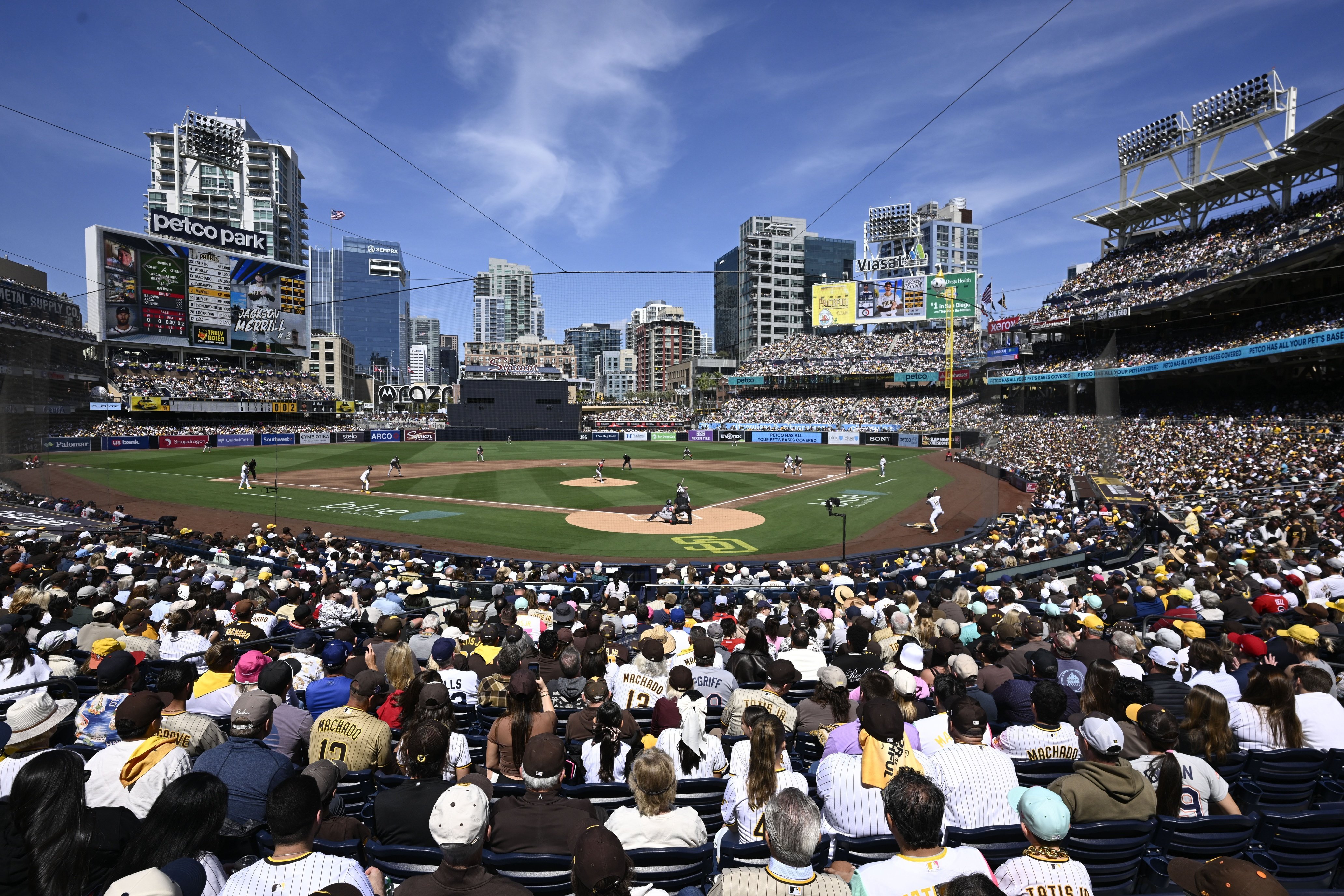
Now, the San Diego Padres have provided an interesting case study in what an MLB franchise can become when ownership treats the baseball operation as an arena for investment, rather than simply a cost to manage and minimize. The Padres were recently approved for a change in controlling ownership at a staggering $3.9 billion valuation, setting a new MLB record. The deal, led by José E. Feliciano and Kwanza Jones, surpassed Steve Cohen's $2.4-billion purchase of the Mets in 2020.
That number is eye-catching, for plenty of reasons. San Diego has long been viewed as a small-market baseball operation. The Padres have dealt with television challenges, limited national attention and competition from the Dodgers in Southern California. Yet, the franchise became more valuable by building something people wanted to watch.
That part should sound familiar to the Twins. The Pohlads don't need to copy everything the Padres did. They don't need to hand out every massive contract imaginable. But if there is still a long-term plan to eventually sell the franchise after the next collective bargaining agreement is settled, there are several lessons worth stealing.
1. Invest in the Product Before You Sell the Product
This is the biggest lesson. The Padres didn't become a $3.9 billion franchise by simply waiting for the baseball market to appreciate their asset. They made the asset better. Manny Machado received a 10-year, $300-million contract. Xander Bogaerts signed an 11-year, $280-million deal. San Diego also acquired stars such as Yu Darvish, Blake Snell and Joe Musgrove. Those decisions came with enormous financial commitments, but they also created something ownership ultimately could sell: a winning baseball team. It's like redoing the roof or getting new windows before you sell a house; the increase in market price dwarfs what it costs to make the upgrades.
The Twins have taken a different path at various points, often trying to find the line between competitiveness and financial responsibility. That can work when everything goes right. It's not the best strategy for maximizing franchise value, though. The Padres demonstrated that aggressive investment can create a feedback loop. Better players produce better teams. Better teams create more meaningful games. Meaningful games create more fans. More fans create more revenue. And greater revenue can make the entire franchise more attractive to prospective buyers, as well as—back to the beginning of the cycle—permitting investments in better players.
The Pohlads need to think about the next several seasons through that lens—not simply, "How much does this player cost?" But "What might this player eventually make the franchise worth?"
2. Build a Team People Actually Want to Watch
San Diego has ranked among MLB's top five teams in attendance every year since 2021. The club is also on pace for another season of 3 million-plus fans. That's the kind of number prospective owners notice. The Twins need to create the same type of urgency around Target Field. That doesn't mean Minnesota needs to become a 95-win juggernaut. It means the franchise needs to become relevant enough that fans feel compelled to be there.
A roster built around Byron Buxton, Royce Lewis, Joe Ryan, emerging young players and a legitimate collection of stars could do that. A team that spends a significant portion of every summer fighting to stay around .500 will have a much harder time doing it. There's a difference between owning a baseball team and owning a destination. The Padres increasingly became the latter. The Twins should be trying to do the same. It'll be much harder in Minneapolis, where the Timberwolves, Vikings and Lynx compete directly for fans' entertainment dollars and the Wild and Loons offer less direct and proximate but real alternatives. The Padres have the luxury of aloneness. The Twins will have to find some way to achieve the same primacy, from much less powerful a position.
3. Turn Winning Into Revenue
This is where the Padres' blueprint gets especially interesting. San Diego's business reportedly grew dramatically over the last several years, with sponsorship revenue and the number of corporate partners both increasing substantially. The Padres' executives pointed to a simple principle: the product on the field has a major impact on revenue.
That should matter enormously to the Twins. A packed Target Field is more valuable than an empty Target Field. A strong sponsorship portfolio is built around a comeplling product. A franchise with a passionate regional following is more attractive to buyers than one whose fan base has become listless.
This is where the Pohlads can create value even before another owner ever walks into the room. Put more people in the seats. Sell more premium experiences. Grow corporate partnerships. Make Target Field a place companies want to associate with. Create a baseball operation that people want to spend money around. The better the business performs, the easier it becomes for a prospective buyer to justify a higher price.
4. Stop Treating Payroll as the Finish Line
The Padres didn't spend money simply to say they had a high payroll. They spent money to create a competitive roster. That distinction matters. Tom Pohlad has already said the Twins need to invest more if they want to become a consistently competitive playoff team. After the 2026 trade deadline, he went even further, saying the team's 2027 payroll "will be higher."
That's a good start. But the next step is making sure that money is being converted into wins. A buyer isn't going to pay a premium because the Twins once had a higher payroll. That comes, instead, when a team has demonstrated that its revenue, fan base, player development and baseball operations are capable of sustaining success. The Padres' spending worked because it became part of a larger transformation. The Twins need the same thing.
5. Build Organizational Stability
There's another Padres lesson hiding underneath all the big contracts. The franchise developed a recognizable baseball identity. A.J. Preller built an aggressive front office. Peter Seidler backed him. The organization developed into a destination for major players and continued investing even after previous disappointments.
When the ownership transition was approved this month, Preller and CEO Erik Greupner were still in place to lead the organization. That continuity matters. Potential buyers aren't just purchasing 26 players and a ballpark. They're purchasing an organization.
The Twins need to demonstrate that the front office knows what it is doing, that player development is producing major-league talent, that the coaching infrastructure works and that ownership is willing to provide the resources necessary to sustain it. There should be a clear answer to the question: What exactly are the Twins? A franchise preparing for a sale should not be searching for that answer at the same time.
6. Make the Next CBA Work for the Twins
Timing could be especially important. MLB has already proposed a new collective bargaining agreement that would include a salary cap and salary floor, with the league's initial proposal calling for a $245.3 million cap and a $171.2 million floor in 2027. The current CBA is set to expire December 1, 2026.
Whether a cap and floor ever become reality is impossible to know. But a new CBA will almost certainly change the financial landscape of baseball in some way. That creates an opportunity for the Pohlads. If the family truly believes the Twins could eventually be sold, it would make sense to maximize the franchise's position before that sale process begins.
7. Create a Franchise That Looks Bigger Than Its Market
Perhaps the most important part of the Padres story is that San Diego never stopped being San Diego. The Padres were still dealing with the limitations of their local television market. They were still sharing a region with the Dodgers and Angels. They didn't magically become Los Angeles or New York.
Instead, they made the franchise bigger than some of those limitations. That's the lesson for Minnesota. The Twins don't need to convince anyone that Minneapolis-St. Paul is Los Angeles. They need to make the Twins themselves more valuable. That means national relevance and recognizable stars. It means postseason appearances. It means a fan base that believes ownership is serious about winning. And it means creating enough revenue that a prospective owner sees opportunities, rather than limitations.
The Pohlads Have a Blueprint
None of this guarantees the Twins could approach a $3.9 billion valuation. The Padres' sale came during a period when MLB franchise values have surged, and scarcity alone makes owning one of the league's 30 clubs extraordinarily valuable. San Diego's record also reflects broader trends in professional sports, not just what happened on the field.
But that's precisely why the Padres' example matters. The Pohlads don't control the market for MLB franchises. They do control what the Twins look like when somebody eventually comes shopping. The family has already changed course once, moving away from a full sale and bringing in new limited partners while retaining majority control. They did so because they hadn't staged the team well enough to sell it at a palatable price.
The Padres didn't simply sell a baseball team. They sold the result of years spent making that baseball team matter more. The Twins have time to do the same thing.
Can Minnesota follow San Diego’s blueprint? What area will be most challenging for the Pohlads? Leave a comment and start the discussion.
Are you optimistic about the Twins right now?

Follow Twins Daily For Minnesota Twins News & Analysis



- roger and Hunter4848
-
 1
1
-
 1
1


Recommended Comments
Create an account or sign in to comment
You need to be a member in order to leave a comment
Create an account
Sign up for a new account in our community. It's easy!
Register a new accountSign in
Already have an account? Sign in here.
Sign In Now