Jump to content
Twins Daily
  • Create Account
  • Twins News & Analysis

    International Age Fraud Still an Issue, Over a Decade After Twins' Miguel Sanó Saga


    Cody Christie

    International age fraud in baseball has occurred for decades, and even more issues were in the spotlight over the weekend. Let’s look back at the Miguel Sanó saga and try to decipher a plan for baseball to avoid these issues in the future.

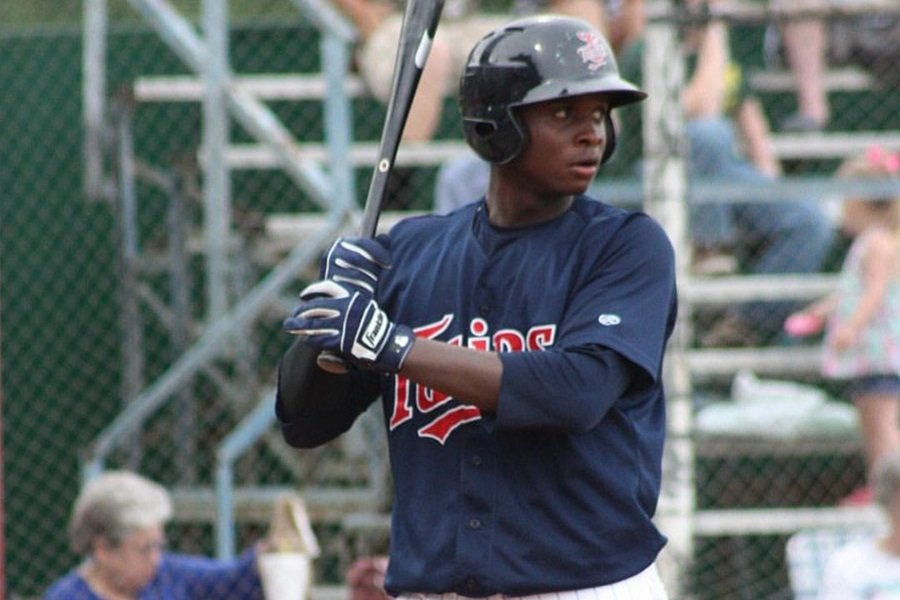
    Image courtesy of Elizabethton Twins

    Twins Video

    Over the weekend, ESPN reported that an MLB investigation found that a top prospect in the Dominican Republic had falsified his age. The San Diego Padres verbally agreed to sign the player for $4 million, but discovered he was 19 years old instead of 14. This isn’t the first time this type of issue has impacted baseball, and it will hardly be the last. Here’s a look back at the controversy surrounding Miguel Sanó’s age and how baseball can make changes with the international player signing process.  

    When Sanó signed with the Twins, many questions about his age were swirling. In 2009, MLB completed an investigation into this issue, but the results were inconclusive. Because of the age issues, Sanó lowered his asking price to sign, and some teams were still scared away by his high price tag. The Twins were the team to pull the trigger, and they gave him $3.15 million, which was then the second-highest signing bonus in team history, behind Joe Mauer’s $5.15 million in 2001.

    Sanó ranked as one of baseball’s top prospects during his time in the minor leagues and played eight years for the Twins. He accumulated 7.6 WAR and posted a 116 OPS+ while being selected to one All-Star team. Inconsistent offensive performance limited Sanó, and he could not reach the superstar status that some had predicted for him at the time of his signing. Perhaps he was older than people thought at the time of his signing, but he still had plenty of opportunities to prove himself at the big-league level. 

    So, why is age fraud an issue in baseball? For players in (especially) the Dominican Republic, there is plenty of pressure to get a slice of teams' international free-agency pies, and age is a key factor in teams' evaluations of prospects. There is a big difference between a 16-year-old signing for millions and an 18-year-old getting tens of thousands of dollars. A player who shows any promise will try and "adjust" their age, to put their family in a better place for the future.

    Here are some potential solutions that could address this complex issue:

    1. Enhanced Verification and Documentation: MLB could partner with government agencies, healthcare institutions, and independent investigators to improve birth certificate verification. A central database of prospect information, created with help from local governments, could track athletes from a young age, making documentation more transparent and difficult to forge.

    2. Expanding League-Run Academy System: MLB has already established academies in multiple countries, so expanding these academies could give teams more oversight. It could allow MLB to directly oversee players’ development and documentation. Players enter these academies early in their teens, making verifying ages easier and tracking individual growth while providing consistent training and education. This would have to involve some shift toward a league-sponsored set of academies, though. Right now, teams operate academies individually and try to gain advantages over opponents, and the league has had to maintain rules limiting how much time young people can spend at a team's academy based on age.

    3. Uniform International Draft: Transitioning to an international draft would bring more structure to the international signing process, with set eligibility requirements that could include age checks and verified documentation. Teams could allocate resources for thorough background checks as part of the draft process, similar to scouting for domestic players.

    4. Incentivizing Age Transparency: MLB could introduce policies that reward players and teams for transparency. For instance, teams could receive international signing pool bonuses for properly verified age documents or for signing players who pass age verification steps. Penalties for violations, such as banning players from signing for multiple years, could also deter fraud.

    5. Third-Party Oversight: Hiring independent organizations to verify the identities and ages of international signees would bring an unbiased layer to the process. This could be done through partnerships with companies specializing in forensic document analysis, background checks, and biometrics to build more reliable records.

    6. Increased Investment in Education and Awareness: Often, young players and their families are pressured into age fraud by agents who promise financial rewards. MLB and teams could invest in educational initiatives in the Dominican and beyond, explaining the risks and long-term consequences of age fraud and helping families and players make informed decisions.

    7. Stricter Penalties for Teams and Agents: MLB could impose stricter penalties on teams and agents caught participating in age fraud schemes, such as restricting signing rights or imposing fines. This would create a more accountable system and pressure teams to conduct thorough background checks and uphold ethical standards.

    Each of these solutions has its own challenges, but combined, they could help create a more transparent and fair system that protects both teams and international players from exploitation and fraud. The international signing process has improved since Sanó signed with the Twins, but the news over the weekend points to the flaws that still exist in the system. 


    What path should MLB take to reduce age fraud? Leave a COMMENT and start the discussion.

    Follow Twins Daily For Minnesota Twins News & Analysis

    Recent Twins Articles

    Recent Twins Videos

    Twins Top Prospects

    Marek Houston

    Cedar Rapids Kernels - A+, SS
    The 22-year-old went 2-for-5 on Friday night, his fourth straight multi-hit game. Heading into the week, he was hitting .246/.328/.404 (.732). Four games later, he is hitting .303/.361/.447 (.808).

    User Feedback

    Recommended Comments

    Featured Comments

    23 minutes ago, old nurse said:

    It is not like this front office has a track record of finding international players.  Non story as far as current history goes 

    Leading off and playing left field ... Emmanuel Rodriguez.

    Latin America is flush with baseball players and the Twins are involved. A few worth watching this summer via milb.com, Adrian Bohorquez and Eduardo Beltre. There are others as well.

    1 hour ago, old nurse said:

    It is not like this front office has a track record of finding international players.  Non story as far as current history goes 

    International players are often signed by age 16 so it takes a lot lot longer for them to make an appearance. Emmanuel Rodriguez leads a handful of Twins top prospects who came from international signings.

    Max Kepler, Jorge Polanco, and Miguel Sano all took between 6-7 years to debut.


    The only way to effectively combat this issue is to give the death penalty to the primary players involved in the scheme.  Make them completely ineligible to play or represent players in MLB or MiLB.  The penalty will be too high for Agents and Trainers to risk.

    Honestly, this amounts to America telling poor countries what to do so as to not inconvenience a small portion of our entertainment.

    Median Household Income
    $1,000? - Cuba
    $2,700 - Venezuela
    $4,000 - Dominican Republic

    Those countries are where almost all international prospects come from and you're talking about countries with limited technology and recordkeeping. Internet access for those countries is 50-65% with rates dramatically lower in rural areas. Venezuelans are dealing with a nearly 20%hunger rate right now. When you're talking about going from your family almost starving to generational wealth overnight, you're going to have these scams.

    MLB teams do not benefit from age scams. MLB teams get hurt by age scams, which is why there are so many levels of background checking, and systems to address other issues like education and PED usage.

    1 hour ago, bean5302 said:

    Honestly, this amounts to America8 telling poor countries what to do so as to not inconvenience a small portion of our entertainment.

    Median Household Income
    $1,000? - Cuba
    $2,700 - Venezuela
    $4,000 - Dominican Republic

    Those countries are where almost all international prospects come from and you're talking about countries with limited technology and recordkeeping. Internet access for those countries is 50-65% with rates dramatically lower in rural areas. Venezuelans are dealing with a nearly 20%hunger rate right now. When you're talking about going from your family almost starving to generational wealth overnight, you're going to have these scams.

    MLB teams do not benefit from age scams. MLB teams get hurt by age scams, which is why there are so many levels of background checking, and systems to address other issues like education and PED usage.

    Everyone knows the reasons why it's done. And America is not telling poor countries what to do in situations like this. It extends all the way down to little league aged participants. At that age it's just blatant cheating. And as far as technology goes, that's a poor excuse. It's not the stone age. Births are recorded all over the world. A simple genealogy search will take most people back a long way before there were computers or the internet. It was recorded on paper. With ink.

    This is a problem created by the MLB since their main intent is to procure Latin players from poor countries who can be signed more cheaply without going through the draft process. Too bad if this practice occasionally ends up biting the MLB in the @ss and costing them additional $'s. 

    PS - The Twins' Tony Oliva switched his US paperwork to his younger brother Pedro Jr.'s name and birthdate to make him appear younger to major league scouts. I would have done that, too.

    10 hours ago, bean5302 said:

    International players are often signed by age 16 so it takes a lot lot longer for them to make an appearance. Emmanuel Rodriguez leads a handful of Twins top prospects who came from international signings.

    Max Kepler, Jorge Polanco, and Miguel Sano all took between 6-7 years to debut.


    Rule v draft. Who have they had to protect from 17, 18 or 19?. Now add 2020.’s signing class. 

    Polanco debuted in his age 20 season 

    3 hours ago, Teflon said:

    This is a problem created by the MLB since their main intent is to procure Latin players from poor countries who can be signed more cheaply without going through the draft process. Too bad if this practice occasionally ends up biting the MLB in the @ss and costing them additional $'s. 

    PS - The Twins' Tony Oliva switched his US paperwork to his younger brother Pedro Jr.'s name and birthdate to make him appear younger to major league scouts. I would have done that, too.

    Tony Olivia, Pedro’s older brother had a passport. Pedro did not but had to get out of Cuba quickly as the border was going to be close by Castro. That is how Pedro Oliva became Tony Oliva  aTwins baseball player 

    14 hours ago, old nurse said:

    Rule v draft

    The Rule 5 draft gives players under 19 an extra year before their eligible. Being on the 40 man doesn't mean debuting. Polanco was signed in 2009. He technically debuted in 2014 with a whopping 8 plate appearances mid-season, 5 years after signing. Polanco didn't spend any significant time on the roster until 2016, 7 years after his signing.

    1 hour ago, bean5302 said:

    The Rule 5 draft gives players under 19 an extra year before their eligible. Being on the 40 man doesn't mean debuting. Polanco was signed in 2009. He technically debuted in 2014 with a whopping 8 plate appearances mid-season, 5 years after signing. Polanco didn't spend any significant time on the roster until 2016, 7 years after his signing.

    So you cannot answer the question of who they have protected,. Why is that? It does prove my point that they have done a poor job in the international market 

    You were the one who used the tram debut. Nice that you appear not to know what it means 

    22 minutes ago, old nurse said:

    So you cannot answer the question of who they have protected,. Why is that? It does prove my point that they have done a poor job in the international market 

    You were the one who used the tram debut. Nice that you appear not to know what it means 

    E-Rod was put on last year, and so was Servirino. 2020 does not need to be protected yet because they have 5 years. However, picking a 16 year old and projecting them to being MLB player is even more of crap shoot than drafting someone.  Most of the top international FA end up being busts and the guys well down the ranking become the best.  Take Soto for example. He was the 25th rank international prospect when he signed.  Tatis Jr. Signed same year, was 30th ranked.  Vlad Jr. was 7th ranked and whole bunch of non-mlb guys were ahead of them too. 

    The fact that Twins had 3 in one year that all had lengthy MLB careers, although non where super stars, is really a crazy situation. 

    7 minutes ago, Trov said:

    E-Rod was put on last year, and so was Servirino. 2020 does not need to be protected yet because they have 5 years. However, picking a 16 year old and projecting them to being MLB player is even more of crap shoot than drafting someone.  Most of the top international FA end up being busts and the guys well down the ranking become the best.  Take Soto for example. He was the 25th rank international prospect when he signed.  Tatis Jr. Signed same year, was 30th ranked.  Vlad Jr. was 7th ranked and whole bunch of non-mlb guys were ahead of them too. 

    The fact that Twins had 3 in one year that all had lengthy MLB careers, although non where super stars, is really a crazy situation. 

    The three in one year was about 15 years ago under a different management team. 

    8 hours ago, bean5302 said:

    The Rule 5 draft gives players under 19 an extra year before their eligible. Being on the 40 man doesn't mean debuting. Polanco was signed in 2009. He technically debuted in 2014 with a whopping 8 plate appearances mid-season, 5 years after signing. Polanco didn't spend any significant time on the roster until 2016, 7 years after his signing.

    Here, is one of the many spots that say the 2020 signees will be eligible 

    Tuesday, November 19: Teams must add eligible minor leaguers to their 40-man rosters by 5 p.m. CT or risk losing them in the Rule 5 Draft. College players drafted no later than 2021 and high school players drafted no later than 2020 are Rule 5 Draft eligible this year, as well as players signed internationally no later than 2020.

    You still have done nothing to disprove that the front office is any good at signing international free agents. Rodriguez and Servino (since designated) are the only 2 that have even been protected that were signed by this regime that I know of. That should not be an acceptable level 


    Create an account or sign in to comment

    You need to be a member in order to leave a comment

    Create an account

    Sign up for a new account in our community. It's easy!

    Register a new account

    Sign in

    Already have an account? Sign in here.

    Sign In Now

×
×
  • Create New...