


Twins Video
Cleveland's deep run into the postseason – despite an avalanche of ill-timed key injuries – does nothing but reinforce the decision to hire Falvey. This is an extremely well constructed ballclub, which breezed to an AL Central crown with 94 wins before sweeping the Red Sox out of the ALDS and jumping out to a 3-1 lead over Toronto in the ALCS.
Falvey of course doesn't deserve full credit for shaping this championship-caliber roster, but since being named director of baseball operations with the Indians in 2012, player acquisition has been one of his primary focuses. In the prior years he held lesser positions with varying levels of input, and he surely helped influence many of the organization's decisions dating back to his start in 2007.
So I thought it would be interesting to take a look at how Cleveland came upon the players that have formed the foundation of its impressive title run.
Corey Kluber: When the Indians acquired Kluber in a three-way trade at the 2010 deadline, he was a 24-year-old in Double-A with a history of control problems. Cleveland gave up very little to get him. We all know where it went from there.
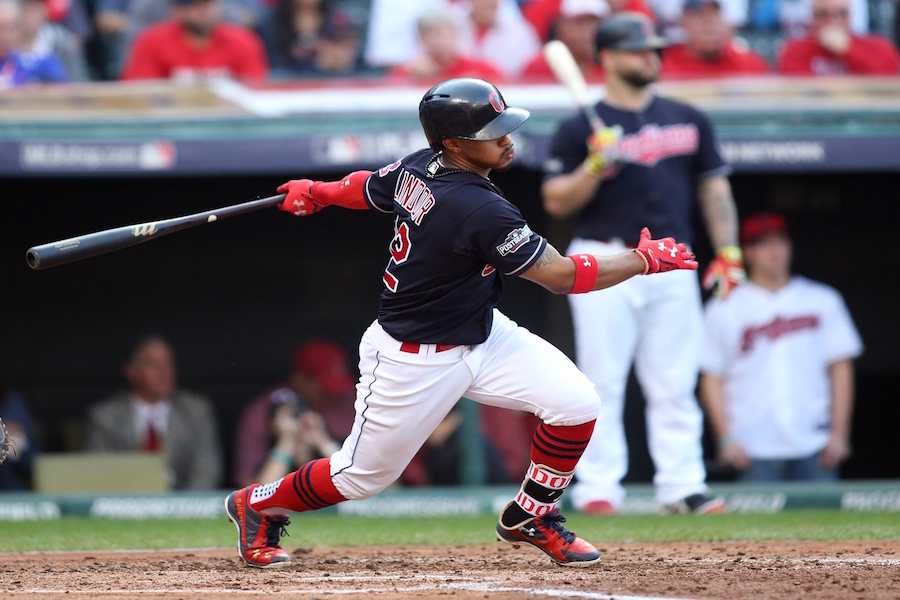
Francisco Lindor: He was a high first-round pick that the team nailed. Cleveland took the Puerto Rican shortstop eighth overall in 2011, and he ascended quickly to his present status as a big-league star.
Carlos Carrasco: The team's No. 2 starter came over from Philadelphia in the Cliff Lee blockbuster of July 2009. He's the kind of hit that the Twins failed to get when they traded Johan Santana. Carrasco is out for the year after a line drive broke his hand in September, but he was a big part of the club's success this season.
Andrew Miller: This is one of my favorites, and representative of a mindset that I hope the Twins inherit. The Indians traded a big prospect haul to acquire Miller, but not because they wanted an upgrade in the ninth. Cleveland has used the outrageously dominant reliever as a bullpen horse, deploying him strategically to work multiple innings and demoralize opponents late in games. His performance in these playoffs may end up being the most impactful of any relief arm in postseason history.
Cody Allen: Of course, it's nice when you have a lights-out guy like Allen in the ninth that enables you to utilize Miller as a flexible weapon. Allen was a 23rd-round draft pick in 2011 that Cleveland simply hit the jackpot with. He has been a fantastic closer for three straight years.
Danny Salazar: He was an international signing out of the Dominican Republic back in 2006, one year before Falvey joined the organization as an intern. While the new Minnesota CBO didn't play a part in finding Salazar as a teenager, the right-hander did develop into a quality big-league starter during his time in the front office. Like Carrasco, Salazar has been unavailable to the Indians in the postseason.
Mike Napoli: He's the kind of player Terry Ryan could never seem to find during that decade where Minnesota couldn't quite get over the hump. The Indians needed a big right-handed power bat so they signed Napoli to a one-year, $7 million deal. The veteran slugger delivered with 34 home runs and 101 RBI.
Carlos Santana: Another excellent find from another organization's system. The Indians acquired Santana in exchange for Casey Blake at the 2008 deadline. Yes, that Casey Blake. Santana was a rising talent in the Dodgers system but rose to elite prospect status after the joining the Indians. He became a quality catcher in the majors before concussions forced him into a 1B/DH role... sound familiar? But unlike Joe Mauer, Santana remains an outstanding offensive asset. Falvey was merely an assistant in Cleveland's scouting department at the time of this trade but he learned the ropes under Mark Shapiro, the two-time Executive of the Year who pulled it off.
Trevor Bauer: The Indians traded for Bauer, a former third overall pick and top-rated pitching prospect, right after Falvey assumed his role as director of baseball ops. Bauer came over as part of a sprawling three-team swap. At the time Bauer was a highly touted young hurler with questions surrounding his control. He hasn't fulfilled his promise as a top-tier big-league starter yet, but he has improved his command and at 25 still holds plenty of upside – as long as he takes it easy with the drones.
Tyler Naquin: The surprise rookie performance of 2016. Naquin was a rather ordinary prospect before breaking through with an .886 OPS in his first MLB campaign. Now he looks like another first-round pick (2012) that paid off for Cleveland.
Jason Kipnis: The two-time All-Star second baseman was selected by the Indians in the second round of the 2009 draft.
Michael Brantley: Setbacks in his recovery from 2015 shoulder surgery kept Brantley off the field for almost the entirety of this season. This makes Cleveland's success all the more astounding given that the outfielder is arguably their best position player. Brantley is another example of the Indians getting strong value back when trading a superstar. He came over from Milwaukee in the 2008 CC Sabathia deal. Another fine stroke from Shapiro, who is incidentally now CEO of the Blue Jays team that Cleveland is on the verge of ousting.
CONCLUSIONS
During Falvey's time in Cleveland's front office, the team has acquired star-caliber talent through almost every avenue: free agency, trades, draft, international market. Hopefully his involvement with these moves – or at least his exposure to the process behind them while working under some highly effective execs – will enable him to bring an edge over to a Twins franchise that has failed to produce nearly the same fruitful results in its player acquisition efforts.






Recommended Comments
Create an account or sign in to comment
You need to be a member in order to leave a comment
Create an account
Sign up for a new account in our community. It's easy!
Register a new accountSign in
Already have an account? Sign in here.
Sign In Now