


Twins Video
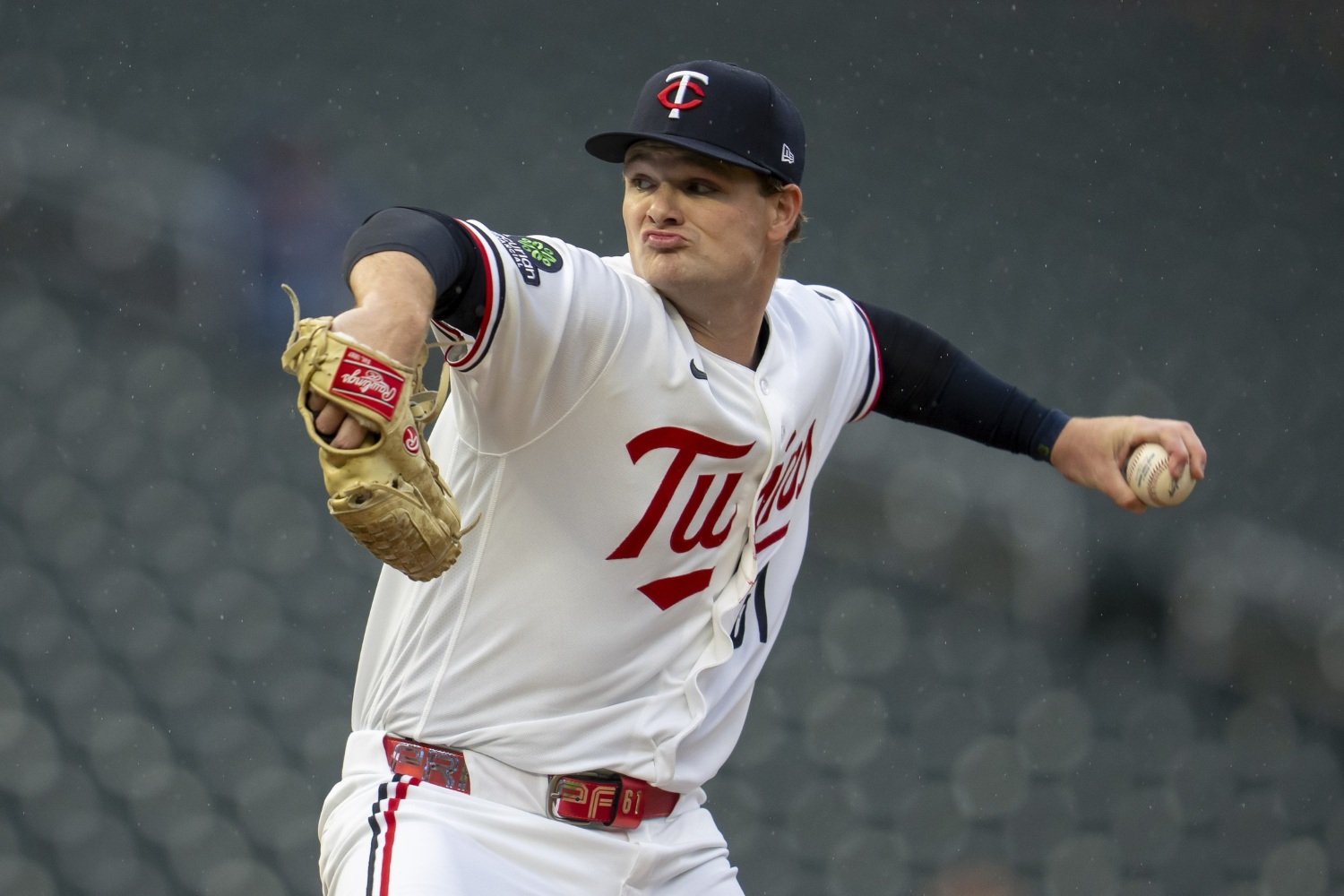
It's only been two starts, but it's not too early to get deeply intrigued by Connor Prielipp's slider. Hell, it's practically too late. Where have you been? Why hasn't this fascination been gripping you for weeks, months, or years already? For now, though, we'll let you slide on that part. Let's focus on the present, and savor what has been an encouraging pair of starts by the young southpaw since his promotion to the majors earlier this month.
Though he's run into a couple of rocky spots and given up four runs in his first nine big-league innings, it's felt more like Prielipp might have held his opponents to less than like they might have produced more. On Monday night in Minneapolis, he gave up just two runs in five frames against the Marinersne of them came home when Tristan Gray, struggling to read a foul fly ball not far behind third base but twisting toward the stands, had to accelerate slightly as he ran into the tarp, leaving him unable to get off a throw quickly and strongly enough to retire J.P. Crawford on what became a very shallow sacrifice fly.
As it happens, though, that very pitch is a good place to start our discussion of what has made Prielipp stand out so much in these two outings. It was 3-1 on Mariners second baseman Cole Young, but Prielipp went to his slider—because that's what Prielipp does. Of the 166 pitches he's thrown in his first two appearances in the majors, Prielipp has selected the slider 78 times (47%). He is, above all, a slider monster.
In the past, that profile—a slider-first lefty—wouldn't work in the starting rotation. Right now, though, it looks like Prielipp can make it work. For one thing, the pitch is really, really good, in a vacuum. Some context might help us see just how good that is. Here are the pitch movement and velocity profiles of three lefty pitchers. Two of them have made the American League All-Star team and drawn serious Cy Young Award consideration within the last half-decade.
.png.06a0a74f870d4a8d3de460e9b3b0a5ca.png)
Prielipp doesn't have the run on the fastball or the consistent depth on the curve that Cole Ragans can boast. He doesn't have the velocity or carry on the heater that Shane McClanahan had at his best, before going through an elbow surgery wringer similar to the one Prielipp went through during an overlapping span. Of these three lefties with similar size, stuff, command and arm slots, though, Prielipp's is the standout slider. The similarities to the best of Ragans's version of the pitch are almost eerie. Here's Prielipp putting away a batter with his sharp breaker.
Here's Prielipp looking very similar in shape, but throwing the pitch harder, with the same result.
Prielipp's slider even has a similar spin profile to those of Ragans and McClanahan, but he can achieve a bit more velocity—or, at other times, more movement, at the expense of velocity. That's where he branches off from these two encouraging comparators, but also (perhaps) how he can eventually meet up with them on the high road among junior-circuit lefties. Notice that the distribution of Prielipp's shapes on the slider was a bit wider—the yellow blob a bit bigger—for Prielipp than for Ragans or McClanahan. Now, consider this, too: The above only shows his first start's slider movements. Here's another look at it, with a line drawn through the slider blob to show the orientation along which he manipulated the shape of the pitch against the Mets.

Compare that to this chart, which corresponds to the above but for his start Monday against Seattle.

The feel he showed for the slider on Monday has a chance to make him special. On a chilly, rainy night, Prielipp didn't throw quite as hard or get quite as much sheer spin as he did in his amped-up debut in New York. He showed the ability to shift the offering east and west, though, which proved important. In the game in New York, Prielipp got seven whiffs on 24 swings on the slider, but he also allowed eight batted balls in play with the pitch. Five of those were hit at least 95 miles per hour; four of them went for hits. On Monday night, he got six whiffs on 16 slider swings. The Mariners put six balls in play on the pitch, but only one was hit hard, and none went for hits.
Prielipp's slider is, in truth, two or three different pitches. Pitchers say there are three ways for a good breaking ball to get outs:
- Strike-to-ball: the good, old-fashioned chase-inducer, aimed at getting a whiff;
- Ball-to-strike: the one that should freeze a batter, usually with a noticeable early break and more velocity difference from the fastball, prompting them to give up on a pitch that lands in the zone; and
- The in-zone: a pitch nasty enough to miss bats or induce weak, useless contact even when it both starts and ends inside the zone, with a blend of power and spin that a hitter can't outmuscle.
Prielipp has shown all three of these, though it's not yet clear how consistently he can execute each. One thing is clear, though: there's no count in which he won't go to the slider. We saw him use it for a key out on a 3-1 pitch, above. Here are 10 instances of him starting right-handed batters with a slider on an 0-0 count, just in these two games.
It's not as simple as one version of the pitch being confined to a given count or to a given matchup. Prielipp will throw a sharp, biting strike-to-ball slider on the first pitch in one at-bat against a given hitter, then take advantage of the fact that they're looking for that pitch by going ball-to-strike the next time. Indeed, he did just that to Julio Rodríguez Monday night. He's eager to get ahead, but doesn't feel any need to use his fastball to do so. That the in-zone slider—the one that slashes across the whole zone but never really threatens not to be within in—works so well to righties is a testament to its viciousness.
Now, here are 10 of the whopping 36 times Prielipp has already thrown a slider with two strikes, trying (in various ways) to put hitters away.
It's actually not an exceptional out pitch yet. Prielipp has seven strikeouts with it, but a pitch with this much potential can eventually put batters away at a better rate than 19.4%. Hitters are sitting on that pitch in those two-strike counts, though, which has allowed Prielipp to put them away with other stuff at times. He got two strikeouts with his fledgling curveball Monday night, and another with his changeup. Meanwhile, he's showing the capacity to use that slider in multiple forms even within similar counts and situations. The ball-to-strike slider isn't a great option with two strikes, but Prielipp certainly made some hay with the version that stays in the zone the whole time. Even when he leaves the pitch up, its firmness and sidespin make it deceptive.
Neither Prielipp nor the slider are finished products. Hitters will adjust; they'll punish his mistakes more often. He needs to find ways to make them respect his fastball a bit more, but the four-seamer lives in the movement dead zone and his sinker doesn't really play to righties. He hasn't stepped into the majors and overwhelmed the best hitters in the world, the way some slightly higher-caliber pitching prospects have over the last few years. However, Prielipp's slider should have your full attention now. It's the best individual pitch in the Twins rotation, and it could become the engine of the rookie's drive for a long-term home in the starting group.







Recommended Comments
Create an account or sign in to comment
You need to be a member in order to leave a comment
Create an account
Sign up for a new account in our community. It's easy!
Register a new accountSign in
Already have an account? Sign in here.
Sign In Now