Jump to content
Twins Daily
  • Create Account
  • Twins News & Analysis

    Chris Paddack is on a Roll, But So Far, His Resurgence is Little More Than a Mirage

    Minnesota’s rotation has been carrying the team through their recent hot streak, and Chris Paddack has been impressive. Beneath the superb top-line numbers, however, lurk warning signs for regression.

    Cody Christie
    Image courtesy of © Bruce Kluckhohn-Imagn Images

    Twins Video

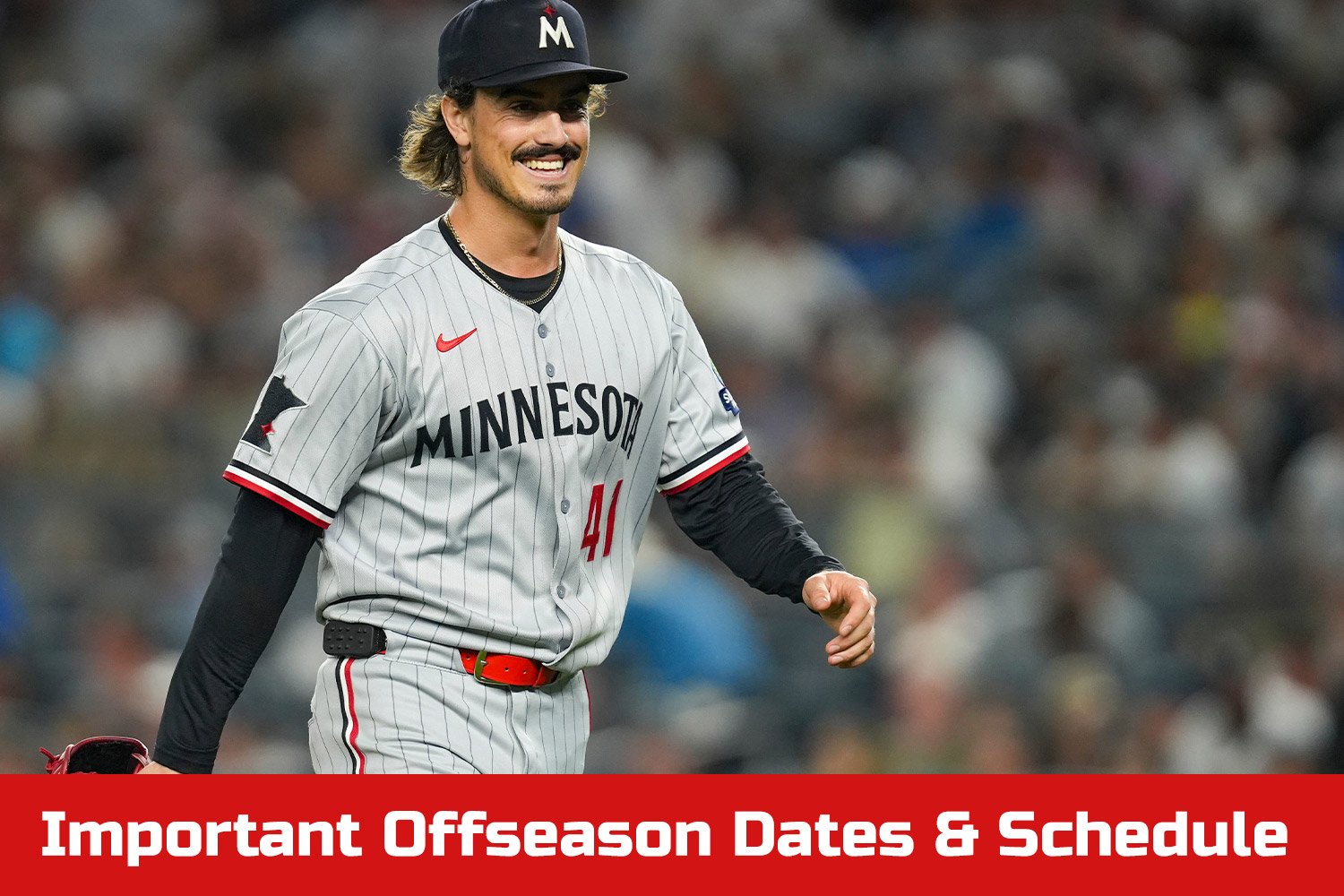
    Chris Paddack's 2025 season has been a tale of two narratives. After a disastrous first start of the season against the White Sox wherein he surrendered nine earned runs over just 3 1/3 innings, Paddack has (seemingly) rebounded impressively. Over his other nine starts, he posted a commendable 2.59 ERA, suggesting a return to form for a pitcher who was only expected to be a back-of-the-rotation option. However, a deeper dive into his underlying metrics raises questions about the sustainability of this performance.

    Surface Success vs. Underlying Metric
    While Paddack's recent ERA is impressive, his Fielding Independent Pitching (FIP) during this stretch stands at 3.77, over a run higher than his ERA. This discrepancy often indicates that a pitcher has benefited from factors outside their control, such as defensive support or favorable sequencing.

    Moreover, Paddack's strikeout-to-walk ratio during this period is 33-to-15, over 48 2/3 innings. These totals translate to a strikeout rate (K%) of 16.1% and a walk rate (BB%) of 8.8%, both of which are career worsts for him. For context, the league average strikeout rate hovers around 22%, making Paddack's decline in strikeouts particularly concerning. If a pitcher doesn’t have a strikeout pitch, it can lead to longer at-bats, higher pitch counts, and quicker hooks.

    Hard Contact and Batted-Ball Concerns
    Paddack's batted-ball profile also augurs potential issues. His Hard Hit%, the percentage of opponents' batted balls hit with an exit velocity of 95 mph or higher, is at 45.1%. This total is significantly above the MLB average of 36.7%. His Hard Hit% ranks in the 23rd percentile, suggesting that hitters will start having more pitches fall in against him because of the regular solid contact they are making. 

    His fastball has been concerning. Batters' expected slugging percentage (xSLG) is .460 versus his four-seamer, compared to an actual slugging percentage (SLG) of .299. This 161-point gap indicates that, based on the quality of contact, hitters should be slugging much higher against him. His velocity is slightly up on the pitch this season, so it’s more of a concern with his location than stuff. Such disparities often regress over time, potentially leading to more extra-base hits allowed.

    Another red flag is the increase in pulled air balls against Paddack. His Pull AIR%, the percentage of balls hit in the air to the pull side, is at a career-high 19.1%, compared to the league average of 16.6%. Pulled fly balls are more likely to result in home runs, suggesting a heightened risk of long balls in the future. He’s given up seven home runs this season, but three came in his disastrous first outing. Batters will get luckier against him, and more fly balls will leave the yard. 

    A closer look at Paddack's pitch arsenal reveals diminished effectiveness. In 2024, all four of his primary pitches achieved at least a 19% whiff rate. This season, only two pitches (the changeup and slider) have maintained that threshold, with whiff rates of 25.9% and 27.5%, respectively. His fastball, which he throws over 50% of the time, has a whiff rate of just 17.9% and is being hit hard, with a Hard Hit% of 51.8%. The decline in swing-and-miss capability across his arsenal suggests that hitters are seeing his pitches better, leading to more contact and, potentially, more damage.

    AD_4nXc6kT8wuLd1t0r5cKW8f2YdM9l0V0g_8SjPj2Si0ERd93NlUo8BLPDOnaCaVFjPEulUHXK-RK9fK603e4hS3uFCU5gwy-VnpOWVTW_aAwAnGGu9H4Z-m1q5JdrbX8MGCEKUBVA7?key=tKxemgFlExc-ArS4e5luAA

    While Paddack's recent stretch has provided a boost to the Twins' rotation, the underlying metrics paint a more cautionary tale. His reduced strikeout rate, increased walk rate, elevated hard contact rate, and declining isolated pitch effectiveness all point toward potential regression. Unless adjustments are made (such as refining pitch locations, altering pitch usage, or enhancing pitch movement), Paddack's current success may prove unsustainable. Monitoring and addressing these underlying issues will be crucial for the Twins to maintain their competitive edge in the coming weeks.


    What’s the most concerning part of Paddack’s underlying numbers? What can he do to avoid a future blowup? Leave a comment and start the discussion.

    Follow Twins Daily For Minnesota Twins News & Analysis

    Recent Twins Articles

    Recent Twins Videos

    Twins Top Prospects

    Marek Houston

    Cedar Rapids Kernels - A+, SS
    The 22-year-old went 2-for-5 on Friday night, his fourth straight multi-hit game. Heading into the week, he was hitting .246/.328/.404 (.732). Four games later, he is hitting .303/.361/.447 (.808).

    User Feedback

    Recommended Comments


    Featured Comments

    11 minutes ago, Fire Dan Gladden said:

    Please remember we are talking about our SP4 or SP5, not SP1. Most teams would be very happy to see 6-7 IP and 4.00 ERA from that slot.

    I can see a trade happen, but only if I squint my eyes really hard. Teams in pennant races do not trade effective SP when the return will be low

    I think everybody is happy with the results Paddack has been getting. I'm over the moon with it, to be honest. It's just not going to stay that way. He's going to end the year with a 5.00 ERA or so.

    14 minutes ago, tarheeltwinsfan said:

    These metrics verify what my eyes have shown me. Trade Paddock for a young backup defensive catcher, as soon as Paddock has his next decent start.

    Paddack will be a salary dump to make room for a different acquisition at best, IMHO. Nobody is giving up a decent prospect for him.

    I've hoped that he would pitch well enough that we could trade him for something decent as we're clearly not going to sign him for next year. Both Festa and Matthews show enough promise that they could replace him.

    To be clear, I've been on the Trade Paddack camp since the offseason.  With that being said, Paddack has exceeded my expectations so far this season.  One of my biggest issues with advanced metrics is that it almost becomes a self-fulfilling prophecy.  Paddack is bound to have a clunker where he gives up 4-6 runs in less than 5 innings and then all the people quoting the advanced metrics will come out and scream that he is now regressing towards the mean whenever that clunker start arrives.  The historic issue with Paddack has been that he throws too many pitches and can't get through 5 innings.  This year he is averaging just under 5 1/3 innings pitched and hasn't thrown under 5 innings since April 6th, his second start.  

    My ultimate question is who do you replace Paddack with at the moment?  SWR: you just sent him down to St. Paul for being a worse version of Paddack.  Zebby:  he currently doesn't seem to be able to command his pitches effectively enough to get through 5 innings.  Festa:  he is coming back from arm fatigue, so I don't see him getting anymore run than Paddack for a while.  Can all of this change by the deadline?  Of course.  But for now, we should enjoy riding with the Sheriff until the horse collapses and just be ready for that collapse with a contingency plan.

    7 hours ago, Coach Wheels said:

    Completely agree with this post. Paddock is our 5th starter and hes getting 18 outs in recent starts which have helped make a 16-3 run in the month of May. Im 61 years old and I remember a time when ground ball outs were a sign of good pitching. Maddox, Glavine, etc were guys that won Cy Young awards, rings, and went to HOF. 

    I choose to appreciate what Paddack has done this month and hope it continues. Over analyzing the game is not my strength, I choose to trust what see and not look for reasons to burn down the success.

    If he passes the eye test it's not a mirage. Even at 71 with cataracts.

    Shhhhhhhhhhhh!!!!! Shut up already, Cody. 😇

    Do you really want to give other teams information that reduces the upcoming trade value? Best case scenario - Paddack continues to roll, and saves any tanking until after the trade. 

    5 hours ago, bean5302 said:

    Using a single peripheral metric or even a couple can paint an inaccurate picture of potential regression because they all have flaws and outliers.

    ERA is king over multiple full seasons in my opinion.
    Paddack's ERA is 3.98 this year. It's 4.33 lifetime.

    On to some of the metrics. FIP and xFIP ignore batted ball data treating all batted balls (except home runs) the same, and all ballparks the same. In general, it works pretty well at a glance because "most" pitchers will be fairly accurate to these metrics. FIP thinks ground balls are the same as line drives and xFIP thinks an infield pop up at Great American Ballpark (Cincinatti) is the same as warning track fly balls at Oracle (San Fran).
    Paddack's FIP and xFIP are 4.64 and 4.96 while being at 4.09 and 4.02 lifetime.

    Metrics like SIERA look at the type of batted ball like pop up, line drive, grounder or fly ball, and adjusts for the ballpark factor. xERA takes detailed batted ball information like exit velocities, launch angles, etc. into account, but ignores the park factors. SIERA treats a 120mph 500ft towering home run the same as a 80mph soft fly ball. xERA treats T-Mobile (Seattle) like Coors Field (Denver) for batted balls.
    His SIERA and xERAs are 4.23 and 4.90. Lifetime 4.02 and 4.26, respectively.

    Then there are metrics like strikeout percentage and walk percentage. If a pitcher strikes a ton of guys out and doesn't walk anybody, they're going to be expected to be dominant as there will rarely be guys on base to do damage. 16.1% and 8.8% for Paddack is terrible for K rate and pretty poor for walk rate. K/9 and BB/9 are nice to glance at because they're easier to understand, but if tons of guys are getting on base, it dilutes the /9 rates down.

    Metrics like FIP, xFIP, SIERA, xERA, K/9, BB/9, K%, BB%, Exit Velocity and BABIP are all designed to replicate the "eye test" for the most part. Except an "eye test" which is totally unbiased and observes every single walk, strike out or batted ball for a pitcher. It's like circumstantial evidence in a case. When all the evidence corroborates a story, the chances the evidence is wrong is lower.

    Looking at metrics and using them as projection devices can be largely opinion based. Which metrics a person values or doesn't value, looking at the peripherals and adjusting the picture, adding the history of a player or changes to mechanics, etc to the equation. I guess... metrics turn people into professional scouts who can watch every single game, every pitch, every batted ball in a way.

    To me, folks who intentionally mislead about the value or lack of value of metrics are basically pointing to Ben Revere hitting a home run as proof he's a power hitter.

    There are also instances where the "eye test" can be argued against metrics.
    @chpettit19 watched a game or two where Mickey Gasper was the catcher in AAA and believes Gasper just looked like he was doing a poor job. With the limited metrics available, it looks like Gasper is "adequate" behind the dish. @chpettit19's eye test might be a lot more valuable than the metrics I can see because those metrics are so limited in that case, but he's also strongly personally biased in my opinion. YMMV on how valuable his accounting of events based on his eye test is or how valuable the limited data is in supporting Gasper's credibility as a potential depth catcher.

    Interesting argument here as you make the argument both for and then against metrics once you get to the bottom and start claiming you have any meaningful metrics available for Mickey Gasper behind the plate. His 15% caught stealing percentage (according to b-ref) is not "adequate," and is mostly about the pitcher. 15% in the majors would put him in the 33rd percentile. What are his wild pitch metrics? You've provided passed ball numbers, but not wild pitch. The expectation for major league catchers is that they can block pitches and prevent wild pitches. 

    I didn't even know Mickey Gasper existed 6 months ago. I have nothing against him. I've hoped he was a possible answer behind the plate since the day I found out he was a real life human and he was a new member of the Twins organization. I've wished he was the answer to finally getting rid of Vazquez since the day they made that trade. I have 0 bias against him. In fact, if I had any it would've been towards to positive like for every other Twins player/prospect that you call me out for being too positive on. When I disagree with you too positively I'm drinking the TD koolaid and turning them into superstars unrealistically but when I disagree with you negatively I'm "strongly personally biased" against that player? Or am I just "strongly personally biased" against you when I don't agree with you? The bias I have for Gasper is I wish he'd take Vazquez's spot. But I don't think he can. My bias towards Gasper is the opposite of the bias you're claiming I have. I want him to be good. I've wanted him to be worthy of being the backup since the trade. I didn't even know it was him catching the first game I watched until about the 3rd inning. I'm sorry I don't think he's good. Feel free to actually watch him some time and form your own opinion instead of going off the insanely limited "metrics" you can dig up.

    But it's all a balance. Especially when it comes to the defensive metrics. It's a mix of "eye test" and metrics. The computers are better at measuring some things than others. Defensive "stats" and metrics are WAY behind the offensive side of things. Pitching is in the middle. But no team does, or should, use just numbers or just their scout's eyes. They all find a balance. Then they cross check. They see what their numbers say and what their scouts say and see if they match up and discuss why they might not match if they don't. 

    5 hours ago, bean5302 said:

    I think everybody is happy with the results Paddack has been getting. I'm over the moon with it, to be honest. It's just not going to stay that way. He's going to end the year with a 5.00 ERA or so.

    As you said previously, his career ERA is 4.33. No reason to believe he cant stay in that 4ish range. If he continues that, he will not be moved.

    I've felt like Paddack has eternally been recovering from injury during his stay with the Twins, resulting in having less stuff. He may well have less stuff than when he broke in with the Padres. I think he still has the pitches to be successful and he has been successful of late because his command is sharp right now.

    Getting ahead on counts helps in many ways and makes so-so stuff look much better. Paddack has been filling the zone during his good run. 

    4 hours ago, chpettit19 said:

    Interesting argument here as you make the argument both for and then against metrics once you get to the bottom and start claiming you have any meaningful metrics available for Mickey Gasper behind the plate. His 15% caught stealing percentage (according to b-ref) is not "adequate," and is mostly about the pitcher. 15% in the majors would put him in the 33rd percentile. What are his wild pitch metrics? You've provided passed ball numbers, but not wild pitch. The expectation for major league catchers is that they can block pitches and prevent wild pitches.

    I meant it when I said your "eye test" might be a lot more valuable than the limited metrics I have to go on. It wasn't me being sarcastic. There aren't enough quality metrics out there on Gasper to make a strong case in his defense.

    10 hours ago, bean5302 said:

    I meant it when I said your "eye test" might be a lot more valuable than the limited metrics I have to go on. It wasn't me being sarcastic. There aren't enough quality metrics out there on Gasper to make a strong case in his defense.

    Oh, I took it as you meaning it. But you then immediately followed it up with believing I'm "strongly personally biased" without any basis for that belief which undercuts your original statement.

    But this article isn't about Mickey Gasper so we can just leave it here.

    On 5/26/2025 at 7:59 AM, Whitey333 said:

    What a bunch of junk.  More ridiculous use of metrics mainly designed to make poor players look good and good or decent players putting up results to look bad.  Again baseball analytics making a nice simple fun game unnecessarily  complicated and cumbersome.  Over analyzing EVERYTHING!!  Ridiculous.

    Even if you're eyeballing it, you see Paddack's run is unsustainable.  So perhaps you're closing your eyes as well as not accepting objective evidence.


    Create an account or sign in to comment

    You need to be a member in order to leave a comment

    Create an account

    Sign up for a new account in our community. It's easy!

    Register a new account

    Sign in

    Already have an account? Sign in here.

    Sign In Now

×
×
  • Create New...