Jump to content
Twins Daily
  • Create Account

Recommended Posts

Posted

There's always a new frontier in pitching stats. This one happens to be pretty flattering for your friendly neighborhood sophomore starter.

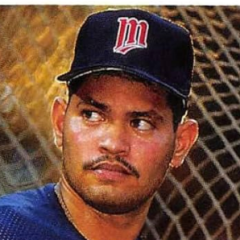
Image courtesy of © Brad Rempel-Imagn Images

Last week, Baseball Prospectus released a slew of new arsenal metrics to add to their suite of pitching numbers. The aim of arsenal-based metrics, in general, is to overcome the limitations of pitch models, which largely measure the effect of each pitch in isolation. The advantages of having a diverse arsenal that Stephen Sutton Brown and BP focused on are twofold:

  • Having more pitches one throws fairly regularly reduces the likelihood that a batter will become familiar with a particular offering from a pitcher
  • Having pitches that appear similar in flight (before spin- and seam-induced movement take hold) increases the difficulty of judging where and when a pitch will cross home plate, increasing the challenge of making effective swing decisions. 

BP’s model identifies four new metrics, which require a rudimentary summary before we apply them to help contextualize the Twins pitching staff. For each, there’s a high-level definition, along with some general takeaways for their application.

  1. Pitch Type Probability: The likelihood a batter can identify the pitch type given the release point and trajectory, until a swing decision is made and given the count it was thrown in.
    Headlines: Not only is having a wide array of pitches useful, this helps us understand that consistent vertical and horizontal release points, arm angles etc. can be advantageous to pitchers. Pitchers can create maximum confusion for hitters by combining clustered release points with varied ranges of movement and velocity.
  2. Movement Spread: The size of the variation in possible pitch movement, assuming the probability the pitch is any of those in the pitcher’s repertoire and considering the movement profiles of those pitches.
    Headlines: More obvious, perhaps, than Pitch Type Probability. A greater movement spread increases the pitcher’s ability to deceive a hitter.
  3. Velocity Spread: As above, for velocity instead of movement.
    Headlines: As above for Movement Spread.
  4. Surprise Factor: How unexpected the pitch movement was based on the distribution of possible pitch movements via the Movement Spread.
    Headlines: Essentially, this is a measure of the density of distributions for a given pitch's observed movement. To distill this down. How confident can a batter be that the pitch they think is coming, is in fact coming? The higher the surprise factor, the tougher time they will have guessing what pitch is coming and where it will cross the plate.

As with any new metrics or models, the fun comes from working to contextualize them within your team of interest. In this case, that’s the Twins, and specifically the back end of the rotation. 

We know the heart of the Twins’ rotation is strong. Anchored by Pablo López, Joe Ryan, and Bailey Ober, ZiPS projects that trio to accumulate roughly 9 fWAR in 2025. But what of the back end of the rotation? There are a number of candidates for consideration, all with their own strengths and limitations. Can these new arsenal metrics help us understand who is best positioned to start 2025 in the rotation? Who needs work at Triple A? Who shouldn’t be part of the picture at all?


View full article

Posted

Isn't this the term "mirroring", keeping the same delivery & everything on every pitch? To disguise the pitches.

  • Having pitches that appear similar in flight (before spin- and seam-induced movement take hold) increases the difficulty of judging where and when a pitch will cross home plate, increasing the challenge of making effective swing decisions. 
Posted
12 minutes ago, Doctor Gast said:

Isn't this the term "mirroring", keeping the same delivery & everything on every pitch? To disguise the pitches.

  • Having pitches that appear similar in flight (before spin- and seam-induced movement take hold) increases the difficulty of judging where and when a pitch will cross home plate, increasing the challenge of making effective swing decisions. 

Hmm. Mirroring is not a term I encounter much in this context, except in terms of spin axis. Some sinkers and sliders or four-seamers and curves will be said to have good spin mirroring, because they're spinning (more or less) opposite directions along the same axis. Disguising the pitch through keeping the same delivery is usually referred to under the umbrella of repeatability and/or release-point matching, and the clustering of release and early trajectories of pitches usually fall under the argot of "tunneling". But mirroring works ok, too, if it's the easiest way to envision what a pitcher's trying to do.

Posted

Interesting stuff.  My question is whether these new statistics have real power of predictability.  I don’t know that they don’t but I don’t understand them well enough to think one way or the other.  

Also, I would love to see how Lopez, Ryan, and Ober stack up, along with maybe some of the pitching leaders from 2023 and 2024.  

Posted

It seems the advanced metrics always favor SWR. I like SWR so whatever he's doing right, keep on doing it & I wish him well. He keeps on proving people wrong.

Posted
On 1/27/2025 at 12:12 AM, terrydactyls said:

Yippee!!!  More "advanced metrics" to move us closer to Strat-O-Matic Baseball with no actual live players.

Strat is a lot more fun than watching baseball these days.

Create an account or sign in to comment

You need to be a member in order to leave a comment

Create an account

Sign up for a new account in our community. It's easy!

Register a new account

Sign in

Already have an account? Sign in here.

Sign In Now
The Twins Daily Caretaker Fund

You all care about this site. The next step is caring for it. We’re asking you to caretake this site so it can remain the premier Twins community on the internet.

×
×
  • Create New...