Jump to content
Twins Daily
  • Create Account

Recommended Posts

Posted

Residents of the West Metro are likely familiar with this area of St. Louis Park. Just south of Interstate 394 along Park Place, there’s the West End shopping and entertainment district, a Costco, a Home Depot, Yangzte restaurant, the KFAN studios, Life Time Fitness, and more. Nestled in under the sea of asphalt and commerce are the remnants of what could have been a thriving ballpark district.

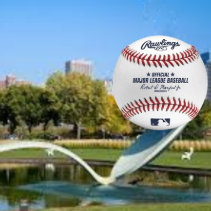
Image courtesy of © Tony Tomsic-Imagn Images

If you look closely enough, while no beams, seats, or foul lines ever existed in this location, there are still ghosts of what could have been.

There is a very small lake, technically a pond, in front of St. Louis Park’s DoubleTree Hotel. The walking trail that surrounds it, dotted with park benches, seems to elevate the status of this pond above nearby retention basins. In fact, this humble body of water is a city park with an official name: Candlestick Pond. Like any good place name, it tells us a little bit about its history.

Screenshot 2025-01-04 at 1.07.51 PM.png

For those unaware, this is significant because this was the site of the proposed ballpark to be the home of the Minneapolis Millers and, eventually, the New York Giants, whose owner was looking to move west for more lucrative opportunities. 

As Patrick Reusse penned in his book, “Minnesota Twins: A Complete Illustrated History,” then-Giants owner Horace Stoneham had purchased “[f]orty acres just west of Highway 100 on the south side of what is now Highway 394” and by the mid-1950s Stoneham was publicly telling people that he “intended to move his team to Minneapolis.”

The St. Louis Park Historical Society added an article from December 1948 from the St. Louis Park Dispatch describing how Stoneham had purchased a 20-acre tract that required approval from the city zoning department to allow for the 1.5 million dollar, 17,500-seat stadium construction on the site. The Giants planned on using the stadium for multiple activities, including local high school sports, but drew the line at circuses. “There’ll be no circuses, anyway there have been times when I’ve seen our ball club give a pretty good imitation of one,” Minneapolis Millers general manager Rosy Ryan told the press to assuage residents’ fears that circus animals would be paraded into the community. 

This newly proposed stadium would replace Nicollet Park, a 4,000-seat bandbox in the city where off-street parking was non-existent, and owners could not line their pockets with those fees. The Minneapolis Baseball & Athletic Association, owned by Stoneham, purchased the St. Louis Park land. By 1950, Stoneham and Millers GM Rosy Ryan were vocal about construction beginning on their new location. 

Screenshot 2025-01-04 at 11.39.26 AM.png

In January 1950, Stoneham was in town and made a sweeping proclamation: “We expect to start work on the new ball park by the middle of the summer. It should be ready no later than the 1952 season. We definitely are going to go ahead and build. We have had architects working on the plans for some time.  We plan to get started as soon as all the preliminaries can be straightened out.”

During the site inspection process, several concerns came to light, including the old adjacent sand pit which had yet to be filled. According to the Dispatch, “[o]ne construction possibility that will be probed is that of sinking the stadium below the present ground level of the site. If this proves feasible, it will reduce construction costs.” Beyond that, increased parking needs and the notion that St. Louis Park was “too far” for the residents of St. Paul became a growing concern. 

The land issues are one reason why, in 1954, Stoneham threw his support behind the Metropolitan Sports Area Commission, composed of leaders from Minneapolis, Richfield, and Bloomington, for their proposed stadium site in Bloomington. St. Paul had completed their own AAA stadium, Midway, in 1957 after Mayor Joseph Dillon said that the city would “under no circumstances” support the Bloomington stadium and was still eager to land one of the shopping teams. But Bloomington’s proximity to St. Paul was much better than St. Louis Park, and St. Paul was tied to the Dodgers. The Millers moved into their new 20,000-seat Metropolitan Stadium in 1956 and Stoneham would join Dodgers’ owner Walter O’Malley in California instead. 

So the St. Louis Park ballpark concept died on the vine. The Giants, however, still owned the land. 

As development pushed westward and Highway 12 got ready to give way to Interstate 394, the area became much more of a lucrative prospect. In 1962, the Cooper Theater was built on the tract of land that was supposed to be a thriving ballpark. The theater was one of three “super-cinarama” theaters constructed in the US. The Cooper Theater resided on a road that sliced through the property, then named Yosemite Lane. In 1966, the Giants, still owners of the land and coming off a second-place finish in the National League, convinced the city of St. Louis Park to rename the road Candlestick Drive. 

The Giants’ real estate arm went belly up in the 1970s, and were forced to sell their holdings, including the St. Louis Park property. Kraus-Anderson acquired the land in the early 1980s, and the developer added several businesses, office buildings, and the future home of the DoubleTree. In that growth, Candlestick Drive was erased from maps and history. 

Still, one remnant from that era continues: the small pond that sits just southwest of the DoubleTree along what is now 16th Street. 

You might not have realized that this pond was named Candlestick. It’s not labeled on maps and has no signage on-site. Moreover, if you search Google Maps for “Candlestick Pond,” Google will take you to a lake in Newfoundland. If you add “St. Louis Park” to your query, you get thrown into Lamplighter Pond, a body of water just north of the St. Louis Park middle school. The only detail that exists is from the St. Louis Park Historical Society. 

The pond is likely a leftover from the long-forgotten sand pit – perhaps the original hole that required filling before a stadium could be constructed. It’s now a manicured office park pond with a small trail encircling in, perfect for workers in the nearby office buildings to get their steps in.

Screenshot 2025-01-04 at 12.31.17 PM.png

Suppose you ever find yourself in St. Louis Park. In that case, you can locate one of the benches around Candlestick Pond, close your eyes, and think about a universe in which Willie Mays continued his career in St. Louis Park, playing for the Minneapolis Giants. 

Of course, we wouldn’t have the Minnesota Twins nor Twins Daily for that timeline to exist.


View full article

Posted

Fascinating article. I had never heard of this "proposed" move either. I have fond memories of .... staying in St. Louis Park whenever I would visit Minneapolis and attend Twins games back in the Humpty Dome days. 

Posted

This is a really cool article.  My compliments to the research on this compelling story from yesteryear.  Sometimes history is just sitting out there and we charge by without paying attention.  Thanks for making me stop to observe.   I wonder how many stories like this exist in other cities as well.  

Create an account or sign in to comment

You need to be a member in order to leave a comment

Create an account

Sign up for a new account in our community. It's easy!

Register a new account

Sign in

Already have an account? Sign in here.

Sign In Now
The Twins Daily Caretaker Fund

You all care about this site. The next step is caring for it. We’re asking you to caretake this site so it can remain the premier Twins community on the internet.

×
×
  • Create New...