



Matthew Trueblood
-
Posts
1,033 -
Joined
-
Last visited
Content Type
Profiles
News
Minnesota Twins Videos
2026 Minnesota Twins Top Prospects Ranking
2022 Minnesota Twins Draft Picks
Minnesota Twins Free Agent & Trade Rumors, Notes, & Tidbits
Guides & Resources
2023 Minnesota Twins Draft Picks
The Minnesota Twins Players Project
2024 Minnesota Twins Draft Picks
2025 Minnesota Twins Draft Pick Tracker
2026 Minnesota Twins Draft Tracker: Picks & Bonuses
Forums
Blogs
Events
Store
Downloads
Gallery
Everything posted by Matthew Trueblood
-
Image courtesy of © Ed Szczepanski-Imagn Images The Minnesota Twins continue to spin off impending free agents ahead of the 5 PM Central trade deadline, and they continue to make moves with the highly aggressive Philadelphia Phillies and top executive Dave Dombrowski. This time, it's Harrison Bader joining Jhoan Duran in the City of Bortherly Love. Jeff Passan was first with the report; Twins Daily's @John Bonnes was able to confirm the trade independently. Bader, 31, is a New Yorker by birth but attended the University of Florida. Drafted by the Cardinals, he spent seven years in that organization, before being traded to the Yankees in 2022. Since, he’s bounced to the Reds and Mets, and he signed a one-year deal worth $6.25 million with the Twins just before spring training. Some $1.5 million of that is in the form of a buyout on a mutual option for 2026, so one intriguing question when looking ahead to this deal was whether the Twins would send money to offset some or all of that payment. Bader batted .258/.339/.439 in 307 plate appearances for the Twins, with 12 home runs and 10 stolen bases. After he’d traded some patience to put the ball in play more often over the previous half-decade, Bader has drawn more walks this season and is enjoying his best offensive campaign since 2021. He’s lost a step in center field, but remains elite in either corner. While he was a Twin, he earned high praise from Rocco Baldelli for the unique energy he brought to the clubhouse and the dugout. In return for Bader, the Twins will get outfield prospect Hendry Mendez and right-handed pitcher Geremy Villoria, as reported by Phillies writer Matt Gelb. Mendez, 21, is a tall, lanky, left-hitting outfielder, performing well at Double-A Reading this season. He's batting .290/.374/.434 there, with eight home runs and six stolen bases. (It's worth noting, though, that Reading is a notoriously hitter-friendly environment.) Villoria, who won't even turn 17 until next month, signed with the Phillies via international free agency this winter. Superficially, Mendez looks good, but there are lots of good athletes like him with enough feel for contact to climb this high in the minors. His biggest flaw—too many ground balls—is the one that holds them back at the threshold of the majors, and fixing it is often difficult enough to force changes in a player's game that have negative knock-on effects. Bader didn't command a premium haul, but that's no surprise. He did bring back two pieces who offer upside, giving the Twins four promising ex-Phillies farmhands accumulated in the course of less than one full day. Since Bader was due to hit free agency at the end of the season (and neither side had felt good about the likelihood of a reunion thereafter), this rates as a nice return for a player who will be much more valuable in his new organization for the rest of the summer. View full article
-
BREAKING: Harrison Bader Traded to Philadelphia Phillies
Matthew Trueblood posted an article in Twins
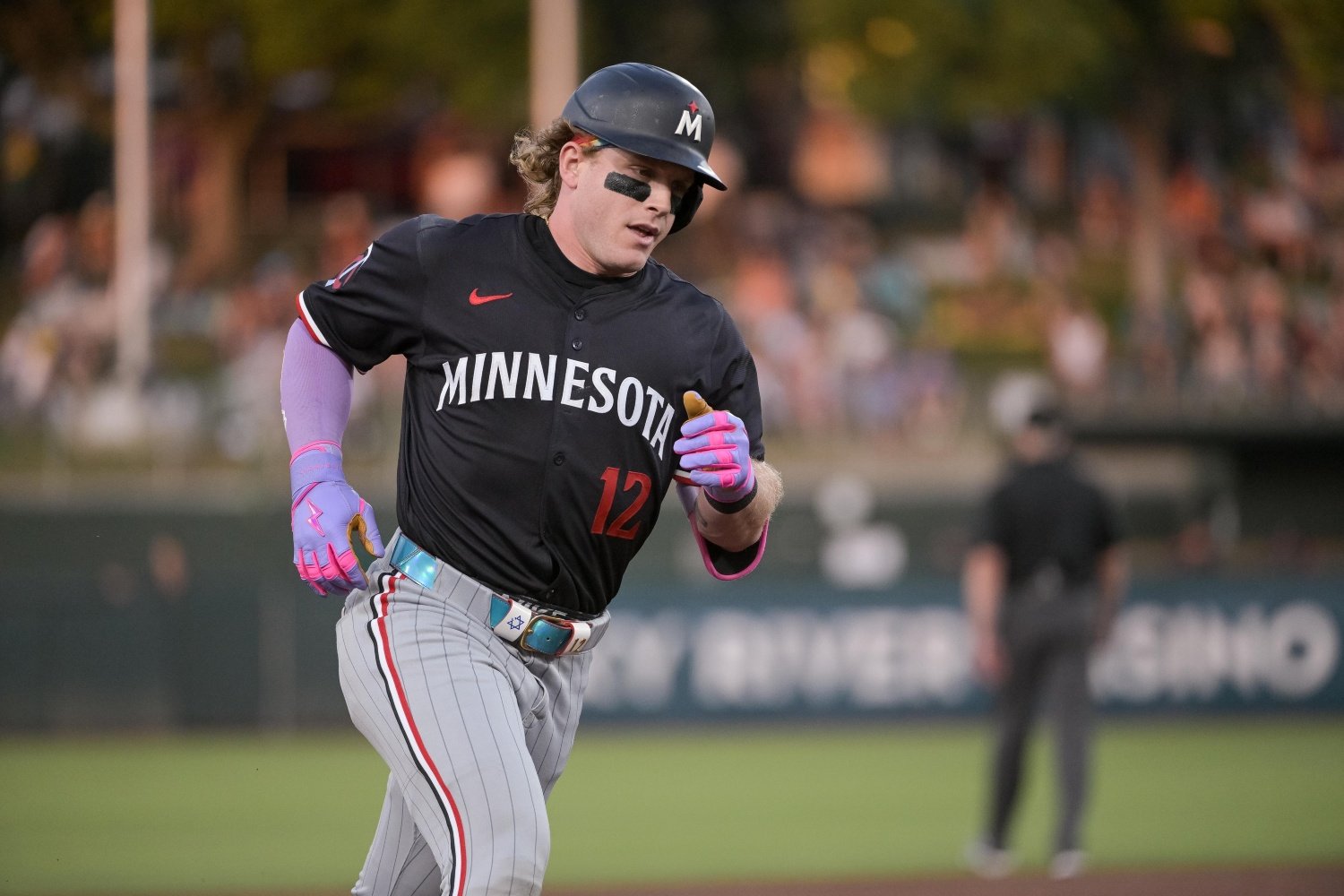 The Minnesota Twins continue to spin off impending free agents ahead of the 5 PM Central trade deadline, and they continue to make moves with the highly aggressive Philadelphia Phillies and top executive Dave Dombrowski. This time, it's Harrison Bader joining Jhoan Duran in the City of Bortherly Love. Jeff Passan was first with the report; Twins Daily's @John Bonnes was able to confirm the trade independently. Bader, 31, is a New Yorker by birth but attended the University of Florida. Drafted by the Cardinals, he spent seven years in that organization, before being traded to the Yankees in 2022. Since, he’s bounced to the Reds and Mets, and he signed a one-year deal worth $6.25 million with the Twins just before spring training. Some $1.5 million of that is in the form of a buyout on a mutual option for 2026, so one intriguing question when looking ahead to this deal was whether the Twins would send money to offset some or all of that payment. Bader batted .258/.339/.439 in 307 plate appearances for the Twins, with 12 home runs and 10 stolen bases. After he’d traded some patience to put the ball in play more often over the previous half-decade, Bader has drawn more walks this season and is enjoying his best offensive campaign since 2021. He’s lost a step in center field, but remains elite in either corner. While he was a Twin, he earned high praise from Rocco Baldelli for the unique energy he brought to the clubhouse and the dugout. In return for Bader, the Twins will get outfield prospect Hendry Mendez and right-handed pitcher Geremy Villoria, as reported by Phillies writer Matt Gelb. Mendez, 21, is a tall, lanky, left-hitting outfielder, performing well at Double-A Reading this season. He's batting .290/.374/.434 there, with eight home runs and six stolen bases. (It's worth noting, though, that Reading is a notoriously hitter-friendly environment.) Villoria, who won't even turn 17 until next month, signed with the Phillies via international free agency this winter. Superficially, Mendez looks good, but there are lots of good athletes like him with enough feel for contact to climb this high in the minors. His biggest flaw—too many ground balls—is the one that holds them back at the threshold of the majors, and fixing it is often difficult enough to force changes in a player's game that have negative knock-on effects. Bader didn't command a premium haul, but that's no surprise. He did bring back two pieces who offer upside, giving the Twins four promising ex-Phillies farmhands accumulated in the course of less than one full day. Since Bader was due to hit free agency at the end of the season (and neither side had felt good about the likelihood of a reunion thereafter), this rates as a nice return for a player who will be much more valuable in his new organization for the rest of the summer.
 -
Image courtesy of © Matt Blewett-Imagn Images The Twins are moving on from the mountain of a man, the Autocorrect- (and barrel-)defying splinker., and the electrifying ninth-inning entrance. They're trading Jhoan Duran to the Philadelphia Phillies for a package of high-end prospect talent, according to Ken Rosenthal of The Athletic. Twins Daily has confirmed Rosenthal's report. Minnesota will receive catching prospect Eduardo Tait and rookie pitcher Mick Abel. Duran, 27, is under team control through 2027. The Twins promoted him on Opening Day in 2022, rather than game his service time, and he’s rewarded that faith. His triple-digit fastball was the first thing to open eyes throughout the league, not least because referring to it that way undersells him: Duran often topped 103 miles per hour in his rookie campaign. He rapidly matured into the team’s closer, and even as he’s seen some occasional velocity dips and struggled with an imperfect fastball shape, he’s found ways to thoroughly dominate opposing batters. Much of that is attributable to Duran’s secondary pitches, which are even more valuable (and more indispensable) than the heater. His curveball and splinker are devastating, and this year, he’s added a sweeper to that arsenal. His strikeout rate has eroded slightly each year, but the .553 OPS opponents have managed against Duran in 2025 is the lowest of his career. He’s morphed into an elite ground-ball hurler, and his entrance production for save opportunities has been one of the delightful features of evenings at Target Field over the last two-plus seasons. The lone constraint on Duran’s trade value, perhaps, is the likelihood that he’ll be one of the highest-paid relief pitchers in baseball for the next two seasons. He’s making $4.125 million in 2025, and given the season he’s having, that figure should rise considerably for 2026. Nonetheless, he’s been the trade chip teams have clamored for most in talks with the Twins, so when a move happened, it was sure to be a big one. Tait, 18, is the headliner here. A left-handed batter and catcher, he's played almost the whole season at Low-A Clearwater, where he's hitting .251/.322/.436. He was promoted earlier this month to the Phillies' High-A affiliate, at a very young age. He'll turn 19 next month. His bat is his carrying tool; scouts view him as a hitter who can make enough contact to get to plus power at maturity. What is far less clear is whether he can stick as a catcher, but even without knowing for sure in that regard, Tait ranked third on Baseball America's midseason update of the Phillies' top 30 prospects list. He'll be slightly lower-ranked in the Twins system, but they'll hope to develop him into their catcher of the future. Abel, 23, provides the immediate juice in the deal. He was Philadelphia's top pick in the 2020 MLB Draft, and has already made it to the majors for a brief look as a starter. He profiles as a pitcher who can stay in the rotation, though perhaps more as a third or fourth starter than as the frontliner the team envisioned when they drafted him. He figures to pitch for the big-league Twins for much of the final two months of this season, unless they have specific things they want to tweak with a stopover in St. Paul. Bob Nightengale was first to report that the return will be Tait and Abel. This move signals the degree of aggressiveness the Twins have elected to take at this trade deadline. They sought two high-end potential contributors in any deal for Duran, and they got them here. There's risk associated with both prospects, but the team is ready to shift gears and reshape their core for 2026 and beyond. Tait and Abel begin that process, by moving resources from the bullpen toward the positional core and the starting rotation. View full article
-
BREAKING: Twins Trade Jhoan Duran to Philadelphia Phillies
Matthew Trueblood posted an article in Twins
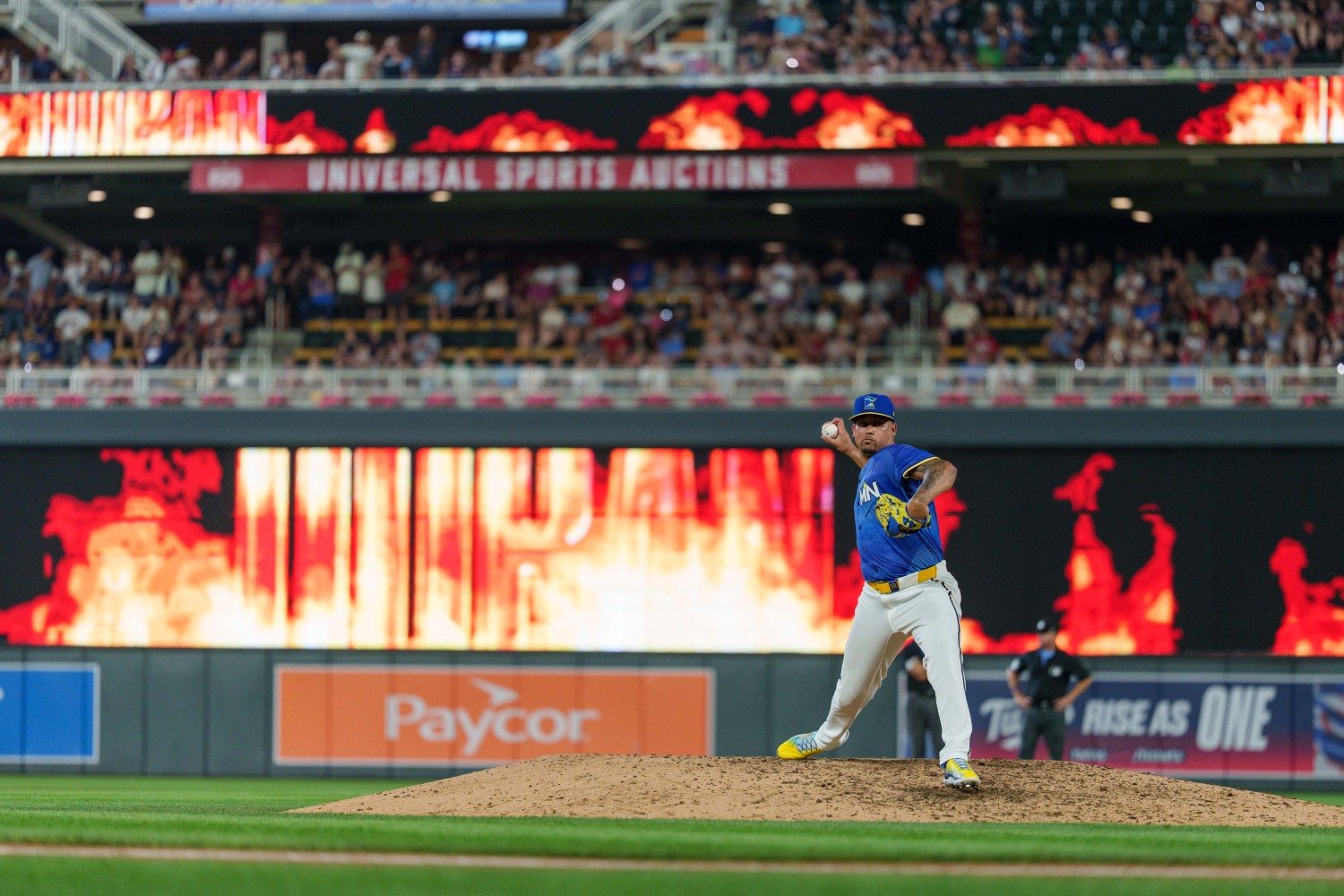 The Twins are moving on from the mountain of a man, the Autocorrect- (and barrel-)defying splinker., and the electrifying ninth-inning entrance. They're trading Jhoan Duran to the Philadelphia Phillies for a package of high-end prospect talent, according to Ken Rosenthal of The Athletic. Twins Daily has confirmed Rosenthal's report. Minnesota will receive catching prospect Eduardo Tait and rookie pitcher Mick Abel. Duran, 27, is under team control through 2027. The Twins promoted him on Opening Day in 2022, rather than game his service time, and he’s rewarded that faith. His triple-digit fastball was the first thing to open eyes throughout the league, not least because referring to it that way undersells him: Duran often topped 103 miles per hour in his rookie campaign. He rapidly matured into the team’s closer, and even as he’s seen some occasional velocity dips and struggled with an imperfect fastball shape, he’s found ways to thoroughly dominate opposing batters. Much of that is attributable to Duran’s secondary pitches, which are even more valuable (and more indispensable) than the heater. His curveball and splinker are devastating, and this year, he’s added a sweeper to that arsenal. His strikeout rate has eroded slightly each year, but the .553 OPS opponents have managed against Duran in 2025 is the lowest of his career. He’s morphed into an elite ground-ball hurler, and his entrance production for save opportunities has been one of the delightful features of evenings at Target Field over the last two-plus seasons. The lone constraint on Duran’s trade value, perhaps, is the likelihood that he’ll be one of the highest-paid relief pitchers in baseball for the next two seasons. He’s making $4.125 million in 2025, and given the season he’s having, that figure should rise considerably for 2026. Nonetheless, he’s been the trade chip teams have clamored for most in talks with the Twins, so when a move happened, it was sure to be a big one. Tait, 18, is the headliner here. A left-handed batter and catcher, he's played almost the whole season at Low-A Clearwater, where he's hitting .251/.322/.436. He was promoted earlier this month to the Phillies' High-A affiliate, at a very young age. He'll turn 19 next month. His bat is his carrying tool; scouts view him as a hitter who can make enough contact to get to plus power at maturity. What is far less clear is whether he can stick as a catcher, but even without knowing for sure in that regard, Tait ranked third on Baseball America's midseason update of the Phillies' top 30 prospects list. He'll be slightly lower-ranked in the Twins system, but they'll hope to develop him into their catcher of the future. Abel, 23, provides the immediate juice in the deal. He was Philadelphia's top pick in the 2020 MLB Draft, and has already made it to the majors for a brief look as a starter. He profiles as a pitcher who can stay in the rotation, though perhaps more as a third or fourth starter than as the frontliner the team envisioned when they drafted him. He figures to pitch for the big-league Twins for much of the final two months of this season, unless they have specific things they want to tweak with a stopover in St. Paul. Bob Nightengale was first to report that the return will be Tait and Abel. This move signals the degree of aggressiveness the Twins have elected to take at this trade deadline. They sought two high-end potential contributors in any deal for Duran, and they got them here. There's risk associated with both prospects, but the team is ready to shift gears and reshape their core for 2026 and beyond. Tait and Abel begin that process, by moving resources from the bullpen toward the positional core and the starting rotation.
- 482 comments
-
- 11
-

-

-

-
- jhoan duran
- 2025 trade deadline
- (and 2 more)
-
 Wednesday has seen a barrage of trades involving relief pitchers, but if reports are to be believed, the Twins might be about to raise the stakes on that substantially. Several reports (some of which we at Twins Daily can independently confirm) indicate that Jhoan Duran is expected to be dealt by the end of the day, and that the Dodgers and Mariners are especially aggressive in pursuit of him. Mark Feinsand of MLB.com has one such report. Joel Sherman has a very similar set of conjectures to share. Our sources suggest that the Dodgers are in the lead for Duran, but there's still time for Seattle to up their offer. The timeline of a deal is not clear, but it does look likely that Duran will be moved before the deadline—and maybe even within the next few hours.
 -
Wednesday has seen a barrage of trades involving relief pitchers, but if reports are to be believed, the Twins might be about to raise the stakes on that substantially. Several reports (some of which we at Twins Daily can independently confirm) indicate that Jhoan Duran is expected to be dealt by the end of the day, and that the Dodgers and Mariners are especially aggressive in pursuit of him. Mark Feinsand of MLB.com has one such report. Joel Sherman has a very similar set of conjectures to share. Our sources suggest that the Dodgers are in the lead for Duran, but there's still time for Seattle to up their offer. The timeline of a deal is not clear, but it does look likely that Duran will be moved before the deadline—and maybe even within the next few hours. View full rumor
-
Carlos Correa's contract is team-friendly. That's an important thing to keep in mind. The salaries might be too high to accommodate for many teams, but the structure of the deal—front-loaded, with team options of diminishing values beginning in 2029—makes the terms favorable to the team. That's why the Twins were willing to jump back in and sign Correa, after he nearly agreed to deals with the Giants and Mets in the winter of 2022-23. Keep that in mind today, because Bob Nightengale of USA Today has a report this morning that the Astros are pondering a reunion with Correa, via trade. Correa has a full no-trade clause in there, too, but Nightengale says that he would waive it to go back to Houston. The other key detail of the report is that the Astros would demand that the Twins pay a significant portion of the remaining money on Correa's deal. Therein lies the rub, it seems. There's a case to be made for that position, but if the Twins aren't getting either huge savings or a significant prospect in return for Correa, it would seem like a massive mistake to trade him this summer, at a nadir in his value. We'll see what (if anything) comes of this. View full rumor
-
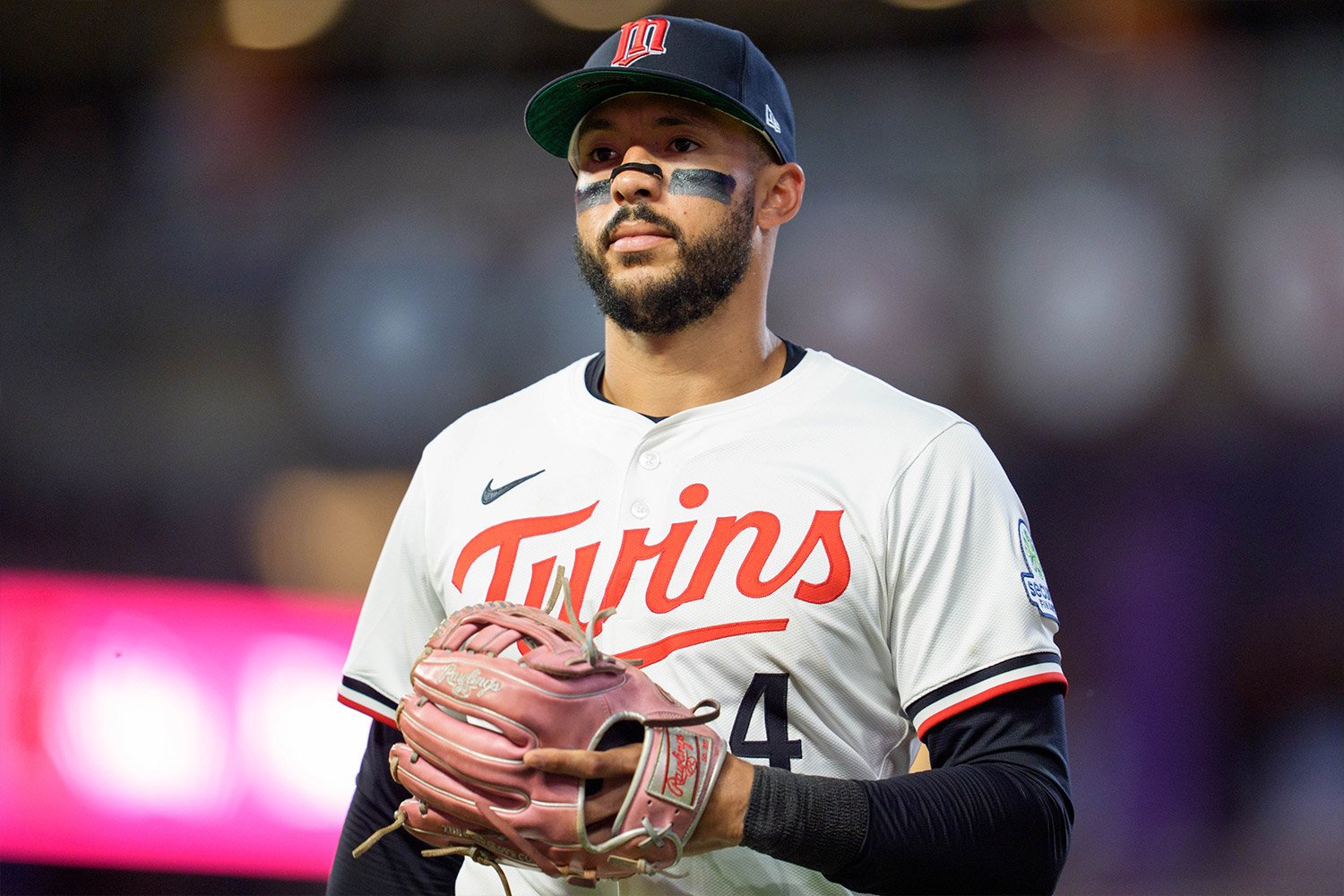 Carlos Correa's contract is team-friendly. That's an important thing to keep in mind. The salaries might be too high to accommodate for many teams, but the structure of the deal—front-loaded, with team options of diminishing values beginning in 2029—makes the terms favorable to the team. That's why the Twins were willing to jump back in and sign Correa, after he nearly agreed to deals with the Giants and Mets in the winter of 2022-23. Keep that in mind today, because Bob Nightengale of USA Today has a report this morning that the Astros are pondering a reunion with Correa, via trade. Correa has a full no-trade clause in there, too, but Nightengale says that he would waive it to go back to Houston. The other key detail of the report is that the Astros would demand that the Twins pay a significant portion of the remaining money on Correa's deal. Therein lies the rub, it seems. There's a case to be made for that position, but if the Twins aren't getting either huge savings or a significant prospect in return for Correa, it would seem like a massive mistake to trade him this summer, at a nadir in his value. We'll see what (if anything) comes of this.
 -
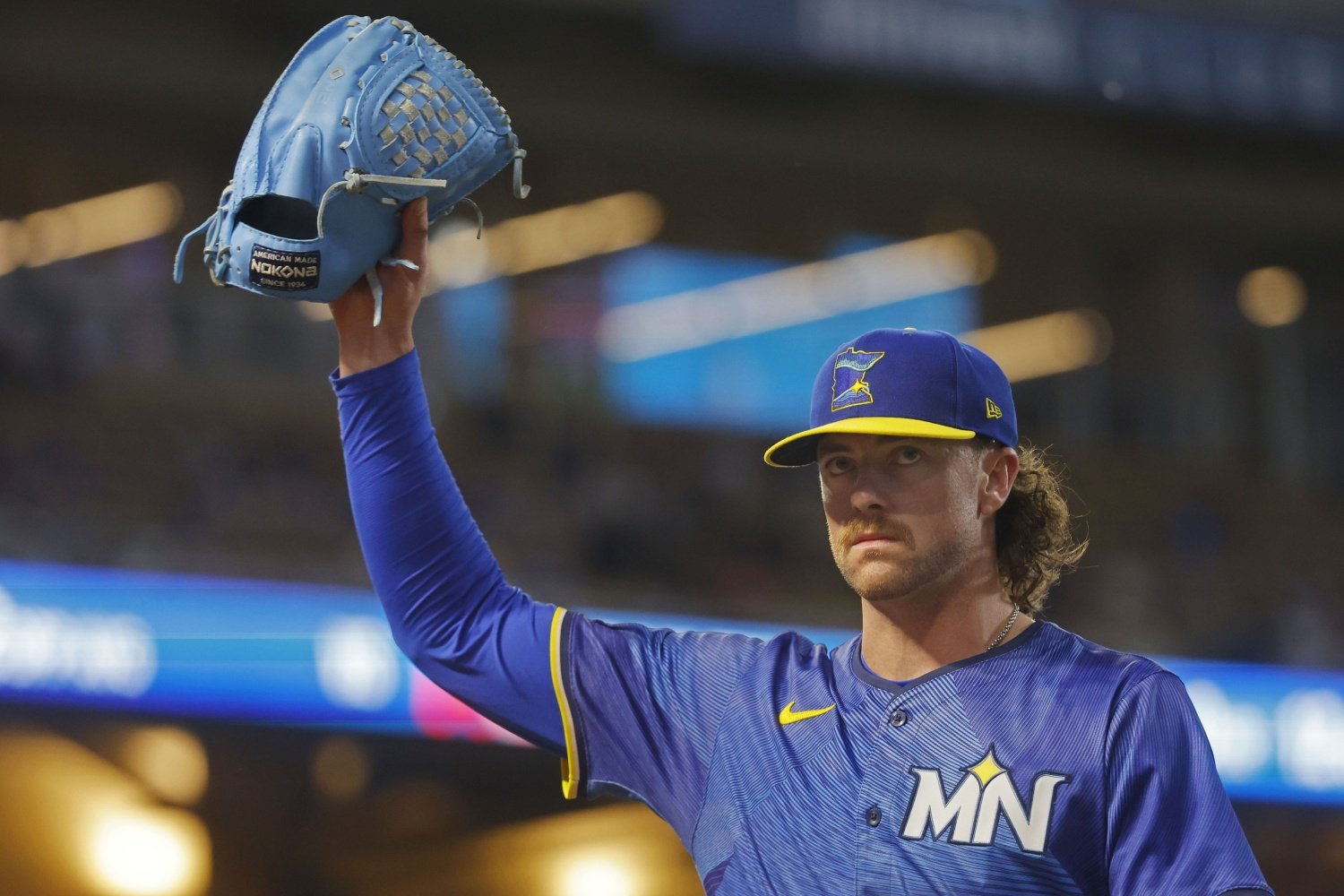 The sell-off has begun. In anticipation of Thursday's MLB trade deadline, the Minnesota Twins are sending right-handed pitcher Chris Paddack to the division rival Detroit Tigers. First with the news were Dan Hayes and Ken Rosenthal, of The Athletic. Paddack, 29, will be eligible for free agency at the end of this season. He's owed just under $3 million for the balance of 2025. In 21 starts and 111 innings this year, he has a 4.95 ERA. He finished his Twins tenure, which stretched over parts of four seasons, with a 4.88 ERA in 226 2/3 innings. Minnesota acquired Paddack as the linchpin of a trade that sent Taylor Rogers to the San Diego Padres on the eve of Opening Day in 2022. Unfortunately, he was injured just a few weeks into that season and underwent his second Tommy John surgery. The team and the pitcher worked out a contract extension that kept him under team control through the end of this season, and Paddack returned to pitch well out of the bullpen at the triumphant tail end of the 2023 season. However, he wasn't able to make a successful transition back to the starting rotation in 2024. After 17 uneven starts last year, he was sidelined at the All-Star break and never returned to the mound. He's taken the ball every time through the rotation in 2025, and went on a long stretch during which he enjoyed good results to pair with a set of adjustments in his arsenal and approach, but ultimately, he departs after a mottled tenure in which consistent dominance eluded him. Yet, Paddack was modestly in demand in the days before the deadline. He's been viewed as a valuable potential swing man, thanks to the glimpse he gave teams of himself as a short reliever in 2023 and to his positive presence in the clubhouse. Bob Nightengale of USA Today reports that the Yankees were interested in Paddack, and Jon Heyman adds that the Rays were, as well. (Twins Daily can confirm the Rays' interest, as well as that of at least two other teams.) In exchange for Paddack, the Tigers are sending minor-league first baseman and catcher Enrique Jimenez to the Twins. Jiménez, 19, has a .779 OPS for Detroit's Florida Complex League affiliate. He's a native of Venezuela. Baseball America ranked Jiménez 17th in a healthy Tigers farm system at their midseason update of the team's top 30 prospects. He's a switch-hitter with blossoming power, and he's viewed as having a chance to stick behind the plate—but he's still miles from the majors, of course, and the risk attached to his profile is very high. All told, it's a fair return for Paddack, who was hardly a premium piece. Detroit will absorb the remainder of Paddack's salary this year, a source says, so the Twins might have been able to extract a sliver of extra value. Instead, they'll roll the dice on Jiménez, and save the money that was otherwise owed. UPDATE: Well, the emotional stakes of this deal just rose, at least incrementally. Randy Dobnak will also be sent to Detroit, according to ESPN's Jeff Passan. Dobnak isn't an utterly incomprehensible fit for the Tigers' beloved "pitching chaos" approach, so branded last October, but he's unlikely to actually pitch for them in the major leagues. Rather, this reads principally as a way for the Twins to offload some extra salary. Dobnak is still owed just over $1 million, in the final year of the contract extension he signed after his fairytale ascent to the majors in 2019. Now, to whatever extent his professional pitching story will continue, it will do so outside the Twins organization.
- 208 comments
-
- 16
-
-

-

-
- chris paddack
- 2025 trade deadline
- (and 2 more)
-
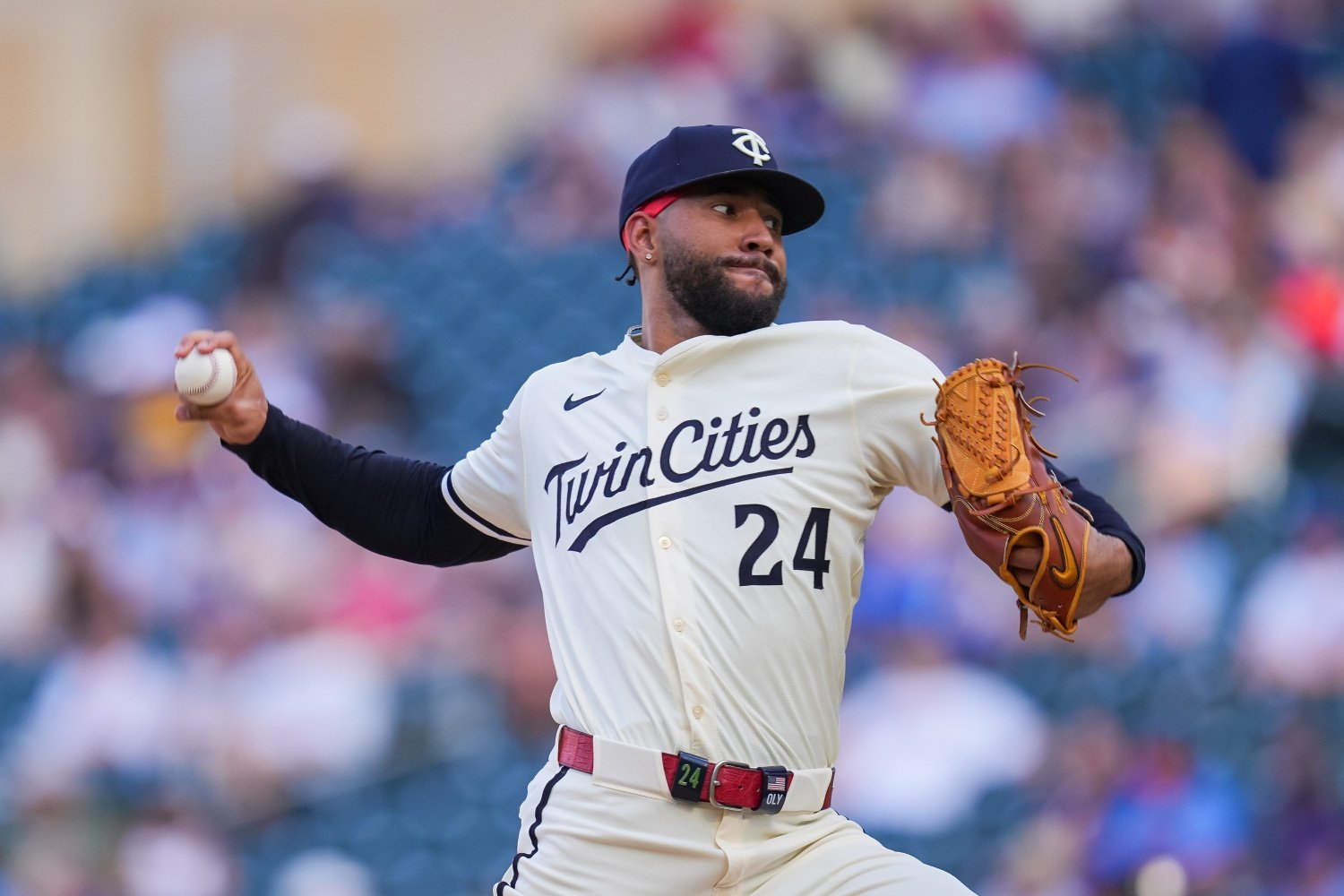 You wouldn't guess it at a glance, but the Twins starter with his feet planted deepest in the beloved soil of the game's history—sometimes, even digging in his heels against the sweeping influence of data and technology as it overtakes the art of pitching—might just be Simeon Woods Richardson. Despite Chris Paddack's sheriff persona and Joe Ryan's laconic tenacity, they'll each switch smoothly into talking about themselves in terms of key movement markers, spin rates, or sequences informed by analytically derived game plans. For Pablo López, no switch is even required; that's his default form of self-description. Woods Richardson could speak that language, too, to some extent, but he's not especially interested in trying to. For instance, if you ask him why he adds and subtracts on his fastball within a start more than most pitchers do, the answer will only bounce off the notion of analytics once—and then, more like a wall to push off of, rather than a door to plunge through. "It's just old-school baseball; I call it being a pitcher," Woods Richardson said Sunday. "I know we get lost in modern-day baseball, with numbers, analytics and everything else, [but] the human eye still can't differentiate speed." In other words, as Warren Spahn knew, hitting is timing, and pitching is upsetting that timing. As Greg Maddux knew, hitters can spot differences in trajectory and spin, but not in speeds. Woods Richardson is special, in part, for the way he approaches his own job as a student of its history. Few players in the modern game consider the greats of the previous century to be relevant touchstones, but Woods Richardson does. "That's something that's been going on for 100 years, you know what I mean?" he said. "People have been doing it since way back when. I guess I modeled my game after Nolan Ryan—you know, he had the changeup, but he'd also actually add and subtract. Bob Gibson, with the slider: add and subtract. Satchel Paige: add and subtract." Though it was hardly his most successful outing (it was a tough assignment he drew), Woods Richardson's last start is as good an example as any of his willingness to reach back for a little extra at one moment, but then throttle back into the low 90s at others. Notice the error bars around each point, denoting average velocity for that pitch type within that game. Those error bars are set at one standard deviation from their average for that appearance. In the Dodgers game, there were roughly 3.5 miles per hour separating the ends of that range for Woods Richardson; he's often around 3 mph. Ryan, to choose a teammate at random, has never had that wide a practical range within a start. For some pitchers, that might indicate a mere tendency to misfire occasionally, failing in an honest effort to throw it as hard as they can. For others, it could (at least in abstract theory; it's not something most teams actively implement or recommend) be an analytics-informed, premeditated way to mess with certain hitters based on their swing path or contact point. For Woods Richardson, it's a matter of watching, sensing, and responding, based on feel and varying from pitch to pitch. "Oh, for sure. It's always been that way," he said. "And depending on who is up, game situation, count leverage, all that kind of determines what goes into that." He's sensitive to the situation, and tries to manipulate it in a way that makes rational sense, but it can't all be rational. As a former hitter himself, Woods Richardson can't turn off the part of his brain that used to fight to read pitches—and he doesn't really want to. "Some guys are a little different, but I played two-way, so it was kind of easy for me," he said. "As I'm pitching, I'm kind of multi-tasking. That's just how I operate. Some guys can, some guys can't. Some guys are completely different. But the way I attack it is, I'm analyzing the swing, reading the swing—reading everything that I could have seen in that 15 seconds, to kind of gauge for that next pitch." Making use of what he sees in a hitter's swing (or take, or body language, or anything else) requires Woods Richardson to be adaptable within his own mind and his game plan, and to have great (usually non-verbal) communication with his catcher. That's a challenge he savors. "That's the beauty part about pitching. I believe, for so long, it was a feel thing," he said. "We didn't have computers and numbers to tell us what we were doing; we had to use our eyes. So use your eyes. Trust your eyes." Some of this might make him sound cranky, himself, like one averse to the tools of the modern trade. It's not like that, though. He knows how to use those tools, and listens to his coaches when they make suggestions. It's just not that aspect of the game that fills him with joy and passion. When he talks about being on the mound and making infinitesimal adjustments based on what he sees and senses, it's not defiance in his tone; it's the vociferous joy of a craftsman. He doesn't disdain the way others do it, but he feels an instantly visible conviction in his own methods, perhaps because they run back through the generations. One of the ostensible dangers of not embracing analytics lies in a pitcher missing opportunities to improve and evolve. The craftsman mindset leads one to the same eagerness to improve, though; a great cabinetmaker doesn't make the same, slightly flawed cabinet over and over. Thus, Woods Richardson has switched from a straight changeup to a splitter this season, and lo, even the numbers say the new way to change speeds is now his best pitch. Being a student of the game and a lover of the feel for it means both learning from the masters and experimenting with ways to emulate them. Woods Richardson believes he's found a better way to do so via his change in offspeed offerings. "I think it just goes down to pitching. I think really good pitchers are able to throw every single one of their pitches for strikes—any count, any situation," he said. "So I just work to model my game after that. It's just being able to pound the strike zone consistently with each one of my pitches. That's what all of us are trying to do in the big leagues; that's the main goal. So I guess we'll just keep chopping that tree down."
 -
Image courtesy of © Brad Rempel-Imagn Images You wouldn't guess it at a glance, but the Twins starter with his feet planted deepest in the beloved soil of the game's history—sometimes, even digging in his heels against the sweeping influence of data and technology as it overtakes the art of pitching—might just be Simeon Woods Richardson. Despite Chris Paddack's sheriff persona and Joe Ryan's laconic tenacity, they'll each switch smoothly into talking about themselves in terms of key movement markers, spin rates, or sequences informed by analytically derived game plans. For Pablo López, no switch is even required; that's his default form of self-description. Woods Richardson could speak that language, too, to some extent, but he's not especially interested in trying to. For instance, if you ask him why he adds and subtracts on his fastball within a start more than most pitchers do, the answer will only bounce off the notion of analytics once—and then, more like a wall to push off of, rather than a door to plunge through. "It's just old-school baseball; I call it being a pitcher," Woods Richardson said Sunday. "I know we get lost in modern-day baseball, with numbers, analytics and everything else, [but] the human eye still can't differentiate speed." In other words, as Warren Spahn knew, hitting is timing, and pitching is upsetting that timing. As Greg Maddux knew, hitters can spot differences in trajectory and spin, but not in speeds. Woods Richardson is special, in part, for the way he approaches his own job as a student of its history. Few players in the modern game consider the greats of the previous century to be relevant touchstones, but Woods Richardson does. "That's something that's been going on for 100 years, you know what I mean?" he said. "People have been doing it since way back when. I guess I modeled my game after Nolan Ryan—you know, he had the changeup, but he'd also actually add and subtract. Bob Gibson, with the slider: add and subtract. Satchel Paige: add and subtract." Though it was hardly his most successful outing (it was a tough assignment he drew), Woods Richardson's last start is as good an example as any of his willingness to reach back for a little extra at one moment, but then throttle back into the low 90s at others. Notice the error bars around each point, denoting average velocity for that pitch type within that game. Those error bars are set at one standard deviation from their average for that appearance. In the Dodgers game, there were roughly 3.5 miles per hour separating the ends of that range for Woods Richardson; he's often around 3 mph. Ryan, to choose a teammate at random, has never had that wide a practical range within a start. For some pitchers, that might indicate a mere tendency to misfire occasionally, failing in an honest effort to throw it as hard as they can. For others, it could (at least in abstract theory; it's not something most teams actively implement or recommend) be an analytics-informed, premeditated way to mess with certain hitters based on their swing path or contact point. For Woods Richardson, it's a matter of watching, sensing, and responding, based on feel and varying from pitch to pitch. "Oh, for sure. It's always been that way," he said. "And depending on who is up, game situation, count leverage, all that kind of determines what goes into that." He's sensitive to the situation, and tries to manipulate it in a way that makes rational sense, but it can't all be rational. As a former hitter himself, Woods Richardson can't turn off the part of his brain that used to fight to read pitches—and he doesn't really want to. "Some guys are a little different, but I played two-way, so it was kind of easy for me," he said. "As I'm pitching, I'm kind of multi-tasking. That's just how I operate. Some guys can, some guys can't. Some guys are completely different. But the way I attack it is, I'm analyzing the swing, reading the swing—reading everything that I could have seen in that 15 seconds, to kind of gauge for that next pitch." Making use of what he sees in a hitter's swing (or take, or body language, or anything else) requires Woods Richardson to be adaptable within his own mind and his game plan, and to have great (usually non-verbal) communication with his catcher. That's a challenge he savors. "That's the beauty part about pitching. I believe, for so long, it was a feel thing," he said. "We didn't have computers and numbers to tell us what we were doing; we had to use our eyes. So use your eyes. Trust your eyes." Some of this might make him sound cranky, himself, like one averse to the tools of the modern trade. It's not like that, though. He knows how to use those tools, and listens to his coaches when they make suggestions. It's just not that aspect of the game that fills him with joy and passion. When he talks about being on the mound and making infinitesimal adjustments based on what he sees and senses, it's not defiance in his tone; it's the vociferous joy of a craftsman. He doesn't disdain the way others do it, but he feels an instantly visible conviction in his own methods, perhaps because they run back through the generations. One of the ostensible dangers of not embracing analytics lies in a pitcher missing opportunities to improve and evolve. The craftsman mindset leads one to the same eagerness to improve, though; a great cabinetmaker doesn't make the same, slightly flawed cabinet over and over. Thus, Woods Richardson has switched from a straight changeup to a splitter this season, and lo, even the numbers say the new way to change speeds is now his best pitch. Being a student of the game and a lover of the feel for it means both learning from the masters and experimenting with ways to emulate them. Woods Richardson believes he's found a better way to do so via his change in offspeed offerings. "I think it just goes down to pitching. I think really good pitchers are able to throw every single one of their pitches for strikes—any count, any situation," he said. "So I just work to model my game after that. It's just being able to pound the strike zone consistently with each one of my pitches. That's what all of us are trying to do in the big leagues; that's the main goal. So I guess we'll just keep chopping that tree down." View full article
-
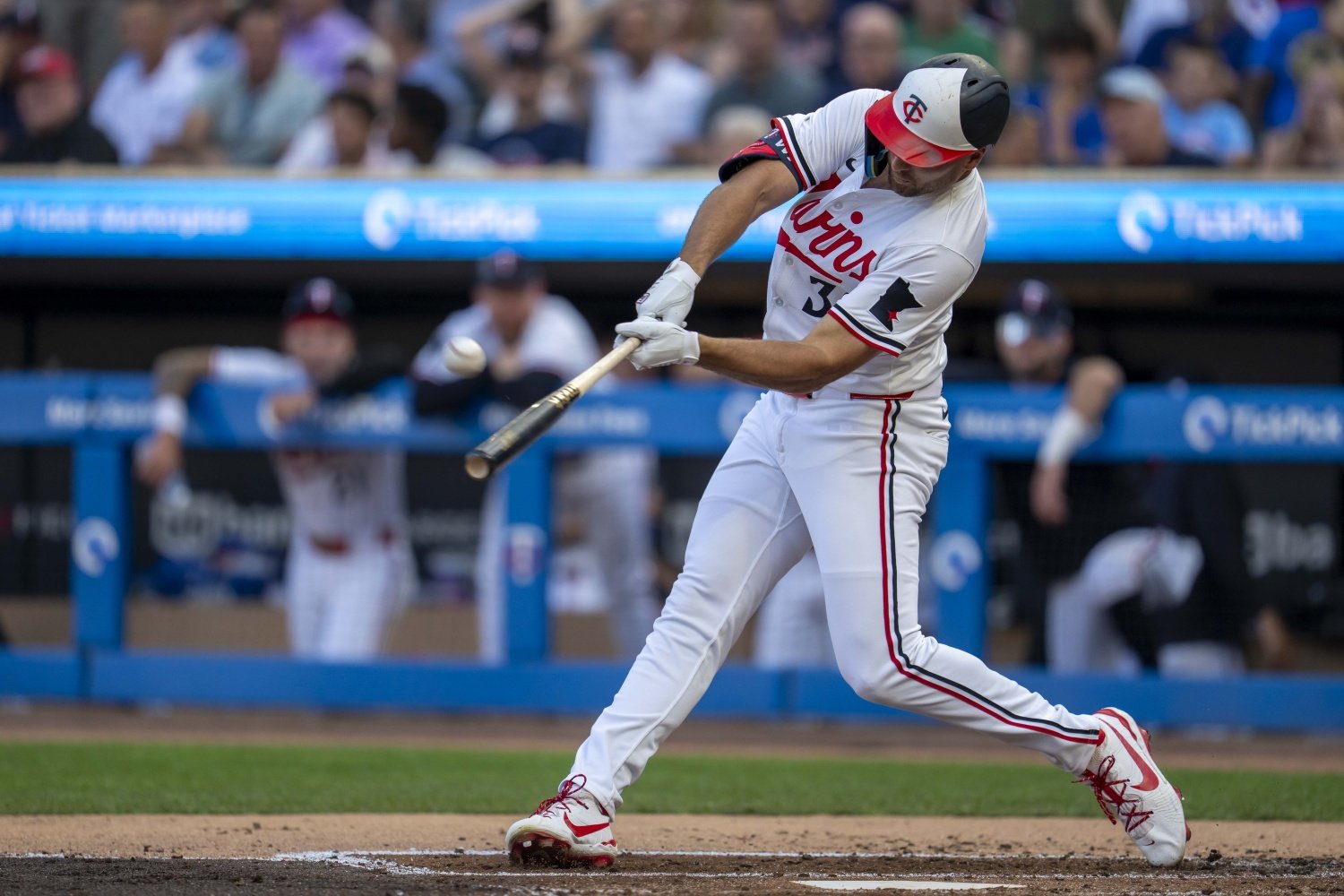
If you're anything like me, you've found yourself pleasantly surprised a couple of times this year, when Matt Wallner really caught hold of a ball. The first time I noticed it was June 7, when the Blue Jays were in town. Wallner blasted a ball from Toronto starter Kevin Gausman down the right-field line. He's hit balls much harder, but though it was launched 41° upward at less than 100 miles per hour off the bat, it carried out of the park for a homer. It didn't surprise me that the ball cleared the fence. Off the bat, it was clear that he'd gotten enough of it for that, given the cozy dimensions of the corner and the way he barrels the ball when he gets off an 'A' swing. I assumed, though, that the ball would turn foul. It was hit close to the line, but instead of the spin pushing it foul as it traced its steep parabola, it stayed true. In fact, it seemed to drift slightly away from the pole. MTZxbjNfWGw0TUFRPT1fQUFRQ0J3QURBQUFBQ3dNQkFBQUhCZzllQUFOWEFBTUFWZ2RYVXdwWEFGRlFWQWRV.mp4 In this particular case, there's some reason to credit Wallner for keeping it straight enough to get a home run instead of a foul out of a mistake pitch by Gausman. His swing is slightly under the ball, to be sure (hence the very high launch angle), but he keeps his hands in and gets to the ball very directly. It's a 96-mph fastball from Gausman, so far from being early, Wallner is right on time. His steep attack angle gives the ball backspin, but his attack direction at impact is just 6° to the pull side, so he doesn't impart much sidespin on the ball (the way most swings that result in long, pulled flies do). A compact, on-time swing can help keep that ball fair. The Statcast readout of the swing tells that story. He didn't catch the ball quite on the sweet spot, but the arc of his swing and the timing made it easy to maintain true ball flight. Two weeks later, though, Wallner did get a little bit lucky—or did he? More on that later. For now, consider this ball, the first hit Jacob Misiorowski gave up in his big-league career. b0daZDlfWGw0TUFRPT1fRGdnRlZGd0dVd0FBWGxzTEJ3QUhCUVZWQUZsWFYxVUFVVnhUQTFWV0JBRUJWZ3ND.mp4 This is an 0-1 slider, and Wallner is a hair earlier on it. He would have been way early, but because Misiorowski is who he is, the ball was coming in at 93 miles per hour. Thus, Wallner's last-minute adjustment didn't need to be a major deceleration of the bat; he just had to dip slightly to find the lower half of the ball. It's fascinating, in watching this pitch's equivalent of the Statcast visualization above, to see the differences in the swing he got off. Again, he catches it just up the bat from the sweet spot, this time with more hook on it. Reading slider late, you can see him flatten his swing and go straight through the lower half of the ball. Doing that took some sidespin off the ball, too, relative to what we'd normally expect when a ball sails down the line. Because I couldn't see him doing that in real time, though, I was even more certain that this ball would twist foul—and when you see the overhead visualization of the trajectory of the ball, you can see how reasonable that belief was, and how strangely the actual flight of it defied that belief. Almost any ball hit down the lines will spin toward the lines. That's an axiom of baseball, because of the kinds of swings and contact that generate such batted balls. We've now seen two examples of Wallner's swing helping kill that sidespin, but even accounting for that, the ball should have had enough spin to push closer to (or beyond) the pole. Fast-forward another three weeks with me, though, because we're about to find the most extreme example of this phenomenon. In the bottom of the second inning on July 9, Wallner got into a 2-1 slider from Cubs starter Cade Horton. OHl3ajJfWGw0TUFRPT1fQWxVQ0FGY0NCVk1BWGxZRFVRQUhWRklIQUZrTlV3SUFVUU5VVkFWWENBUlNCUVFI.mp4 The swing tells us the most interesting story yet about this one, because unlike Misiorowski, Horton had Wallner sitting on a fastball, and unlike Misiorowski, Horton has a big speed differential between his heater and his breaking ball. Wallner was ready for 96 mph, but he got 85. As a result, you can see him actually throttle back from his maximum bat speed before contact. When baseball people talk about the value of raw strength in generating power, this is the kind of thing they're talking about. Not many hitters are strong enough to slow down their own bat after reaching a speed just under 80 mph, while maintaining enough speed to do damage when they catch the ball flush. Unlike the homer against Gausman (7.2-foot swing length, 6° attack direction) and the one against Misiorowski (7.4 feet, 16°), though, this is a long swing on which Wallner was way out in front (8.1 feet, 20°). He gets the sweet spot here, which is why the ball leaves his bat at 113 miles per hour, but he's way around it and working steeply uphill through it. The 43° launch angle sends the ball soaring. It's right down the line. This ball should go foul. Again, though, it didn't. Again, it moved away from the line. We have to acknowledge that Wallner is capable of unique, freaky contact. His blend of bat speed and swing plane can generate fly balls down the line with less sidespin than most of them have. That's one factor in these (and a few others, which we'll leave out here in the name of brevity) balls going for extra bases. Fascinatingly, though, another factor might be Target Field's architecture itself. Having seen a few of these balls turn improbably toward the plaza, I reached out to Weather Applied Metrics's Ken Arneson. A long-time baseball writer, Arneson now plays in the sandbox of the endlessly complex, idiosyncratic interactions of weather (especially wind) with sports, and baseball is one major subject of study and analysis for the company. "Target Field has a gap between its roof and the top of its upper deck," Arneson wrote. "The top of the upper deck is about 122 feet above the field and the roof is about 150 feet above the field. As the wind tries to squeeze through that 28-foot gap, it will accelerate." That's true; it's the result of the Venturi Effect, which describes the way pressure is reduced when speed increases as a fluid moves from a larger space to a smaller one. "So if you have a southwest wind blowing perpendicular to the first base line ... and you have a fly ball with an apex around that height (122-150 foot apex), you're going to get a kind of perfect storm to push the ball back towards the field, and counteract the spin that wants to hook the ball foul," Arneson continued. "Under those conditions, the wind will push the ball back towards fair territory about 5-6 feet with a 10 mph wind." Batted balls even to right-center will be unaffected by this microatmosphere. The Venturi Effect wears off quickly once any wind passes through the aperture between roof and stands, petering out not far beyond the right-field line. If a player is strong enough to consistently hit the ball up into that space far down the line, though, it can make a substantial difference—especially if that player has an unusual swing that results in balls down that line not having as much sidespin as most hitters' similar shots would. Arneson notes that the wind pattern needed to create this phenomenon is relatively rare, at least as a prevailing wind on a given day. With the right momentary gust or buffet, though, it doesn't have to be blowing that way the whole day. Wallner clearly got some help from the elements on these homers, even if it was neither the sole nor the decisive factor in their staying fair. Baseball is wonderful, because it's so hard to apply any rule too broadly. It's not just the deep right-field corner at Target Field; each batter and pitcher is a microenvironment of their own. Wallner's special skill set begets a special set of batted balls, which can benefit from a special effect of the home park in which many of them are hit. It's a bit of serendipity—a tiny hometown advantage for a Minnesota native who plays for the home team. Next time he hits a long drive down the line, allow yourself to hold onto more hope for the ball to stay fair than you normally would—and if it does, say a little baseball prayer of thanks to the Wallner winds of Target Field. View full article
-
 If you're anything like me, you've found yourself pleasantly surprised a couple of times this year, when Matt Wallner really caught hold of a ball. The first time I noticed it was June 7, when the Blue Jays were in town. Wallner blasted a ball from Toronto starter Kevin Gausman down the right-field line. He's hit balls much harder, but though it was launched 41° upward at less than 100 miles per hour off the bat, it carried out of the park for a homer. It didn't surprise me that the ball cleared the fence. Off the bat, it was clear that he'd gotten enough of it for that, given the cozy dimensions of the corner and the way he barrels the ball when he gets off an 'A' swing. I assumed, though, that the ball would turn foul. It was hit close to the line, but instead of the spin pushing it foul as it traced its steep parabola, it stayed true. In fact, it seemed to drift slightly away from the pole. MTZxbjNfWGw0TUFRPT1fQUFRQ0J3QURBQUFBQ3dNQkFBQUhCZzllQUFOWEFBTUFWZ2RYVXdwWEFGRlFWQWRV.mp4 In this particular case, there's some reason to credit Wallner for keeping it straight enough to get a home run instead of a foul out of a mistake pitch by Gausman. His swing is slightly under the ball, to be sure (hence the very high launch angle), but he keeps his hands in and gets to the ball very directly. It's a 96-mph fastball from Gausman, so far from being early, Wallner is right on time. His steep attack angle gives the ball backspin, but his attack direction at impact is just 6° to the pull side, so he doesn't impart much sidespin on the ball (the way most swings that result in long, pulled flies do). A compact, on-time swing can help keep that ball fair. The Statcast readout of the swing tells that story. He didn't catch the ball quite on the sweet spot, but the arc of his swing and the timing made it easy to maintain true ball flight. Two weeks later, though, Wallner did get a little bit lucky—or did he? More on that later. For now, consider this ball, the first hit Jacob Misiorowski gave up in his big-league career. b0daZDlfWGw0TUFRPT1fRGdnRlZGd0dVd0FBWGxzTEJ3QUhCUVZWQUZsWFYxVUFVVnhUQTFWV0JBRUJWZ3ND.mp4 This is an 0-1 slider, and Wallner is a hair earlier on it. He would have been way early, but because Misiorowski is who he is, the ball was coming in at 93 miles per hour. Thus, Wallner's last-minute adjustment didn't need to be a major deceleration of the bat; he just had to dip slightly to find the lower half of the ball. It's fascinating, in watching this pitch's equivalent of the Statcast visualization above, to see the differences in the swing he got off. Again, he catches it just up the bat from the sweet spot, this time with more hook on it. Reading slider late, you can see him flatten his swing and go straight through the lower half of the ball. Doing that took some sidespin off the ball, too, relative to what we'd normally expect when a ball sails down the line. Because I couldn't see him doing that in real time, though, I was even more certain that this ball would twist foul—and when you see the overhead visualization of the trajectory of the ball, you can see how reasonable that belief was, and how strangely the actual flight of it defied that belief. Almost any ball hit down the lines will spin toward the lines. That's an axiom of baseball, because of the kinds of swings and contact that generate such batted balls. We've now seen two examples of Wallner's swing helping kill that sidespin, but even accounting for that, the ball should have had enough spin to push closer to (or beyond) the pole. Fast-forward another three weeks with me, though, because we're about to find the most extreme example of this phenomenon. In the bottom of the second inning on July 9, Wallner got into a 2-1 slider from Cubs starter Cade Horton. OHl3ajJfWGw0TUFRPT1fQWxVQ0FGY0NCVk1BWGxZRFVRQUhWRklIQUZrTlV3SUFVUU5VVkFWWENBUlNCUVFI.mp4 The swing tells us the most interesting story yet about this one, because unlike Misiorowski, Horton had Wallner sitting on a fastball, and unlike Misiorowski, Horton has a big speed differential between his heater and his breaking ball. Wallner was ready for 96 mph, but he got 85. As a result, you can see him actually throttle back from his maximum bat speed before contact. When baseball people talk about the value of raw strength in generating power, this is the kind of thing they're talking about. Not many hitters are strong enough to slow down their own bat after reaching a speed just under 80 mph, while maintaining enough speed to do damage when they catch the ball flush. Unlike the homer against Gausman (7.2-foot swing length, 6° attack direction) and the one against Misiorowski (7.4 feet, 16°), though, this is a long swing on which Wallner was way out in front (8.1 feet, 20°). He gets the sweet spot here, which is why the ball leaves his bat at 113 miles per hour, but he's way around it and working steeply uphill through it. The 43° launch angle sends the ball soaring. It's right down the line. This ball should go foul. Again, though, it didn't. Again, it moved away from the line. We have to acknowledge that Wallner is capable of unique, freaky contact. His blend of bat speed and swing plane can generate fly balls down the line with less sidespin than most of them have. That's one factor in these (and a few others, which we'll leave out here in the name of brevity) balls going for extra bases. Fascinatingly, though, another factor might be Target Field's architecture itself. Having seen a few of these balls turn improbably toward the plaza, I reached out to Weather Applied Metrics's Ken Arneson. A long-time baseball writer, Arneson now plays in the sandbox of the endlessly complex, idiosyncratic interactions of weather (especially wind) with sports, and baseball is one major subject of study and analysis for the company. "Target Field has a gap between its roof and the top of its upper deck," Arneson wrote. "The top of the upper deck is about 122 feet above the field and the roof is about 150 feet above the field. As the wind tries to squeeze through that 28-foot gap, it will accelerate." That's true; it's the result of the Venturi Effect, which describes the way pressure is reduced when speed increases as a fluid moves from a larger space to a smaller one. "So if you have a southwest wind blowing perpendicular to the first base line ... and you have a fly ball with an apex around that height (122-150 foot apex), you're going to get a kind of perfect storm to push the ball back towards the field, and counteract the spin that wants to hook the ball foul," Arneson continued. "Under those conditions, the wind will push the ball back towards fair territory about 5-6 feet with a 10 mph wind." Batted balls even to right-center will be unaffected by this microatmosphere. The Venturi Effect wears off quickly once any wind passes through the aperture between roof and stands, petering out not far beyond the right-field line. If a player is strong enough to consistently hit the ball up into that space far down the line, though, it can make a substantial difference—especially if that player has an unusual swing that results in balls down that line not having as much sidespin as most hitters' similar shots would. Arneson notes that the wind pattern needed to create this phenomenon is relatively rare, at least as a prevailing wind on a given day. With the right momentary gust or buffet, though, it doesn't have to be blowing that way the whole day. Wallner clearly got some help from the elements on these homers, even if it was neither the sole nor the decisive factor in their staying fair. Baseball is wonderful, because it's so hard to apply any rule too broadly. It's not just the deep right-field corner at Target Field; each batter and pitcher is a microenvironment of their own. Wallner's special skill set begets a special set of batted balls, which can benefit from a special effect of the home park in which many of them are hit. It's a bit of serendipity—a tiny hometown advantage for a Minnesota native who plays for the home team. Next time he hits a long drive down the line, allow yourself to hold onto more hope for the ball to stay fair than you normally would—and if it does, say a little baseball prayer of thanks to the Wallner winds of Target Field.
 -
This is becoming one of my favorite daily edits. :D You have all these interesting anniversaries that start a thread in my brain, and then I can't help but wonder something, so I look it up and add what I find. It's delightful.
-
Y'all are why so many organizations used to keep a 'Do Not Comp' list. Luis Arraez is not a person you should ever be comparing a prospect to, but you CERTAINLY shouldn't do it with a right-handed batter who's whiffing more in this, his best season by far, than Arraez ever has at a stop of any length anywhere in professional baseball. Get it together.
-
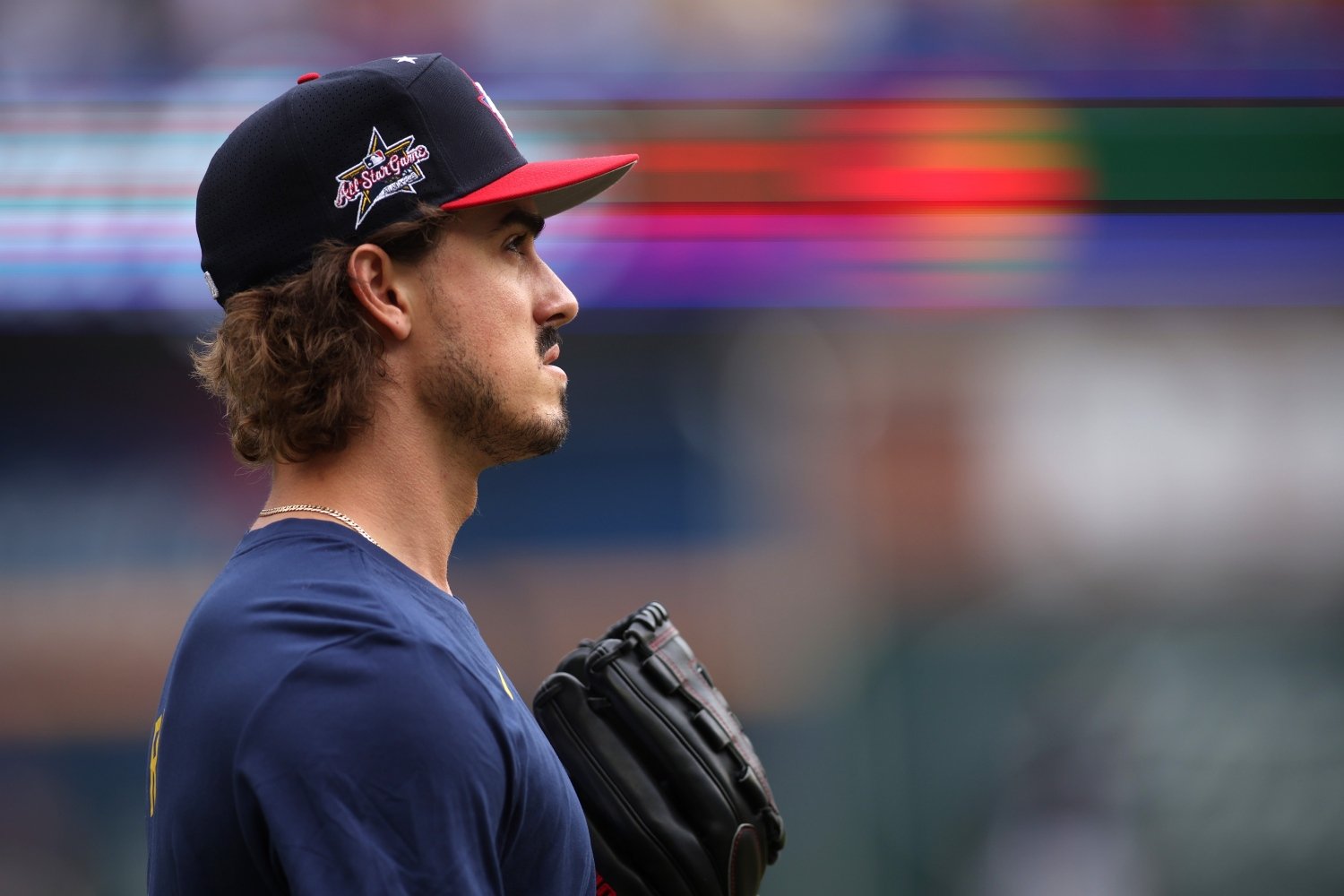
Image courtesy of © Brett Davis-Imagn Images I find it a bit odd—not only online, but when I talk to people in real life—how much hedging is still happening with regard to the Minnesota Twins and their posture at this year's MLB trade deadline. A lot of people seemed to spend the All-Star break plotting out the final fortnight before the deadline and working out matrices of possibility, both wondering and opining about what the Twins will or should do based on various possible records over their first 10 games out of said break. While I admire the impulse to seize upon any opportunity to reach the postseason, I think any optimism about the 2025 Twins doing so (or even the desire to wait and see if such optimism becomes more viable, this late in the decision-making window) is unfounded. For one thing, not all playoff berths are created equal, and if the Twins do win enough down the stretch to sneak into October, it will be as a second or third Wild Card entrant. That means a series played entirely on the road against a superior team. It's not at all the same thing to chase that as it is to chase a division title, or even to fight for positioning when you have a chance of winning the division, and might fall back into a Wild Card slot as something less than the best-case scenario. In this case, there are a few problems with the idea of buying, and one huge one with the notion of standing pat. Firstly, the Tigers are way, way ahead in the division. They're playing poorly lately, and they still have an 11-game cushion. Nor are the Twins even the team pursuing them most closely. The division is gone, and has been for two months, ever since Minnesota ended its 13-game winning streak and resumed playing sluggish, sub-.500 baseball. That leads to the second problem—and this is actually the first problem, in my opinion, but I'm making allowances for those who prefer to go after the playoffs whenever possible, all other considerations be damned. Here's the thing: This Twins team just is not good. Fundamentally, in the ways that matter and about which we should really care most, they're not good. I don't mean that they play sloppily or uninspired baseball (though, of course, they sometimes do). I don't mean to impugn the work ethic or baseball nous of anyone in the clubhouse or front office. I simply mean that the team isn't good enough that we should even care if they can eke into October. The playoffs should be a reward for a season-long proof of the wisdom and good work of the organization over that year and the ones before it, to acquire and develop good players and for those players to come through in big situations. This team hasn't earned that. Over the last calendar year, the Twins are 85-88. Since the start of 2024, they're 127-131. Hell, since the start of 2021, they're 12 games under .500. Because that 2023 team gave the fans such a cathartic series of moments in the postseason, it's easy to forget that they were only 87-75 even that year. President of business and baseball operations Derek Falvey has stayed extremely committed to the core of this team, but it hasn't rewarded that faith. It's just not a good enough team to be accorded the degree of stability Falvey has chosen. He sees this as a winning operation that just needs more time. He's wrong. I'm not advocating firing Falvey, who does many things well as an executive and in whom many people within baseball believe fervently—including those with whom he works in the Twins front office. He needs to change tack, though, and the hard part is trying to tell whether he realizes that. There have been times in the past when standing pat did make sense, on a hard, rational level. Fans have hated the stagnant trade deadlines and quiet offseasons of the last few years, but of course, one major reason for those was the financial constraints Falvey has faced due to the Pohlads yanking the purse strings shut just after opening them wide enough for him to splurge on four players (Byron Buxton, Pablo López, Christian Vázquez and Carlos Correa) whose salaries suddenly make up about 57% of his budget. Falvey is a smart and deeply respected baseball man. However, other teams find the Twins frustratingly hard to deal with in trade negotiations, because Falvey is so value-focused and reluctant to make any trade that doesn't match his group's player evaluations—which, as we've seen, are not only out of step with the rest of the league, but just plain wrong. That's how you spend half a decade trying to win every year and still run a sub-.500 aggregate record. With Thad Levine (whose influence tended toward more aggressive moves, especially within seasons, and nimbler changes of direction) gone, the Falvey approach is also missing a key counterbalance. The chief executive needs to change his mode of operation, and quickly. To their credit, the front office has let it be known that they're listening more openly than they might have in the past as this deadline approaches. That's why so many scouts have swooped down on their games lately, and (partially) why there will be a significant contingent of them at Joe Ryan's start Sunday in Colorado. There's a very real chance of one of Ryan, Jhoan Duran or Griffin Jax being dealt, and even some chance (although a remote one) that the positional core will finally get its overdue shakeup, according to sources with teams who have talked to the Twins this month. Royce Lewis, Trevor Larnach and (especially) Ryan Jeffers have drawn interest, and while Jeffers would only be traded if the team got an unexpectedly excellent offer, the other two are more available. All of the team's impending free agents (Vázquez, Willi Castro, Danny Coulombe, Harrison Bader and Chris Paddack) are available, sources said, and one or two could be dealt even if the team otherwise stands pat or tries to supplement the roster for the stretch run. The source of consternation, for potential trade partners, is that extracting one of those players from Falvey (especially a Falvey torn on the question of buying or selling at all) might be more trouble than it's worth. That's why it's important that the team break with the idea of a playoff pursuit this summer and get serious about positioning themselves for one next year, or in 2027. Buxton, Correa and López aren't going anywhere. They're the core to build around. Since the sale of the team has gone excruciatingly slowly and a more robust budget this winter isn't guaranteed, though, they need to build frugally around that trio. They also have to be brutally honest with themselves. That means admitting that the complementary pieces aren't currently good enough. It means trading Ryan (because he'll be very expensive over his final two years of arbitration eligibility and because they can get so much for him) or trading Duran (because he'll be very expensive over his final two years of arbitration eligibility, because they can get so much for him, and because he's a reliever). It means maximizing the infusion of young talent into the organization, so that the remaining prime years of Buxton, Correa and López aren't wasted. It doesn't have to mean acquiring teenagers who might be four years away, but it has to mean giving up on a roster that has proved itself insufficient and making space for real change going into next year. The prize for which the team is in serious competition just isn't worth winning, and that's a result of the way ownership's betrayal and the front office's lack of agility have left them playing the same losing hand two years in a row. That cycle needs to be broken. This is not the official editorial position of Twins Daily, or anything. It's just my own. This week, we had a great piece from Hans Birkeland on how the team might be more likely to approach the deadline, based on their most interesting past example. Later today and on Monday, we'll run a two-part series from Eric Blonigen on how the team could approach the deadline as buyers. For my money, though, the team shouldn't be studying playoff odds too closely or trying to make moves to get themselves into the playoffs with this basic core. They should be taking decisive action, by admitting that they need real change and then making it. They had a chance to do all of this last fall, but doubled down on the group they had. I think it was clear then (and is certainly clear now) that that was the wrong call. The question is whether the team has arrived at the same conclusion. View full article
-
 I find it a bit odd—not only online, but when I talk to people in real life—how much hedging is still happening with regard to the Minnesota Twins and their posture at this year's MLB trade deadline. A lot of people seemed to spend the All-Star break plotting out the final fortnight before the deadline and working out matrices of possibility, both wondering and opining about what the Twins will or should do based on various possible records over their first 10 games out of said break. While I admire the impulse to seize upon any opportunity to reach the postseason, I think any optimism about the 2025 Twins doing so (or even the desire to wait and see if such optimism becomes more viable, this late in the decision-making window) is unfounded. For one thing, not all playoff berths are created equal, and if the Twins do win enough down the stretch to sneak into October, it will be as a second or third Wild Card entrant. That means a series played entirely on the road against a superior team. It's not at all the same thing to chase that as it is to chase a division title, or even to fight for positioning when you have a chance of winning the division, and might fall back into a Wild Card slot as something less than the best-case scenario. In this case, there are a few problems with the idea of buying, and one huge one with the notion of standing pat. Firstly, the Tigers are way, way ahead in the division. They're playing poorly lately, and they still have an 11-game cushion. Nor are the Twins even the team pursuing them most closely. The division is gone, and has been for two months, ever since Minnesota ended its 13-game winning streak and resumed playing sluggish, sub-.500 baseball. That leads to the second problem—and this is actually the first problem, in my opinion, but I'm making allowances for those who prefer to go after the playoffs whenever possible, all other considerations be damned. Here's the thing: This Twins team just is not good. Fundamentally, in the ways that matter and about which we should really care most, they're not good. I don't mean that they play sloppily or uninspired baseball (though, of course, they sometimes do). I don't mean to impugn the work ethic or baseball nous of anyone in the clubhouse or front office. I simply mean that the team isn't good enough that we should even care if they can eke into October. The playoffs should be a reward for a season-long proof of the wisdom and good work of the organization over that year and the ones before it, to acquire and develop good players and for those players to come through in big situations. This team hasn't earned that. Over the last calendar year, the Twins are 85-88. Since the start of 2024, they're 127-131. Hell, since the start of 2021, they're 12 games under .500. Because that 2023 team gave the fans such a cathartic series of moments in the postseason, it's easy to forget that they were only 87-75 even that year. President of business and baseball operations Derek Falvey has stayed extremely committed to the core of this team, but it hasn't rewarded that faith. It's just not a good enough team to be accorded the degree of stability Falvey has chosen. He sees this as a winning operation that just needs more time. He's wrong. I'm not advocating firing Falvey, who does many things well as an executive and in whom many people within baseball believe fervently—including those with whom he works in the Twins front office. He needs to change tack, though, and the hard part is trying to tell whether he realizes that. There have been times in the past when standing pat did make sense, on a hard, rational level. Fans have hated the stagnant trade deadlines and quiet offseasons of the last few years, but of course, one major reason for those was the financial constraints Falvey has faced due to the Pohlads yanking the purse strings shut just after opening them wide enough for him to splurge on four players (Byron Buxton, Pablo López, Christian Vázquez and Carlos Correa) whose salaries suddenly make up about 57% of his budget. Falvey is a smart and deeply respected baseball man. However, other teams find the Twins frustratingly hard to deal with in trade negotiations, because Falvey is so value-focused and reluctant to make any trade that doesn't match his group's player evaluations—which, as we've seen, are not only out of step with the rest of the league, but just plain wrong. That's how you spend half a decade trying to win every year and still run a sub-.500 aggregate record. With Thad Levine (whose influence tended toward more aggressive moves, especially within seasons, and nimbler changes of direction) gone, the Falvey approach is also missing a key counterbalance. The chief executive needs to change his mode of operation, and quickly. To their credit, the front office has let it be known that they're listening more openly than they might have in the past as this deadline approaches. That's why so many scouts have swooped down on their games lately, and (partially) why there will be a significant contingent of them at Joe Ryan's start Sunday in Colorado. There's a very real chance of one of Ryan, Jhoan Duran or Griffin Jax being dealt, and even some chance (although a remote one) that the positional core will finally get its overdue shakeup, according to sources with teams who have talked to the Twins this month. Royce Lewis, Trevor Larnach and (especially) Ryan Jeffers have drawn interest, and while Jeffers would only be traded if the team got an unexpectedly excellent offer, the other two are more available. All of the team's impending free agents (Vázquez, Willi Castro, Danny Coulombe, Harrison Bader and Chris Paddack) are available, sources said, and one or two could be dealt even if the team otherwise stands pat or tries to supplement the roster for the stretch run. The source of consternation, for potential trade partners, is that extracting one of those players from Falvey (especially a Falvey torn on the question of buying or selling at all) might be more trouble than it's worth. That's why it's important that the team break with the idea of a playoff pursuit this summer and get serious about positioning themselves for one next year, or in 2027. Buxton, Correa and López aren't going anywhere. They're the core to build around. Since the sale of the team has gone excruciatingly slowly and a more robust budget this winter isn't guaranteed, though, they need to build frugally around that trio. They also have to be brutally honest with themselves. That means admitting that the complementary pieces aren't currently good enough. It means trading Ryan (because he'll be very expensive over his final two years of arbitration eligibility and because they can get so much for him) or trading Duran (because he'll be very expensive over his final two years of arbitration eligibility, because they can get so much for him, and because he's a reliever). It means maximizing the infusion of young talent into the organization, so that the remaining prime years of Buxton, Correa and López aren't wasted. It doesn't have to mean acquiring teenagers who might be four years away, but it has to mean giving up on a roster that has proved itself insufficient and making space for real change going into next year. The prize for which the team is in serious competition just isn't worth winning, and that's a result of the way ownership's betrayal and the front office's lack of agility have left them playing the same losing hand two years in a row. That cycle needs to be broken. This is not the official editorial position of Twins Daily, or anything. It's just my own. This week, we had a great piece from Hans Birkeland on how the team might be more likely to approach the deadline, based on their most interesting past example. Later today and on Monday, we'll run a two-part series from Eric Blonigen on how the team could approach the deadline as buyers. For my money, though, the team shouldn't be studying playoff odds too closely or trying to make moves to get themselves into the playoffs with this basic core. They should be taking decisive action, by admitting that they need real change and then making it. They had a chance to do all of this last fall, but doubled down on the group they had. I think it was clear then (and is certainly clear now) that that was the wrong call. The question is whether the team has arrived at the same conclusion.
- 65 comments
-
- 16
-
-
-
Re: it being best that the Cubs return to being cursed:
- 2 replies
-
- 2
-
-
- 2025 trade deadline
- joe ryan
- (and 3 more)
-
 Missing bats ceased to be a problem for Joe Ryan once he found his splitter. When he added a sweeper to the mix, his ability to strike batters out went to another level. He's never had a hard time throwing strikes, anyway, so once he reached that new echelon in terms of punchouts, he was almost guaranteed a place among the top rank of starters throughout the majors. There was a missing ingredient, though. Ryan's fastball is a strike machine, and it can miss bats at the top of the zone, too. That's the good news. The bad news is that it's vulnerable to hard contact in the air, when batters do make contact. That's true of lefties and of righties, and it's somewhat immutable. It lies in the nature of Ryan's delivery and his heater's shape. His fastball is incurably homer-prone. Therefore, he needs more ways not to throw it all the time. That's what slowly deepening his arsenal has been about, as he's undertaken that project over the last few years. Having the splitter and the sweeper and his traditional slider and the occasional curveball or sinker at his disposal keeps hitters from squaring up the four-seamer with quite as much conviction, and makes them cover a larger strike zone. Unfortunately, he's found that the sweeper, too, gets lifted, and any time that happens, damage can follow. The splitter does induce weak contact on the ground, but it needed a partner—especially once Ryan began mixing in the sinker. Thus, the righty went to work to tweak his slider. First, as he ratcheted up his usage of the sweeper and made it his main breaking ball, he also firmed up his slider. That makes it materially different in velocity than his sweeper, but still slow enough to be very much distinct from his fastballs. Joe Ryan - SL v. LHH v. RHH Season Velo. H-Mov. IVB Velo. H-Mov. IVB 2023 82.7 -2.1 2.3 83.5 2.2 3.5 2024 87 2.7 4.6 87.2 2.7 4.3 2025 87.5 -0.7 7.3 87.5 0.6 6.1 Interestingly, just as teammate Chris Paddack has spent this summer adding a true slider to the more cutterish pitch that previously dominated pitches classified that way for him, Ryan is doing the opposite. He already had that slider down at sweeper speed, with good depth relative to his four-seamer. This year, he's throwing a lot more of what are effectively cutters. The pitch is averaging almost 88 miles per hour, and its vertical movement is much less. It's not a plunging pitch; it's also not sweeping. For those things, he goes to the sweeper. At this point, that slider is as much a cutter as it is a true slider. Here's how his spin profile looked in 2024. On the left is a histogram showing the number of pitches (colored by type) thrown with each spin direction described on the clock face, based on spin right out of the hand. On the right is the same chart, but showing actual movement direction instead of simple spin direction. Here's the same image for 2025. The sliders (in bright yellow) are hard to see, forming a rim across the top of the quasi-clock. If you look at each visual closely, though, you can see that Ryan was using grip effects to create unexpected glove-side movement with the slider in 2024. This year, the ball is staying much more true, thanks to backspin that isn't distorted by the way Ryan positions the seams as much as it was in the past. That is, in effect, a cutter. As you can see in the table above, the changes are especially pronounced against lefties. That's so that Ryan can jam them, without having the ball end up too low, where it would work right into the bat path of many hitters' swings. Meanwhile, introducing the same change of pitch shape to righties has some advantages, too. This version of the slider can work a bit better off his sinker than the old one could, and he uses the slider to set up the sweeper to righties, too. It's easier to keep this version of the slider on the plate, which means more strikes and forces opponents to respect the rest of his arsenal more. Changing the slider has led to more whiffs for Ryan. Batters missed on 20.6% of swings against the slider over the previous two years, but that figure is 26.7% in 2025. More importantly, though, he's also getting ground balls with it. Over the previous two seasons, opponents averaged a launch angle of 18° against the slider. This year, it's 1°. Though it technically has less glove-side movement now than it did the last two seasons—in fact, technically, it moves very slightly to his arm side, against lefties—it's better at crawling along barrels. Though it's dropping less, it's playing heavier. The reason is simple: the altered spin profile makes it more deceptive. It looks more like his four-seamer than it has in the past. Ryan's arm angle on almost all his stuff has gotten very slightly lower over the last two years. (This isn't intentional; I asked. He says it's just a matter of his mix, and mostly, that checks out.) However, his slider stands out as getting lower by considerably more than it has for his other offerings. Getting lower with the slider, in terms of arm angle, has created more carry on the pitch. That's unusual, or at least, it would be for another pitch type. With the slider, it makes some sense. Ryan's grip change here has actually been very subtle. Mostly, he's getting a little more crossfire with his delivery, and in creating the spin to rip through the ball as he comes around with it, he's backspinning it more. It's a very natural, minor adjustment—but it's had big ramifications. Ryan's slider was 5 runs worse than average in 2023. It was 2 runs to the bad last year, even in limited usage. This season, so far, the run value of the pitch is 0. It doesn't dominate batters, but nor is it a pitch on which he's getting hurt, or even on which he falls behind in counts and gets into trouble. A happy tinkerer, Ryan is always adding things to his arsenal. This year, it's not quite a full-fledged addition, but a renovation. He still has a slider, but it's not the slider he threw two years ago, or even in 2024. It's a better pitch, and because of it, he's a better pitcher.
 -
Image courtesy of © Matt Blewett-Imagn Images Missing bats ceased to be a problem for Joe Ryan once he found his splitter. When he added a sweeper to the mix, his ability to strike batters out went to another level. He's never had a hard time throwing strikes, anyway, so once he reached that new echelon in terms of punchouts, he was almost guaranteed a place among the top rank of starters throughout the majors. There was a missing ingredient, though. Ryan's fastball is a strike machine, and it can miss bats at the top of the zone, too. That's the good news. The bad news is that it's vulnerable to hard contact in the air, when batters do make contact. That's true of lefties and of righties, and it's somewhat immutable. It lies in the nature of Ryan's delivery and his heater's shape. His fastball is incurably homer-prone. Therefore, he needs more ways not to throw it all the time. That's what slowly deepening his arsenal has been about, as he's undertaken that project over the last few years. Having the splitter and the sweeper and his traditional slider and the occasional curveball or sinker at his disposal keeps hitters from squaring up the four-seamer with quite as much conviction, and makes them cover a larger strike zone. Unfortunately, he's found that the sweeper, too, gets lifted, and any time that happens, damage can follow. The splitter does induce weak contact on the ground, but it needed a partner—especially once Ryan began mixing in the sinker. Thus, the righty went to work to tweak his slider. First, as he ratcheted up his usage of the sweeper and made it his main breaking ball, he also firmed up his slider. That makes it materially different in velocity than his sweeper, but still slow enough to be very much distinct from his fastballs. Joe Ryan - SL v. LHH v. RHH Season Velo. H-Mov. IVB Velo. H-Mov. IVB 2023 82.7 -2.1 2.3 83.5 2.2 3.5 2024 87 2.7 4.6 87.2 2.7 4.3 2025 87.5 -0.7 7.3 87.5 0.6 6.1 Interestingly, just as teammate Chris Paddack has spent this summer adding a true slider to the more cutterish pitch that previously dominated pitches classified that way for him, Ryan is doing the opposite. He already had that slider down at sweeper speed, with good depth relative to his four-seamer. This year, he's throwing a lot more of what are effectively cutters. The pitch is averaging almost 88 miles per hour, and its vertical movement is much less. It's not a plunging pitch; it's also not sweeping. For those things, he goes to the sweeper. At this point, that slider is as much a cutter as it is a true slider. Here's how his spin profile looked in 2024. On the left is a histogram showing the number of pitches (colored by type) thrown with each spin direction described on the clock face, based on spin right out of the hand. On the right is the same chart, but showing actual movement direction instead of simple spin direction. Here's the same image for 2025. The sliders (in bright yellow) are hard to see, forming a rim across the top of the quasi-clock. If you look at each visual closely, though, you can see that Ryan was using grip effects to create unexpected glove-side movement with the slider in 2024. This year, the ball is staying much more true, thanks to backspin that isn't distorted by the way Ryan positions the seams as much as it was in the past. That is, in effect, a cutter. As you can see in the table above, the changes are especially pronounced against lefties. That's so that Ryan can jam them, without having the ball end up too low, where it would work right into the bat path of many hitters' swings. Meanwhile, introducing the same change of pitch shape to righties has some advantages, too. This version of the slider can work a bit better off his sinker than the old one could, and he uses the slider to set up the sweeper to righties, too. It's easier to keep this version of the slider on the plate, which means more strikes and forces opponents to respect the rest of his arsenal more. Changing the slider has led to more whiffs for Ryan. Batters missed on 20.6% of swings against the slider over the previous two years, but that figure is 26.7% in 2025. More importantly, though, he's also getting ground balls with it. Over the previous two seasons, opponents averaged a launch angle of 18° against the slider. This year, it's 1°. Though it technically has less glove-side movement now than it did the last two seasons—in fact, technically, it moves very slightly to his arm side, against lefties—it's better at crawling along barrels. Though it's dropping less, it's playing heavier. The reason is simple: the altered spin profile makes it more deceptive. It looks more like his four-seamer than it has in the past. Ryan's arm angle on almost all his stuff has gotten very slightly lower over the last two years. (This isn't intentional; I asked. He says it's just a matter of his mix, and mostly, that checks out.) However, his slider stands out as getting lower by considerably more than it has for his other offerings. Getting lower with the slider, in terms of arm angle, has created more carry on the pitch. That's unusual, or at least, it would be for another pitch type. With the slider, it makes some sense. Ryan's grip change here has actually been very subtle. Mostly, he's getting a little more crossfire with his delivery, and in creating the spin to rip through the ball as he comes around with it, he's backspinning it more. It's a very natural, minor adjustment—but it's had big ramifications. Ryan's slider was 5 runs worse than average in 2023. It was 2 runs to the bad last year, even in limited usage. This season, so far, the run value of the pitch is 0. It doesn't dominate batters, but nor is it a pitch on which he's getting hurt, or even on which he falls behind in counts and gets into trouble. A happy tinkerer, Ryan is always adding things to his arsenal. This year, it's not quite a full-fledged addition, but a renovation. He still has a slider, but it's not the slider he threw two years ago, or even in 2024. It's a better pitch, and because of it, he's a better pitcher. View full article
-
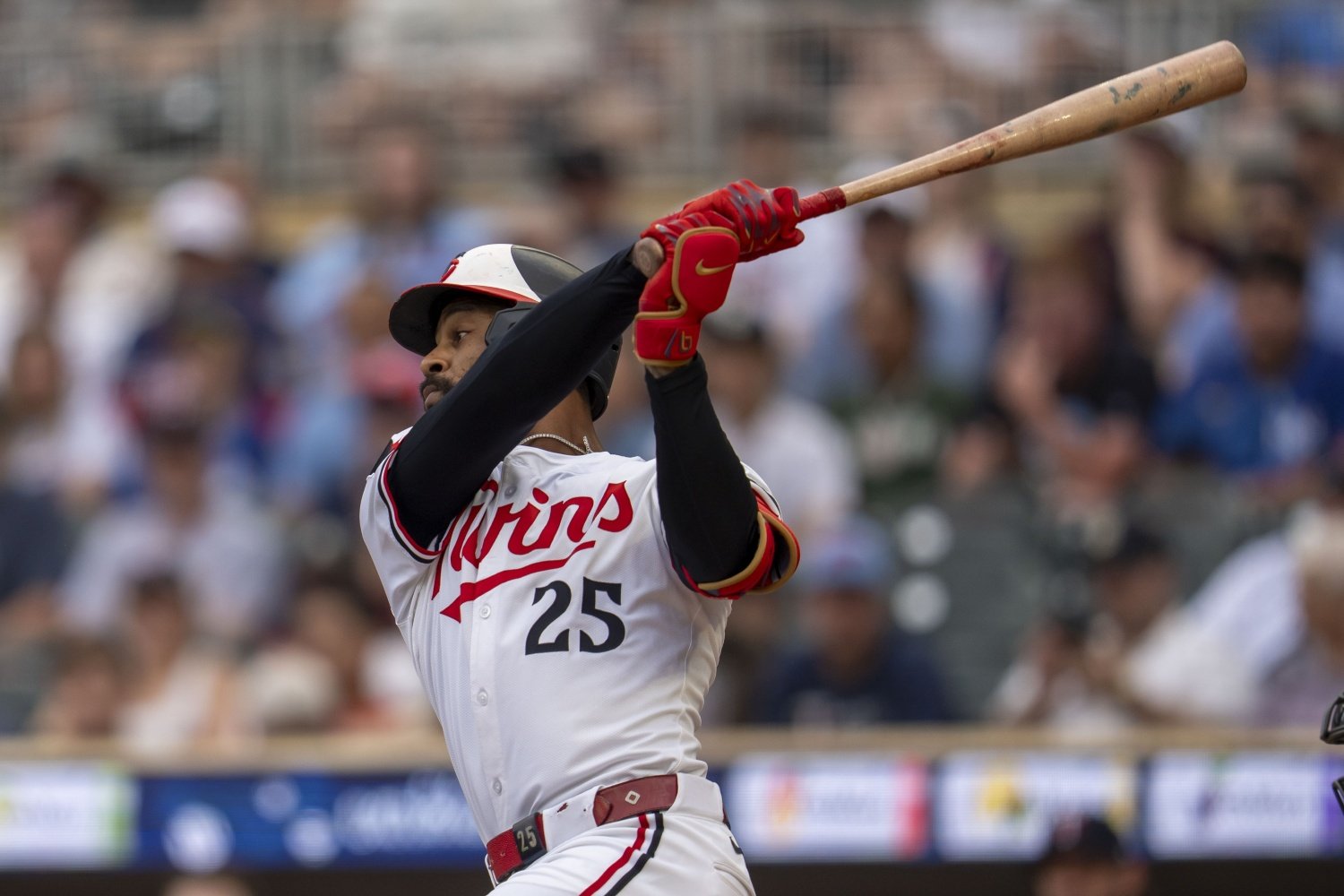 It's easy to slap the "good when healthy" label on Byron Buxton, and the label sticks. Not all "good" is created equal, though. Last year, Buxton was quite good. He batted .279/.335/.524, and he cracked 48 extra-base hits in just 388 plate appearances. This year, though, he's been better than that. He's been great when healthy in 2025, and he's been pretty healthy. At the All-Star break, Buxton already has 333 plate appearances and is hitting .289/.351/.574. There are some extra walks in there, which are always nice, but the big difference—the one we'll all get to watch in a fun and unique setting Monday night—is that Buxton has tapped more fully into his power. He has another 39 extra-base hits, and 21 of them have flown out of the park. That's about a lot more than good health. Good health can help, by letting the body work the way it's supposed to, but that alone is not enough. To go from a guy who was on pace to hit 30 homers in a full season to one with a great chance to hit 40, while drawing more walks and not striking out more? That's a full-fledged maturation from a great hitter. Indeed, Byron Buxton is still improving and changing, at age 31. We've already talked about how he's using the opposite field more this year, but that's a contributing factor to his improved plate discipline—or a product thereof. It's not where his power boost has come from. That all lies in his swing, and the way he's locked it in for maximal damage when pitchers make mistakes. Firstly, Buxton has changed how he's set up in the box this year, making it easier for him to get directly to the ball at his best bat speed. He's more open in his stance, and slightly more upright. He's not striding farther from that position, though, which means that he's able to rotate just as fast and has a bit more control of his bat path in the upper half of the zone. He's also farther off the plate, which gives him more room to cover the inner third than he's had in the past, but the natural length of his swing has still given him plenty of power on the outer edge. Here's his stance and stride from 2024, courtesy of Baseball Savant. And here's the same visualization for 2025, where you can see him opened up and set to work differently through the ball. Thanks to that tweak (and his good health), Buxton's swing is a bit freer, and that gets him on plane a bit earlier. In turn, that changes how long he can stay on plane with the pitch, without rolling over on the ball. Buxton's swing has gotten a tiny bit flatter this year, not because of a conscious change to how he tilts the bat or when he breaks his hands, but because of the pitches he's choosing and the stronger position his lower body and trunk are in. Here's what his swing looked like right at the moment when he first got on plane with the pitch, each of the last two years. See how, this year, that all happens with his body more upright, and with his hands deeper, relative to his body? The result of that is that Buxton can drive the ball better to center and to right-center—but also that he's getting up to speed in his swing sooner, so that he doesn't have accelerate as much later. He's in position to attack the ball with less wasted movement, especially on anything around or above the belt. That's why, this year, Buxton's barrel has been lethally accurate when pitchers make mistakes. He's swinging more on pitches up and out over the plate, and he's being more selective on everything else, because he can afford to be. A shorter stride and a more upright body change the way you see the ball, and they change your sense of timing, too. Buxton knows he's on time, so he doesn't feel rushed into swings at bad pitches. When he does swing, his slightly shorter and slightly faster cut catch the ball flush. Here's the percentage of pitches Buxton saw in 2024 on which he hit a Barrel, according to Statcast, by location. Here, with the adjusted stance and swing and the approach they've facilitated, is the same chart for Buxton for 2025. He might not be in position to drive as wide a variety of pitches as in the past, but Buxton now knows what his pitch looks like right out of the hand, and he absolutely does not miss it. This chart is also a near-perfect chart for a prospective Home Run Derby participant. All Tommy Watkins has to do on Monday night is get the ball into the middle of the zone; Buxton has crushed that pitch this year like few others can. Buxton's swing is a bit different. His whole profile has changed. As long as he stays healthy, perhaps that will continue. For now, though, he's found something so valuable that he should just lock into it and ride it. Monday night should be a delightful time for that to happen.
 -
Image courtesy of © Jesse Johnson-Imagn Images It's easy to slap the "good when healthy" label on Byron Buxton, and the label sticks. Not all "good" is created equal, though. Last year, Buxton was quite good. He batted .279/.335/.524, and he cracked 48 extra-base hits in just 388 plate appearances. This year, though, he's been better than that. He's been great when healthy in 2025, and he's been pretty healthy. At the All-Star break, Buxton already has 333 plate appearances and is hitting .289/.351/.574. There are some extra walks in there, which are always nice, but the big difference—the one we'll all get to watch in a fun and unique setting Monday night—is that Buxton has tapped more fully into his power. He has another 39 extra-base hits, and 21 of them have flown out of the park. That's about a lot more than good health. Good health can help, by letting the body work the way it's supposed to, but that alone is not enough. To go from a guy who was on pace to hit 30 homers in a full season to one with a great chance to hit 40, while drawing more walks and not striking out more? That's a full-fledged maturation from a great hitter. Indeed, Byron Buxton is still improving and changing, at age 31. We've already talked about how he's using the opposite field more this year, but that's a contributing factor to his improved plate discipline—or a product thereof. It's not where his power boost has come from. That all lies in his swing, and the way he's locked it in for maximal damage when pitchers make mistakes. Firstly, Buxton has changed how he's set up in the box this year, making it easier for him to get directly to the ball at his best bat speed. He's more open in his stance, and slightly more upright. He's not striding farther from that position, though, which means that he's able to rotate just as fast and has a bit more control of his bat path in the upper half of the zone. He's also farther off the plate, which gives him more room to cover the inner third than he's had in the past, but the natural length of his swing has still given him plenty of power on the outer edge. Here's his stance and stride from 2024, courtesy of Baseball Savant. And here's the same visualization for 2025, where you can see him opened up and set to work differently through the ball. Thanks to that tweak (and his good health), Buxton's swing is a bit freer, and that gets him on plane a bit earlier. In turn, that changes how long he can stay on plane with the pitch, without rolling over on the ball. Buxton's swing has gotten a tiny bit flatter this year, not because of a conscious change to how he tilts the bat or when he breaks his hands, but because of the pitches he's choosing and the stronger position his lower body and trunk are in. Here's what his swing looked like right at the moment when he first got on plane with the pitch, each of the last two years. See how, this year, that all happens with his body more upright, and with his hands deeper, relative to his body? The result of that is that Buxton can drive the ball better to center and to right-center—but also that he's getting up to speed in his swing sooner, so that he doesn't have accelerate as much later. He's in position to attack the ball with less wasted movement, especially on anything around or above the belt. That's why, this year, Buxton's barrel has been lethally accurate when pitchers make mistakes. He's swinging more on pitches up and out over the plate, and he's being more selective on everything else, because he can afford to be. A shorter stride and a more upright body change the way you see the ball, and they change your sense of timing, too. Buxton knows he's on time, so he doesn't feel rushed into swings at bad pitches. When he does swing, his slightly shorter and slightly faster cut catch the ball flush. Here's the percentage of pitches Buxton saw in 2024 on which he hit a Barrel, according to Statcast, by location. Here, with the adjusted stance and swing and the approach they've facilitated, is the same chart for Buxton for 2025. He might not be in position to drive as wide a variety of pitches as in the past, but Buxton now knows what his pitch looks like right out of the hand, and he absolutely does not miss it. This chart is also a near-perfect chart for a prospective Home Run Derby participant. All Tommy Watkins has to do on Monday night is get the ball into the middle of the zone; Buxton has crushed that pitch this year like few others can. Buxton's swing is a bit different. His whole profile has changed. As long as he stays healthy, perhaps that will continue. For now, though, he's found something so valuable that he should just lock into it and ride it. Monday night should be a delightful time for that to happen. View full article
-
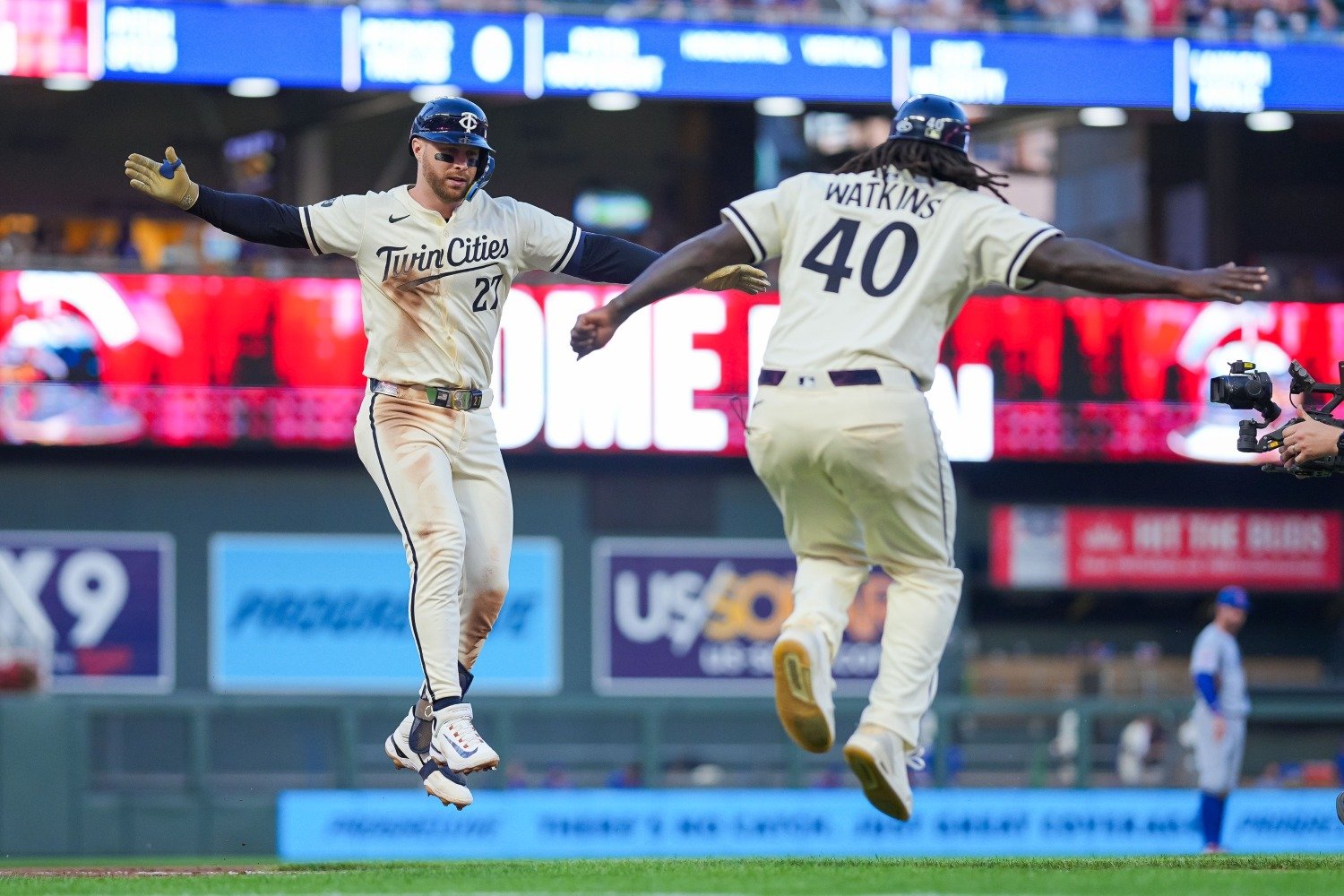 Perhaps more than anyone else in the Twins clubhouse, Ryan Jeffers trusts the process. He came out of the gates this spring with tough numbers, and after one of the bad bumps a catcher inevitably takes left him with a hurting hand in April, even some of the under-the-hood data (bat speed, most notably) pointed in the wrong direction. However, the veteran backstop never faltered. To make any kind of reactionary change would go against everything he set out to do after the disappointing end to the 2024 season. "This offseason, I came to them with a goal of mine of wanting to be more consistent," Jeffers said Tuesday, inside the home clubhouse at Target Field. "I’ve been kind of riding the roller coaster, the ups and the downs, a little too much. I was one of the best hitters in baseball for a month and a half, two months last year, and then I was really bad for a couple of months. I’m trying to even that out, and we’ve done that." Consistency—or the lack thereof—has been a frequent topic among Twins fans over the last few years, as the team seems to alternate surging and sputtering. Jeffers is right, of course: he's been just as prone to that as the club who won 12 games in a row last spring and 13 in a row this year, but finished 2024 12-27 to crash out of playoff position. To fix that problem, on an individual level, Jeffers brought a new approach at the plate in 2025. His swing rate is dramatically down this year, from 48.5% to 39.2%. He came up as a disciplined hitter who rarely chased, but had gotten more willing to expand the zone in pursuit of power over the last two campaigns. This year, that's abruptly changed; he's swinging at fewer than 25% of pitches outside the strike zone. Even within it, he's been radically selective. The resulting 11.3% walk rate is (by far) a career-best, and that's kept him on base even at times when the rest of the lineup was failing to put any pressure on opposing pitchers or defenses. For a while, though, exercising that pitch-to-pitch patience also meant maintaining patience of another kind: emotional, big-picture equanimity, amid bad batted-ball luck that deflated his numbers. This is where it helps to be open to newfangled data. "You can look at the power numbers being down this year, but that can be deceiving in a way—because my expected numbers are much better than what my real numbers are," Jeffers said. "I’ve been getting unlucky. By a lot of the underlying metrics, if not all the underlying metrics, this is my best offensive season. I’m definitely doing something right. It’s hard to not be slugging like I have in the past, but I think there’s no doubt, I think there’s no hiding the fact that I can be a 20-plus homer guy. I don’t think other teams look at me and go, ‘Oh, he’s a slop hitter now.’" He said all that just before a series against the visiting Cubs in which he went 5-for-10, with a walk, two doubles and a home run. The actual value has shown up now, but Jeffers never doubted that it would. "I’ve had two or three homers robbed on me this year, and there’s a couple balls that I hit in certain parks that would have been homers in over half the parks," he said. "There’s been a lot of instances where I’ve had more opportunities, but like I said, all of my underlying numbers are the best they’ve ever been—the hard-hit rates, the launch angles, some of the more intricate, run-value type stats, are the best they’ve ever been. So obviously, I’m doing something right. I’m sacrificing a little bit oif slug, but I don’t feel any less dangerous up there." That's all well and good, but there's also another factor we should discuss: Jeffers is healthy right now. After taking a foul tip off the hand early in the season, he ran much slower bat speeds than are his wont for the first two months of the campaign. Lately, though, he's swinging as fast as ever—and getting to the ball on plane as well as ever, and pulling the ball more than ever. Ryan Jeffers, Bat-Tracking Data by Month, 2024-25 Season Month Bat Speed (MPH) Swing Tilt (°) Attack Angle Attack Direction Contact Point (in.) 2024 April 73.2 31.0 11.7 -5.1 31.3 2024 May 73.0 31.1 11.4 -6.4 32.4 2024 June 72.5 27.7 7.0 -1.7 28.4 2024 July 72.1 29.1 7.9 -2.5 29.6 2024 August 73.6 29.1 8.7 -4.7 32.1 2024 September 72.9 28.2 8.8 -3.0 29.8 2025 April 71.4 29.8 8.8 0.6 27.5 2025 May 71.7 28.5 8.8 -1.3 27.4 2025 June 72.6 27.8 11.3 -5.7 30.7 2025 July 73.6 27.5 11.3 -8.2 30.7 The lefthand column jumps out, but don't overlook the more subtle changes happening. Jeffers has traded a bit of the tilt in his swing for that extra tick of bat speed, but in his case (particularly while he's making such good swing decisions), it's a sound trade. He made the conscious choice to let the ball travel more, hitting it less out in front (right-most column) early this year, but as he's tapped into more sheer bat speed, he's been able to catch it earlier even while remaining very patient at the plate. More of Jeffers's swing acceleration is happening early in his swing. That gives him more bat control through the hitting zone; he doesn't have to rush the barrel to reach the ball. As a result, he's not only chasing less and walking more, but making contact on a career-high rate of swings within the zone (86.6%) and striking out at a career-low rate (17.7%). His surface-level numbers still don't look as good as they did in, say, 2023, but Jeffers is right that the underlying ones all say he's the best he's ever been. That he adopted such an altered approach in search of consistency is admirable; that he's found so much consistency is downright amazing. Here's a rolling chart of his expected weighted on-base average over 50-plate appearance samples, throughout his career. He's never been solidly above-average for this long before, without enduring a slump from which he had to recover. He's tapped into something hugely valuable. "I think there’s still, I’m a couple homers away from just climbing those numbers higher and higher, but I feel really good with where I’m at," Jeffers said, the afternoon before he hit one of those homers. Indeed, right now, he's a player who should feel really good. He's discovered an approach that can yield not only consistency, but excellence.
 -
Image courtesy of © Brad Rempel-Imagn Images Perhaps more than anyone else in the Twins clubhouse, Ryan Jeffers trusts the process. He came out of the gates this spring with tough numbers, and after one of the bad bumps a catcher inevitably takes left him with a hurting hand in April, even some of the under-the-hood data (bat speed, most notably) pointed in the wrong direction. However, the veteran backstop never faltered. To make any kind of reactionary change would go against everything he set out to do after the disappointing end to the 2024 season. "This offseason, I came to them with a goal of mine of wanting to be more consistent," Jeffers said Tuesday, inside the home clubhouse at Target Field. "I’ve been kind of riding the roller coaster, the ups and the downs, a little too much. I was one of the best hitters in baseball for a month and a half, two months last year, and then I was really bad for a couple of months. I’m trying to even that out, and we’ve done that." Consistency—or the lack thereof—has been a frequent topic among Twins fans over the last few years, as the team seems to alternate surging and sputtering. Jeffers is right, of course: he's been just as prone to that as the club who won 12 games in a row last spring and 13 in a row this year, but finished 2024 12-27 to crash out of playoff position. To fix that problem, on an individual level, Jeffers brought a new approach at the plate in 2025. His swing rate is dramatically down this year, from 48.5% to 39.2%. He came up as a disciplined hitter who rarely chased, but had gotten more willing to expand the zone in pursuit of power over the last two campaigns. This year, that's abruptly changed; he's swinging at fewer than 25% of pitches outside the strike zone. Even within it, he's been radically selective. The resulting 11.3% walk rate is (by far) a career-best, and that's kept him on base even at times when the rest of the lineup was failing to put any pressure on opposing pitchers or defenses. For a while, though, exercising that pitch-to-pitch patience also meant maintaining patience of another kind: emotional, big-picture equanimity, amid bad batted-ball luck that deflated his numbers. This is where it helps to be open to newfangled data. "You can look at the power numbers being down this year, but that can be deceiving in a way—because my expected numbers are much better than what my real numbers are," Jeffers said. "I’ve been getting unlucky. By a lot of the underlying metrics, if not all the underlying metrics, this is my best offensive season. I’m definitely doing something right. It’s hard to not be slugging like I have in the past, but I think there’s no doubt, I think there’s no hiding the fact that I can be a 20-plus homer guy. I don’t think other teams look at me and go, ‘Oh, he’s a slop hitter now.’" He said all that just before a series against the visiting Cubs in which he went 5-for-10, with a walk, two doubles and a home run. The actual value has shown up now, but Jeffers never doubted that it would. "I’ve had two or three homers robbed on me this year, and there’s a couple balls that I hit in certain parks that would have been homers in over half the parks," he said. "There’s been a lot of instances where I’ve had more opportunities, but like I said, all of my underlying numbers are the best they’ve ever been—the hard-hit rates, the launch angles, some of the more intricate, run-value type stats, are the best they’ve ever been. So obviously, I’m doing something right. I’m sacrificing a little bit oif slug, but I don’t feel any less dangerous up there." That's all well and good, but there's also another factor we should discuss: Jeffers is healthy right now. After taking a foul tip off the hand early in the season, he ran much slower bat speeds than are his wont for the first two months of the campaign. Lately, though, he's swinging as fast as ever—and getting to the ball on plane as well as ever, and pulling the ball more than ever. Ryan Jeffers, Bat-Tracking Data by Month, 2024-25 Season Month Bat Speed (MPH) Swing Tilt (°) Attack Angle Attack Direction Contact Point (in.) 2024 April 73.2 31.0 11.7 -5.1 31.3 2024 May 73.0 31.1 11.4 -6.4 32.4 2024 June 72.5 27.7 7.0 -1.7 28.4 2024 July 72.1 29.1 7.9 -2.5 29.6 2024 August 73.6 29.1 8.7 -4.7 32.1 2024 September 72.9 28.2 8.8 -3.0 29.8 2025 April 71.4 29.8 8.8 0.6 27.5 2025 May 71.7 28.5 8.8 -1.3 27.4 2025 June 72.6 27.8 11.3 -5.7 30.7 2025 July 73.6 27.5 11.3 -8.2 30.7 The lefthand column jumps out, but don't overlook the more subtle changes happening. Jeffers has traded a bit of the tilt in his swing for that extra tick of bat speed, but in his case (particularly while he's making such good swing decisions), it's a sound trade. He made the conscious choice to let the ball travel more, hitting it less out in front (right-most column) early this year, but as he's tapped into more sheer bat speed, he's been able to catch it earlier even while remaining very patient at the plate. More of Jeffers's swing acceleration is happening early in his swing. That gives him more bat control through the hitting zone; he doesn't have to rush the barrel to reach the ball. As a result, he's not only chasing less and walking more, but making contact on a career-high rate of swings within the zone (86.6%) and striking out at a career-low rate (17.7%). His surface-level numbers still don't look as good as they did in, say, 2023, but Jeffers is right that the underlying ones all say he's the best he's ever been. That he adopted such an altered approach in search of consistency is admirable; that he's found so much consistency is downright amazing. Here's a rolling chart of his expected weighted on-base average over 50-plate appearance samples, throughout his career. He's never been solidly above-average for this long before, without enduring a slump from which he had to recover. He's tapped into something hugely valuable. "I think there’s still, I’m a couple homers away from just climbing those numbers higher and higher, but I feel really good with where I’m at," Jeffers said, the afternoon before he hit one of those homers. Indeed, right now, he's a player who should feel really good. He's discovered an approach that can yield not only consistency, but excellence. View full article
-
Image courtesy of © Matt Krohn-Imagn Images "Yeah, it’s pretty simple," Chris Paddack began, as he tried to answer my question about the introduction of a true slider into his mix this summer. Those are the first four of over 1,300 words I transcribed from an interview with Paddack Sunday, in which I left out anything I said. Paddack is an eager, thoughtful, verbose ball-talker, and it's not just a way of ingratiating himself to the media. He can't help himself. Every pitcher is really two different pitchers: the guy he is, and the guy he thinks he is. How married one is to the second affects the caliber of the first, not only because every pitcher has to make adjustments over the course of a start, a season or a career, but because being locked into a certain identity or mindset often means missing opportunities to improve. In his younger days, Paddack has probably fallen into the trap of being too confident in what he already had. This year, he's leaning hard into the idea of finding new things in his bag of tricks. Take that slider, for instance. It wasn't a pitch he threw when the season began, but it turned out to be relatively easy to mix into his arsenal, so he's done it. "I have the cutter grip that we kind of brought into the season, had some really good success," Paddack said, rolling a baseball in his hands to find and demonstrate the grip. "Then we noticed we tried to use it late to some guys, and it was more of just a foul ball or a show-me pitch, so then I was like, ‘Man, now that I have that cutter, I need some swing-and-miss,’ something that I can go east and west with, to lefties, righties. That’s where I’m basically just putting the fingers together"—the ball, still cradled in what had been the cutter grip, shifted slightly as he brought his first two fingers together over the seam—"and it’s same thought, same mentality, same focus at release to get that slider. But the cutter’s gonna be 88 to 90, the slider’s anywhere between 83 to 86." Pitch-classification systems still call both pitches a slider, but if you analyze each individual pitch, you can see the differences. Here's a plot of all the so-called sliders Paddack has thrown this year, charted by horizontal and vertical movement and colored by velocity. I've highlighted six pitches from his most recent start, against the Rays, to show the two different shapes and speeds he's now utilizing even within the same outing. Paddack has also (cautiously) introduced a sinker to his mix this year, which makes two additions to the mix this year. Doing that is highly unorthodox, but Paddack has elected to give it a shot. "Usually that’s something you do in the offseason, but it’s something that I know that I need in my arsenal," Paddack said of those changes. "And the fact that [pitching coach Pete Maki]’s given me some good advice, talking to some players that have different grips, different focuses when they release that pitch, that’s helped me a lot. I’m excited to take that into the second half, probably not add another pitch, but just focus on the tools we have—the execution." Lately, of course, Paddack has taken a beating. He had a 3.53 ERA over his first 13 starts, but that number has jumped to 7.99 over his last five. Some of that was bad luck, but some was giving up crooked numbers, especially via the home run. His start against the Rays on July 4 was a good step back in the right direction, though. He held Tampa Bay to two runs over five innings, striking out five (including two with that new slider) and neither walking anyone nor allowing a homer. He's had growing pains, but remains excited about where he is after these new installations. "I have been guilty of trusting it too much, of leaning on those pitches that I’m trying to find it in-game, and I end up falling behind in counts, or end up letting up some slug on those [new] pitches," he said. "So it’s hurt me, too, but it’s also helped me. Now, it’s blending them." As he experiments, even failure can be a good teacher—but success is the best one. Once Christian Vázquez and Ryan Jeffers see what success with the slider and the sinker look like, they can call those pitches more often or with more conviction. "I’m a fastball-changeup guy. I know that. Hitters know that," Paddack said, "So being able to play the cat-and-mouse game at times, throwing that pitch when I need to, trusting our catchers to call that pitch, has definitely helped me mentally. Not overthinking on the mound, have those guys call those pitches. If they’re looking at their cheat sheet and that’s the putaway pitch for our option, I’m not gonna shake. I’m gonna go with it. I think it’s definitely helped, it’s adding some different looks for lefties and righties for me this year." One ancillary benefit Paddack talked about, with a deeper repertoire, is protecting that fastball and changeup (and even his curve, long the third pitch in his mix but never a dominant one) longer. Many pitchers—especially those who have always had their arsenal, as opposed to those (like Paddack) who add more after they've established themselves or even within a campaign—prefer to lead with and establish their strongest offerings, and mix in tertiary weapons later. Paddack flips that idea on its head a bit, trying to introduce his varied arsenal early and keep hitters from being able to sit on his fastball or changeup the second time through, having already gotten a look at them. The third time through the order is one thing, but Paddack ran into big trouble the second time through in 2024, with opponents running an .871 OPS against him. This year, that number is down to .733, which is far more manageable. At times, because he still only has two plus offerings in that six-pitch gallimaufry, Paddack does get hit hard. He's learned, however, how to keep one bad inning from turning into two or three—and he's passionate about helping his teammates do the same thing. "I try to teach that to some of our younger guys, too, making those in-game adjustments," he said. "A perfect example is [David Festa] in Miami. He’s a fastball-slider guy, started mixing in the changeup, got some swing-and-misses, Vazqy started calling it more. He ended up, I think he had two or three punchies through 3? He ended up going six, with seven punch. He struck out four in the last three innings, and in some big counts, some big situations. Him and Vazqy made that in-game adjustment of, ‘hey, the changeup’s working. Let’s get them off the fastball-slider. We can maybe go to that late, or go to it early to get ahead and then we can put away guys with the changeup.' And that gives him confidence for the next outing, knowing that he already got some swings and misses the start prior." Sure enough, Festa leaned hard on the changeup again against the Cubs Wednesday night, throwing 21 of them. He got five whiffs on 13 swings and gave up no damage on that pitch. Finding some success with a pitch one doesn't yet fully trust can help a pitcher find the best version of that weapon, and thus, of themselves. Absorbing those tough innings and then chaining together zeroes to keep the team in the game is hugely valuable, and Paddack is preaching that to everyone who will listen. "Save the bullpen, but also, I think something I’ve learned in my career is that if I let up a crooked number early in the game—say I let up a 3-spot or a 4-spot in the second inning—if I put up zeroes in the third, fourth, fifth and sixth, those four zeroes add up," he said. "Over the course of a season, that’s 12 innings of zero runs. We can’t let that snowball effect happen, because then, if you put up a 3- or 4-spot in the second, a 2-spot in the fifth, now next thing I know, I didn’t shut the door." While most people outside the game see the forward march of analytics as a boon to pitchers, Paddack is a big believer in the power of that kind of information for hitters—which means that he (and all hurlers) have to keep innovating, to stay ahead of well-prepared and very talented batsmen. "Just trust your gut, trust your catchers. It’s more weapons," he said. "More weapons to attack big-league hitters, who have incredible hand-eye coordination, are able to have a feel for the zone. They have all their data, they know what we’re gonna throw and when we’re gonna throw it. You have to be able to constantly mix, unless you’re like a Skubal, where you could tell guys what’s coming and they still have no chance. Not many of those. You’ve gotta continue to never settle. I’m never gonna settle. There’s always something to improve, something to gain from every outing. And for me, this year, it’s taking a couple pitches that we worked on in spring and start mixing it in on the back of my baseball card, when it counts." Despite the uneven recent results, Paddack believes he's found some things that work. He's embracing discomfort on the mound and leadership away from it. He knows he might be a trade candidate this month, but is focusing on how he can best dominate each time he takes the mound and contribute as a mentor and vocal leader between turns in the rotation. "I’m excited, man. It’s given me a lot of confidence. It’s actually changed the way I pitch to certain guys. Fastball-changeup had success coming up, and then got hit around a little bit, got hit in the mouth. Had some injuries that kind of put my career on hold. So it’s like, now I have a couple weapons that I can throw the kitchen sink at guys for longer at-bats. If I face them two or three times in a game, it gives me options. Kudos to our pitchers, from the bullpen all the way to our starting staff, picking their brain and giving me good positive feedback." As tough as the season has been, for both team and player, there's hope yet. Paddack, especially, feels he's unlocked something, and that (like this team) he can achieve more in the second half after making some crucial adjustments. View full article

